TrainWeb.org Facebook Page
Maryland and Pennsylvania Railroad Photo Tour


Maryland and Pennsylvania Railroad
Modern day photo tour

Accompanying each photo below are:

Click a photo to see a larger view. Please send your comments and corrections to Steve.


<< Previous (south) | THIS PAGE: Baltimore Stony Run | Next (north) >>

Atlas 1894
Image courtesy Johns Hopkinds University

Atlas 1894
Mile: 0.5 to 1.1 Date: 1894
Ease: View: N (right)
Area: TM:
Map: Ba 34 K 7 (center) Topographic Maps

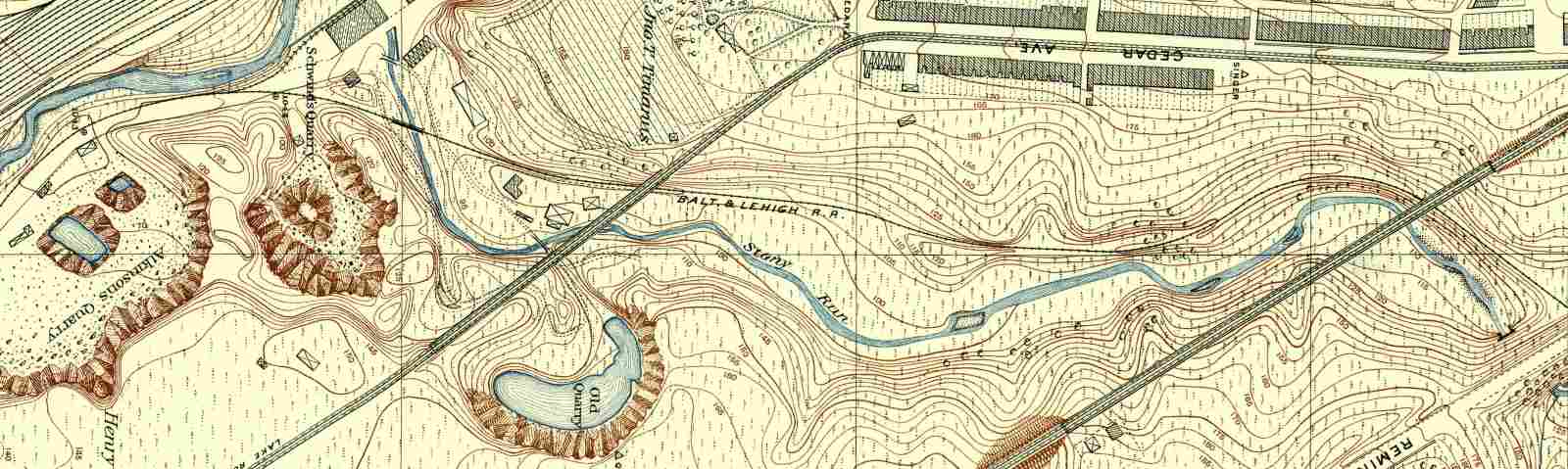
Note that north, the general direction of this tour, is to the right.

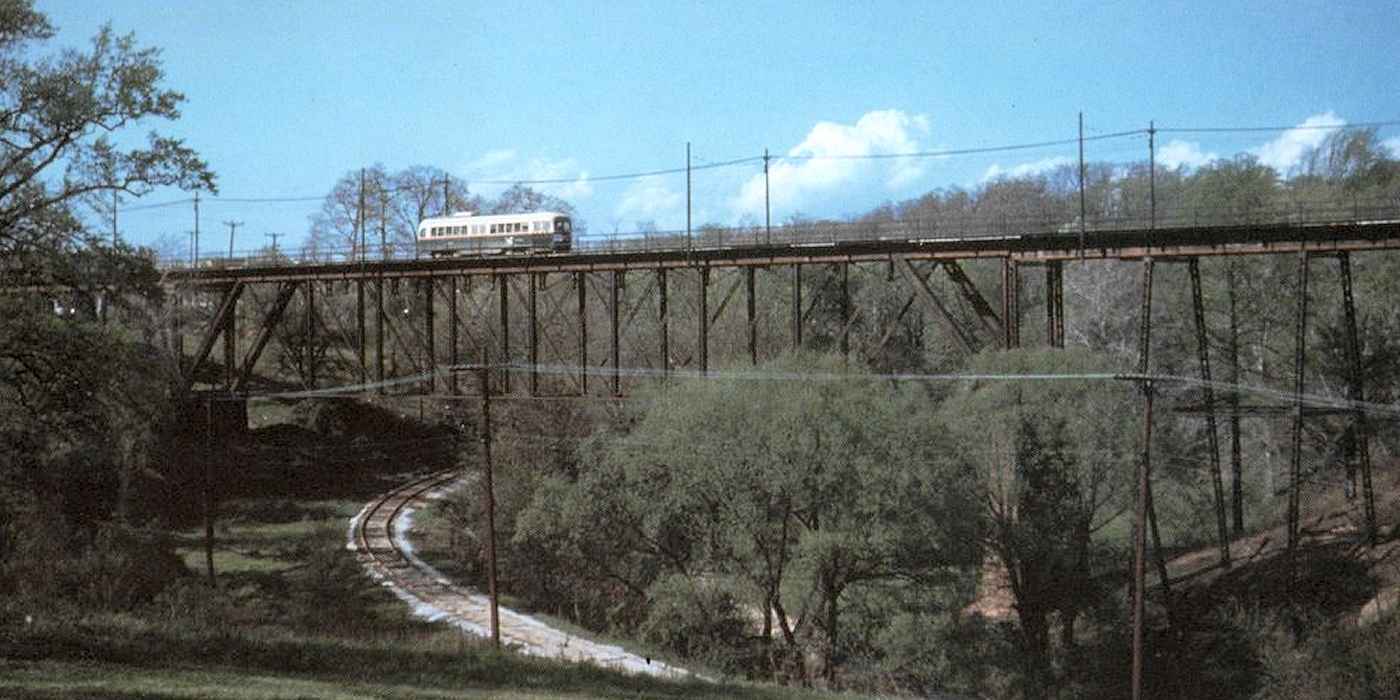
At Atkinson's Quarry (left), Ma & Pa, here labeled Balt. and Lehigh R. R., would find an already-excavated, cozy home for its roundhouse. From there, the line turned north (right) out of the Jones Falls valley to follow Stony Run upstream. Along the way, it passed under streetcars of the Lake Roland Elevated Railway and United Railways & Electric's Huntingdon Avenue Viaduct, each represented by a bold / diagonal. Photos of both will be seen in panels below. Cedar Avenue is now named Keswick Road.

These 1894 city topographical survey maps appear impossibly detailed. Contour lines drawn at 5-foot intervals imply an army of surveyors checked virtually every square foot of the city. Despite the estimation that must have occurred, these maps provide a wealth of useful data from an era prior to aerial photography.


Roundhouse 1930s
Photo courtesy J.H. Geissel Collection
and
The Ma & Pa by George W. Hilton

Roundhouse 1930s
Mile: 0.7 Date: 1930s?
Ease: B View: SE
Area: C TM: 120, MP: 78
Map: Ba 34 K 8 Topographic Maps

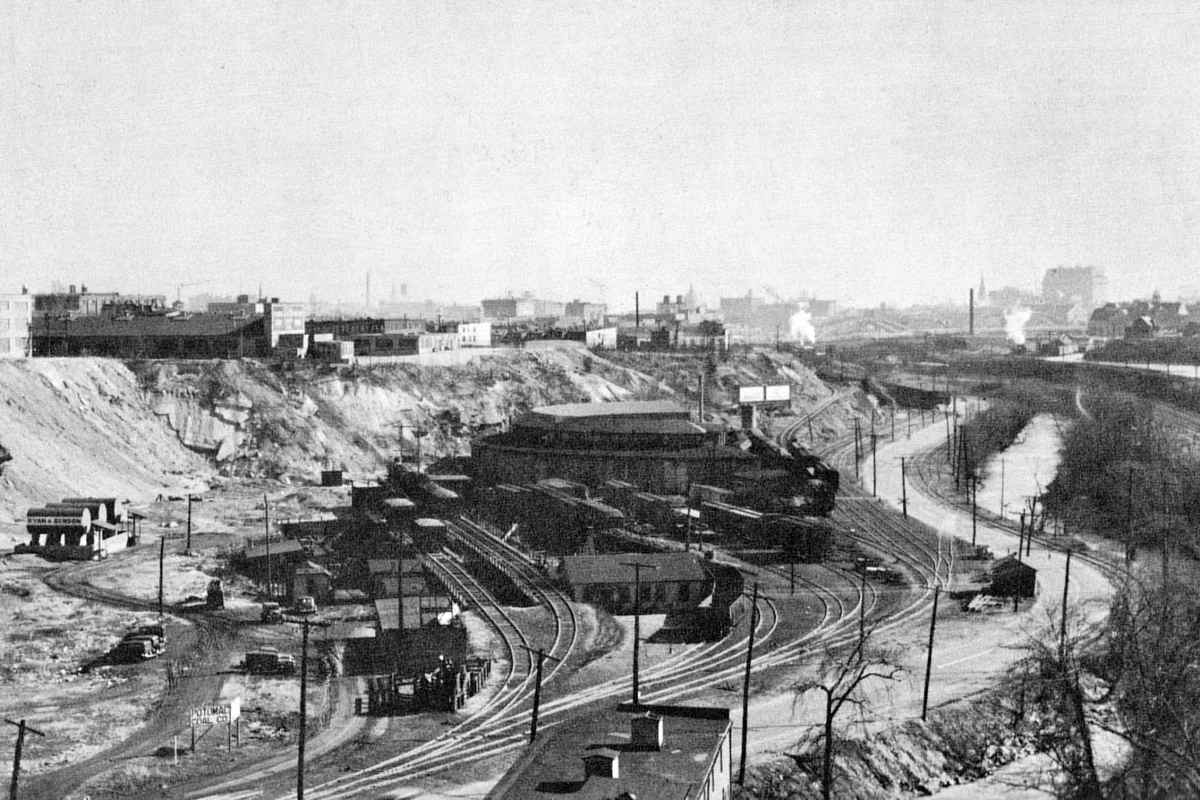
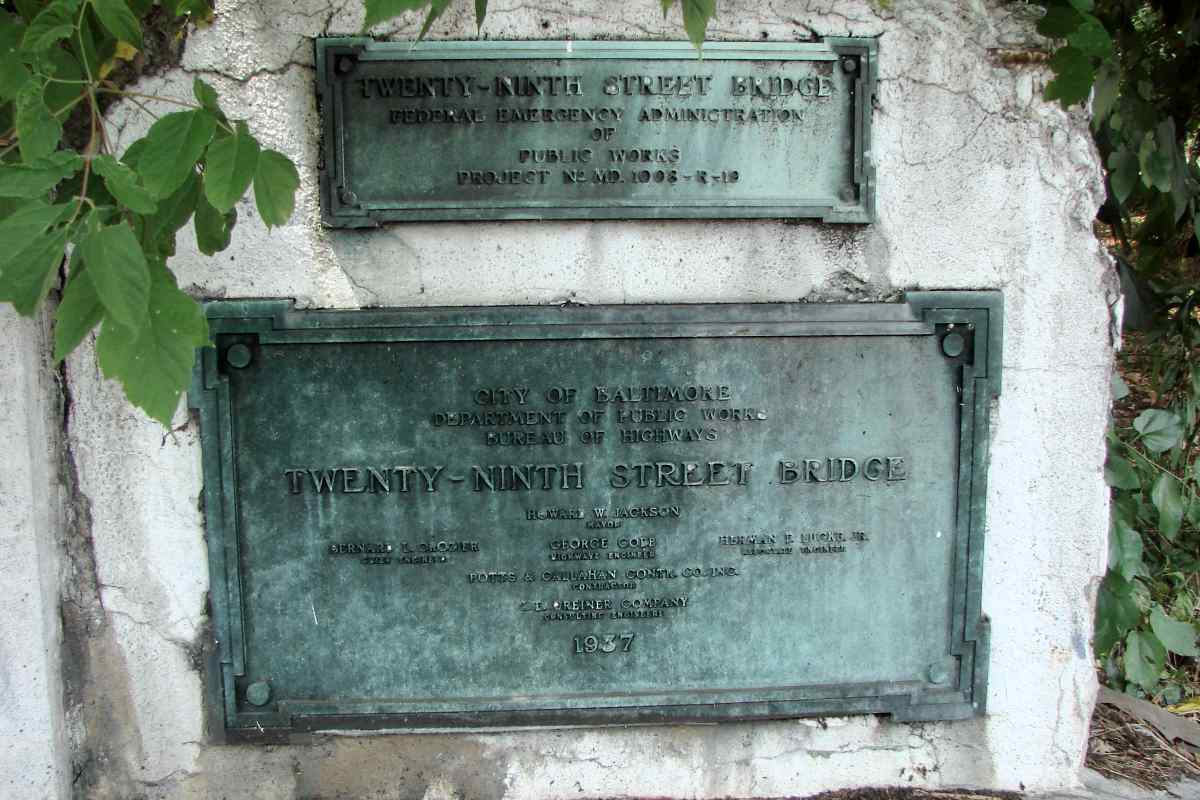
29th St bridge plaque Ma & Pa's roundhouse dates to 1910. Little thought was given at the time to preserving surrounding greenery. Trees were cut down for their wood and brush was removed so as to not impede quarrying. The name on the fuel tanks at left is Ryan & Benson.

This photo was probably snapped from the 29th Street bridge. The bridge was a Great Depression-era project of the Federal Emergency Administration of Public Works. It hosted bi-directional auto traffic until the adjacent 28th Street bridge opened around 1962.

Link: 1996 photos


Roundhouse 2019

Roundhouse 2019
Mile: 0.6 Date: Aug 2019
Ease: B View: SE
Area: C TM: 122
Map: Ba 34 K 8 Topographic Maps

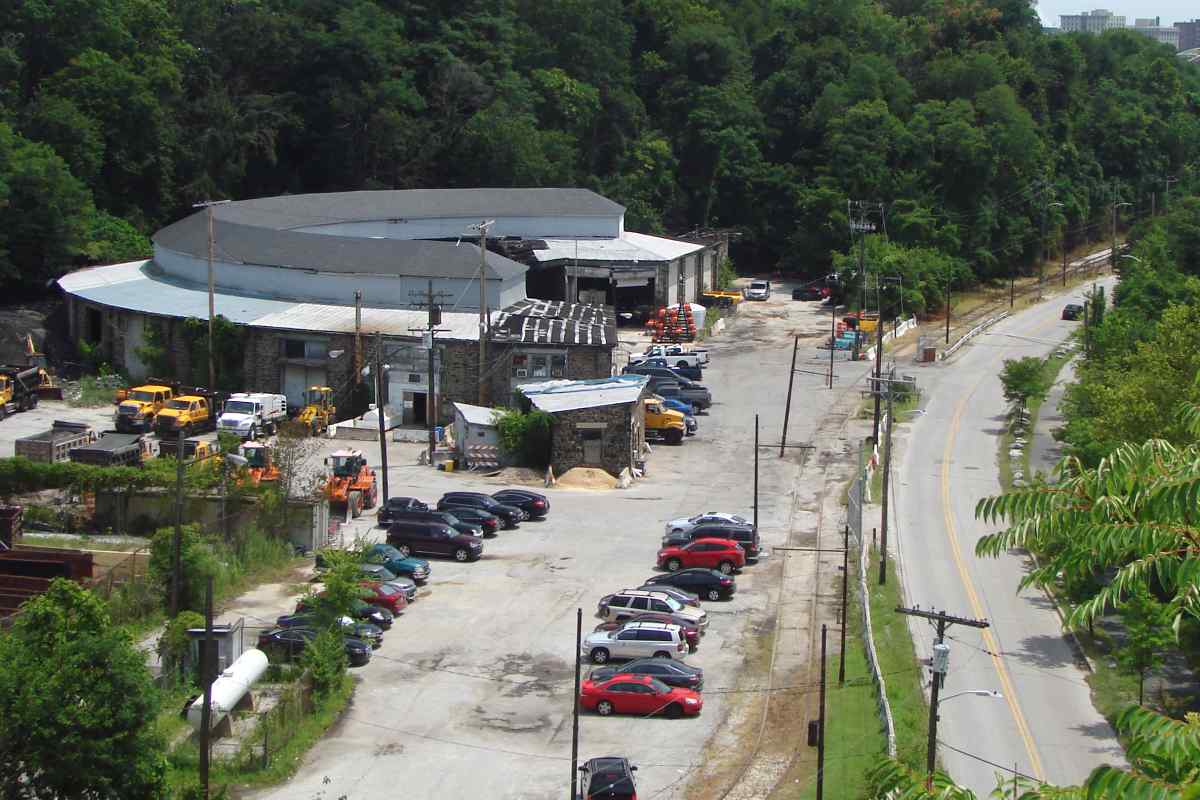
Ma & Pa's is one of only two surviving railroad roundhouses in Maryland and the only locomotive roundhouse. The other, a car shop, is part of the B&O Museum in Baltimore.

Link: ~1980


Turntable
Photo credit Jim Gallagher
courtesy Ma&Pa RR Historical Society

Turntable
Mile: 0.5 Date: Mar 1952
Ease: B View: SE
Area: C MP: 145
Map: Ba 34 K 8 Topographic Maps

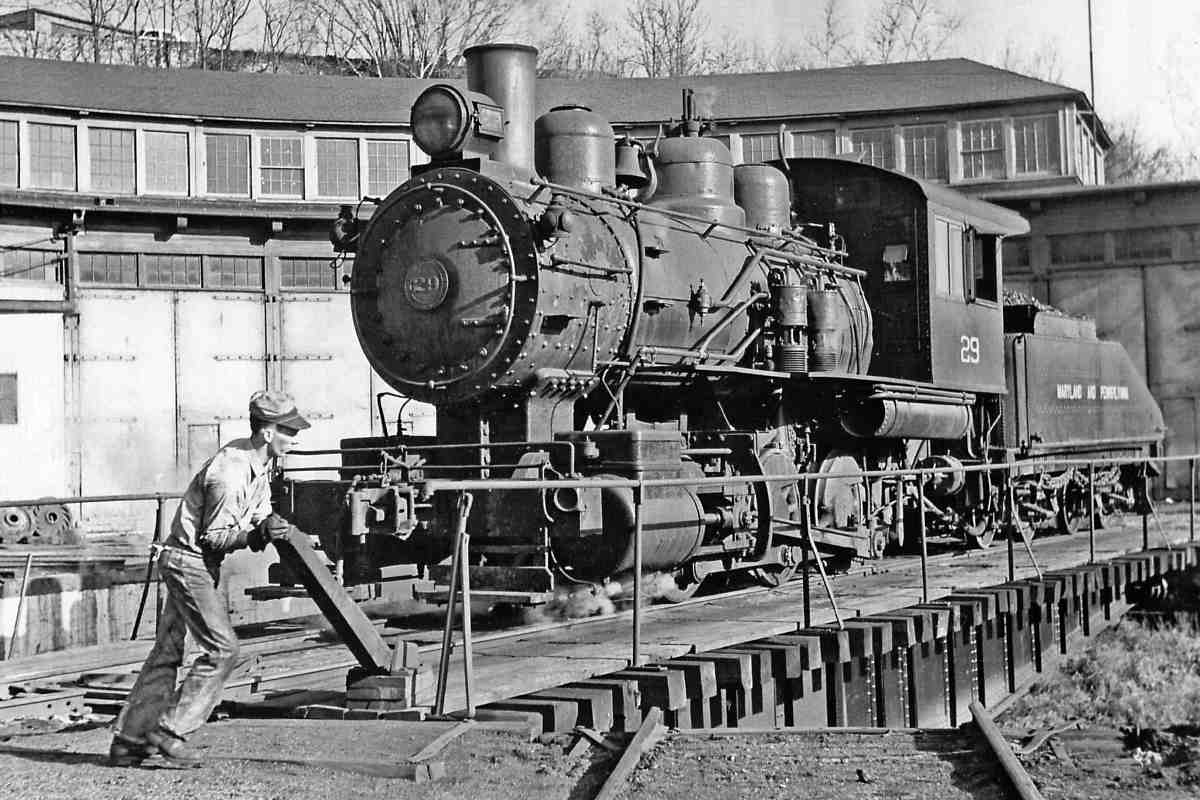
The roundhouse was equipped with a hand-powered turntable which, in actuality, meant turned by arm, leg and back power. Employee Norman Spicer demonstrates with Ma & Pa 29. Ma & Pa's turntable in York, PA was pneumatically-powered. Equipment was serviced at the roundhouse.

Link: Ma&Pa RR Historical Society


Needs Work

Needs Work
Mile: 0.5 Date: Mar 2020
Ease: B View: E
Area: C MP: 145
Map: Ba 34 K 8 Topographic Maps

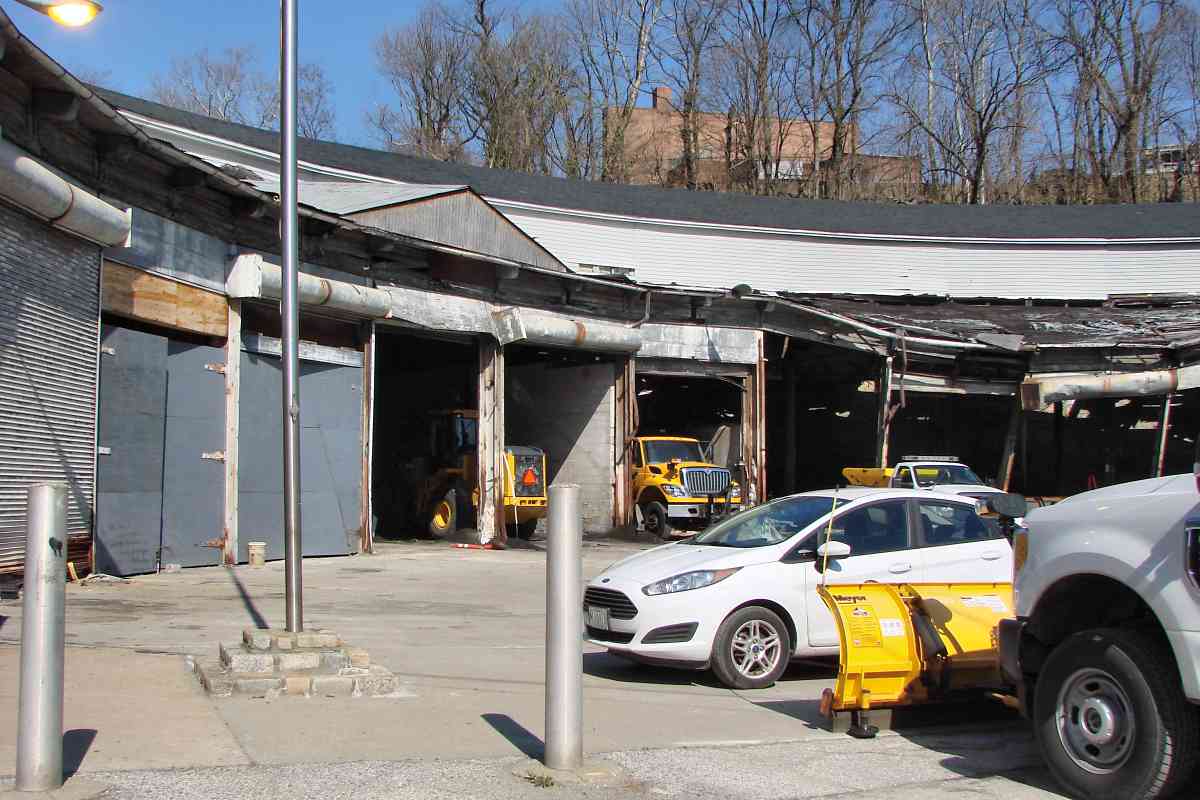
Baltimore's Department of Public Works uses the roundhouse to hold road salt and sand. It appears a few Ma & Pa rails remain embedded in nearby pavement.

Though the building needs repair, it is a logical future addition to the Baltimore Streetcar Museum (BSM). That concept, which had been pondered during the 1960s, is once again being discussed during the 2020s. Funding may be an issue, however.

Link: Falls Round Roundhouse


North Loop

North Loop
Mile: 0.6 Date: Aug 2019
Ease: B- View: E
Area: C TM:
Map: Ba 34 K 8 Topographic Maps

BSM streetcars pass the roundhouse then turn around at the North Loop that circles adjacent to the 28th Street bridge.

Link: 1976


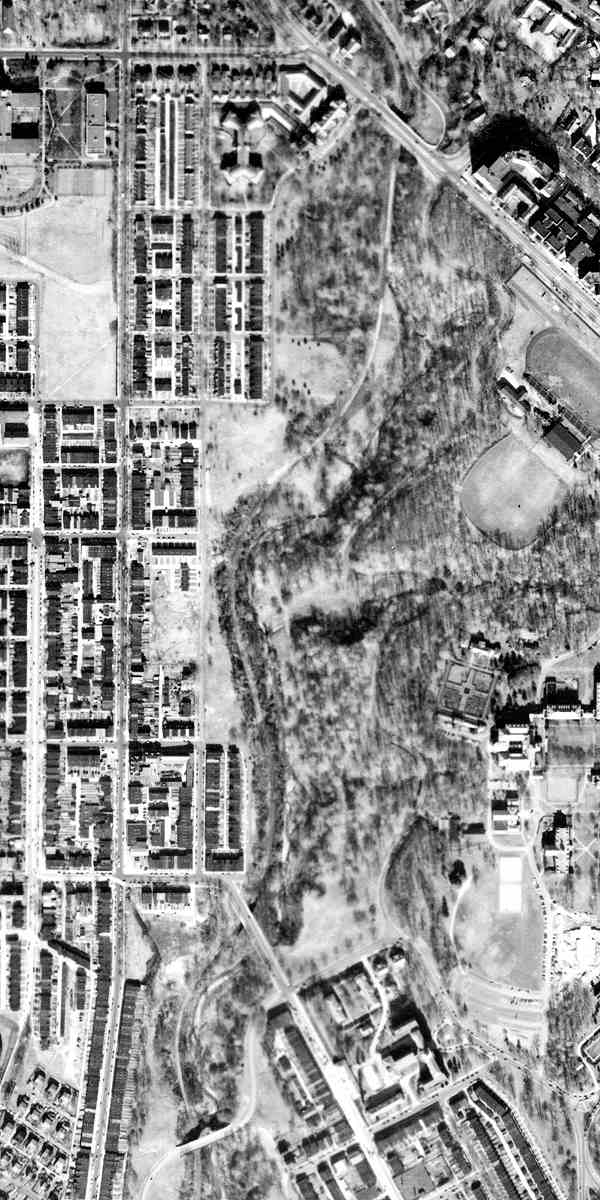
Following Stony Run

Following Stony Run
Mile: 0.5 to 1.0 Date: 1934
Ease: View: N (up)
Area: TM:
Map: Ba 35 A 8 Topographic Maps

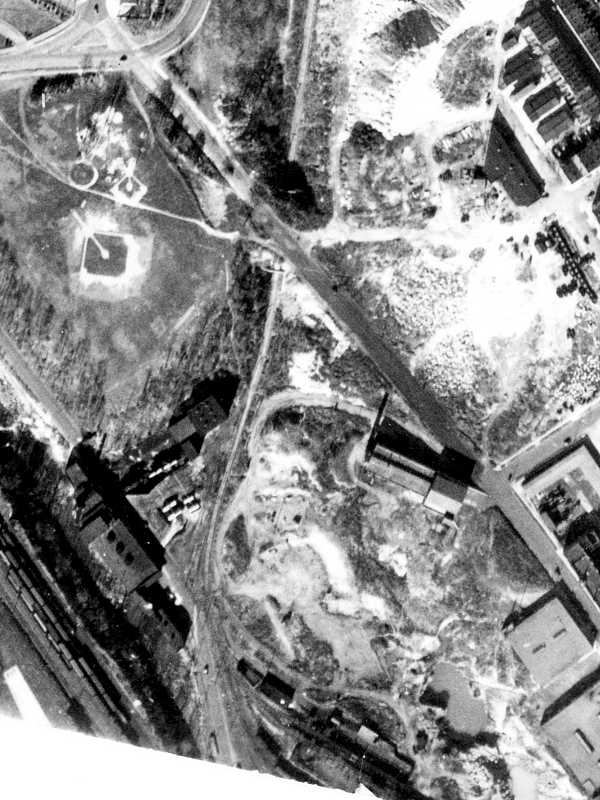
Ma & Pa's roundhouse is immediately off photo bottom. Its rail line from there traces a bright, thin vertical strip that reaches the middle of photo top. The 28th and 29th Street bridges across the Jones Falls Valley do not yet exist.

Above photo center, the railroad (the bright, thin line) passes under what would become the intersection of 29th and Sisson Streets.


Dirt Path
Photo courtesy Baltimore Sun

Dirt Path
Mile: 0.6 to 0.7 Date: 1961
Ease: View: N
Area: TM:
Map: Ba 34 K 8 Topographic Maps

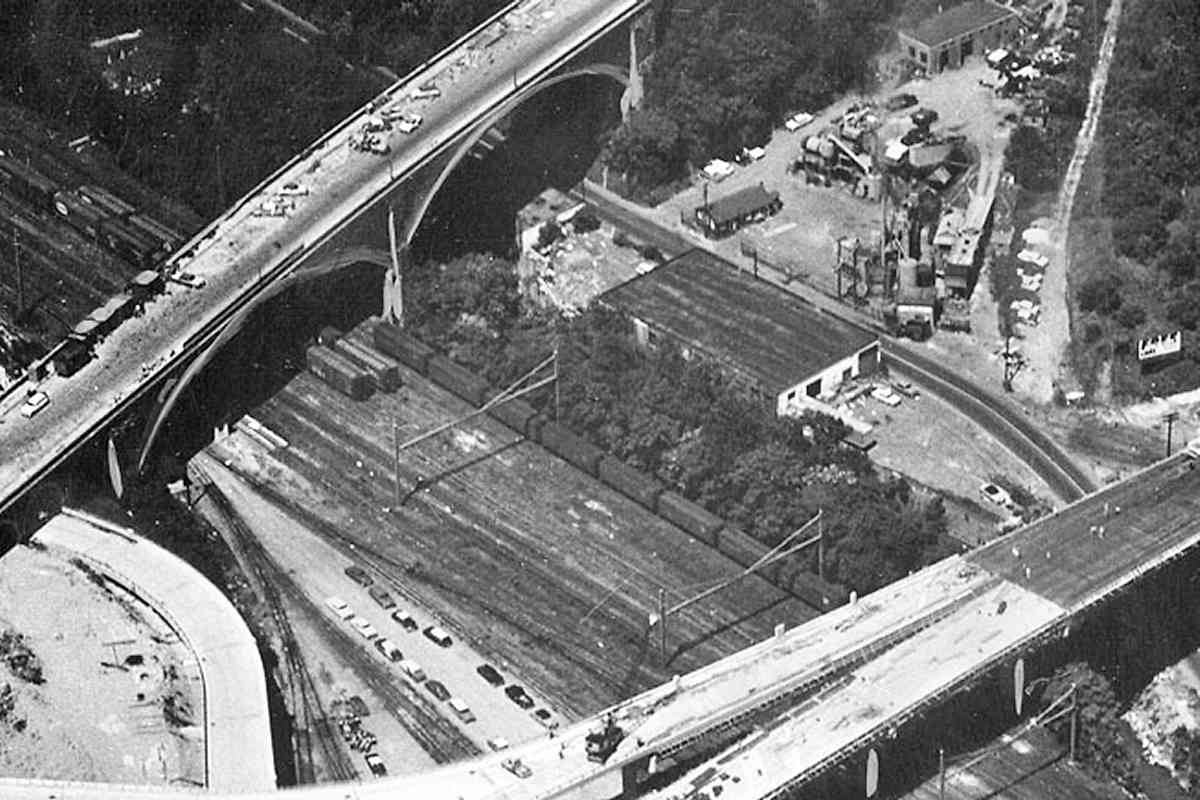
The year 1961 finds more roads and less railroad track. That's 29th Street at upper left and 28th at lower right.

Three years after Ma & Pa ceased operation here, one remnant was the de-tracked bright path at upper right. The route was briefly considered for repurposing as a commuter busway, but that idea lost out to the Jones Falls Expressway (I-83). The rail yard left of center was ex-Northern Central, Pennsylvania Railroad turf at photo time.

Link: Baltimore Sun newspaper


Under LRER
Photo courtesy Baltimore Streetcar Museum?

Under LRER
Mile: 0.6 Date: ~1910
Ease: View: N
Area: C TM:
Map: Ba 34 K 7 Topographic Maps

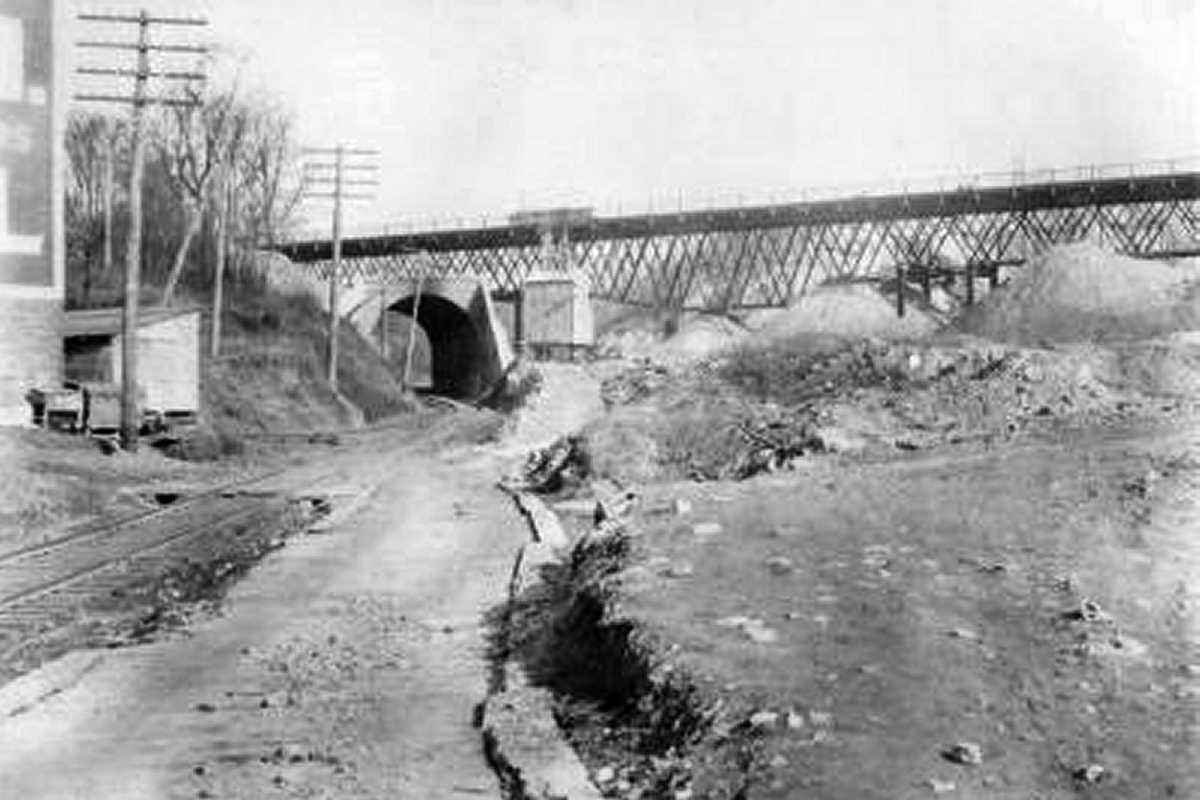
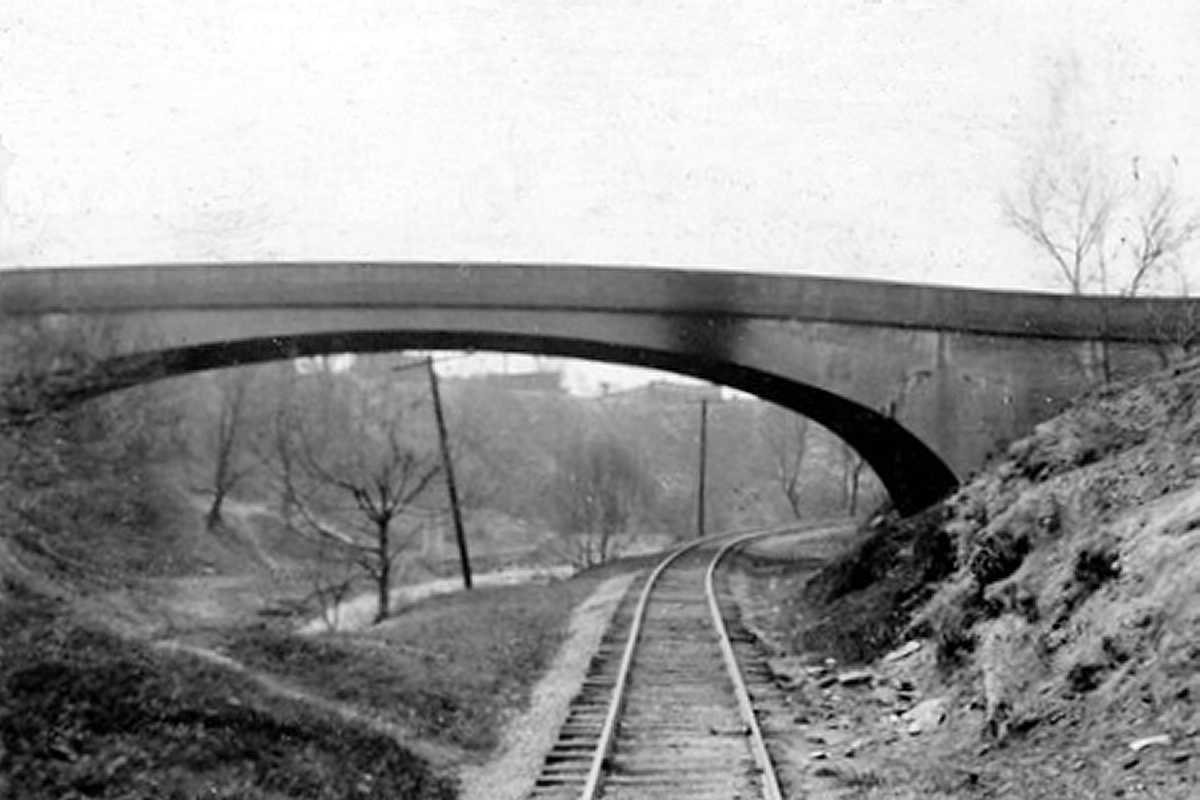
During the early 20th century, northbound Ma & Pa trains enjoyed this view. The Lake Roland Elevated Railway, rather than Sisson Street, crossed overhead back then.

George W. Hilton, author of The Ma & Pa, described the company as "a model railroad at the scale of 12 inches to the foot."


Plugged
Photo courtesy Johns Hopkins University

Plugged
Mile: 0.5 to 1.1 Date: 1970
Ease: View: N
Area: TM:
Map: Ba 34 K 11 Topographic Maps

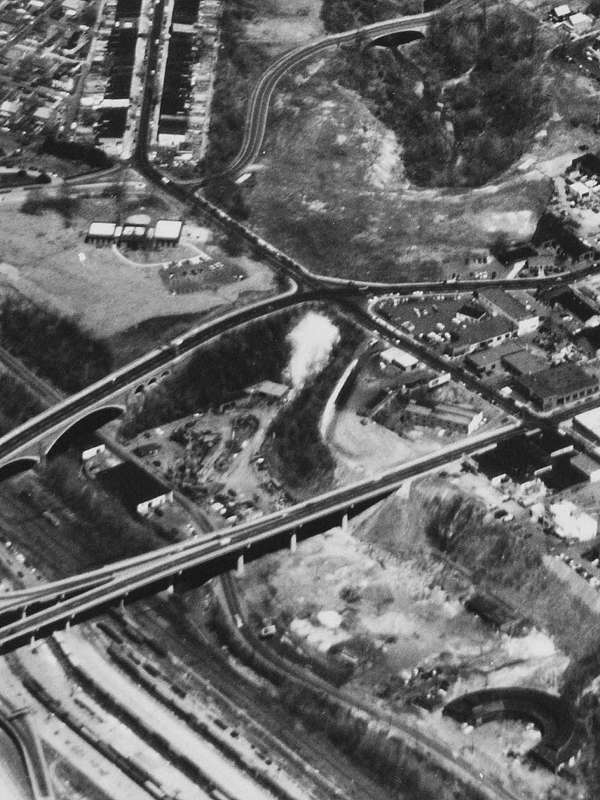
Ma & Pa's passageway under Sisson Street was filled and/or covered during the 1960s. It's the bright spot at photo center. This tour will soon arrive at Wyman Park Drive where it bridges over Stony Run at photo top.


Potts & Callahan

Potts & Callahan
Mile: 0.6 Date: Mar 2020
Ease: A View: N
Area: C TM:
Map: Ba 34 K 7 Topographic Maps

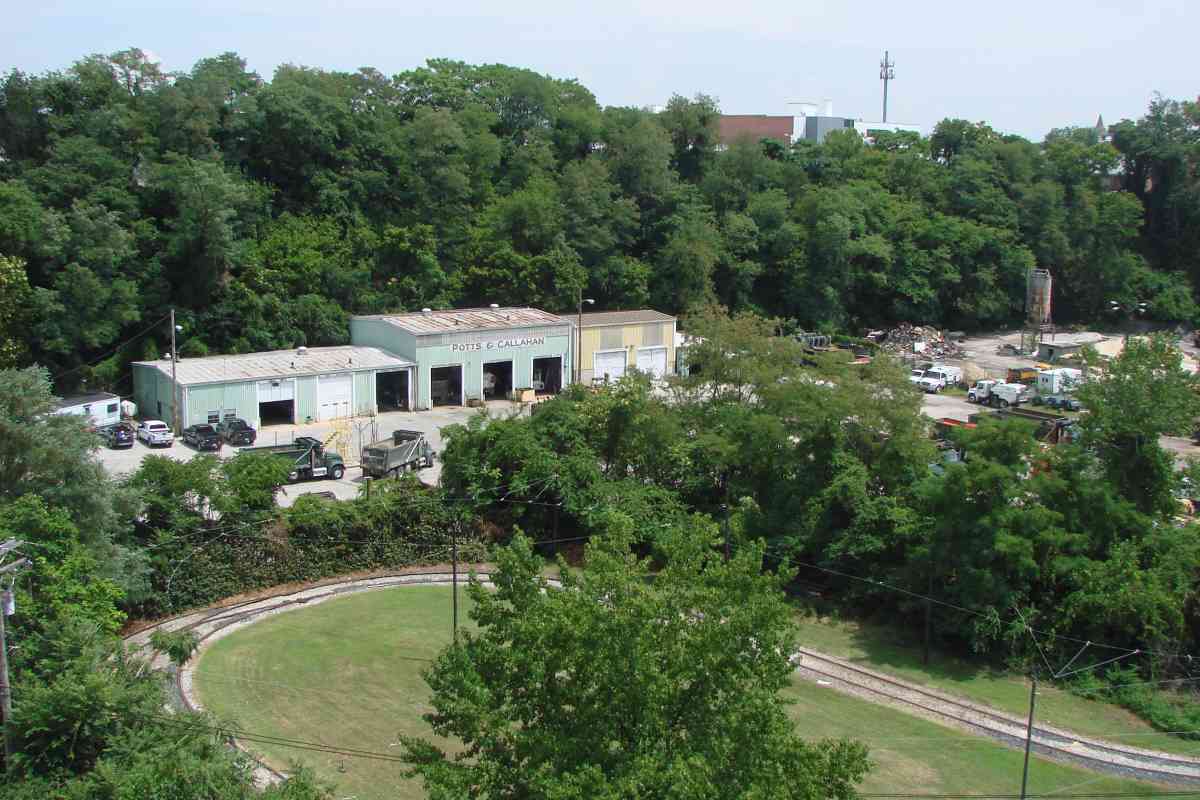
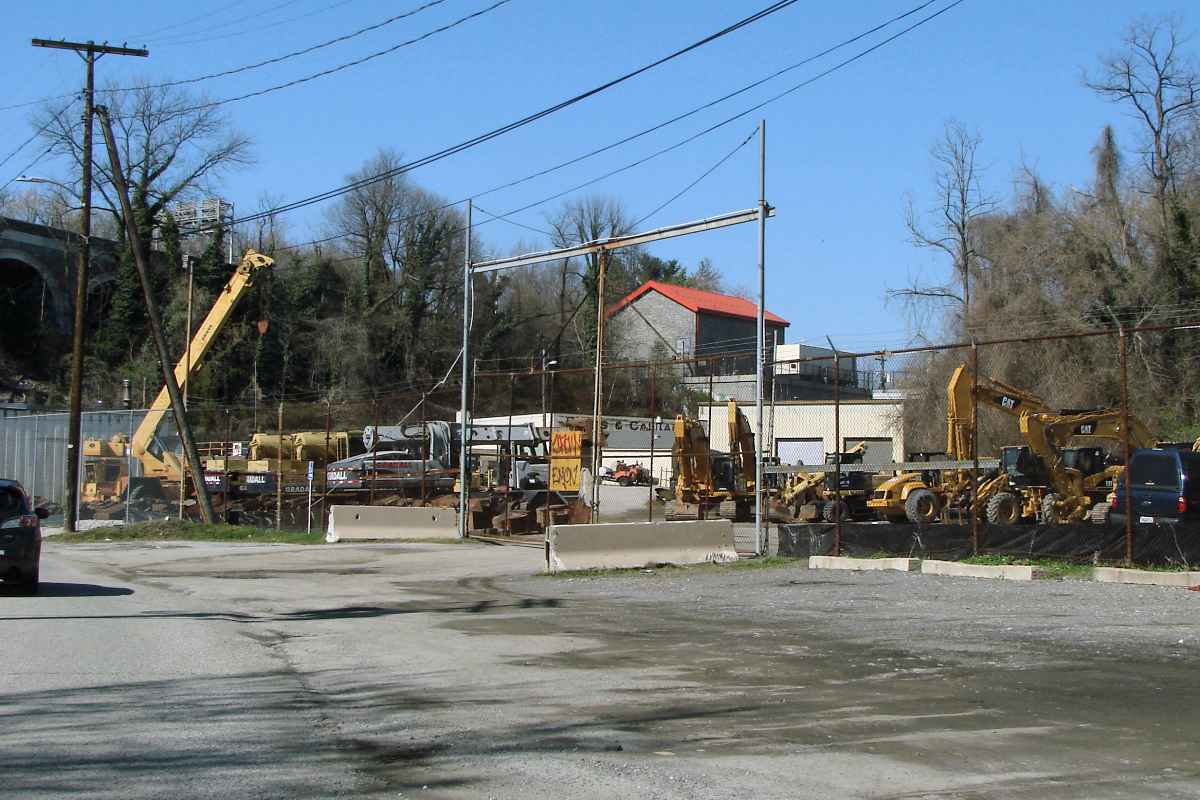
This is a similar, more-recent view. Potts & Callahan Company, the 29th Street bridge contractor, enclosed the Ma & Pa route within fences.

The railroad bridged Stony Run near photo center, but those waters are now hidden in underground pipes. Schwind's Quarry had been on the right during the 19th century. Part of one masonry arch of 29th Street peeks out at left.


29th Street

29th Street
Mile: 0.8 Date: Jan 2004
Ease: A View: W
Area: B- TM:
Map: Ba 34 K 7 Topographic Maps

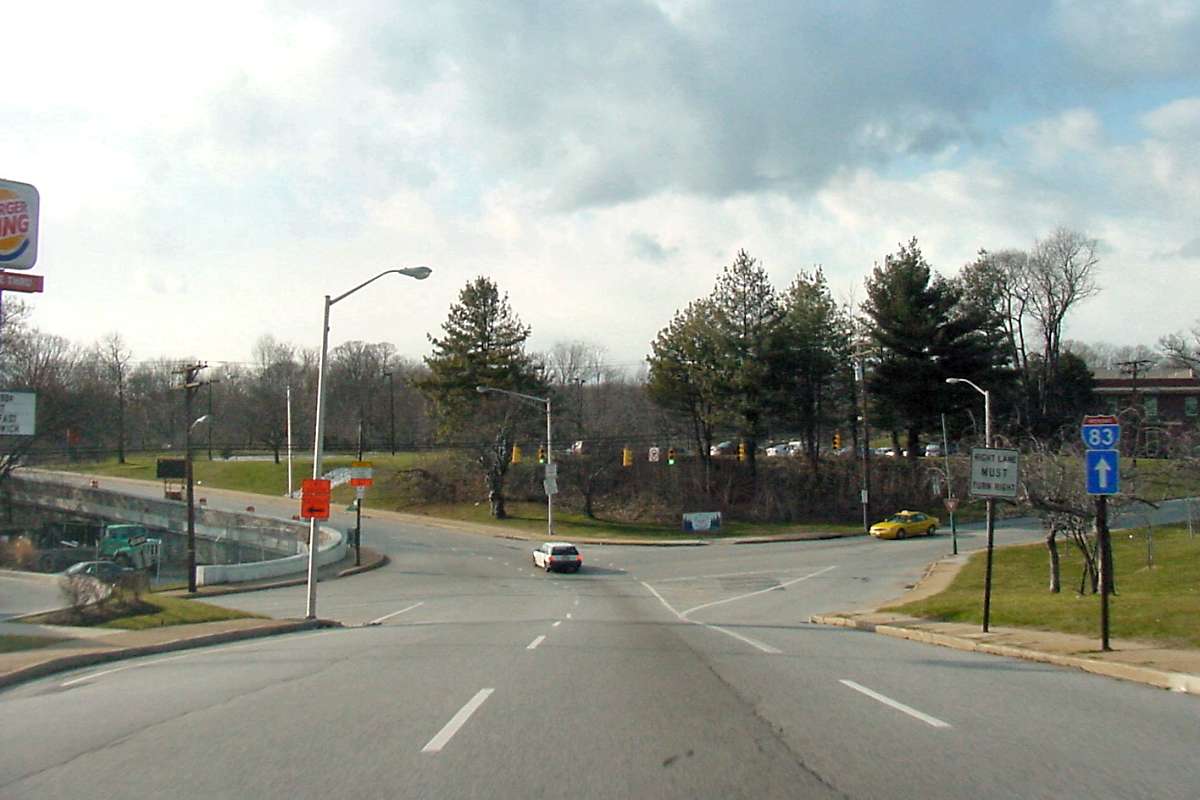
Ma & Pa ran left-to-right through its tunnel underneath the low spot ahead. This scene should be recognizable to those who drive on 29th Street.

Stony Run had flowed at the low spot, but now enters a drain pipe about 700 feet to the north (right). That's our next photo stop.


Stony Run Drain

Stony Run Drain
Mile: 1.0 Date: Nov 2016
Ease: B- View: SE
Area: D TM:
Map: Ba 34 K 7 Topographic Maps

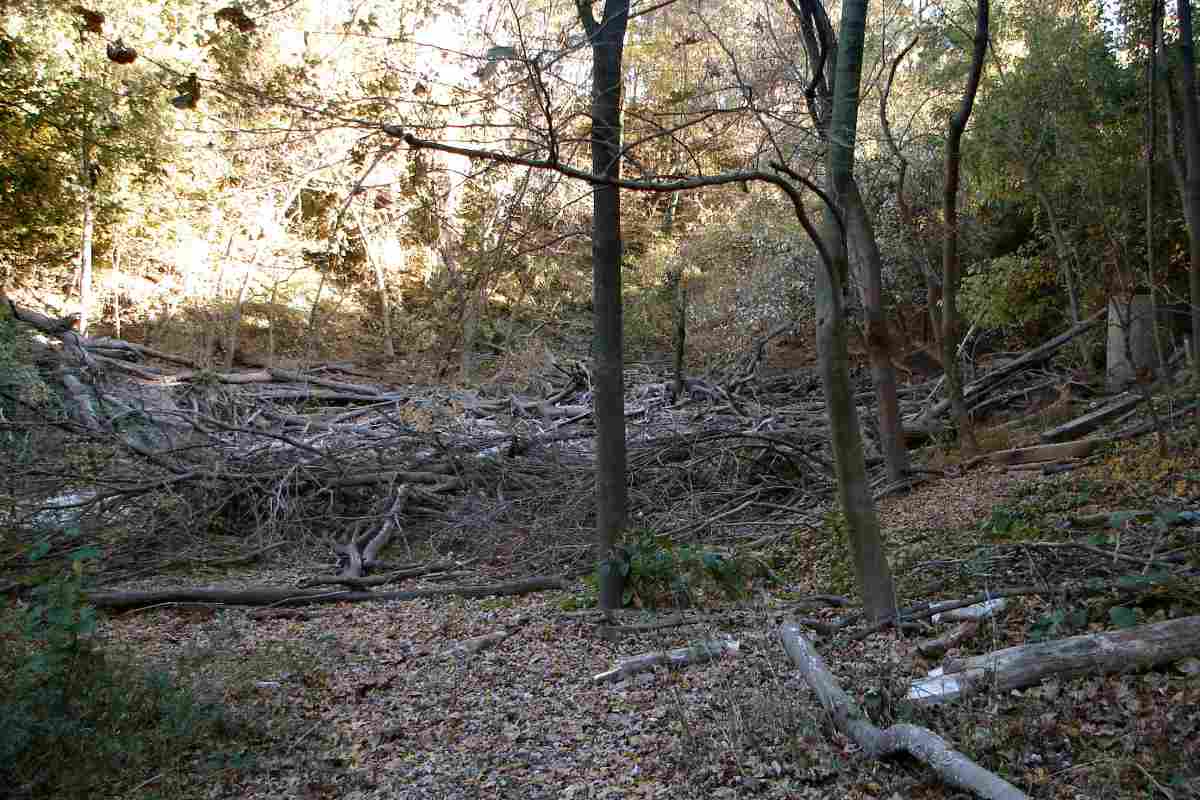
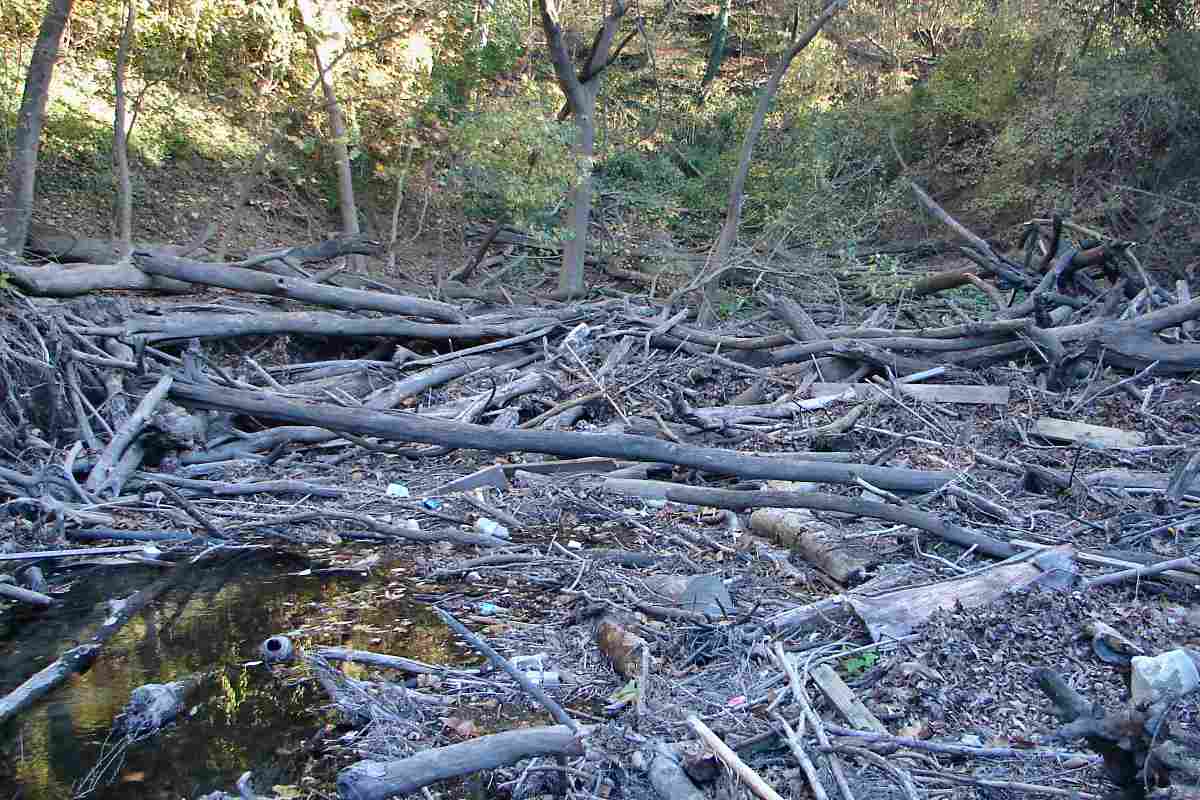
Ma & Pa ran along a shelf of land on the right. Below, waters of Stony Run pour into a huge drain that hurries them underground to the Jones Falls near 28th Street. This man-made, submerged dead end originates with the 28th Street bridge project of the 1960s.

big drain somewhere Fallen trees float downstream to the drain where they are too big to fit so gather into a pile (right). In a big city like Baltimore, a hidden drowning risk such as this rates as one of the more unexpected dangers. From somewhere under this unstable pile emanates the roar of Stony Run cascading into the drain.

This pile occupies roughly the area of a baseball field's infield. Satellite photos suggest it was cleared out after 2016 and then a new tree-catching system was implemented.


From Above
Photo courtesy Duke University

From Above
Mile: 1.0 Date: Jan 1914
Ease: A View: NE
Area: B TM:
Map: Ba 34 K 7 Topographic Maps

zoom to tracks Stony Run's waters flow about 70 feet below the camera. The prior panel's drain did not yet exist in 1914, instead Ma & Pa utility poles and tracks are visible below at the right edge of this photo. The overpass ahead carries Wyman Park Drive. Note: this photo's corners were edited to fill gaps after rotation.

Link: source photo


Jones Falls Valley
Photo courtesy Baltimore Sun

Jones Falls Valley
Mile: Date: 1934
Ease: B- View: N
Area: B- TM:
Map: Ba 34 K 8 Topographic Maps

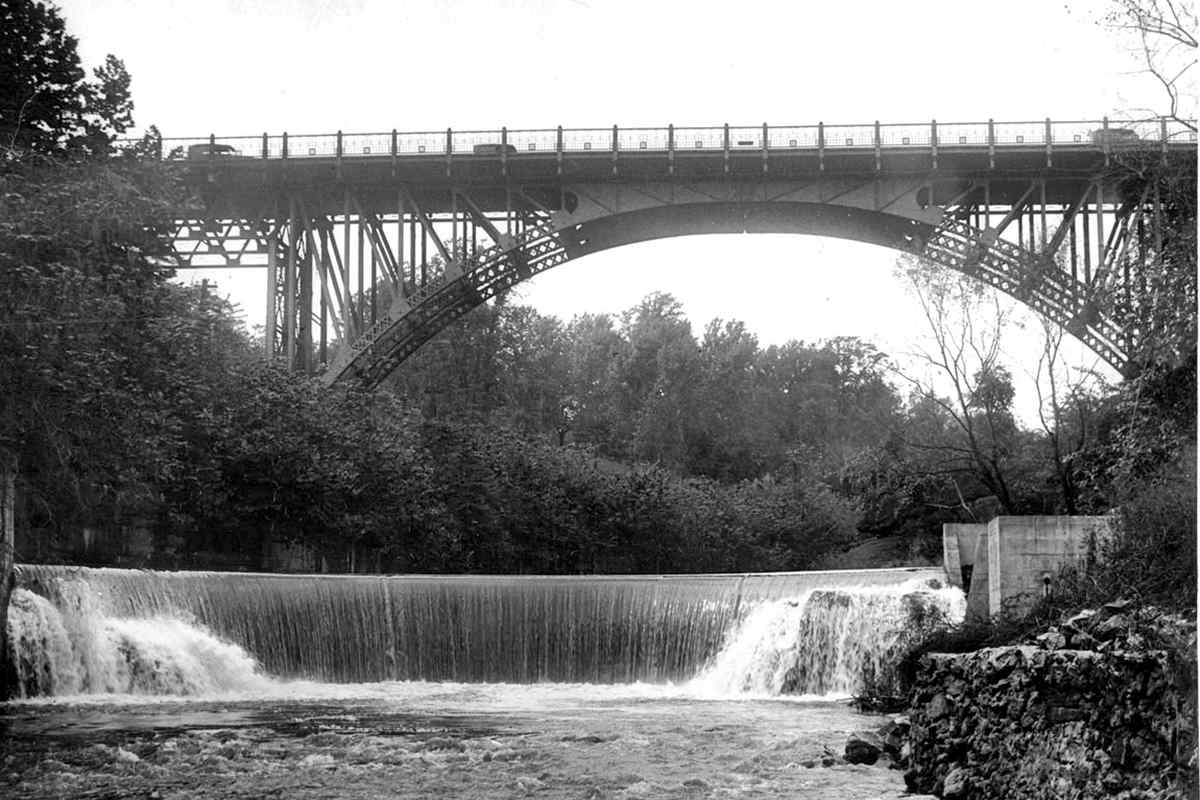
Don't confuse this Wyman Park Drive bridge across the Jones Falls Valley with the one over Ma & Pa. This bridge was rehabbed during 1961 and 1987.


Wyman Park Drive
Photo credit John W. Barriger III*

Wyman Park Drive
Mile: 1.1 Date: 1941
Ease: B View: S
Area: B- TM:
Map: Ba 34 K 7 Topographic Maps

Stony Run flows downstream into the distance with much less volume than Jones Falls. Baltimore City annexed land here to create Wyman Park in 1888, about a decade after the railroad arrived. This had been known as Stone River Valley.

William Wyman donated the land for both the park and Johns Hopkins University. A prior owner had been Charles Carroll of Carrollton, the last living signer of the Declaration of Independence.

Link: Ma & Pa photos


Curves
Photo courtesy Johns Hopkins University

Curves
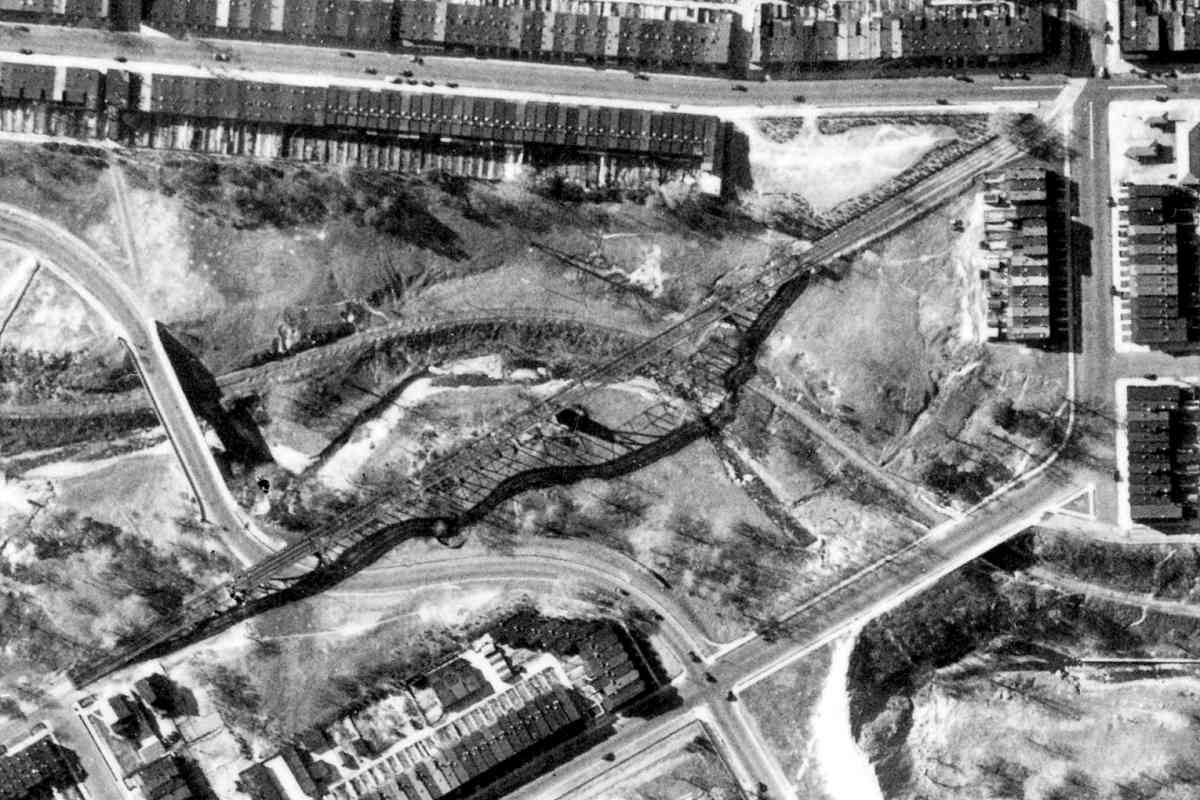
Mile: 1.0 to 1.2 Date: 1934
Ease: View: N (right)
Area: BSTPY:
Map: Ba 35 A 6 Topographic Maps

We're touring northward (to the right). Ma & Pa, with only Stony Run farther below than it, rolls under Wyman Park Drive on the left, then curls under Huntingdon Avenue Viaduct (casting a shadow at middle) plus Remington Avenue (right).


Under HAV
Photo courtesy Baltimore Streetcar Museum

Under HAV
Mile: 1.1 Date: 1949
Ease: B+ View: E
Area: B- BSTPY: 78
Map: Ba 34 K 7 Topographic Maps

Ma & Pa also crossed under Huntington Avenue's route 25 streetcars. The streetcars stopped running soon after the photo and the bridge was then dismantled.

Change for: Huntington Avenue Viaduct tour at this site


Signal Stand

Signal Stand
Mile: 1.1 Date: Nov 2016
Ease: B View: N
Area: B- BSTPY:
Map: Ba 34 K 7 Topographic Maps

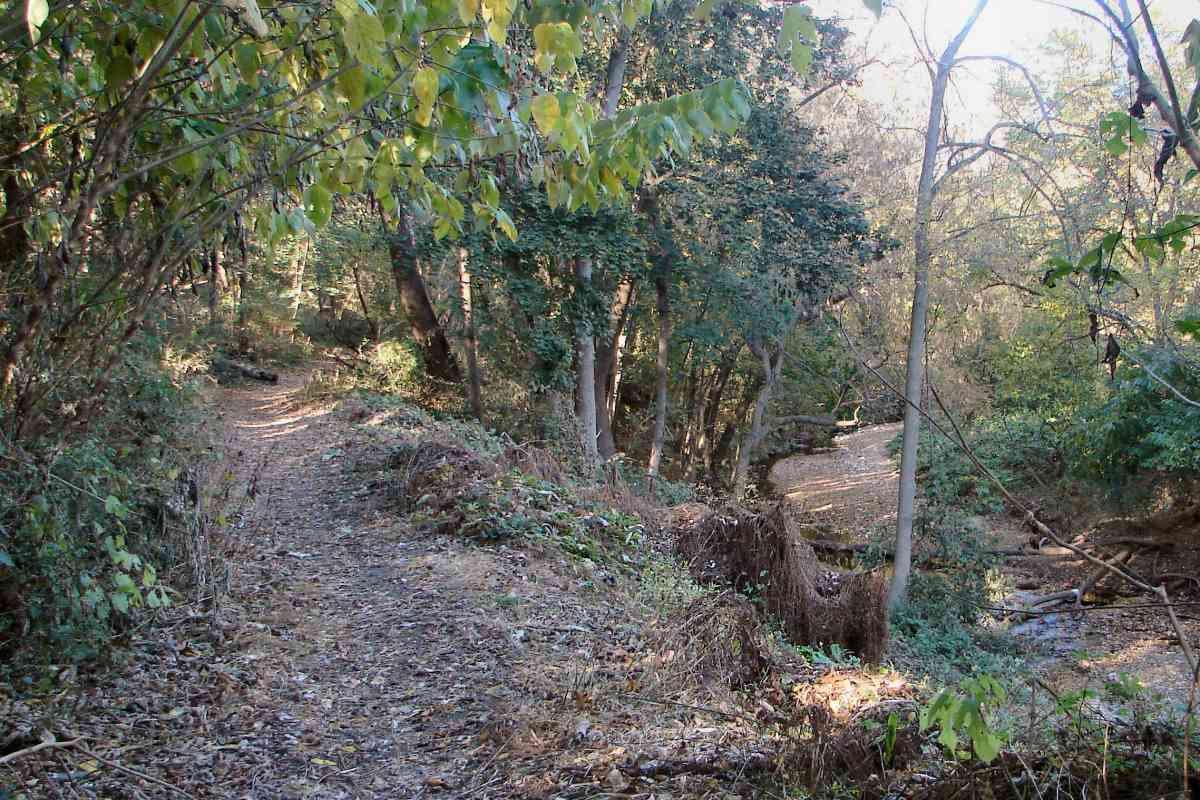
The vine-covered concrete below and right of photo center may be a Ma & Pa leftover, perhaps a signal stand. Rusty pipes in this vicinity are likely either Ma & Pa remnants or something left behind by Ensor's Mill.

I had thought November would be late enough to explore without greenery blocking the view, but streamside trees are among the last to lose their seasonal leaves.

Link: Water quality here 1980


Remington 1981
Photo courtesy Baltimore Sun

Remington 1981
Mile: 1.2 Date: 1981
Ease: B View: N
Area: B TM:
Map: Ba 34 K 6 Topographic Maps

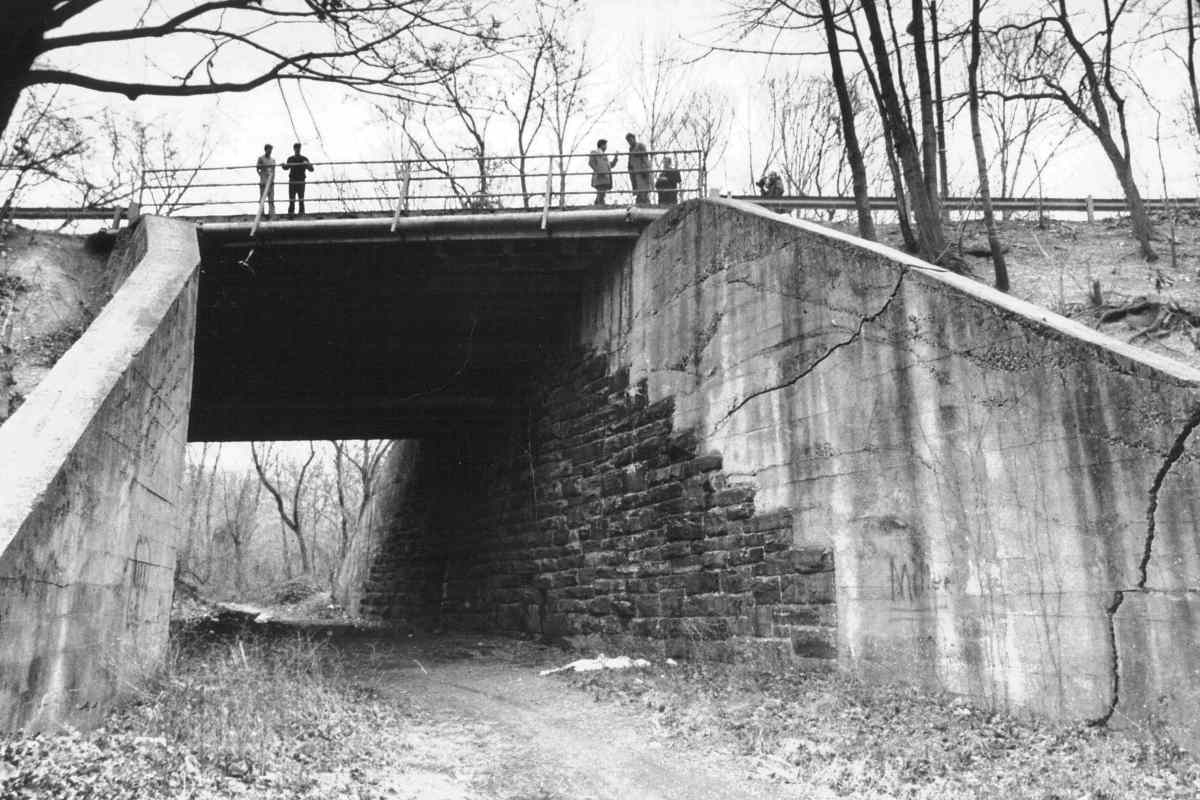
Does stone masonry imply Remington Avenue predates Ma & Pa here, perhaps to span Stony Run? When Remington Avenue was widened (1920s?), concrete was added atop the original masonry.


Remington 2016

Remington 2016
Mile: 1.2 Date: Nov 2016
Ease: B View: N
Area: B TM:
Map: Ba 34 K 6 Topographic Maps

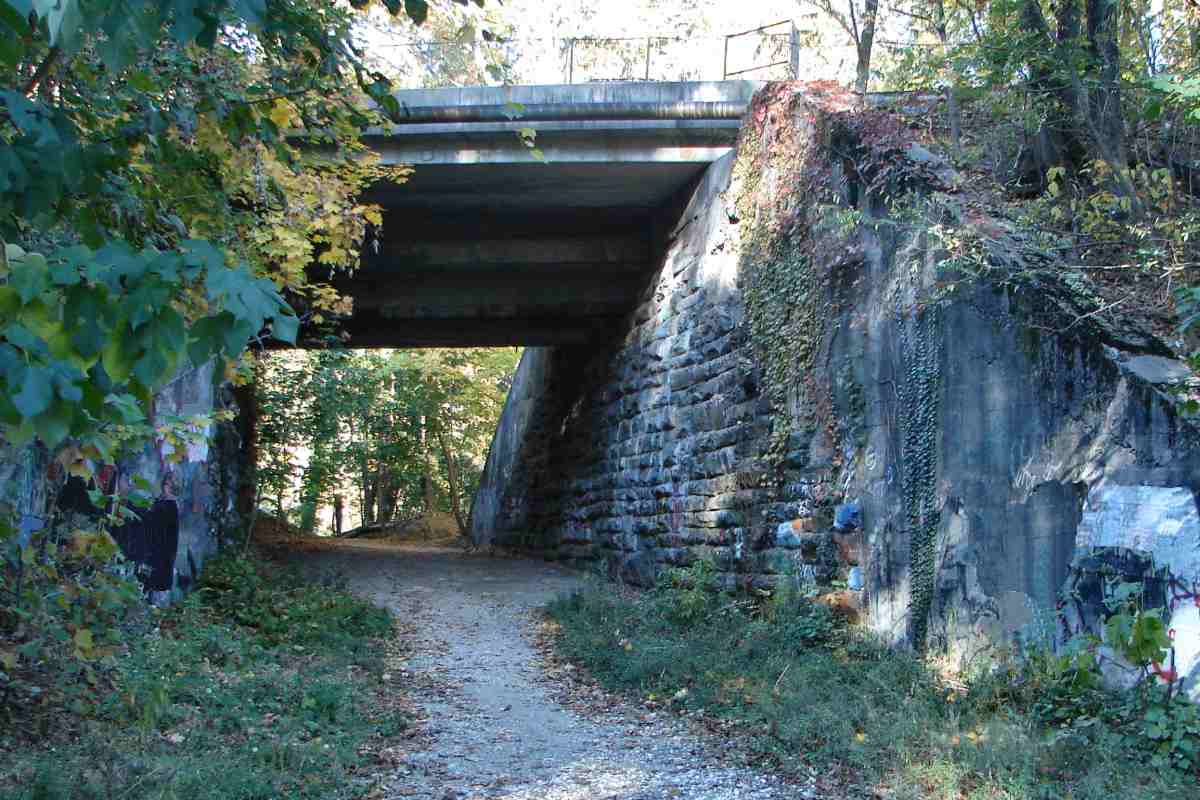
Even after accounting for seasonal change, more greenery exists during the early 21st century than did during the later 20th. This is probably a consequence of warmer temperatures, less tree trimming and the spread of invasive species such as kudzu.


West of JHU
Photo courtesy Johns Hopkins University

West of JHU
Mile: 1.0 to 2.1 Date: Feb 1953
Ease: View: N (up)
Area: TM:
Map: Ba 35 A 6 (center) Topographic Maps

Ma & Pa follows Stony Run's tree-lined, meandering route upstream (from bottom to top), passing west of Johns Hopkins University (right), the southernmost of several educational institutions along the Charles Street corridor. An 1882 E. Robinson map puts Hampden Station near photo center, west of the railroad.

Wyman Park Drive and Remington Avenue are the overpasses at bottom, University Parkway at top.

Link: JHU history


Merryman's Lane
Photo courtesy Baltimore Streetcar Museum
and Digital Maryland

Merryman's Lane
Mile: 1.9 Date: 1915
Ease: A View: NW
Area: B BSTPY: 89
Map: Ba 35 A 5 Topographic Maps

Overhead wires trace streetcar route 29. Prior to Johns Hopkins University's move to Homewood (left), University Parkway had been named Merryman's Lane. Ma & Pa operated where the road dips in the distance. An 1882 map puts Guilford Station in the northwest quadrant of Merryman's Lane and the railroad.

Link: JHU's Merryman Hall


University Parkway
Photo credit Jim Gallagher

University Parkway
Mile: 2.0 Date: May 1952
Ease: A View: S
Area: B TM: 98
Map: Ba 35 A 5 Topographic Maps

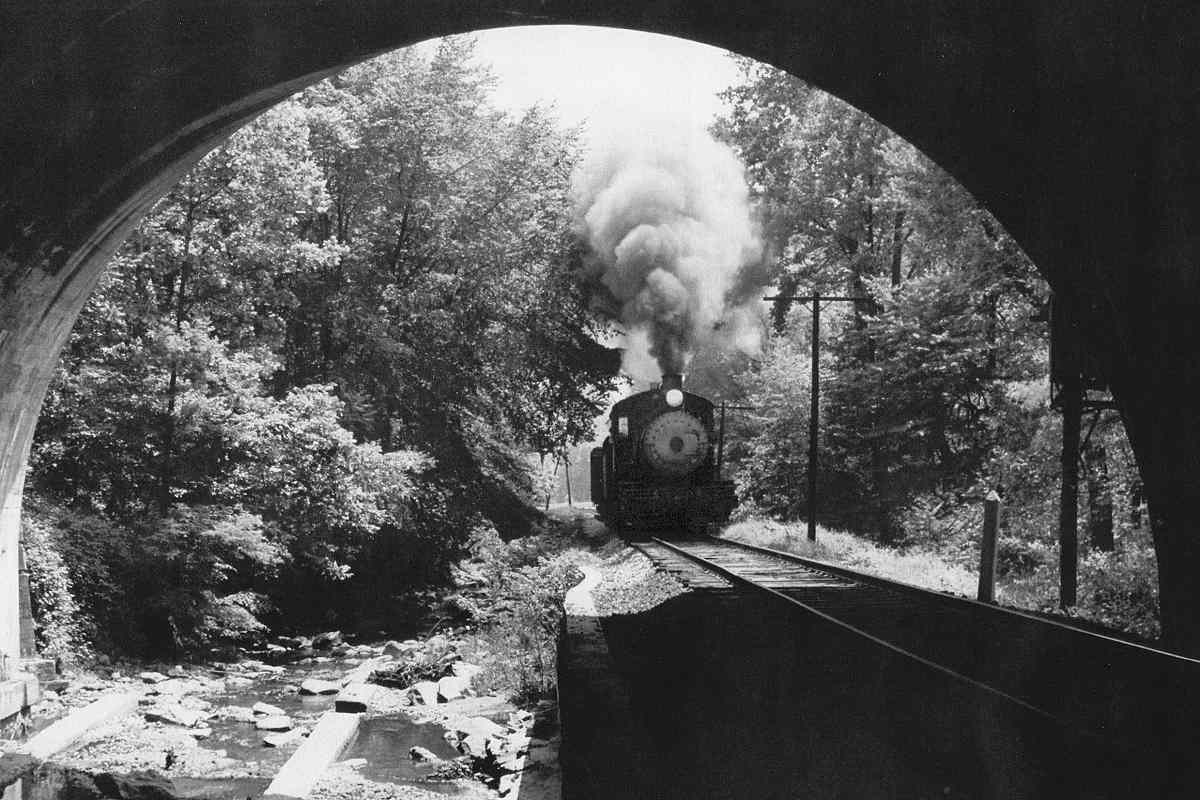
Milepost 2 at right watches a Ma & Pa locomotive chuff uphill. The grade was almost 2%. Though initially-proposed straighter alignments crossed Stony Run in places, the tracks actually built hugged the west bank despite the resulting curves.


Linkwood Road
Photo credit John W. Barriger III*

Linkwood Road
Mile: 2.1 Date: 1941
Ease: B View: SE
Area: B TM:
Map: Ba 34 K 4 Topographic Maps

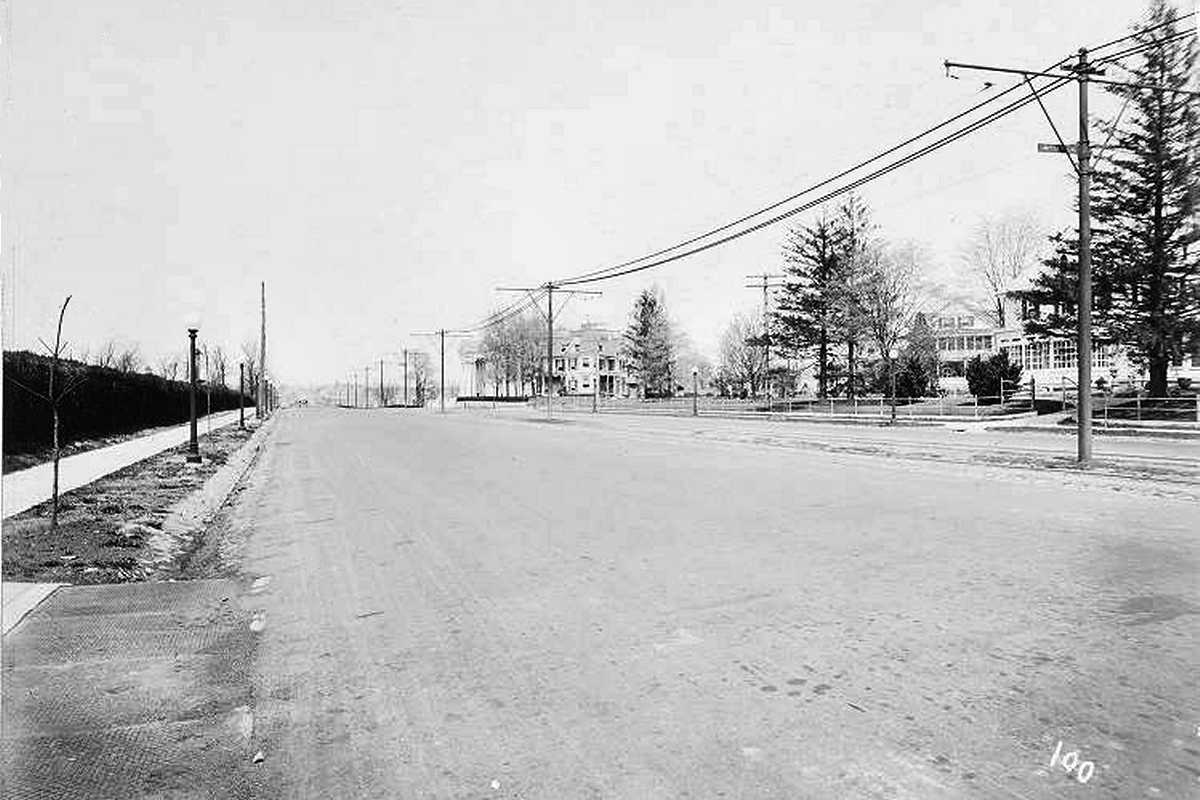
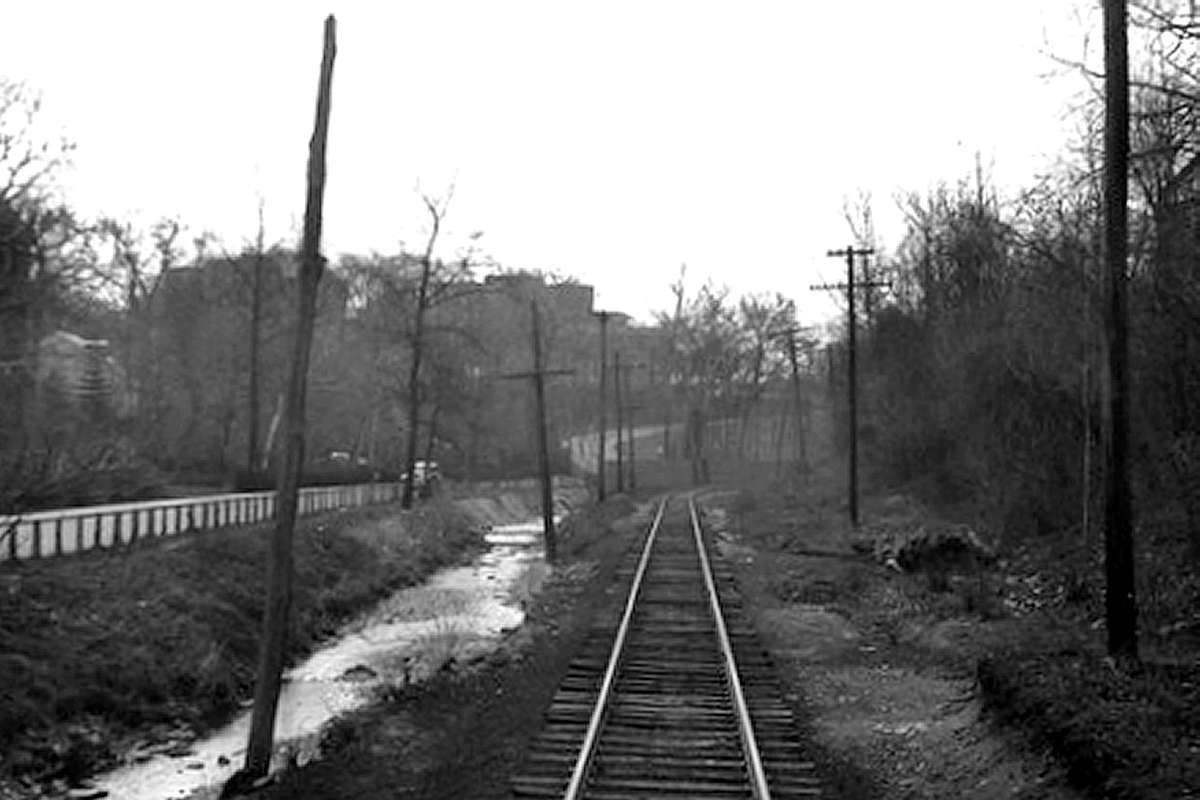
The Stony Run valley opens north of University Parkway. This was one of few places a road and Ma & Pa ran parallel on opposite banks. The city's pre-1918 northern border was not far behind the photog.

An 1894 survey map places a large ice pond on the right as part of the Garrett Estate. Prior to artificial refrigeration, ice would be harvested from naturally-frozen ponds, then stored in insulated buildings until needed for cooling purposes during warmer seasons.

Link: Ma & Pa photos


Cold Spring Lane

Cold Spring Lane
Mile: 2.6 Date: Feb 2025
Ease: A View: S
Area: B TM:
Map: Ba 34 K 3 Topographic Maps

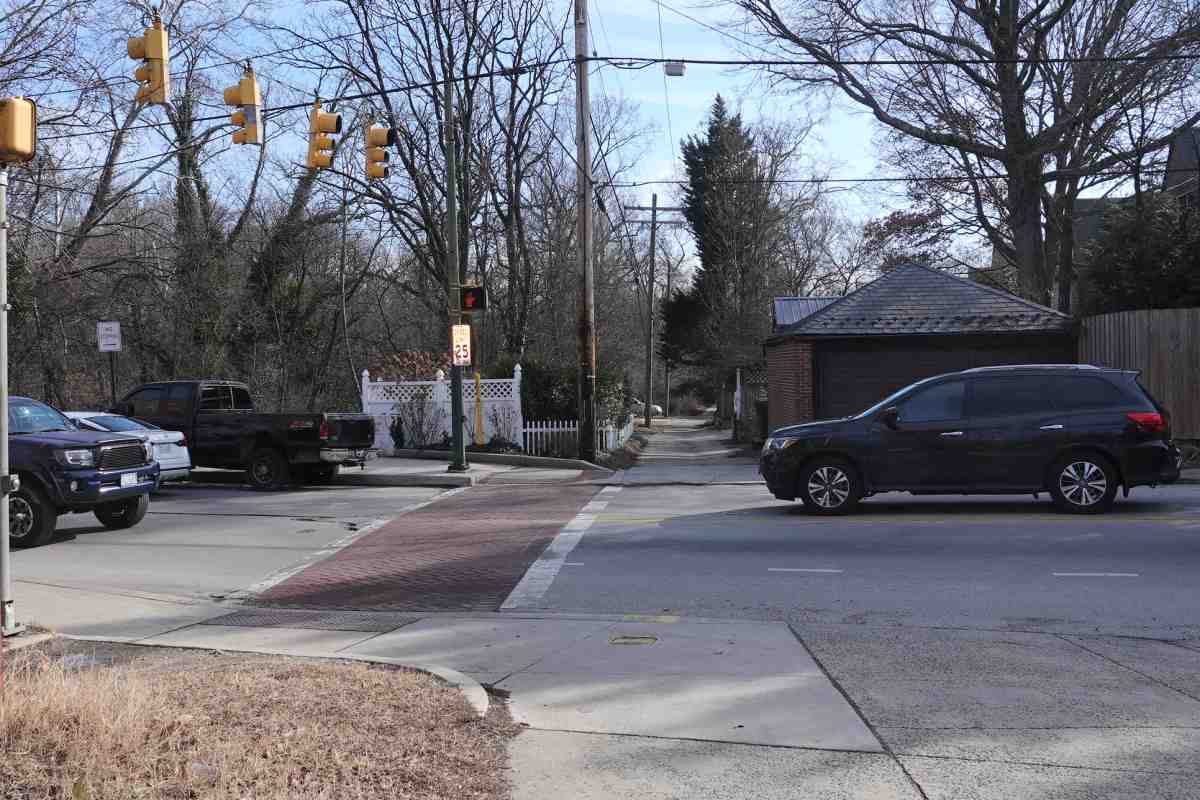
Ma & Pa crossed Cold Spring Lane at grade here. South of Cold Spring Lane, the former railroad has been repurposed into Meadow Lane, the alley at center. Immediately behind the photog once stood Evergreen Station, the first Ma & Pa stop north from North Avenue in Baltimore. Nothing remains of the station.


Three Stations
Image courtesy Johns Hopkins University

Three Stations
Mile: 2.6 to 3.2 Date: 1882
Ease: View: N (up)
Area: TM:
Map: Ba 34 K 2 (center) Topographic Maps

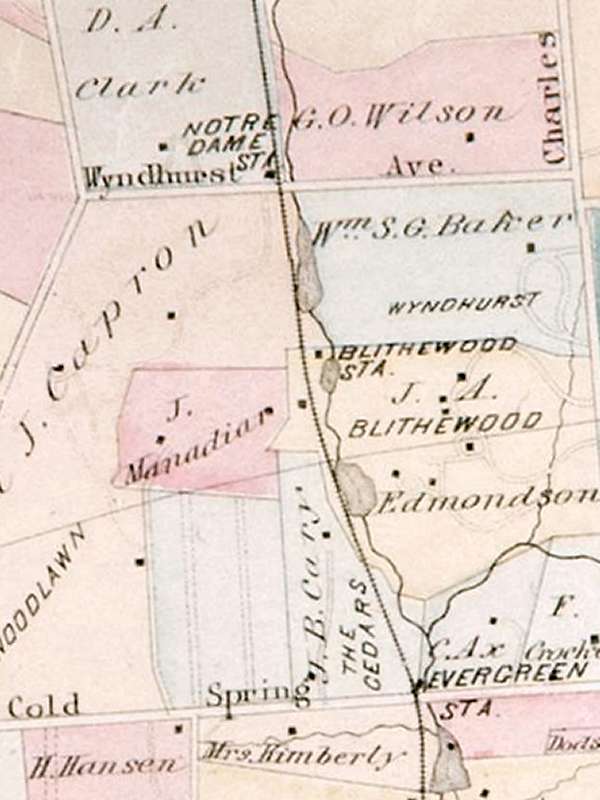
Ma & Pa predecessor Baltimore & Delta placed three stations within the roughly 3100-foot stretch from Cold Spring Lane to Wyndhurst Avenue, perhaps to learn which would draw the most customers. Blithewood, along with Guilford and Hampden Stations, was subsequently closed, perhaps when Ma & Pa took over. Details about those stations are scarce. They were probably nothing more than small, open-air shelters.


Stony Run Path

Stony Run Path
Mile: 2.9 Date: Feb 2025
Ease: A- View: N
Area: A- TM:
Map: Ba 34 K 2 Topographic Maps

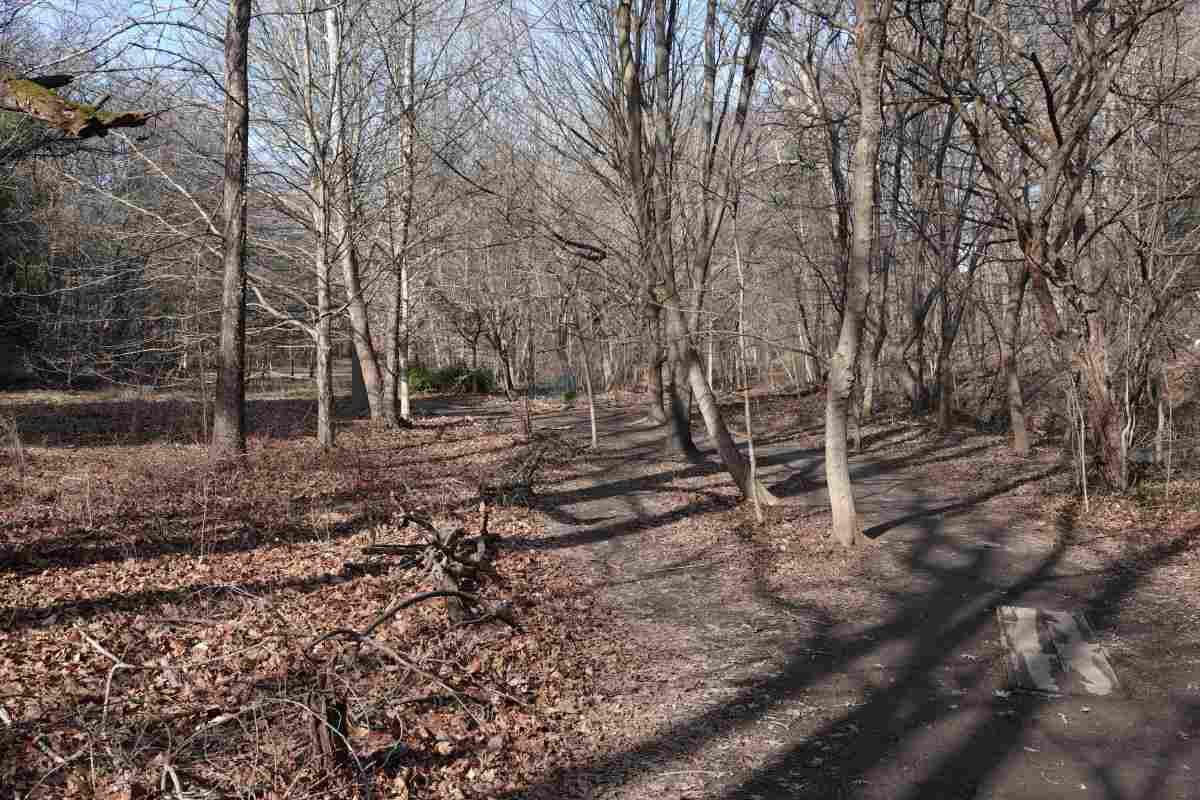
Near the end of Oakdale Road, level grading hints a railroad was here. Blithewood Station was ahead but not at a cross street. It may have been a concession for building through J. A. Edmonson's land.


Notre Dame Station

Notre Dame Station
Mile: 3.2 Date: Feb 2025
Ease: A View: E
Area: A- TM:
Map: Ba 34 K 2 Topographic Maps

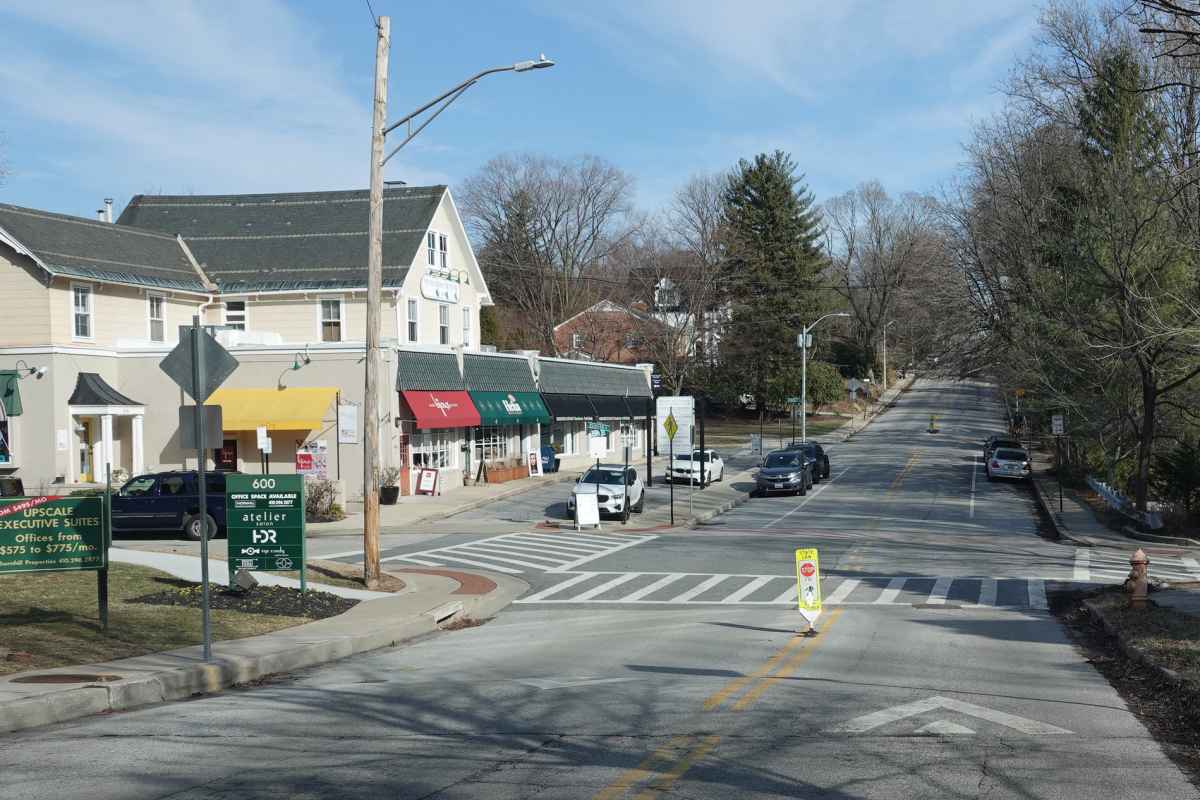
A former Ma & Pa station plus general store survives as the bright building within the northeast quadrant (left) of Wyndhurst Avenue and Wilmslow Road. An 1882 E. Robinson map places what may have been another former station in the northwest quadrant. Wilmslow closely follows the railroad's path now.

The station drew its name from nearby Notre Dame of Maryland University established in 1873. This neighborhood had also been called Tuxedo Park.

We'll continue northward (left) on the next page.


<< Previous (south) | THIS PAGE: Baltimore Stony Run | Next (north) >>

Or, return to main page

* John W. Barriger III photos © 2005 St. Louis Mercantile Library at the University of Missouri St. Louis
Copyright Notice