TrainWeb.org Facebook Page
B&O Photo Tours - Railroad Photography


Railroad Photography Course
Composition

Accompanying each photo below are:

Click a photo to see a larger view. Please send your comments and corrections to Steve.


<< Previous (Subjects) | THIS PAGE: 3) Composition | Next (future) >>

Brief Background: Composition

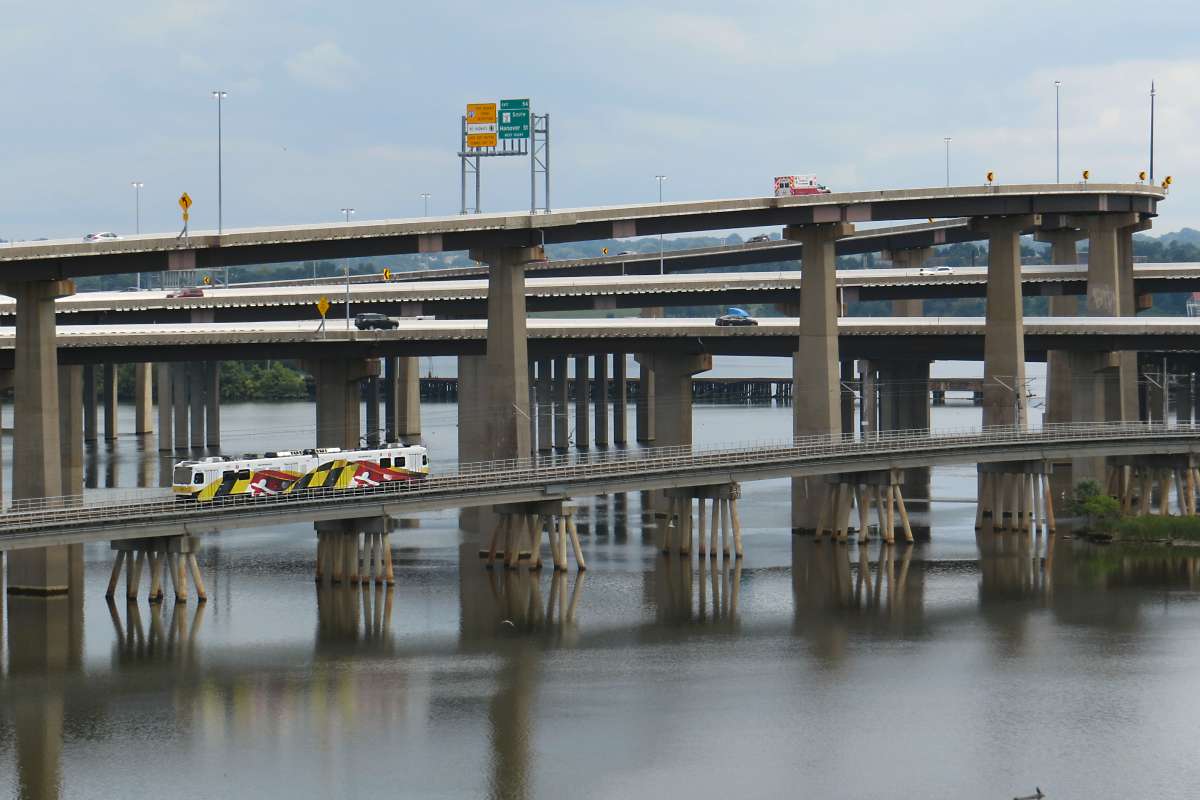
Thirds

Thirds
Mile: Date: Aug 2023
Ease: A- View: SE
Area: B Exposure:
Map: Ba 42 K 3 Topographic Maps

The "Rule of Thirds" says to imagine dividing the image into three strips horizontally and/or vertically, then place your subject along one or two of those lines. In this image, the train follows the track along the bottom-third while the uppermost ramp traces the image's upper-third.


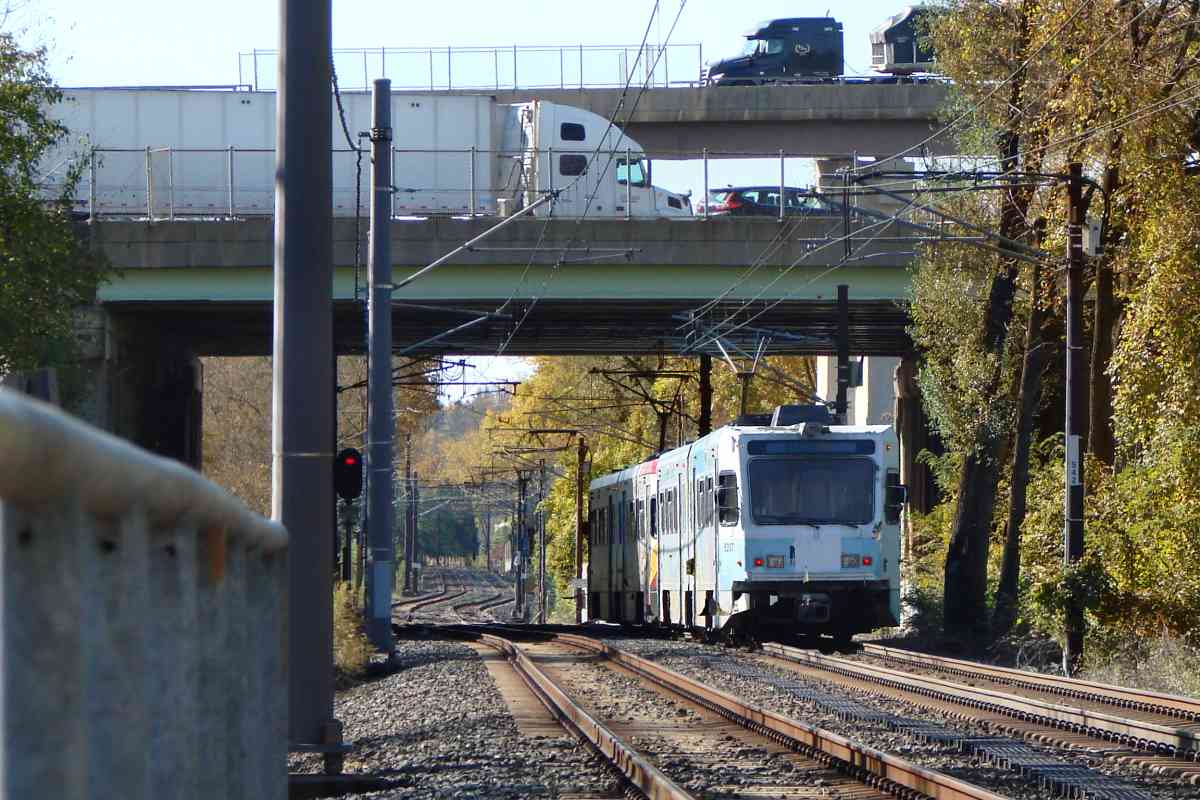
Leading Lines

Leading Lines
Mile: Date: Nov 2020
Ease: B+ View: SW
Area: A- Exposure:
Map: Ba 26 J 3 Topographic Maps

The rails and fence direct the eye to the subject light rail car.


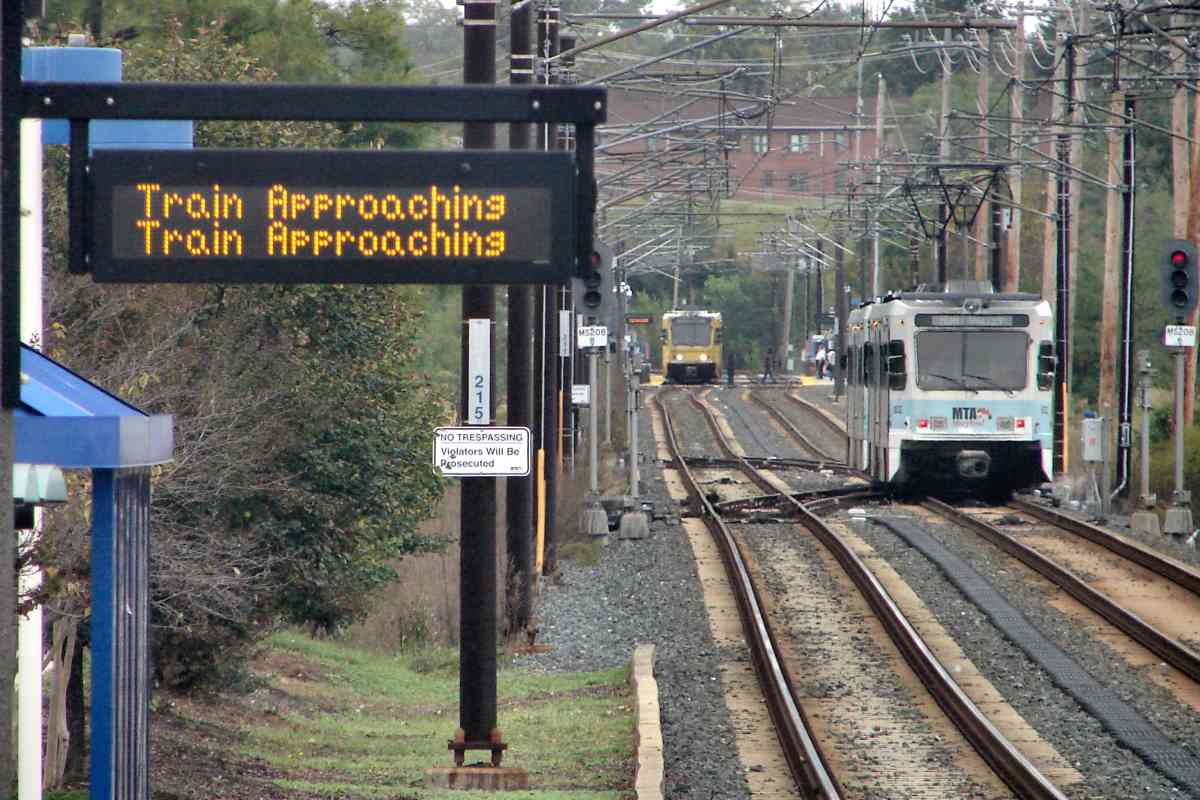
Framing

Framing
Mile: 4.1 Date: Oct 2017
Ease: A View: N
Area: B- Exposure:
Map: Ba 42 J 10 Topographic Maps

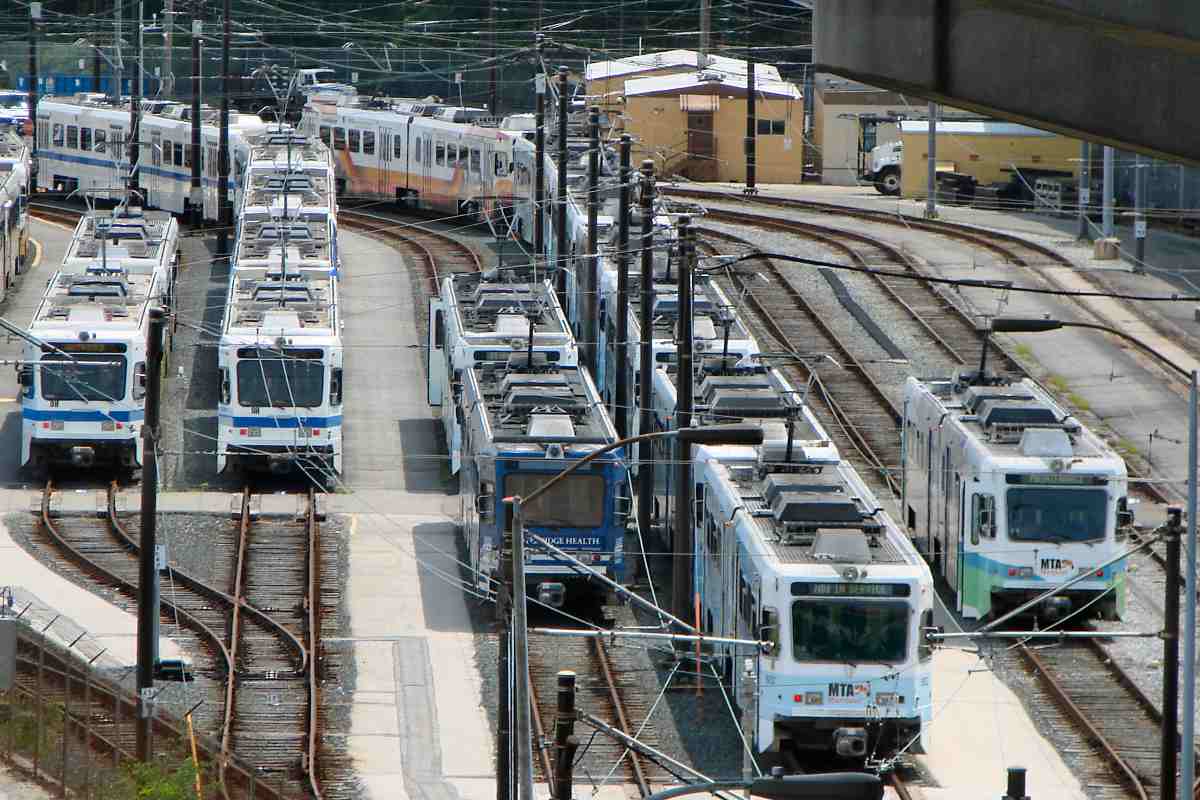
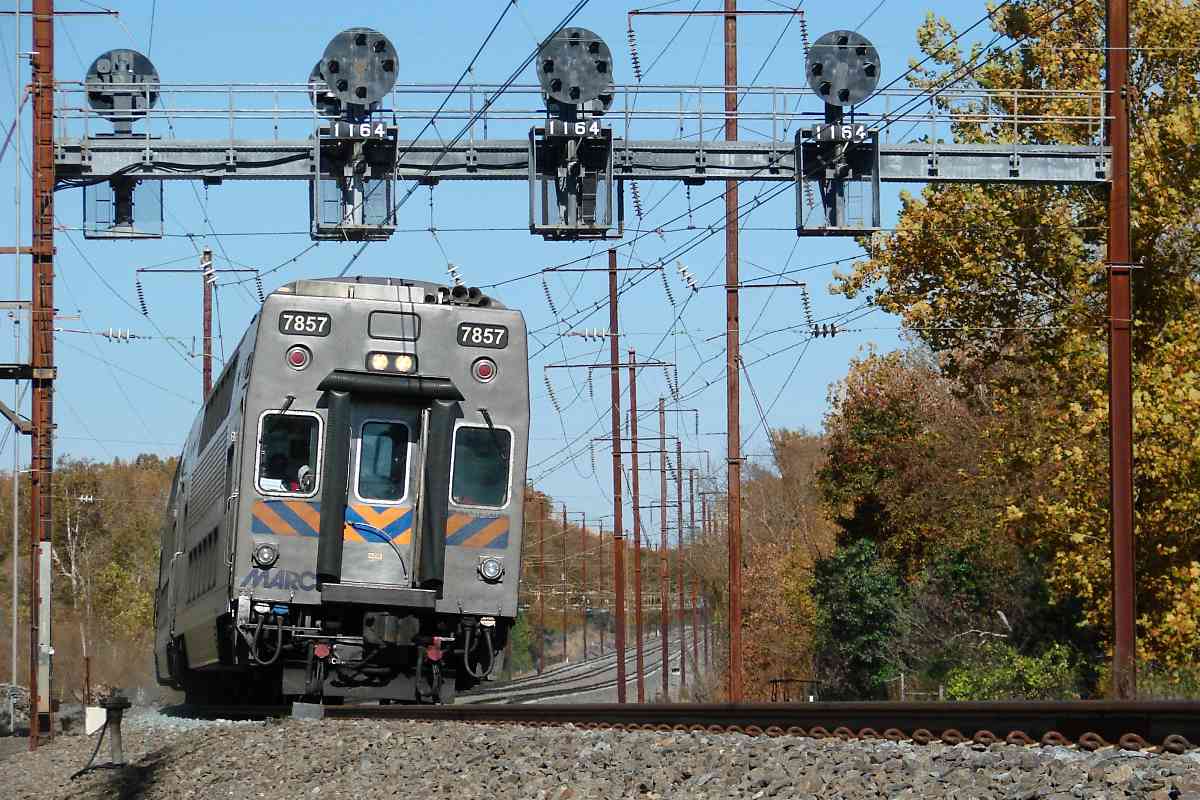
The framing technique says to enclose your subject with a frame of sorts composed of items in view. Here, the power poles and wires form a box-like frame around the trains. This is one of the easier composition techniques to use with trains because utility poles of some sort often run parallel to the rail line.


Multiple

Multiple
Mile: 18.0 Date: Oct 2025
Ease: A- View: E
Area: B- Exposure: 0.001 s
Map: AA 5 E 9, Ho 20 G 9 Topographic Maps

Multiple composition techniques can appear in a single photo. The road bridge traces a line 1/3 of the way from the top, plus serves as a frame for the train. The lead engine is 1/3 of the way from the right.

Track curves can be good spots for train photos. The curve suggests dynamic action.


Contrasts

Contrasts
Mile: 80.7 Date: Aug 2018
Ease: A- View: NE
Area: A Exposure:
Map: Ba 30 J 13 Topographic Maps

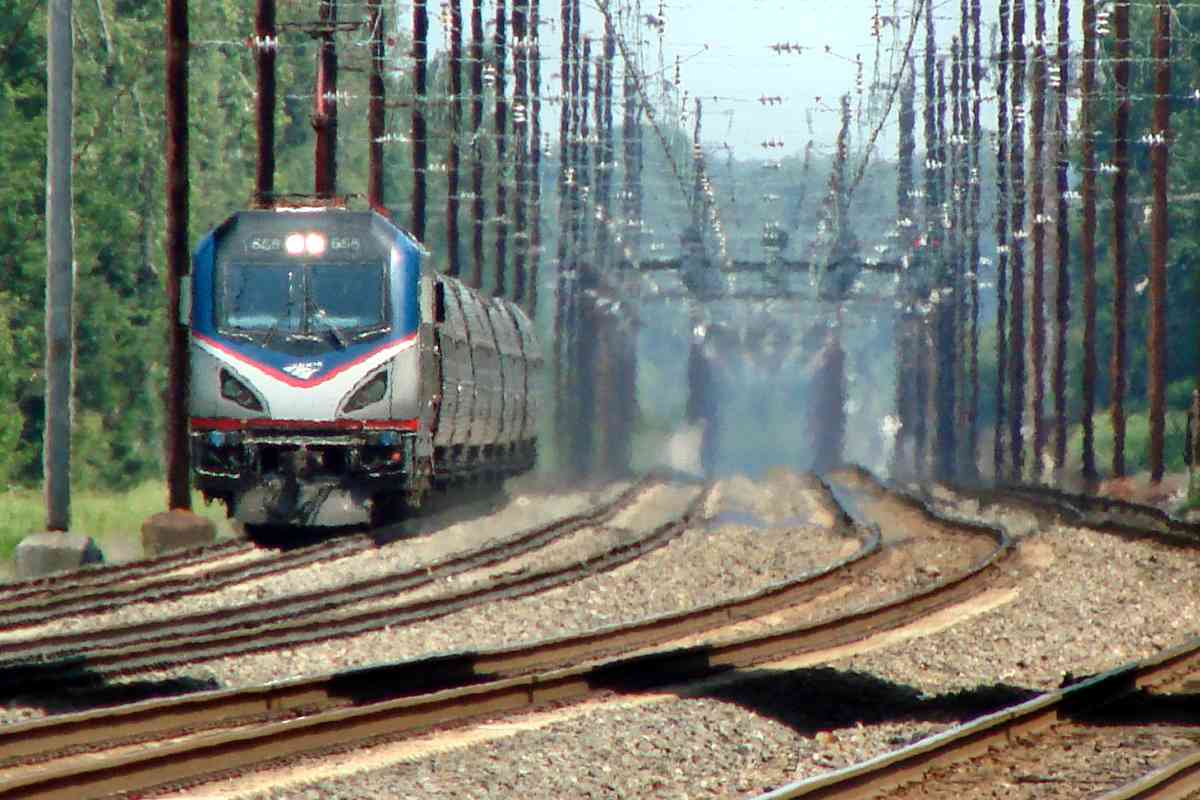
Track curves also let you photo past pesky trackside power poles, yet retain distant ones to serve as a frame. This off-center train contrasts its occupied track with the emptiness of the other tracks. Heat distortion adds an artistic look.


Roster Shot

Roster Shot
Mile: 17.8 Date: Oct 2003
Ease: A View: SE
Area: B Exposure:
Map: Ho 20 G 9, AA 5 E 9 Topographic Maps

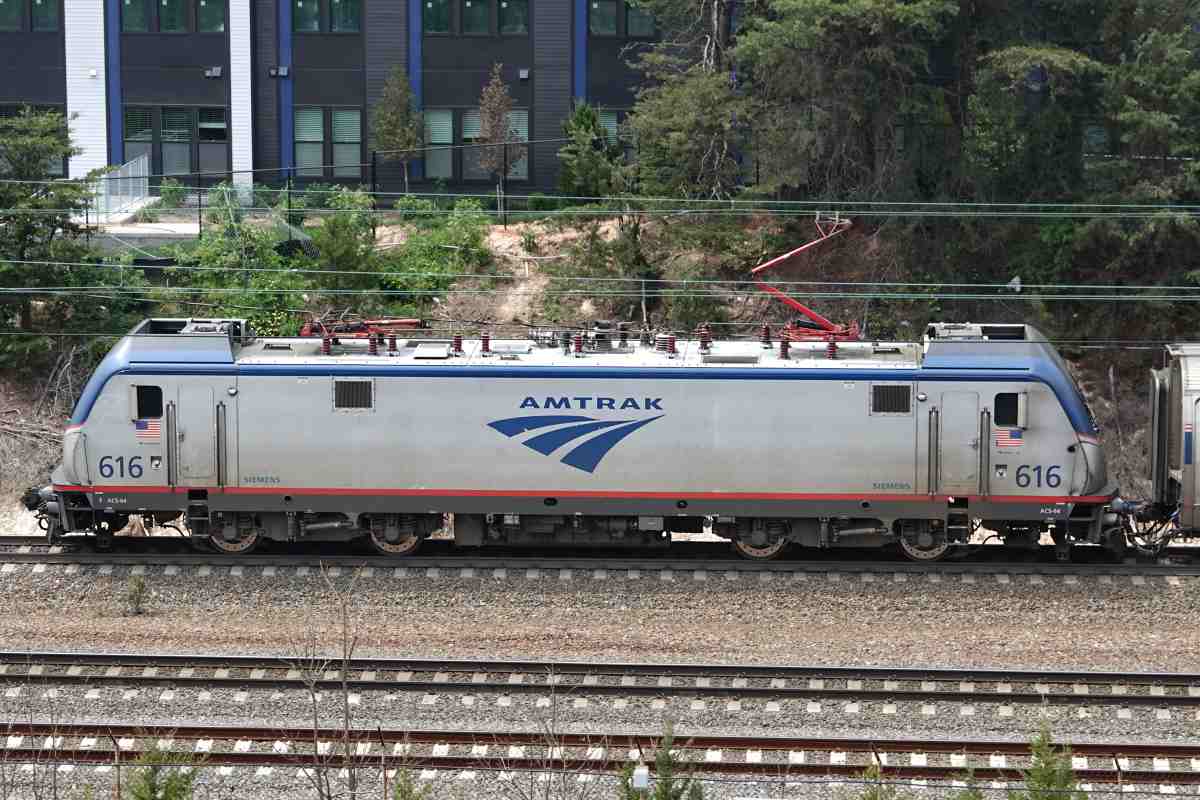
The standard "roster shot" angle captures the side of a railcar. Some who wish to capture a photo of every numbered railcar of a particular series prefer side views.


Roster Shot Over

Roster Shot Over
Mile: 127.3 Date: May 2018
Ease: B+ View: NW
Area: B+ Exposure: 0.001 s
Map: PG 13 D 6 Topographic Maps

Being higher than the train lets you also record some of its top side.


Head-On

Head-On
Mile: 16.8 Date: Dec 2024
Ease: B+ View: N
Area: B Exposure:
Map: Ho 20 H 7 Topographic Maps

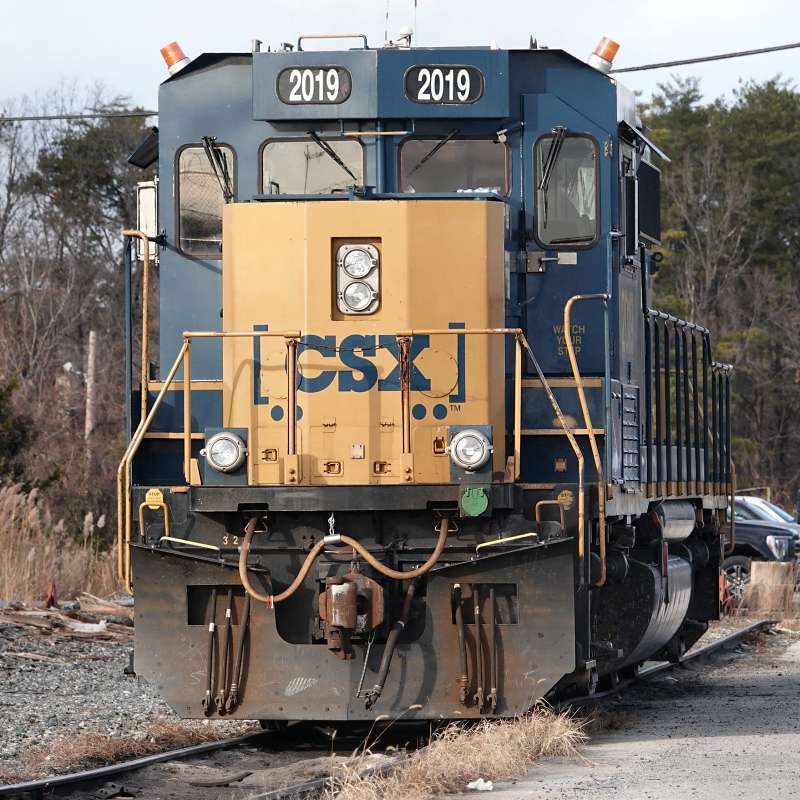
This is not exactly head-on, but it's close. Head-on photos from ground level capture only one end of a train. They are best obtained from the outer side of curved trackage because that lets you stand clear of the rails. Be aware that illuminated headlights that point at the camera can confuse autofocus, so be ready to switch to manual.


Head-On Over

Head-On Over
Mile: Date: Aug 2019
Ease: B View: S
Area: C+ Exposure:
Map: Ba 34 K 8 Topographic Maps

This is a multi-train version of head-on. An elevated perch lets you stay out of the way of the trains.


Wedge

Wedge
Mile: 100.1 Date: May 2025
Ease: B View: S
Area: C Exposure:
Map: Ba 42 C 2 Topographic Maps

The wedge is the most common rail photo style. Unlike head-on and roster shots, a wedge does not require the photog to be at a specific location relative to the rolling stock (train). From ground level, two sides of railcars are visible.


Overhead Wedge

Overhead Wedge
Mile: 17.9 Date: May 2025
Ease: A- View: E
Area: B Exposure:
Map: Ho 20 G 9, AA 5 E 9 Topographic Maps

A wedge shot from a higher point shows three sides of the railcar.

Decades ago, a person with the pen name of Grumpy uploaded wonderfully useful, if opinionated, railroad photography tips at http://www.grumpysworld.com/photoguide/photoguide.htm. Unfortunately, Grumpy's site disappeared many years ago and, apparently, is not to be found in the Internet Archive. Grumpy disliked wedge photos in part because they are the easiest to obtain and therefore usually uninventive. I don't mind wedge views, though I do prefer ones from above.


Below

Below
Mile: 8.1 Date: May 2018
Ease: B View: N
Area: A Exposure:
Map: Ba 41 F 11 Topographic Maps

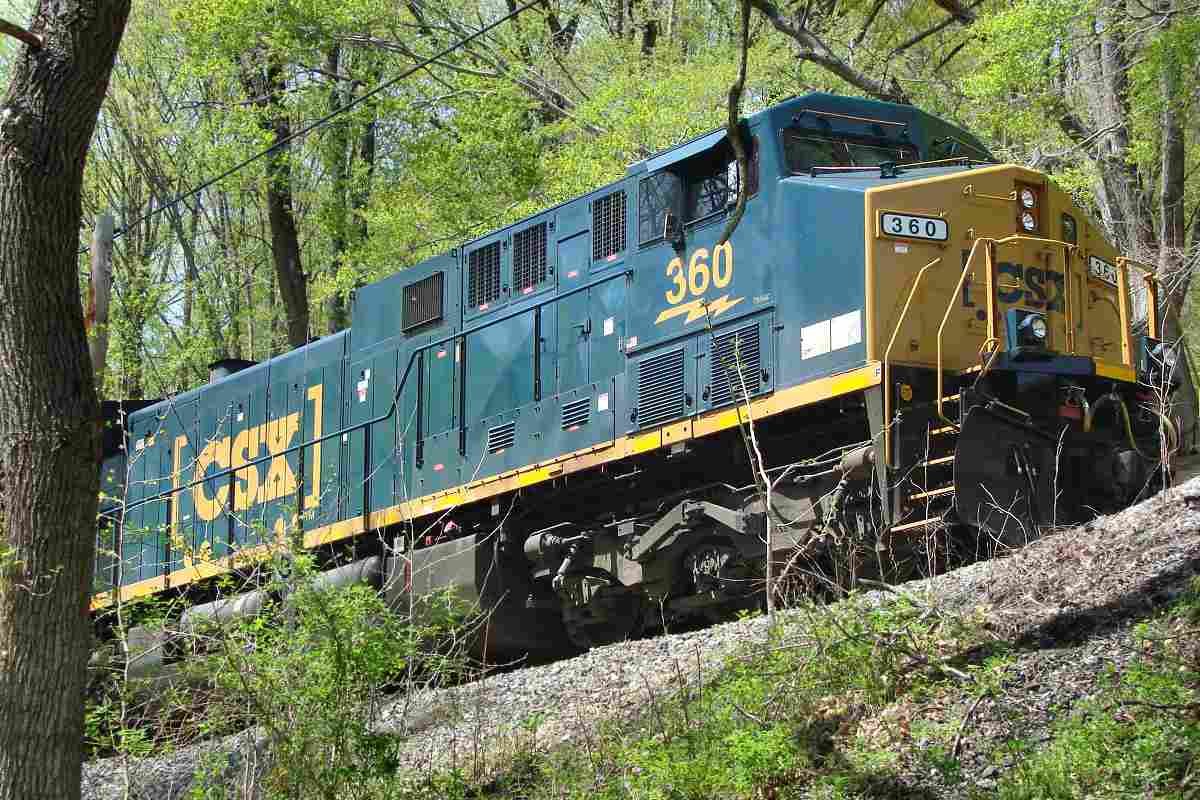
Where a rail line traverses a hillside, a view from below is possible. Beware of additional safety risk at such spots because if a train derails, it could roll down the hill. Of course, just getting to the location involves some risk.

The complex content of this photo, primarily the leaves, makes it difficult to compress efficiently for storage. To stay within the site's 100k file size limit, this photo needed to be compressed more than usual, leading to jpg artifacts. The jpg compression issue will be discussed more in a later lesson.


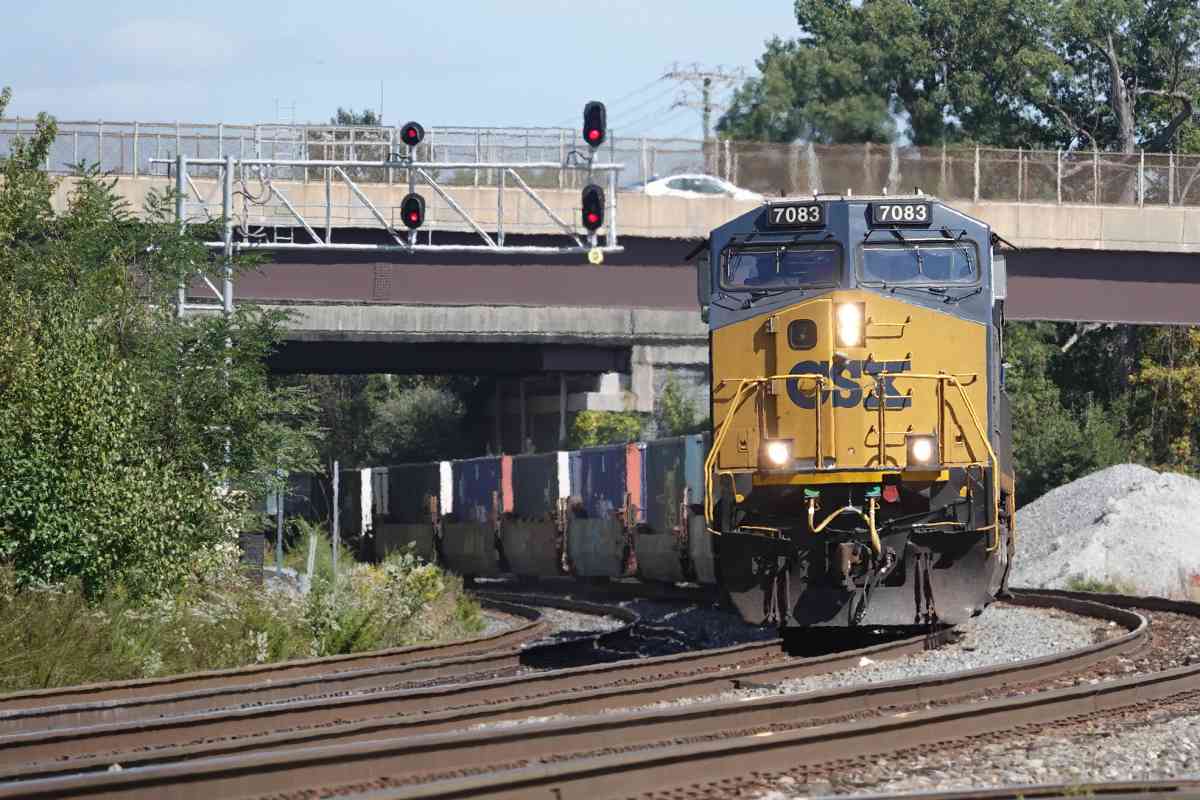
Unsuccessful

Unsuccessful
Mile: 28.7 Date: Nov 2015
Ease: A- View: E
Area: B+ Exposure:
Map: Ca 35 A 4, Ho 5 A 5 Topographic Maps

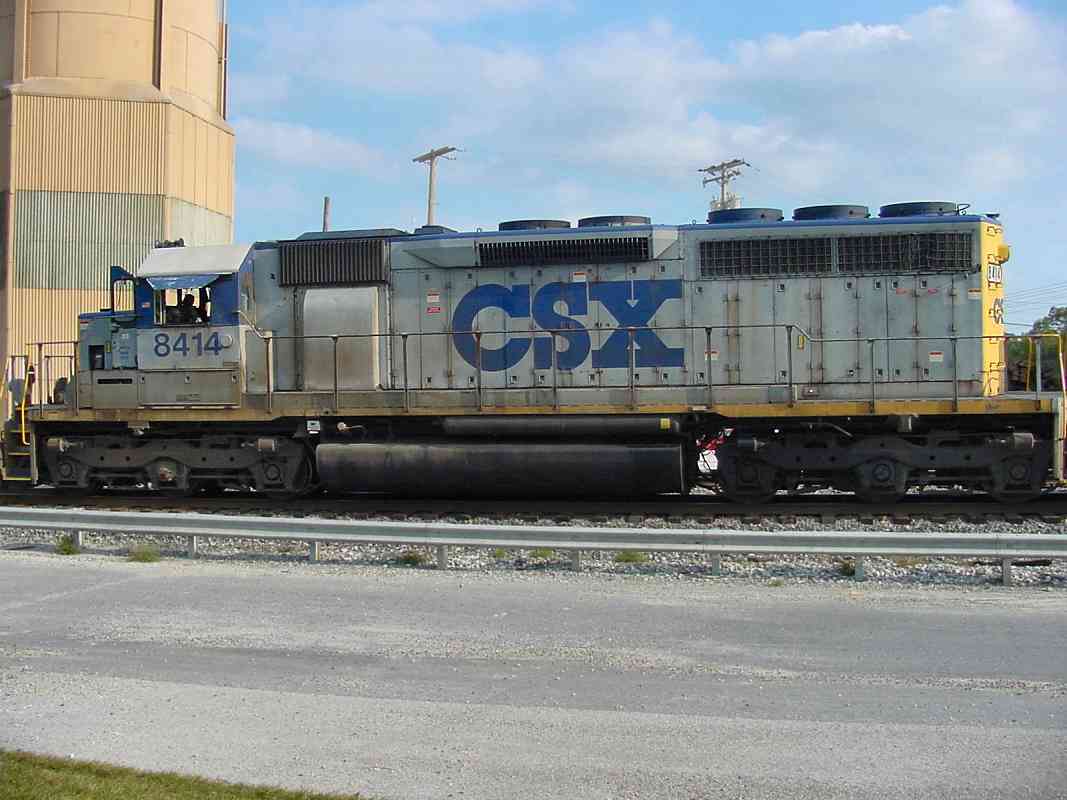
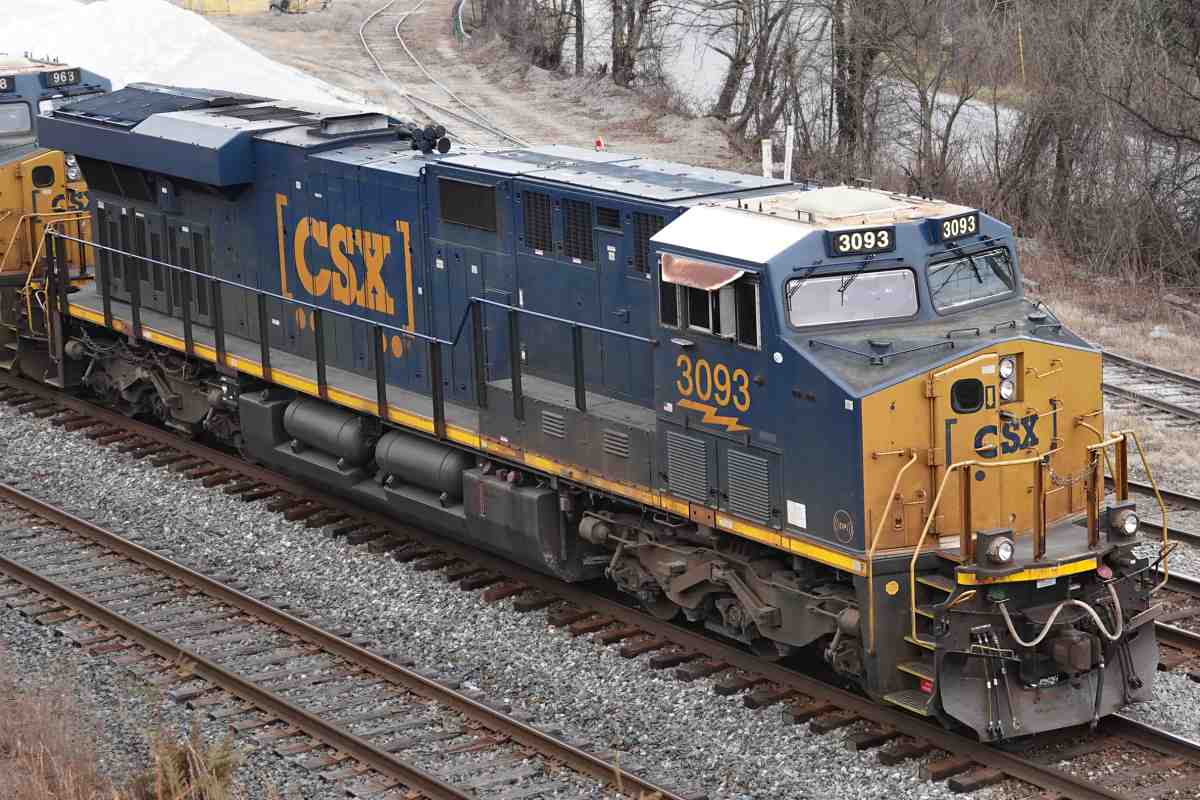
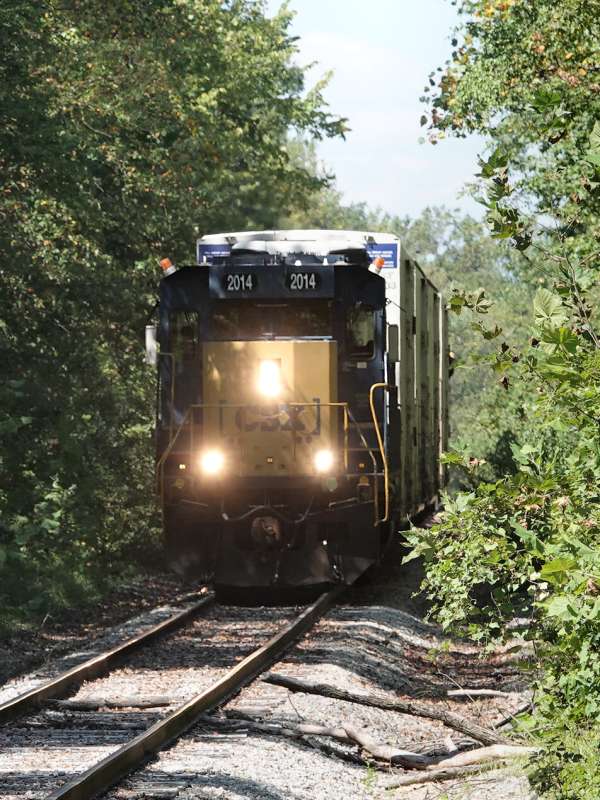
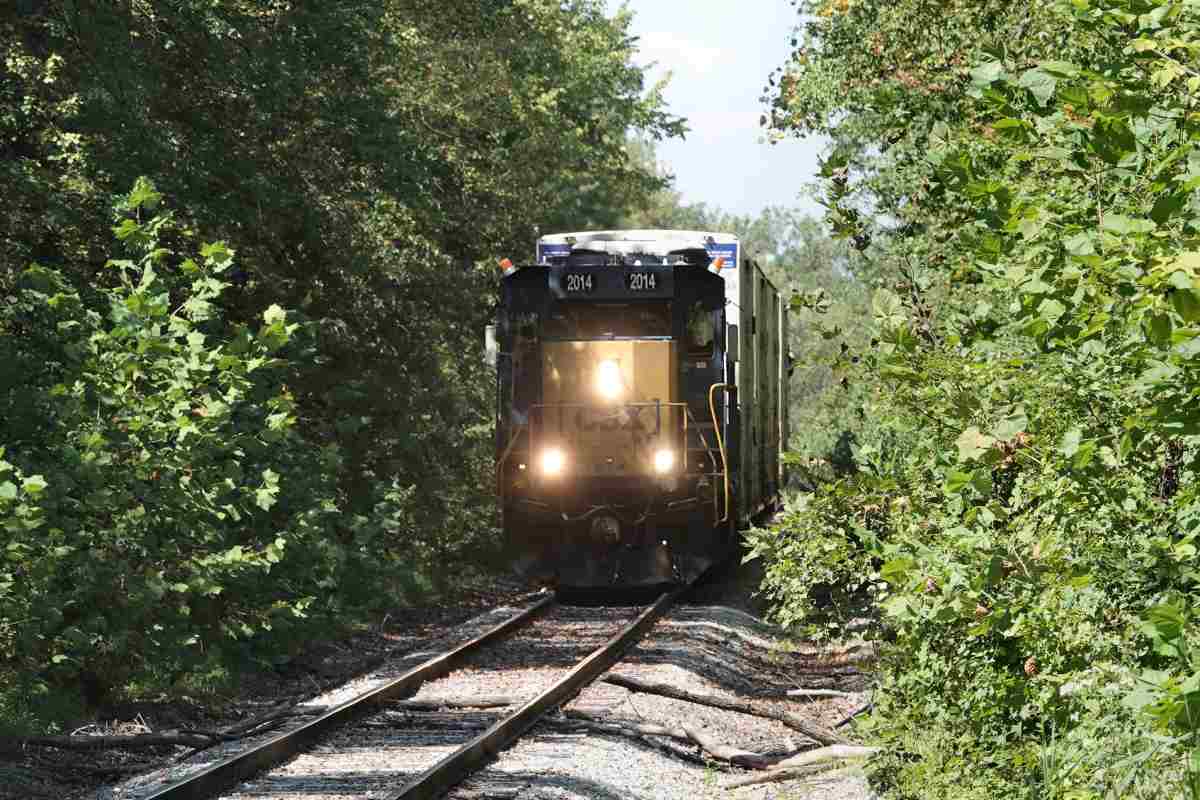
When I heard a train horn, I got into position for this shot. I included the guardrail as an experiment, but I do not like the result. The foreground guardrail does not lead the eye to the engine and causes unbalanced framing.

Had I known this would be the lowest-numbered CSX engine I've seen in the lead, I would have opted for a non-experimental photo. You must be prepared because a moving train leaves no time to safely relocate or make significant changes to camera settings.


Too Late

Too Late
Mile: 113.6 Date: Aug 2025
Ease: A- View: NE
Area: B+ Exposure: 0.001 s
Map: AA 12 H 3 Topographic Maps

Express trains don't stop at all stations. Where Amtrak operates at 100-plus mph, there is limited time to prepare for photos. This will be the result sometimes. Oddly enough, it's deemed OK to stand within a few feet of a 100 mph train passing a station, though doing so can be unsettling.

Fast trains force you to depend on a camera's automatic focus and exposure capabilities. A camera that starts up quickly and offers continuous shooting is a must. Hold the shutter button and let a digital camera take many shots within the brief time window you'll get. Save the best then delete the rest.


Tight Cropping

Tight Cropping
Mile: 116.5 Date: Oct 2017
Ease: B View: NE
Area: A- Exposure:
Map: AA 12 C 9 Topographic Maps

If you want to focus attention on the train, crop the photo close to it via a photo editor. Compare it with the uncropped version below.


Contextual

Contextual
Mile: 116.5 Date: Oct 2017
Ease: B View: NE
Area: A- Exposure:
Map: AA 12 C 9 Topographic Maps

If you want to show the context/setting, avoid tight cropping. Placing a train off to the side of the photo suggests action because our minds expect the train to soon follow the curve and fill the empty area.


Portrait

Portrait
Mile: 6.3 Date: Dec 2003
Ease: B- View: E
Area: B Exposure:
Map: Ba 41 K 11 Topographic Maps

Which do you choose: portrait (tall) or landscape (wide)? Portrait orientation (taller than wide) can direct attention into the distance.

People already know what trains look like. It's your task to include something they don't already know.


Narrow

Narrow
Mile: 16.2, spur 0.4 Date: Sep 2025
Ease: A View: NW
Area: B+ Exposure:
Map: Ho 20 H 5 Topographic Maps

landscape Narrowness expressed via portrait orientation is lost if the same photo is presented in landscape, as at left. Landscape orientation would be justifiable in this case if the leaves were important. For example, had this been colorful autumn foliage, including more of it might create a scenic effect.

This example also demonstrates that headlights can cause glare in near-head-on views. Deep zoom hides that the train is about to encounter a sharp curve to the right after which it will pass to the right of the photographer.


Landscape

Landscape
Mile: 100.1 Date: May 2026
Ease: B View: E
Area: C Exposure: 0.001 s
Map: Ba 42 C 2 Topographic Maps

It's no secret most trains are longer than they are tall, which explains why landscape orientation is the most common with close cropping. Here, one locomotive fills the full width of the photo.


Whole Train

Whole Train
Mile: 100.1 Date: May 2026
Ease: B View: S
Area: C Exposure:
Map: Ba 42 C 2 Topographic Maps

Entire trains are even longer. If you instead use portrait orientation, the sky and ground will consume a large part of the photo area, and the train will feel smaller. That could be useful as an artistic effect.


Aspect Ratio

Aspect Ratio
Mile: Date: Sep 2017
Ease: B+ View: W
Area: C Exposure:
Map: DC 17 C 1 Topographic Maps

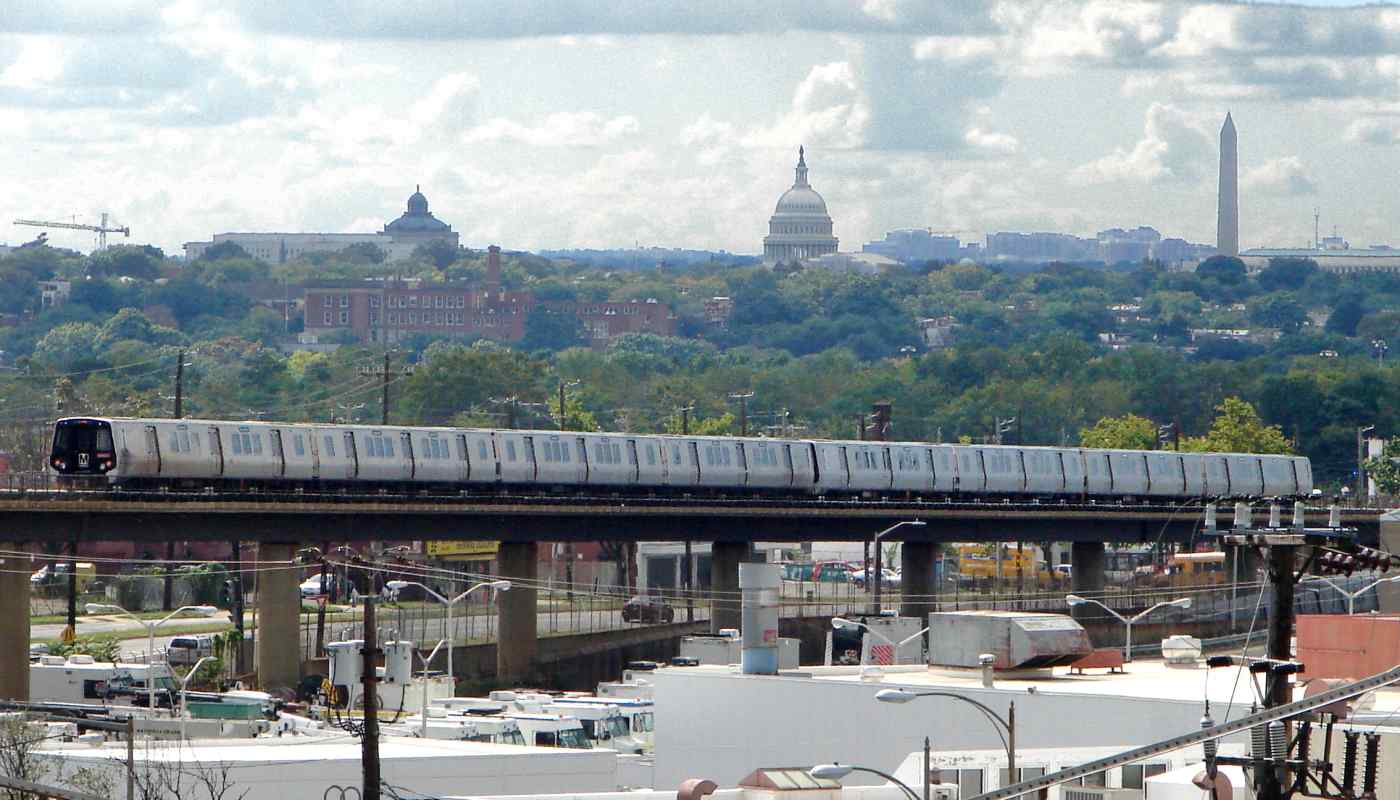
Some scenes are best depicted in custom aspect ratios. This panel's photo is an example. A wider-than-usual ratio permits display of an eight-car Washington Metro train in front of the Library of Congress, Capitol and Washington Monument without adding too much sky or ground clutter.

Time out for a brief bit of (easy-to-understand) math: aspect ratio expresses a photo's width vs. height. For example, an aspect ratio of 2:1 means the photo is twice as wide as it is tall.

Most 20th century, consumer-grade, 35 mm film employed a 4:3 aspect ratio. Televisions of that era adopted that same screen ratio. Since that ratio looks older, perhaps you already noticed I employ it at this site for most photos of the oldest rail lines.

During the 21st century, wide-screen televisions were introduced with a 16:9 aspect ratio. That's a wider image than 4:3 (which is the same as 12:9). For newer rail lines toured at this site, I adopted a 3:2 ratio because that fits the screen of many tablet devices. Some cameras let you choose from a list of aspect ratios.


Pacing

Pacing
Mile: 127.3 Date: Jun 2019
Ease: A- View: W
Area: B+ Exposure: 0.008 s
Map: PG 13 D 6 Topographic Maps

When using a longer exposure, you can keep a moving train in focus by turning the camera at a rate that matches the train. This may require some practice. Blurring of stationary objects creates an interesting look.


Artistry

Artistry
Mile: 1.4 Date: Oct 2010
Ease: B View: N
Area: C+ Exposure:
Map: Ba 42 F 3 Topographic Maps

I don't consider myself artistic, but sometimes serendipity takes me to the right place at the right time. Many enjoy the challenge of capturing heavy industry in dramatic photographs. Including a closer object, such as the leaves at left, can add depth to a photo.

Built in 1829, the Carrollton Viaduct is the oldest surviving railroad bridge in the world. CSX still uses it.


Black and White

Black and White
Mile: Date: Jul 2023
Ease: A View: E
Area: B- Exposure:
Map: Ba 43 J 11 Topographic Maps

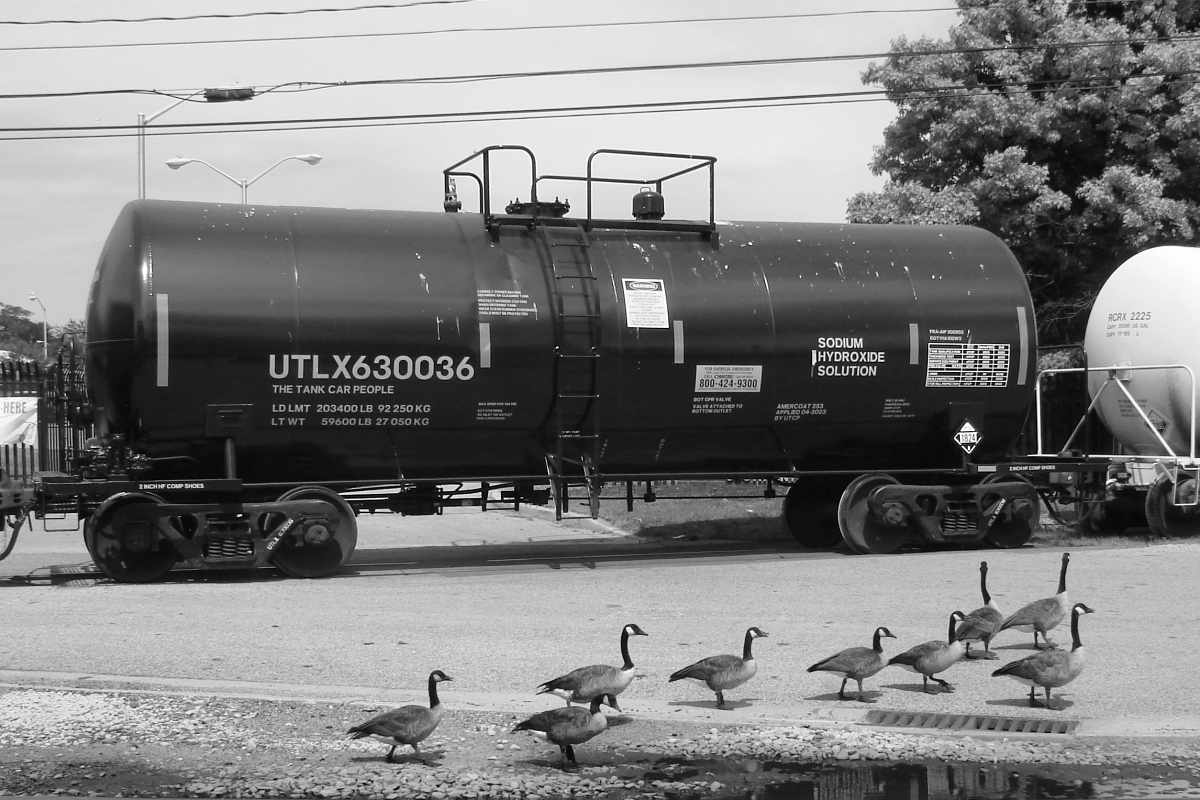
The last time I shot in black and white was for my high school yearbook. This photo was taken in color then digitally reduced to black and white. The railcars, street and geese were all just shades of gray, hence my choice of this photo as demonstrator. Numerologists will notice that the car's 630036 number is a palindrome.


Cockeysville Station
Photo credit HH Harwood

Cockeysville Station
Mile: 15.2 Date: ~1970
Ease: A View: N
Area: B+ Exposure:
Map: Ba 18 H 4 Topographic Maps

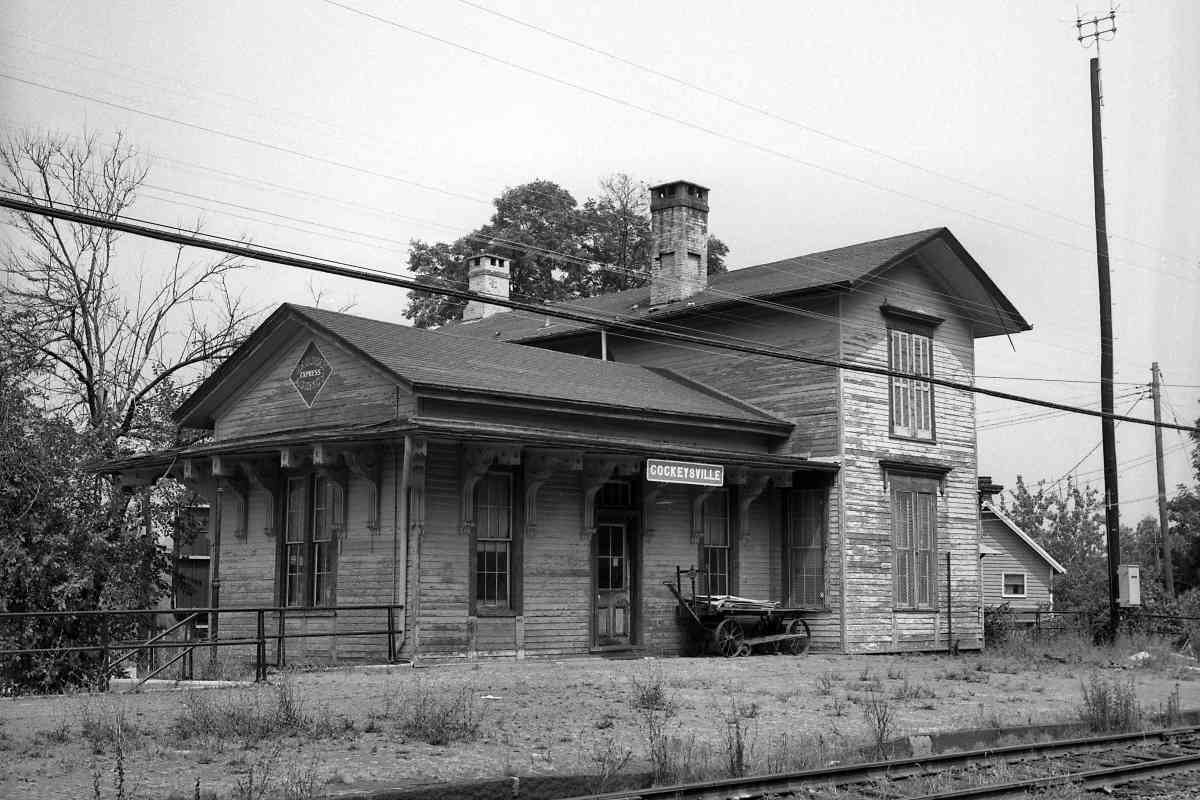
Railroad historian HH Harwood told me in 2025 that he still shoots in black and white when using film. By eliminating distracting colors, B&W brings focus to the content and lighting. If not for a few modern elements, such as the radio antenna, this circa 1970 photo might seem to be of an abandoned station circa 1900.

A large number of Harwood's photos that appear in books were taken during cloudy days. Many were snapped from an elevated location. You would do well to mimic his approach as well as that of other known railroad photographers. Obtain a few illustrated history books about your favorite railroad and see what works.


Colot

Color
Mile: 113.7 Date: Jul 2019
Ease: A- View: SW
Area: B+ Exposure:
Map: AA 12 H 3 Topographic Maps

How many different colors can you find? To boost sales of color TVs during the 1960s, manufacturers urged color TV shows of that period to make use of the full palette. This is why the backgrounds of early color shows like Star Trek were so often illuminated with vivid colors.


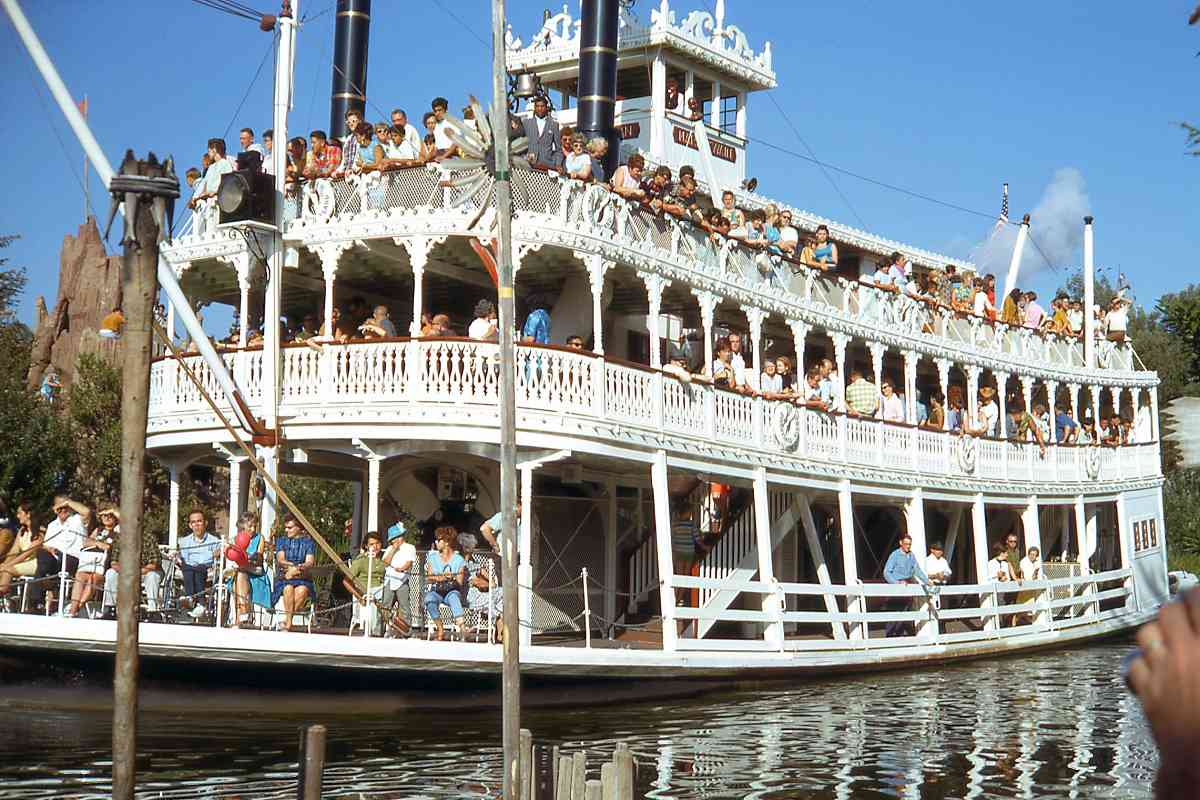
Kodachrome

Kodachrome
Mile: Date: Jun 1967
Ease: View:
Area: Exposure:
Map: (Disneyland) Topographic Maps

Kodachrome was a color film beloved for its excellent color reproduction and resistance to fading. For comparison to digital, I scanned this Kodachrome transparency of Disney's Mark Twain riverboat more than 50 years after it was shot, and the scene still looks fresh. Its colors remain so well balanced that minimal digital tweaks were needed. If you already own or purchase older railroad photos, the ones shot with Kodachrome are likely to be well preserved.

Noted National Geographic photgrapher Steve McCurry said of now-discontinued Kodachrome:

    "If you have good light and you're at a fairly high shutter speed, it's going to be a brilliant color photograph. It had a great color palette. It wasn't too garish. Some films are like you're on a drug or something. Velvia made everything so saturated and wildly over-the-top, too electric. Kodachrome had more poetry in it, a softness, an elegance. With digital photography, you gain many benefits [but] you have to put in post-production. [With Kodachrome,] you take it out of the box and the pictures are already brilliant."

The next lesson examines the importance of lighting.


<< Previous (Subjects) | THIS PAGE: 3) Composition | Next (future) >>

Return to main page

Copyright Notice