



| Home | History | Route | Locomotives | Rolling Stock | Operations | Gallery | Bibliography |
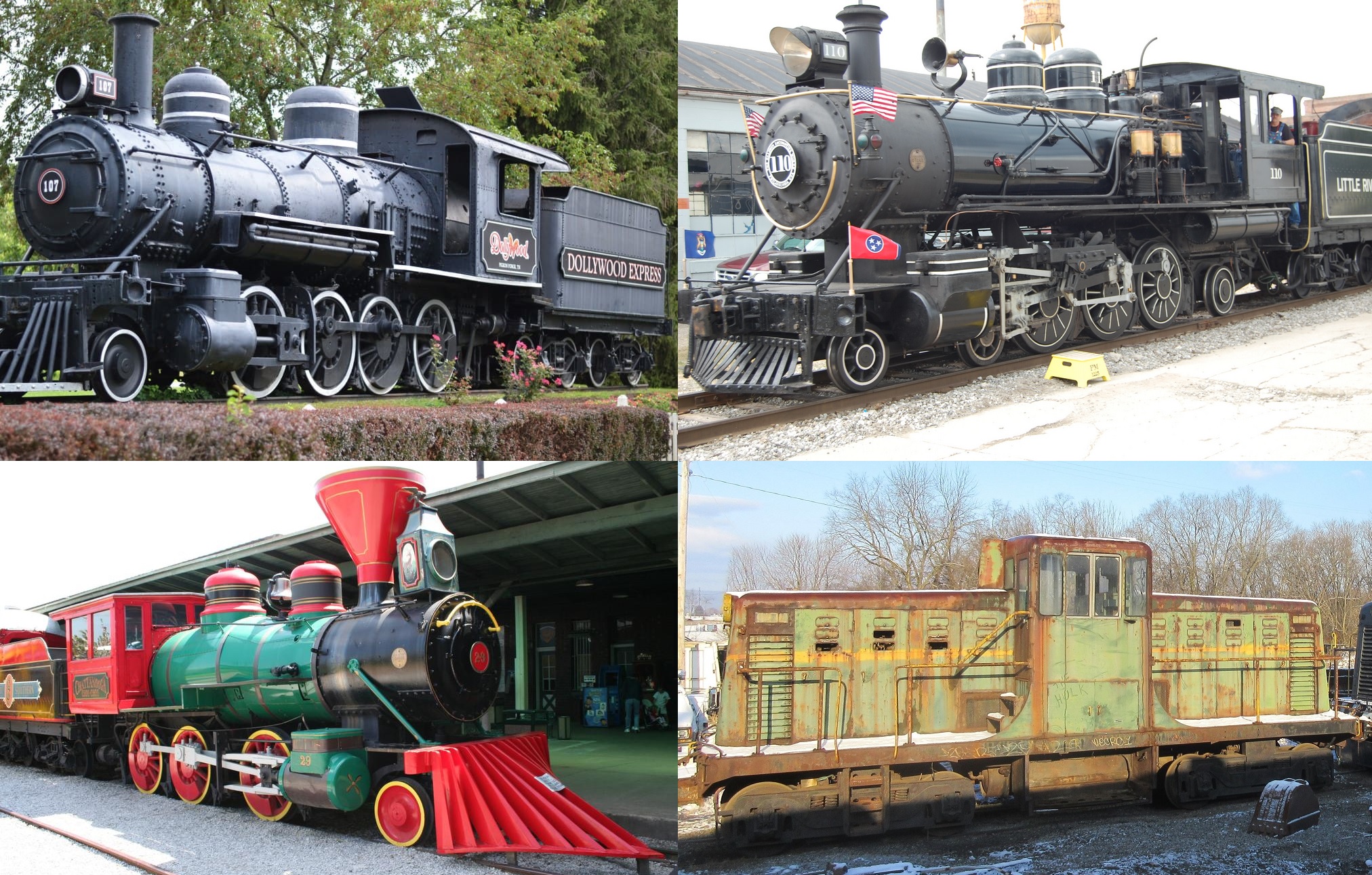
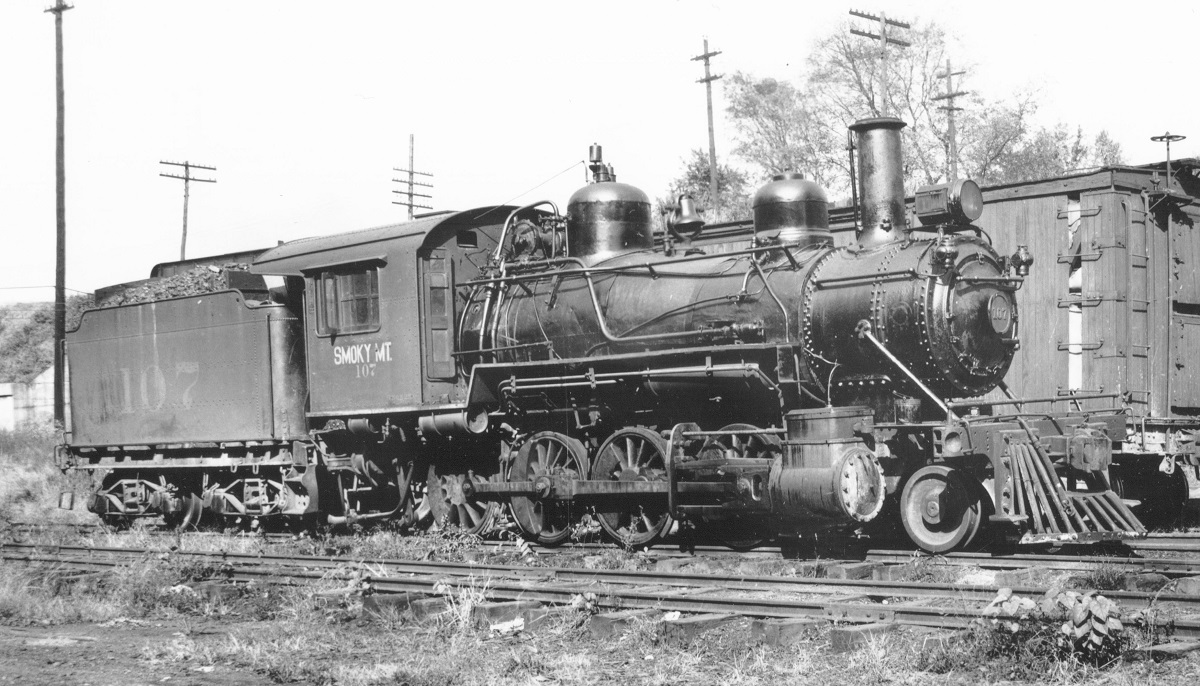
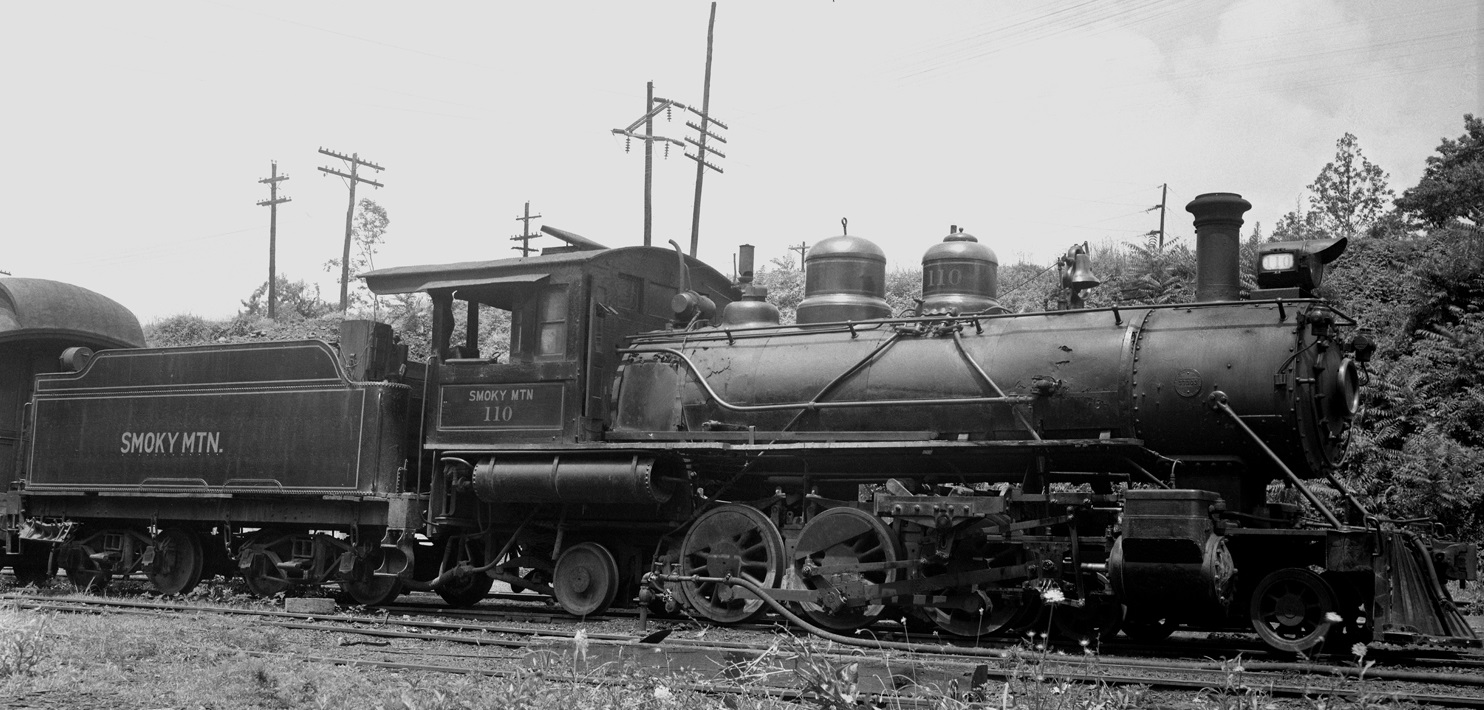
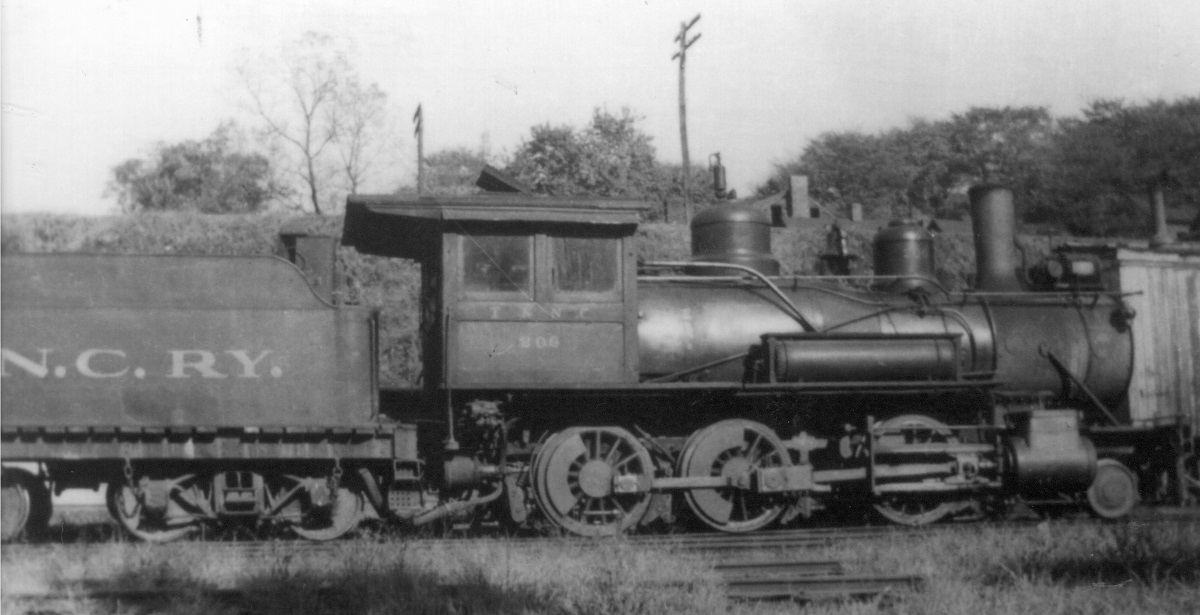
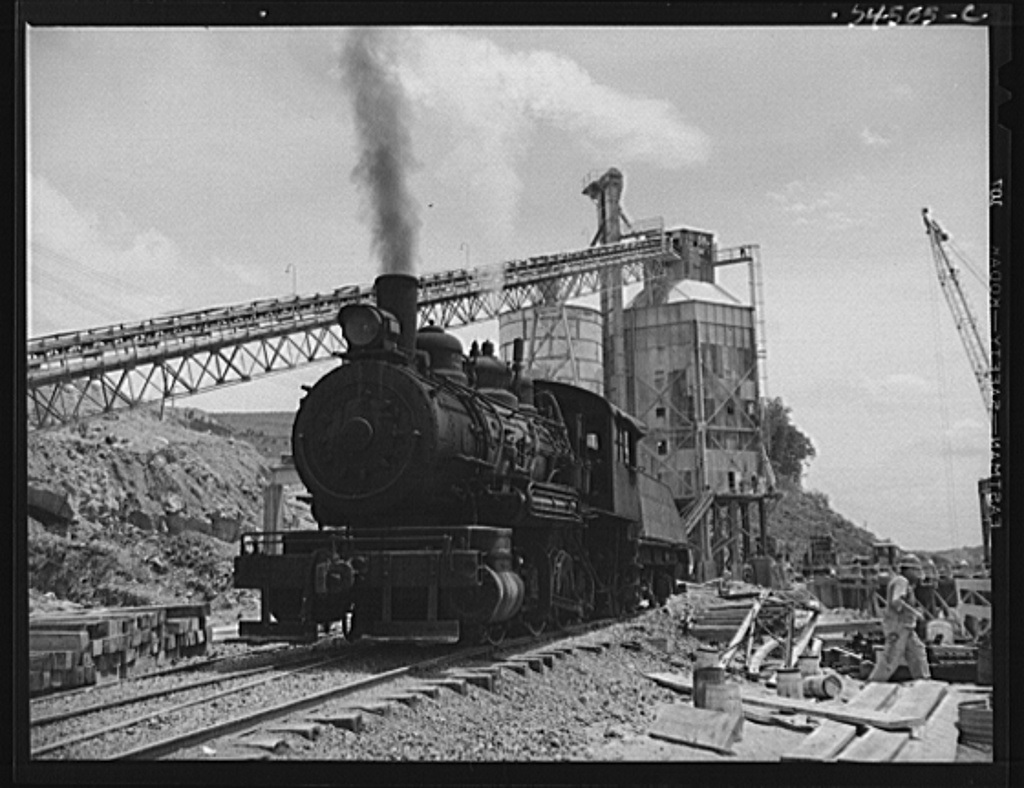
Surviving Smoky Mtn. RR locomotives today (upper left to lower right): 2-8-0 Consolidation #107, 4-6-2 Pacific #110, 2-6-0 Mogul #206 and G.E. 44-ton #440.
Imagine, for a moment, a student admiring the view from the eastern slope of "The Hill," the University of Tennessee's Knoxville campus. It's Autumn 1949, and he is wolfing down a late-afternoon sack lunch. Unless the student is a transportation major (or a railfan), though, he little realizes that the panorama before him can be likened to H.G. Wells' famous Time Machine.
Just a few blocks to his northeast, passengers board a modern, diesel-powered streamliner at the Louisville & Nashville's handsome brick depot. At the Smoky Mountain Railroad terminal directly beneath him, meanwhile, an 1880s-vintage iron horse arrives with its equally-ancient wooden boxcar and combine. Few passengers alight from the combine's antique interior, which features a pot-bellied stove, oil lamps, cuspidors, a four-leaf clover collection stapled to its wall, and onboard chicken coops. (Yes, you read that correctly.)
The Smoky Mountain Railroad was a steam locomotive fancier's dream, rostering a stable of locomotives the likes of which may have never been maintained anywhere else in the world. Totally dependent upon Southern Railway's Knoxville steam shop for heavy maintenance and parts for its locomotives, the "Slow & Easy" ran steam until 1954. Even in its "diesel era", the road utilized a unique locomotive.
See if you don't agree with us...the Smoky's locomotives had personality!
All-Time KS&E / K&C / T&NC / SM Locomotive Roster
Compiled by Mr. Jerry Dowling
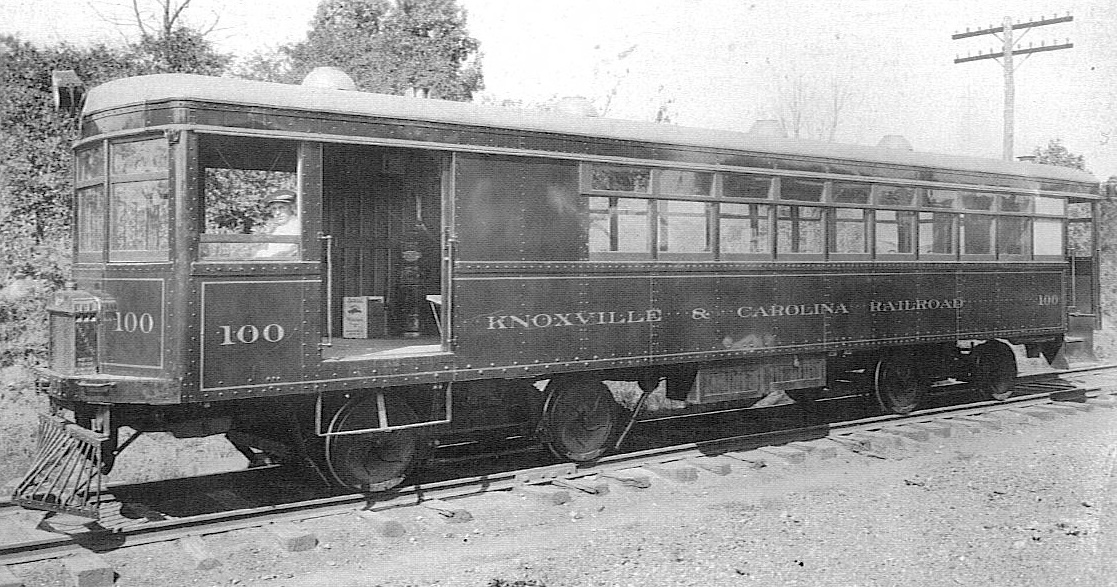
Road # Wheel Arrangement and Type Builder Year Built Cylinders Drivers Served Click for image 20 4-6-0 Ten-Wheeler Baldwin 1889 19" x 24" 60" K&C / T&NC 34 4-4-0 American Baldwin 1870 16" x 24" 56" KS&E 35 2-6-0 Mogul Baldwin 1895 18" x 24" 56" KS&E 36 4-6-0 Ten-Wheeler Baldwin 1897 18" x 24" 56" KS&E 100 Gasoline-powered coach Brill K&C 200
(see 100, above)Gasoline-powered coach Brill T&NC 102 2-6-2 Prairie Lima 1913 17" x 22" 43" T&NC / SM 107 2-8-0 Consolidation Baldwin 1887 20" x 24" 50" SM 110 4-6-2 Pacific Baldwin 1911 16" x 22" 47" SM 204 4-6-0 Ten-Wheeler Pittsburgh 1888 18" x 24" 50" K&C / T&NC 206 2-6-0 Mogul Baldwin 1910 18" x 24" 54" T&NC / SM
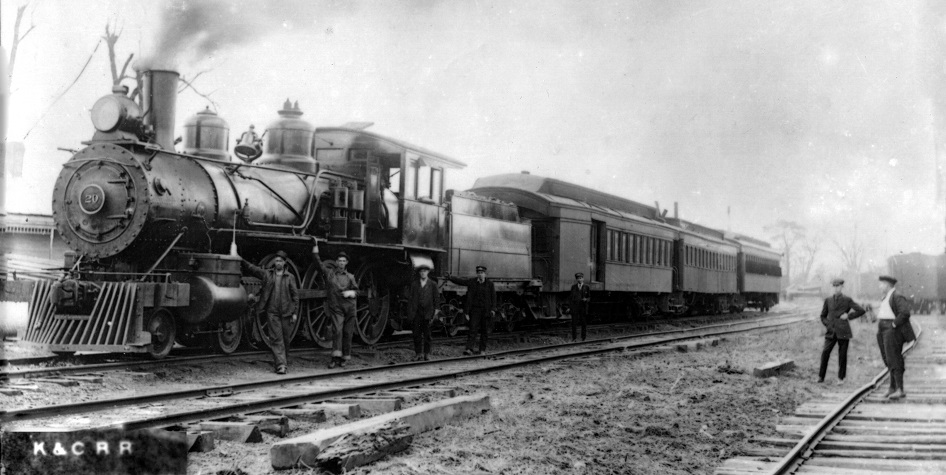
Knoxville & Carolina Railroad 4-6-0 Ten-Wheeler #20, her crew and passenger train at Sevierville. (Photo courtesy Mr. Jim Thurston)
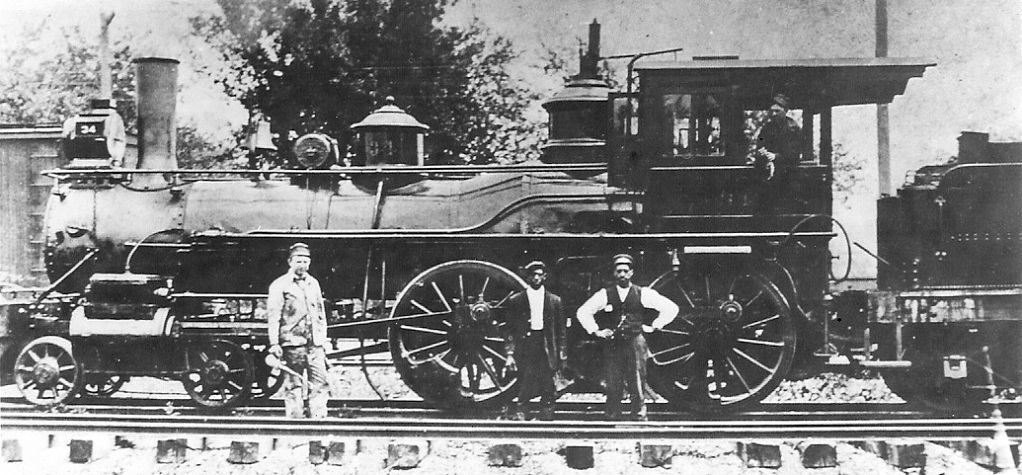
Knoxville, Sevierville & Eastern Railway 4-4-0 American #34 and her crew. (Photo courtesy Mr. Jerry Dowling)
Where to start writing about this locomotive? Of all Smoky Mountain Railroad's locomotives, Pacific #110 would have to be considered the "class" of the roster. From a glitzy beginning and gig as a "showpiece" engine on its original owner, through a mundane existence and close brush with oblivion while in the employ of the Slow & Easy, and finally as the "pet" engine again of a tourist line in Michigan, this one-of-a-kind locomotive has continued to turn heads since 1911.
The locomotive was ordered to specifications to meet the needs of its first owner, Little River Railroad of Townsend, Tennessee. Joseph Murphy, Sr. was the road's superintendent and apparently a student of locomotive design. Mr. Murphy managed to order a locomotive well-suited to Little River's needs for a low-drivered, short wheelbase unit to navigate the line's steep grades and tight curves. The locomotive was built by Baldwin and delivered in November, 1911. The specifications to which the locomotive were built were as follows: 47" drivers(!) / 8' 4" Wheelbase(!) / 16x22" side-valve cylinders / 1,662 sq ft heating surface / 30 sq ft grate area / 180 lbs pressure / 200 2" x 15' boiler tubes / tender: 6 ton coal capacity and 3,500 gal water capacity / about 187,000 lbs total weight engine and tender.
Along with Prairie #105, #110 was Little River's "showpiece" engine. It was assigned to passenger schedules, handling daily mixed trains along the length of the line, and special excursions on weekends. The Pacific quickly became the darling of the railroad, and was said to be the pet of Margaret Townsend, wife of the railroad's President, Colonel W. B. Townsend. Mrs. Townsend's portrait appears in the window of the locomotive in early photos. The locomotive was used to pull funeral trains for employees and their family members, and draped in black, pulled Mrs. Townsend's funeral train to Knoxville upon her death.
The taking up of the rails and building of a highway on the former railroad grade brought about the cessation of passenger service on the Little River Railroad. Built primarily as a logging road, the railroad continued operations until 1938. Relegated to log trains upon the offal of its passenger schedules, #110 was on the point of the last log train down from the mountains in December, 1938.
Upon its formal abandonment in 1940, Little River sold the Pacific to its nearby neighbor and fellow shortline, Smoky Mountain Railroad. The locomotive served as a replacement for Prairie #102, which was reportedly cut up during World War II scrap metal drives a couple of years later. Also, Stokely Brothers' canning operation at Sevierville was anticipating an increase in production at this time, necessitating the procurement of the third locomotive.
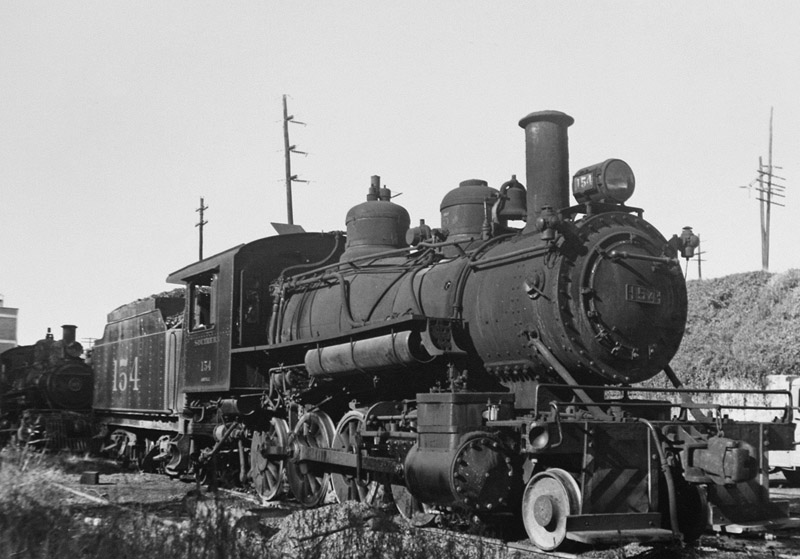
The little Pacific never pulled passenger schedules on the Slow & Easy, except for the mixed train, and it shared that duty with #107 and #206 until passenger service was discontinued in 1950. Smoky's personnel managed to keep at least one locomotive in service at any given time. Once again, #110 got to pull a "last" train over its owner's line, this time the last steam run in early December, 1954. This may have been more correctly the last regular steam run. According to records of the railroad, Southern Consolidation #154 was leased temporarily and may have run over the line for some time in 1958 while the diesel was being repaired. In fact, 110's run was also the last regular run of a steam locomotive in Knoxville, as reported in the December 9, 1954, edition of the Knoxville News-Sentinel.
The steam locomotives were moved to Sevierville and put out of service there. In the 1959-60 time frame, #110 was sold to a tourist line in Massachussetts. Diesel #440 moved it to Knoxville, where it was interchanged to Southern Railway. It was moved as far as Morristown, Tennessee, but was causing so many problems that it was returned to Knoxville. It was pushed back up the Smoky's line as far as Shook's Gap, about 10 miles from Knoxville, where it derailed. Apparently, this was just too much, so it was pushed into a siding track and left on the line. This was the first of two of the little jewel's darkest days.
The line discontinued operation in January, 1961, was abandoned April 15, 1964, and the tracks were taken up for scrap in Fall, 1966. The little locomotive was left high and dry, its second darkest day. For six more years it sat, being stripped of bell, headlight, whistle, builder's plates, and everything else of any interest to thieves. The cab rusted through. At one point, the service station next door was actually burning its daily garbage in the firebox! The locomotive became something of a landmark, capturing the imagination of many (including this writer's as a young boy and teenager), but no one was up to the task of resurrecting it until 1972.
Terry Bloom of Brookville, Ohio, spotted the Pacific during a family vacation to the Smokies in 1968. Sometime later he contacted the Knoxville Chamber of Commerce, who in turn put him in touch with the railroad's receiver. Terry made an offer of $3,100 for the locomotive, which was accepted. In May of 1972, the engine was loaded on a lowboy trailer and moved to Southern's Jacksboro Team Track near downtown Knoxville, where it was loaded on a flatcar bound for Brookville. The tender was loaded on a truck for the entire trip.
Restoration was begun on a siding in Brookville. Missing parts were replaced. Headlight, bell, number plate, and even the cab are replicas fabricated during the restoration. The builder's plate was located and given back to the locomotive, and the current builder's plate was cast in a mold made from the original. The locomotive was moved to leased former Penn Central trackage between Angola and Steubenville, Indiana, and after some complications was put into excursion service over the line in 1976.
Now based in Coldwater, Michigan, Little River Railroad operates the locomotive in weekend, holiday, and excursion service. Please visit their website at http://littleriverrailroad.com.
Loaned / Leased Locomotives in "Slow & Easy" Service
Road # Wheel Arrangement and Type Builder Year Built Cylinders Drivers Owner Served Click for image 23 0-6-0 Six-Coupled Baldwin 1906 20" x 26" 51" Tennessee Valley Authority SM 154 2-8-0 Consolidation Schenectady 1890 20" x 24" 50" Southern Railway SM 440 44-Ton Diesel Switcher General Electric 1940 N/A N/A A.J. King Lumber Co. SM 3403 4-6-0 Ten-Wheeler Cooke 1882 18" x 24" 54" Southern Railway KS&E
Holding the distinction as Knoxville's last steam locomotive in regular service, Southern Railway 2-8-0 Consolidation #154 served as the "goat" at City Yard until the 1950's. On at least one occasion (Autumn 1951), #154 was rented by the Smoky Mountain Railroad for temporary service as a road engine. After the steamer's retirement, it was displayed for over a half-century in Knoxville's Chilhowee Park. Many a' youngster attending the Tennessee Valley Agricultural & Industrial Fair each September gazed at Ol' 154 through that chain link fence, your Webmaster included, dreaming of her return to the high iron. When Knoxville's 1982 World's Fair was being planned, restoration of the locomotive for local excursions was seriously considered. However, Southern Railway inspectors deemed the task too daunting and, as a result, unworthy of the expense.
Enter the Knoxville Locomotive Works into the 154 story. In 2008, ownership of the locomotive was transferred from the City of Knoxville to the Works for $1. After being liberated from Chilhowee Park by low boy truck, the Consolidation was lovingly restored over the next three years in preparation for excursion service on the 3 Rivers Rambler along Knoxville's waterfront. Your Webmaster was thrilled to have his dream realized, riding on the first public outing behind the like-new 2-8-0.
For more information about Engine 154, please visit the her 3 Rivers Rambler webpage at http://www.threeriversrambler.com
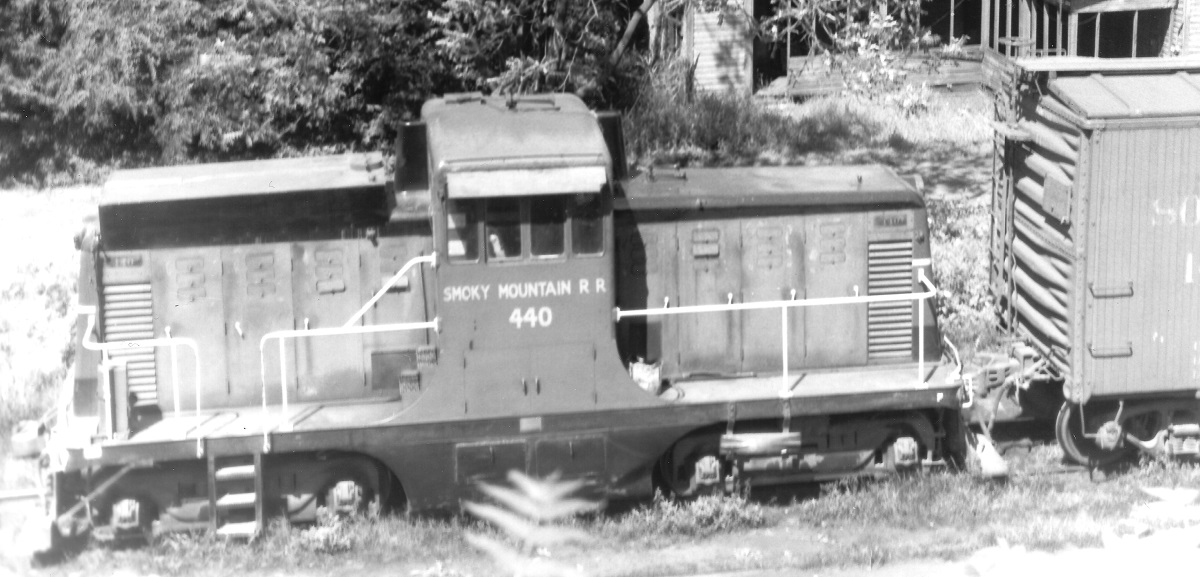
The Slow & Easy's only diesel locomotive was actually not the property of the railroad, but was leased from A. J. King Lumber Company of Sevierville at a rental rate of $500 per month. Necessitated by the closure of Southern Railway's steam shops at Knoxville (for years, Southern had done repairs and maintenance on SMRR's steamers), the acquisition of the little center-cab diesel continued the road's practice of running "classic" pre-owned locomotives.
According to an excellent article, "GE 44-Tonner Study" by Don Dover in the March - April 1975 issue of Extra 2200 South, the locomotive, builder number 12911, was delivered 9/17/40 to original owner Great Northern Railway. A very early Phase Ia version of the locomotive, #440 was one of 20 built by GE. The two V-8 Caterpillar diesels produced a feisty 380 hp each and drove 4 GE733A1 double-reduction traction motors.
From Great Northern, where it wore road number 51, the loco went to an iron & steel firm in Augusta, Georgia, a locomotive dealer named Bateson-Stolte, and thence to A. J. King Lumber Company "c. 1956." The date is most surely wrong, as the Smoky leased the diesel in December, 1954, according to records. Apparently, the lumber company purchased the diesel "for subsidiary Smoky Mountain RR", and set up the lease agreement. The reference to the railroad being a subsidiary of A. J. King Lumber Company probably refers to the fact that when the railroad was sold to a group of local businessmen in 1957, A. J. King himself was a member of the group and was indeed the Vice-President of the road. The purchase/lease of the locomotive predates this arrangement, however.
The center-cab served well as the road's only locomotive until operations were embargoed January 16, 1961, due to deplorable track conditions. At some point, 440 was moved to Southern's John Sevier Yard at Knoxville, where it sat in storage near the roundhouse until 1977.
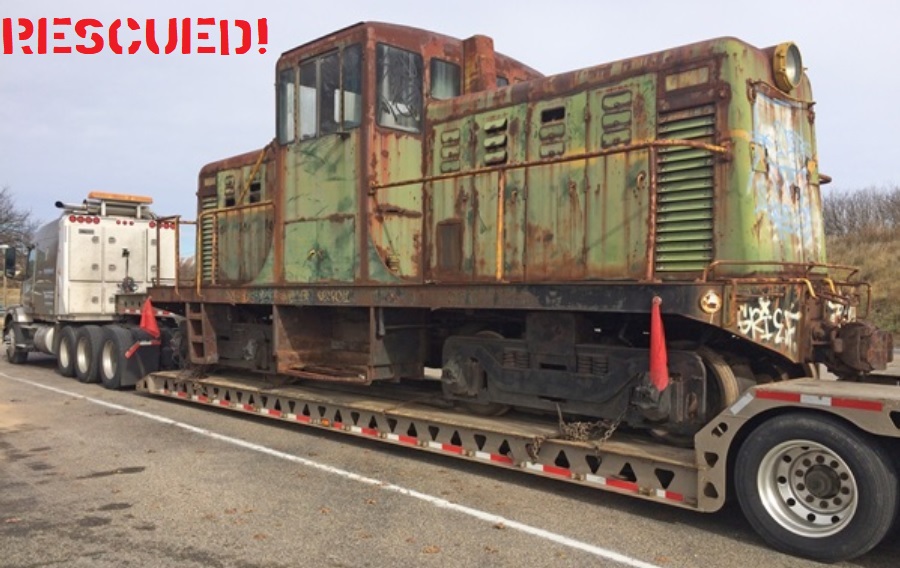
From 1977 until 2017, the center cab was in the care of the White family, proprietors of the White Transfer & Storage Company of Fletcher, North Carolina. Through the 1990s, it performed switching duties on the White property. It was the crown jewel of the late-Mr. L.A. White's collection of railroad rolling stock.
Then, in December 2017, a private owner of two other vintage center cabs purchased the unit from the Whites, loaded it on a lowboy tractor trailer and shipped it from North Carolina to Maryland for possible restoration. A restored ex-Smoky Mountain Railroad #440 would operate again on Walkersville Southern Railroad museum trackage. We are certainly keeping our fingers crossed that this historic diesel locomotive is restorable. Here's hoping she'll ramble again along shortline trackage to the delight of passengers and railfans alike!
Please pay a visit to the Walkersville Southern Railroad website at http://wsrr.org/ws.
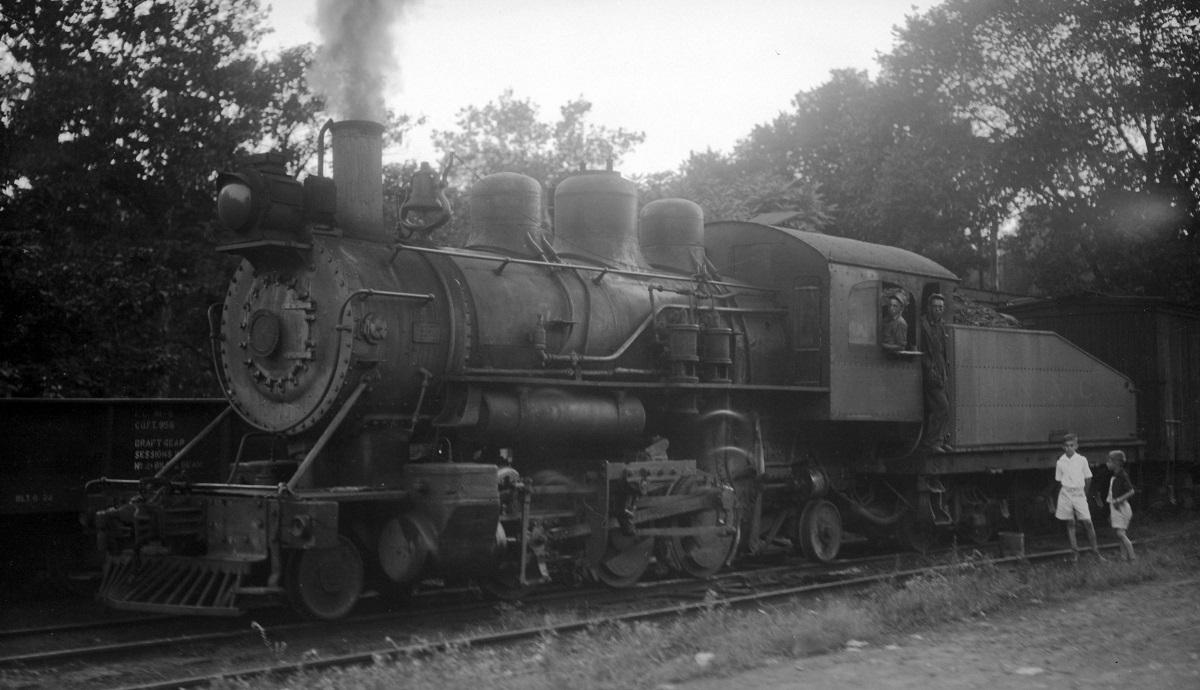
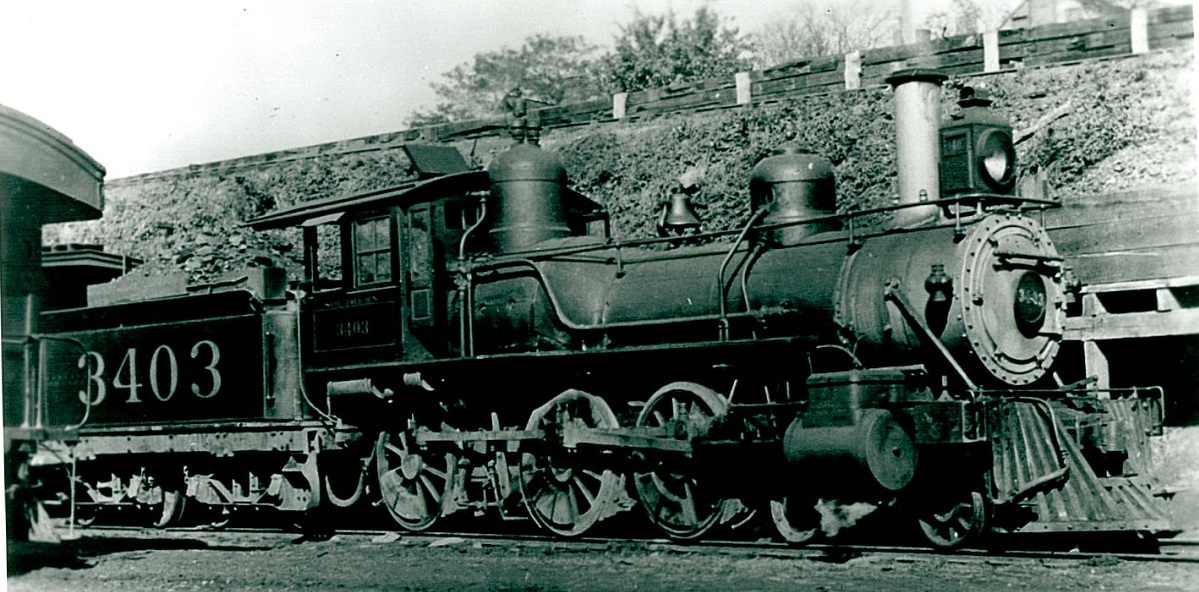
Southern Railway 4-6-0 Ten-Wheeler #3403 seen at Knoxville. (Photo courtesy Mr. Jerry Dowling)
Text copyright © 1999 - 2018 Knoxville, Slow & Easy
| Home | History | Route | Locomotives | Rolling Stock | Operations | Gallery | Bibliography |