



|
City of Prineville Railroad Equipment |
|
|
|
The City of Prineville equipment roster for most of the railroad's history has been limited to a few pieces of passenger or work cars and a few cabooses. |
|
|
Cabooses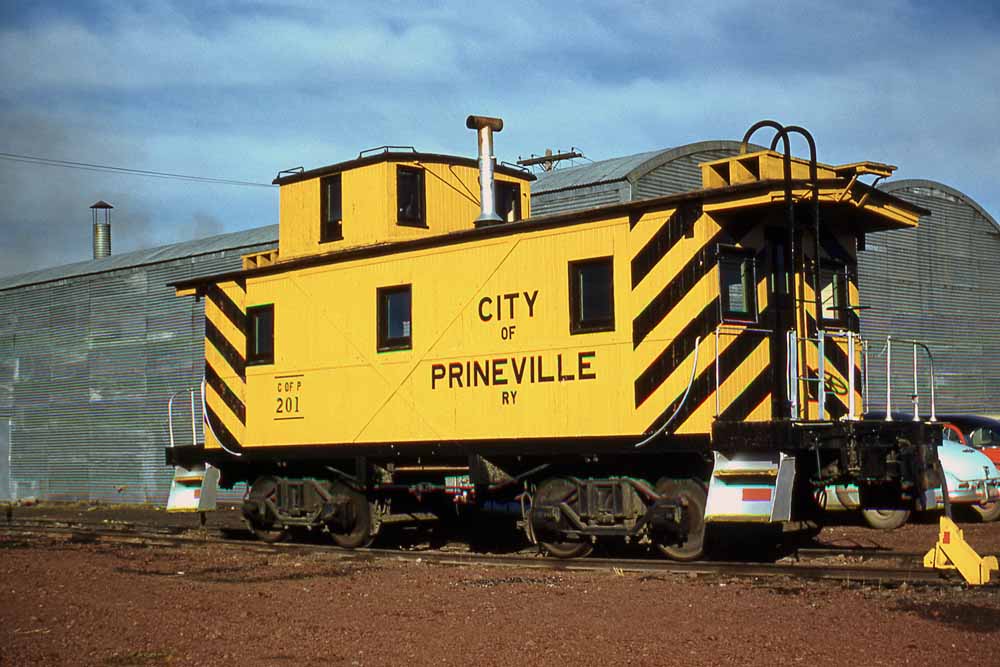 A 1959 color photo of caboose #201, by all appearances a former Northern Pacific car. Jerry Lamper photo. 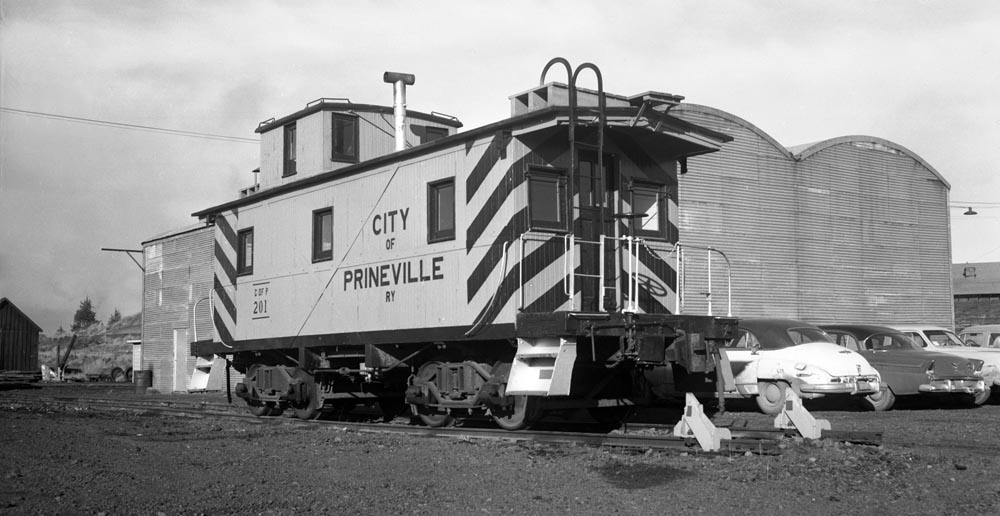 A black and white image of Caboose #201, also by Jerry Lamper. 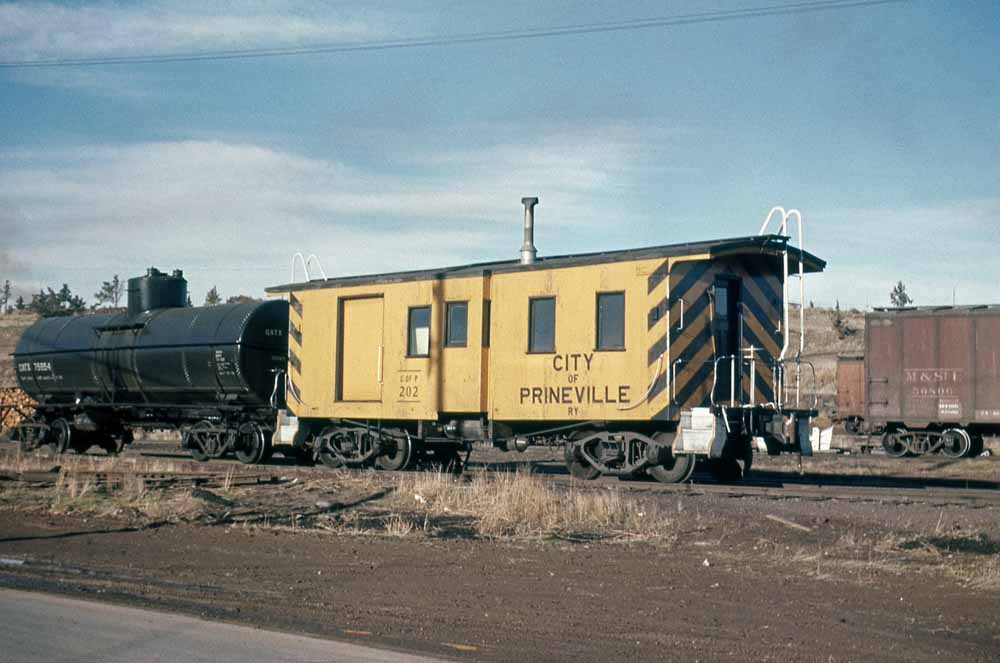 The railroad's other caboose in 1959 was the #202, which had plywood sides and a sliding door on one side to handle freight or express shipments. Jerry Lamper photo. 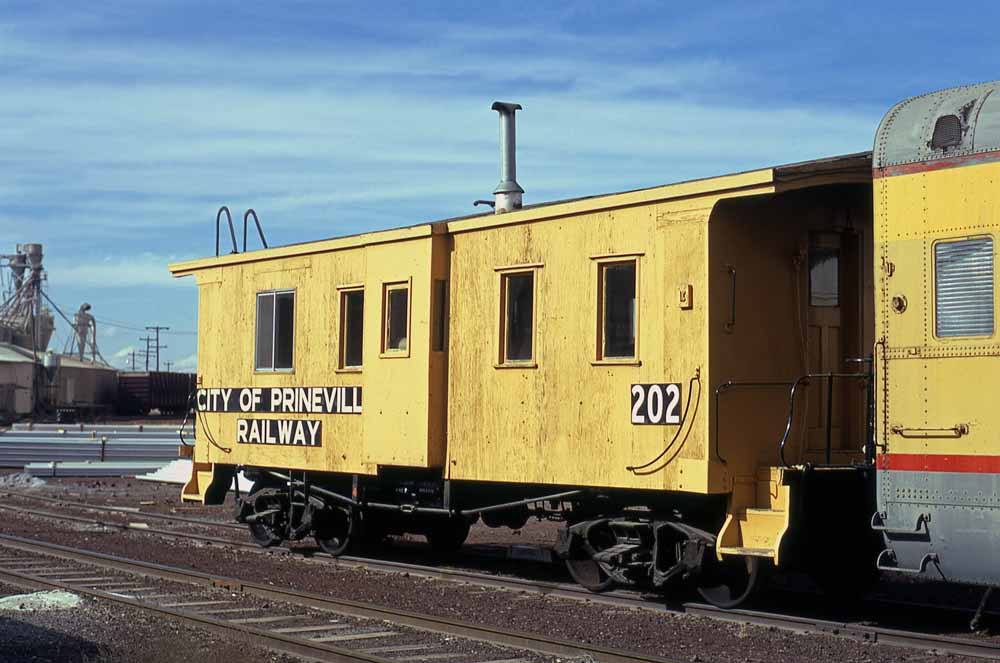 The #202 as it appeared in 1972. Jeff Moore collection.  The #202 as it appeared around the later 1970s. John Henderson photo, Jeff Moore collection. 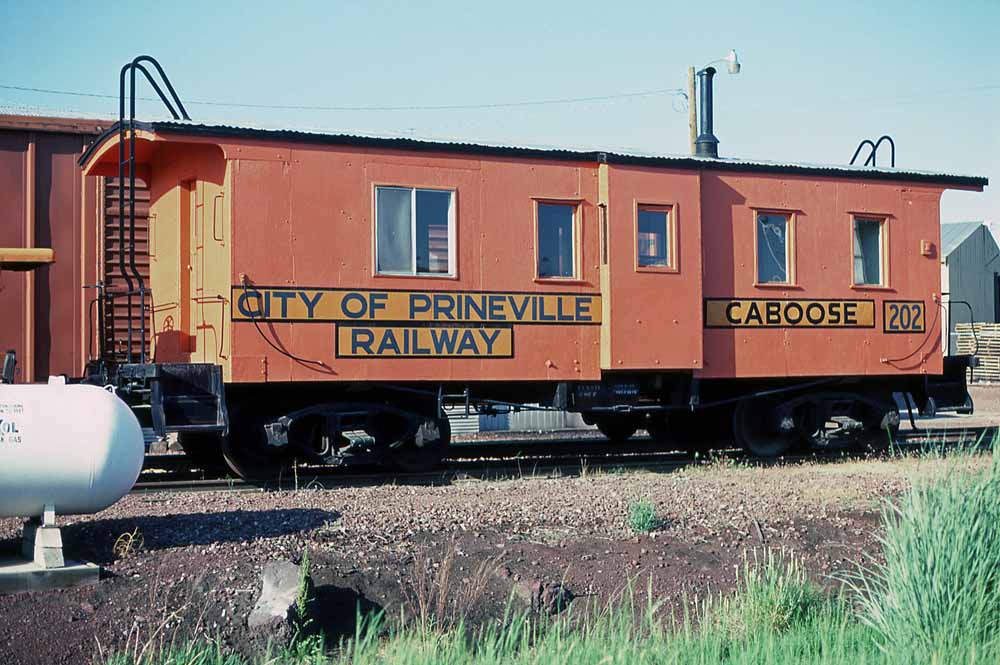 By June 1982 the railroad had given the #202 a new orange paint job, it is seen here near the end of its career on the railroad. Jerry Lamper photo. 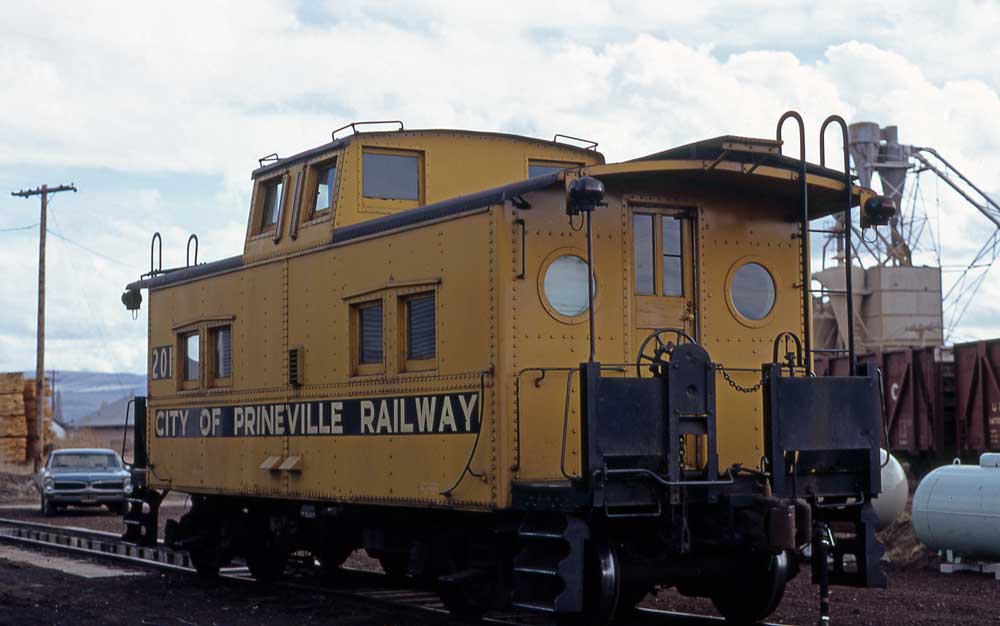 Around 1963 or 1964 the railroad purchased this former New Haven northeastern-style caboose that replaced the first #201 upon its arrival. Jeff Moore collection. 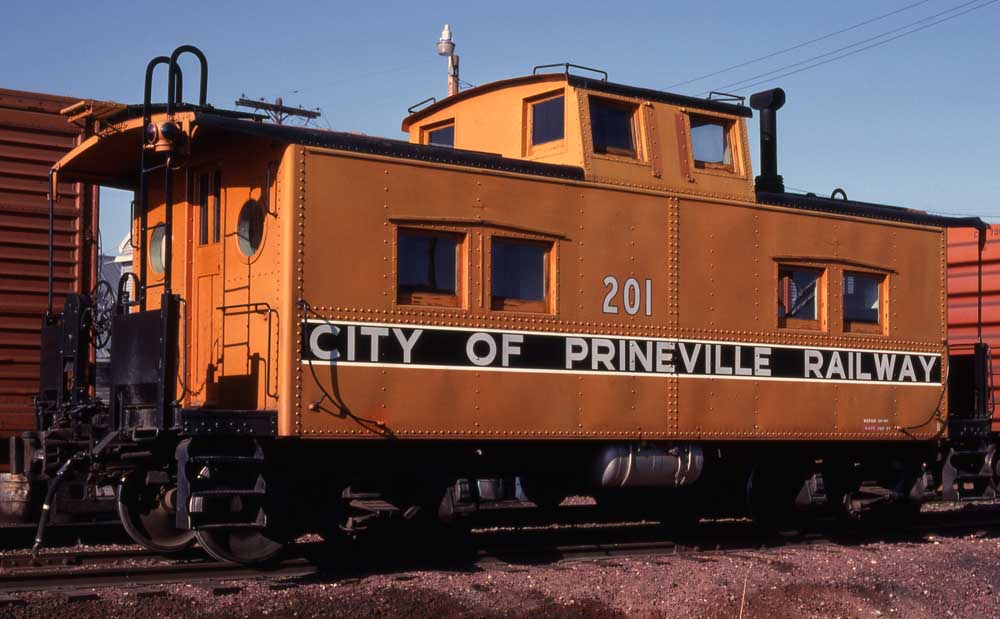 A later view of the 2nd #201 wearing the later orange paint scheme. Jerry Lamper photo.  Sometime in the middle to later 1980s the railroad purchased two former Missouri Pacific cabooses that remained largely in storage in Prineville for years. John Henderson photo, Jeff Moore collection. 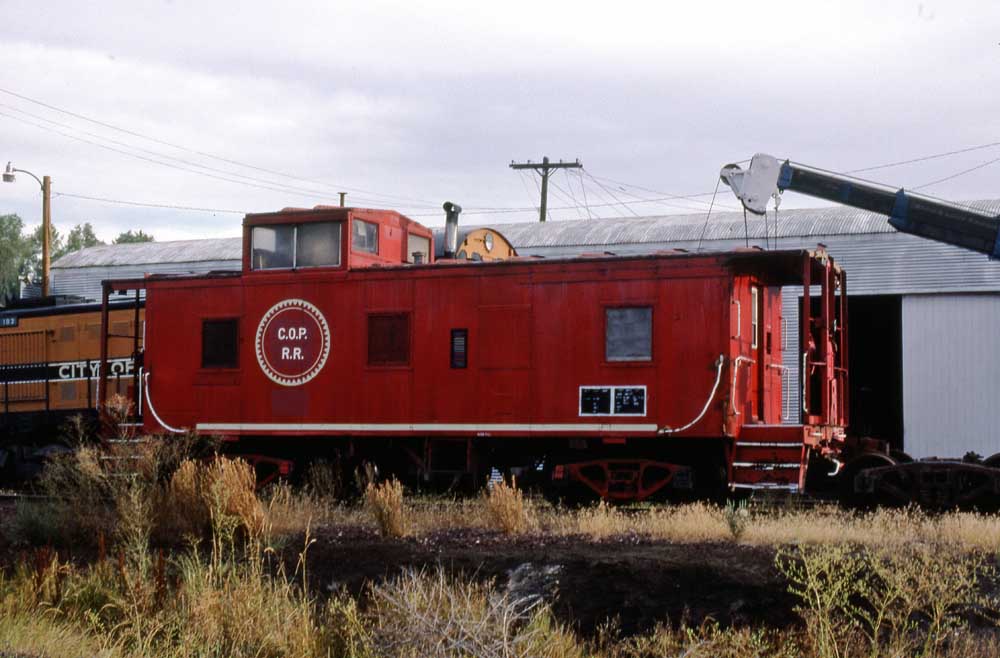 The other former Missouri Pacific caboose wearing City of Prineville lettering. John Henderson photo, Jeff Moore collection. |
|
|
Passenger Equipment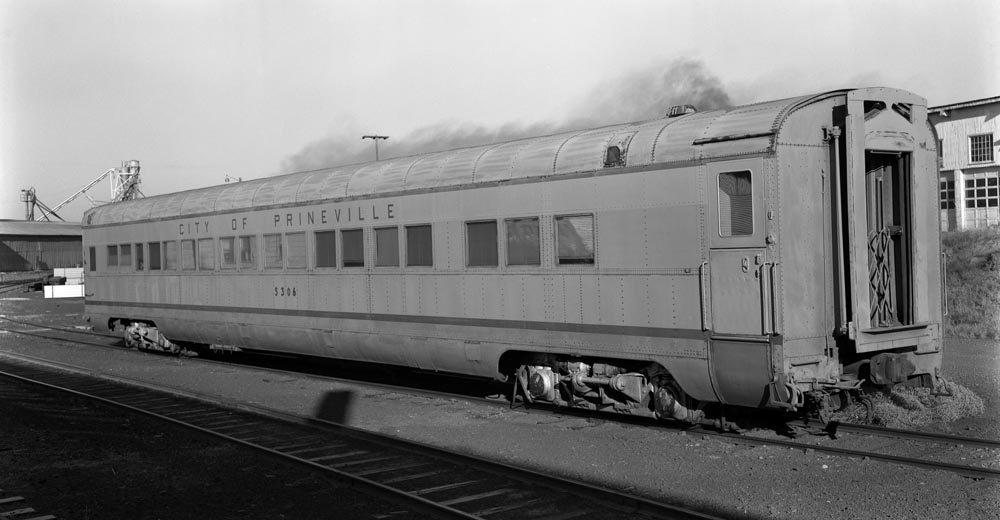 The City of Prineville owned passenger equipment at three district periods in its history. The railroad owned one passenger car purchased at the start of operations, followed by a second six-axle classic combination passenger and baggage car the road purchased from the Waterville Railroad in 1920. The coaches split the passenger moving chores with a few self propelled railbuses until the service ended in 1939. Then, in 1964 the railroad acquired this streamlined coach from the Union Pacific, and for about ten years in the later 1960s and early 1970s the coach would be added to the end of the Friday night freight train for whoever wanted to show up, plus special runs for civic groups or events. The third round of passenger equipment came when the railroad acquired the Crooked River Dinner Train in 2004. The railroad also hosted at least one privately owned flatcar set up with benches and railings to operate behind the Mt. Emily Lumber Shay #1 and may have converted one of its own flatcars for the service, along with steel caboose #201. Gary Oliver shot this photo of the streamlined coach #5306 in Prineville on 13 October 1968. |
|
|
Interchange Freight Equipment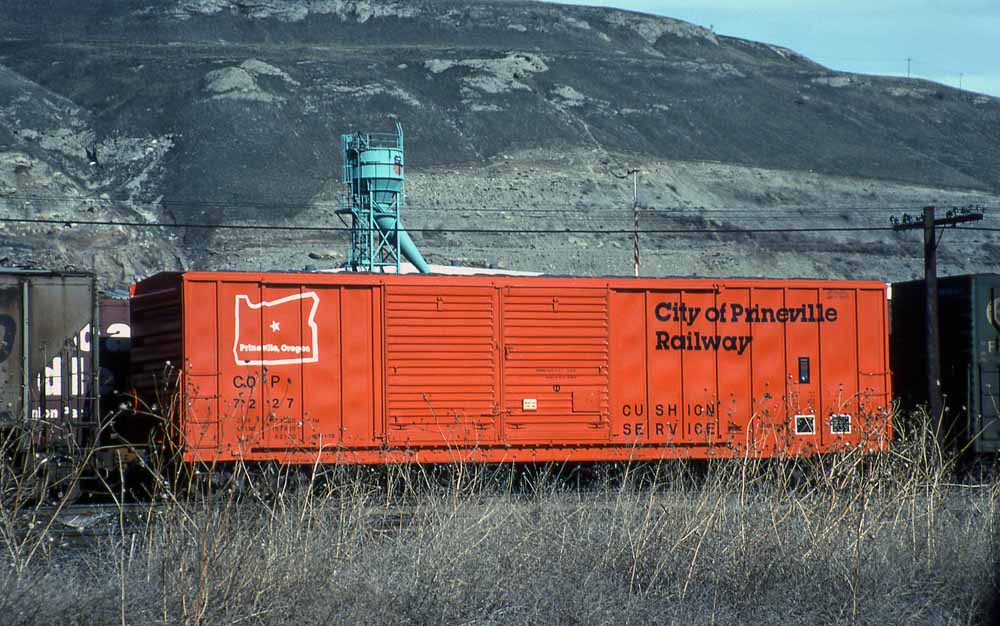 The City of Prineville relied almost exclusively on freight cars provided by its connecting roads until 1977 when the railroad agreed to lease 200 incentive per diem boxcars from Itel Rail, with the fleet almost immediately expanded to 400 cars, numbered COP 7001-7400. Decades of low per diem rates that often did not cover car ownership costs drove investment dollars into specialized rail equipment, which led to severe boxcars shortage across the industry by the early 1970s. The Federal government in response implemented higher per diem rates and created tax shelters for those who invested in new or rebuilt boxcars, and Itel was one of the companies taking advantage of the program. Under a typical arrangement Itel would lease new boxcars to railroads, especially western lumber shortlines, under the theory that they would be loaded with lumber destined for eastern markets, and once there the cars would be pressed into service earning large profits for both the lessee road and the car owner. The program worked for a few years, but the major railroads soon determined that the higher per diem rates more often than not ended up costing them more than they earned moving the car, and the government quickly eliminated the incentive per diem benefits. City of Prineville turned 250 cars back to Itel by the early 1980s, but kept the remaining 150 or so cars on hand into the early 2000s. Car #7227 is seen here in Salt Lake City, Utah, in March 1978. 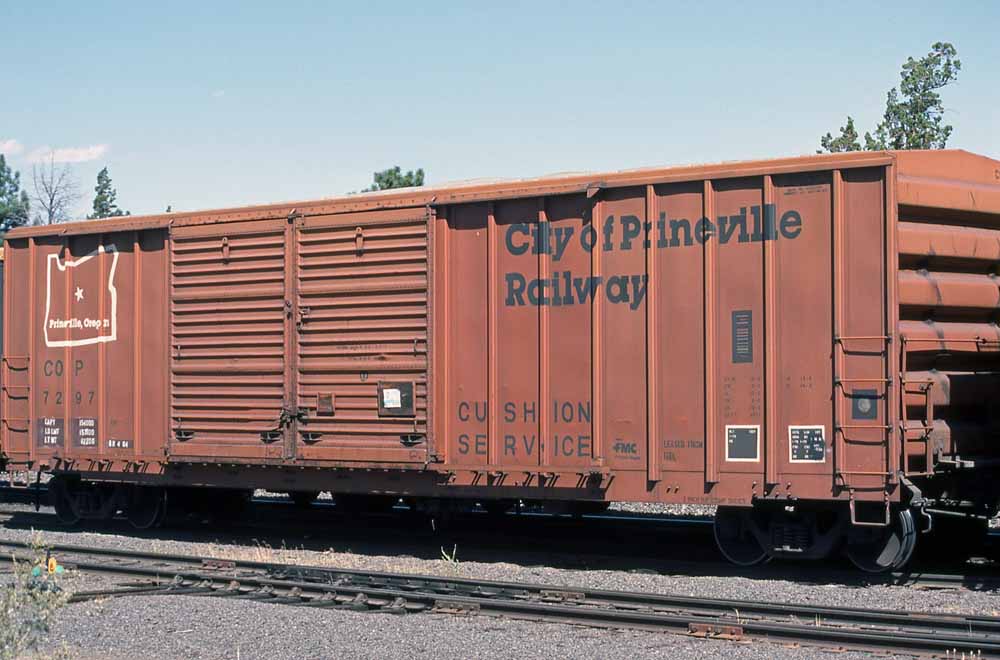 COP boxcar #7297 in Bend, Oregon, on 27 August 1984. Jerry Lamper photo. 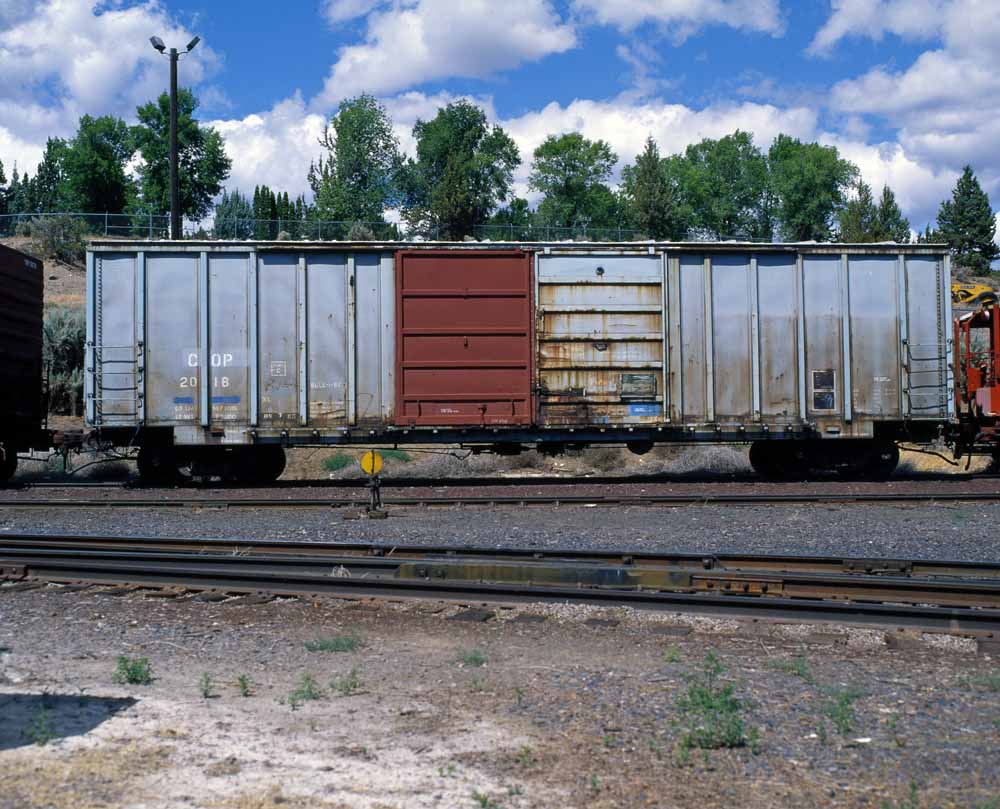 More recent car leases have included fifty woodchip hoppers, COP #3000-#3049, leased in 1992-1993, and 44 of these blue boxcars numbered 2001-2049 leased in the later 1980s. John Henderson photo, Jeff Moore collection. 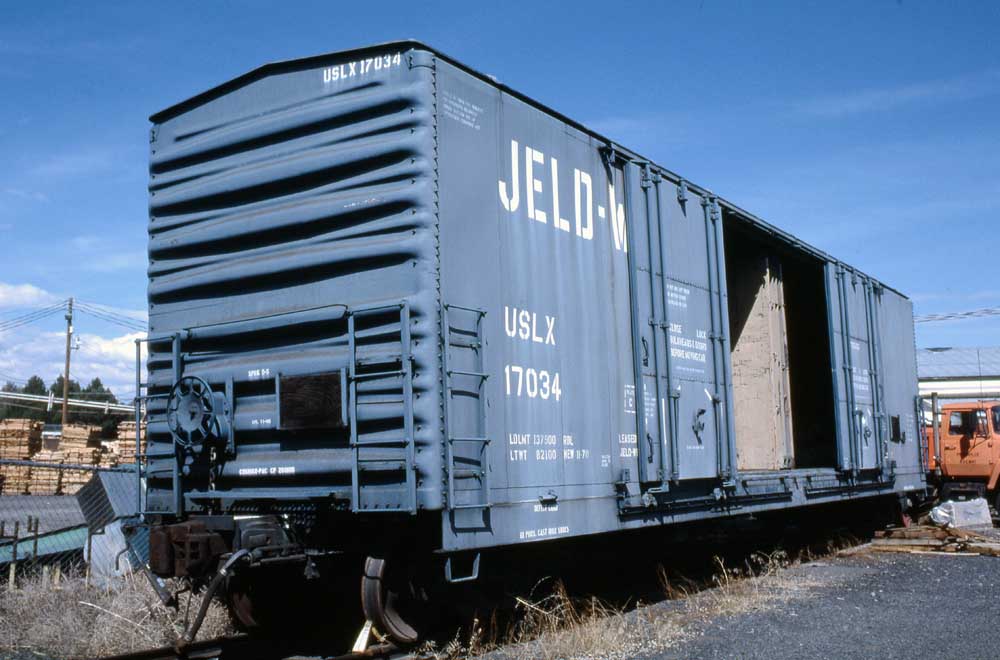 The general failure of the railroad industry to provide suitable boxcars in the later 1960s and early 1970s caused many industrial shippers, including a lot of lumber producers, to invest in their own private car fleets. Specialty lumber producers like the millwork companies operating on the City of Prineville especially liked insulated boxcars, which provided better load protection than a standard boxcar, and they became common site on the railroad into the early 1980s. USLX #17034 was bad ordered on the railroad and became a fixture in the Prineville yards for many years. |
|
|
Work Equipment The City of Prineville relied for many years on a pair of ancient bottom dump hoppers acquired from the Nevada Copper Belt for ballast service. Car #1 is seen here in Prineville. John Henderson photo, Jeff Moore collection. 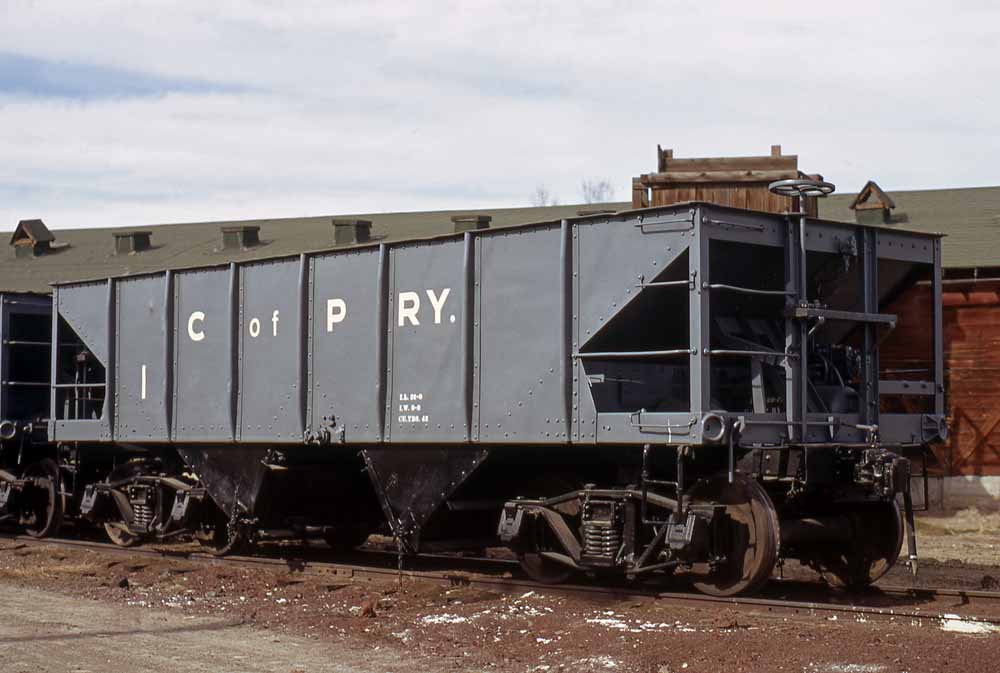 Another view of ballast car #1, this time around 1972. Jeff Moore collection. 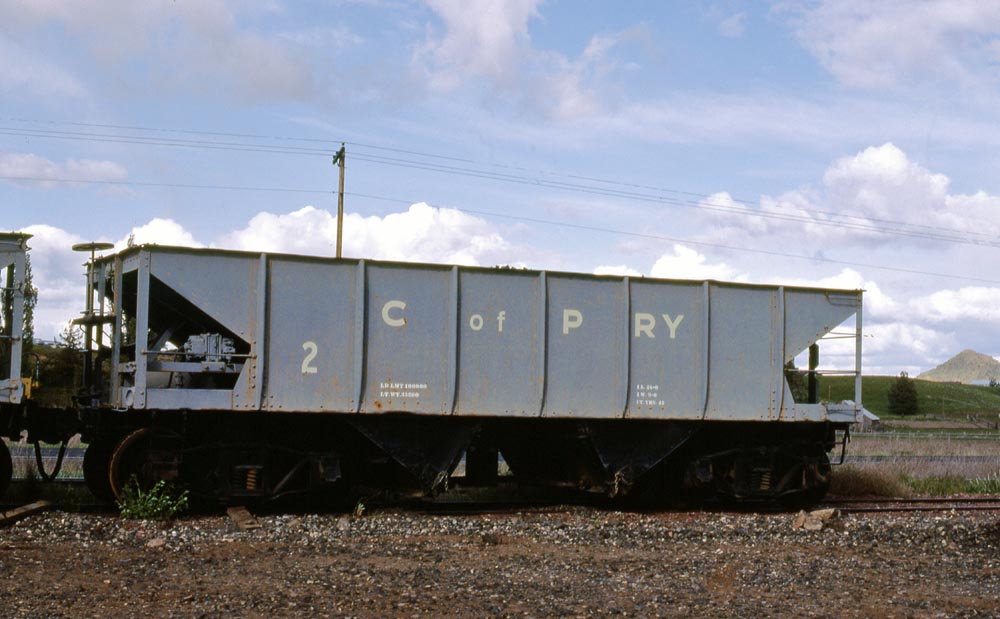 Ballast car #2 in Prineville. John Henderson photo, Jeff Moore collection. 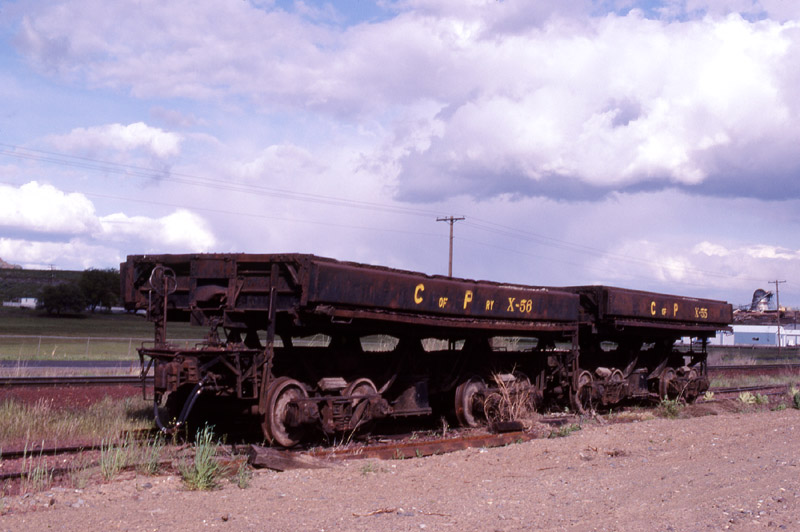 The railroad also had this pair of ancient side dump hoppers, purchased sometime around the late 1940s or early 1950s and numbered X55 and X56. John Henderson photo, Jeff Moore collection. 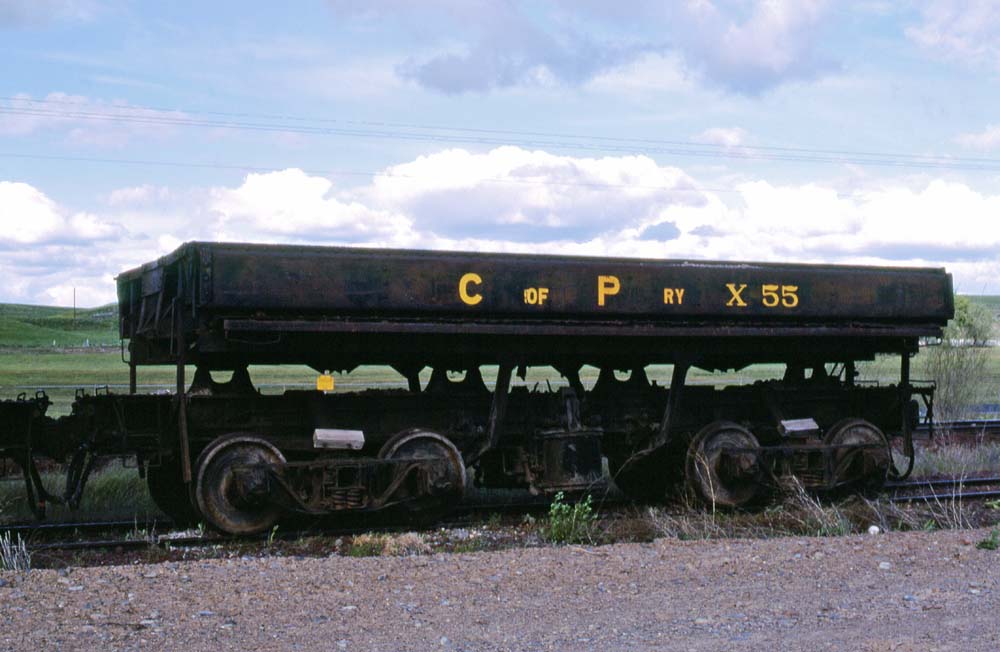 A closer view of the X55. John Henderson photo, Jeff Moore collection. 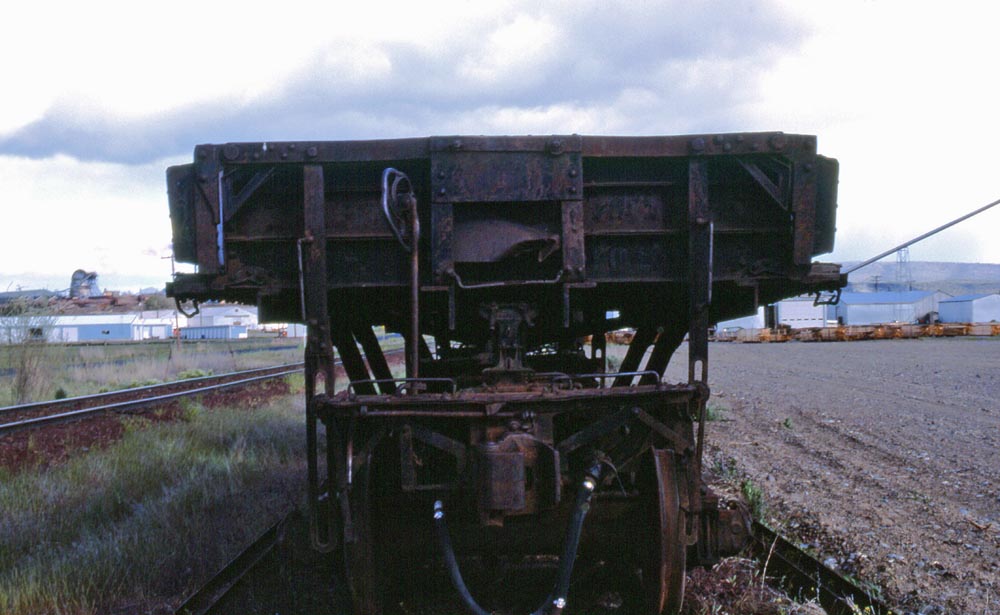 A detail shot of the end of the #X-56. John Henderson photo, Jeff Moore collection. 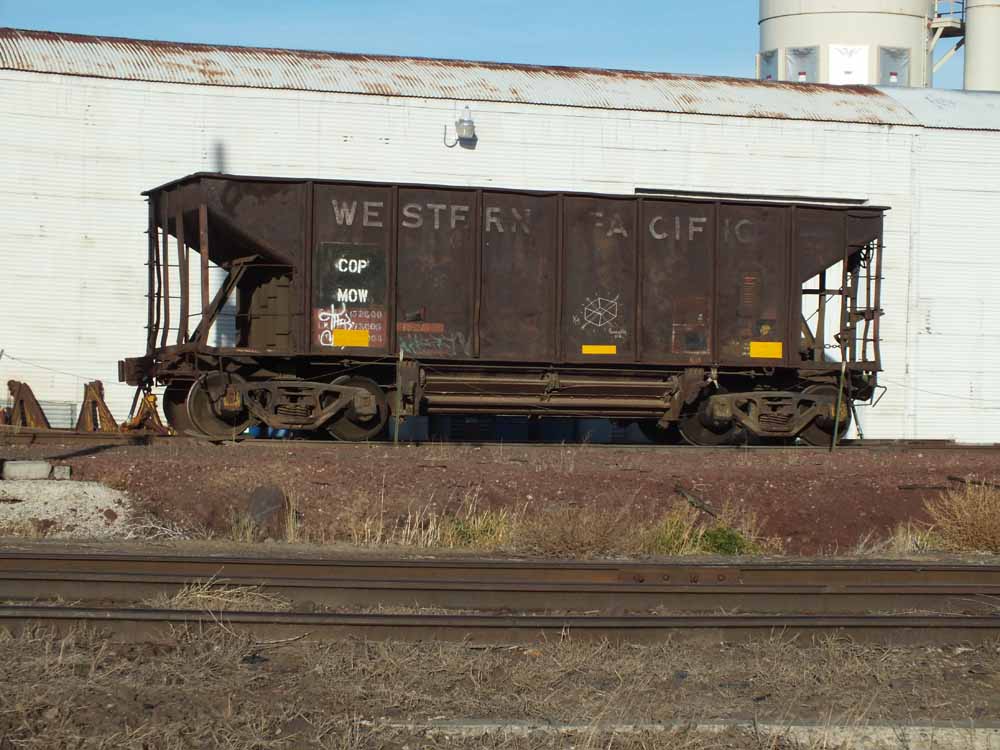 In recent years the railroad has used three more modern bottom dump hoppers purchased from the Union Pacific, including this former Western Pacific car seen in Prineville in November 2024. Jeff Moore photo. 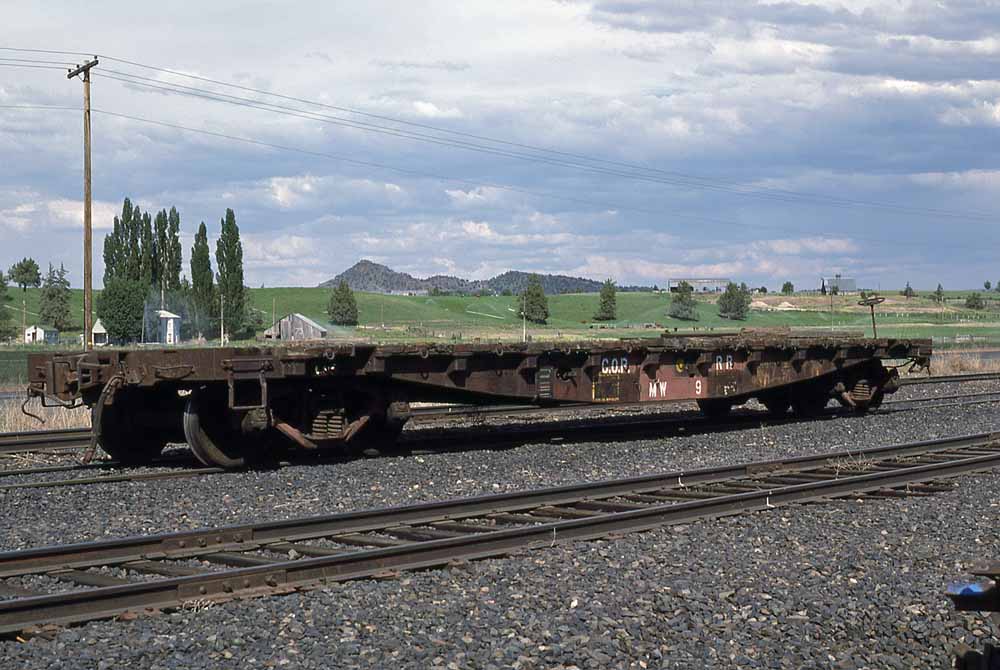 COP #MW9, a work flatcar, in Prineville in 1986. Keith E. Ardinger photo. 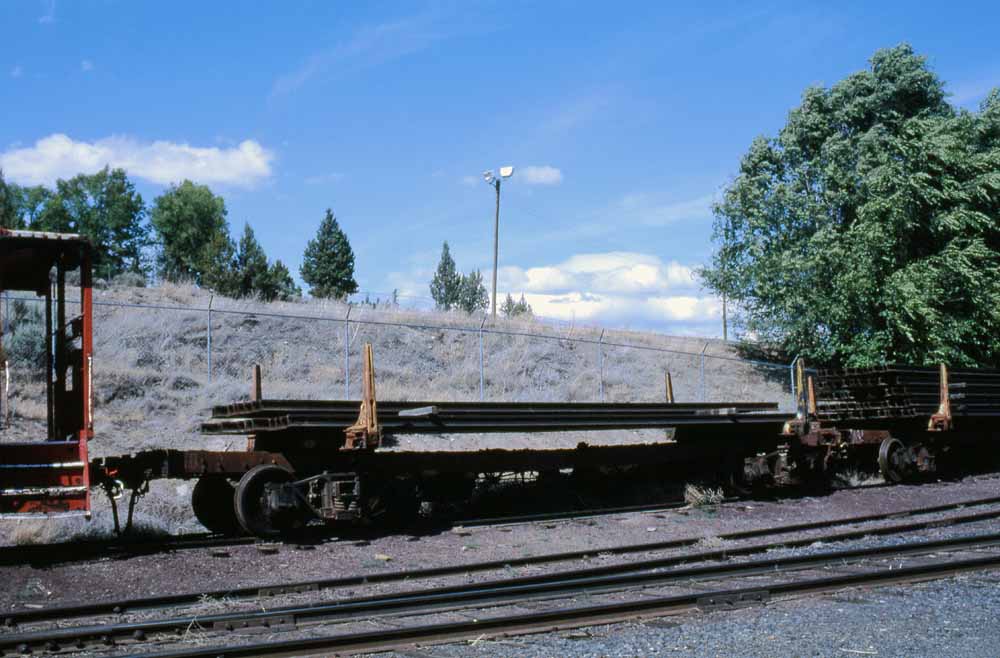 Shortly after the Mt. Emily Shay arrived on the railroad a private party acquired a pair of skeleton log cars to operate with it on photo freights. The railroad has used the cars in work service, such as this view of the two cars carrying loads of rail. John Henderson photo, Jeff Moore collection. 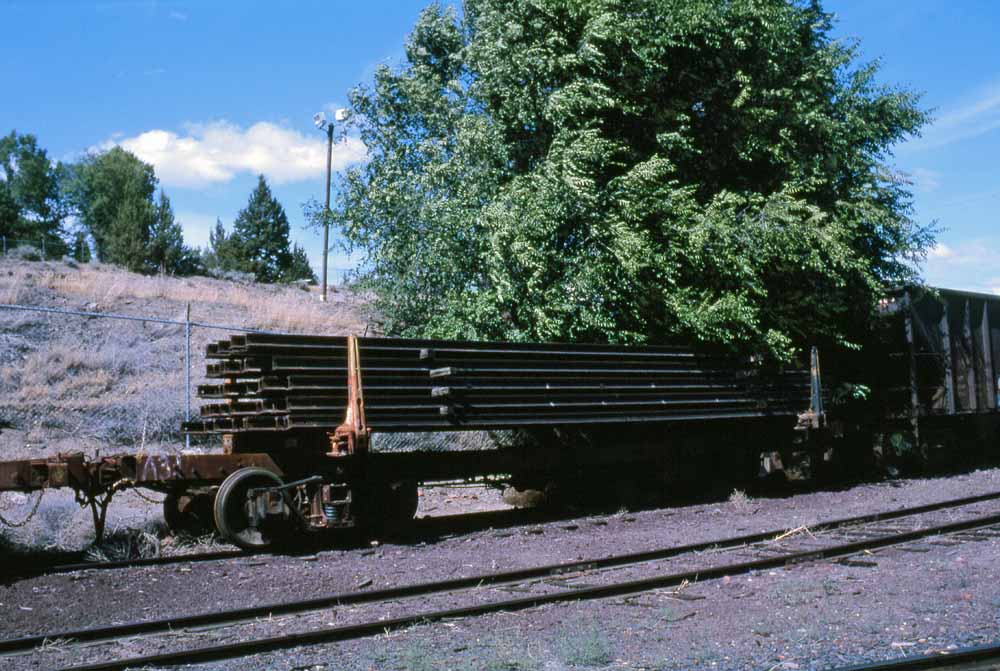 The other log car loaded with rail. John Henderson photo, Jeff Moore collection. |
|
|