




|
Brooks-Scanlon Lumber Company Old Mill District |
|
|
|
Bill Smith, better known to his friends and family as "Billy", first came to Bend in 1969 to work an internship with the Brooks-Scanlon Lumber Company. His work highly impressed the company to the extent they hired him to be the marketing manager for Brooks Resources, then the company's real estate subsidiary, following his graduation from the Stanford University MBA Program. Billy worked his way up to the presidency of that company, which he held until 1984. During his tenure he oversaw the transition of the Brooks-Scanlon company from the timber industry giant it had been to the real estate developer it is today. In 1984 Billy decided to strike out on his own. His company, William Smith Properties, Inc., became one of the primary real estate developers in central Oregon. When Crown Pacific announced the closure of the Bend sawmill in the fall of 1993 Billy put together a group of seven investors to buy the 270 acres along both banks of the Deschutes River that included both the Brooks-Scanlon and Shevlin-Hixon sawmill sites. Getting the permits and other needed approvals to revitalize the site consumed the next several years, but by the dawn of the 2000s the investors had what they needed to commence work. The developers elected to retain the old Mill A structure and the three buildings of the old Brooks-Scanlon Mill B power house complex and make them the centerpiece of the development, with almost all other new buildings throughout the District patterned after their architectural styles. The work also included restoring the stream banks along both sides of the river through the site. The Old Mill District has become one of the primary commercial and retail centers of the Bend community, providing a mix of retail, dining, and entertainment businesses. Most of the commercial space occupies the former Brooks-Scanlon mill site, while an outdoor amphitheater and restored wetlands occupy much of the Shevlin-Hixon mill site across the river. Recreational opportunities include several miles of mostly paved walking and biking paths along both sides of the river along with floating and paddling adventures on the river itself. Three other buildings left over from the original mill complex have been incorporated into the District, and several other historic structures from elsewhere in Bend have been relocated into the complex. Several art features have been installed throughout the complex, many of which honor the timber industry heritage of the site and a couple of which incorporate artifacts from the sawmill, along with various interpretive panels and signs about the history of the site and the roll the mills played in the local economy. This page will feature the Old Mill District as it now exists, including a look at the historic structures still in use at the District and some "Then and Now" comparison photos. |
|
|
|
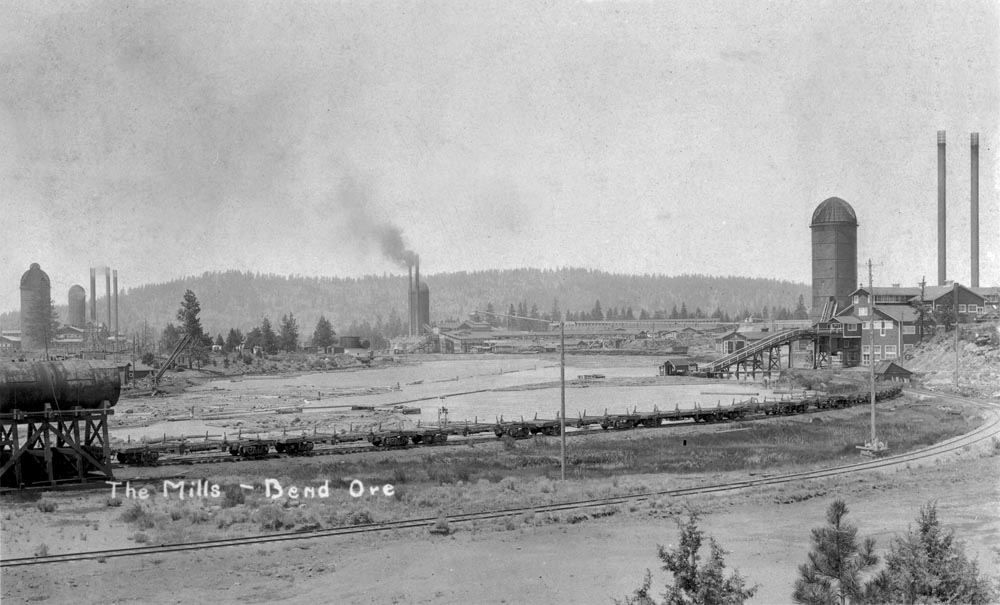
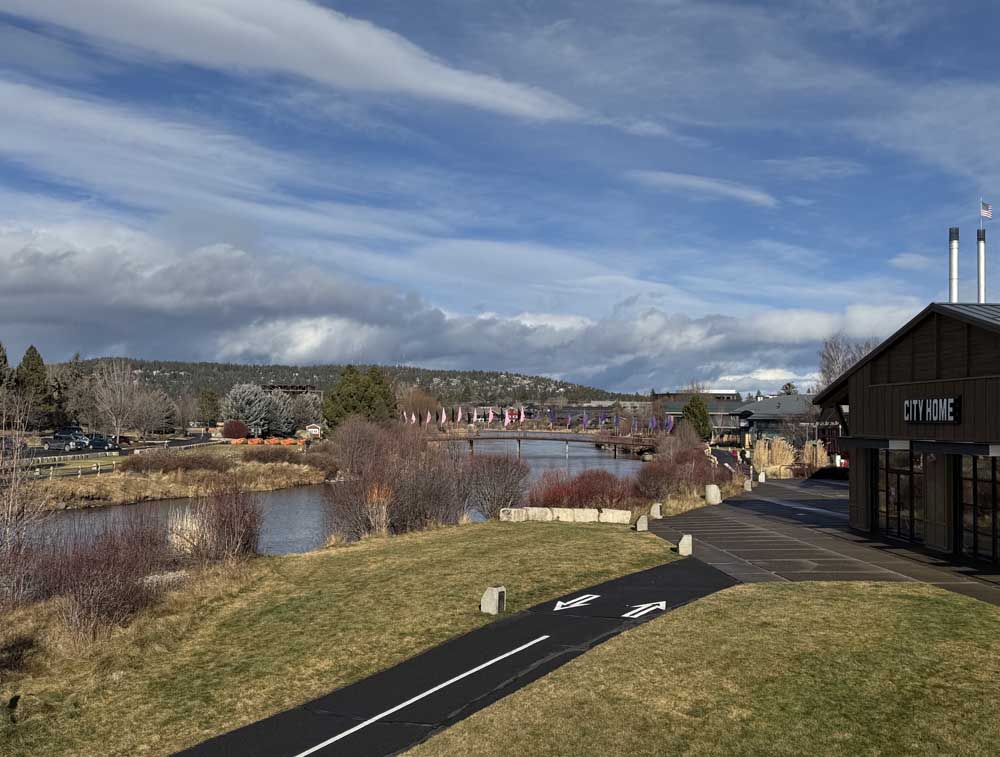
We'll start the tour with a couple "Then and Now" shots.
|
 |
|
A postcard view of the Bend mills. Brooks-Scanlon's Mill "A" is in the center of the photo, while the company's Mill "B" is to the right. The mill on the left side of the frame is part of the Shevlin-Hixon
mill complex.
|
 |
|
A near repeat "Now" view of the above image.
|
|
|
 |
|
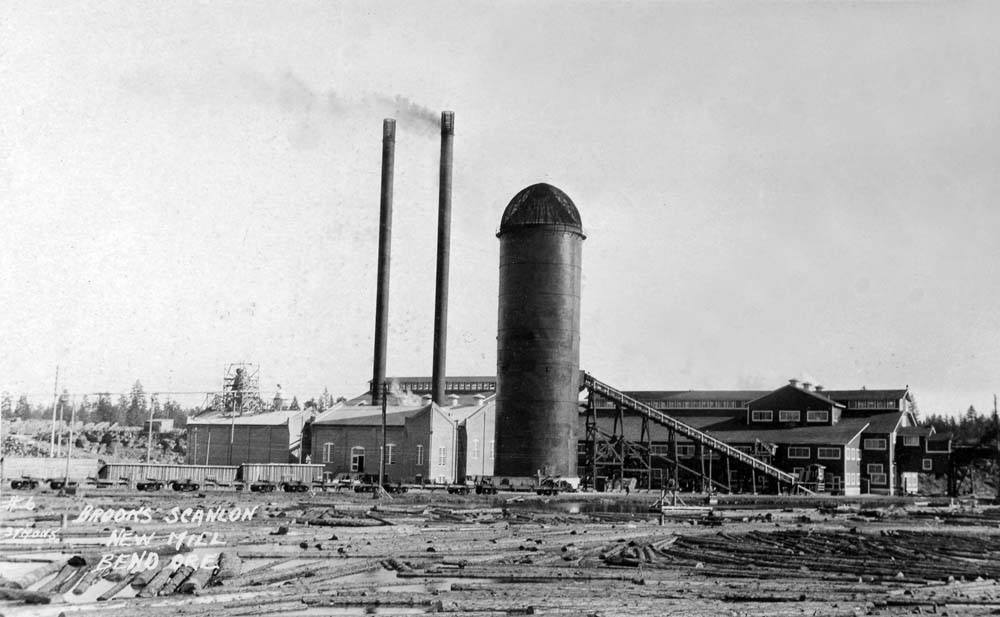
Another postcard view of the Brooks-Scanlon Mill "B" complex shot sometime between its construction in 1923 and when the company added the third stack as part of an expansion in 1929.
|
 |
|
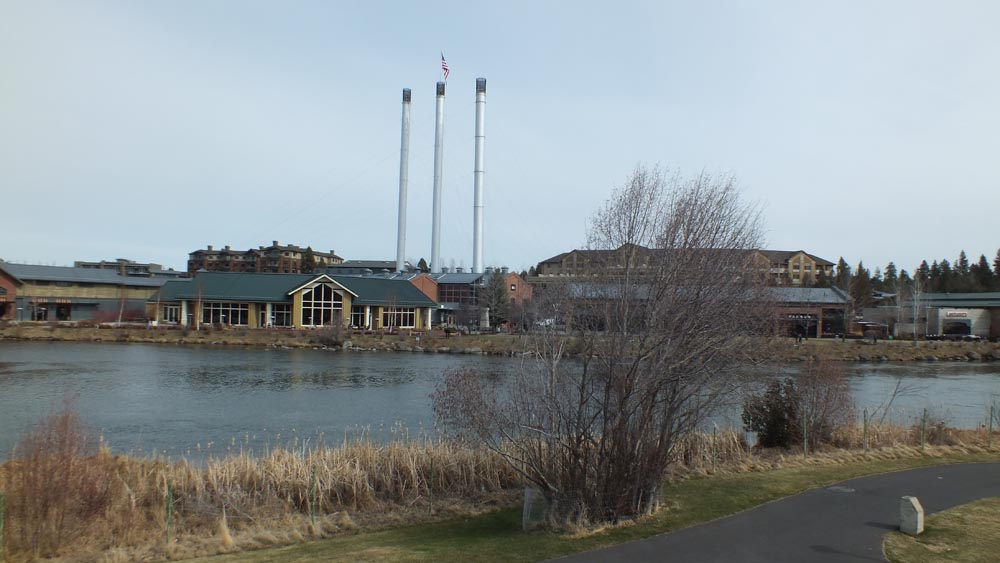
A repeat "Now" view of the above image.
|
|
|
 |
|
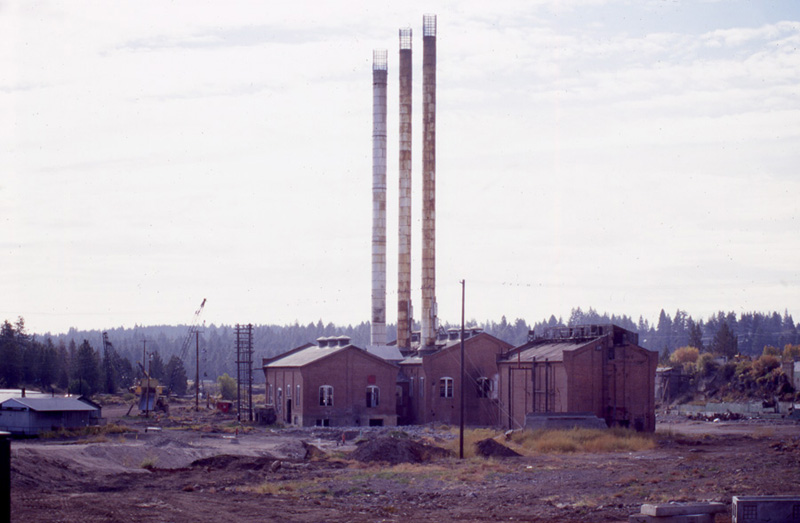
The Mill "B" powerhouse complex right as redevelopment of the site began. The building in the center is the powerhouse building that housed the boilers providing steam. The building to the right held
the turbines propelled by the steam the boilers produced that powered not only the entire Brooks-Scanlon mill complex but much of the town of Bend. The third building to the left of the powerhouse housed
the sawdust that fueled the boilers. Jerry Lamper photograph.
|
 |
|
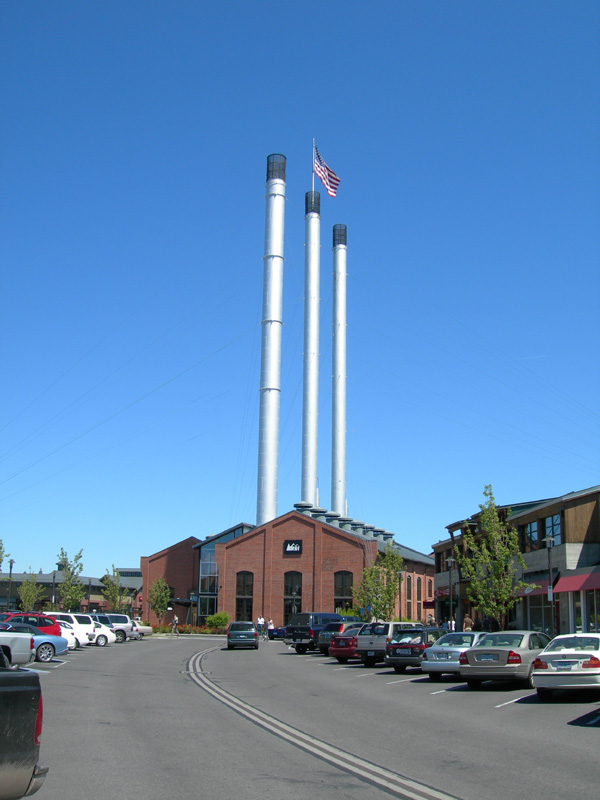
All three buildings have been repurposed to retail space. Outdoor clothing and recreation equipment giant REI occupies the old power house, it is seen here from the opposite end of the above photo.
|
 |
|
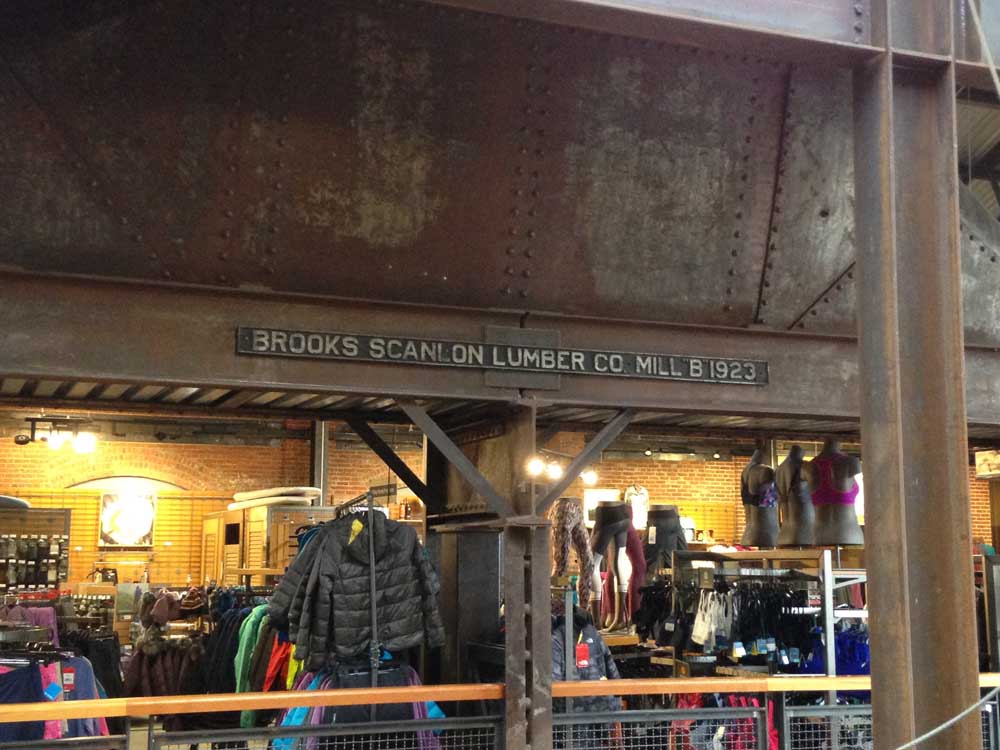
The base of one of the stacks incorporated into the REI store.
|
 |
|
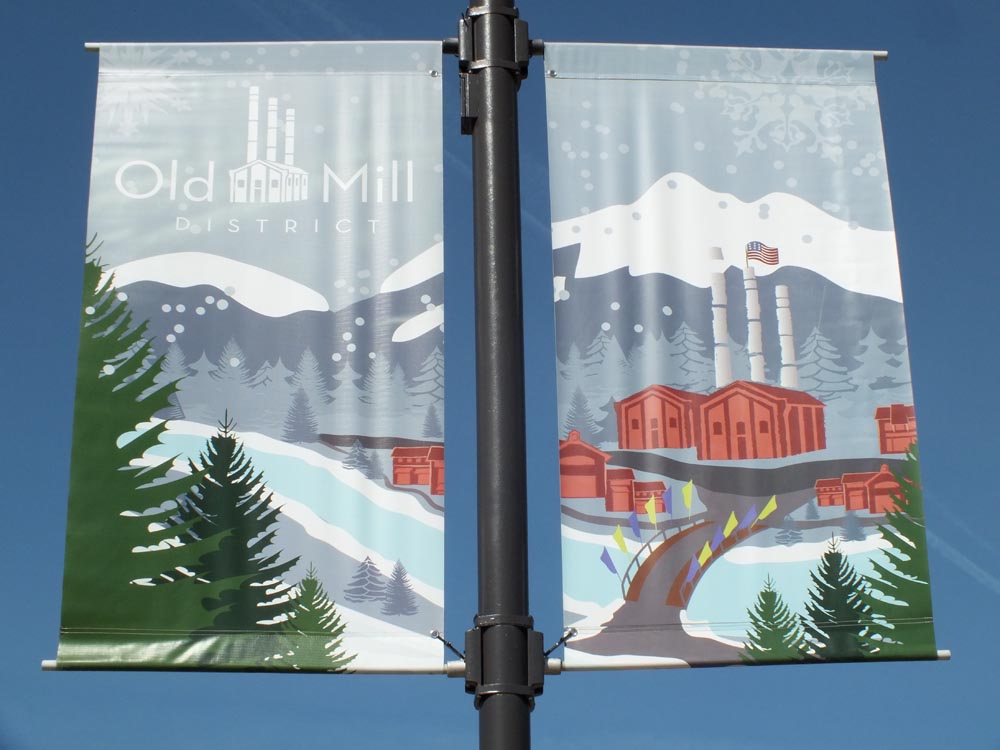
The three smokestacks dominate the surrounding landscape today, and the Old Mill District has incorporated them into its logo and branding.
|
|
|
 |
|
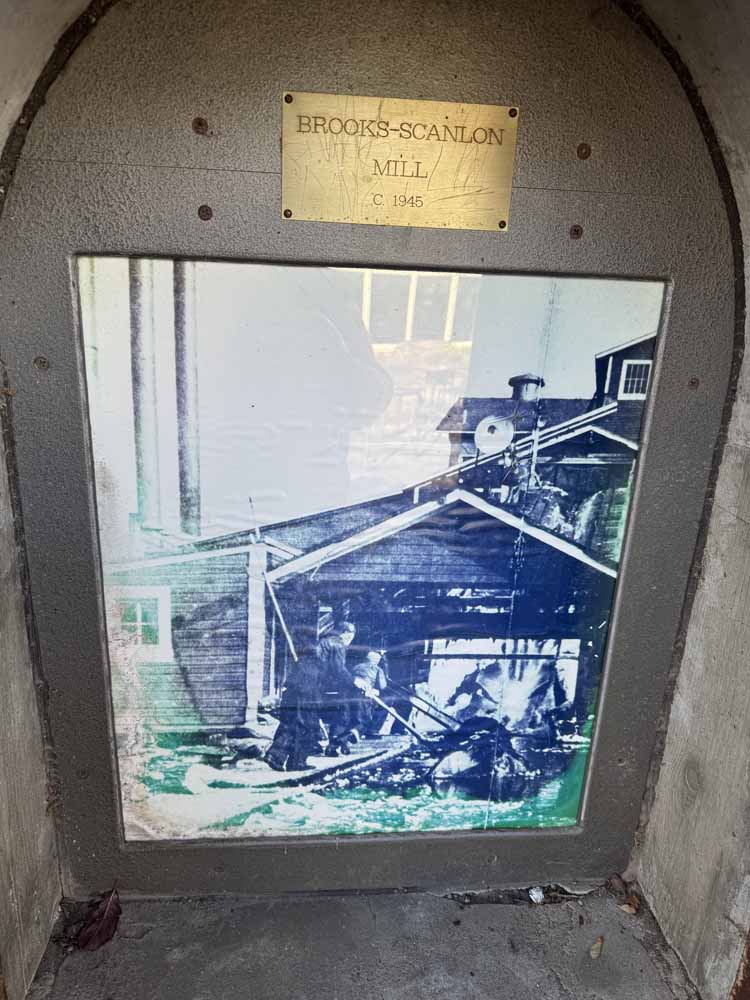
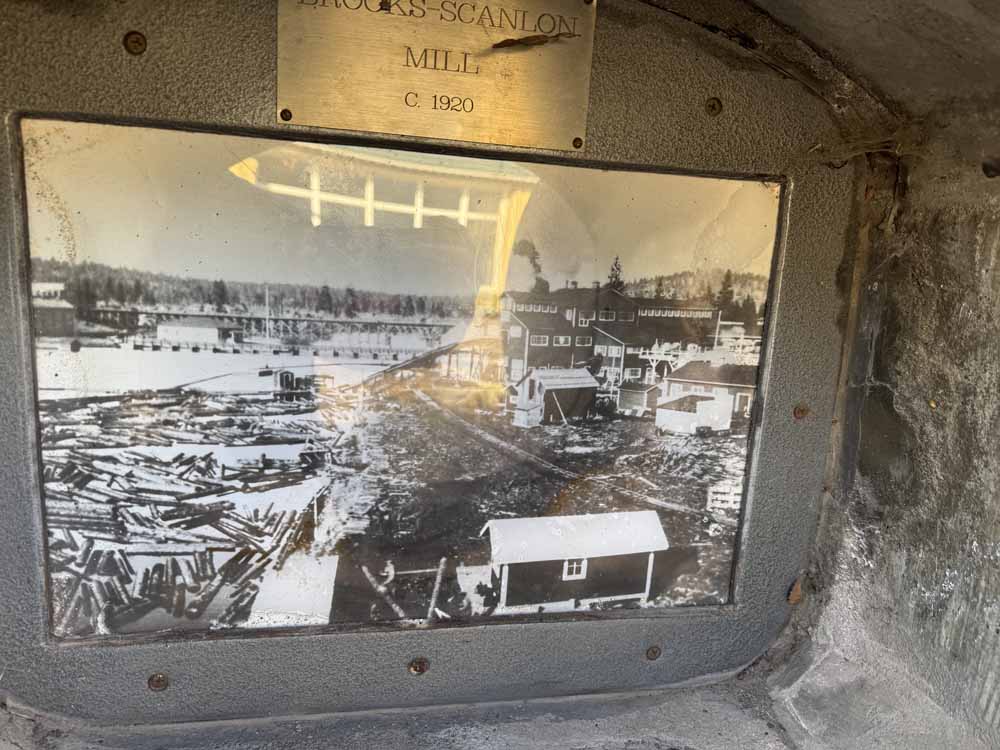
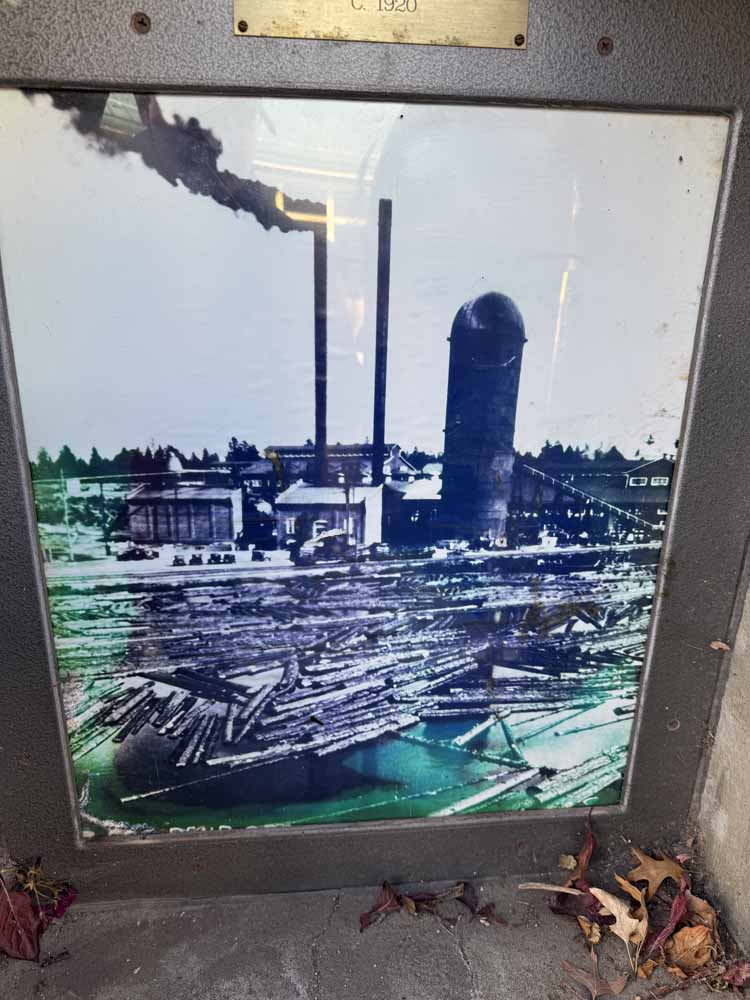
A brick wall near the old powerhouse complex has several firebox doors installed in one side, with historical photographs of the complex behind several of them.
|
 |
 |
 |
|
|
 |
|
Looking downstream from the footbridge across the river in front of the Brooks-Scanlon Mill "B" site. The large red building to the left side of the photo is the Mill "A" building.
|
 |
|
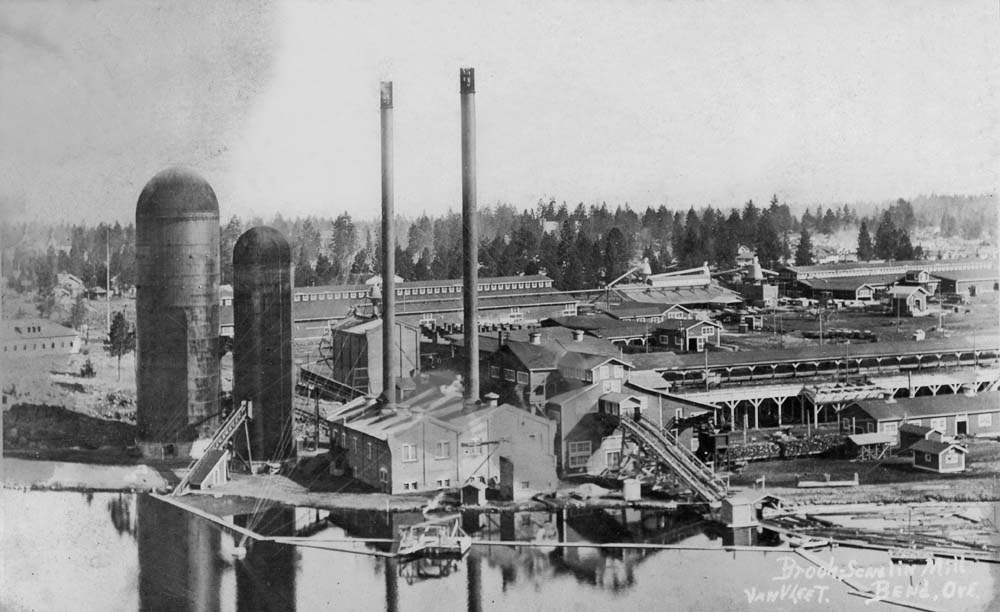
Another early postcard view of the Mill "A" complex, taken from an elevated position in the Shevlin-Hixon mill across the river. The mill building is in the center, with the jack slip used to bring
logs from the river into the mill entering the front of the structure. The buildings with the stacks to the left house the powerhouse, with the two sawdust burners to its left.
|
 |
|
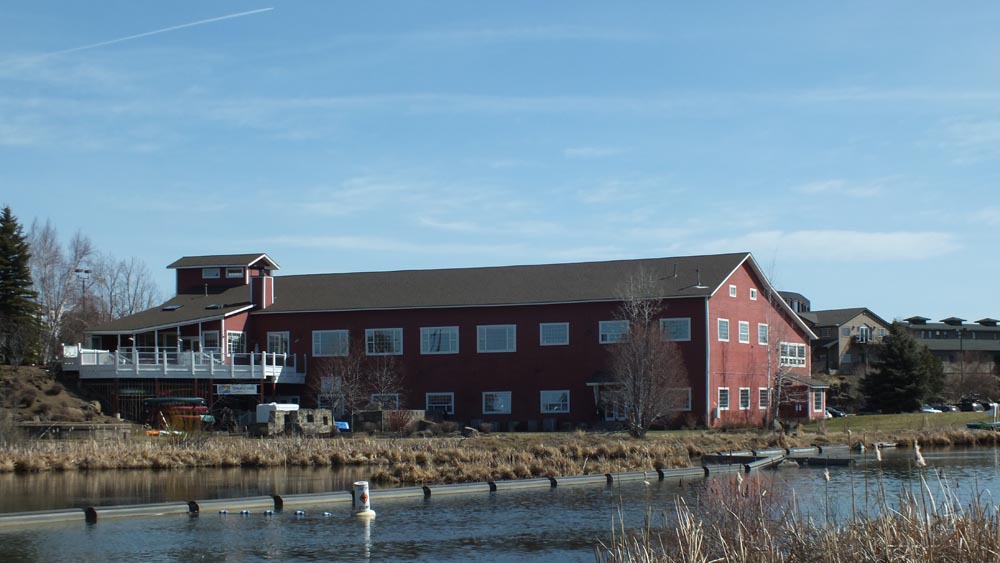
The Mill "A" building as it appears today, heavily modified from its days housing a sawmill.
|
 |
|
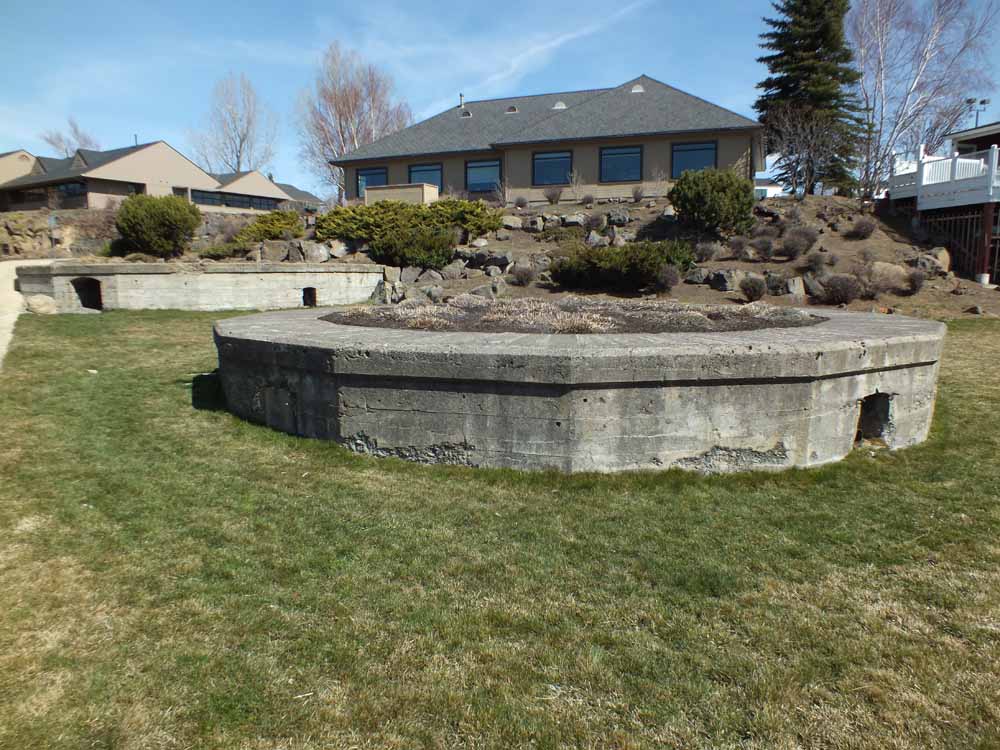
The concrete bases of the two sawdust burners remain and have been converted to planters.
|
 |
|
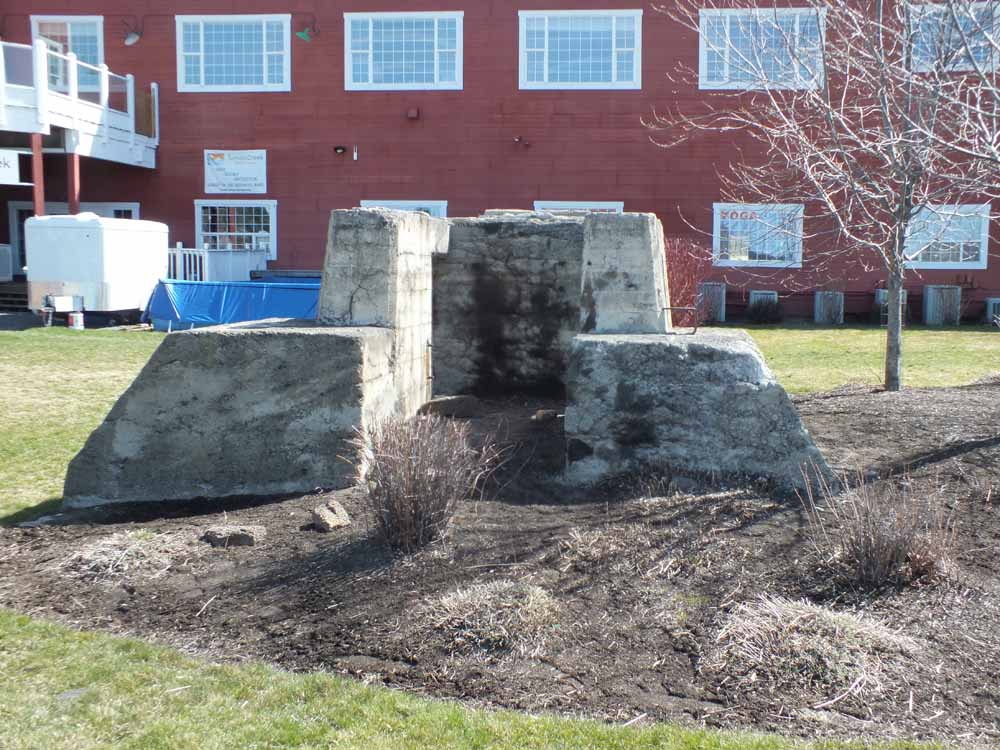
Also present is the foundation that once supported one of the boilers in the powerhouse.
|
 |
|
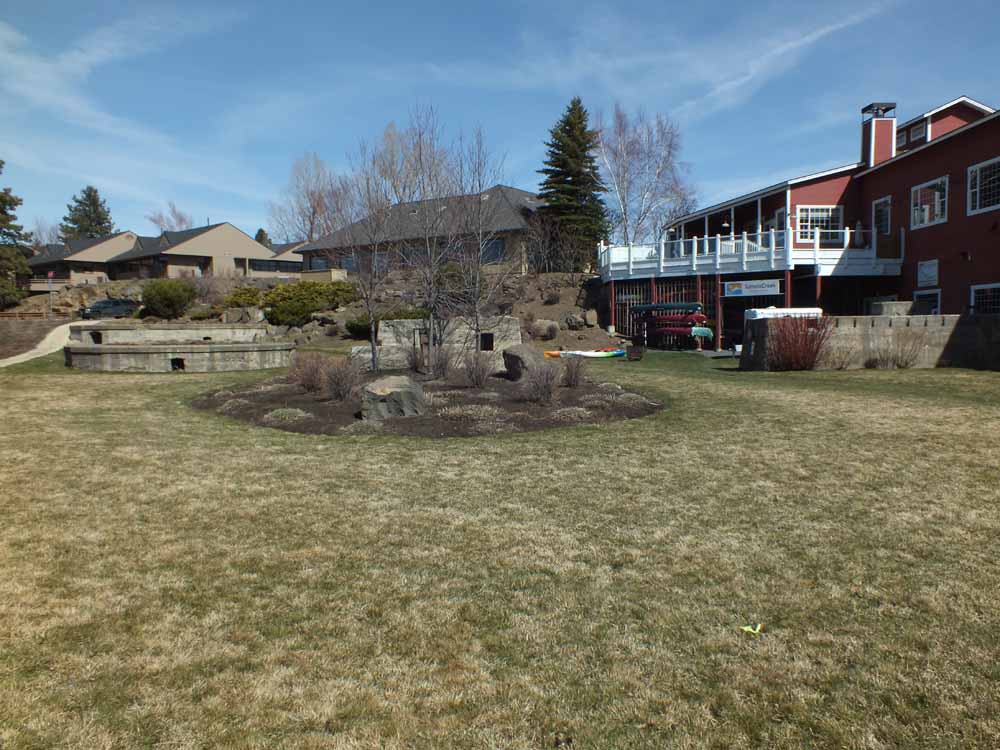
An overview of the concrete foundations for the powerhouse and burners adjacent to the Mill A building.
|
 |
|
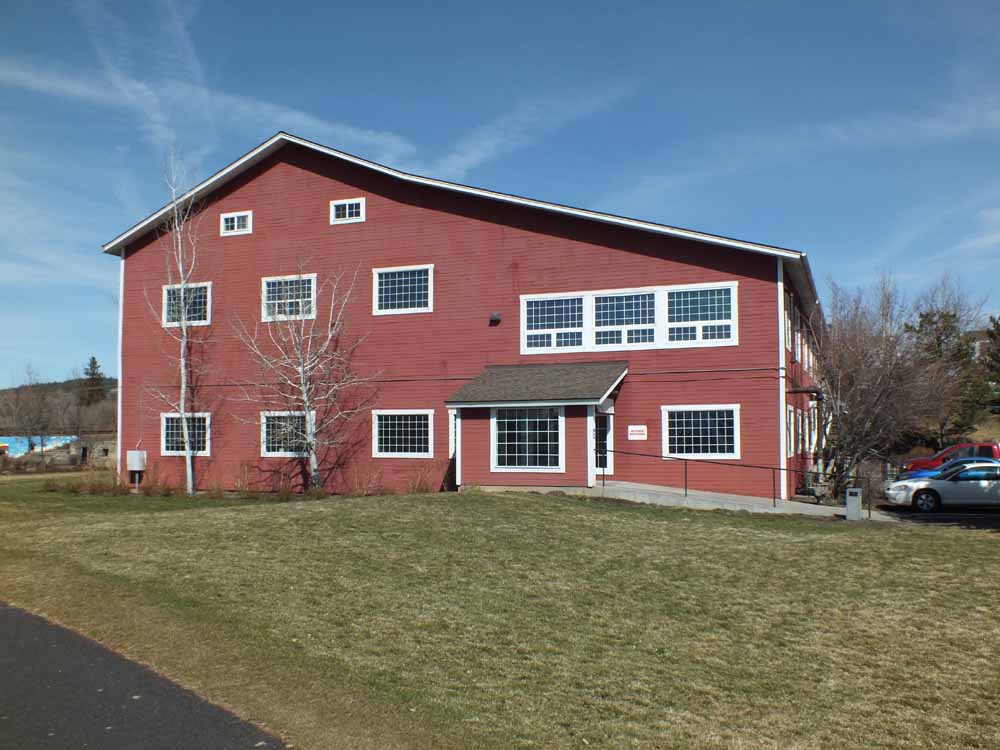
The front of the Mill "A" building facing the river.
|
|
|
 |
|
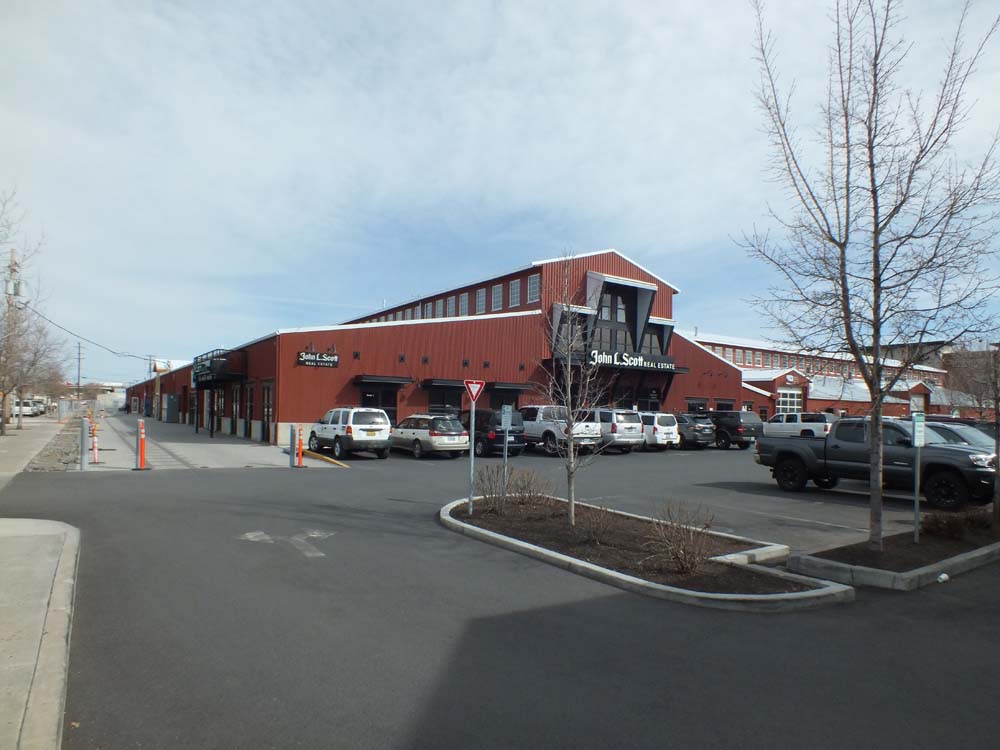
While not part of the Old Mill District, the former Brooks-Scanlon box factory behind the Mill "A" complex has also been redeveloped into a mixed retail, office, and dining space.
|
|
|
 |
|
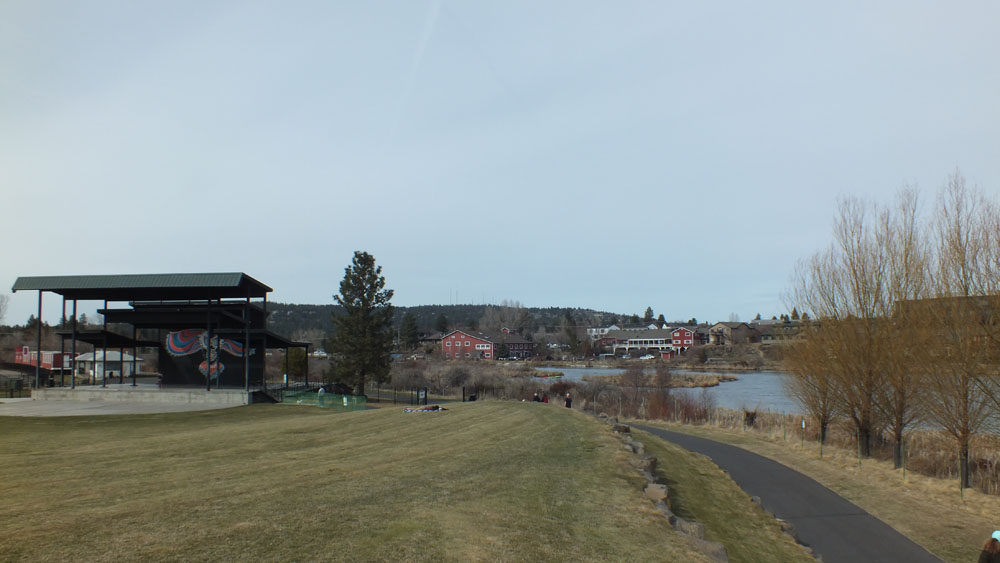
The outdoor amphitheater, once named for Prineville-based tire giant Les Schwab and currently named the Hayden Homes Amphitheater, occupies parts of the Shevlin-Hixon sawmill site.
|
 |
|
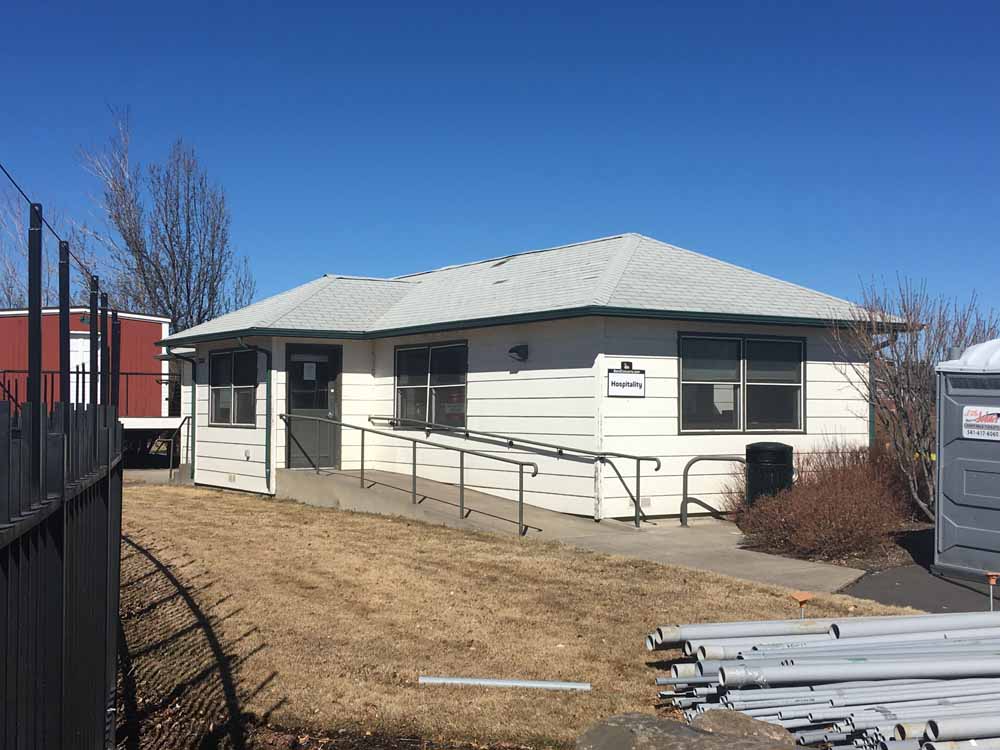
The building currently providing hospitality space for performers at the amphitheater used to be the Brooks-Scanlon management office, the District relocated it across the river during the redevelopment. The
former Brooks-Scanlon railcars covered on another page on this site are behind the building, and the former Oregon Trunk Bend depot and scale house are across the street, appropriately named Shevlin-Hixon Street.
|
|
|
 |
|
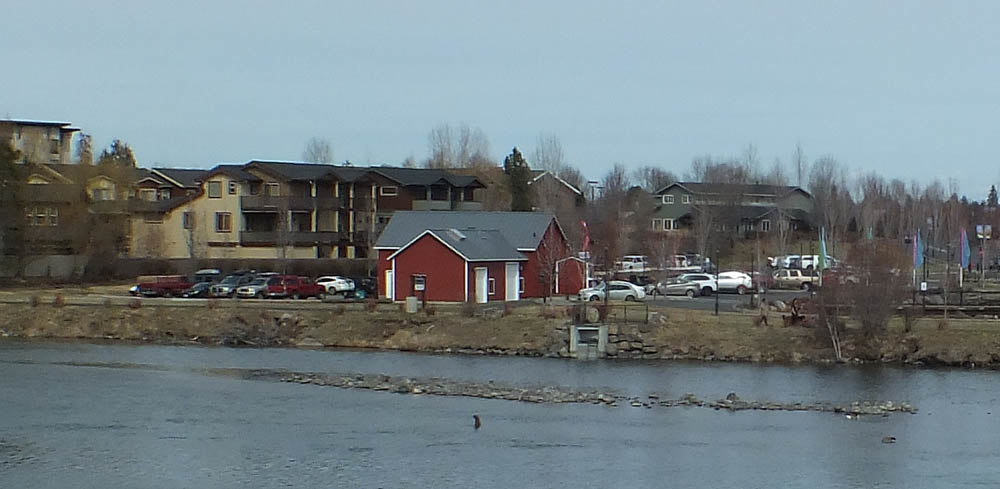
Oldest surviving building in the Old Mill District is the former Brooks-Scanlon fire house that once held the company's fire engines.
|
|
|
|
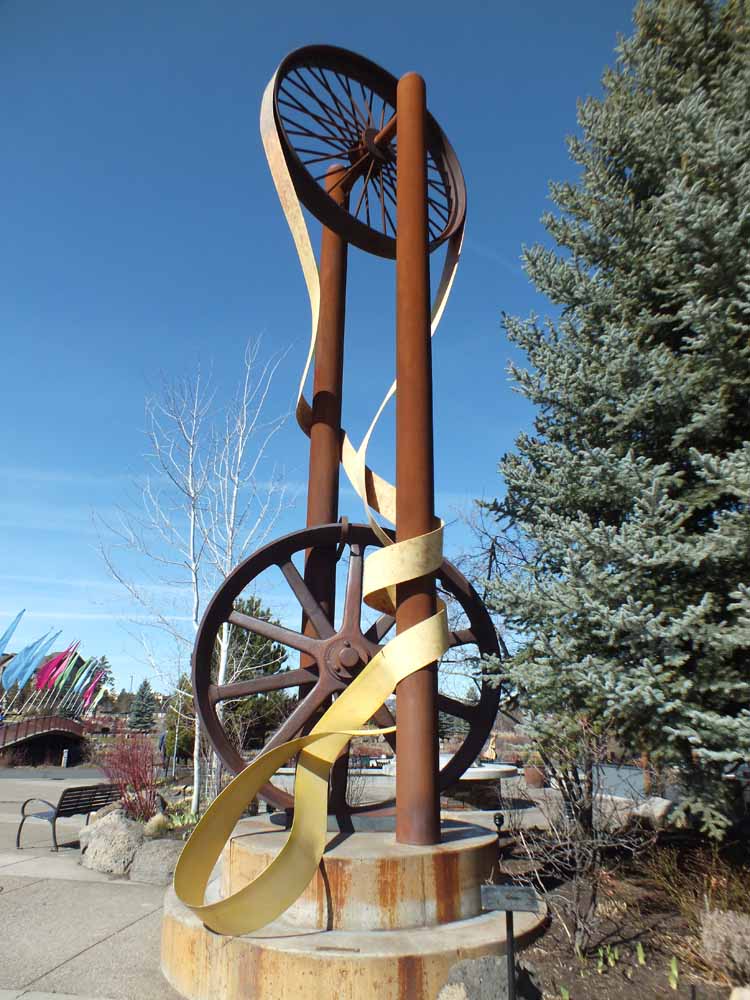
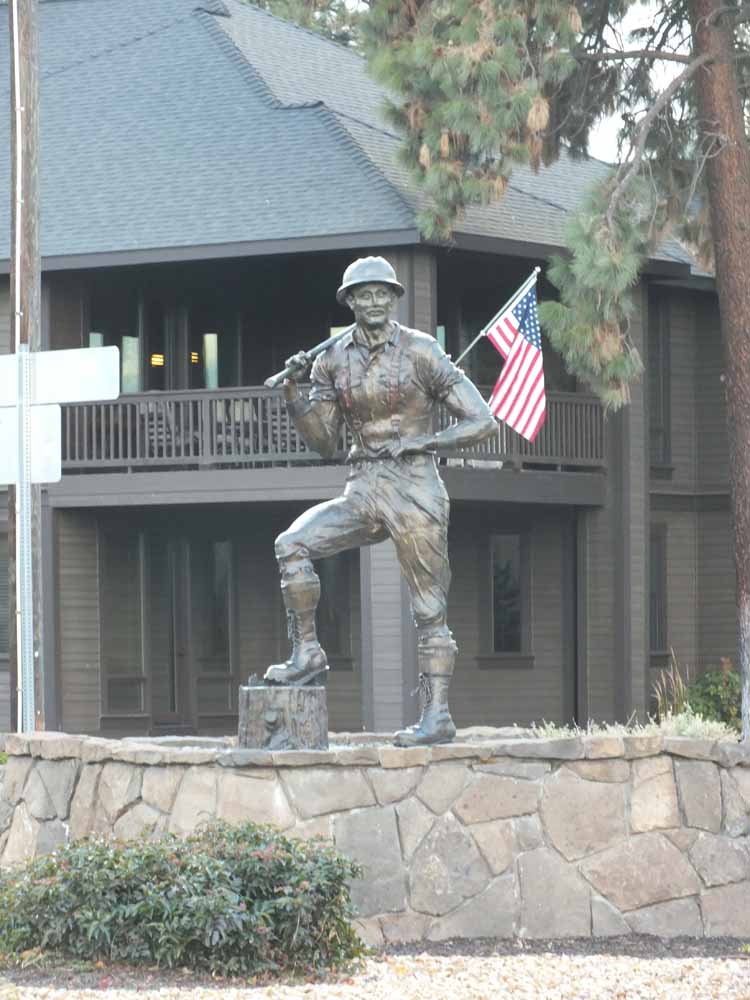
As noted above, a good number of art installations and interpretive signs have been placed around the District, many of which celebrate and explain the timber industry heritage of the site.
|
 |
|
Two of the wheels that once powered a band saw in the mill are now part of one art installation. Another installation in the middle of a roundabout in the District features the boom and drag bucket once
used to remove accumulated bark and debris from the bottom of the Deschutes River when the mills used it as a log pond.
|
 |
|
Several statues have been placed around the District, mostly in roundabouts, including this one of a logger from the early days of the lumber industry in Bend. Another statue near this one
features a forester replanting tree seedlings.
|
 |
|
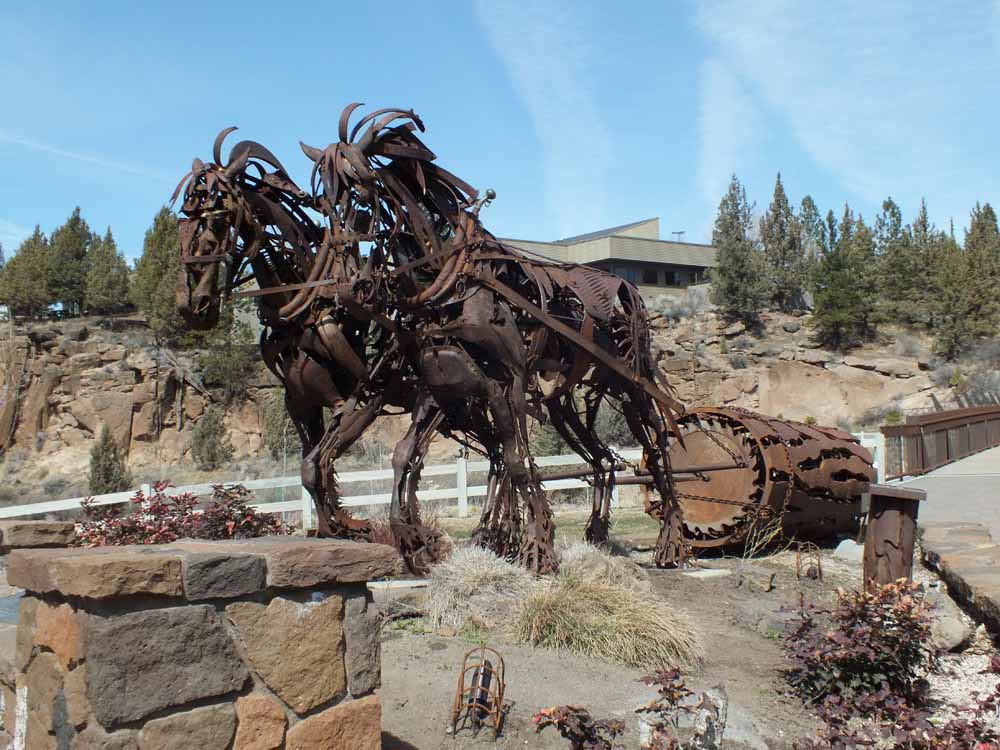
Another metal sculpture, this one by Greg Congleton, on display next to a footbridge upstream from the District features two horses dragging a log.
|
|
|
|
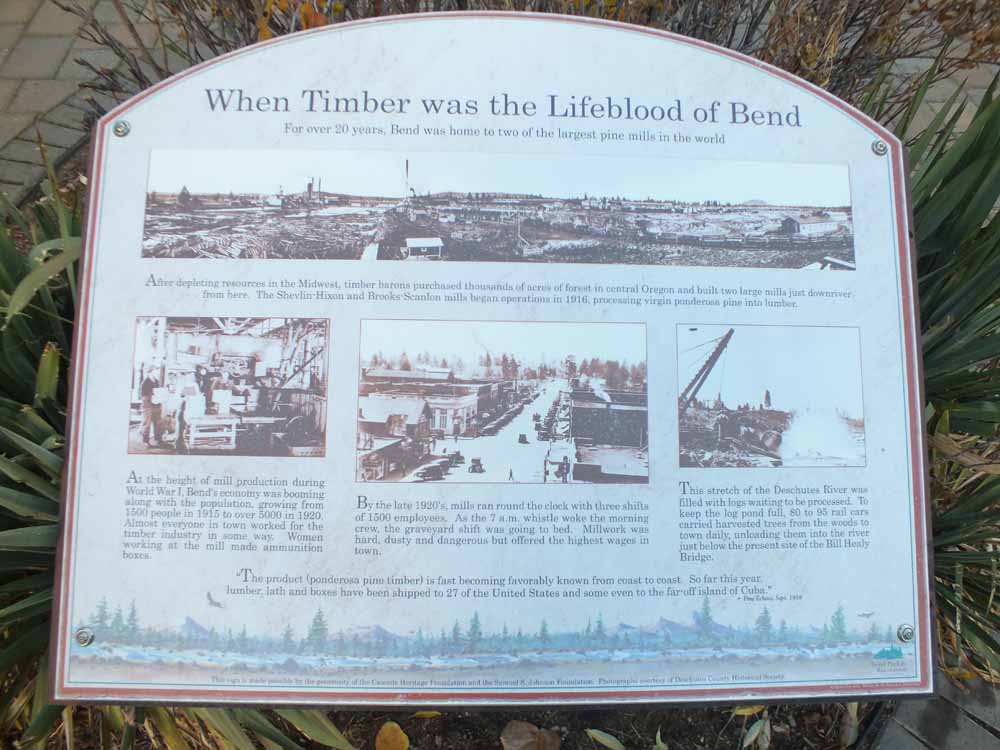
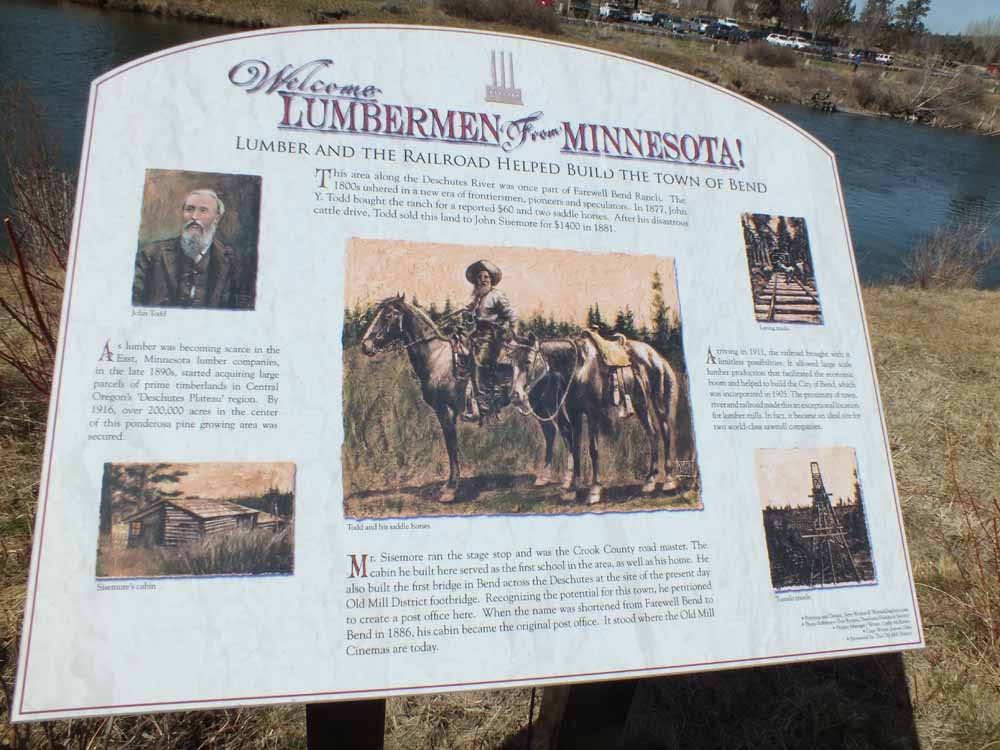
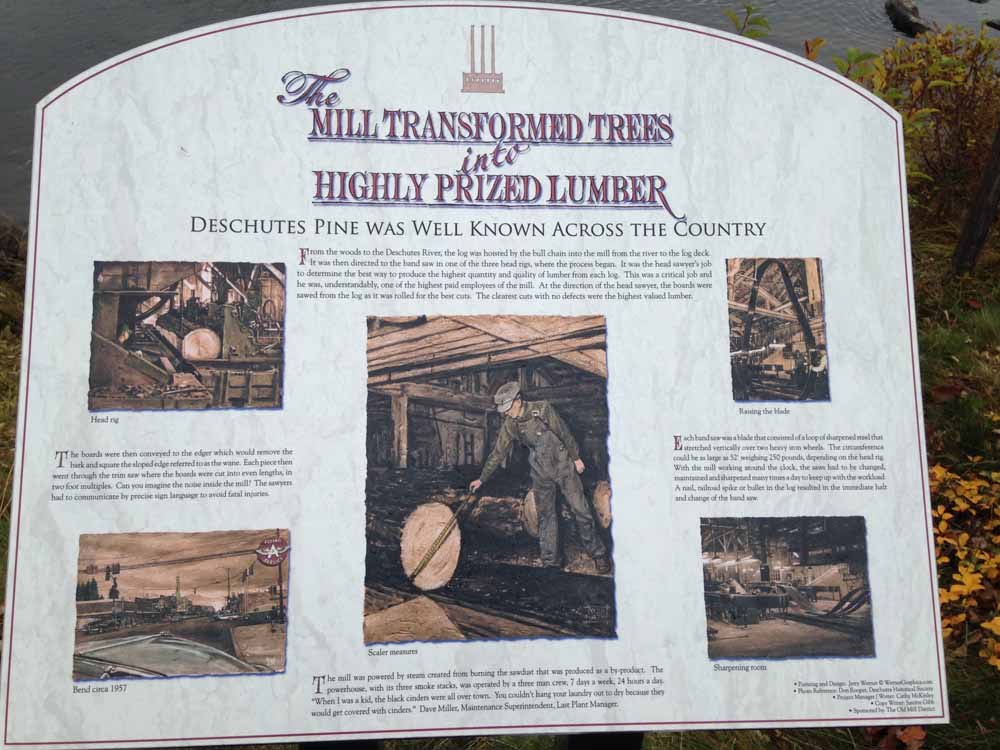
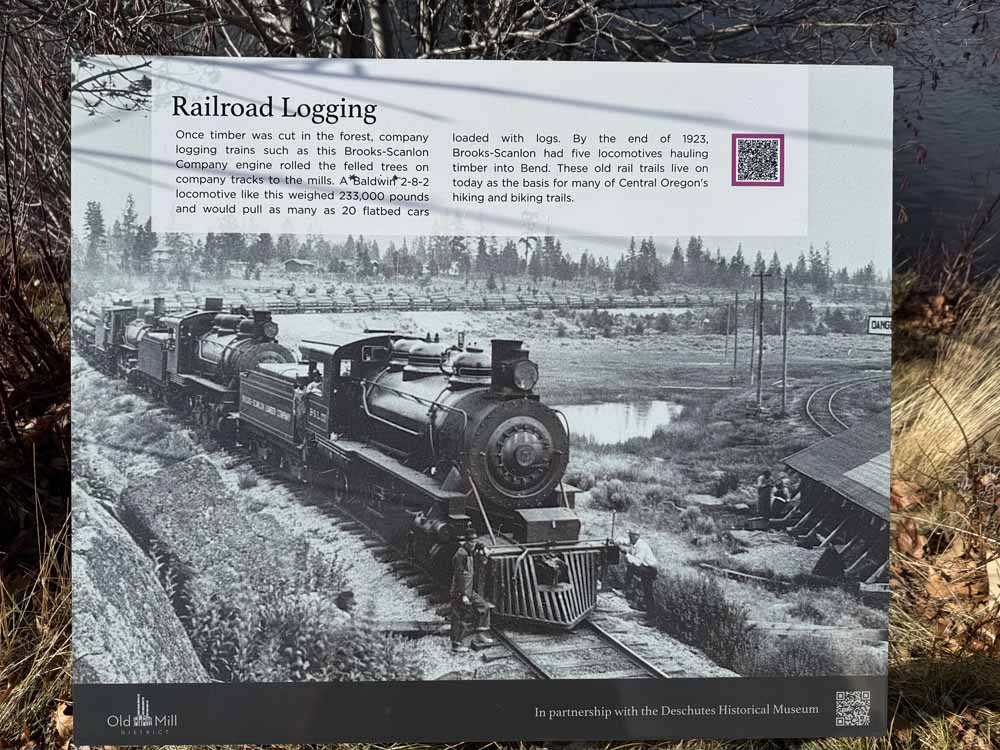
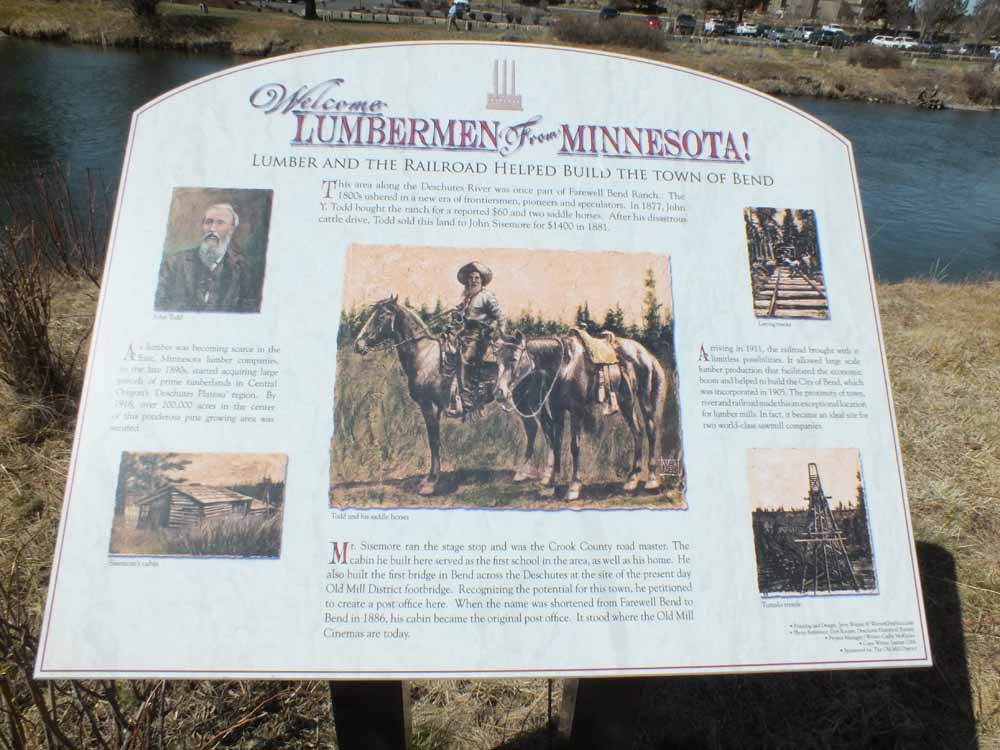
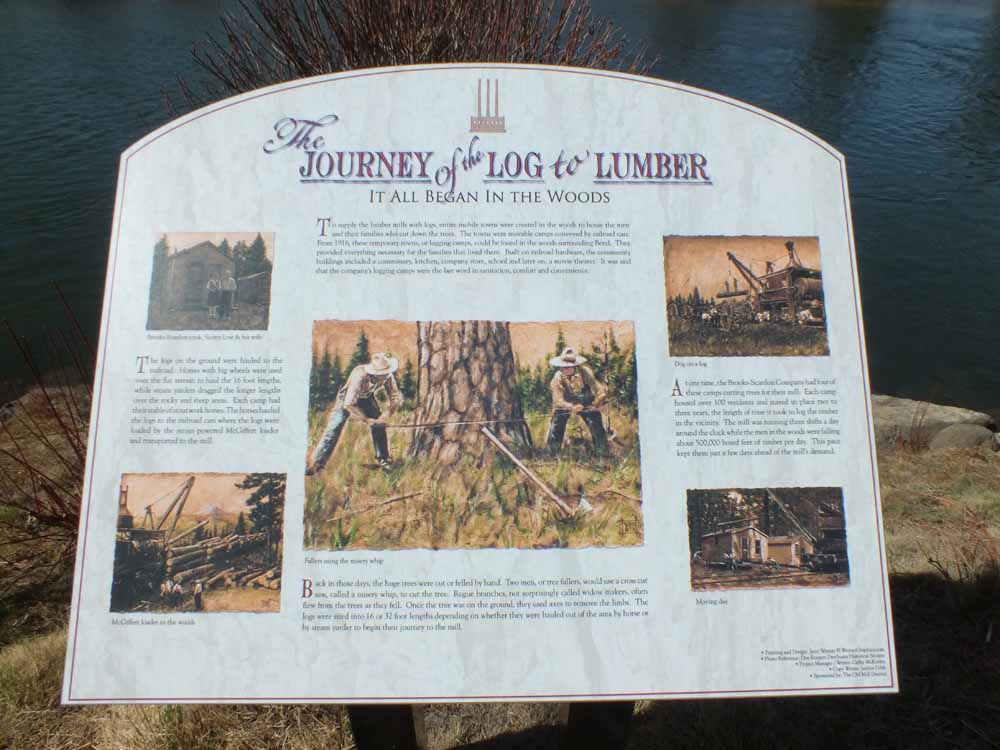
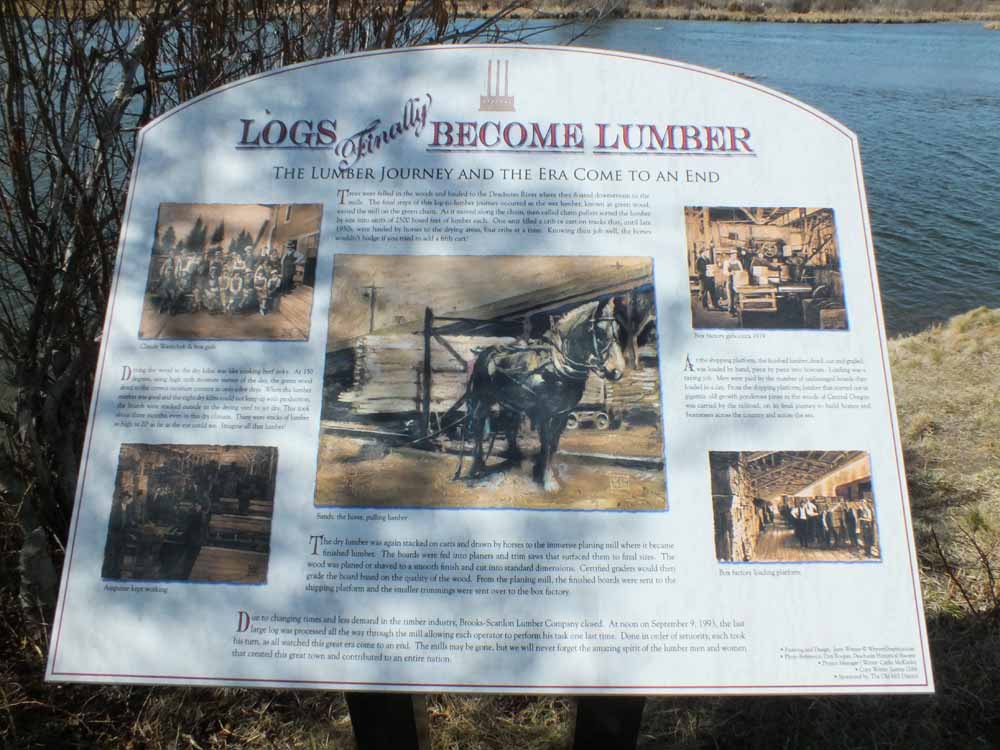
A few of the several interpretive panels and historical signs scattered around the District explaining the history and significance of the site.
|
 |
 |
 |
 |
 |
 |
 |
|
|
 |
|
Perhaps little better represents the victory of American consumerism over industrialism that the flag on top of an idled smokestack.
|
|
|