



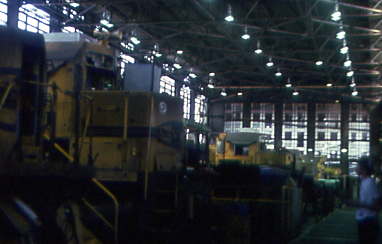
The Santa Fe used to offer tours of their San Bernardino shops during the 1970's and into 1981. I was able to go on two of the tours and interested participants met in front of the San Bernardino station and were taken over to the shop buildings by a tunnel underneath the tracks.
San Bernardino is located sixty miles east of Los Angeles and is the division point of Santa Fe's Los Angeles Division. The shops were constructed in 1886 consisting of a ten-stall brick roundhouse, with a 60 foot turntable, machine shop and a blacksmith shop. The whole site comprised 106 acres and 22 of those were under cover. In 1922, the major part of the extension to the locomotive department began and was completed four years later, with the new shops occupying the site of the old ones.
The new plant included a 43-stall engine house and a repair plant having a shop capacity of 315 freight cars and 30 passenger cars. The most important building in the locomotive repair plant was the 673 foot machine shop made up of three bays: a 90 foot erecting bay next to the transfer table; a light machine bay of 46 feet and a heavy machine bay of 65 feet. The boiler shop (also 673 feet in length) is 164 feet wide being made up of two bays, the erecting bay 90 feet wide, and the machine bay 74 feet wide.
Both the locomotive and boiler shops are of the transverse type and contain 30 pits and 29 pits respectively and both of these buildings face a transfer table of 65 feet. Another transfer table, 120 feet in length, is situated 260 feet east of the boiler shop. The fire-proof power plant is 103 feet long and 81 feet, 9 inches wide. A concrete wall longitudinally down the center of the building divides the boiler room and the engine room. The boilers are oil-fired, but the boiler room affords adequate space for the installation of coal handling equipment. Other new facilities include: a 306 foot blacksmith shop; the flue shop; sheet metal and flue storage shop; a concrete building used for reclaiming oil; another for reclaiming magnesia lagging; a shed for storing fire brick; a new two-bay fire station; a new hospital; offices and an apprentice school; and an extention of the 1909 fireproof storehouse and construction of a new platform.
The above historical information from the April 10, 1926 issue of "Railway Age".
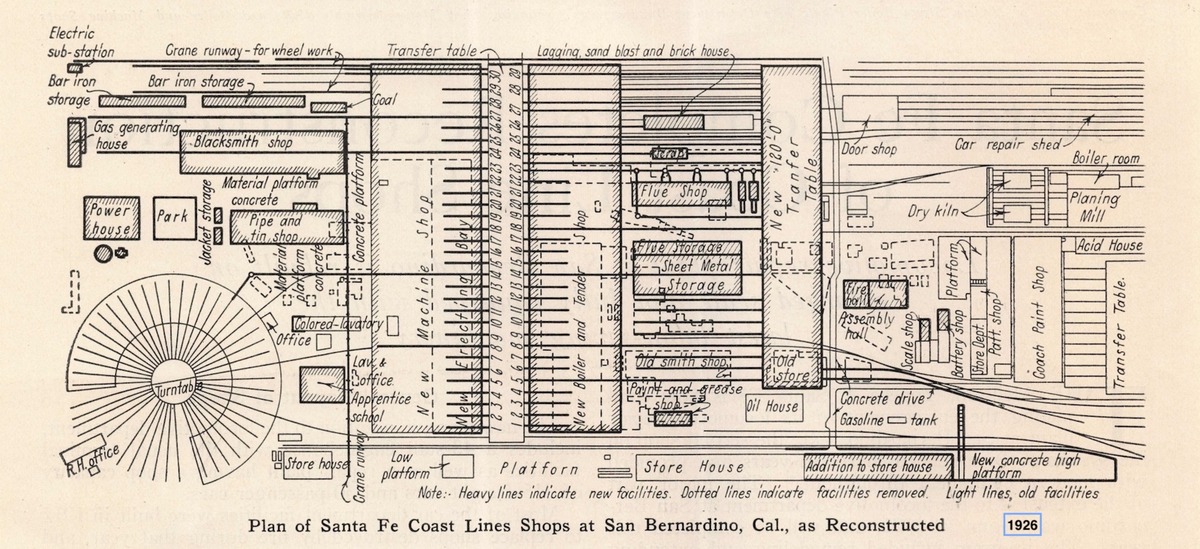
Santa Fe Coast Line shops in 1926.
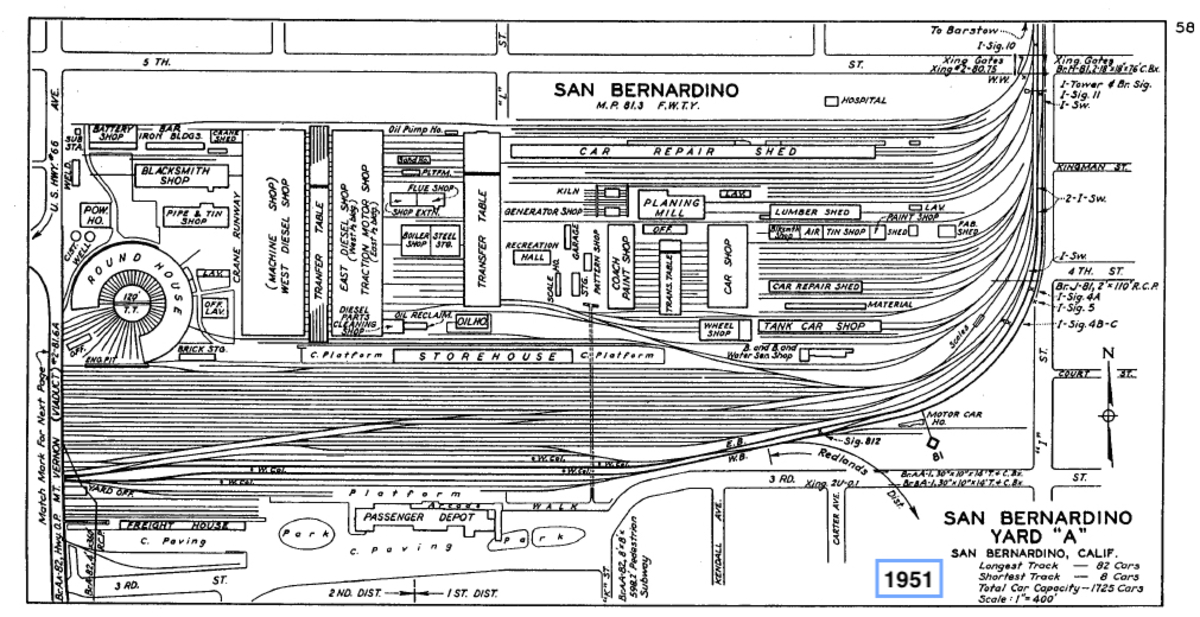
Yard A in 1951.
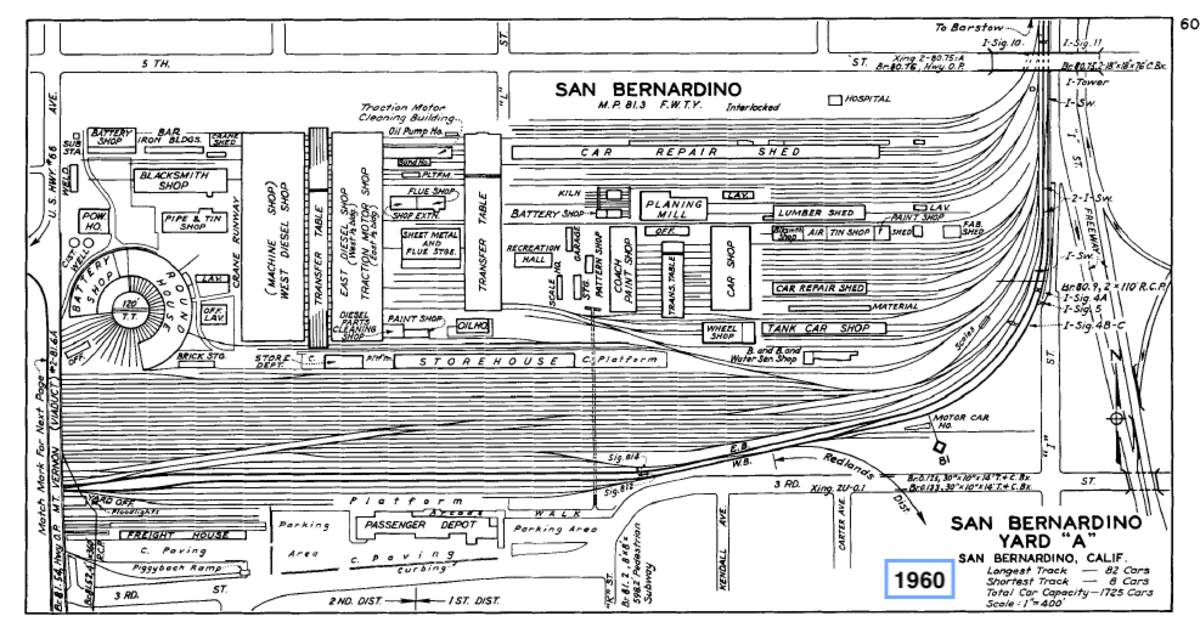
Yard A in 1960.
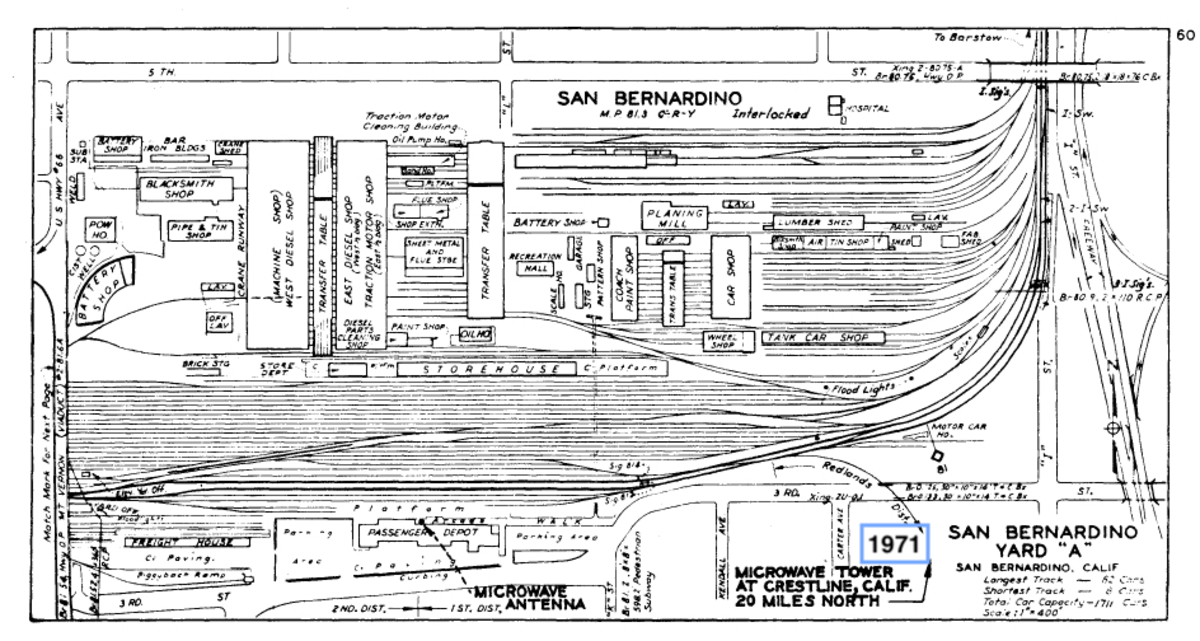
Yard A in 1971.
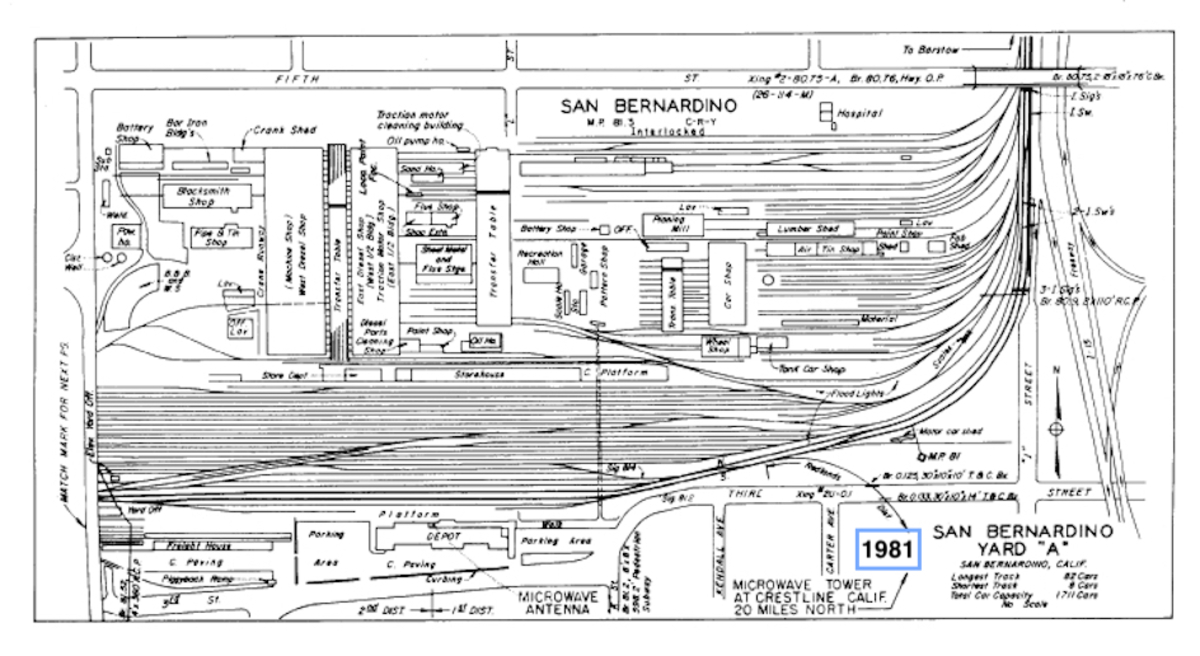
Yard A in 1981.
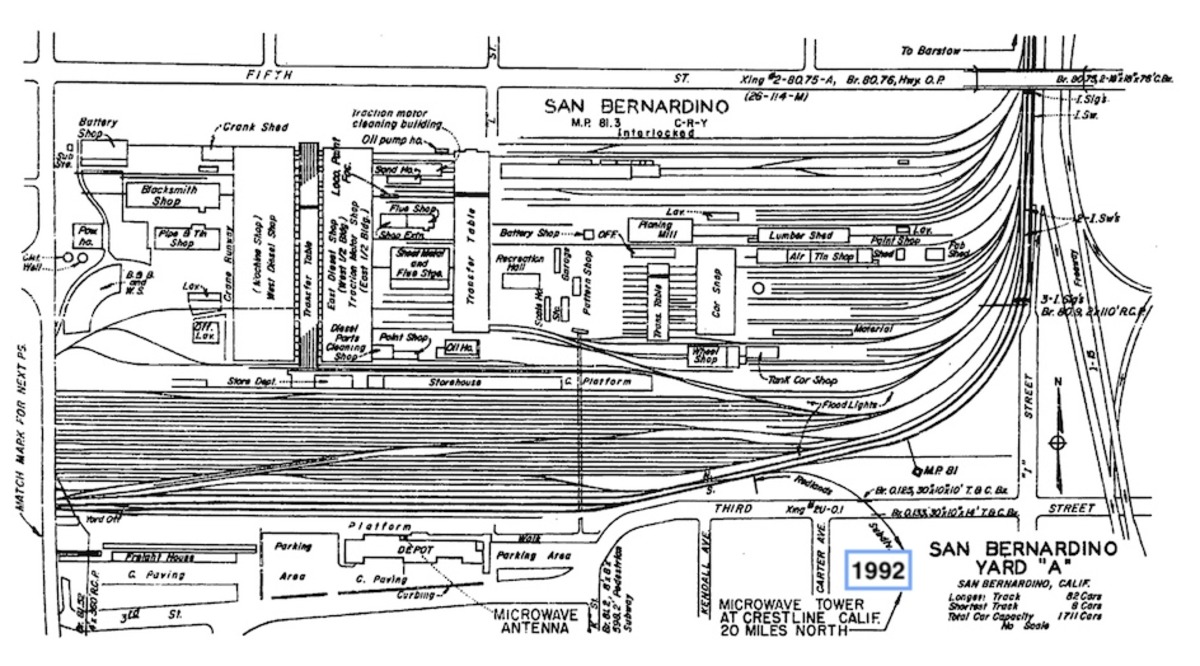
Yard A in 1992.
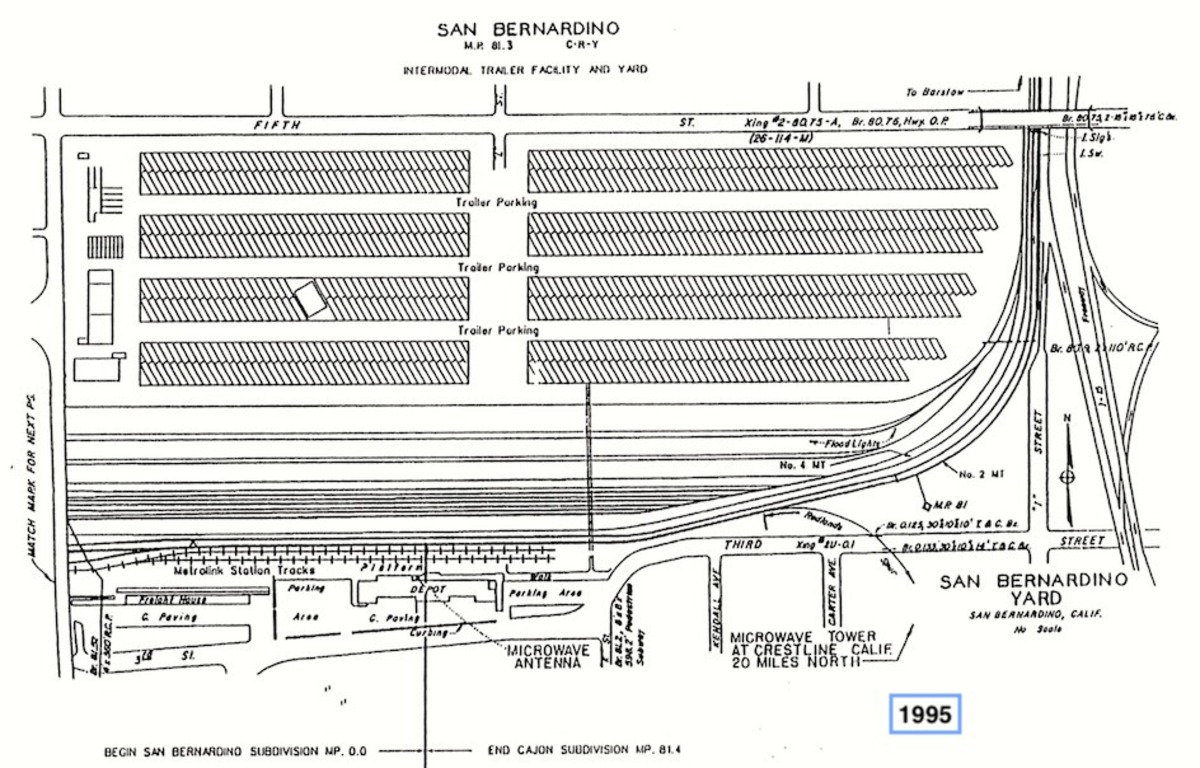
San Bernardino Yard in 1995.
In 2025, San Bernardino is home to one of BNSF's 27 intermodal facilities. Positioned in the middle of the Inland Empire industrial market, everything from agriculture to merchandise comes here. The trains that pass through San Bernardino every day still play a key role in connecting the West to the rest of the country.
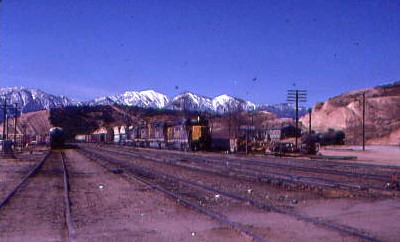
Motive power of the Santa Fe was usually out on the main line, such as this scene at Summit on Cajon Pass in 1972.
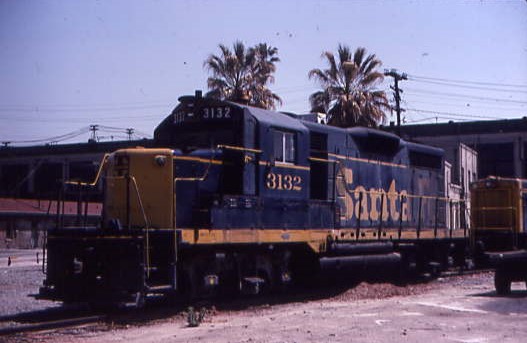
Santa Fe GP20 3132, nee Santa Fe 1132, built by Electro-Motive Division in 1961, was sitting at the north end of the shop. It became Santa Fe 3032 in 1981, BNSF 2022 in 1995 then Macquarie Rail Inc. 3032 before being acquired by Pioneer Rail Equipment and retaining the same number.
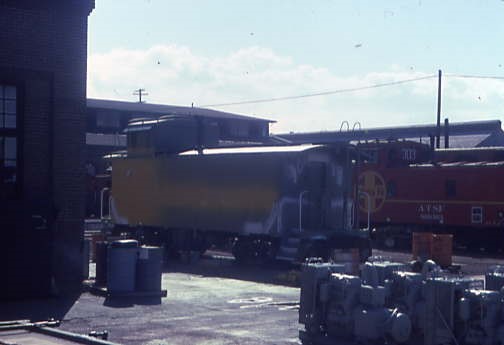
A Santa Fe caboose being painted.
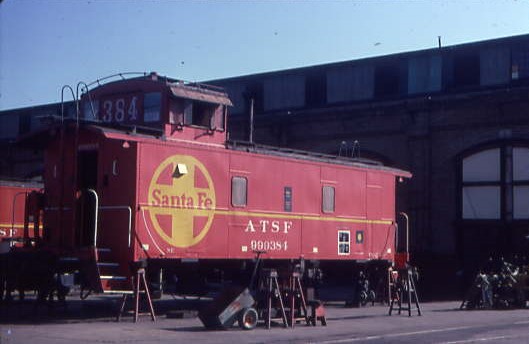
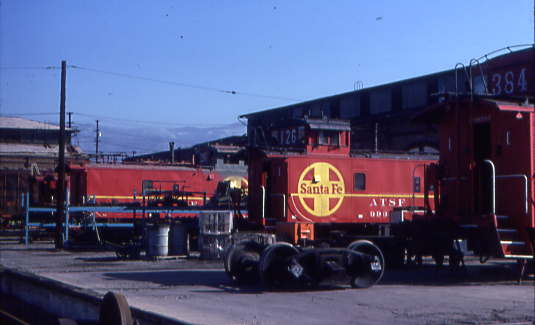
Santa Fe caboose 999384 and 999126.
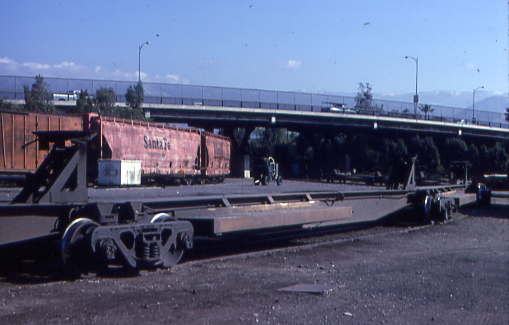
A new ten-pack "fuel foiler" articulated TOFC spine car set was on display. Such cars were built in the late 1970's and the last ones were retired in the mid-1990's.
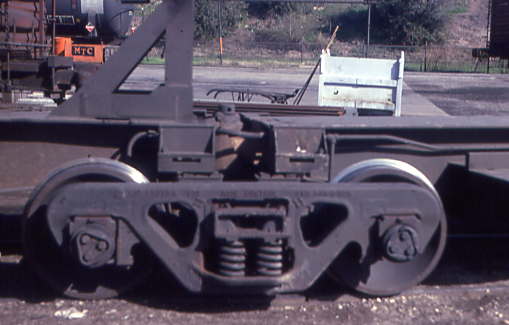
The join of two ten pack platforms.
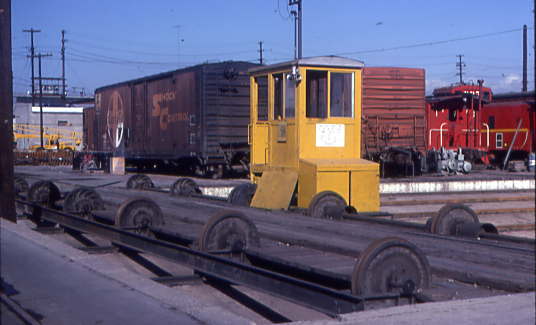
A transfer table.
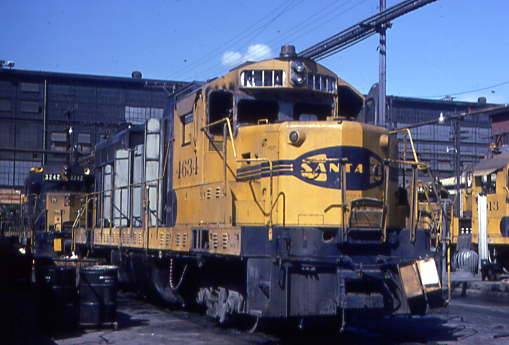
To the second tour, Santa Fe SD26 4634, nee Santa Fe SD24 934:1 built by Electro-Motive Division in 1959. It became Santa Fe 4534 in 1969 then was rebuilt to an SD26 in 1977.
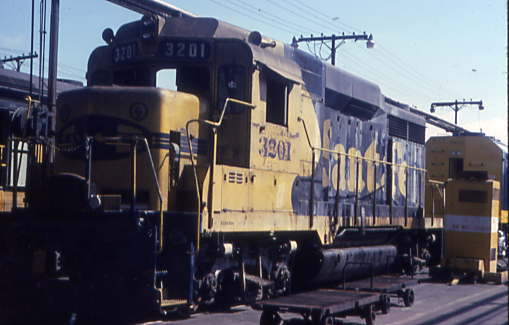
Santa Fe GP30 3201:1, nee Santa Fe 1201:1 built by Electro-Motive Division in 1962. It was rebuilt as GP30u 2701:2 in 1984 then became BNSF 2401 in 1999
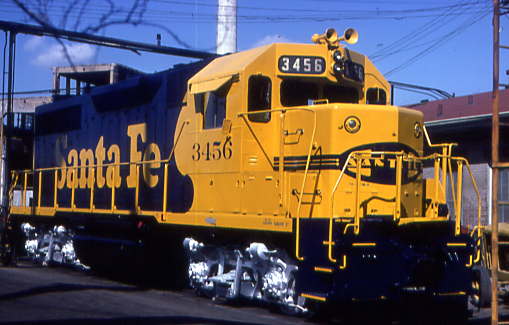
Santa Fe GP35 3456, nee Santa Fe 1456, built by Electro-Motive Division in 1965. It was rebuilt as GP35u 2956 in 1984 and became BNSF 2556 in 1998.
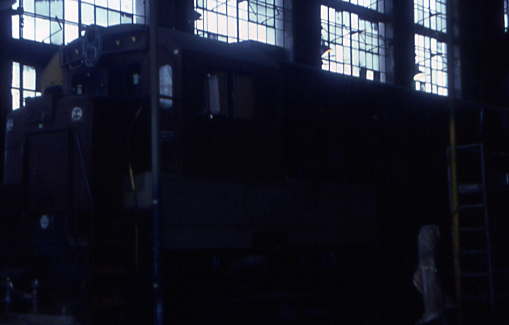
An unidentified Santa Fe U-Boat in for work.
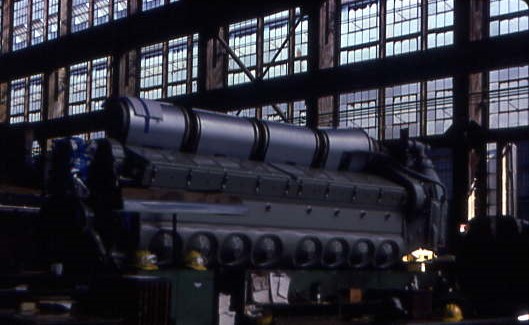
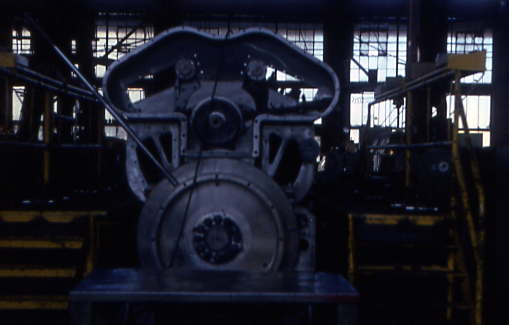
A prime mover.
Locomotives in various stages of repair.
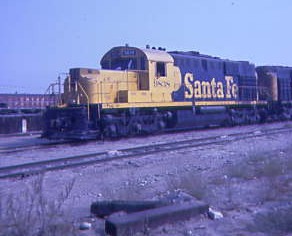
To the north of the Mount Vernon Street bridge was the dead line, including Santa Fe RSD15 9838, nee Santa Fe 838:1, built by American Locomotive Company in 1960. It was retired in January 1975 and sold to the Lake Superior and Ishpeming as their 2405 in April 1975, then sold to Fox River Valley Railroad, same number, in November 1989. It later went to Green Bay and Western, same number then to the Wisconsin Central in August 1993 and was scrapped in 1996.
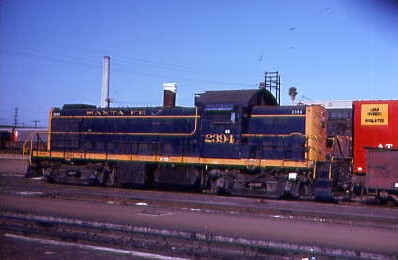
Santa Fe RS1 2394, built by American Locomotive Company in 1950, was in front of the crew change office in San Bernardino. This was the last of six RS1s ordered to be delivered. The rest of these road switchers were assigned to the Chicago area, except 2394, which was assigned to the Coast Lines, initially serving San Diego as the passenger station switcher. The steam generator on 2394 came from an FT B-unit after delivery as the other five units were factory- installed and had a much different appearance.
After being in San Diego, it was sent to Los Angeles where it was used primarily as a coach yard switcher at 8th Street and the Los Angeles Union Passenger Terminal. There was not much need for the steam generator as most of the passenger trains terminated or originated in Los Angeles. Before passengers boarded trains at LAUPT, carmen would already have the steam lines coupled after the road power was added to the head end. Santa Fe, Southern Pacific and Union Pacific shared switching responsibilities at LAUPT and not uncommon for a Union Pacific crew to be using a Santa Fe power to switch the facility.
As the S2s and S4s were delivered, 2394 was used elsewhere in Southern California. Chronicles indicate the 2394 was used in Orange County serving citrus grove packing houses assigned to Fullerton and Santa Ana, including the Inland Empire outside Los Angeles. It did not venture too far from Southern California except records demonstrate it was assigned as far north as Bakersfield and served its final days at San Bernardino until retirement in 1975. It has been preserved at the California State Railroad Museum in Sacramento.
| RETURN TO THE MAIN PAGE |