



My brother Bruce became an Amtrak agent when Amtrak started to hire railroad employees to become ticket agents at their stations. He had been hired from the Santa Fe on November 16th, 1972 and at that time, was working at Santa Ana but was bounced around Southern California, working anywhere between Glendale and Oceanside. He married Karla on August 20th, 1978 and shortly after, they wanted to move to San Luis Obispo, which was out of the Los Angeles Seniority District. If he transferred there, he would lose his seniority for five years, so after doing some research on stations in that seniority district, he selected Pocatello, Idaho, a place he felt that he could hold a job for those five years.
Bruce and Karla moved from Stanton to Pocatello and when settled, he started to ask when I would visit him, finally suggesting that I take the train to Ogden and he would drive down to pick me up. Spring break was around the corner both at Cal State Fullerton and at my job as Master Tutor at Santa Ana Junior College. He made a reservation for me and I paid for it at Santa Ana.
On March 30th, 1980, that first long-distance train ride unexpectedly changed the course of my life and be the commencement of a goal, unknown to me at that time, of riding the entire Amtrak system.
San Diegan 573 3/30/1980I boarded the northbound San Diegan at Santa Ana's Santa Fe station on 4th Street from a platform which had seen better days. It was an all-Amfleet consist, but this was not the first time I had been in them, as I had ridden a number of local trips to Fullerton and Los Angeles and my father had taken me to San Diego when the Santa Fe ran the trains and my very first trip was on a 33-car Del Mar Race train. I was on the way to Los Angeles to catch the Desert Wind to Ogden. We ran on time, passing through Orange and crossed the Santa Ana River past Anaheim Stadium through the City of Anaheim before our next stop at Fullerton, then went by Fullerton Airport through northern Buena Park and crossed Coyote Creek and entered Los Angeles County.
The train travelled through La Mirada, the oil refineries of Santa Fe Springs and Los Nietos, crossed the San Gabriel River and Interstate 5 before passing through Hobart Yard and slowing for the crossing of the Los Angeles River. We passed the Redondo Junction roundhouse and the Amtrak coach yards before rounding the corner at Mission Tower, passing the Los Angeles Men's Jail and arrived at Los Angeles Union Station on schedule.
Desert Wind 36 3/30/1980I went down the ramp and the long tunnel towards the waiting room, stopping at Gate D which had a sign that read "Desert Wind" and started the queue. Twenty minutes until departure time, I packed up and moments later, the gate agent opened the gate and there was mad rush for the train, which I led, down the tunnel, up the ramp and to the Amfleet train. The main difference between this and a San Diegan is that this train used sixty-seat Amfleet cars, while the San Diegan used eighty-four seat coaches, and the Desert wind had an Amdinette and not the Amcafé used locally. I boarded the second coach behind the locomotive of this seven-car train and chose a full window seat on the right.
We departed on time the same way we arrived until Mission Tower, where we turned left along the Los Angeles River as we entered Santa Fe's Second District to San Bernardino and travelled the west bank before we crossed the river then the California Highway 99 and a mile later, California Highway 11. Passing through the back yards of Highland Park, we crossed high over California Highway 11 and Arroyo Seco before more residential areas then a third crossing of the highway to enter Pasadena, our first stop. Departing there, we went between the buildings then entered the middle of the Foothill Freeway (Interstate 210), going east along the base of the San Gabriel Mountains then left it a few miles later, passed through Arcadia and crossed the San Gabriel River for the second time today. We ran by the Miller Brewery before Glendora, then curve around the north side of Lone Hill and sprinted to our next stop at Pomona, the station on the north side of town. On the move again, we sped through Claremont, Montclair and Upland before passing the Kaiser Steel plant in Fontana, travelled through Rialto, under Southern Pacific's Palmdale Cutoff and entered "A" yard before stopping in front of the ivy-covered San Bernardino depot.
Now was the moment I had been waiting for, my first train ride over Cajon Pass. I had photographed in the pass for years and now had the opportunity to ride on those rails. We made our way north along Interstate 15E before paralleling Cajon Boulevard through Ono and Verdemont, where to the west, the Palmdale Cutoff was approaching. We crossed over Cajon Boulevard and the Palmdale Cutoff ran beside us through Devore, where we crossed Cajon Creek and ducked under Interstate 15. We then entered Cajon Pass with a steep ridge to the west, the creek below us on the east with the San Andreas Fault running along the far slope as we were climbing a 2.2 percent grade and rounded a sweeping right hand turn to enter Blu Cut and our crossing of the fault, which is the boundary of the Pacific Plate and the North American plate.
There was a long westbound Southern Pacific freight on the Palmdale Cutoff, which was high above us. It was ironic that we were going in the same direction over the pass as that train, but ours was eastbound. We curved around the corner by the old campground and met a westbound Union Pacific freight on its way to Los Angeles then came up to Cajon and stayed on the north track as a Santa Fe freight was on the south track. I was thrilled to be routed around Sullivan's Curve as an eastbound Southern Pacific freight appeared, then we went by the Mormon Rocks and looped back to Davis Ranch before passing under Interstate 15, past Alray Siding, over what was left of old Route 66 and went through the two short tunnels. We continued the last few miles of our climb as another westbound Santa Fe freight descended and rounded a curve as the down track rejoined us before we curved through a massive cut and reached the top of Cajon Pass at Summit.
We passed a westbound Union Pacific coal train waiting for us as we crossed over, so it could go down the north track with the easier grade. Our train rounded a couple of curves to reach the Summit Valley, meeting several other trains around Lugo, where the scenery turned to that of the Mojave Desert. We passed Hesperia Airport before reaching Hesperia and continued our descent, crossed over the other main line on a bridge before we reached Frost and the Mojave River. We then passed through the Upper Narrows before Victorville and minutes later, passed the large Southwest Portland Cement Plant and entered the Lower Narrows, where we crossed the Mojave River prior to Oro Grande. We stayed along the east side of the river beneath the bluffs and few miles later, old Route 66 returned as the river valley was used for farming. More trains were passed nearing Lenwood before we skirted the north side of the huge Santa Fe Barstow Classification Yard, arriving at the Barstow station located past the east end of the yard across from the Santa Fe diesel shop.
The early arrival here gave me an opportunity to step off and enjoy the cool spring sun this afternoon. Our train crews switched from a young Santa Fe crew to a veteran Union Pacific one for the journey to Las Vegas. We departed on time and sprinted to Daggett, where we left the rails of the Santa Fe for those of the Union Pacific for the remainder of the journey to Ogden. The train crossed the Mojave River before we passed Union Pacific's Yermo Yard, where it was slow going to escape its confines before the Desert Wind could resume track speed of seventy-nine miles per hour. We ran within sight of Interstate 15 until Dunn, where we followed the Mojave River into Afton Canyon and crossed the river twice in the west end of the canyon and again at the east end. We then entered a multi-coloured, very rugged but beautiful scenic canyon and I was in awe as the Desert Wind passed through it and began to wish I had started to ride trains years ago.
Crossing the Mojave River at the east end of Afton Canyon, where it empties into the Mojave River Sink and the water flows into this basin never to escape. The desert here was extremely sandy and Union Pacific had planted tamarack trees to keep the sand off the tracks. The Desert Wind then entered an area called the Devil's Playground, where sand was everywhere, and Union Pacific even having a siding called Sands. Off to the right were the Kelso Dunes, a large and beautiful feature of the area, after which we passed Kelso Depot, a unique station of Spanish architecture in the middle of nowhere then train started its climb up Cima Hill as the excitement of this trip was making me hungry. Bruce had warned me not to expect decent food service, so I brought my own and had a meal of fried chicken and Coca-Cola.
It was a steady climb up the hill and our engineer was making very good time. I asked our conductor about this and he said that today, we were lucky to have the engineer from the LAX, Union Pacific's hottest freight train, so he expected us to arrive early in Las Vegas. We crested the hill at Cima where there was a view back to Kelso and the dunes, then we passed through a large Joshua Tree forest and I noticed some grazing range cattle and we descended the east slope of Cima Hill at a good rate, passing freight trains at Joshua, Brandt, Moore and Nipton. We then crossed a dry lake, passing through Calveda siding and entering Nevada, with State Line over on the highway to the west and Nevada's Women's Prison to the east. We crossed over Interstate 15 after Jean before winding around the hill near Erie, passed the large cement plant and by an abandoned railroad tunnel then had the first view of Las Vegas before we curved off the hill and made a beeline for Sin City. We passed all of the hotels along The Strip before stopping next to Union Pacific's Las Vegas Yard in front of the Union Plaza Hotel which housed the Amtrak station.
Here almost everyone detrained and two cars were cut off to be put on the westbound in the morning. The Desert Wind had arrived forty-five minutes early so I had time to play some slot machines, then we departed on schedule and after about fifteen minutes, were back into the empty desert. We climbed out of the valley in which Las Vegas lies before topping the grade at Apex and going into the siding at Garnett to meet a westbound piggyback train. Darkness overtook us as we met the hog train at Dry Lake where they were watering the animals. The Desert Wind proceeded out into the night up the Meadow Valley Wash then I curled up across two seats to spend my first night on a train and fell asleep with the motion of the train.
3/31/1980 The next morning the announcement came over the public address system that we were fifteen minutes from Salt Lake City, Utah. I freshened up and went to the café for some doughnuts and milk as we travelled on Temple Street, past Pioneer Park where Union Pacific 4-8-4 833 was on display and went within a block of the Rio Grande station where I had saw the Mormon Temple before our train arrived at Union Pacific's Salt Lake City depot. Here more passengers detrained and only a few entrained for connections to the San Francisco Zephyr at Ogden. We departed on time and went through Union Pacific's North Yard where one could see the state capitol building on the hill to the right, then proceeded north on Union Pacific's double track main line through Kaysville and Centerville, meeting many Union Pacific freights, along with an early morning view of the Great Salt Lake to the left. We arrived at the railroad junction at Ogden where we went east around the wye before reversing into Ogden Union Station on time, completing my first segment of a long distance train trip.
On to Idaho and Pocatello 3/31-4/3/1980The San Francisco Zephyr arrived with a high-nosed Union Pacific SD24 on the point, the only one on their railroad. My brother Bruce then arrived and we drove north on Interstate 15, stopping for petrol and late at a café at Tremonton. We switched to US 91 until it turned into Interstate 15 for the journey over Malad Pass and entered Idaho, going through Downey, Arimo and McCammon before we reached Pocatello. Bruce drove me around town showing me the Union Pacific Yard and the depot in which he worked, a grand red brick building that housed the ticket office. We drove up the hill to their house on the south bench, which was a beautiful two-story home overlooking the city, the yard and the Snake River Valley. The view was incredible and on a clear day, you could see a hundred miles to the continental divide on the Idaho-Montana border.
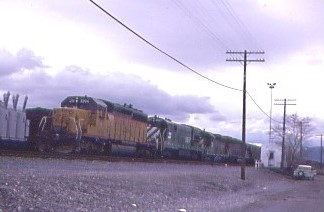
I spent four days visiting and photographing trains; this was the first picture I took in Pocatello - Union Pacific 3294 West with Burlington Northern pool power.
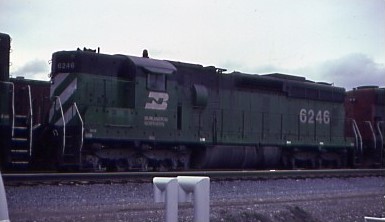
Burlington Northern SD24 6246:1, nee Chicago, Burlington and Quincy 506, built by Electro-Motive Division in 1959 was one of the locomotives in that consist. It was retired in 1982.
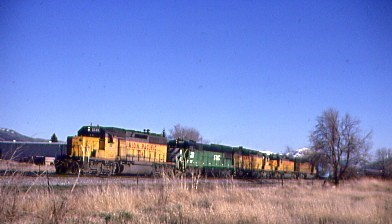
Union Pacific 3241 West on its way to Idaho Falls and Butte.
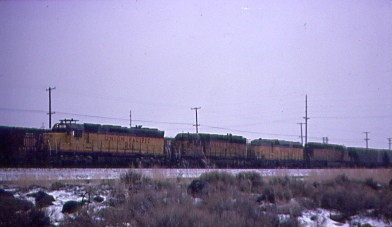
Union Pacific 20 West proceeded out of town in a light snowstorm and this was my first experience with snow since growing up in Santa Ana, snow was not common.
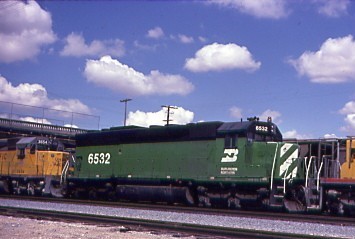
Burlington Northern SD45 6532, built by Electro-Motive Division in 1971. It would later become Wisconsin Central 6532, then Wisconsin Central 6519 and finally Wisconsin Central 7519 before being retired in 2006.
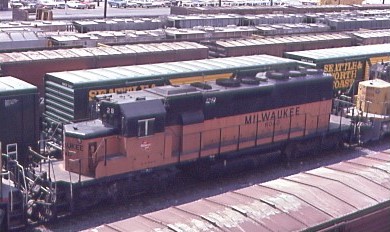
Milwaukee Road SD40-2 28, built by Electro-Motive Division in 1973. It would later become SOO Line 6312, then EMD Leasing 6312, then Wheeling and Lake Erie 6312 and in 2024, became Wheeling and Lake Erie 7025.
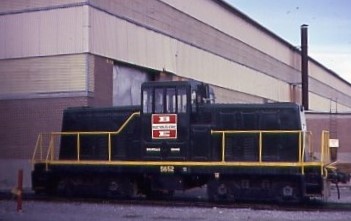
A local industry at the time, Bucyrus Erie, and its 65 ton switcher 5652, built by General Electric.
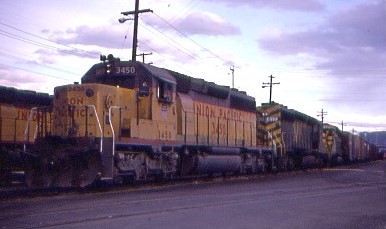
Union Pacific 3450 West arrived with a pair of SD40-2's. Throughout my stay, I explored the city and spent a day at Craters of the Moon National Monument which spreads across 618 square miles and is the largest mostly Holocene-aged basaltic lava field in the contiguous United States. The Monument and Preserve contain more than 25 volcanic cones, including outstanding examples of spatter cones. The 60 distinct solidified lava flows that form the Craters of the Moon Lava Field range in age from 15,000 to just 2,000 years. The Kings Bowl and Wapi lava fields, both about 2,200 years old, are part of the National Preserve.
I also helped my brother on a couple of projects around the house and one night, the three of us went to see "Romancing the Stone". In addition, he took me to Union Pacific's Company Store and by the school where Karla worked.
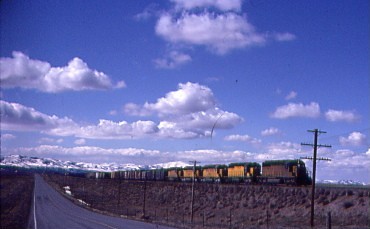
Bruce and I went for a drive and found Union Pacific 3524 East approaching Bancroft.
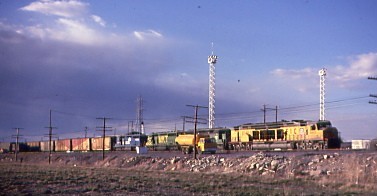
On the way out of town to Ogden to catch the train, this freight had the best consist I had seen to date - a Union Pacific DD40AX, a Burlington Northern SD45, a Conrail SD40-2 and a Missouri-Kansas-Texas SD40.
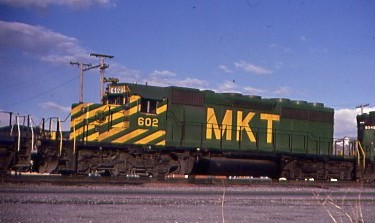
MKT SD40 602, built by Electro-Motive Division in 1978. It would later become Union Pacific 3811 and Union Pacific 3431:2 in 2003.
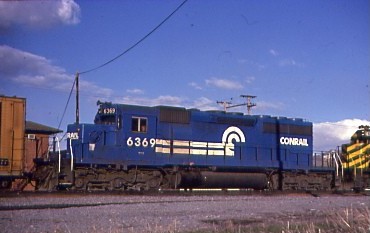
Conrail SD40-2 6369, built by Electro-Motive Division in 1977 and later became Norfolk Southern 3339. Once At Ogden, I had time to explore and with the number of tracks this once busy station had, surmised that it must have been quite a place in its heyday.
Desert Wind 25 4/4/1980Nowadays, it was busy for just a short while each morning and evening as the San Francisco Zephyr, the Pioneer and Desert Wind all arrived within a few minutes of each other. I boarded the Desert Wind and ordered a couple of nightcaps while we departed on time and travelled south through the night to Salt Lake City. There, the Amfleet train became quite full, but once we were underway, I still had two seats to myself so I curled up and fell asleep during the journey down the former Los Angeles and Salt Lake Route of the Union Pacific.
4/5/1980 Morning found the Desert Wind exiting the Meadow Valley Wash in Nevada and I went off to the lounge car for some mini doughnuts and chocolate milk then returned to my seat for the wonderful early morning desert views as we approached Las Vegas. It was beautiful and clear with unlimited visibility and while the wind was kicking up the tumbleweeds, the train continued speeding along and arrived early at Las Vegas. I went into the casino, inserted three dimes in a slot machine and out came five dollars' worth, so I left with a pocket full of winnings. Meanwhile three more Amfleet cars were added to the train's consist to handle the rather large crowd boarding.
Departure was on time and after about twenty minutes, the entire train's air conditioning failed. A stop was made to fix the problem but the veteran Union Pacific crew could find no solution, so off we went with no cooling system and the Desert Wind had become the Desert Wound. The laws of nature and matter began to take control about an hour later when the sun was shining into the car through the windows and could not escape through the glass, thereby the greenhouse effect had taken over. Added to that was the natural body heat from the passengers and slowly but surely, the inside of the car turned into a sauna. As the heat increased, the outside temperature remained about seventy-five degrees.
Once the interior temperature neared ninety degrees, a male passenger in front of me took off his shirt and several other passengers followed suit, including me. Not to be outdone, a rather well-proportioned blonde announced that if the males could do that, so could she. The male passenger who started this went one step further and removed his trousers, but kept his underwear and several other males followed, but not me. This continued with the females. The assistant conductor then entered, took two steps and his jaw dropped open. Once he came out of his state of shock, he mentioned something about FRA rules and told the passengers to re-dress, but that was met with a chorus of "Cool down the train" and he went to find the conductor.
While all of this was going on, the Desert Wound continued across the dry lake into California, up and over Cima Hill before passing through Kelso then as we were crossing the Devil's Playground, the conductor walked into the car to the same chant and he turned and walked out of the car. The train traversed Afton Canyon, snuck around the other traffic at Yermo then rejoined the Santa Fe mainline at Daggett for the quick journey to Barstow, where we switched crews from the Union Pacific veterans to the younger Santa Fe ones. The youthful assistant conductor walked into the car and asked very nicely that we all put our clothes back on but offered us free soft drinks in the lounge car because of the heat. When that did not work, he left and shortly after, announced on the public address system that we were all to remain seated and the crew would set the door of each vestibule in the open position. The side doors were then opened and since we were travelling at track speed of seventy-nine miles per hour, a really strong breeze was blowing through the train. That worked and everyone returned to being clothed. Near Victorville, the doors were closed, the temperature was near normal and the crew thanked all for following their directions and we were then free to move about the train.
Several freight trains were passed before we crossed over to the down track at Summit for our descent on the 3.3 percent grade down the west side of Cajon Pass. As we made our way west from Summit, since I had now ridden both Santa Fe tracks over Cajon Pass, wondered if I would ever be able to ride over Southern Pacific's Palmdale Cutoff. Just then, I saw a Southern Pacific freight climbing towards Hiland then below Cajon, we passed three more eastbound freights climbing the pass and arrived early at San Bernardino.
Just before departure, I saw my good and dear friend Jeff Hartmann walking down the aisle and he wanted to ride part of the Desert Wind route, so boarded the eastbound train to San Bernardino this morning so he could ride back home with me. It seemed to him that the car was a little warm and I recounted the tale, then he obtained his free soda while I watched the San Bernardino Valley outside. Jeff returned and I told him about my visit to Pocatello, then we stopped at Pomona and Pasadena before arriving at Los Angeles Union Station fifteen minutes early. We detrained straight off the Desert Wind onto a waiting San Diegan for the less than an hour journey back home to Santa Ana, having completed my first and a most interesting round trip on Amtrak's Desert Wind.
| RETURN TO THE MAIN PAGE |