




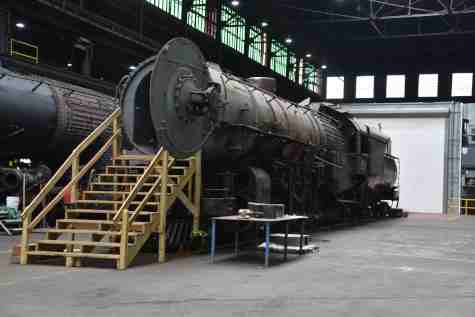
The morning started with breakfast then two seminars were presented, the first was Rob Leachman's "Union Pacific 6900's - The end of an Era", followed by Mark Amfhar's Union Pacific-Rock Island Joint Traffic and Operations". That took us to late morning where a buffet lunch was offered, then the convention delegates boarded buses for the short drive to Silvis.
Railroading Heritage of Midwest America (RRHMA)RRHMA is a non-profit organization whose mission is to promote public understanding of the history of railroading in the Midwest. RRHMA accomplishes this goal by preserving, restoring, operating and interpreting historic locomotives and rail cars. We were founded in 1991, and since then we've become a leader in the world of historic rail preservation through various restoration and excursion efforts.
RRHMA owns a fleet of historic railroad passenger cars, built between 1945 and 1964, upgraded with the latest mechanical appliances and modern amenities that you would find in today's luxury hotels. We operate a number of rail excursions and charters every year, handling all the logistics. We also offer these services to other passenger car owners- with RRHMA running your trips, all you have to do is enjoy the adventure.
Railroading Heritage of Midwest America is a non-profit organization with a mission to promote public understanding of the history of railroading in the Midwest. RRHMA accomplishes this goal by preserving, restoring, operating, and interpreting historic locomotives and rail cars. We strive to educate the public about the importance of railroading in shaping the history of the Midwest.
RRHMA owns a fleet of historic railroad passenger cars, built between 1945 and 1964, upgraded with the latest mechanical appliances and modern amenities that you would find in today's luxury hotels. We operate several rail excursions and charters every year, handling all the logistics. We also offer these services to other passenger car owners with RRHMA running your trips, all you have to do is enjoy the adventure.
At Railroading Heritage, our dedicated volunteers bring an unmatched passion and depth of knowledge to our organization. During day-to-day operations, our volunteers play a vital role in maintenance, rebuilding, and restoration of vintage railroad equipment, ensuring its preservation for future generations to enjoy. When the time comes for an excursion, our volunteers step up to the challenge, meticulously attending to every detail to ensure a seamless experience for our guests as they embark on their journey. Our volunteer team is committed to ensuring the safety and enjoyment of every guest , sharing historical and fascinating details along the way, and going above and beyond to bring smiles to our guest's faces.
The maintenance and preservation of railroad equipment, regardless of type or age, present significant challenges. At RRHMA our staff and volunteers thrive on overcoming these challenges. With decades of experience in rail reservation, we have consistently demonstrated our ability to turn ambitious mechanical visions into reality with each completed project.
The shop complex is 400,000 square feet.
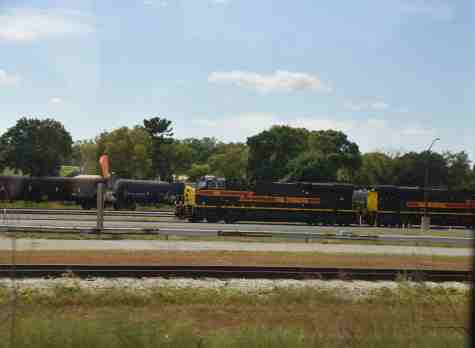
Iowa Interstate ES44AC 509, built by General Electric in 2008.
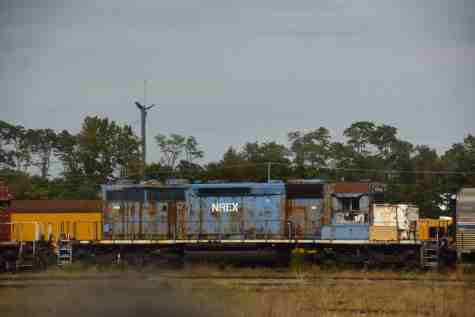
National Railway Equipment SD40-2 6300, ex EMD Leasing 6300, ex. Milwaukee Road 16, nee Milwaukee Road 177, built by Electro-Motive Division in 1973.
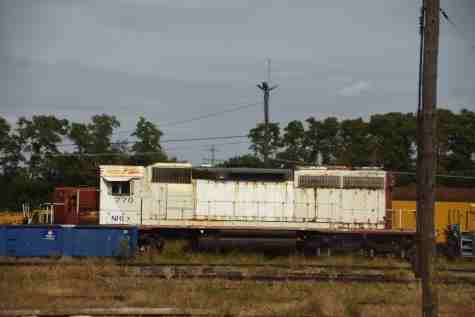
National Railway Equipment SD40-2 770, nee Soo Line 770, built by Electro-Motive Division in 1973.
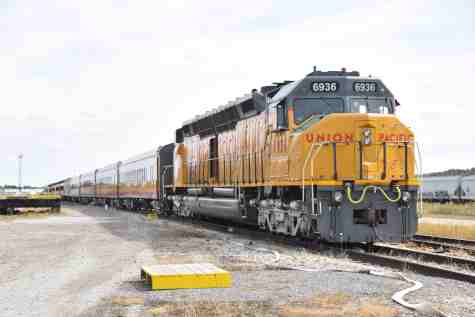
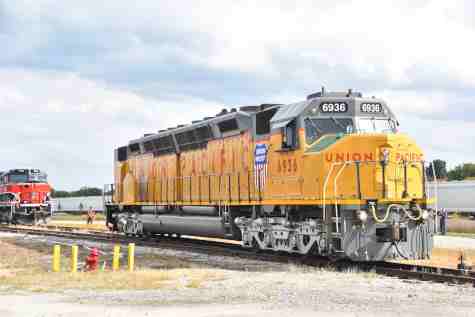
Our first view of restored Railroading Heritage of Midwest America DDA40X 6936, nee Union Pacific 6936, built by Electro-Motive Division in 1971. It operated in regular freight service from 1971 to mid-1980 then was stored at Yermo, California, until February 1984 and operated in regular freight service, along with 25 other 6900-class locomotives, from March 1984 through May 1985. It was the last operating DDA40X in service on the railroad and removed from regular freight service on May 6, 1985 then transferred to the Heritage Fleet at Cheyenne and first used in excursion service on May 24, 1985. Union Pacific 6936 was last used in special service in July 2015 for the Cheyenne Frontier Days special, then since it could no longer operate over Union Pacific tracks in the leading position until Positive Train Control equipment was installed, the decision was made to donate it and other equipment to RRHMA in April 2022.
It is 98 feet long, consists of two 3,300 hp engines was built exclusively for the Union Pacific Railroad as the most powerful diesel-electric locomotive models built on a single frame. Nicknamed "Centennial" to commemorate the 100th anniversary of the Transcontinental Railroad, 6936 is the last operational DDA40X.
6936 was going to be leading excursions the next two days and many conventioneers purchased tickets for one or both of the trips, including Elizabeth and I.
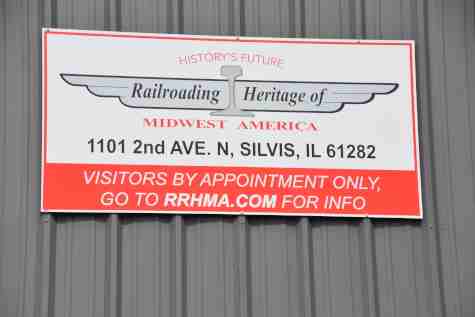
The sign on the former Rock Island Shops.
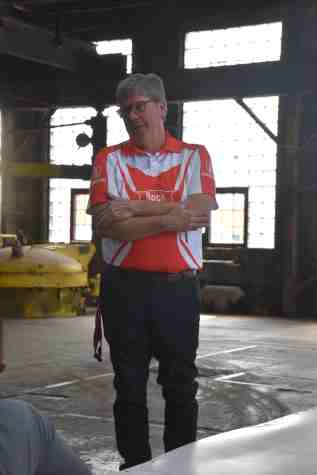
Steven Sandberg, RRHMA President and Chief Operating Officer.
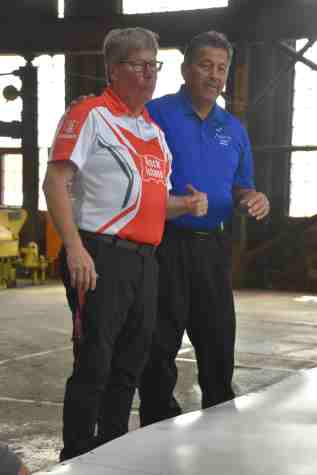
Steve with Bob Cervantes, Mayor of the City of Silvis, who welcomed the convention delegates.
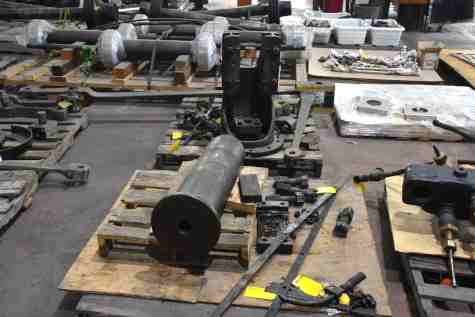
the pin that connects the front to the back of Union Pacific 3985.
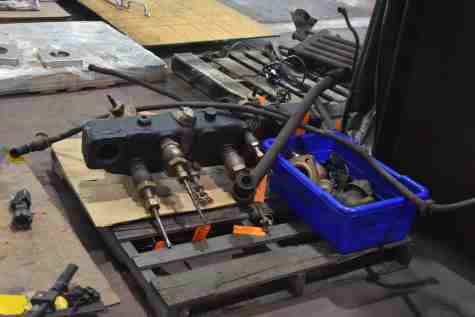
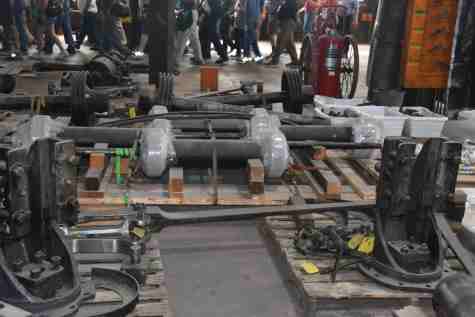
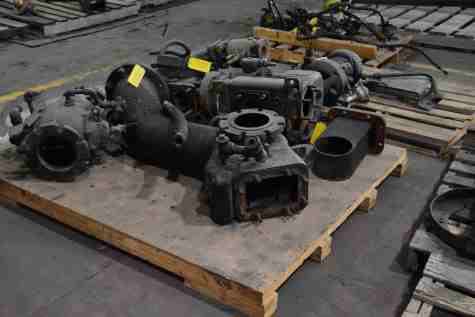
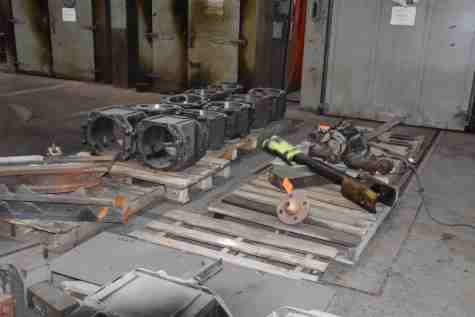
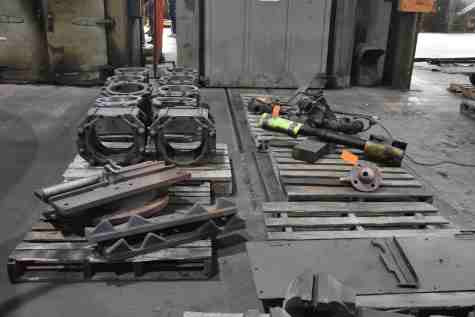
Parts for both steam engines; the ones tagged orange for Union Pacific 5511 and the yellow-tagged ones belong to Union Pacific 3985.
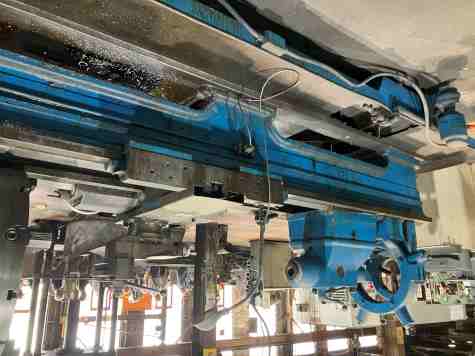
The machine lathe for turning round shafts.
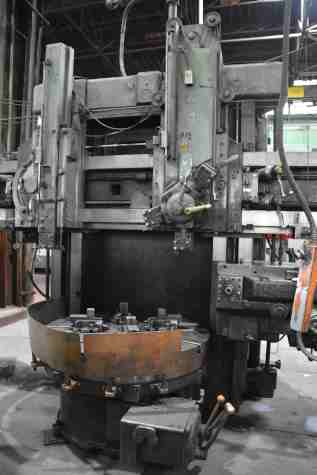
This wheel press belonged to the Milwaukee Road and was acquired from the Illinois Railway Museum.
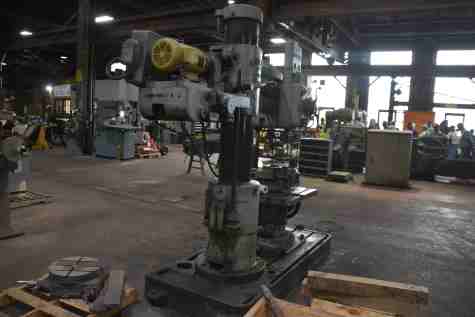
Shop scene.
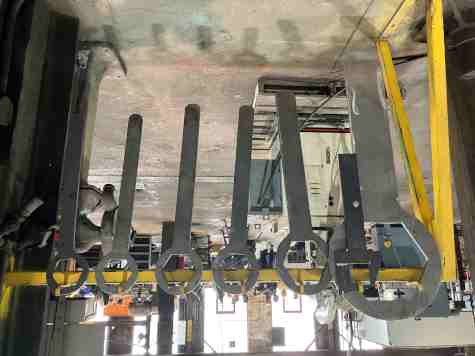
Steam locomotives wrenches of various sizes.
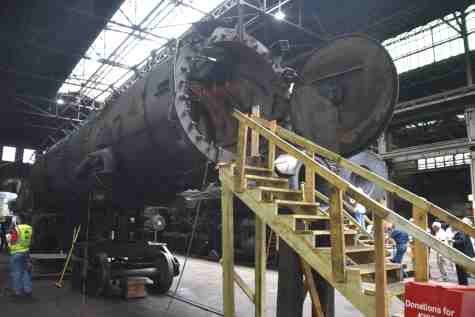
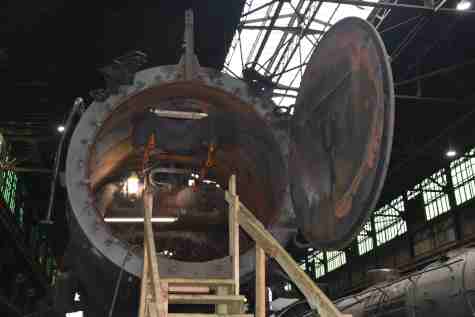
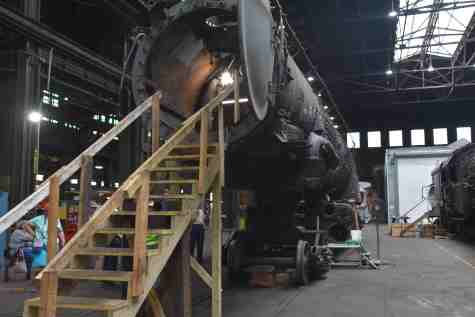
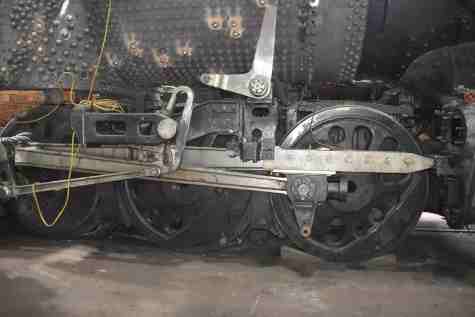
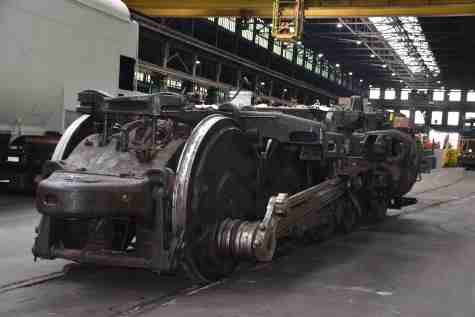
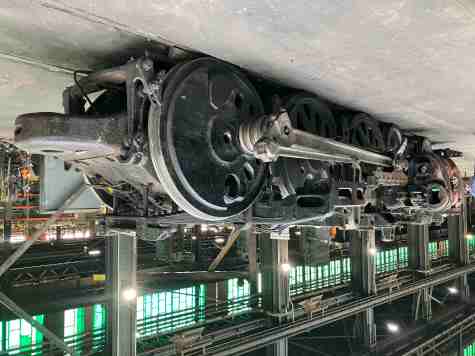
Union Pacific 4-6-6-4 3985 was one of 105 4-6-6-4 Challenger type locomotives built by American Locomotive Company in 1943. It was included in the second order of the second version of Union Pacific’s 4-6-6-4 locomotives. The locomotive operated in fast freight and passenger service, pulling its last revenue train in 1957 before going into storage and eventual retirement in July 1962. UP 3985 was chosen for display at the Cheyenne passenger station and installed there in October 1974. A group of dedicated UP employees inspected the locomotive with the goal of eventual restoration to service. 3985 was removed from display in September 1979. The Challenger was returned to service in April 1981, with UP reinstating it to the active roster. On April 23, 1981 it double headed with UP 844 for the first time on a trip for the Grand Opening of the California State Railroad Museum. On June 16, 1982 it embarked on its very first solo trip to Pocatello, Idaho and return.
UP 3985 was converted from coal firing to oil firing in 1990 for ease of operation and to eliminate the tendency of starting lineside fires caused by hot embers from #3985’s stack. The locomotive burns readily-available diesel fuel which provides for much easier handling than coal and the disposal of the residual ash.
The final operation of the locomotive occurred during an extended tour of a portion of the Union Pacific system that ended on October 14, 2010. Union Pacific retired the locomotive from active service in February 2020.
3985 is only one of two in existence, the other is 3977 in North Platte, Nebraska. In April 2022, Union Pacific officials announced that the company would donate the locomotive to RRHMA, which plans to restore it to operating condition.
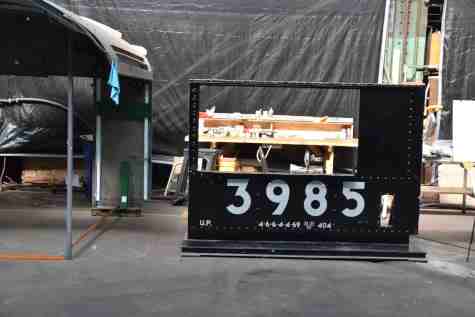
Part of the cab of Union Pacific 3985.
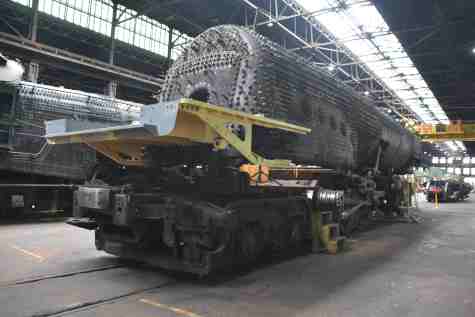
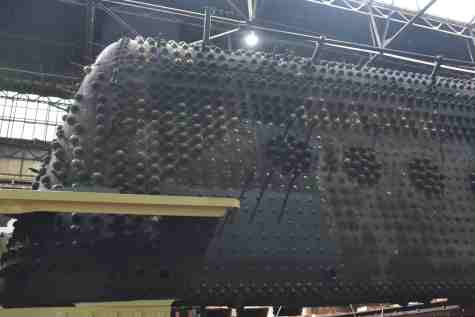
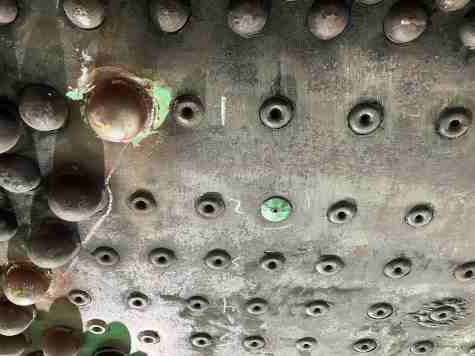
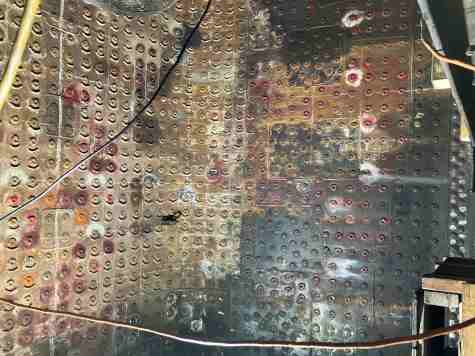
The myriad of staybolts on Union Pacific 3985, which the volunteers had been concentrating on in recent weeks, hammering, threading, reaming and installing them. Everyone was invited to climb the stairs and look inside the boiler.
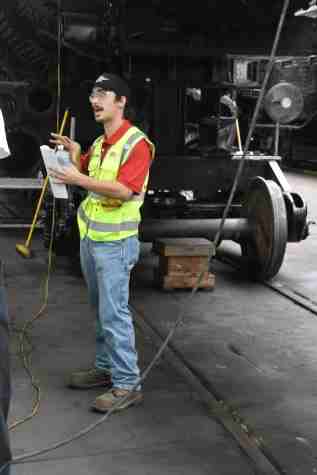
Aspen, an RRHMA volunteer and one of the guides, along with Steve Sandberg.
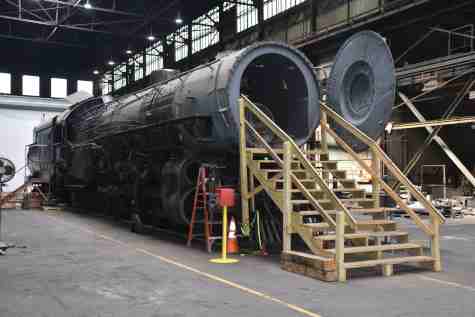
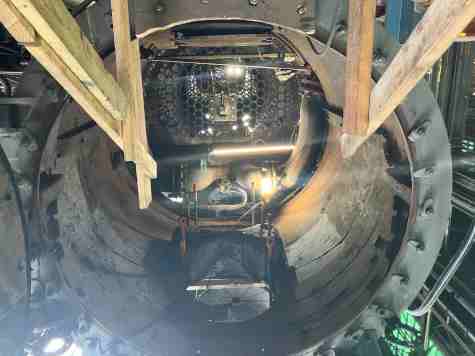
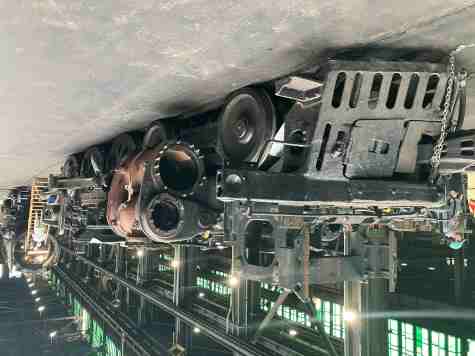
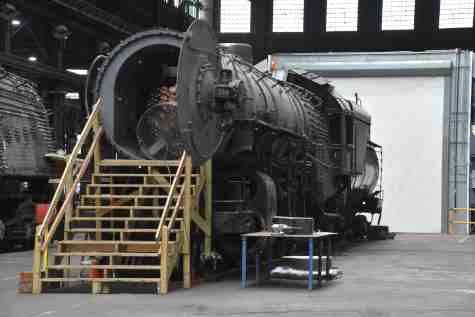
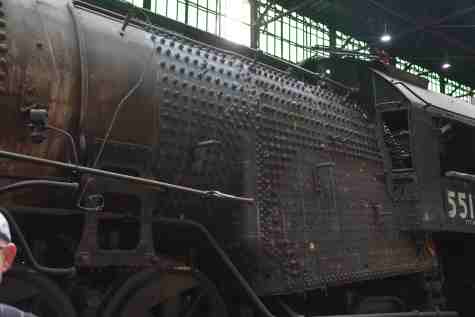
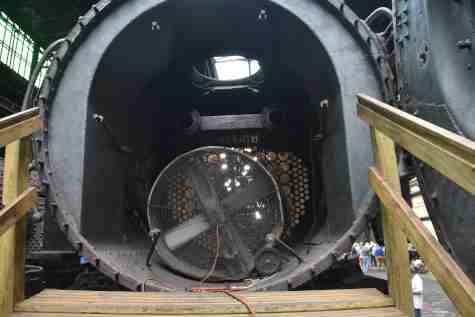
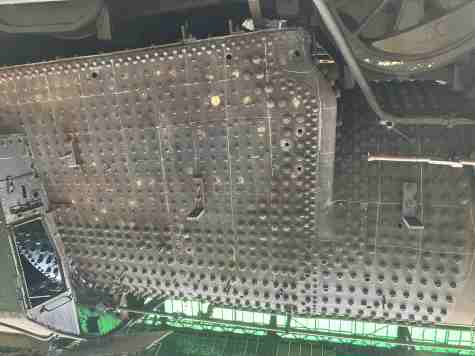
Union Pacific 2-10-2 5511, was built by the Baldwin Locomotive Works in 1929. The locomotive was Union Pacific class TTT-6, using UP’s system of the first letter of each digit in the wheel arrangement to designate the class. As a Two-Ten-Two locomotive the TTT designation was derived. UP 5511 employed the relatively rare Young valve gear which had been designed by Chicago and North Western employee O. W. Young and was first applied to a locomotive in 1915. The valve gear is noted for the elimination of the eccentric crank which reduced dynamic loading on the main driver.
Early in its career, UP 5511 was assigned to the Los Angeles and Salt Lake, a subsidiary of the Union Pacific and was assigned to hauling freight trains known as drag freights for their high tonnage and low speeds. 5511 was first stored serviceable starting in 1949 and operated as needed through 1956, including a stint as a stationary boiler at Ogden, UT. It was stored unserviceable at Green River, Wyoming, from 1958 through 1961, but was used in the filming of Union Pacific's publicity movie, Last of the Giants in 1958. The locomotive was pushed by a diesel located behind a string of freight cars with smoke created by burning old tires in the smokebox to create the illusion of a live locomotive.
UP 5511 was towed dead from Green River to Cheyenne in 1962, after its retirement and stored with other heritage equipment in the roundhouse there where it resided for sixty years until its donation to RRHMA-Silvis.
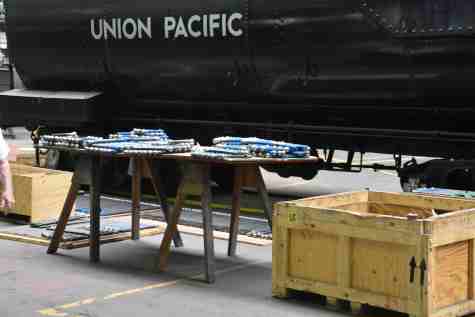
Staybolts and other items belonging to Union Pacific 5511.
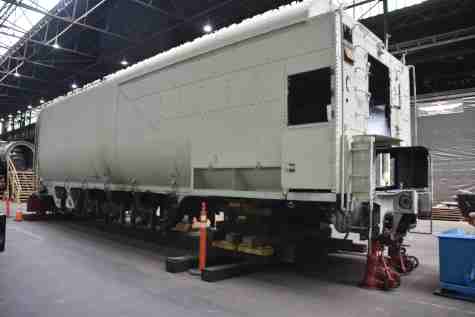
The tender of Union Pacific 5511.
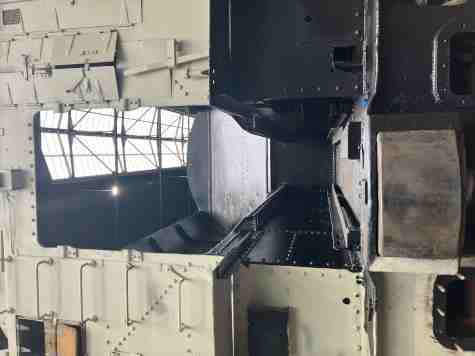
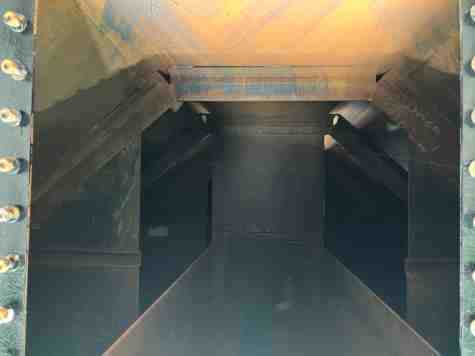
All were invited to look inside the tender.
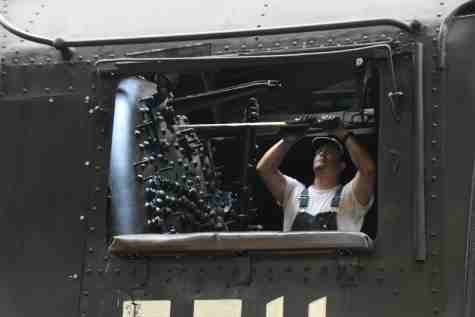
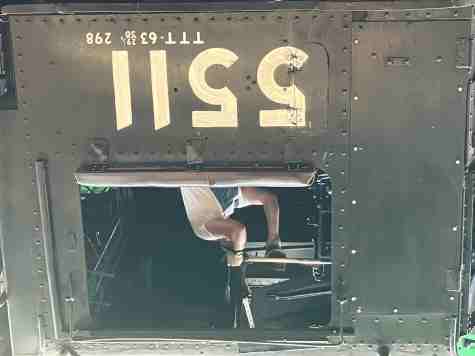
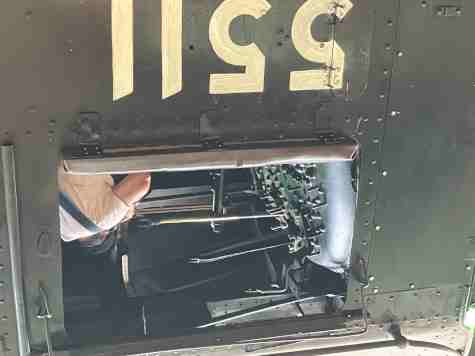
One of the restoration crew working in the cab.
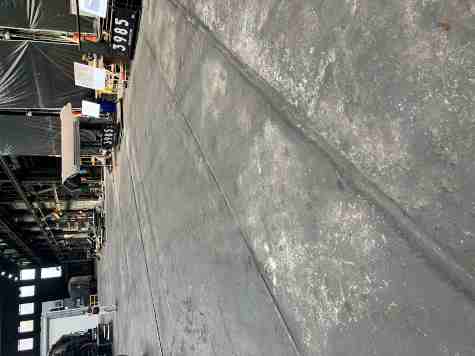
The diagonal tracks, which caused me to reflect on the hundreds of locomotives that passed through the Silvis shops over the decades.
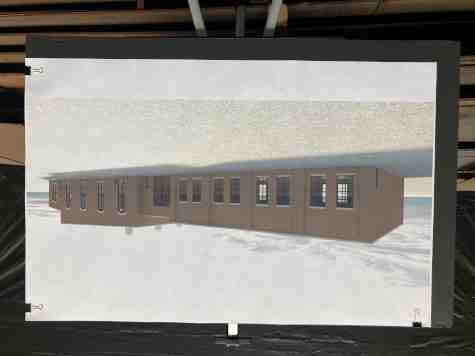
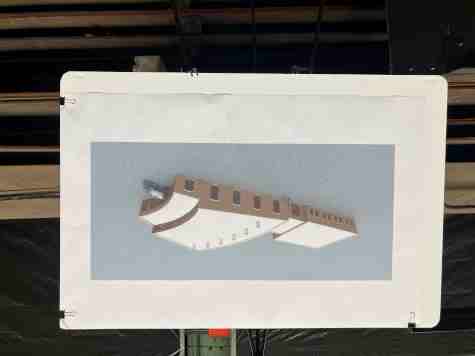
A concept rendering of a roundhouse and backshop - future plans - in the yard at Silvis.
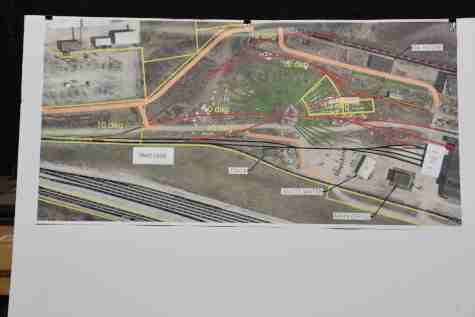
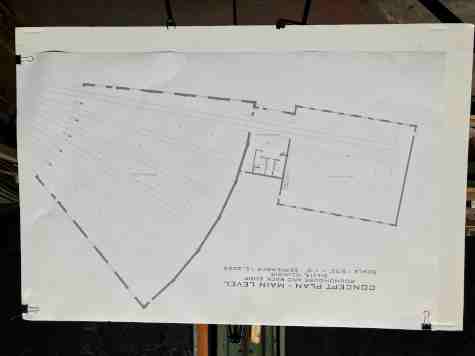
A diagram of the proposed roundhouse in relation to the current one.
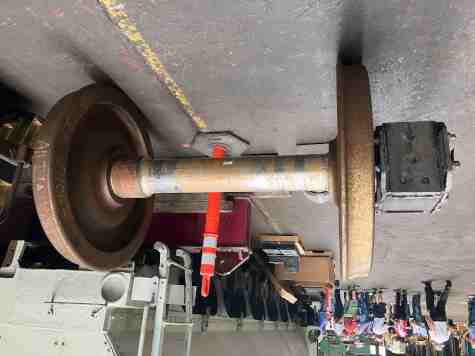
A wheel from the tender of Union Pacific 5511.
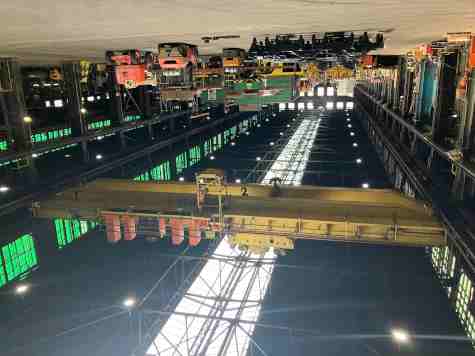
Attempting to show the length of the shop with the overhead crane in the foreground.
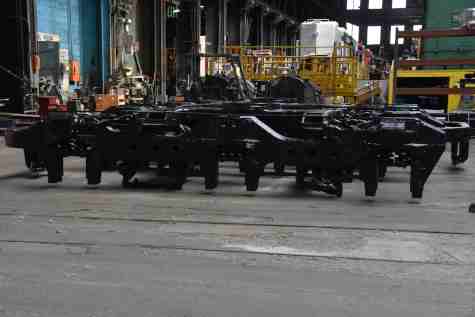
Truck frames.
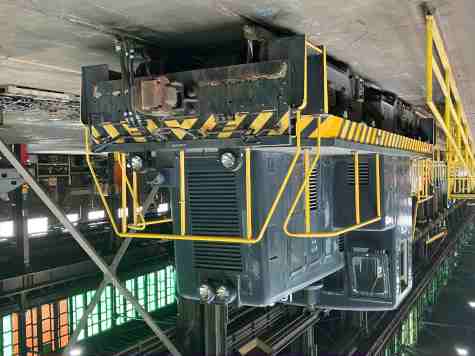
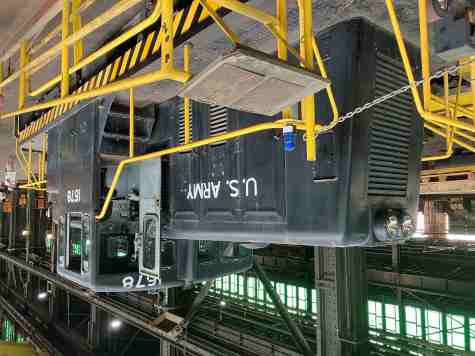
United States Army 80 ton switcher 1678, built by General Electric in 1952. It was acquired by the group in 2024 but when under Army Contract at Silvis, Chrome Crankshaft rebuilt multiple of these switchers here, including 1678.
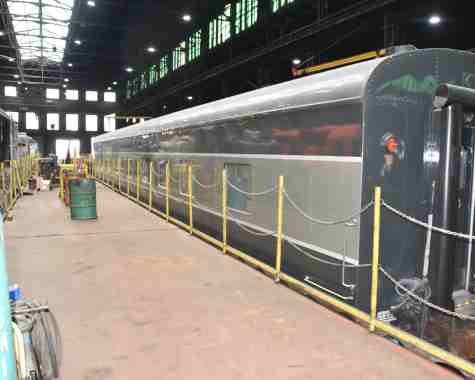
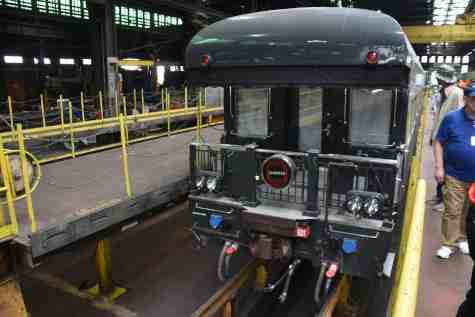
A surprise was Charter Wire business car 33 "Imperial Leaf" PPCX 800144, ex. AutoLiner Corporation December 1970, nee Chicago and North Western 4-4-2 sleeper "Imperial Leaf", built by Pullman-Standard in 1942.
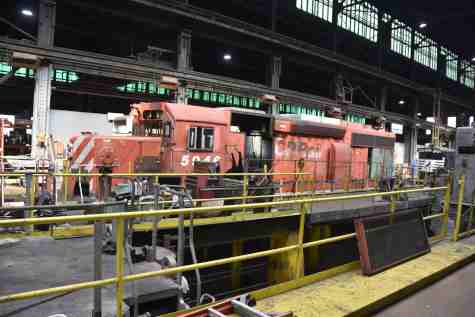
Canadian Pacific SD40-2 5946, built by General Motors Diesel in 1979.
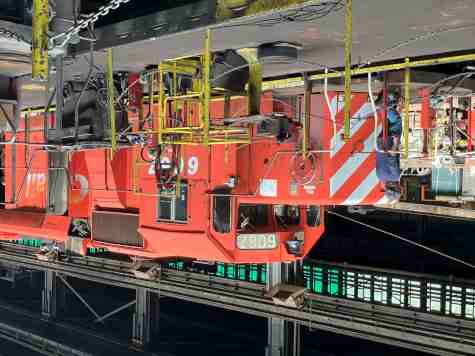
Canadian Pacific SD40-2 6067, built by General Motors Diesel in 1984.
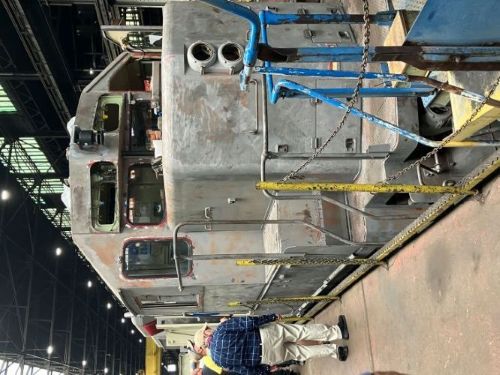
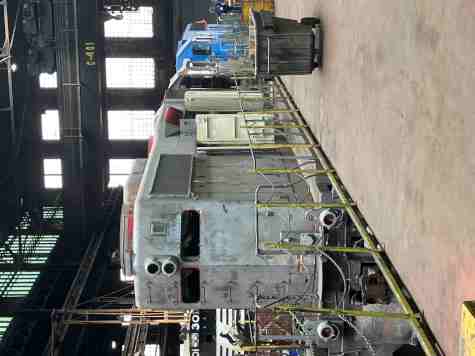
A locomotive that due being sandblasted and its number boards removed, is unidentifiable.
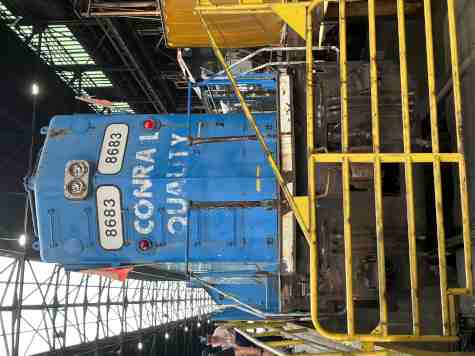
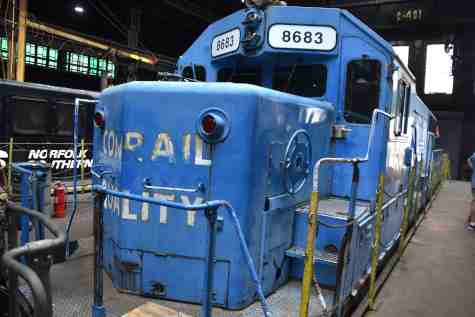
National Railway Equipment SD50 8683, ex. Conrail 8683, nee Conrail 6795, built by Electro-Motive Division in 1985.
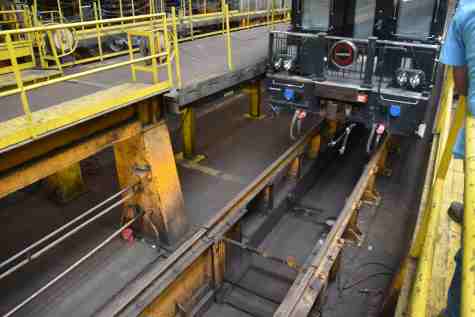
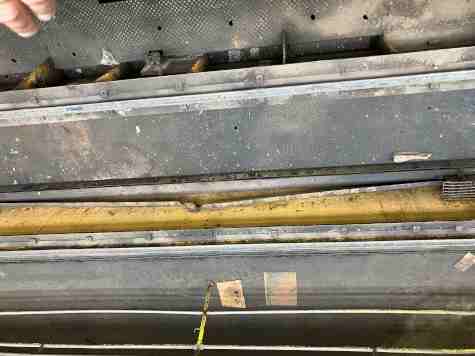
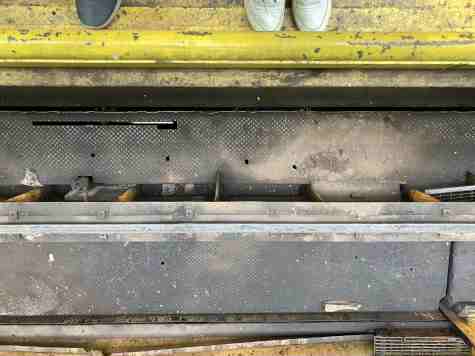
Looking down into the inspection pit.
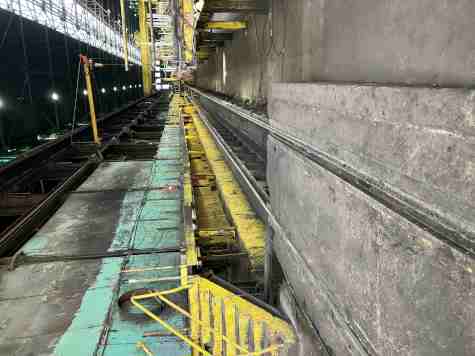
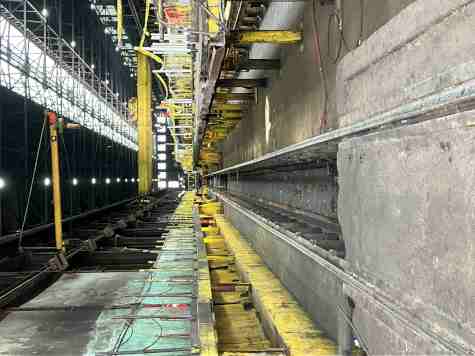
A couple of days after our visit, this track and drop pit would be widened so that both steam engines can fit.
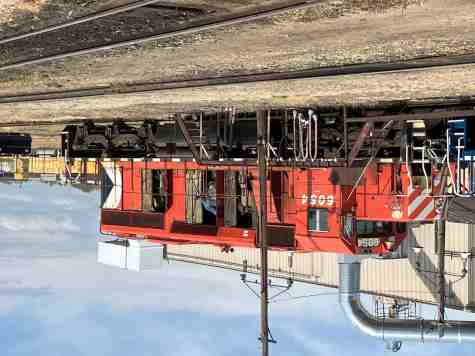
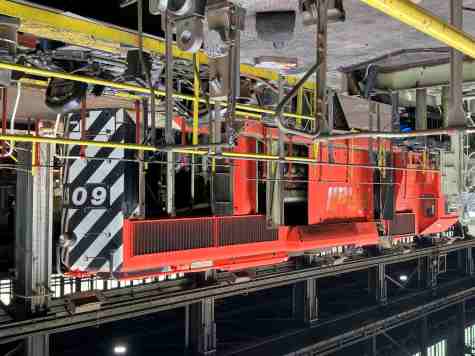
Canadian Pacific SD40-2 6054, built by General Motors Diesel in 1984.
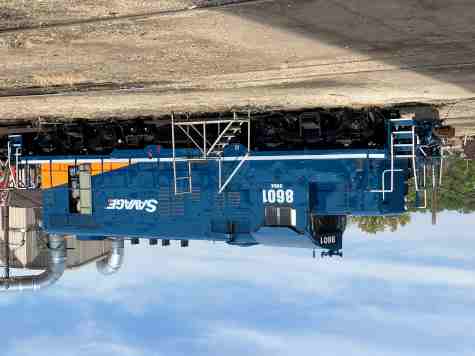
Savage Railnet GP10 8601, ex. Paducah and Louisville 8601, exx. Paducah and Louisville 8312, nee Illinois Central GP7 8970, built by Electro-Motive Division in 1953.
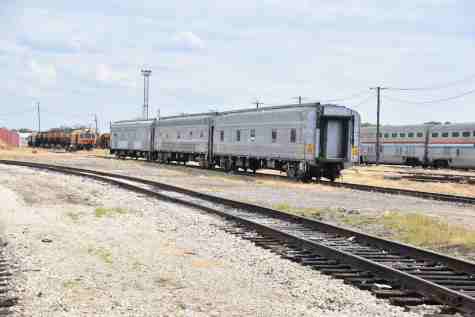
The front car is PAXX 5513, ex. Ringling Brothers and Barnum & Bailey Circus Train residential coach car 41312, ex. Amtrak 4642 1981, exx. Amtrak 4445 1971, nee Union Pacific 44-seat coach 5513, built by Budd Company in 1961. The middle car is PAXX 5526, ex. Ringling Brothers and Barnum & Bailey Circus Train residential coach car 41313, ex. Amtrak 4639 1980, exx. Amtrak 4458 1971, nee Union Pacific 44-seat coach 5526, built by Budd Company in 1961. The rear car is PAXX 4617, ex. Ringling Brothers and Barnum & Bailey Circus Train residential coach car 43008, ex. Amtrak 4617, exx. Amtrak 4582 1971, nee Union Pacific 44-seat coach 5542, built by St. Louis Car Company in 1964.
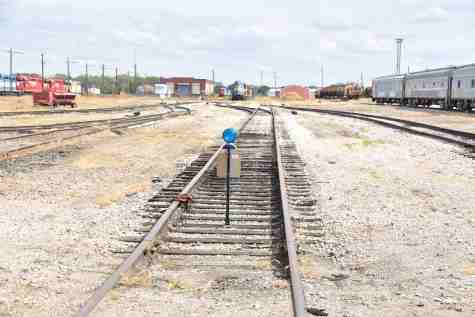
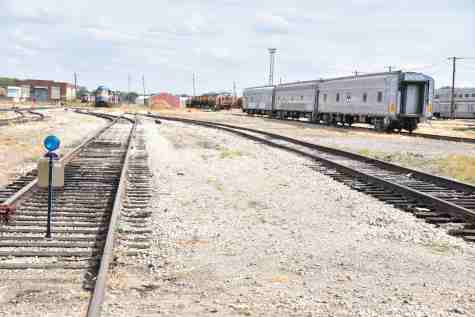
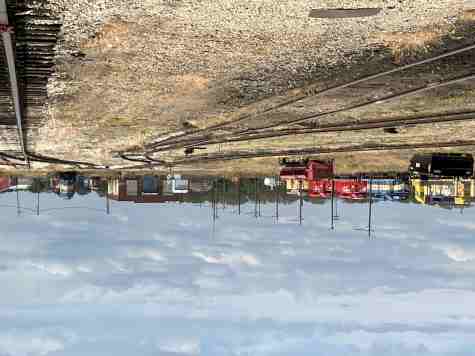
Yard views.
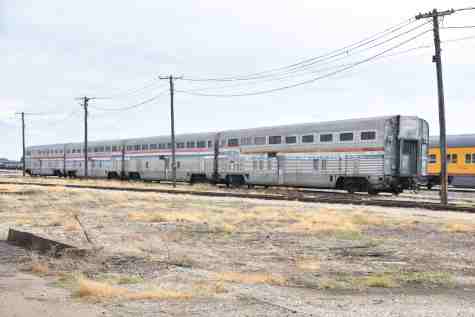
Amtrak hi-level coach-dormitory 39938, ex. Amtrak 9955, nee Santa Fe transition coach 715, built by Budd Company in 1956, Amtrak hi-level coach-dormitory 39942, nee Santa Fe transition coach 702, built by Budd Company in 1956, Amtrak hi-level coach-dormitory 39926, nee Santa Fe transition coach 726, built by Budd Company in 1956 and Amtrak hi-level coach-dormitory 39914, ex Amtrak 9914, nee Santa Fe transition coach 540, built by Budd Company in 1963.
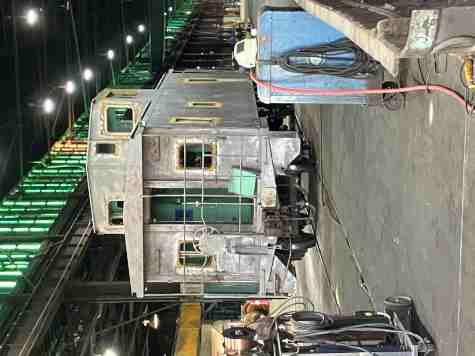
Union Pacific maintenance-of-way caboose 903011, nee Union Pacific 25740 built by International Car in 1975. It was retired in 1993 and stored at Laramie, Wyoming before being moved to Cheyenne by 2018, then donated to Railroad Heritage of Midwest America in April 2022.
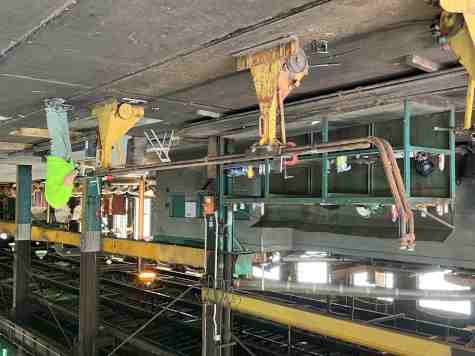
Superheater tubes for Union Pacific 5511 pressure-testing.
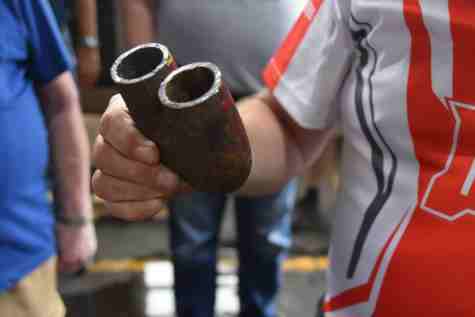
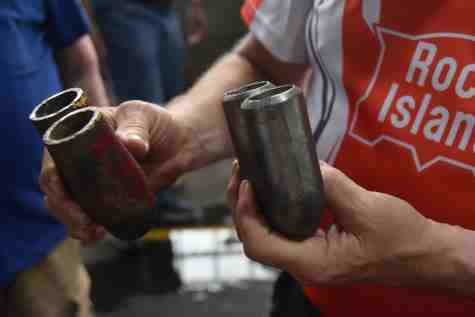
Steve Sandberg showing the group old and new pipe.
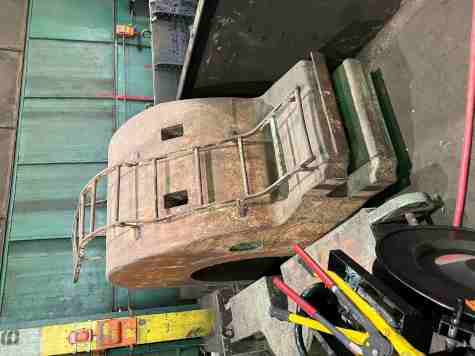
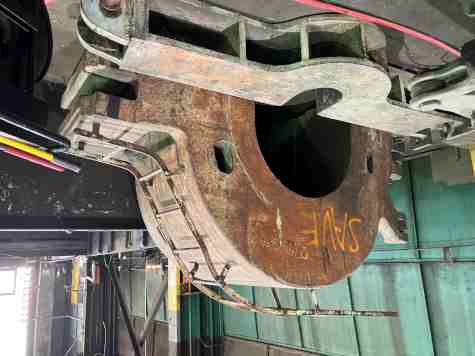
A steam-era device of unknown purpose.
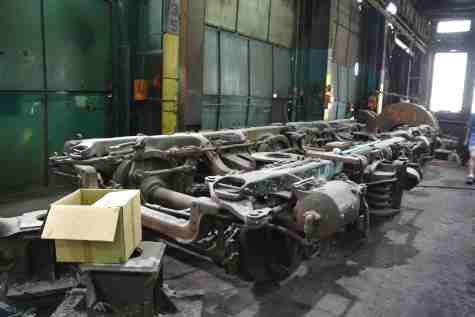
The underframe of Union Pacific 3985.
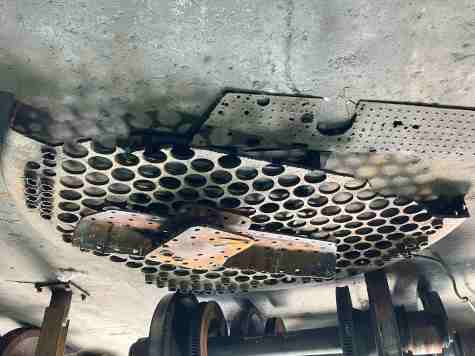
Front tube sheet for Union Pacific 3985.
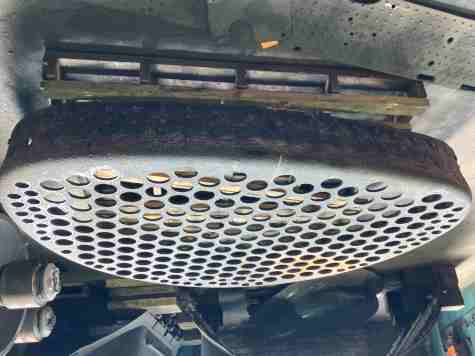
Front tube sheet for Union Pacific 5511.
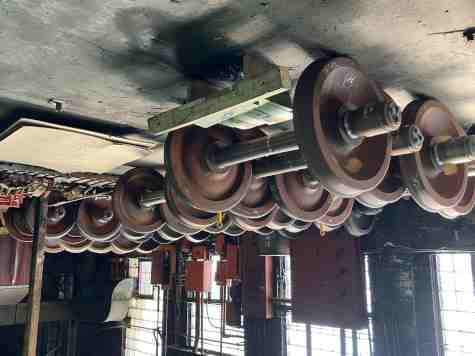
Passenger car wheels; the larger ones are for Union Pacific 3985.
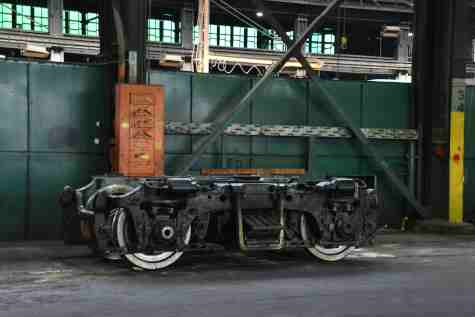
A truck from one of the steam engines.
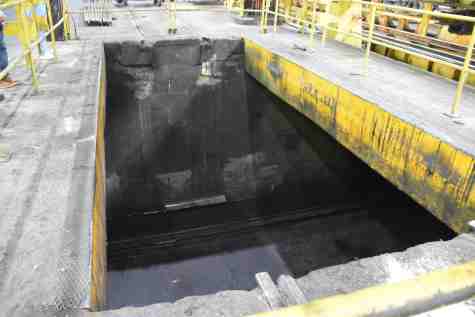
A wheel drop pit.
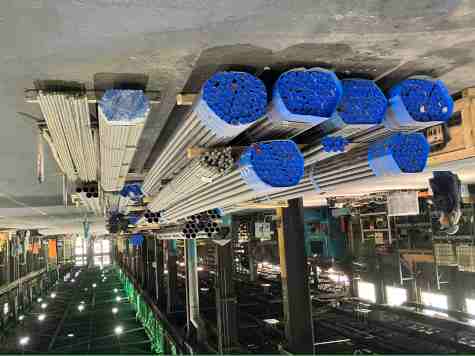
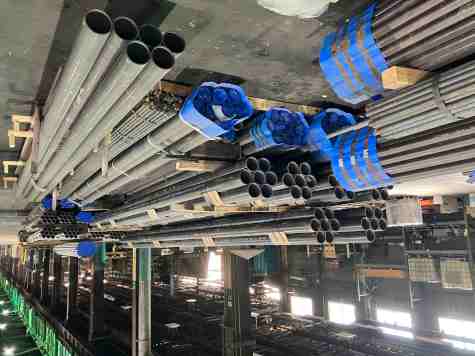
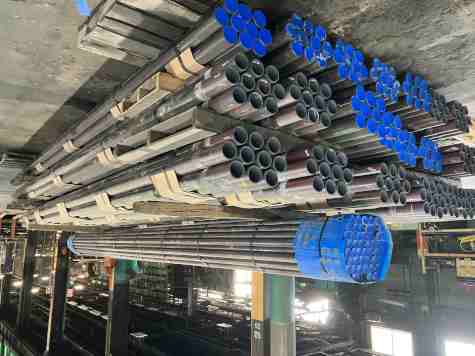
Flues for both steam engines, manufactured in Germany, and ready to be installed.
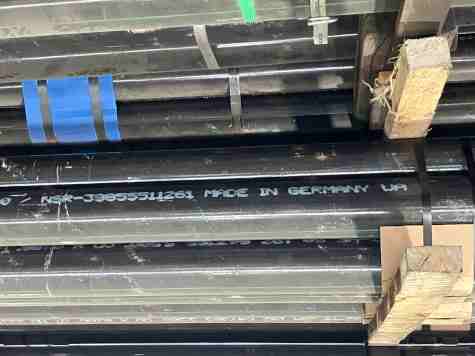
The order number NSR-39855511261 would not mean much to a layman but rail enthusiasts would undoubtedly understand.
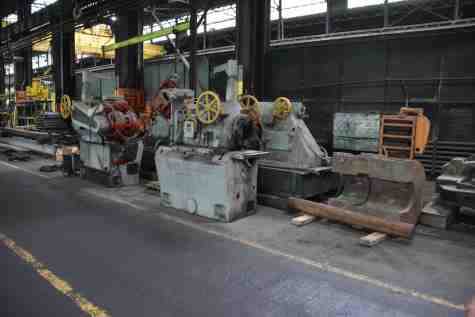
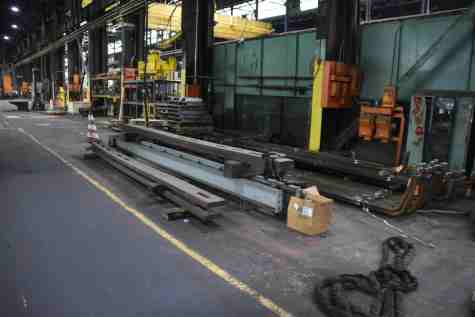
Shop scenes.
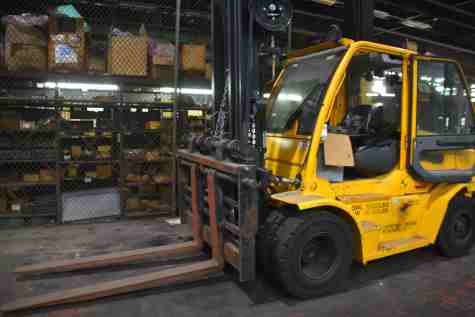
The shop forklift.
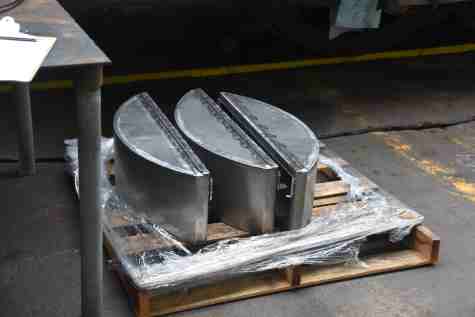
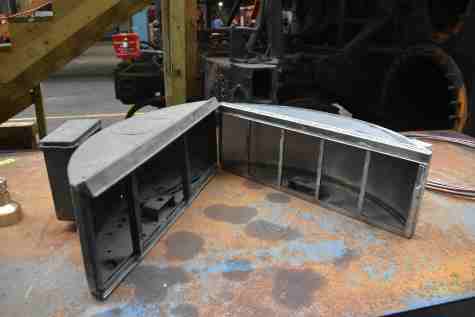
New number boards being fabricated. Union Pacific 5511's number boards are on Union Pacific 4014.
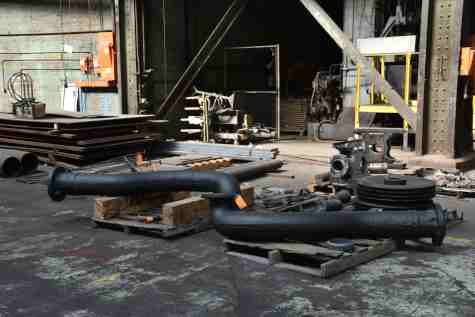
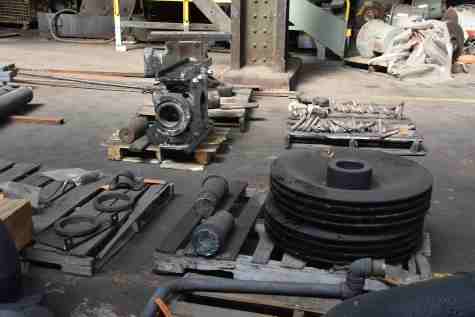
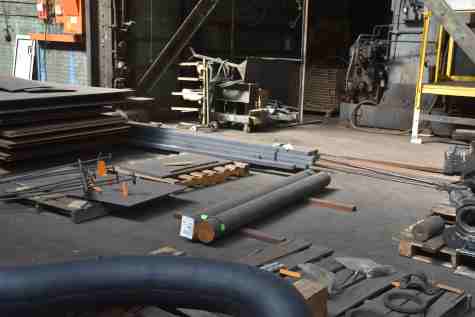
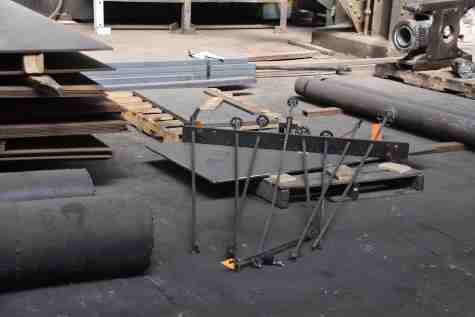
Parts belonging to Union Pacific 5511.
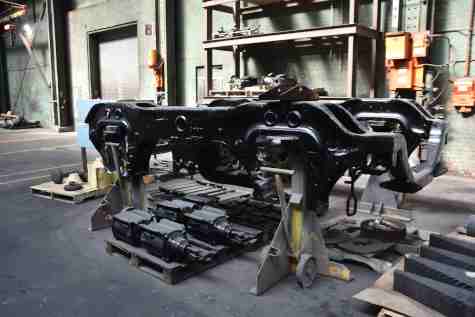
One of the trucks of Union Pacific 5511.
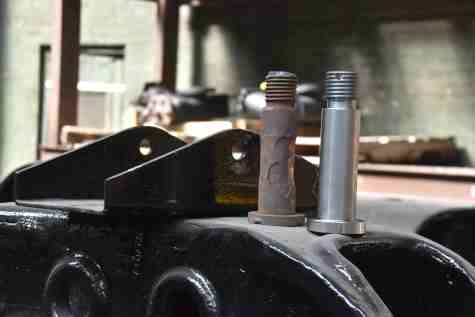
Old and new staybolts.
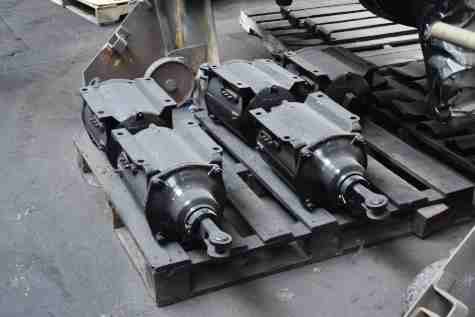
A quartet of injectors.
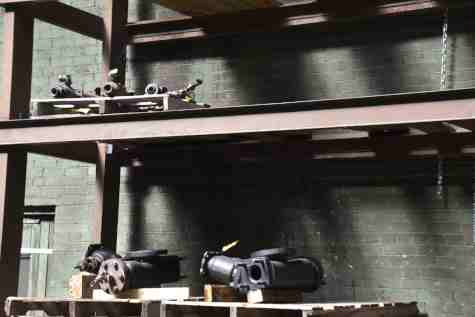
These items belong to Union Pacific 3985.
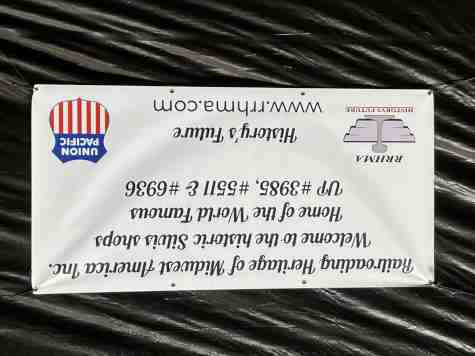
Railroading Heritage of Midwest America Inc. Welcome to the historic Silvis shops. Home of the world famous Union Pacific 3985, 5511 and 6936.
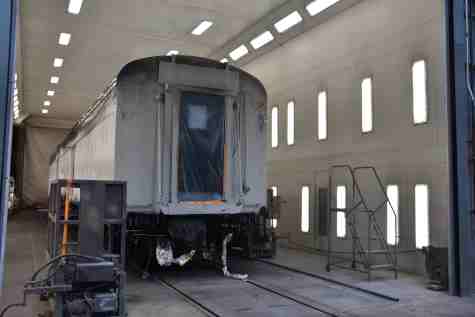
In the paint booth being transformed to CPKC livery was Kansas City Southern entertainment car 1969 "Laredo" 2006, ex. RailCruise America "Charette Creek", exx. Northern Rail Car lounge "Charette Creek" 2005, exxx. Alaska Railroad 5715, nee Union Pacific postal-storage car 5715, built by American Car and Foundry in 1957.
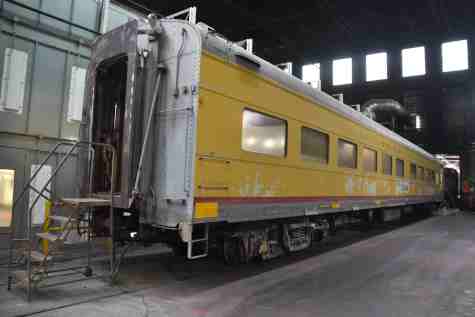
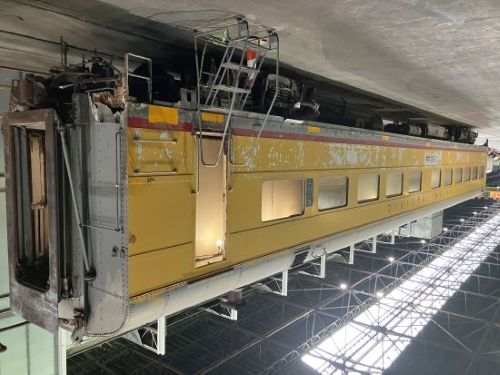
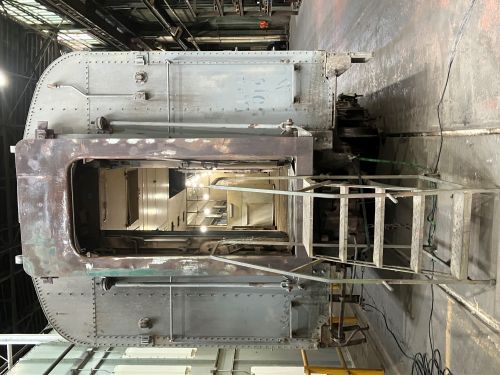
Union Pacific coach 5486 "City of Salina" built by American Car & Foundry in 1953. Once in revenue service, it ran between Kansas City, Missouri and Salina, Kansas, as the Kansas Streamliner. Later in 1936, city names where given to these trains and this new trainset was renamed the City of Salina. Those who wished to walk through it were invited to do so.
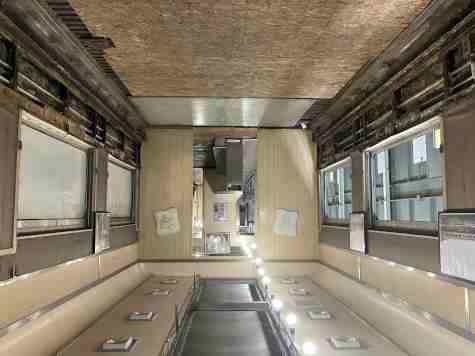
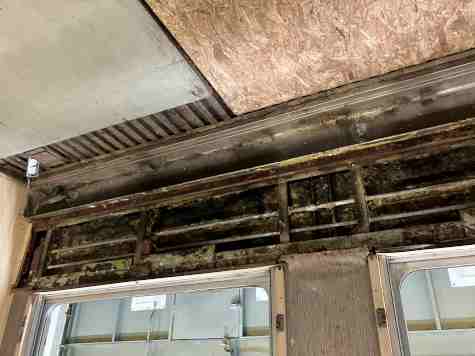
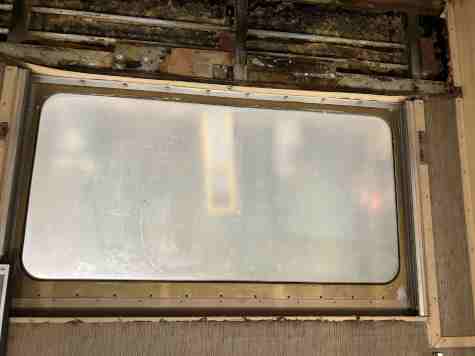
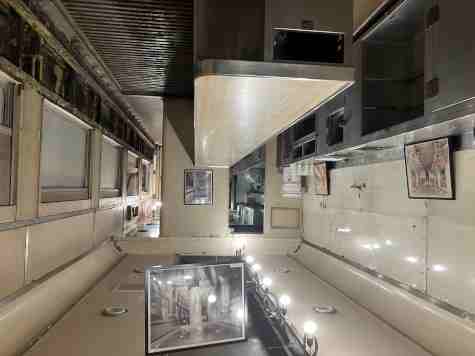
The coach area of the car.
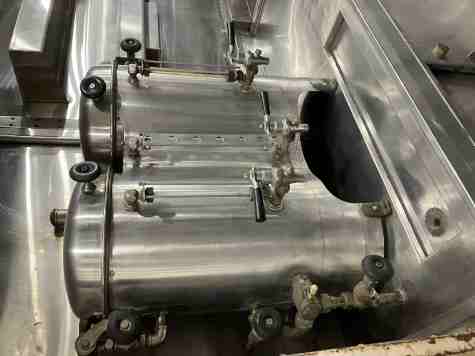
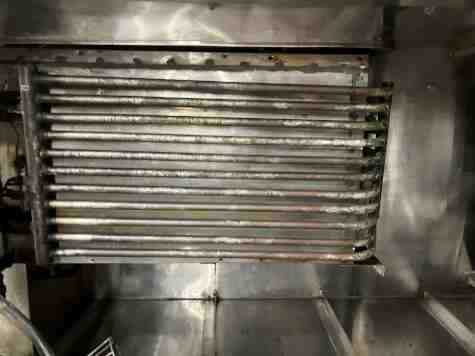
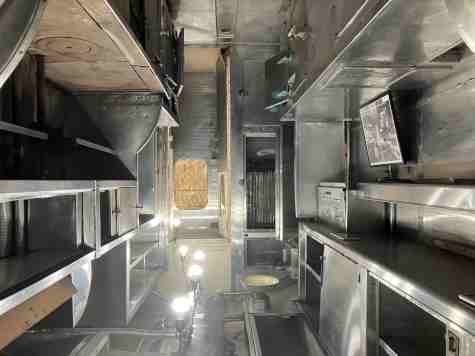
The kitchen area.
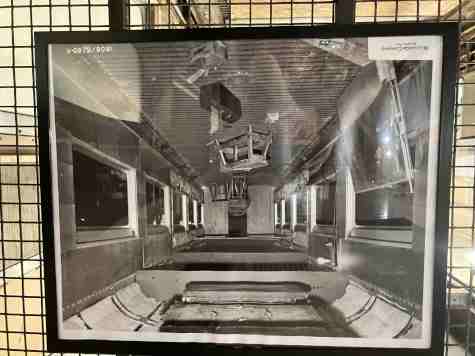
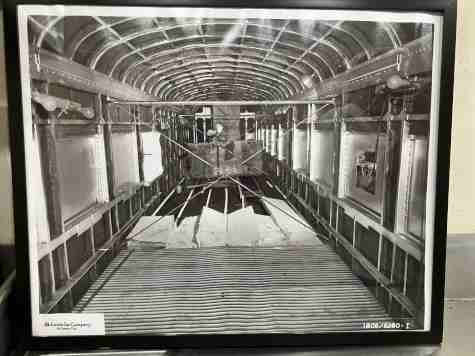
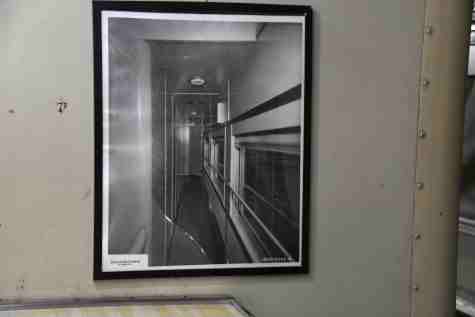
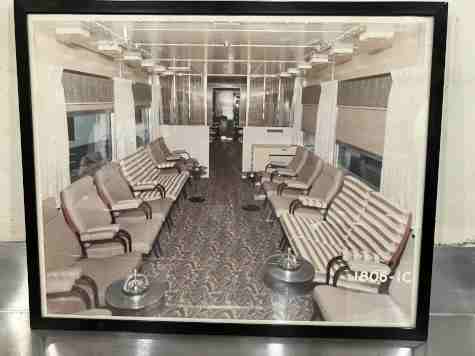
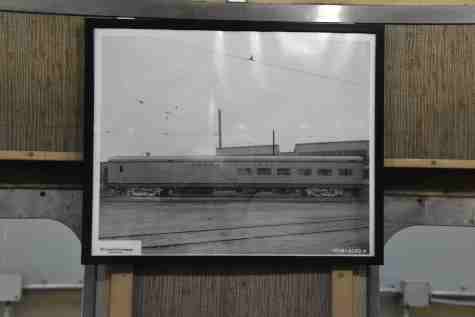
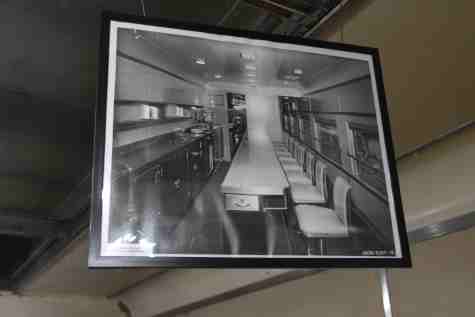
Construction and in-service photographs that were displayed throughout the car.
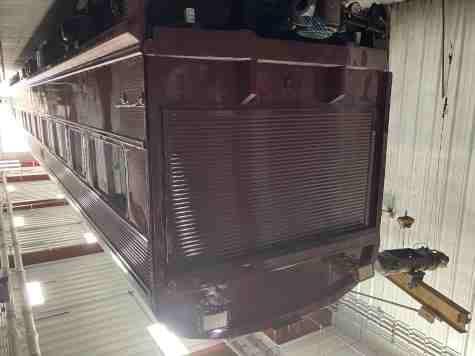
In another paint booth was Kansas City Southern observation car "Arthur E. Stillwell", ex. Amtrak 5671, nee Penn Central 2955, built by Budd Company in 1947. It was in the process of being repainted into CPKC livery.
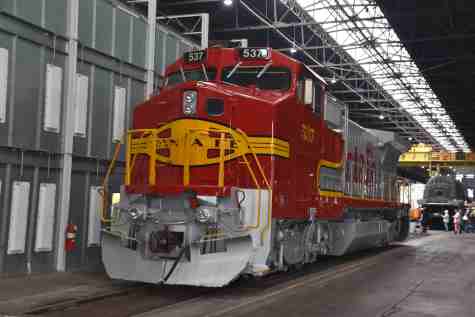
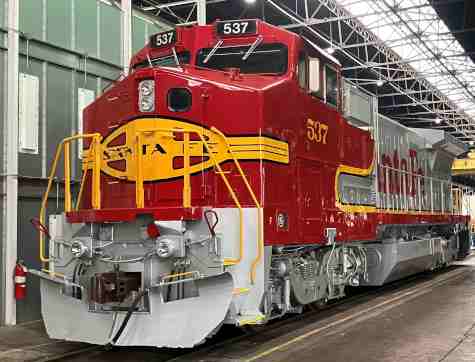
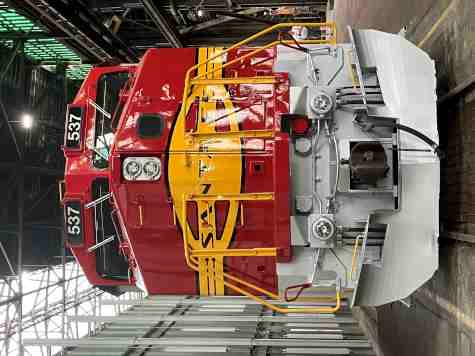
Atchison, Topeka & Santa Fe B40-W 537, nee Santa Fe 537, built by General Electric in 1990 and ordered as part of the Santa Fe Super Fleet of new EMD and GE diesels painted in Santa Fe’s famous Warbonnet passenger diesel paint scheme. They were the only railroad to order the B40-8W. 537 is the first of the type to be preserved, although the model is still operated by four short lines in addition to BNSF.
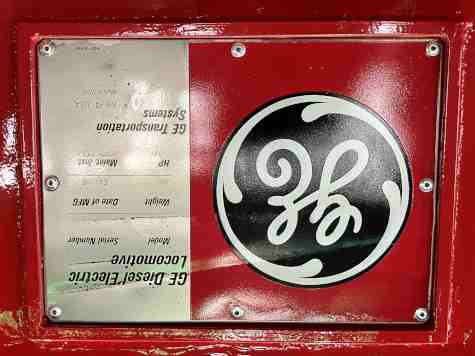
Santa Fe 537 builder's plate.
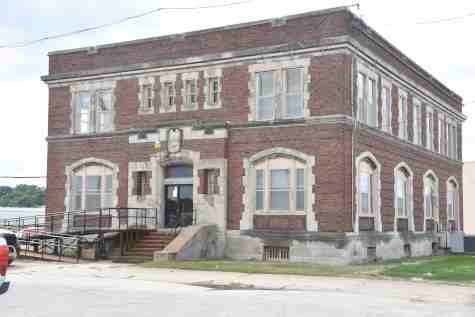
National Railway Equipment's office is in a former Chicago, Rock Island and Pacific building on site.
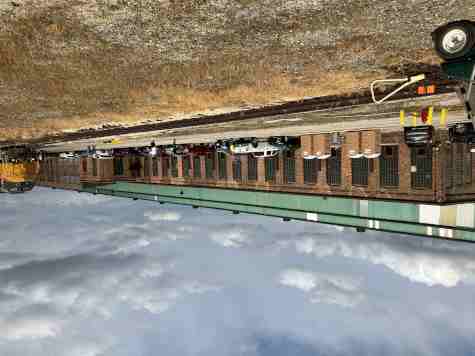
Part of the shop complex; a drone would be needed to capture the immense size of the facility.
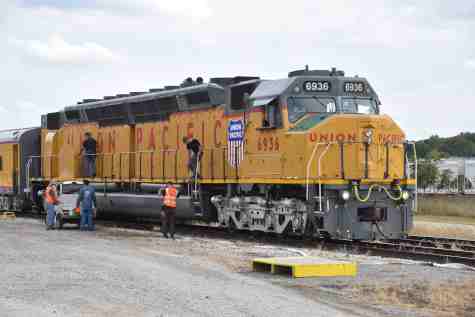
Union Pacific DD40AX 6936 as they were putting Iowa Interstate 513 into the consist.
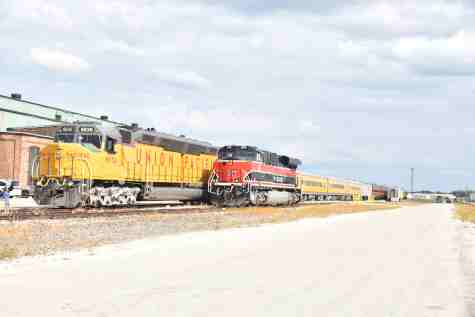
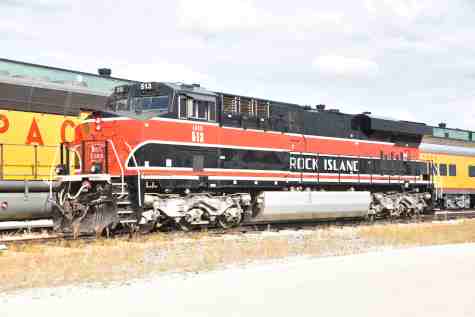
Rock Island ES44AC 513, built by General Electric in 2010 and better known as the "Rock Island heritage unit". Rather than being painted in standard IAIS phase V, it instead received a black and red paint scheme similar to what the Rock Island had on various freight EMD F units and Alco FAs. In addition, it bears the name "Rock Island" on the side and the RI "beaver pelt" logo on the nose. For reporting purposes, it carries a small IAIS on the cab side.
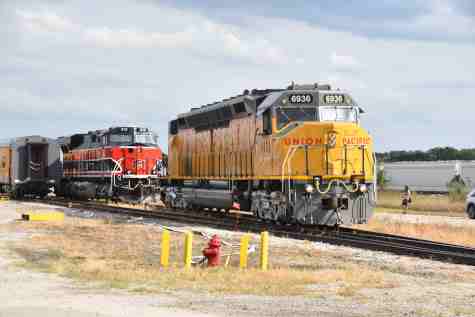
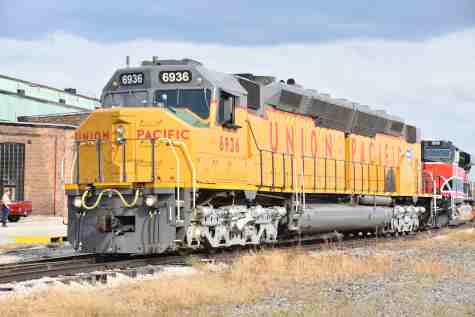
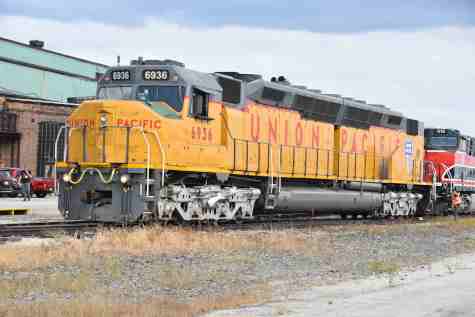
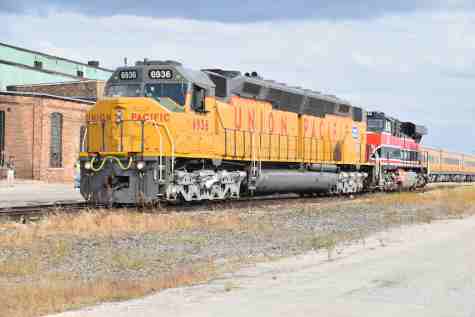
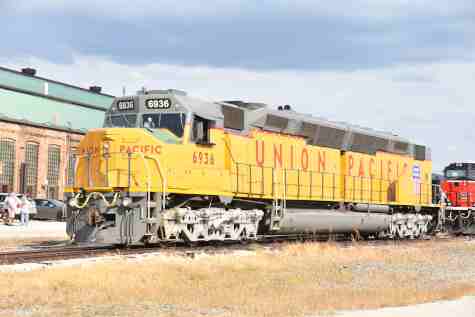
The crew of 6936 attempting to couple the locomotive with Rock Island 513. However, there was an issue which would be solved later this evening.
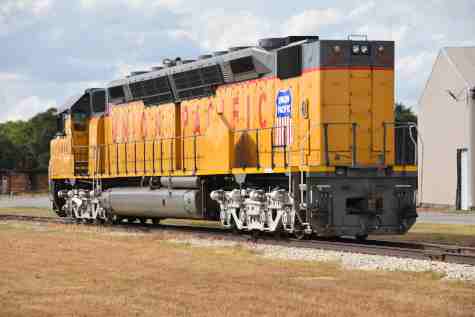
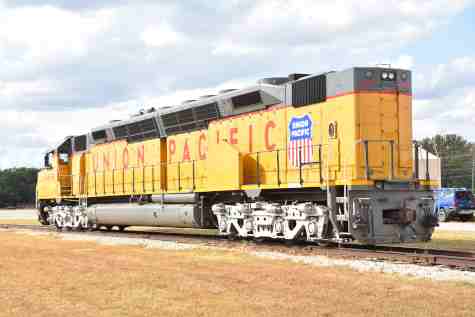
The impressive Union Pacific 6936 switching; everyone in the group was eagerly looking forward to riding behind it either tomorrow or Sunday, or in a few cases, both.
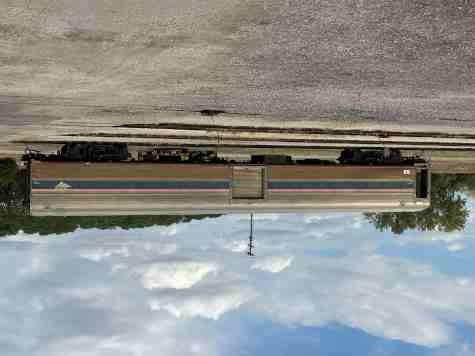
Amtrak baggage car 1738 1996, ex. Amtrak 4641 1980, exx. Amtrak 4447 1971, nee Union Pacific coach 5515, built by Budd Company in 1961.
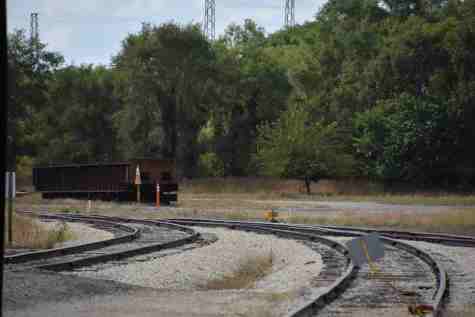
Tracks that lead into the Silvis Shops with the donated turntable from Cicero yard in the background. That concluded the tour and everyone re-boarded the bus.
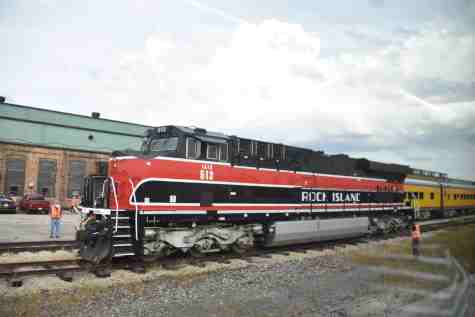
Rock Island 513 as seen from the bus.
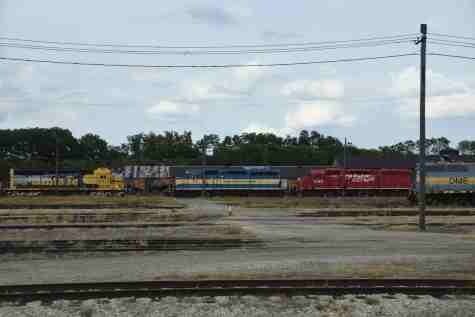
On the left is Iowa, Chicago and Eastern SD40-3 6100 "City of Postville", ex. Iowa and Chicago Eastern 209, exx. Montana Rail Link 20, exxx. I&M Rail Link 209, nee Burlington Northern SD40 6322, built by Electro-Motive Division in 1971. On the right is Canadian Pacific SD40M-2 5490, nee Southern Pacific SD45 9031, built by Electro-Motive Division in 1969.
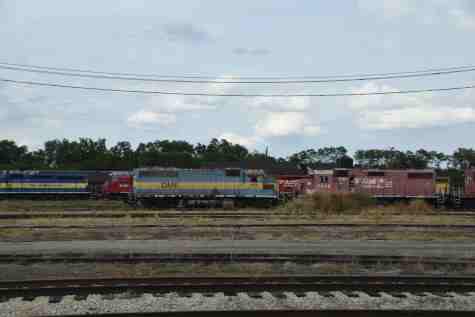
On the left Dakota, Minnesota and Eastern 4000 "City of St. Lawrence", nee Missouri, Kansas and Texas 180, built by Electro-Motive Division in 1966. On the right is Canadian Pacific GP38-2 7305, ex. Delaware and Hudson 7305, exx. Guildford Transportation Industries 224, exxx. Delaware and Hudson 7318, nee Lehigh Valley 318, built by Electro-Motive Division in 1972.
A planned stop on the way back to the hotel was at the former Rock Island station in Rock Island.
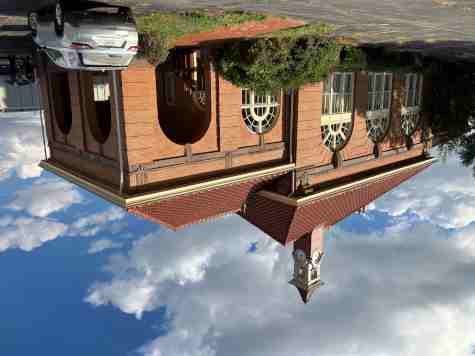
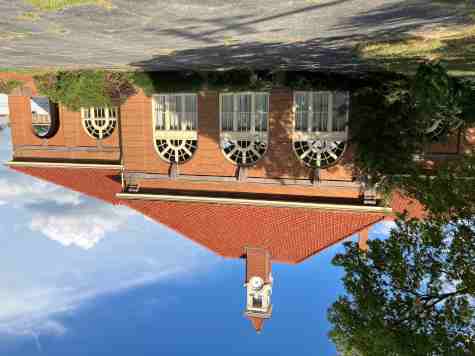
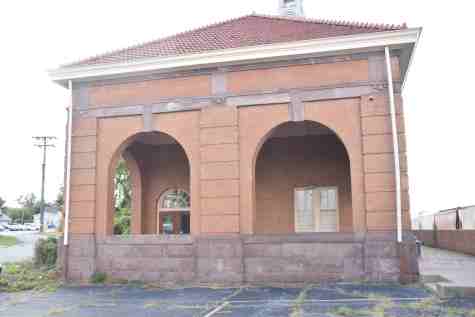
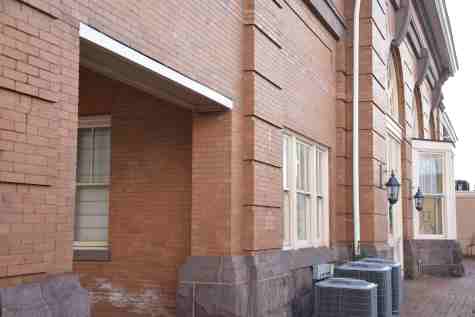
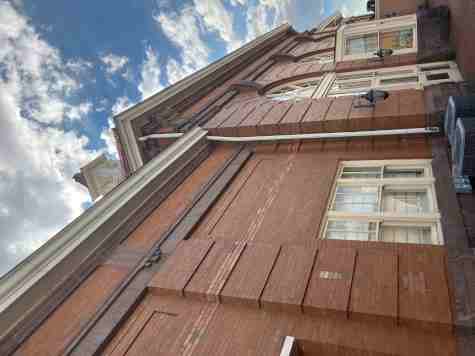
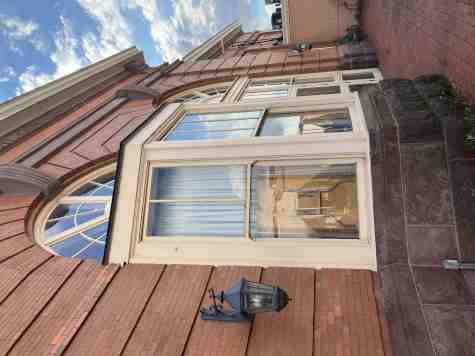
Chicago Rock Island and Pacific station designed by Charles S. Frost and built by John Volk in 1901, which represents the remnants of the first terminal built west of Chicago, which made Rock Island a pivotal location for the movement of people, commodities and raw materials. In 1845, civic leaders began to plan for the construction of a railway to Rock Island. Completing the first bridge over the Mississippi River, The Rock Island Lines sped the westward expansion of the United States.
This magnificent building served as the third Rock Island passenger depot. For many years, it was a hub of activity, with up to 32 arrivals and departures daily and 21 ticket agents working around the clock. As passenger trains gave way to air and highway travel, train depots became obsolete and the last scheduled passenger train left this station on May 31, 1978, after which the depot was closed "permanently" in April 1980. At the request of the City of Rock Island, the deteriorating depot was listed on the National Register of Historic Places in 1982.
Efforts to revive the classic structure failed until 1994, when the City of Rock Island purchased the property from the Iowa Interstate Railroad. The City restored the exterior in 1996 and replaced the clock tower. The entrance was returned to the southeast corner of the building. Adjacent to the depot was a deteriorated freight house, built with the same types of bricks and roof tiles as had been used on the depot. When it was demolished in 1997, its bricks and tiles were salvaged and used as necessary for replacements on the depot renovation.
In 1999, the City sold the property to Abbey Station LLC, which now operates this former depot as an elegant brunch and banquet facility.
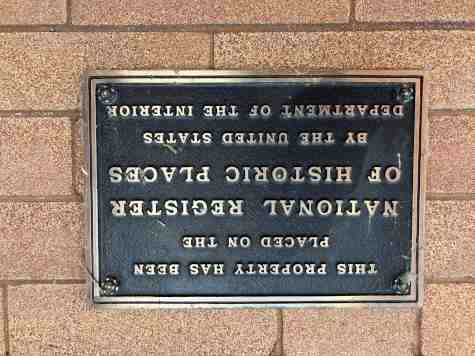
The National Register of Historic Places plaque. We then went inside the unique building.
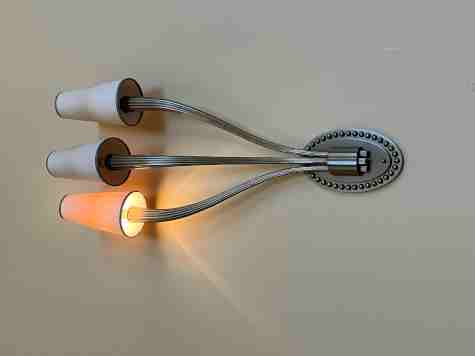
One of the light fixtures on the wall.
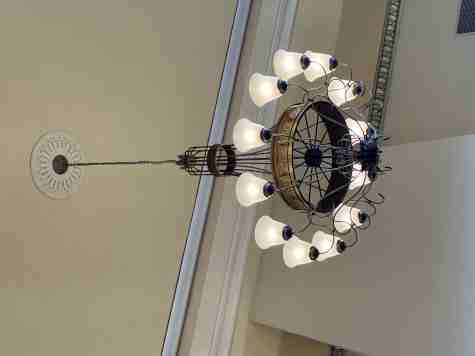
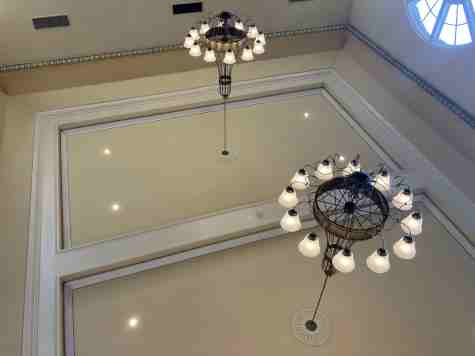
The chandeliers.
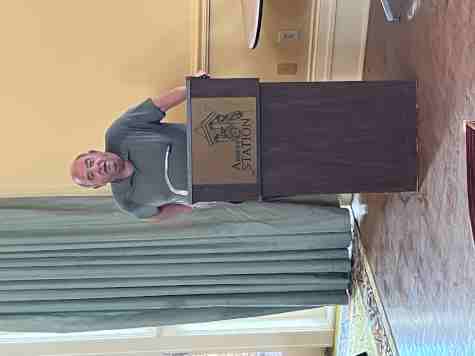
The station is for sale and the real estate agent, Dan Levin, provided some highlights of the building and its history.
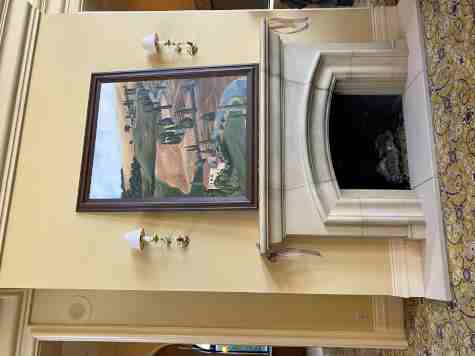
The fireplace and a painting.
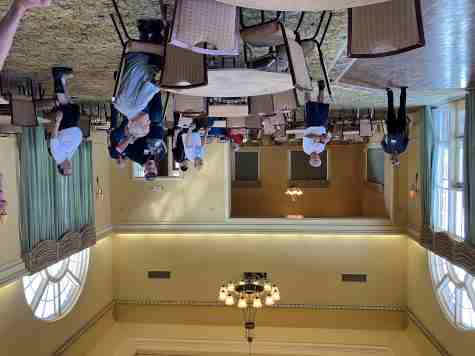
Union Pacific Historical Society members enjoying themselves inside the depot.
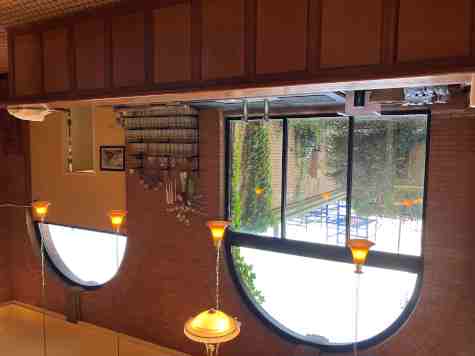
The bar at the one end of the building.
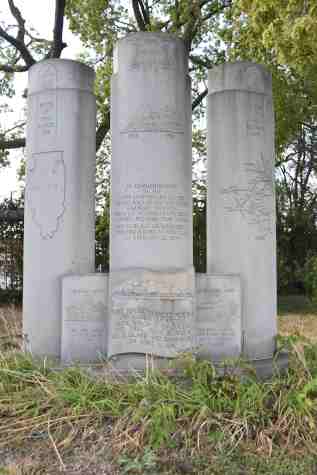
The monument was erected to commemorate the 100th anniversary of the Chicago, Rock Island & Pacific Railroad Company, which completed building its rail to Rock Island on February 22, 1854. At the base of the left shaft is an image of the original Davenport depot, of 1856, the first depot of any railroad in Iowa, an historic claim that did not save it from the wrecking ball. Below the center shaft is the image of the first bridge across the Father of Waters, over which the first train between Rock Island and Davenport passed on April 21, 1856. And finally, at the base of the right pillar is the image of the first Rock Island Depot, constructed in 1854, the first railroad depot erected on the Mississippi in Illinois.
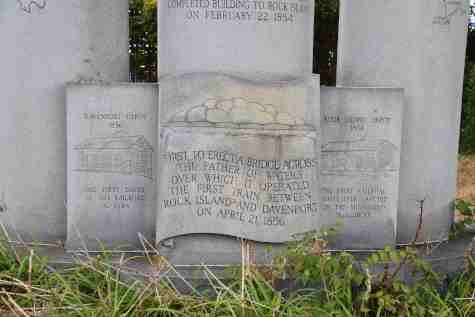
The lower portion of the monument, Davenport Depot 1856, the first depot of any railroad in Iowa and Rock Island Depot 1854, the first depot ever erected on the Mississippi in Illinois.
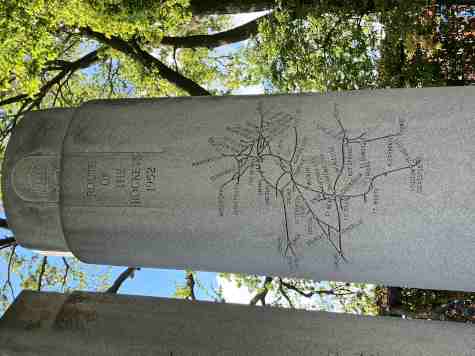
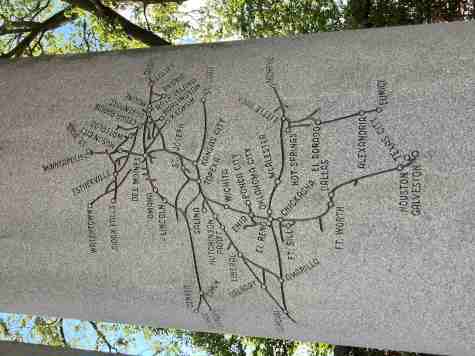
Route of the Rockets 1952 and a map of their route.
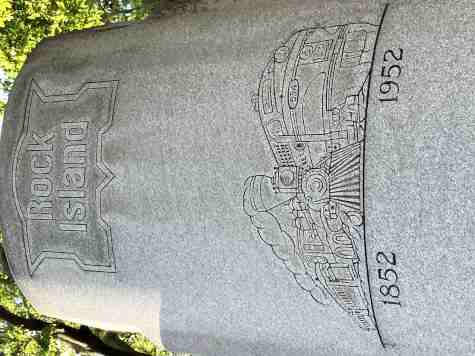
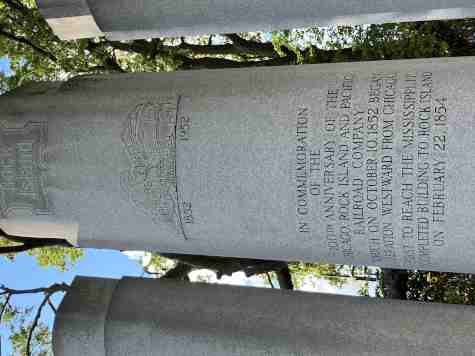
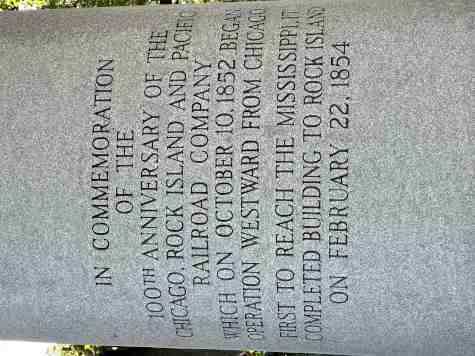
The middle column.
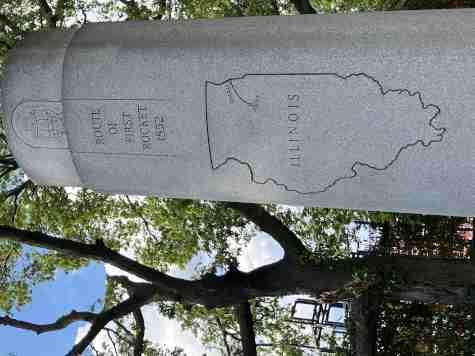
The left column.
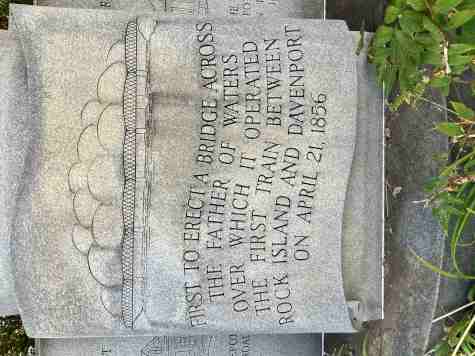
First to erect a bridge across the father of waters over which it operated the first train between Rock Island and Davenport on April 21, 1856.
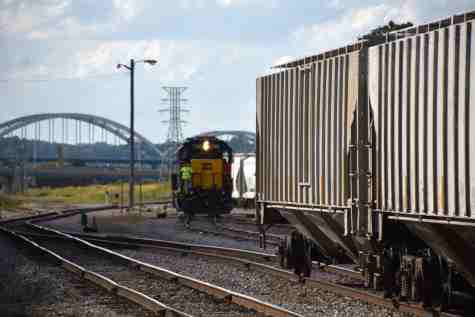
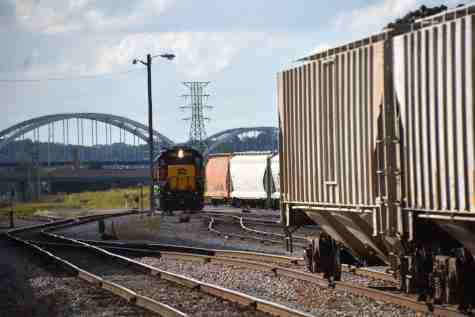
Switching in the yard behind the depot was Iowa Interstate GP38-2 700, ex. Locomotive Leasing Partners 2301 2004, exx. Union Pacific 410 2001, exxx. Union Pacific 1910 1997, exxxx. EMD leasing 740 1987, exxxxx. Conrail 7940, nee Penn Central 795, built by Electro-Motive Division in 1972.
We were returned to the hotel then the two of us went to the Village Inn for dinner before attending the evening seminars.
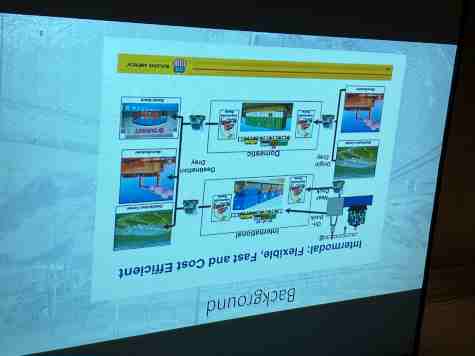
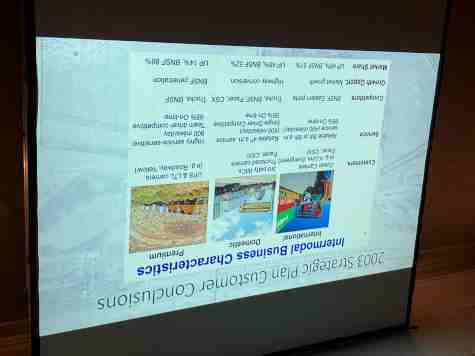
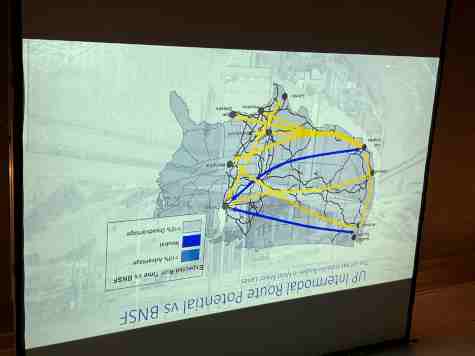
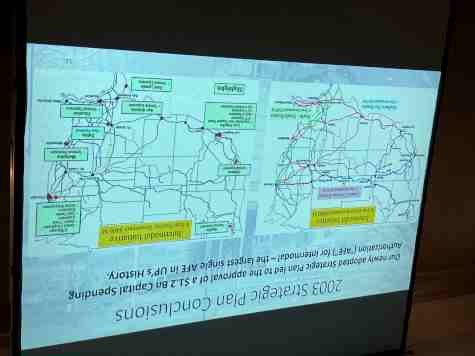
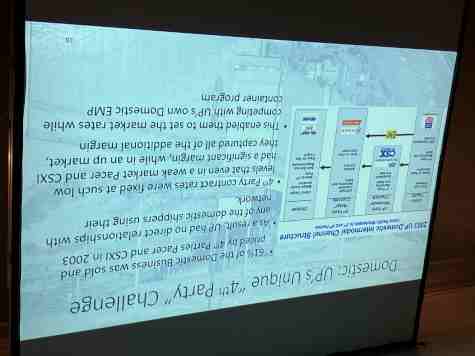
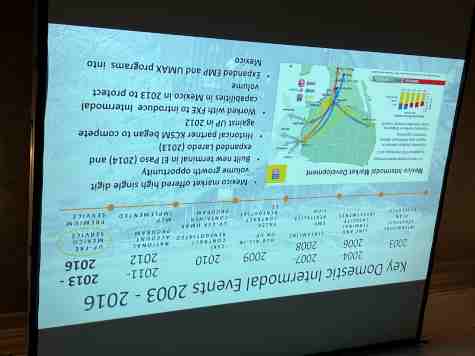
A few of the slides from "Union Pacific's Intermodal Turnaround 2003-2016" presented by John Kaiser, retired Union Pacific Vice-President and General Manager. The second seminar of the evening was "A Look at Union Pacific's Non-revenue Equipment" by Jim Ehrenberger, author, historian, photographer and retired Union Pacific employee.
| RETURN TO THE MAIN PAGE |