




Having explored all the public car barns open for our group today, we returned outside and had plenty to see.
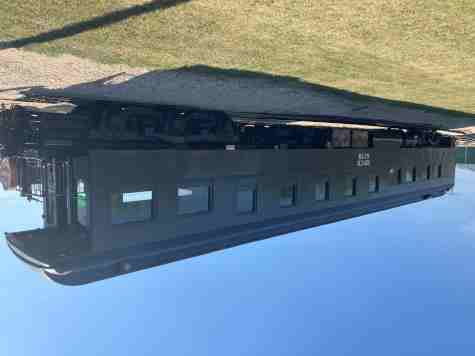
Heavyweight private car "Pawnee", ex. John Blair "Pawnee" 1977-2019, exx. Miami Chapter National Railway Historical Society in Hialeah, Florida 1975-1977, exxx. Lewis J. Ort 100 1965-1975, exxxx. Western Union Telegraph Company 100 1938-1965, nee Harry Payne Bingham "Pawnee", built by Pullman/Pullman-Standard in 1930 for Harry Payne Bingham, who named the car for the U.S.S. Pawnee, an 1860 sloop of war aboard which Bingham’s grandfather had served during the Civil War. Bingham sold the car to Western Union Telegraph Company, which used it as their president's car. It also served as a "communications car" in President Franklin D. Roosevelt’s funeral train in 1945 and saw use during President Harry S. Truman’s 1948 campaign train.
It was the last traditional heavyweight Pullman car built. It was donated by retired Colonel John E.N. Blair in 2019.
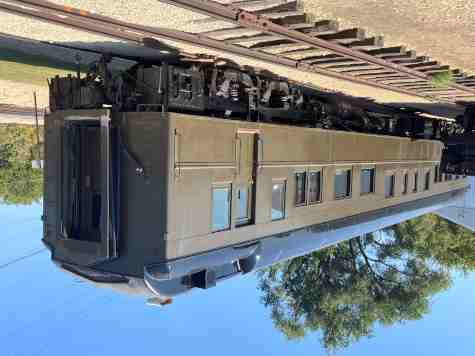
We believe this to be Illinois Central dining car 3996, ex. Keokuk Junction Railway 4 1987-1998, exx. Chicago Central & Pacific 9000 1985-1987, exxx. Illinois Central Gulf 100505 1972-1985, exxxx. Illinois Central xxxx c1955-1972, nee Illinois Central 3996, built by Pullman Company in 1916. Dining cars such as this were used on long-distance passenger trains and were designed with a built-in kitchen where full meals were cooked and prepared while moving. It was modernized in 1934 with air conditioning. Around 1955, the IC converted 3996 into a kitchen car and used it for feeding railroad maintenance crews.
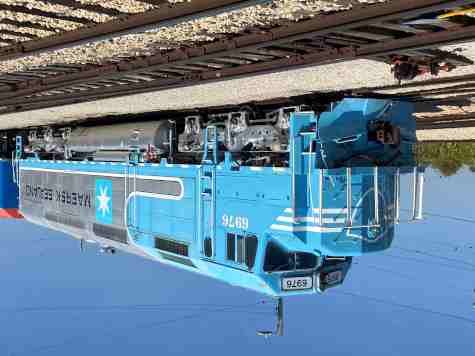
Burlington Northern Santa Fe SDP40F 6976, ex. Santa Fe 5266, nee Amtrak 644, built by Electro-Motive Division in 1975. Out of 150 of this model built for Amtrak, 6976 is the only remaining example of this first generation of diesel locomotives. Concerns about derailments led Amtrak to retire the locomotives early in favour of four-axle F40PH-type engines. It was sold to Santa Fe in 1984 and was rebuilt for freight service then operated on the BNSF until retirement in 2002.
Just prior to its retirement, it was painted in a Maersk Sealand promotional livery to celebrate the opening of a new port facility in Los Angeles. The locomotive was donated by BNSF to Dynamic Rail Preservation (DynaRail) in 2003 and donated it to an Oregon museum organization until it was sidelined when various groups had to vacate the famed Southern Pacific Brooklyn Roundhouse. It was soon acquired for preservation by the founder of DynaRail and they donated 6976 to IRM on July 2, 2025. A fitting end to this last surviving locomotive of its type.
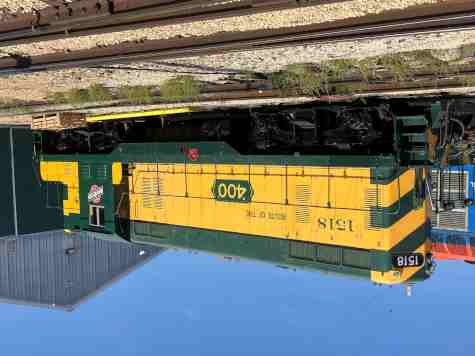
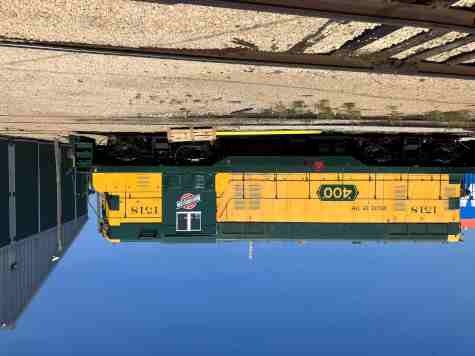
Chicago and North Western GP7 1518, ex. Chicago and North Western 4311 1972-1987, exx. Chicago and North Western 1518 1950-1972, exxx. Electro-Motive Division 100 1949-1950, nee Electro-Motive Division 922, built by Electro-Motive Division in 1949; the first GP-series locomotive built and the forerunner of some 17,000 Geeps to be built between 1949 and 2001. It was restored by the C&NW to its 1950s appearance and donated to IRM in 1986.
The door to Barn 2, in which restoration was occurring, was open so we stepped inside and found several locomotives of interest.
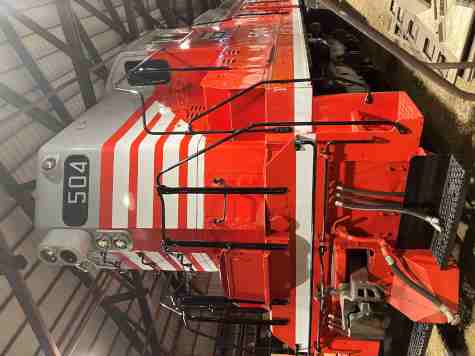
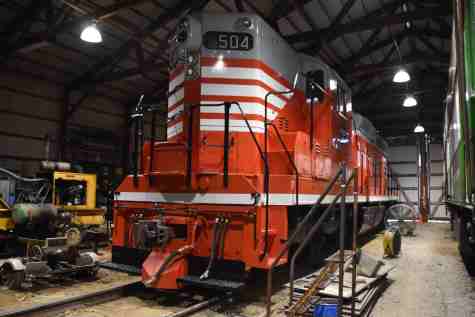
Chicago Burlington and Quincy SD24 504, ex. Maryland Midland 6244 1983-1989, exx. Electro-Motive Division in McCook, Illinois 1982-1983, exxx. Burlington Northern 6244 1970-1982, nee Chicago Burlington & Quincy 504, built by Electro-Motive Division in 1959. It was one of the first diesel locomotives built with a turbocharged engine, which gave it higher horsepower.
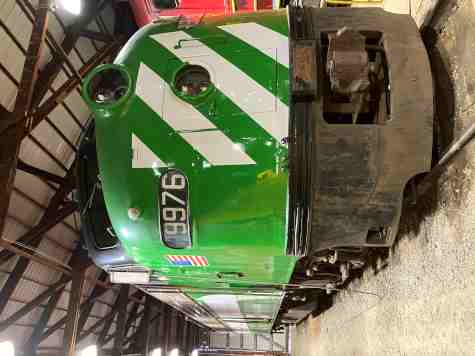
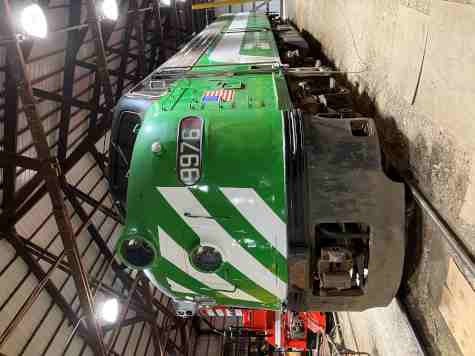
Burlington Northern E8A 9976, ex. Maryland Area Rail Commuter 92 c1995-2005, exx. Maryland Area Rail Commuter 68 1992-c1995, exxx. Burlington Northern 9908 1978-1992, exxxx. Burlington Northern 9976 1970-1978, nee Chicago, Burlington and Quincy 9976, built by Electro-Motive Division in 1959.
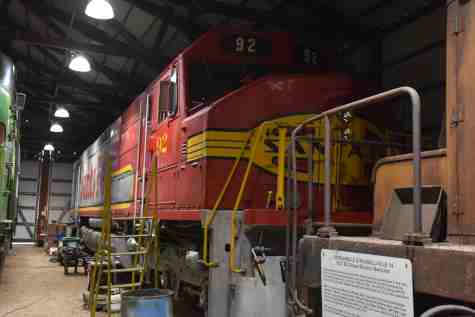
Santa Fe FP45 92, exxx. ATSF 101, exxxx. ATSF 5992, exxxxx. ATSF 5942, nee Santa Fe 102 built by Electro-Motive Division in 1967 to power fast passenger trains for the Santa Fe, but since passenger trains were quickly dying out in the 1960s, it was built so that it could also be used to pull freight trains. After Amtrak took over intercity passenger service in 1971, this engine was rebuilt to haul express freight trains between Chicago and Los Angeles. It was one of two engines repainted in traditional red and silver to debut the "Super Fleet" program in 1991.
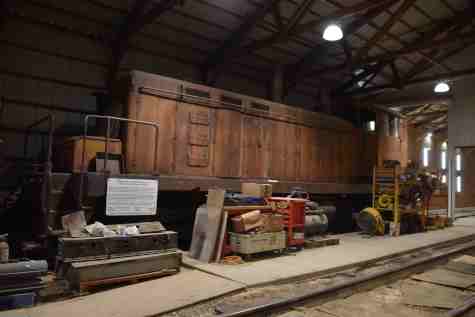
Dardanelle and Russellville SC 14, nee Missouri Pacific 9001, built by Electro-Motive Corporation in 1937. It is one of the oldest preserved locomotives built by the company and also the only surviving SC type locomotive, so-called because "S" referred to six hundred horsepower and "C" referred to a cast, rather than welded, frame.
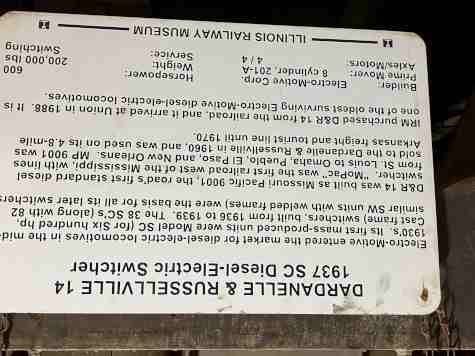
Dardanelle and Russellville 14 story board.
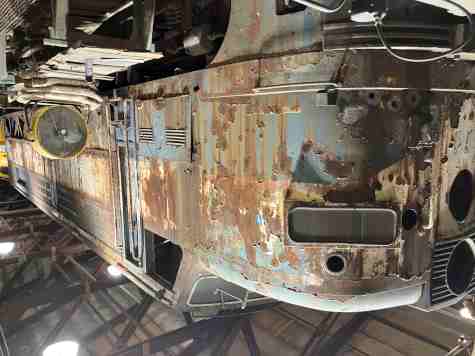
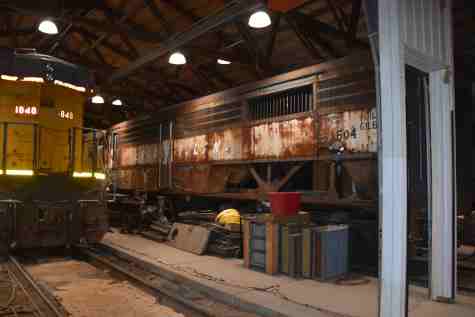
Louisville and Nashville FA2 314, ex. Feather River Rail Society in Portola, California 1987-1996, exx. Long Island Rail Road 604 1971-1987, nee Louisville & Nashville 314, built by American Locomotive Company in 1956 for general freight train service. When acquired by the Long Island Railroad, it was rebuilt as a cab car for use on double-ended push-pull commuter trains. It is the museum’s only cab unit built by Alco.
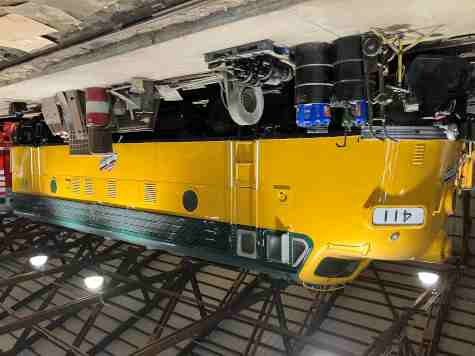
Chicago and North Western F7A 411, ex. Metra 305, nee Chicago and North Western 4082C, built by Electro-Motive Division in 1949.
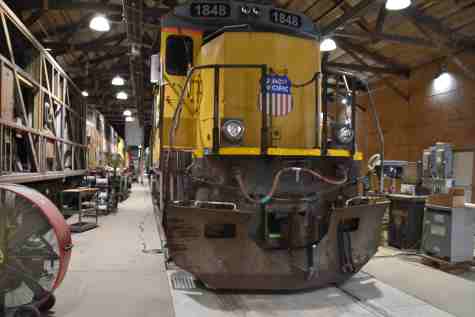
Union Pacific B40-8 1848, ex. Union Pacific 1848 2002-2014, exx. Union Pacific 5657 1999-2002, nee St. Louis-Southwestern (Cotton Belt) 8049, built by General Electric in 1988. It is an example of the "Dash-8" series of locomotives and the only B40-8 preserved in a museum. In addition, it is IRM's only piece of equipment from the St. Louis-Southwestern and is also one of the last generation of "standard cab" locomotives built, before "wide cabs" became the universal industry standard for new freight engines.
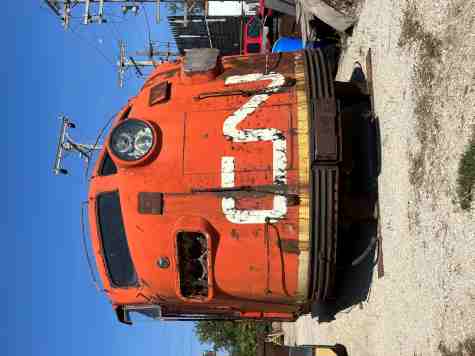
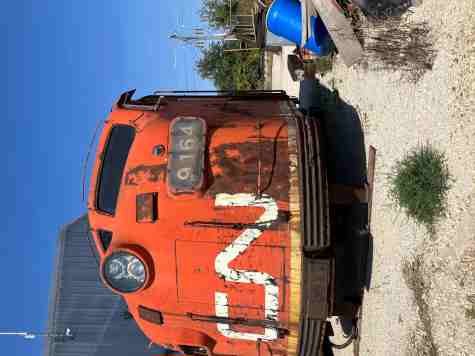
The cab is all that remains of Canadian National F7A 9164, nee Canadian National 9128, built by General Motors Diesel in 1952. There was not too much time left in our visit so I walked over to Spaulding Tower while Elizabeth went to explore the Milwaukee Road Historical Society museum.
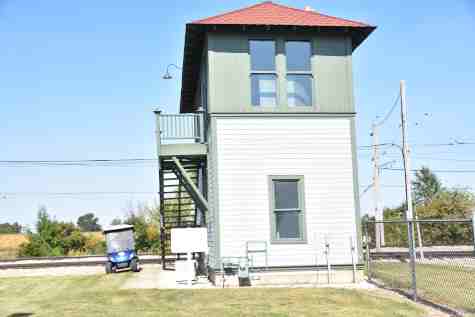
For over 90 years, this classic Midwestern interlocking tower protected the junction of the Milwaukee Road and the Elgin, Joliet & Eastern at Spaulding, just east of Elgin, Illinois. Originally built around 1890 when the EJ&E extended north toward Waukegan, the tower was expanded to its present size when the Milwaukee Road added a second main and a yard lead in 1909. It housed a 36-lever hand-operated interlocking machine to control all of the track switches and signals at Spaulding. The junction was converted to centralized control and the tower closed in the 1980's.
Spaulding Tower was donated to IRM in 1988 by the EJ&E and by Metra and the Soo Line, which took over the Milwaukee Road route after the line's bankruptcy. IRM volunteers dismantled the huge interlocking machine before the upper story of the building was cut off, and both halves were moved by truck to Union. IRM crews reassembled the building and restored it to its 1950's appearance. It is used regularly to control train movements on the museum's demonstration railroad using a restored CTC machine located on the upper floor.
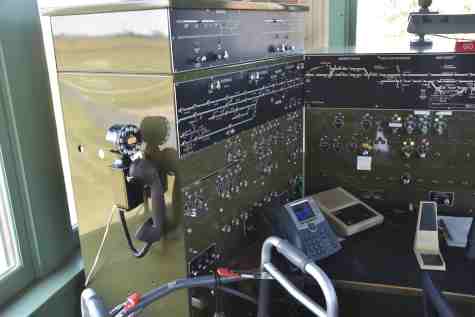
Morgan to East Union circuit board.
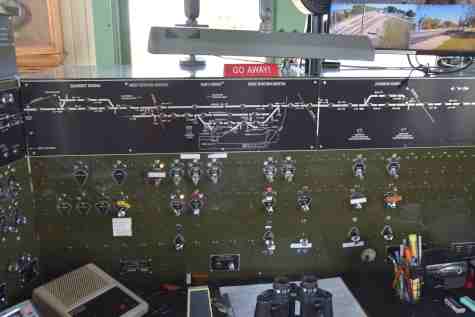
Schmidt Siding to Johnson Siding circuit board.
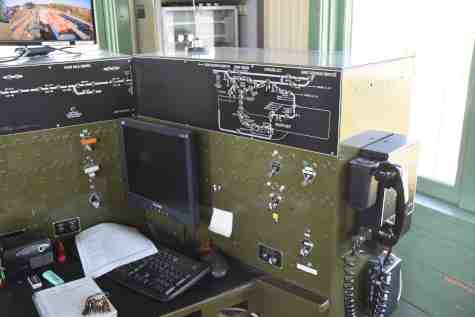
East Johnson to East Station Switch circuit board.
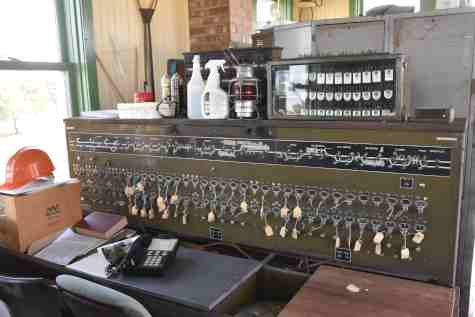
El Pinal to Brighton circuit board.
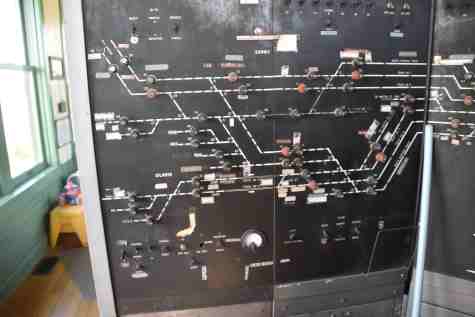
48ST to Martha Street circuit board.
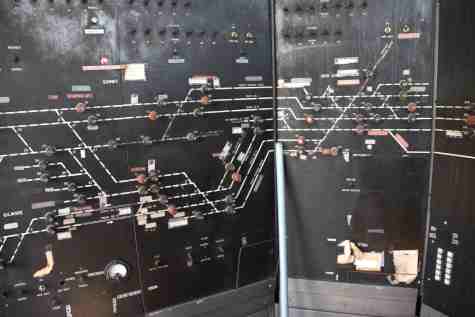
Vinton Street to Greese track circuit board.
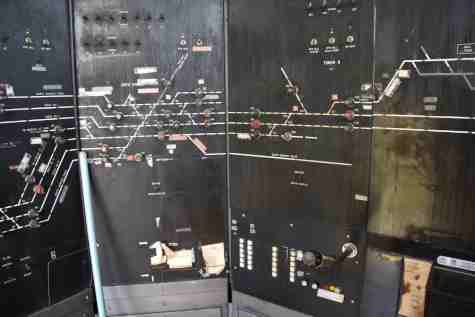
Martha Street to Tower B circuit board.
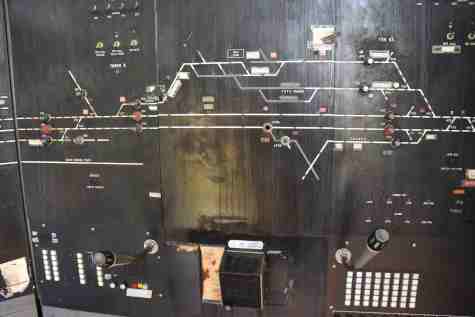
Tower B to Seventh Street circuit board.
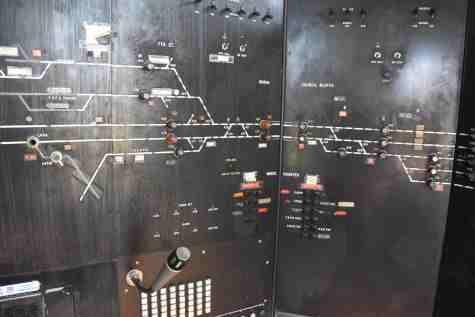
L471A to Council Bluffs circuit board.
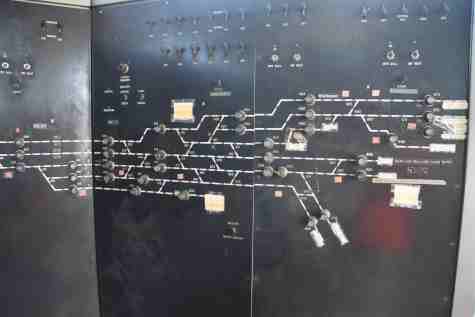
35 Street to Service Balloon Yard circuit board.
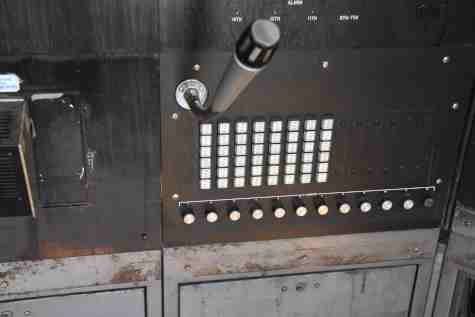
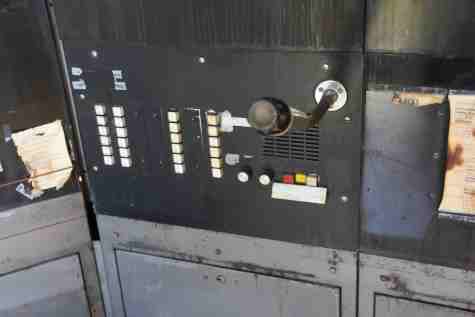
Microphone for the tower.
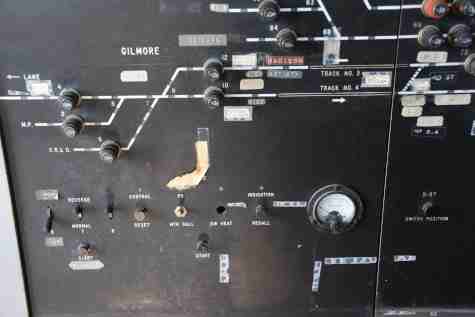
Lane to Madison circuit board.
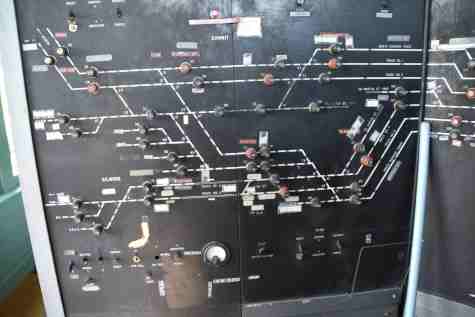
Gilmore to Market Street circuit board. I then boarded the motor coach and waited for Elizabeth.
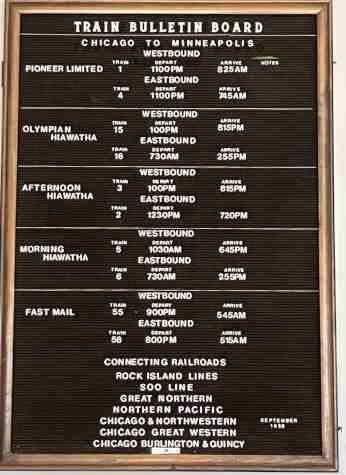
She visited the Milwaukee Road Historical Society Museum and browsed the displays more quickly than she would have liked, but the group's time here was running out.
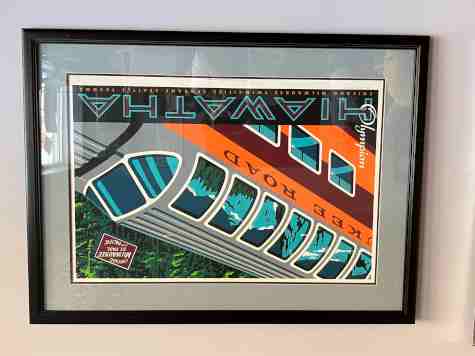
Chicago, Milwaukee and St. Paul Hiawatha dome car by John L. McCarthy, Jr.
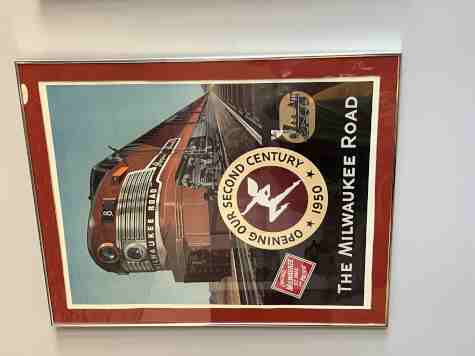
Opening Our Second Century 1950 poster.
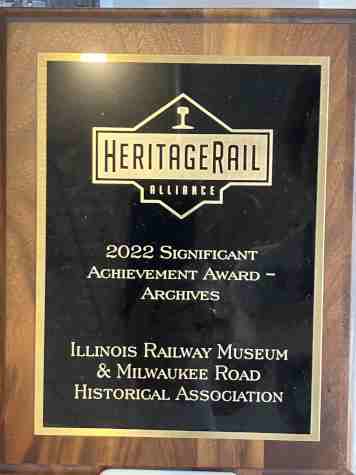
Heritage Rail Alliance 2022 Historic Achievement Award - Archives - Illinois Railway Museum and Milwaukee Road Historical Association.
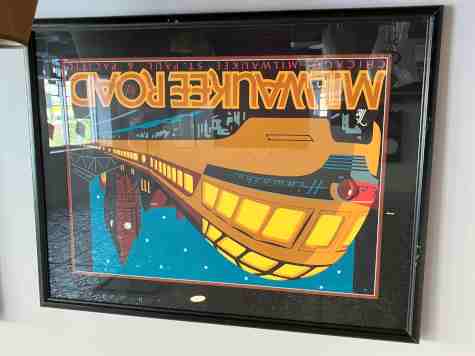
Milwaukee Road Hiawatha poster.
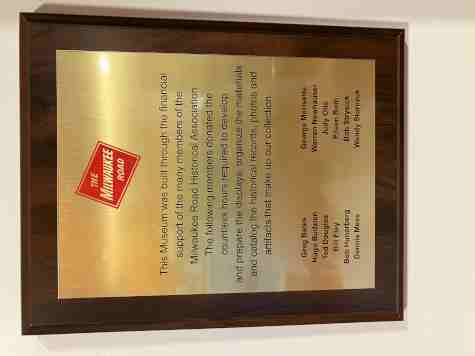
The Milwaukee Road Museum and Archives is operated by the Milwaukee Road Historical Association. Open only on certain Saturdays during the summer, it celebrates and preserves the history of the Milwaukee Road that once ran between Chicago, Milwaukee, the Twin Cities and the Pacific Northwest. The Milwaukee Road Museum is located on IRM's historic Main Street adjacent to the Schroeder Mercantile Store. There is no additional entry cost for IRM visitors.
The Milwaukee Road Museum features a variety of artifacts from that railroad. Discover signage from stations and stops across the Midwest and west, artwork depicting the railroad’s famous Hiawatha trains, and items like bells, signals and uniforms that would have been common sights to the Milwaukee Road’s patrons. Maps and models help tell the story of the railroad’s extensive operations. The Milwaukee Road Historical Association also has a reading and research room located in the same building where those looking to explore the association’s archival holdings can delve into the story of this famous railroad.
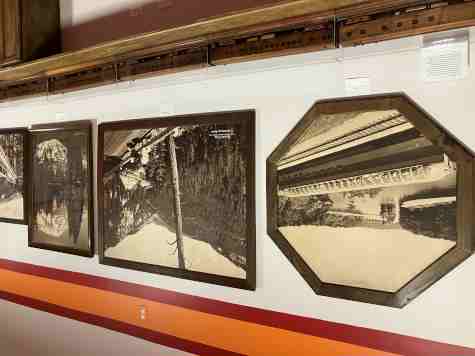
A series of vintage photographs.
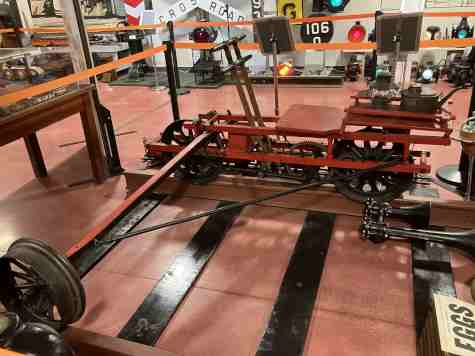
1909 velocipede built by Sheffield for the Milwaukee Road.
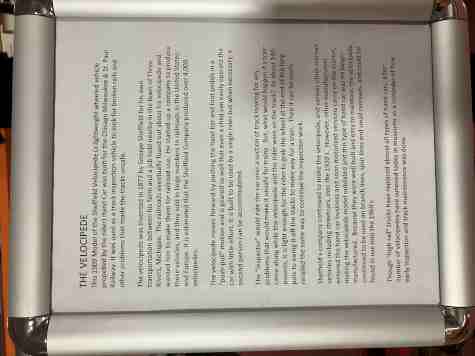
The velocipede story board.
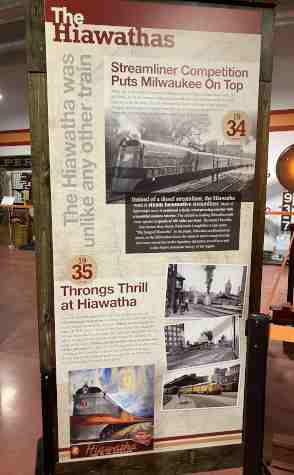
The Hiawatha's Display Board.
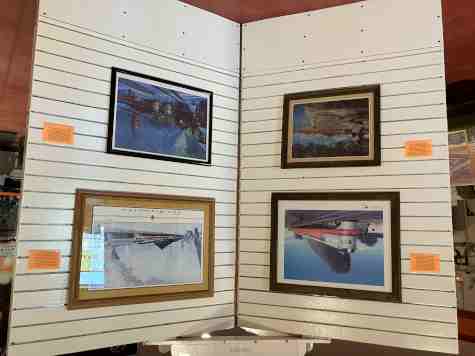
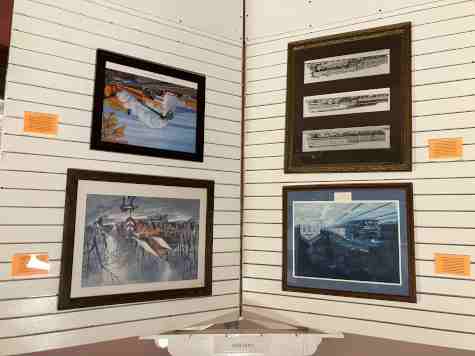
Milwaukee Road photographs and paintings in a section called Lines East.
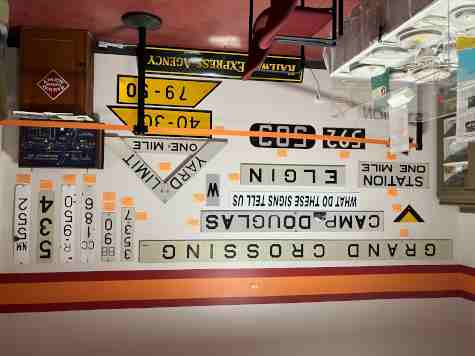
Station, Milepost and yard signs.
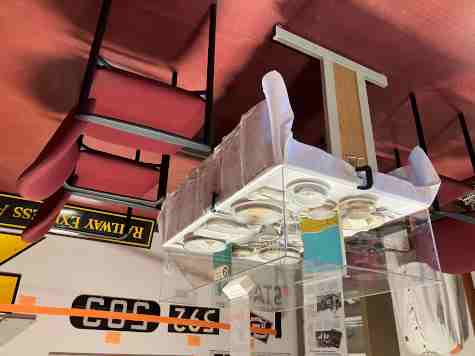
Olympian Hiawatha dining car table.
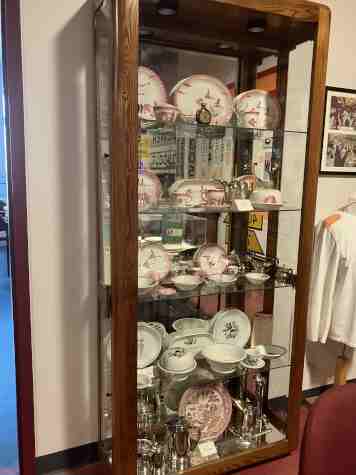
Milwaukee Road dining car china.
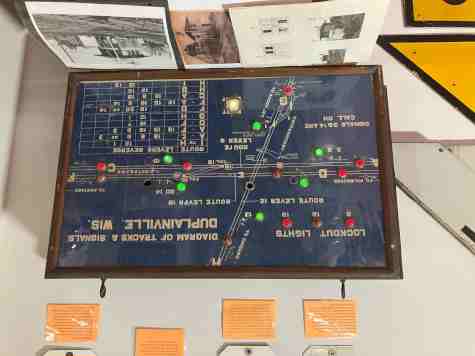
Diagram of tracks and signals in Duplainville, Wisconsin.
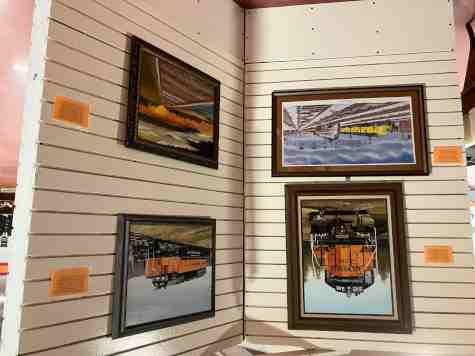
Milwaukee Road steam and diesel paintings.
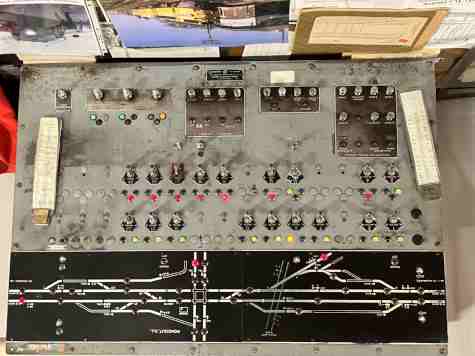
Rondout CTC display board.
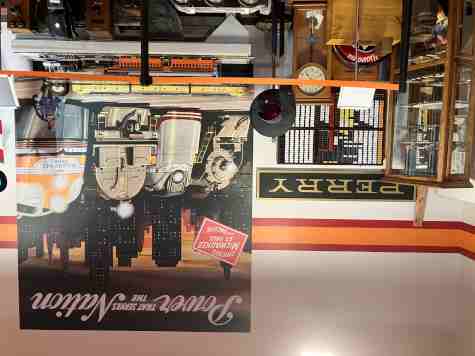
Power that serves the nation poster.
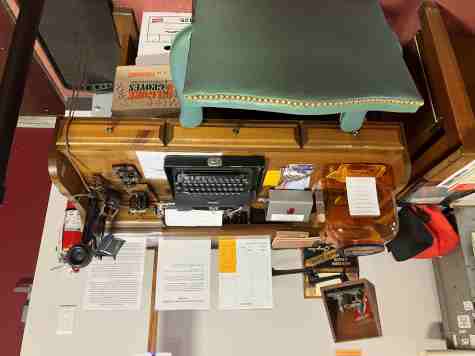
Station agent's desk.
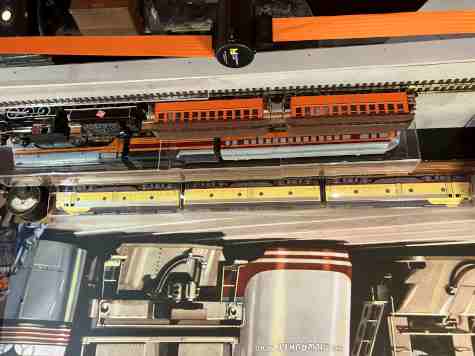
Model trains.
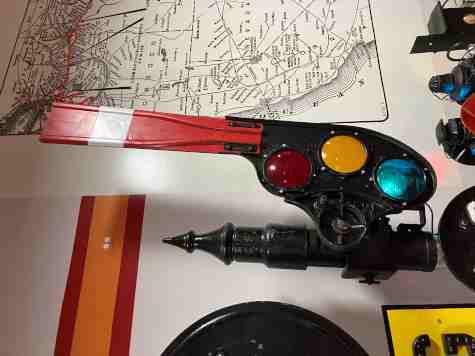
Semaphore signal.
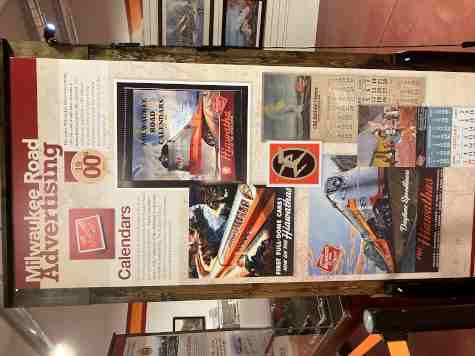
Milwaukee Road Advertising.
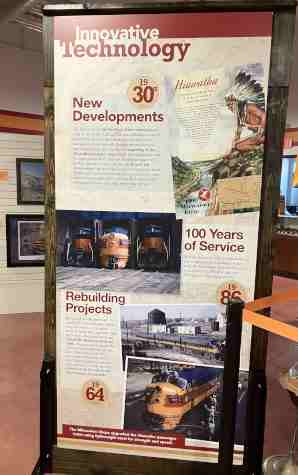
Innovative technology.
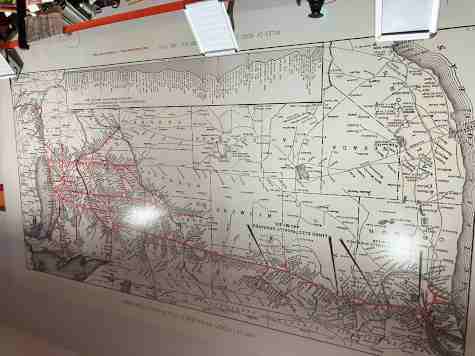
Milwaukee Road system.
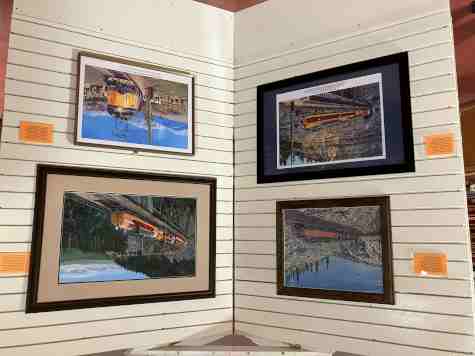
Milwaukee Road electric locomotives painting and photograph.
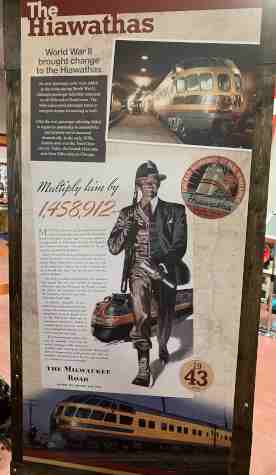
The Hiawathas - World War II brought changes to the Hiawathas.
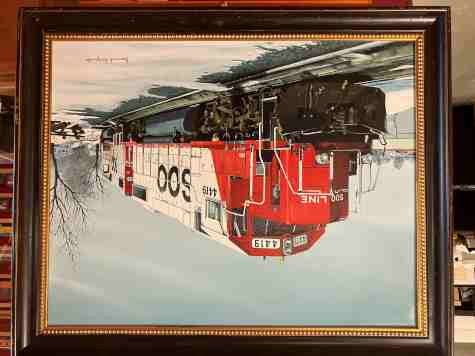
A painting by Bernard Gerzevske.
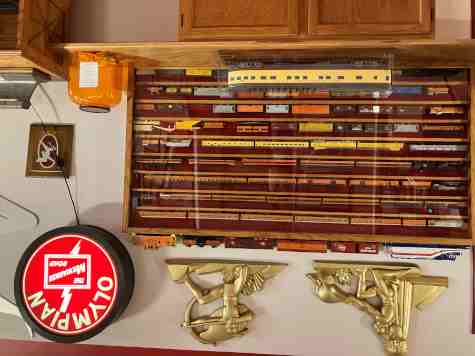
Milwaukee Road models and an Olympian Hiawatha drumhead.
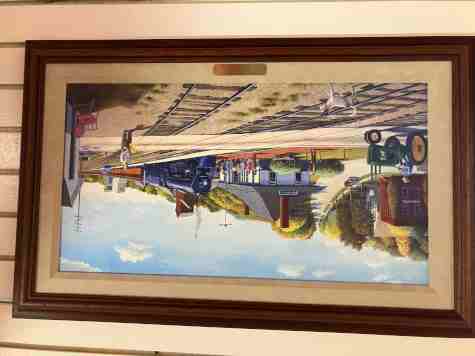
A captivating painting of Milwaukee Road 4-8-4 261 at Montevideo, Minnesota.
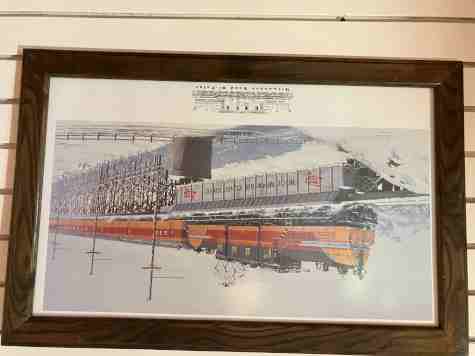
Milwaukee Road Bi-Polar painting by Jim Jordan.
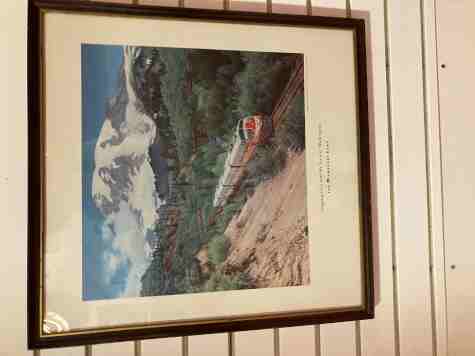
Logging train near Mount Rainier, Washington.
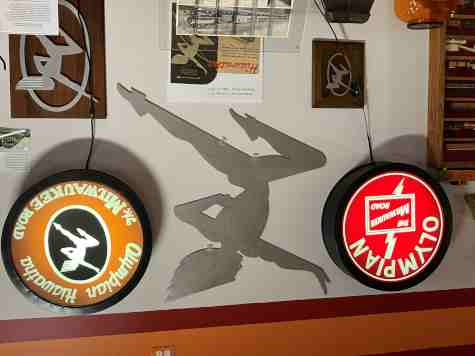
Olympian Hiawatha drumheads and emblem.
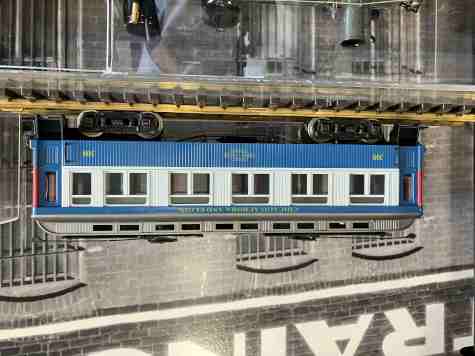
An in-and-out visit to the model railway layouts next door resulted in just one photograph - an HO scale model of Chicago, Aurora and Elgin interurban 308.
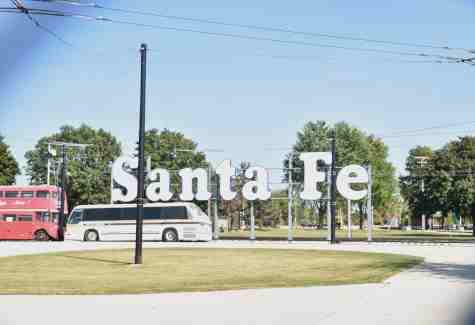
From the bus window, the famous Santa Fe sign that used to sit atop the Railway Exchange Building in Chicago and was acquired by the museum in 2012. With everyone back onboard and after a most enjoyable experience, we were taken to Rochelle Railroad Park.
| RETURN TO THE MAIN PAGE |