



Elizabeth and I made a beeline for the gas turbine locomotive, which was open specially for our group.
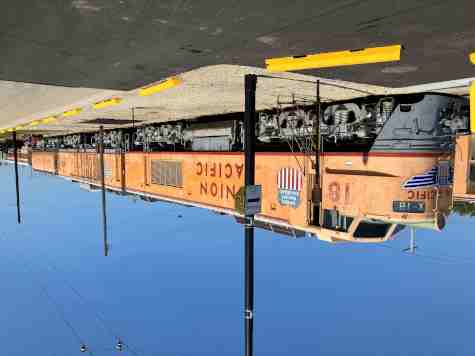
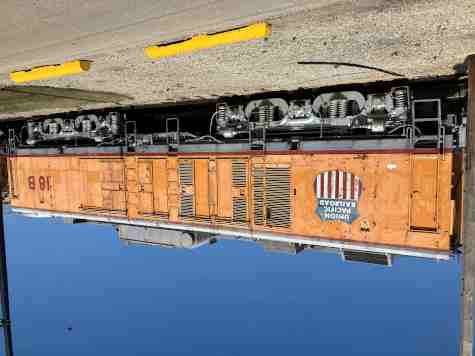
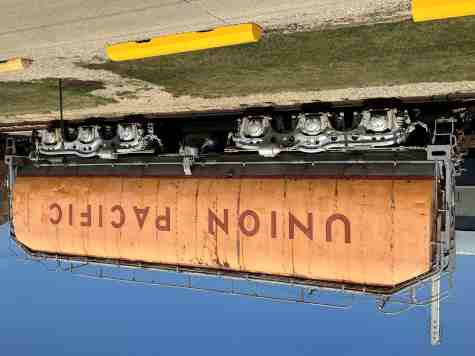
Union Pacific D-E Turbine A Unit 8500 18, built by General Electric in 1960. It is an example of the most powerful locomotive ever built in America. Rated at 10,000hp, it consists of the cab unit; the main power unit containing a turbine engine, similar to a jet engine, numbered 18B; and a tender to carry fuel for the turbine. The railroad designed these locomotives specifically to pull freight trains between Omaha, Nebraska and Ogden, Utah and 18 is one of only two in preservation. Their poor fuel economy and high maintenance costs of the turbine led to their retirement in the late 1960s.
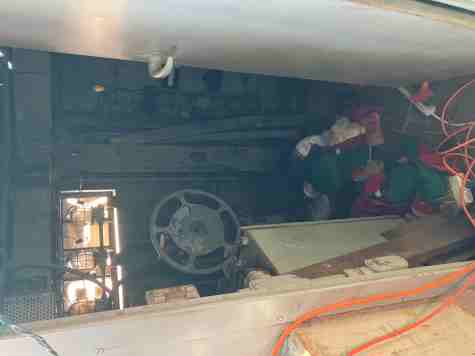
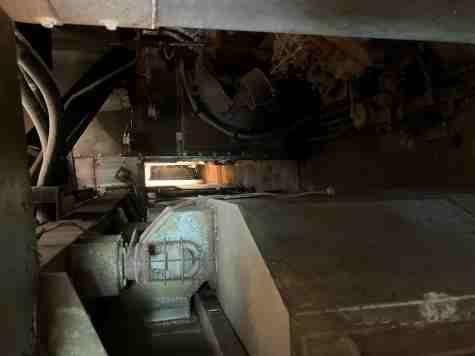
Looking back into the engine compartment.
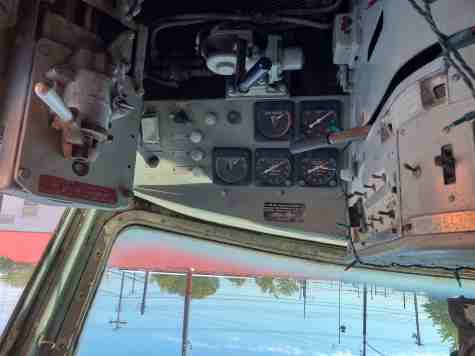
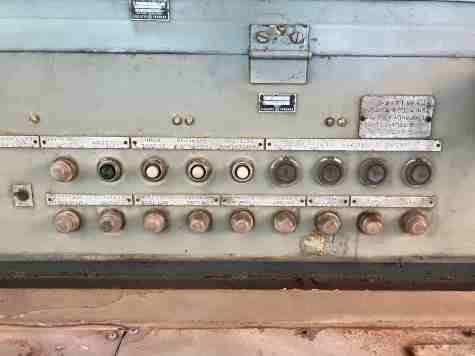
The controls.
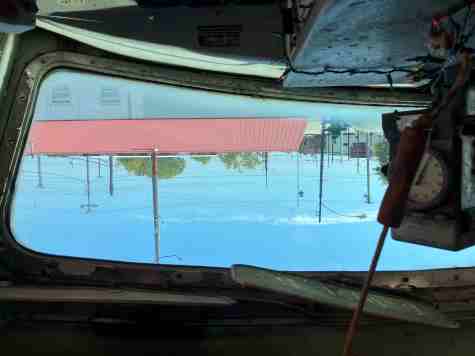
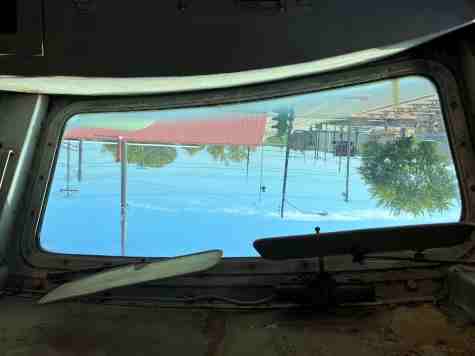
View from the cab of 18.
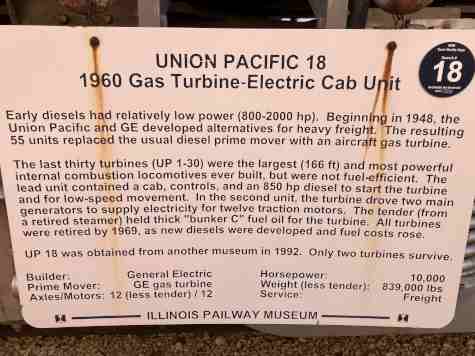
Union Pacific 18 story board.
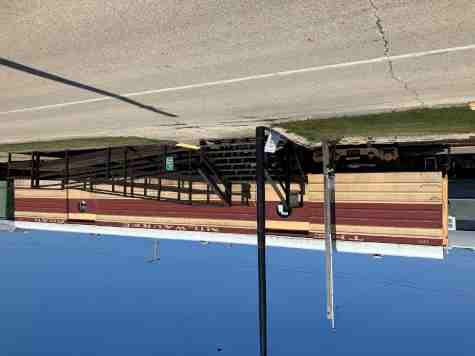
Milwaukee Road streamlined baggage car 1307, built by the company in 1939, for use on the famous Hiawatha passenger trains between Chicago and the Twin Cities.
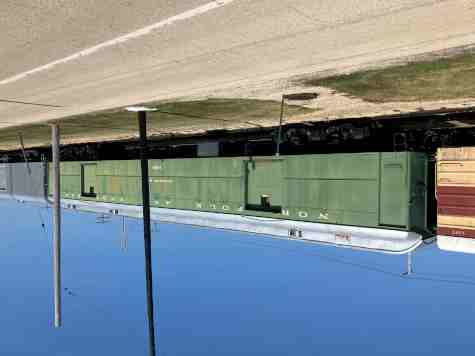
Norfolk and Western all-steel baggage car 1459, ex. Monticello & Sangamon Valley in Monticello, Illinois 1969-1994, exx. Norfolk & Western mail storage car 1459 1952-1969, exxx. Norfolk & Western baggage-coach 620 1947-1952, exxxx. Norfolk & Western coach 753 1941-1947, nee Pullman parlour car "Barneston", built by Pullman/Pullman-Standard in 1910. It was first in service mostly on the Pennsylvania Railroad before being rebuilt. It lacked the ability to sort mail en route and was intended for bulk point-to-point mail shipments. The car was retired in 1969.
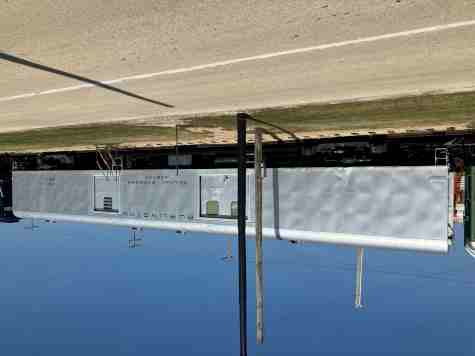
Chicago, Burlington and Quincy streamlined baggage car 993, ex. Gateway Rail Services in Madison, Illinois ????-2009, exx. Burlington Northern maintenance-of-way 976090 c1971, nee Chicago Burlington and Quincy 993, built by the railroad in 1951. It was restored between 2010 and 2012.
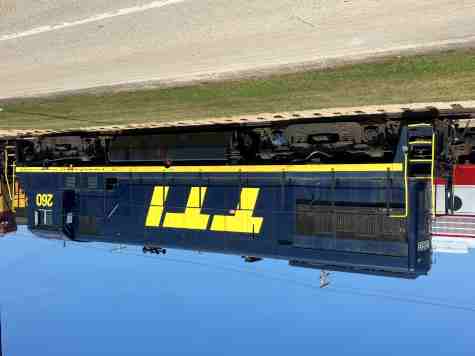
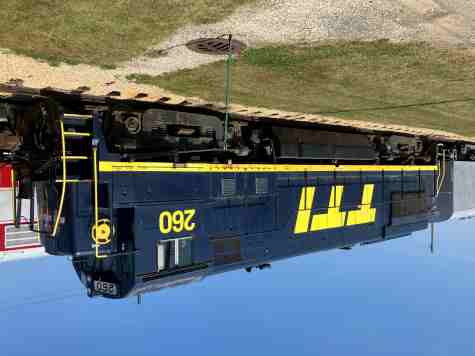
Transkentucky Transportation Railroad U28B 260, ex. Burlington Northern 5458 1970-1987, nee Chicago Burlington & Quincy 114, built by General Electric in 1967. It is an example of early Universal-series locomotive and is the only surviving U28B in original condition. The U28B was a transition model and was produced for only approximately one year, between 1966 and 1967.
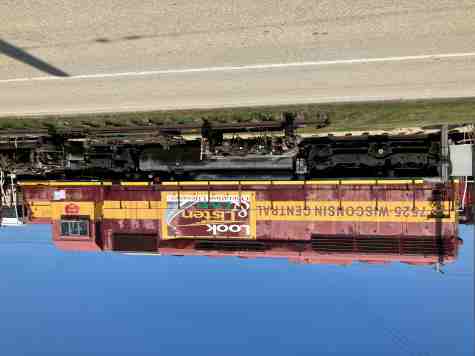
Wisconsin Central SD45MQ-3 7525, ex. Wisconsin Central 6525, exx. Wisconsin Central 6539, nee Burlington Northern 6539, built by Electro-Motive Division in 1971. Wisconsin Central modernized it with a computerized control system and gave it a unique Operation Lifesaver paint scheme.
Wisconsin Central was a regional railroad dating to 1987 and based in Wisconsin. It formed following the bankruptcy of the Milwaukee Road, when the Soo Line – which purchased most of the remaining assets of the Milwaukee Road – spun off much of the rail network in central and northern Wisconsin to this new line. The name was derived from a previous company known as the Wisconsin Central that had owned much of the same route mileage during the 1890s and early 1900s before it was absorbed into the Soo Line.
The new WC successfully operated its network of lines in Wisconsin and as far south as Chicago. It acquired the Green Bay and Western and Fox River Valley Railroads in 1993 and the Algoma Central, a railroad directly over the border in Canada, in 1995. In 2001, the Canadian National purchased the WC, and still operates the former WC routes. This locomotive is the only piece of equipment from the "new" WC at IRM.
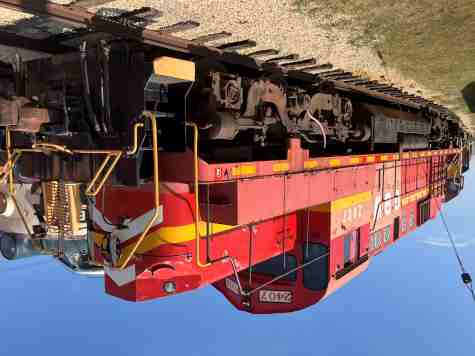
Green Bay and Western RSD15 2407, ex. Fox River Valley Railroad 2407 1989-1993, exx. Lake Superior & Ishpeming 2402 1975-1989, exxx. Santa Fe 9841 1969-1975, nee Santa Fe 841, built by American Locomotive Company in 1960. This model was developed from the RS-series that has six powered axles instead of only four.
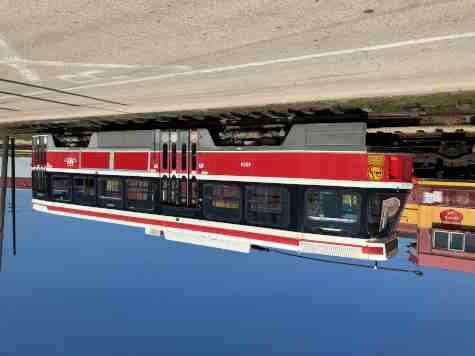
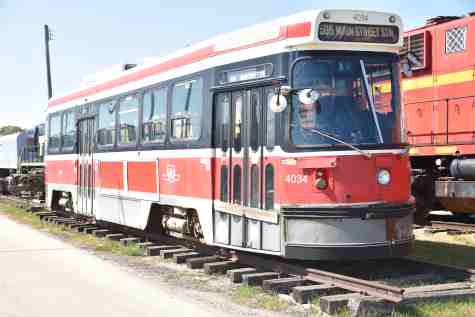
Toronto Transit Commission Canadian light rail vehicle 4034, built by Hawker-Siddely Canada in 1979 to a streetcar design developed in the 1970s to replace aging PCC cars then in use in Toronto. It remained in daily use until 2019.
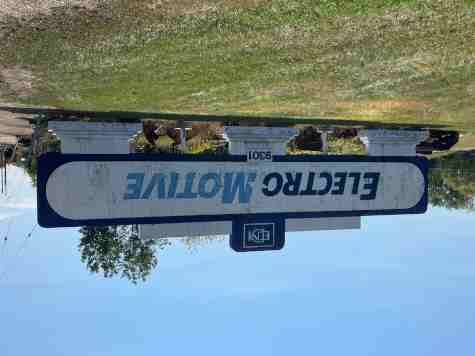
Since its ground breaking in 1935, the La Grange facility has been the headquarters for Electro-Motive Division. In addition to the corporation's administrative offices, La Grange housed design engineering, emissions testing, rebuild operations and manufacturing of major components, including prime mover engines, traction alternators, electrical cabinets, and turbochargers. The La Grange facility includes three main buildings, with over 1,200,000 square feet of office and manufacturing space. Ancillary buildings are used to provide maintenance and testing capabilities. A large part of the property's land was sold off including the land where the original factory building stood. With the sale of the land, the large sign of "Electro Motive Division" that stood at the corner of 55th Street and East Avenue was removed and preserved at the Illinois Railway Museum in November 2010.
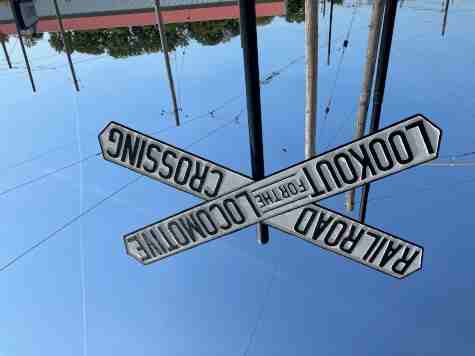
Railroad Crossing - Lookout for the Locomotive sign.
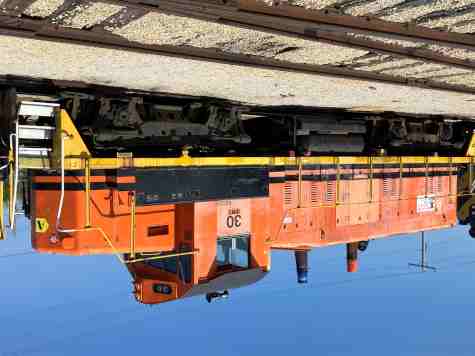
Chicago and Illinois Midland RS1325 30, built by Electro Motive Division in 1960 to a design which was a modification of standard EMD switchers. Only two were built, both for the C&IM, with this one used mostly in coal train service in central Illinois until 2016. At that time, the new owner, Genesee & Wyoming, transferred the locomotive to the Atlantic & Western in North Carolina and served there until 2023, when it was donated to the museum.
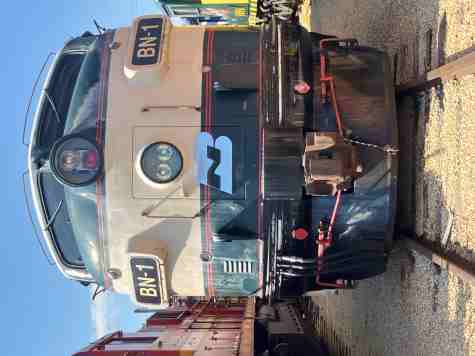
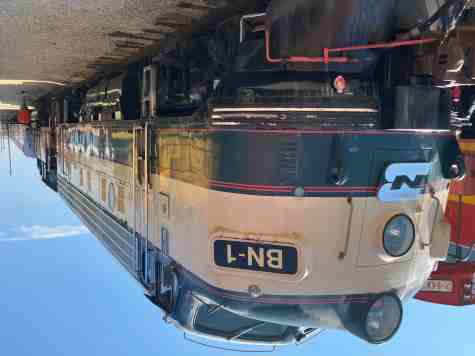
Burlington Northern F9A BN1, ex. Burlington Northern Santa Fe BN-1 1995-1997, exx. Burlington Northern BN-1 1990-1995, exxx. Burlington Northern 972567 1981-1990, exxxx. Burlington Northern 766 c1973-1981, exxxxx. Burlington Northern 9800, nee Northern Pacific 6700A, built by Electro Motive Division in 1954. It was built as an F9A mixed-traffic engine used to pull both passenger and freight train then was switched to pure freight duty in the early 1970s and was later rebuilt as a power unit for a rotary snow plough. In 1990, it was again rebuilt with modern equipment for the purpose of pulling the BN's executive train of passenger cars.
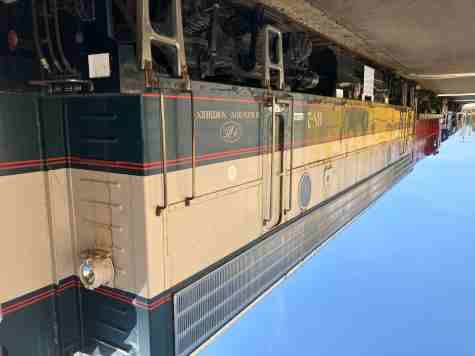
Burlington Northern F9B BN-2, ex. Burlington Northern Santa Fe BN-2 1995-1997, exx. Burlington Northern BN-2 1990-1995, exxx. Burlington Northern 972574 1982-1990, exxxx. Burlington Northern 809 1970-1982, nee Northern Pacific 7002C, built by Electro-Motive Division in 1954 to supplement the power of a manned locomotive. In 1982, it was retired and converted into a power car for a rotary snow plough then in 1990, it was rebuilt again with modern equipment for the purpose of pulling the BN’s executive train of passenger cars.
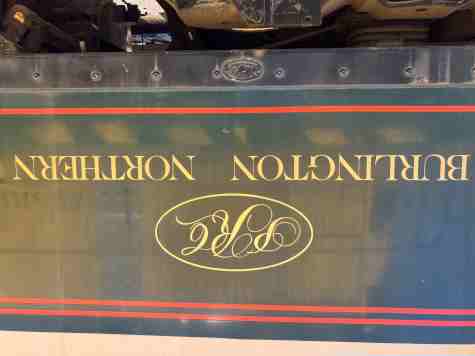
The Presidential Rail Coach emblem affixed to all the Burlington Northern executive fleet of locomotives. It was named by Mrs. Grinstein, wife of former Chief Executive Officer Gerald Grinstein, who held the position from 1985 to 1995. In that capacity, he helped form the corporate entity that resulted in BN's merger which formed the BNSF Railway and he adopted a new paint scheme for the railroad's executive office car train. Named for its creator, "Grinstein Green" was applied to the train's F-units along with a cream-coloured stripe down the middle. This paint scheme was later applied to the railroad's last order for locomotives before the merger, the SD70MAC.
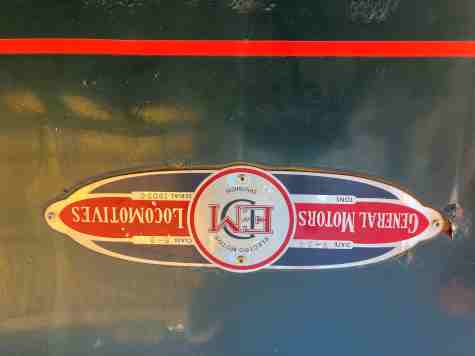
Electro-Motive Divisioni builder's plate.
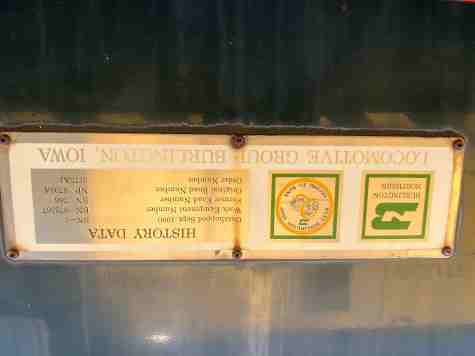
History data.
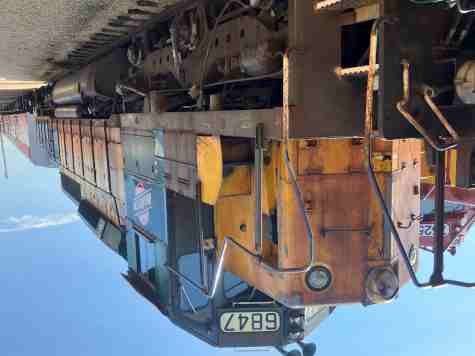
Chicago and North Western SD40-2 6847, built by Electro-Motive Division in 1974, an example of the most common type of diesel freight locomotive of the 1970s, with nearly 4,000 built.
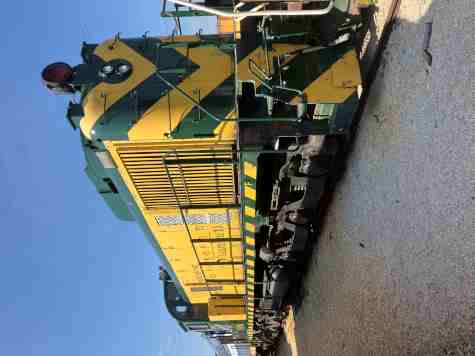
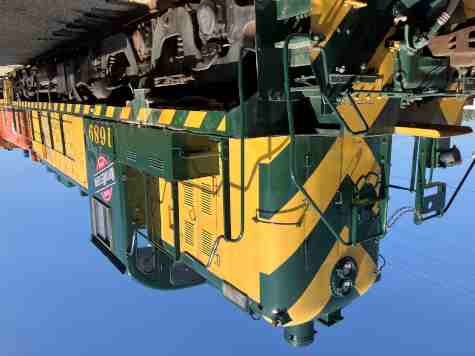
Chicago and North Western RSD-5 1689, built by American Locomotive Company in 1954 with six powered axles instead of only four for improved tractive effort. This is one of only two RSD-5s preserved.
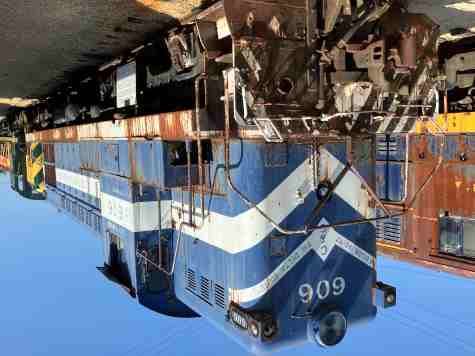
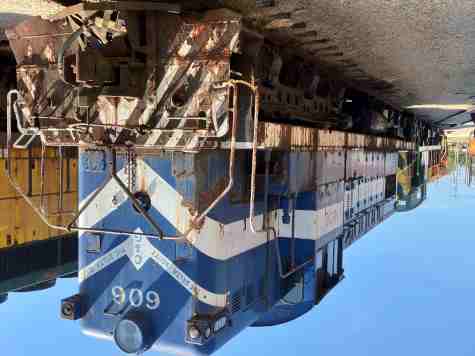
Columbus and Greenville AS416 606, built by Baldwin Locomotive Works in 1950. I is one of only two AS416s in preservation.
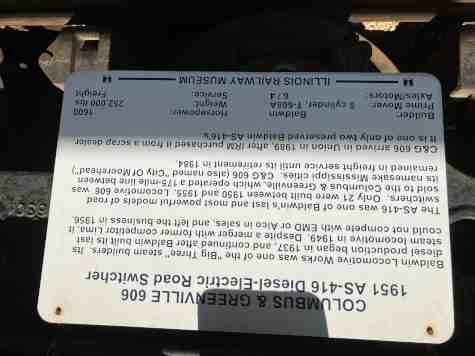
Columbus and Greenville 606 story board.
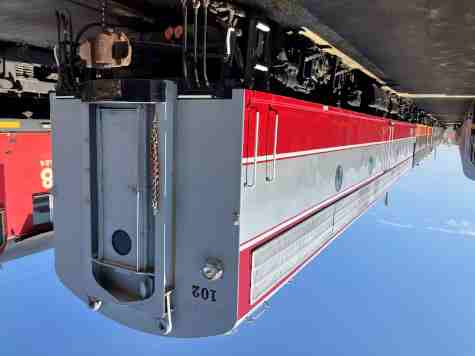
San Luis and Rio Grande E9B 102 (leased from IRM) 2015-2016, exx. Wisconsin and Southern 102 1990-2008, exxx. Illinois Railway Museum 1990-2008, exxxx. Michigan Northern 671 1983-1990, exxxxx. Amtrak 671 1977-1983, exxxxxx. Amtrak steam generator car 1921 1975-1977, exxxxxxx. Amtrak 467 1972-1975, nee Union Pacific 967B, built by Electro Motive Division in 1955.
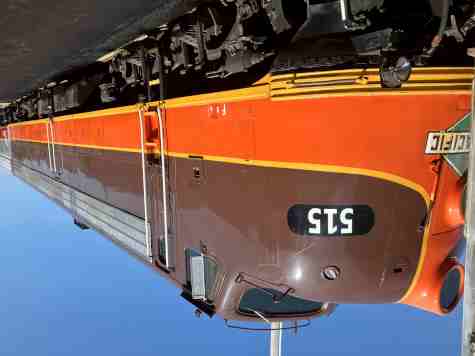
Iowa Pacific E8A 515, ex. Arizona Eastern 6070 2010-2012, exx. National Railway Equipment in Silvis, Illinois c1993-2010, exxx. Metra 515 1985-c1993, exxxx. Regional Transportation Authority 515 1980-1985, exxxxx. Chicago and North Western 515 1974-1980, nee Chicago and North Western 5029B, built by Electro-Motive Division in 1953. It was acquired in 2021.
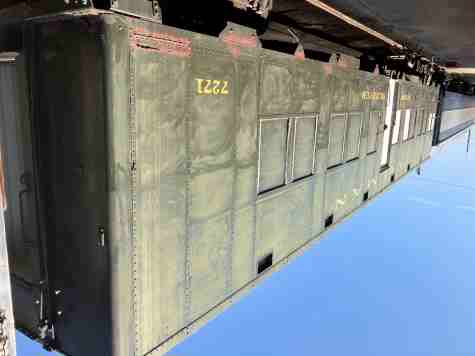
Pullman Army troop sleeper 7271, built by Pullman/Pullman-Standard in 1943, designed to carry soldiers during World War II. The U.S. Office of Defense Transportation ordered a total of 2,400 cars of this design as quick, basic transportation for the country's armed forces. The car was fitted with seating and three-high bunks, with the lower two bunks folding up to create seats during the day, to provide long-distance accommodation for troops. It also carried its own Pullman porter and would have travelled in a train with a kitchen car to provide meals en route. After retirement, this car was taken off its trucks (which were fortunately left nearby) and used for dispensing shoes to workers at the Allis-Chalmers plant in Milwaukee, until acquired by IRM.
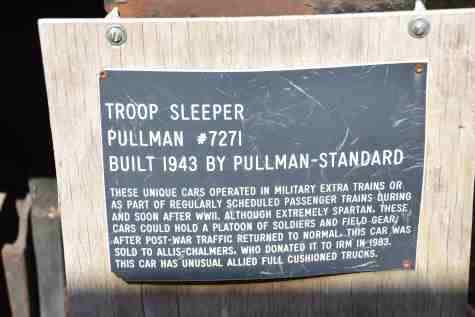
Pullman Army 7271 story board.
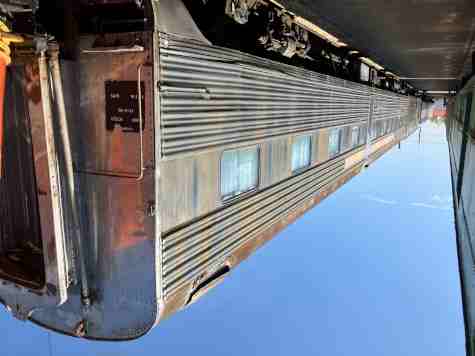
Atlantic Coast Line dining car "Birmingham", ex. privately owned in Lansing, Illinois (ice cream parlour) 1986-2004, exx. Amtrak 8081 "Birmingham" 1971-1986, exxx. Seaboard Coast Line "Birmingham" 1967-1971, nee Atlantic Coast Line “Birmingham”, built by Pullman/Pullman-Standard in 1954.
The Atlantic Coast Line was a major north-south transportation link in the southeastern United States. It was formed in the late 1890s by merging several predecessor railroads and by the early 1900s, it owned a network of lines stretching from Richmond, Virginia south to Tampa, Florida. The ACL also controlled a handful of other railroads, including the Louisville & Nashville. It was well known for operating passenger trains in conjunction with other railroads that joined Florida with cities in the northeast and Midwest, including Chicago. The ACL also carried large quantities of produce and other agricultural products from Florida and the Carolinas.
After World War II, the ACL used cars such as "Birmingham" on famous streamliners like the City of Miami, which ran from Chicago Miami; the Champion, which ran from New York City to Tampa and Miami; and the Seminole, from Chicago to Jacksonville. In 1967 the ACL merged with the Seaboard Air Line to form the Seaboard Coast Line Railroad. The SCL would eventually become part of what is today CSX Transportation.
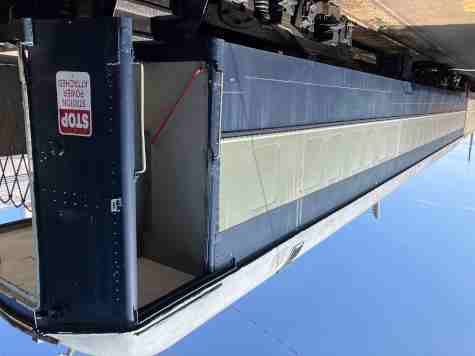
Artrain exhibit car 1 c1971-2003, ex. Baltimore & Ohio 3703, nee Baltimore & Ohio 5245, built by Pullman/Pullman-Standard in 1924. Michigan Council for the Arts funded the creation of the Michigan Artrain, later simply Artrain, a roving art exhibition housed in three converted passenger cars. This is one of these three cars. Retired by Artrain in the 1990s, it was acquired by IRM in 2002.
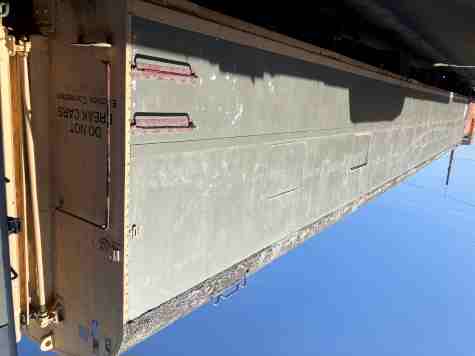
Norfolk and Western baggage car 1459, ex. Monticello and Sangamon Valley in Monticello, Illinois 1969-1994, exx. Norfolk and Western 1459 1952-1969, exxx. Norfolk and Western storage mail car 620 1947-1952, exxxx. Norfolk and Western coach 753 1941-1947, nee Pullman Company parlour car "Barneston", built by Pullman/Pullman-Standard in 1910. In 1941, Pullman sold the car to the Pennsylvania Railroad.
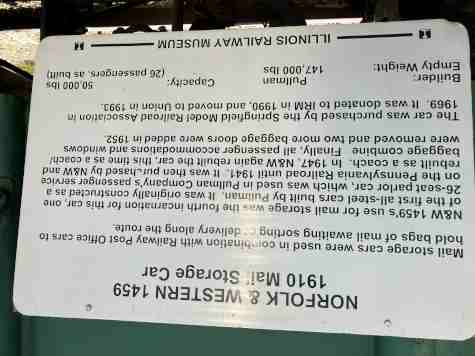
Norfolk and Western 1459 story board.
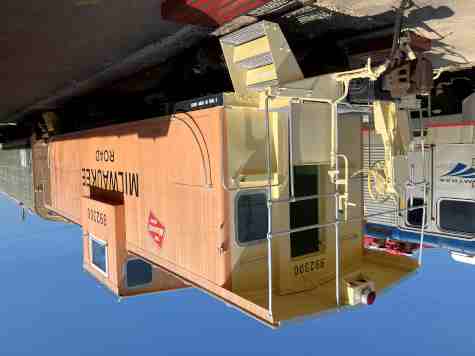
Milwaukee Road caboose 992300, built by Pacific Car and Foundry in 1975.
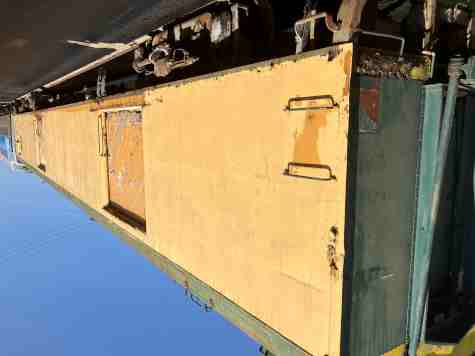
Chicago and North Western Railway Post Office/express/baggage car 8202, built by Pullman/Pullman-Standard in 1950 for the Flambeau 400, a C&NW train that ran between Chicago and Ashland, in far northern Wisconsin, via Green Bay.
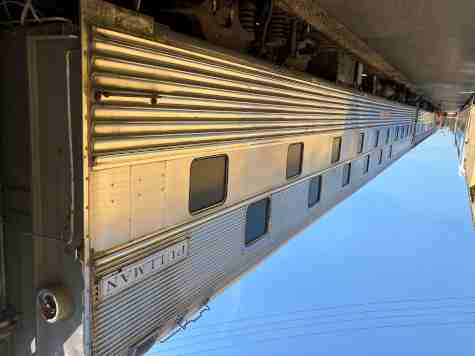
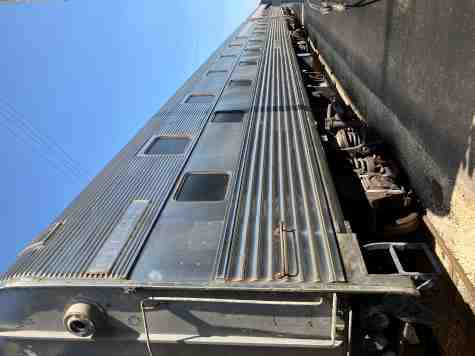
Northern Pacific slumbercoach 325 "Loch Sloy", built by Budd Company in 1959, whose designed consisted of a number of tiny single-occupant rooms, each with a seat that could convert into a bunk for sleeping. To increase capacity, rooms were staggered between upper and lower bunks so that bunks were directly above or beneath the bunk of the adjacent room. "Loch Sloy" is one of only 18 Slumbercoaches built by Budd Company.
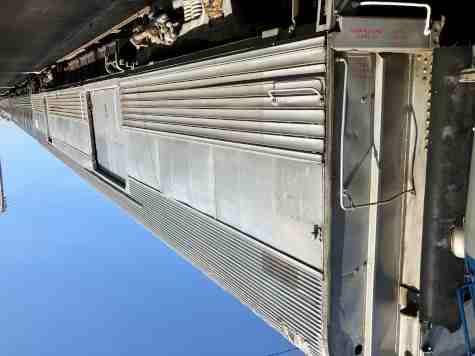
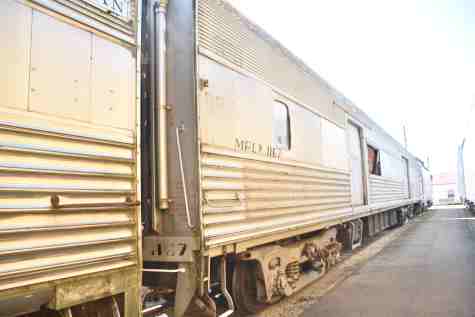
Western Pacific baggage car 801, ex. privately owned 1992-2015, exx. Ringling Brothers Circus 69 1990-1992, exxx. Ringling Brothers Circus 73 1988-1990, exxxx. Ringling Brothers Circus 35 1985-1988, exxxxx. Ringling Brothers Circus 38 1980-1983, exxxxxx. Ringling Brothers circus MC-231 1979-1980, exxxxxxx. Auto-Train 1135 1970s-1979, exxxxxxxx. Auto-Train 135 1971-1970, nee Western Pacific 801 "Silver Beaver", built by Budd Company in 1968.
Baggage car 801 is the only Western Pacific car at IRM. The WP was an east-west railroad stretching from San Francisco, California to Salt Lake City, Utah and financier George Jay Gould spearheaded construction of the railroad in the first decade of the 20th century as part of his effort to create a new transcontinental railroad. At the time, the Southern Pacific dominated rail transportation in northern California, but the WP constructed a line northeast from San Francisco through rugged Feather River Canyon and into northern Nevada. In 1931, the railroad also built a link to the Great Northern Railway in northern California, creating a route from the San Francisco Bay area to Portland, Oregon and Seattle, Washington.
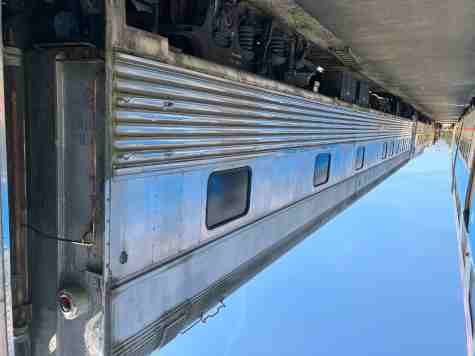
Chicago Burlington and Quincy 10-6 sleeping car 493 "Silver Ridge", built by Budd Company in 1956 and designed for long-distance accommodation featuring private rooms that can be converted from daytime seating into night-time bunks. It has a mix of 10 roomettes and six double bedrooms.
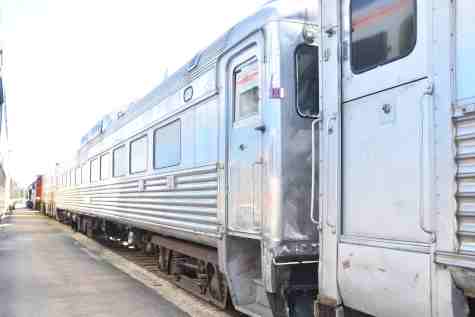
Chicago and North Western RDC-1 9933, ex. Massachussetts Bay Transportation Authority 10, exx. Baltimore and Ohio 1971, exxx. Chesapeake and Ohio 9061, nee Chicago and North Western 9933, built by the Budd Company in 1956. The Rail Diesel Car was designed in the late 1940s and intended as a way for railroads to provide inexpensive passenger service on lightly-travelled branch lines. Nearly 400 RDCs were built in all. This car was purchased by the C&NW for use in Chicago commuter service but before too long was deemed unsuitable and resold.
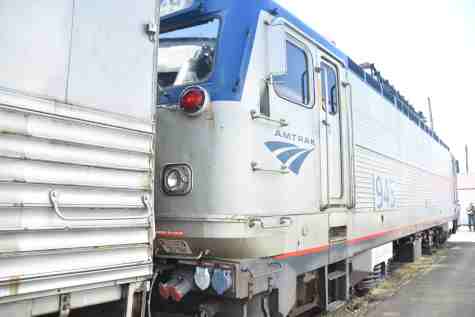
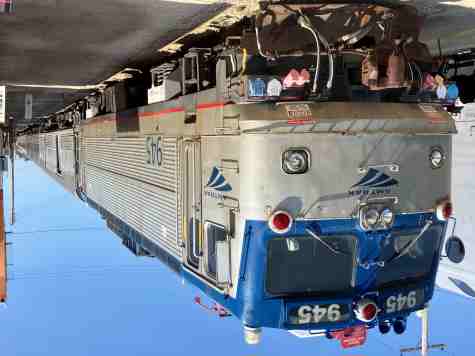
Amtrak AEM-7 945, built by Electro-Motive Division in 1972. It is the fastest locomotive at the museum, designed for a maximum speed of 125 mph, which it would reach in service on the Northeast Corridor between Boston, New York, Philadelphia and Washington, DC. It was retired in 2018 and acquired by IRM, where it is preserved as a static display.
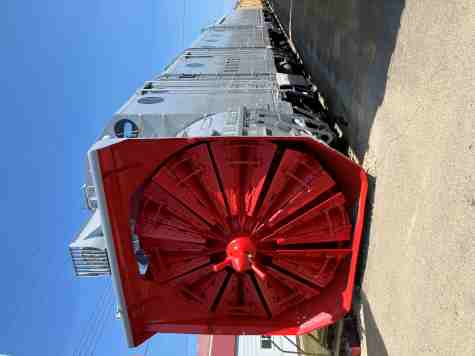
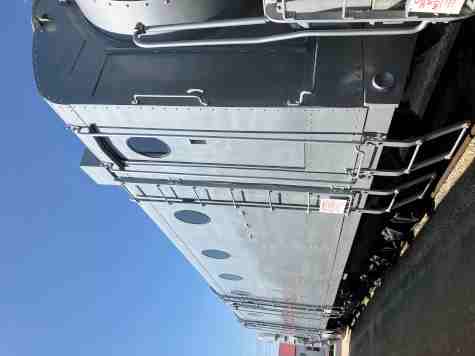
Union Pacific rotary snow plough 900075, built by Lima Locomotive Works in 1949. It is effectively a giant snow blower, with its steam engine – housed entirely within the streamlined car body for easier maintenance in winter conditions – powering a large blade at the front that throws snow to the side of the tracks. It is not self-propelled and was designed to be pushed by a locomotive. Diesel-powered rotary snow ploughs are still employed by railroads but the last steam-powered one was retired in the 1970s.
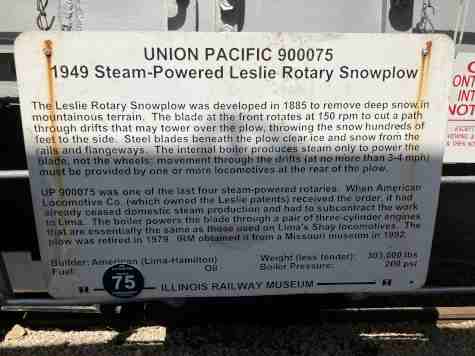
Union Pacific 900075 story board.
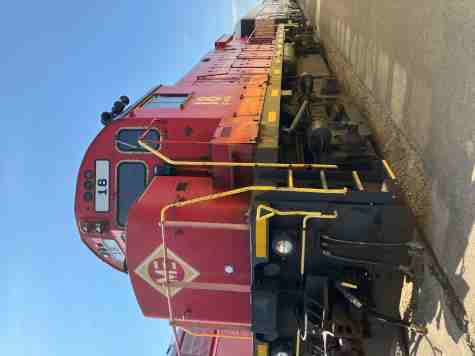
Morristown and Erie C424 18, nee Toledo Peoria and Western 18, built by American Locomotive Company in 1968. It is the only Century-series locomotive preserved at IRM.
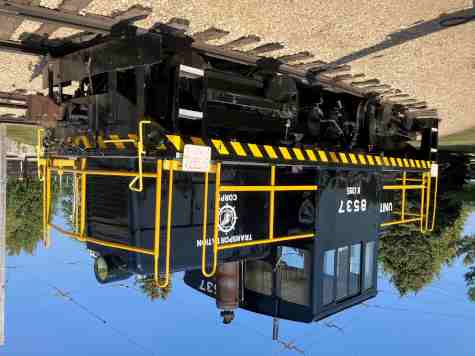
US Army 45 ton switcher 8537, built by General Electric in 1944 and designed to move freight cars around Army bases. It has two diesel engines, or prime movers, one at each end of the locomotive. Between February 1944 and May 1945, 8537 saw use in Iran helping to transport Lend-Lease aid to Russia, which likely means it is the most widely-travelled locomotive preserved at IRM. Its last assignment was the Joliet Army Ammunition Depot.
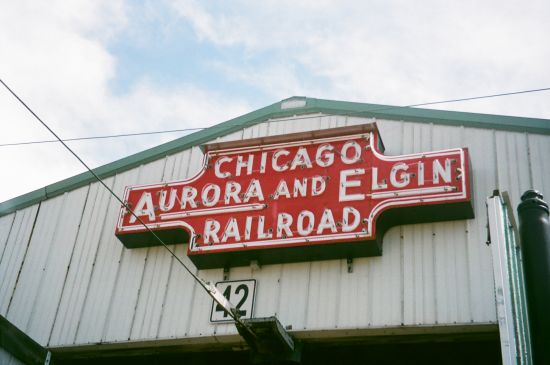
The Chicago Aurora and Elgin Railroad neon sign from the station in Wheaton, Illinois. Originally a two-sided sign, it was diagonally cantilevered from the corner of the station located at Main and Railroad (now Liberty) Streets. One side was saved when the station was demolished and held in the collection of IRM member Julie Johnson. Johnson donated the sign to the museum in April 2004 and the museum coordinated with MK Signs of Chicago to create a single- sided CA&E sign. Afer MK completed the sign with a new cabinet, neon tubing and wiring, IRM volunteers installed it atop Barn 4 in November 2005. The sign is regularly illuminated during evening events at the museum.
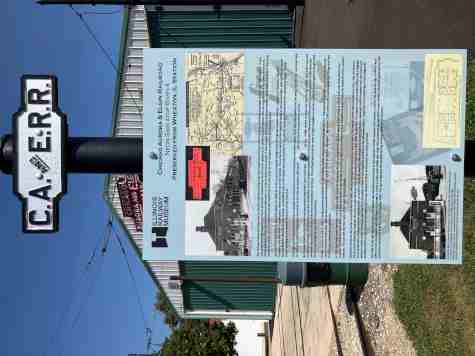
The Chicago, Aurora and Elgin story board with the CA&E initials above.
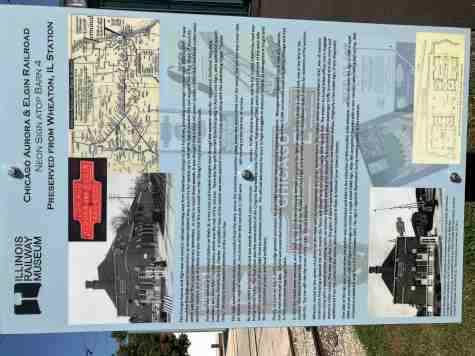
The Chicago, Aurora and Elgin story board.
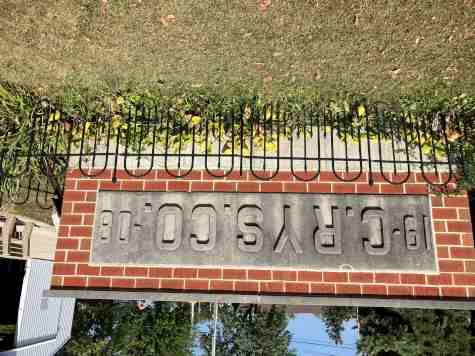
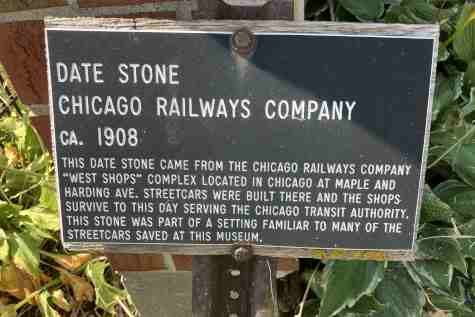
Date stone from the Chicago Railways Company circa 1908 from the "West Chicago Shops Complex" located at Maple and Harding Avenue. Streetcars were built there and the shops survive to this day serving the Chicago Transit Authority. The stone was part of a setting familiar to many of the streetcars saved at the museum.
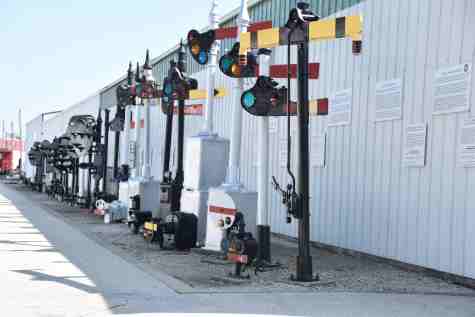
The museum has a sizeable collection of a variety of railroad signals. With the limited time and other barns to explore which were opened especially for the Union Pacific Historical Society convention visit, neither of us had the opportunity to photograph the signals in detail. We would rectify in October during our visit when time was not a factor.
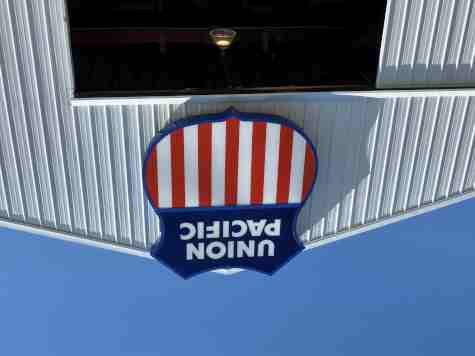
Union Pacific sign circa 1970, removed from the headquarters building at 1416 Dodge Street in Omaha, Nebraska in 2004..
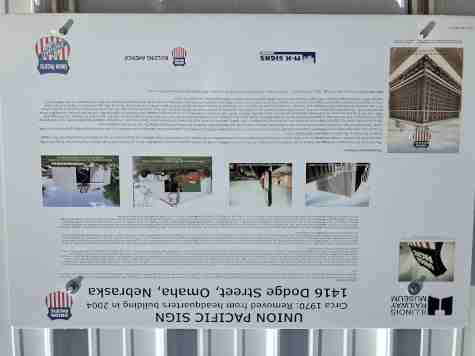
Union Pacific sign story board.
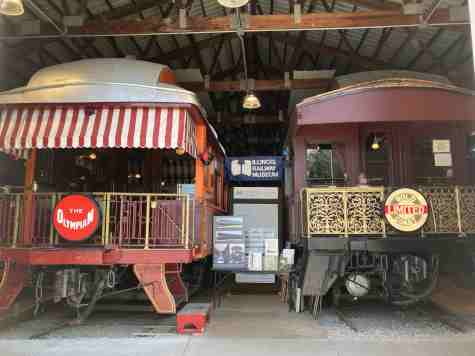
These two ornate rear platform observation cars greet all visitors to Barn 3.
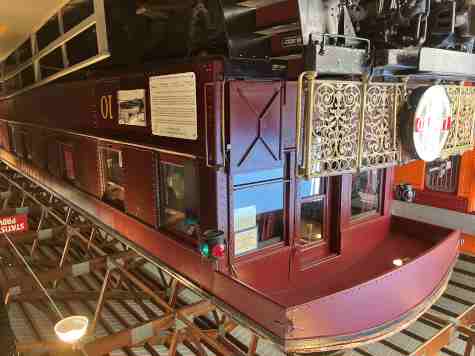
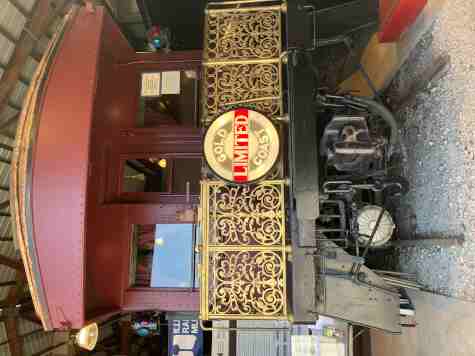
Nevada Northern private car 101 "Ely", ex. North American Car 10 "NOA" 1957-1962, exx. Gulf Mobile and Ohio 10 1947-1957, exxx. Nevada Northern 101 "Ely", exxxx. Nevada Northern 100 1906-1916, nee Savannah Florida and Western 100, built by Pullman/Pullman-Standard in 1898. A particularly opulent example of a railroad private car, "Ely" was used by the president of the railroad for private luxury transportation. It could also be employed as a rolling office or a way to "wine and dine” railroad customers. Its interior features extensive hand-carved wood, opulent furniture and plush furniture while its open rear platform is typical of private cars and permitted a 180-degree view from the rear of the train. In 1927, it was rebuilt with a steel underframe, steel exterior sheathing and electric lights.
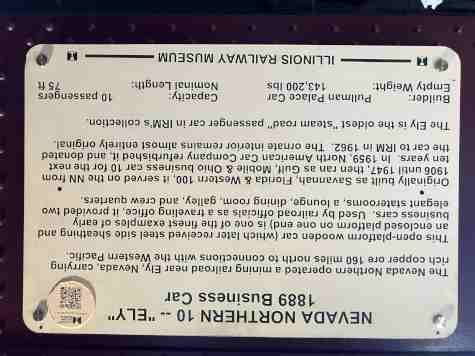
Nevada Northern 101 story board.
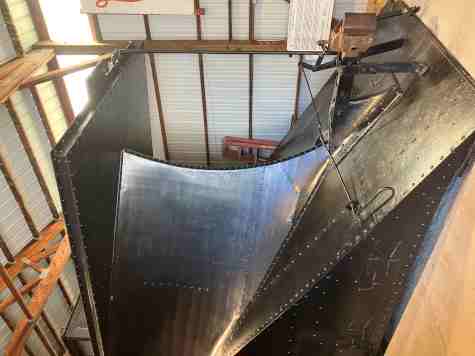
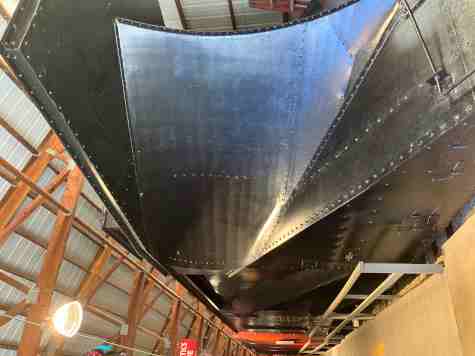
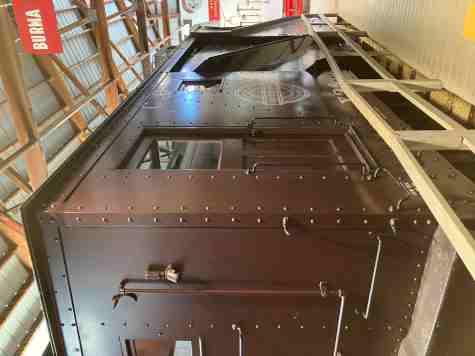
Chicago Great Western snow plough X38, built by Russell in 1936. It is not powered, but rather was designed to be pushed by a locomotive and the shape allows it to push snow off to either side of the tracks while hinged "wing ploughs" can fold out from the sides to push the snow further away. The plough operators rode in a raised cab on the roof.
Note that the placement of this plough in the barn and the proximity of the adjacent equipment made photography of this item very difficult.
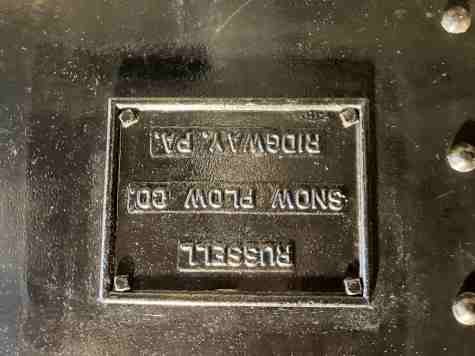
Chicago Great Western X38 builder's plate. This is the only piece of equipment at the museum constructed by Russell Car & Snow Plow Company. Russell's founding dated to 1893 and the company had a plant located in Ridgway, Pennsylvania, which specialized in building snow ploughs and over time, they dominated the market for this type of plough, to the point where "Russell plough" became synonymous with "wedge plough".” The company built hundreds of single-track wedge ploughs, double-track ploughs designed to push snow only to one side, and even double-ended ploughs. It also built flangers, spreaders and had a significant side business constructing electric railway snow sweepers, snow ploughs and work cars. The company went out of business in the 1950s.
Chicago Great Western emblem.
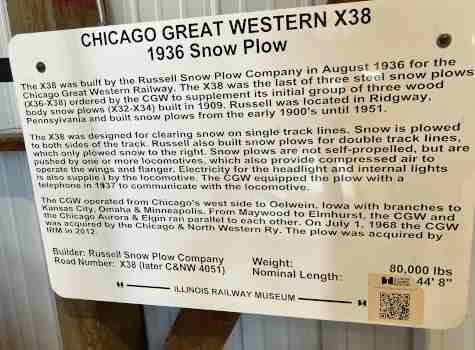
Chicago Great Western Russell X38 story board.
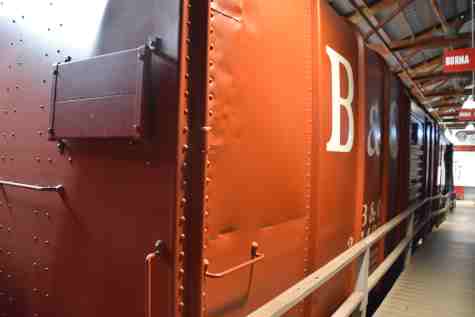
Baltimore and Ohio "wagon-top" boxcar 374065, built by railroad in 1925 to a design exclusive to the B&O with an all-steel round-topped body. It was built as a modernization of an older wooden boxcar and was used for general freight service.
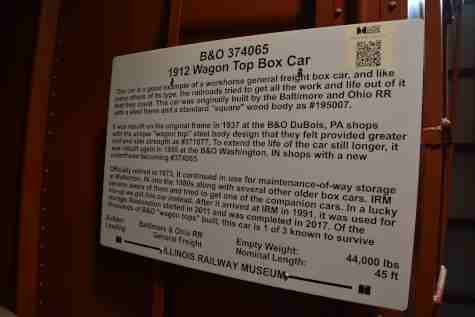
Baltimore and Ohio 374065 story board.
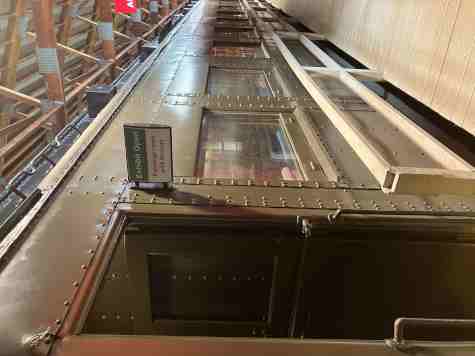
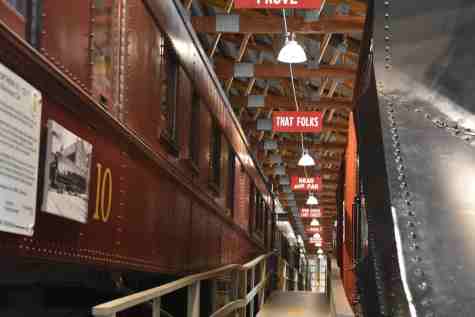
This barn featured passenger cars through which one could walk. This is the entrance to Santa Fe lounge/crew dormitory car 1534, built by Pullman Company in 1914.
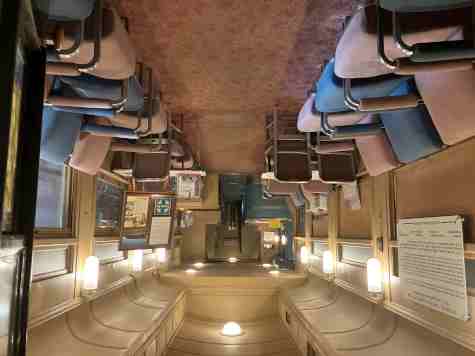
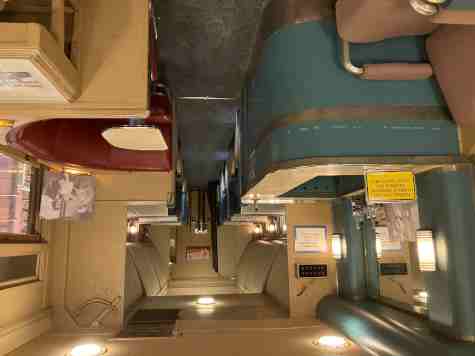
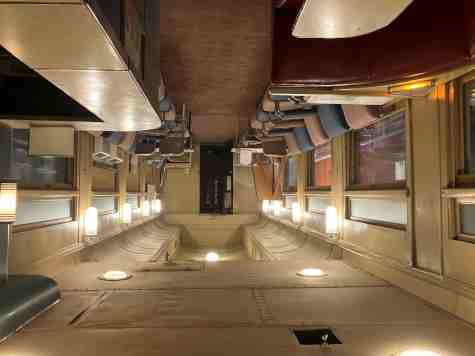
The lounge area.
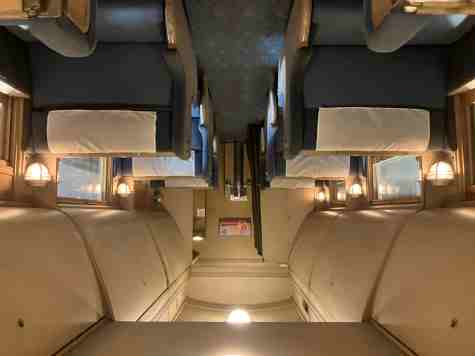
The sleeping area.
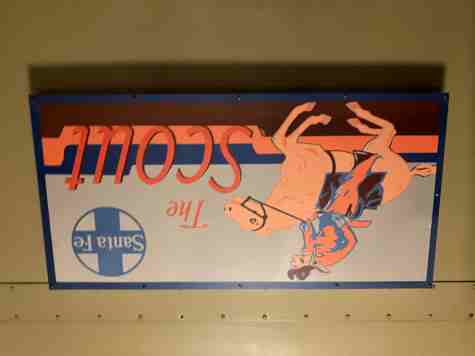
A placard that was placed on the side of the Scout passenger cars. The Scout was Santa Fe's primary heavyweight budget passenger train that covered its route between Chicago and Los Angeles. It carried coach chair cars (for reclining sleeping) and budget Pullman tourist cars with 16 curtained sections. The Scout began service in 1916, the train was suspended during the depression from 1931 until 1936, and the last run was in 1948 when the El Capitan became daily and was able to take over the budget coach business.
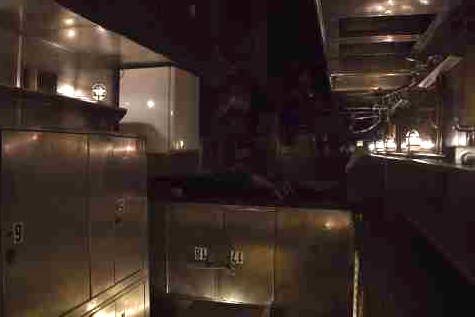
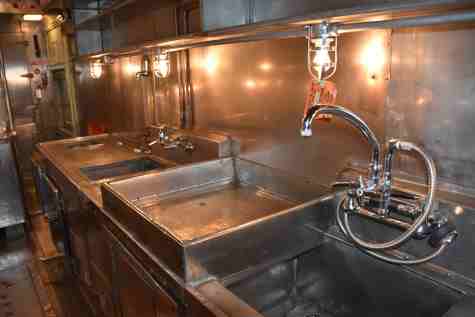
The kitchen area.
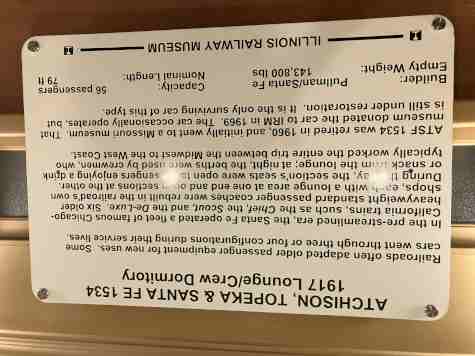
Santa Fe 1534 story board.
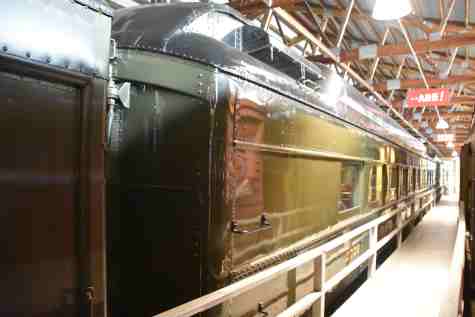
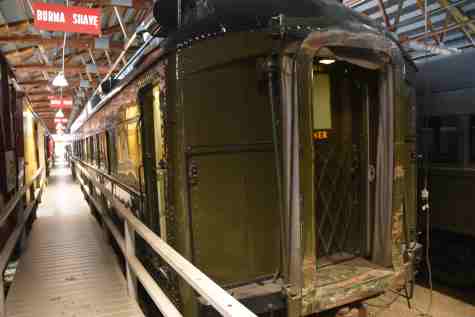
Louisville & Nashville dining car 2726 "Galt House", built by American Car and Foundry in 1930 and designed with a built-in kitchen where full meals were cooked and prepared while moving. The L&N named its dining cars for well-known restaurants and eateries along its route. The Galt House was a famous hotel and restaurant in downtown Louisville dating to before the Civil War that had burned down in 1921. Some fifty years later, in the 1970s, a new hotel was built nearby that assumed the storied name Galt House and that hotel is still in business.
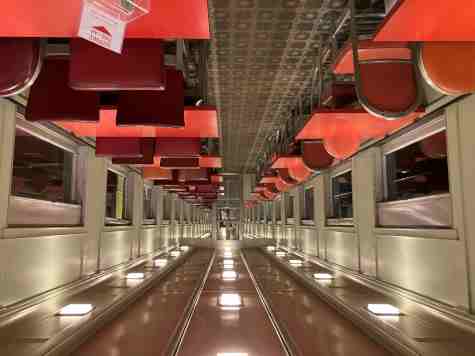
The interior of "Galt House".
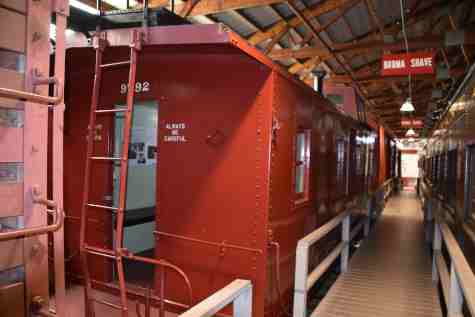
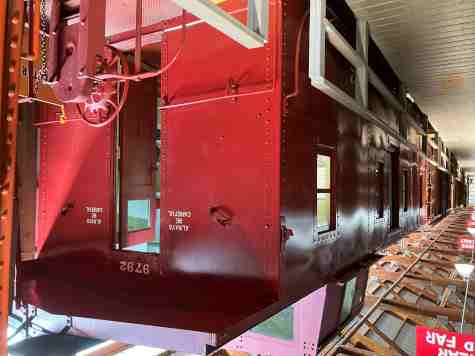
Illinois Central caboose 9792, ex. privately owned in Gilman, Illinois 1983-1985, exx. Illinois Central Gulf 9792 1972-1983, nee Illinois Central 9792, built by the railroad in 1940, designed for general freight service over the IC system. It also has an unusual side door located in the middle of each side, a feature unique to the IC's homebuilt cabooses.
Between 1956 and 1960, the Atomic Energy Commission leased 9792 and another IC caboose. The Illinois Central Gulf retired 9792 from regular mainline service in 1973 and made it available to a group of the railroad's employees who used it for the next ten years as part of a Santa Claus train in central Illinois. It was sold to one of these ICG employees in 1983 and IRM purchased it two years later.
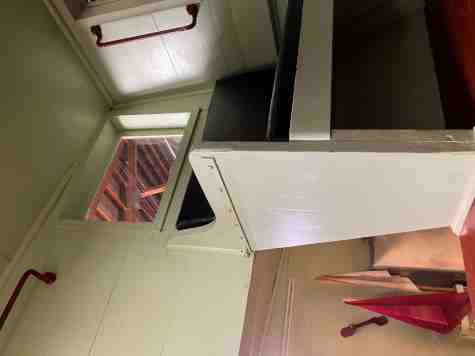
Looking up into the cupola.
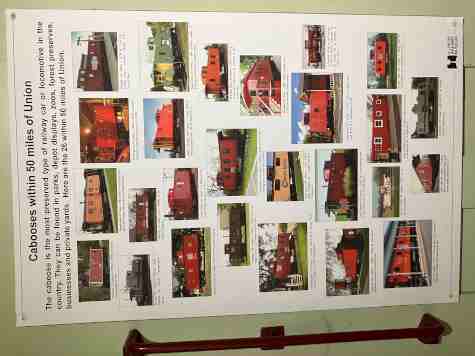
Cabooses within 50 miles of Union display board.
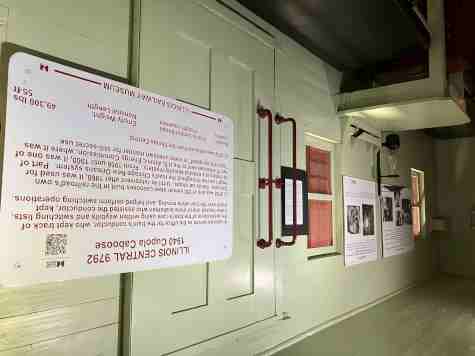
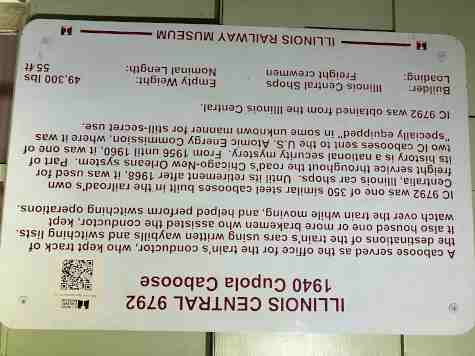
Illinois Central 9792 story board.
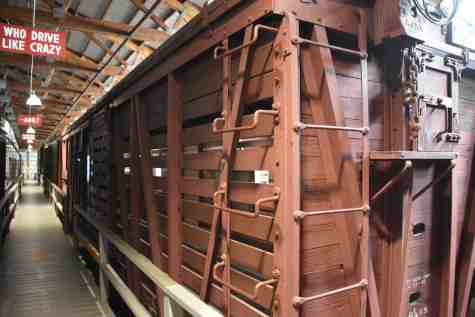
Santa Fe stock car 60394, built by Pennsylvania Car Company in 1929. It is one of very few standard-gauge stock cars still in existence and was the very last active stock car on the Santa Fe roster. In the early 20th century, thousands of cars like this one were used to bring livestock to the Chicago Stockyards and other meatpacking facilities across the country for slaughtering.
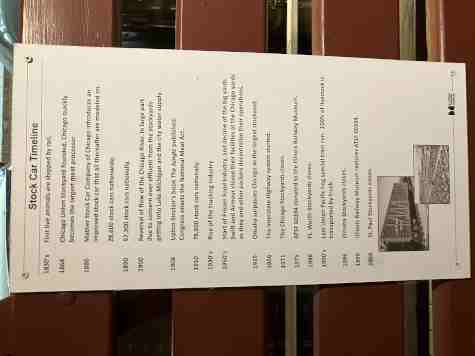
Stock Car Timeline story board.
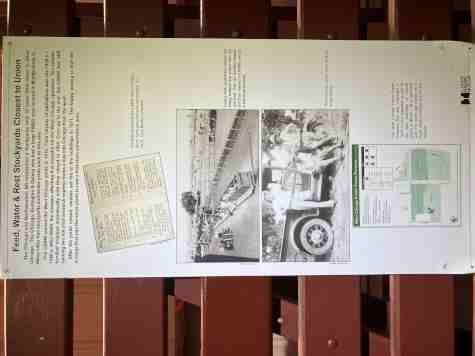
Feed Water and Rest Stockyards Closet to Union story board.
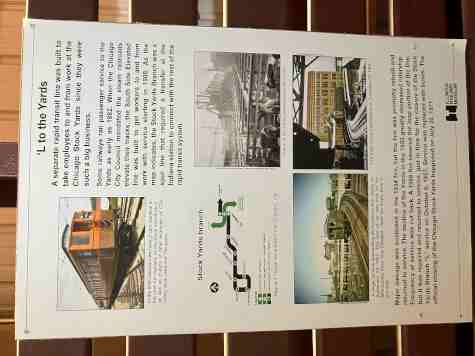
"L" to the Yards story board.
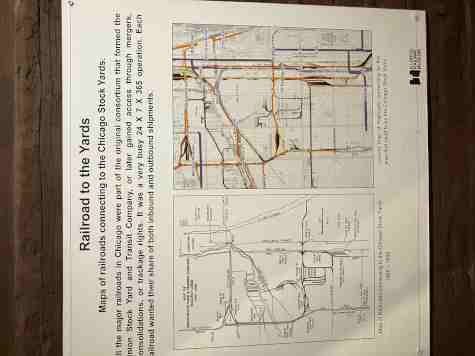
Railroad To the Yards, a map of railroads connecting to the Chicago stock yards.
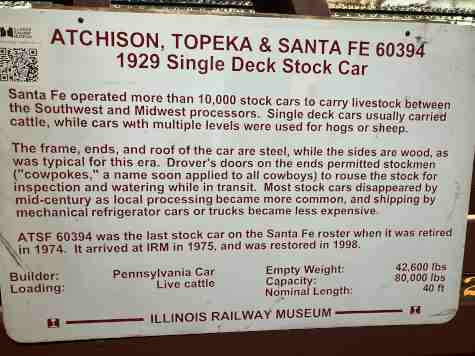
Santa Fe 60394 story board.
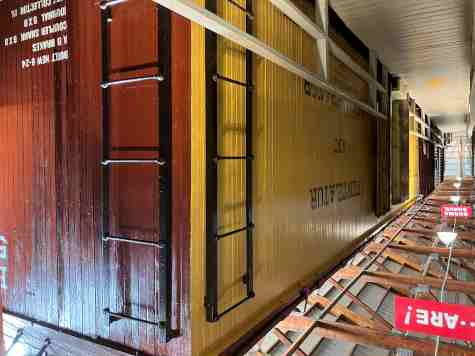
Fruit Growers Express wood refrigerator car 55407 built by the company in 1924 to transport produce and other food products that required refrigeration, mainly in the east and Midwest. It has insulated sides and "bunkers" at each end where blocks of ice were loaded to keep the car's interior and contents cool. It is the oldest complete refrigerator car preserved at IRM.
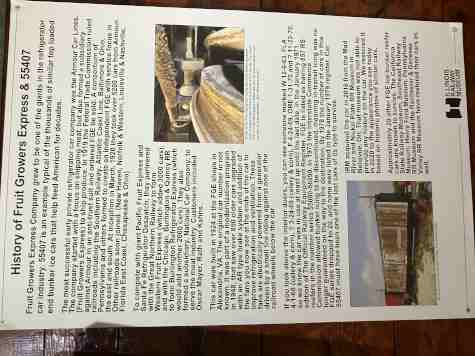
History of Fruit Growers Express 55407 story board.
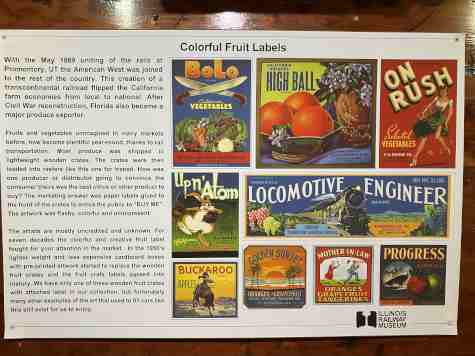
Colorful Fruit Labels story board.
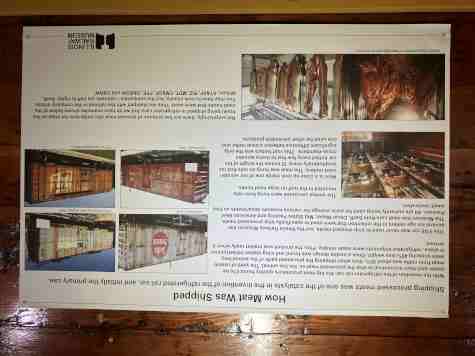
How Meat Was Shipped story board.
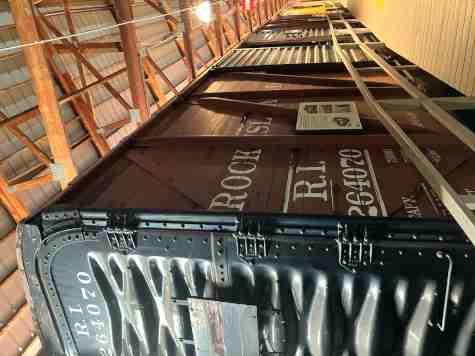
Chicago, Rock Island and Pacific automobile car 264070, built by Standard Steel in 1930 for the purpose of transporting automobiles. Similar to a standard boxcar, it is fitted with much wider side doors and full-width doors at one end for easier loading. It is a "single-sheathed" car, built with exposed structural members and only a single layer of siding.
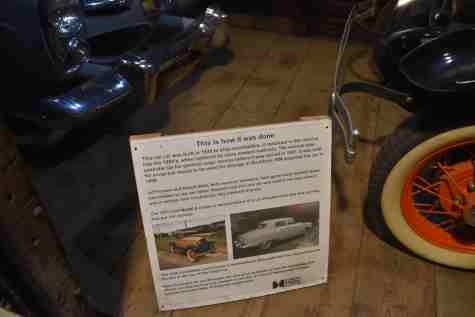
This is how it was done story board.
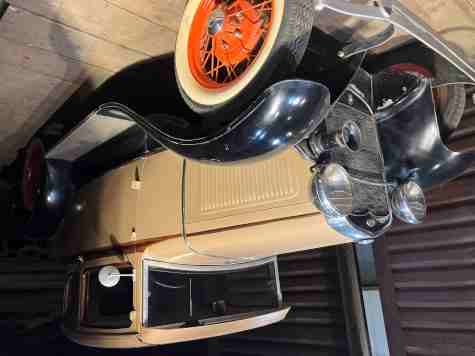
Ford Model A Coupe.
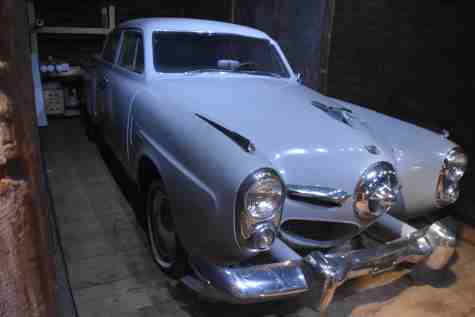
1950 Studebaker Land Cruiser.
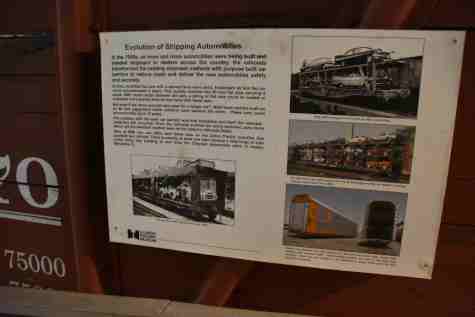
Evolution of Shipping Automobiles story board.
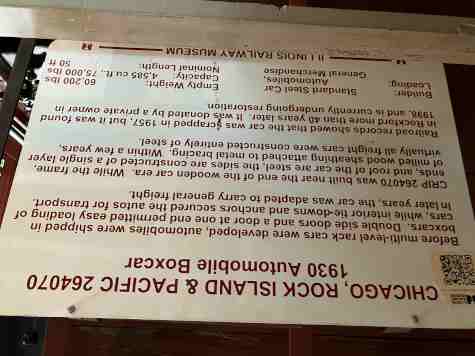
Chicago, Rock Island and Pacific 264070 story board.
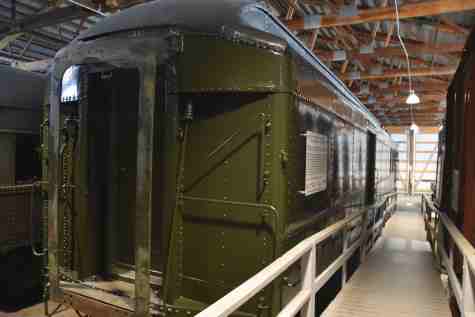
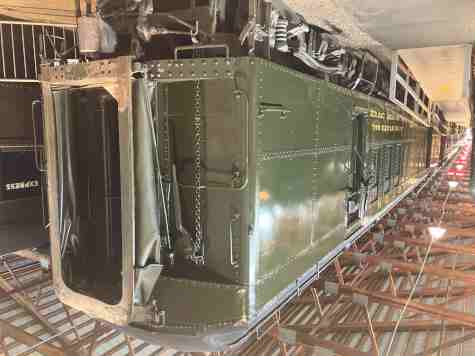
Chicago Burlington and Quincy railway post office/baggage car 1923, built by American Car & Foundry Company in 1914. Much of the car is taken up by its mail compartment, where Post Office Department workers could sort mail while the train was en route. It is fitted with equipment for dropping off and picking up bags of mail on the fly without the train having to stop.
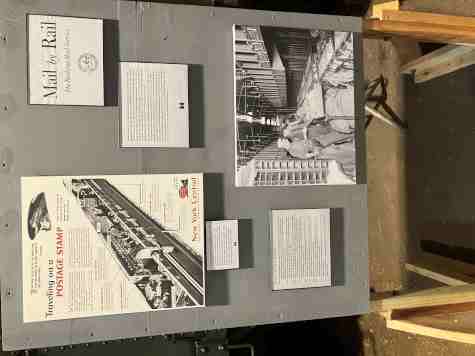
Mail by Rail history board.
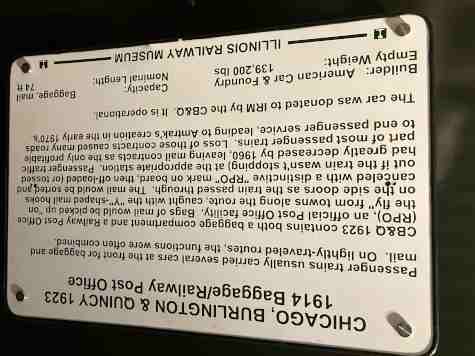
Chicago Burlington and Quincy 1923 story board.
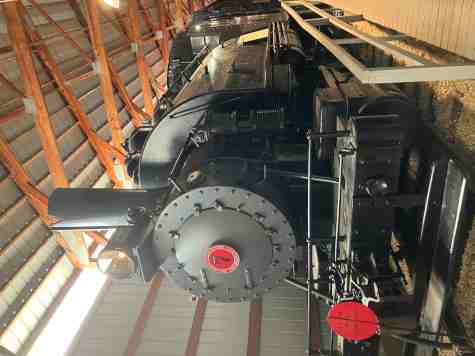
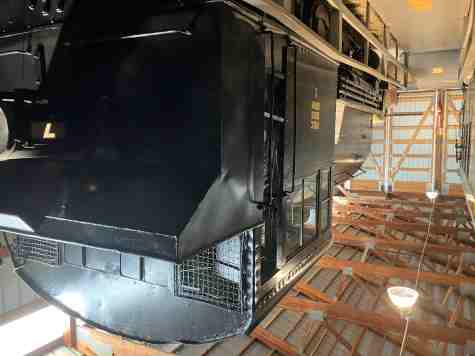
Public Service 0-6-0T 7, built by Baldwin Locomotive Works in 1926 for Waukegan Generating Company, a subsidiary of Public Service Company of Northern Illinois. It was the first steam engine acquired by the museum.
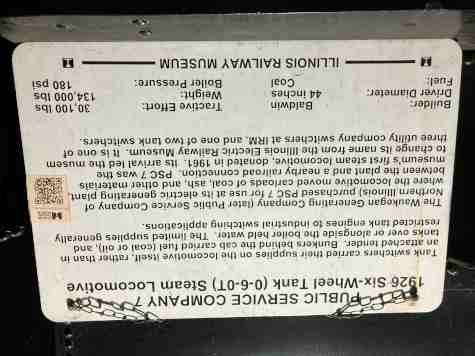
Public Service 7 story board.
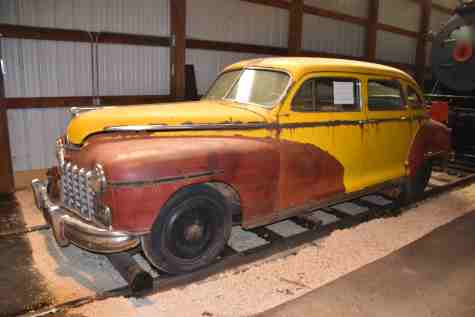
Chicago, Milwaukee, St. Paul and Pacific inspection car 30, built by Dodge Motor Company in 1947. This custom sedan was used by company officials making inspection trips of the railroad and is a precursor to the "hi rail" pick up trucks. It was used by the Milwaukee Road until retired in 1960 and stored in South Beloit roundhouse. It was subsequently purchased by the Mid-Continent Railway Museum and moved to Hillsboro, Wisconsin in 1961. Then the following year, it moved to Mid-Continent's current home in North Freedom. For the next 40 years, it was displayed on a short piece of track next to the depot. Declared surplus, it was purchased by IRM on May 26, 2014 and awaits future restoration.
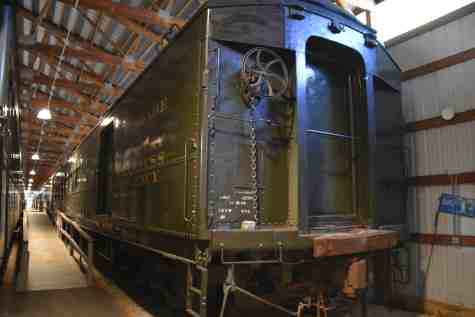
Santa Fe steel combine 2544, built by Pullman/Pullman-Standard in 1927 for use across the system in the Midwest and southwest. Cars such as this were common on more lightly-used lines where a full baggage car was unnecessary to carry express freight and passengers' luggage.
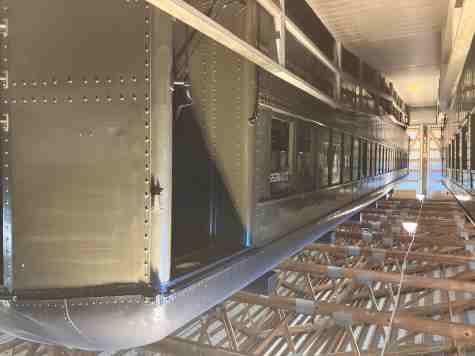
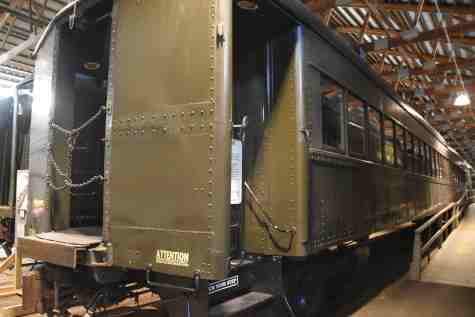
Chicago Rock Island and Pacific commuter coach 2582, built by Standard Steel Car Company in 1927. Intended to carry commuters between Chicago and the southwest suburbs, it was designed with high seating capacity and open platforms to increase the speed of boarding.
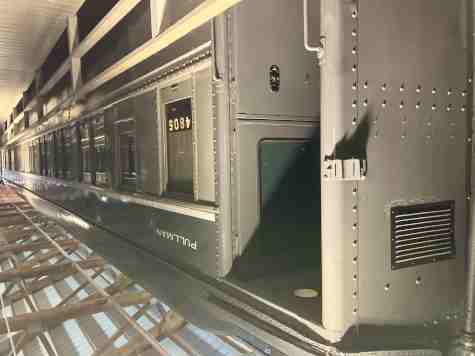
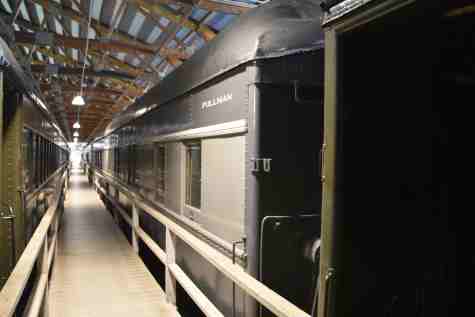
New York Central six double bedroom sleeper/buffet/lounge "Dover Strait", ex. Elgin Joliet and Eastern 8766 1960-1984, exx. Pullman "Dover Strait" 1958-1960, exxx. New York Central "Dover Strait" 1948-1958, exxxx. Pullman Dover Strait" 1934-1948, nee Pullman baggage-buffet-lounge-barbershop "Stryker", built by Pullman/Pullman-Standard in 1924. It features a large lounge area, a buffet and kitchen for serving light refreshments and six double bedrooms. Both before and after the 1931 rebuilding, the car usually served the Chicago-to-New York route north of Lake Erie via Buffalo and Detroit.
The colour scheme that the "Dover Strait" wears was made famous by the New York Central’s 20th Century Limited. When this luxurious train was inaugurated in 1902, a red carpet was laid down on the platform for boarding passengers – and the phrase "red-carpet treatment" to denote premium service was born.
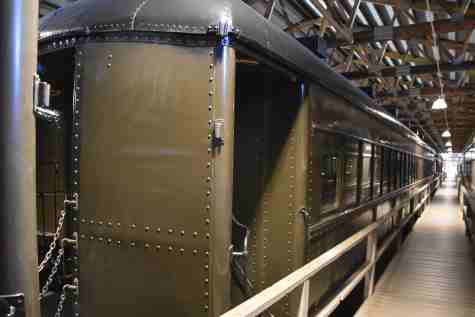
Chicago Rock Island and Pacific commuter coach 2602, built by Standard Steel Car Company in 1928. Intended to carry commuters between Chicago and the southwest suburbs, it was designed with high seating capacity and open platforms to increase the speed of boarding.
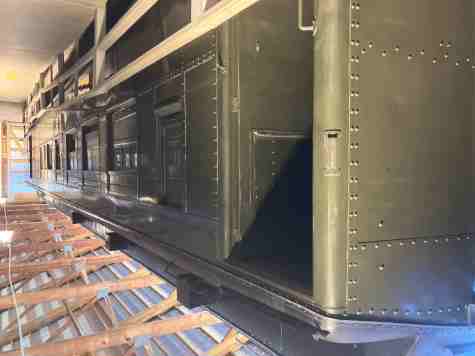
Santa Fe combine 2544, built by Pullman/Pullman-Standard in 1927. Cars such as this were common on more lightly-used lines where a full baggage car was unnecessary to carry express freight and passengers' luggage.
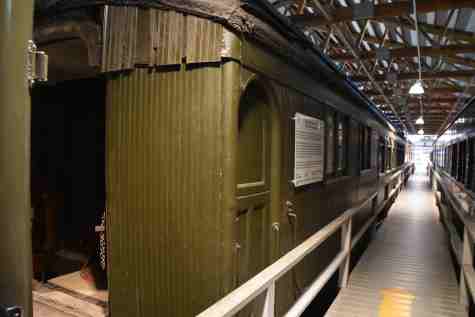
Boston and Maine wooden coach-cafe car 1094, ex. Boston & Maine M3288 1942-1997, exx. Boston & Maine 94 1930-1942, nee Boston & Maine 1094, built by Pullman in 1906. Its interior consists of three sections: a coach seating area, a small dining area with tables and a kitchen. Cars such as this saw use on intermediate-distance or lower-ridership trains where food service would be expected but a full-length dining car was not required. In later years, car 1094 was converted into a "camp car" for railroad worker accommodation but has been largely restored to its original configuration at IRM.
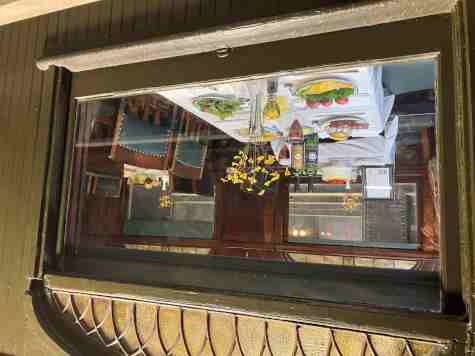
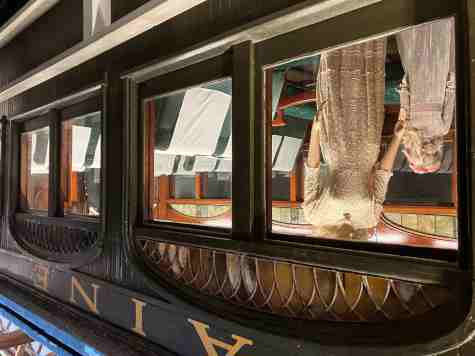
Looking into the car, which was unfortunately not open.
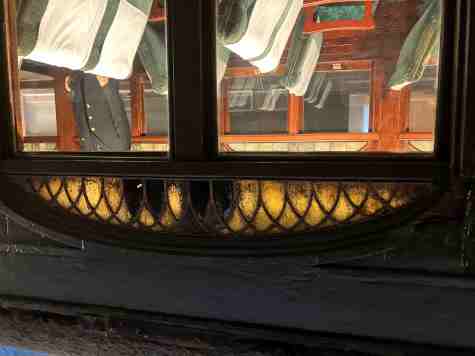
The stained glass window.
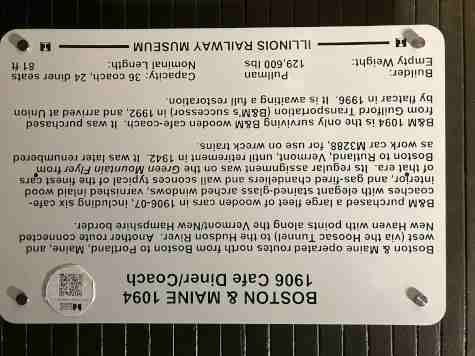
Boston and Maine 1094 story board.
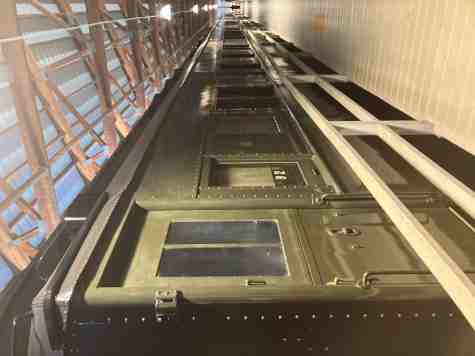
Pullman car heavyweight sleeping car "Villa Real", ex. privately owned in Raleigh, North Carolina 1995-2022, exx. Norfolk Southern 565634 1982-1995, exxx. Norfolk & Western 565634 1964-1982, exxxx. Wabash 5634 1957-1964, exxxxx. Wabash 4318 1953-1957, exxxxxx. Pullman 5141 1951-1953, exxxxxxx. Pullman "Villa Real" 1931-1951, nee Pullman "Lenover", built by Pullman/Pullman-Standard in 1911. It was designed for long-distance accommodation and features a mixture of private rooms and open seating that was convertible into bunks separated by heavy curtains for nighttime accommodation, before being rebuilt in 1957 for use by railroad work crews.
During the early 2000s, it was completely restored by owner Al Sauer, after which it was donated to IRM in 2021 and arrived at the museum in January 2022.
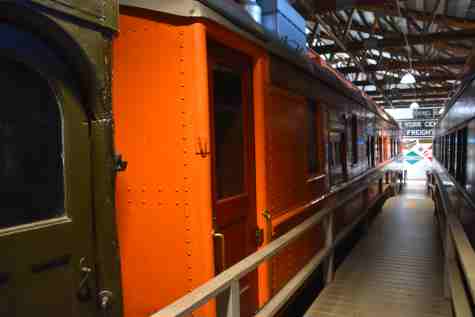
Chicago, Milwaukee Road and St. Paul parlour-observation-sleeping car "Lake City", nee Milwaukee Road "Enumclaw" built by Pullman in 1915. It features an observation compartment with 180-degree views from the back of the train, a smoking lounge, and "section" seating that converted overnight into bunks with heavy curtains separating them.
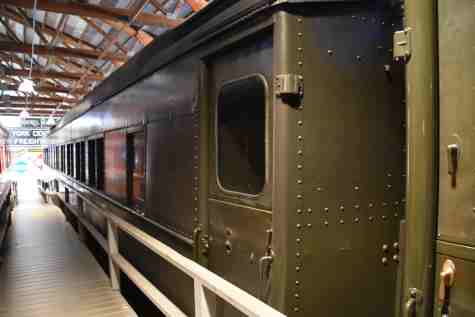
Pullman car lounge-observation-sleeping car "Inglehome", ex. Illinois Railroad Club "Chief Illini" 1959-1970, nee Pullman "Inglehome", built by the company in 1910. It features an observation compartment and open platform with 180-degree views from the back of the train and "section" seating that could be converted overnight into bunks separated by heavy curtains. It was originally used in pool service on the east coast, over the Pennsylvania Railroad and Seaboard Air Line.
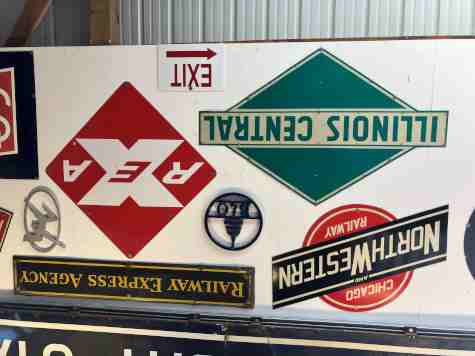
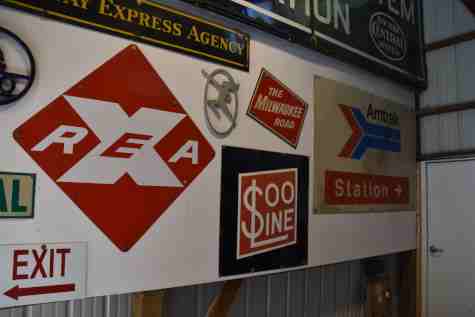
A variety of railroad signs adorns one of the walls of Car Barn 3 as we completed exploring.
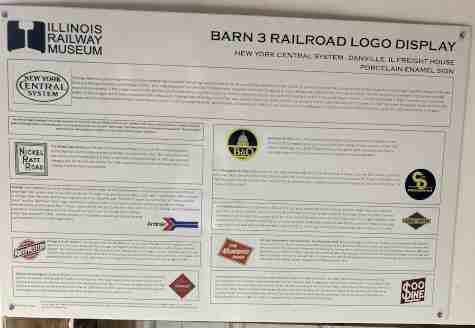
Barn 3 Railroad Logo Display story board.
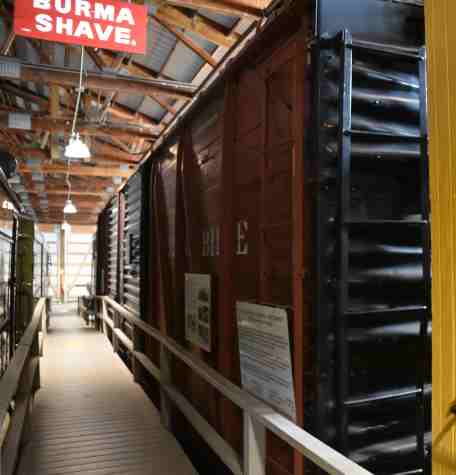
Burma-Shave signs are usually found along highways, especially in the Midwest, but the IRM has one.
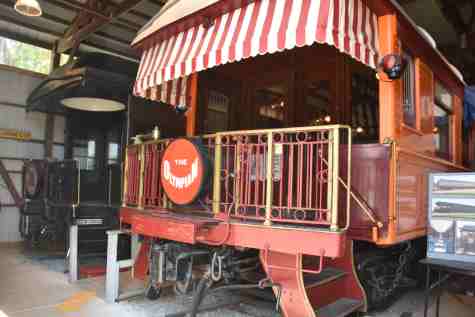
A fitting final photograph - the rear platform of Milwaukee Road "Lake City".