




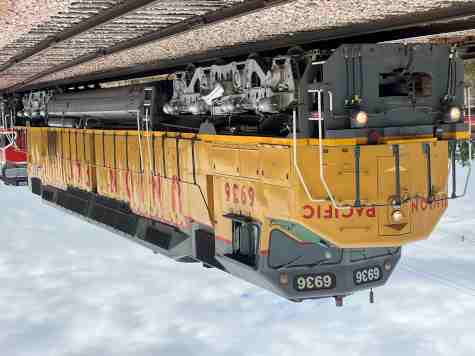
This and the following day's excursion was announced in July and cemented Elizabeth's and my decision to attend this year's Union Pacific Historical Society convention. While not specifically a convention event, it was scheduled to coincide with the gathering and was a joint venture between Iowa Interstate (IAIS) and the Railroading Heritage of Midwest America (RRHMA) and was the latter's first organization fundraiser trip, with funds benefitting local non- profit groups.
The City of Wilton traces the historic Rock Island Line westward across the Mississippi River and into the rolling farmland of eastern Iowa. Departure from Silvis was set for 9:30 AM with arrival at Wilton at 11:00 AM; this would be a one-hour layover with lunch. Arrival at the wye at South Amana was scheduled for 2:00 PM then return to Silvis at 6:00 PM.
Tickets for the streamlined, air-conditioned coaches sold out and the regular coaches were almost sold out. The consist was Union Pacific DD40AX 6936, Iowa Interstate ES44AC 513, RRHMA coach "Portland Rose", RRHMA coach "City of Salina", RRHMA coach "Katy Flyer", RRHMA coach "Sunshine Special", RRHMA baggage car 904271, IAIS coach 1646, IAIS coach 1684, IAIS coach 1731, IAIS coach 1699 and IAIS coach 1658.
Elizabeth and I partook in the buffet breakfast then checked our e-mail before boarding the bus for Silvis which departed at 8:30 AM.
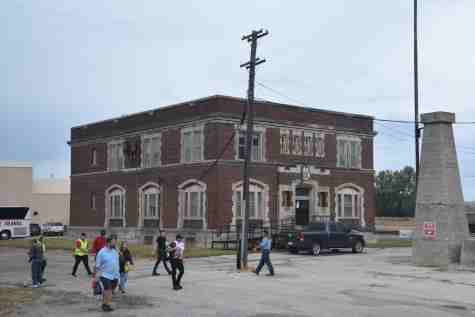
A few of the many passengers making their way to the boarding area. The brick building is National Railway Equipment's office, housed in a former Chicago, Rock Island and Pacific building; NRE used to own the former Rock Island shops here.
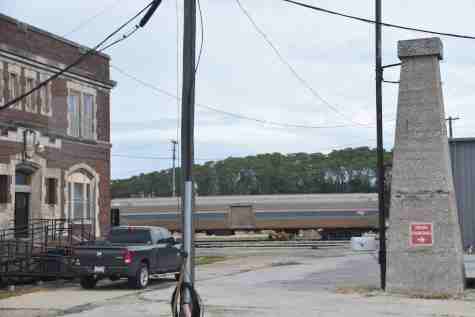
Amtrak baggage car 1738 1996, ex. Amtrak 4641 1980, exx. Amtrak 4447 1971, nee Union Pacific coach 5515, built by Budd Company in 1961, as seen from the bus.
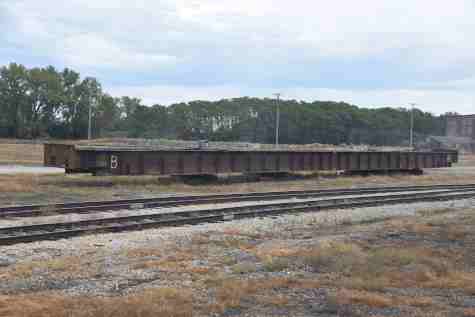
The 135 foot turntable from BNSF's Cicero yard that was donated to RRHMA in October 2024.
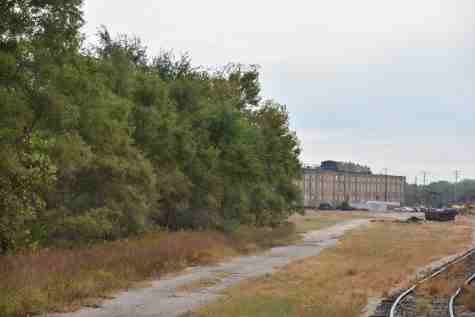
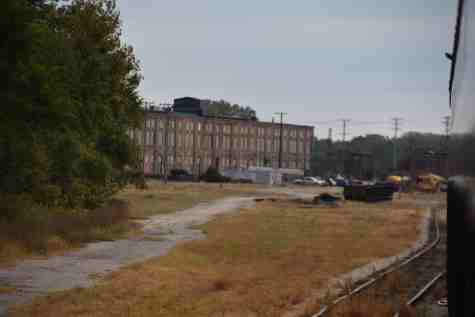
The shops disappeared as we started to exit the yard.
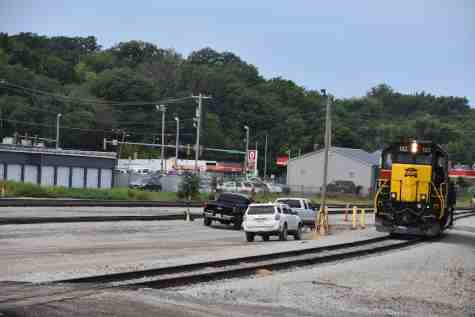
Iowa Interstate SD38-2 152, ex. Locomotive Leasing Partners 2807, exx. General American Transportation 1243, nee Reserve Mining 1243, built by Electro-Motive Division in 1978.
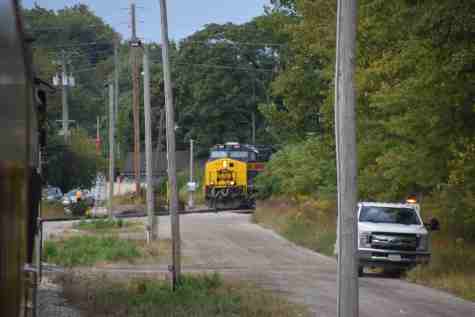
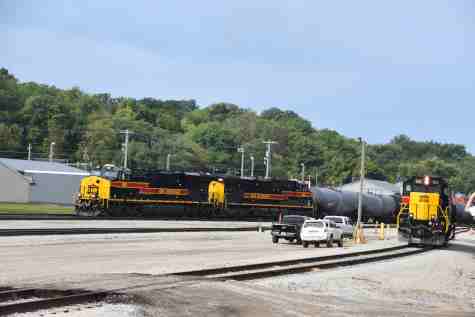
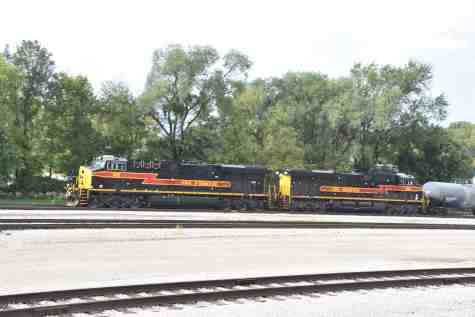
Iowa Interstate 500 leading an eastbound freight into the yard.
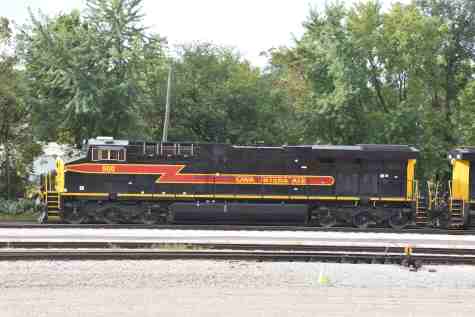
Iowa Interstate ES44AC 500, built by General Electric in 2008.
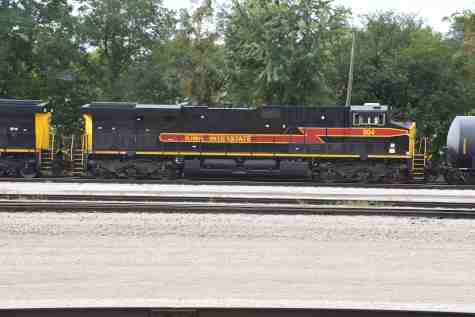
Iowa Interstate ES44AC 504, built by General Electric in 2008.
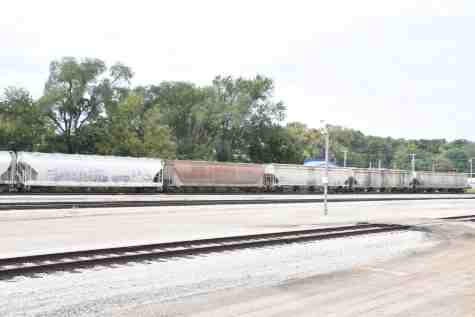
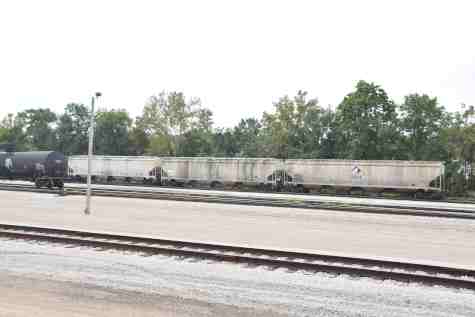
The rear of Iowa Interstate 500 East.
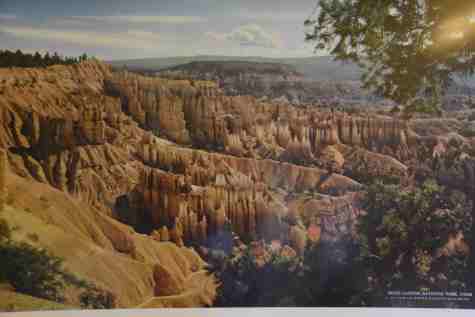
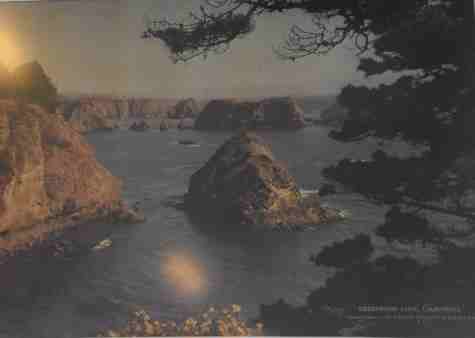
Two paintings inside "Katy Flyer".
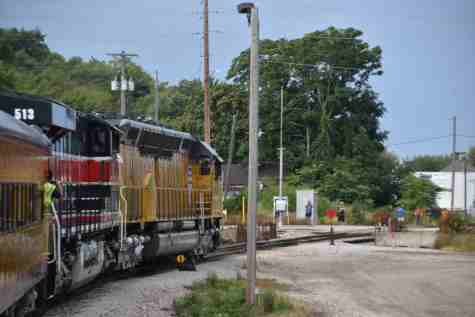
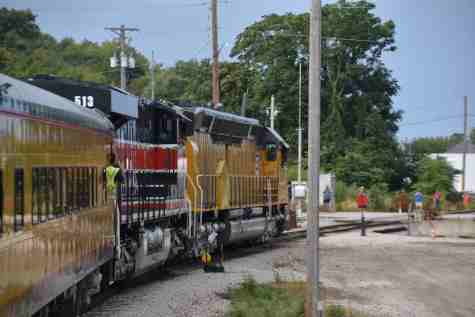
About to enter the former Rock Island, now Iowa Interstate, mainline.
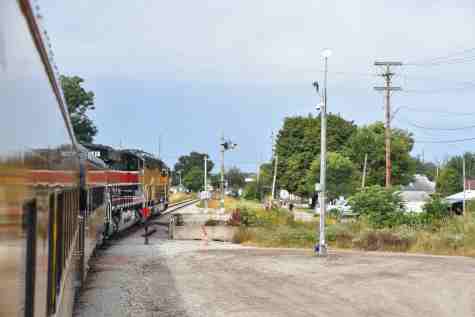
Finally on the Iowa Interstate mainline for points west.
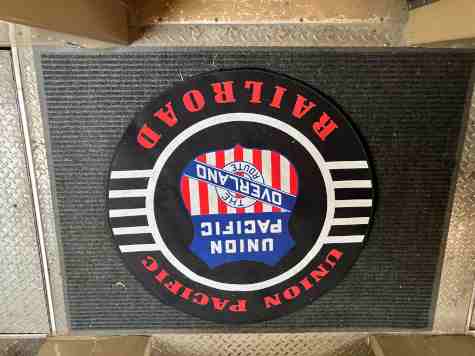
A nice touch was a Union Pacific Overland Route mat.
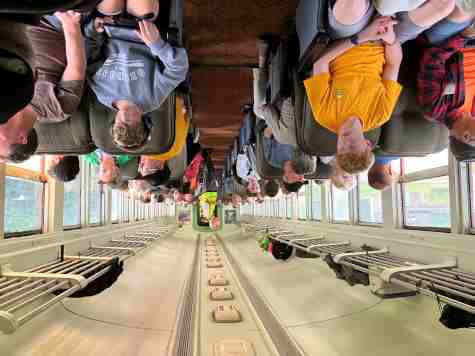
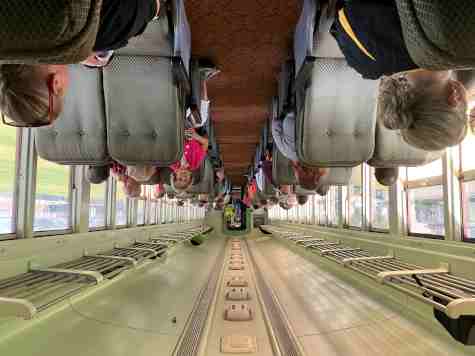
Interior of "Katy Flyer", the former Union Pacific coach in which Elizabeth and I rode.
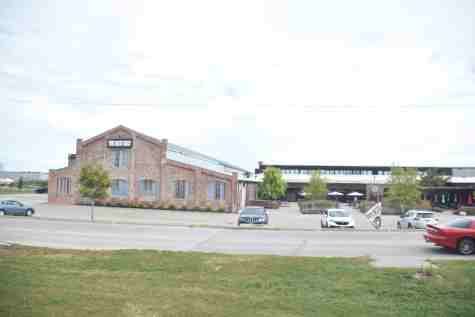
Formerly the Moline-Knight Automobile Company and QC Metal Pickling, this brick edifice has been transformed to the Rust Belt, a concert and event centre accommodating nearly 4,000 people.
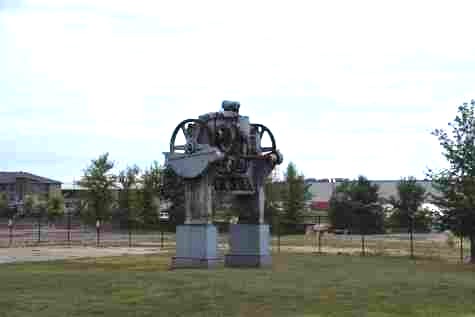
Something that caught my eye; its identity unknown.
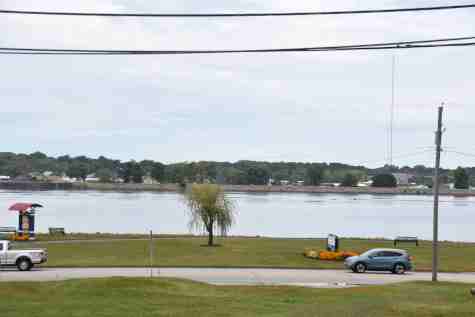
The Mississippi River then came in view along Ben Butterworth Parkway.
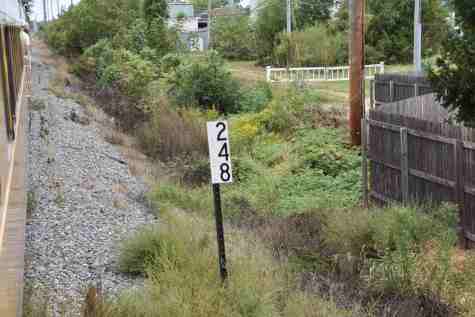
Chicago, Rock Island and Pacific milepost 248.
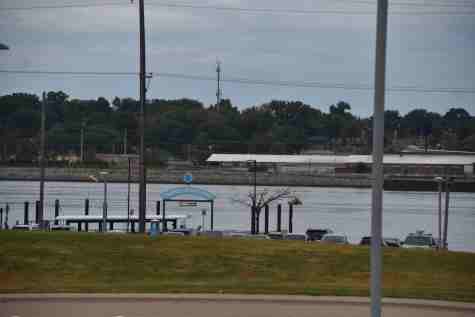
Channel Cat Water Taxi and the Mississippi River.
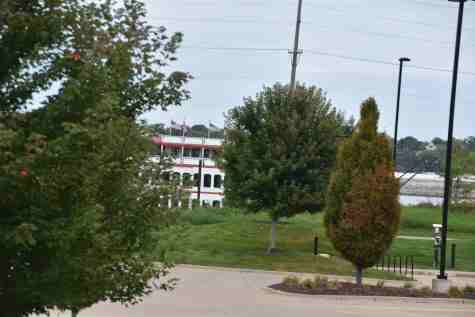
A grab shot of The Celebration Belle riverboat as we went by.
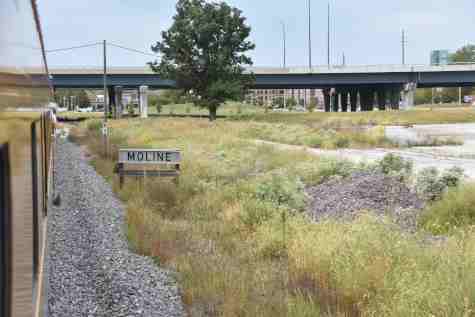
The railroad sign for Moline.
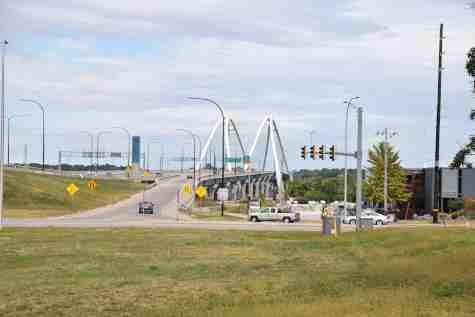
The Interstate 74 bridge leading to Bettendorf and Davenport, Iowa -- two of the Quad Cities.
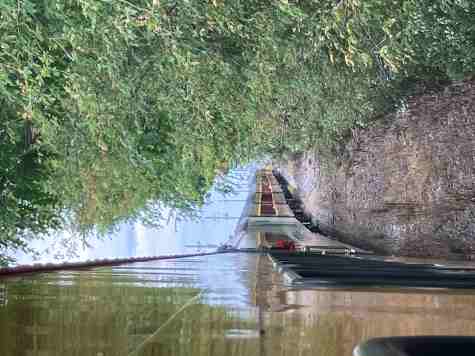
An inside curve in Moline.
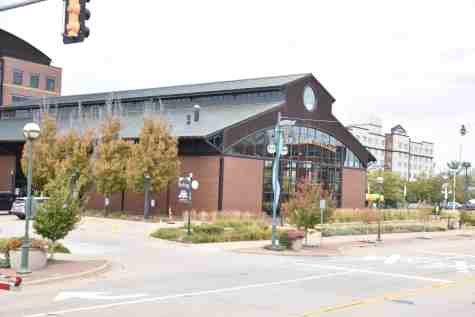
John Deere Pavilion.
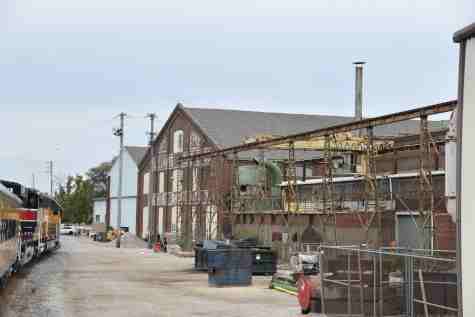
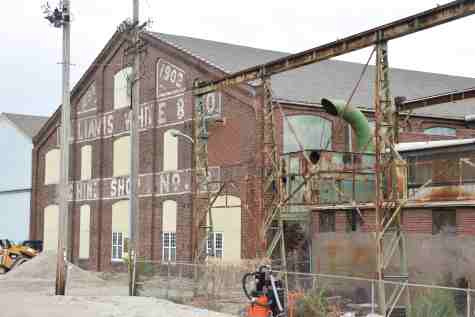
The Williams White and Company Machine Shop in Moline, where we photographed the Nickel Plate 765 excursion during Train Festival 2011.
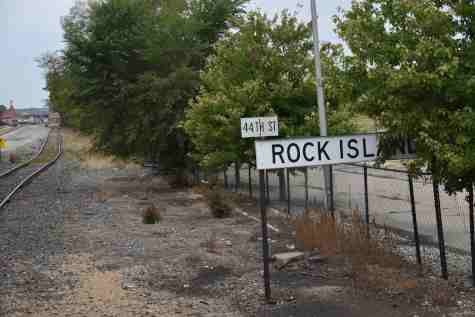
The Rock Island sign and 44th Street.
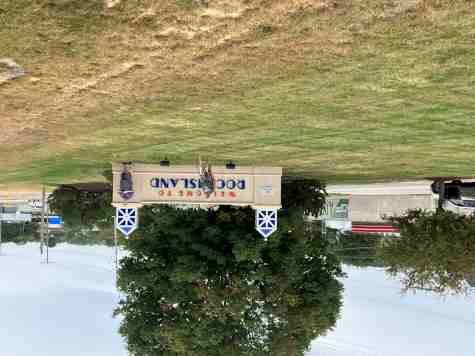
Welcome to Rock Island.
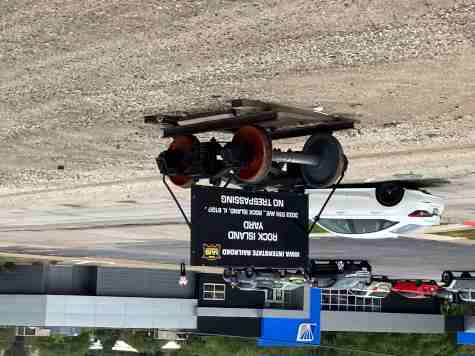
Iowa Interstate Railroad Rock Island Yard sign.
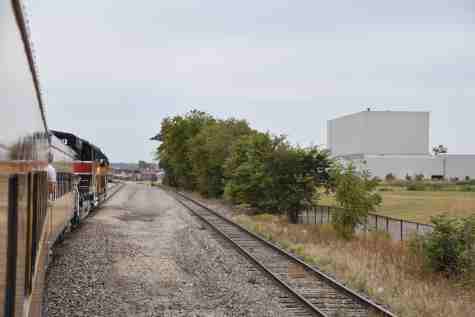
Running through the yard.
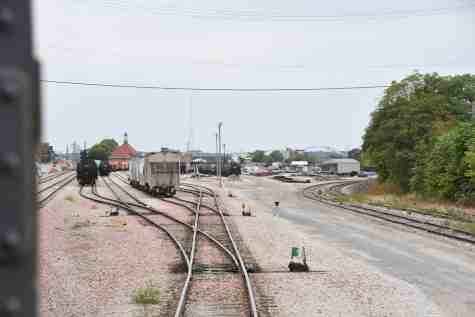
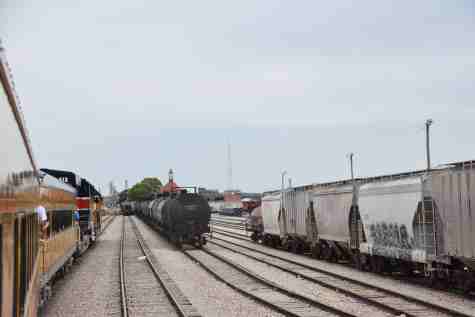
The Rock Island station seen ahead of the train.
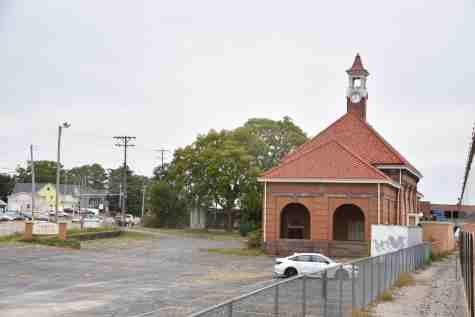
The Chicago Rock Island and Pacific station designed by Charles S. Frost and built by John Volk in 1901, which represents the remnants of the first terminal built west of Chicago, which made Rock Island a pivotal location for the movement of people, commodities and raw materials. In 1845, civic leaders began to plan for the construction of a railway to Rock Island. Completing the first bridge over the Mississippi River, The Rock Island Lines sped the westward expansion of the United States.
This magnificent building served as the third Rock Island passenger depot. For many years, it was a hub of activity, with up to 32 arrivals and departures daily and 21 ticket agents working around the clock. As passenger trains gave way to air and highway travel, train depots became obsolete and the last scheduled passenger train left this station on May 31, 1978, after which the depot was closed "permanently" in April 1980. At the request of the City of Rock Island, the deteriorating depot was listed on the National Register of Historic Places in 1982.
Efforts to revive the classic structure failed until 1994, when the City of Rock Island purchased the property from the Iowa Interstate Railroad. The City restored the exterior in 1996 and replaced the clock tower. The entrance was returned to the southeast corner of the building. Adjacent to the depot was a deteriorated freight house, built with the same types of bricks and roof tiles as had been used on the depot. When it was demolished in 1997, its bricks and tiles were salvaged and used as necessary for replacements on the depot renovation.
In 1999, the City sold the property to Abbey Station LLC, which now operates this former depot as an elegant brunch and banquet facility.
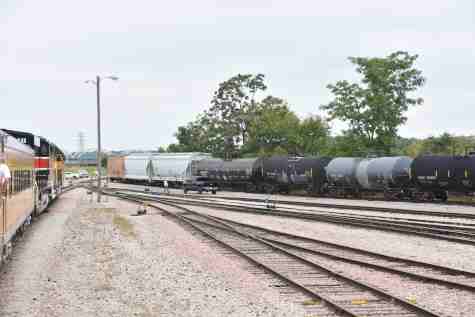
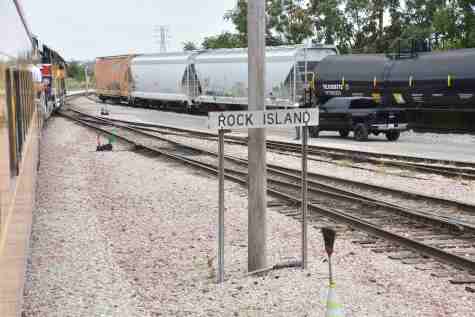
We reached the west end of the Rock Island Yard.
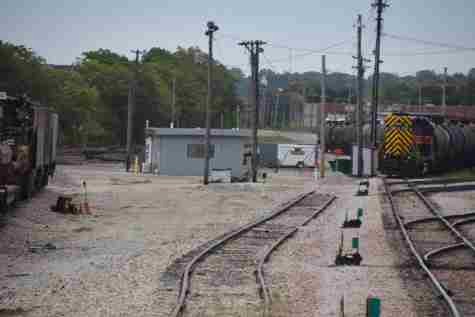
Iowa Interstate GP38-2 700, ex. Locomotive Leasing Partners 2301, exx. Union Pacific 410, exxx. Union Pacific 1910, exxx. EMD Leasing 740, exxxx. Conrail 7940, nee Penn Central 7940, built by Electro-Motive Division in 1972.
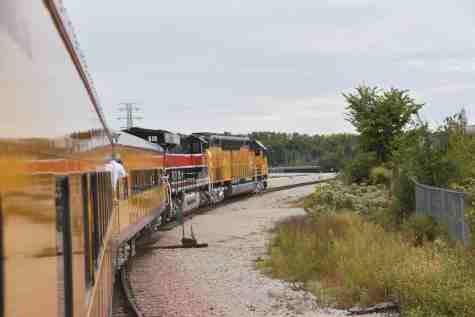
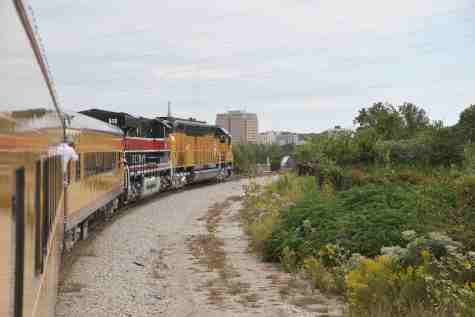
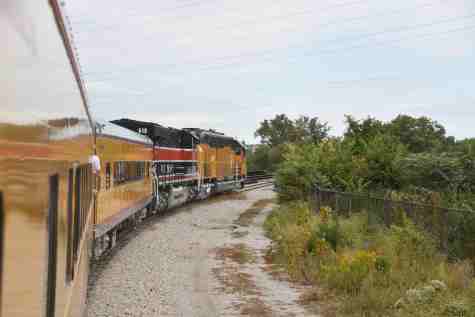
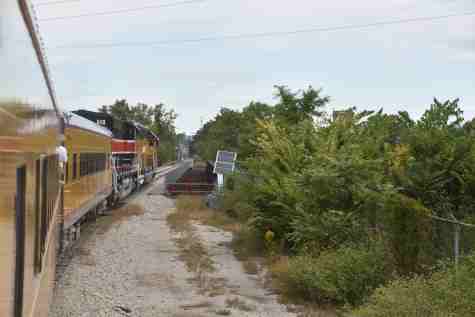
The train rounded the curve to the Arsenal Bridge.
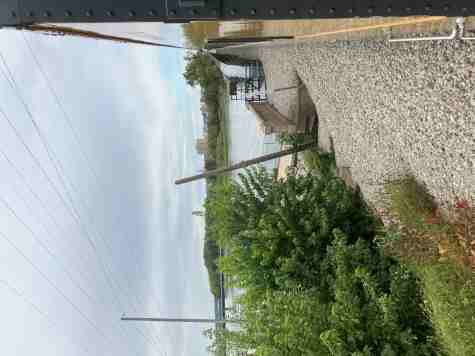
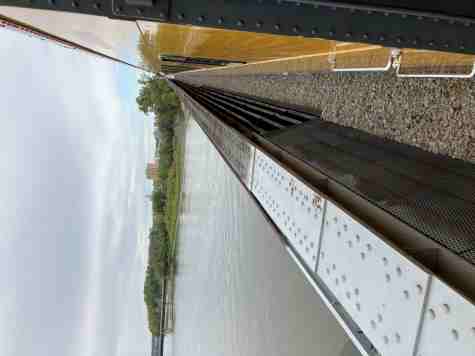
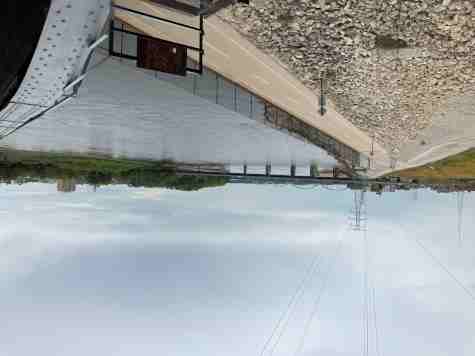
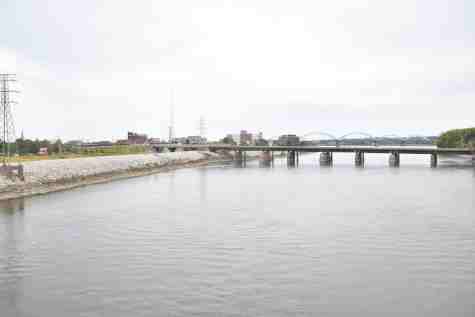
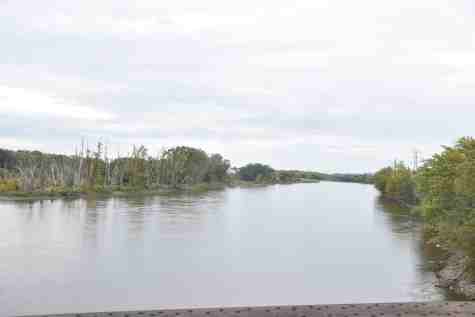
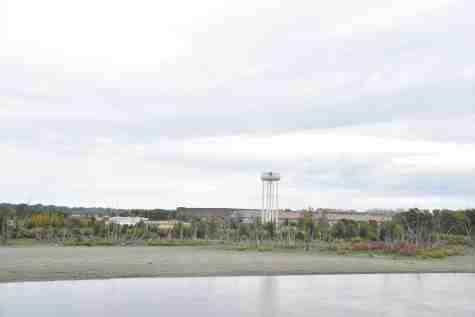
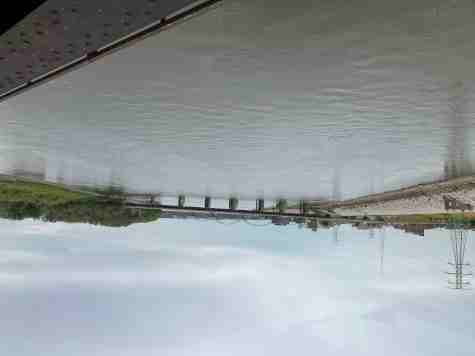
Part of the Mississippi River as we crossed the bridge.
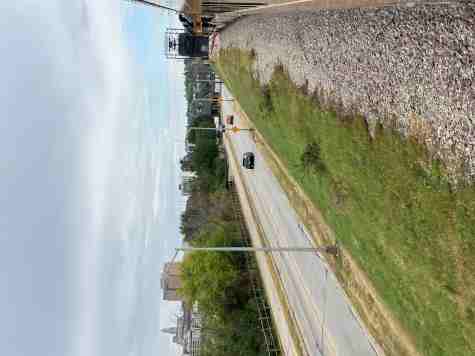
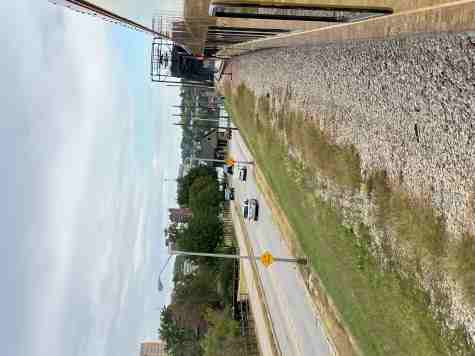
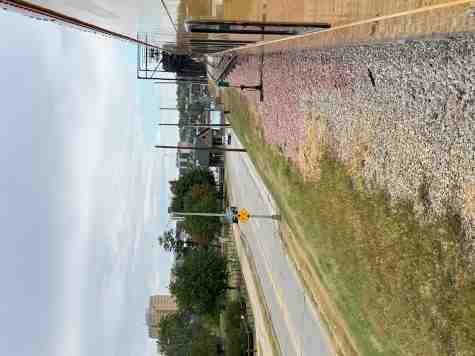
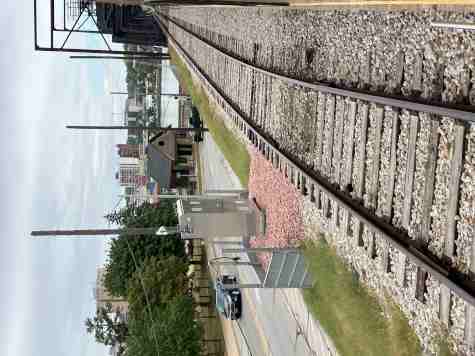
The roadway below is 120th Avenue.
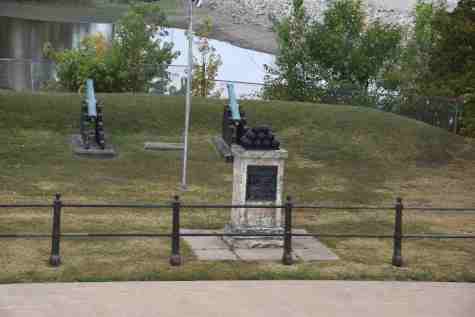
The cannons commemorate the site of Fort Armstrong, one of a chain of western frontier defenses which the United States erected after the War of 1812. It was located at the foot of Rock Island, in the Mississippi River and was five miles from the principal Sauk and Meskwaki village on the Rock River in Illinois. Of stone and timber construction, 300 feet square, the fort was begun in May 1816 and completed the following year, consisting of three large blockhouses on its prominent corners In 1832, the U.S. Army used the fort as a military headquarters during the Black Hawk War. It was normally garrisoned by two companies of United States Army regulars. With the pacification of the Indian threat in Illinois, the U.S. Government ceased operations at Fort Armstrong and the U.S. Army abandoned the frontier fort in 1836.
This memorial was a project of the Daughters of the American Revolution in 1901.
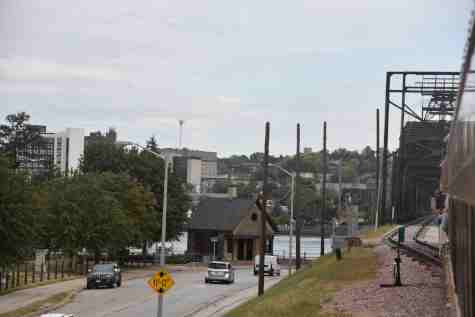
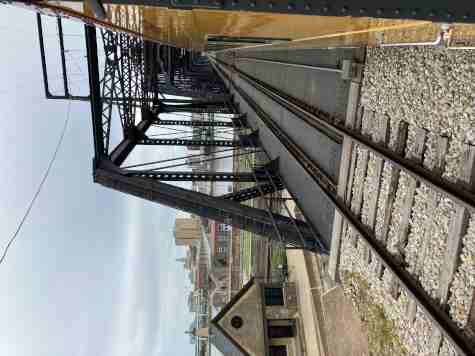
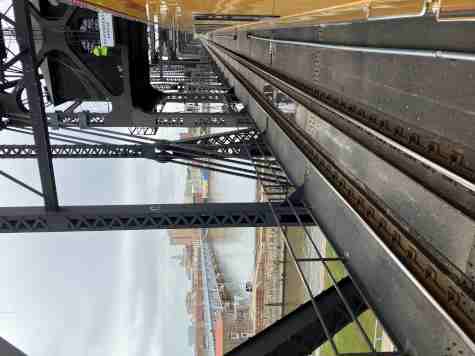
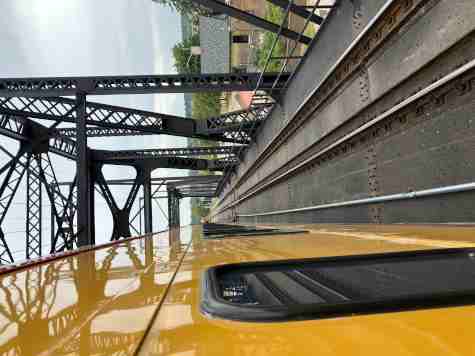
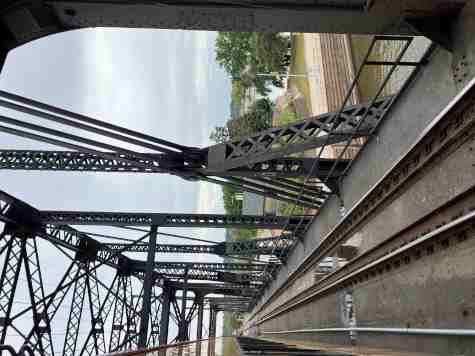
Crossing Arsenal Bridge taking us from Rock Island into Davenport.
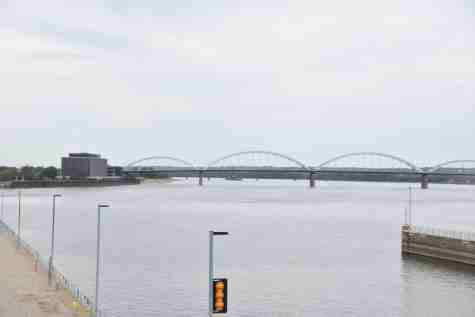
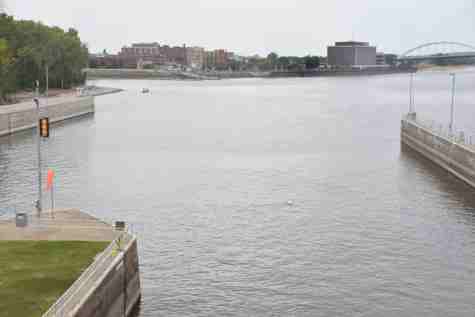
The locks used to raise or lower ships on the Mississippi River. The Centennial bridge is in the background.
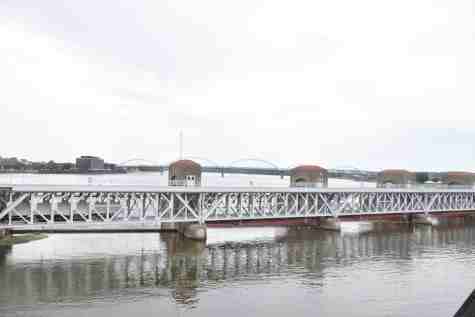
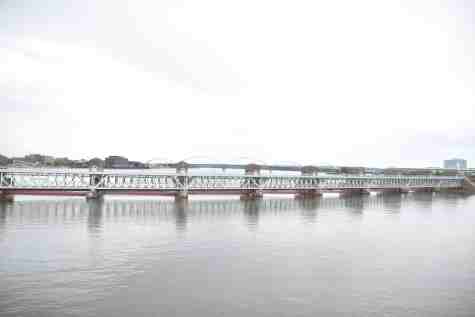
The Main Channel of the Mississippi River.
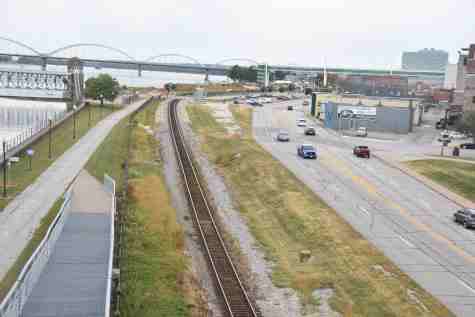
The tracks of Iowa, Chicago and Eastern Railroad on which I rode on during the Grand Excursion 2004.
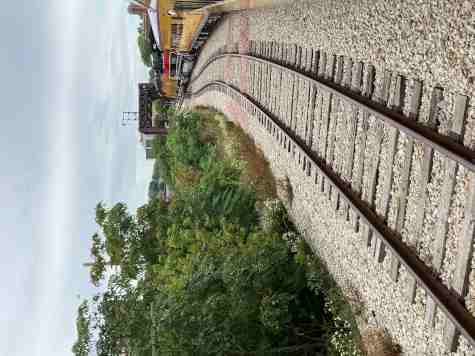
Approaching the end of the double track.
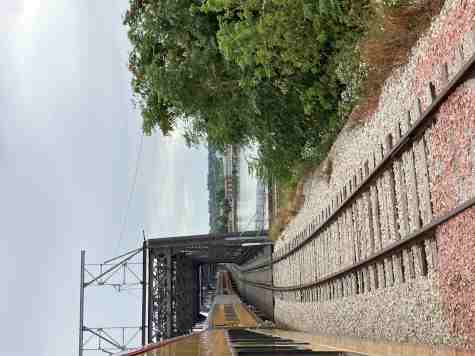
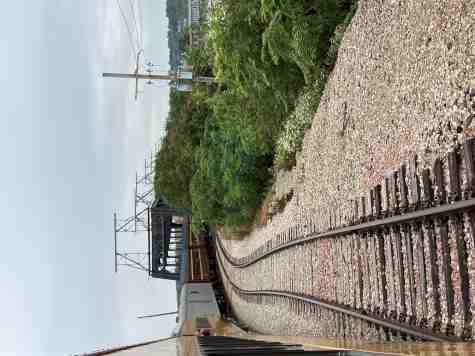
The rear of the train still on the bridge.
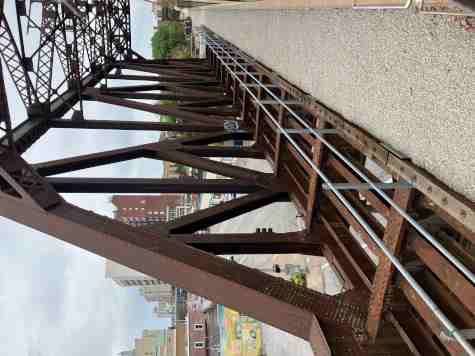
Crossing 4th Street.
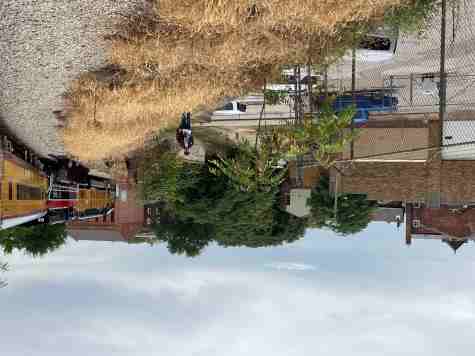
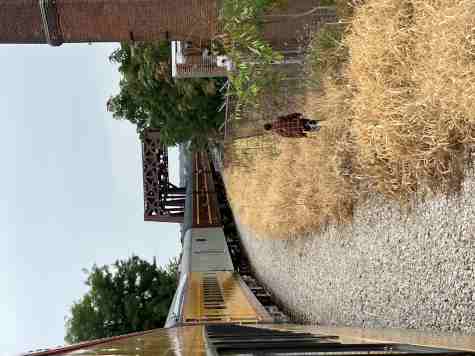
A lone photographer caught our train as we travelled west.
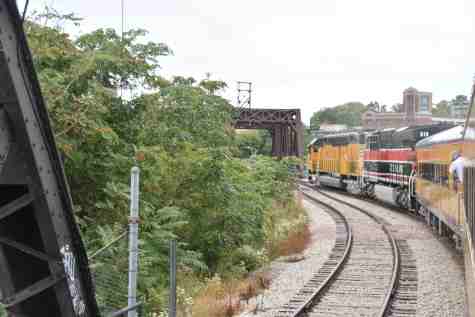
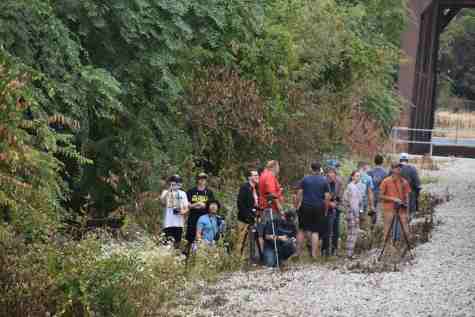
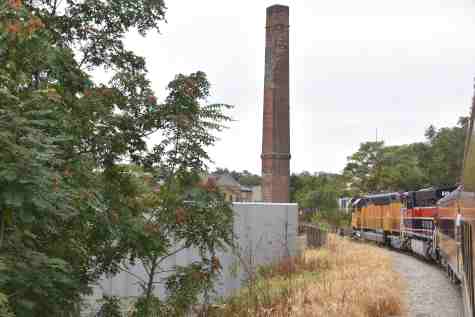
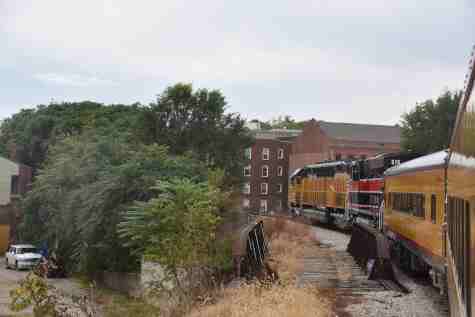
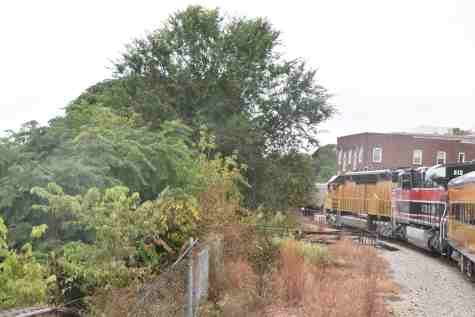
Rounding a curve before street running, passing the photographers and an old smokestack of unknown origin.
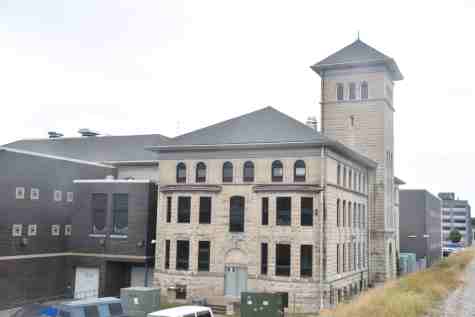
Part of Davenport City Hall.
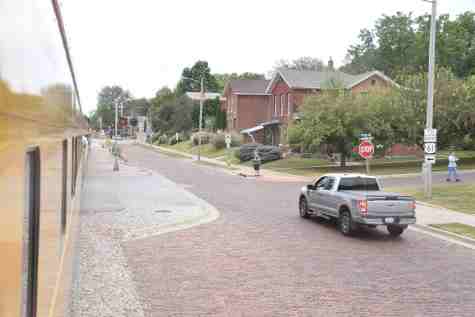
Street running on 5th Street.
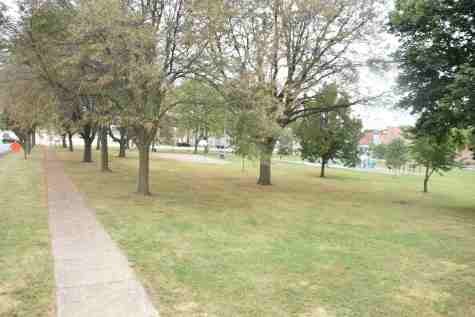
Lafayette Park.
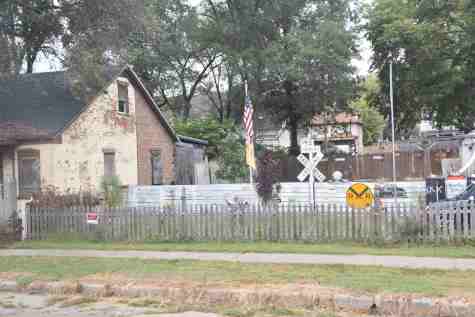
These signs caught my eye as we passed.
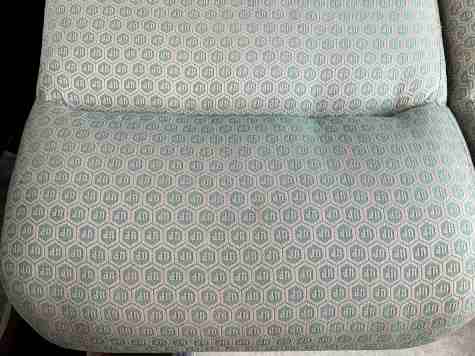
Back on board, each seat in former Union Pacific coaches retains their unique Union Pacific upholstery.
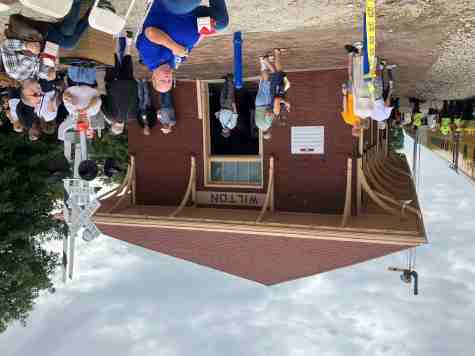
We laid over at Wilton where boxed lunches of a sandwich, chips, cookie and bottled water was served courtesy of local business The Hungry Hobo.
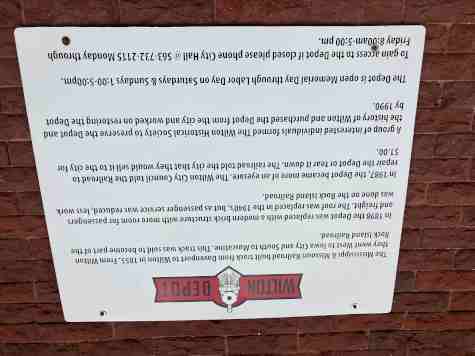
Chicago, Rock Island and Pacific depot history board.
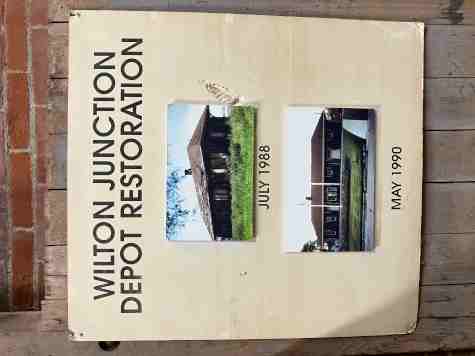
Wilton Junction Depot Restoration.
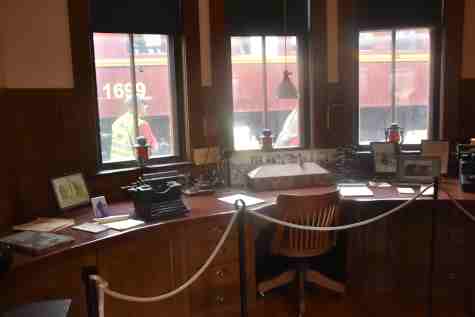
Looking out of the bay windows of the depot, built in 1898.
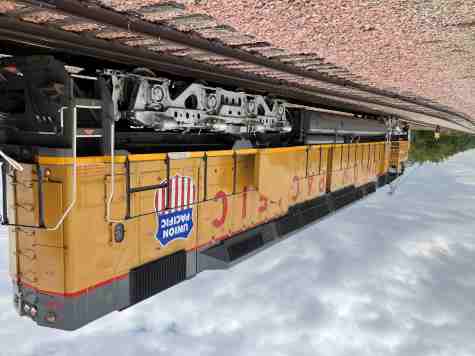
Railroading Heritage of Midwest America DDA40X 6936, nee Union Pacific 6936, built by Electro-Motive Division in 1971. It operated in regular freight service from 1971 to mid-1980 then was stored at Yermo, California, until February 1984 and operated in regular freight service, along with 25 other 6900-class locomotives, from March 1984 through May 1985. It was the last operating DDA40X in service on the railroad and removed from regular freight service on May 6, 1985 then transferred to the Heritage Fleet at Cheyenne and first used in excursion service on May 24, 1985. Union Pacific 6936 was last used in special service in July 2015 for the Cheyenne Frontier Days special, then since it could no longer operate over Union Pacific tracks in the leading position until Positive Train Control equipment was installed, the decision was made to donate it and other equipment to RRHMA in April 2022.
It is 98 feet long, consists of two 3,300 hp engines was built exclusively for the Union Pacific Railroad as the most powerful diesel-electric locomotive models built on a single frame. Nicknamed "Centennial" to commemorate the 100th anniversary of the Transcontinental Railroad, 6936 is the last operational DDA40X.
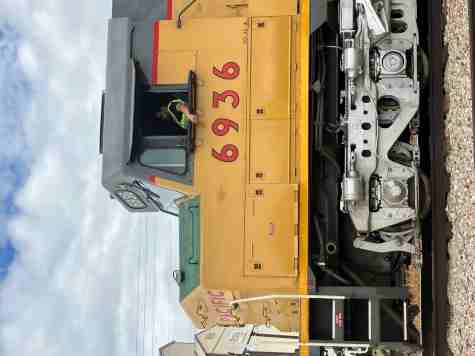
The engineer of our train.
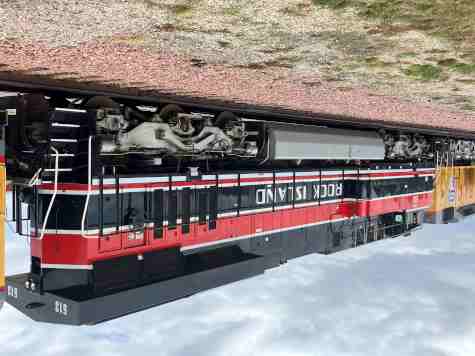
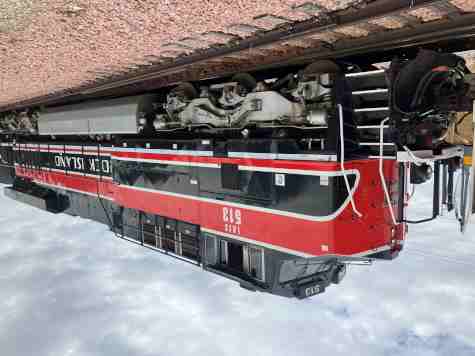
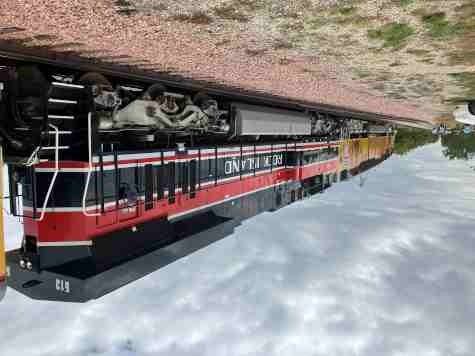
Iowa Interstate ES44AC 513, built by General Electric in 2010, painted in a Rock Island heritage livery.
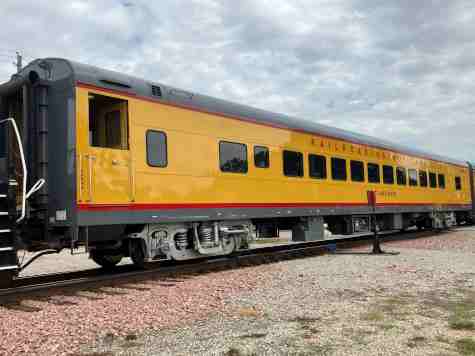
Railroading Heritage of Midwest America 44-seat coach "Portland Rose", ex. Union Pacific "Portland Rose" 1990, nee Union Pacific 5473, built by American Car and Foundry in 1953. It was re-named after the train Portland Rose, which operated between Chicago and Portland. This car featured a radio, soda fountain, maid service, hairdresser, barber valet and bath. The rose was the decorative motif for this train. "Portland Rose" remained in revenue service until 1971. In April 2022, Union Pacific announced its donation to RRHMA.
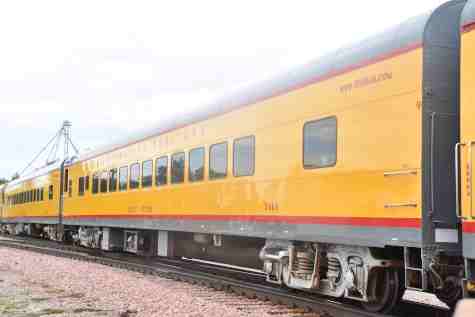
Railroading Heritage of Midwest America 44-seat coach "Katy Flyer", ex. Union Pacific 5468 "Katy Flyer" 1993, nee Union Pacific 5468, built by American Car and Foundry in 1953. It was re-named after the Missouri Kansas & Texas Railroad flagship train the Katie Flyer. With service between St. Louis and southwest Texas, the Katie Flyer raced between Galveston, Texas, and St. Louis in about 37 hours. By 1961 the train name disappeared with the former Katie Flyer offering only coach service. All passenger service ended June 30, 1965. In April 2022, Union Pacific announced its donation to RRHMA.
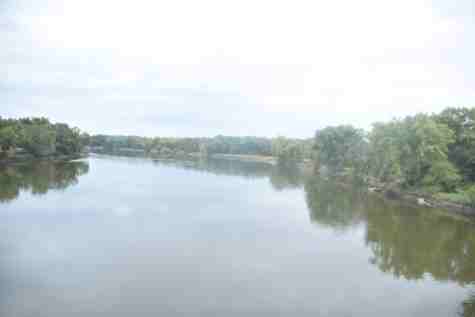
Once we resumed our journey we crossed the Iowa River.
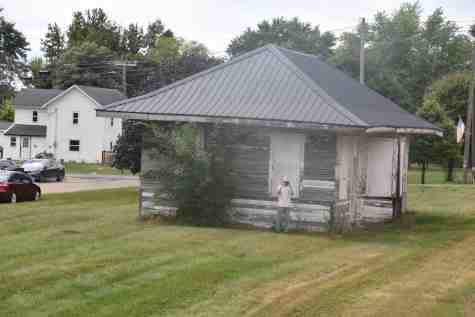
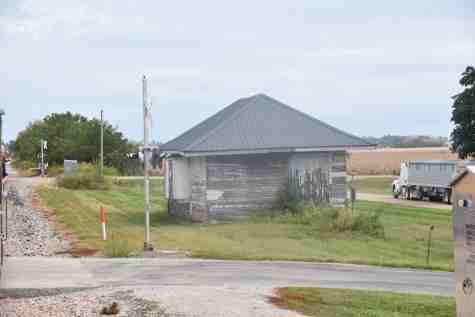
Chicago, Rock Island and Pacific Atalissa depot built in 1911.
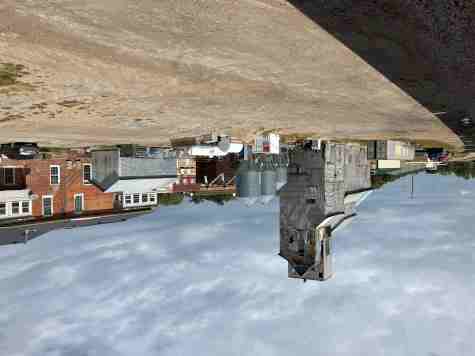
Grain elevator in Atalissa.
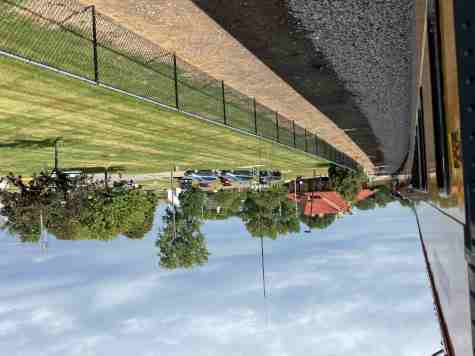
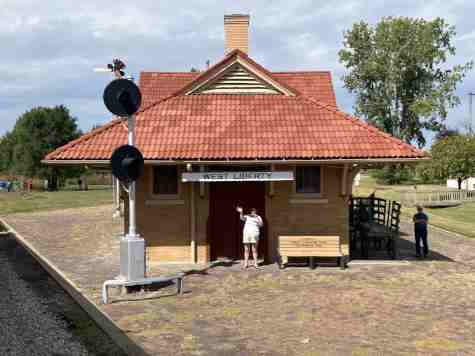
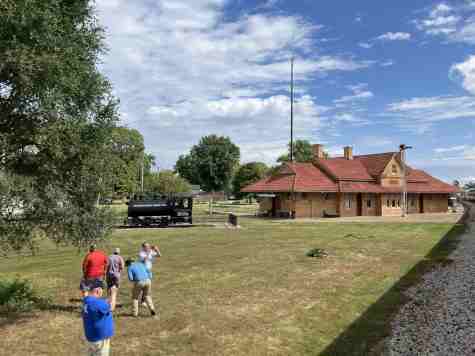
Chicago, Rock Island and Pacific depot in West Liberty built in 1898.
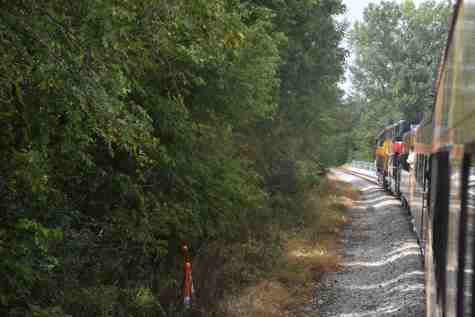
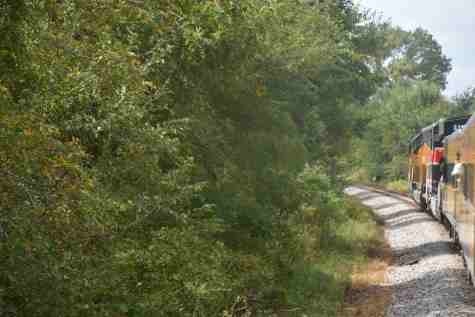
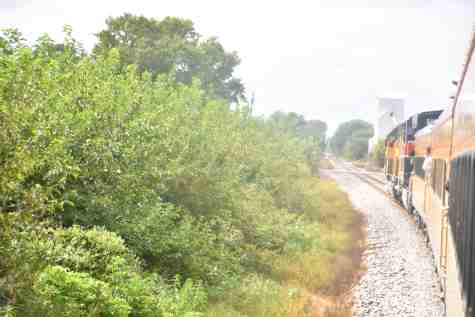
On the way to Iowa City.
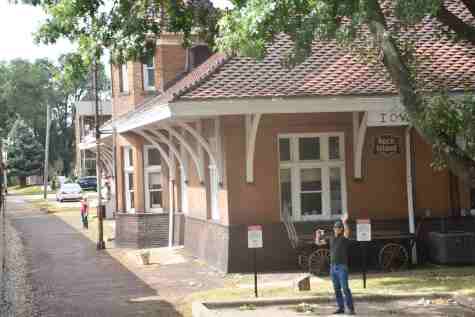
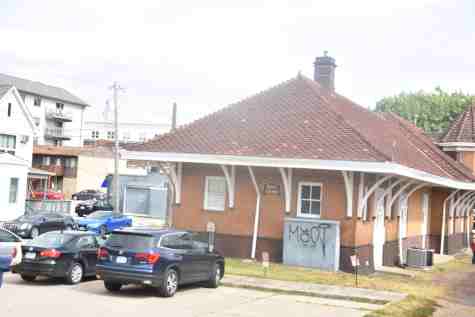
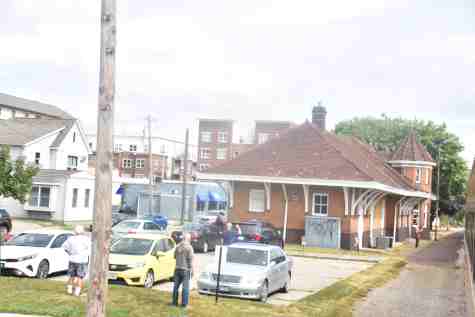
Chicago, Rock Island and Pacific depot in Iowa City built in 1898.
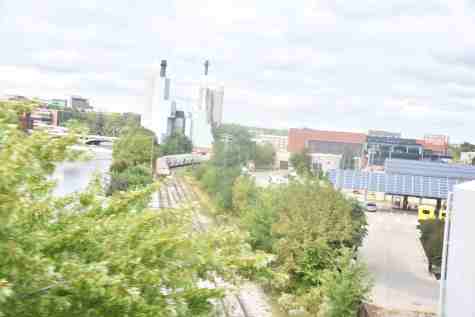
The Cedar Rapids and Iowa City Railway tracks on which I rode during the 2012 National Railway Historical Society convention.
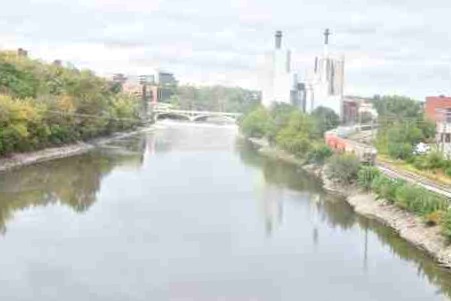
The Iowa River as we crossed it.
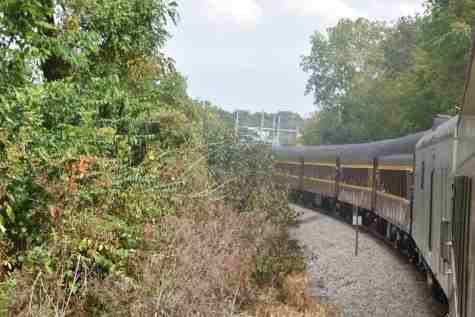
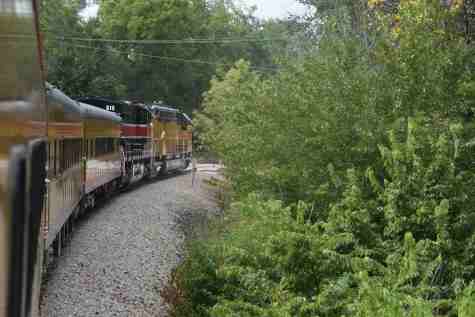
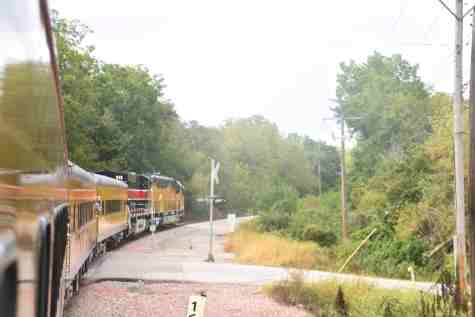
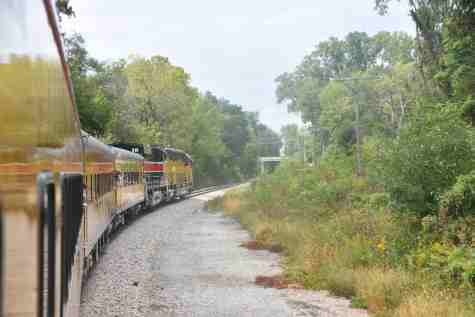
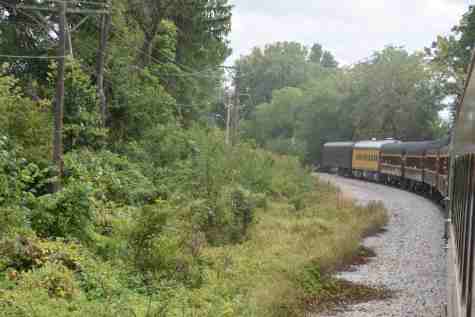
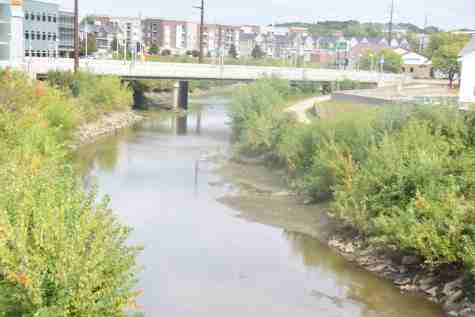
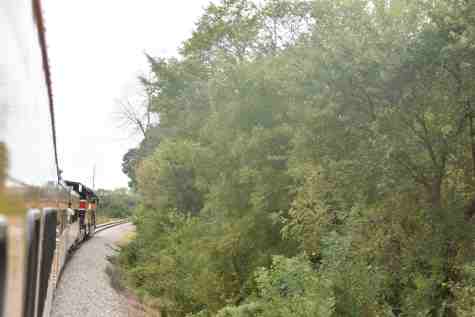
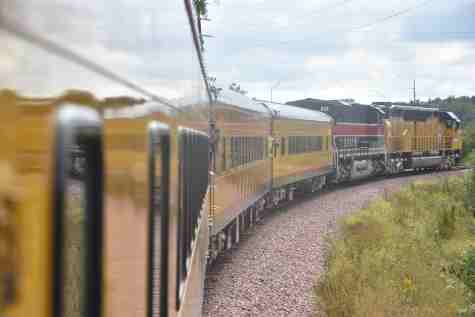
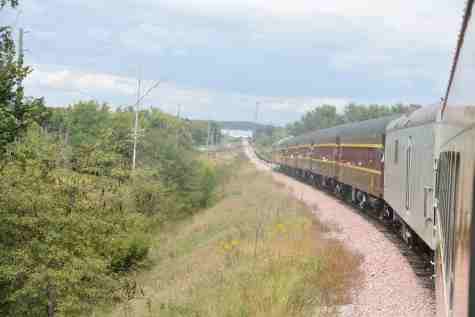
A series of curves as we make our way to the Homestead wye in South Amana. Elizabeth and I were in the vestibules for most of today's journey so captured both the front and rear of the train.
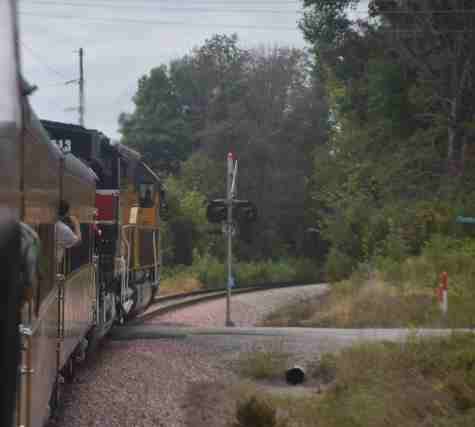
Crossing Chambers Avenue NW in Oxford.
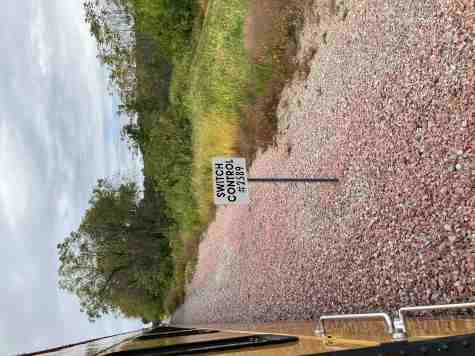
Switch Control 2589.
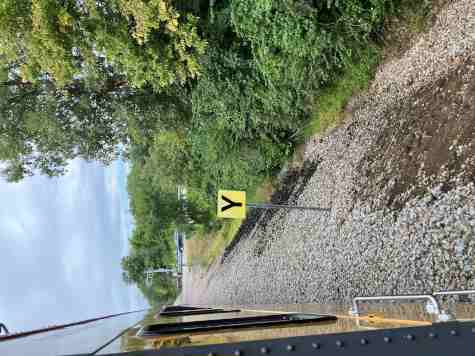
The sign for Homestead Wye, Milepost 256.6. The siding is 3,000 feet.
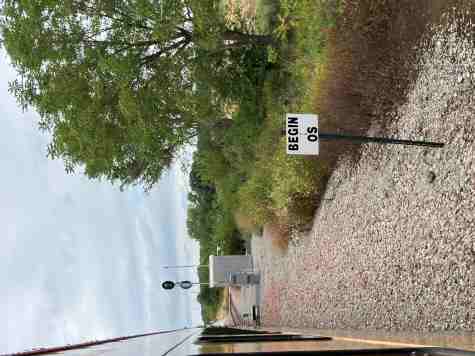
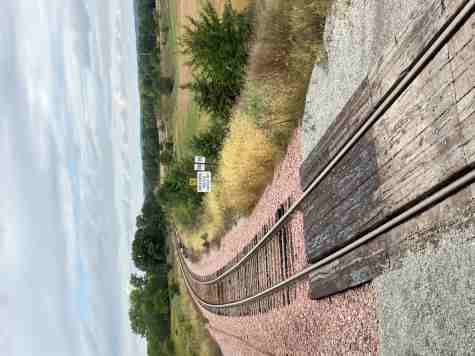
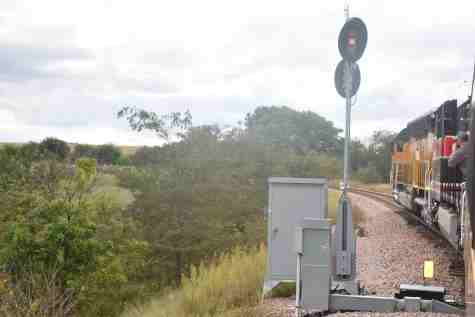
The signal for the wye.
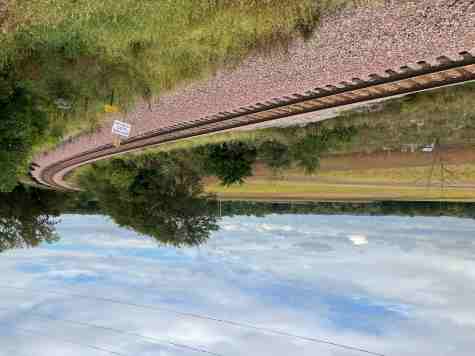
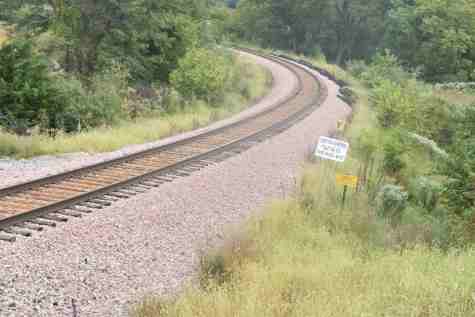
About to enter the wye.
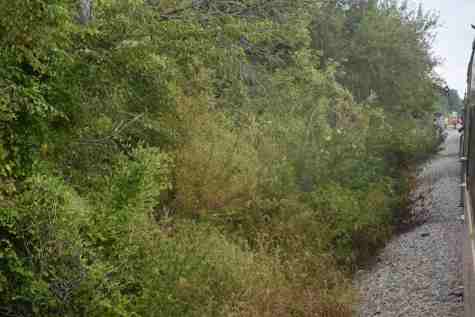
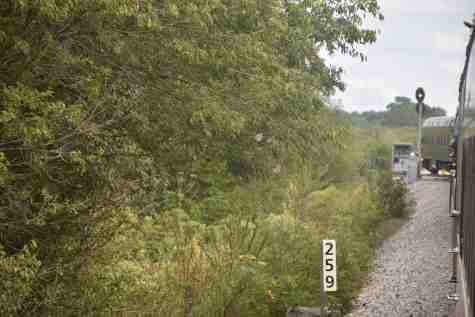
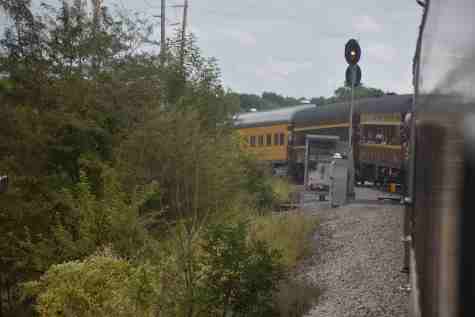
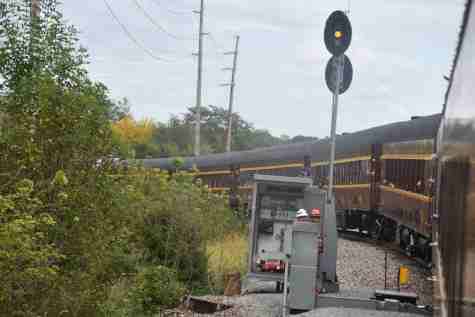
The rear of the train reversing.
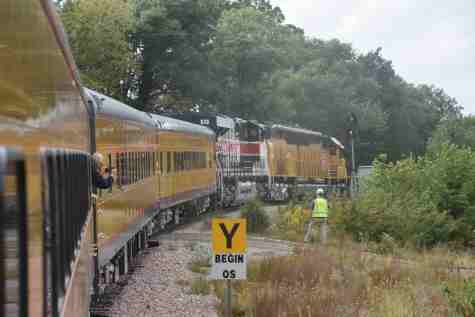
The reversing process continued under the watchful eye of Iowa Interstate employees.
Many passengers were intently watching the wyeing process.
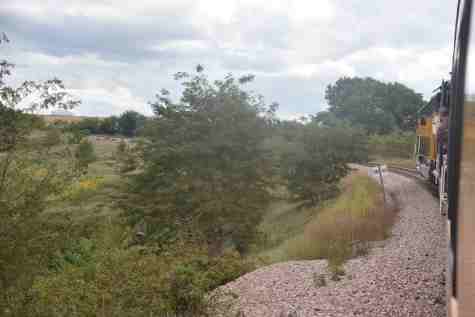
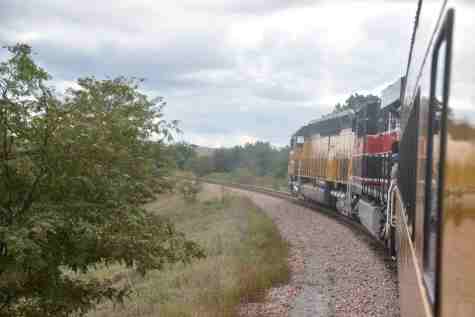
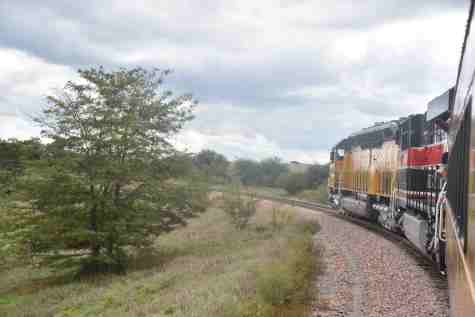
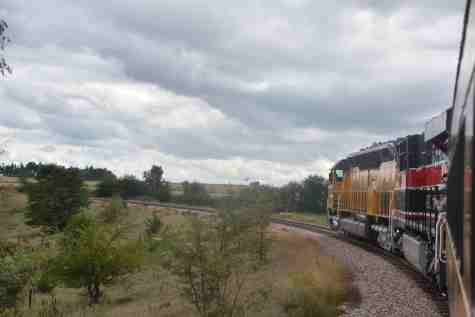
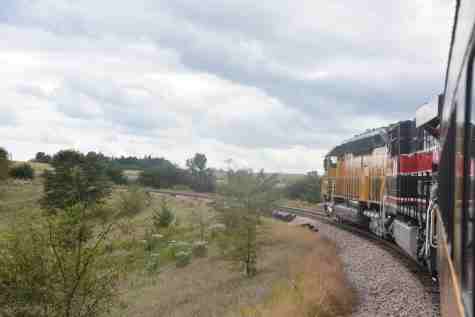
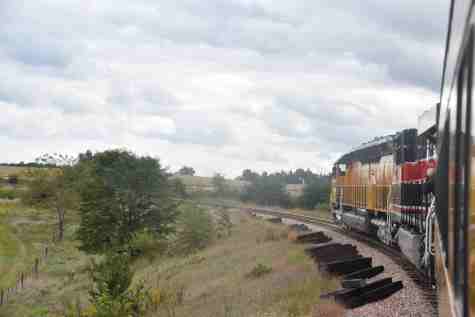
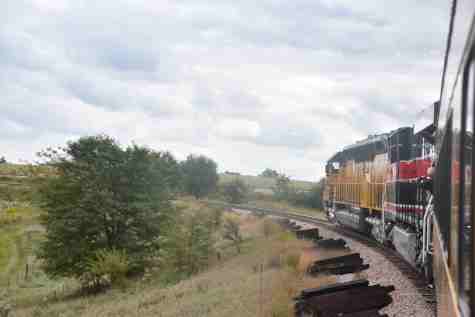
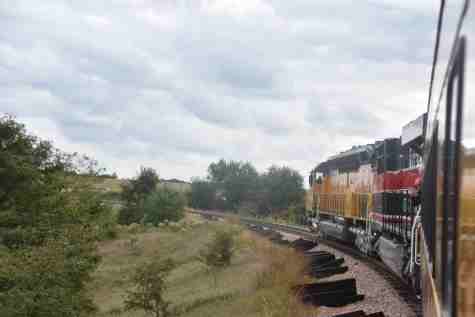
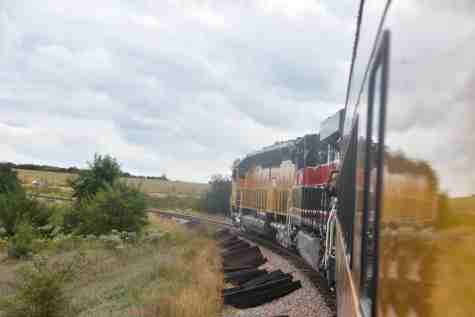
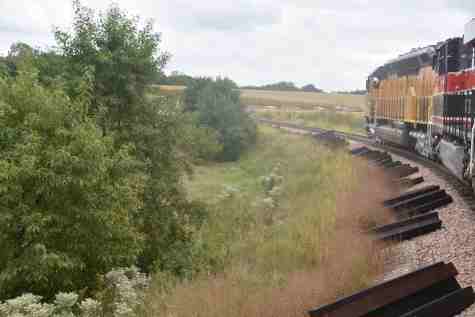
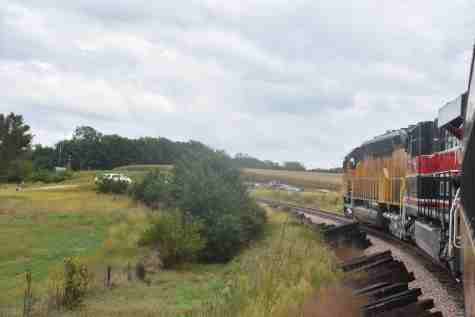
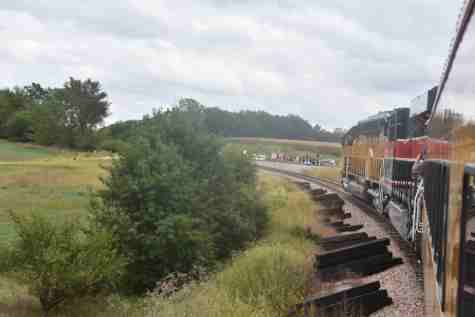
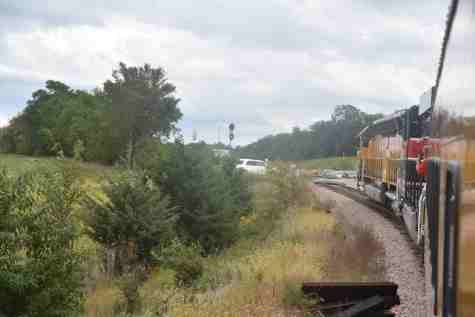
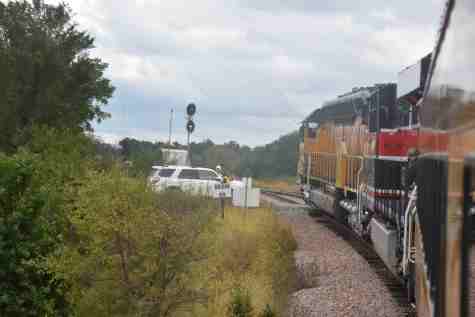
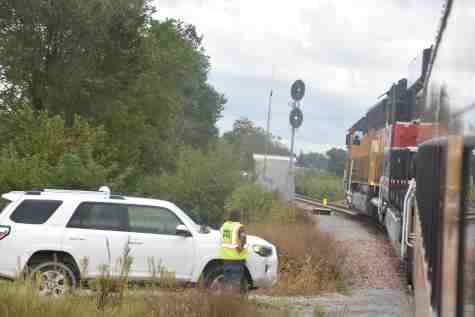
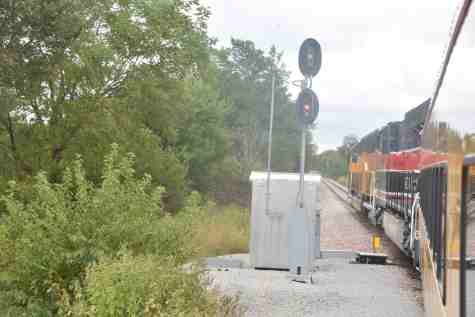
The wyeing process complete which turned our train for the journey back to Silvis. This was Elizabeth's and my second time on the Homestead Wye; the first time was during Train Festival 2011 behind Nickel Plate Road 2-8-4 765.
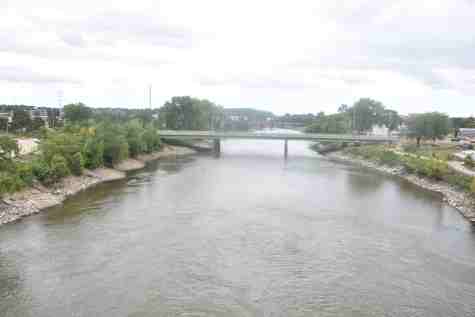
The Iowa River.
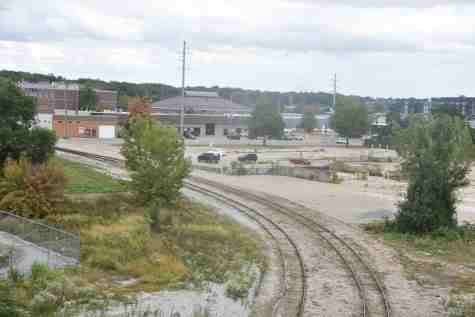
The Cedar Rapids and Iowa City tracks in Iowa City.
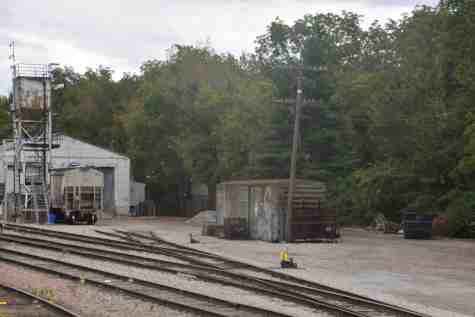
A Chessie System box car.
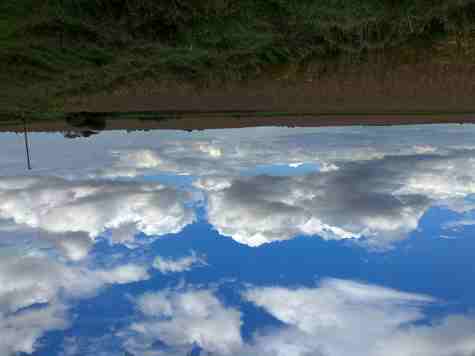
Iowa scenery.
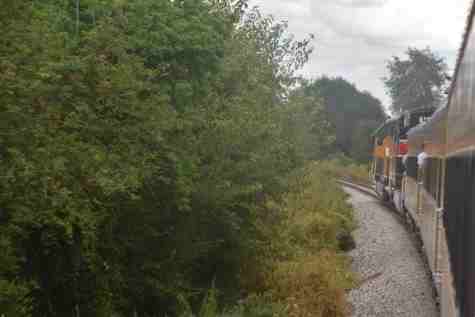
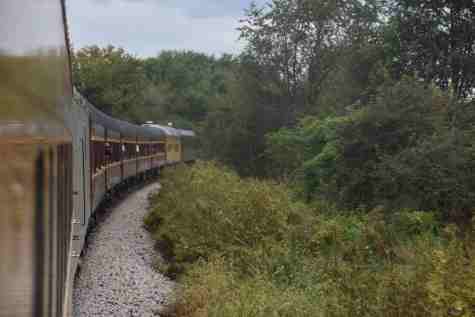
The front and rear of the special.
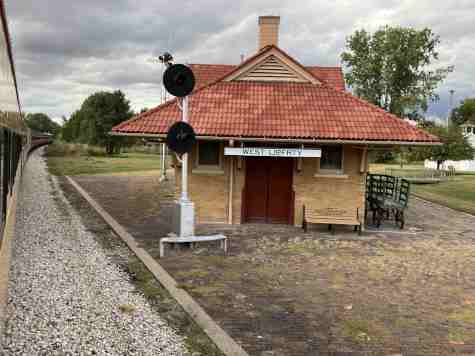
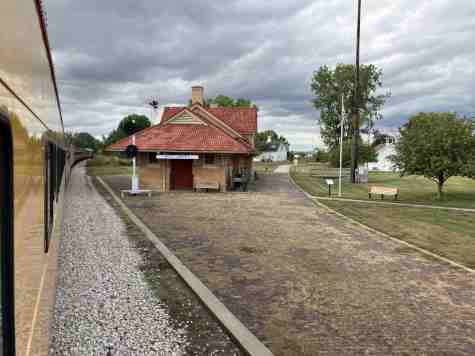
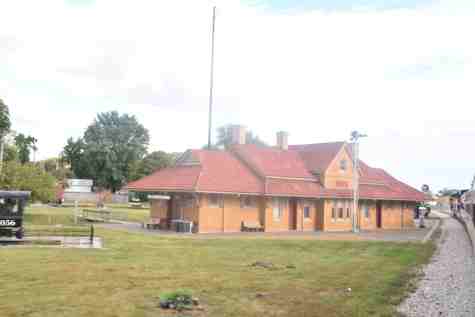
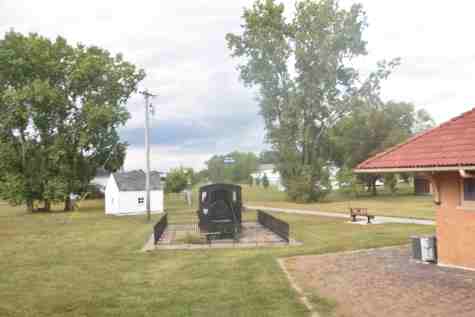
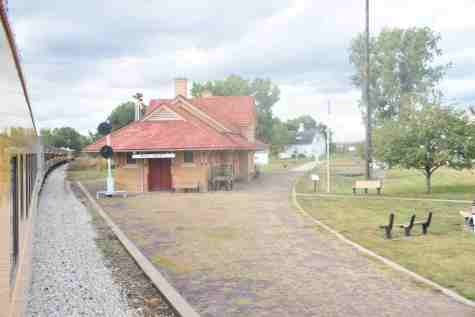
Passing the diagonally-centered West Liberty depot at Milepost 221.3. The town was named for Liberty, Ohio, with the word "west" added as it was west of Ohio.
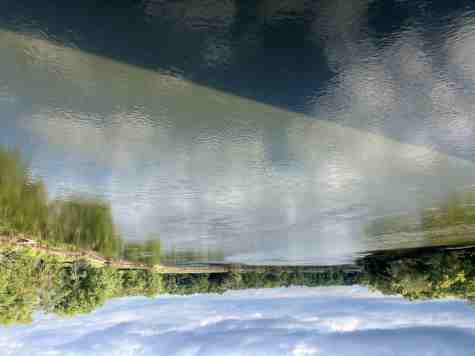
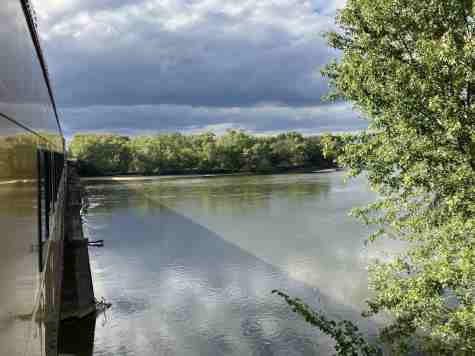
Crossing the Cedar River in Oxford at Milepost 211.8, on a ten-span deck girder design.
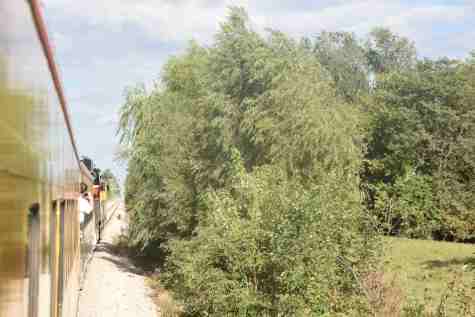
Passing Wilton siding.
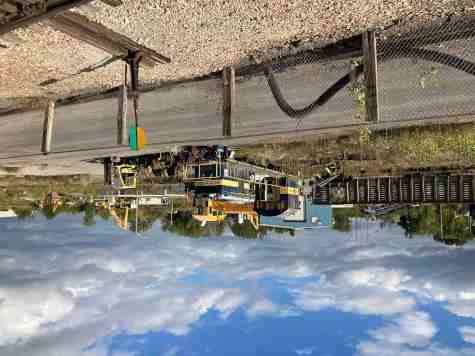
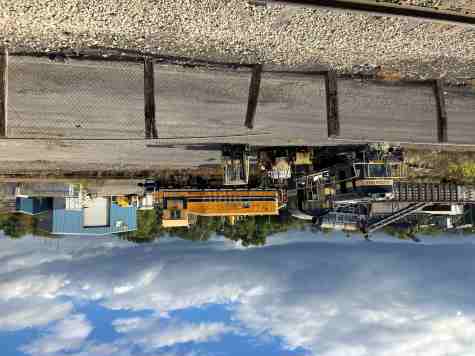
On the left is Wilton Mill NW2 103, ex. North Star Steel 103, exx. National Railway Equipment 103 1987, nee Elgin, Joliet and Eastern 438, built by Electro-Motive Division in 1949. On the right is Turner Locomotive and Components MDLX SW1200 751 ex. Missouri and Northern Arkansas 751, nee Kansas City Terminal 75, built by Electro-Motive Division in 1964.
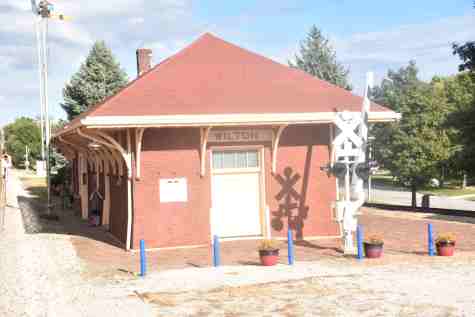
The Chicago, Rock Island and Pacific station in Wilton, Milepost 207.6, built in 1898.
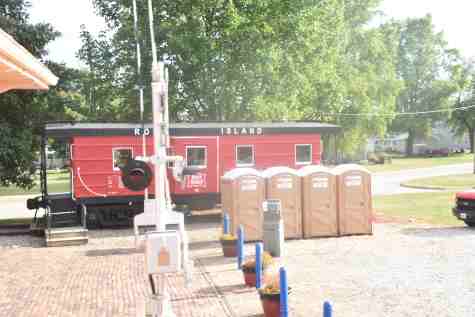
Chicago, Rock Island and Pacific 1708, built by the railroad in 1930.
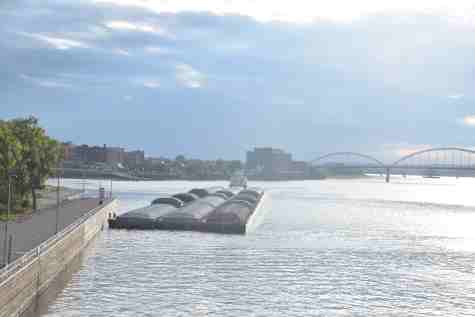
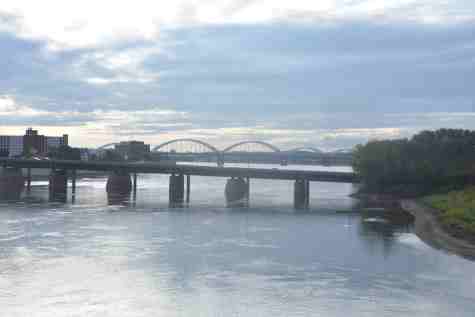
Crossing the Mississippi River on the Arsenal Bridge, with the Centennial bridge in the background.
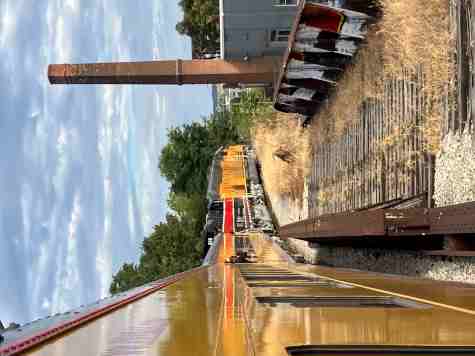
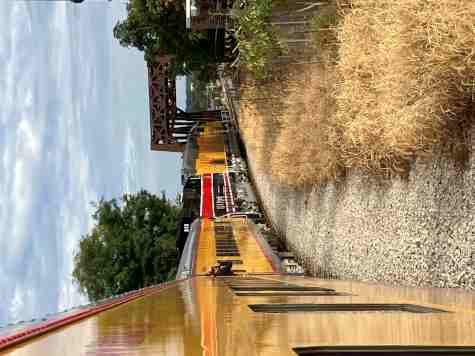
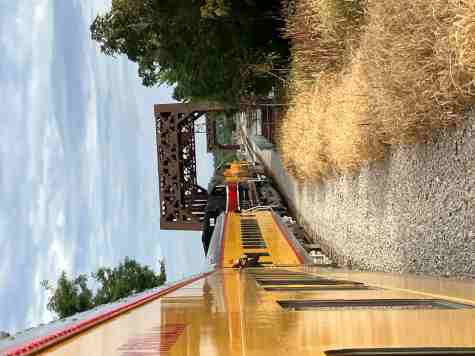
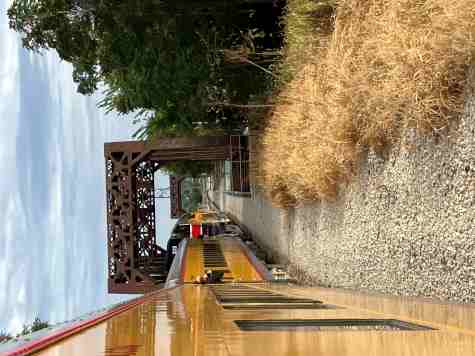
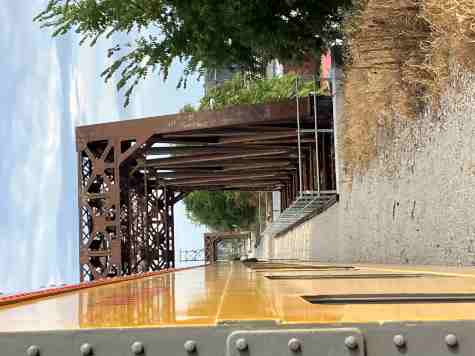
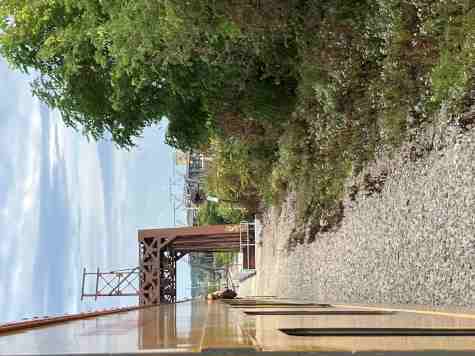
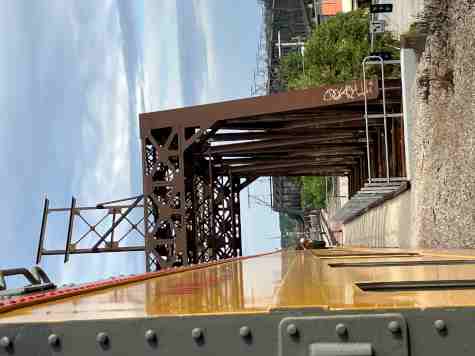
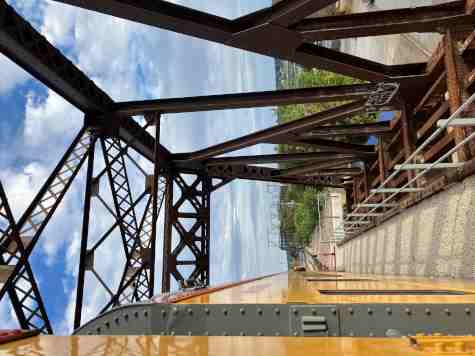
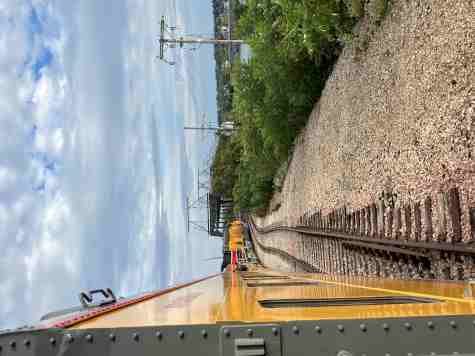
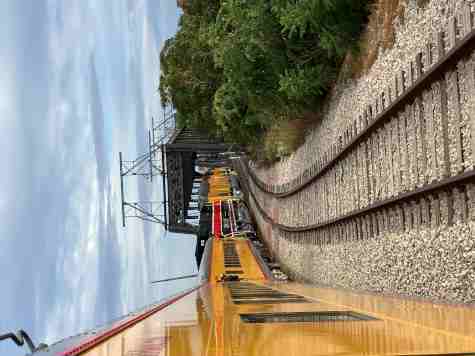
The journey through a series of bridges from Davenport to Rock Island.
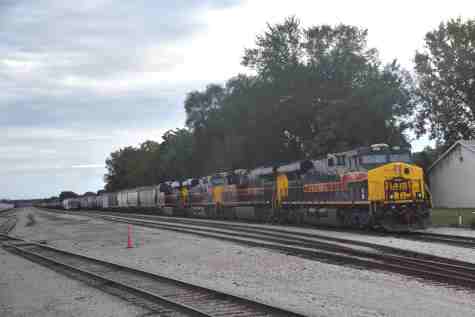
Iowa Interstate 506 West in the yard at Silvis as we entered.
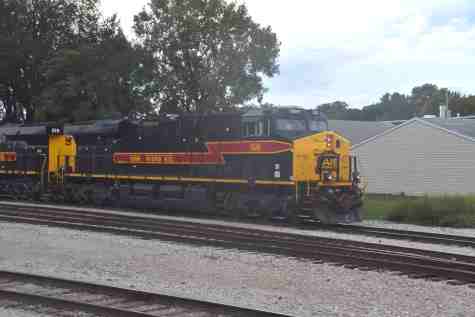
Iowa Interstate ES44AC 506, built by General Electric in 2008.
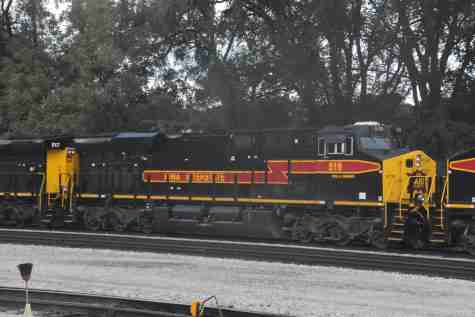
Iowa Interstate ES44AC 519, built by General Electric in 2019.
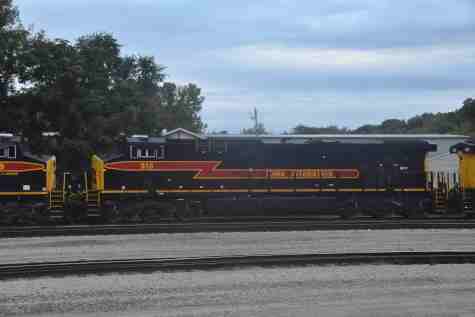
Iowa Interstate ES44AC 514, built by General Electric in 2014.
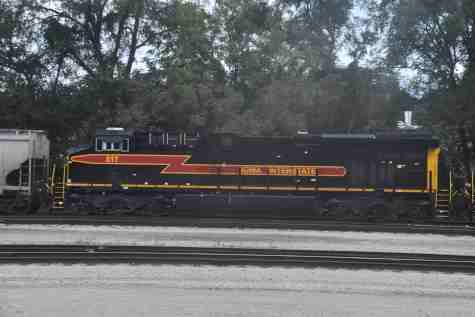
Iowa Interstate ES44AC 517, built by General Electric in 2019.
The ADM, or Archer-Daniels-Midland emblem on a grain car.
Iowa Interstate GP38-2 719, ex. Locomotive Leasing Partners 2337, exx. Union Pacific 467, exxx. Union Pacific 1967, exxxx. Electric-Motive Division Leasing 835, exxxxx. Conrail 8035, nee Penn Central 8035, built by Electro-Motive Division in 1972.
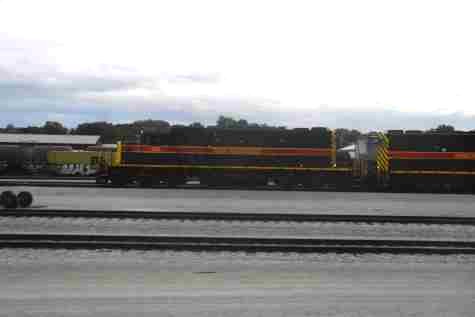
Iowa Interstate SD38-2 150, ex. Locomotive Leasing Partners 2802, exx. General American Transportation 1238, nee Reserve Mining 1238, built by Electro-Motive Division in 1978.
Everyone detrained from an excellent excursion, happy to have ridden behind the one remaining operating Centennial. Since our arrival was at 6:15 pm, the banquet was moved to 8:00 rather than 7:00 as originally planned. The buses returned the conventioneers to the hotel.
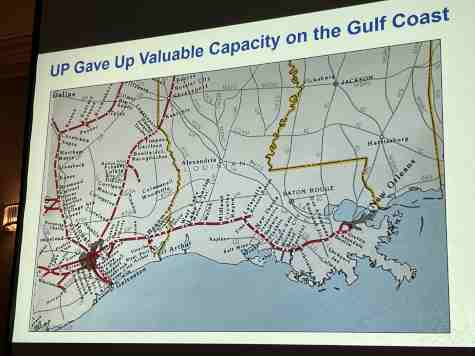
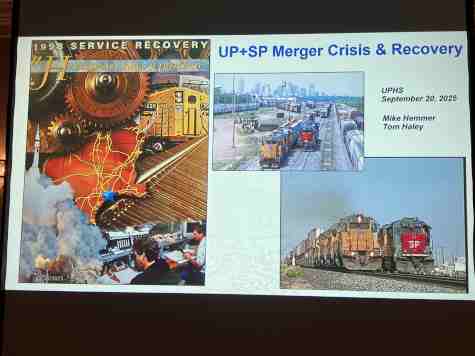
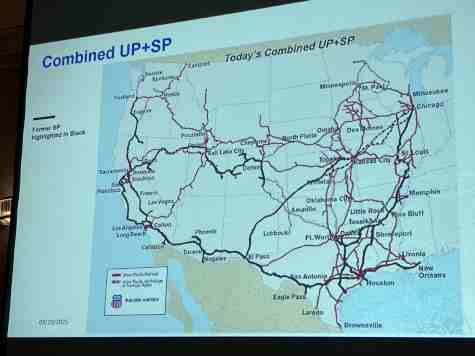
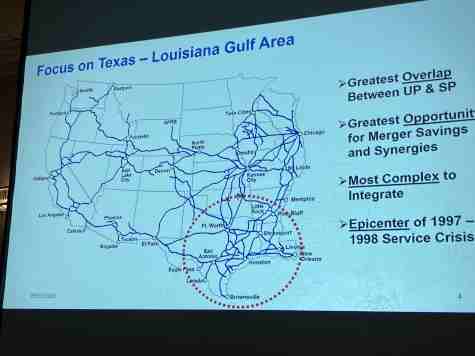
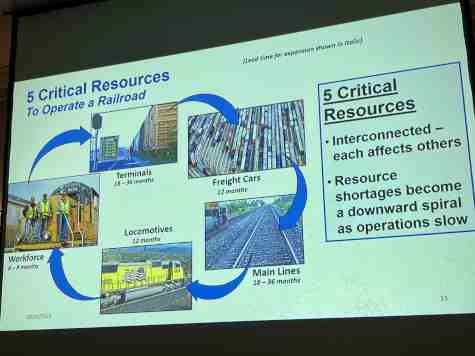
After the banquet, Mike Hemmer (retired Union Pacific Senior Vice President of Law/General Counsel) and Tom Haley (retired Union Pacific Vice President of Network Planning and Operations) gave a presentation titled "Houston, We Have a Problem" which explored the causes and remarkable recovery from the catastrophic system-wide service crisis after the UP/SP merger. These are five slides from that presentation. To round out the evening, the raffle and silent auction winners were announced and some old Union Pacific commercials were shown.
That ended the 2025 Union Pacific Historical Society convention, although many participated in the Sunday excursion to Bureau Junction, led by Centennial 6936.
| RETURN TO THE MAIN PAGE |