




Photographs by Elizabeth Guenzler and myself as my camera developed white balance problems.
This was a joint venture between Iowa Interstate (IAIS) and the Railroading Heritage of Midwest America (RRHMA) and was the latter's first organization fundraiser trip, with funds benefitting local non-profit groups. The City of Bureau Junction heads to the heart of the Illinois River Valley, following the Rock Island mainline eastward towards the historic division point Bureau Junction. Upon arrival in Bureau Junction, a catered lunch from Tony's Shack BBQ was organized.
Elizabeth and I arose in Rock Island at 7:00 AM, went to B's Restaurant for breakfast then checked e-mail before driving to the RRHMA shops in Silvis as there was no shuttle bus service today since the Union Pacific Historical Society convention concluded last night.
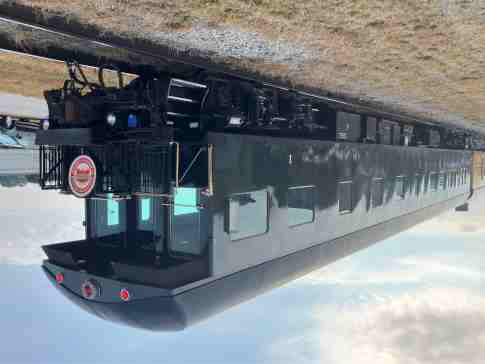
Missouri-Kansas-Texas heavyweight coach 403 built by Pullman in 1913 as all-steel chair car 884. Rebuilt 1948 as 403 for Vice-President and General Manager H.M. Warden. Sold to KCS in 1961, then sold to Saline River and Northern in Texas in 1977. To Allis Chalmers 1979, to MKT in 1981 and to John Marshall in 1988. Returned to Amtrak standards in 1991 by Texas Southern.
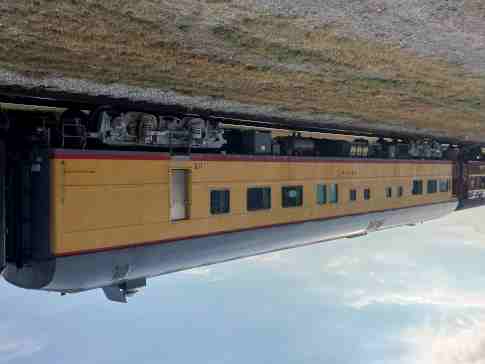
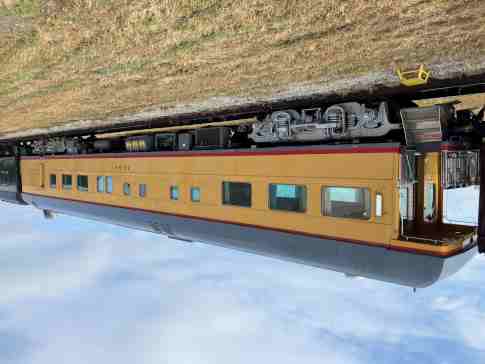
Railroading Heritage of Midwest America business car 115 "Selma", ex. Union Pacific Company business car 115 "Selma" 1989, exx. Union Pacific 115 "Selma" 1987-1989, exxx. Union Pacific 115:3 1985-1987, exxxx. Missouri Pacific 3 "Kansas City" 1971-1985, exxxxx. Western Pacific "Feather River" 1971-1985, exxxxxx. Union Pacific 109:2 1964-1971, nee Union Pacific 101 "Overland", built by Pullman-Standard in 1912. The car features an observation room, three bedrooms, a secretary’s room, crew quarters, a dining room with seating for six and a kitchen. It was named after an antebellum mansion overlooking the Mississippi River, Selma Hall, which came under Union Pacific ownership with the merger in 1982. In April 2022, Union Pacific officials announced that the company would donate "Selma" to RRHMA.
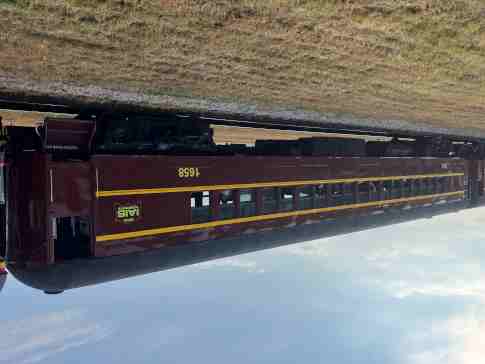
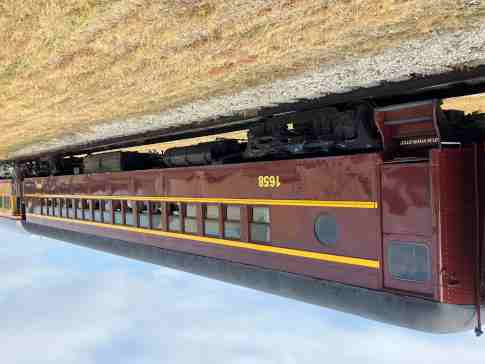
Iowa Interstate coach 1658 "Lake Inks", nee Pennsylvania Railroad P70 3643, built by Pressed Steel in 1927.
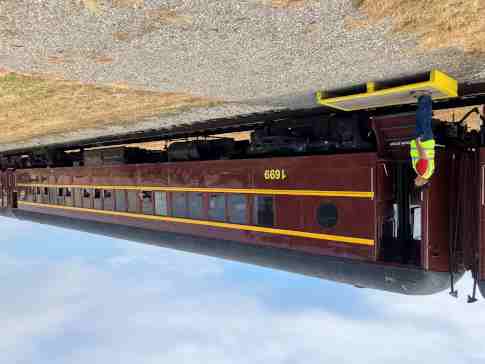
Iowa Interstate coach 1699 "Lake Marble Falls", nee Pennsylvania Railroad P70 3677, built by Standard Steel in 1926.
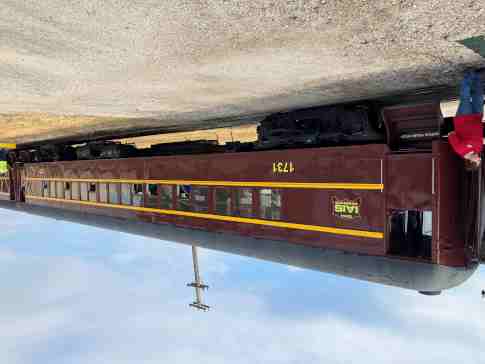
Iowa Interstate coach 1731 "Lake Lyndon B. Johnson", nee Pennsylvania Railroad P70 3378, built by the Pullman Company in 1926.
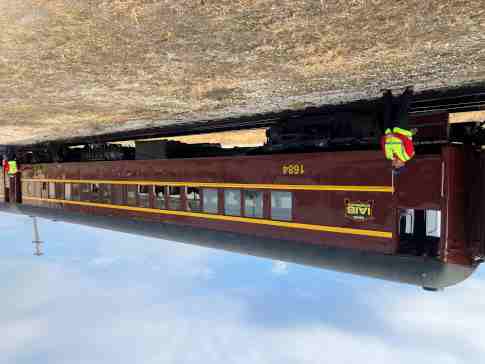
Iowa Interstate coach 1684 "Lake Buchanan", nee Pennsylvania Railroad P70 3331, built by Standard Steel in 1926.
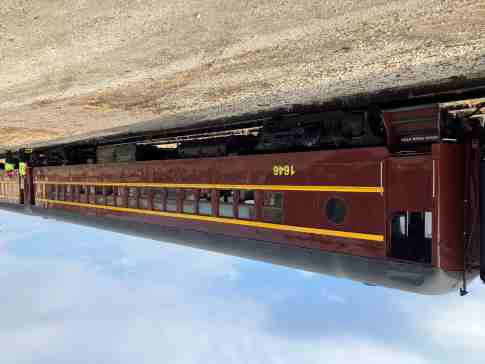
Iowa Interstate coach 1646 "Lake Travis", nee Pennsylvania Railroad P70 3658, built by Pressed Steel in 1927.
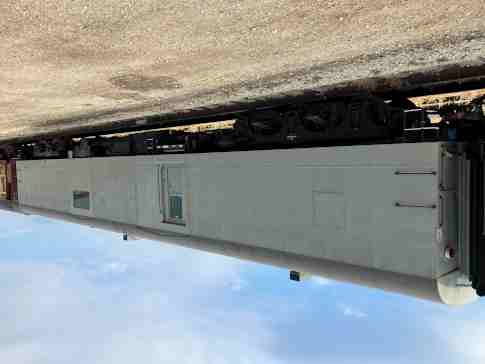
Railroading Heritage of Midwest America baggage car 800751, ex. Canadian National maintenance-of-way baggage car 59118, nee Canadian National 9178, built by National Steel Car in 1953.
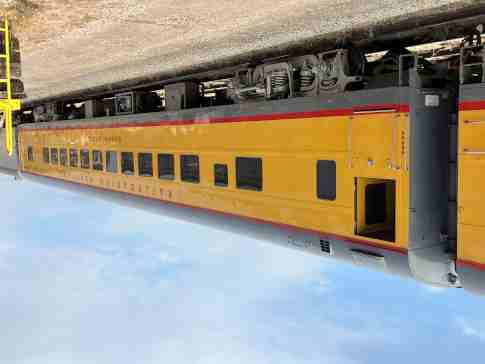
Railroading Heritage of Midwest America coach 5480 "Sunshine Special", ex. Union Pacific Company 5480 "Sunshine Special", nee Union Pacific 5480, built by American Car and Foundry in 1954. It was named to commemorate the Missouri Pacific train that ran between St. Louis and each of the large cities in Texas, from December 1915 to August 1948, when the train was replaced by the Texas Eagle. It was donated in April 2022.
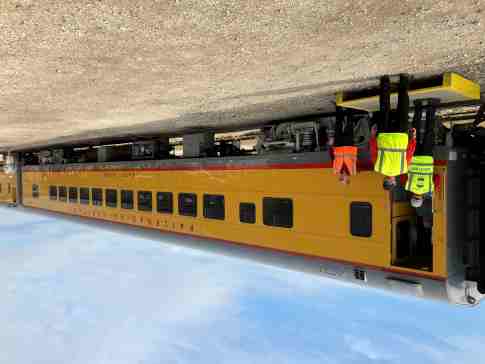
Railroading Heritage of Midwest America 44-seat coach "Katy Flyer", ex. Union Pacific 5468 "Katy Flyer" 1993, nee Union Pacific 5468, built by American Car and Foundry in 1953. It was re-named after the Missouri Kansas & Texas Railroad flagship train the Katie Flyer. With service between St. Louis and southwest Texas, the Katie Flyer raced between Galveston, Texas, and St. Louis in about 37 hours. By 1961 the train name disappeared with the former Katie Flyer offering only coach service. All passenger service ended June 30, 1965. In April 2022, Union Pacific announced its donation to RRHMA.
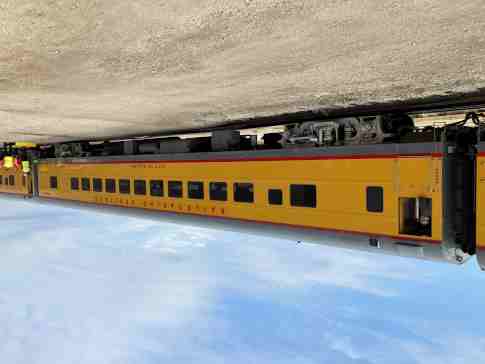
Railroading Heritage of Midwest America coach 5486 "City of Salina", ex. Union Pacific Company 5486 "Challenger":1 1989, exx. Union Pacific Company 5486 "City of Salina", nee Union Pacific 5486, built by American Car and Foundry in 1954. It was named to commemorate the Union Pacific train that ran between Kansas City and Topeka and Salina, Kansas, from January 1935 to March 1936 as the "Kansas Streamliner", then as the City of Salina until December 1941. The City of Salina was a complete three-car set, and was America's first high-speed train set, powered by an internal combustion engine. It was donated in April 2022.
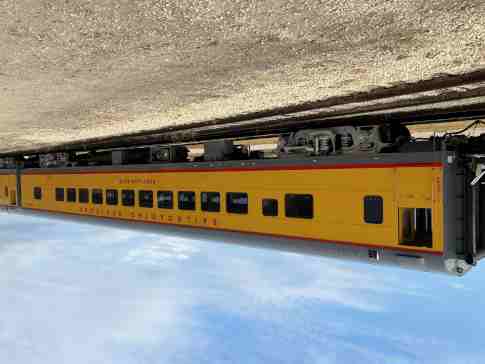
Railroading Heritage of Midwest America coach 5473 "Portland Rose", ex. Union Pacific Company 5473 "Portland Rose" 1989, nee nee Union Pacific 5473, built by American Car and Foundry in 1954. It was named to commemorate the Union Pacific train that ran between Chicago and Portland, Oregon, from September 1930 to April 1971. In February 1947, the train's route was changed to run between Portland and Denver, and in January 1954, the eastern terminal was changed from Denver to Kansas City. It was donated in April 2022; moved to Silvis, Illinois.
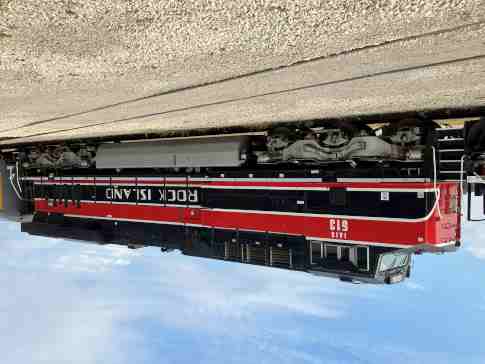
Iowa Interstate ES44AC 513, built by General Electric in 2010, painted in a Rock Island heritage livery.
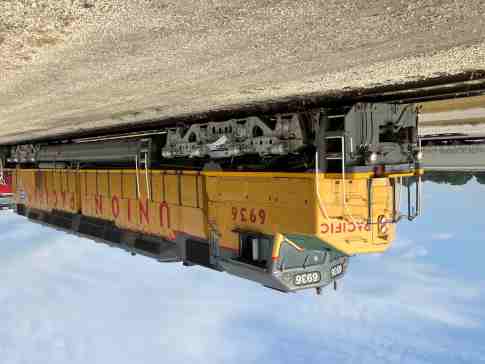
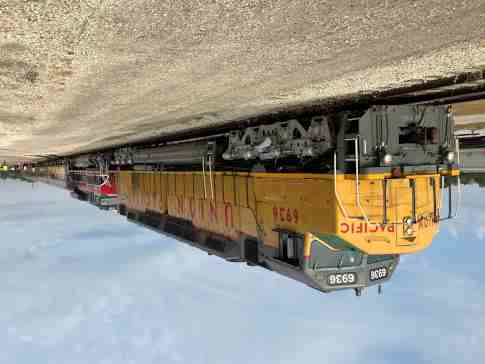
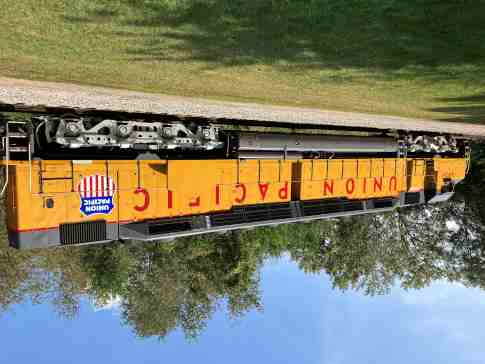
Railroading Heritage of Midwest America DDA40X 6936, nee Union Pacific 6936, built by Electro-Motive Division in 1971. It operated in regular freight service from 1971 to mid-1980 then was stored at Yermo, California, until February 1984 and operated in regular freight service, along with 25 other 6900-class locomotives, from March 1984 through May 1985. It was the last operating DDA40X in service on the railroad and removed from regular freight service on May 6, 1985 then transferred to the Heritage Fleet at Cheyenne and first used in excursion service on May 24, 1985. Union Pacific 6936 was last used in special service in July 2015 for the Cheyenne Frontier Days special, then since it could no longer operate over Union Pacific tracks in the leading position until Positive Train Control equipment was installed, the decision was made to donate it and other equipment to RRHMA in April 2022.
It is 98 feet long, consists of two 3,300 hp engines was built exclusively for the Union Pacific Railroad as the most powerful diesel-electric locomotive models built on a single frame. Nicknamed "Centennial" to commemorate the 100th anniversary of the Transcontinental Railroad, 6936 is the last operational DDA40X.
The whole train that we would take to Bureau Junction today.
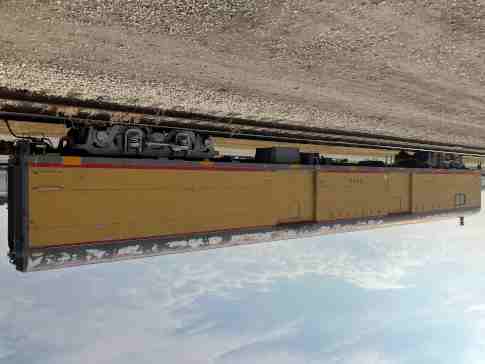
Railroading Heritage of Midwest America baggage car 904271, ex. Union Pacific 904271 1970, exx. Union Pacific 24471 1969, nee Union Pacific postal storage car 5746, built by St. Louis Car Company in 1962. After retirement, it was displayed at Bailey Yard Visitor's Center in North Platte, Nebraska then moved to Cheyenne and stored serviceable before being donated in April 2022.
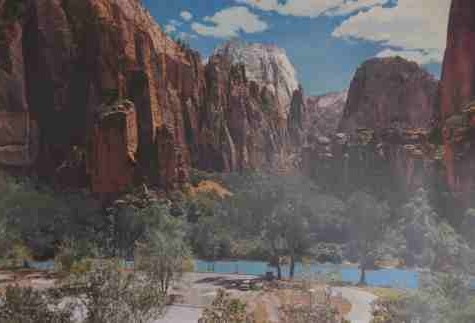
Once aboard, Elizabeth and I chose "Portland Rose" as our coach and this picture of Zion Canyon was on the wall.
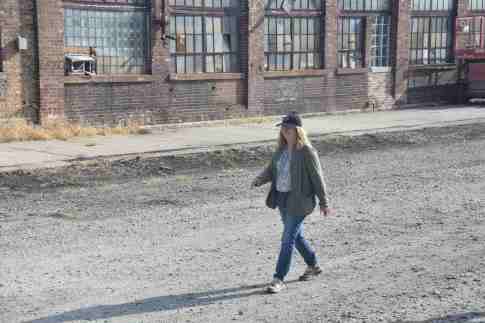
Our friend, Cate Kratville-Wrinn, RRHMA volunteer and co-chair of Union Pacific Historical Society convention, which had just concluded the evening before.
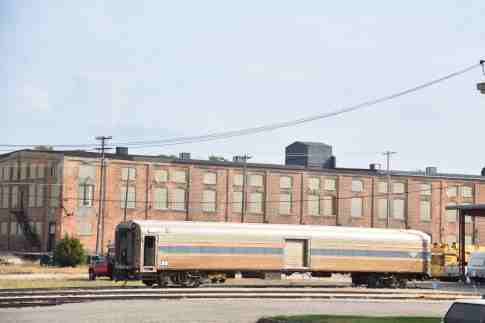
Amtrak baggage car 1738 1996, ex. Amtrak 4641 1980, exx. Amtrak 4447 1971, nee Union Pacific coach 5515, built by Budd Company in 1961.
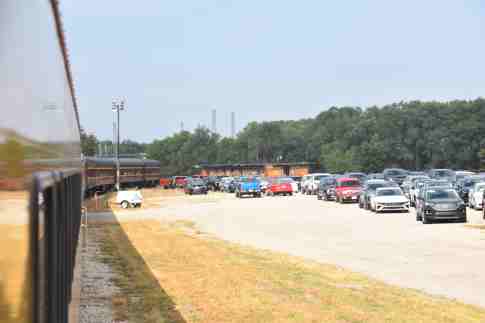
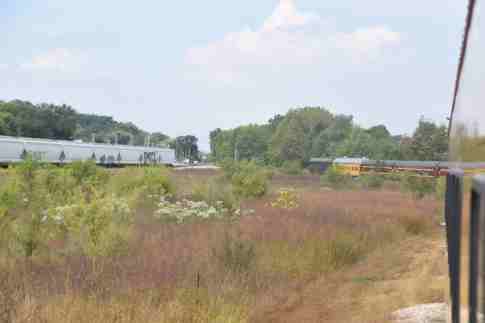
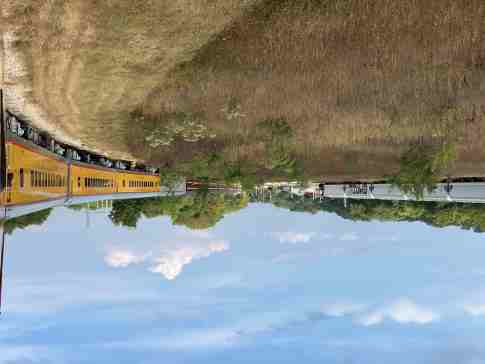
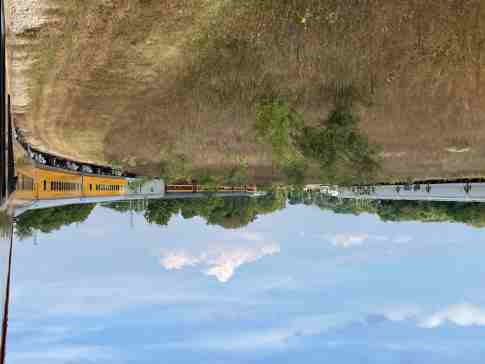
Reversing our train out of Silvis.
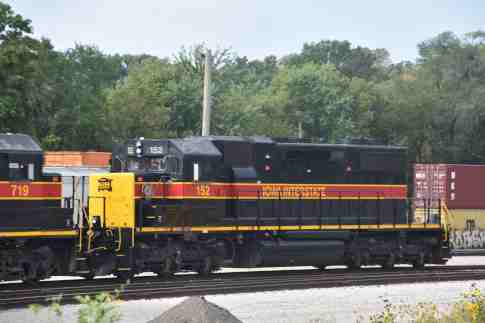
Iowa Interstate SD38-2 152, ex. Locomotive Leasing Partners 2007, exx. General American Transportation 1243, nee Reserve Mining 1243, built by Electro-Motive Division in 1978.
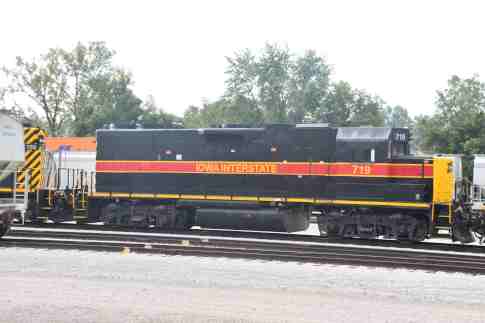
Iowa Interstate GP38-2 719, ex. Locomotive Leasing Partners 2337, exx. Union Pacific 467, exxx. Union Pacific 1967, exxxx. EMD Leasing 835, exxxxx. Conrail 8035, nee Penn Central 8035, built by Electro-Motive Division in 1972.
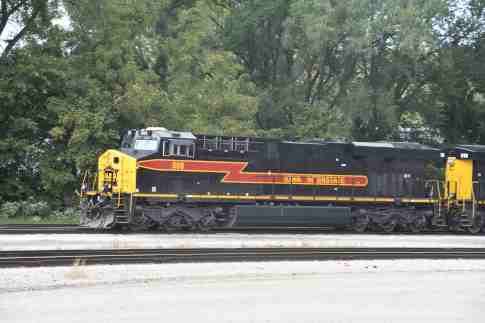
Iowa Interstate ES44AC 508, built by General Electric in 2008.
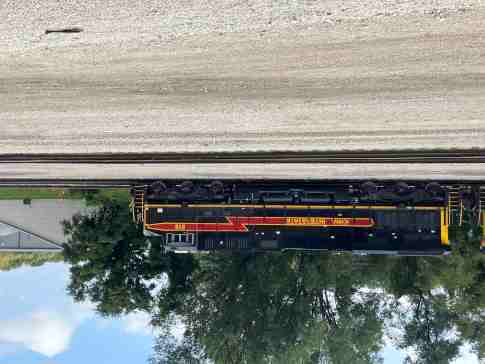
Iowa Interstate ES44AC 518, built by General Electric in 2019.
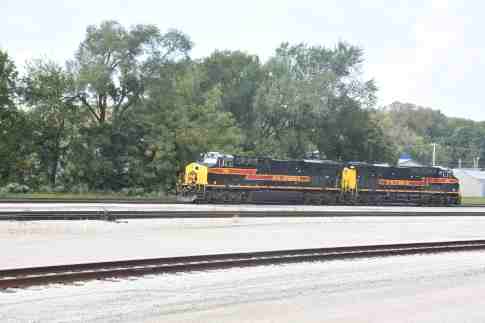
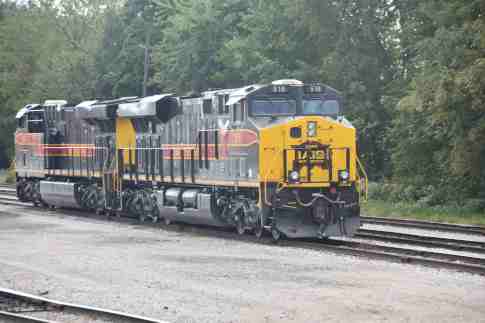
Iowa Interstate 508 and 518.
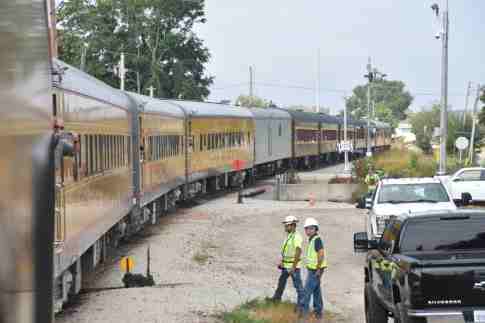
Iowa Interstate employees watching our train pass through the crossing.
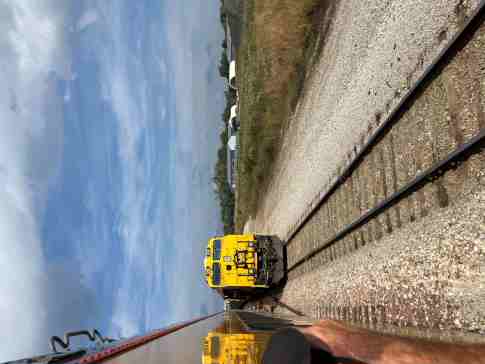
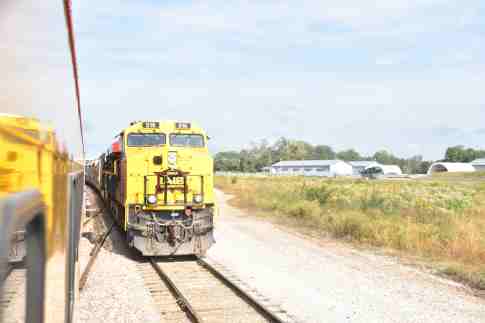
Iowa Interstate ES44AC 516, built by General Electric in 2015.
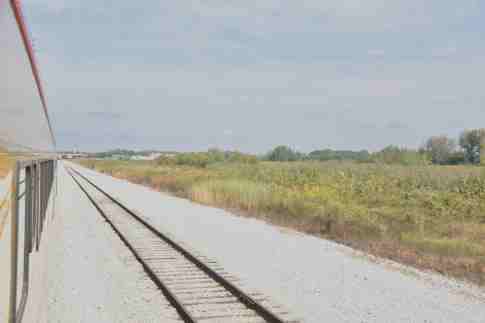
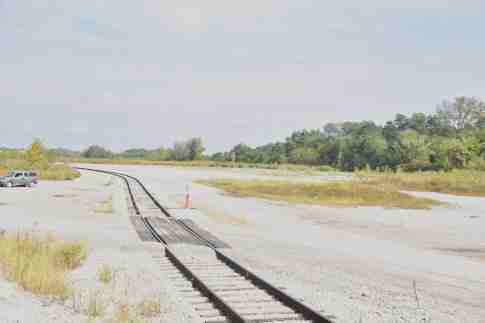
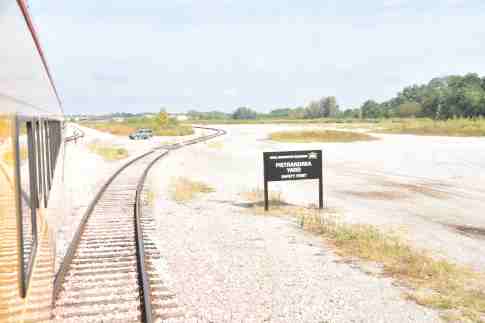
Travelling through part of Iowa Interstate's Pietandrea Yard.
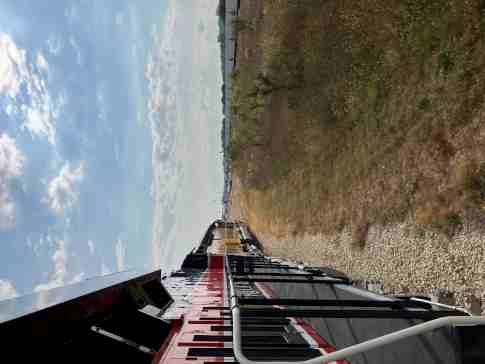
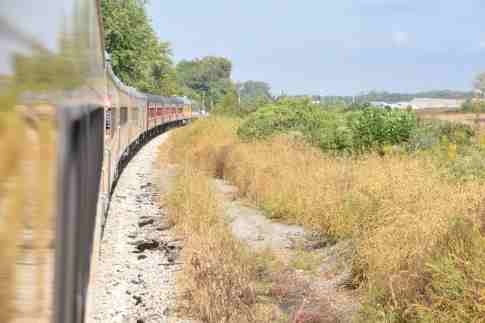
Curving onto the mainline.
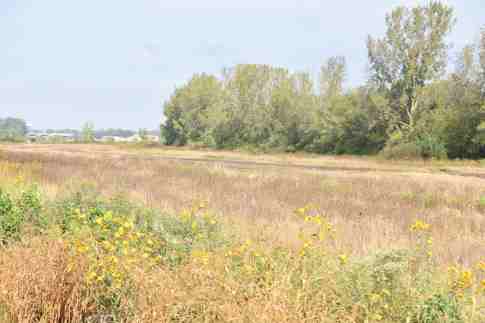
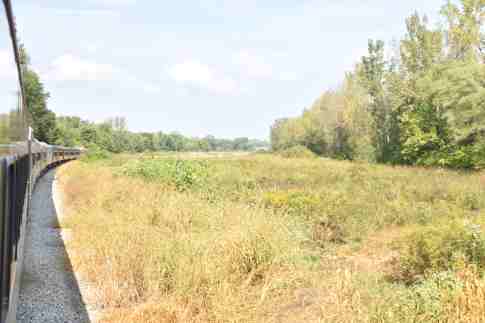
The remains of the Silvis Yard.
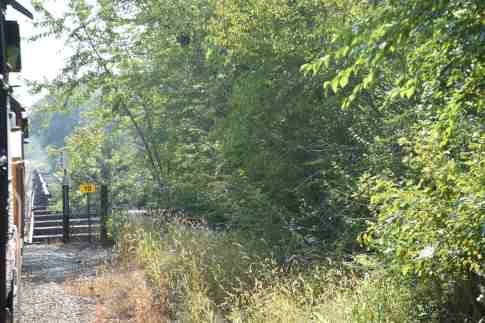
Milepost 171 as we cross a creek.
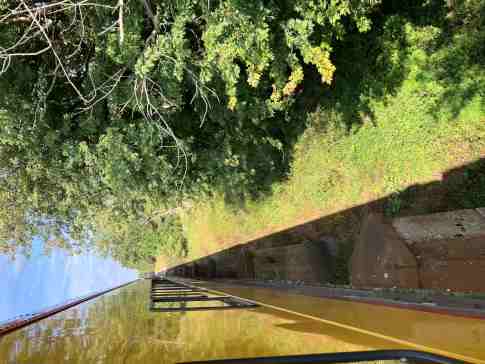
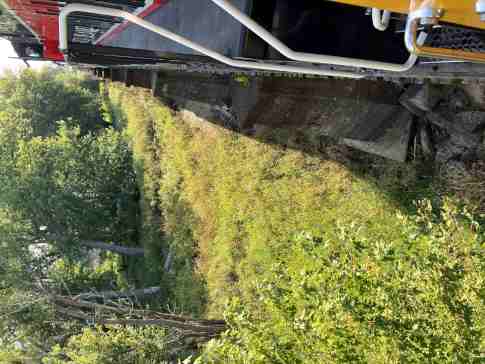
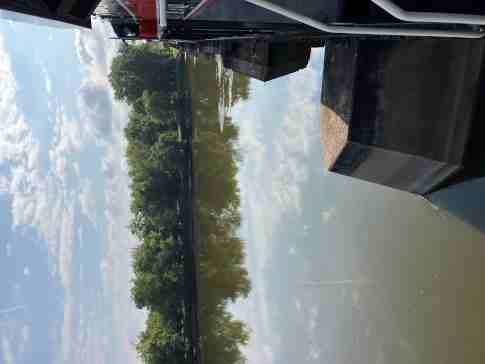
Crossing the Rock River at Milepost 170.8 on a 21 deck plate girder span. The Iowa Interstate uses the north track, and eight of the western spans on the south track have been removed. The bridge is a total of 1,350 feet long.
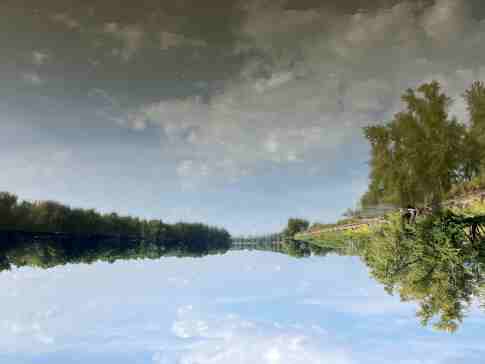
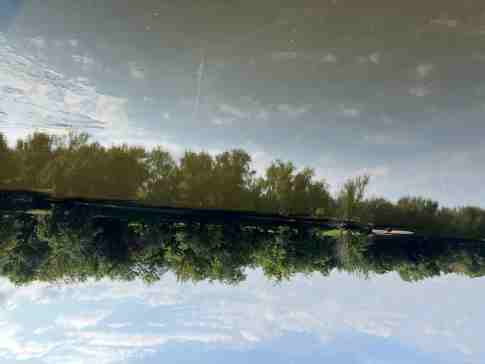
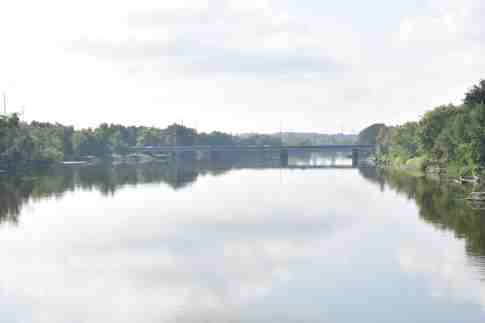
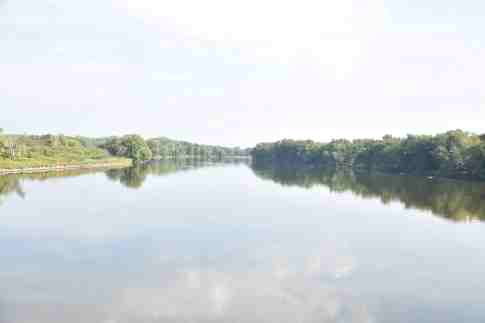
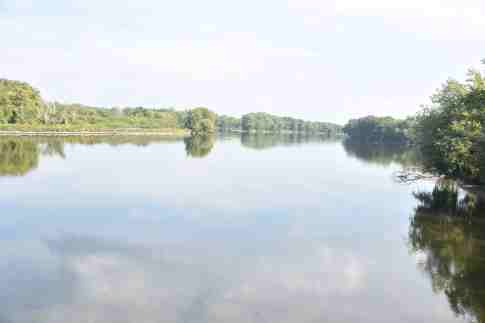
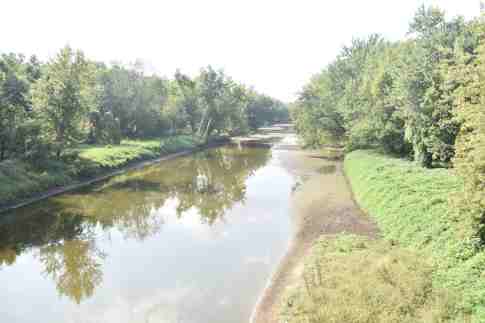
The Rock River is approximately 300 miles long, starts in Fond du Lac County, Wisconsin and wanders along the Wisconsin-Illinois border before entering the Mississippi River in the Quad Cities area, from just a few miles downstream from here. Sources say that the Sauk and Fox Indians called the river "Sinnissippi" meaning "rocky waters".
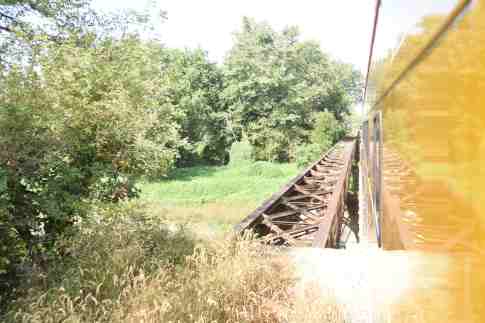
Coming off the bridge.
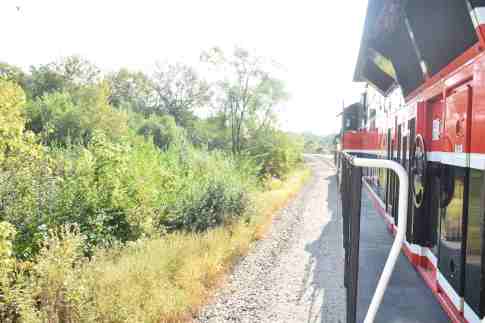
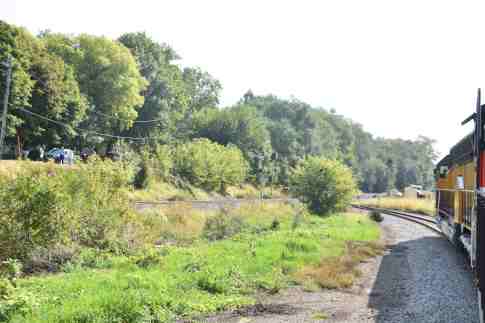
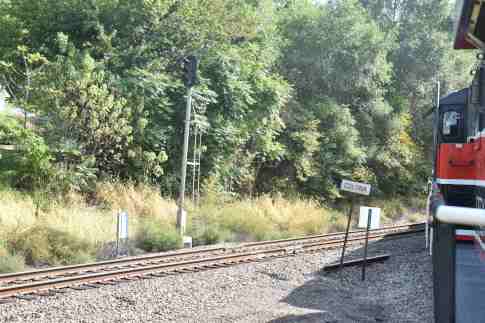
Approaching Colona milepost 169.6. The BNSF Barstow Subdivision, which runs 96 miles between Galesburg and Savanna, crosses the Iowa Interstate at Colona. The crossing used a diamond until November 22, 2003, when a BNSF freight derailed on it. A switch was installed near the old diamond to allow Iowa Interstate access to their mainline east to Chicago, requiring the railroad to use BNSF tracks from East Moline and Colona. It was not until July 7, 2004, that a second switch was installed.
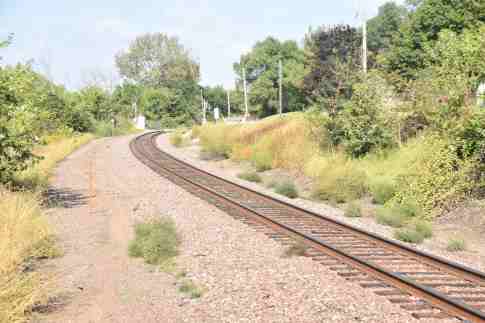
BNSF Barstow Subdivision.
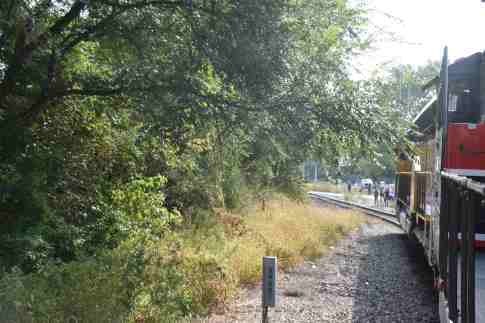
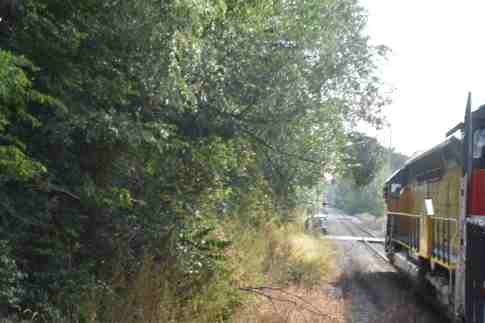
Coming back onto the Iowa Interstate.
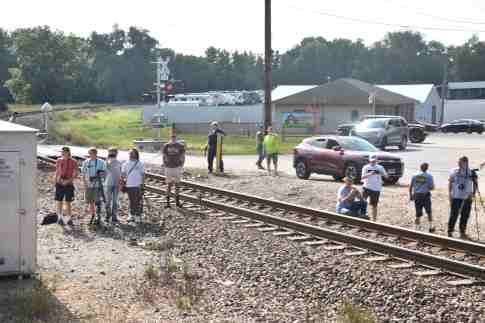
Several photographers were chasing us.
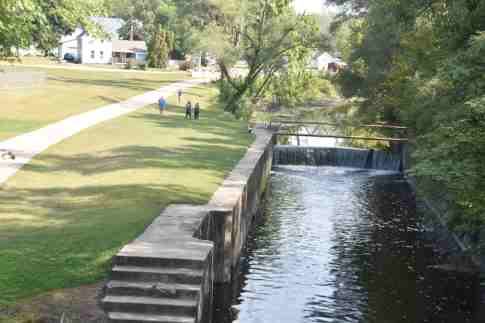
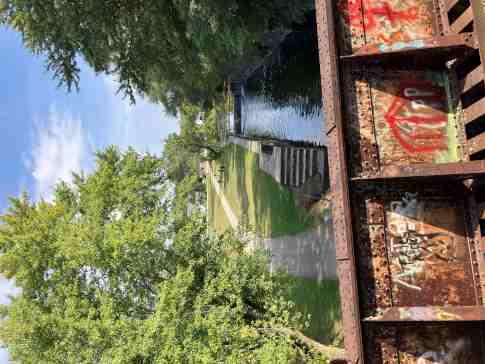
Hennepin Canal Milepost 169.5.
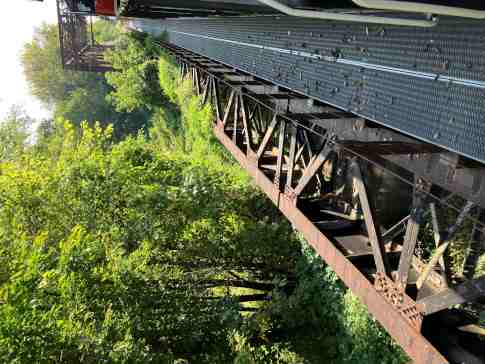
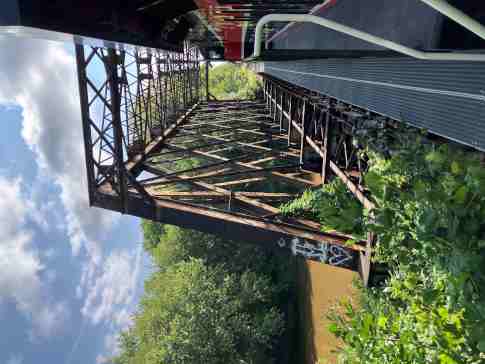
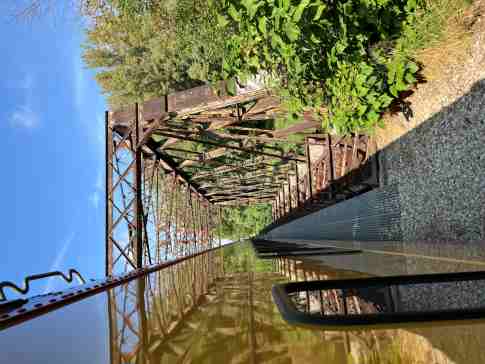
Green River Bridge milepost 169.3. The Green River has closely followed the Rock Island Railroad to the north. When Henry County was drained, the Green River was straightened and channelized as part of the work. The river flows a few miles further south and west before entering the Rock River south of Carbon Cliff. The bridge, from east to west, include a 150-foot lattice through truss span and then five deck plate girder spans of 36' 8" each. The truss was built in 1900 and the bridge is a total of 340 feet long. The Iowa Interstate uses the former south track's alignment over the bridge.
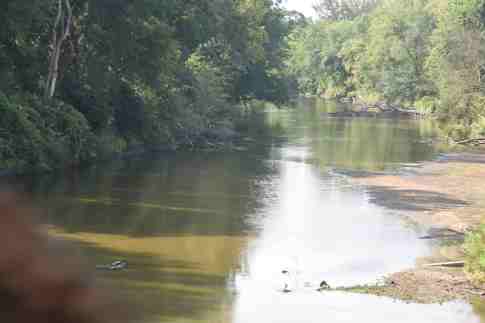
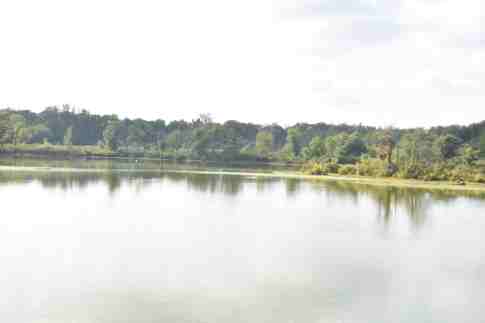
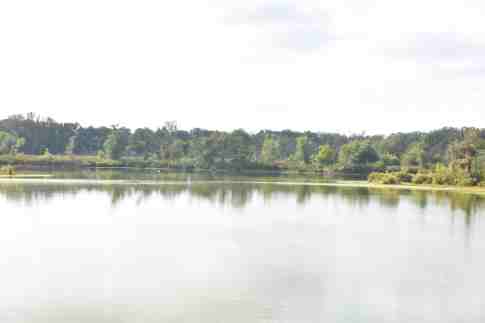
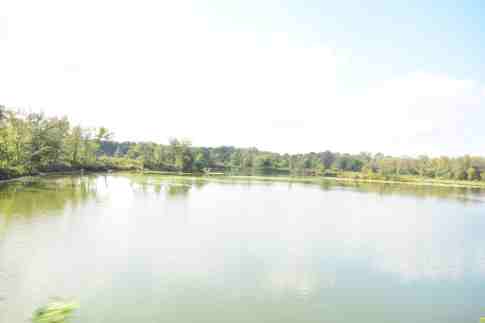
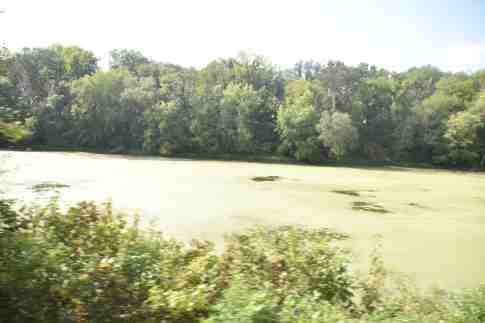
The Green River.
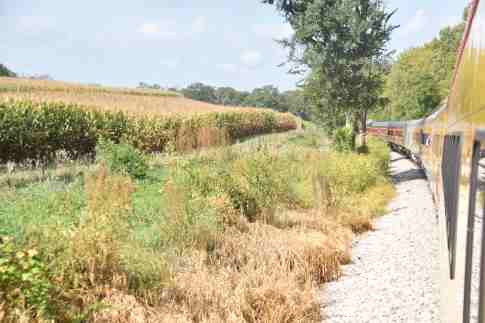
Curving further east.
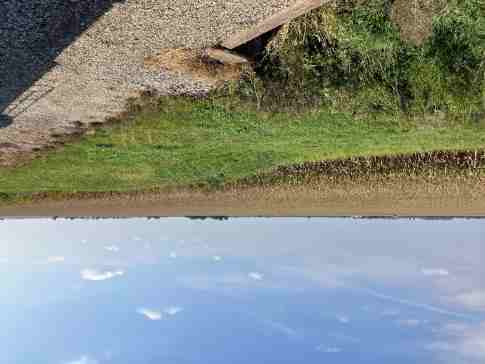
Cornfields are prevalent in this area of Illinois.
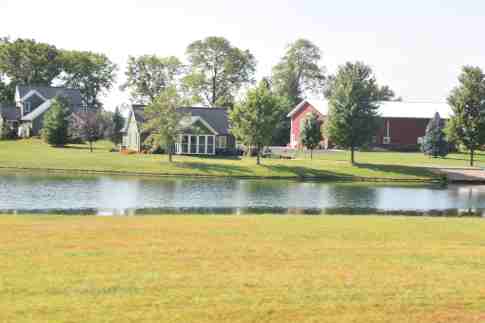
A tranquil setting as we neared Geneseo.
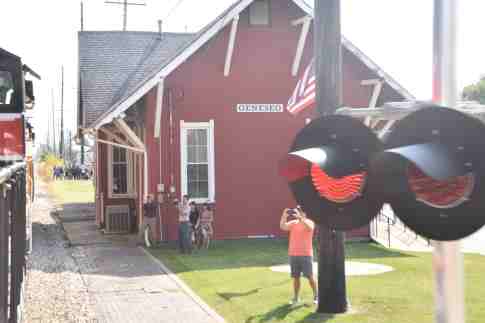
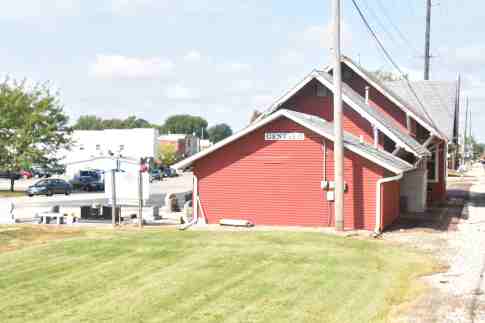
The Chicago, Rock Island and Pacific station in Geneseo, once located at the foot of Court Street. It was built in 1875 to replace an old one just to the south, which became a warehouse. This station served a short branch of the Erie Railroad that ran from Mt. Morris, where connections could be made to New York, Buffalo or Olean, to Avon where connections could be made to Rochester, Attica or Corning. Privately owned, this Depot with a waiting room heated by a pot-bellied stove, a baggage room and a ticket office, was cozy and friendly and served the community well for many years.
Rail service was abandoned in 1940 and the tracks were taken up soon after. Sometime later the Depot became the property of Champion Products, Inc. and was used as a warehouse. In November 1975, Champion announced that it planned to raze it to make room for a parking lot. Following an emergency meeting with concerned preservation minded representatives of APOG, Champion agreed to put their plans in abeyance. The village became interested in seeing it moved to Highland Park for use as a recreation center and agreed to assist financially. With further funds from the Gannett Foundation, Children’s Artist Series, the Young at Heart and private sources, APOG was successful in the moving and restoration of the building. Additions put on after 1941 obscured the original architectural features, and they were removed. In February of 1976, the Depot made its journey to Highland Park. Dr. Paul Hepler headed a committee to restore and convert the building, and on July 4, 1976 it was turned over to the village as a meeting place and recreation facility in ceremonies presided over by APOG President, Jeanette McClellan and Mayor Ann Duff.
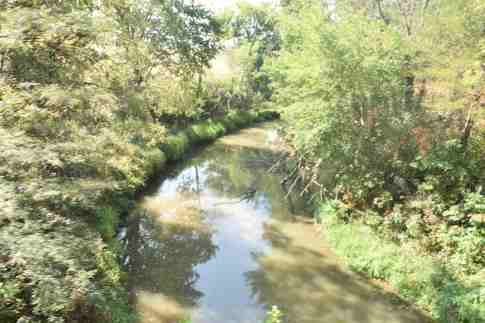
Spring Creek Bridge at milepost 1454.6. This deck plate girder bridge includes for four spans, all less than 35 feet long. Throughout this area, the railroad is climbing over low ridges and dropping back down into a number of creeks and marsh bottoms. The grade in each direction from here to 0.4 percent to 0.5 percent. Spring Creek flows to the north under the Hennepin Canal and into the Green River.
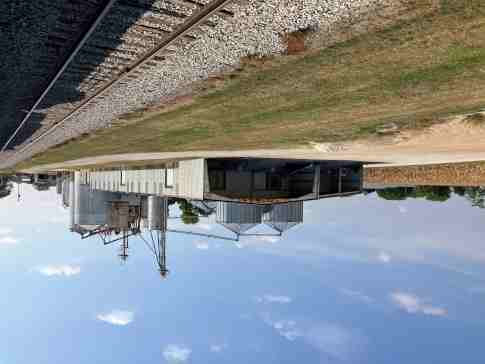
Atkinson Grain and Fertilizer elevator in Atkinson, milepost 151.5.
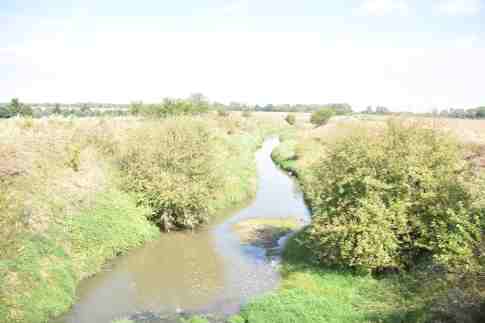
Mud Creek Bridge milepost 146.5. Mud Creek drains much of the area west of Annawan. Note the unused second grade to the north, demonstrating that the Rock Island mainline was two tracks through here. The small pony truss bridge on the local road to the north was built in 1899.
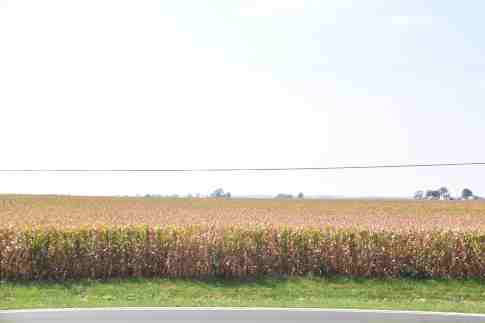
Corn field and Highway 30 paralleled the former Rock Island tracks.
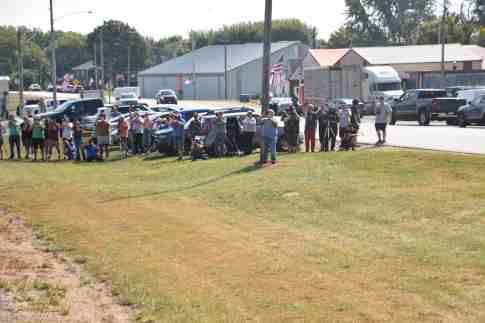
Photographers were out in force chasing our special train.
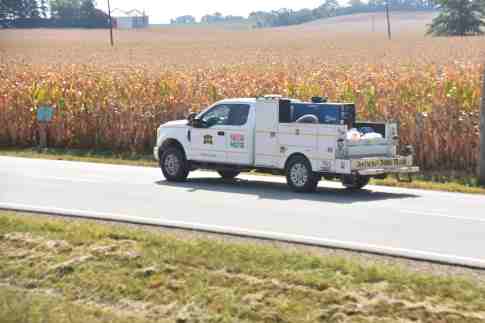
An Iowa Interstate truck followed our train.
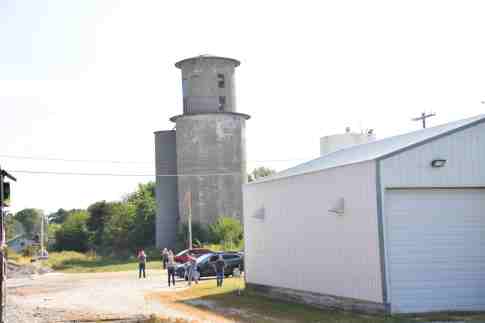
Railfans and the public at Annawan.
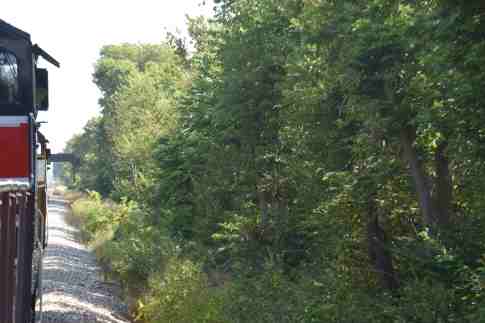
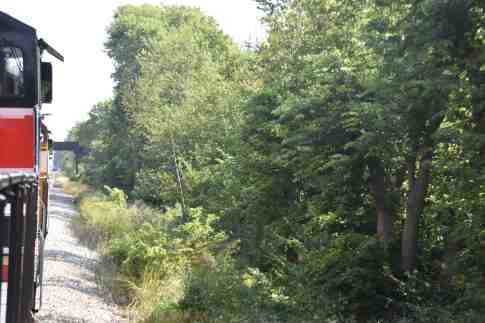
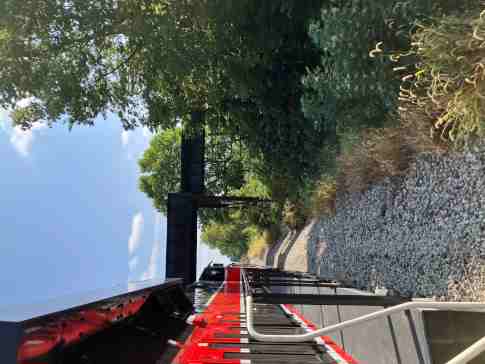
Union Pacific Bridge overhead at milepost 134.2 Iowa Interstate passes under Union Pacific, the former Chicago and North Western line between Peoria and the main line at Nelson. Union Pacific acquired this line when it bought the railroad in 1995.
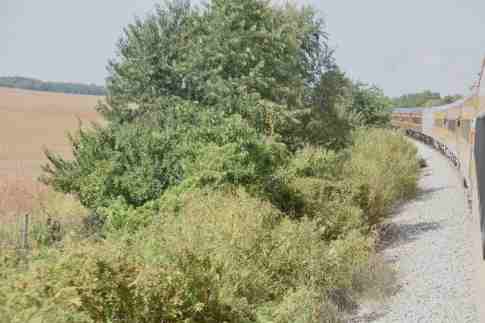
Rounding a curve.
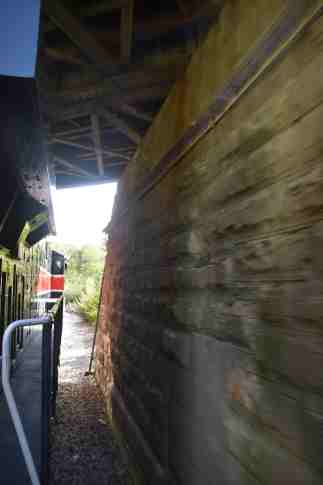
Passing under the BNSF Chicago-to-Omaha mainline at Milepost 129.7.
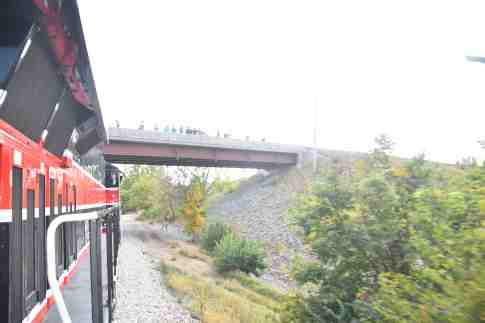
Photographers on the Wyanet Road overpass milepost 128.7.
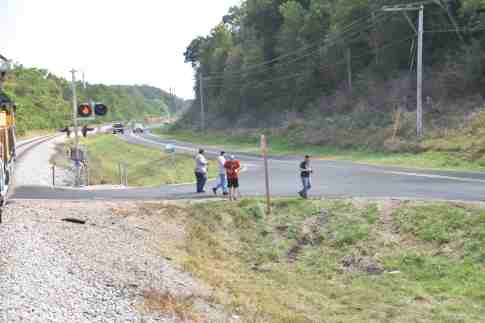
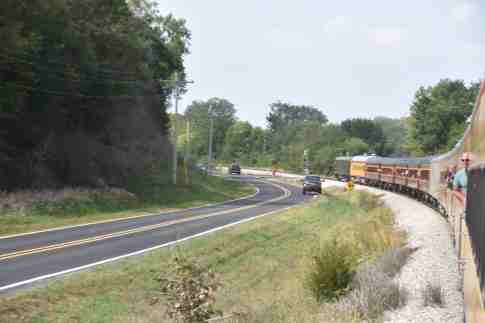
The junction of 1030N and 2050 E in rural Bureau County, where Elizabeth and I had photographed Nickel Plate 765's excursion during Train Festival 2011.
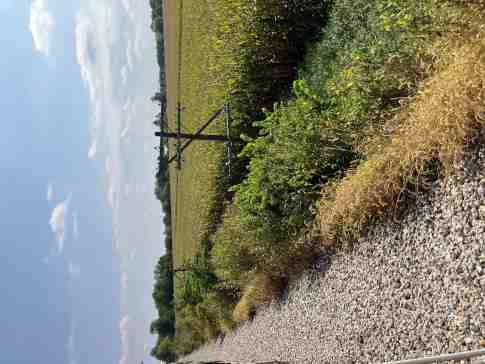
Rock Island telegraph poles with a surprising number of insulators for this day and age.
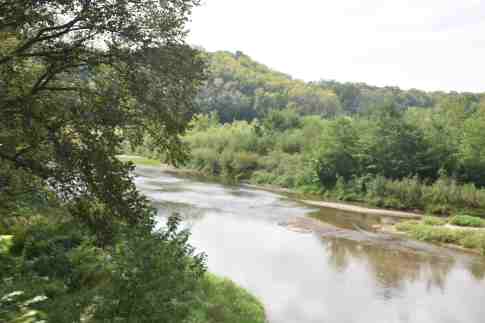
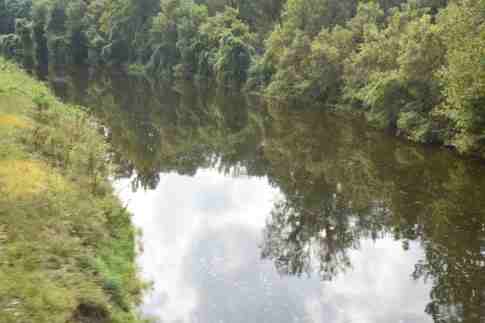
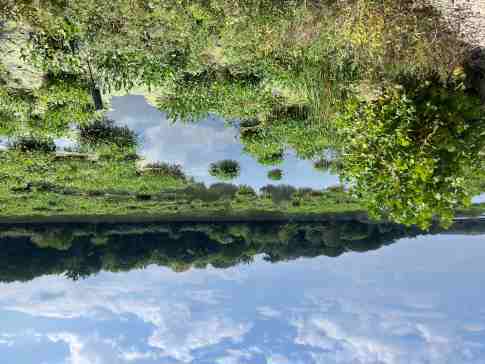
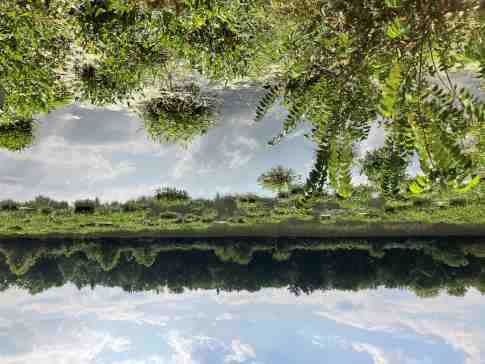
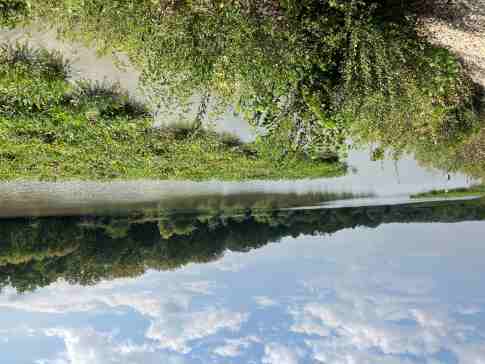
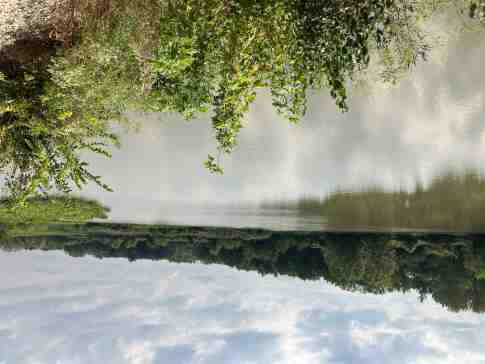
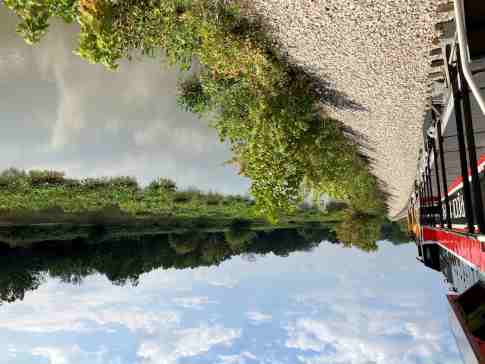
Big Bureau Creek.
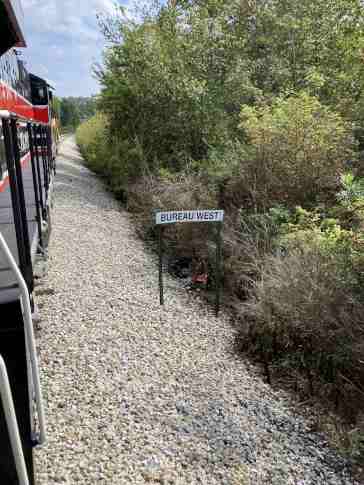
Bureau West milepost 166.7.
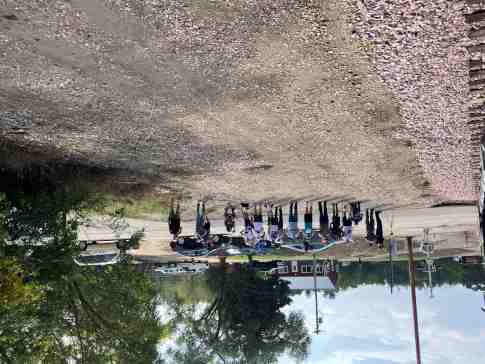
Railfans at Highway 26/29.
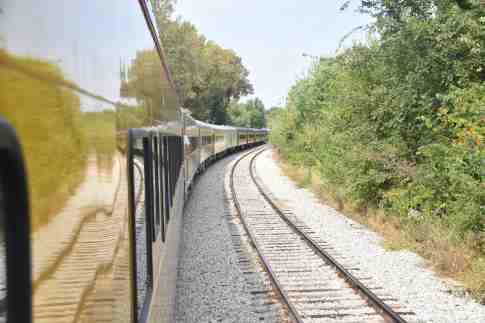
The rear of our train.
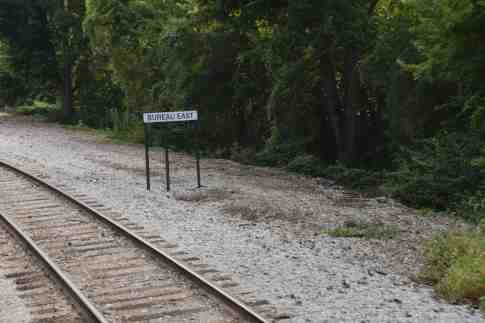
Bureau East milepost 116.3.
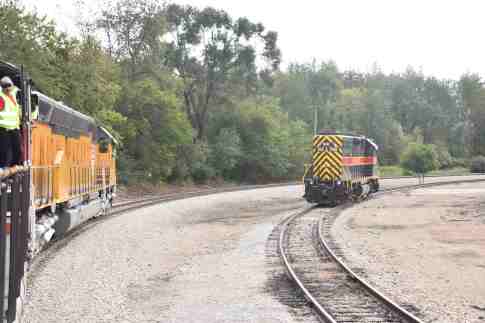
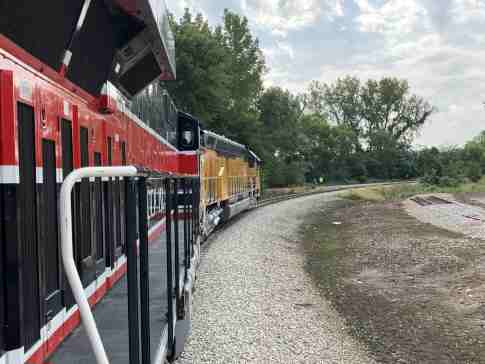
Curving onto the wye.
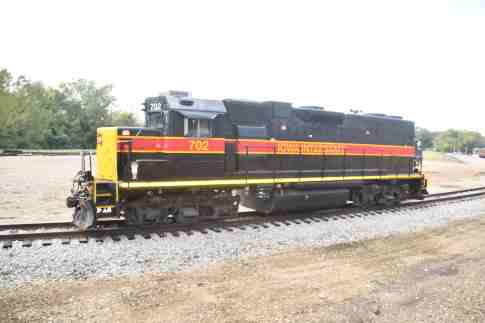
Iowa Interstate GP38-2 702, ex. Locomotive Leasing Partners 2203, exx. Union Pacific 412, exxx. Union Pacific 1912, exxx. EMD Leasing 744, exxxxx. Conrail 7944, nee Penn Central 7944, built by Electro-Motive Division in 1972.
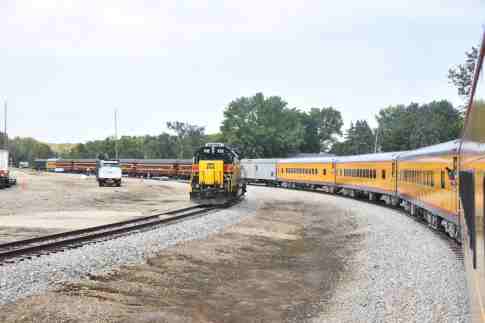
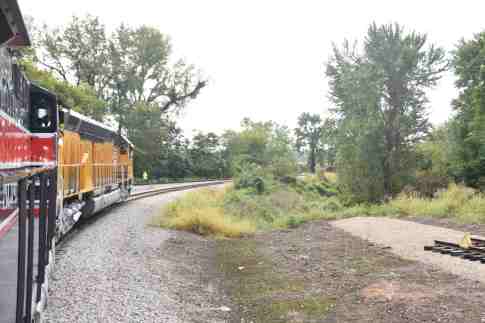
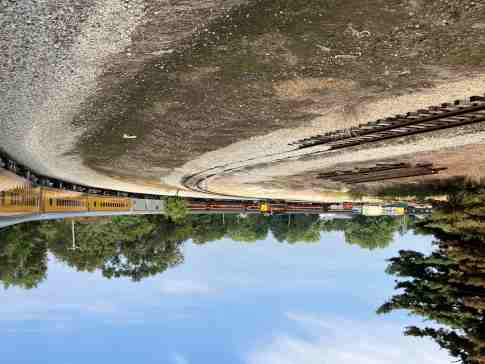
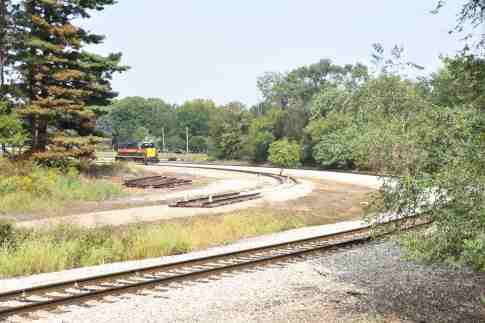
Continuing on the wye.
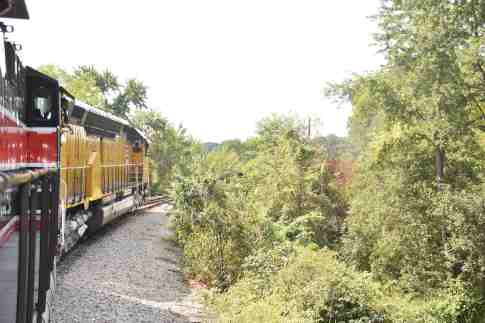
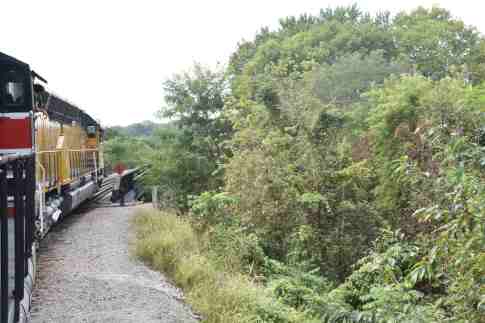
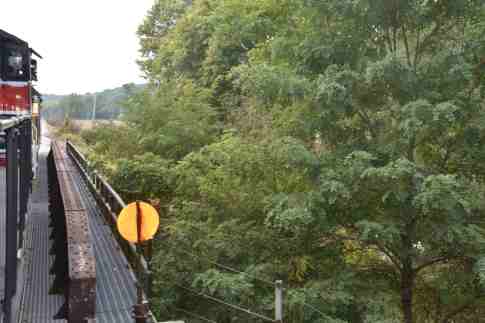
East Bureau Creek Bridge.
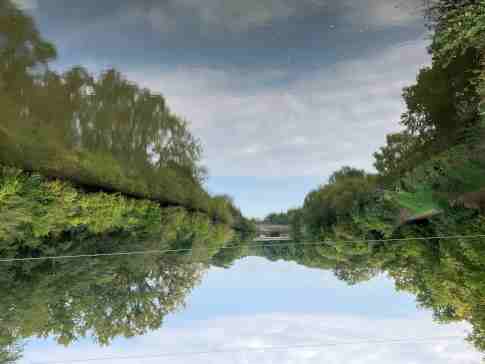
Hennepin Canal.
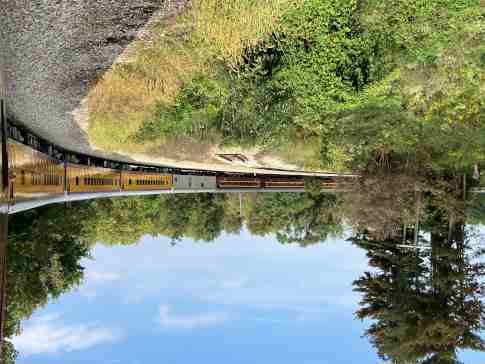
The rear of our train.
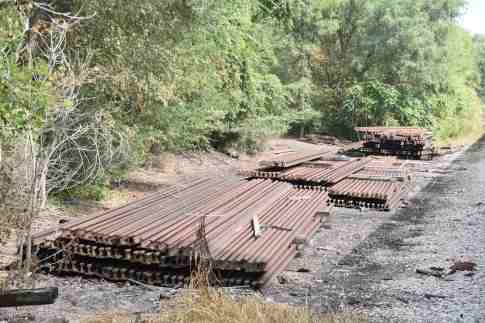
A stockpile of rail.
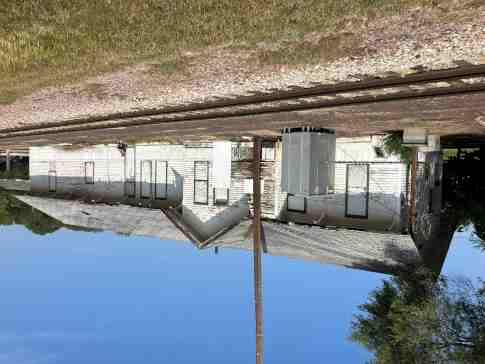
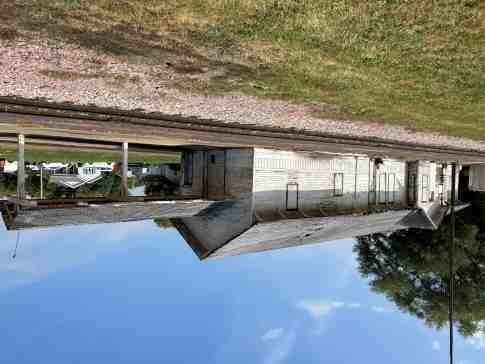
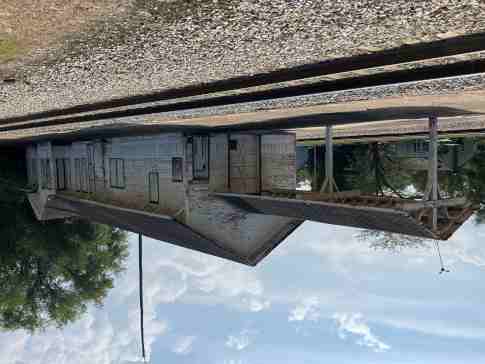
The Chicago, Rock Island and Pacific station, looking rather dilapidated.
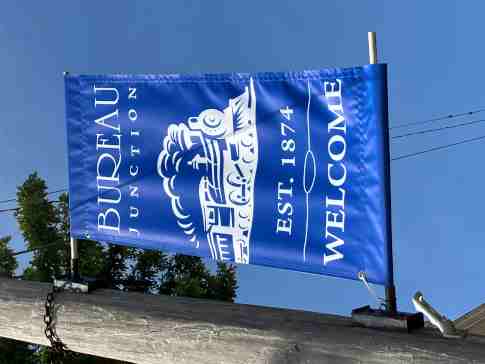
Bureau Junction city banners. Upon arrival, everyone detrained and joined the queue for the barbecue lunch, which was excellent. There was plenty of time for photography and the perfect summer weather lent itself to excellent pictures.
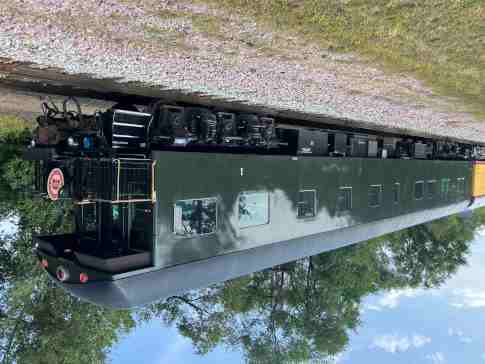
Missouri-Kansas-Texas heavyweight coach 403 nicely brought up the rear.
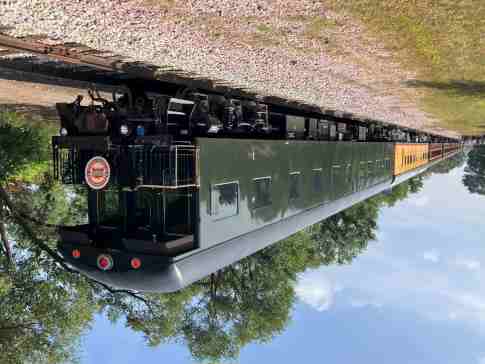
The excursion train at rest.
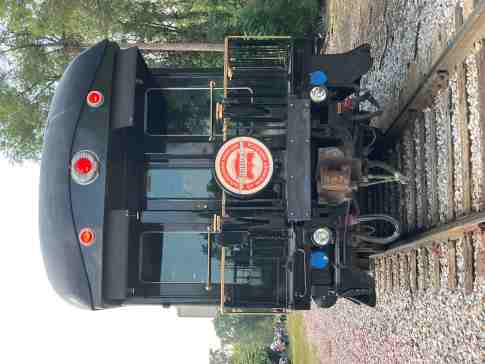
A nice touch of class was the Railroading Heritage of Midwest America's drumhead.
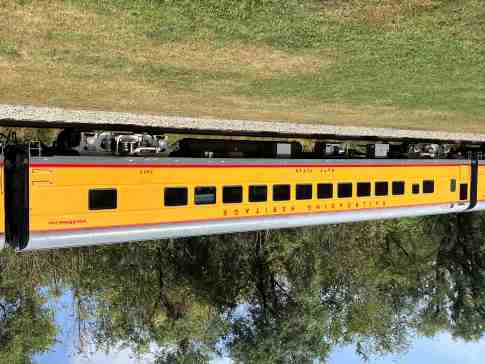
Railroading Heritage of Midwest America 44-seat coach "Katy Flyer".
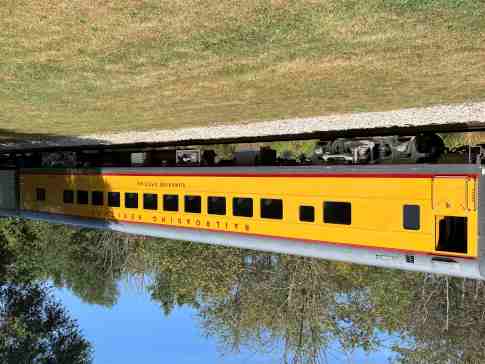
Railroading Heritage of Midwest America coach 5480 "Sunshine Special".
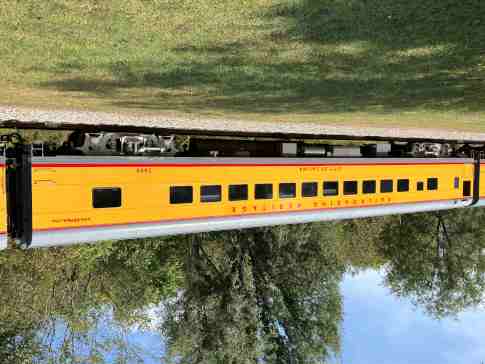
Railroading Heritage of Midwest America coach 5486 "City of Salina".
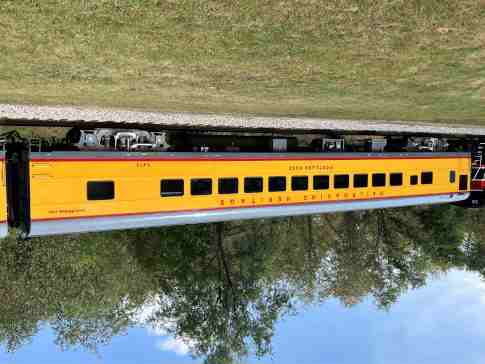
Railroading Heritage of Midwest America coach 5473 "Portland Rose".
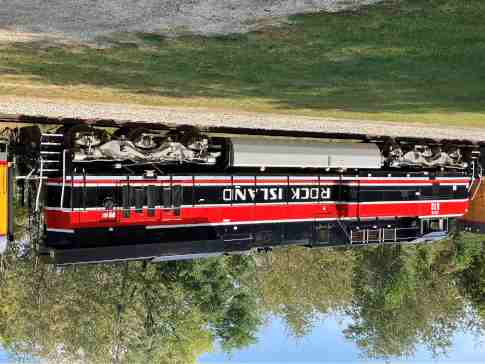
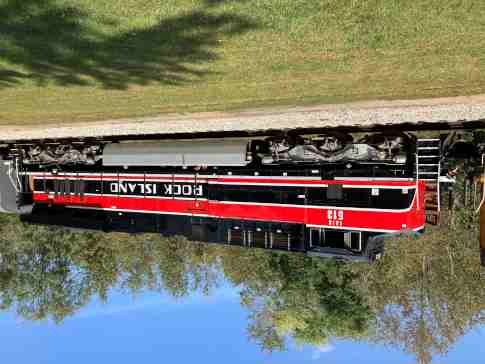
Iowa Interstate ES44AC 513, built by General Electric in 2010, painted in a Rock Island heritage livery.
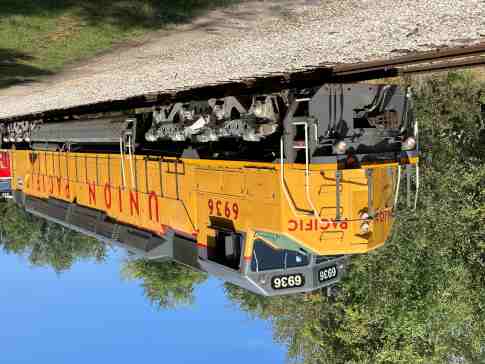
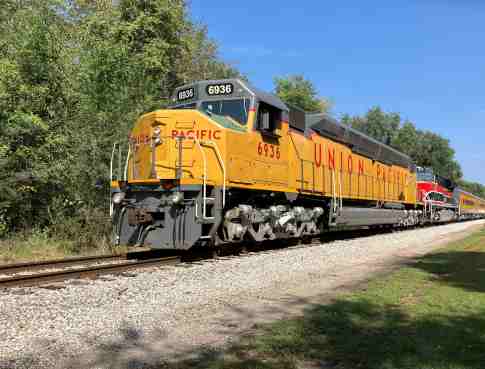
Railroading Heritage of Midwest America DDA40X 6936.
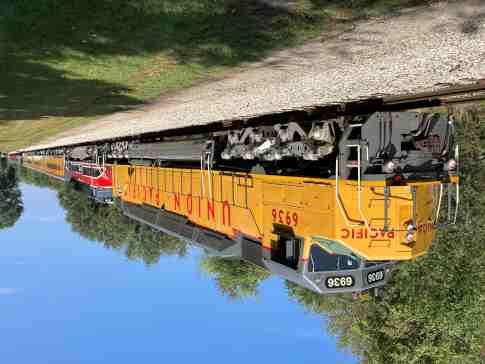
The whole train.
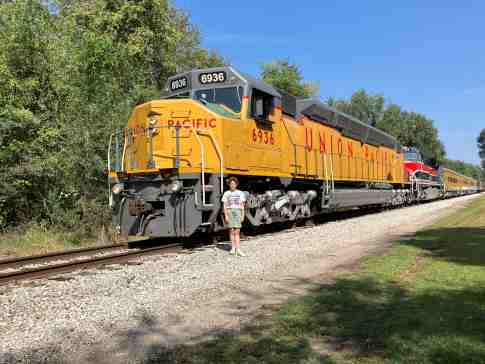
Elizabeth beside the Centennial; her first set of excursions with this locomotive.
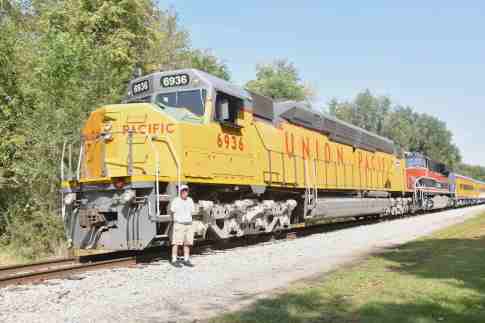
The author on his second set of excursions with the Centennial.
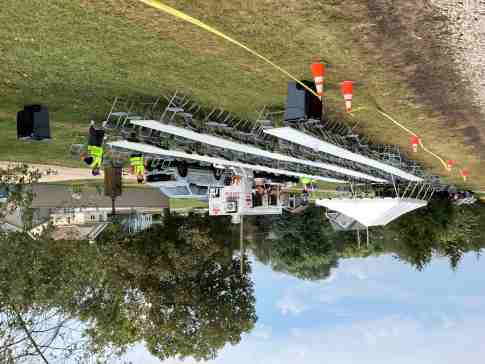
This was how the seating area was set up for our lunch, as seen from the train upon our departure.
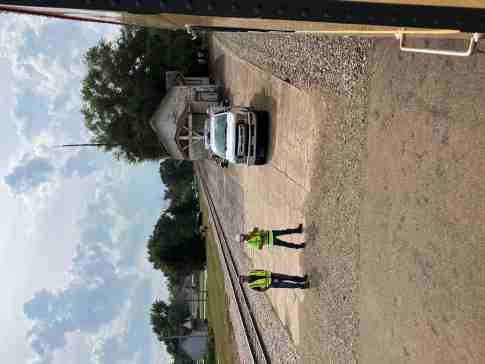
Iowa Interstate employees watching as we left Bureau Junction.
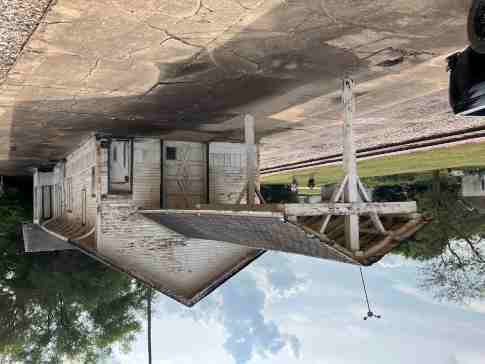
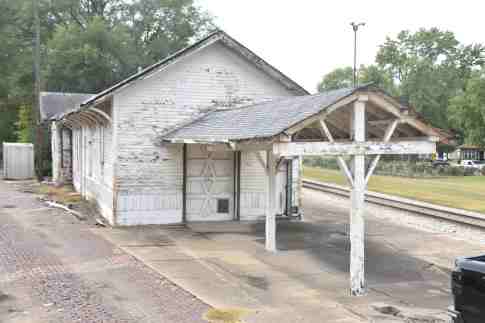
Passing the station on the other track.
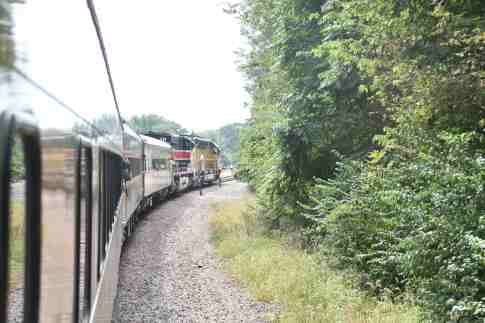
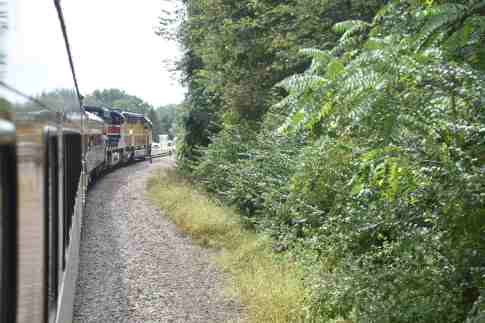
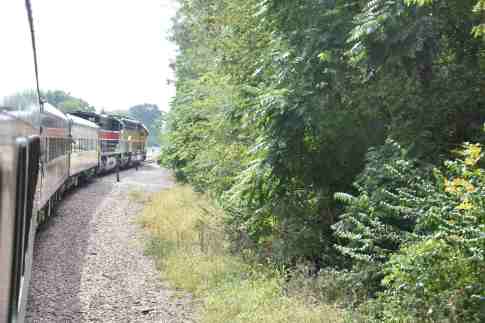
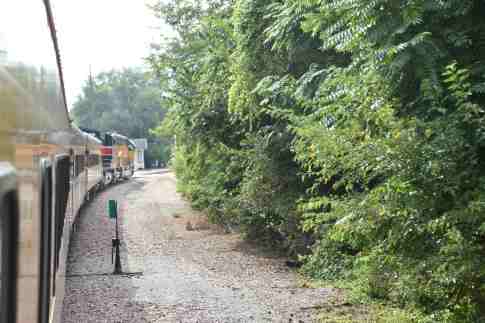
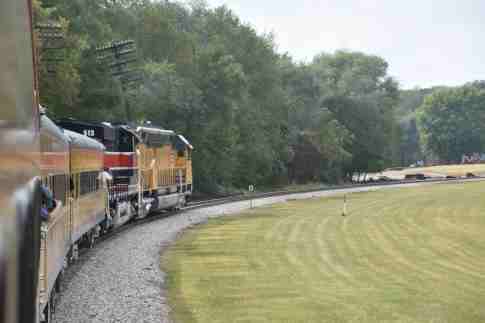
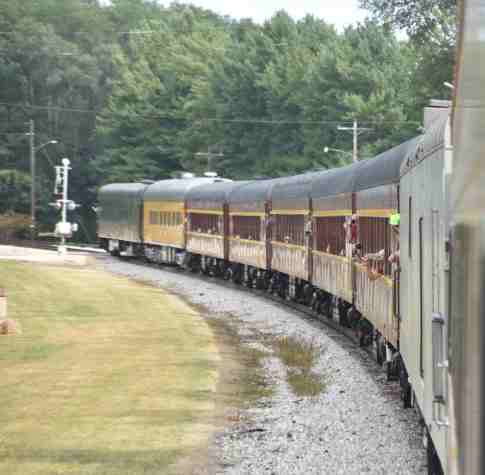
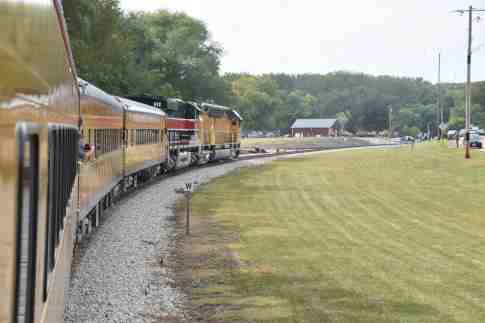
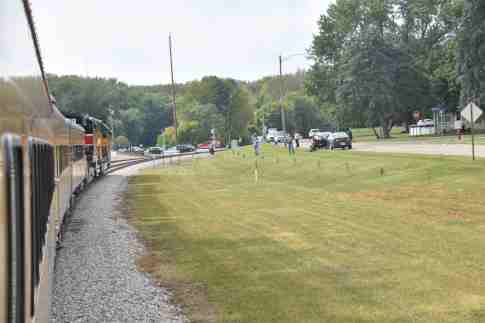
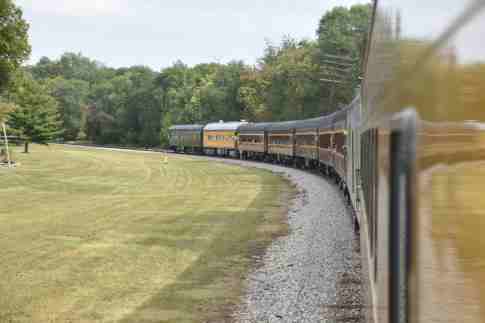
The journey around the other legs of the wye.
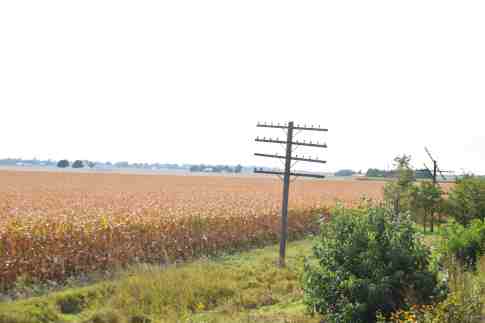
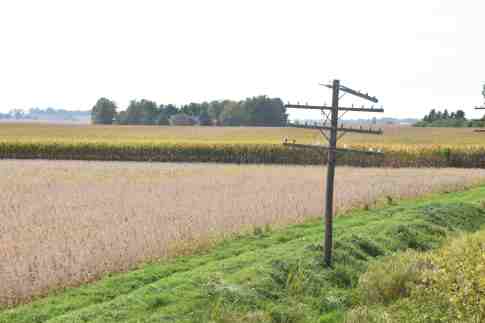
Illinois cornfields and telegraph poles.
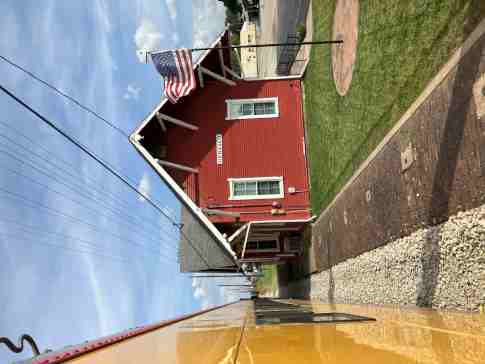
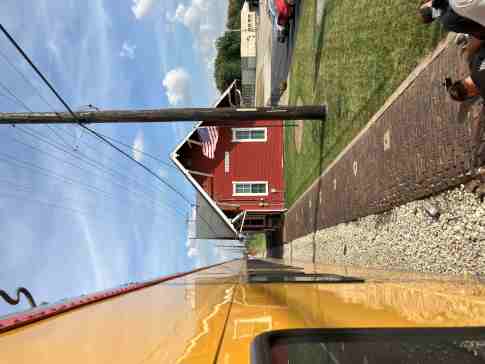
Passing the restored station in Geneseo as we made our way back to Silvis.
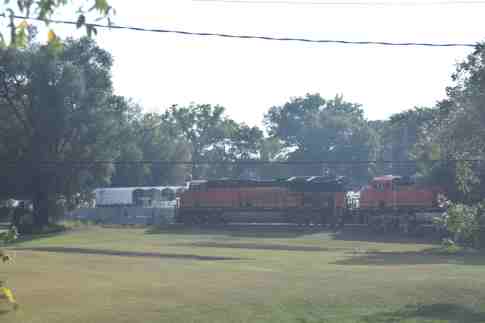
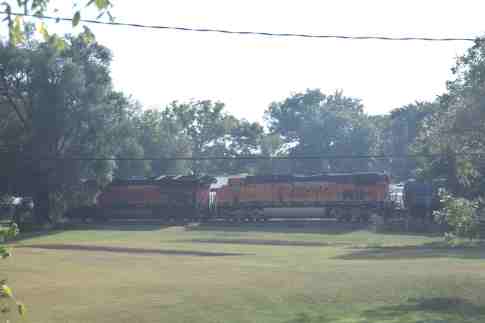
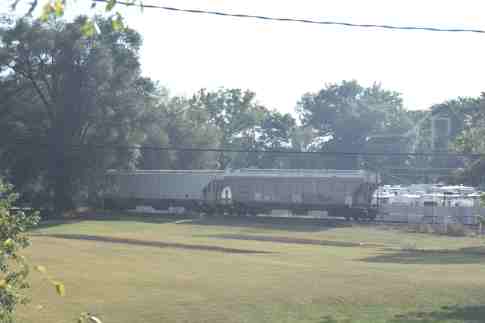
Just before Colona, we had to wait for a BNSF freight train on its way to Galesburg. It is seen from my coach window.
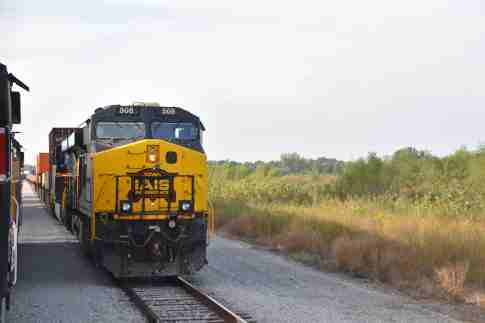
Iowa Interstate ES44AC 508 leading a freight train at Silvis.
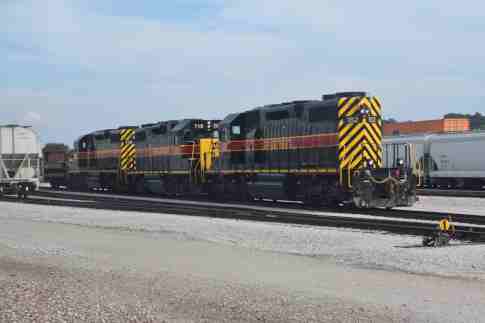
Iowa Interstate locomotives in the yard. After an exciting excursion, we returned to the boarding area and detrained. Elizabeth and I drove to Davenport for dinner at Jersey Mike's then returned to the hotel.
9/22/2025 We did not realize how tired we were, but slept for eleven hours. Once arisen, we went to B's Restaurant for breakfast before packing and checking out.
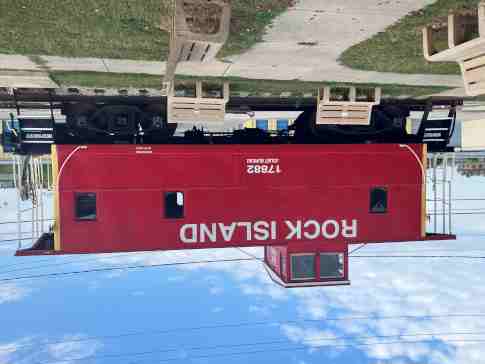
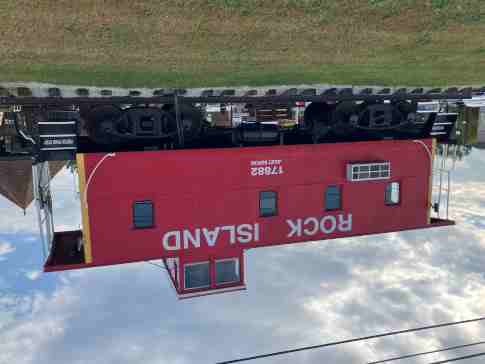
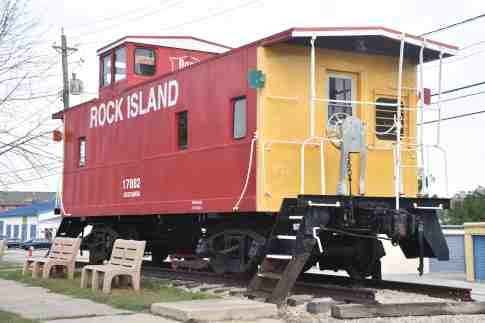
Chicago, Rock Island and Pacific caboose 17882, built by the railroad in 1930, is on display in Silvis.
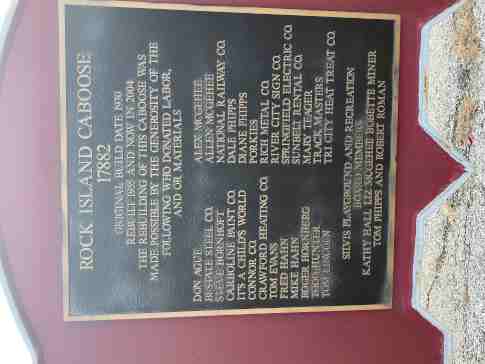
The caboose restoration plaque. We started the drive home.
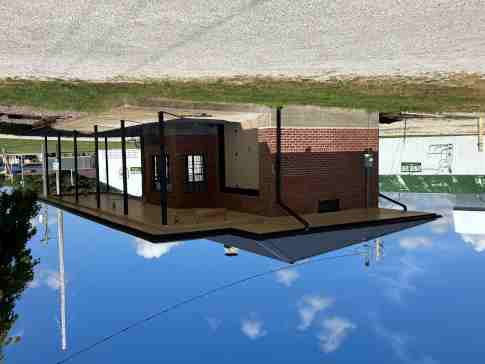
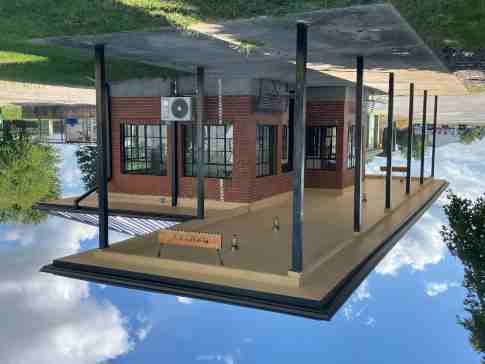
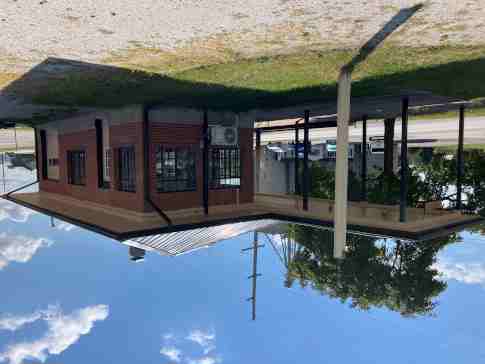
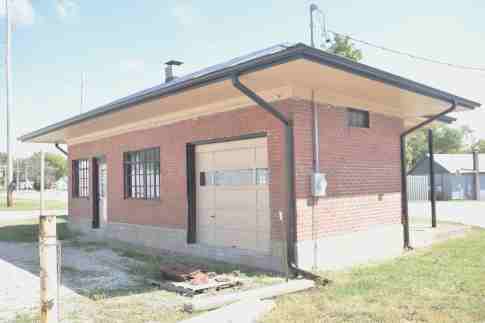
The only stop we made before arriving in Columbia was in Centre, Missouri for the St. Louis & Hannibal station. This railroad was originally incorporated as the St. Louis & Keokuk Railroad on February 16, 1857. Beginning in its early construction, it was largely financed and (later) owned by John Insley Blair, Blairstown, New Jersey (1802–1899), and Moses Taylor, New York banker (1806–1882). Taylor died in 1882 and his protégé Percy Pyne remained on various boards.
On February 7, 1884, it went into receivership and was sold to Blair on December 8, 1885, for $370,000. At that point it became the St. Louis & Hannibal Railway Company. The Perry Branch was surveyed and graded in the 1870s but was not built until 1891-92. The first train reached Perry in July 1892; a dual expansion in that track was extended from Oakwood into Hannibal and a brick depot was built at 501 South Main Street in 1892. This would be the final configuration; Mainline - Hannibal to Gilmore, Missouri, and Branchline - Ralls Junction.
In 1893 the St. Louis, Hannibal and Kansas City (Perry Branchline original name) merged into the St. Louis and Hannibal Railway. John Blair died in 1899, at age 97, with an estimated estate of $70–90 million. His son, Dewitt Clinton Blair then assumed control but died on June 3, 1915. In 1917, the St. Louis & Hannibal went into receivership again and was sold to Robert LeRoy on behalf of Blair's grandson, C. Ledyard Blair for $30,000. It then was reorganized into the St. Louis & Hannibal Railroad.
Around November 1919, the "Short Line" was sold to John Ringling (of Ringling Bros. & Barnum & Bailey Circus fame) for approximately $325,000. Between 1919 and 1930 he invested a further similar amount in rebuilding efforts. The depression was not kind to the St. Louis & Hannibal and Ringling. So, in 1932, the lower end of the mainline (below Bowling Green to Gilmore) was abandoned to save the rest of the system. John Ringling died on December 2, 1936 and his nephew, John Ringling North, assumed ownership of the railroad and circus interests.
Only fives miles of the southern mainline was saved and it became the St. Louis & Troy Railroad running from Troy to Moscow Mills, Missouri and operated until October 1, 1960. It served local industries and was connected to the Burlington line by a siding at Moscow Mills. The St. Louis & Troy line was owned largely by local businessmen in cooperation with the Ringling family until 1944 when 25 businessmen solidified their ownership by purchasing it outright.
Beginning in 1933, the StL&HRR began operating four Mack AD model railbuses to bolster passenger service. It also ran dedicated freight trains as well, which helped for a time but eventually the owners and management abandoned the Perry Branch in 1943. The mainline was abandoned in 1944. and the company was finally dissolved March 12, 1945.
The St. Louis & Troy remained in operation but was finally abandoned February 1, 1961. This was the last remainder of the line which began life in 1857 and construction began in 1871. The railroad was largely not very profitable during its entire life as it served a remote area with small revenues. The building of hard surface roads (US Highway 61), the ever-expanding Foster Bus Line routes, growing trucking industry and finally the personal automobile spelled its demise.
| RETURN TO THE MAIN PAGE |