




In July, Elizabeth and I learnt of a pair of special excursions with Union Pacific DD40AX 6936 which were part of this year's Union Pacific Historical Society convention in Rock Island, Illinois. We both joined the society and made plans to attend the four-day event.
I drove us north and east to Quincy, Illinois and our first depot of the trip.
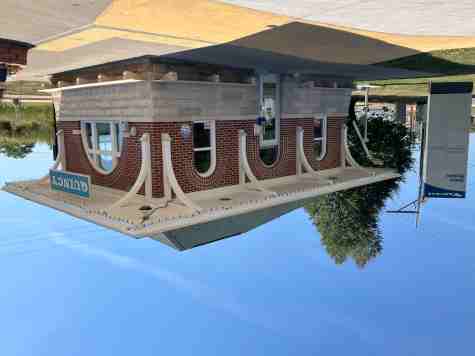
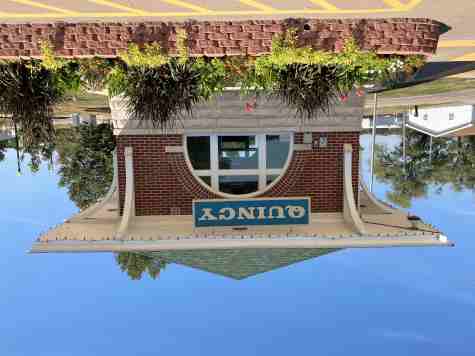
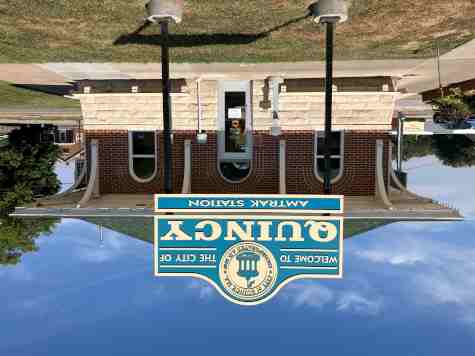
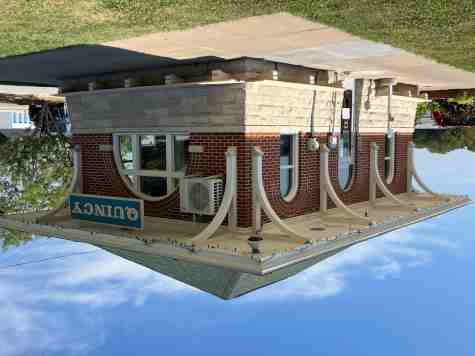
The Quincy depot was built in 1985 and designed to look like a local streetcar depot from the early 1900s, such as the one standing a few miles west at the state-owned Illinois Veterans Home. Prior to 1985, passengers boarded at a temporary station in a warehouse parking lot six blocks west, which was established after the West Quincy, Missouri station was repeatedly inaccessible due to flooding.
The West Quincy station, behind a levee across the Mississippi River from Quincy, had served as the city’s station since it was built by the Chicago, Burlington & Quincy Railroad in 1953. The development of Amtrak facilities on higher ground in Illinois proved wise, as the West Quincy station was wiped out in 1993 during what is locally still called "The Great Flood". A massive bridge across the Mississippi River at Quincy was first built by CB&Q in 1868, completing that portion of what came to be called "The Q", with connecting tracks to the city’s first riverfront passenger and freight terminals, which had opened four years earlier.
By 1870, Quincy temporarily surpassed Peoria as the second largest city in the state and outgrew the railroad facilities built in 1864. By 1899, CB&Q built a larger station at Second and Oak streets, two blocks east of the river, topped by a tall tower overlooking the Mississippi. A miniature train served as a weathervane atop the tower. This station, a freight terminal and engine house were used by the Q until the West Quincy station was opened 54 years later. This enabled passenger trains to go directly across the Mississippi on a new river bridge and without a delay-prone reverse move down to the Quincy station. By 1962, much of the CB&Q riverfront property in Quincy was demolished, with a remnant of the freight terminal converted into a warehouse and still in use today.
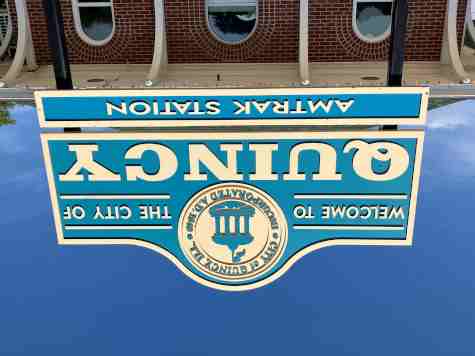
Welcome to the City of Quincy Amtrak station.
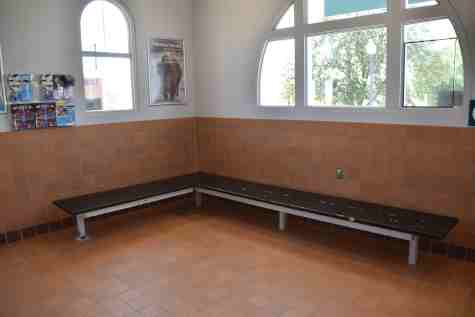
The station interior. We left here and drove US 24 to Illinois Highway 61 to Macomb.
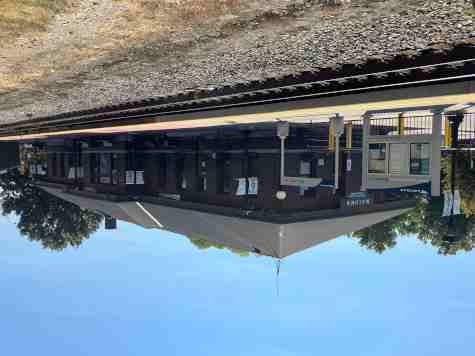
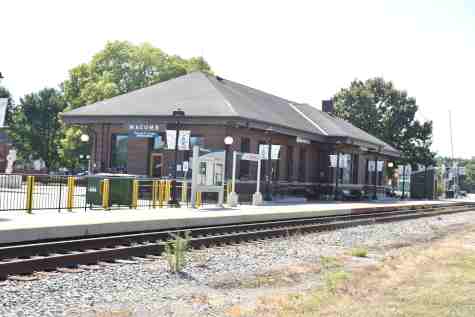
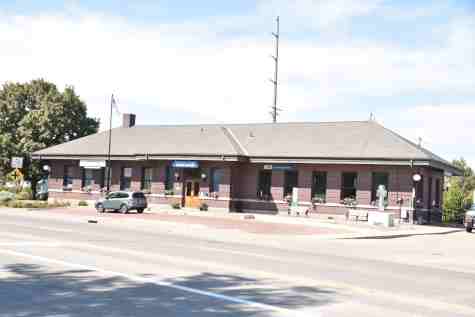
The Chicago, Burlington and Quincy Macomb depot built in 1913 at a cost of approximately $26,000. It is composed of brick trimmed in sandstone and topped with a hipped roof whose wide eaves protect passengers from inclement weather. Numerous Go West Transit bus routes serve the station area, providing easy access to various parts of the city. In March 2021, the depot became the new home of the Macomb Convention and Visitors Bureau.
The Macomb depot and platform, known as the Thomas C. Carper Station, overlooks Chandler Park on the northern edge of downtown and is also about one half-mile east of the Western Illinois University campus, which extends north to the La Moine River.
Macomb, sitting just south of the East Fork of the La Moine River, was founded in 1830 as the county seat of McDonough County, and was named after General Alexander Macomb, an American general in the War of 1812. War veterans were given land grants in Macomb, part of the Military Tract set aside by Congress. The Northern Cross Railroad, a predecessor of the Chicago, Burlington and Quincy Railroad, built a line through Macomb in 1855, and the town grew as a result.
In 1899, the Western Illinois State Normal School, later Western Illinois University, was founded in Macomb. This city is considered by many to be a good example of a college town. Several Presidents have visited and made addresses in Macomb including Ulysses S. Grant, Andrew Johnson, Rutherford B. Hayes, William McKinley and Theodore Roosevelt. Abraham Lincoln and Barack Obama both addressed large audiences in Macomb prior to their election as president.
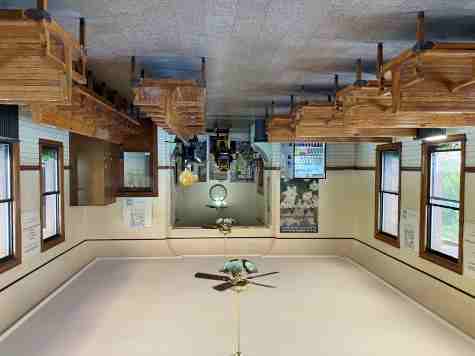
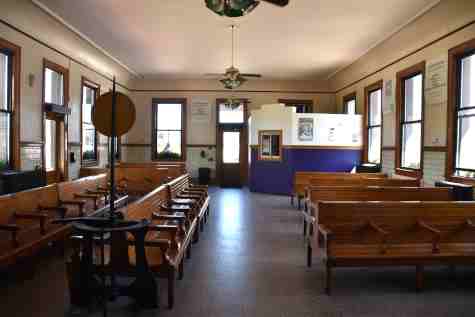
The station interior.
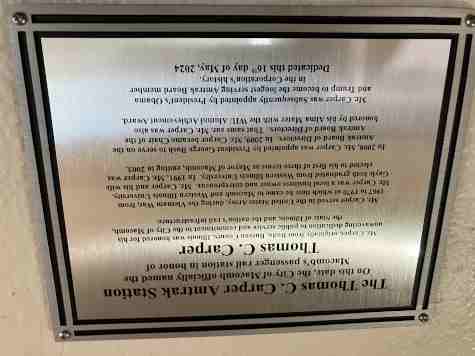
In 2024, the station was renamed in honor of resident Thomas C. Carper by the Illinois House of Representatives in recognition of his contributions through public service to the City of Macomb, the state of Illinois and the nation's rail infrastructure. Carper served three terms as mayor of Macomb, and he was also a member of the Amtrak Board of Directors from 2008-2024. He was first appointed to the board by President George W. Bush and served as chair from 2009-2013. As of 2024, Carper was the longest-tenured board member in Amtrak's history.
Next we went to Viola.
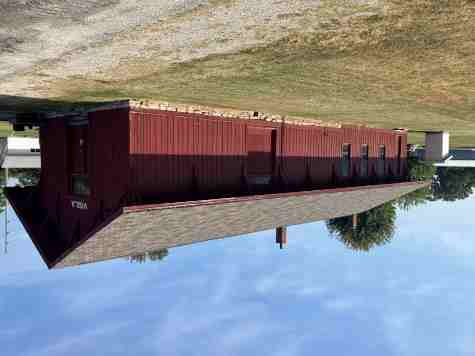
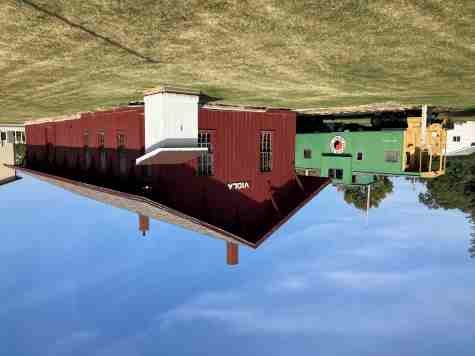
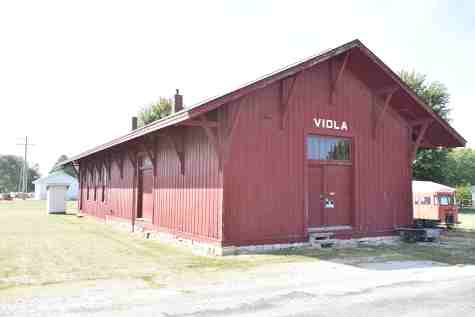
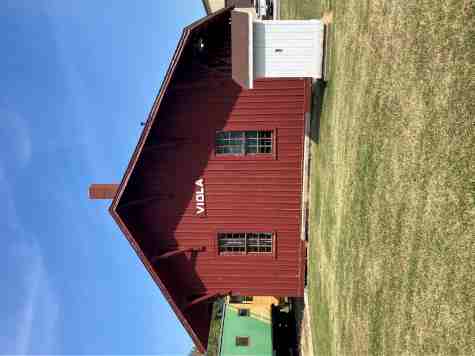
Chicago, Burlington and Quincy Viola depot built in 1869.
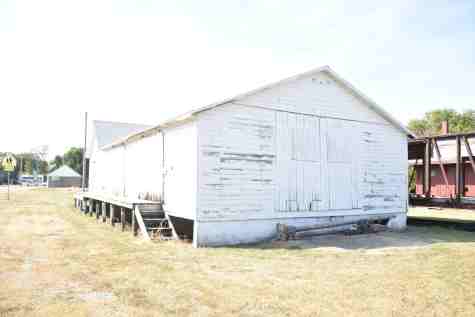
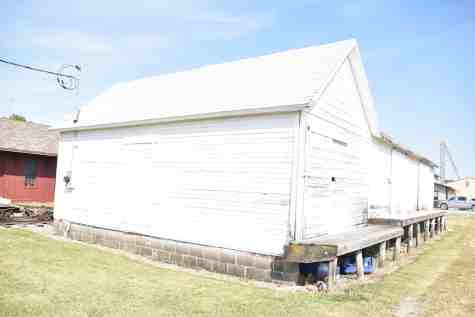
Chicago, Burlington and Quincy freight house.
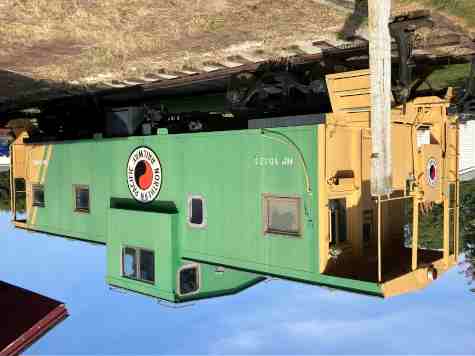
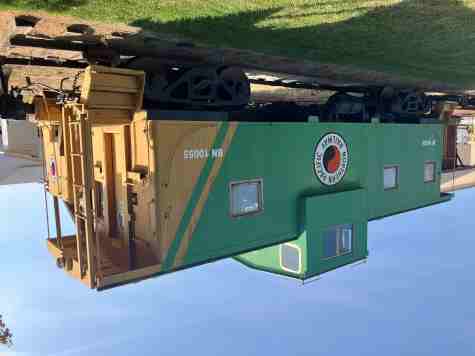
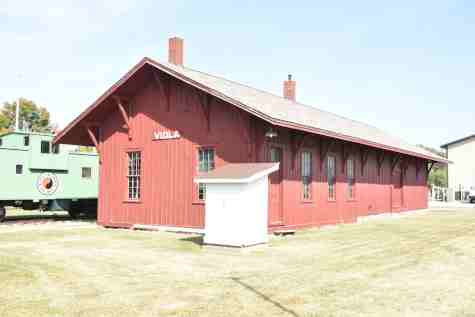
On display beside the depot is Burlington Northern wide vision caboose 10424, built by International Car in 1969.
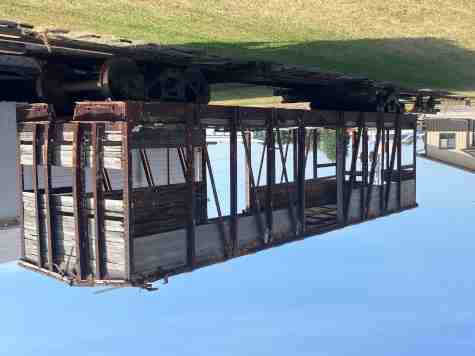
A future restoration project, details unknown.
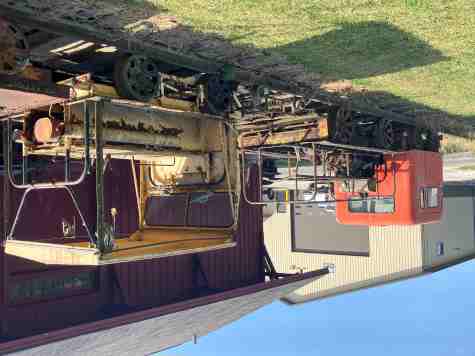
Two speeders outside the depot.
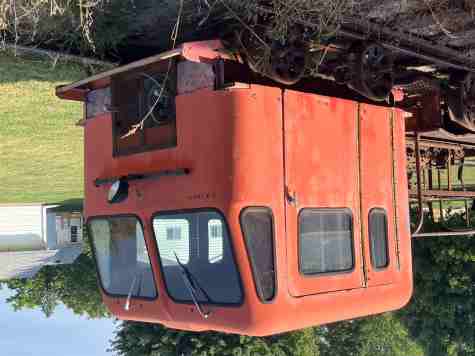
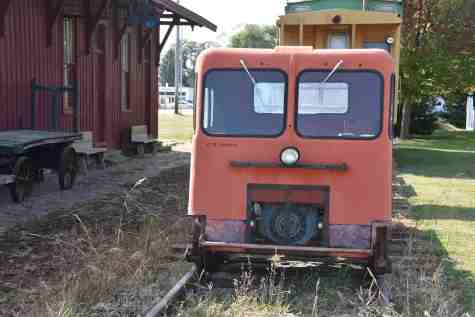
Canadian National speeder 16030.
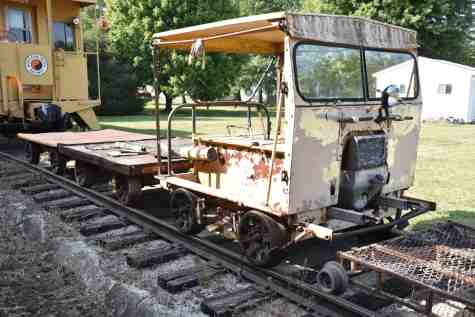
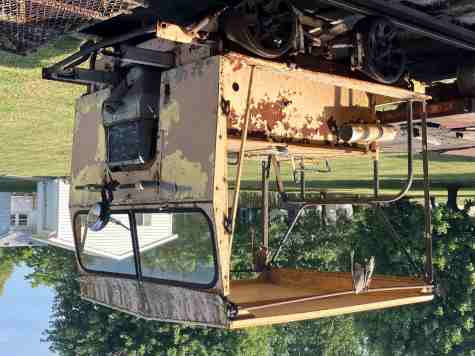
A speeder of unknown origin.
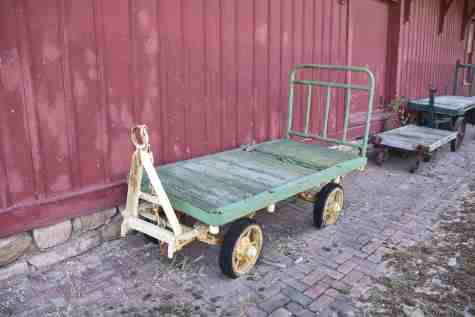
A baggage cart. Our last station of the day was in New Windsor.
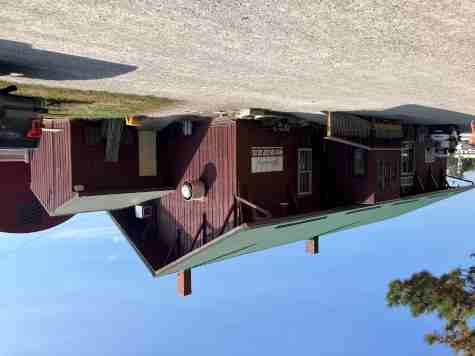
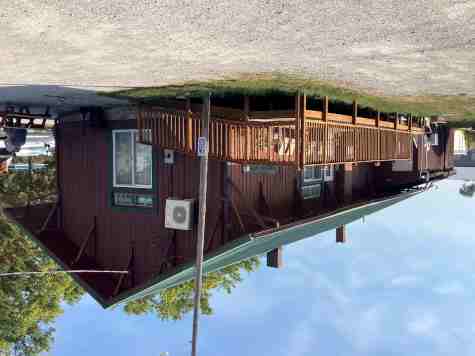
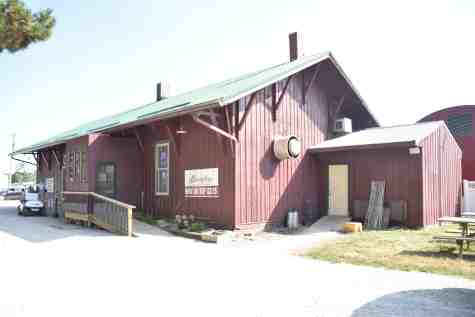
The Chicago, Burlington and Quincy New Windsor depot, home to the Depot Bar & Grill, year of construction unknown.
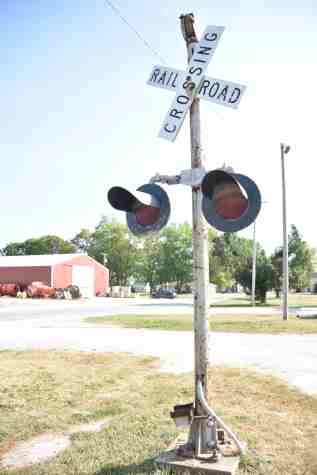
A railroad crossing signal at the former location of the tracks, now removed.
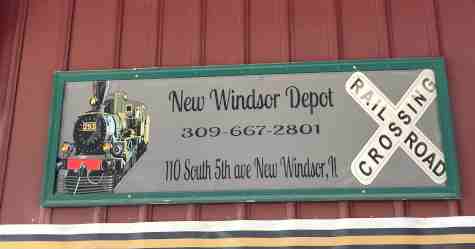
New Windsor Depot sign on the station. Elizabeth then drove us to the Holiday Inn in Rock Island and that evening, we attended the first two seminars of the convention - Rob Leachman's Lending A Helping Hand - Rock Island Equipment Financed by Union Pacific and Mark Amfahr's presentation on Union Pacific Equipment at the Illinois Railway Museum.
| RETURN TO THE MAIN PAGE |