




This year's autumn conference of the National Railway Historical Society took place in Milwaukee, Wisconsin hosted by the Wisconsin Chapter, which was celebrating their 75th anniversary. As Elizabeth is Secretary of the Advisory Council, and lead of the Chapter Engagement Committee, it was natural that we attended and since Wisconsin is not too far away from Columbia, made for an easy drive.
10/1/20205 We arose at 7:30 AM, packed and departed two hours later. Our route was chosen to include some stations along the way and our first stop was in Canton, Missouri.
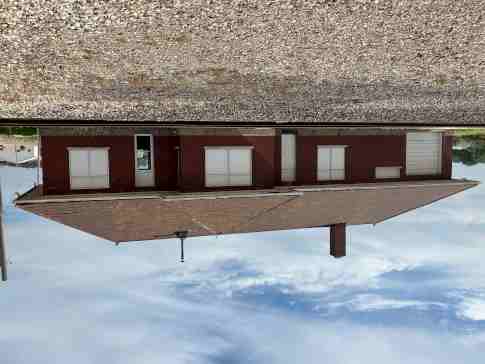
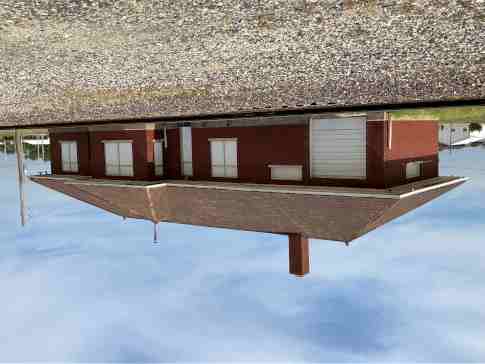
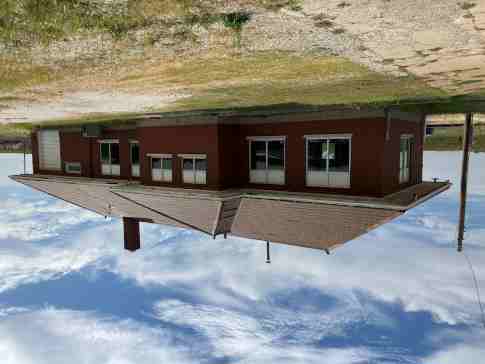
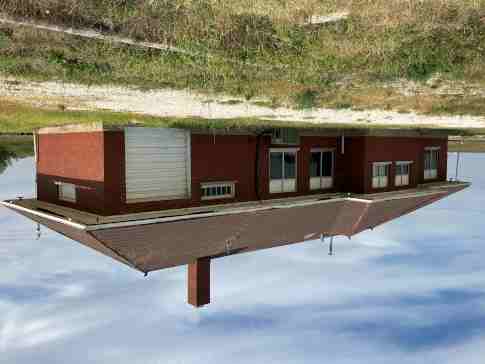
Chicago, Burlington and Quincy depot in Canton, built circa 1915.
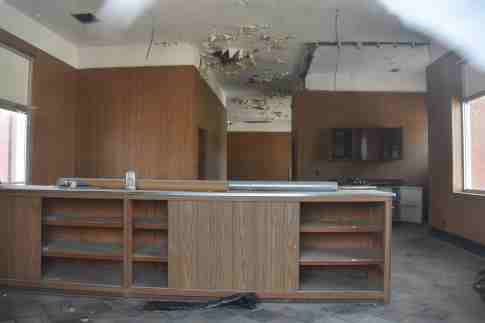
The interior of the station as viewed from one of the windows. We crossed the state line into Iowa and navigated to Hopkinton.
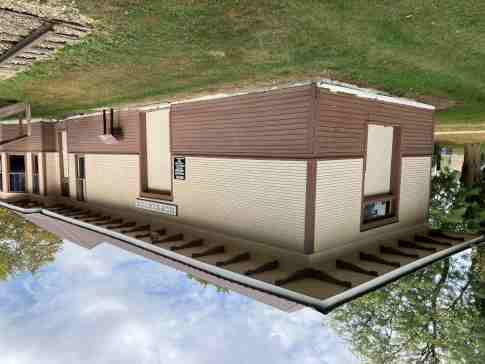
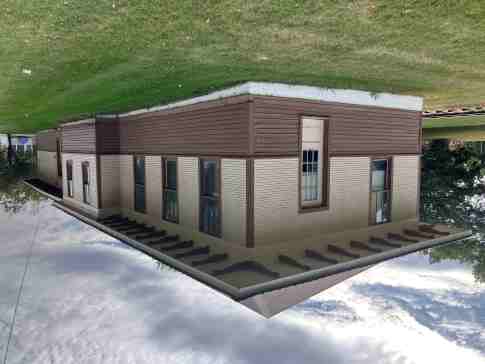
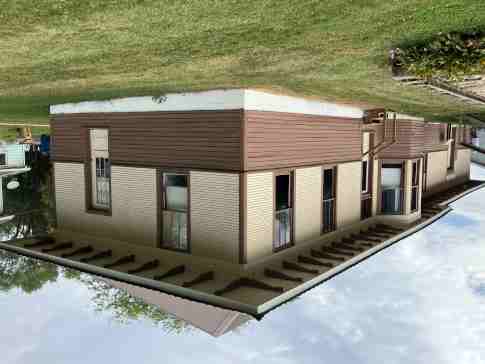
Chicago, Milwaukee, St. Paul and Pacific Hopkinton depot built circa 1872. It was moved to this location in 1969 and is part of Delaware County Historical Museum.
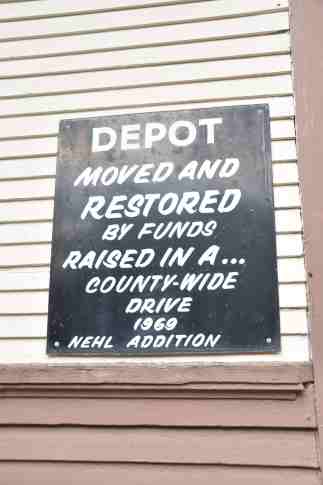
Depot restoration sign.
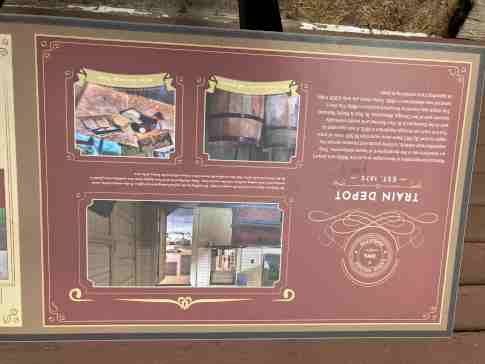
The depot story board.
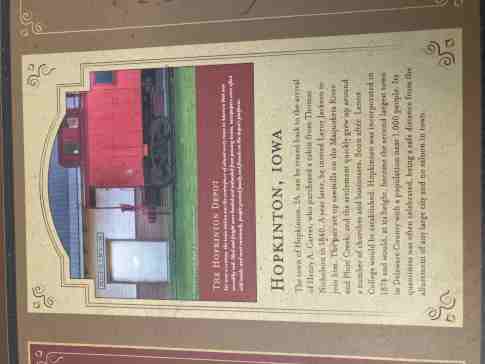
Hopkinton, Iowa history.
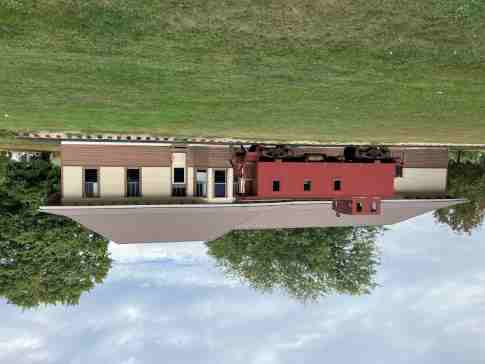
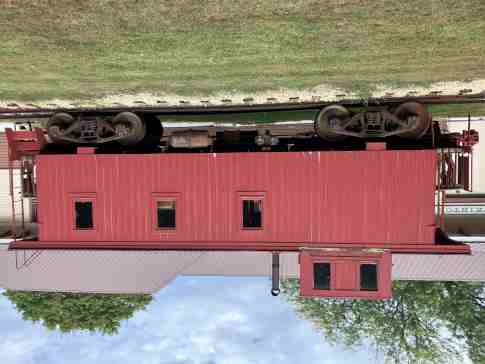
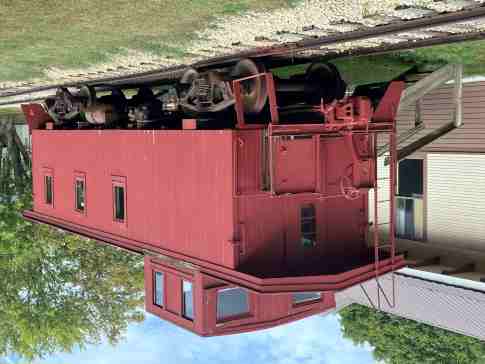
Grand Trunk Western caboose, original number, builder and year of construction unknown, but currently numbered 3.
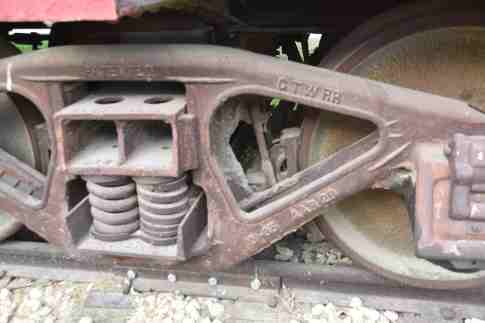
The GTWRR stamp on the caboose truck gave us a clue as to its origin, as there was no other identifying number or logo to be found. We continued the drive to Dubuque but as I was not feeling too well, we decided to have an early dinner at Texas Roadhouse then checked into the Best Western Plus for the night.
10/2/2025 We arose at 7:30 AM then had breakfast at the hotel before checking out, crossing the state line into Wisconsin and finding Cuba City.
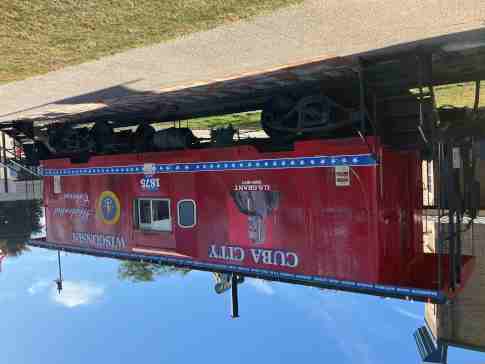
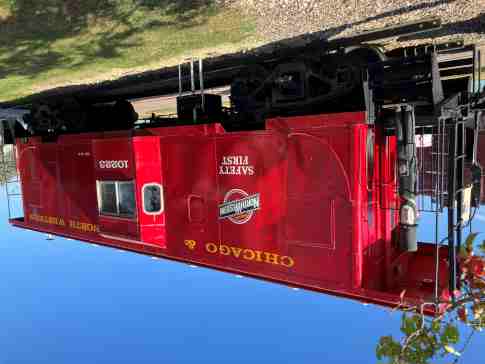
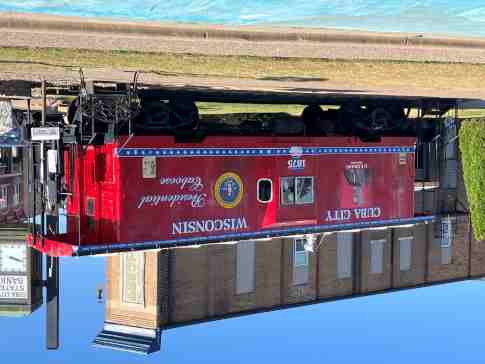
Chicago and North Western caboose 10223, builder and year unknown. It is painted as Wisconsin Presidential Caboose 1875, home of the Presidential Plaza Visitor's Centre. Originally Cuba City was known for its "Parade of Presidents". This was in reference to a bicentennial community project commemorating our nation's 200th birthday in 1976. This project is registered with the American Revolution Bicentennial Administration in Washington, DC and is one of the few remaining Bicentennial projects. The idea of a "Parade of Presidents" came in a dream from elementary principal, Joe Goeman. Each colorful red, white and blue shield includes the U.S. President's name, silhouette, term in office and state. The original shields were cut out, designed and assembled by Cuba City High School Art and Math classes with the direction of the Cuba City Lions Club. The junior high and high school students, school maintenance, Cuba City Lioness, VFW, City Workers and many other students and individuals worked together to make this a memorable landmark for years to come. On October 17, 1993, a proclamation from Cuba City Common Council was read, by then Mayor Richard E. Davis, officially proclaiming Cuba City's new motto as "The City of Presidents". Each shield is accented by U.S. flags from Memorial Day through Veterans Day.
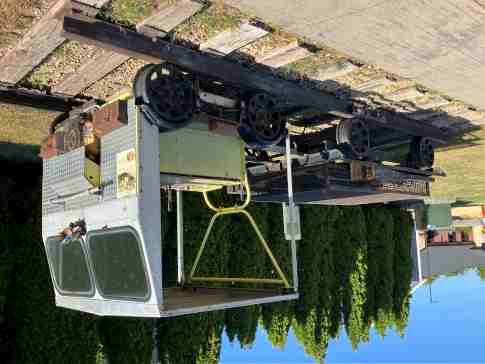
Speeder and cart.
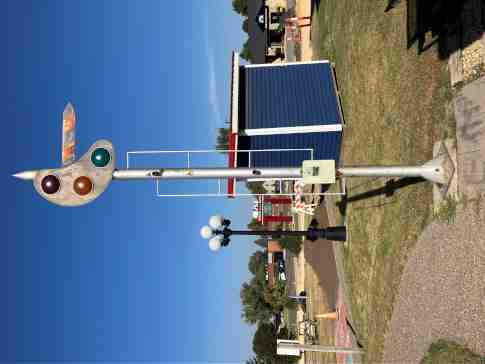
A semaphore signal.
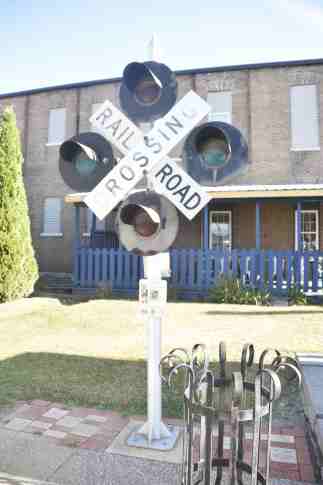
Grade crossing signal with two green and two red lights.
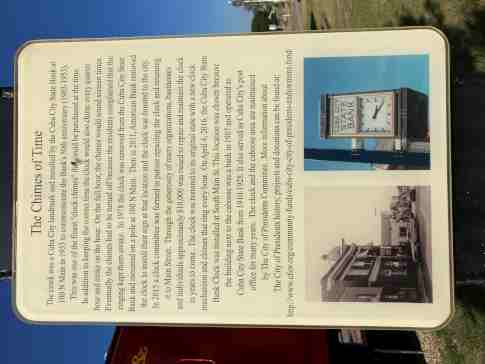
The Chimes of Time story board.
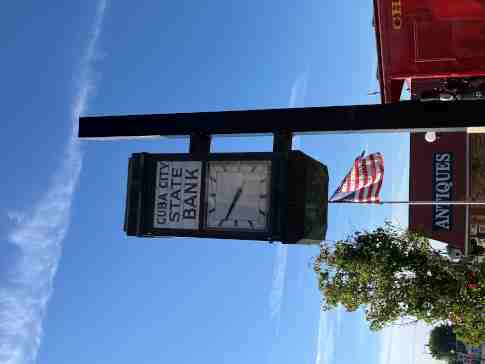
Cuba City State Bank clock.
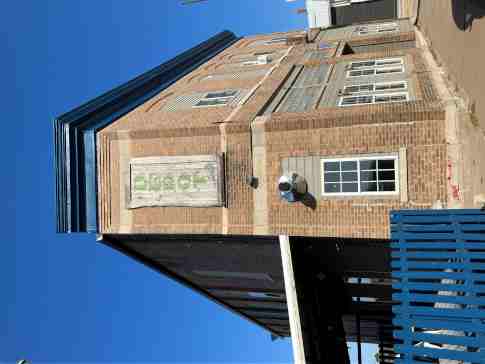
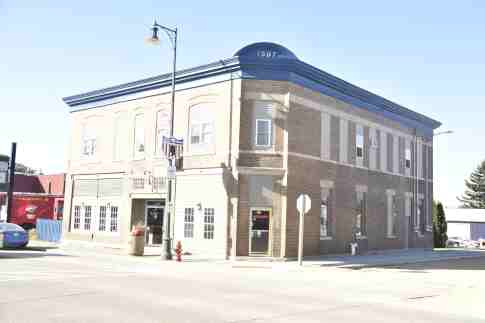
Chicago and North Western depot. Our next stop was in Mineral Point.
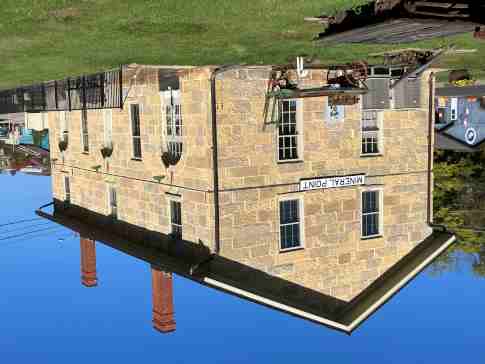
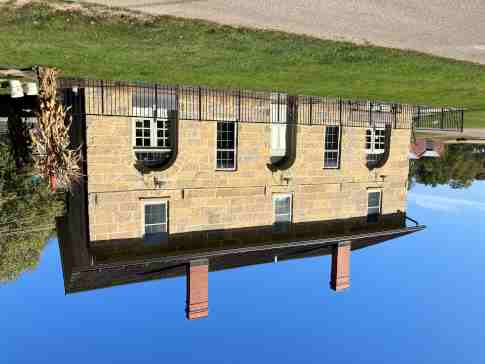
Mineral Point Railroad, later Chicago, Milwaukee, St. Paul and Pacific depot built in 1856 and has survived to become the oldest depot in Wisconsin. The Mineral Point Railroad Society was formed in 2000 to further the restoration of Mineral Point's historic railroad depot, and to promote historic preservation and community awareness through related historical activities. Once the restoration was completed, the depot reopened to the public as a railroad museum on September 2nd, 2004.
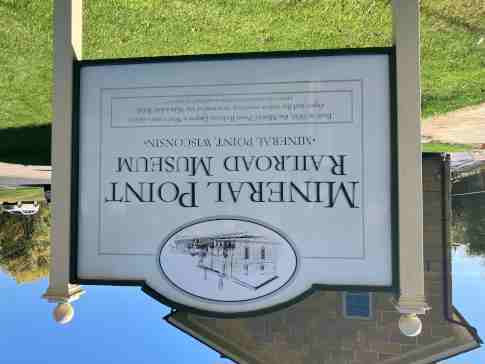
Mineral Point depot sign.
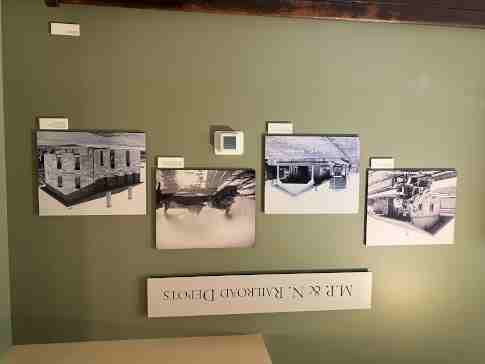
The Railroads of Mineral Point in southwestern Wisconsin is closely tied to the early settlement and economic development of the region. Few places illustrate this connection more clearly than Mineral Point, where mining, industry and transportation evolved together during the nineteenth and twentieth centuries.
The earliest Euro-American settlers arrived in the Mineral Point area in the 1830s, drawn by the promise of rich deposits of lead ore scattered throughout the hills of southwestern Wisconsin. Lead mining quickly became the economic backbone of the region, attracting miners, entrepreneurs, and merchants hoping to build fortunes in what was then still a rugged frontier. While the land produced valuable ore, one major obstacle stood in the way of prosperity: transportation. At the time, the region had few reliable roads and no efficient means of moving large quantities of lead to market. Most of the ore had to be hauled by wagon south into Illinois, often over muddy, primitive routes that slowed travel and increased costs.
As railroads began to prove their usefulness in the 1830s and 1840s, community leaders and investors in Mineral Point recognized the enormous advantage that a rail connection could provide. A railroad would allow mined lead to reach national markets while bringing manufactured goods and supplies back to the growing town. Interest in building a railroad steadily increased, even though railroad construction was expensive and financially risky.
In 1851, local investors formed the Mineral Point Railroad with the ambitious goal of connecting Mineral Point to the expanding national rail network. The proposed line would run south to Warren, Illinois, where it would meet the powerful Illinois Central Railroad. The Illinois Central was one of the most successful railroads in the Midwest and played a major role in transforming Chicago into a major industrial and commercial hub. A direct connection to the Illinois Central promised Mineral Point access to markets across the country. Lead mined in Wisconsin could be shipped efficiently to industrial centers, while machinery, building materials, and consumer goods could be brought back to the town.
Construction of the line began in 1856, including the building of the Mineral Point depot, which would serve as the railroad’s local headquarters and passenger station. By 1857, trains were operating between Mineral Point and Warren, dramatically improving transportation for the region’s mines and businesses.
During the 1860s, rail service expanded further. A branch line was constructed between Calamine and Platteville, another important mining center in southwestern Wisconsin. This line was owned by the Platteville and Calamine Railroad, which operated in close association with the Mineral Point Railroad. The branch extended the reach of the rail network deeper into the mining region and strengthened Mineral Point’s position as a transportation and industrial center.
By the late 1870s, the railroad industry in the United States was entering a period of consolidation. Smaller regional lines were frequently absorbed by larger railroad systems seeking to create extensive transportation networks. Recognizing this trend, the Mineral Point Railroad explored the possibility of merging with a larger company. Negotiations focused primarily on two powerful railroads: the Illinois Central Railroad and the Chicago, Milwaukee and St. Paul Railway. In 1880, the Chicago, Milwaukee and St. Paul Railway purchased the Mineral Point Railroad. By that time, the MPRR had already merged with the Platteville and Calamine Railroad, making the acquisition an attractive expansion for the larger system.
Shortly after the purchase, the Milwaukee Road constructed a new line running from Monroe to Gratiot. This allowed the railroad to route traffic more directly through its own network rather than relying on the Illinois Central connection at Warren. As a result, the section of track between Gratiot and Warren gradually lost importance and was eventually abandoned in 1922.
From 1880 through the early 1920s, rail operations in Mineral Point were strong and profitable. During this period, attention shifted from lead mining to another valuable mineral: zinc. Large-scale zinc processing developed in Mineral Point, most notably through the Mineral Point Zinc Company. Later acquired by the New Jersey Zinc Company, the facility grew into one of the largest zinc processing plants in the United States. The railroad played a critical role in this industrial success. Rail service allowed raw ore to arrive from surrounding mines and enabled finished zinc products to be shipped efficiently to national markets.
The success of the zinc industry led to the construction of a second railroad serving the community: the Mineral Point & Northern Railroad. This line was built primarily to transport zinc ore from nearby mining communities such as Highland and Linden to the processing facilities in Mineral Point. Though relatively small, the Mineral Point & Northern became known as a colorful and locally important railroad. Its employees and management reflected the entrepreneurial energy that characterized the mining communities of southwestern Wisconsin during this era.
The prosperity of the zinc industry did not last indefinitely. During the late 1920s, zinc manufacturing in Mineral Point declined rapidly due to changing markets and economic conditions. By 1929, the once-massive zinc plant had closed and was dismantled. The loss of this major industry had immediate consequences for the region's railroads. Without the steady flow of ore and processed metal, rail traffic fell sharply. The Mineral Point & Northern Railroad was hit especially hard and was abandoned in 1930.
The Milwaukee Road line serving Mineral Point continued operating, but business steadily declined throughout the mid-twentieth century. Freight shipments gradually shifted to trucks and highways, reducing the economic viability of local rail service. In 1980, the remaining rail line was transferred to short-line operators in an effort to preserve rail service. These smaller companies attempted to keep trains running, but declining traffic and rising costs made continued operation difficult. Ultimately, rail service ended and the tracks were removed sometime between 1984 and 1988 when the right-of-way became a recreational trail.
For many years afterward, the historic Mineral Point depot stood vacant, a reminder of the town’s once-busy railroad era. In 2000, efforts began to restore the depot and preserve its history. Today, the restored depot and the Mineral Point Railroad Museum help tell the story of the railroads that once connected Mineral Point to the wider world—an era when mining, industry, and rail transportation shaped the growth of southwestern Wisconsin.
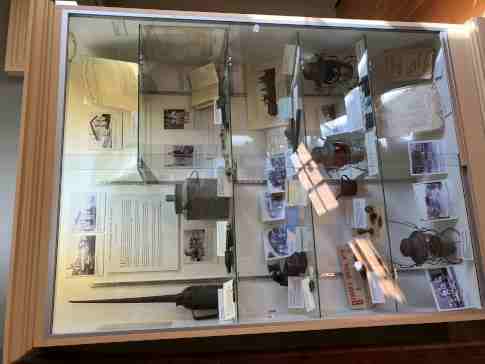
Milwaukee Road memorabilia as it pertains to Mineral Point.
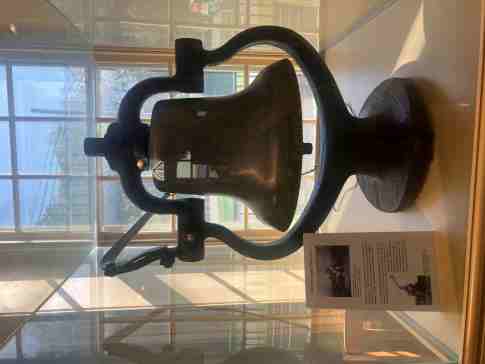
The bell from Mineral Point and Northern steam engine 1 was saved by M&PN employee N.T. "Theo" Martin when the engine was scrapped in Mineral Point around 1913, and donated by Theo's daughters, Marjorie M. Wisler and Virginia Martin McMullen in 2001.
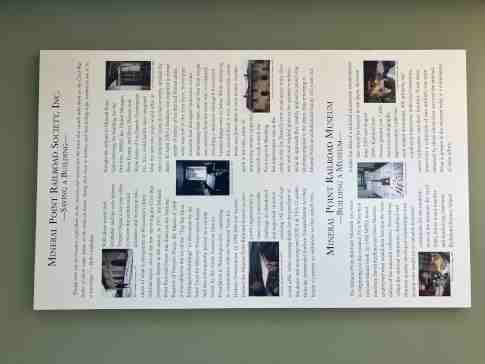
Mineral Point Society - Saving a Building and Building a Museum story board.
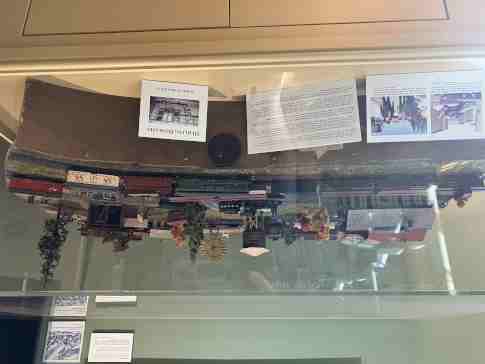
The Herling Diorama. Between 1978 and 1982, Don Herling and his son, Grant, built this HO scale layout in the basement of their home in Oregon, Wisconsin. The layout was named the Belleville Jimtown Railway, a fictitious railroad that connected Belleville, Wisconsin to New Glarus, Wisconsin. The layout was 7 x 16 feet in size.
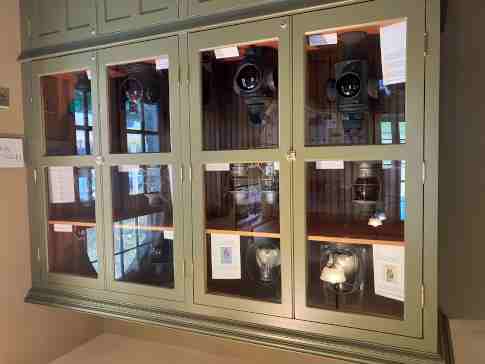
Railroad lamps and lanterns cabinet.
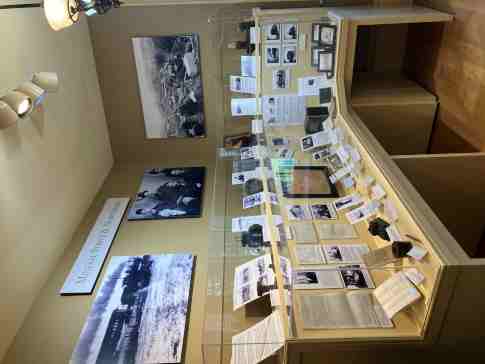
Mineral Point and Northern history display.
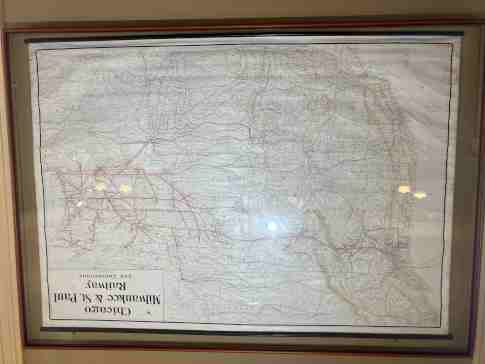
Map of the Chicago, Milwaukee and Pacific Railroad.
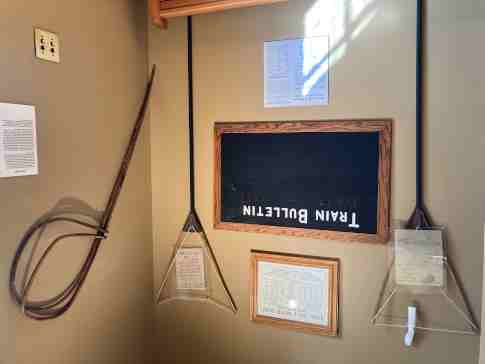
Trainorder hoops and original Mineral Point orders.
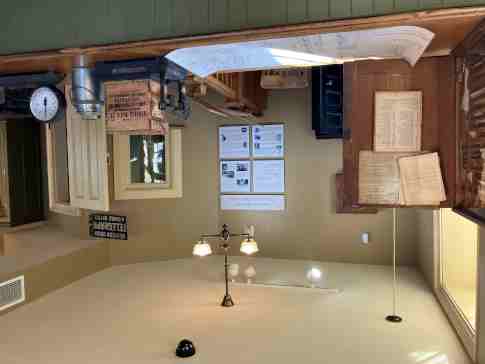
Telegraph office.
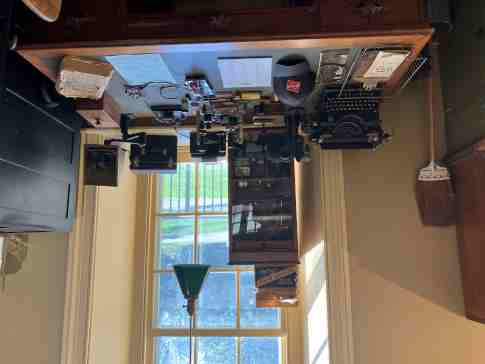
Station agent's office.
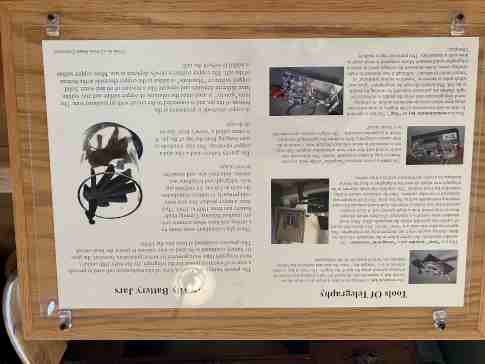
Tools of Telegraphy and Gravity Battery Jars information board.
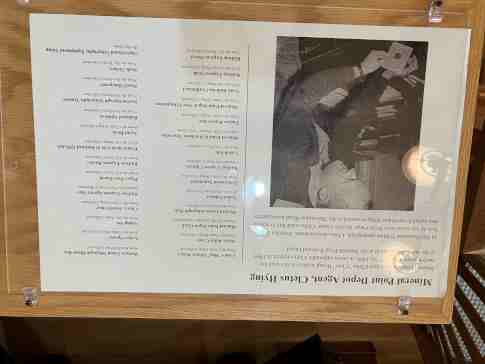
Mineral Point Depot Agent, Cletus Hying history board.
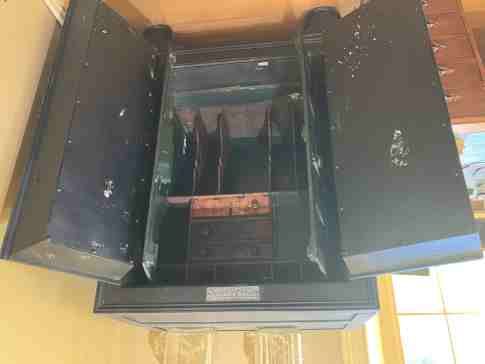
Burke and Barnes Improved Salamander Safe.
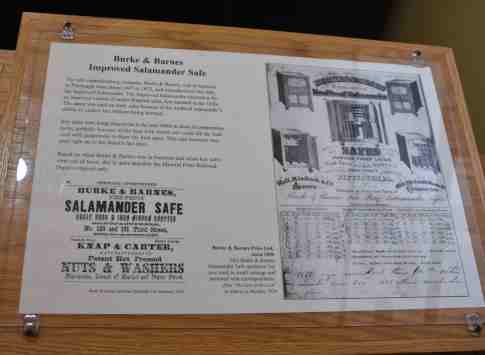
The safe information board.
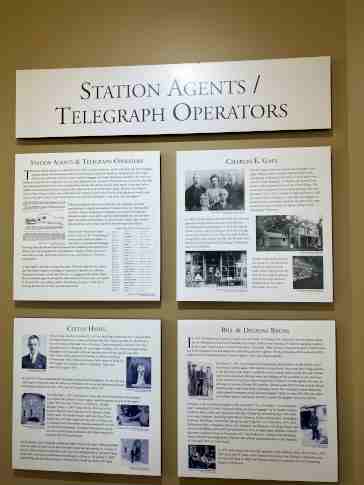
Station Agents/Telegraph Operators story board.
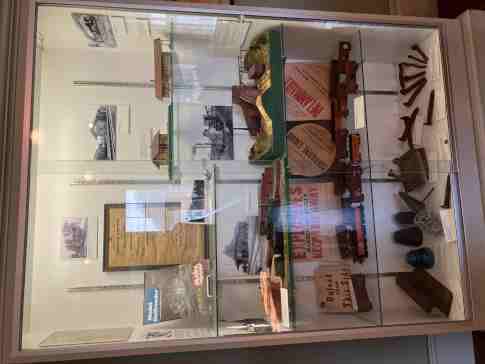
One of the display cabinets showcasing a variety of items.
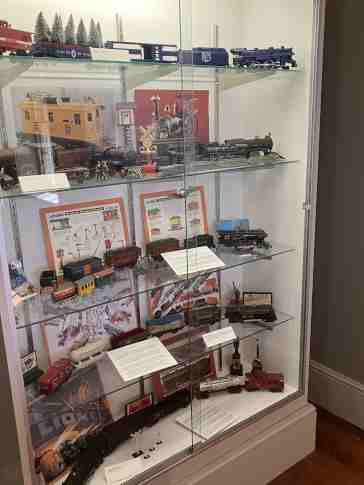
American Flyer, Marx and Lionel model train display case.
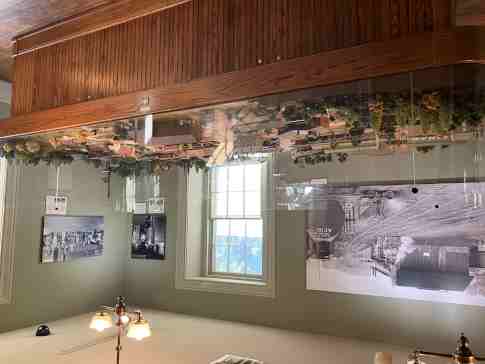
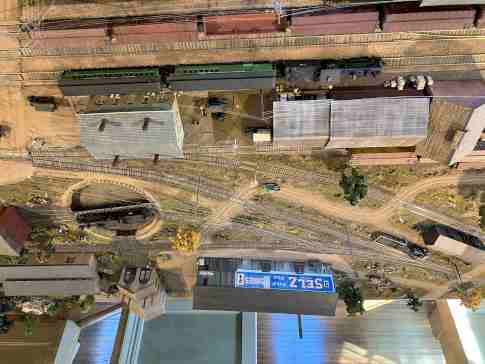
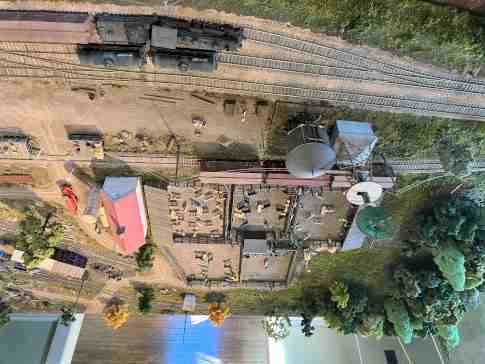
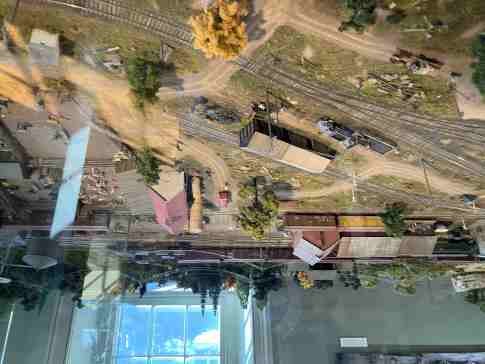
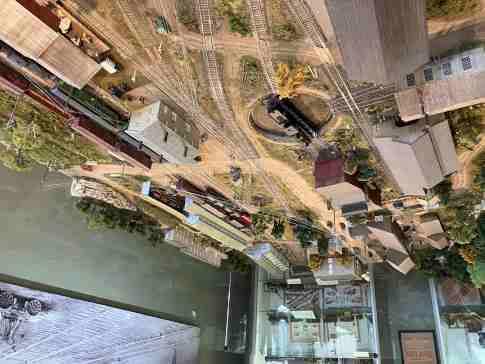
HO scale layout of the Mineral Point railyard circa 1917.
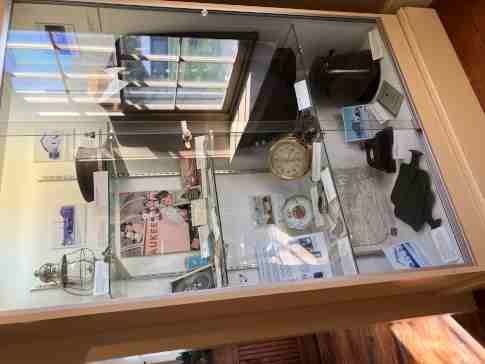
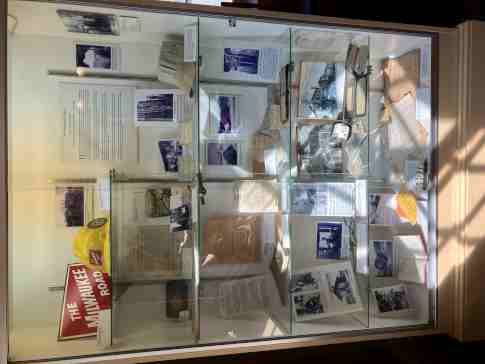
Milwaukee Road memorabilia.
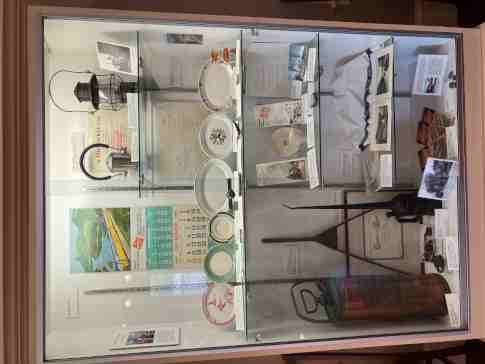
Milwaukee Road passenger train memorabilia.
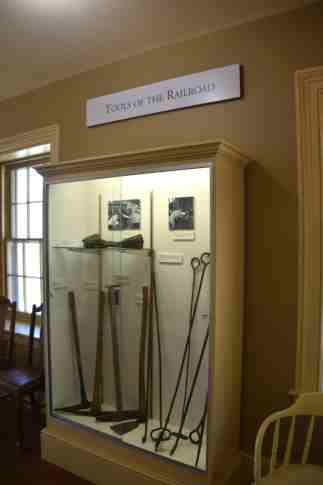
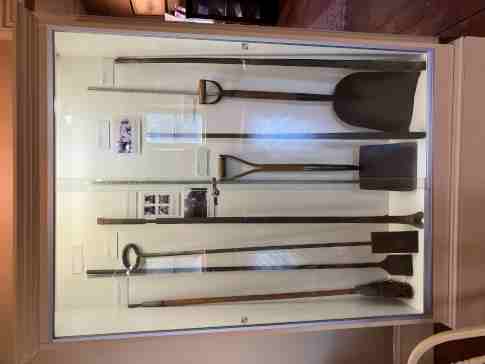
Tools of the Railroad.
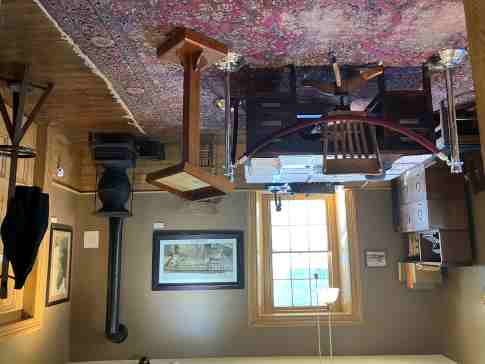
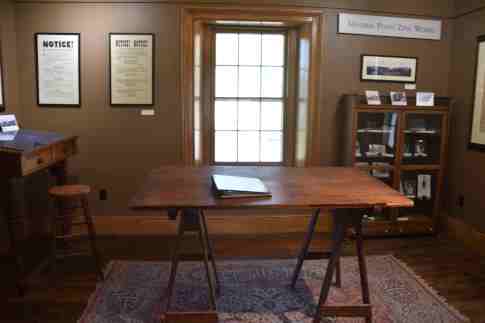
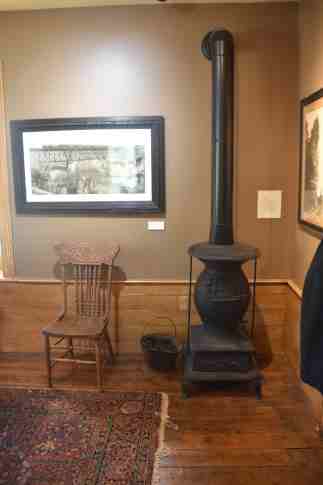
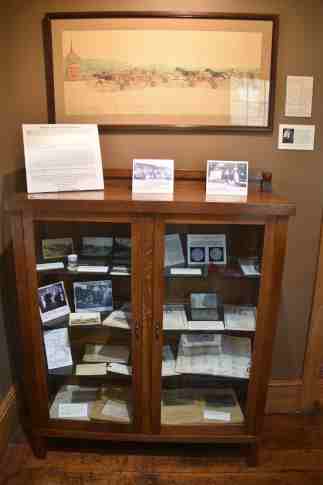
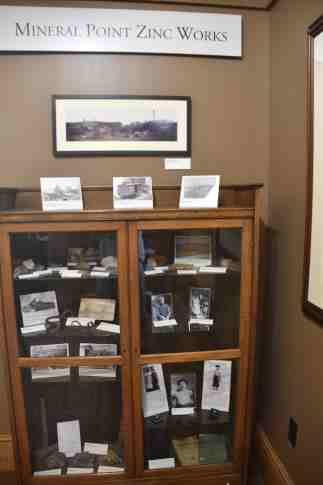
Mineral Point and Northern dispatcher's office.
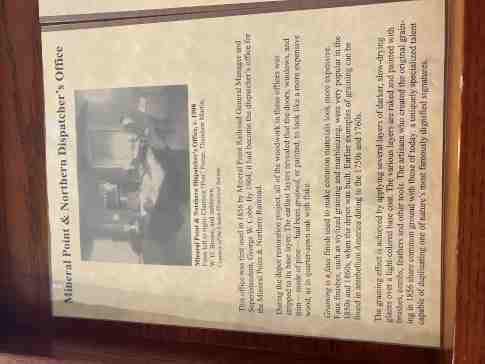
Dispatcher's office story board.
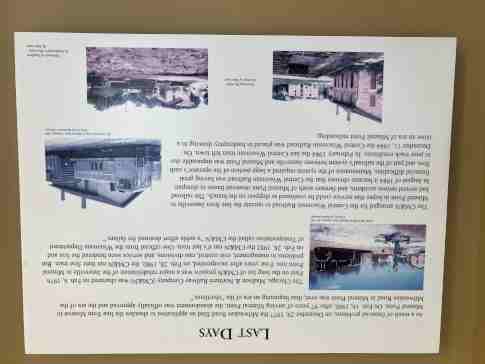
Last Days story board.
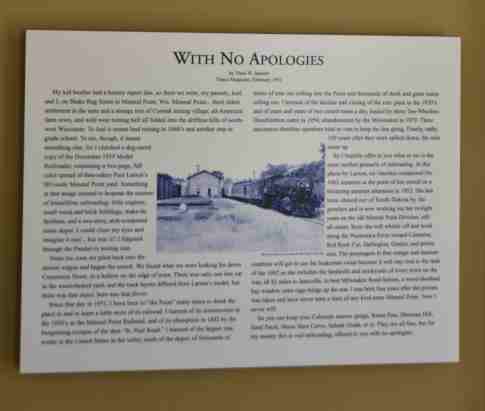
With No Apologies column from the February 1991 issue of Trains Magazine.
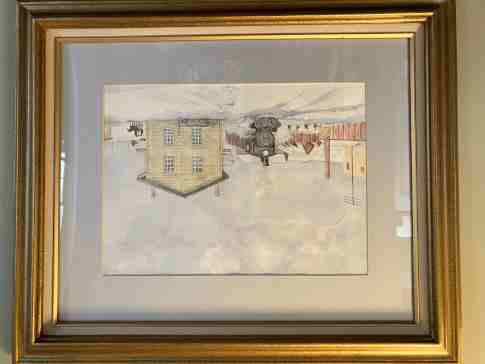
Mineral Point Depot 2004 watercolour by Judge William Dyks.
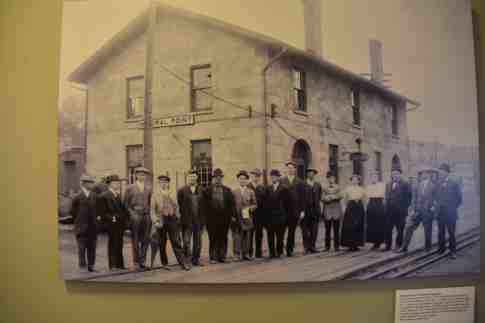
Mineral Point and Northern employee photograph.
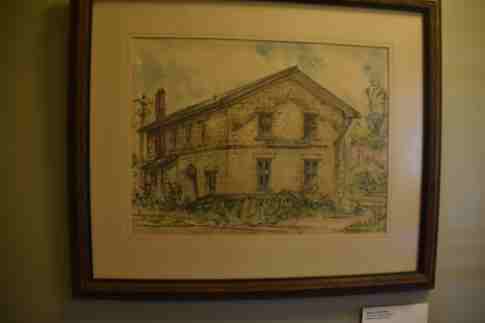
Mineral Point depot painting by Max Fernekes.
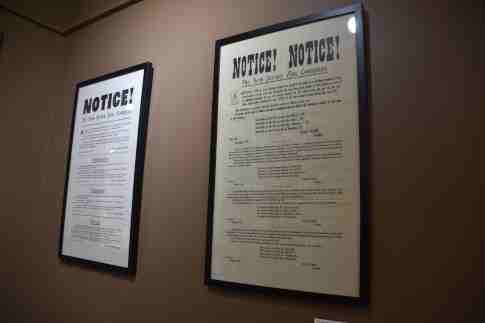
The New Jersey Zinc company poster announcing that each person in the company's employ for one year prior would receive fourteen percent of all sums earned by them during the year 1916, in English, German, Hungarian and Dutch.
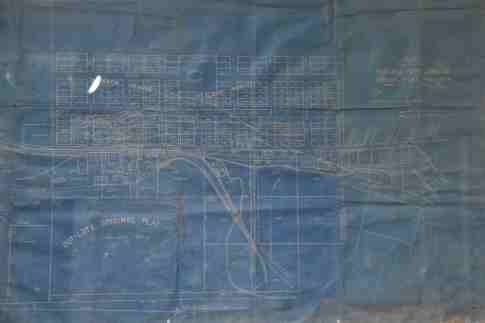
Blueprint of the Mineral Point Zinc Company as of June 1, 1908.
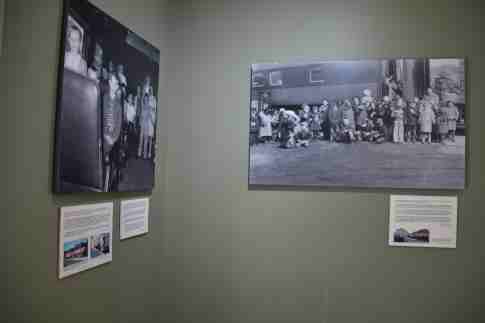
Photographs commemorating the visit of Miss Ruby's first grade class in 1953 when they rode from Mineral Point to Calamine. Passenger service ceased in 1958 and this class may have been the last passengers to ride those rails.
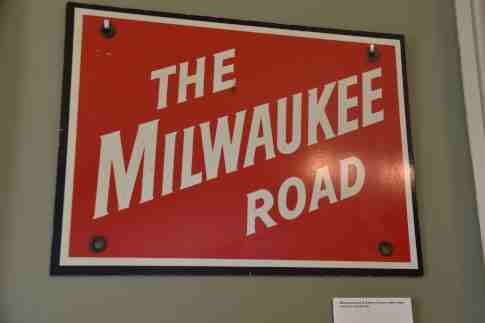
Milwaukee Road sign.
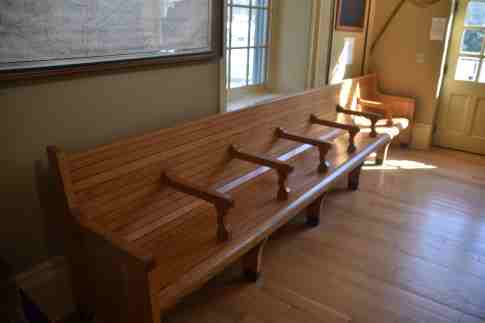
The waiting room bench. We purchased two T-shirts then drove to Ridgeway.
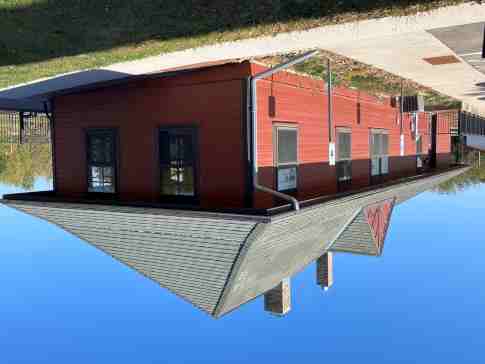
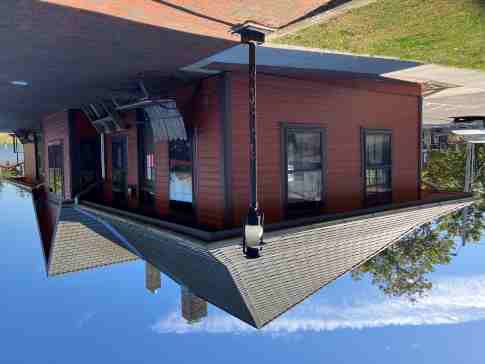
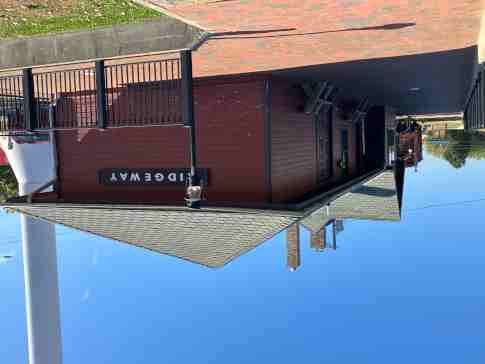
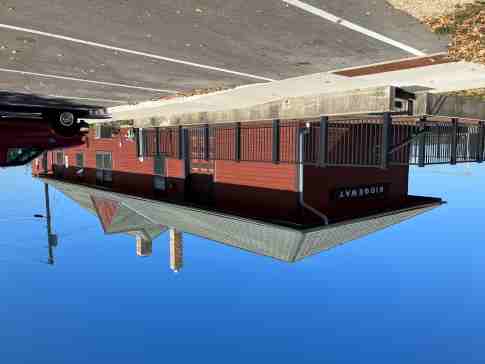
Chicago and North Western depot built in 1913, to replace the one built in 1883 which was destroyed in the Ridgeway Fire in 1913. It was then abandoned in 1982 and is the only depot along the Military Ridge State Trail. A museum and visitors centre occupies the restored building.
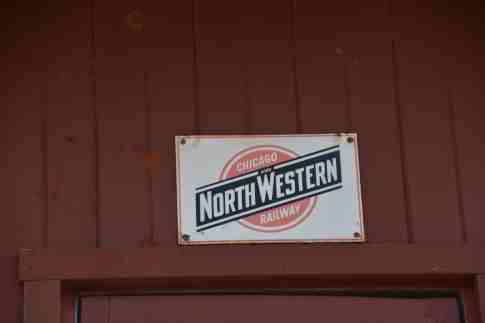
Chicago and North Western emblem on the depot.
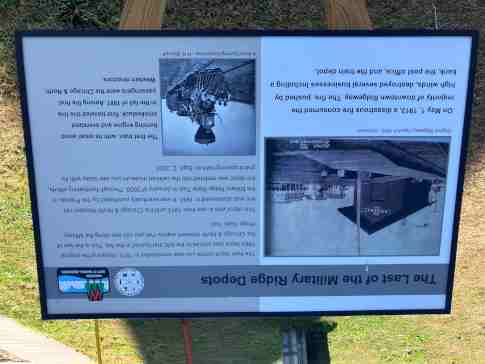
The Last of the Military Ridge Depots information board.
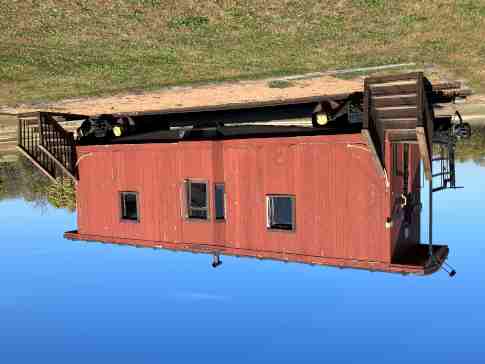
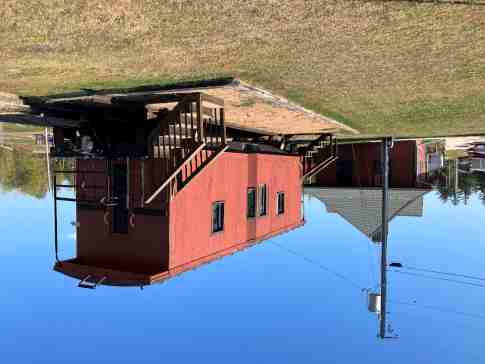
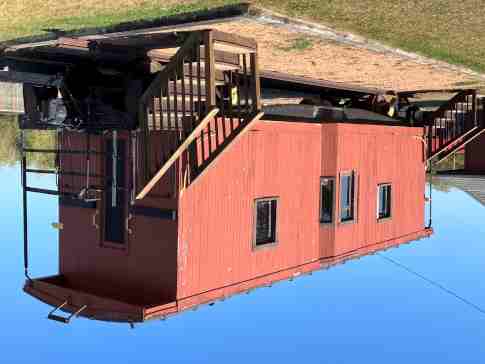
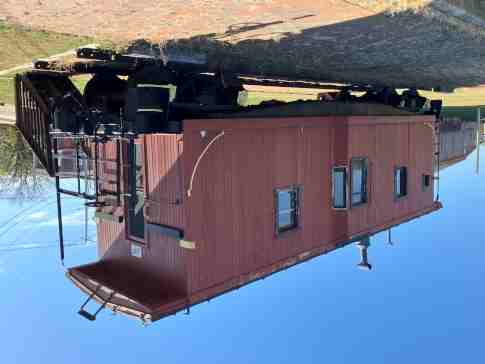
Northern Pacific caboose, number, builder and year of construction unknown. Our next stop was Madison.
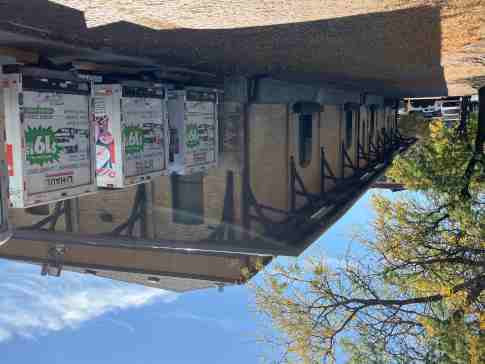
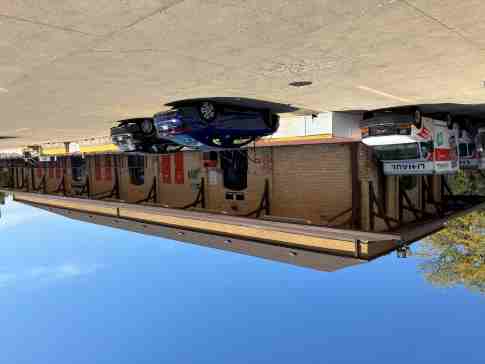
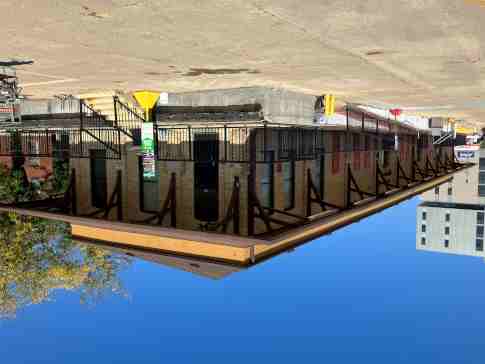
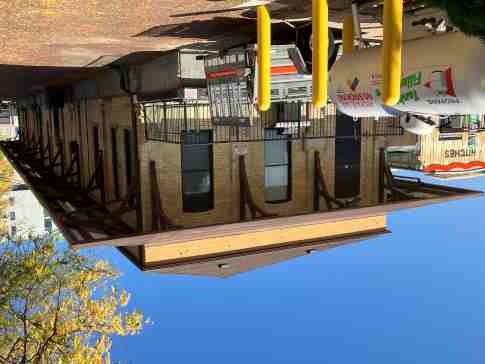
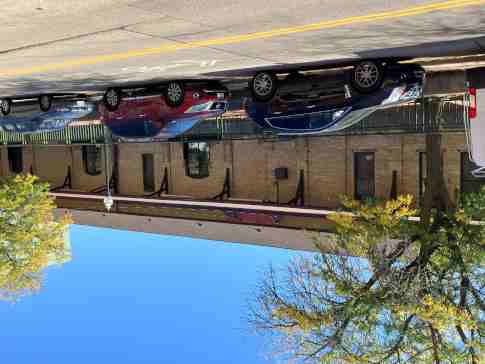
A surprise was the current business housed in the Illinois Central freight house, built in 1888. It facilitated the transfer of less-than-carload shipments between rail cars and trucks (and wagons in its early years) and was originally paired with a similar, Italianate passenger depot on the other side of West Washington, but the Illinois Central never achieved a major presence in Madison, and the passenger depot was torn down in 1944.
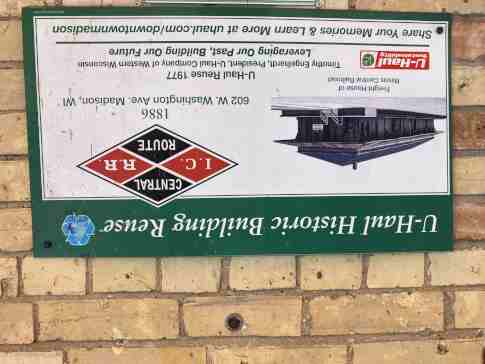
U-Haul Building Historic Reuse sign.
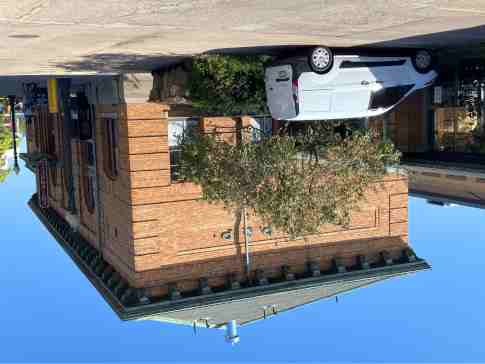
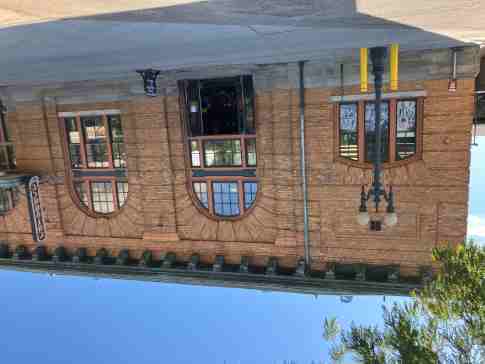
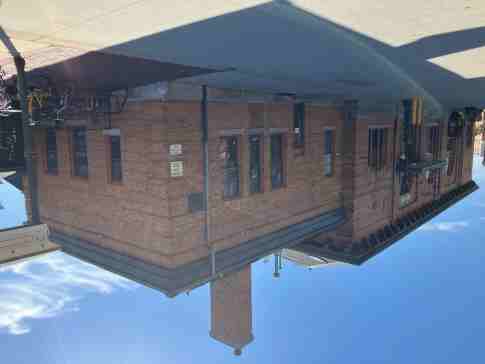
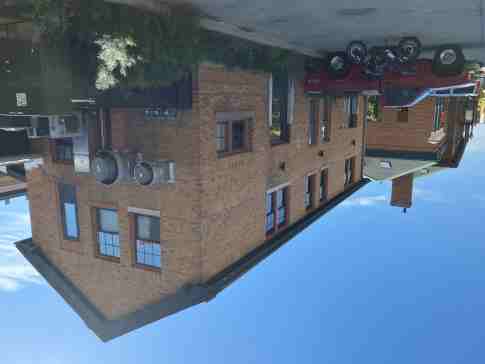
The Milwaukee Road passenger station built in 1903 and home to Roger Charl's Motorless Motion bicycle shop since 2014. Like the North Western depot on the other side of the Square, this building was designed in the neoclassical style by Frost & Granger, although it is brick and hip-roofed. The stone sign facing Washington gives the initials for the railroad's full name: Chicago, Milwaukee, St. Paul & Pacific Railroad. Its tracks once extended from the Ohio River to Puget Sound. The principals of Frost & Granger were brothers-in-law, both having married daughters of the Chicago and North Western’s president. They received numerous commissions from that railroad, but not nearly as many from theMilwaukee Road.
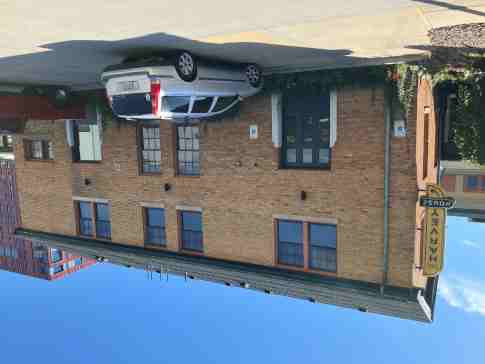
The Milwaukee Road facilities once sprawled over both sides of West Washington, extending west beyond Park Street and including a roundhouse, coaling tower, large freight yard, and numerous structures. Immediately west of the passenger depot is the baggage claim building, railroading’s version of the airport carousels we all love to hate today. It was part of the depot project and designed to match, and it's been home to the elegant Harvey House restaurant since 2021. Its name comes from the Fred Harvey Company, an early purveyor of fine dining that once operated a chain of depot restaurants and hotels along the Santa Fe Railway’s main line between Chicago and Los Angeles.
The above information from Madison Trust for Historic Preservation's "Uncovering Madison's Railroad Past" by Scott Lothes.
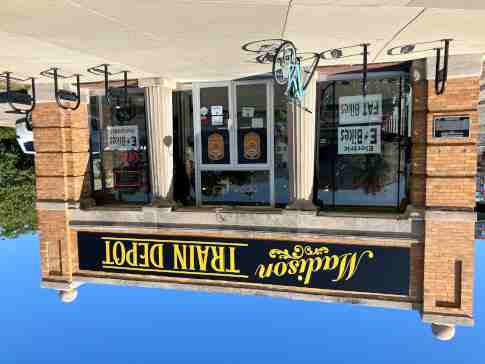
The front of the bicycle store.
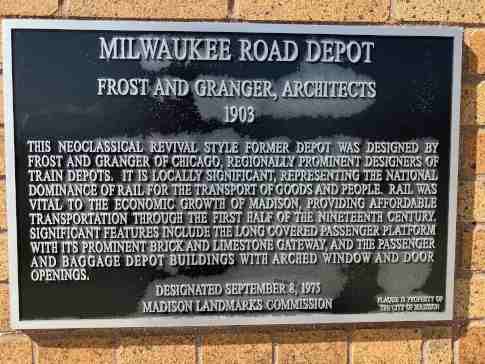
The Madison Landmarks Commission plaque. We walked around the rear of the station and were surprised at what we found.
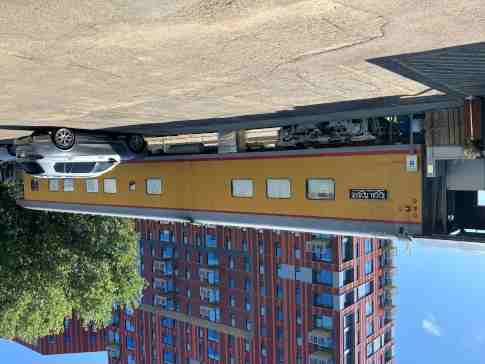
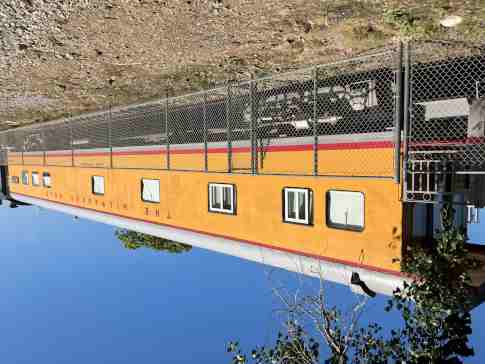
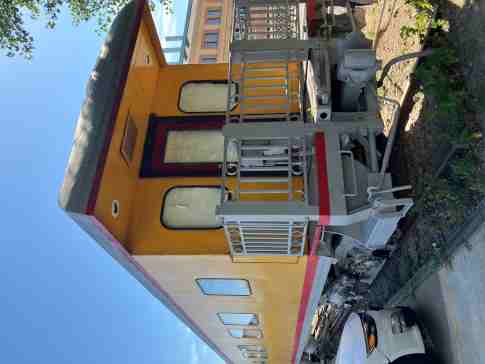
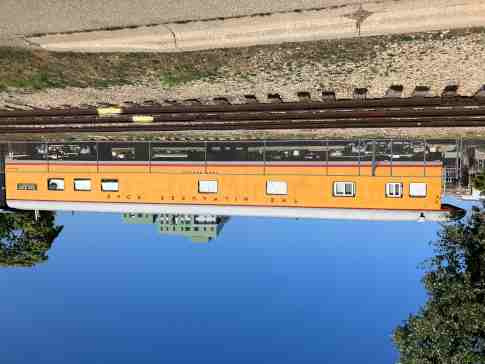
New York Central 6 double-bedroom/lounge car 10600 "Big Moose Lake", built by Pullman-Standard in 1948. It is painted as Milwaukee Road "Camp Randall", has a observation platform added and is an event space known as Local Motive Lounge Car.
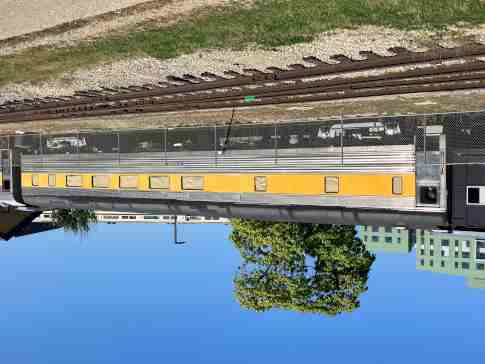
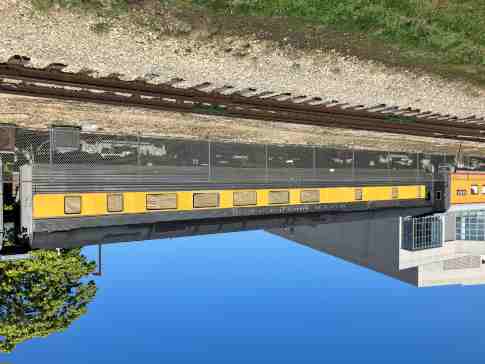
Metropolitan Transit Authority 52-seat coach 2439, nee Santa Fe 3156, built by Budd Company in 1946.
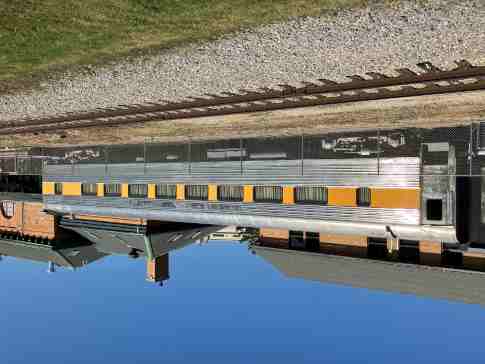
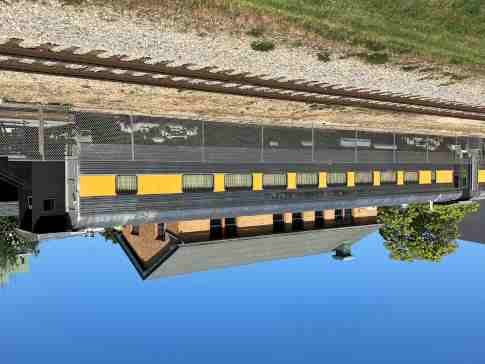
New York Central coach xxxx, built by Pullman-Standard in 1946.
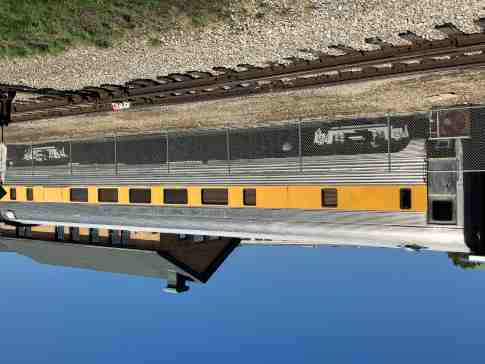
Metropolitan Transit Authority 52-seat coach xxxx, nee Santa Fe 315x, built by Budd Company in 1946.
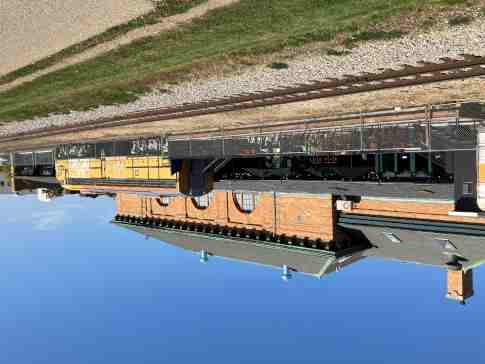
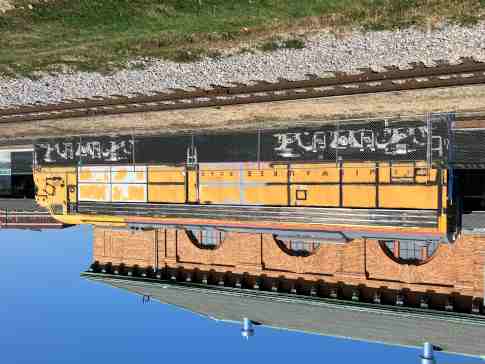
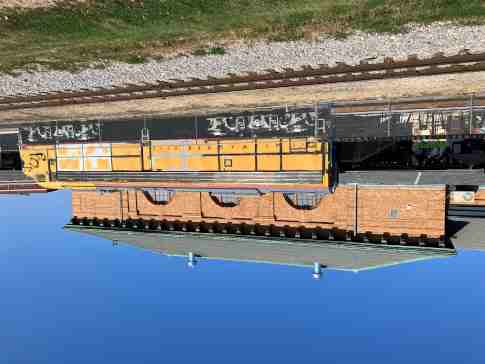
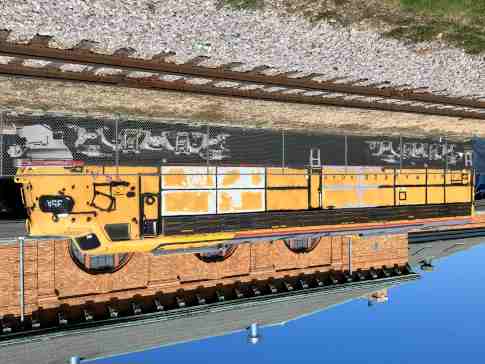
Amtrak E8A 675, exx. Amtrak 1925, exx. Amtrak 303, exxx. Penn Central 4296, nee Pennsylvania Railroad 5896A, built by Electro-Motive Division in 1951, painted as Milwaukee Road 35A.
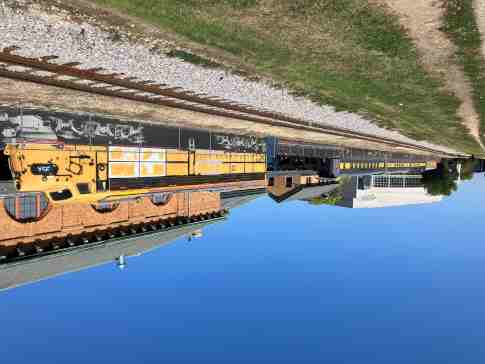
The complete trainset.
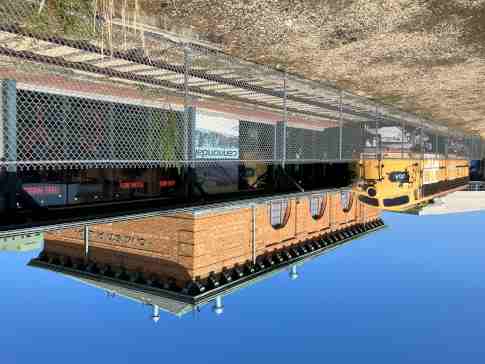
The Milwaukee Road depot with the railroad's initials and the faux Milwaukee Road E8A.
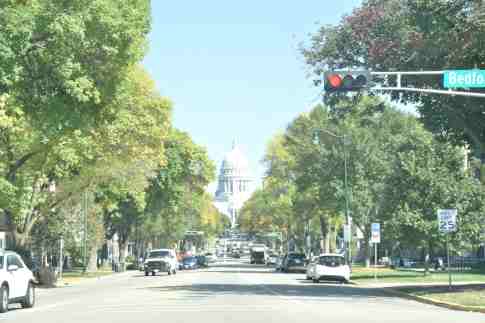
Wisconsin State Capitol building in Madison as seen as we turned onto a road to exit the city, bound for Lake Mills.
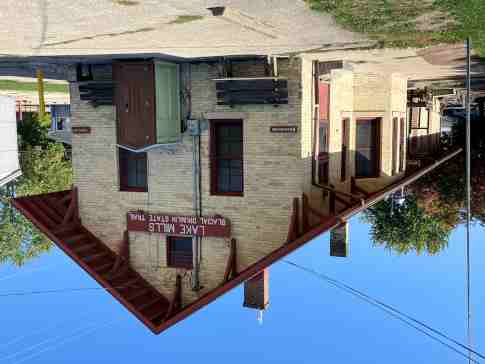
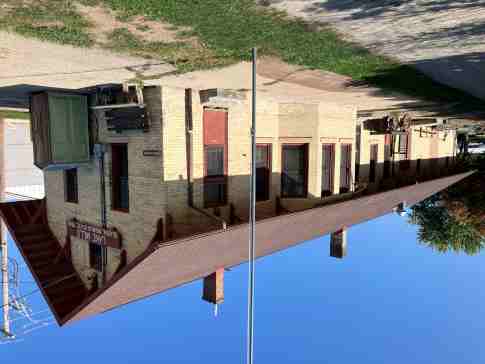
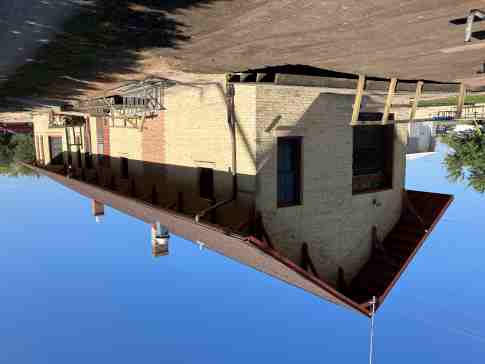
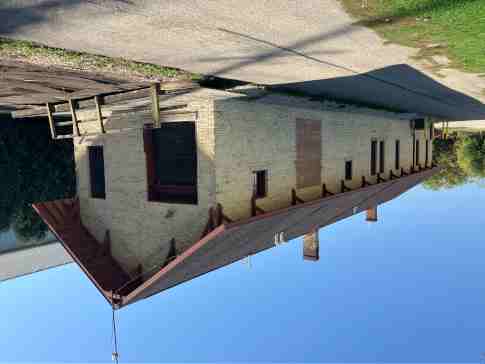
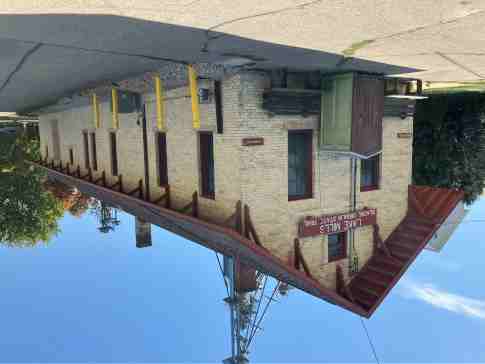
Lake Mills Chicago and North Western depot built in 1885. This one and a half-story Italianate train depot/office features a rectangular shaped plan configuration, a concrete foundation, a brick exterior, a wood trim and an asphalt shingled gable roof. Brackets appear beneath the eaves. It has a rectangular plan and is clad in cream brick. The roof, features two brick ridge chimneys and deep overhanging eaves with rafter ends and wood braces, a bay window and entrance doors are located on the south elevation. A modern wood access ramp has been added and a wood platform covered by a gable roof is supported by square posts and located on the west elevation.
Windows are a combination of four-over-four, double-hung sash and multi-light-over-one, double-hung sash with simple brick surrounds and stone sills. The depot currently serves as the Lake Mills Glacial Drumlin State Trail office.
According to an undated architectural drawing currently on display in the building, the interior historically included a ticket office, separate men's and women's waiting rooms, restroom facilities, and baggage and freight areas. Although the room configuration remains much the same, the functions of these spaces changed in the mid-1980s when the depot was purchased by the Wisconsin Department of Natural Resources. The former ticket office currently serves as an office space, the women’s waiting room is an interpretive display area, and the baggage and freight areas were reconfigured to create restrooms and showers for trail users. Intact elements include wood flooring and trim, wainscotting, ticket windows, and presumably some of the furniture, such as desks and benches.
We made our way to Nashotah, the penultimate stop.
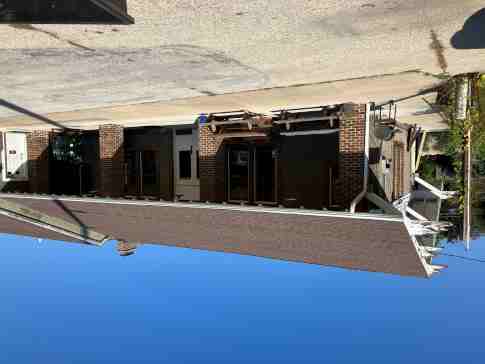
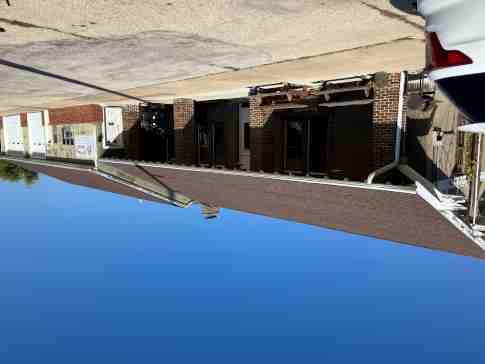
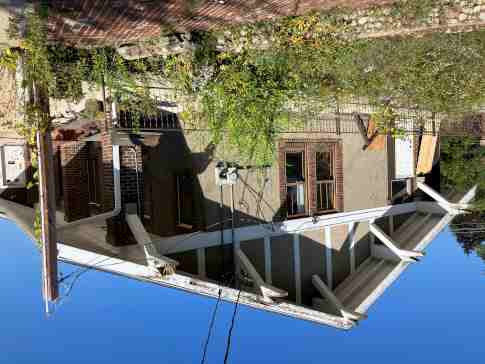
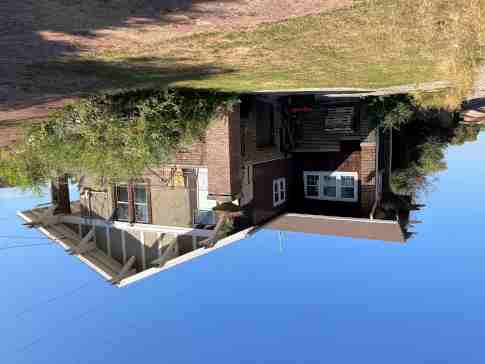
Chicago, Milwaukee, St. Paul and Pacific depot in Nashotah, built in 1916. Originally called Pine Lake, it opened in 1854 and vacationeers using the station to reach local lakes were joined by seminarians and theologians travelling to the Nashotah Mission. In more recent times, it was converted to a woodwork/cabinet shop.
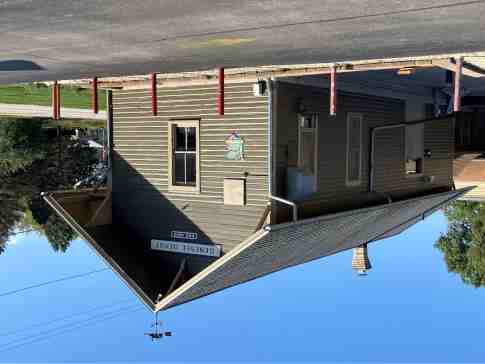
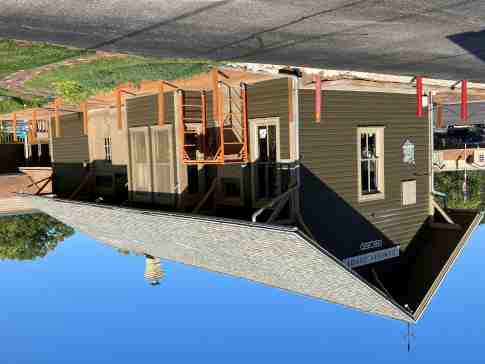
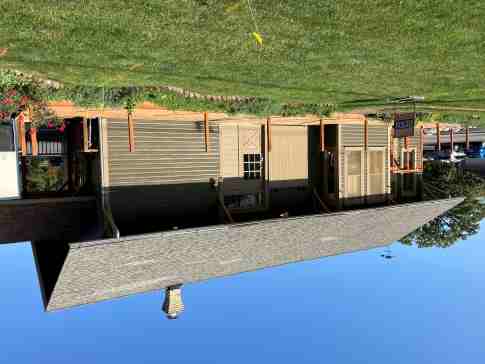
We finished our station explortion with the Chicago, Milwaukee, St. Paul and Pacific depot in Genesee, built in 1899. The railroad was originally slated to go through a nearby community but people trying to gouge the railroad with high land prices led to the railroad coming to what later became known as Genesee Depot in 1851. When the railroad arrived, the town boomed and Genesee Depot became one of the largest milk shipping stations in the country when they were shipping two to three car loads of milk each day. The present depot replaced one that was burned; it has been moved away from the tracks and is now a business.
The two of us went to Outback Steakhouse in Brookfield for an early dinner then checked into the Hyatt Regency Hotel. After picking up our lanyards and checking in for the autumn conference, we caught up on e-mail and the Internet in the evening.
| RETURN TO THE MAIN PAGE |