



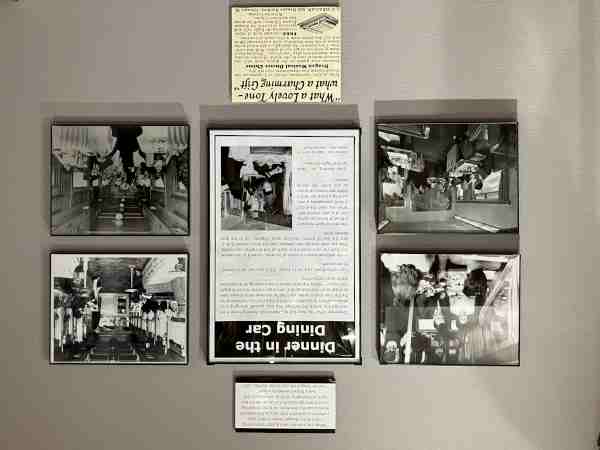
The beginning of Dinner in the Dining Car display.
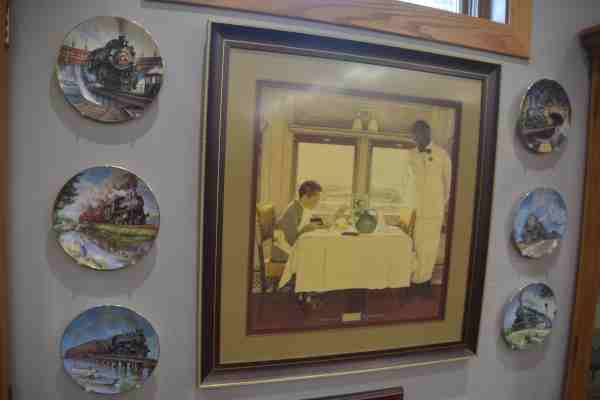
The famous Norman Rockwell oil on canvas painting "Boy in Dining Car" created for "The Saturday Evening Post" cover of December 7, 1946.
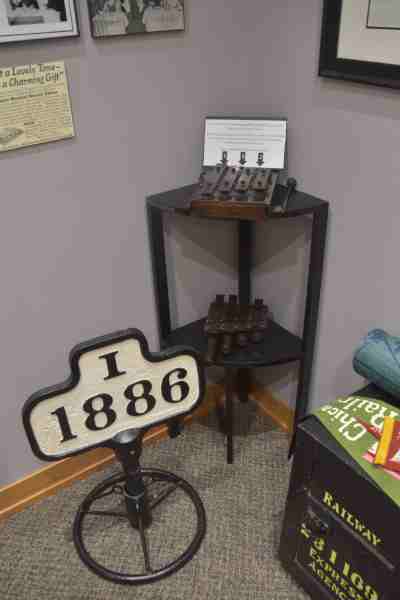
Deagan dinner chimes.
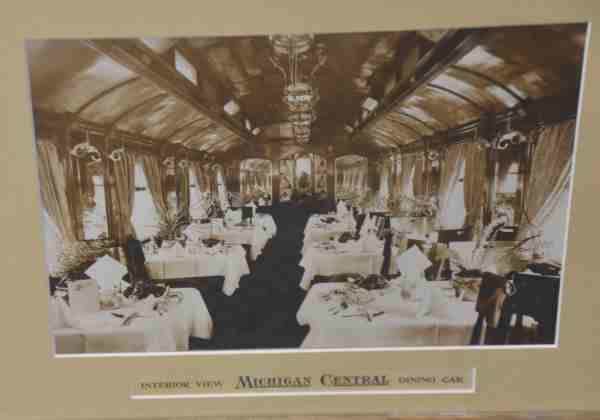
A photograph of the interior of a Michigan Central dining car.
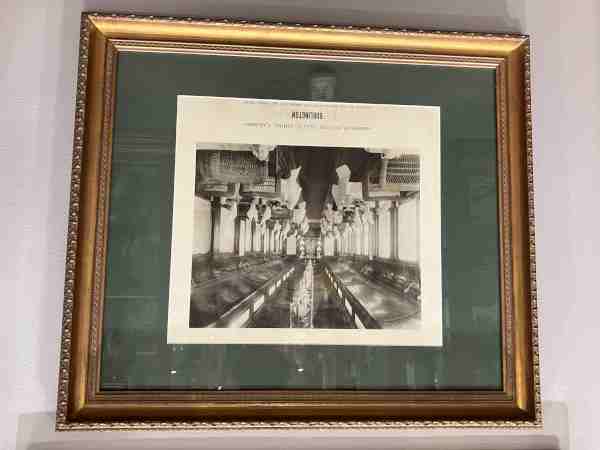
Burlington Route dining car photograph.
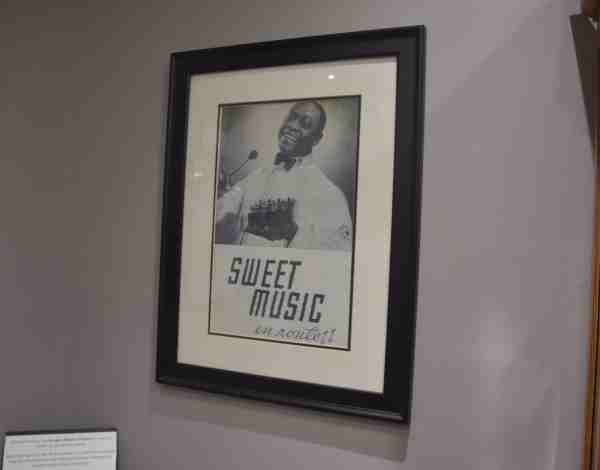
Sweet Music of the Pullman dining car steward.
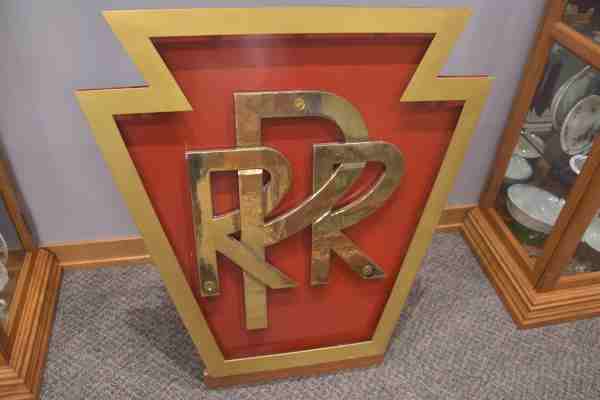
Pennsylvania Railroad Keystone emblem.
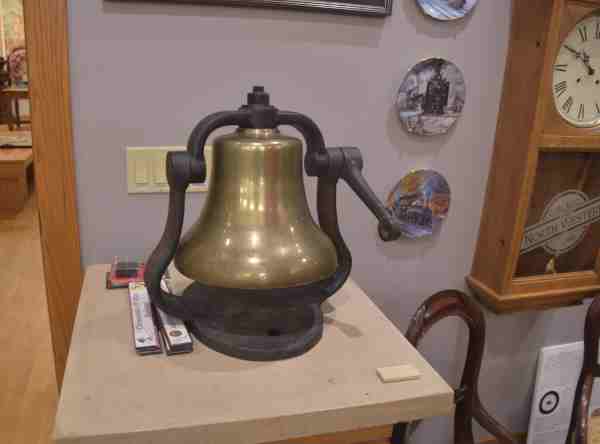
Steam locomotive bell.
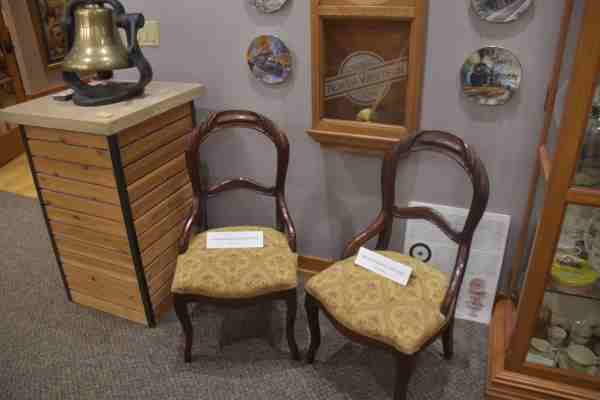
The chair on the left is from a Pennsylvania Railroad dining car and the one on the right is from a Pullman Car Ladies' lounge.
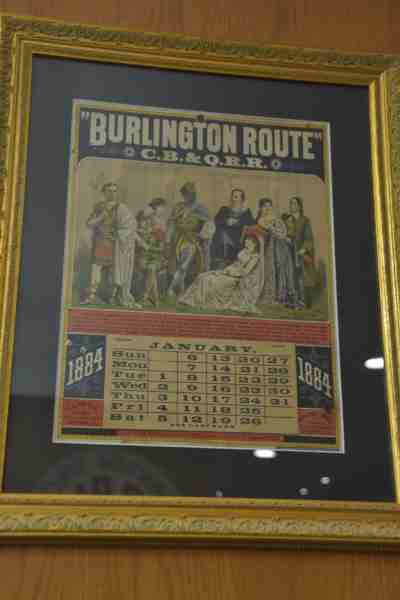
Burlington Route 1884 calendar.
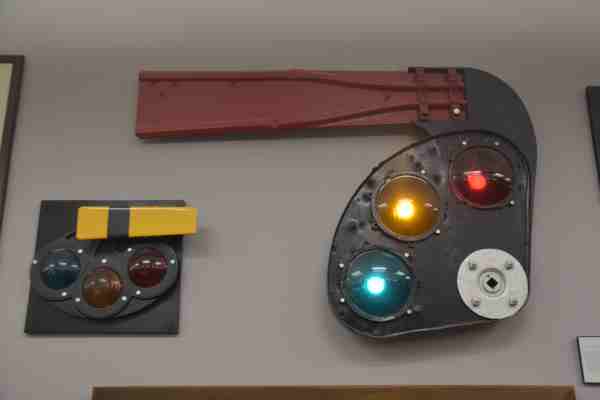
Two semaphore signals.
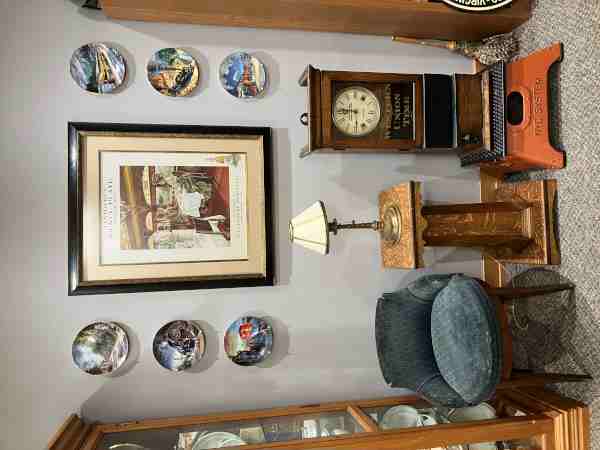
Part of the museum's display with advertisement for centlivre bottled water from the C.L. Centlivre Brewing Company in Fort Wayne, Indiana in the centre. Charles Centlivre was an entrepreneur, and while visiting Fort Wayne, he saw a greater business potential than existed in Iowa. Fort Wayne had a large German population, a total population at the time of about 10,000, rail service connecting Fort Wayne to Chicago and Pittsburgh and three rivers from which to draw water and ice for brewing. He erected a new bottling plant, one of the first in the area, in 1876. Two years later, the brewery received Fort Wayne's first artificial refrigeration units. The French Brewery produced approximately 500 barrels of beer in its first year of operation. By 1880, popularity and expansion ramped that number up to 20,000 barrels annually. In the late 1870s and early 1880s the Centlivre family turned 28 acres along Spy Run Avenue into Centlivre Park, a place for families to gather and enjoy picnics.
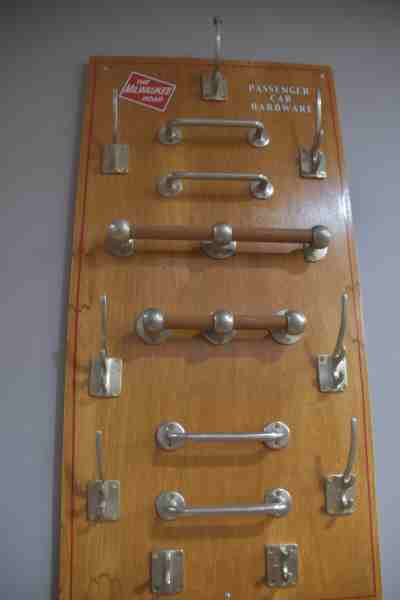
Milwaukee Road passenger car hardware.
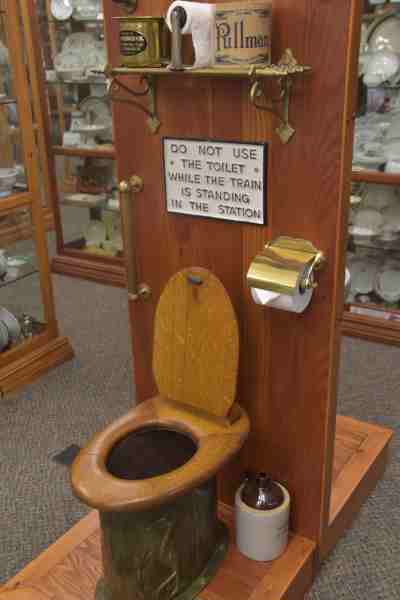
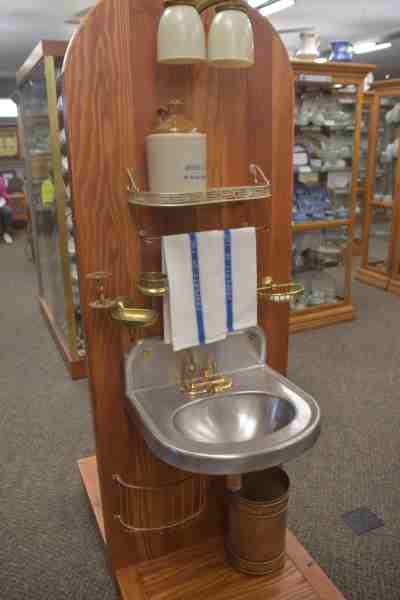
A dual-sided Pullman bathroom display.
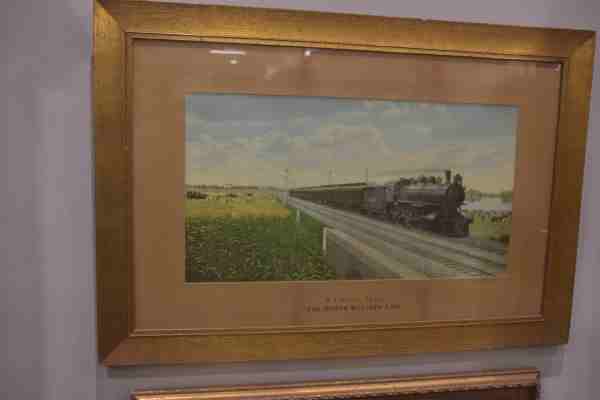
A Chicago and North Western passenger train photograph.
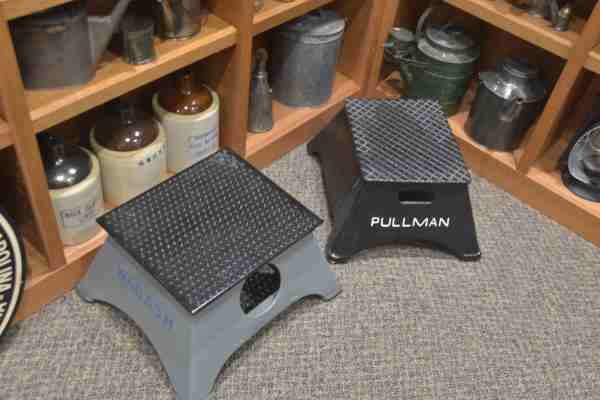
Wabash and Pullman step boxes.
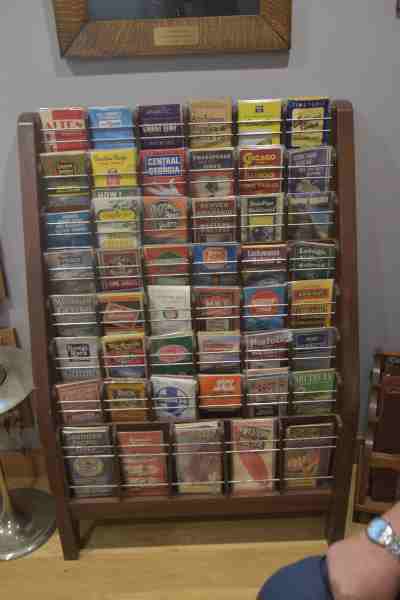
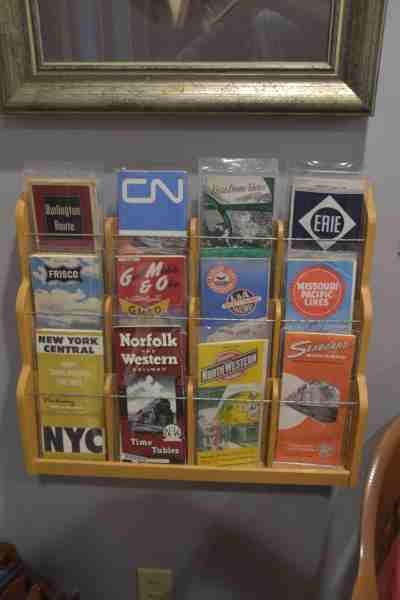
Passenger train timetables.
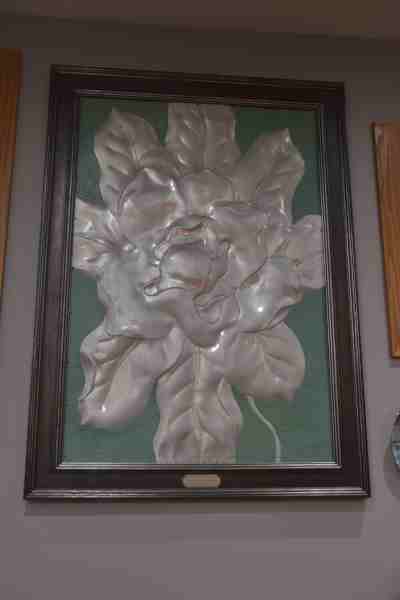
Illinois Central Railroad Magnolia Star, the emblem of the coaches added to the Panama Limited on October 29, 1967, the first time it had done so in half a century. This separate designation was dropped on December 13, 1968 and the railroad petitioned the Interstate Commerce Commission to end the train altogether on November 23, 1970, but the ICC deferred the request with Amtrak due to launch the following spring.
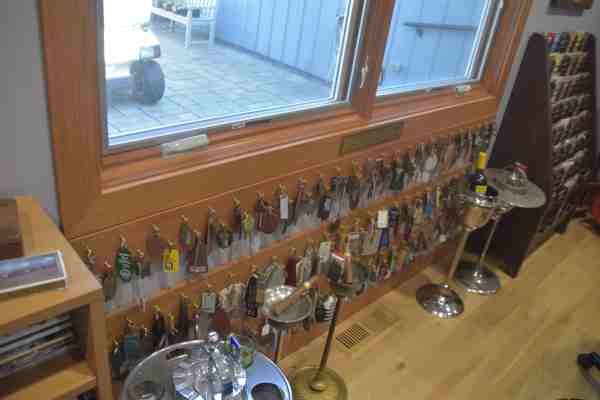
Hotel key collection.
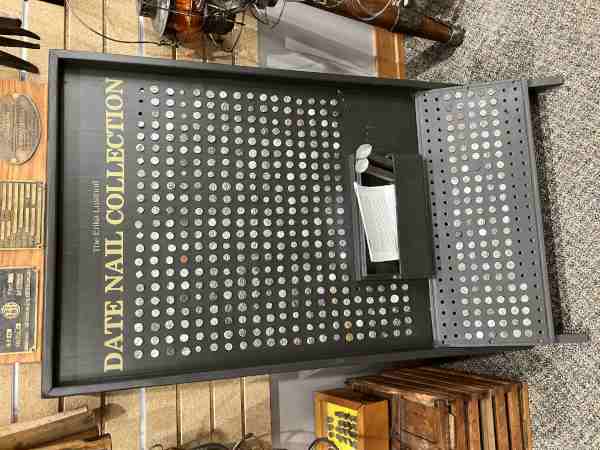
The Erika Lustoff date nail collection.
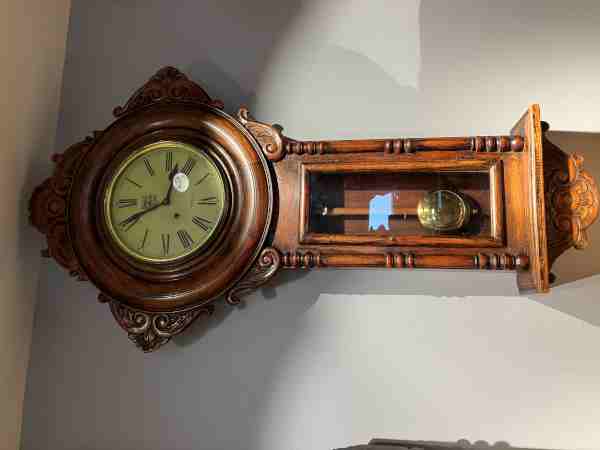
New York, New Haven and Hartford wall clock.
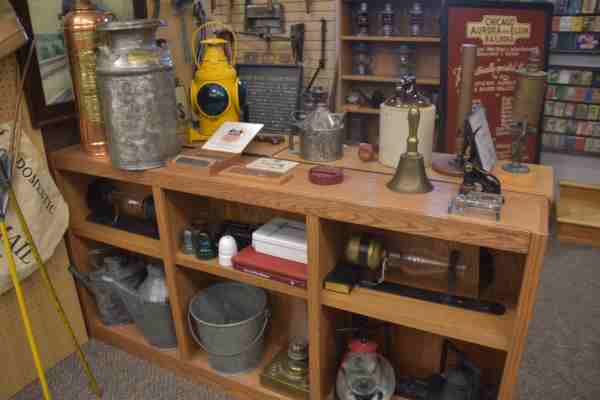
The museum includes a wide variety of items outside dining car china.
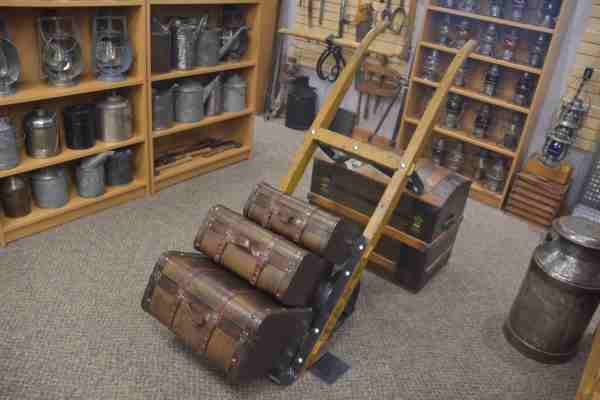
Chicago and Northwestern luggage display.
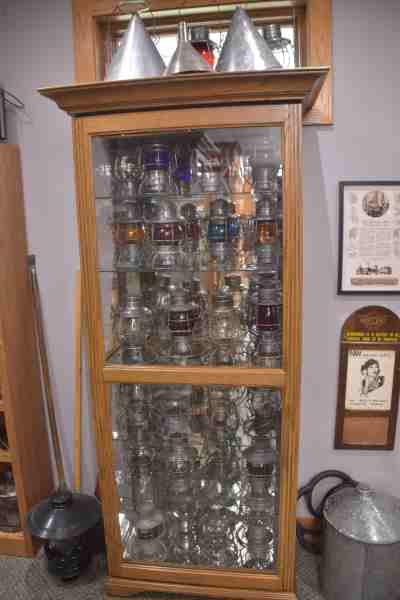
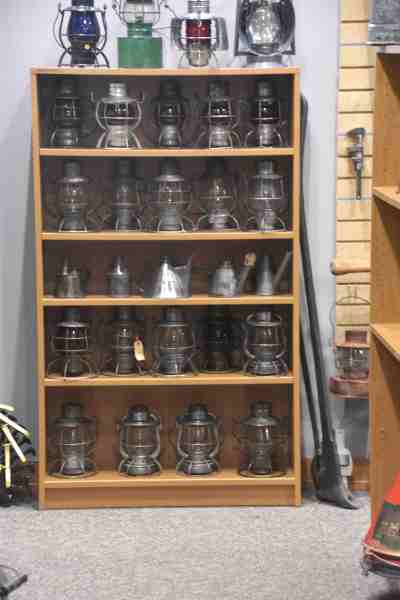
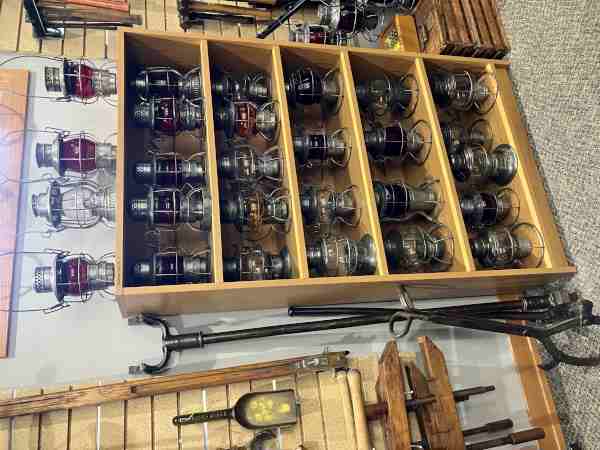
Railroad lanterns.
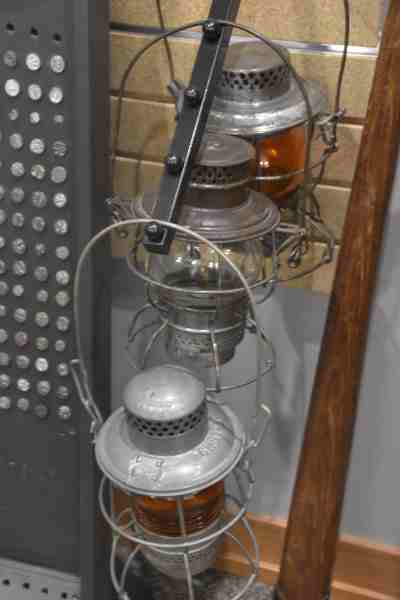
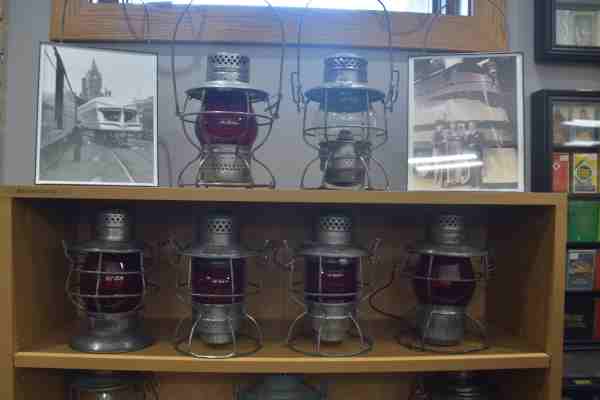
Adlake railroad lanterns. Note "CMSTPR&P" on the bottom one.
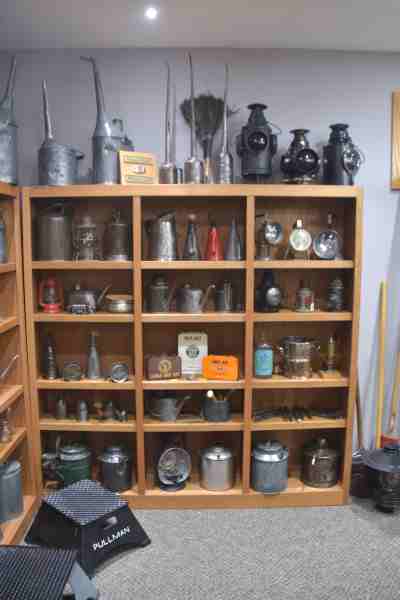
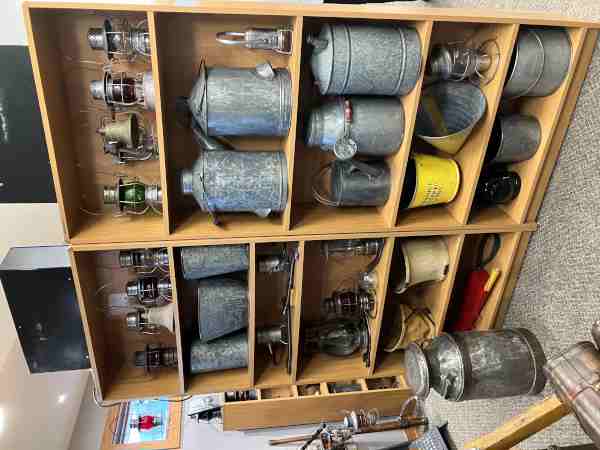
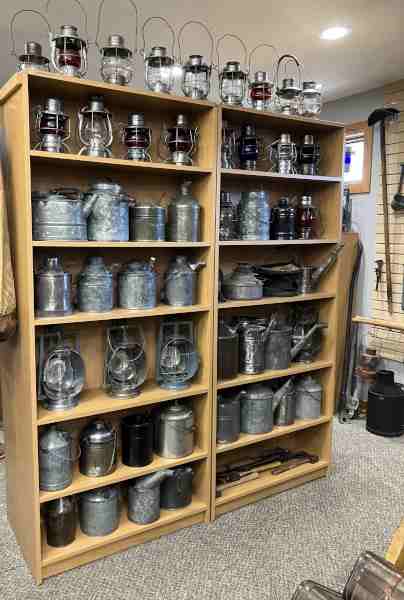
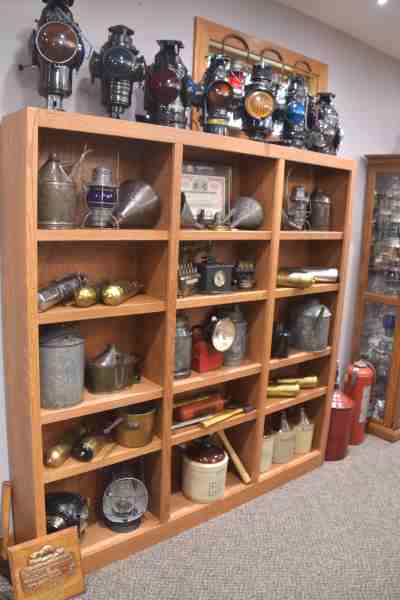
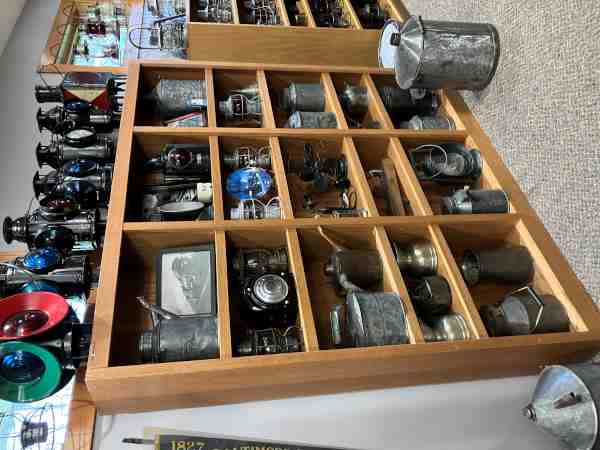
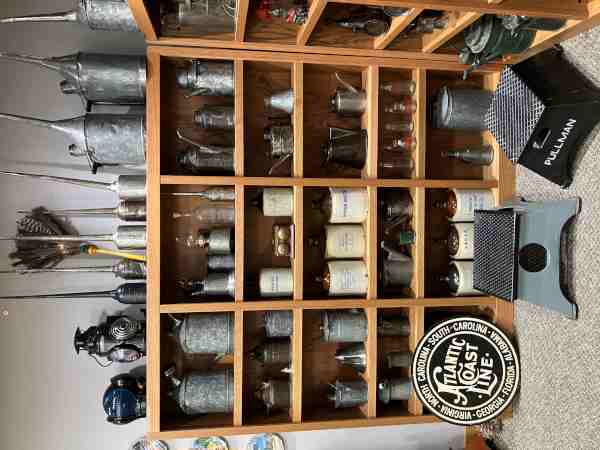
These items were vital to servicing steam engines. Many have the railway's initials stamped on them.
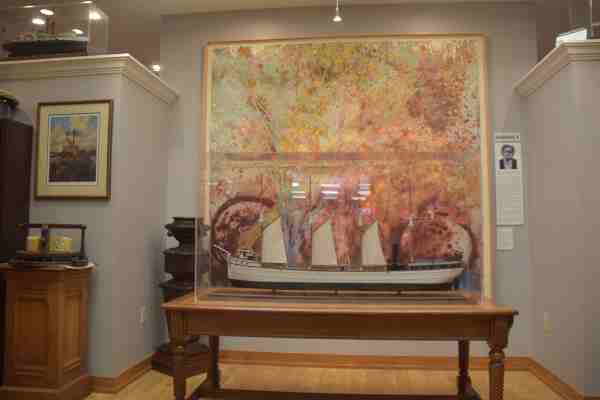
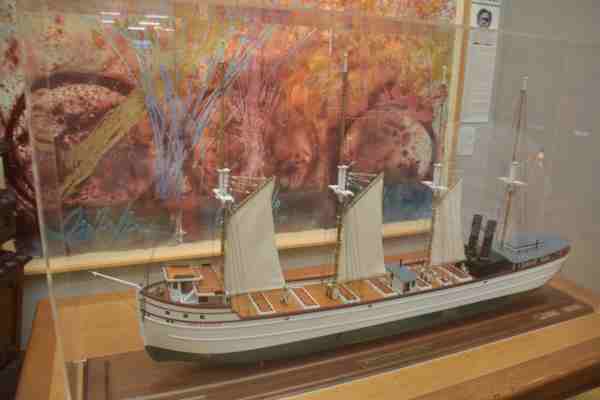
The steamboat Helena, a sternwheel packet with a wood hull, was built in California, Pennsylvania in 1878. In ten years, she made over fifty trips to Montana points under many masters associated with the T.C. Power Line. She was sold in 1887 to A.S. Bryan and others in Washington, Missouri. The Helena was snagged and destroyed at Bonhomme Island in Missouri on October 23, 1891.
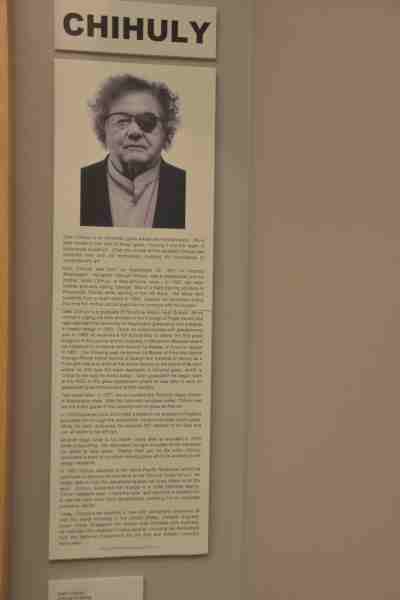
Dale Chihuly was introduced to glass while studying interior design at the University of Washington. After graduating in 1965, Chihuly enrolled in the first glass program in the country, at the University of Wisconsin. He continued his studies at the Rhode Island School of Design, where he later established the glass program and taught for more than a decade.
In 1968, after receiving a Fulbright Fellowship, he went to work at the Venini glass factory in Venice. There he observed the team approach to blowing glass, which is critical to the way he works today. In 1971, Chihuly co-founded Pilchuck Glass School in Washington State. With this international glass center, Chihuly has led the avant-garde in the development of glass as a fine art.
His work is included in more than 200 museum collections worldwide. He has been the recipient of many awards, including twelve honorary doctorates and two fellowships from the National Endowment for the Arts.
Chihuly has created more than a dozen well-known series of works, among them, Cylinders and Baskets in the 1970s; Seaforms, Macchia, Venetians, and Persians in the 1980s; Niijima Floats and Chandeliers in the 1990s; and Fiori in the 2000s. He is also celebrated for large architectural installations. In 1986, he was honored with a solo exhibition, Dale Chihuly: Objects de Verre, at the Musée des Arts Décoratifs, Palais du Louvre, in Paris. In 1995, he began Chihuly Over Venice, for which he created sculptures at glass factories in Finland, Ireland, and Mexico, then installed them over the canals and piazzas of Venice.
In 1999, Chihuly started an ambitious exhibition, Chihuly in the Light of Jerusalem; more than 1 million visitors attended the Tower of David Museum to view his installations. In 2001, the Victoria and Albert Museum in London curated the exhibition Chihuly at the V&A. Chihuly’s lifelong fascination for glasshouses has grown into a series of exhibitions within botanical settings. His Garden Cycle began in 2001 at the Garfield Park Conservatory in Chicago. Chihuly exhibited at the Royal Botanic Gardens, Kew, near London, in 2005. Other major exhibition venues include the de Young Museum in San Francisco, in 2008; the Museum of Fine Arts, Boston, in 2011; and the Montreal Museum of Fine Arts in 2013. Chihuly Garden and Glass, a long-term exhibition, opened at Seattle Center in 2012.
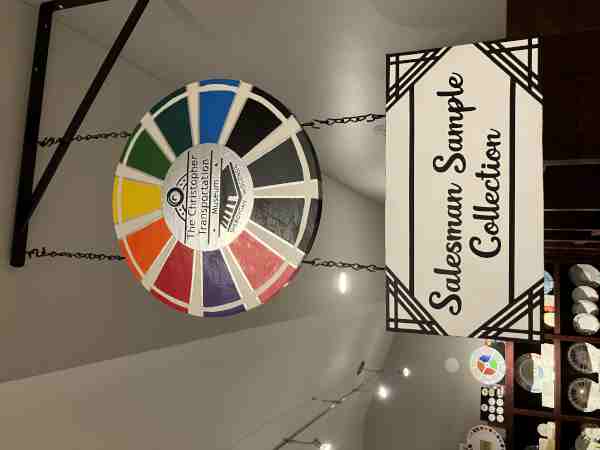
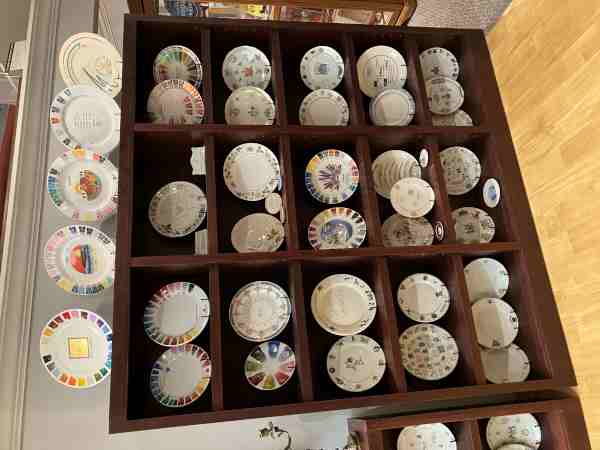
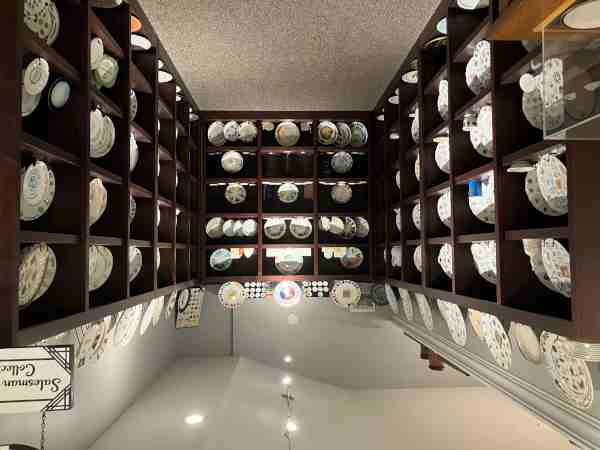
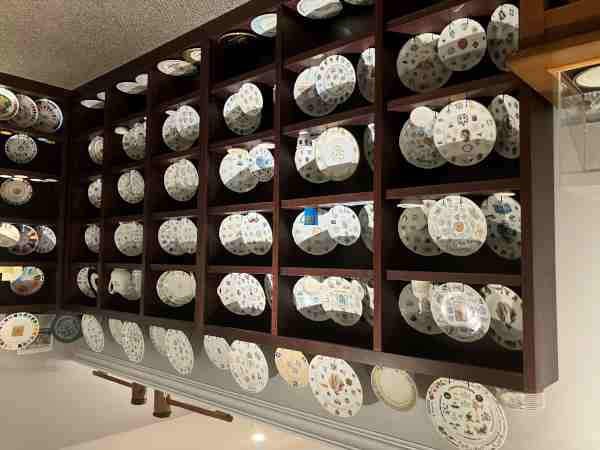
Christopher Farms Transportation Museum Salesman Sample Collection. Continuing the tour around this museum, next was the circus section.
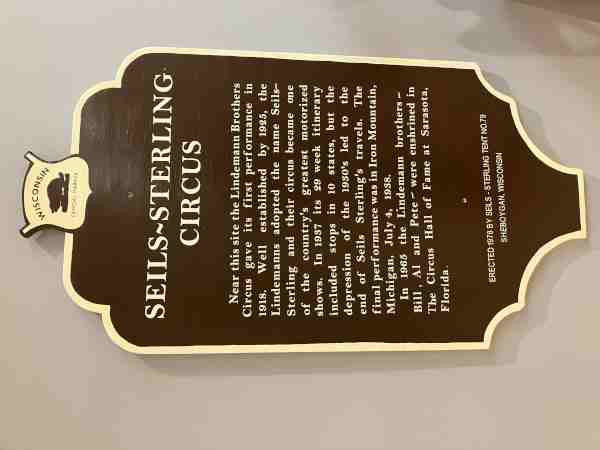
Seils-Sterling Circus information board. It was owned by the Lindemann brothers -- Bill, Pete and Al -- of Sheboygan, and the show toured the midwestern United States from 1924 until 1938.
The Sells Bros. Circus was a very successful and well known circus which operated from 1872 until 1895. In 1924 counting on the popularity of the "Sells", name the Lindemanns began calling their the "Sells-Sterling Circus", however the Ringling Bros. Barnum Bailey Circus had legally purchased the "Sells Brothers" title. After a threat of a law suit the Lindemann renamed the show "Seils-Sterling". The circus operated successfully until 1938 when The Great Depression had taken its toll on the economy. The Lindemann found it necessary to cut performers' salaries, reduce the size of their band and other measures to cut the circus' budget.
However, it was not enough. On July 4, 1938, the Seils-Sterling Circus gave its final performance in Iron Mountain, Michigan and on September 19, 1938, the circus was sold at auction, with most of the equipment being purchased by a Chicago businessman.
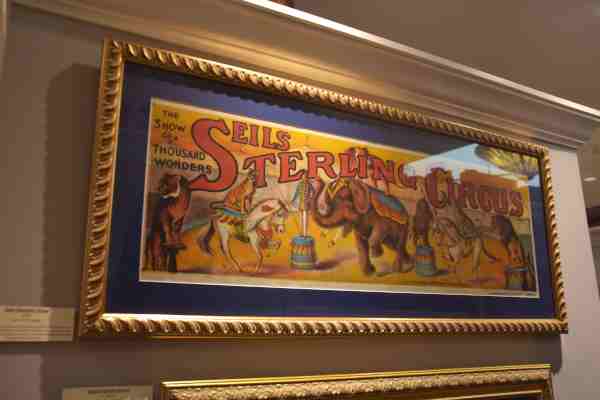
A promotional lithograph of the Seils-Sterling Circus.
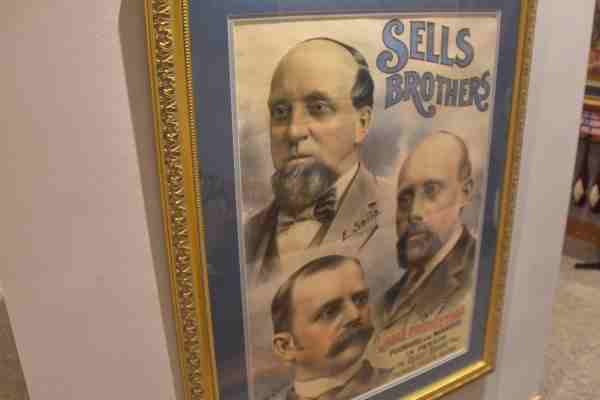
The Lindeman Brothers. Brothers Bill and Pete began their circus careers as performers. Bill and his wife Millie (Millie Senkbeil Guenther 1888-1966), performed on the high wire. Pete and his wife Louise (Louise Staalson 1889-1968, performed on the trapeze. After performing with smaller mid-west circuses the brothers decided to open their own circus. In the early years they operated under various under various names, in 1911 The Lindemann Brothers Circus, in 1912 The Lindemann Big Society Circus, in 1920 The Yankee American & Lindemann Bros. Combined Shows and in 1923 The Great Danby Show.
In 1913, Bill and Pete were joined by their brother Al who also became a partner in the business. After the close of the circus, Pete joined Dailey Bros. Circus as trainmaster, then worked as a contracting agent for a time; he became equestrian director for Kelly-Miller Circus in 1952. He served at contracting agent for the Cole-Walters Show and Camp Bros then in 1955, returned to Kelly-Miller to be lot superintendent, and in 1956, served as purchasing agent until his retirement in 1957.
Al Lindemann worked as lot superintendent with the Ringling Bros Barnum Bailey Circus from 1944 until 1946. He returned to Sheboygan where he opened Lindemanns Grocery, which he operated until his death. William Fred Lindemann died in 1949, Peter Henry Lindemann died on November 10, 1969 in Sheboygan and Albert Conrad "Al" Lindemann died March 1, 1954 in Sheboygan. In 1965 the Lindemann Brothers were inducted into the International Circus Hall of Fame.
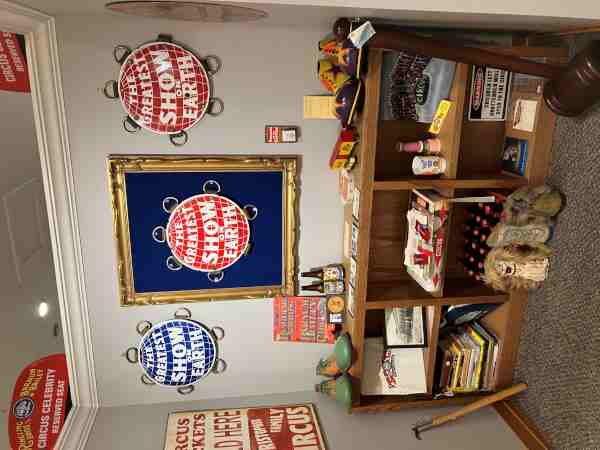
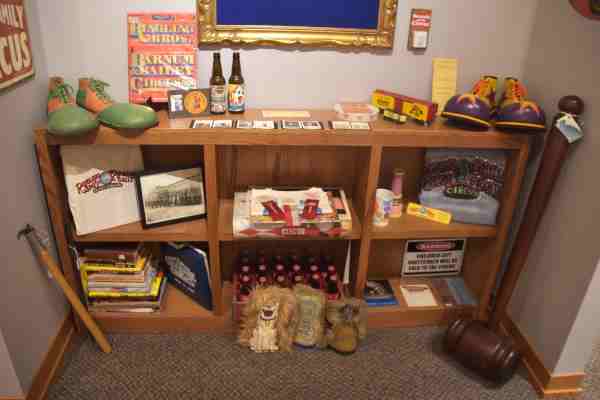
The Greatest Show on Earth, as the Ringling Brothers Barnum and Bailey Circus, was known.
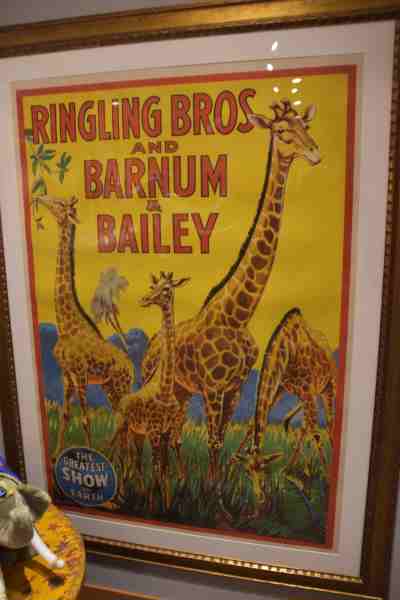
A promotional poster for Ringling Brothers Barnum and Bailey Circus.
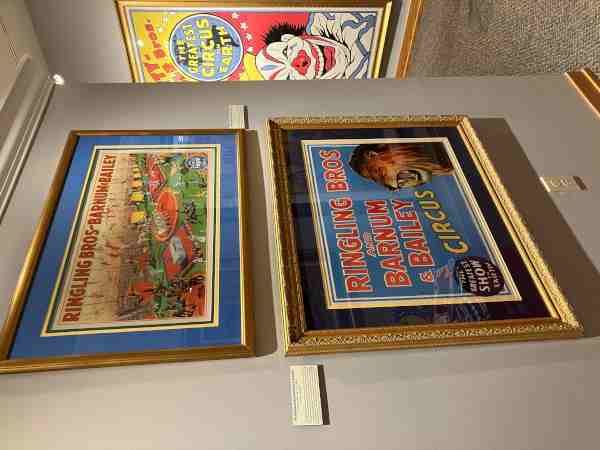
The reflection from the lights is the reason for the angle from which this photograph was taken.
Ringling Brothers and Barnum & Bailey lithograph "Three Rings, Two Squares” circa 1945. The iconic "three rings" circus set up was first invented by P.T. Barnum and William Coup in 1871. The Ringling Brothers Circus started using the three-ring concept in 1881, which featured three acts that were performed simultaneously in each of the three rings.
Ringling Brothers and Barnum & Bailey "Classic Roaring Lion", 1942 Framed Lithograph. The Ringling Brothers and Barnum & Bailey program consisted of twenty-two displays followed by a grand finale act. The opening act of the 1942 season was entitled "Three Great, New Mixed Groups of the Most Ferocious and Treacherous Performing Wild Animals Ever Assembled Educated Beyond Belief". The act featured Barber Lions, Abyssinian Lions, Royal Bengal Tigers, Polar Bears, Black Bears, Black Jaguars, Kodiac Bears, Sumatran Spotted Leopards, Himalayan Bears and Great Dane Dogs.
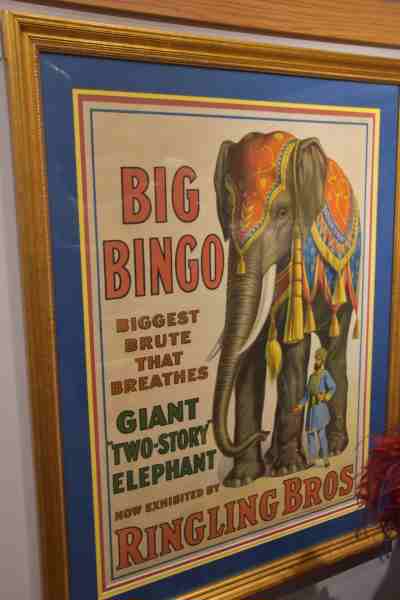
A poster promoting Big Bingo.
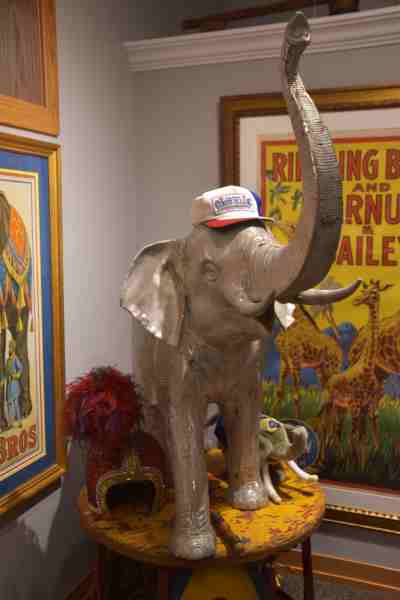
No circus is complete without an elephant.
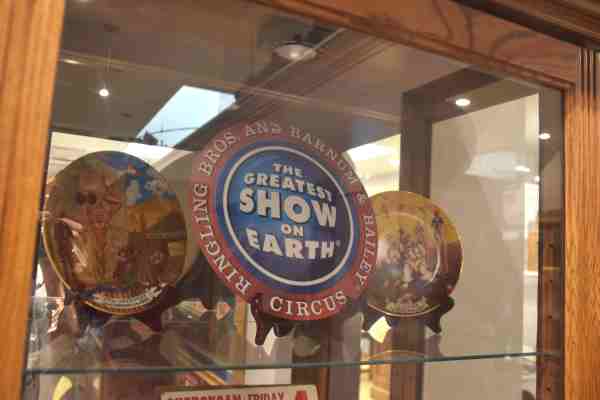
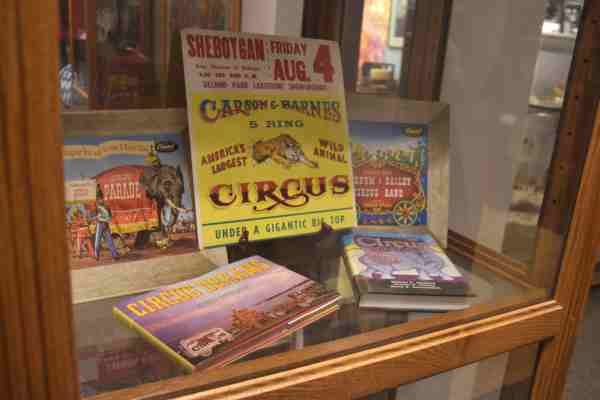
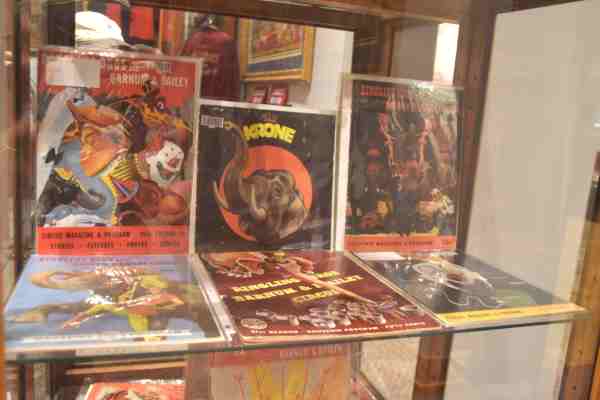
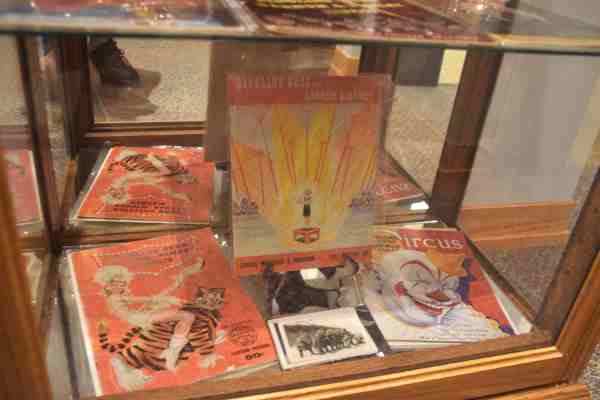
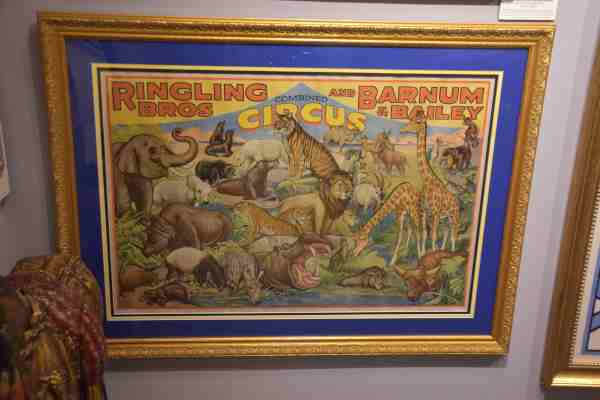
Ringling Brothers and Barnum & Bailey memorabilia.
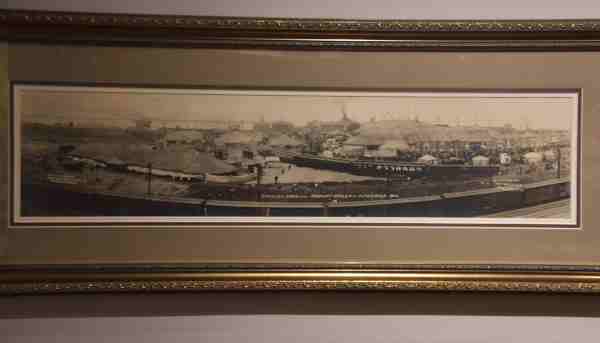
A 1930 scene from Cleveland with the Ringling Brothers and Barnum & Bailey circus train.
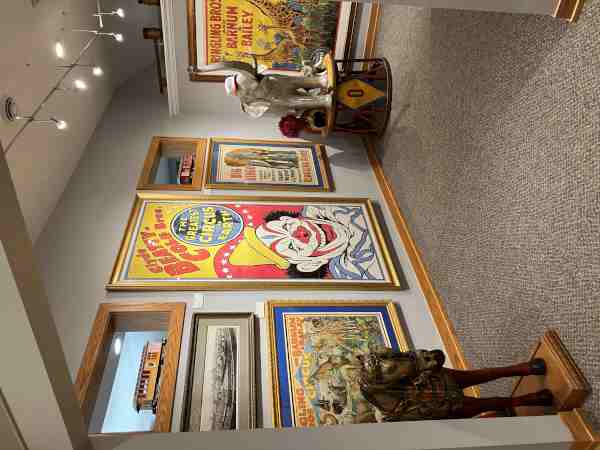
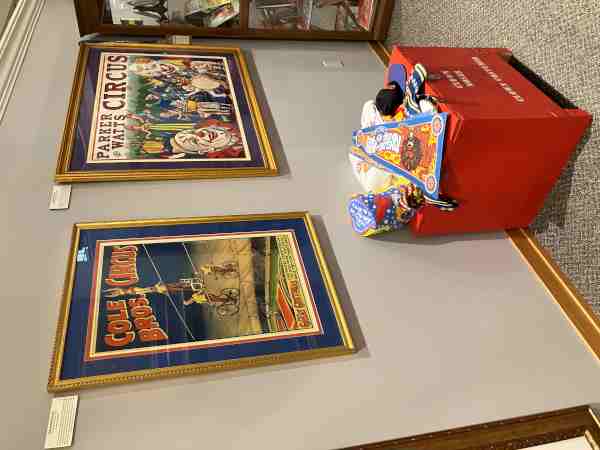
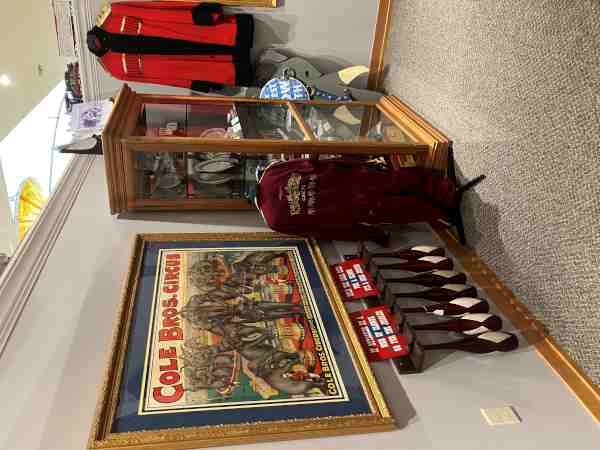
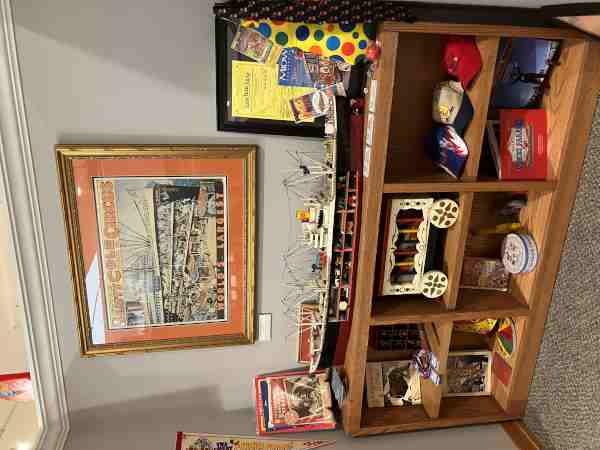
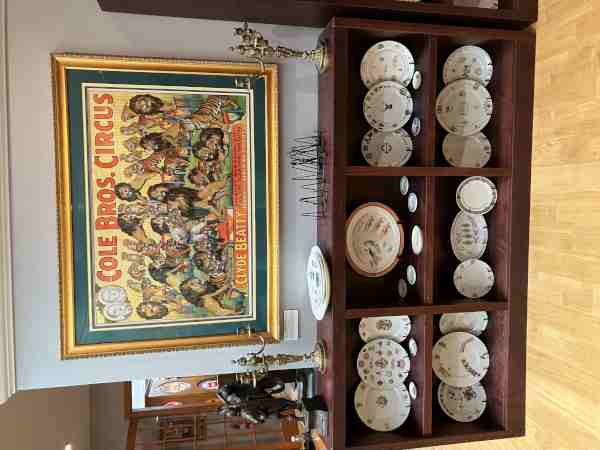
Ringling Brothers and Cole Brothers Circus posters and ephemera. The Cole Bros. Circus was a medium-sized circus founded in 1884 as "W.W. Cole's New Colossal Shows", by William Washington Cole. Ownership was passed around and in 1900, the Circus was bought by two Canadian showmen, Martin and James Down, which was when the name was changed to Cole Bros. Circus.
In the 1930s, the circus employed two noted animal trainers, Clyde Beatty and Allen King, both of whom travelled in their own railroad cars. During their shows, the Cole Bros. Circus would often parade from their 35 large cars in the rail yards to where the circus was being performed and this scene was seen daily, morning and night, as the circus travelled. 1935 was the first year Beatty was associated with the Cole Bros. Circus and they visited towns all across the United States. In 1957, the show was re-named Clyde Beatty Cole Bros. Circus and bought by the Acme Circus Operating Corporation, an organization formed by Jerry Collins, Frank McColsky, Randolph Calhoun and Walter Kernan. The Clyde Beatty-Cole Bros. Circus was then the largest tent show on the road at that time.
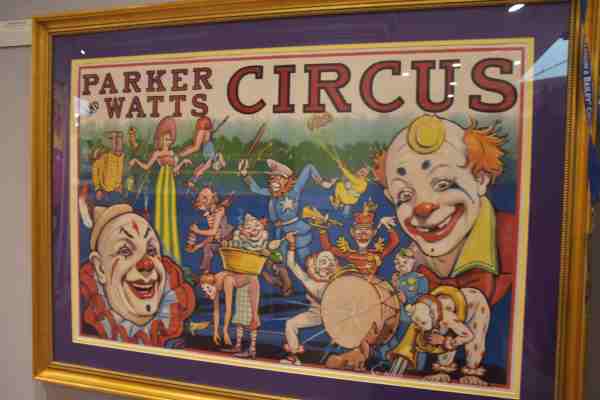
Parker and Watts Circus poster.
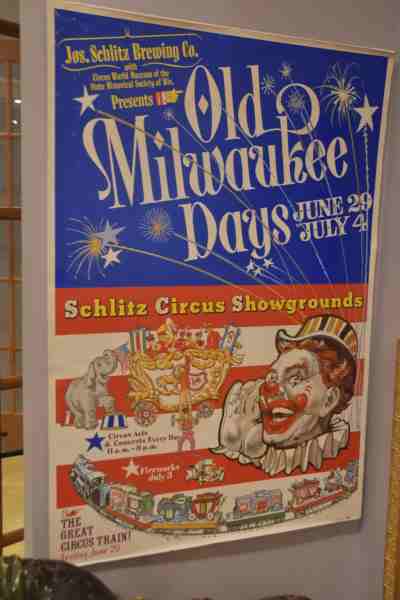
Schlitz Circus poster. Sponsored by the Joseph Schlitz Brewing Company, the train was originally created to bring the magic of the circus to cities across America in the 1950s. The brainchild of noted circus historian Richard H. Reynolds, the train was meticulously restored to showcase vintage circus wagons from the early 1900s. The Schlitz Circus Train represented not only a poignant tribute to the golden age of travelling circuses, but also served as a living museum, bringing nostalgic joy to circus enthusiasts of all ages.
The train exhibited beautifully restored wagons that once paraded through the streets, drawn by teams of horses, heralding the arrival of the circus. In 1965, the train embarked on its most famous journey, traveling from Baraboo, Wisconsin, to Milwaukee. Chicago, Burlington and Quincy 2-8-2 4960, now on the Grand Canyon Railway, famously led the train during the railroad's popular steam program. This trip not only rekindled public interest in circus history but also played a pivotal role in fostering a new appreciation for traditional circus arts. The Schlitz Circus Train, with its vibrant history and spectacular display, remains an iconic symbol of America's rich circus heritage.
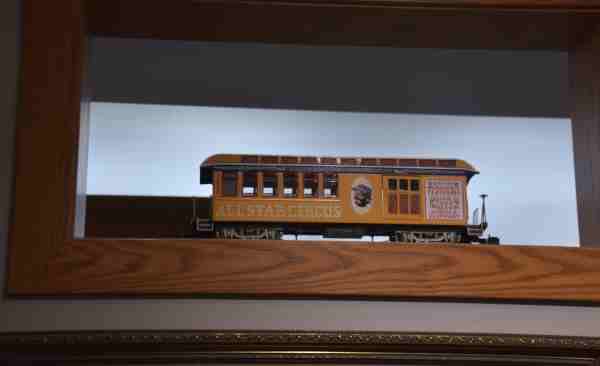
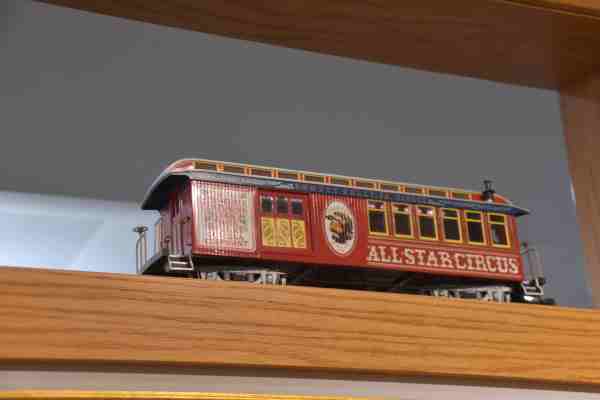
O gauge All-Star Circus train cars.
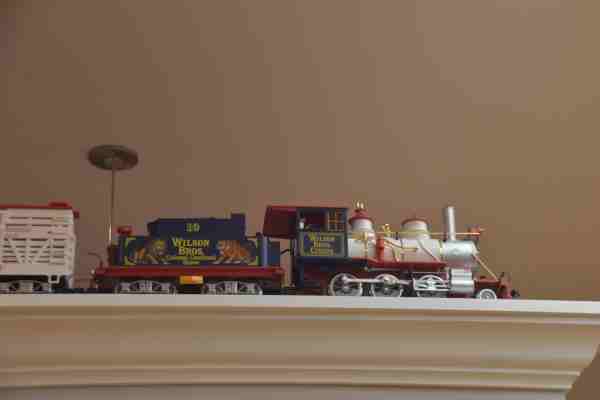
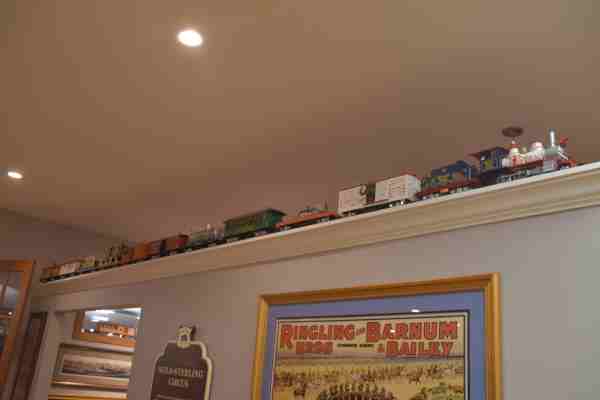
Wilson Brothers Circus train display.
Upon entry to the Christopher Transportation Museum building, the first room one sets foot in is full of newels. Up to our first visit here in August 2021, neither Elizabeth nor I were familiar with a newel, not knowing the name for them.
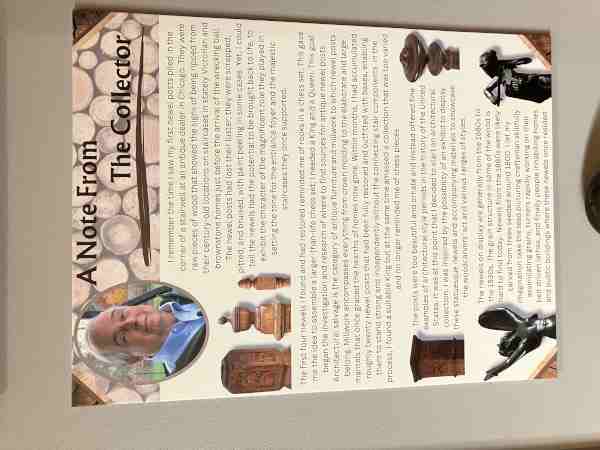
A Note From The CollectorI remember the time I saw my first newel post piled in the corner of a stairwell at an antique dealer in Chicago. They were raw pieces of wood that showed that the signs of being ripped from their century-old locations on staircases in stately Victorian and brownstone homes just before the arrival of the wrecking ball. The newel posts had lost their luster; they were scraped, pitted and bruised, with paint peeling in some cases. Yet, I could tell the newels had the potential to be brought back to life, to exhibit the character of the magnificent role they played in setting the tone for the entrance foyer and the majestic staircase they once supported.
The first four newels I found and restored reminded me of rooks in a chess set. This gave me the idea to assemble a larger-than-life chess set; I needed a king and a queen. This goal began the investigation and research of where to find sources for antique newel post. Architectural salvage is the category of antique furniture and millwork to which newel posts belong. Millworks encompasses everything from crown molding to the elaborate and large mantels that once graced the hearths of homes now gone. Within months, I had accumulated roughly twenty newel posts that had been fully restored and outfitted with bases, enabling then to stand strong and independently without the connecting stair components. In the process, I found a suitable King but at the same time, amassed a collection that was too varied and no longer reminded me of chess pieces.
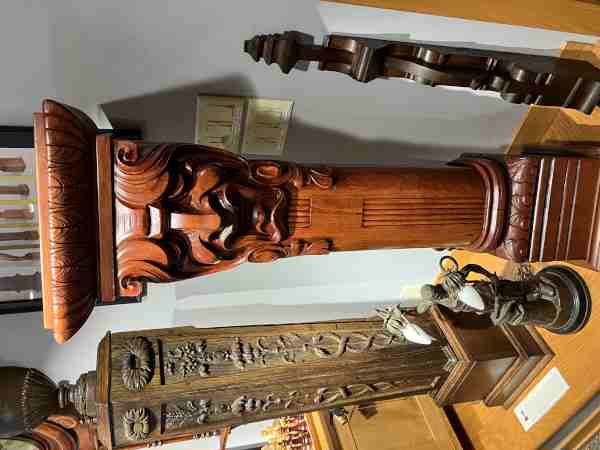
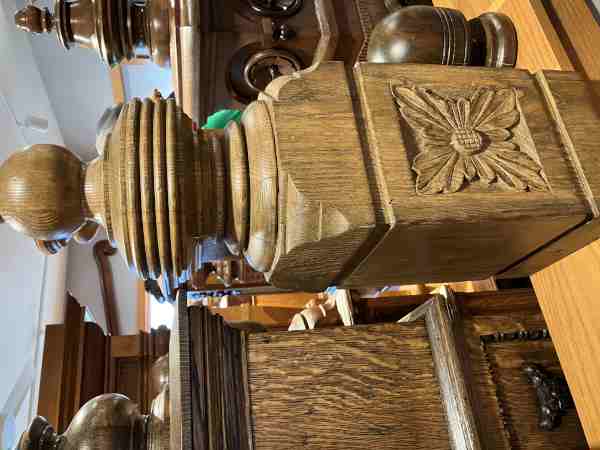
The posts were too beautiful and ornate and instead, offered fine examples of architectural style periods in the history of the United States. It was at this point that I decided to start an architectural collection. I was inspired by the possibility of an exhibit to display these statuesque newels and accompanying materials to showcase the woodcarvers' art and various ranges of styles.
The newels on display are generally from the 1880s to 1930s. The grain structure in some of the wood is hard to find today. Newels from the 1880s were likely carved from trees seeded around 1800. I let my imagination take the lead picturing craftsmen skillfully assimilating grains, turners rapidly working on the their belt-driven lathes and finally people inhabiting homes and public buildings where these newels once resided.
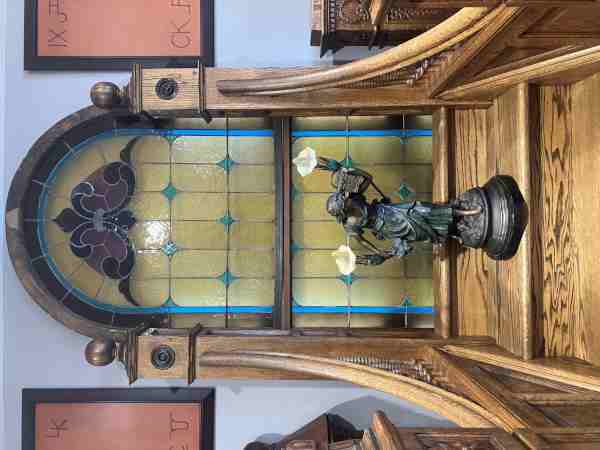
A most attractive scene.
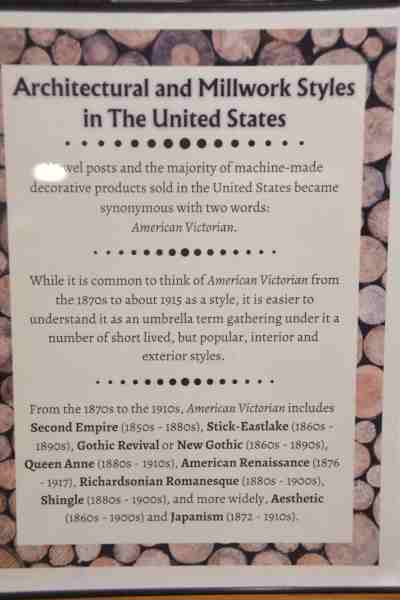
Architectural and Millwork Style in the United States.
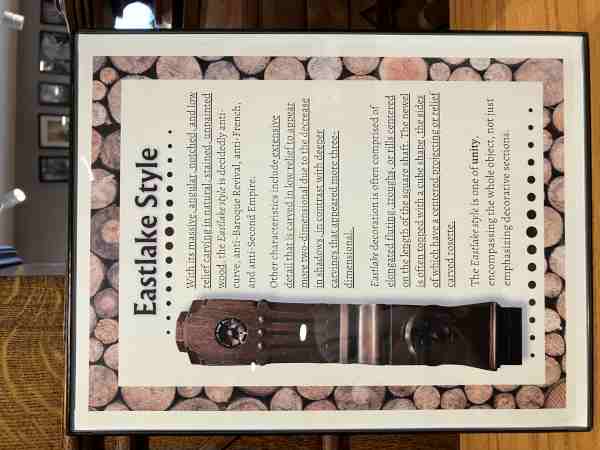
Eastlake Style.
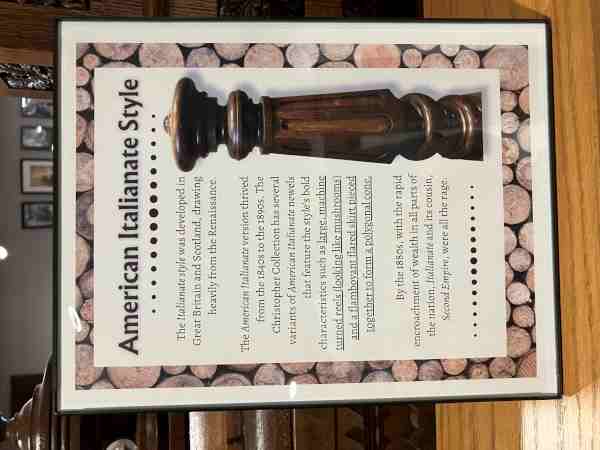
American Italianate Style.
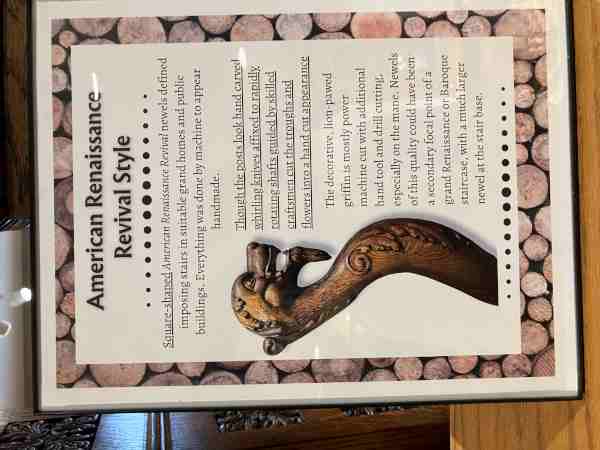
American Renaissance Revival Style.
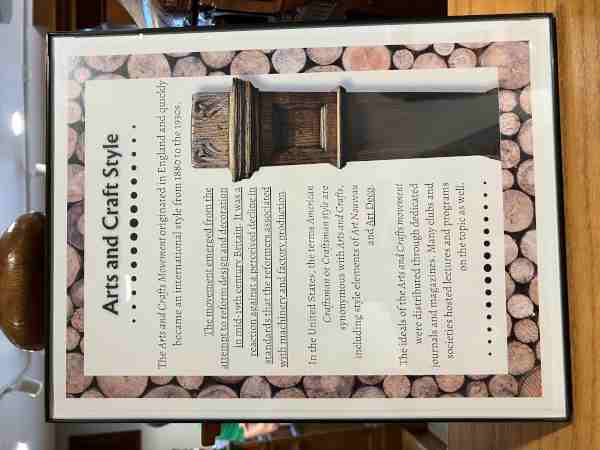
Arts and Craft Style.
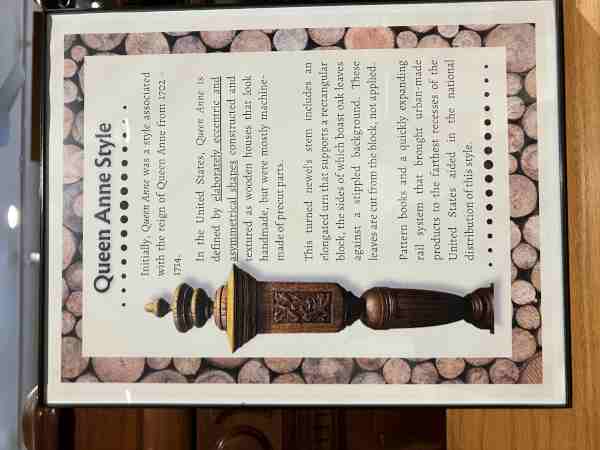
Queen Anne Style.
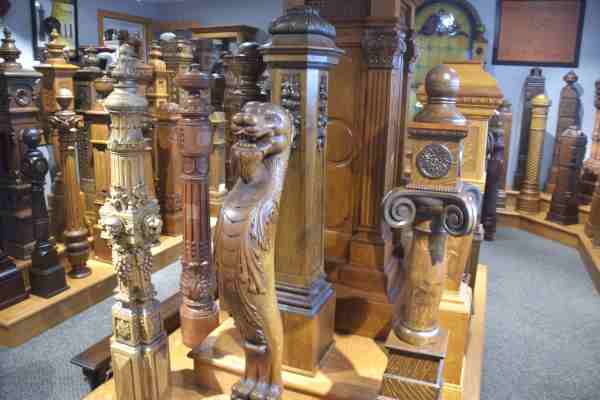
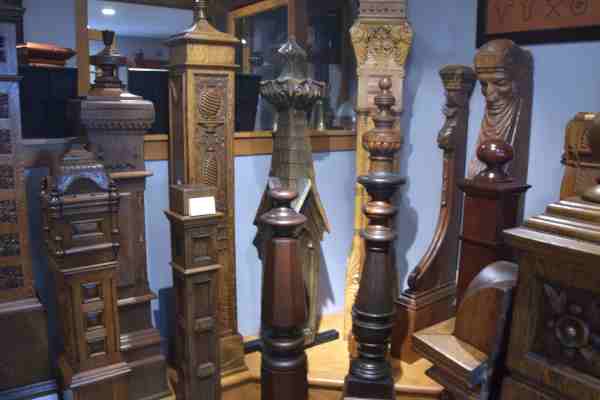
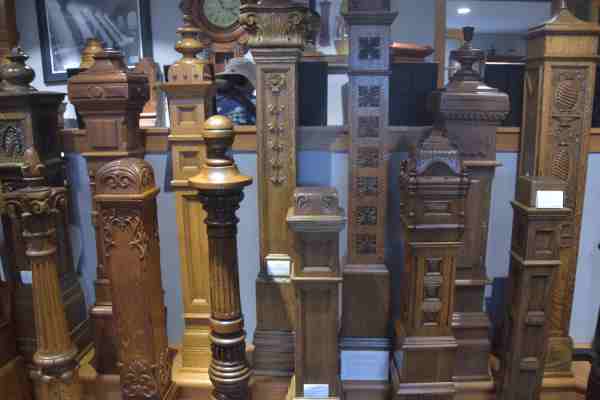
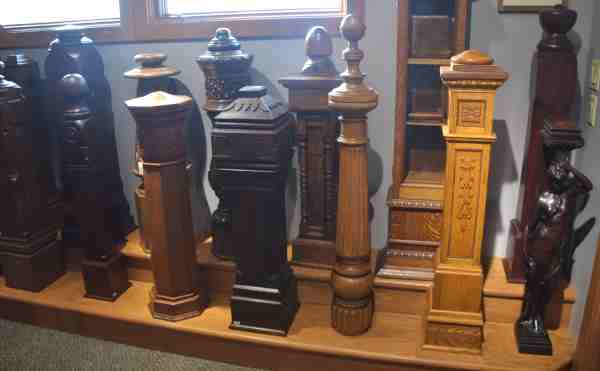
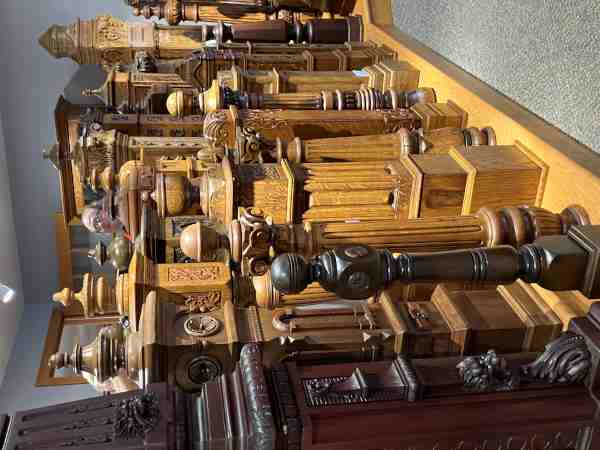
The extensive newel collection of Mr. Christopher.
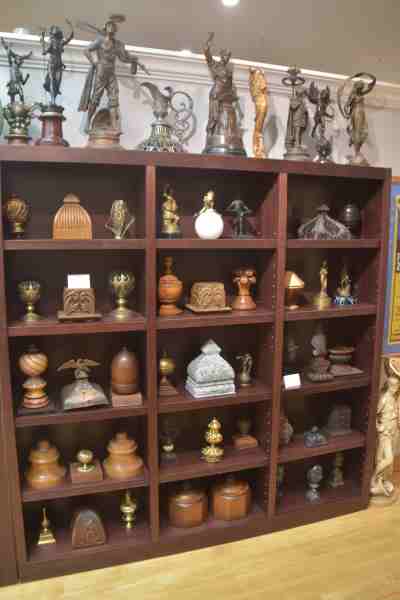
More newels on display.
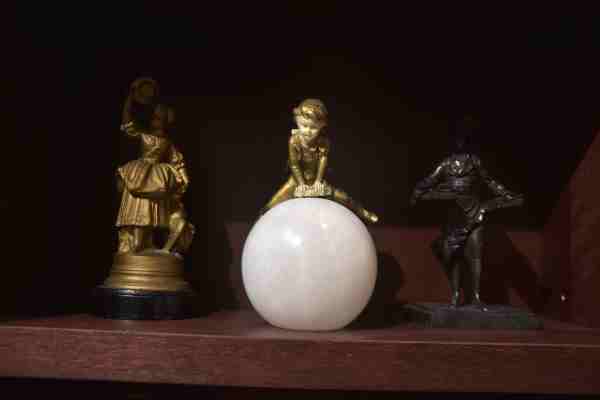
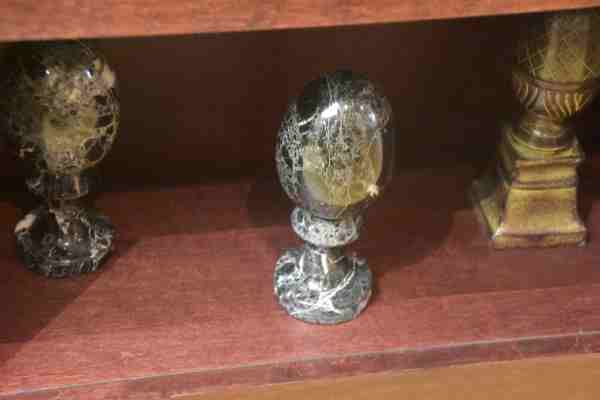
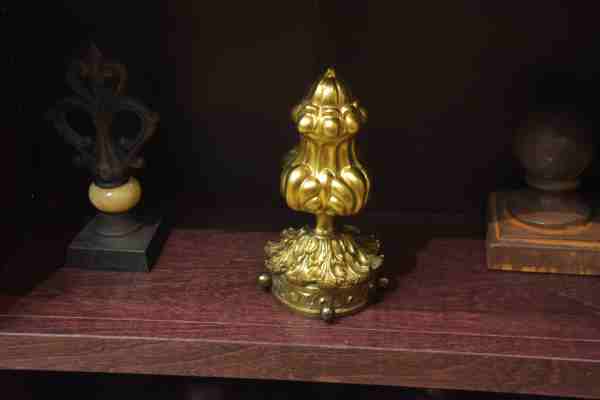
These particular ones caught my eye.
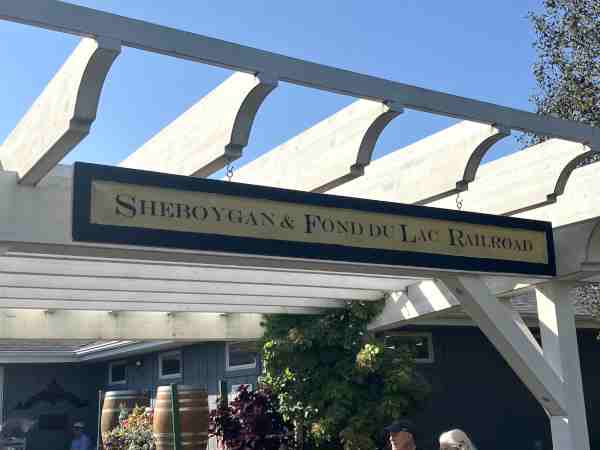
It was now time for a tour of part of the grounds. As we waited for our guide, the fictional Sheboygan and Fond Du Lac Railroad sign above the Transportation Museum.
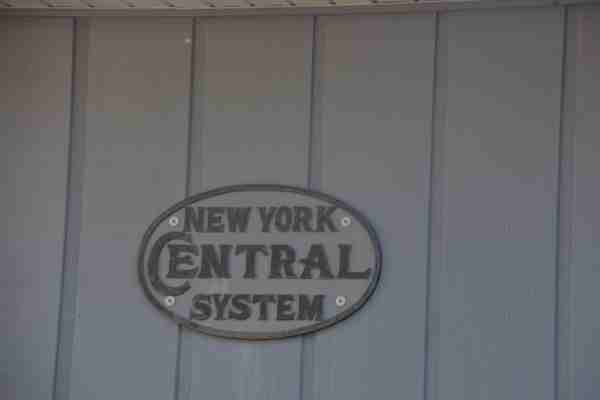
New York Central System sign on the side of the museum.
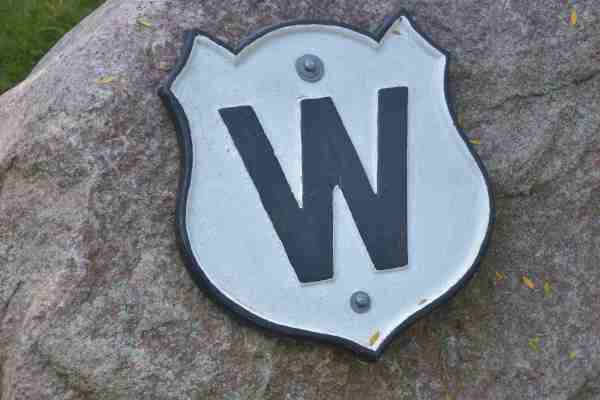
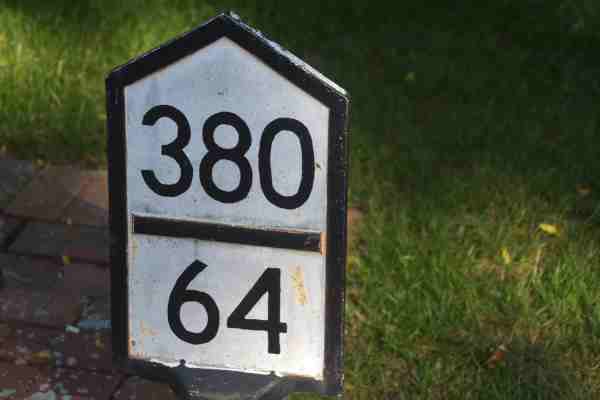
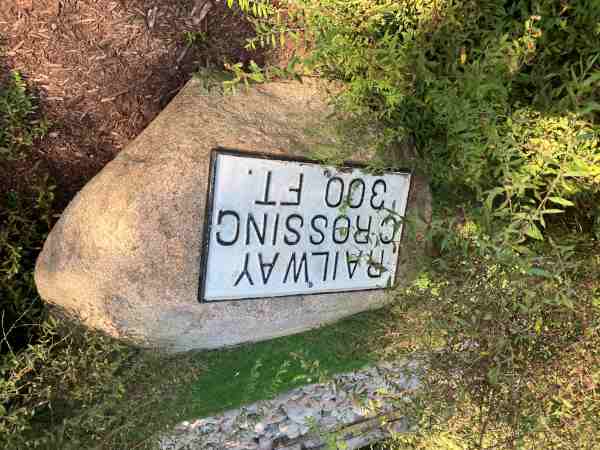
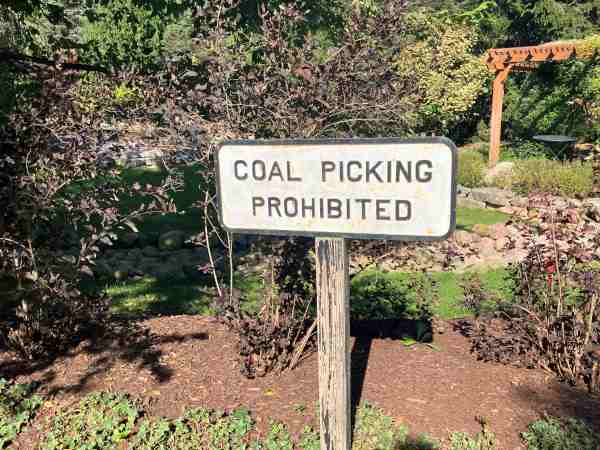
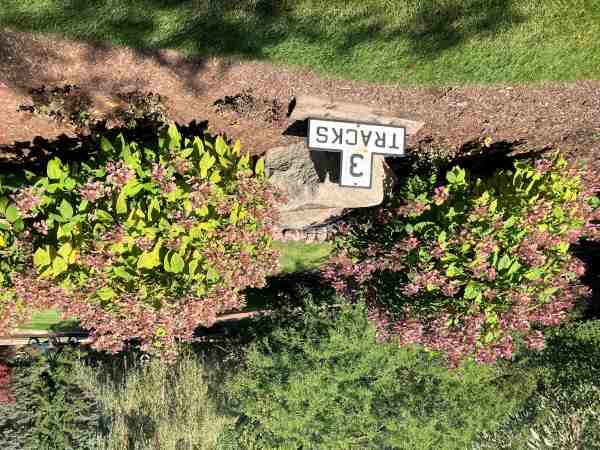
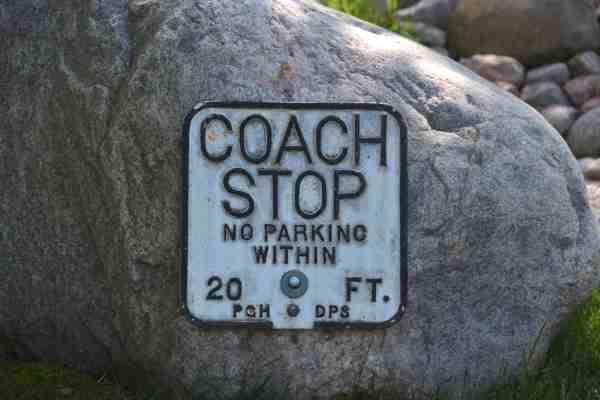
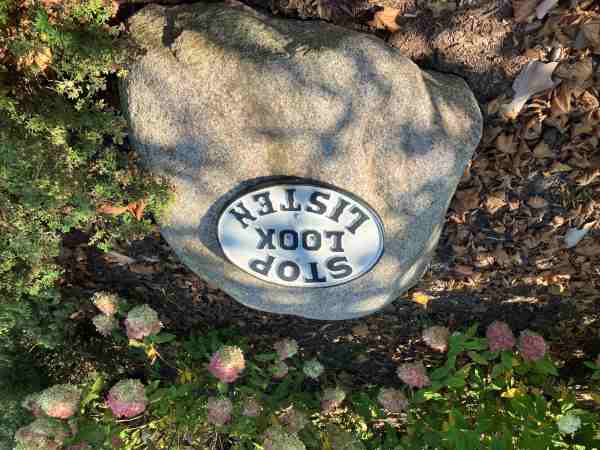
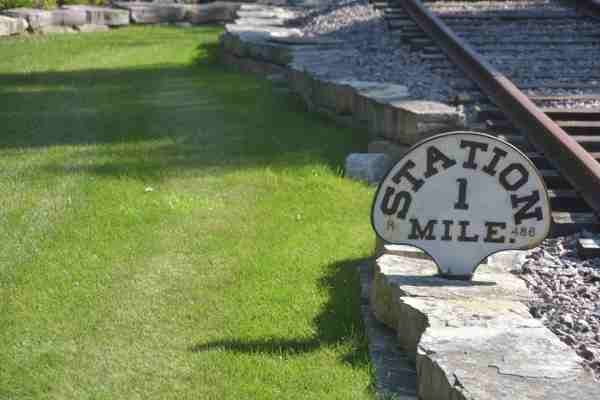
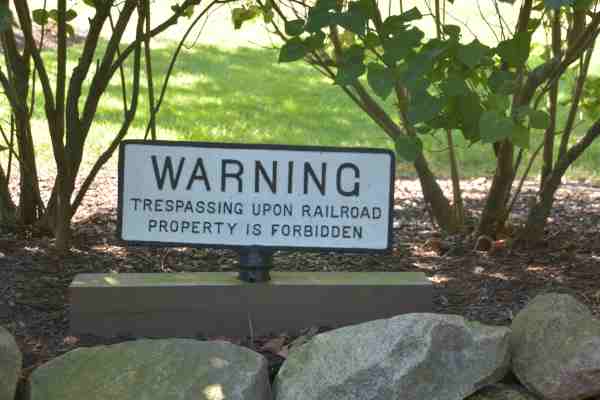
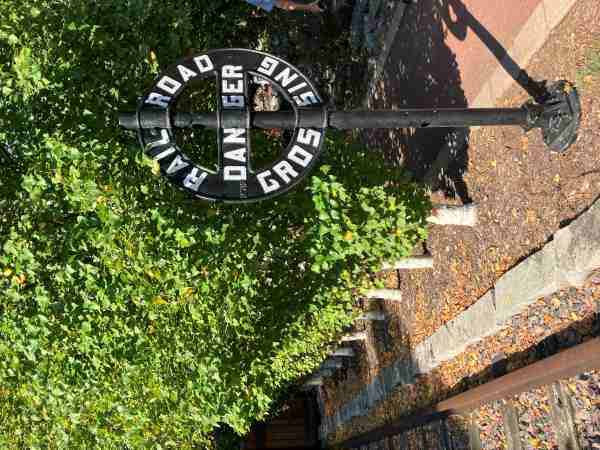
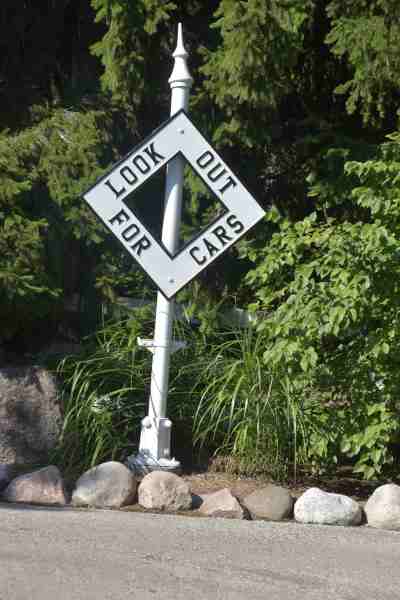
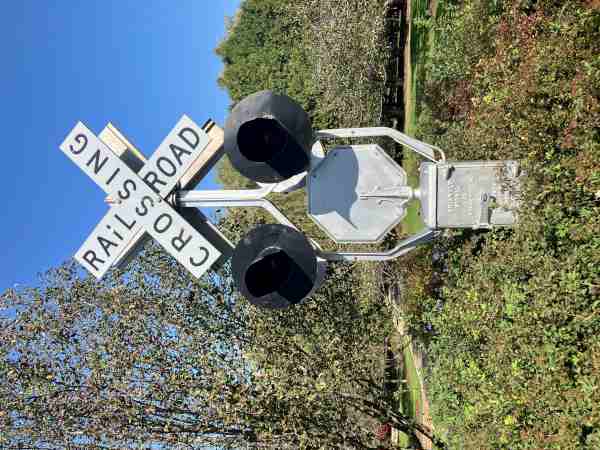
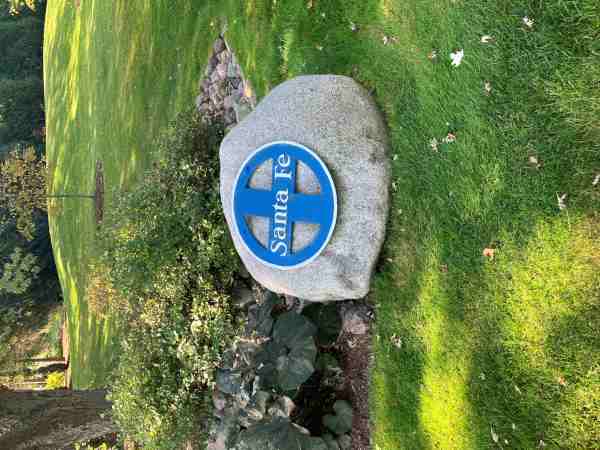
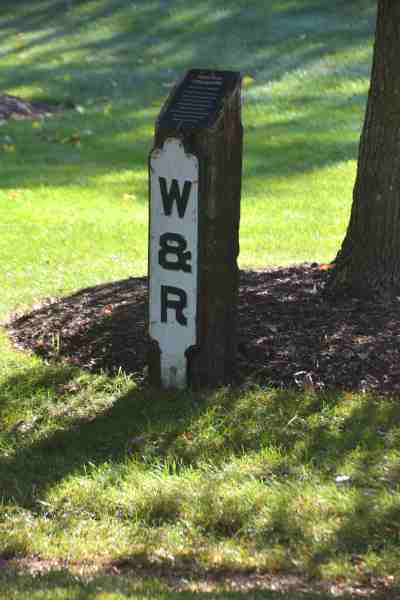
During the grounds tour, many stone railway markers were seen.
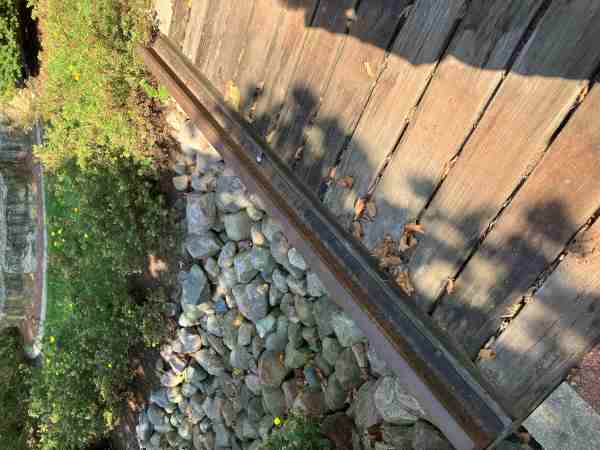
As we crossed this bridge, it was pointed out that the sides were made from pieces of track.
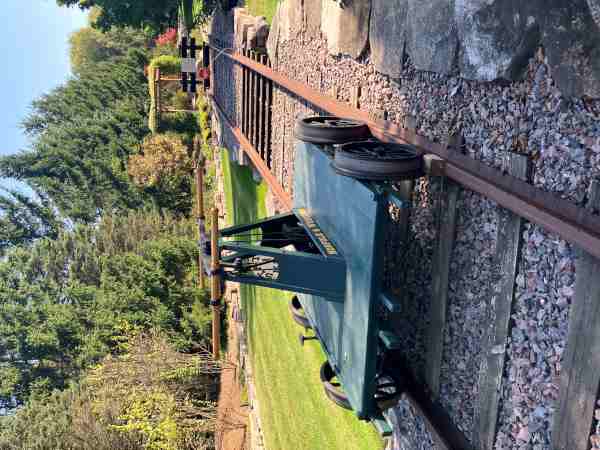
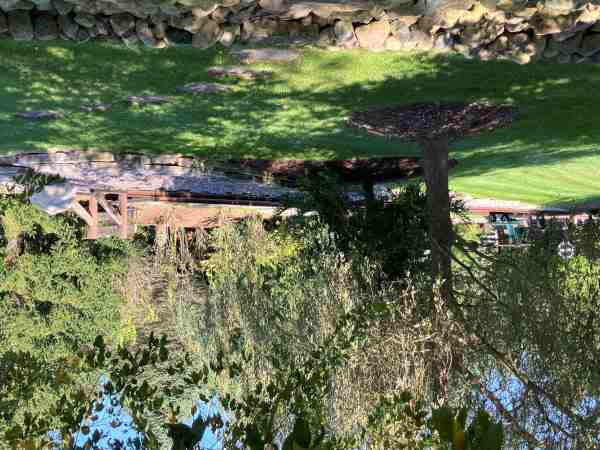
A Norfolk and Western handcar.
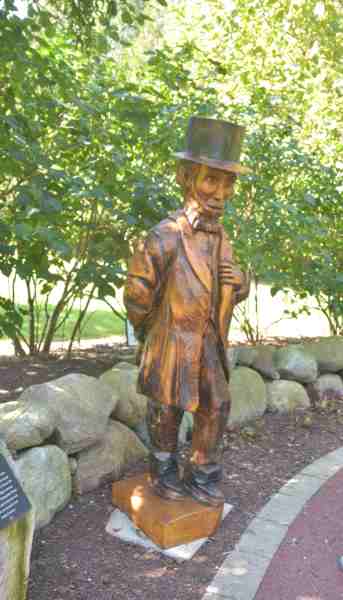
A wood carving of Abraham Lincoln.
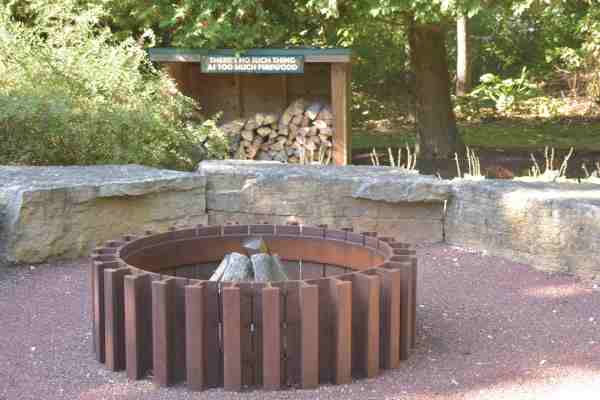
A firepit with an amusing phrase behind - There's No Such Thing As Too Much Firewood.
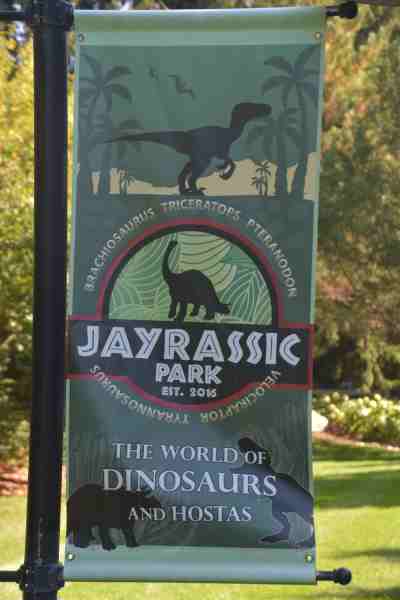
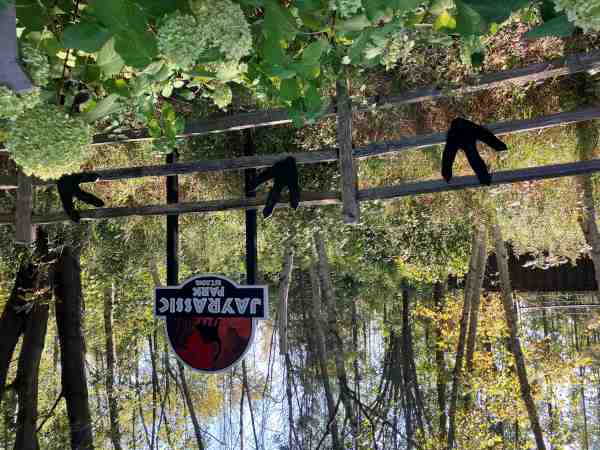
Jayrassic Park, established 2016, featuring the world of dinosaurs and hostas.
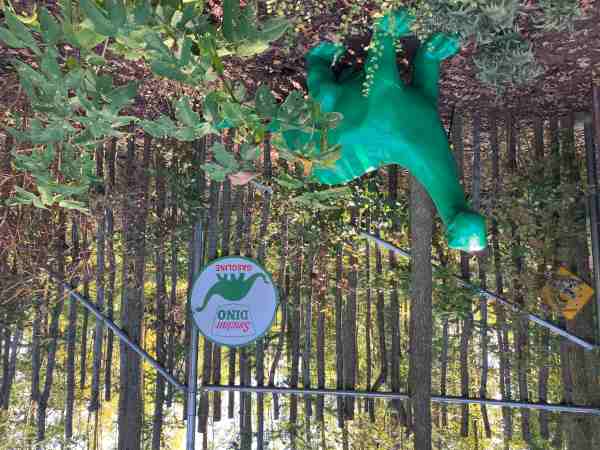
Dino, the dinosaur of Sinclair Gasoline. Perhaps the best thing that could have happened to 20-year-old Harry F. Sinclair was losing nearly everything he owned in a bad speculation – including the drug store his father had left him. Harry was a brilliant, stubborn, ambitious risk-taker and a druggist’s life was far too tame for him.
Harry set his sights on the oil business, starting small, selling lumber to oil derricks while buying and selling leases on the side. He had a nose for productive oil sites, and soon he was picking up support from wealthy investors. By age 31, Harry was the richest man in Kansas. In 1916, at age 40, he officially formed Sinclair Oil Corporation out of the assets of 11 small petroleum companies, and by the late 1920s, it was the seventh largest oil company in the United States.
Dinosaurs first appeared in Sinclair marketing in 1930 as part of a campaign to educate customers on the origin of fossil fuels. The Apatosaurus (then thought a Brontosaurus) quickly surpassed the T-Rex and Triceratops in popularity, and by 1932, we had registered DINO as a trademark. The dinosaurs appeared again as life-sized fiberglass models at the 1964 World’s Fair – and you can still see many of those models in state parks and museums across the country.
Sinclair is now one of the oldest continuous brands in the energy business, and our dinosaur is one of the most recognized icons in Americana. In 2022, Sinclair Oil joined with the former HollyFrontier Corporation to become HF Sinclair (NYSE:DINO).
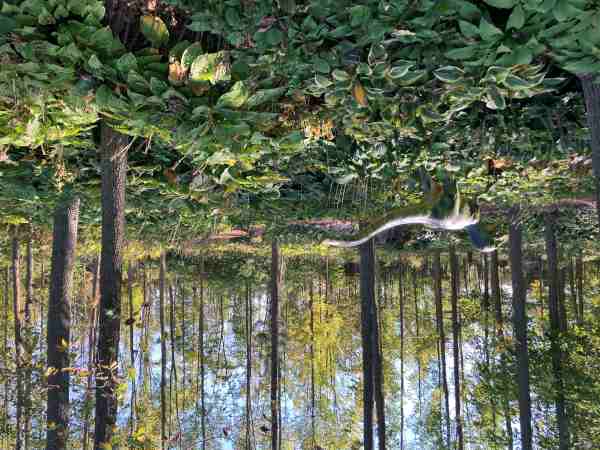
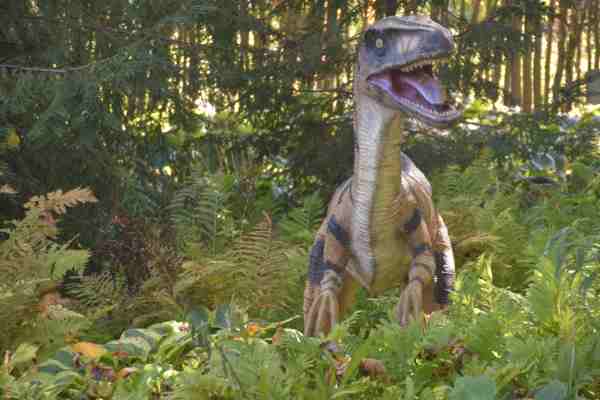
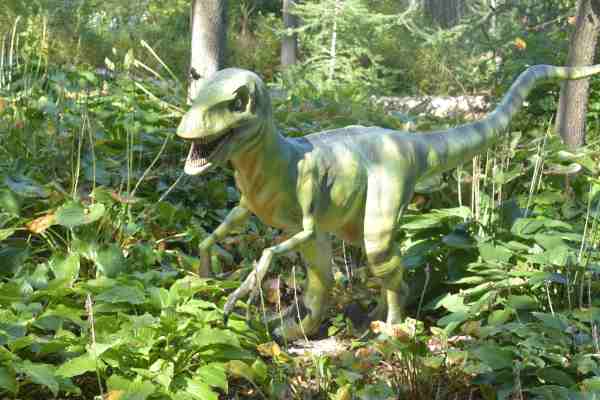
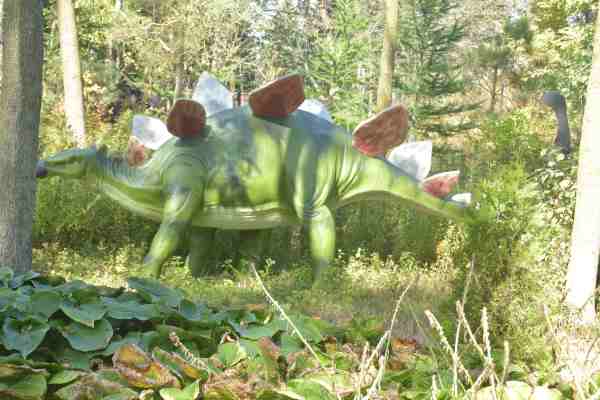
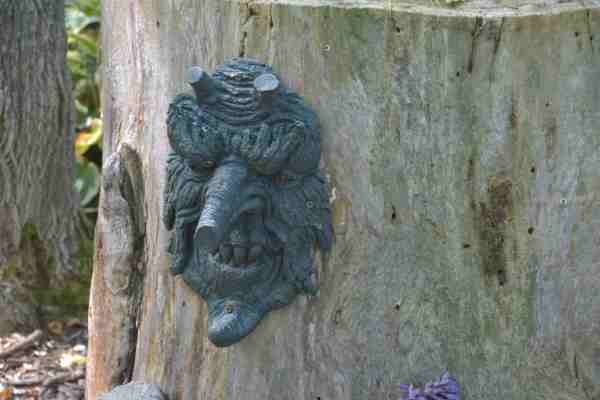
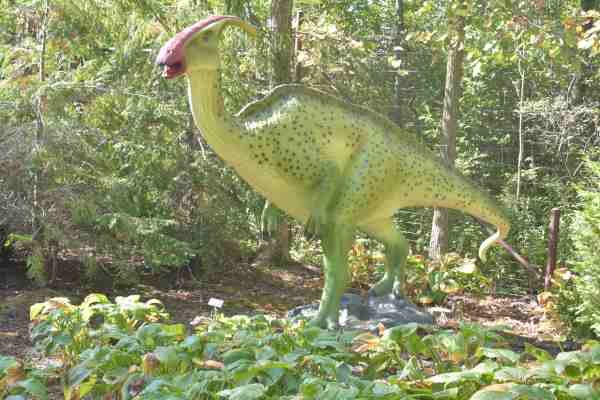
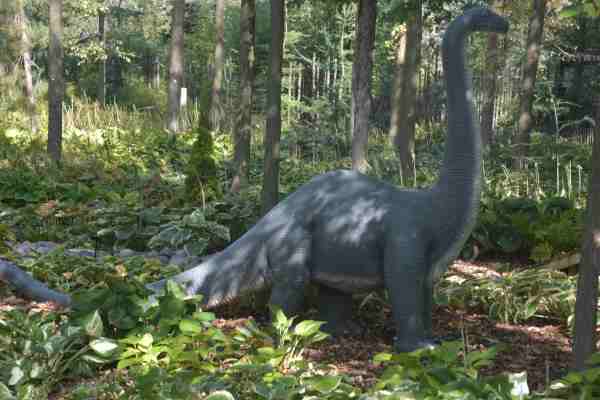
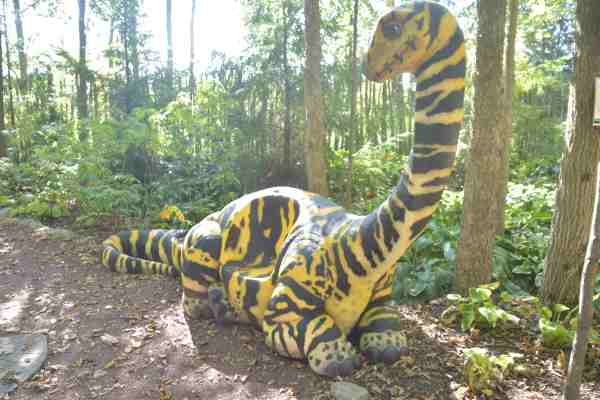
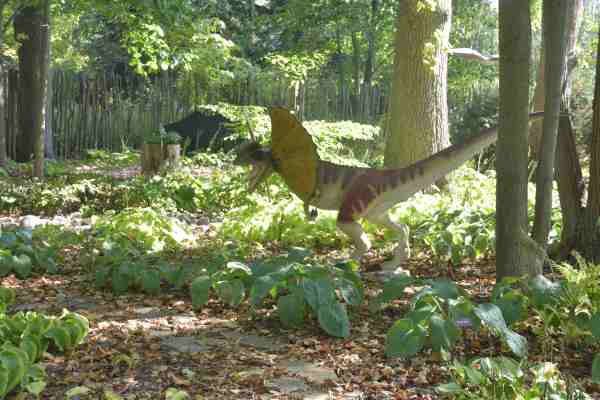
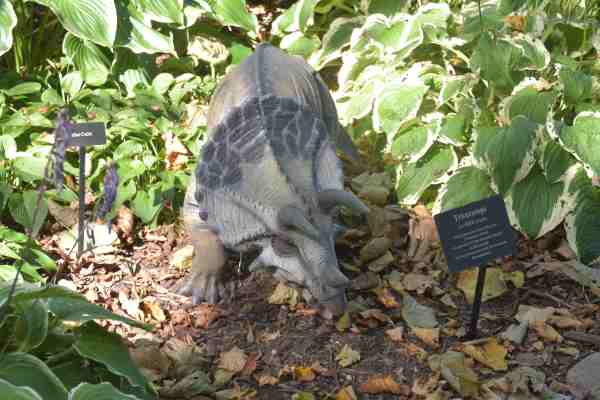
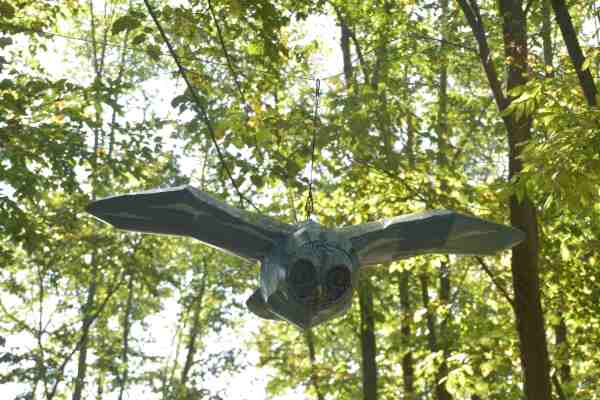
Dinosaurs of Jayrassic Park.
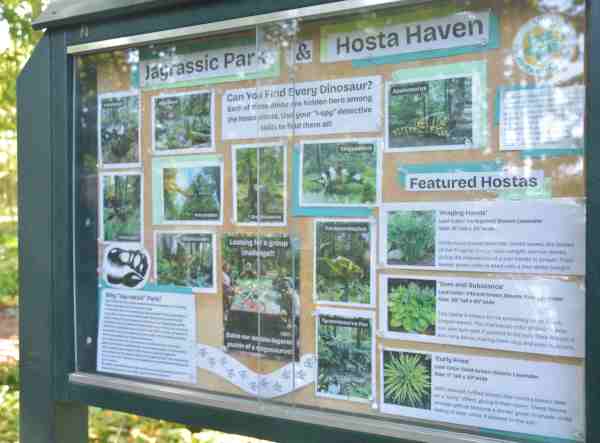
Jayrassic Park and Hosta Haven.
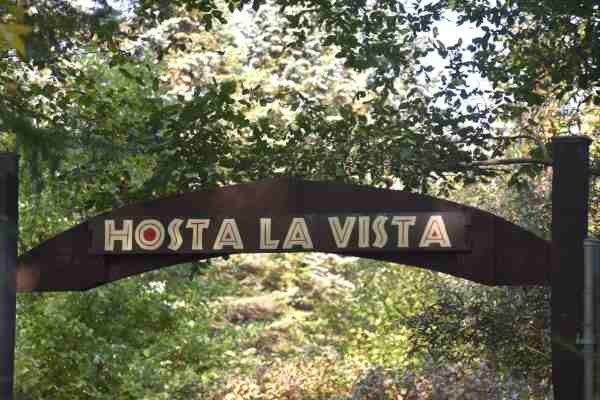
Hosta La Vista.
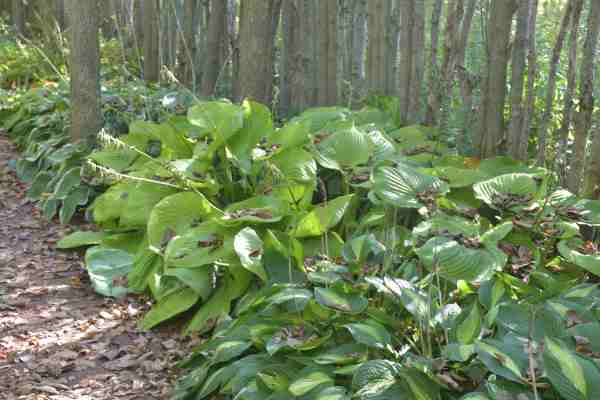
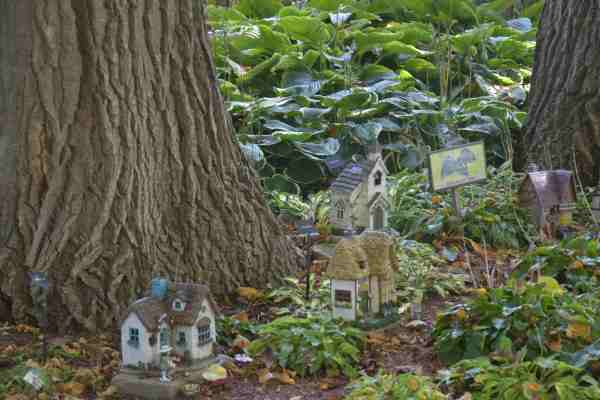
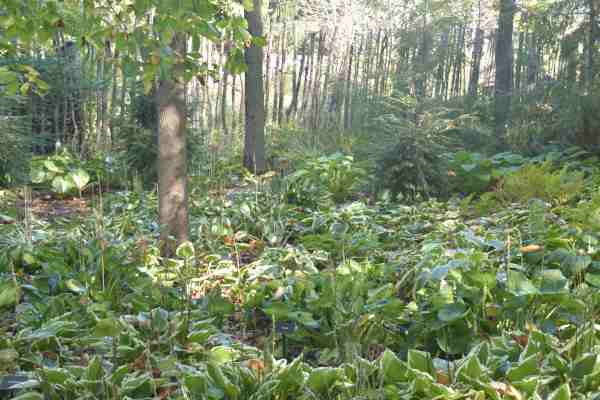
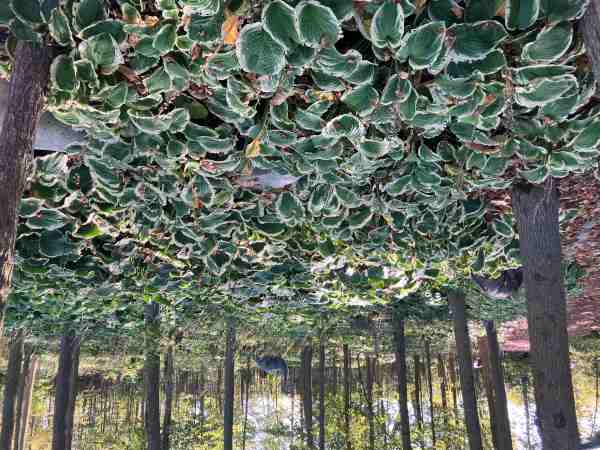

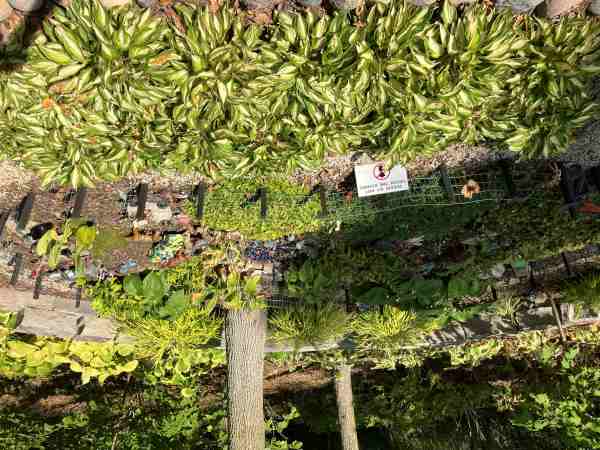
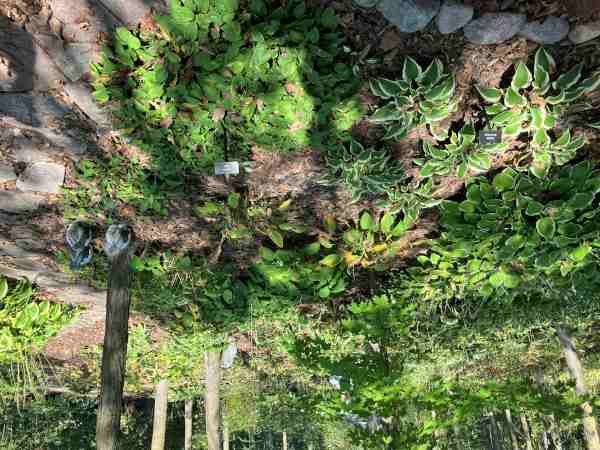
Some of the 68 species of hostas, herbaceous perennials, widely cultivated as shade-tolerant foliage plants. The genus is placed in the family Asparagaceae, subfamily Agavoideae and is native to northeast Asia (China, Japan, Korea and the Russian Far East). Like many "lilioid monocots", the genus was once classified in the Liliaceae. The genus was named by Austrian botanist Leopold Trattinnick in 1812, in honour of the Austrian botanist Nicholas Thomas Host.
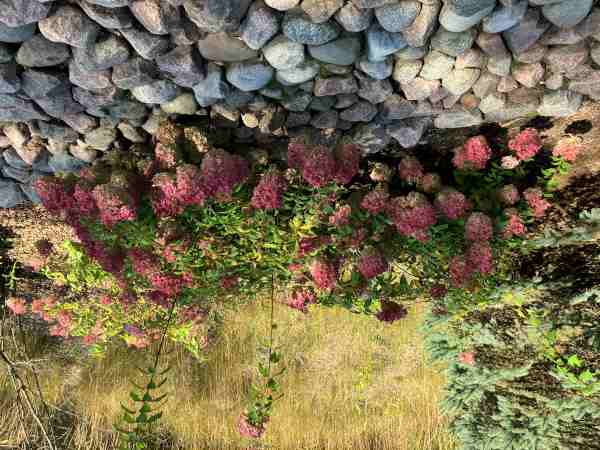
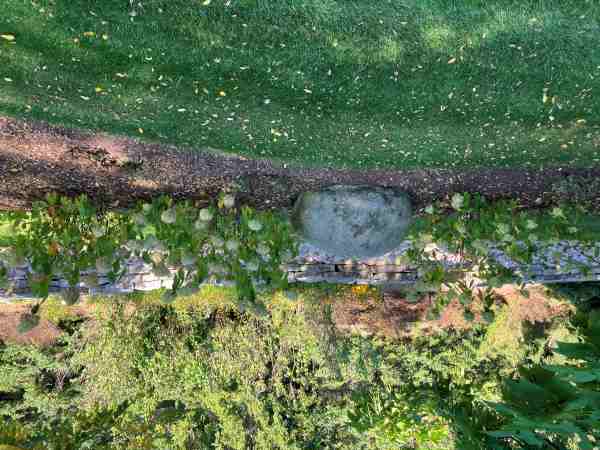
Hydrangeas.
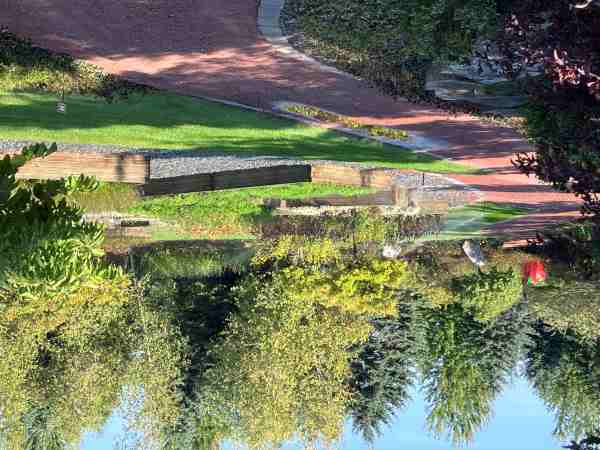
One of the gardens at this beautiful estate.
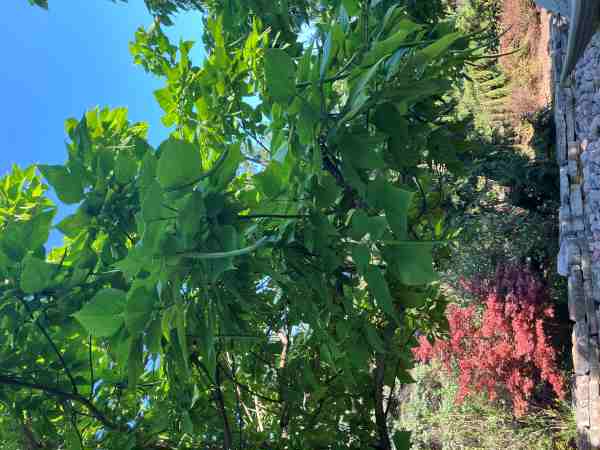
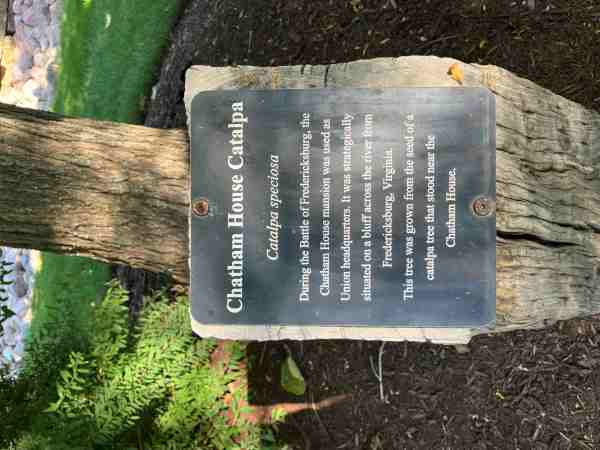
Chatham House Catalpa.
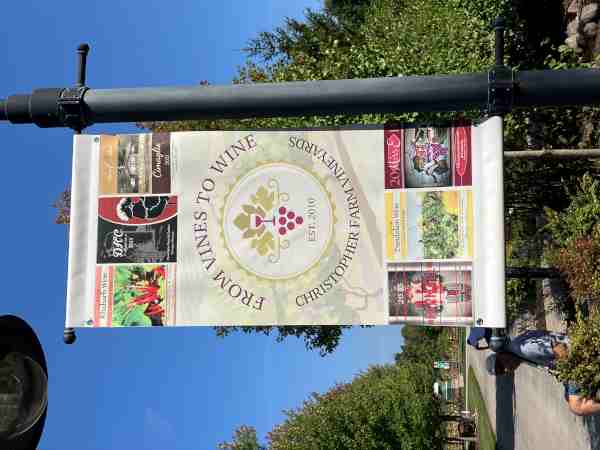
Christopher Farm Vineyards, established 2010.
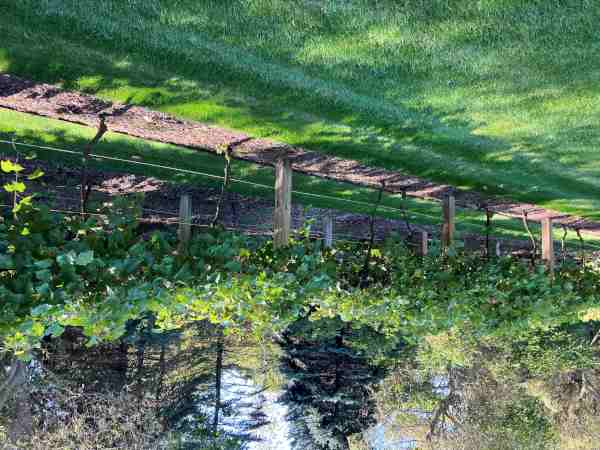
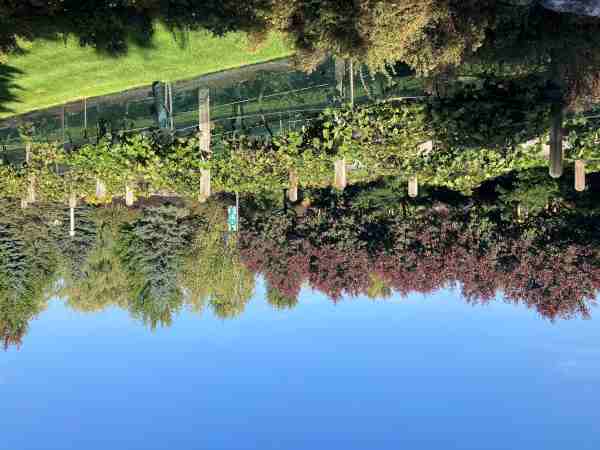
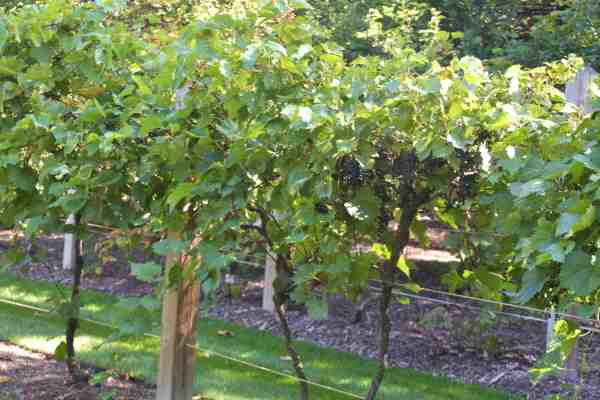
Part of the vineyard.
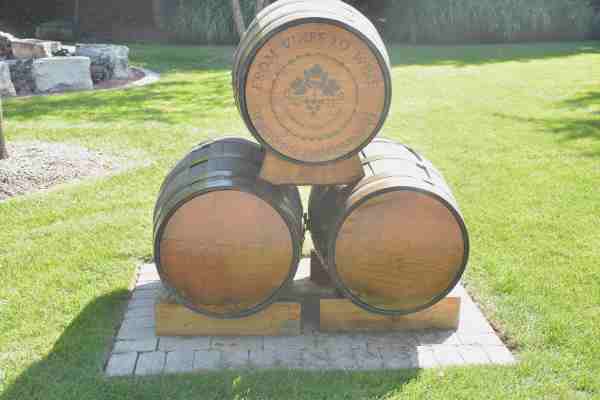
From Vines to Wine.
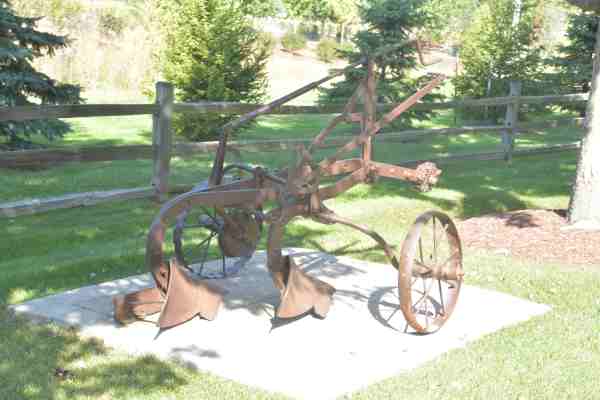
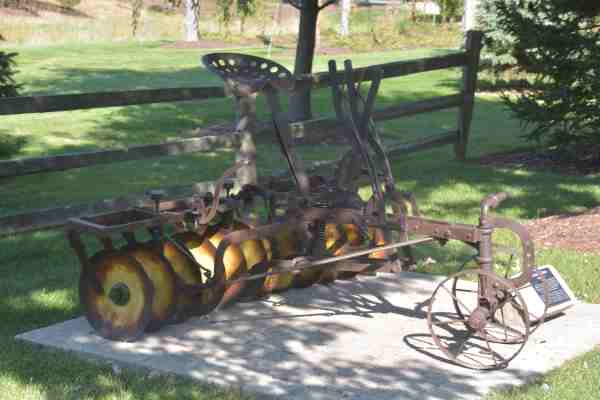
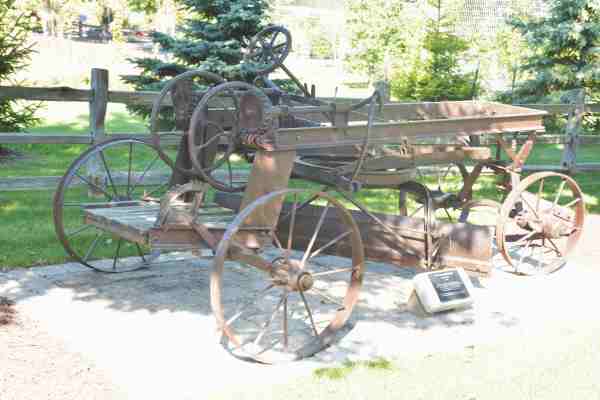
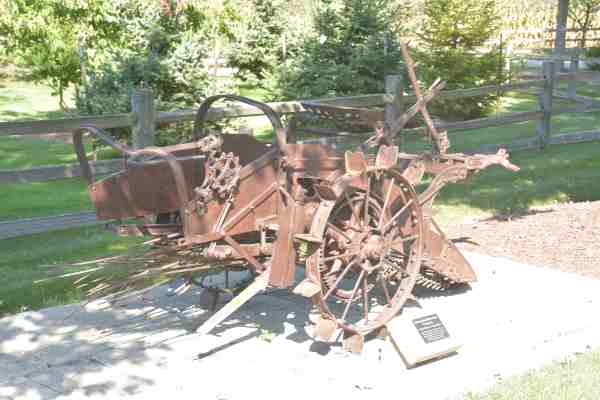
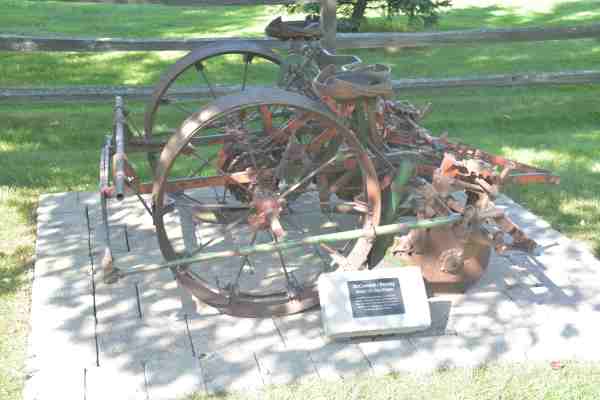
Vintage farm equipment, including a potato picker and a corn planter.
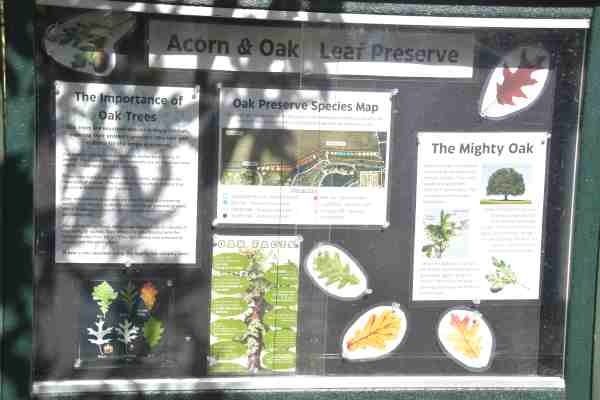
Acorn and Oak Leaf Preserve display board, highlighting the importance of oak trees.
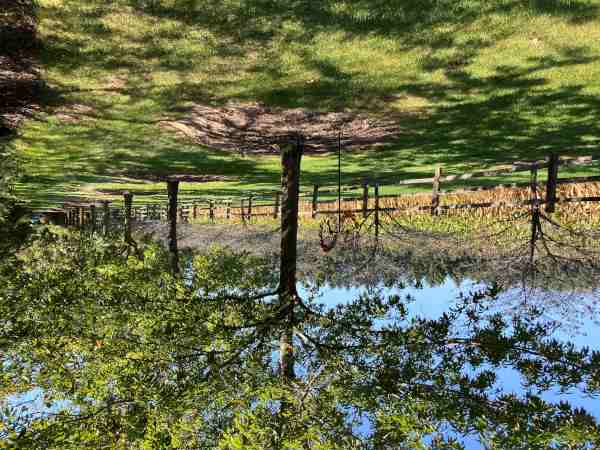
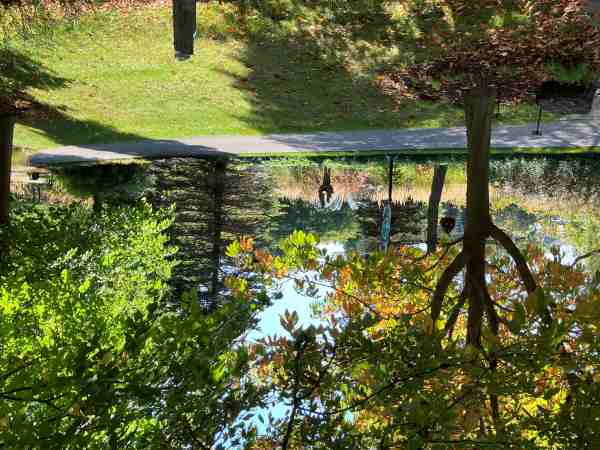
Some of the oak trees in the gardens.
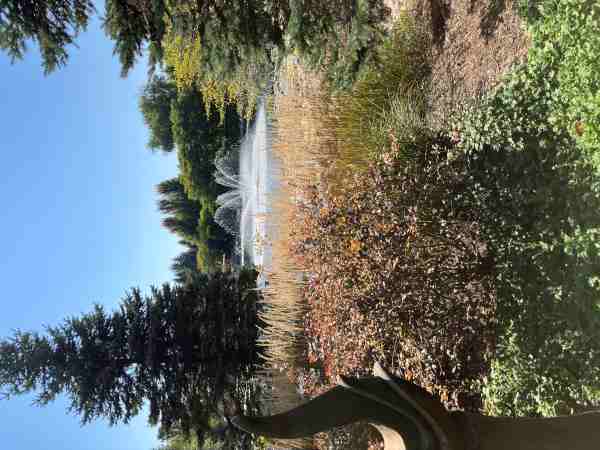
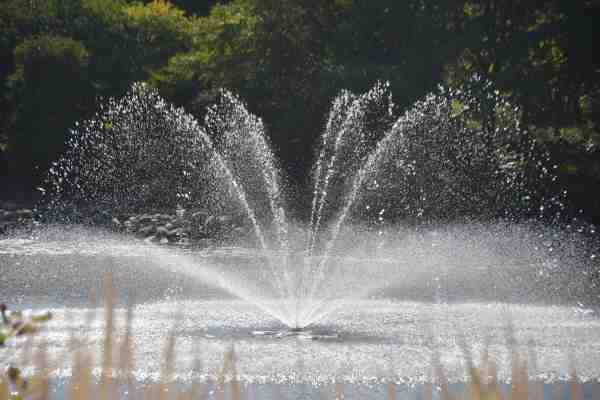
Just beyond our tour route was a lake with a fountain.
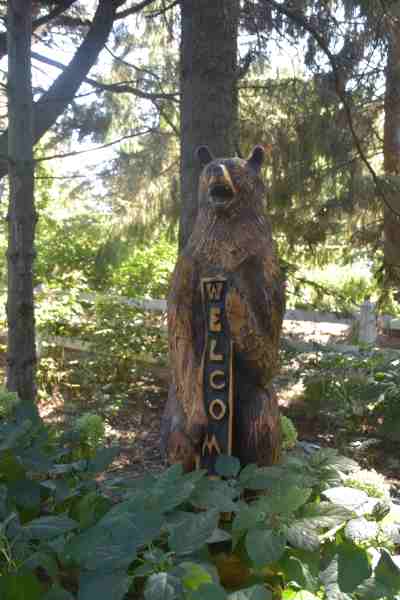
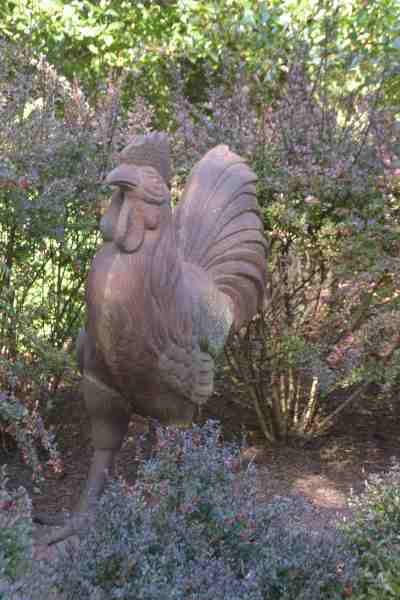
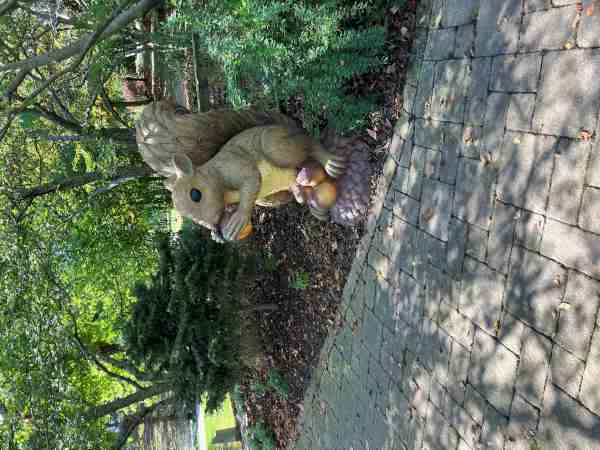
Wood carvings along the paths.
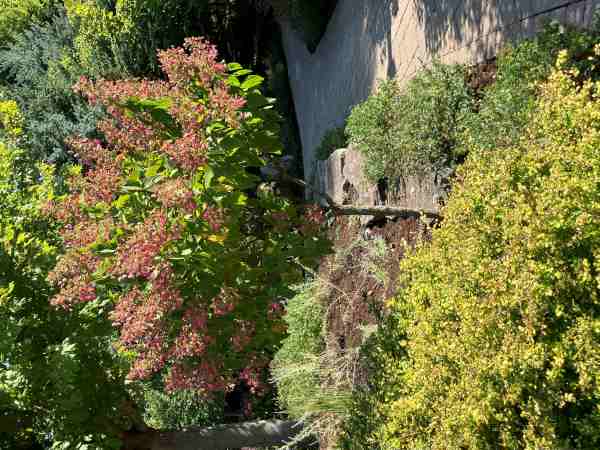
A flowering tree.
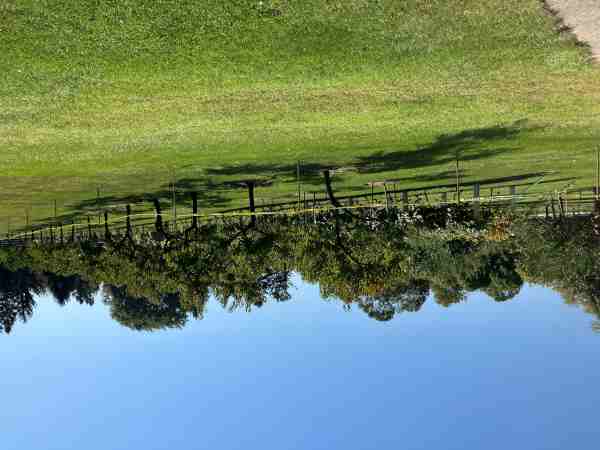
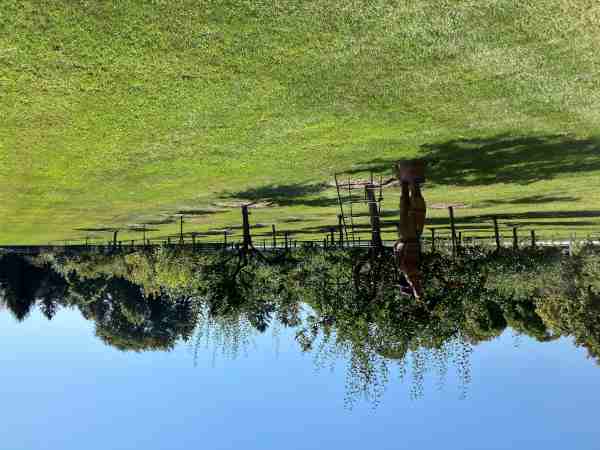
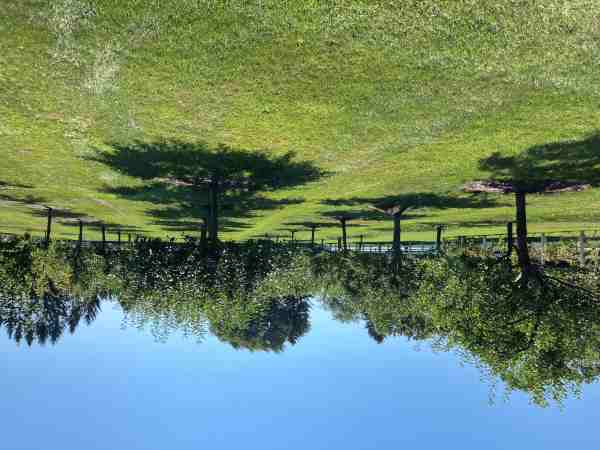
The orchard.
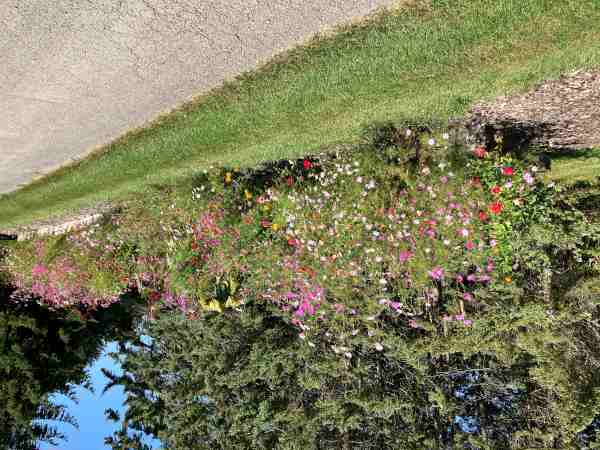
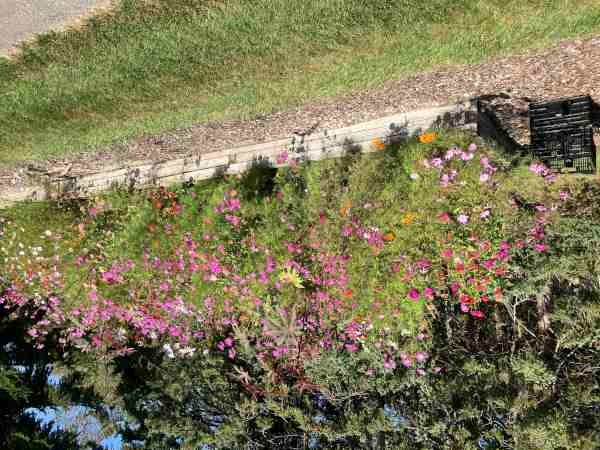
The butterfly garden. This brought an end to our visit to the Christopher Transportation Museum and garden tour. Everyone was extremely impressed and grateful that they had been able to experience this private estate and collection. We returned to the buses and were taken to the Bavarian Bierhaus for lunch.
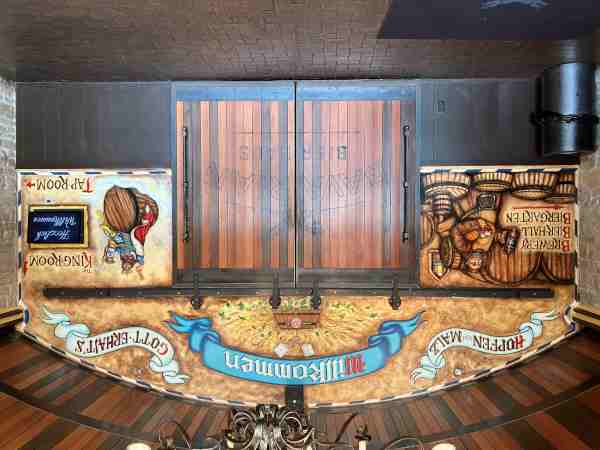
The scene upon entry.
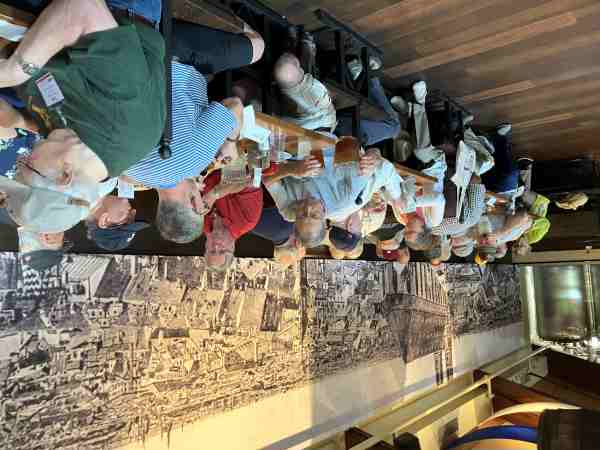
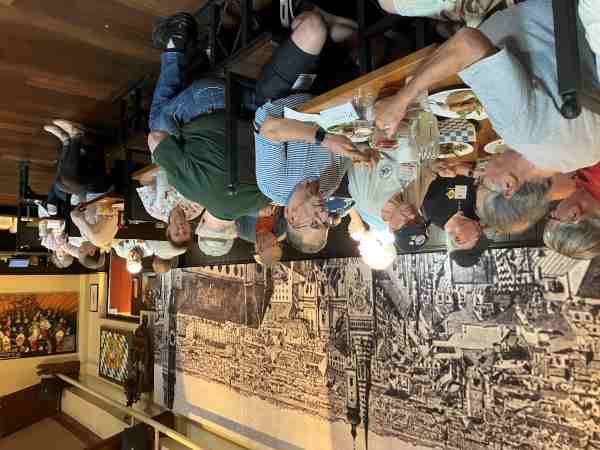
Autumn conference delegates enjoying lunch. The late afternoon would be spent at the East Troy Electric Railroad Museum, the subject of the next travelogue.
| RETURN TO THE MAIN PAGE |