




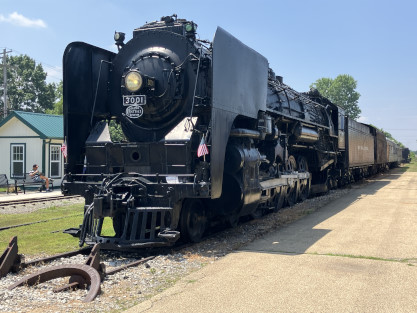
After the fantastic Adlake tour, the bus on which I was host took its passengers to the National New York Central Railroad Museum for exploration and lunch.
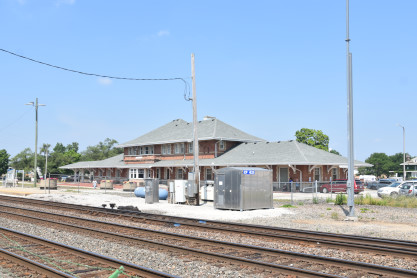
The Elkhart Lake Shore and Michigan Southern (later New York Central) station built in 1900 used by Amtrak's Capitol Limited and Lake Shore Limited. Very soon after the bus arrived, I heard a horn and hurried over to the viewing platform on the museum side of the tracks for the Lake Shore Limited.
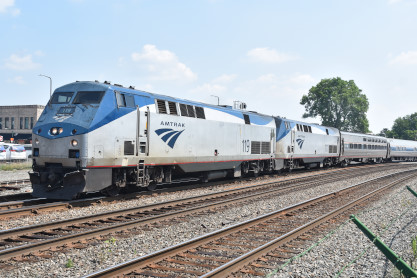
Amtrak P42DC 119 and 111, both built by General Electric in 1997.
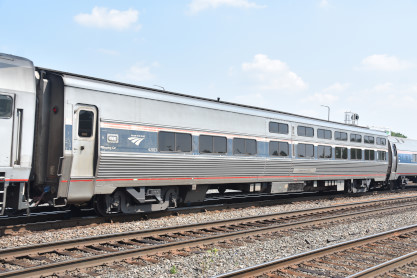
Amtrak Viewliner sleeping car 62023 "Gauley River", exx. Amtrak 62023 "Mystic View", built by Amerail in 1996.
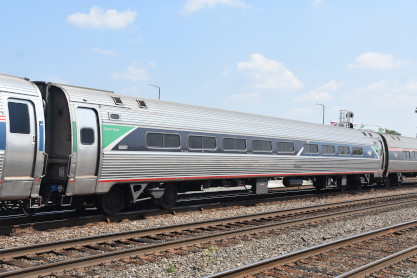
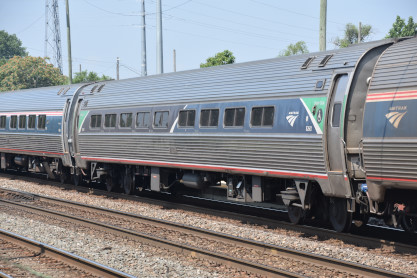
Amtrak Amfleet I coach 82601, nee Amtrak 21979 built by Budd Company in 1977.
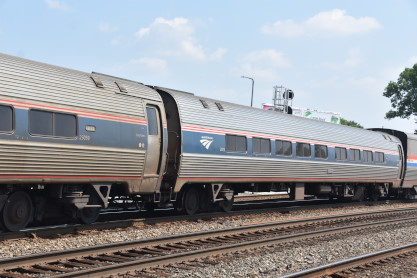
Amtrak Amfleet II coach 25113, built by Budd Company in 1983.
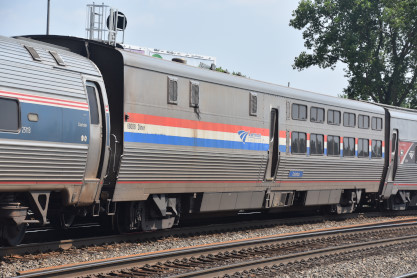
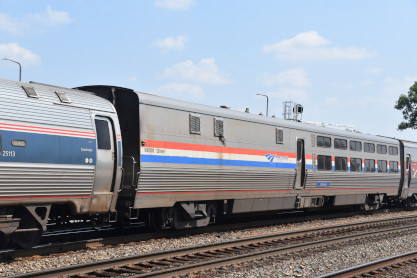
Amtrak Viewliner II dining car 68008 "Columbus", built by CAF USA (Construcciones y Auxiliar de Ferrocarrilesas) in Elmira Heights, New York in July 2018 and numbered 68008 with this series of cars being named after state capitals east of the Mississippi. These cars were built to replace Heritage Dining Cars which were used on eastern long-distance trains that operated out of New York and were all delivered in Amtrak's classic Phase III paint scheme while sporting the current Amtrak "Travelmark" Logo.

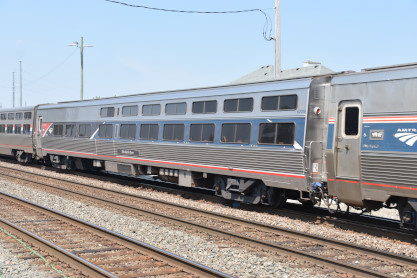
Amtrak Viewliner I sleeping car 62019 "Elizabeth River", nee Amtrak 62019 "Metropolitan View", built by Amerail in 1996.
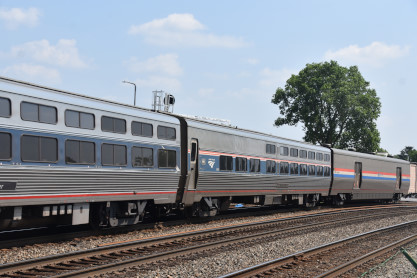
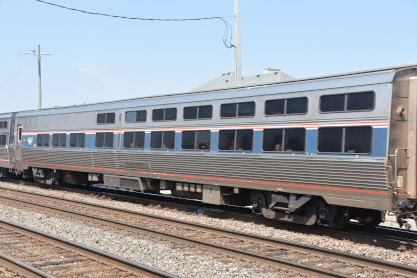
Amtrak Viewliner I sleeping car 62024 "Genesee River", nee Amtrak 62024 "National View", built by Amerail in 1996.
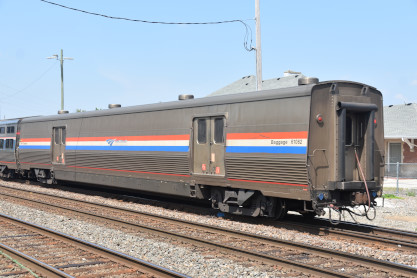
Amtrak Viewliner II baggage car 61062, built by CAF USA (Construcciones y Auxiliar de Ferrocarrilesas) in Elmira Heights, New York in 2014. These cars were built to replace Heritage Baggage cars used systemwide and were all delivered in Amtrak's classic Phase III paint scheme while sporting the current Amtrak "Travelmark" Logo.
Emblem of the New York Central Railroad Museum. This museum recaptures the glory days when America's railroads were symbols of progress and goodwill ambassadors across the country and was founded in 1987. It is an ever-growing preservation site of both local and national railroad heritage pertaining to the New York Central System, whose goal is to tell the story of the vast New York Central System and its predecessors and successors into the modern era.
The New York Central was once the second-largest railroad in the United States, with 11,000 route miles of track in eleven states and two Canadian provinces. Elkhart is a natural home for the Museum: the New York Central's Robert R. Young Yard (now Norfolk Southern Railway's Elkhart Yard) is the second-largest railroad freight classification yard east of the Mississippi River. Just as when the railroad first arrived in Elkhart in 1851, Elkhart functions as a vital link in the chain connecting the Atlantic Seaboard with the Midwest and beyond.
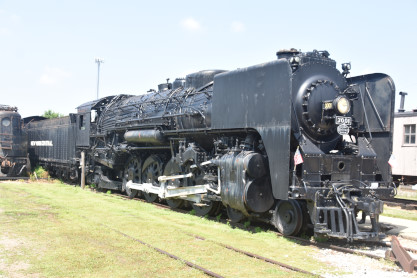
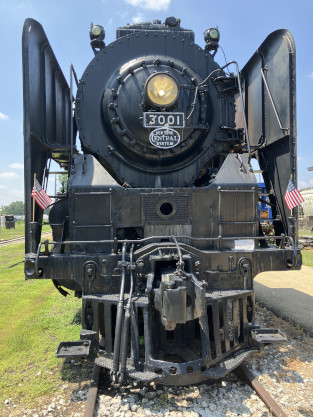
New York Central 4-8-2 3001 built by American Locomotive Company in 1940. 3001 hauled both freight and passenger trains, including the 20th Century Limited. In 1957, it was sold to the City of Dallas to replace Texas & Pacific 638 at the Texas State Fairgrounds. In 1984, it was traded to the National New York Central Railroad Museum in exchange for former Pennsylvania Railroad GG1 4903.
On October 6, 2024, a long-term partnership between the National New York Central Railroad Museum, the City of Elkhart and the Fort Wayne Railroad Historical Society was announced, whereby FWRHS will acquire the steam engine and undertake a study with local officials to develop guidance that will improve its outdoor railroad displays and position the institution as an anchor for neighborhood redevelopment. A fundraising effort was initiated with a challenge grant and as of June 1, 2025, $500,000 has been raised for 3001's restoration to operating condition.
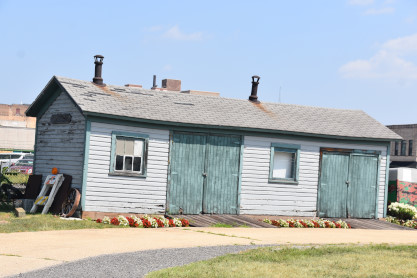
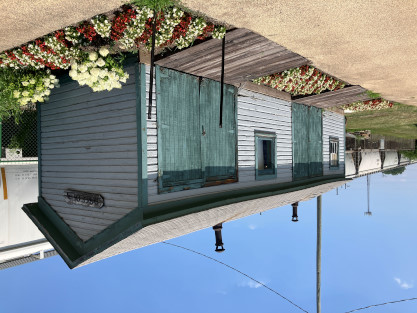
The tool shed from Osceola, Indiana, about five miles away.
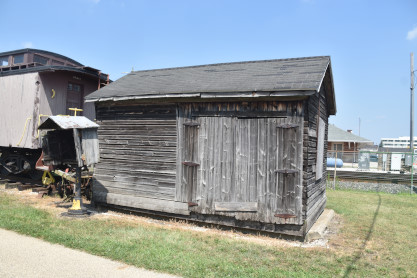
Handcar shed.
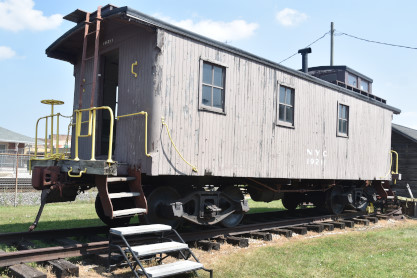
New York Central wooden caboose 19211, built by the railroad in the 1910's.
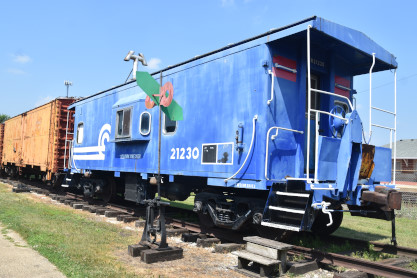
Conrail bay-window caboose 21230, built by Fruit Growers Express in 1978 and is the only survivor of the three units built. It ended its days as part of the wreck train in Selkirk, New York and was donated by Conrail in 1997.
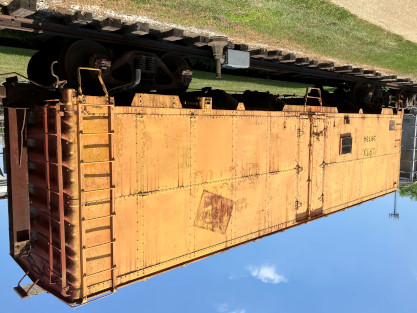
Union Refrigerator Transit Company refrigerator car 38794, built by General American in 1954 and leased to the Milwaukee Road.

Union Refrigerator Transit Company refrigerator car 38662, built by General American in 1954 and leased to the Milwaukee Road.
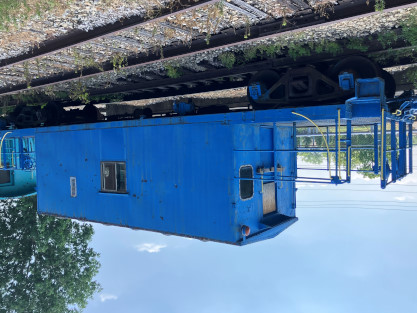
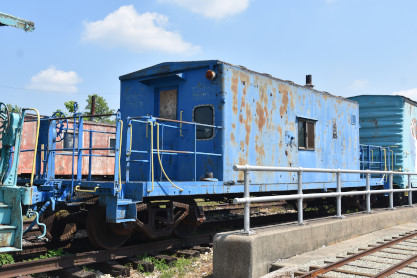
New York Central transfer caboose 18136, built by the railroad in 1967 from a 1949 box car. It became Penn Central 18136 then Conrail 18136.
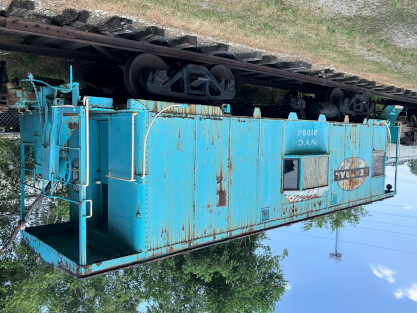
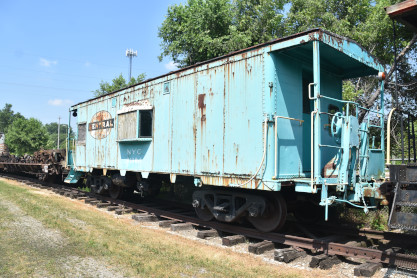
New York Central bay window caboose 21084, built by the railroad in 1963.

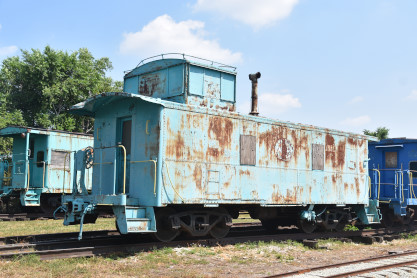
New York Central standard wooden caboose 19211, built by the railroad around 1910.
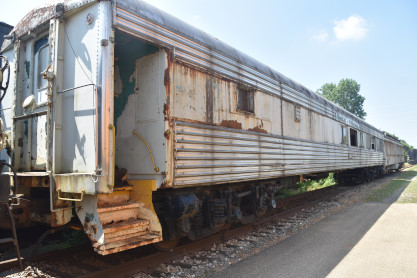
Conrail maintenance-of-way car 45907, ex. Penn Central 4573, nee New York, New Haven & Hartford grill-dining car 953, built by Pullman-Standard in 1949. It was a less-formal alternative to the full dining cars and twin-unit diners that many railroads owned. When owned by Conrail, it served as part of the wreck train in Selkirk, New York and donated by them in 1997.
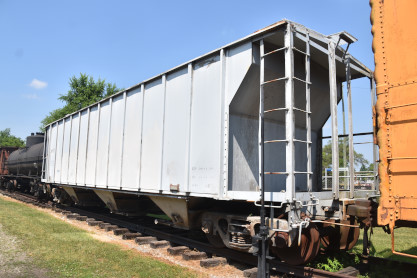
Wells Fargo Rail Corporation covered hopper 902, builder and year unknown.
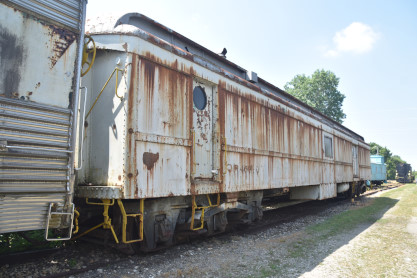
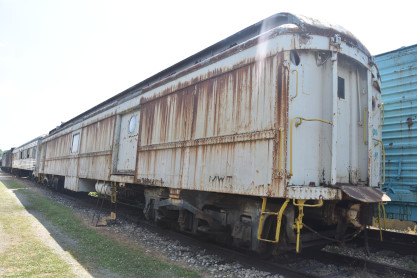
Conrail maintenance-of-way car 45710, ex. Pennsylvania Railroad RPO-baggage car 710, nee New York Central 9036. When owned by Conrail, it served as part of the Selkirk, New York wreck train and donated by Conrail in 1997.
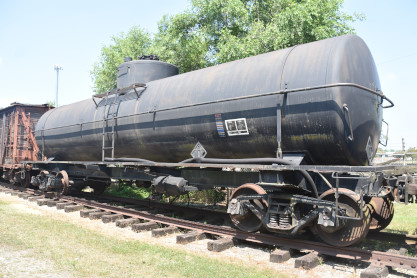
New York Central one dome tank car 16039, built by the railroad in 1952 and donated by Sturgis Metal & Iron in 2006.
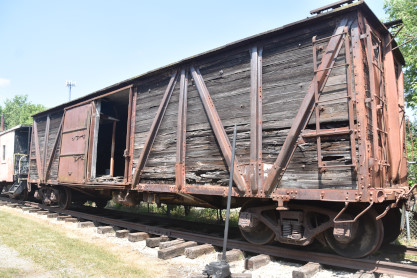
Pennsylvania Railroad wooden box car 499656, with steel reinforced sides.
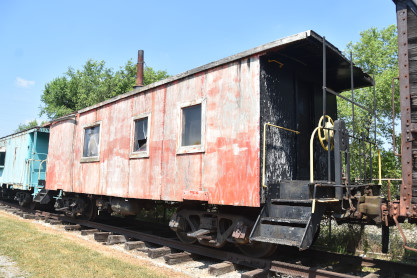
New York Central transfer caboose 18136, built by the railroad in 1967, from a 1949 box car.
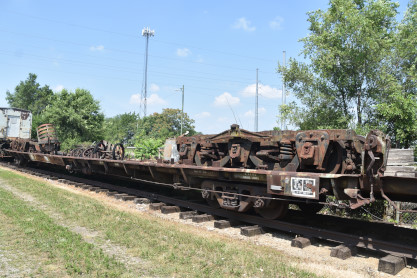
Merchants Despatch flat car 725023, donated by Norfolk Southern in 2007.

Merchants Despatch flat car 725220, donated by Norfolk Southern in 2007.
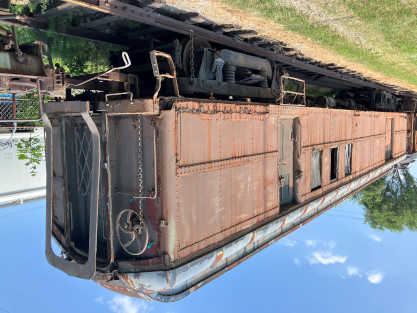
New York Central railway post office-baggage car 5104, nee Michigan Central 1016, built by the Standard Steel Car Company in 1914. It was converted for work train service in the 1950's.
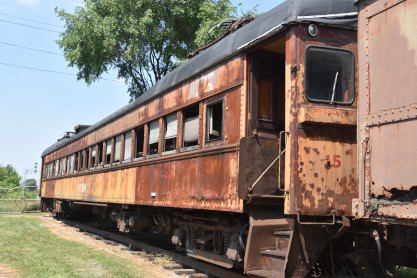
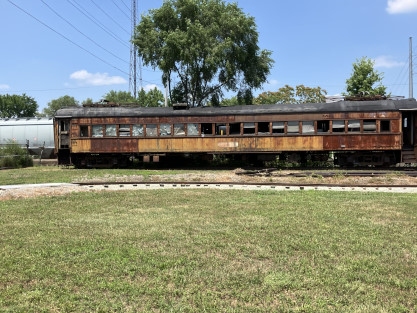
Chicago, South Shore and South Bend electric commuter car 15, built by Pullman-Standard in 1926. It was part of an initial order of twenty six all-steel cars to begin replacing the electric line's wooden cars, some of which had been in operation since the South Shore’s predecessor, Chicago Lakeshore and South Bend Railway, began operations in 1908. It was the first of the South Shore's cars to be lengthened to 78 feet by adding a new section in the middle.
Car 15 remained in service until the 1980's, when the Northern Indiana Commuter Transportation District began acquiring new equipment to replace the pre-World War II cars. The Northern Indiana Commuter Transportation District continues to operate South Shore electric passenger trains between South Bend and Chicago. The National Parks Service acquired Car 15 after it was taken out of South Shore service and later released it to the National New York Central Railroad Museum.
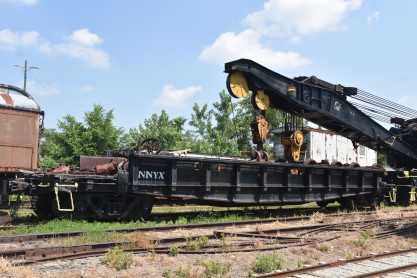
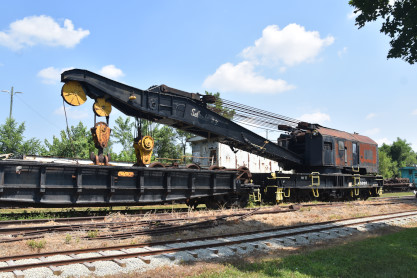
New York Central idler car 504472 for crane X-13, built by Industrial Brownhoist in 1949. It was the first of four oil fired, self-propelled steam cranes built by the company and was based in Selkirk, New York then donated by Conrail in 1997.
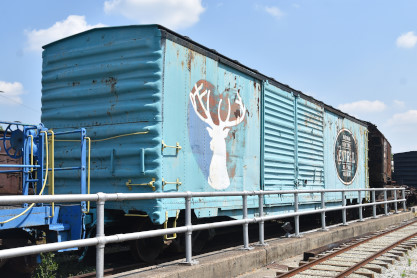
Baltimore & Ohio double-door box car 288257, built by the railroad in 1957.
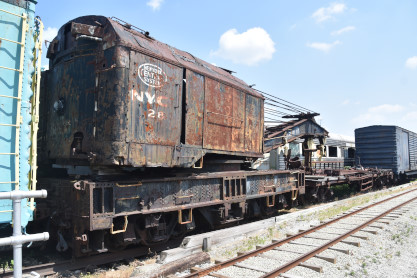
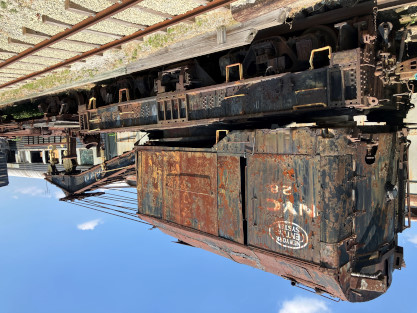
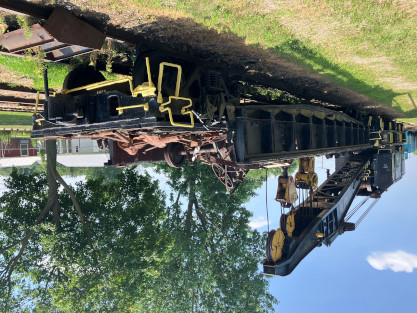
New York Central 150-ton capacity crane X-28, built by Industrial Works in 1923 and idler car based at the railroad's large Harmon Yard in Croton-on-Hudson, New York.
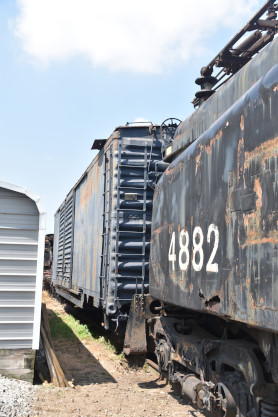
Baltimore & Ohio fifty foot double-door box car 288121, built by the railroad in 1957.

Pennsylvania Railroad GG1 4882 built by the railroad in 1939. The GG1 was designed to haul 12-14 passenger car consists on the railroad's electrified sections between New York, Washington, DC and Harrisburg, Pennsylvania. 4882 served on the Pennsy, Penn Central, Conrail, Amtrak and finally, New Jersey Transit. Retired in 1983, it was one of the last three GG1s to be used in revenue service, but had the honour of being the last GG1 to run under its own power when it pulled 4877 and 4879 into the Matawan, New Jersey yard after a "Farewell to the GG1s Day". It arrived in Elkhart in 1989 and was repainted in Penn Central livery in 1998. Today, it is the only one of the sixteen surviving GG1 locomotives to wear the black Penn Central livery.
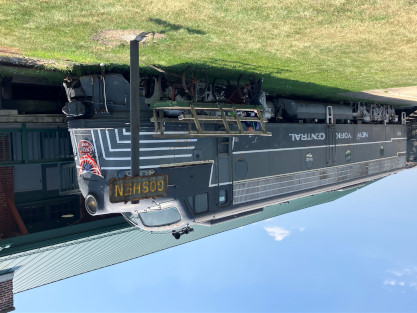
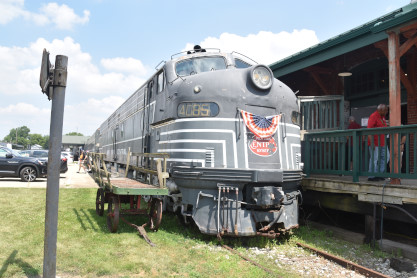
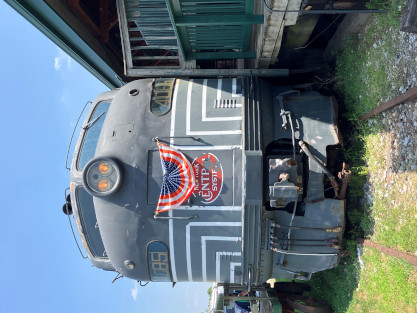
New York Central E8A 4085 built by Electro-Motive Division in 1953. This locomotive had the distinction of being the lead unit on the 20th Century Limited when the train departed Chicago for New York City for the final time on December 3, 1967.
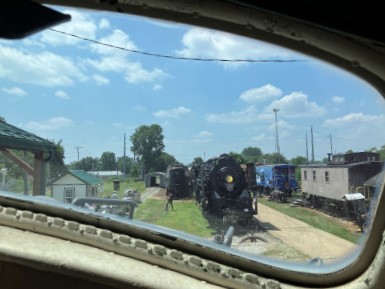
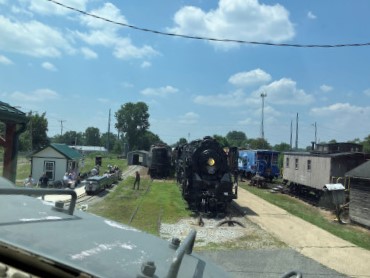
Everyone had the opportunity to climb in and sound the horn; both Elizabeth and I did this.
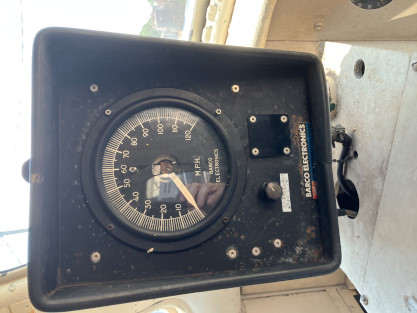
The speedometer.
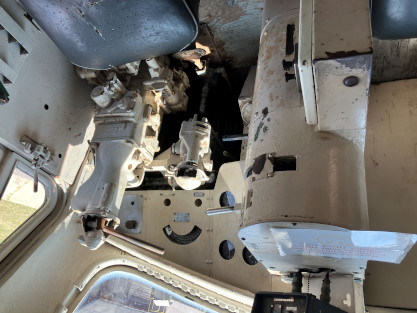
The engineer's seat.
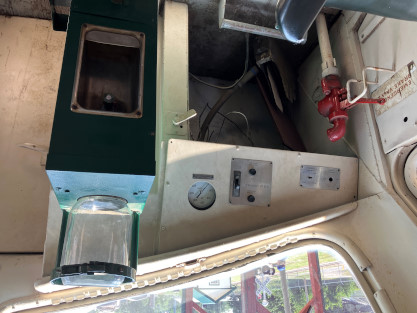
The fireman's control.
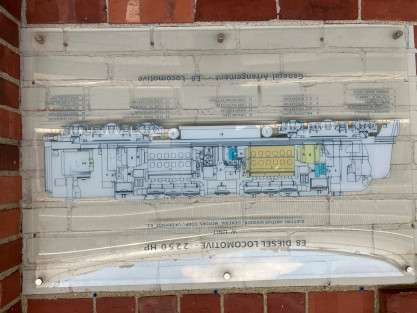
E8A Diesel schematic.
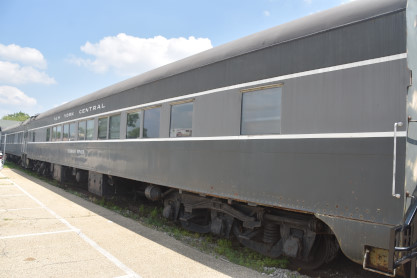

New York Central coach "Elkhart River", ex. Illinois Central 2691, nee Illinois Central 2234 built by Pullman in 1918.
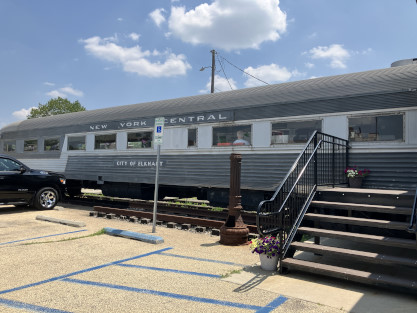
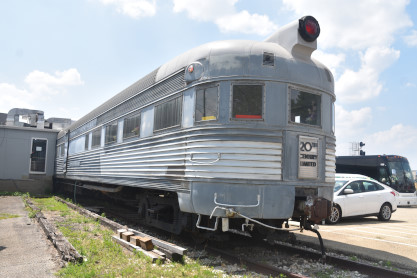
New York Central observation car "City of Elkhart", nee Chicago, Rock Island & Pacific 454 "Minnesota", built by Budd Company in 1937. It is painted for NYC, to represent similar Budd-built observation cars that were an integral part of the post-war Great Steel Fleet of streamliners.
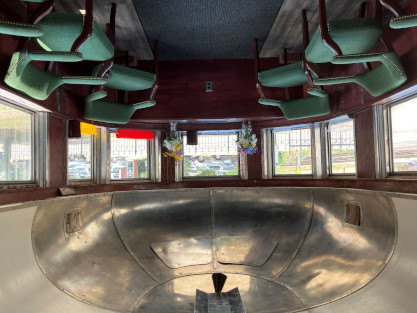
The observation end.
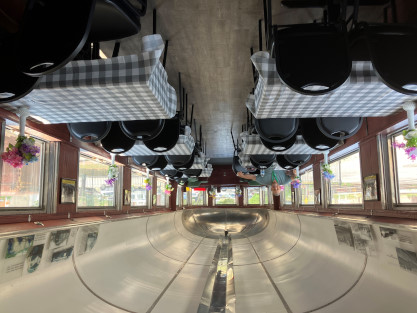
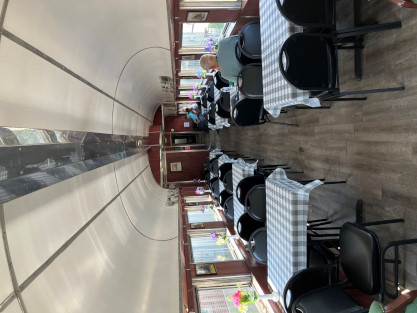
The dining area of the car.
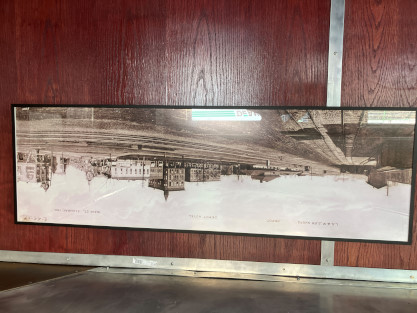
A panoramic photograph from August 22, 1907, showing the Lake Shore and Michigan Southern shops, the depot, the Depot Hotel and Main Street.

New York Central's 20th Century Limited overview.
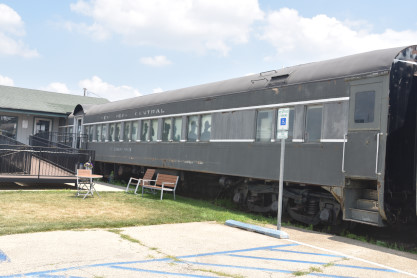
New York Central coach "St. Joseph River", ex. Illinois Central 2694, nee Illinois Central 3664, built by Pullman in 1918. We returned inside the museum.
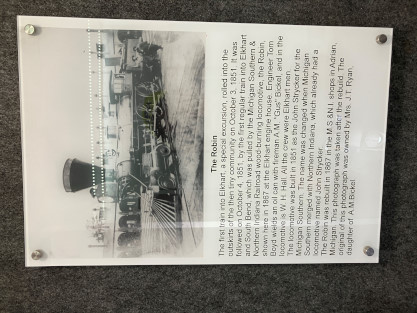
The Michigan Southern and Northern Indiana Railroad wood-burning steam engine "Robin", led the first train into Elkhart on October 3, 1851.
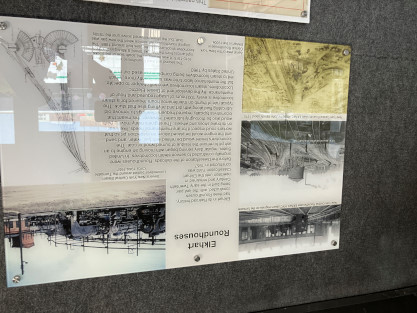
Elkhart Roundhouses display board.
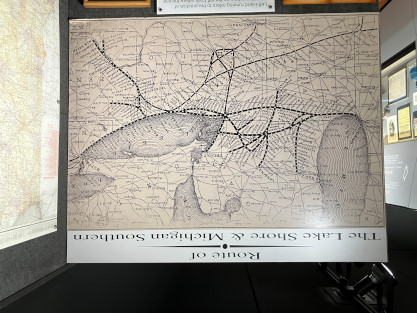
Route of the Lake Shore and Michigan Southern.
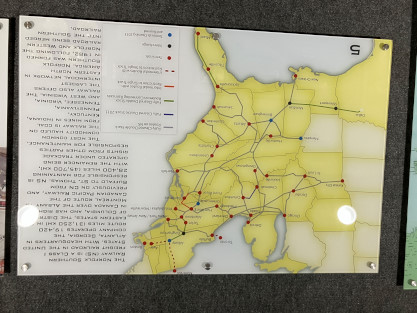
Norfolk Southern route map.
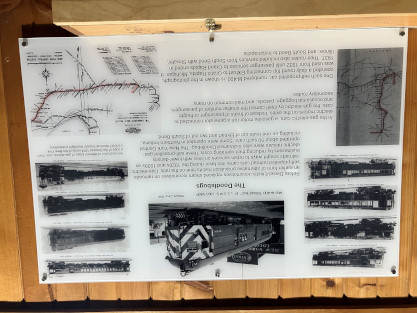
The Doodlebugs display board.
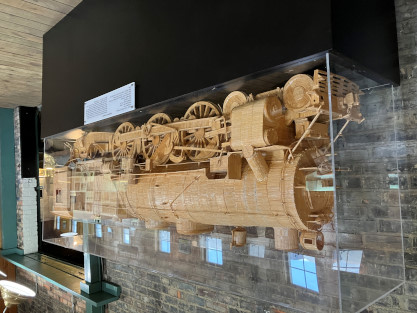
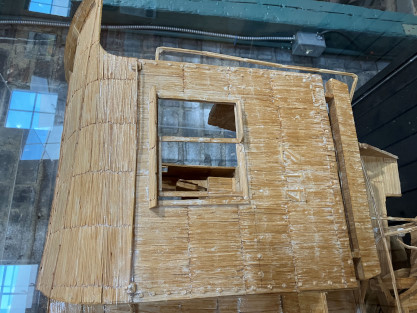
Terry Woodling of Warsaw, Indiana built this toothpick K4 Pacific over a period of seven years, completing it in 1991. It is eight feet long and a one-sixth scale model of Pennsylvania Railroad 4-6-2 417. It contains 40 lbs. of glue and 421,250 toothpicks and its wheels, side rods, brakes and windows all move.
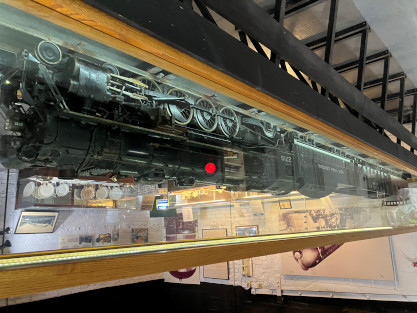
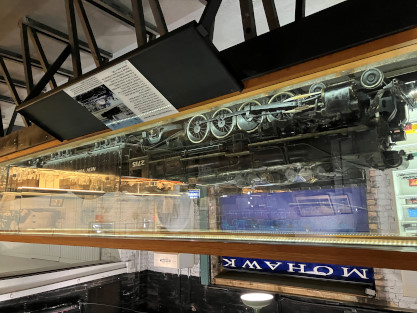
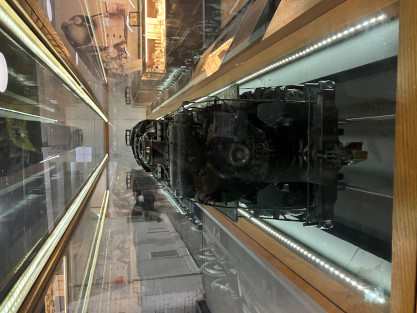
This one-twelfth scale model of New York Central 4-8-2 2715 was built by Richard Stolzenfelds, a Santa Fe engineer, from original blueprints. It was one of the museum's first acquisitions.
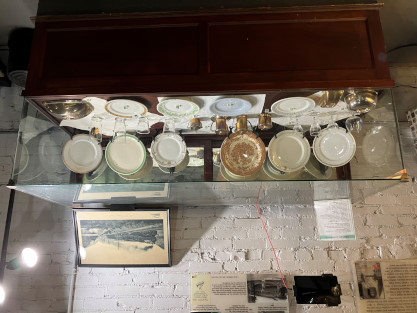
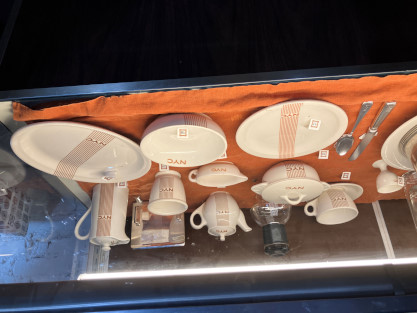
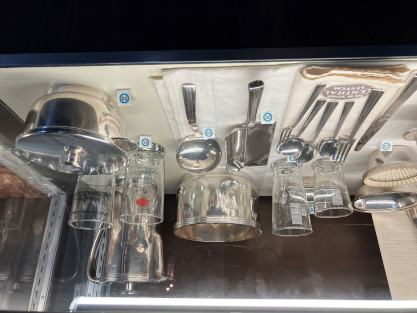
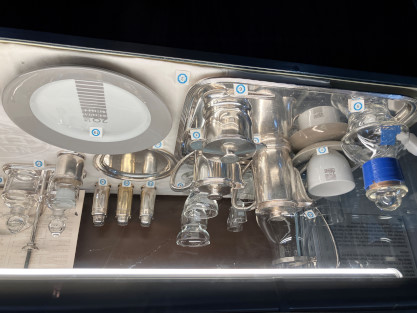
New York Central dining car china.
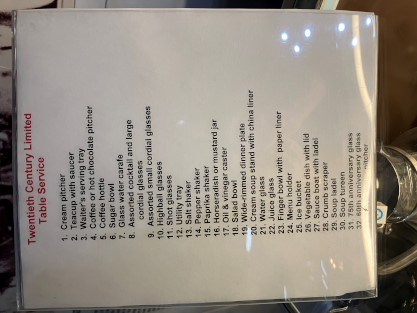

Each piece of china or cutlery was numbered and these are the descriptions.
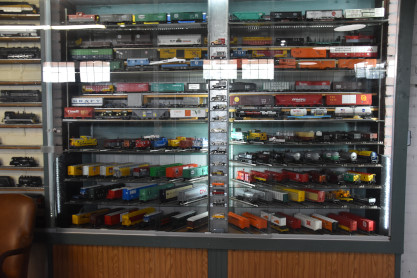
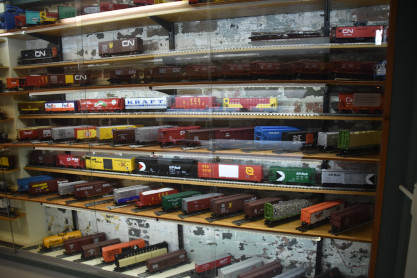
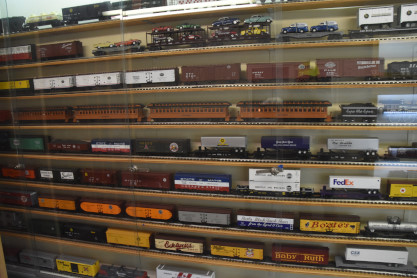
HO scale model railroad cars and cabooses.
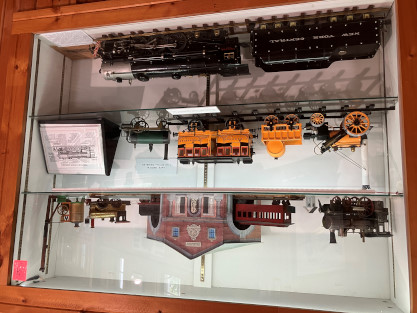
Early New York Central models and a late 1800's live steam dribbler on loan to the museum.
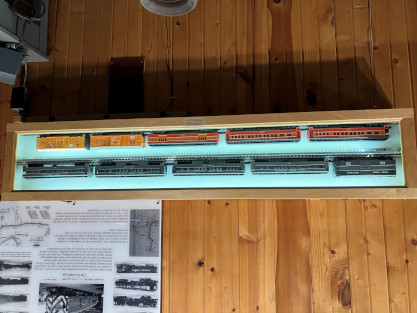
Contents of this showcase are from Stanley and Danielle Bell model train collection, donated to the National New York Central Museum and the City of Elkhart, Indiana in June 2010. A horn sounded and I went outside to photograph the passing train.
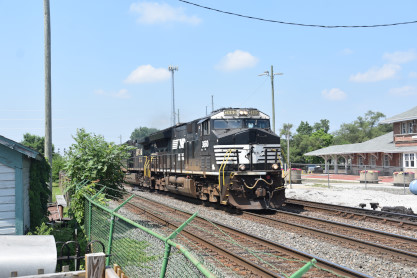
Norfolk Southern ET44AC 3660, built by General Electric in 2017.
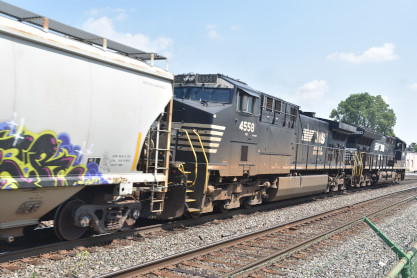
Norfolk Southern AC44C6M 4558, built by General Electric in 1999.
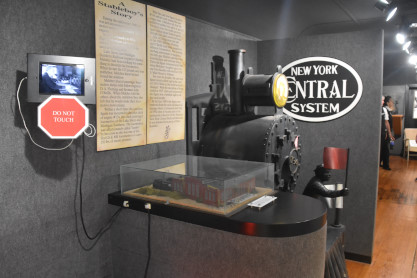
The beginning of the New York Central display area.
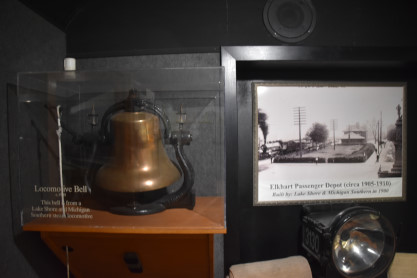
The bell from a Michigan Southern steam engine and the Elkhart passenger depot circa 1905 and 1910.
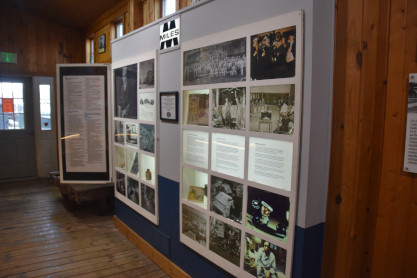
This display commemorates Miles Laboratories, best known for Alka-Seltzer. Since the 1930's, and particularly in the last two decades, Alka-Seltzer has been the subject of some particularly innovative advertising. Yet Miles was also a leading manufacturer of a number of other very successful pharmaceutical and consumer products. Since 1977 Miles Laboratories has been a subsidiary of Bayer, the huge West German manufacturer, Miles Laboratories is now the focal point of Bayer's growing operations in the United States. Dr. Miles' Medical Company, incorporated by Dr. Franklin Miles of Elkhart, Indiana in 1885, was the predecessor of Miles Laboratories. Soon after the company was formed Dr. Miles was joined by two colleagues, George Compton and Albert Beardsley. These three men directed the early years of Miles Laboratories, and even today their descendants hold important executive positions within the company.
Five years after its founding the company was operating at a profit, and it went on to produce a full line of medical preparations (as well as its own promotional literature) at the Elkhart plant.
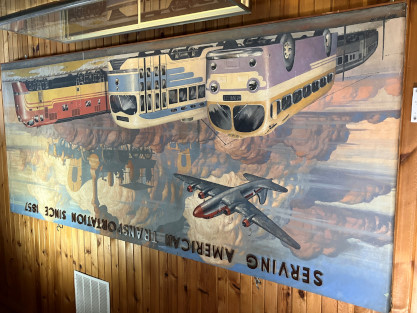
Serving American Transportation since 1857.
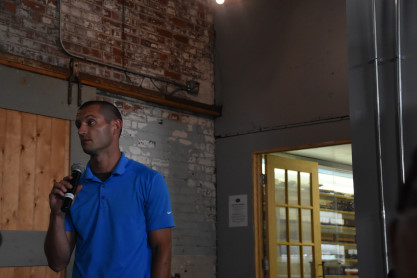
At 2:00 PM, everyone gathered in the freight room of the museum to listen to Geoff Craker, Assistant Superintendent of the Great Lakes Division of Norfolk Southern. He provided a visual overview, as well as a safety briefing, on the last tour of the day, which was at the railroad's Elkhart Hump Yard.
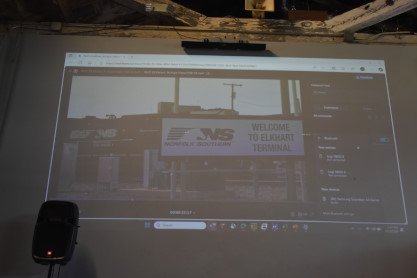
Welcome to Elkhart Terminal.
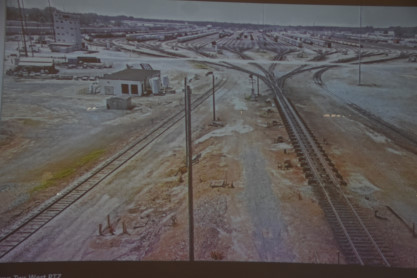
The Elkhart hump yard.
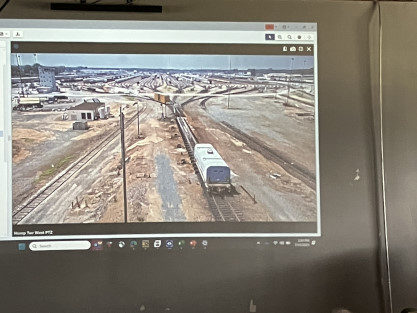
A live view of the yard.
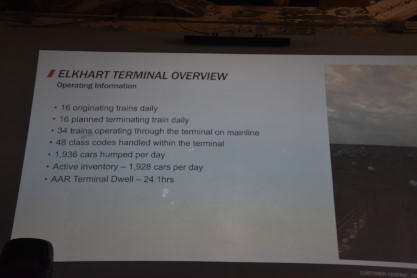
Elkhart Terminal Overview.

Elkhart Terminal Overview Technology Overview.

Elkhart Terminal Overview Production Staffing.
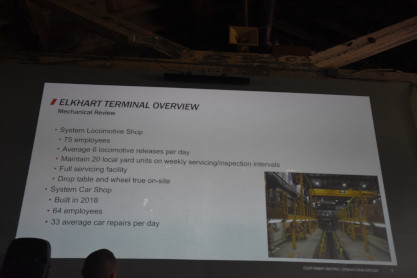
Elkhart Terminal Overview Mechanical Review. After a most educational and informative presentation, delegates continued to explore the museum and grounds, with Elizabeth and I riding the miniature train for our first time.
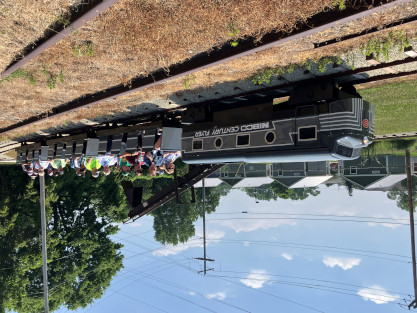
The Century Flyer, a two foot gauge amusement train, originally named the NIBCO Express, was dedicated in 2008.
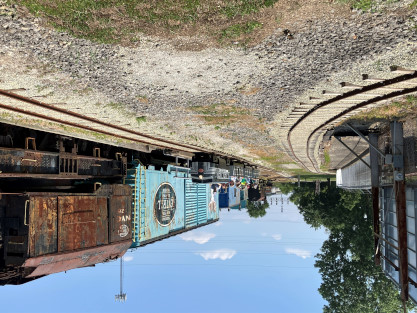
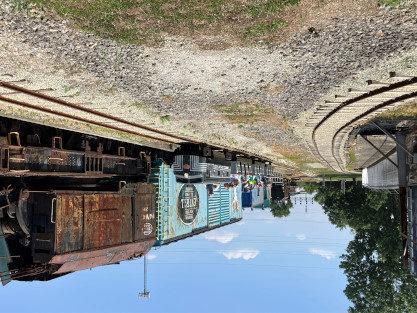
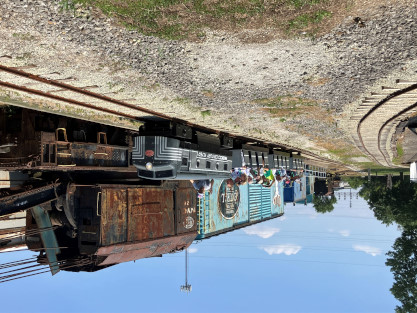
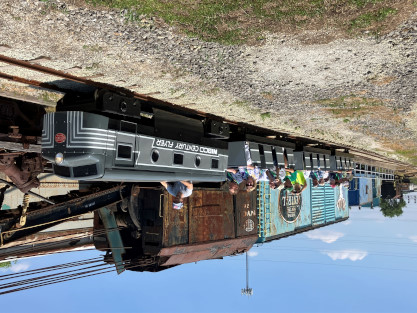
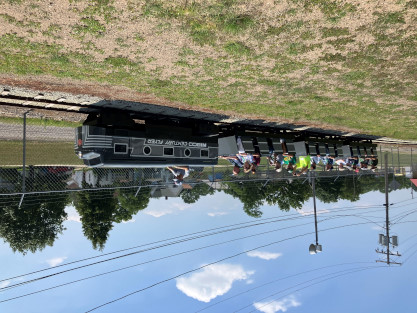
The Century Flyer out on the line.
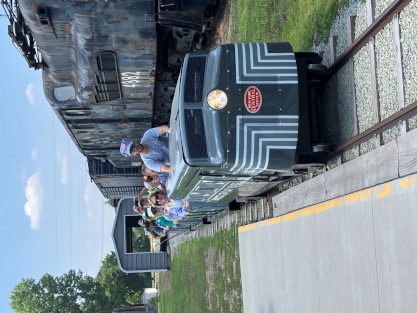
The Century Flyer on the approach to their station.
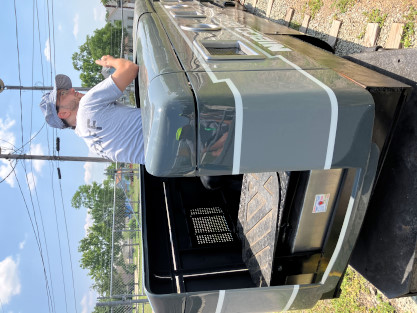
Our engineer.


Our ride aboard the Century Flyer.

A block signal.
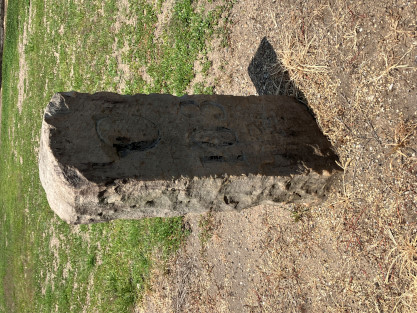
Chicago 103 milepost.
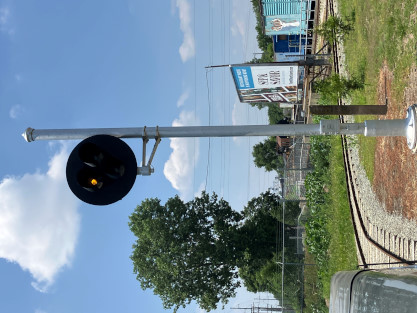
The tri-colour signal turned yellow.
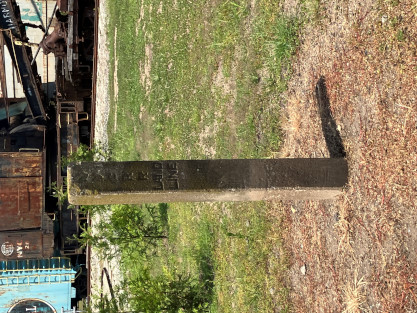
New York Central Railroad land line.
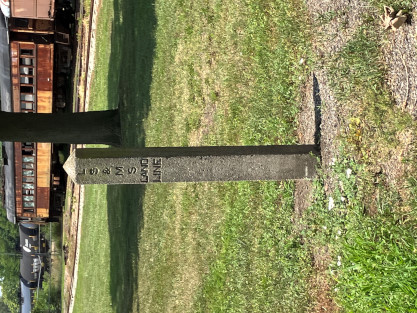
Lake Shore and Michigan Railroad land line. After our enjoyable ride around the loop, we both went back inside.
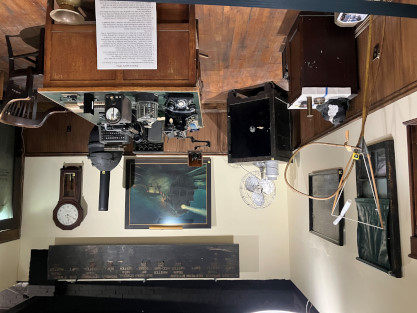
Station master's office.
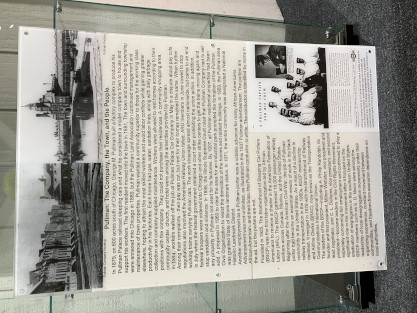
Pullman: The Company, the Town and the People.
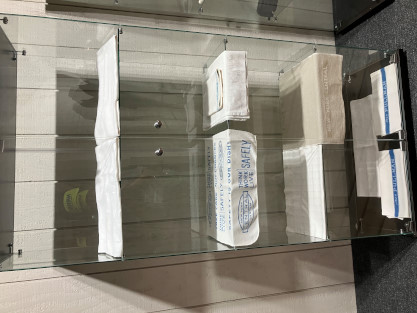
Pullman and New York Central towels.
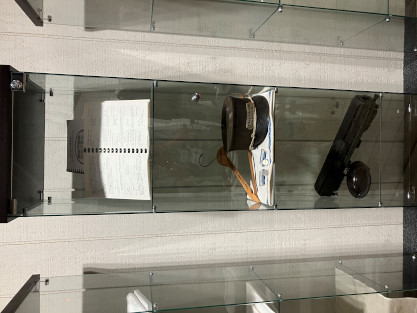
Pullman displays.
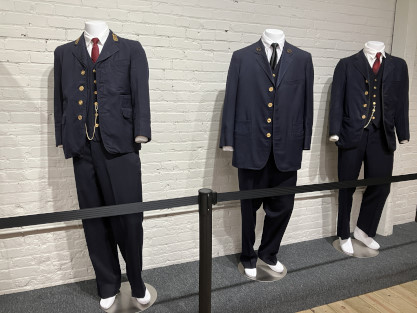
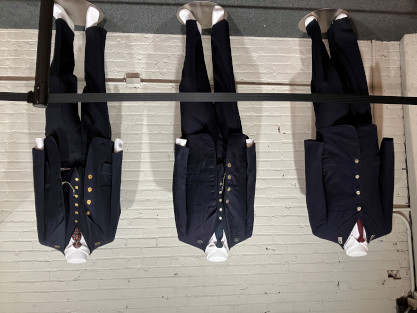
New York Central uniforms.
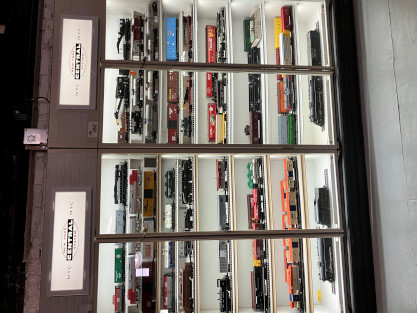
A display of New York Central freight models in HO scale.
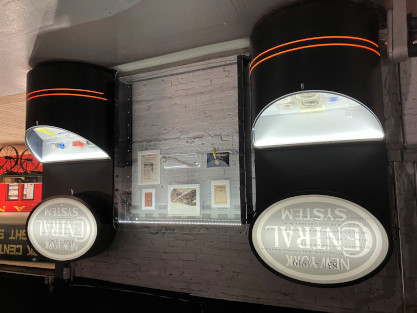
Two of the three New York Central System history consoles.
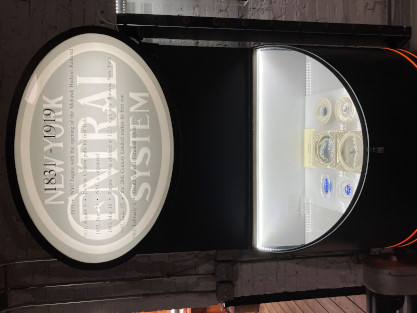
Detail of the 1831-1919 history console with commemorative plates.

Detail of the 1920-1945 history console with memorabilia and souvenirs.

The third console, 1946-1968, with emblems of other railroads that were in operation during this time span.
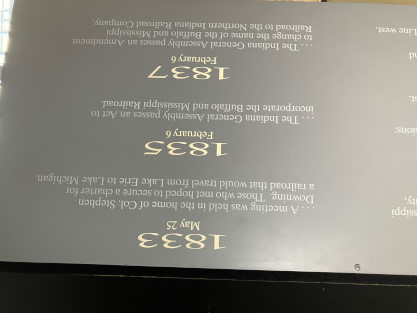
This was the start of a large, multi-wall timeline of the New York Central, which started with 1833-1837.
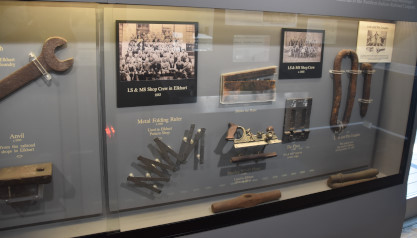
Artifacts and photographs of the period.
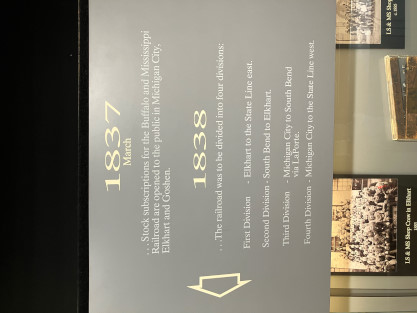
1837-1838.
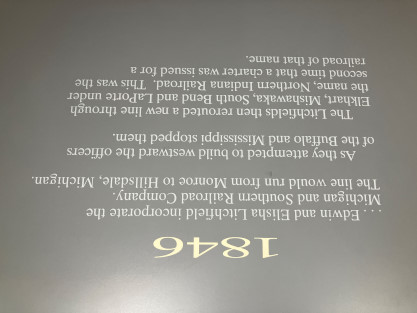
1846.
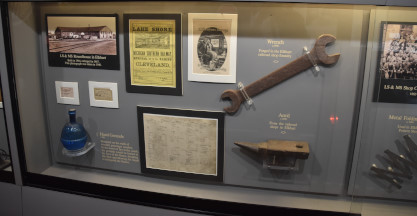
Artifacts and photographs.
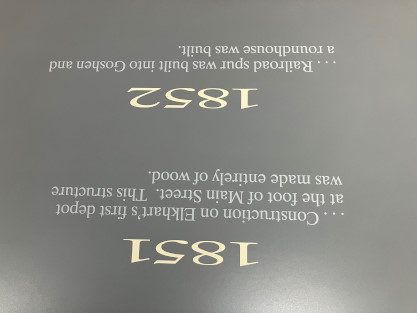
1851-1852.
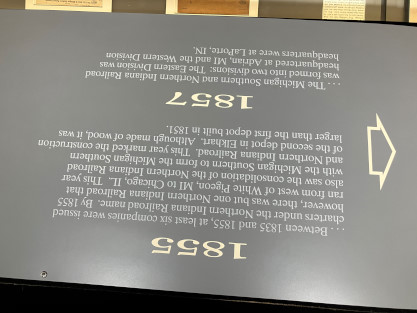
1855-1857.
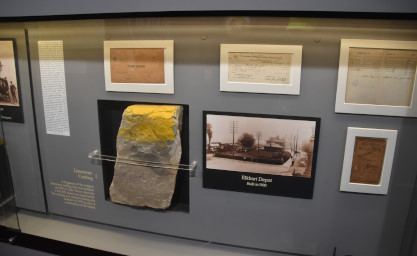
Artifacts and photographs.
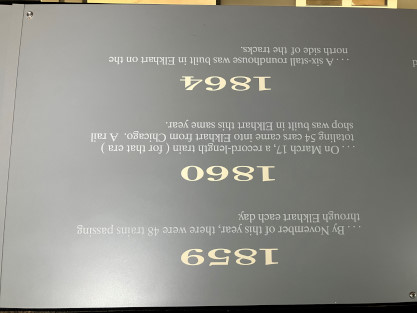
1859-1864.
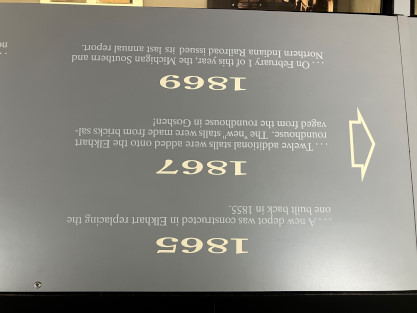
1865-1869.
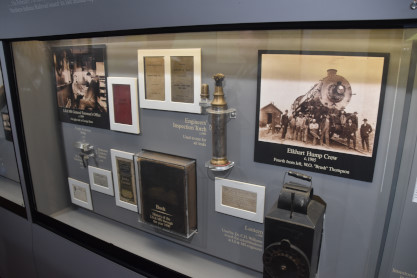
Artifacts and photographs.
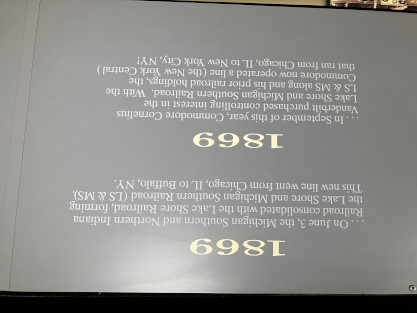
1869.
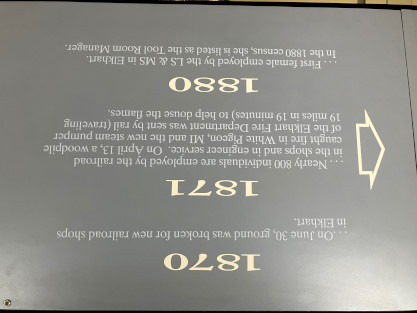
1870-1880.
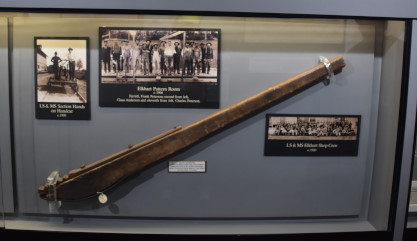
Artifacts and photographs.
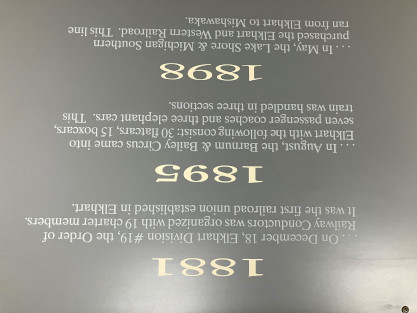
1881-1898.
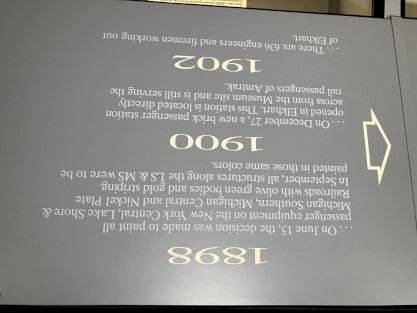
1898-1902.
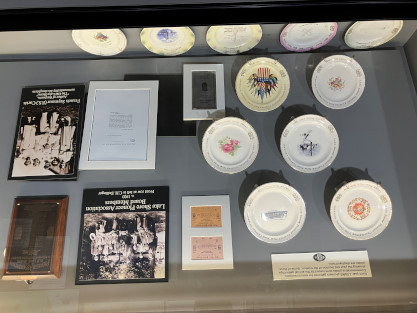
A selection of Lake Shore and Michigan Southern Pioneer Association commemorative plates from the 1930's.
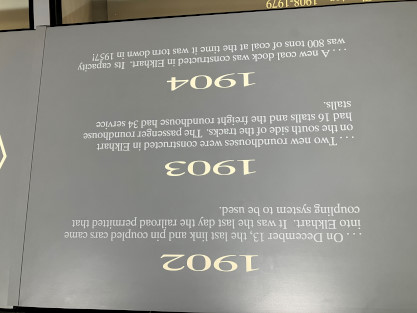
1902-1904.
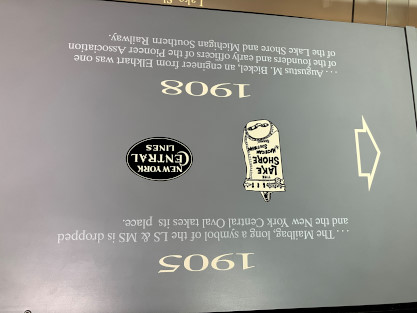
1905-1908.
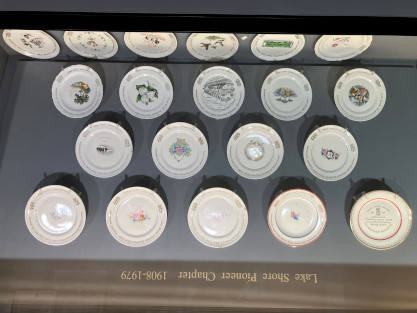
Lake Shore and Michigan Southern Pioneer Chapter plates 1940 to 1965.
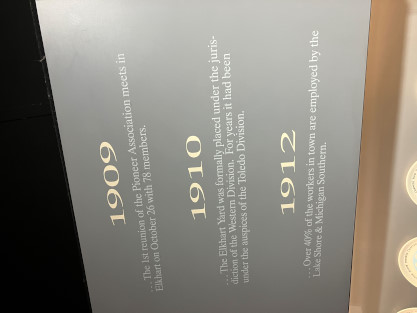
1909-1912.
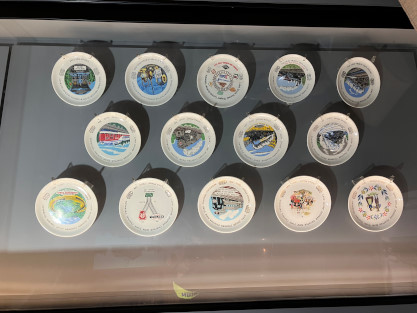
Lake Shore and Michigan Southern Pioneer Chapter plates 1966 to 1979.
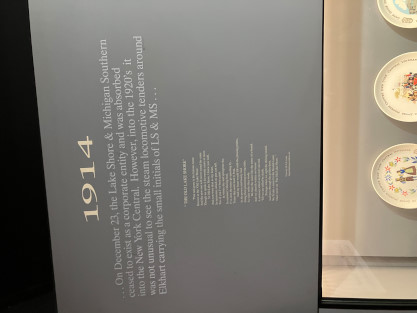
1914, the year when Lake Shore and Michigan Southern was absorbed into New York Central, thus the end of the time line.
With that, it was time to resume my duties as a bus host so I took care of those but had time to grab a photograph of the passing train while the other buses boarded.
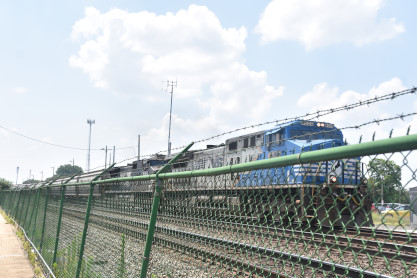
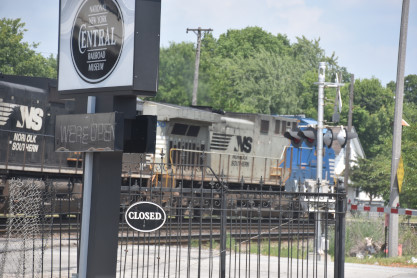
Norfolk Southern AC44C6M 4000, nee Norfolk Southern 8799, built by General Electric and American Motive Power, Incorporated in 1995. It is one of six painted in a special blue, gray, gold, white and black scheme with DC to AC lettering and AC waveform under the cab numbers.
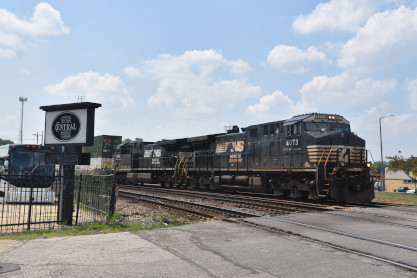
Norfolk Southern AC44C6M 4073, nee Norfolk Southern 8840, built by General Electric in 1995.
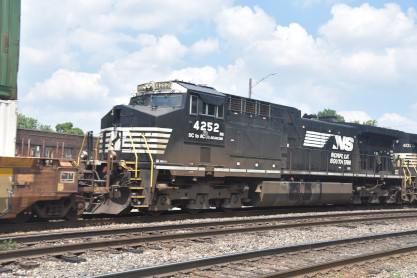
Norfolk Southern AC44C6M 4252, nee Norfolk Southern 9049, built by General Electric in 1997. With that, I reboarded and all three buses made their way to Norfolk Southern's hump yard here in Elkhart.
| RETURN TO THE MAIN PAGE |