




The Illinois Railway Museum was founded in 1953 by ten men who each contributed $100 to purchase Indiana Railroad 65, an interurban car that had just been retired and was in imminent danger of being scrapped. The museum’s origins, however, actually go back further. In 1907 the Elgin & Belvidere Electric Railway, controlled by electric railway engineering expert Bion J. Arnold, opened for business. It was an electric interurban line paralleling the Chicago & North Western Railroad between the two cities in its name. One of its claims to fame was that it built the world’s first fully automatic substation in the town of Union. The E&B continued in operation until 1930, when automobile competition and the onset of the Depression drove it into bankruptcy. The tracks were torn up soon thereafter and the interurban cars were scrapped.
When IRM was founded in 1953 it was sited on the grounds of the Chicago Hardware Foundry in suburban North Chicago, along the tracks of the Chicago North Shore & Milwaukee interurban line. It was initially known as the Illinois Electric Railway Museum but the “Electric” was removed in 1962. Following acquisition of car 65 the collection continued to grow, reaching some 40 pieces of equipment by 1964. By that time the museum had outgrown its cramped space at the foundry and it relocated to an empty field east of Union. The reason this site was chosen was because the long-abandoned right-of-way of the E&B could be cheaply acquired simply by paying the back taxes. Initially a mile and a half of right-of-way and a small 26-acre plot where the depot now sits were purchased. The collection of 40 pieces of equipment was transported to Union in 1964.
Over the 60 years since, IRM has expanded steadily. The first electric car operated in 1966 and the first steam engine ran in 1968. The depot was moved from its original location in nearby Marengo in 1967, the first of 13 storage barns was built in 1972, and the streetcar loop was completed in 1981. Visitor amenities were improved with the opening of the Central Diner in 2003, the Schroeder Store in 2017, and the Multi-Purpose Building in 2021. The collection of historic equipment has grown over tenfold, to over 500 pieces of historic railway and transit equipment. The size of the developed property has expanded to 100 acres while the main line railroad has been extended to include nearly five miles of the former E&B right-of-way. Nearly four miles worth of track are now under cover, providing protected storage for the vast majority of the historic collection of trains.
The Illinois Railway Museum is a 501(c)3 not-for-profit organization which is owned entirely by its volunteers. The museum receives no state or federal money for its operations. All capital and operating costs are paid by individual donations and revenue derived from tickets and on-site sales.
The lifeblood of the museum is its volunteers. All train operation and the vast majority of restoration work done on the historic collection is performed by volunteers. The museum welcomes anyone, 18 years or older, who is interested in trains or history, or is looking for a hobby or a place they can make a difference. Most of the volunteers at IRM are not professional railroaders; the museum counts men and women who are electricians, lawyers, teachers, construction workers, doctors, and members of many other professions among its volunteer ranks.
The museum is organized into a number of departments, nearly all of them led by a volunteer curator. These departments include equipment departments, such as Electric Car, Steam, Diesel, and so on; facilities departments, such as Buildings & Grounds, Track & Signal, and Overhead Line; education-oriented departments, such as Libraries and Exhibits; and the Operating Department, which oversees actual train operations. Volunteers perform work in one or more departments which is overseen by that department’s curator, with two General Managers overseeing the activities of the department curators. The General Managers report directly to the museum’s Board of Directors, which is elected from the ranks of working volunteers.
The majority of photographs taken by Elizabeth Guenzler.
The Illinois Railway Museum sign in the parking area.
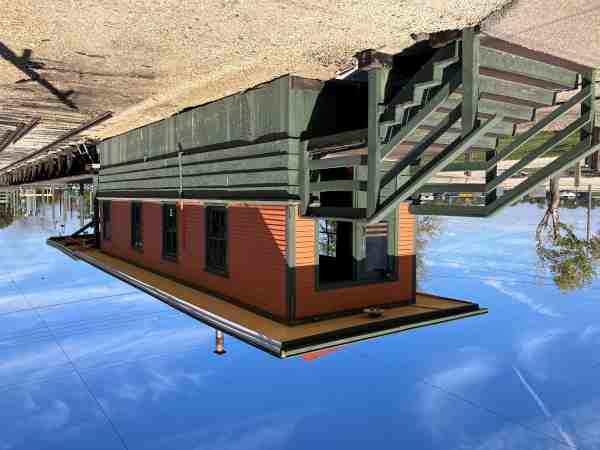
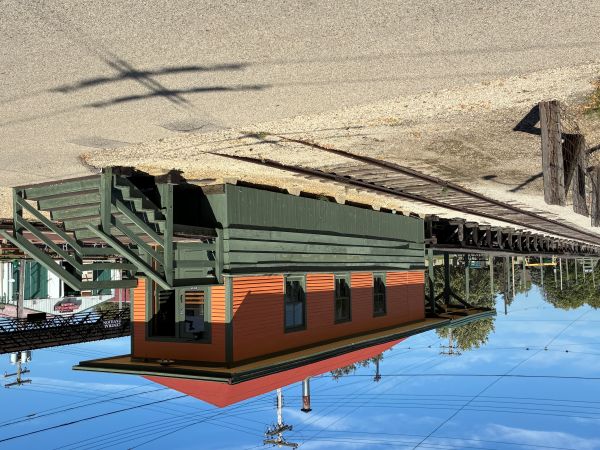
This rapid transit station was built in 1910 by the Metropolitan-West Side Elevated Railroad and was originally located where its Douglas Park branch crossed 50th Avenue in suburban Cicero. As with many elevated lines in Chicago, the outer end of this branch ran at ground level, and stations like this were used by riders to board the 'L' cars. The station was staffed by a ticket agent who would sell or accept tickets for access to the platform. In 1978, the station was closed by the Chicago Transit Authority as redundant (nearby stops at Cicero Avenue and 54th Avenues remain in use to this day) and the station house, along with a portion of the original platform, was acquired by IRM and moved to Union. In the early 1980's, it was placed at its current location and is used regularly on busy days and during special events.
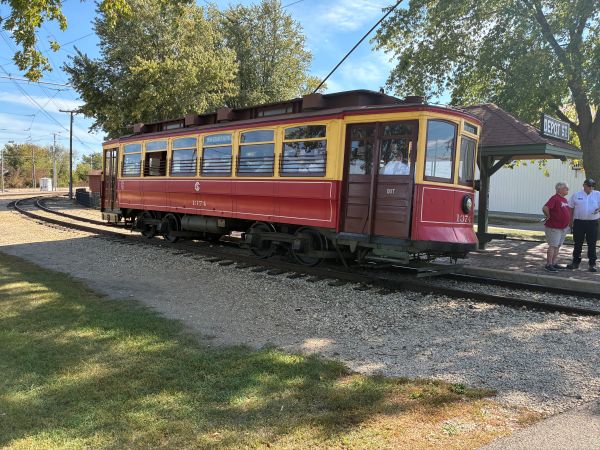
Illinois Railway Museum streetcar 1374, ex. Electric Railway Historical Society, Downers Grove, Illinois 1958-1973, exx. Chicago Transit Authority AA63 1947-1958, exxx. Chicago Surface Lines 1374, exxx. Chicago Railways 1374, Chicago Union Traction 4903, built by St. Louis Car Company in 1905. This streetcar is a "Matchbox" so named because it was a small streetcar by Chicago standards. At one time more than 300 cars identical to this ran throughout Chicago, mostly on lightly-traveled lines that did not enter the Loop. Car 1374 was converted to a salt spreader in the late 1940s and IRM volunteers spent some 15 years in the 1970s and 1980s.
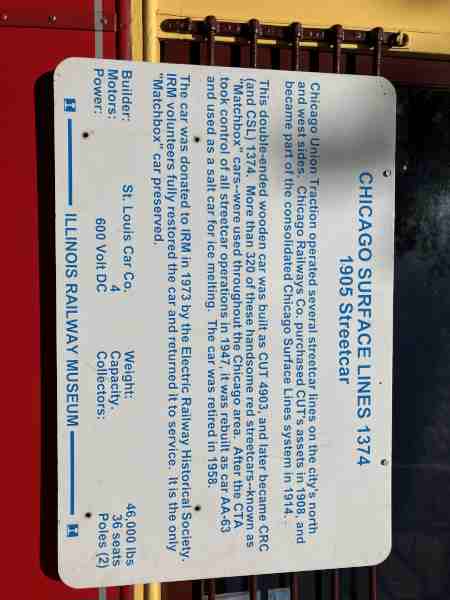
The storyboard for car 1374.
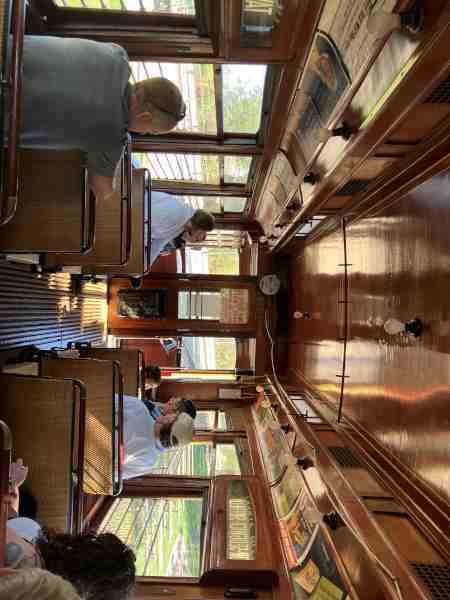
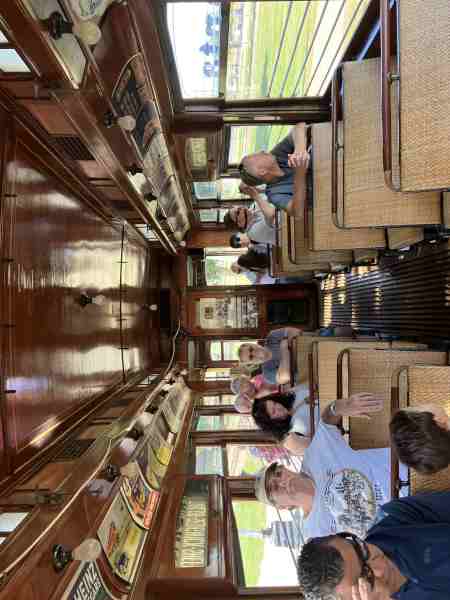
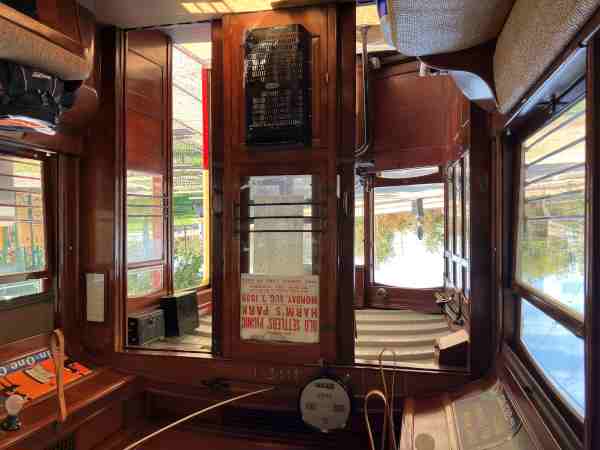
The interior of the car.
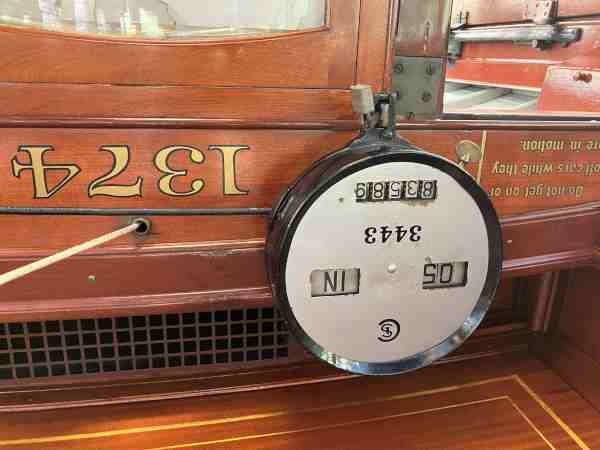
The passenger counter.
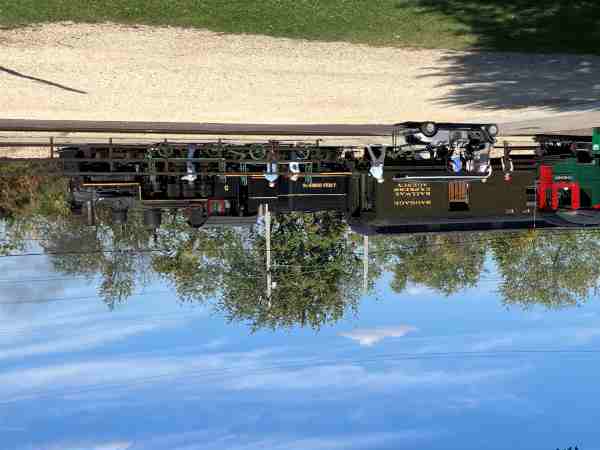
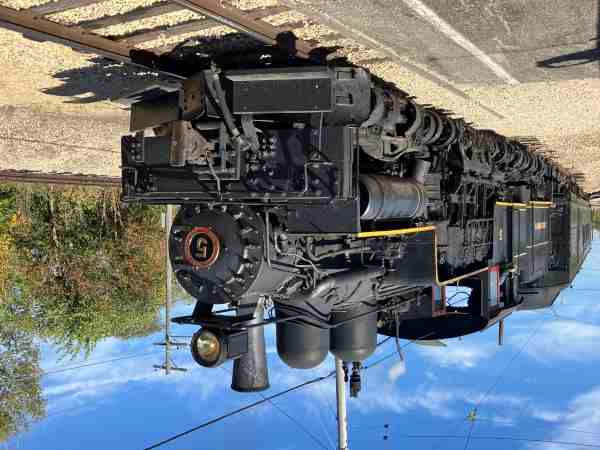
Passing J. Neils Lumber Shay 5 which we would ride later.
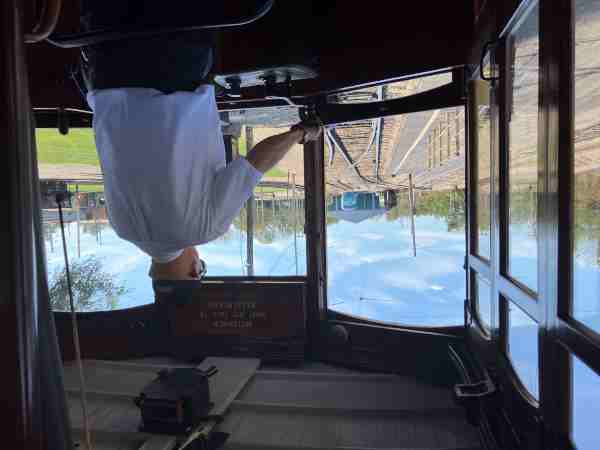
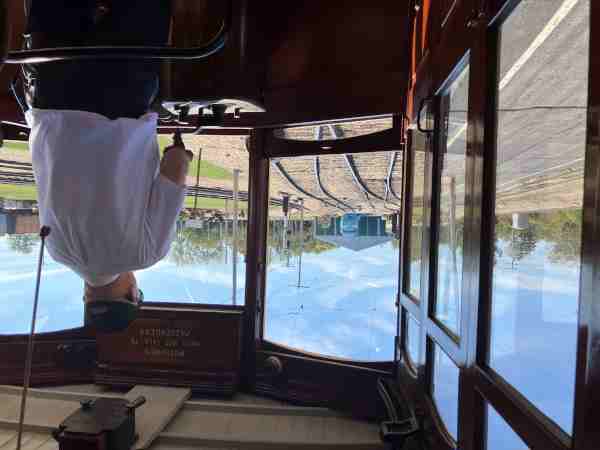
Starting the journey around the loop.
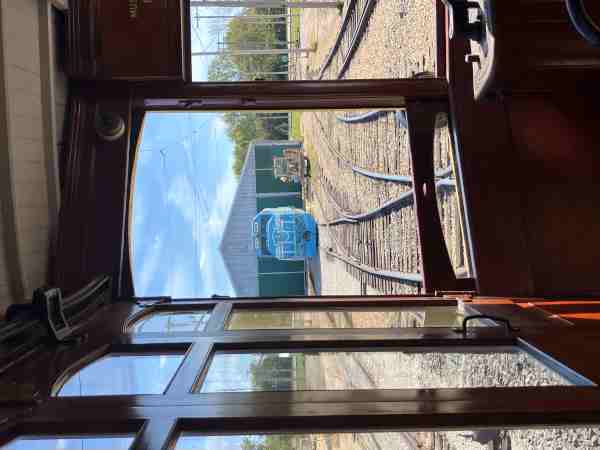
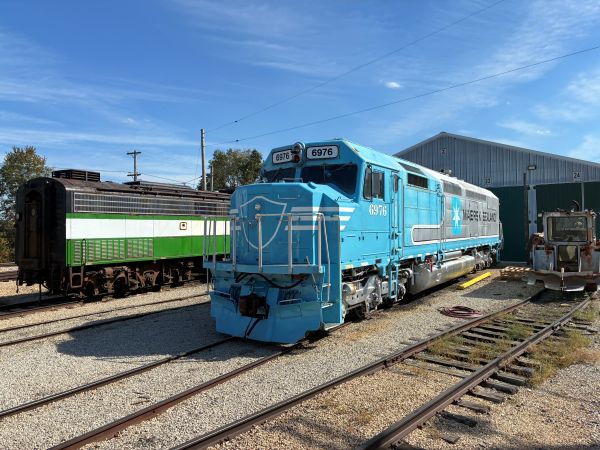
Just prior to its retirement, it was painted in a Maersk Sealand promotional livery to celebrate the opening of a new port facility in Los Angeles. The locomotive was donated by BNSF to Dynamic Rail Preservation (DynaRail) in 2003 and donated it to an Oregon museum organization until it was sidelined when various groups had to vacate the famed Southern Pacific Brooklyn Roundhouse. It was soon acquired for preservation by the founder of DynaRail and they donated 6976 to IRM on July 2, 2025. A fitting end to this last surviving locomotive of its type.
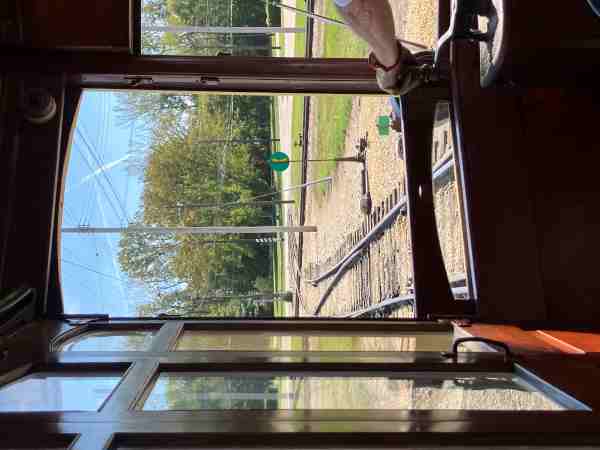
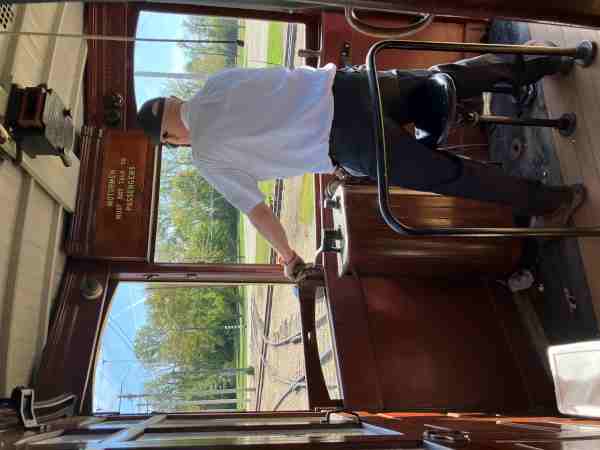
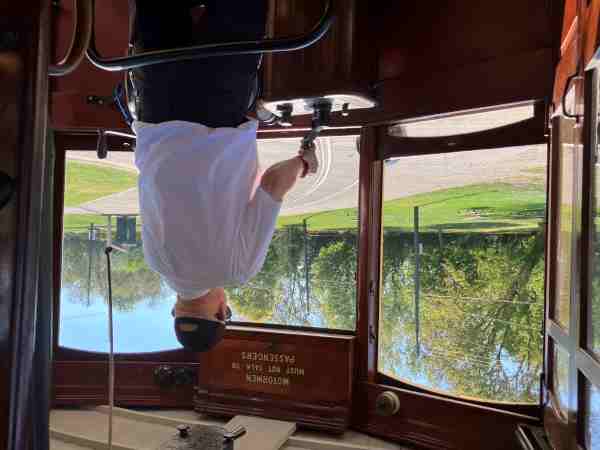
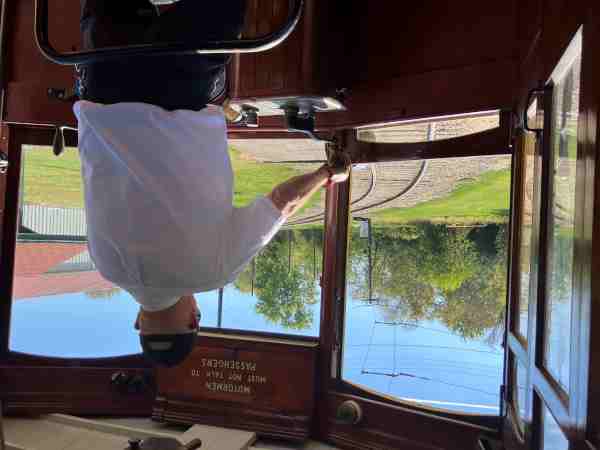
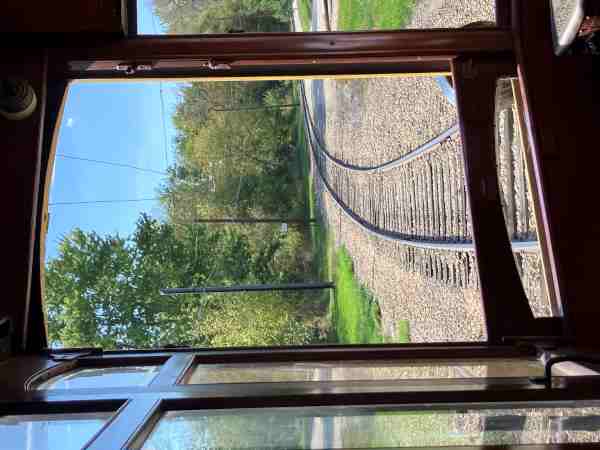
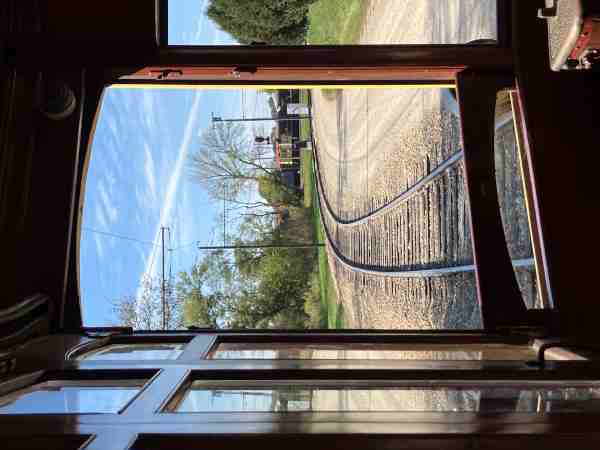
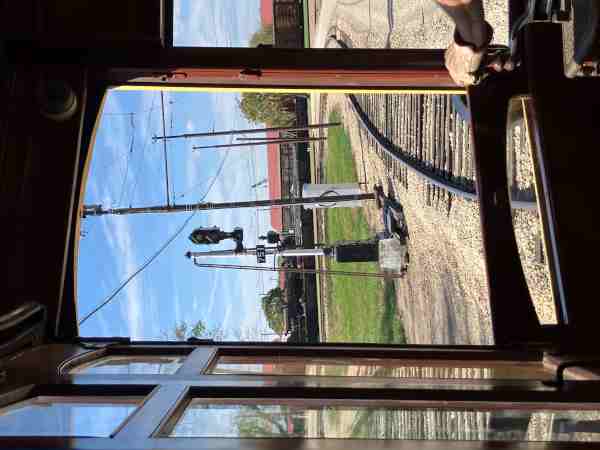
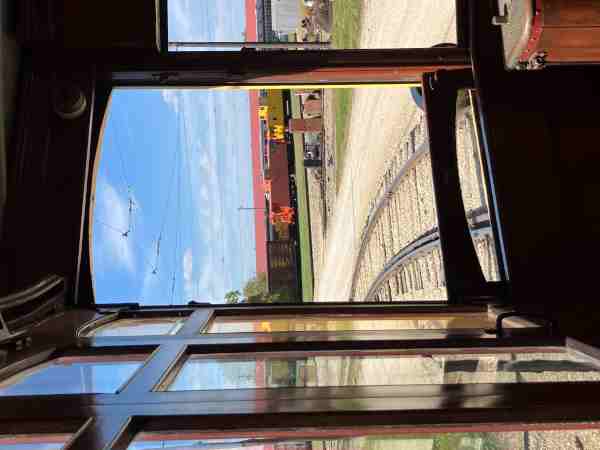
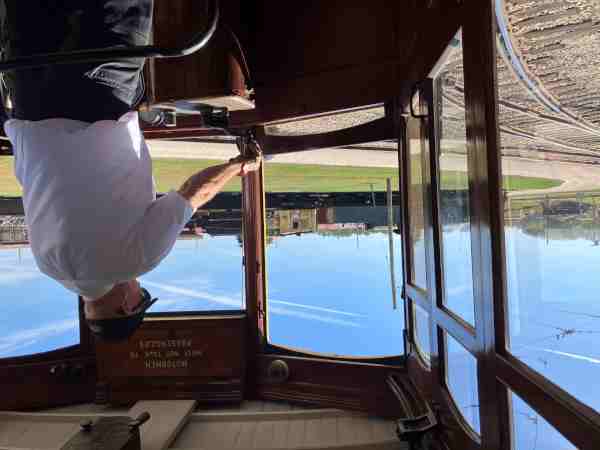
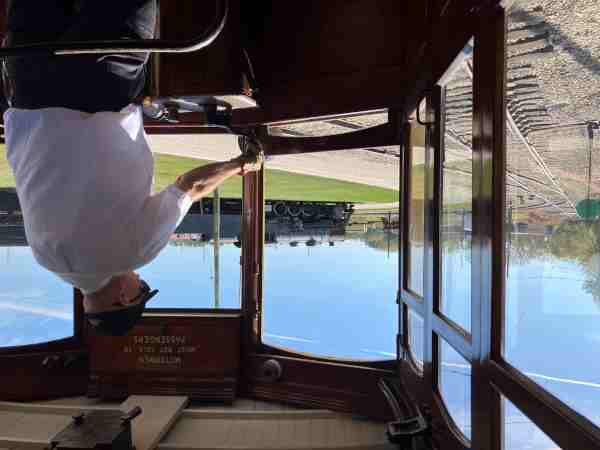
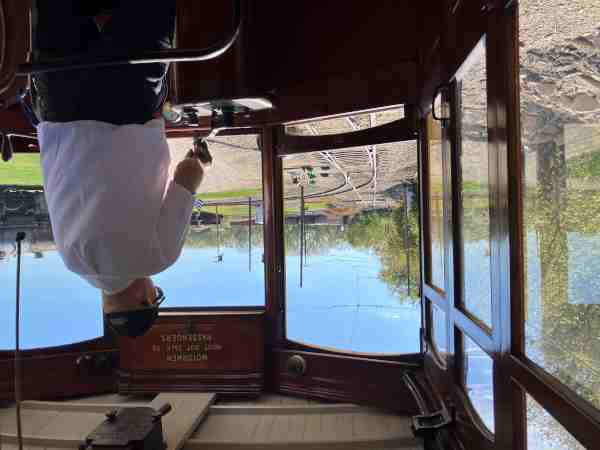
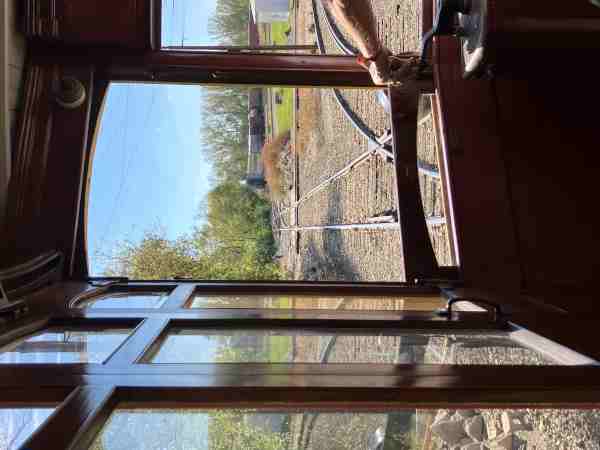
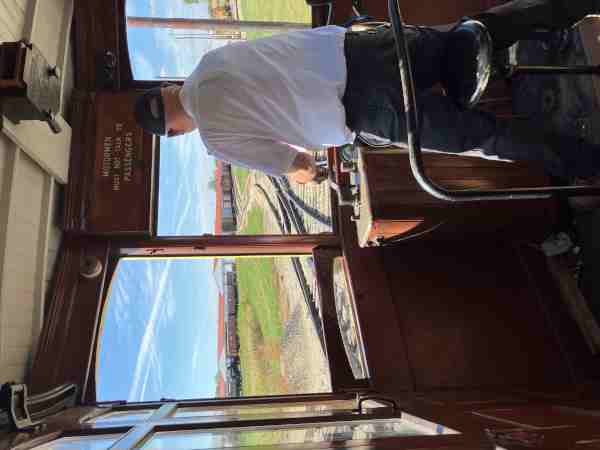
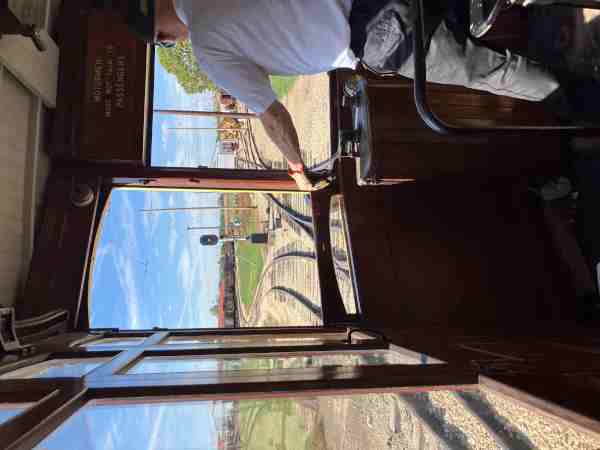
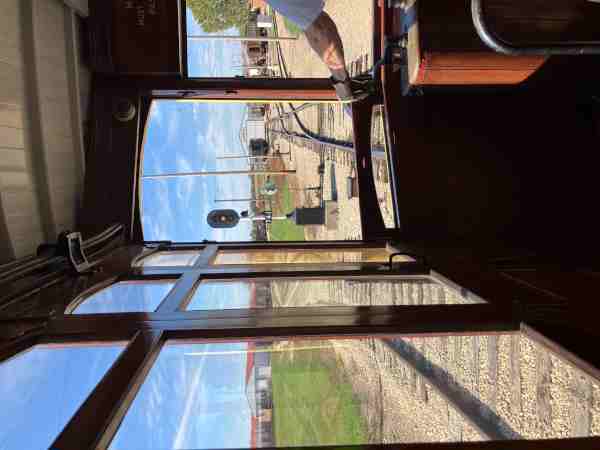
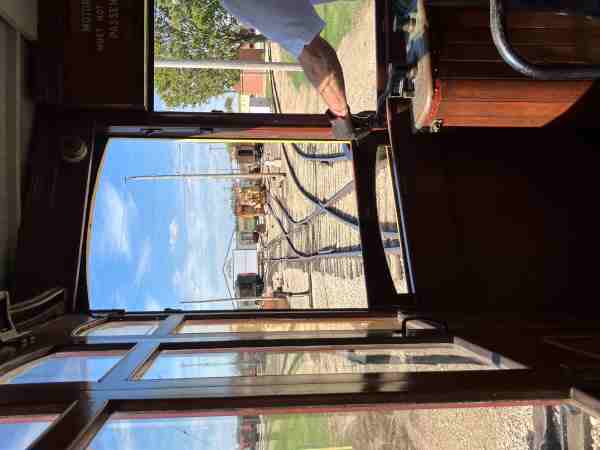
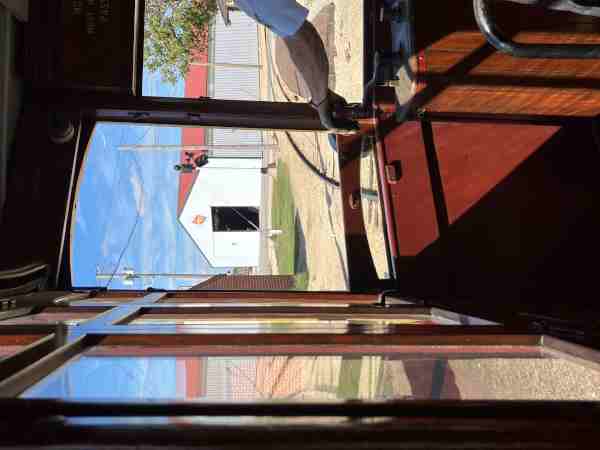
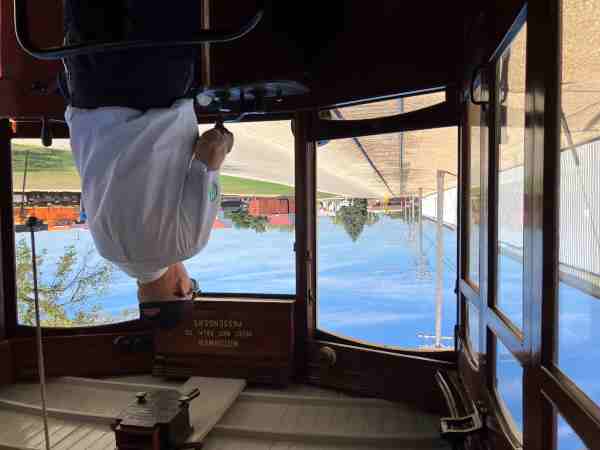
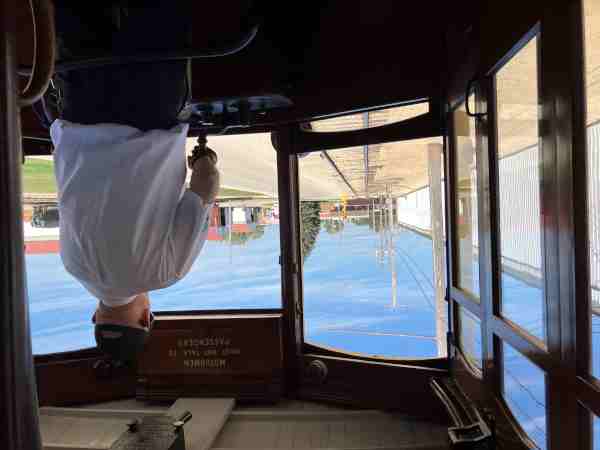
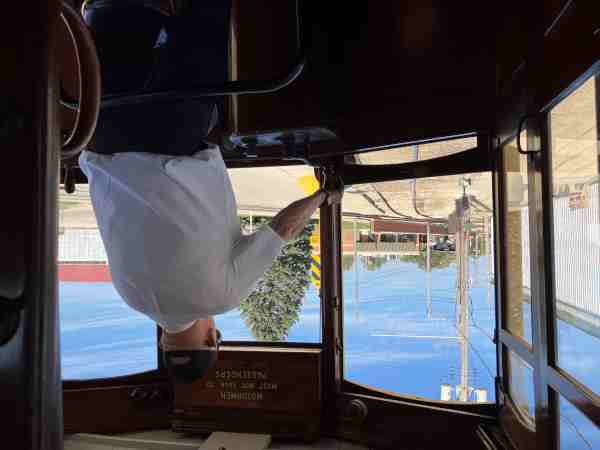
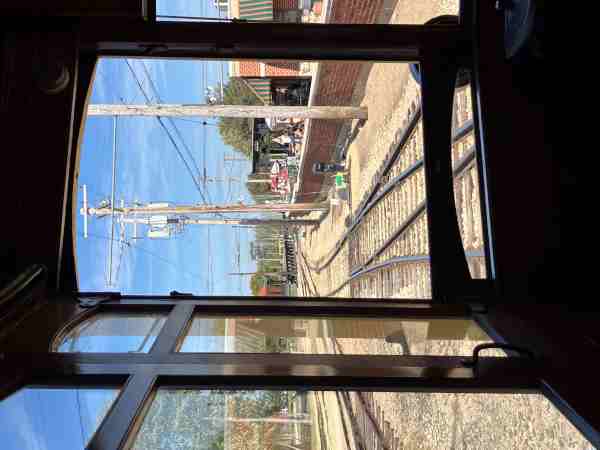
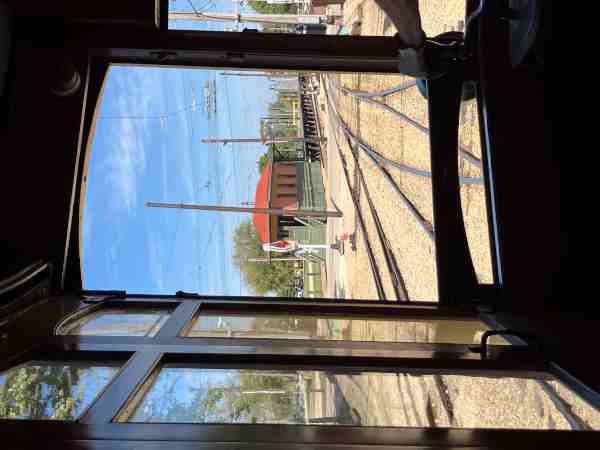
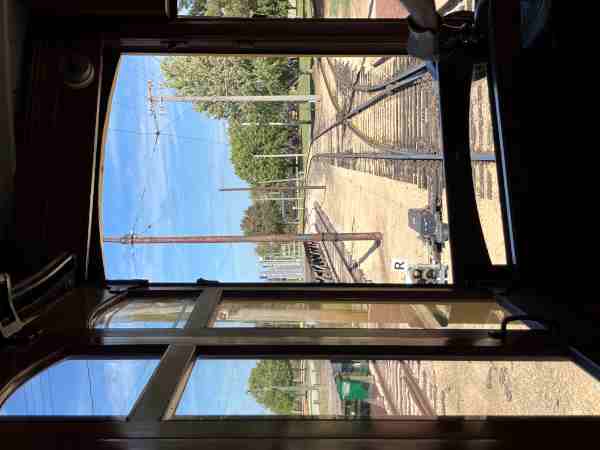
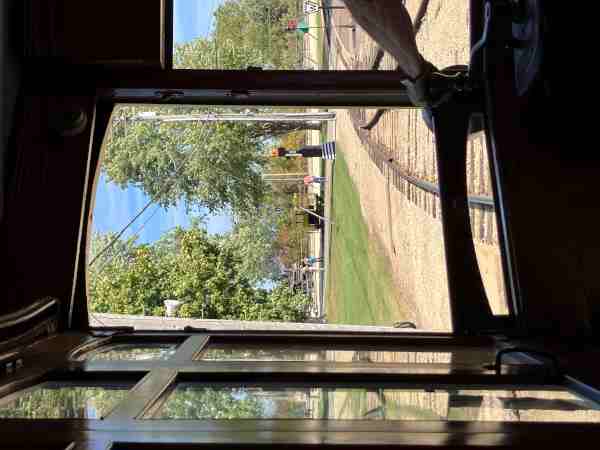
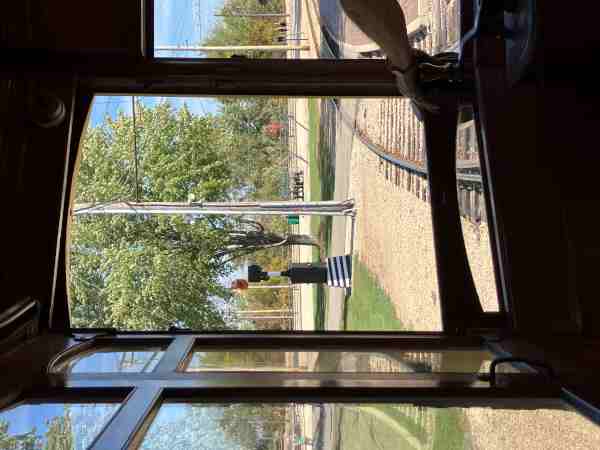
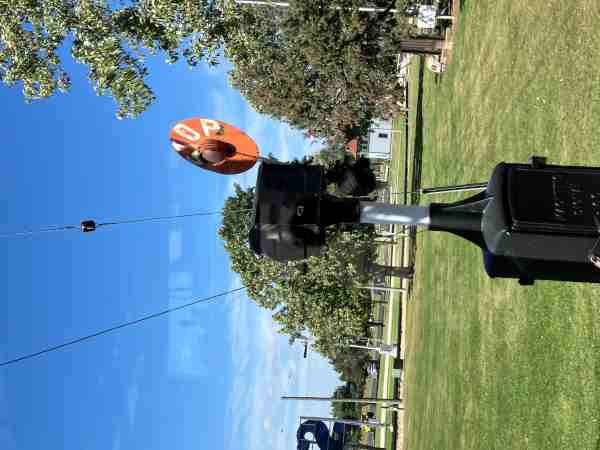
The journey around the streetcar loop.
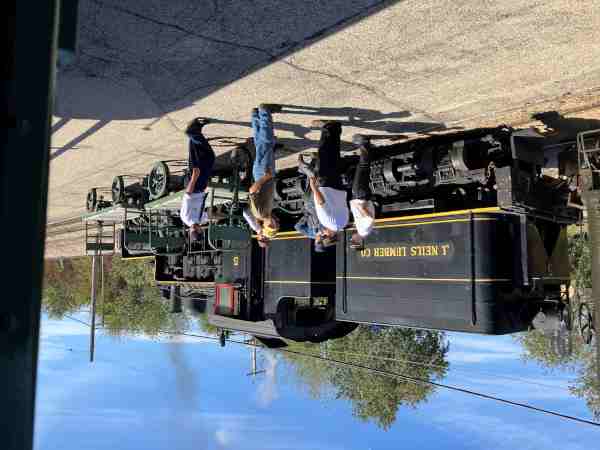
J. Neils Lumber Shay 5 as seen from the streetcar upon our return.
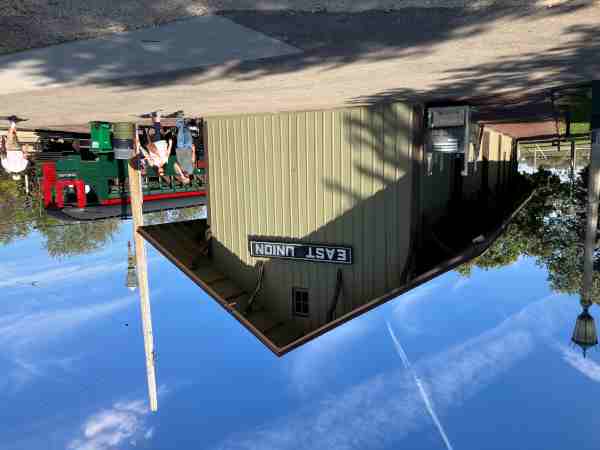
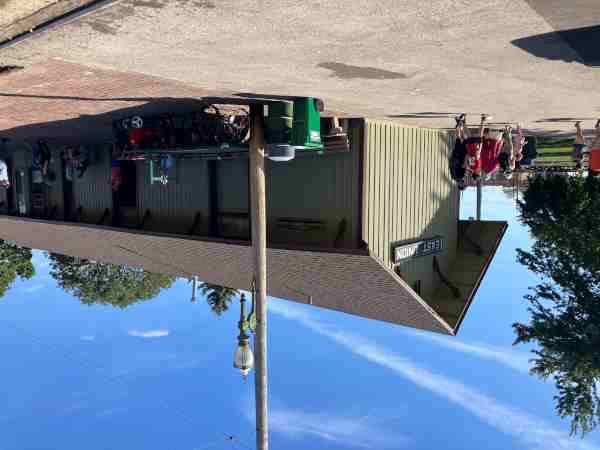
The East Union Depot, as it is known today, was built in 1851 by the Galena & Chicago Union Railroad, the first railroad built west out of Chicago. Originally this building was located in Marengo, the next town west of Union. An addition enlarged the depot in the late 1800s, by which time it was owned by the Chicago & North Western Railway, and after that it remained in use until after World War II. In 1967, it was acquired by IRM (the nearly identical depot in Union was declined due to severe termite damage), cut into large sections, and relocated to its current site.
Some changes have been made to the internal layout of the building, mainly to accommodate public bathrooms, but its general appearance remains historically authentic inside and out. The depot still houses a working dispatcher's office, which is used by the Museum on many operating days, and a public waiting room. It is the oldest railway station in regular passenger use west of Pittsburgh.
The East Union Depot has also been featured in major motion pictures, notably the 1993 movie "A League of Their Own", which included both interior and exterior shots of the depot.
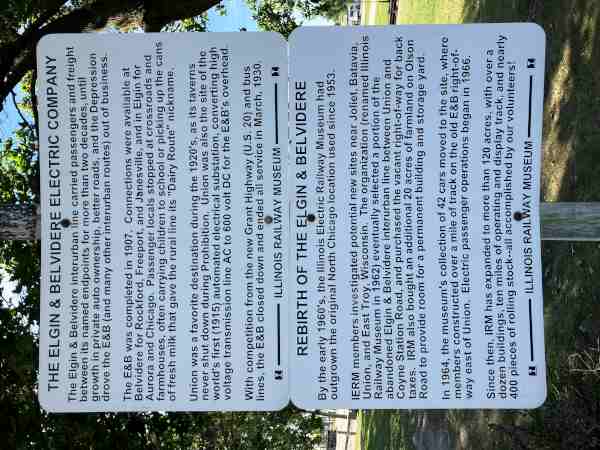
The Elgin and Belvidere Electric Company storyboard.
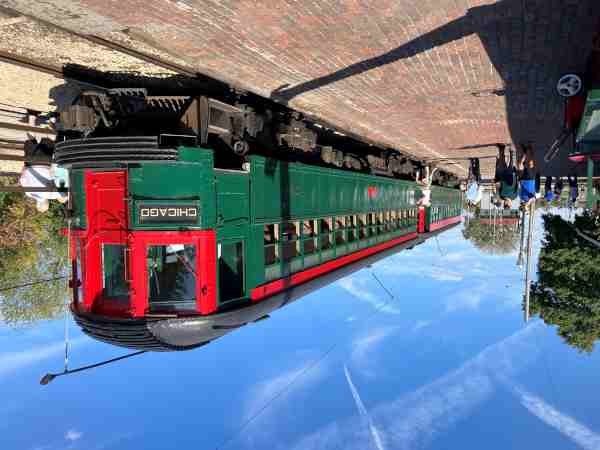
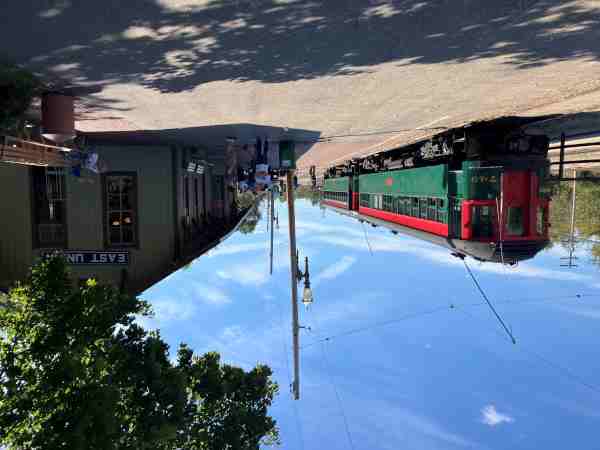
The second of three trains to ride today was the North Shore Line set.
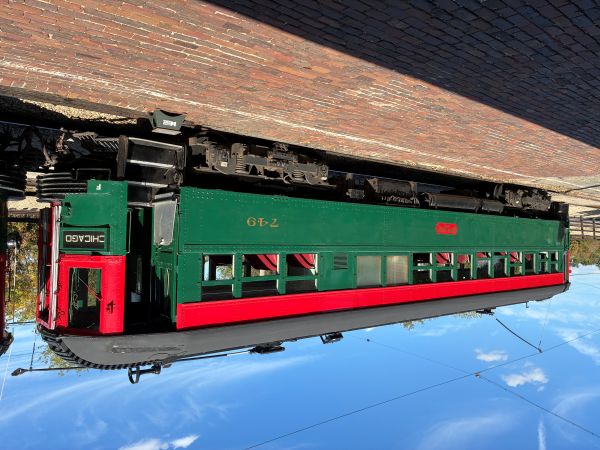
Chicago North Shore and Milwaukee double-end arch-roof interurban coach 749, built by Pullman Company in 1928 designed for use between Chicago and Milwaukee. It is the only car of its series Pullman-built cars to be preserved and has been completely restored by IRM volunteers to its appearance in the late 1950s.
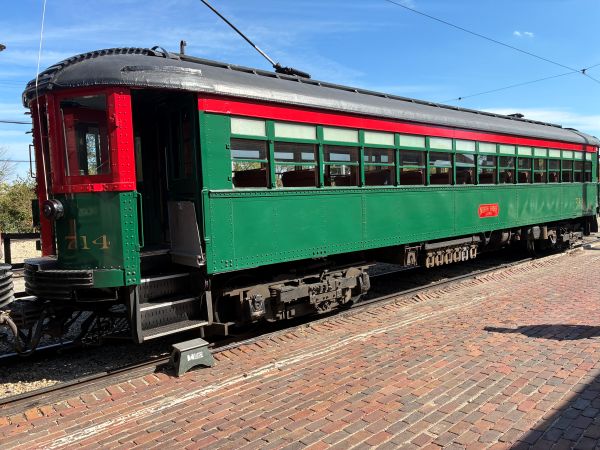
Chicago North Shore and Milwaukee double-end arch-roof interurban coach 714, built by the Cincinnati Car Company in 1926 designed for service between Chicago and Milwaukee. It operated until 1963 in daily service, in trains of up to eight cars. Shortly after the railroad abandoned operations, car 714 came to IRM and has been restored to its 1950s appearance.
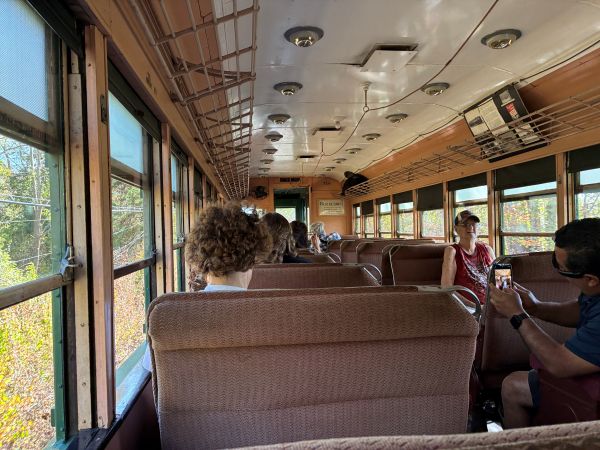
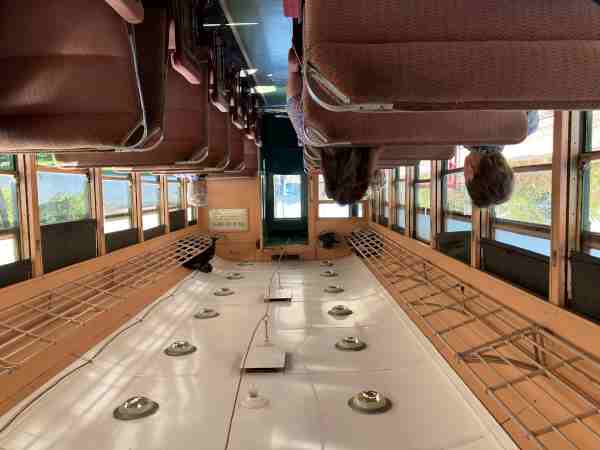
Interior of Chicago North Shore and Milwaukee 714.
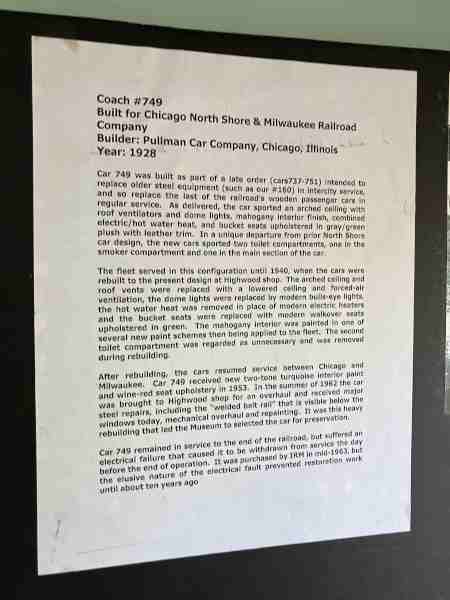
Car 749 storyboard.
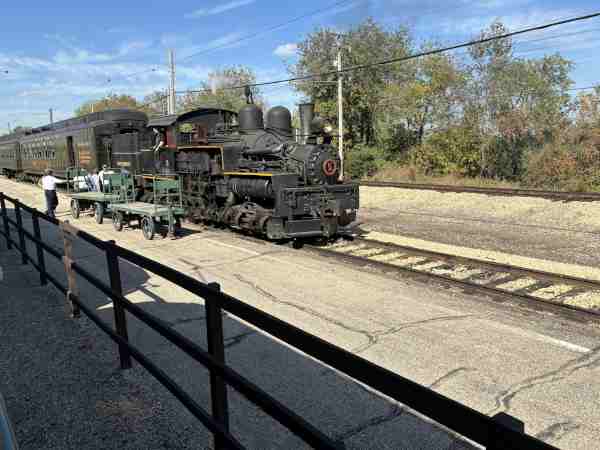
Departing East Union Station.
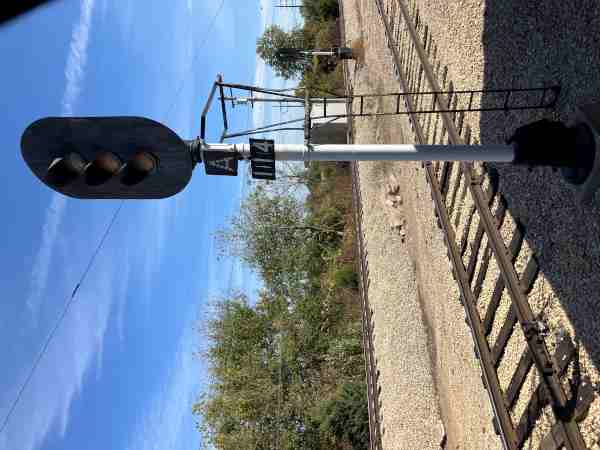
We had a green signal for our departure from the former Illinois Terminal Railroad single-head P2 signal manufactured by Union Switch & Signal.
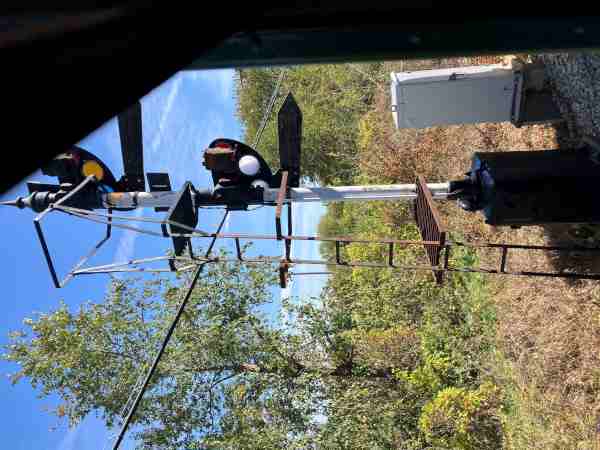
An upper-quadrant semaphore, also built by Union Switch & Signal, in the red position.
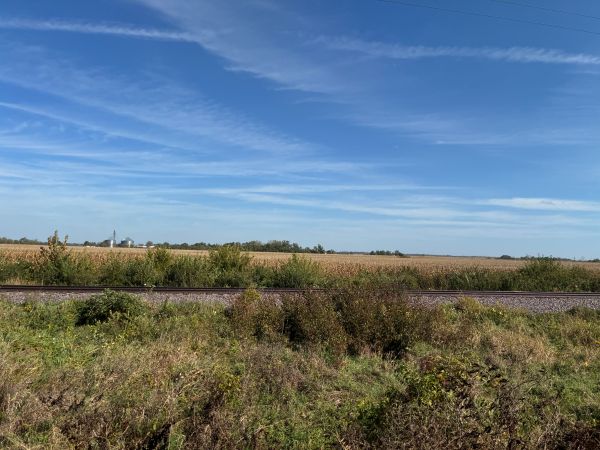
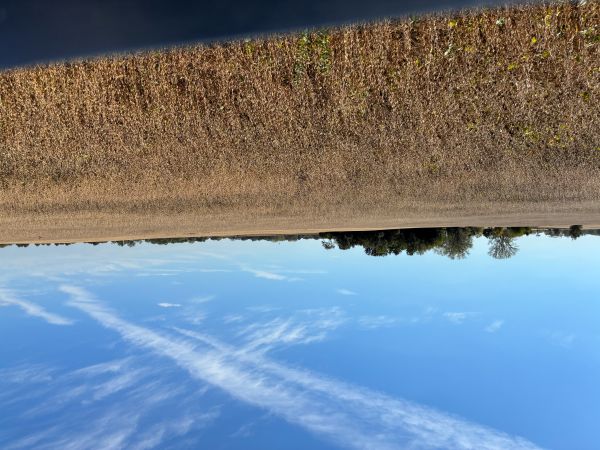
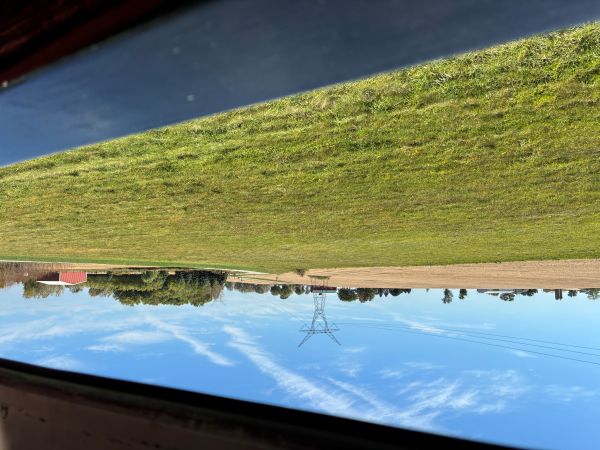
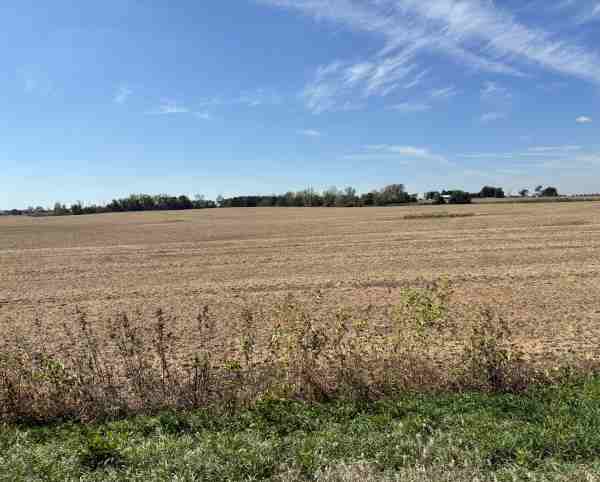
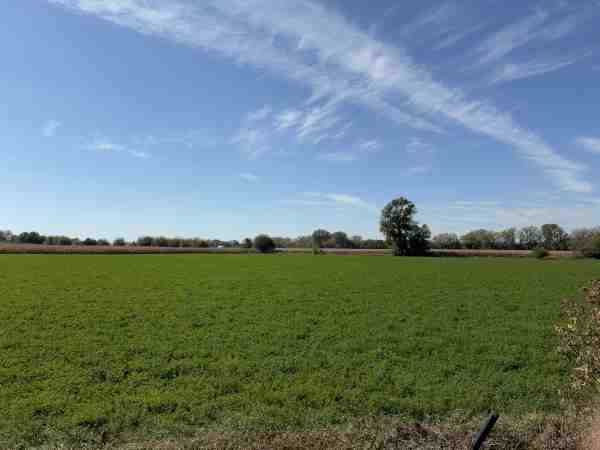
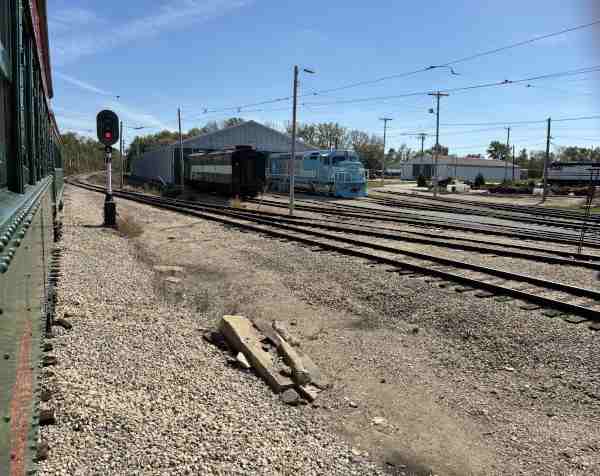
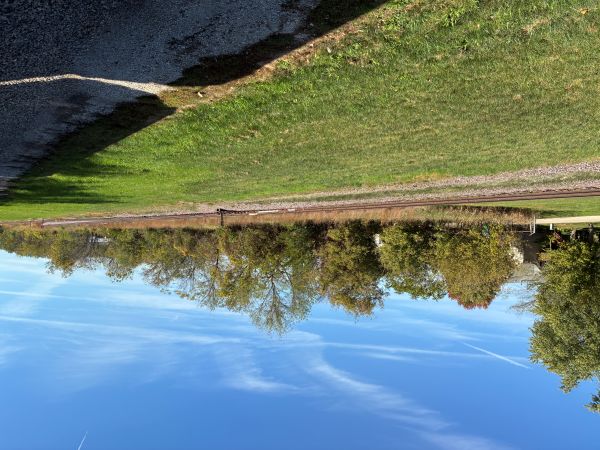
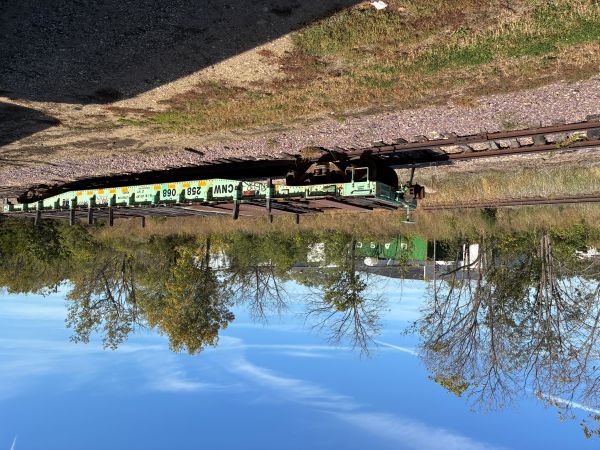
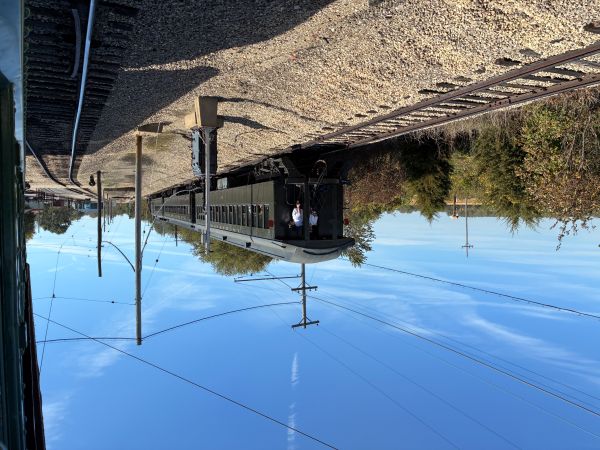
Photographs from the outbound journey.
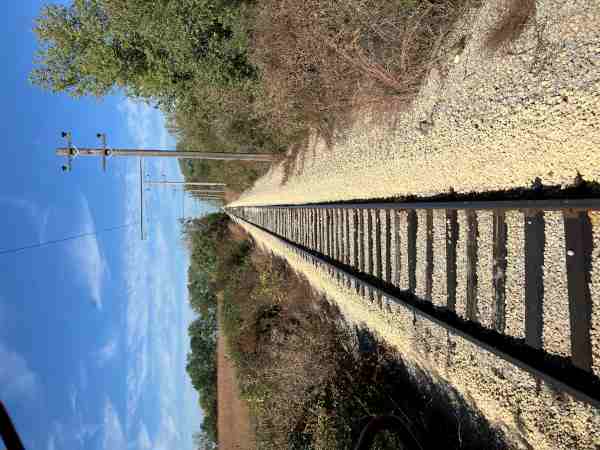
The view from the rear of the train.
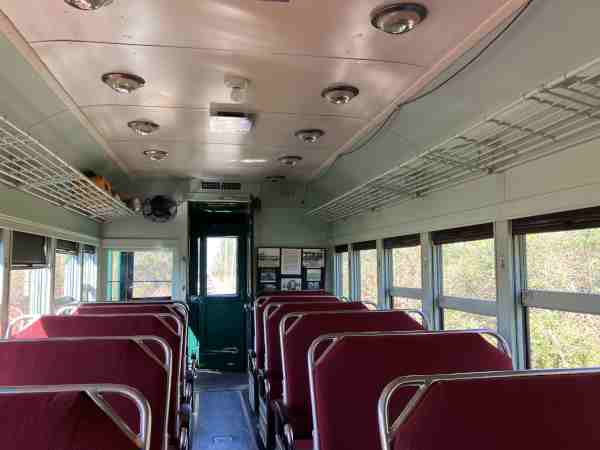
The interior of car 749.
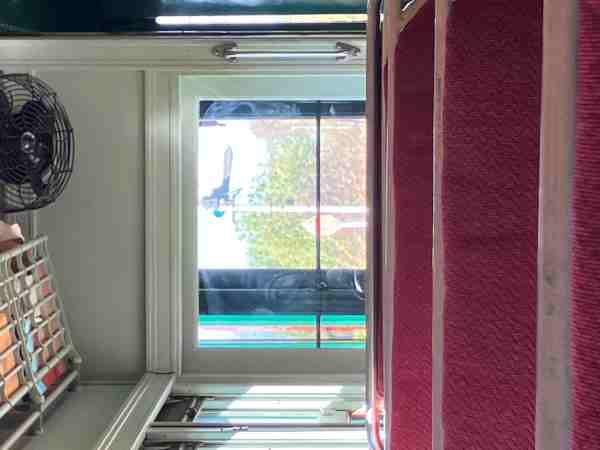
An attempt to catch one of the semaphore signals. Since I had not ridden this line and it was four years since Elizabeth did, we were not familiar with the placement of the signals.
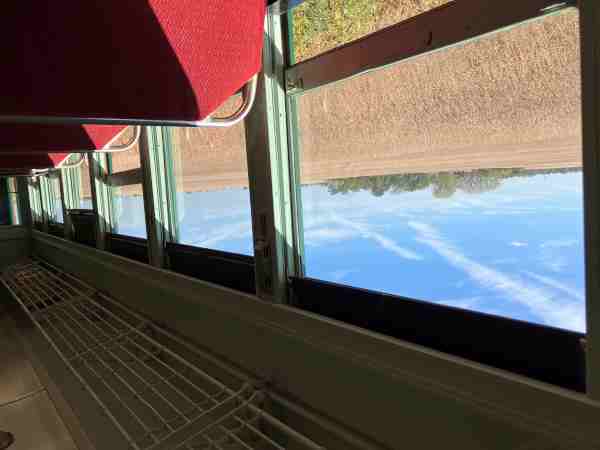
The Illinois Railway Museum is in a rural part of Union and wheatfields are adjacent to the tracks on the main line.
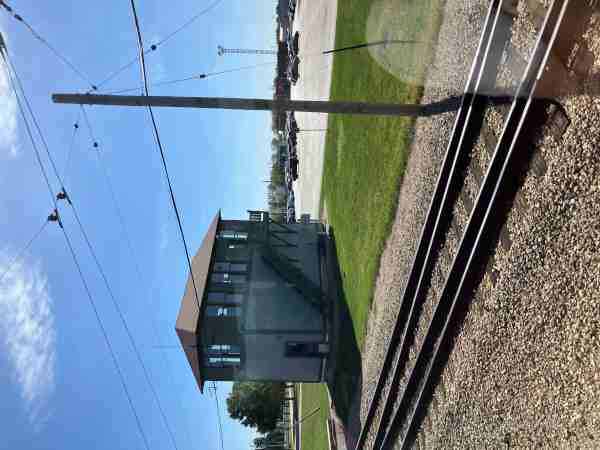
Passing Spaulding Tower.
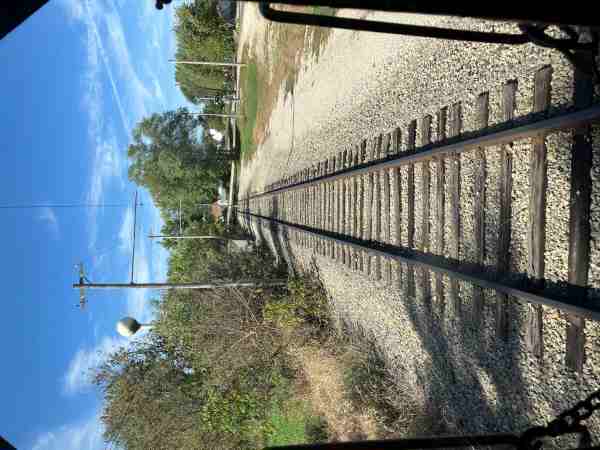
The end of track on the northwest line.
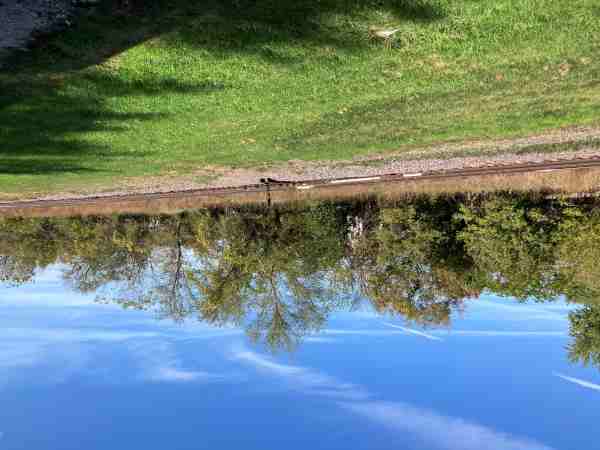
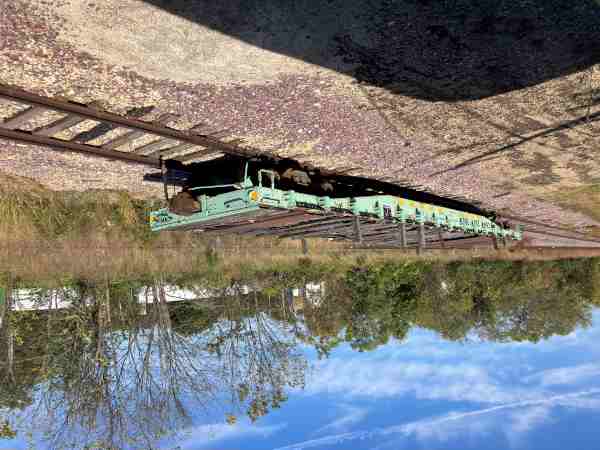
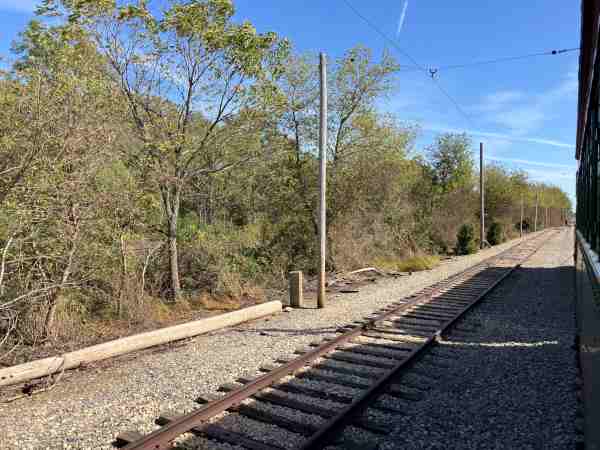
Part of the return journey.
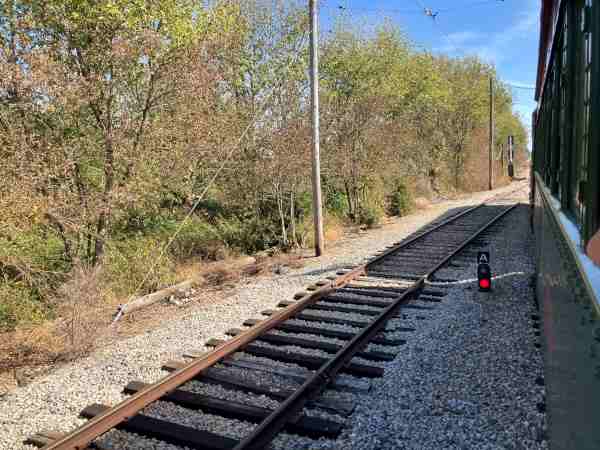
Chicago North Shore & Milwaukee dwarf colour light.
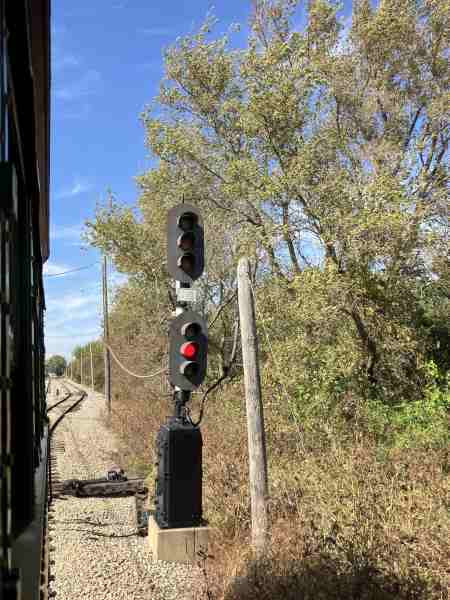
Main line signal 61, a dual head colour light manufactured by L&W Industries.
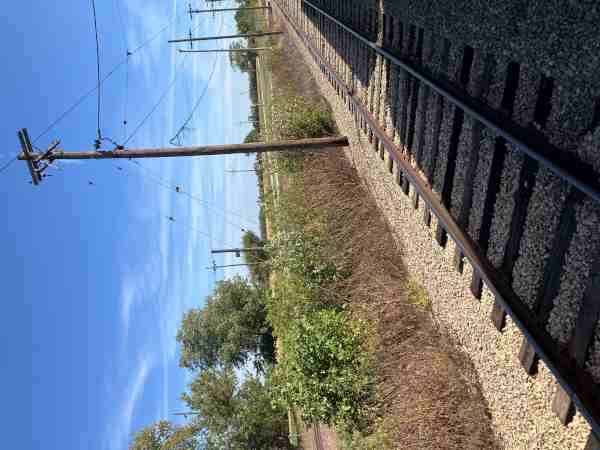
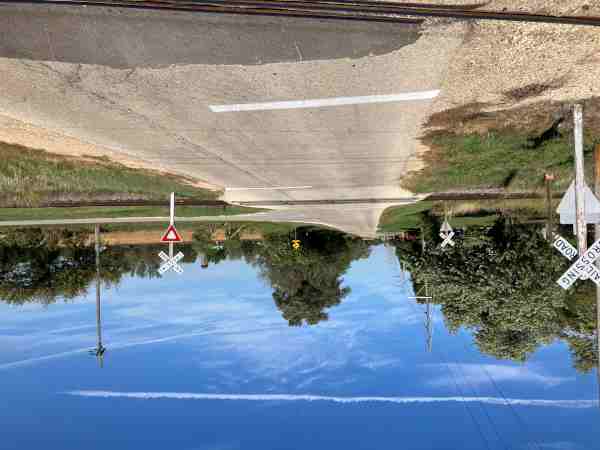
Approaching and crossing Olson Road, the street on which the museum is located.
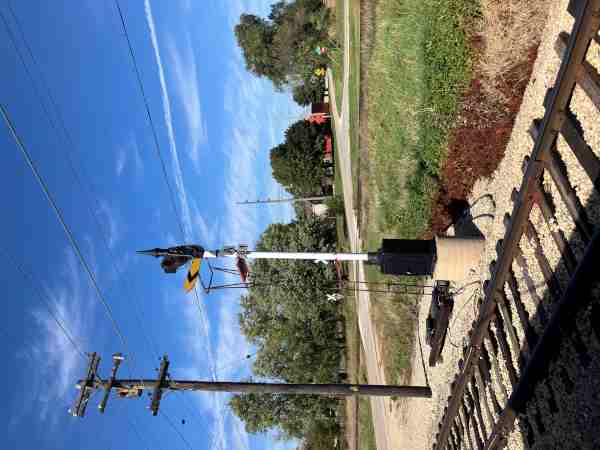
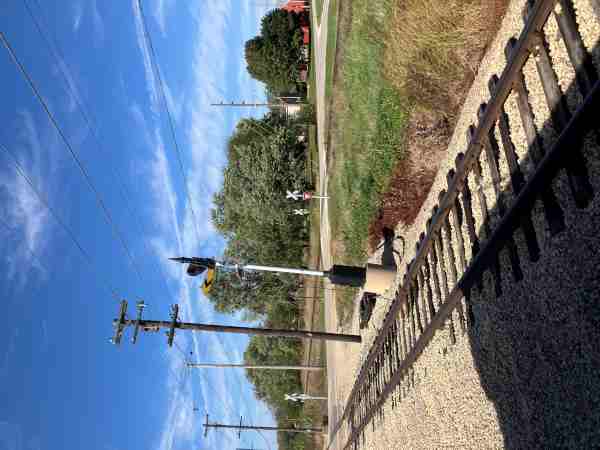
Northern Pacific upper-quadrant semaphore 2A manufactured by General Railway Signal.
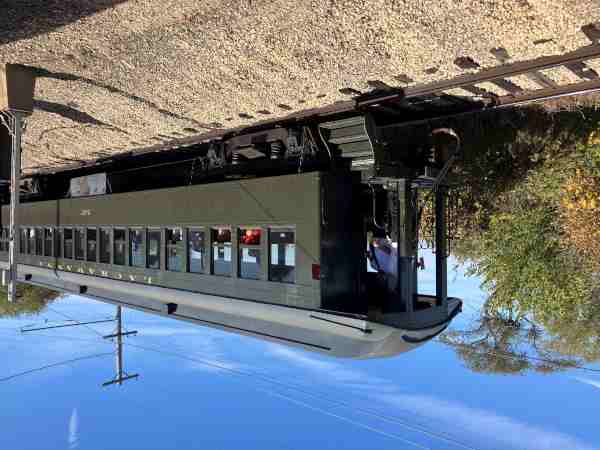
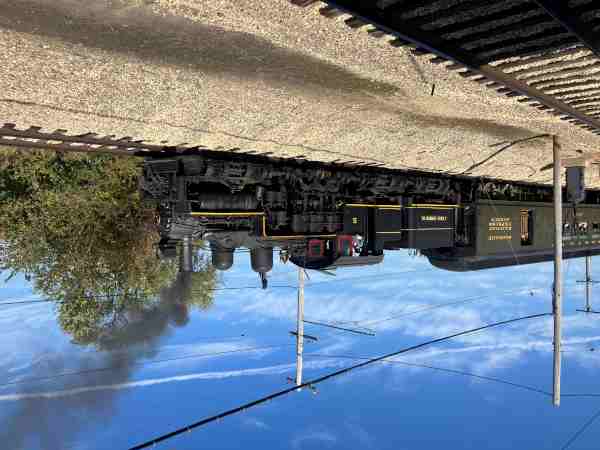
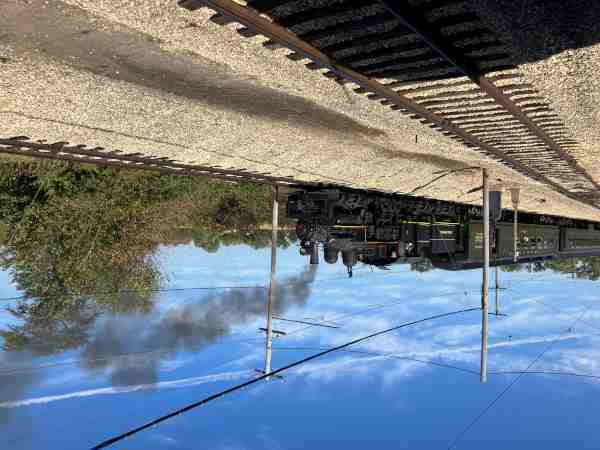
The steam train reversing. We then went inside the East Union station.
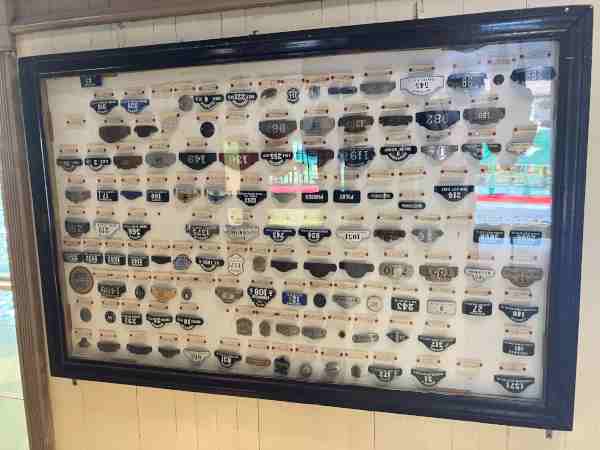
Interurban and streetcar badges from motormen, conductors, yardmasters and trainmen.
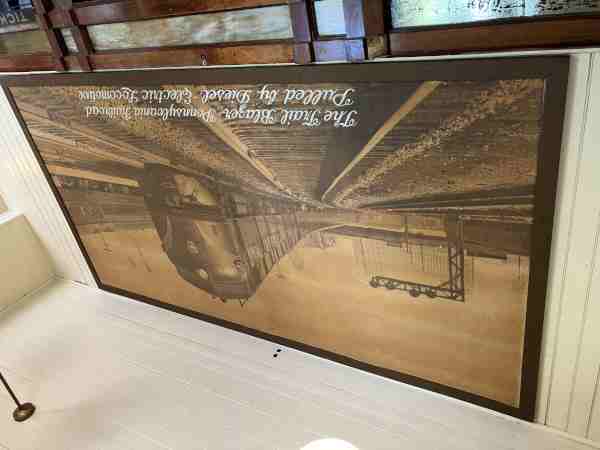
The Trail Blazer - Pennsylvania Railroad photomural from Union Station in Chicago.
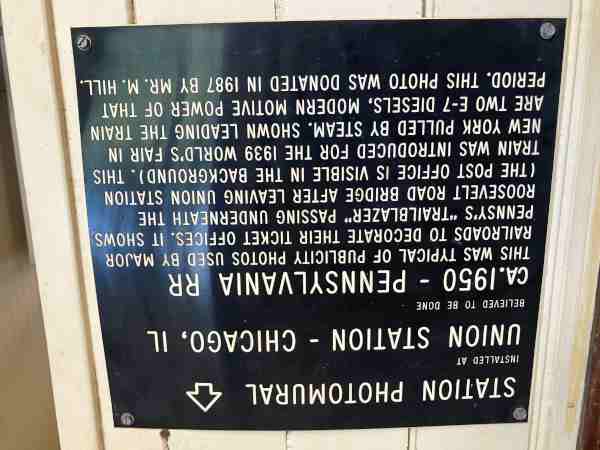
The photomural story board.
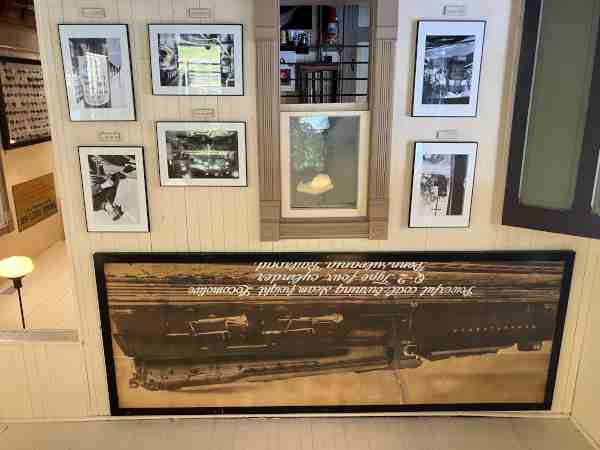
Another Pennsylvania Railroad photomural.
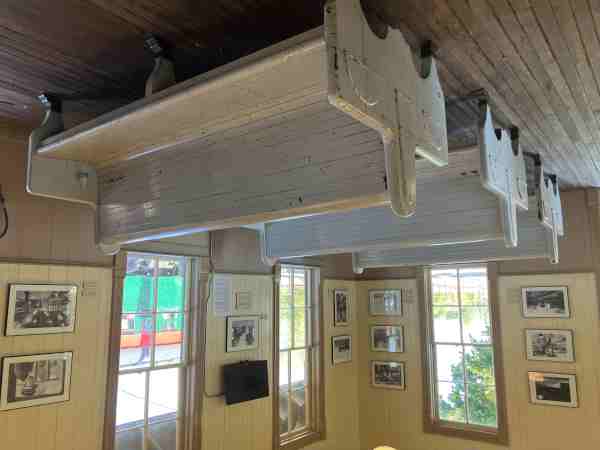
Chicago City Railroad Company Carhouse station benches from 1601 West 69th street in Chicago.
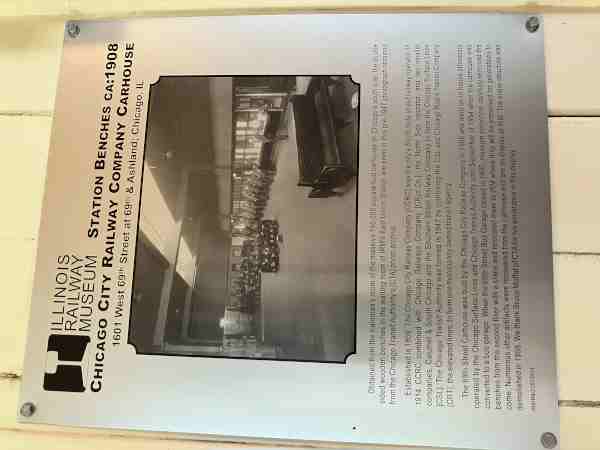
The benches storyboard.
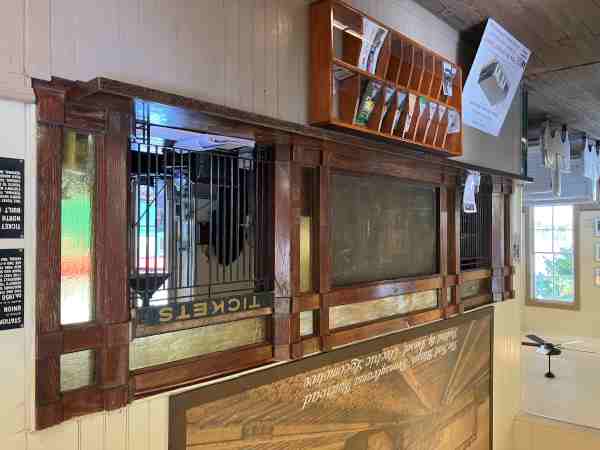
The ticket window from North Shore Line Milwaukee Terminal.
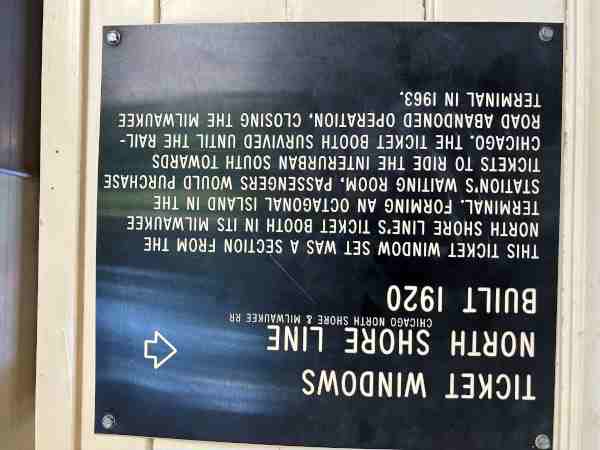
Ticket window storyboard.
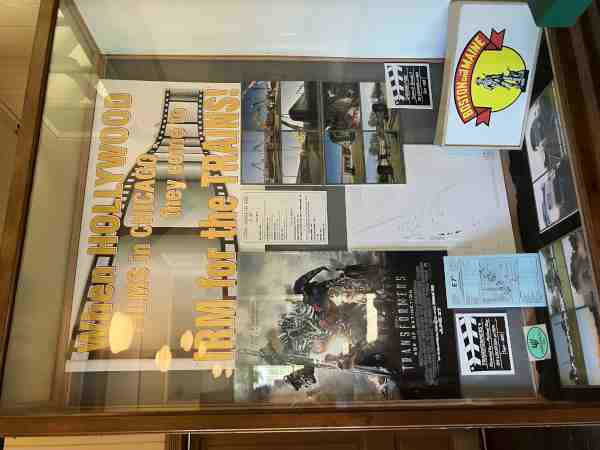
Films and television shows filmed at Illinois Railway Museum over the years.
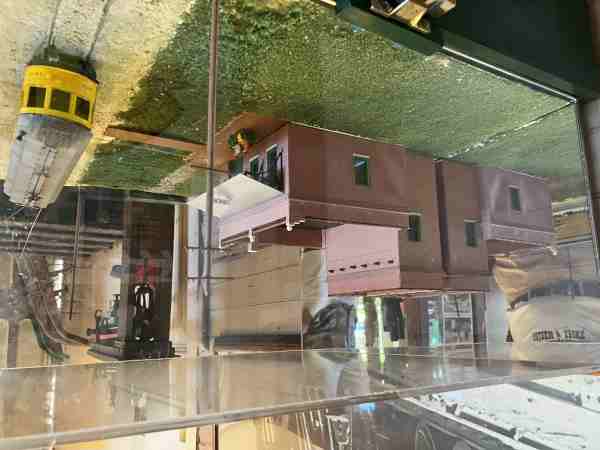
Elgin and Belvidere Electric Company Union substation one-quarter scale model scratch-built by Carl Gustafson and dedicated in 2006.
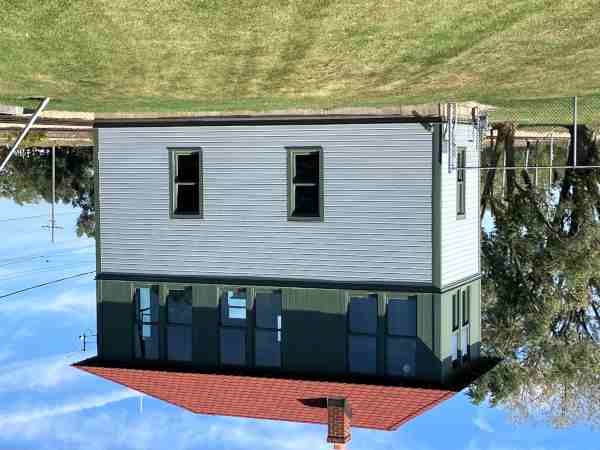
Hearing the steam engine on the approach, Elizabeth hurried down to Spaulding Tower to catch the train entering the station area. The tower was not open today but was originally located on the east side of Elgin, where the Chicago Milwaukee St. Paul & Pacific crossed the Elgin Joliet & Eastern. Spaulding Tower was built by the EJ&E around 1891 and was enlarged to its current 12 foot x 30 foot footprint in 1909, when the Milwaukee Road double-tracked its main line through Spaulding.
Around the 1980s the tower was made redundant by the installation of remote interlocking equipment and it was moved to IRM in several large pieces in August 1988. It has been restored to its 1909 appearance and is used regularly to control train movements on the museum’s demonstration railroad using a restored CTC (Centralized Traffic Control) machine located on the upper floor.
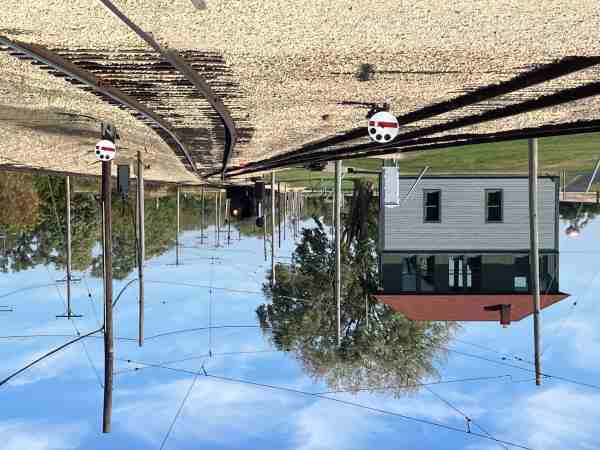
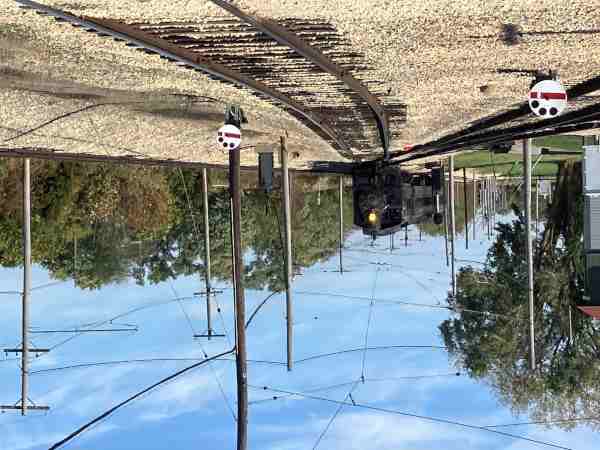
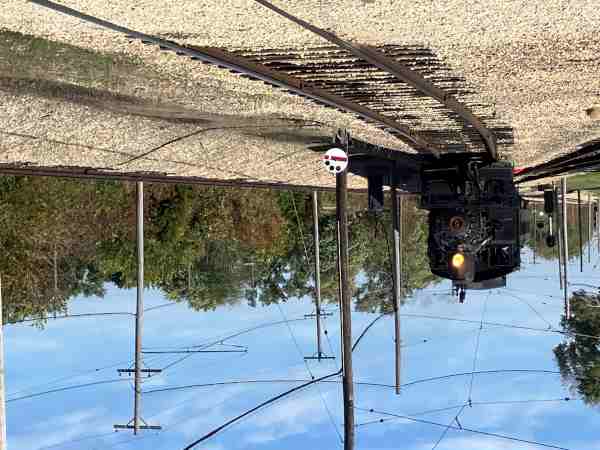
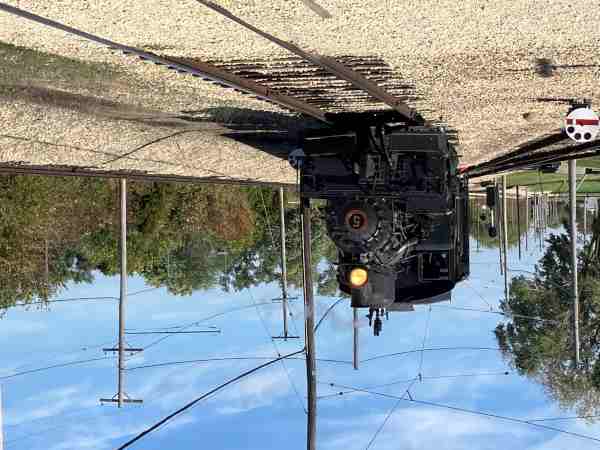
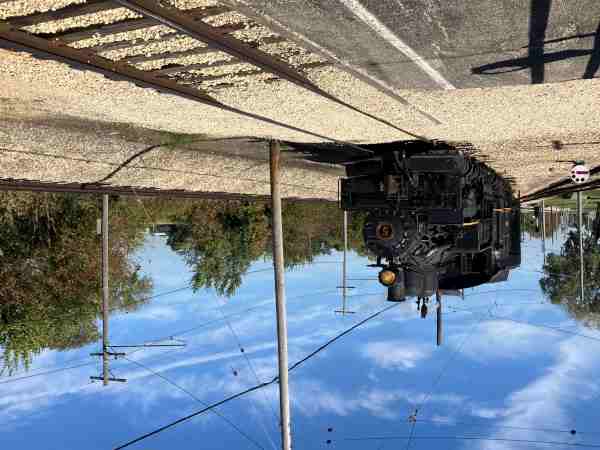
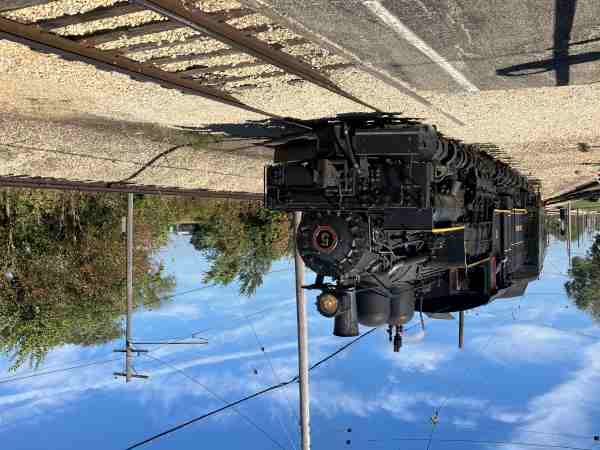
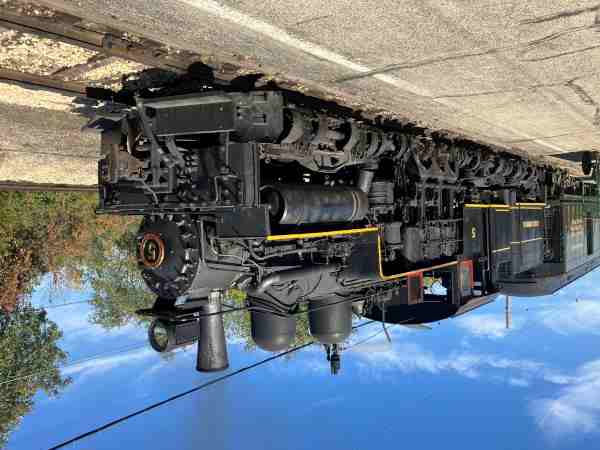
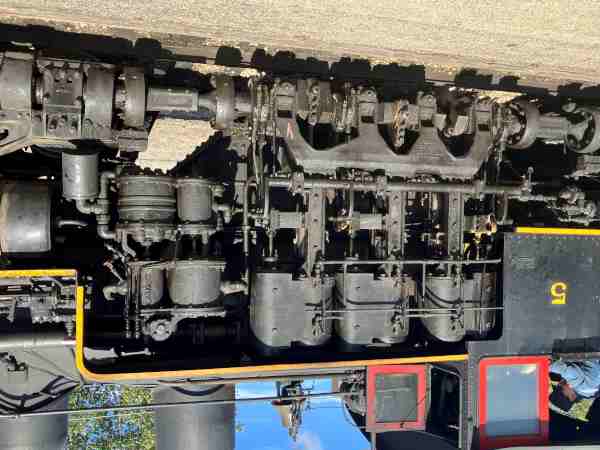
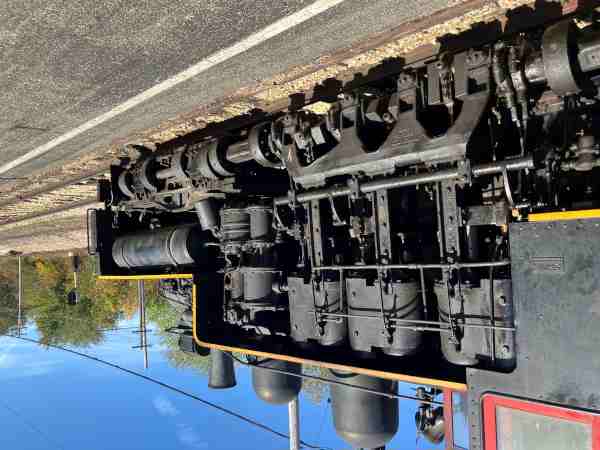
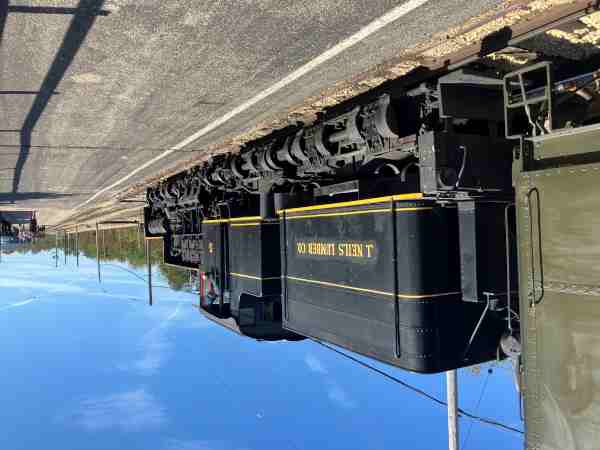
Illinois Railway Museum three-truck shay 5, ex. private owner Elliott Donnelley in Hill City, SD 1964-1965, exx. Klickitat Log and Lumber Company 5 19xx-1964, exxx. St. Regis Paper Company 5 1957-19xx, nee J. Neils Lumber 5, built by Lima Locomotive Works in 1929. It spent its entire service life in the Pacific Northwest, first in Libby, Montana and later in Klickitat, Washington before coming to IRM in 1967. It was the first steam engine to operate at the Museum in 1968.
The Shay was by far the most common type of geared locomotive. It was invented around 1880 by Ephraim Shay, the owner of a logging company in Maine, who was looking for an effective way to move logs from the forest to the lumber mill. Railroads were being built at a rapid pace at the time, but steam locomotives of the day were not well suited to the low speed, high tractive effort demands that timber haulage required. What Shay needed was to gear the wheels slower than one revolution per piston stroke, which was the natural limit of directly-connected piston locomotives. Such a thing didn’t exist at the time, so he invented it.
During the ensuing 50 years, various builders constructed over 2,700 Shay locomotives as well as several hundred geared locomotives of slightly different designs. Shays were ideal for lumber and mining work. Their power at low speeds made them capable of hauling heavy trains while their multiple-truck design made them practical for use on poor-quality track. Running drive shafts to all of the wheels also made it possible for Shays to develop higher tractive effort by placing all of their weight onto powered axles.
Julius Neil was born in Germany and moved with his family to near Milwaukee, Wisconsin in 1872. He left teaching to operate a general in Spencer, Wisconsin but after a fire destroyed much of the town and his store, he moved his family in 1888 to Sauk Rapids, Minnesota where they operated another general store. Soon Julius became involved in a lumber operation with two other men. By 1895, the operation had become known as J. Neils Lumber Company; they built a second sawmill at Cass Lake, Minnesota.
After several years of successful operation and expansion on Sauk Rapids and Cass Lake, Minnesota, the company purchased timberlands in Flathead and Lincoln counties, Montana, in 1906-1907. About one million dollars was invested in timber, priced generally at $1 per thousand board feet. In 1911, J. Neils bought the Dawson Lumber Company, with mills in Libby, Montana, and about ten thousand acres of timberlands in surrounding areas. After Paul Neils, son of founder Julius Neils, became general and sales manager at Libby in 1912, earnings climbed rapidly. A division of assets in 1915 resulted in the loss of the Libby mill, 96,666 acres of Montana timberlands, and other Montana assets. J. Neils retained Montana timberlands at Columbia Falls, Fortine Creek and east of Flathead Lake as well as notes for $550,000. Paul Niels returned to Minnesota where he stepped up those operations and steadily increased earnings in 1917 and 1918. In 1919, the Libby mill and tributary timber lands were re-purchased from Shevlin Company.
The operations at Cass Lake and Libby prospered after World War I. By 1923, the last log had been sawn at Cass Lake. With no more timber available for purchase there, the mill there closed. Looking westward, the company purchased a mill at Klickitat, Washington, in 1922 and continued to increase its Montana timber holdings. There was a major fire loss at Columbia Falls in 1929. After difficult times in the Depression, long-range planning was again established and selective logging studies undertaken. Truck logging began at Libby in 1935.
The entire outstanding stock of the Montana Light & Power Company was acquired by J. Neils in 1944. In 1955, J. Neils built a new mill at Troy, Montana. In 1957, J. Neils Lumber Company merged with St. Regis Paper Company. A stud mill was built at Libby in 1958 and a plywood plant began operations in 1960. In 1993, the Libby assets were sold to Stimson Lumber and Plum Creek Timber Company. The Libby mill closed in 2002.
Edgar C. Wright and N. J. Young settled Klickitat in 1890. The Western Pine Lumber Company built a mill and logging railroad at Klickitat in 1909. The mill was destroyed by fire in October 1918 and immediately rebuilt. In 1922, the J. Neils Lumber Company purchased this mill and property, enlarging the Klickitat townsite. Another mill fire occurred in 1927 and again the mill was rebuilt in a larger form. In 1957, the St. Regis Paper Company acquired mill operations. St. Regis Paper Company merged with Champion Lumber in 1984 and the Champion Mill closed permanently in November 1994.
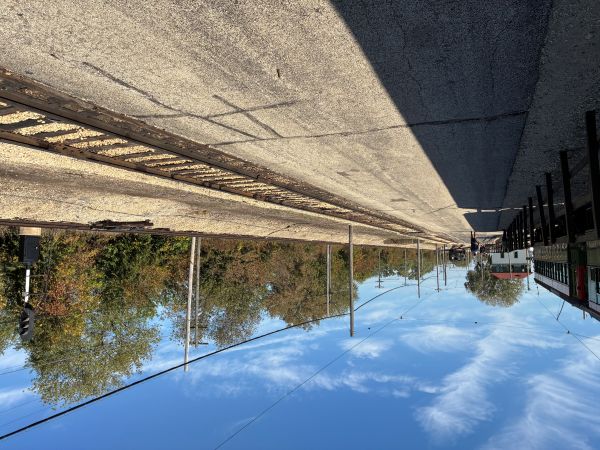
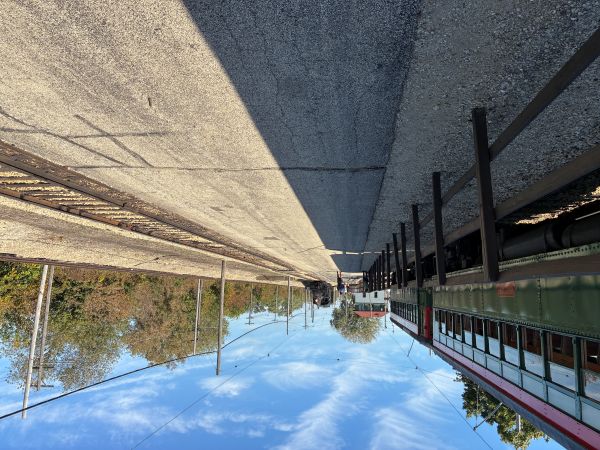
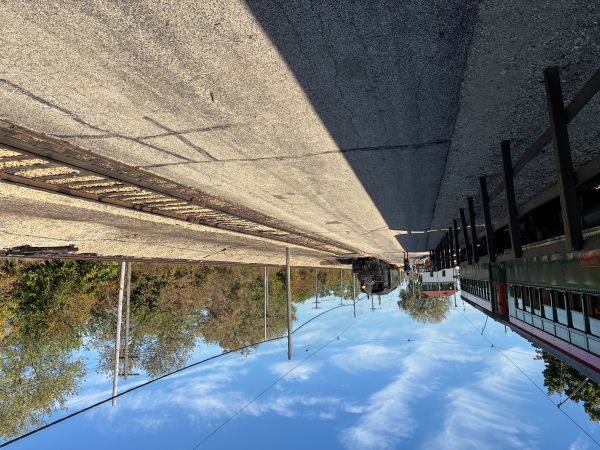
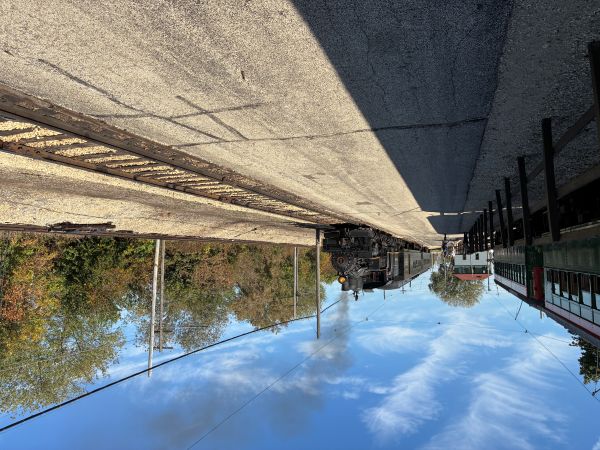
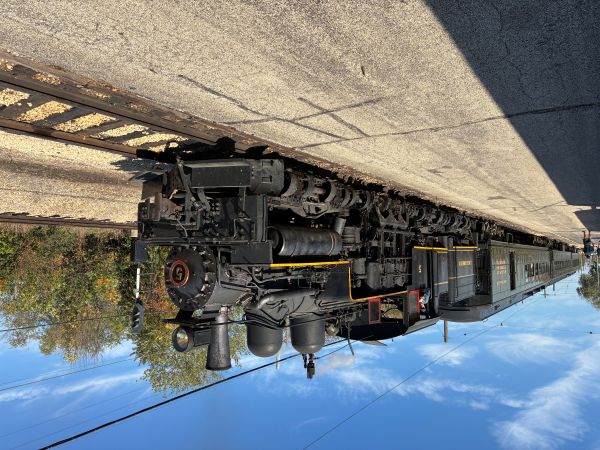
I stayed at the station and documented its arrival, then Elizabeth joined me and we boarded for our first ride behind this steam engine.
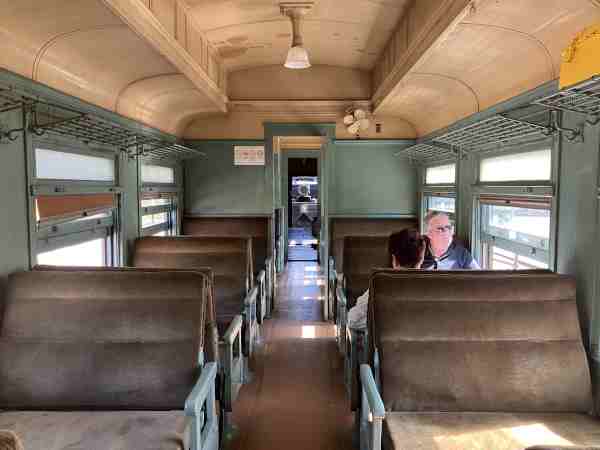
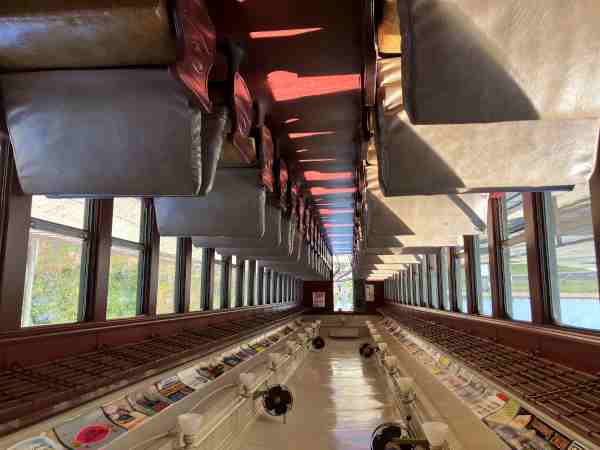
The interior of Delaware Lackawanna and Western commuter coach 567, built by Pullman/Pullman-Standard in 1914 and known as a "Boonton car" because cars of this type were used extensively on the Lackawanna’s railroad line from Hoboken to Boonton, New Jersey.
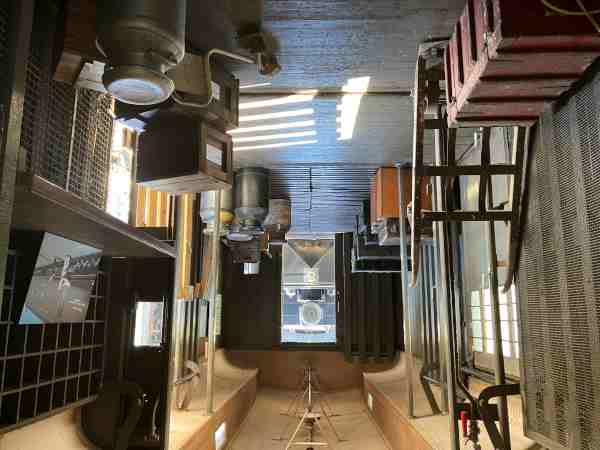
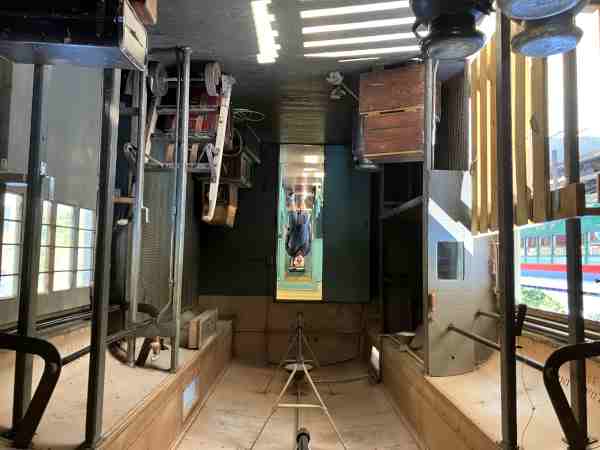
The interior of Santa Fe combine 2544, built by Pullman/Pullman-Standard in 1927.
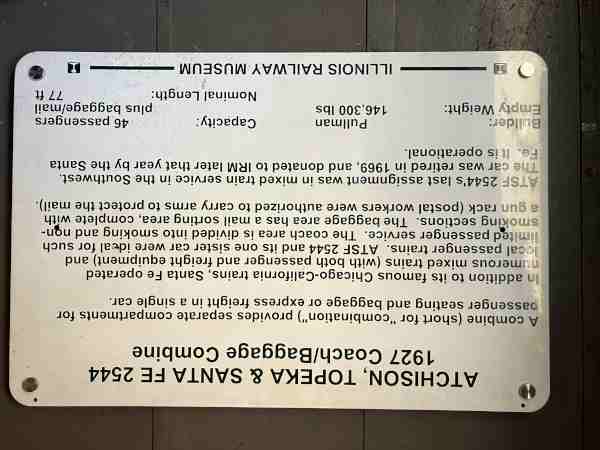
Santa Fe 2544 story board.
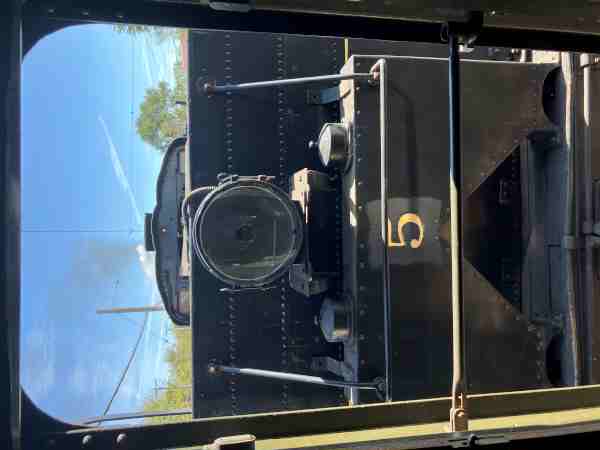
J. Neils Lumber Shay 5 as seen from the combine.
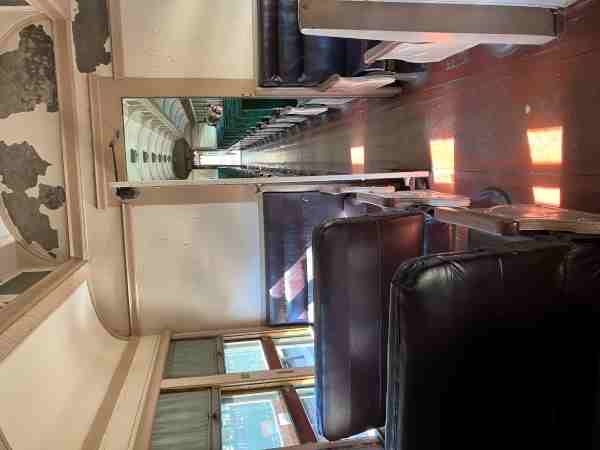
Looking into Duluth, Missabe and Iron Range coach 4 from Delaware, Lackawanna and Western coach 567.
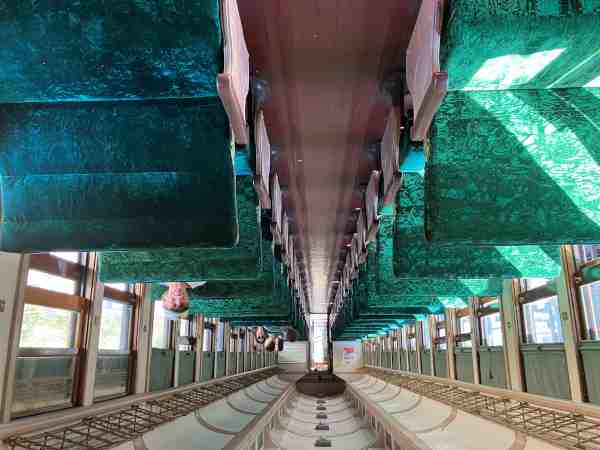
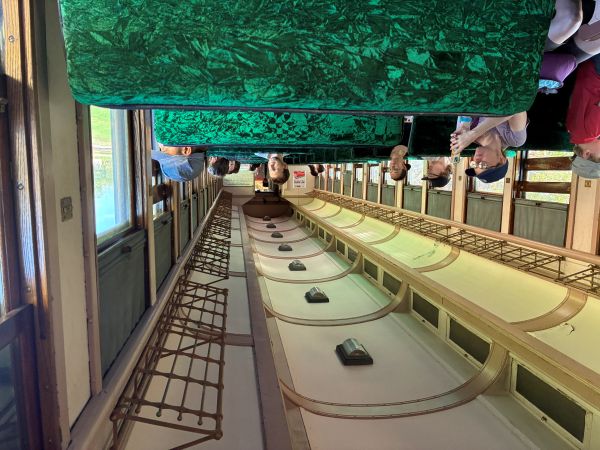
The interior of Duluth Missabe and Iron Range steel day coach 84, ex. Marquette and Huron Mountain 103 1963-1985, nee Duluth Missabe and Iron Range 84, built by American Car and Foundry in 1911. It is the only piece of DM&IR equipment preserved at the museum.
The DM&IR was formed in 1938 by merging the Duluth & Iron Range and the Duluth Missabe & Northern. Both of these railroads operated almost entirely within the state of Minnesota, connecting the iron ore mines of northeastern Minnesota with the Great Lakes docks around Duluth. United States Steel gained control of the two railroads in 1901, which gave corporation control over the transportation of the ore necessary for steel production. The DM&IR remained associated with USS until the railroad’s sale to a holding company in 2001.
Passenger service on the DM&IR ended in 1957 and by the mid-1960s business was declining due to the exhaustion of high-grade iron ore deposits. But new tax incentives made it economical to mine taconite – essentially low-grade iron ore – and so taconite mining began in earnest in 1966, with the freighter SS Edmund Fitzgerald receiving the first trainloads from the D&MIR. In the late 20th century the railroad mostly hauled taconite out of the Minnesota iron range to the docks in Duluth. It merged into the Wisconsin Central in 2011 and became part of the Canadian National system.
Elizabeth and I chose this coach and enjoyed the comfortable seats.
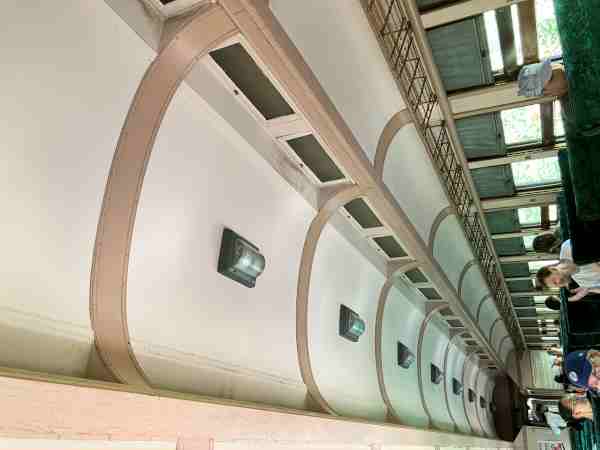
The curved ceiling of this 115-year-old coach.
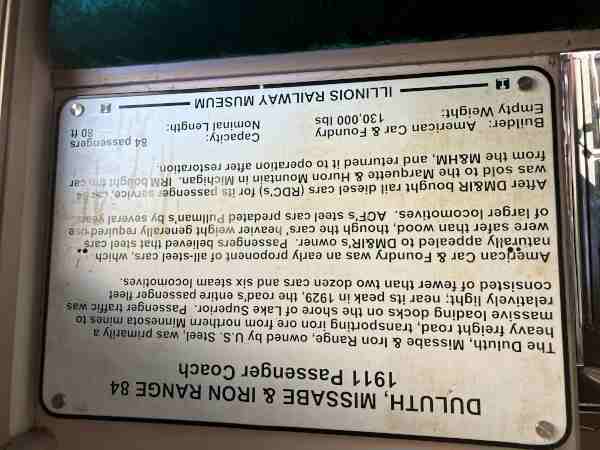
Duluth Missabe and Iron Range 84 storyboard.
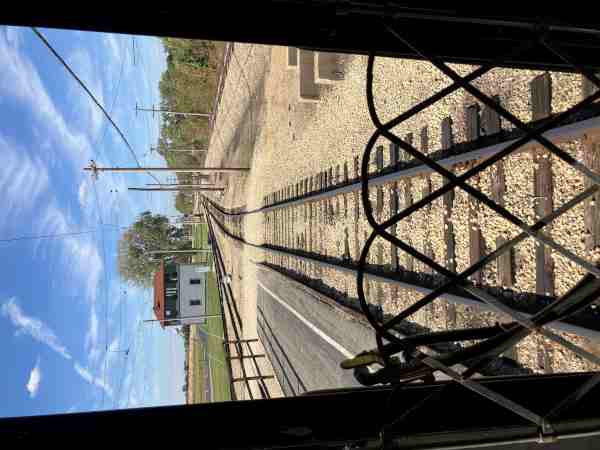
Spaulding Tower as we departed the station.
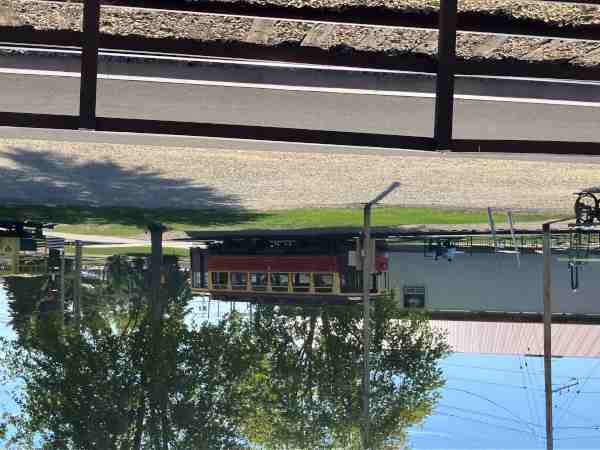
Passing Chicago Surface Lines streetcar 1374.
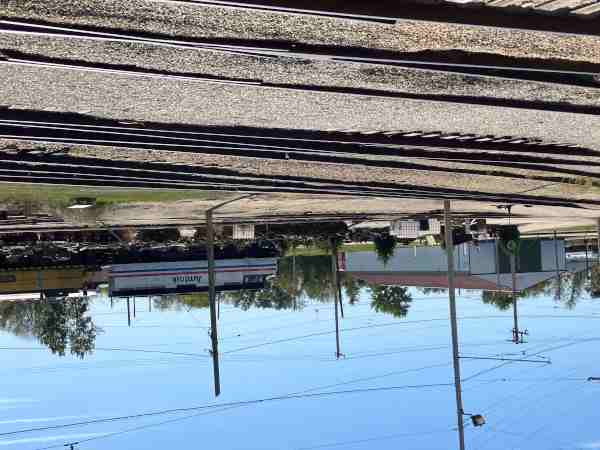
A museum scene during the journey.
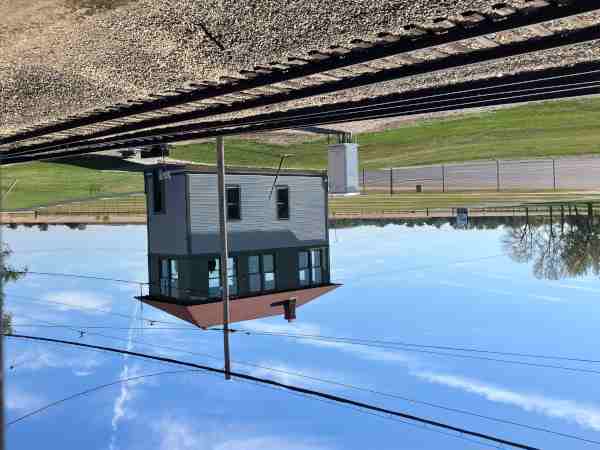
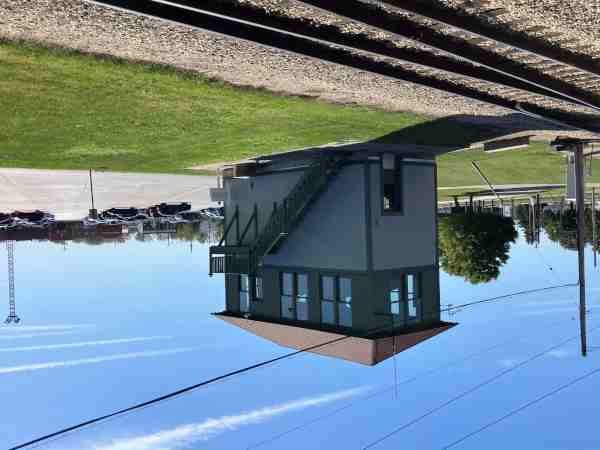
Spaulding Tower as we passed.
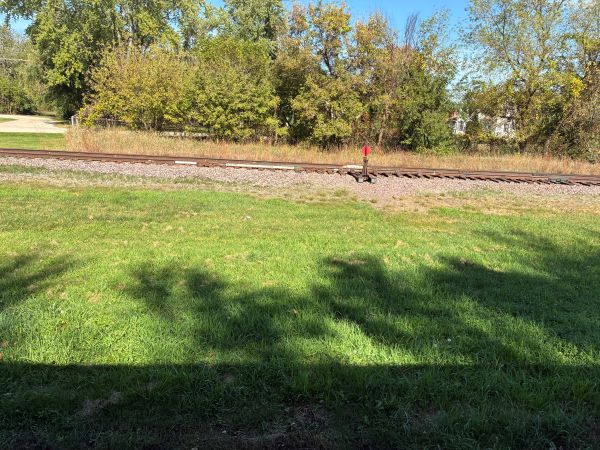
Our ride was on tangent track and was shorter than we were expecting, so photographs of the steam engine at work were not possible.
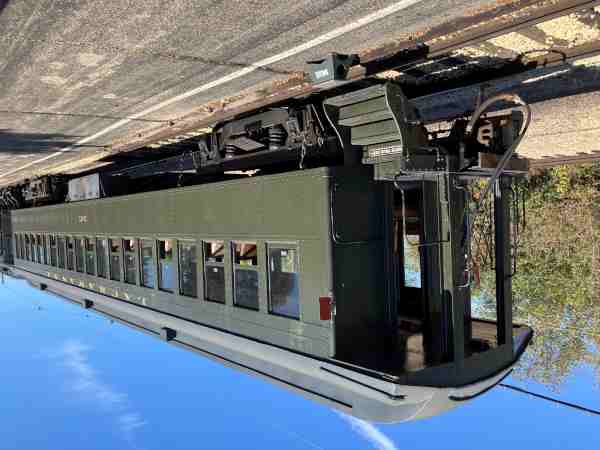
Delaware Lackawanna and Western commuter coach 567.
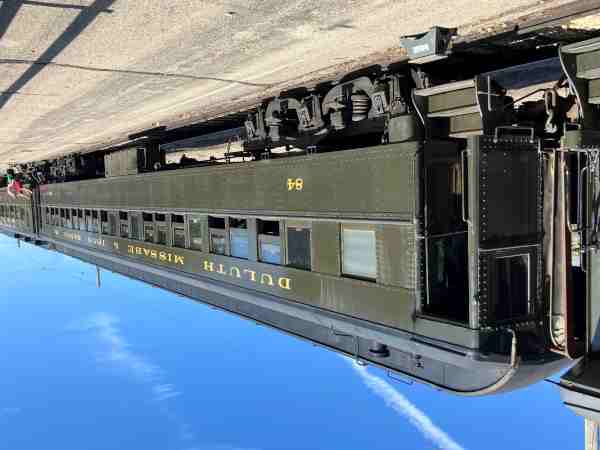
Duluth Missabe and Iron Range steel day coach 84.
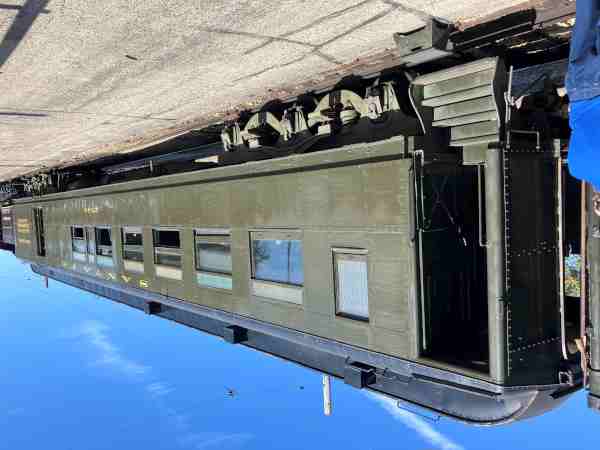
Santa Fe combine 2544.
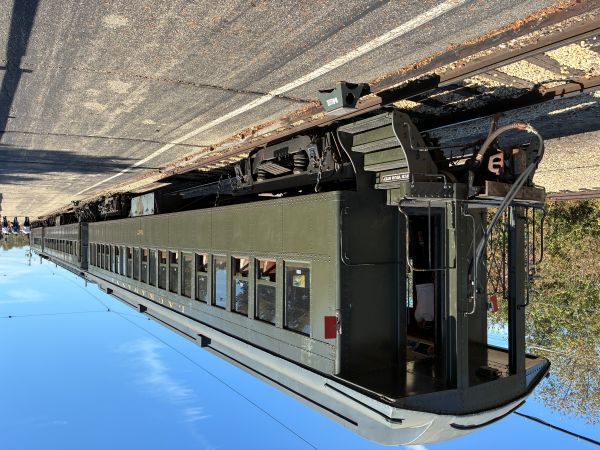
All three coaches. After a very enjoyable trio of rides, we wandered down to the locomotives. As we had only been here 17 days previous with the Union Pacific Historical Society convention, we did not photograph everything.
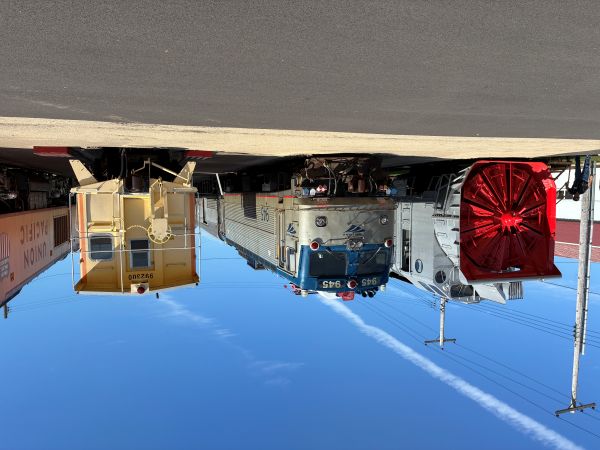
Union Pacific rotary snow plough 900075, built by Lima Locomotive Works in 1949; Amtrak AEM-7 945, built by Electro-Motive Division in 1972 and Milwaukee Road caboose 992300, built by Pacific Car and Foundry in 1975.
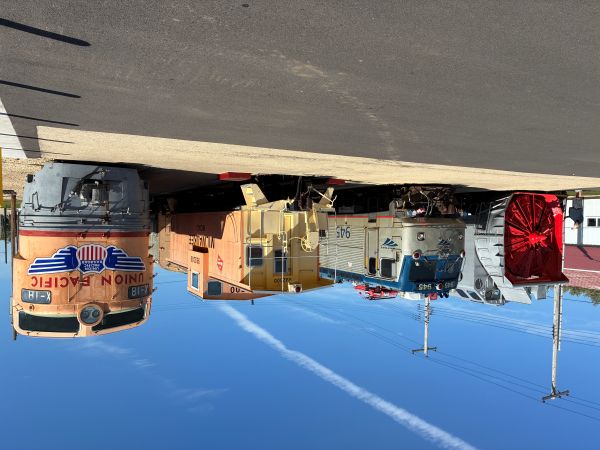
Union Pacific rotary snow plough 900075, built by Lima Locomotive Works in 1949; Amtrak AEM-7 945, built by Electro-Motive Division in 1972; Milwaukee Road caboose 992300, built by Pacific Car and Foundry in 1975 and Union Pacific D-E Turbine A Unit 8500 18, built by General Electric in 1960.
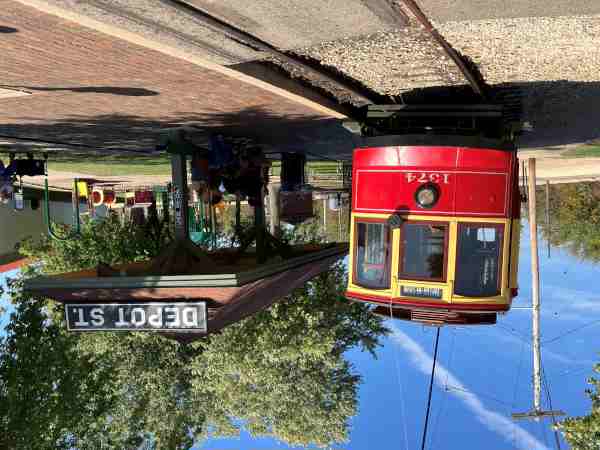
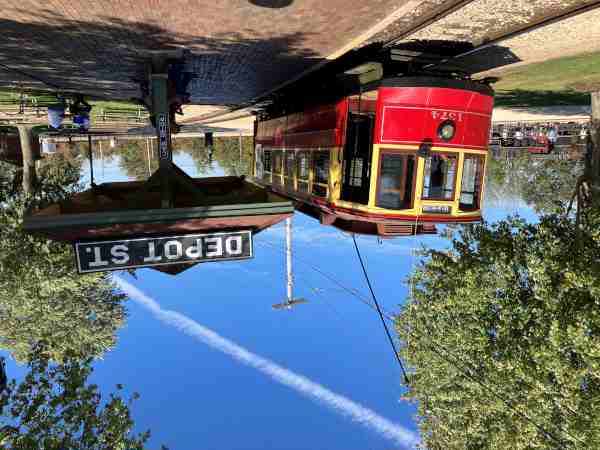
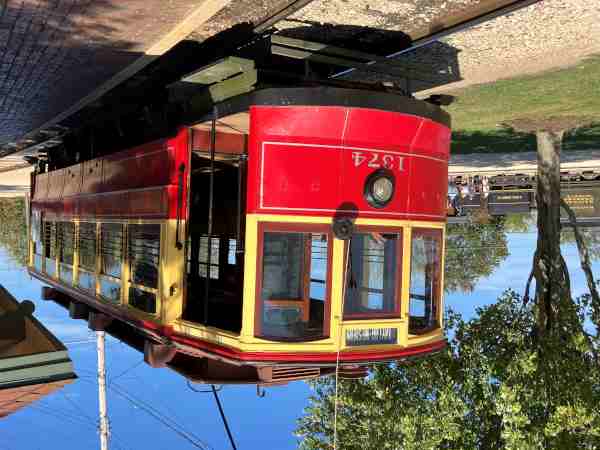
Illinois Railway Museum streetcar 1374, ex. Electric Railway Historical Society, Downers Grove, Illinois 1958-1973, exx. Chicago Transit Authority AA63 1947-1958, exxx. Chicago Surface Lines 1374, exxx. Chicago Railways 1374, Chicago Union Traction 4903, built by St. Louis Car Company in 1905.
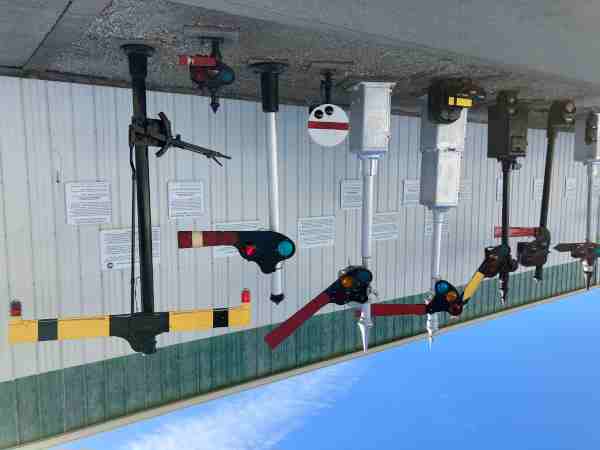
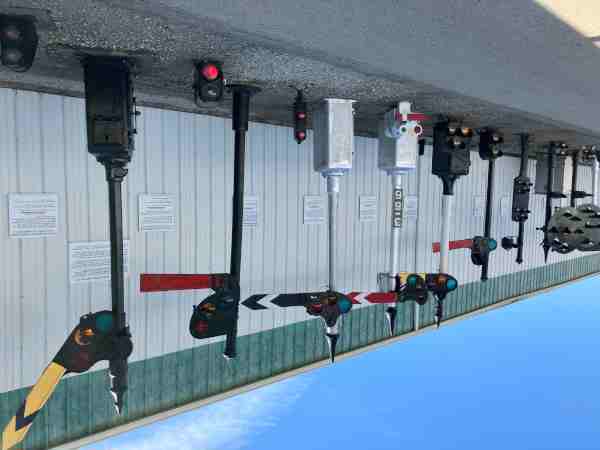
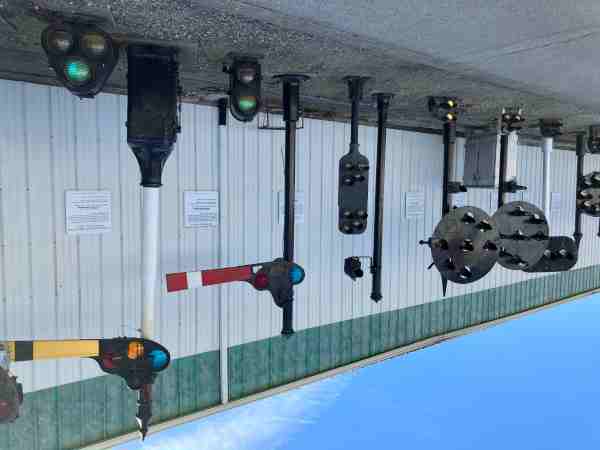
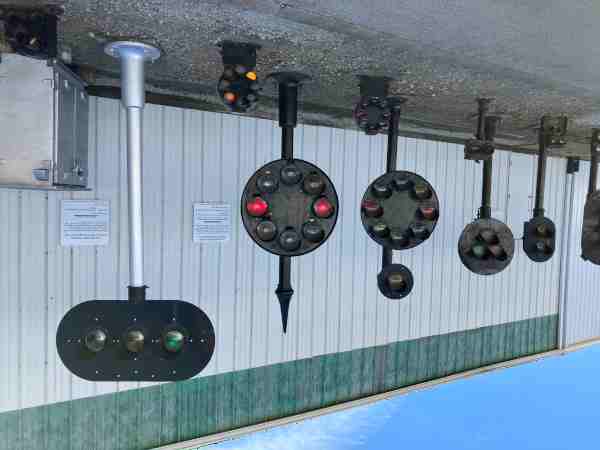
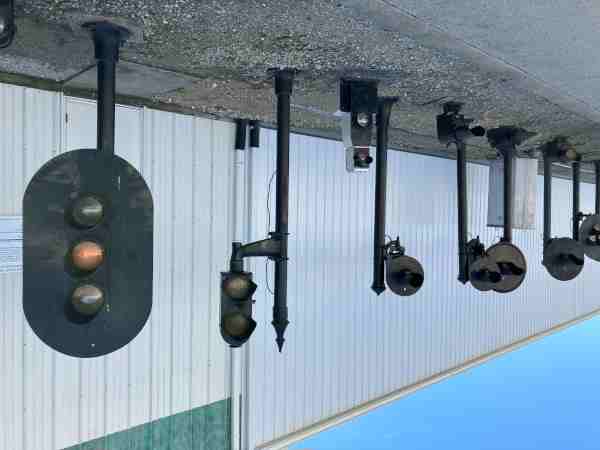
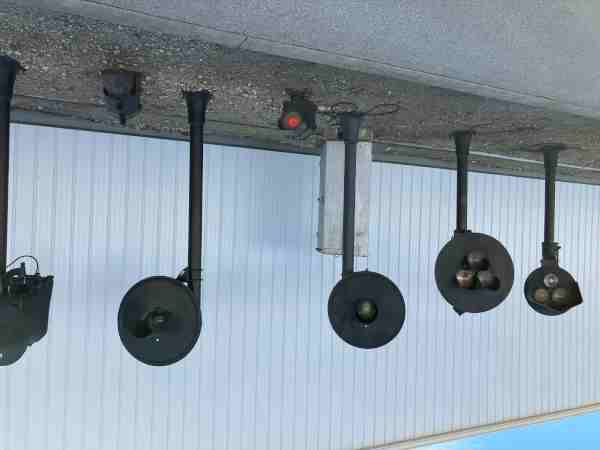
The comprehensive signal display along Barn 4.
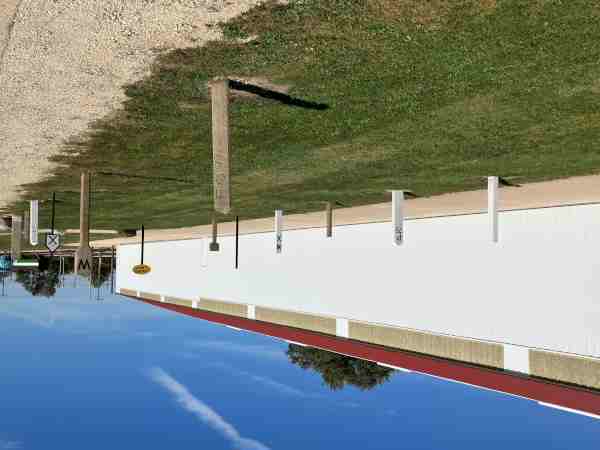
Concrete markers opposite the signal display.
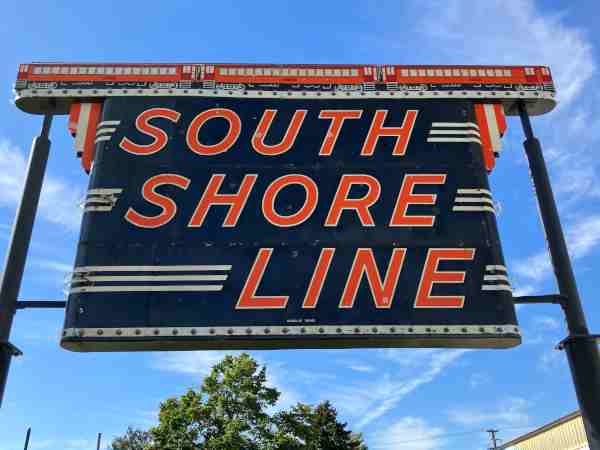
South Shore Line sign from Gary, Indiana which was installed by 1946 until 1982. When IRM acquired the sign, it had not been illuminated since the 1970's and was in disrepair. The long-awaited restoration of the sign would begin on January3, 2009 with its removal from telephone poles where it was displayed for many years. After restoration by MK Signs Chicago, the sign was returned on April 7, 2010 and installed in this permanent display. A fascinating and colourful vestige of the "little railroad that could" was back in place for all to see and enjoy.
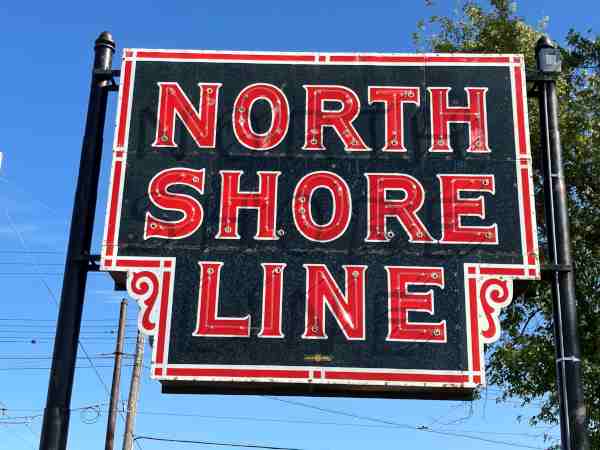
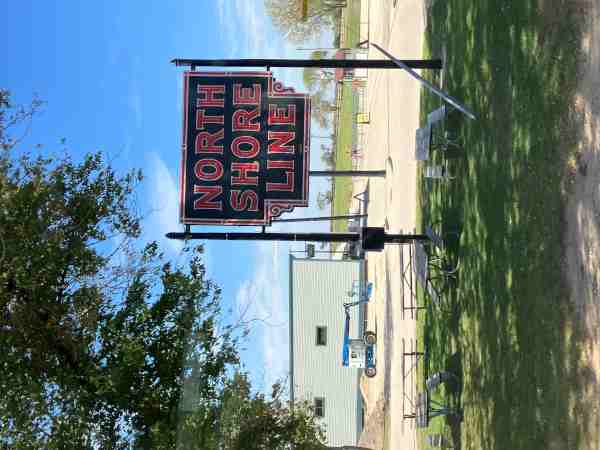
North Shore Line neon sign. Elizabeth and I then re-visited the Milwaukee Road Historical Society Museum and other adjacent museums and display space on Main Street.
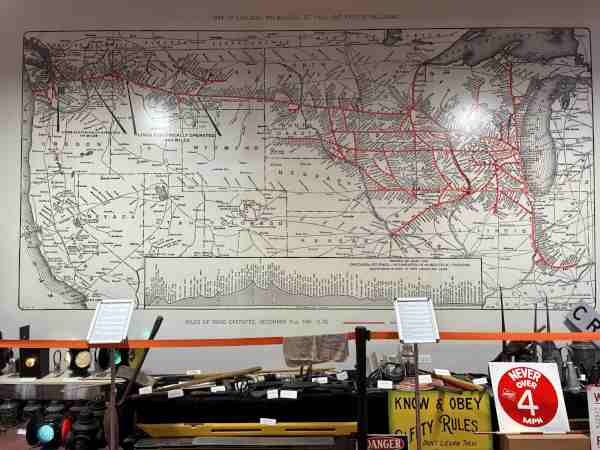
Chicago, Milwaukee and St. Paul and Pacific map as of December 31, 1943, when there were 10,742 miles in the railway's network.
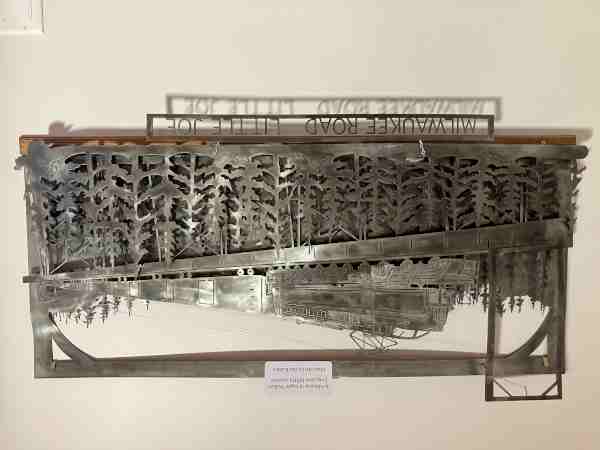
Chicago, Milwaukee and St. Paul and Pacific Little Joe. Metal art by Jim Kuttner.
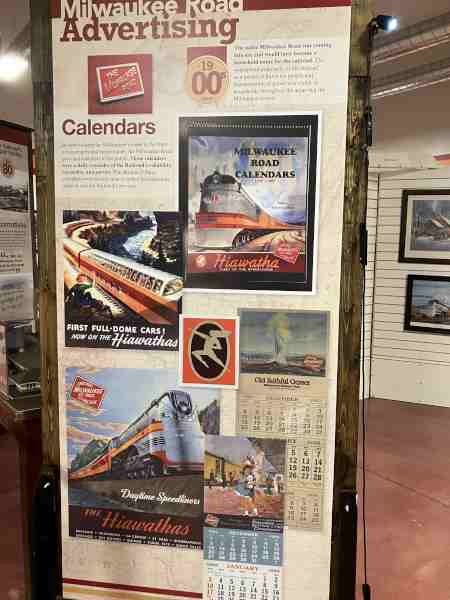
Milwaukee Road Advertising - Calendars story board, an example of the type of immersive displays in the museum.
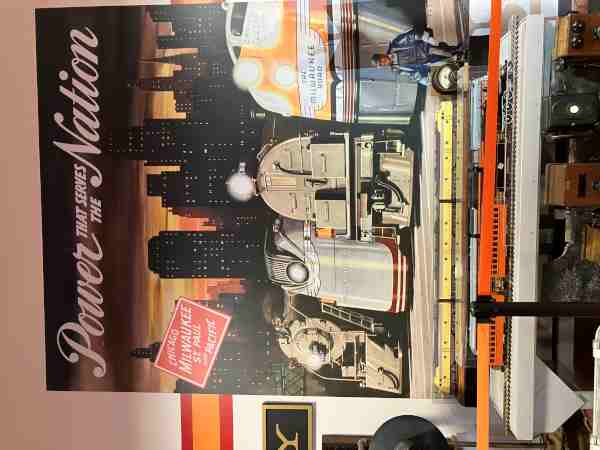
Power that serves the nation.
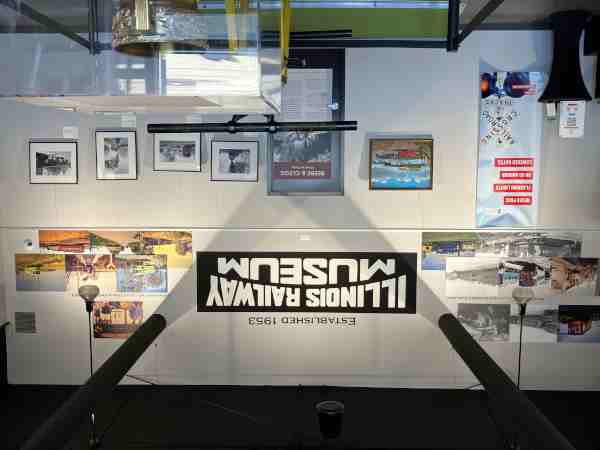
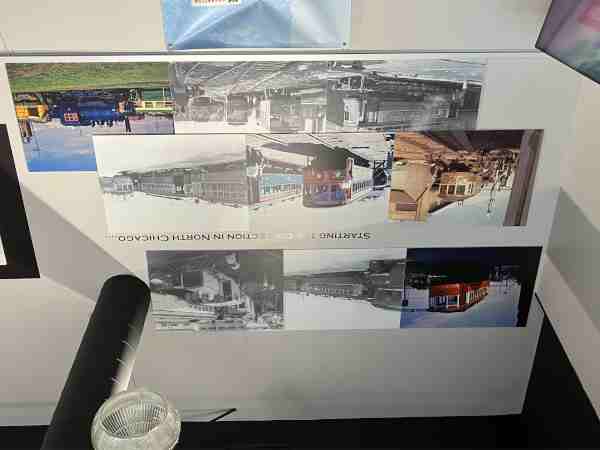
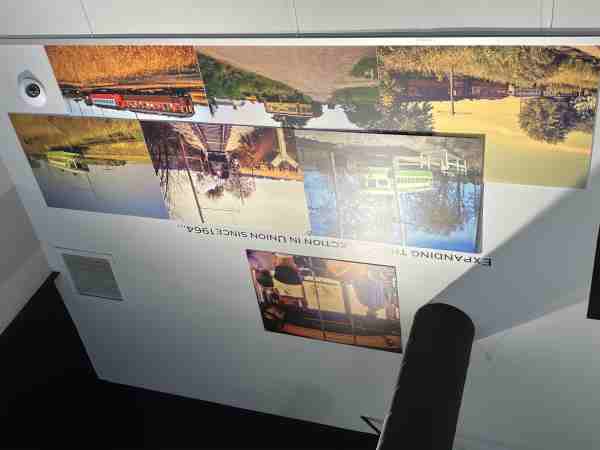
Scenes inside the Post Office Gallery showing the development of the museum over the decades.
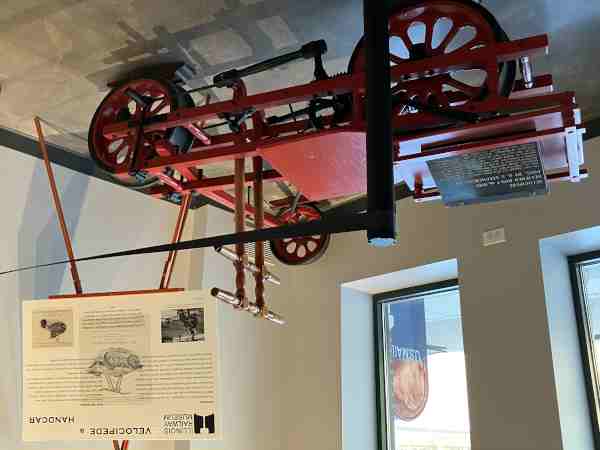
A velocipede believed to be built circa 1890.
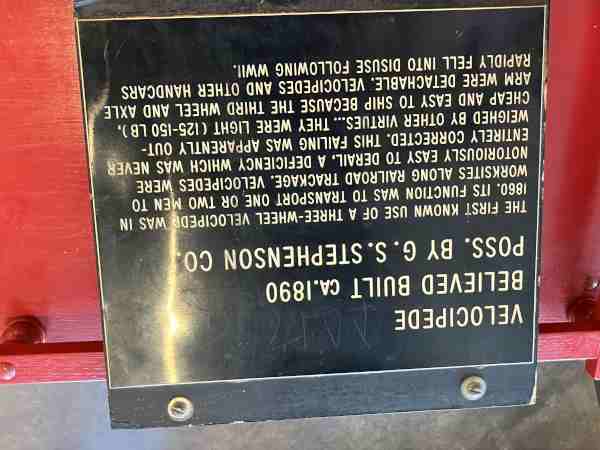
Velocipede story board.
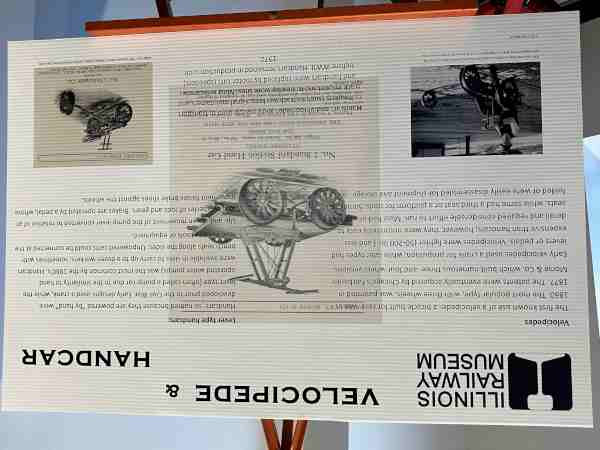
Velocipede and handcar history board. We then went into the Model Railroad Exhibit and Hobby Shop featuring three operating model railroad layouts and one under construction in the Multi-Purpose Building.
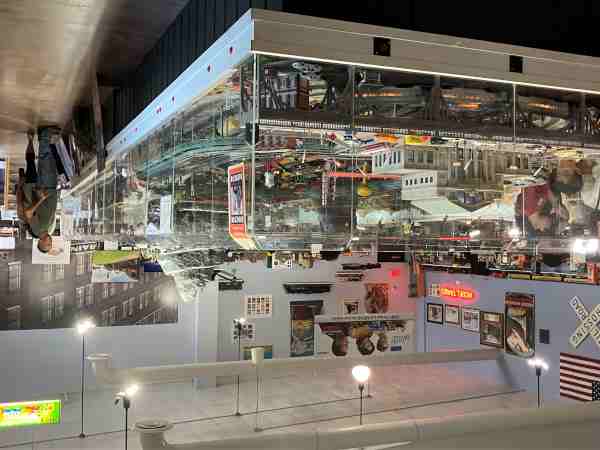
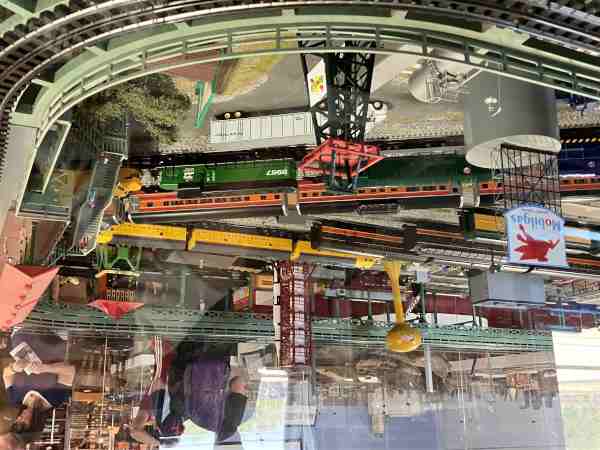
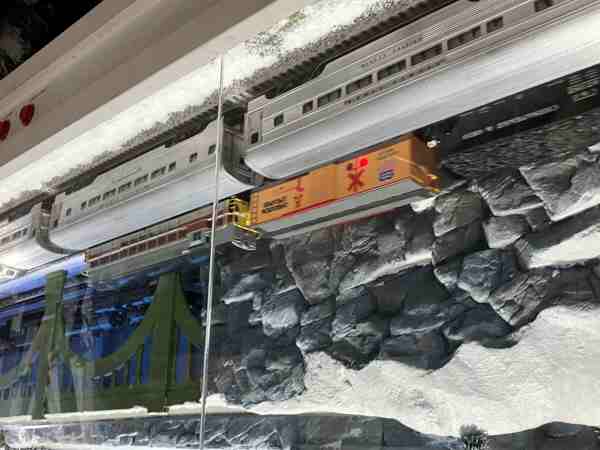
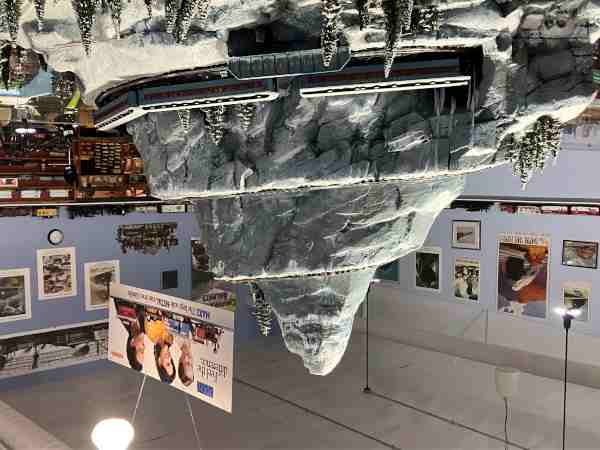
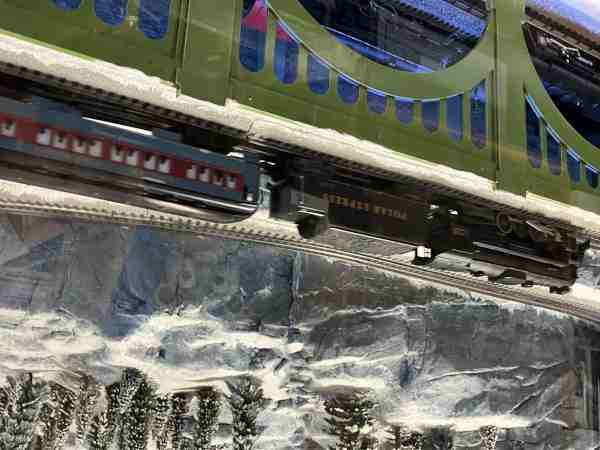
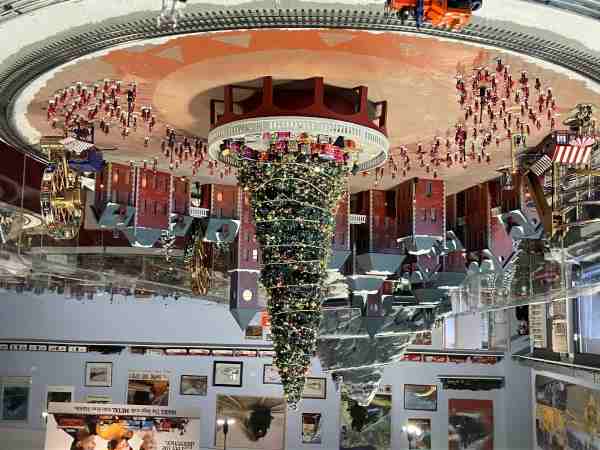
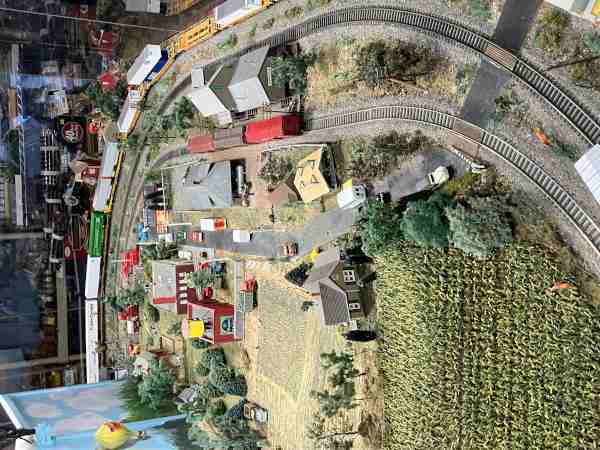
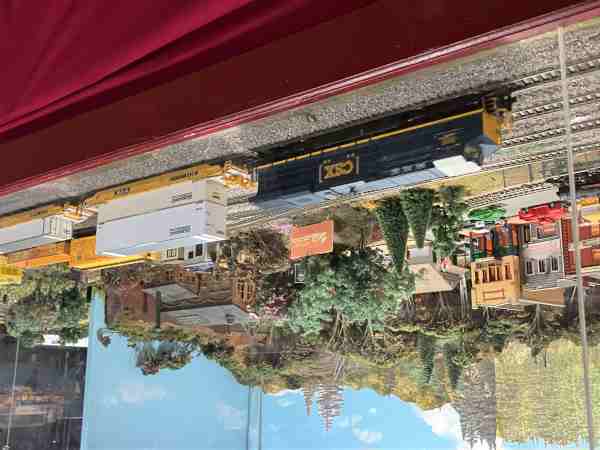
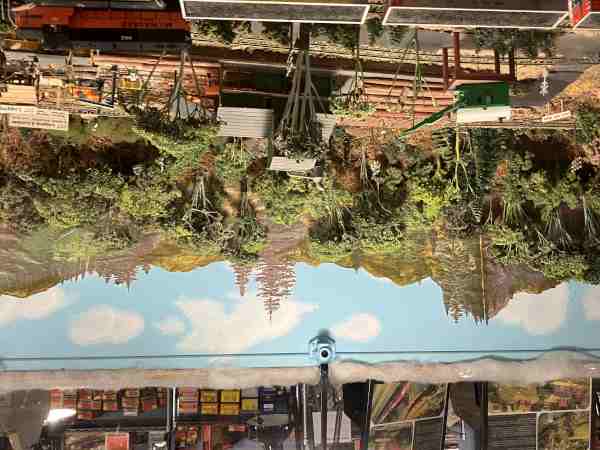
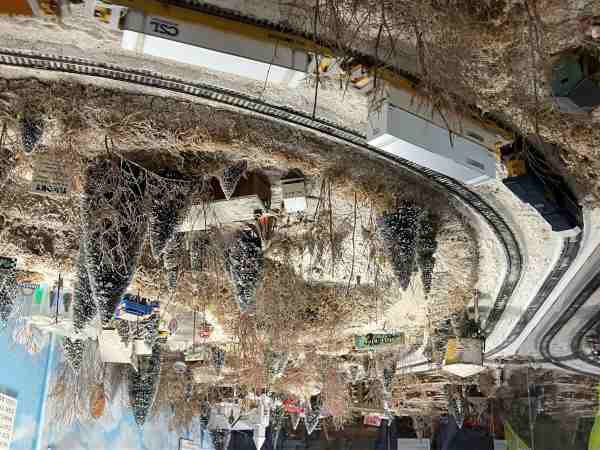
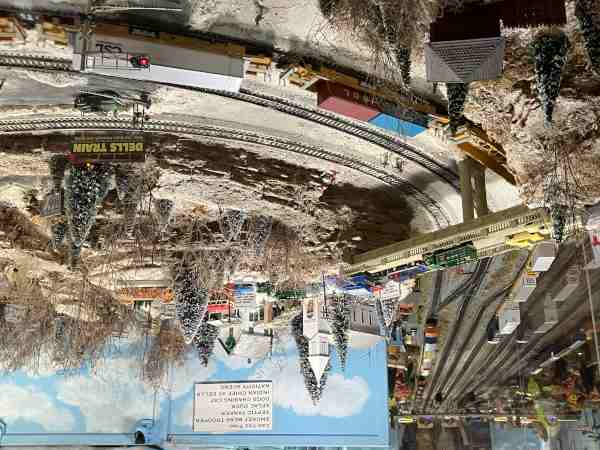
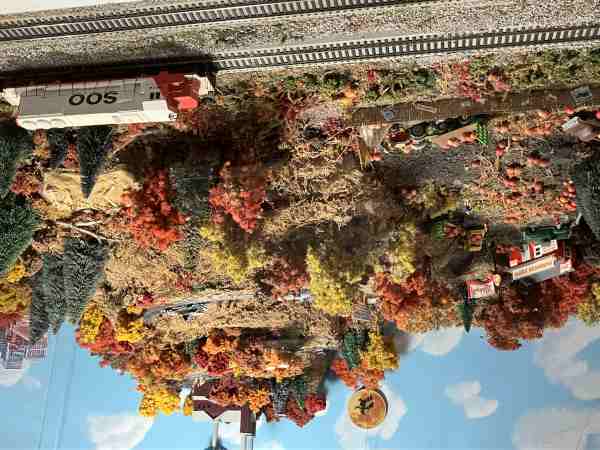
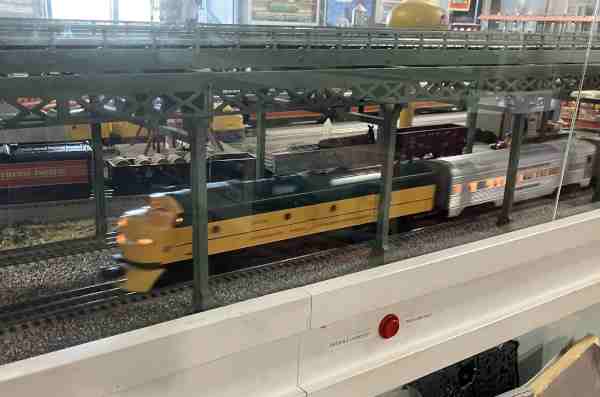
Scenes from the following three layouts: a large O gauge display that IRM rebuilt by adding interactive components that permit children of all ages to operate portions of the layout, including city scenes with elevated train operation, representative of the Chicago ‘L’, as well as sizable railroad yards and multi-track main lines; a large "four seasons" HO scale model railroad that features a scavenger hunt challenge in its elaborately detailed scenes; a miniature N scale layout featuring tiny custom-made 3D-printed buildings, an HO scale layout under construction, detailing model railroad construction methods.
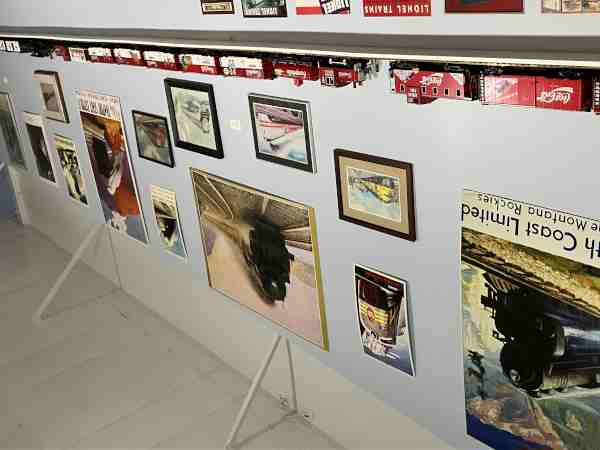
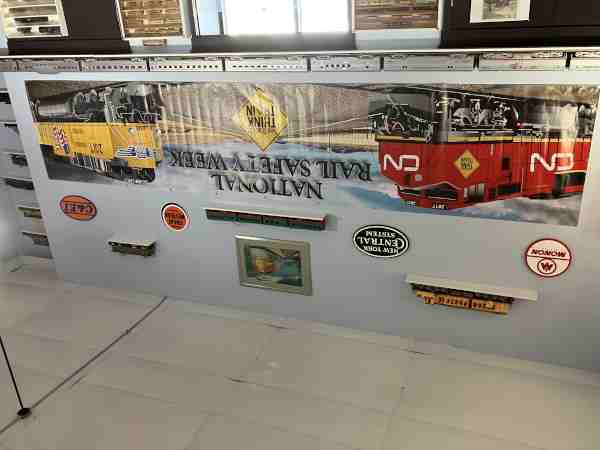
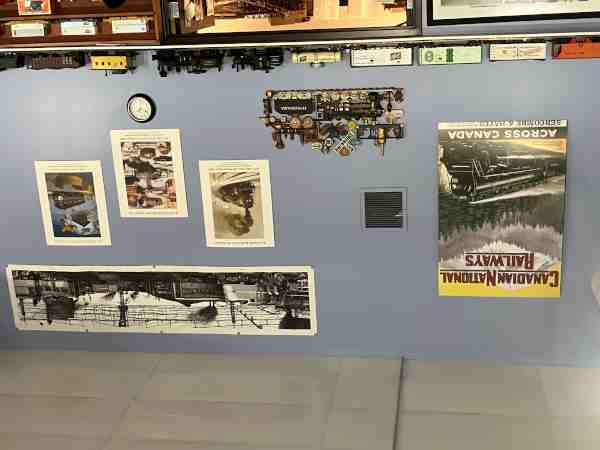
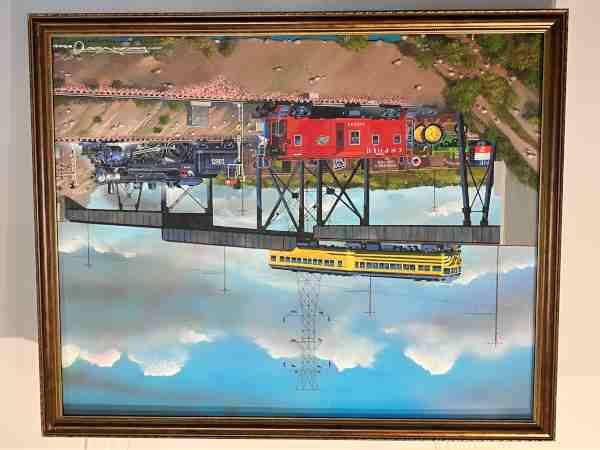
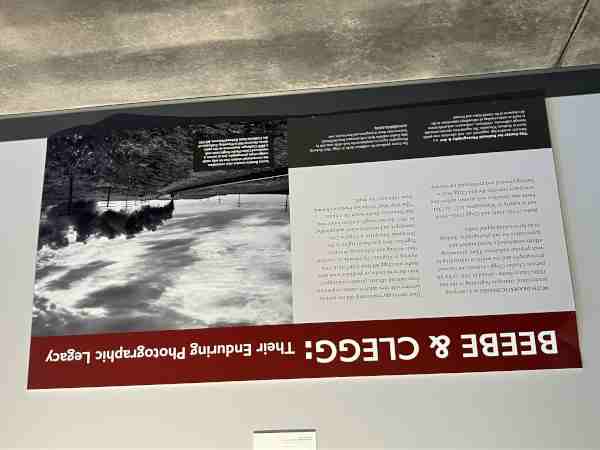
Photographs and posters adorn the walls of this building.
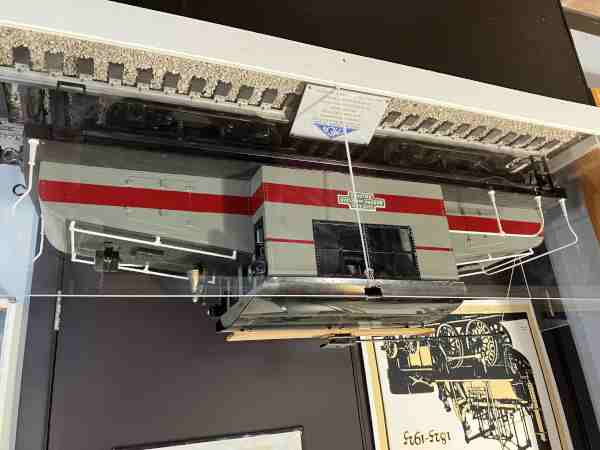
Chicago, Aurora and Elgin freight locomotive built from scratch. It weighs 200 pounds, runs on 24 volt 2 horsepower motor, contains 2,302 1/16 inch rivets and was built in two years by Larry La Pointe.
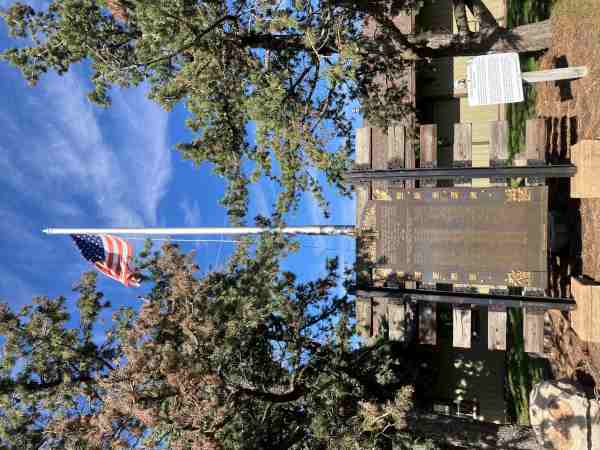
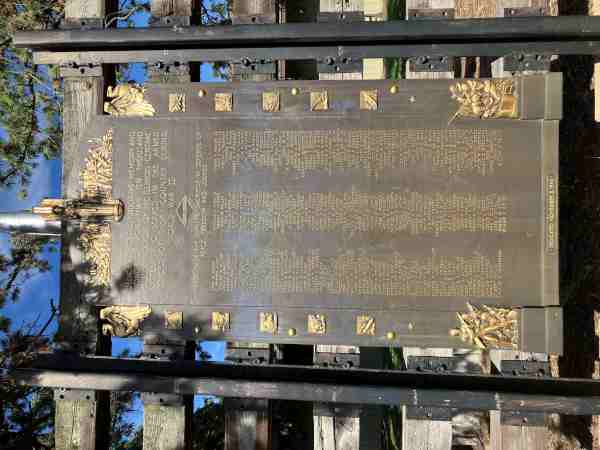
This 1946 War Memorial is dedicated to the enduring memory and honor of more the ten thousand fellow workers of the Illinois Central system who served in the armed forces of their country during World War 11.
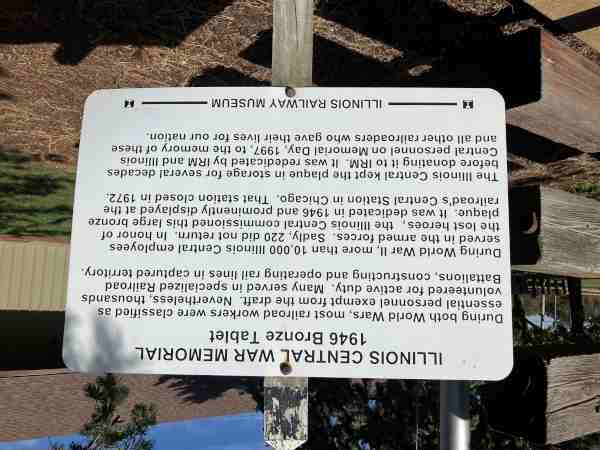
Illinois Central War Memorial 1946 Bronze Tablet storyboard.
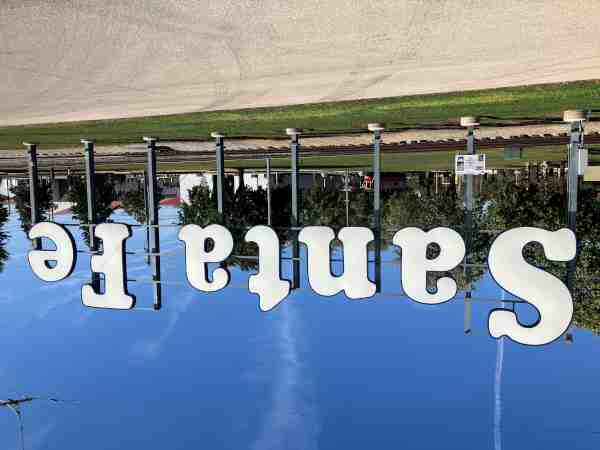
The famous Santa Fe sign that used to sit atop the Railway Exchange Building in Chicago and was acquired by the museum in 2012. In 1962, the rooftop mounted Santa Fe sign and familiar cross logo were added by Federal Sign and Signal Company. The sign, measuring over 70 feet long, was originally installed with blue and yellow neon that included a 22 foot diameter Santa Fe cross logo to the left of the Santa Fe letters. The original neon sign incorporated "All the Way" [the railroad's slogan] at night. In 1982 after the railroad began an extensive remodelling of the Railway Exchange Building, a newly internally-illuminated neon sign with white Plexiglas faces was designed, once again by Federal Sign, now a division of Federal Signal.
The new sign was identical in length to the original but was "toned down" with the removal of the exposed neon and logo according to the Chicago Tribune architecture columnist Paul Gapp, in a February 24, 1985, story on the building. The railroad would go on to vacate their downtown offices and relocate to suburban Schaumberg, Illinois in 1991. After merging with Burlington Northern on September 22, 1995, to become Burlington Northern Santa Fe Railway, the railroad was relocated to Fort Worth, Texas. The Santa Fe letters remained a fixture along the Historic Michigan Avenue Boulevard District even after the railroad moved and sold the property.
The iconic sign continued to endure for another 21 years until it was removed when Motorola relocated their offices to the building. The building's owner, Hamilton Partners, operating as Santa Fe Interests, LLC, along with building manager Jones, Lang Lasalle, agreed to donate the sign to IRM on July 27, 2012. The sign was kept in storage at IRM until 2016 when a grant from BNSF Foundation enabled the complete restoration of the sign along with the installation of energy-efficient LED internal lighting.
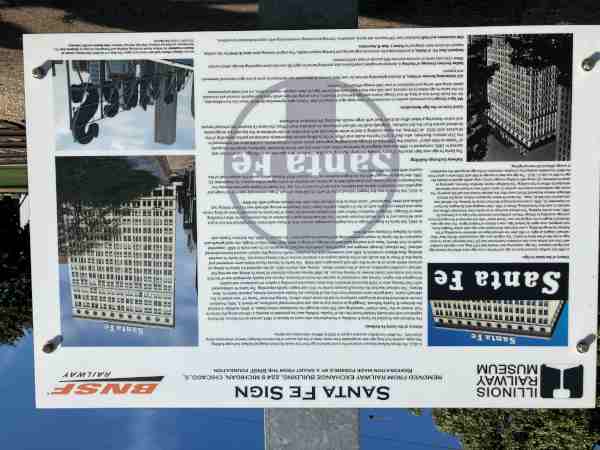
The Santa Fe sign storyboard.
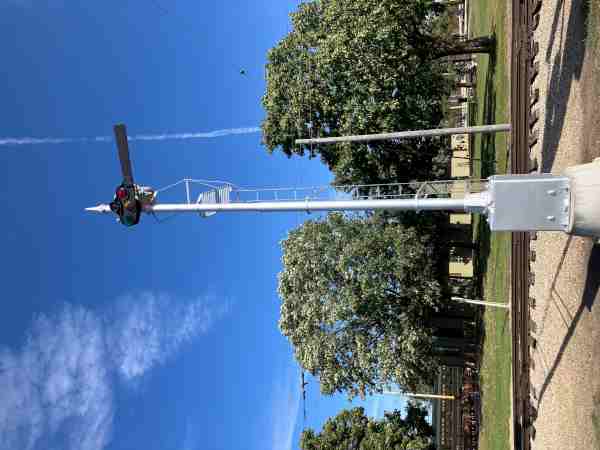
This upper-quadrant semaphore signal was manufactured by Union Switch & Signal and was located on the Santa Fe line over Raton Pass in New Mexico. It was among the last semaphore signals in use on that line and was restored and donated to the museum by BNSF.
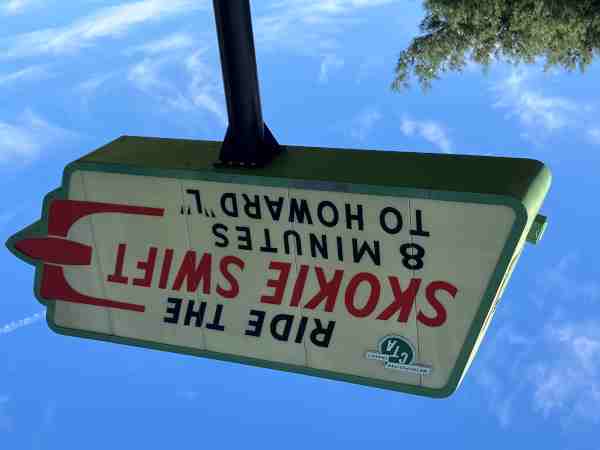
The Skokie Swift is a 4.7 mile branch of the "L" which starts from the Howard Terminal on the north side of Chicago, through the southern part of Evanston to the Dempster Terminal in Skokie, making one intermediate stop at Oakton Street in downtown Skokie. It is the shortest line in the system when not counting the Purple Line during off-peak hours.
It was inaugurated on April 20, 1964 and on that first day, the Skokie Swift carried nearly 4,000 passengers in a 16-hour period compared to approximately 1,600 passengers carried by the North Shore Line from the Dempster Terminal in a 12-hour period before the railroad terminated. Ridership continued to increase and by the end of the first year, nearly 6,000 passengers were riding the new line each weekday. Because of the weekday success, Saturday service was inaugurated, with more than 2,000 riders. At the end of the two-year experimental period, 3.5 million people had used the new service and CTA authorized operation of the Skokie Swift as a permanent part of its rapid transit system.
One of the distinctive features of the line was that approximately half was equipped with third rail while the other half was equipped with catenary left over from the Chicago North Shore and Milwaukee. Trains switched from third rail to overhead, and vice versa, without stopping, using distinctive pan trolleys designed by Skokie Swift Project Manager George Krambles.
On February 9, 1992, Saturday service was discontinued during a service reduction by CTA and the "Skokie Swift" name was changed to the "Yellow Line" in 1993, when all Chicago 'L' lines were renamed for colours. The original name and logo of the Skokie Swift continues to be used today on station signage and route displays for Skokie-bound trains, making the Yellow Line the only "L" line to officially retain its original name. The Dempster Street Terminal was completely rebuilt from 1993 to 1994, with a new station house and train platforms. In 2003, the old brick station building (designed by architect Arthur U. Gerber) was moved 150 feet to the east, then was restored and converted into commercial property.
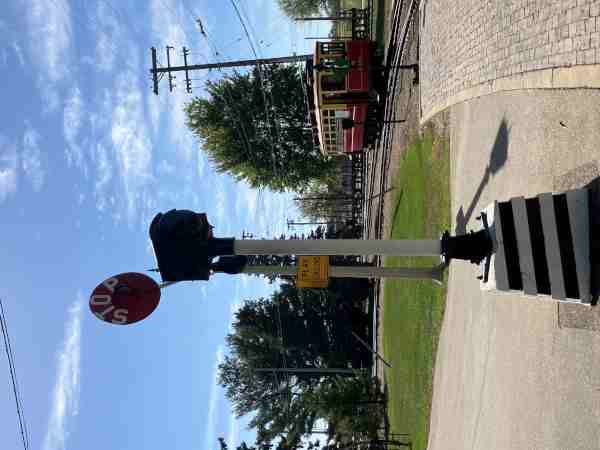
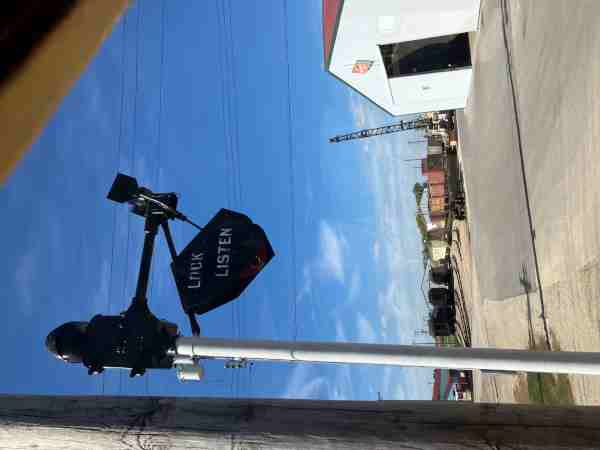
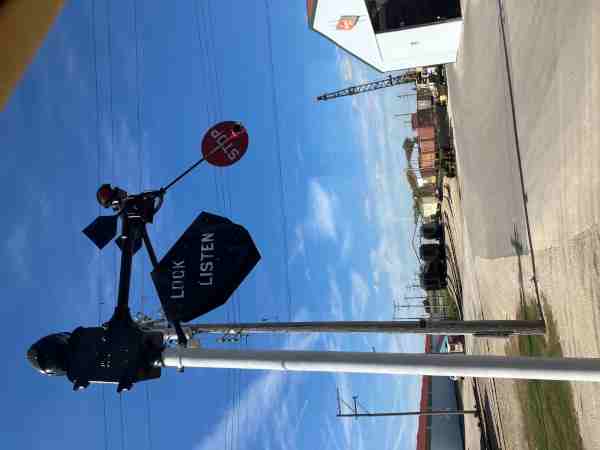
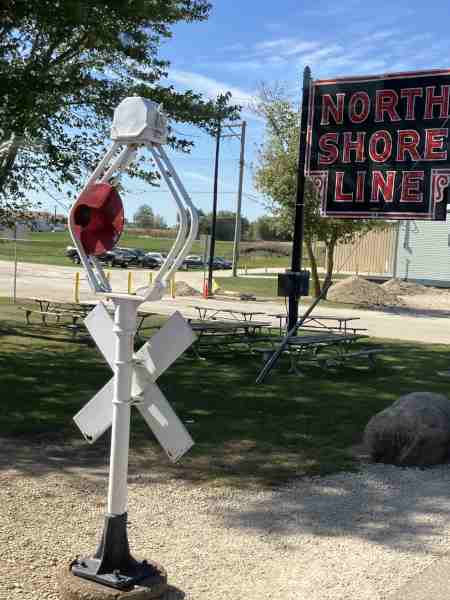
Pacific Electric wig wag signal manufactured by Magnetic Signal Company with Chicago Transit Authority streetcar 1374 approaching.
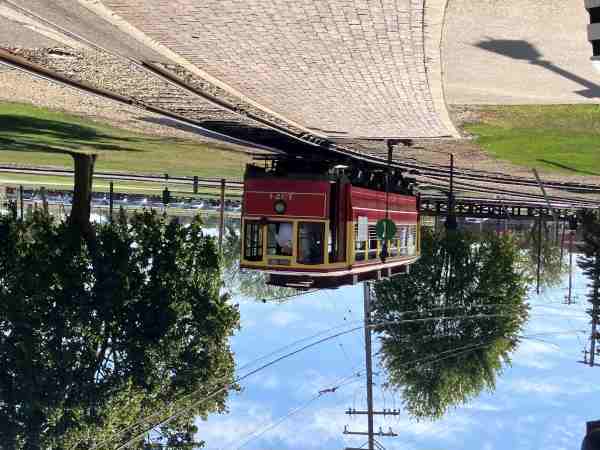
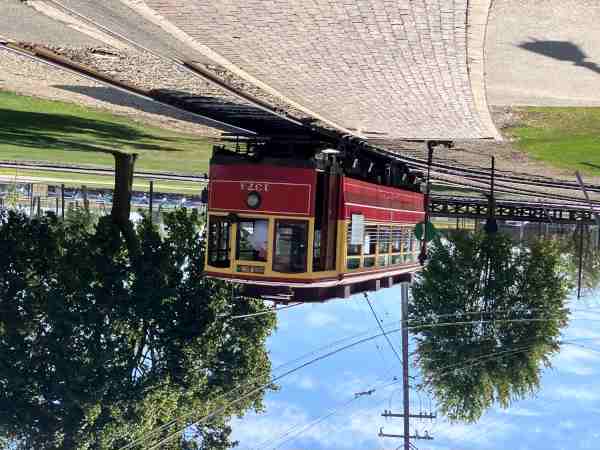
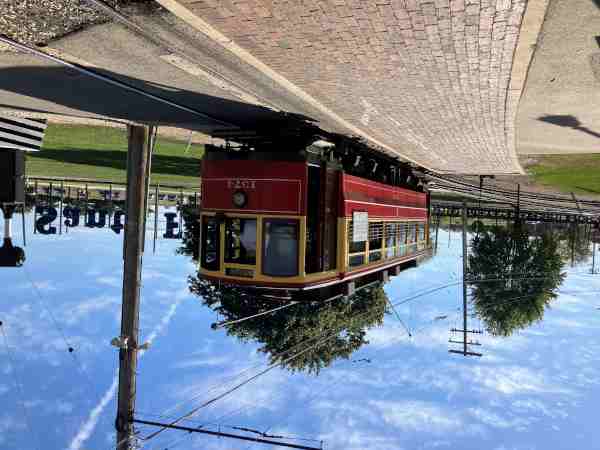
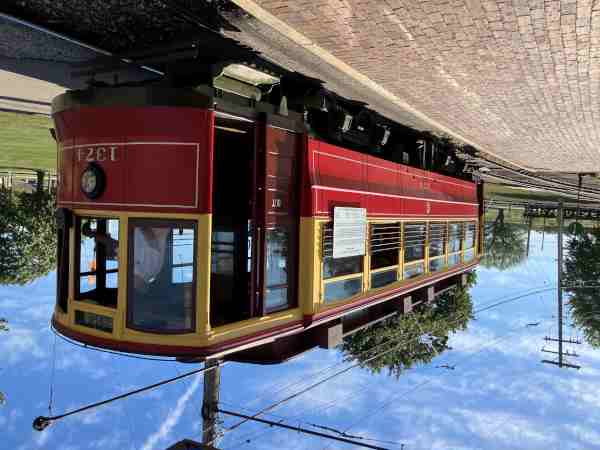
I had wanted another ride on the streetcar loop and Elizabeth photographed the arrival back at the station.
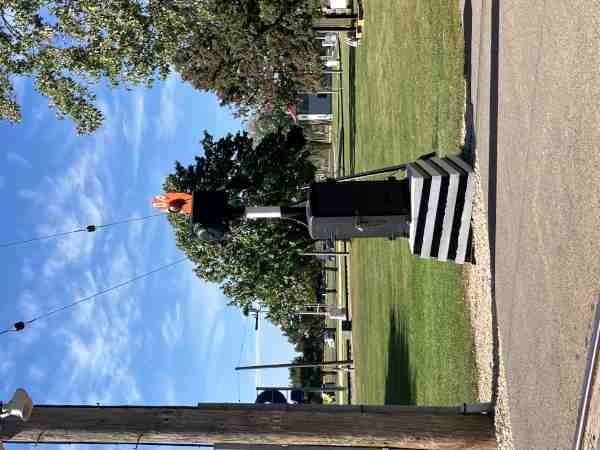
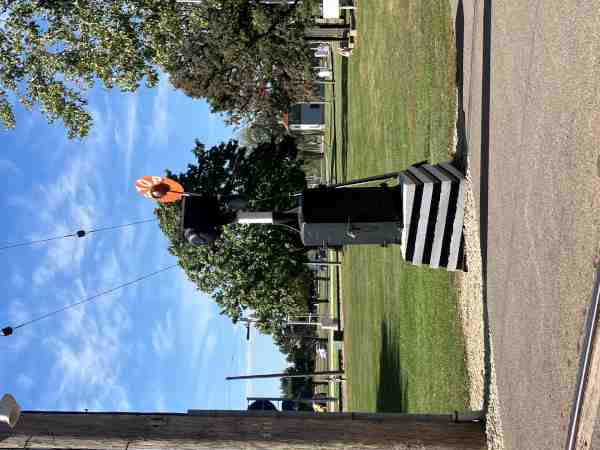
The Pacific Electric wig-wag signal in operation. At that time, neither of us knew its origin and were surprised when we consulted the museum's collection listing on their website.
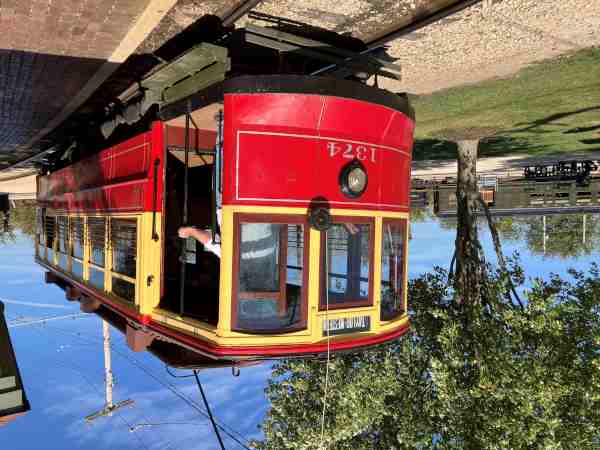
The end of my ride and our visit to this wonderful museum. We departed and stopped at the Iron Skillet Restaurant in Rochelle for dinner before driving to the Best Western Plus in Bloomington for the night.
10/6/2025 The next morning, we went to Bob Evans after checking out of the hotel then started the journey home. At Barlett Grain in Jacksonville was something worth stopping for; the only train close enough to photograph.
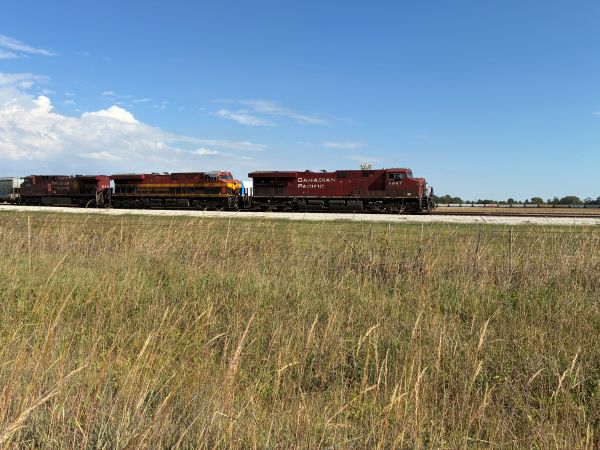
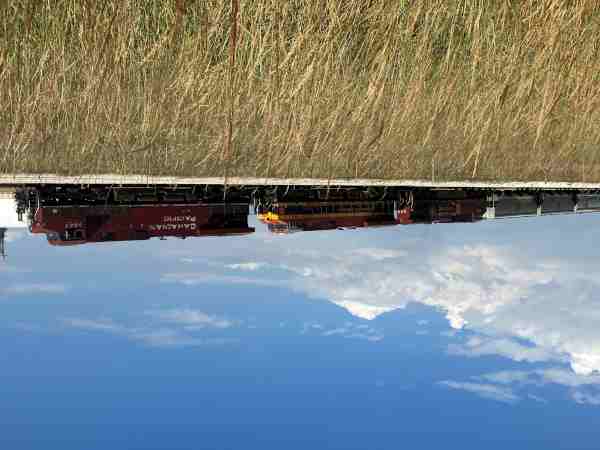
Canadian Pacific 8867 North.
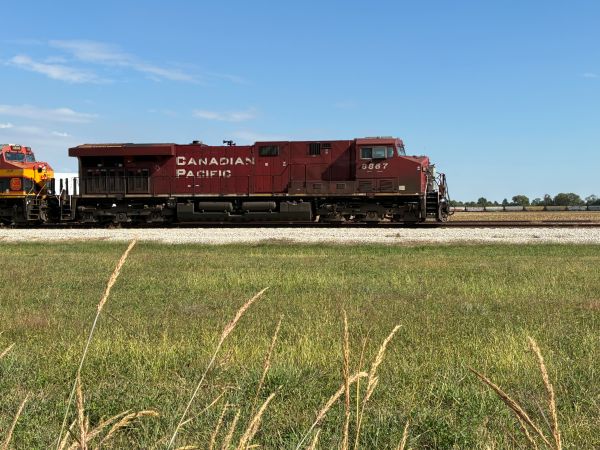
Canadian Pacific ES44AC 8867 built by General Electric in 2008.
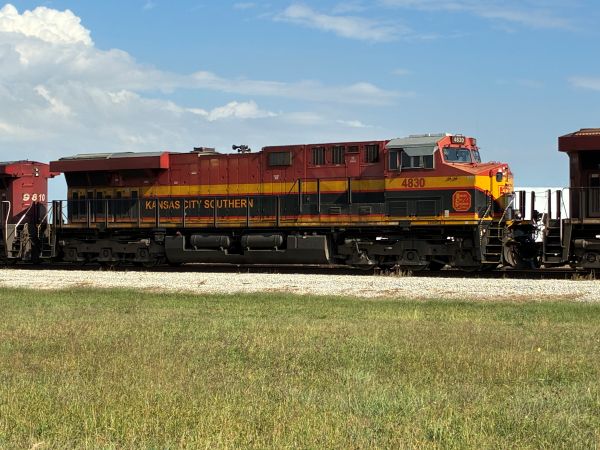
Kansas City Southern ES44AC 4830 built by General Electric in 2014.
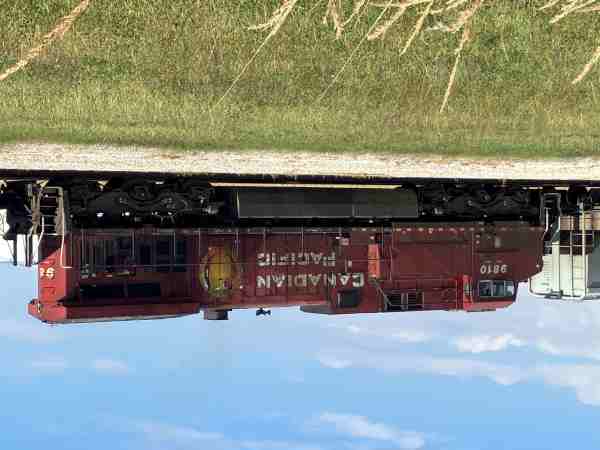
Canadian Pacific AC4400CW 9810, built by General Electric in 2004. We returned home to Columbia, ending this autumn conference trip.
| RETURN TO THE MAIN PAGE |