




Pictures by Elizabeth and Chris Guenzler.
Elizabeth and I had breakfast at the Fairfield Hotel, then checked out and drove over to the Doubletree Hotel, where we met the other conference delegates who had chosen to participate in the post-conference excursion on the Cumbres and Toltec Scenic Railroad. After a bit of a wait, a minivan arrived and not a seat was empty. Arrival at Chama was at 9:25 AM which gave us time to explore.
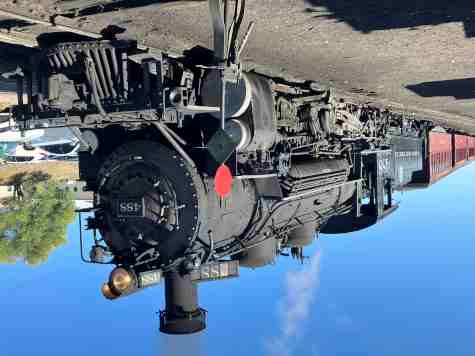
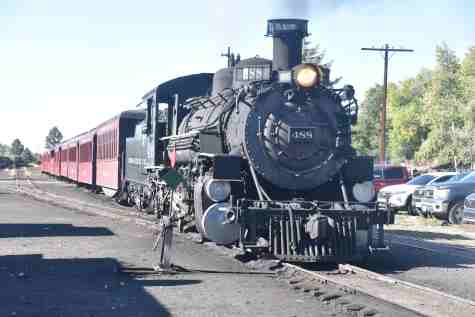
Cumbres and Toltec Scenic Railroad 2-8-2 488, nee Denver and Rio Grande Western 488, built by Baldwin in 1925.
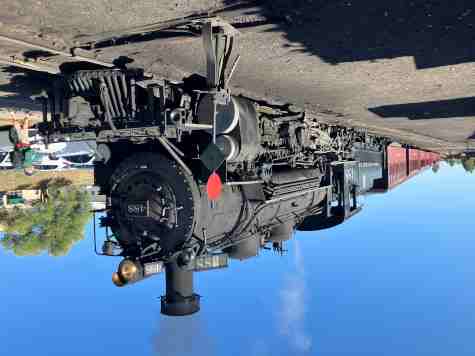
The was the regular morning train and the 39 conference delegates were assigned to the first car, although they were welcome to go to the open car after tickets were punched. The first order of business for Elizabeth and I was to photograph the consist.
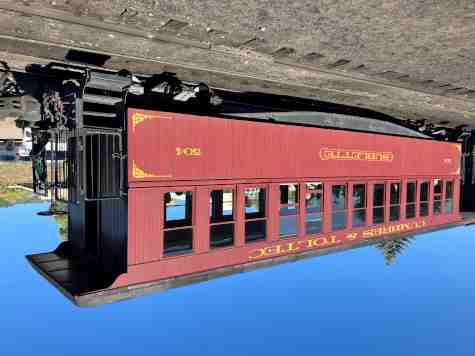
Cumbres and Toltec Scenic Railroad coach 504 "Sublette", ex. 504 "San Luis" nee Denver and Rio Grande Western flat car 6540, built by Cumbres and Toltec Scenic in 1982.
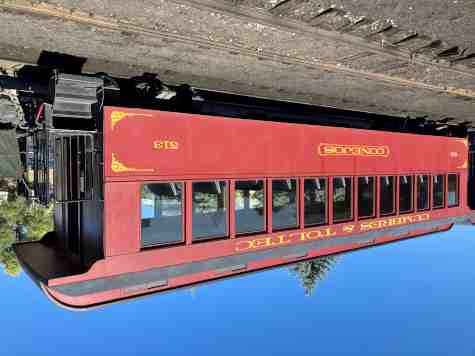
Cumbres and Toltec Scenic Railroad coach 513 "Conejos", ex. 513 "Taos", nee Denver and Rio Grande Western flat car 6518, built by Cumbres and Toltec Scenic in 1986.
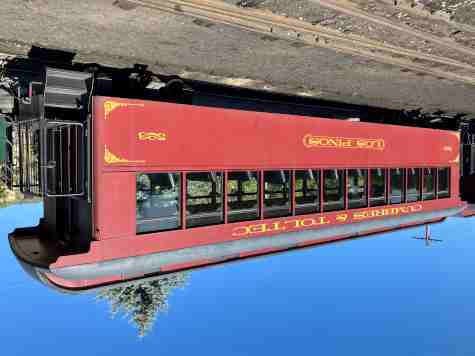
Cumbres and Toltec Scenic Railroad coach 523 "Los Pinos", nee Denver and Rio Grande Western flat car xxxx, built by Cumbres and Toltec Scenic in 1997.
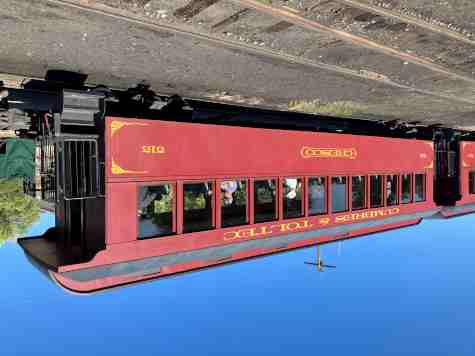
Cumbres and Toltec Scenic Railroad coach 515 "Cresco", ex. 515 "Espanola", nee Denver and Rio Grande Western flat car 6541, built by Cumbres and Toltec Scenic in 1986.
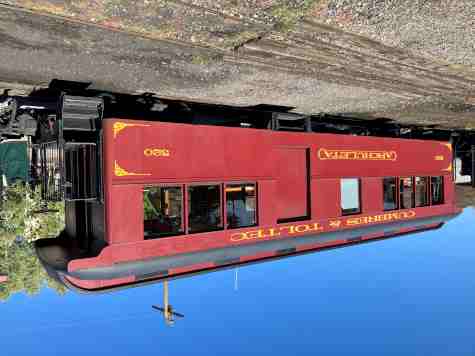
Cumbres and Toltec Scenic Railroad coach 520 "Archuleta", ex. 520 "Cumbres", nee Denver and Rio Grande Western flat car AX6409, built by Cumbres and Toltec Scenic in 1993.
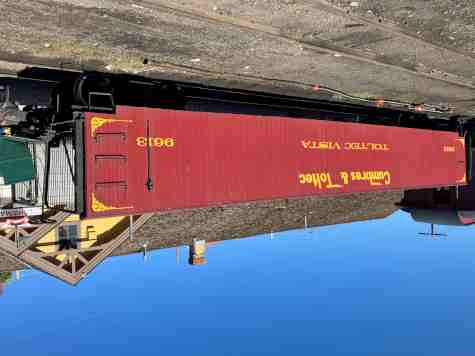
Cumbres and Toltec Scenic Railroad open air gondola 9613 "Toltec Vista", ex. Denver and Rio Grande Western 9613, nee standard gauge box car, built by the railroad in 1953.
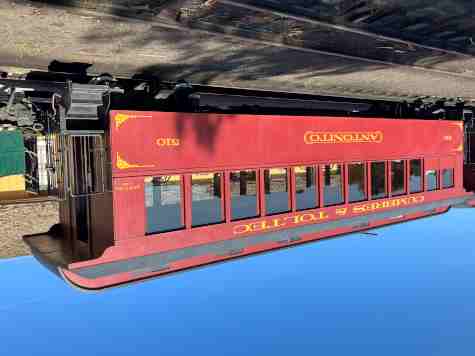
Cumbres and Toltec Scenic Railroad first class coach 510 "Antonito", ex. 510 "Tres Piedres", nee Denver and Rio Grande Western flat car 6500, built by Cumbres and Toltec Scenic in 1986.
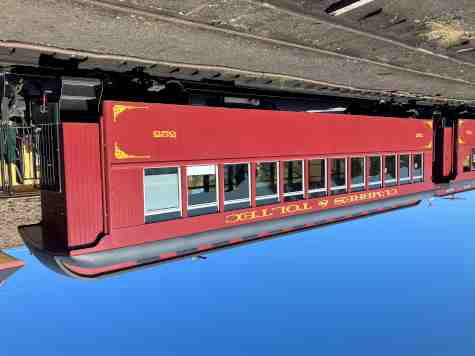
Cumbres and Toltec Scenic Railroad parlour car coach 525, built in the 2010's. It was named "Jim Wrinn" in honour of the late editor of Trains Magazine in June 2023.
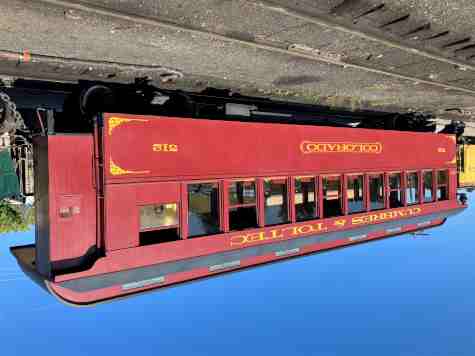
Cumbres and Toltec Scenic Railroad first class coach 512 "Colorado", ex. 512 "Chama", nee Denver and Rio Grande Western flat car 6512, built by Cumbres and Toltec Scenic in 1986.
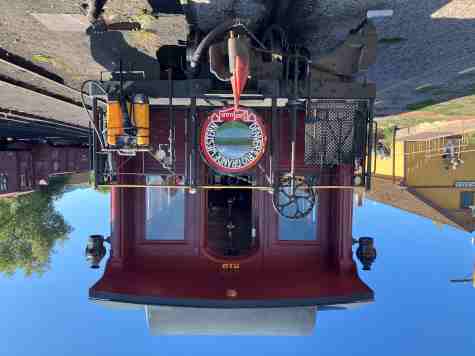
The rear of "Colorado".
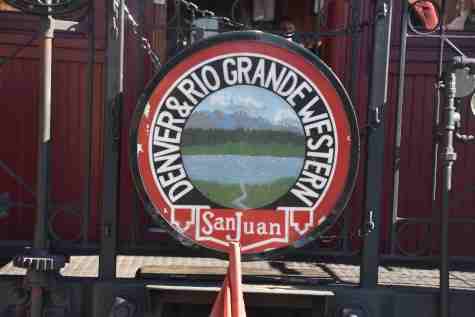
The Denver and Rio Grande Western San Juan drumhead.
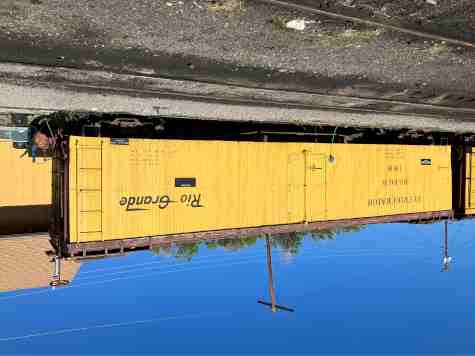
On an adjacent track was Denver and Rio Grande Western refrigerator car 169, built the railroad in 1926.
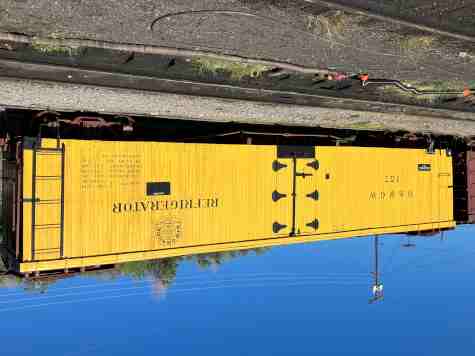
Denver and Rio Grande Western refrigerator car 157, built the railroad in 1924.
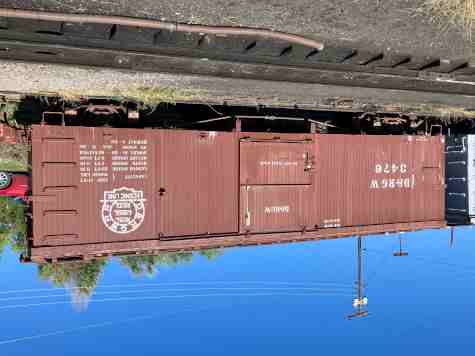
Denver and Rio Grande Western box car 3476, nee Denver and Rio Grande 213, built by American Car and Foundry in 1904.
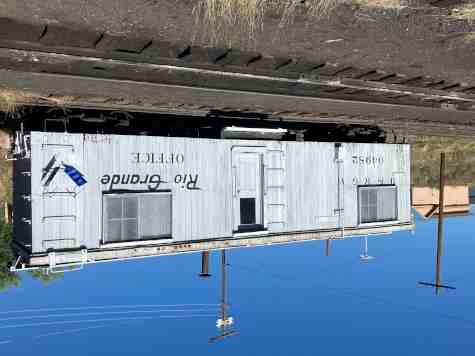
Denver and Rio Grande Western office car 04982, nee box car 4982, built by the railroad/Ohio Falls in 1895. We boarded, found out seats and at 10:00, started to move towards Osier.
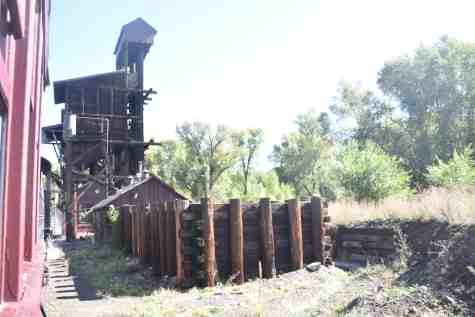
The coaling tower built in 1924 by Fairbanks Morse.
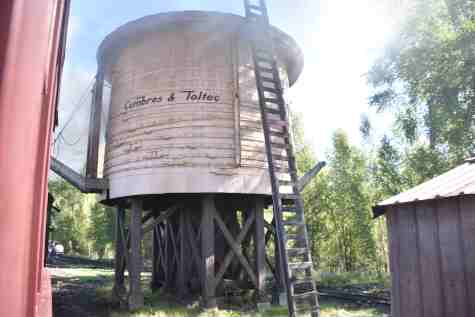
Denver and Rio Grande Western water tower built in 1897.
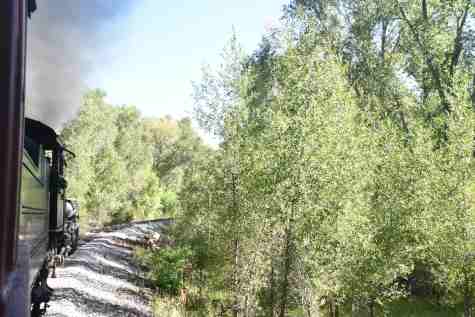
We made our way to the Chama River.
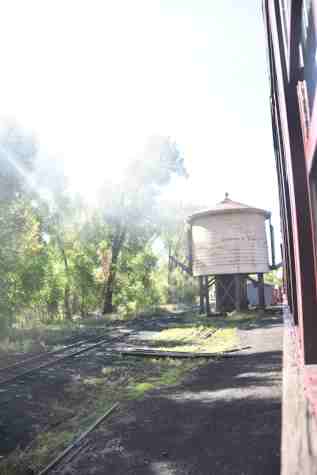
One last view of the water tower.
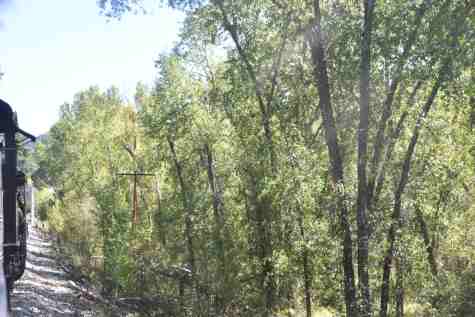
The bridge ahead of the train.
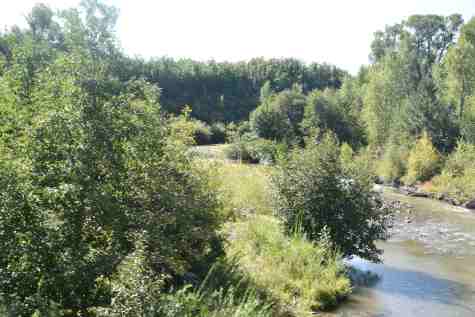
The Chama River.
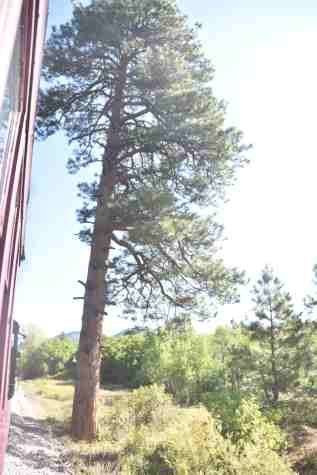
The Jukes Tree, an over-one-hundred-year-old Ponderosa pine named for photographer Fred Jukes, who who captured the line (and this spot) in the early 20th century.
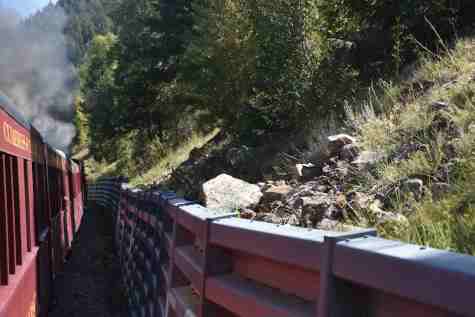
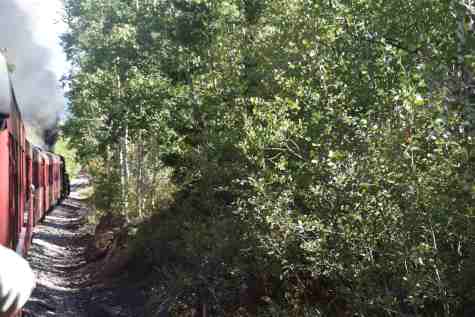
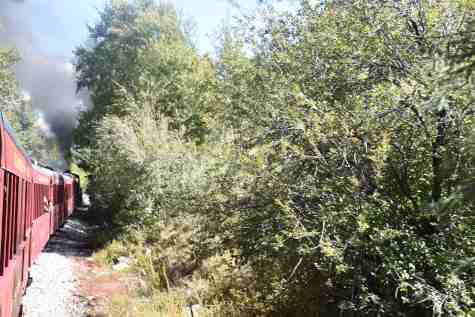
Into the Narrows we went, Milepost 340.50.
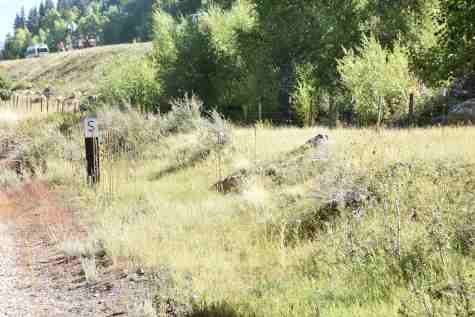
Station ahead.
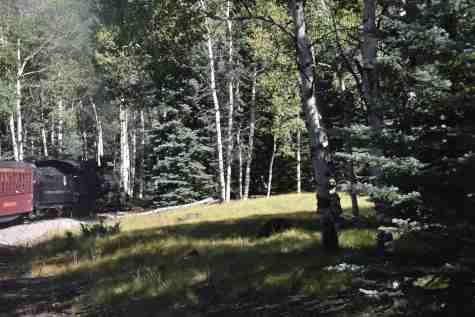
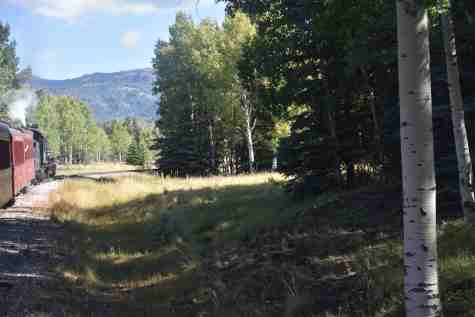
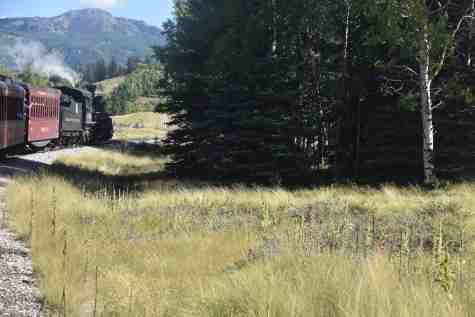
A pair of curves.
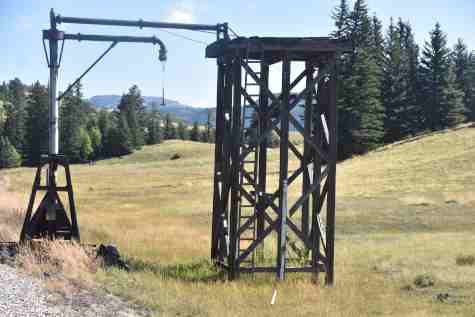
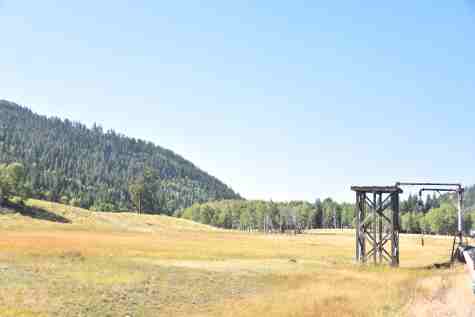
Near Lobato siding, originally known as Wolf Creek siding, is the stand for the water tower constructed in 1970 for use as a film prop in "Shootout", then more famously in "Indiana Jones and the Last Crusade".
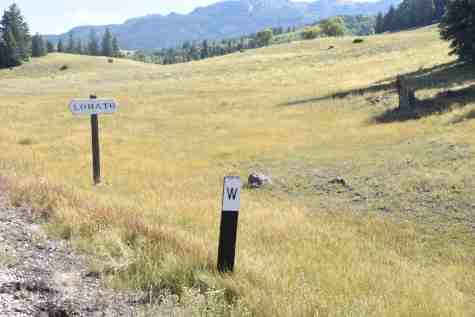
Station sign for Lobato, Milepost 339.99. This was named for Bartholome Lobato, who settled in Santa Fe in 1695 and from there, members of the family migrated to the northern part of the province. The J.J. Lobato Land Grant in Rio Arriba County probably was given to one of Mr. Lobato's descendants.
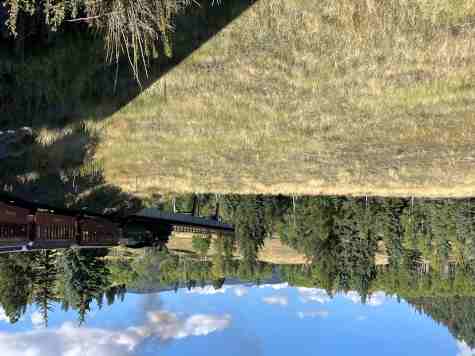
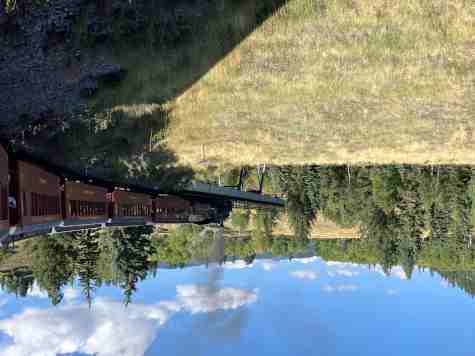
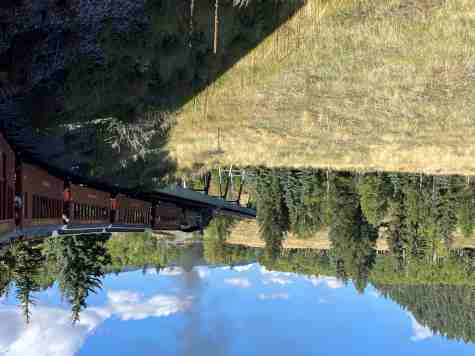
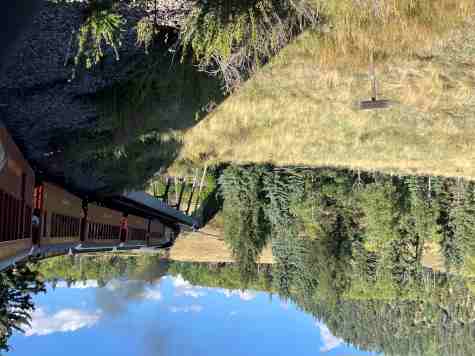
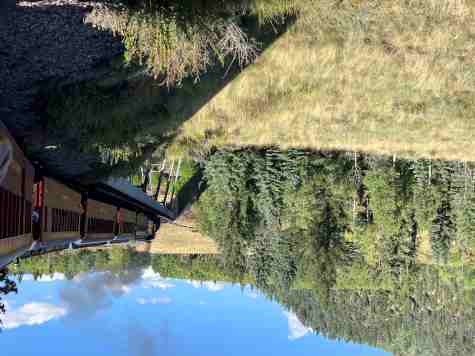
Crossing the 100 foot high and 340 foot long Lobato Trestle over Wolf Creek at Milepost 339.75.
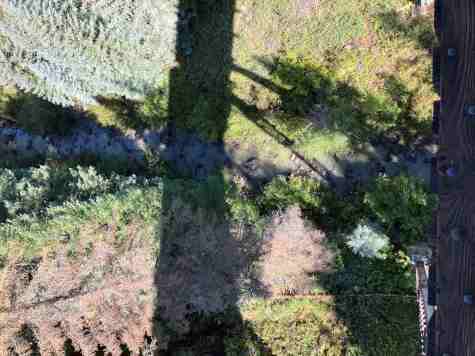
Looking down at the shadows.
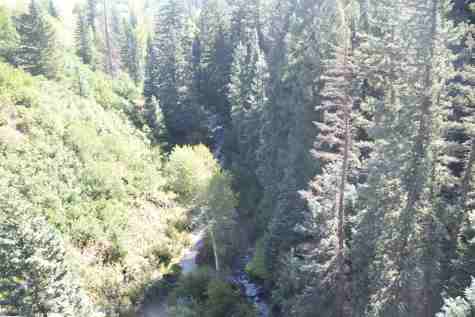
Wolf Creek as we cross it.
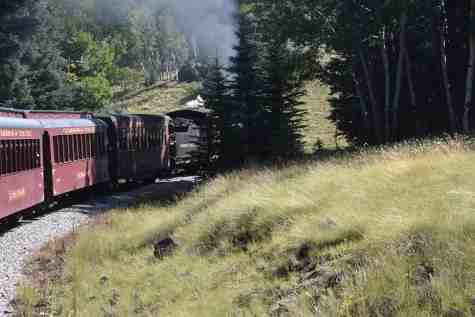
Rounding a curve above Lobato.
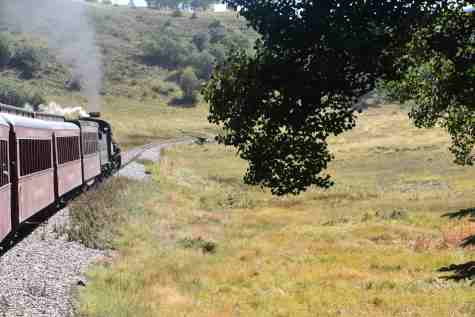
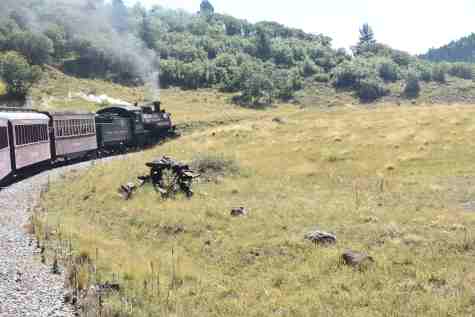
Yet another curve.
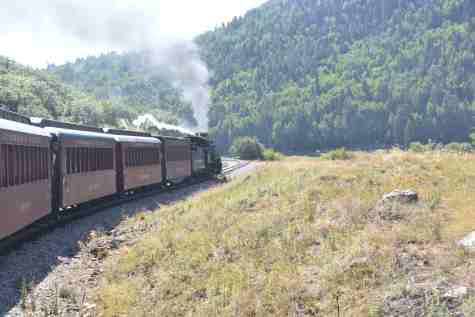
A short piece of straight track.
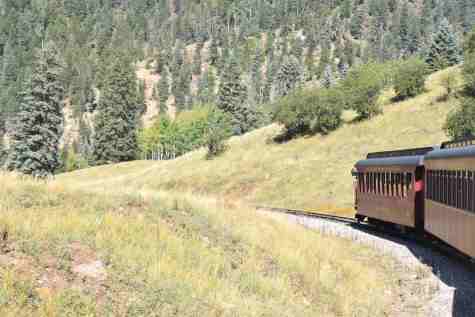
Looking backwards to the first class car.
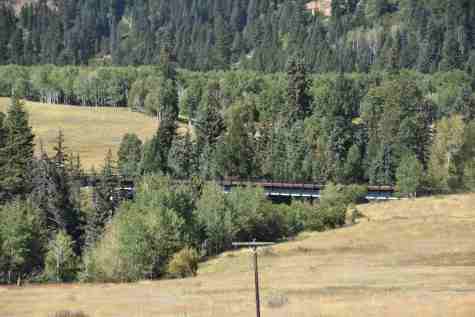
The Lobato Trestle from the upper track.
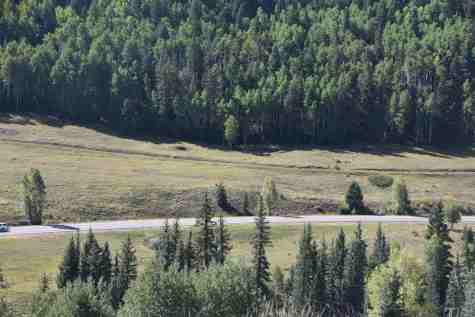
The hill which was one of the photo locations during the August 2025 K36 100th anniversary celebration charter organized by Dak Dillon.
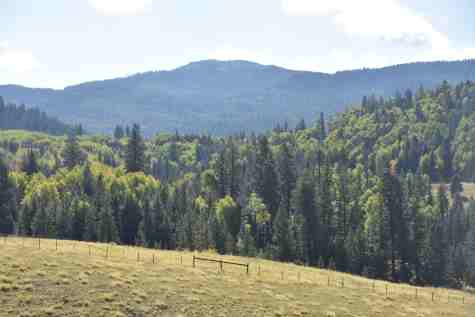
The mountains to the north.
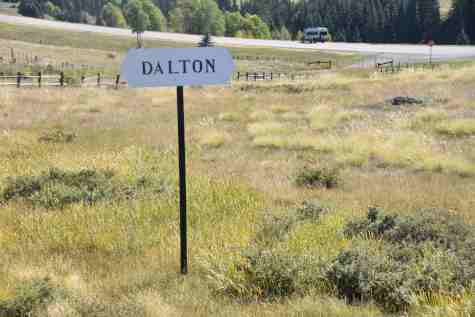
We went by the Dalton sign at Milepost 339.0.
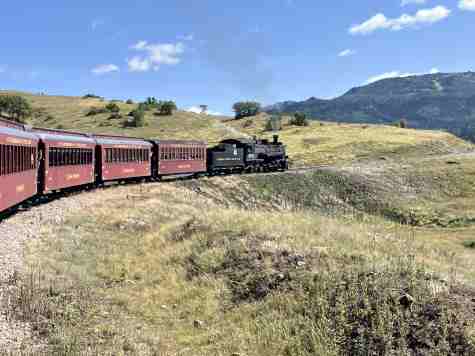
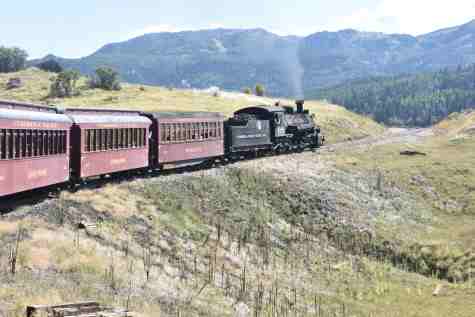
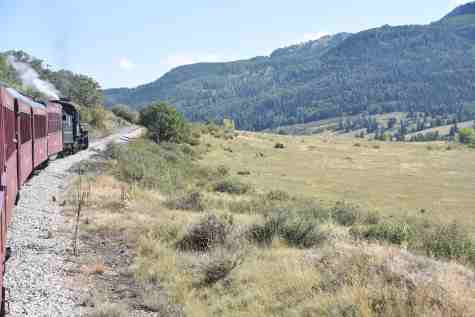
Rounding another curve.
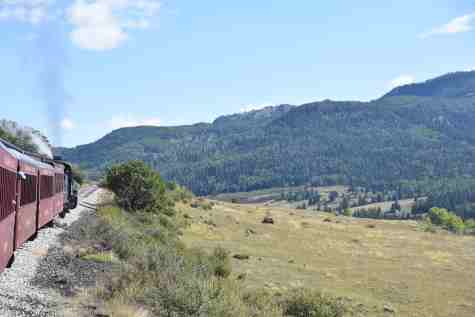
The Cumbres and Toltec Scenic does not feature much tangent track.
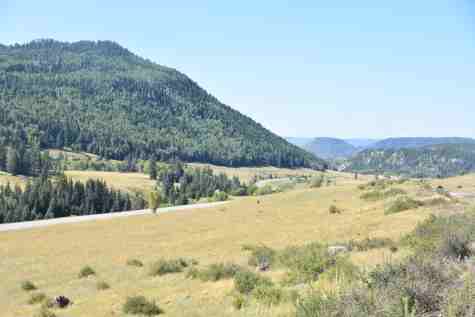
Looking back down the hill towards Chama.
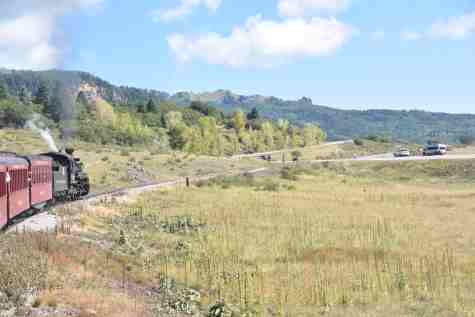
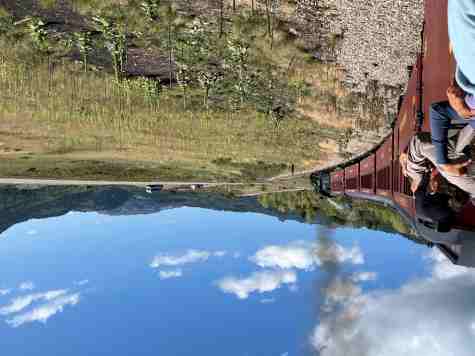
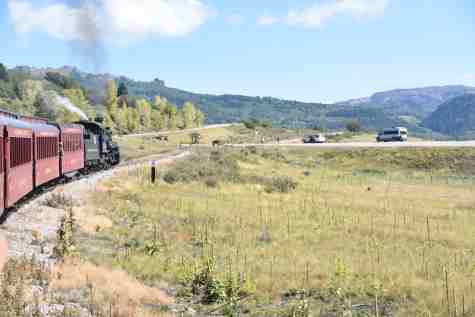
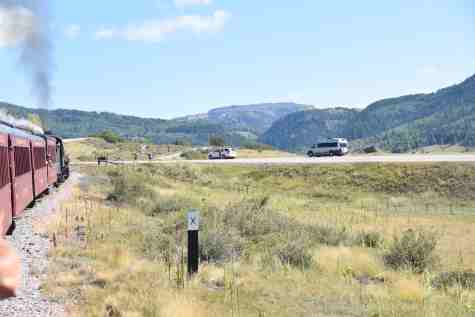
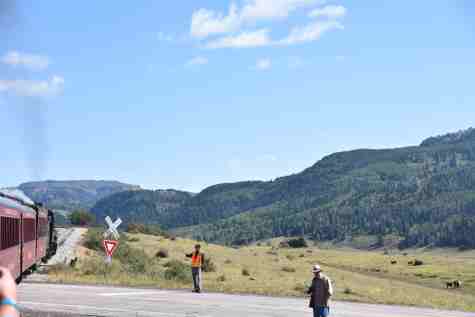
The crossing of Highway 17.
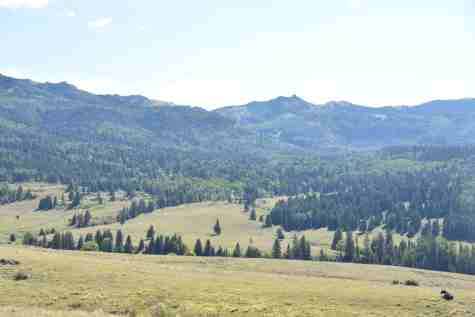
The mountains to the east.
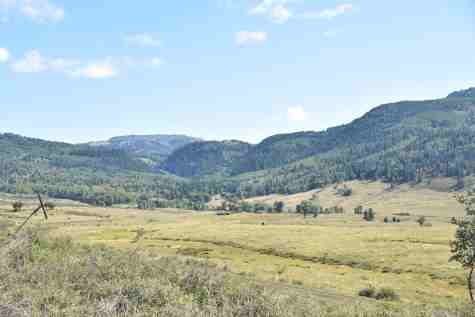
Looking up towards Windy Point.
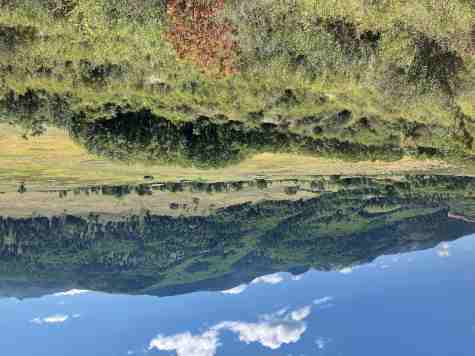
Lush greenery and not an aspen tree in sight.
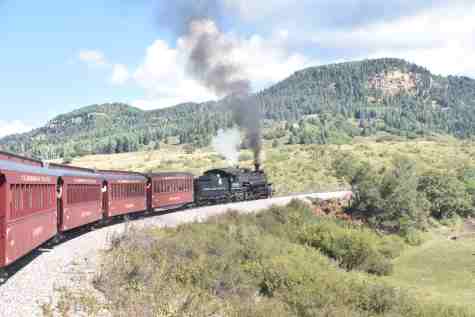
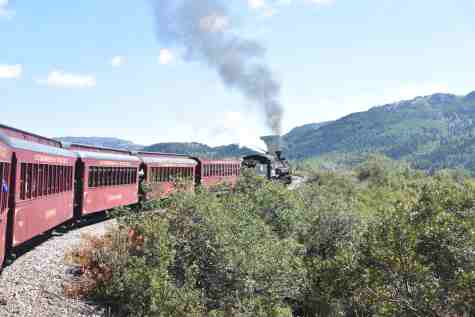
We soon returned to the curving nature of these narrow gauge tracks.
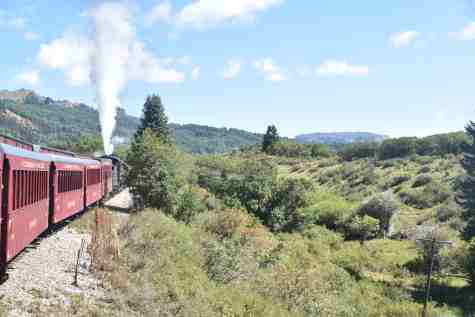
Nearing Cresco.
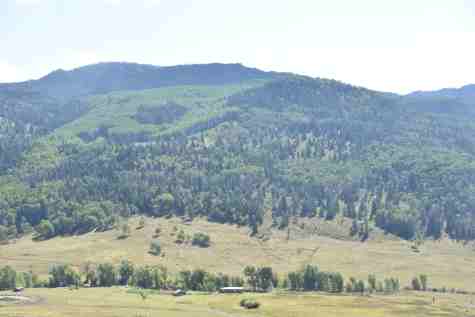
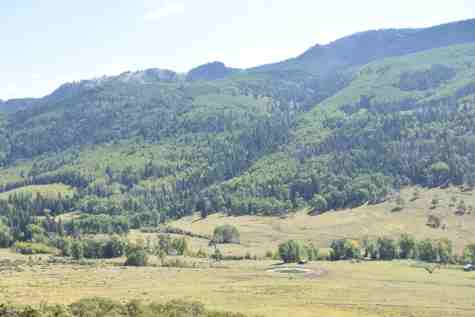
Mountains to the east.
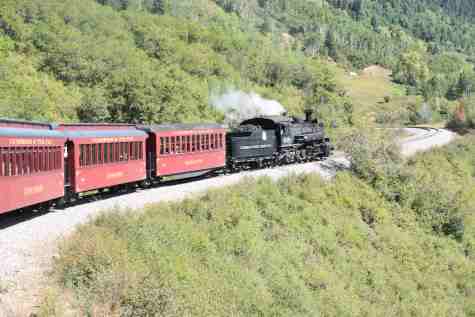
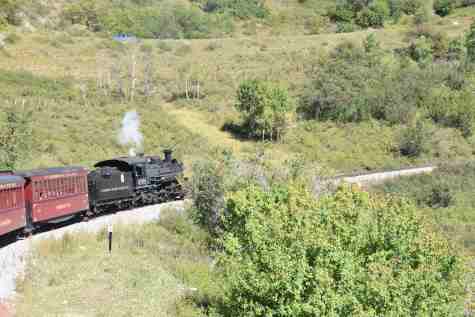
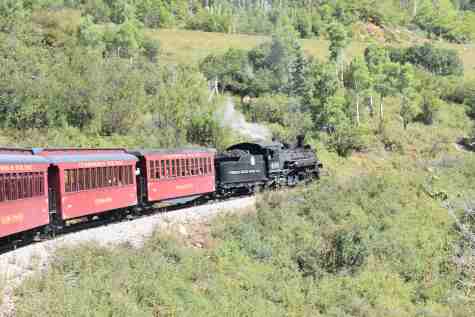
Curving up the grade.
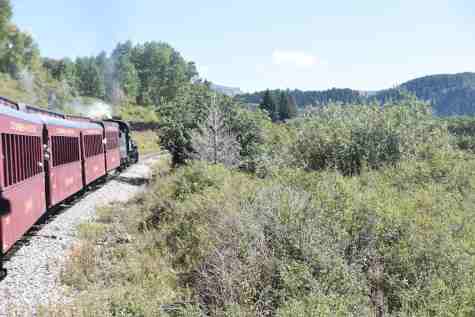
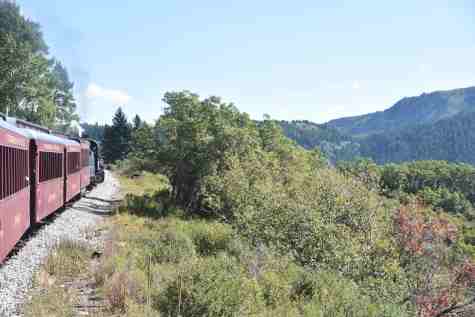
Some more straight track as we entered Colorado.
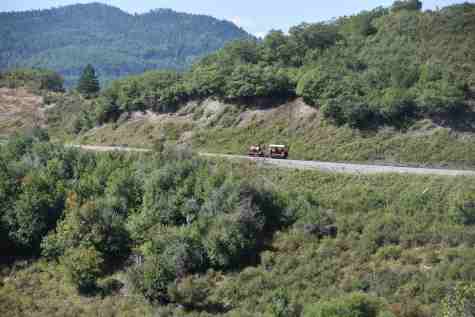
The fire speeder trailing behind us.
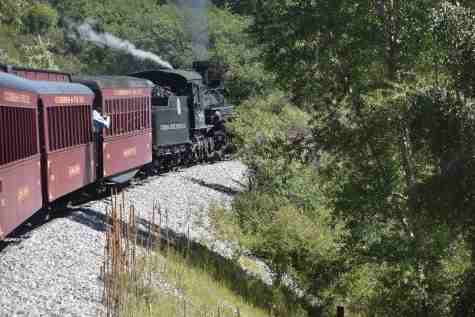
Approaching Cresco.
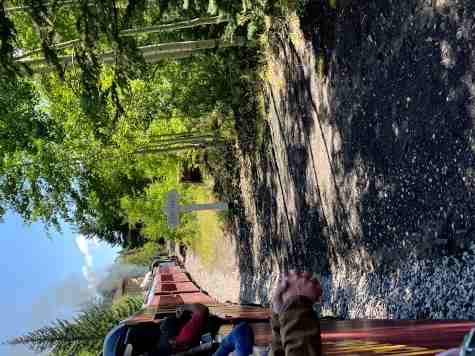
Cresco, at an elevation of 9,193 feet, is Milepost 335.1.
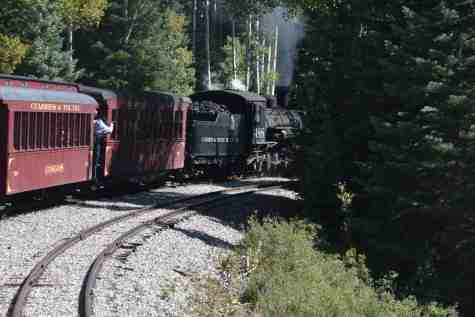
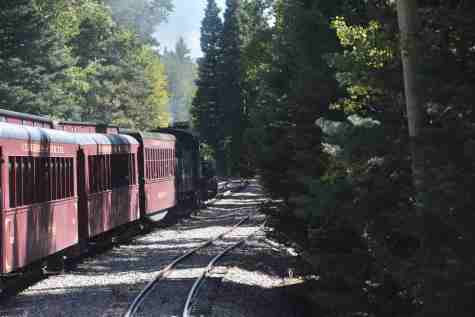
During construction, a section house and bunk house were built south of the track. During the 1890's, a coal house and platform were installed, probably to keep an adequate coal supply handy for the rotary snowplough trains. All of these structures were retired in 1938. The siding is 1,702 feet long. Families lived here year round and their only continuous contact with the outside world was via the daily trains. In about 1909, an old 45 foot turntable was used as a bridge.
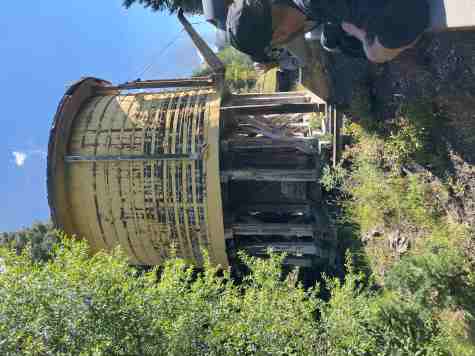
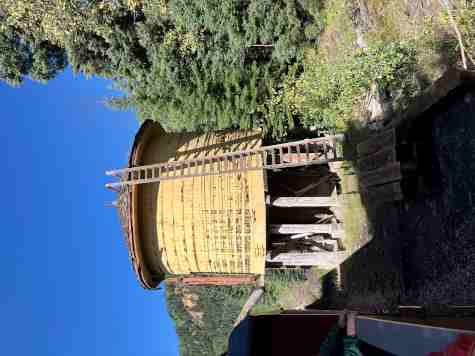
The water tower was built in 1893.
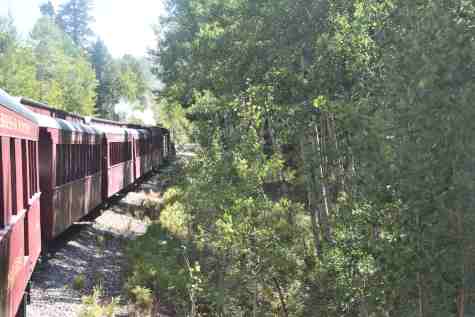
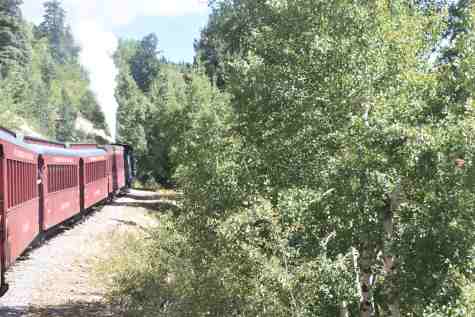
Views forward.
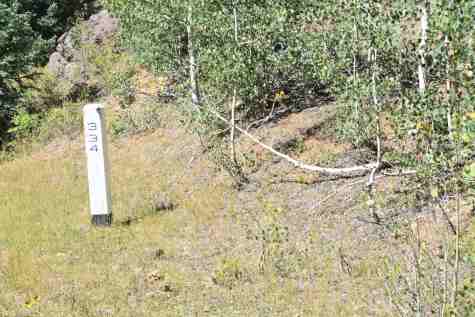
Concrete milepost 334.
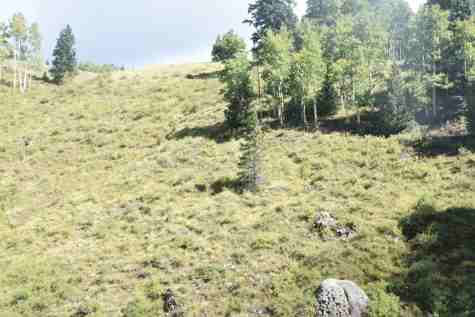
The photo location at Hamilton Point's which we used on the Dak Dillon charter in August.
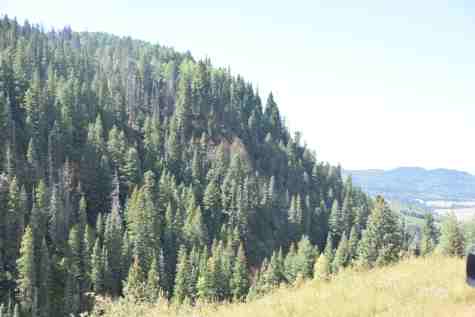
The view from Hamilton's Point.
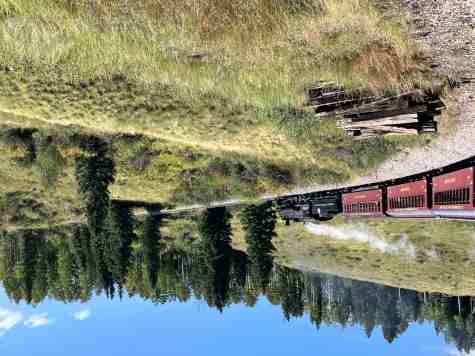 >
>
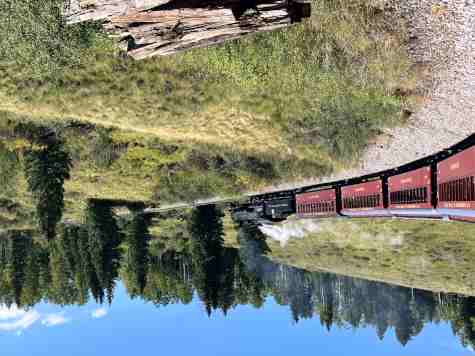
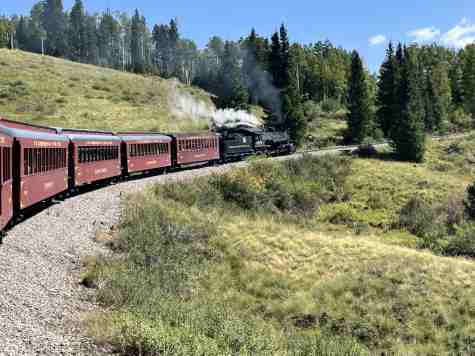
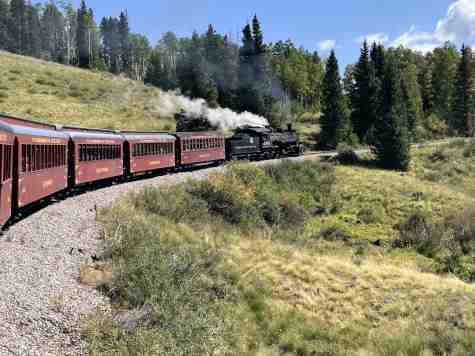
The view from on a curve above the point.
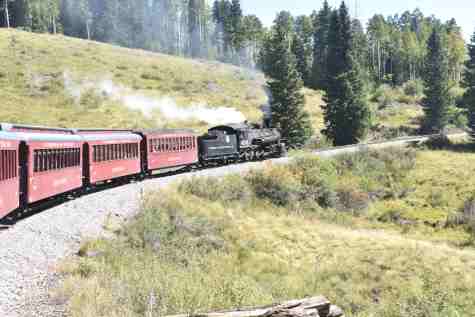
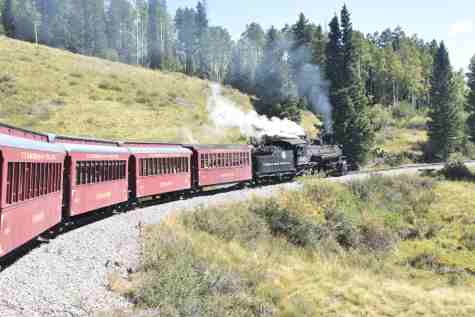
Approaching the second crossing of Highway 17.
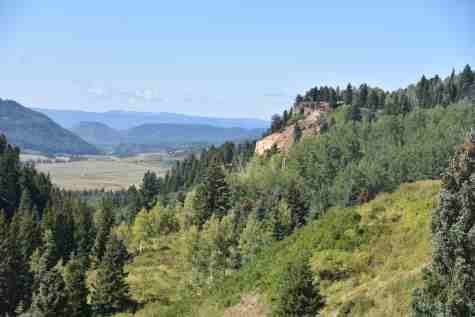
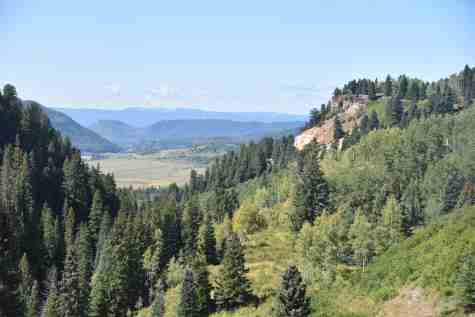
Looking down the grade back to Chama.
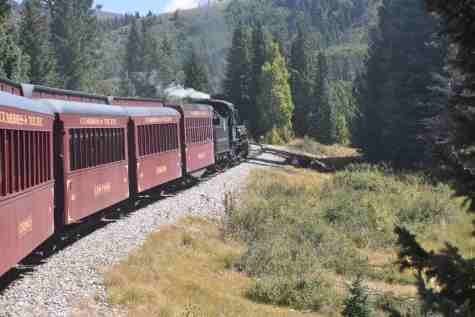
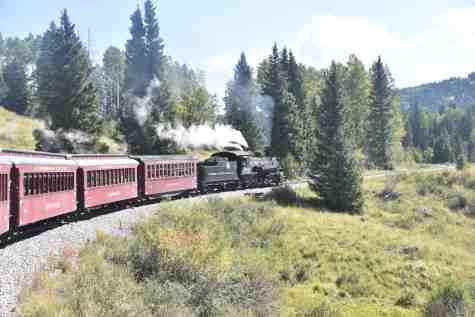
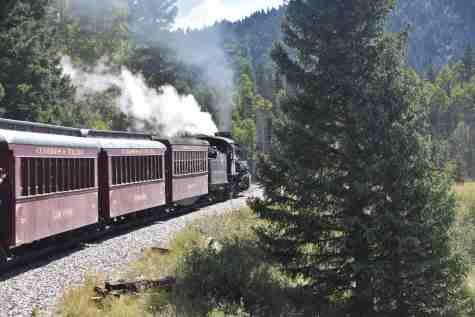
Cumbres and Toltec Scenic 2-8-2 488 leading our train.
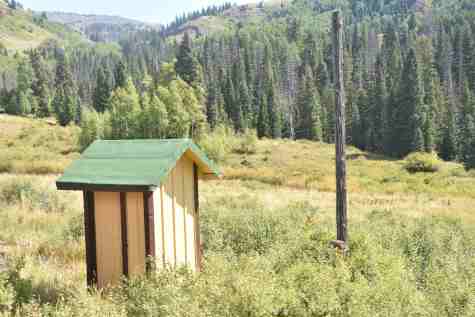
The Coxo phone booth at Milepost 332.85.
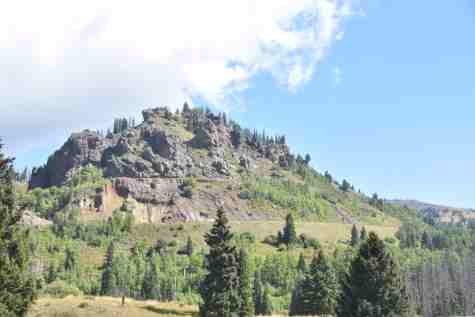
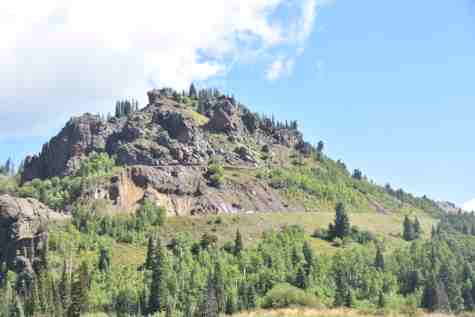
The view towards Windy Point.
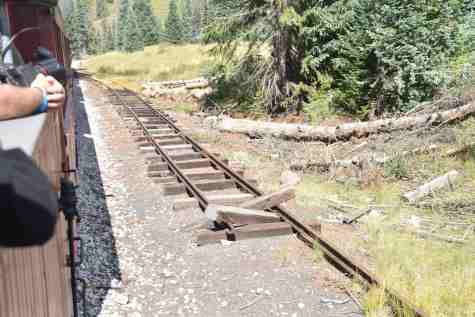
Coxo siding at Milepost 332.85. At one time, there was a section house and 800 feet of passing track. The building was retired in 1938.
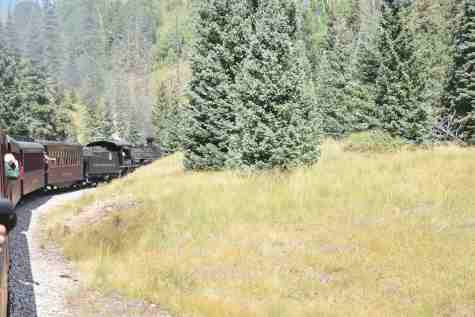
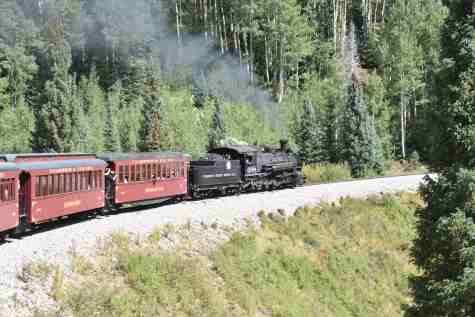
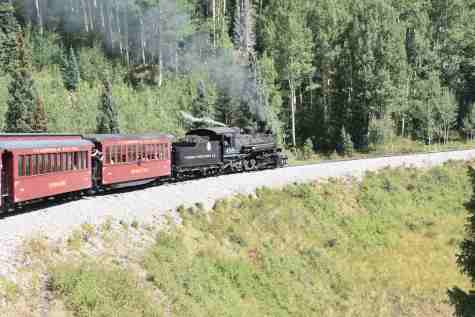
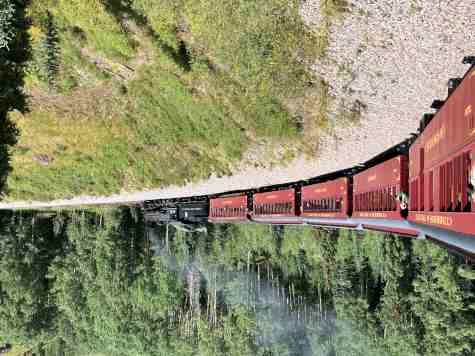
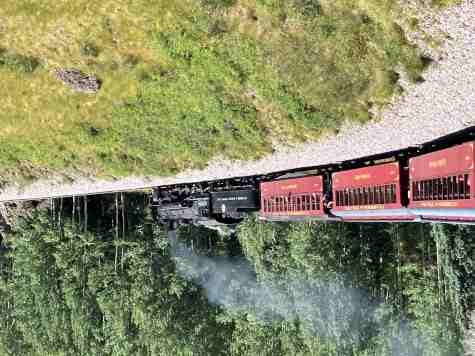
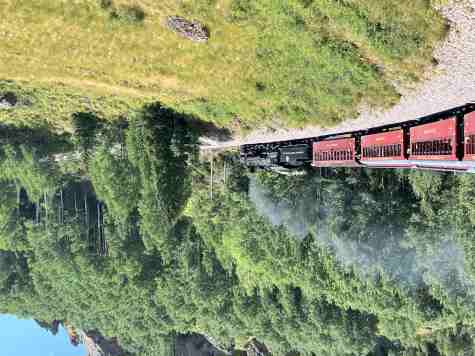
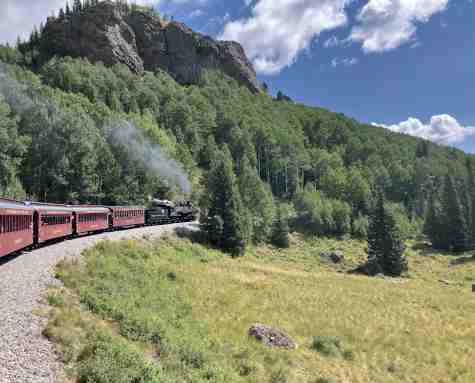
Curving on the route to Cumbres Pass.
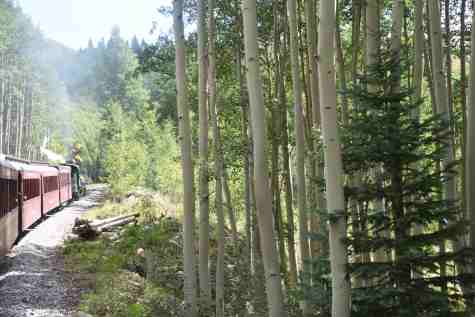
On a rare piece of straight track.
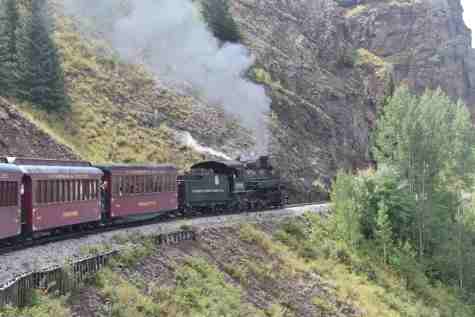
Curving further to Cumbres Pass.
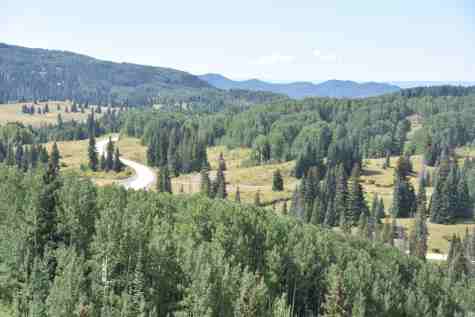
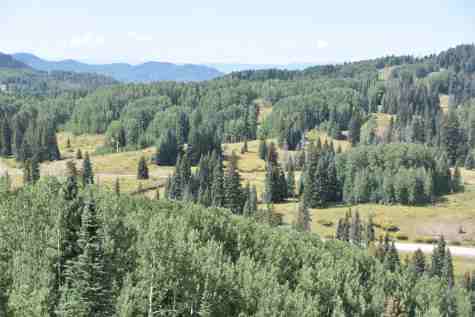
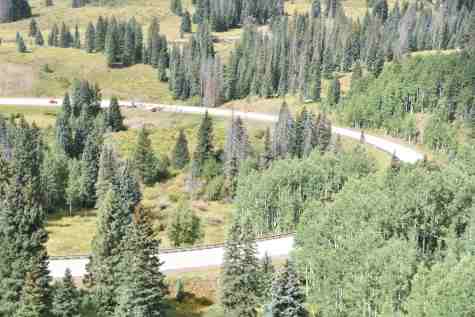
Highway 17 as we ascend.
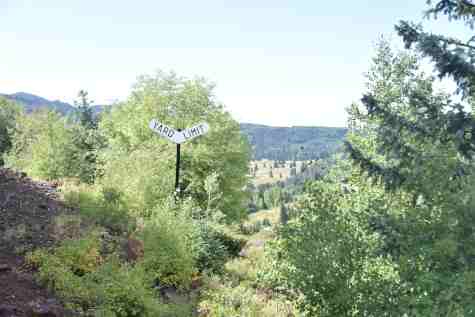
Yard Limit sign post.
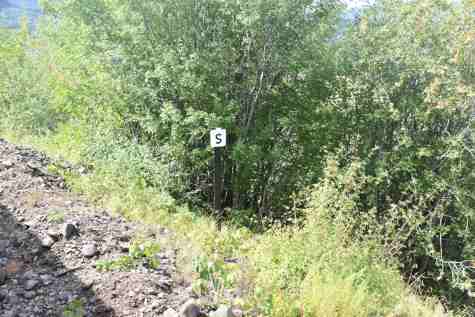
Station one mile.
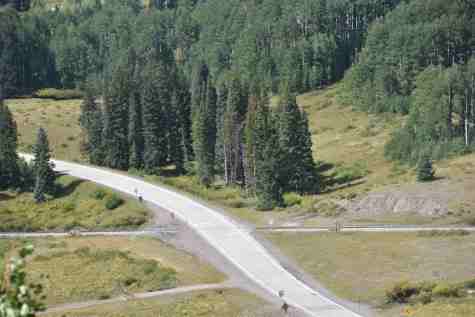
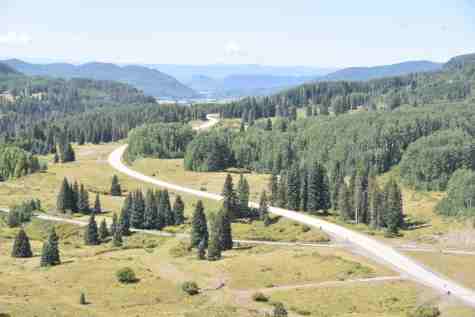
The railroad crossing at Coxo.
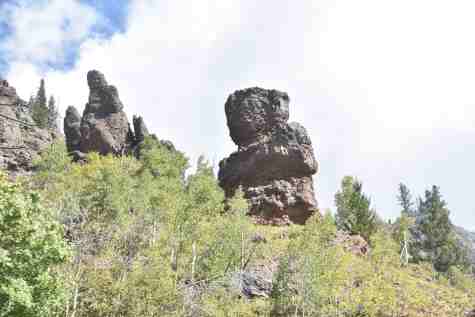
Hoodoos, the name given to the tall pinnacles, spires and pedastel rocks formed from breccias of the Conejos Formation. The weird shapes are the result of the alteration by hot water, by weathering and by erosion of this volcanic rock. While very prevalent at Phantom Curve on the eastern part of the line, they are found on this portion.
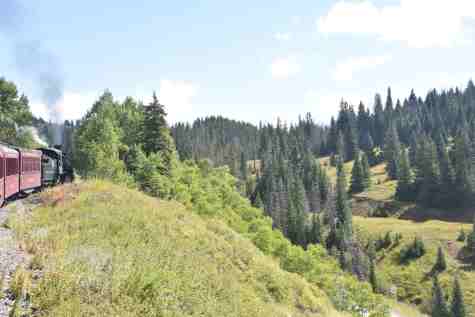
Nearing Cumbres Pass.
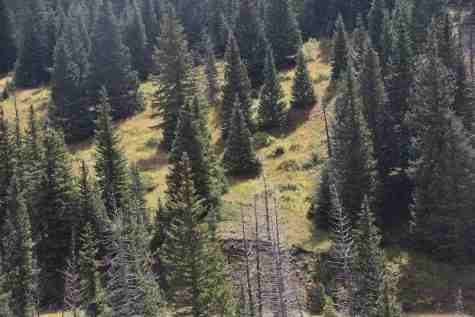
My photo location from the Dak Dillon charter in August.
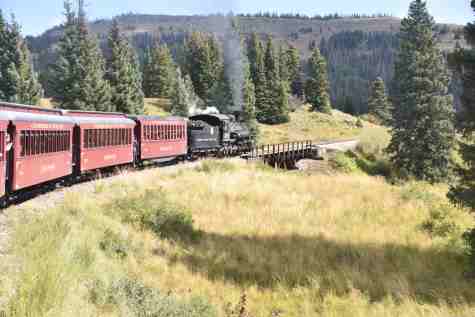
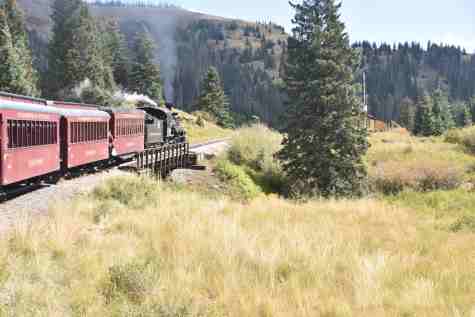
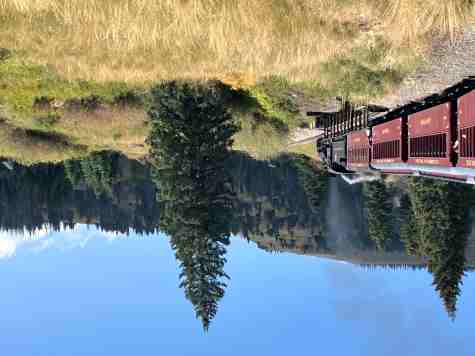
The wooden trestle over old State Highway 17 at Milepost 330.75. It is an 84 foot, six-panel, standard pile structure.
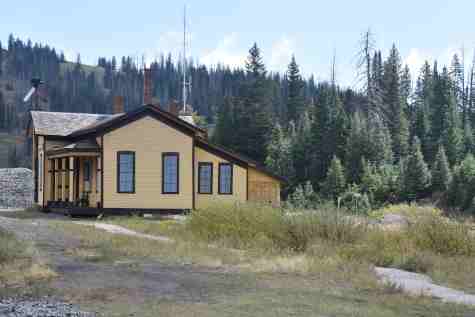
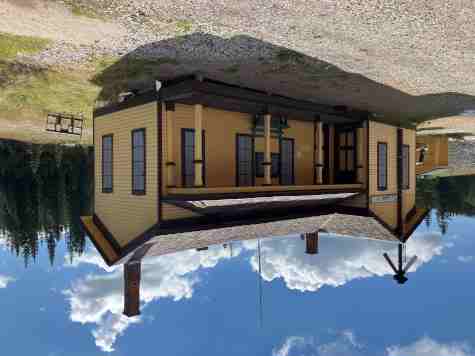
The Cumbres Pass station, Milepost 330.6, at 10,015 feet. Cumbres means "crests" or "summits" in Spanish, although during construction days, the station was referred to as Alta. Grading crews reached Alta on September 30, 1880 and the San Juan extension was opened for travel from Antonito to Cumbres on December 15, 1880. When the line was completed over Cumbres, it was one of the highest railroad tracks in the United States.
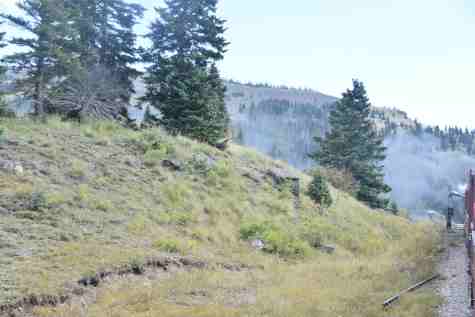
The train then took on water.
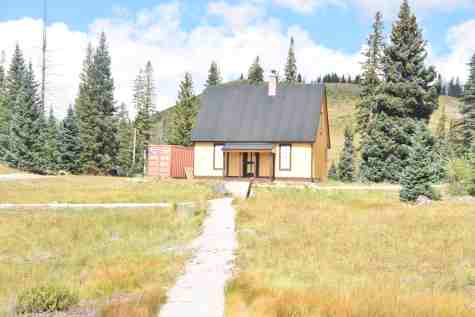
A section house at Cumbres.
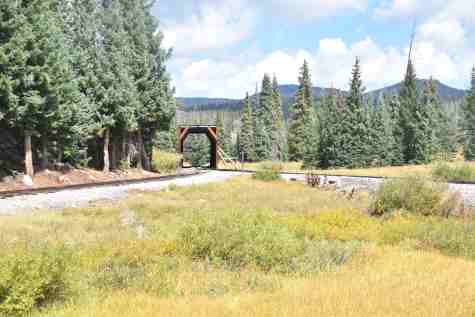
The old snowshed covering in the wye.
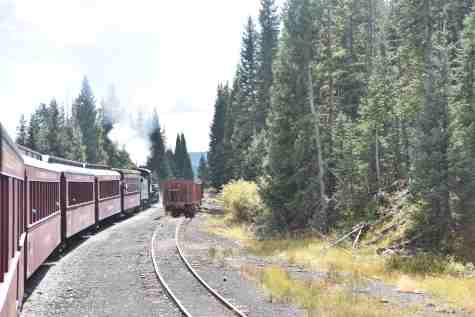
The yard at Cumbres Pass.
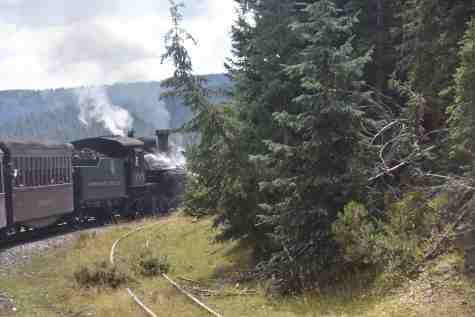
Bound for Tanglefoot Curve at Milepost 329.76.
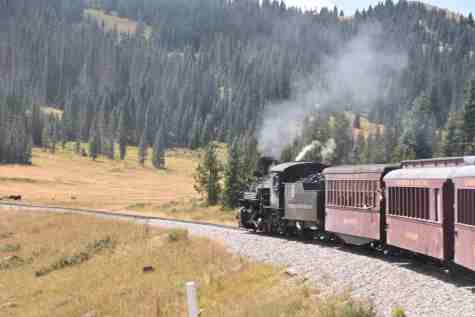
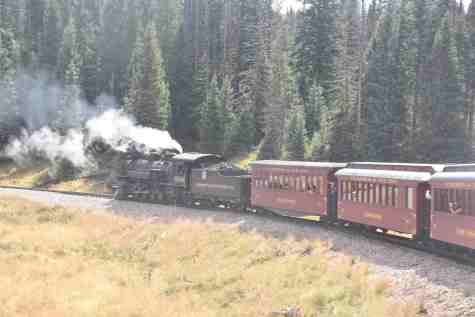
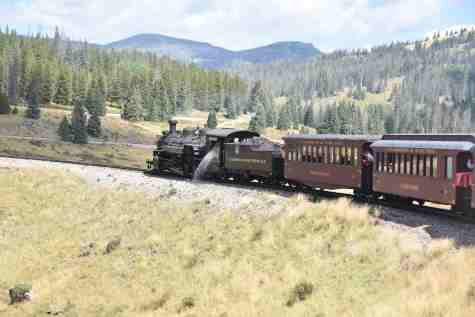
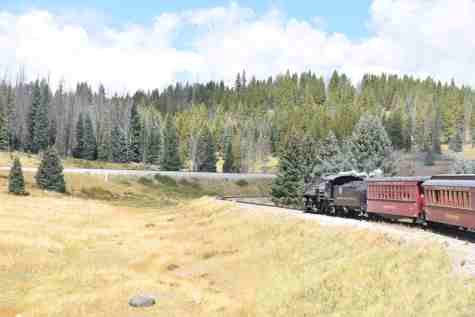
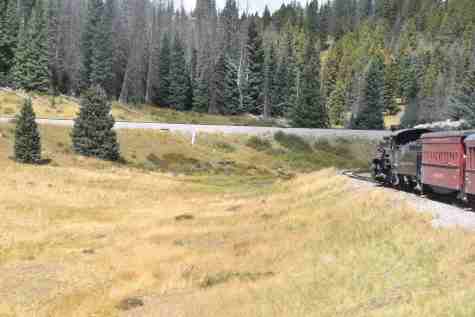
Rounding the famous Tanglefoot Curve. In the early years, there were three snowsheds and two wooden trestles around the tight curve.
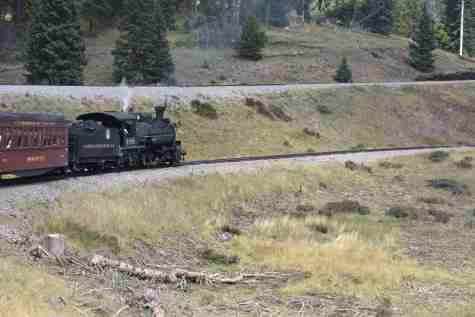
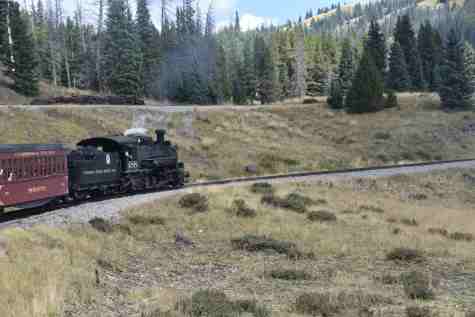
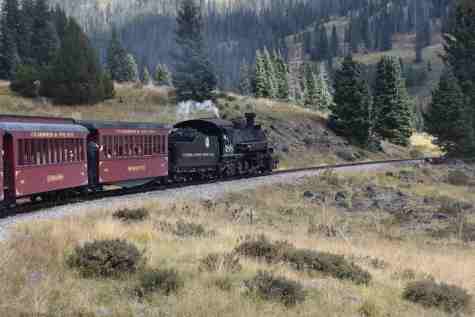
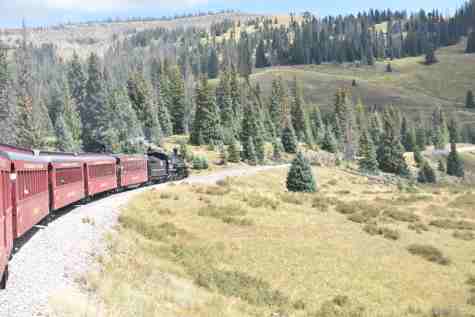
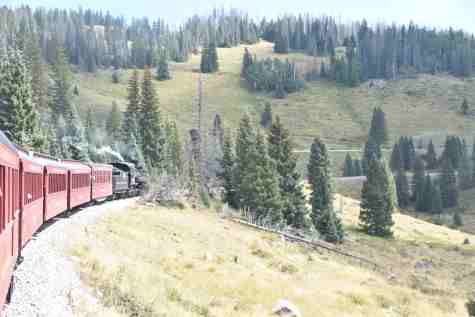
Coming off the curve.
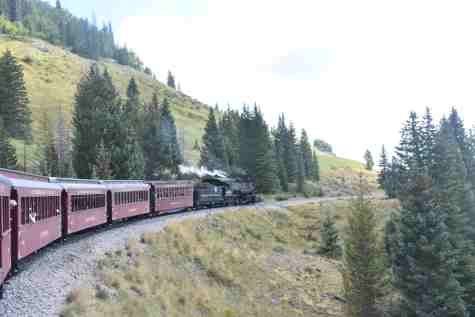
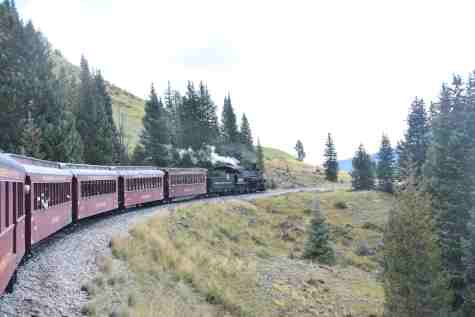
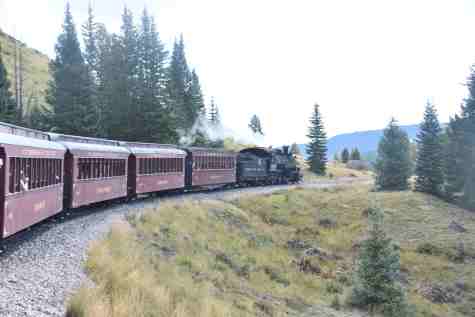
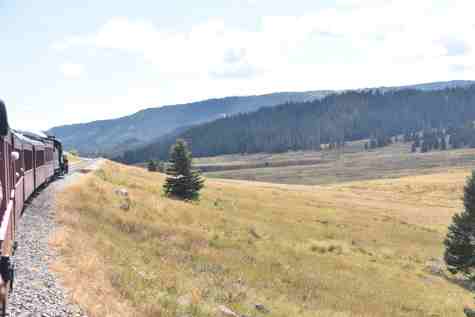
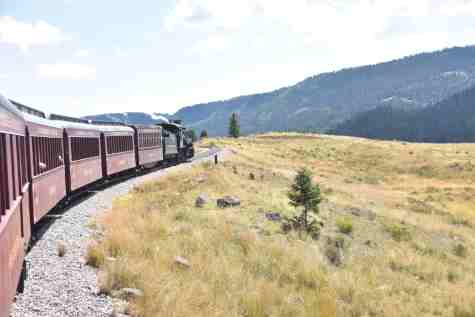
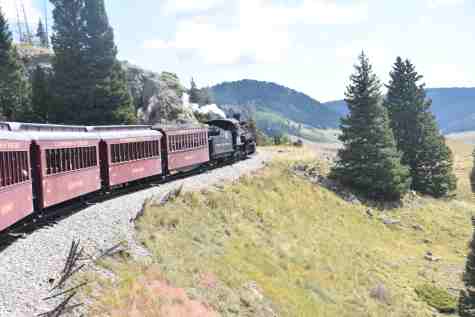
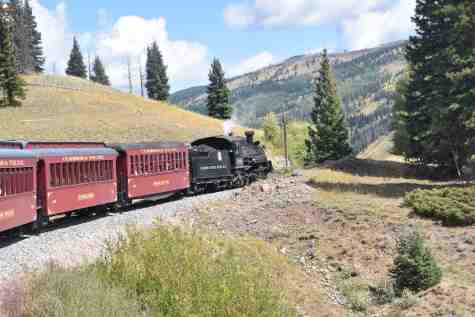
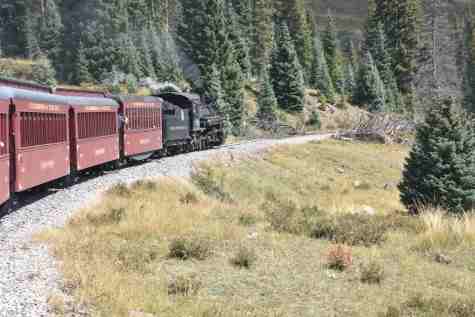
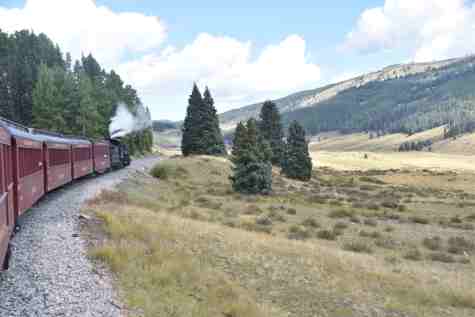
Running below Highway 17.
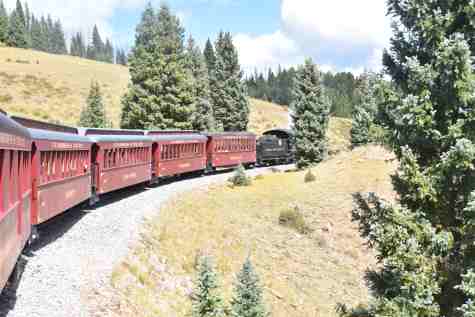
Sweeping curves were the order of the day and allowed for many photographs of our train.
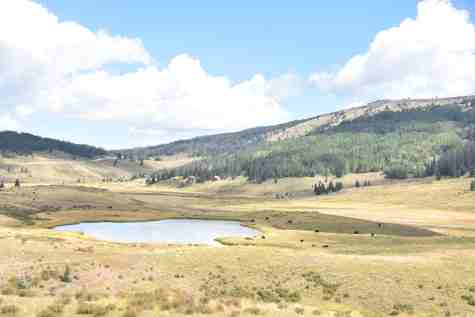
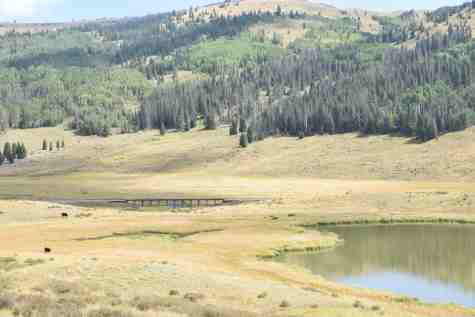
The small un-named lake at Milepost 326.10 and the crossing of the Rio de Los Pinos at Milepost 324.52.
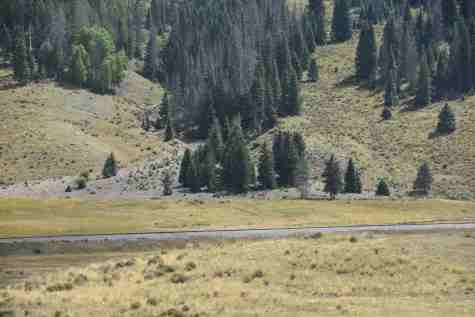
The track that we would soon be on.
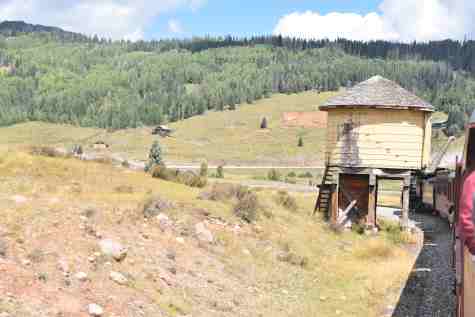
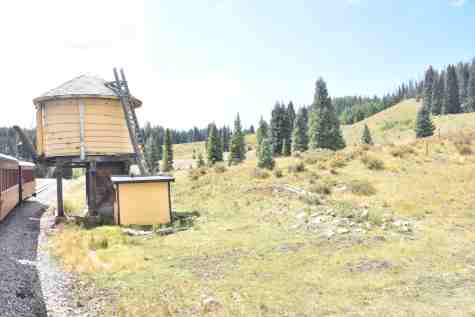
Los Pinos water tank, built in 1880, at Milepost 325.5. Until 1938, a section house and a bunk house were here. A coal house for refuelling the rotary snow plough trains was nearby. This coal house burned in February 1912 and was replaced by another one which lasted until 1929.
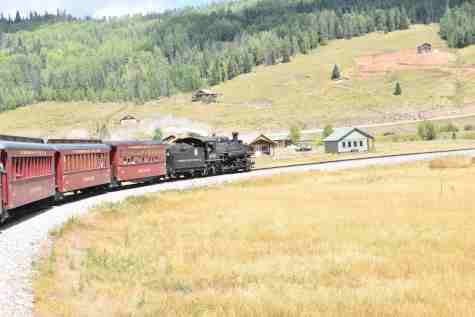
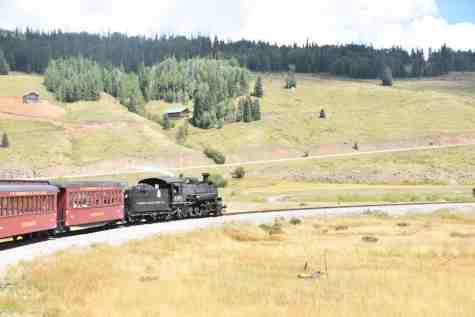
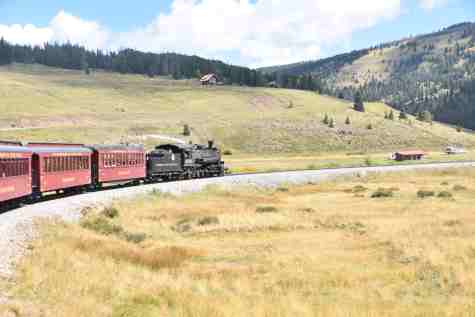
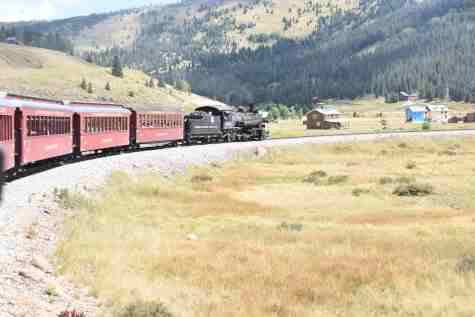
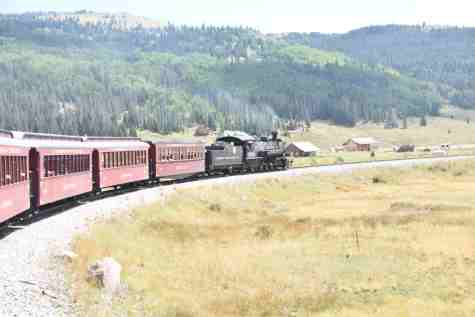
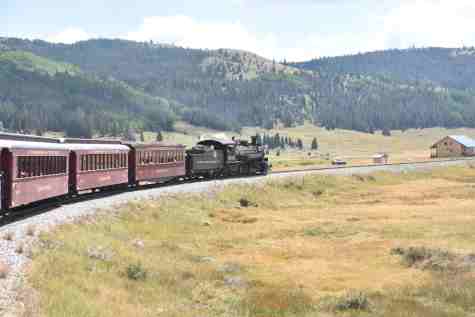
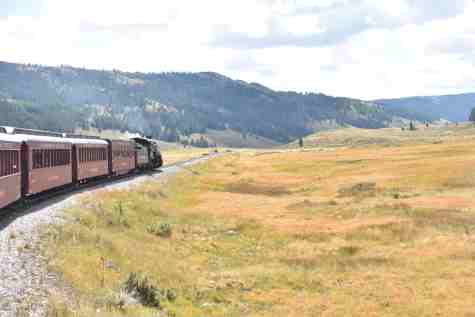
Coming around the curve at Los Pinos.
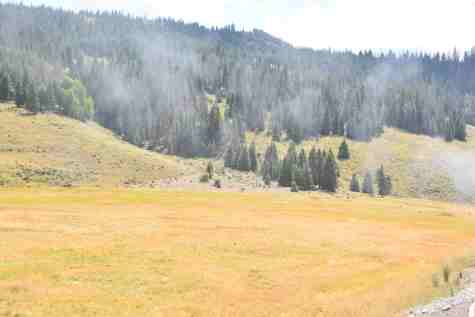
A photo runby location during the August charter.
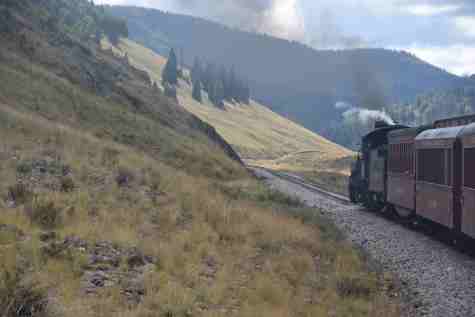
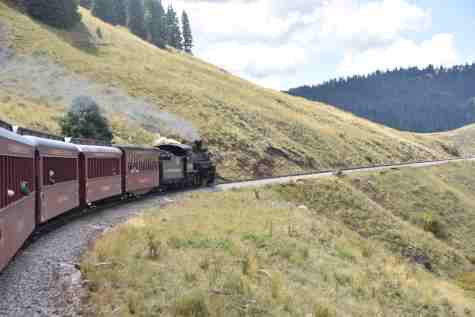
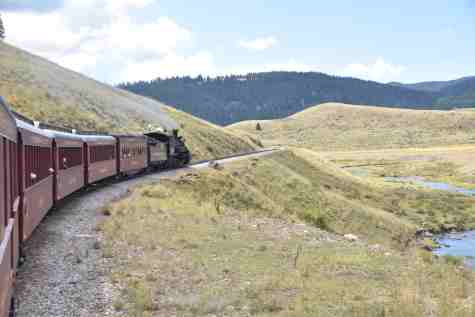
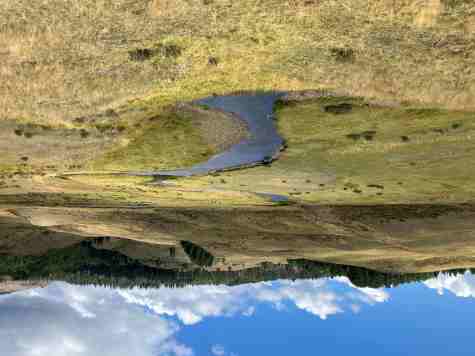
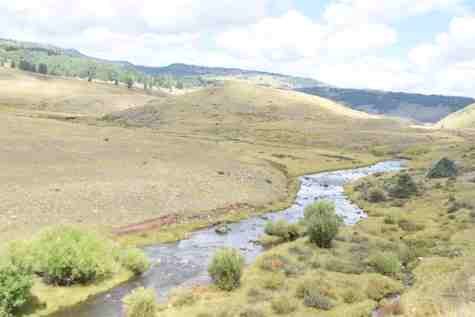
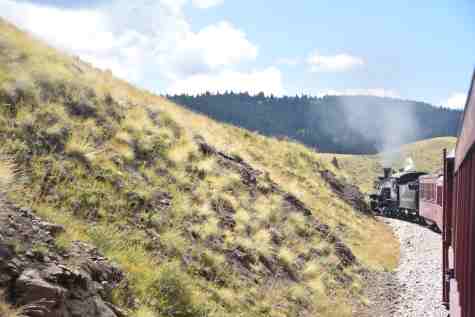
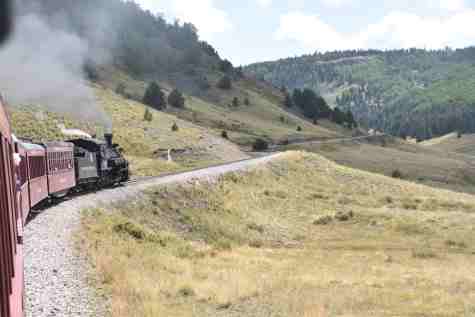
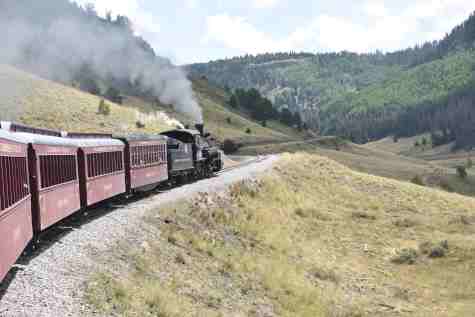
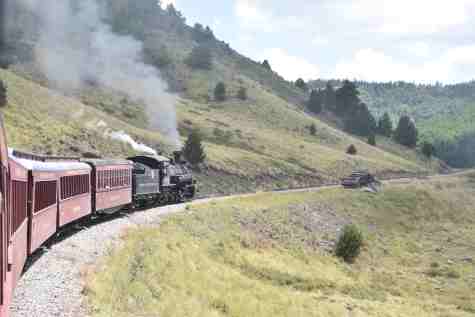
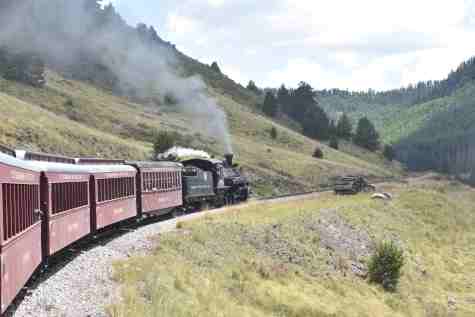
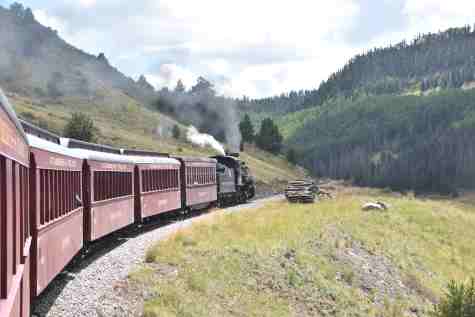
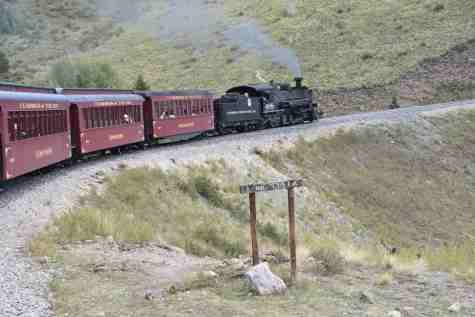
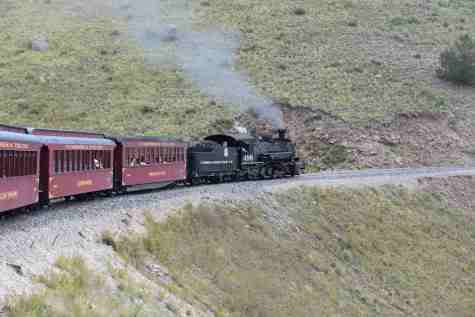
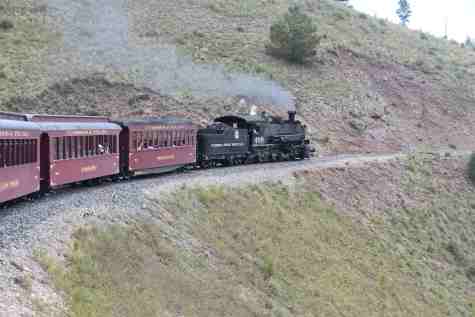
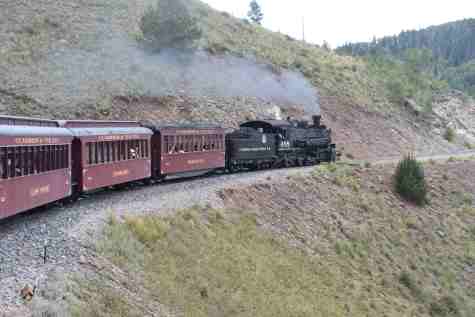
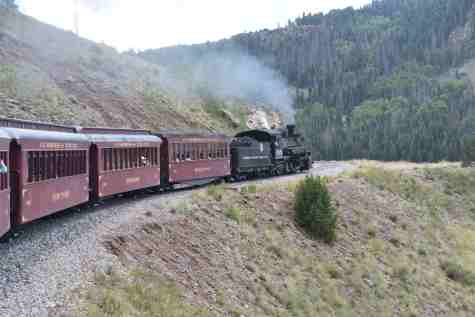
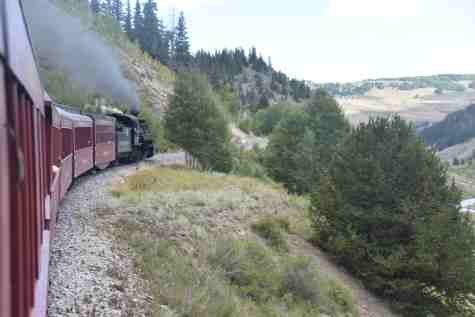
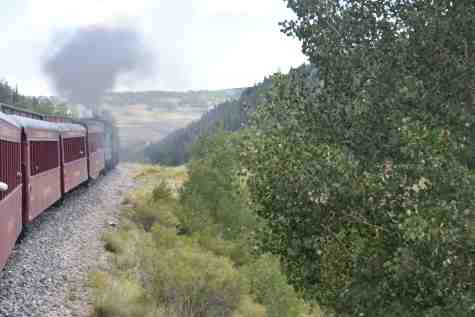
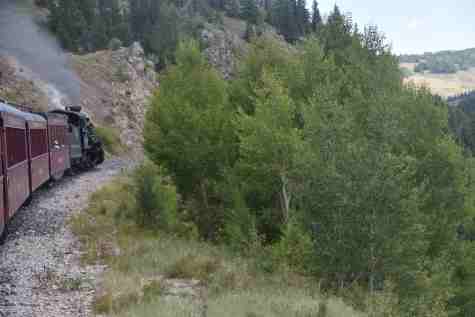
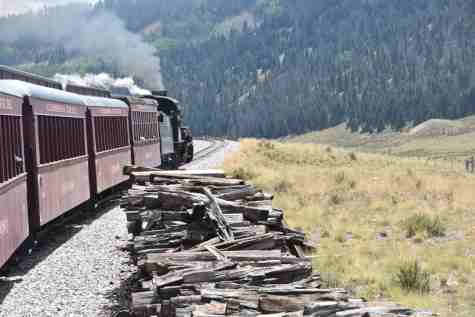
The journey along the Rio de Los Pinos as we negotiate a sweeping curve with much scenery, as well as passing Long Creek.
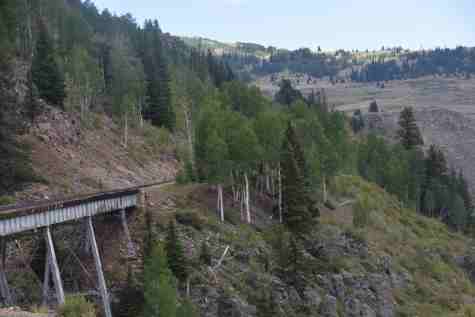
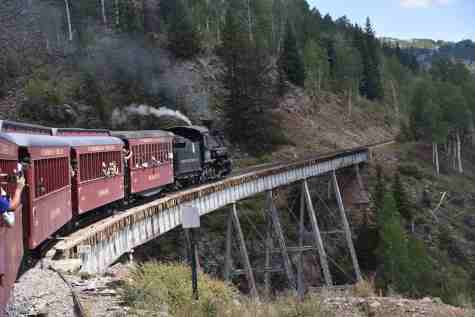
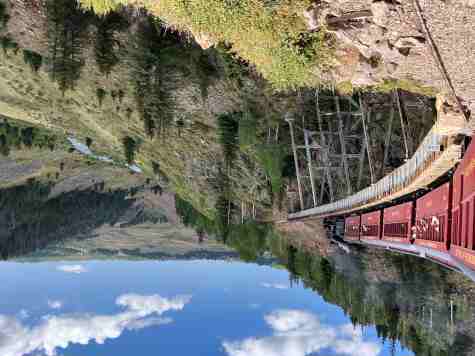
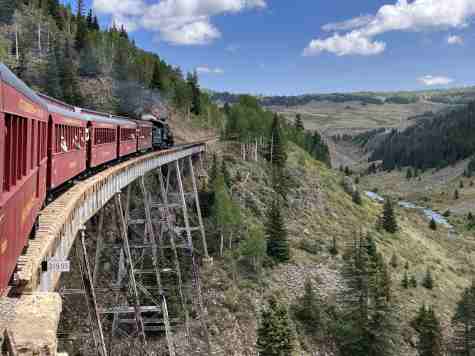
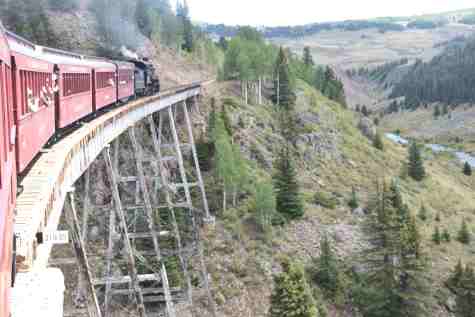
Crossing the Cascade Trestle, another scenic highlight, at Milepost 319.95. This bridge is 137 feet high and 409 feet long and was originally wood but replaced in 1889 with an iron bridge of a unique German design with bents that were tapered at each end. It also did not have any cross-bracing between the bents. In the 1920's, a new eight span steel deck girder bridge with steel bents placed on masonry pedestals and abutments was built to standard gauge specifications, in the event of the line was standard-gauged.
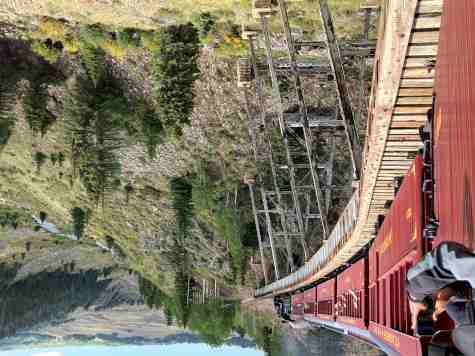
The bridge supports.
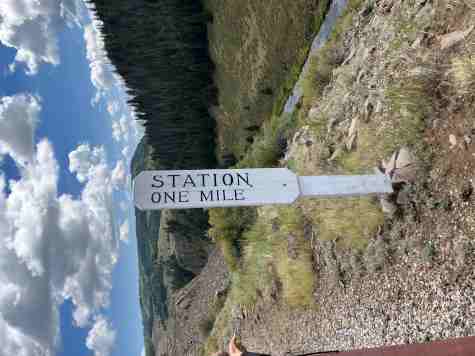
Station one mile.
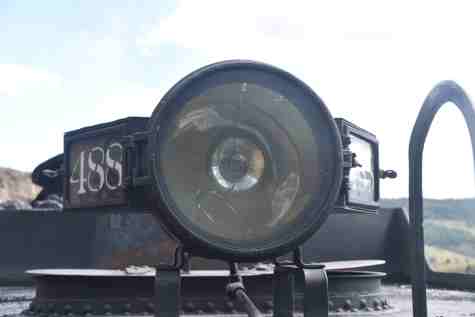
Cumbres and Toltec 488 led our train today.
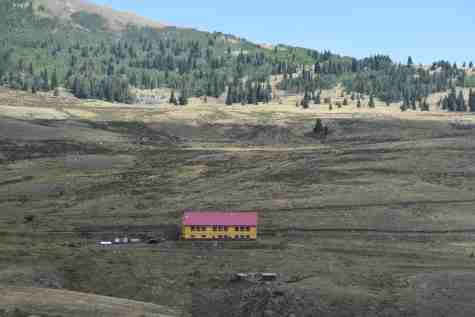
The Lunch Room at Osier was seen across the valley.
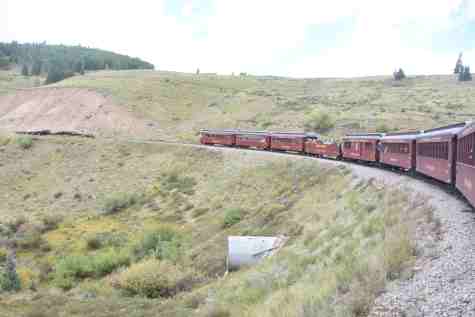
The curve as we entered Osier.
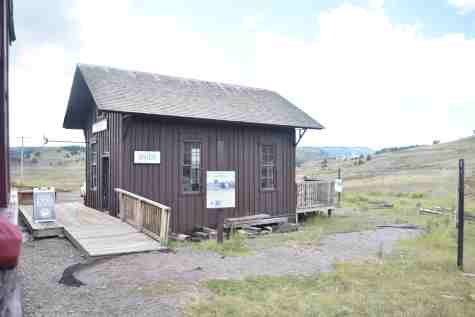
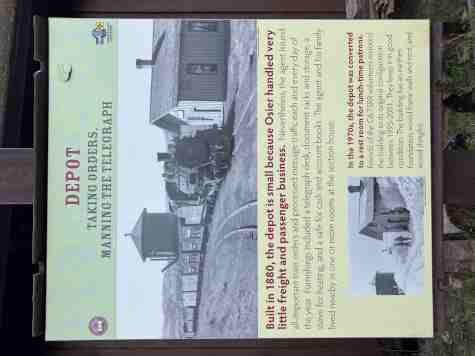
The Osier depot.
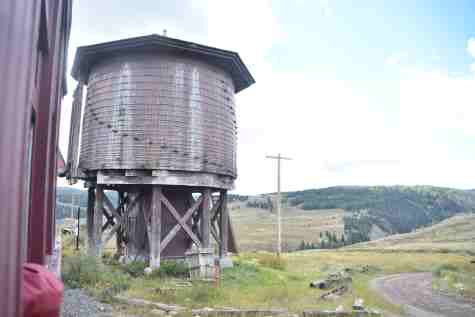
The water tower.
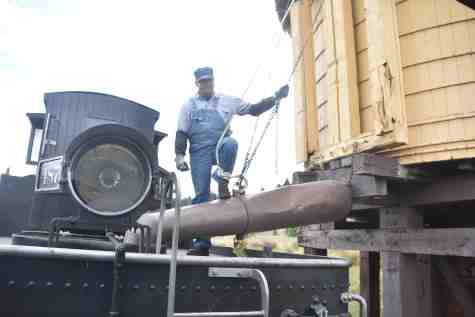
Taking on water. Everyone partook in the lunch buffet and there was plenty of time to explore afterwards.
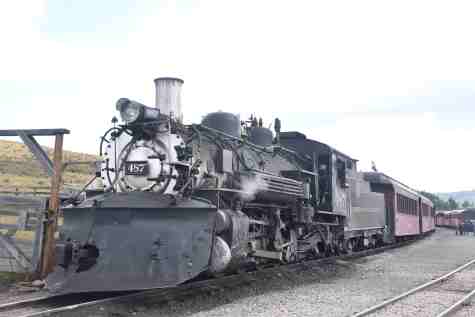 >
>
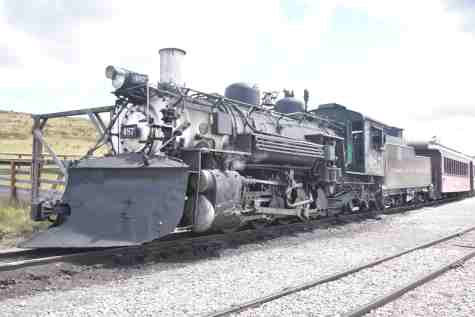
Cumbres and Toltec Scenic Railroad 2-8-2 487, nee Denver and Rio Grande 487, built by Baldwin in 1925.
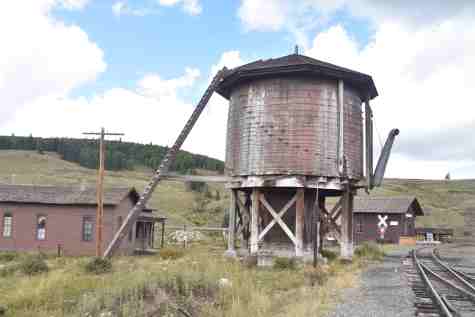
The water tower; the first was built in 1880 and the present is a replacement. It holds 50,00 gallons and is gravity-fed from an underground spring.
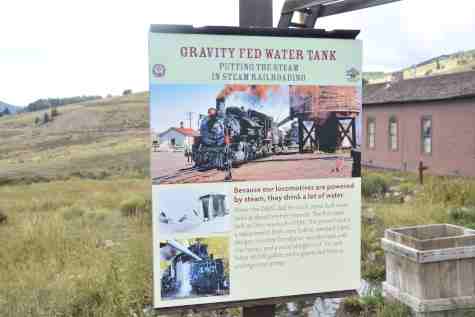
Water tank story board.
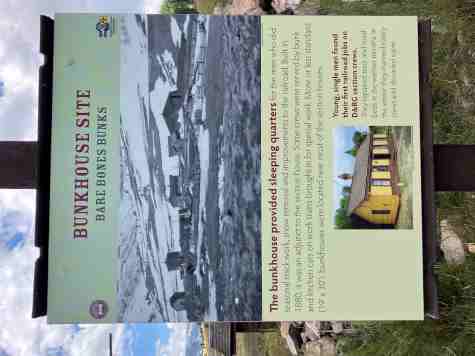
The bunk house site story board.
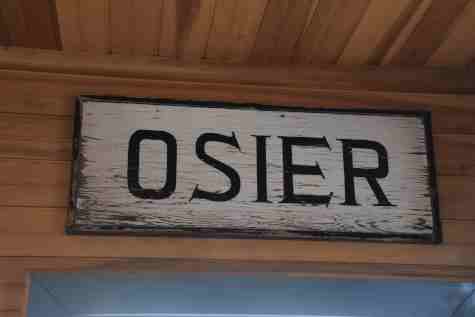
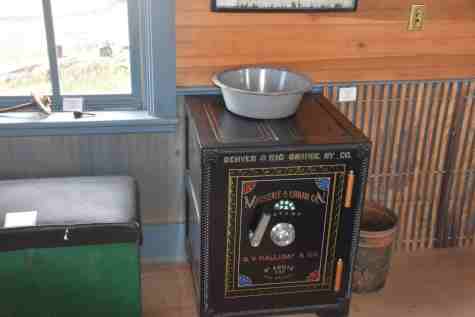
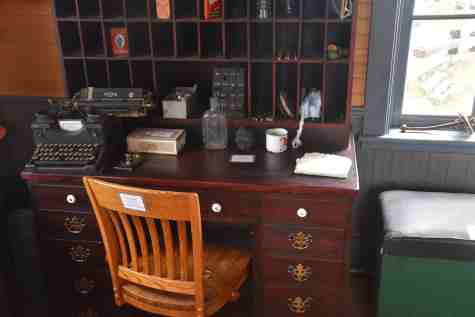
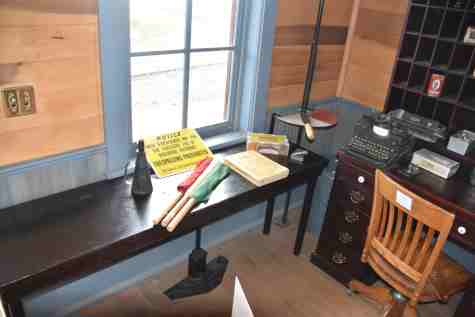
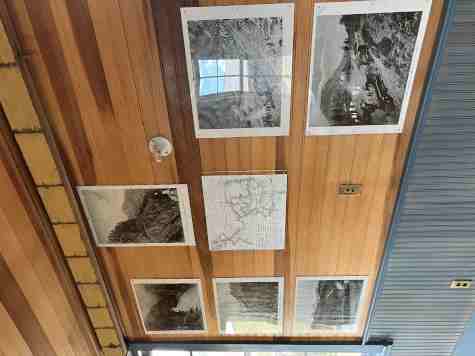
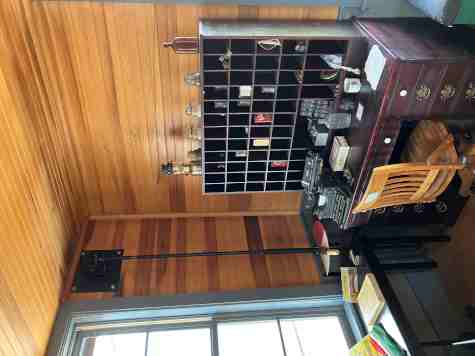
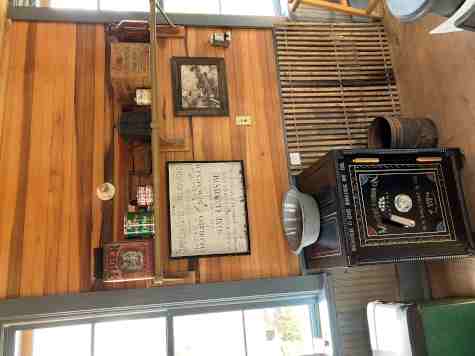
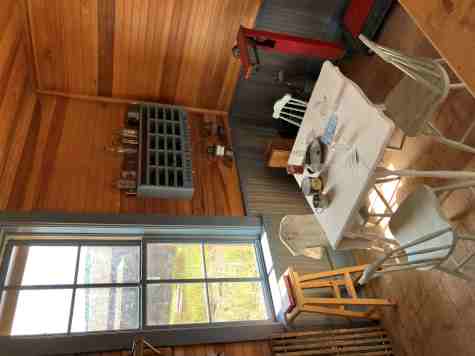
Interior views of the depot.
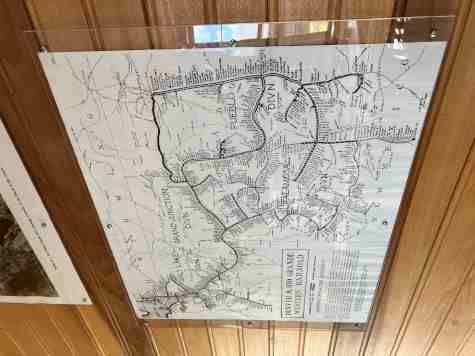
Denver and Rio Grande Western map. The angle from which this photograph was taken was to alleviate the reflection from the windows.
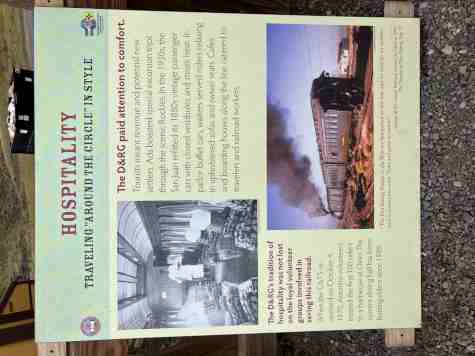
Hospitality "traveling around the circle" in style story board.
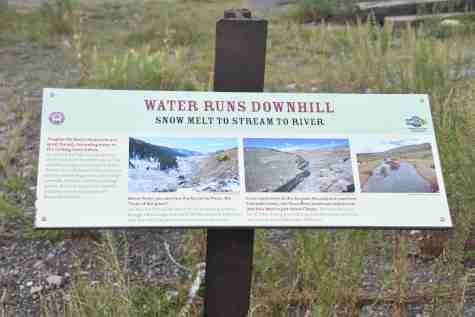
Water runs downhill snow melt to stream to river story board.
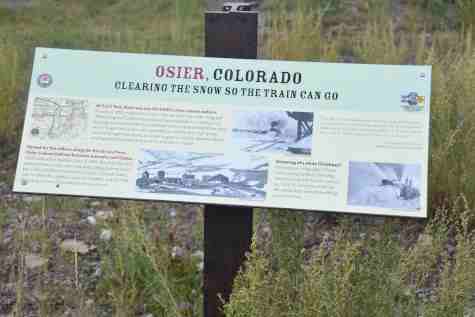
Osier, Colorado clearing the snow so the train can go story board.
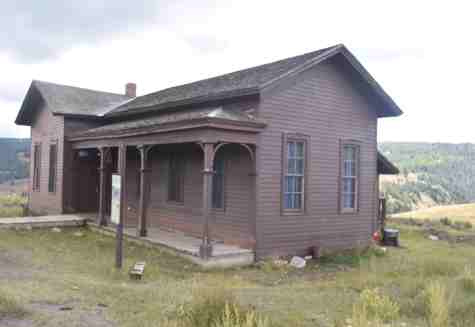
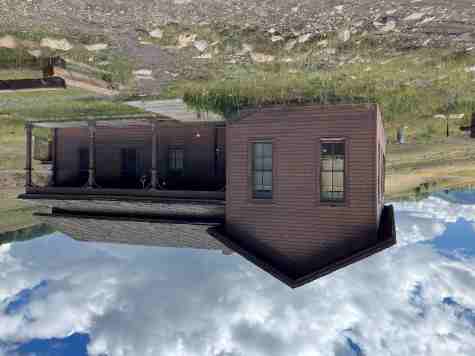
The section house.
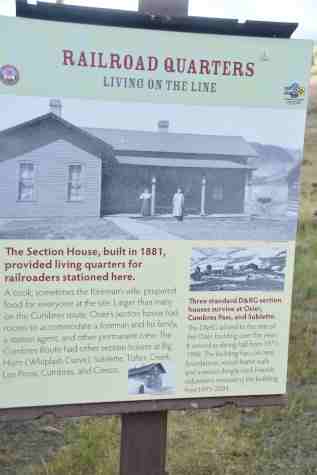
Railroad quarters living on the line story board.
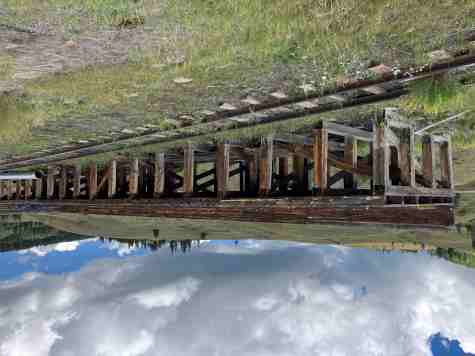
The coal platform.
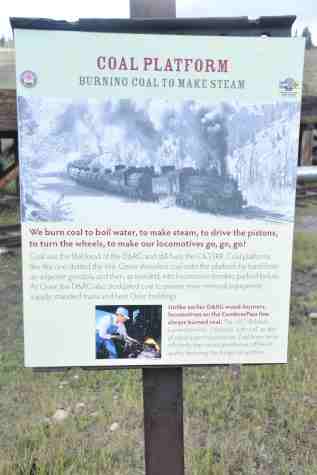
Coal platform story board.
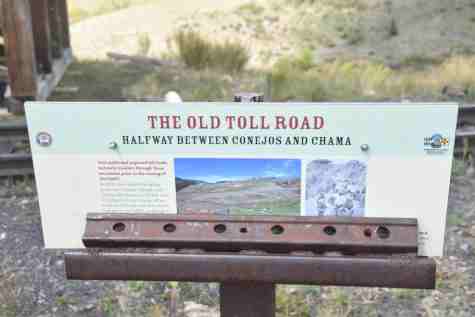
The old toll road halfway between Conejos and Chama story board. All story boards were a project of the Friends of the Cumbres and Toltec Scenic Railroad.
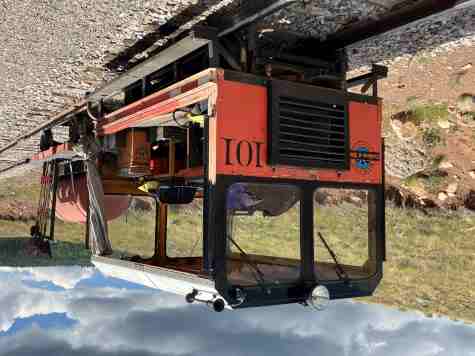
Fire speeder 101.
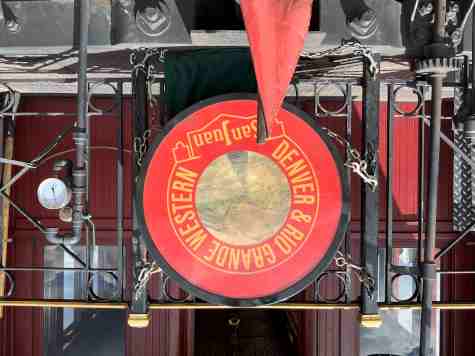
The rear of the train with the San Juan drumhead. As our group was returning to Chama, we were instructed to board the train led by 487, so consist photographs were taken.
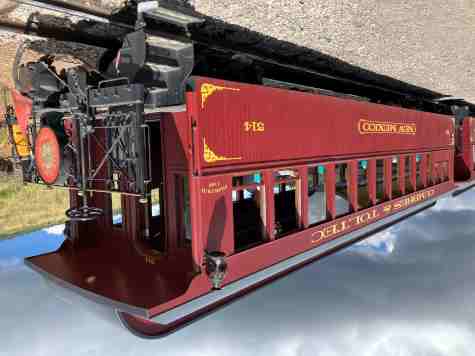
Cumbres and Toltec Scenic Railroad coach 514 "New Mexico", ex. Cumbres and Toltec 514 "Ojo Caliente", nee Denver and Rio Grande Western flat car 6538, built by the railroad in 1986.
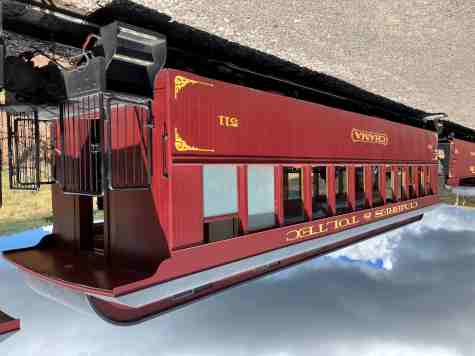
Cumbres and Toltec Scenic Railroad coach 511 "Chama", ex. Cumbres and Toltec Scenic Railroad 511 "Joseph C. Vigil", exx. Cumbres and Toltec Scenic 511 "Santa Fe", nee Denver and Rio Grande Western flat car 6501, built by the railroad in 1986.
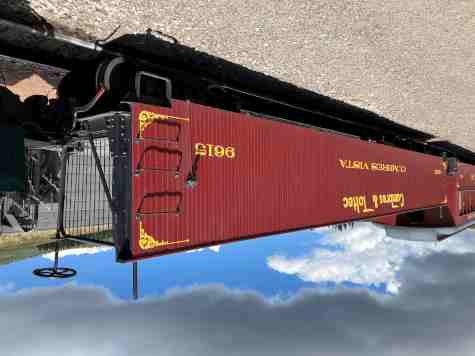
Cumbres and Toltec Scenic Railroad open air gondola 9615 "Cumbres Vista", ex. Denver and Rio Grande Western 9613, nee standard gauge box car, built by the railroad in 1953.
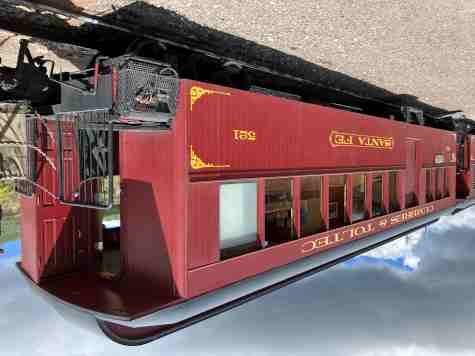
Cumbres and Toltec Scenic Railroad coach 521 "Santa Fe", ex. Cumbres and Toltec 521 "Osier", nee Denver and Rio Grande Western flat car xxxx, built by the railroad in 1993.
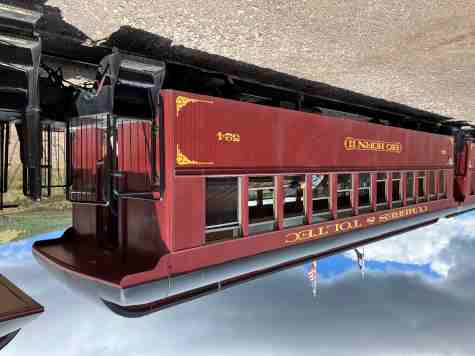
Cumbres and Toltec Scenic Railroad coach 524 "Big Horn II", details unknown.
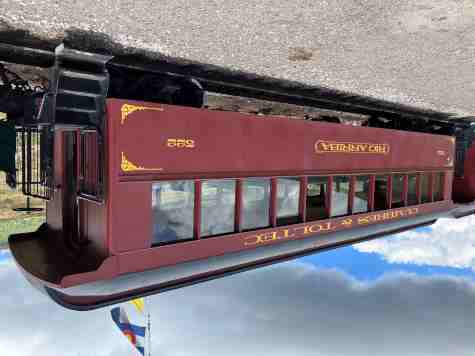
Cumbres and Toltec Scenic Railroad coach 522 "Rio Arriba", ex. Cumbres and Toltec 522 "Sublette", nee Denver and Rio Grande Western flat car AX4606, built by the railroad in 1993.
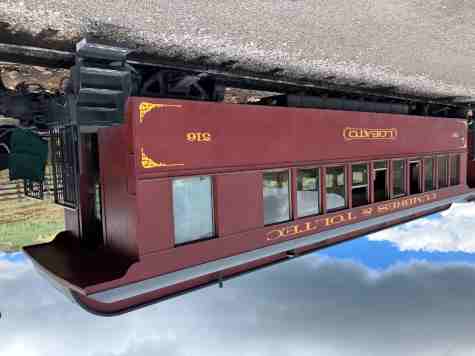
Cumbres and Toltec Scenic Railroad coach 516 "Lobato", ex. Cumbres and Toltec 516 "Dulce", nee Denver and Rio Grande Western flat car 6543, built by the railroad in 1986.
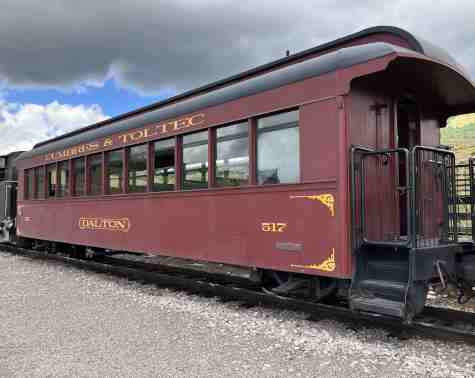
Cumbres and Toltec Scenic Railroad coach 517 "Dalton", ex. Cumbres and Toltec 517 "Big Horn", nee Denver and Rio Grande Western flat car AX4629, built by the railroad in 1997.
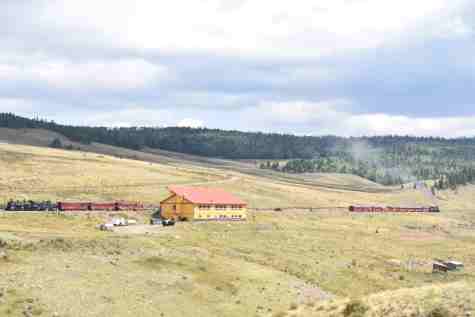
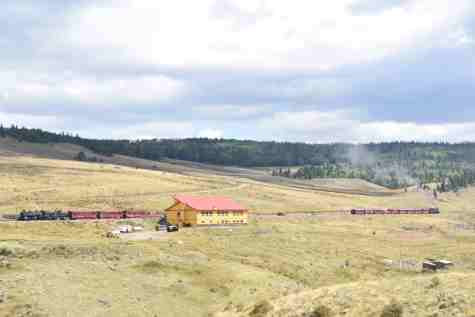
The two trains at Osier, the one on the left is going to Chama and the other is bound for Antonito.
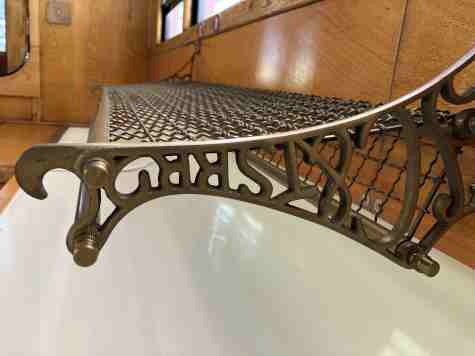
At both ends of each luggage rack in every coach are the initials of the railroad.
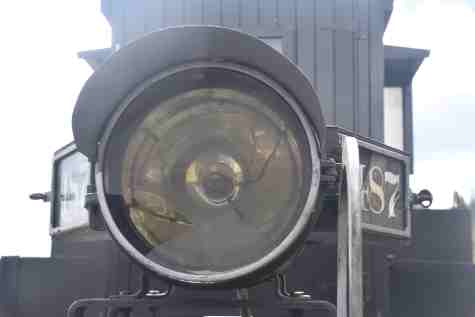
The number boards and rear headlight of our steam engine.
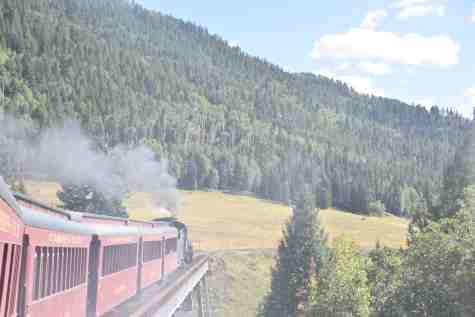
Travelling over Lobato Trestle.
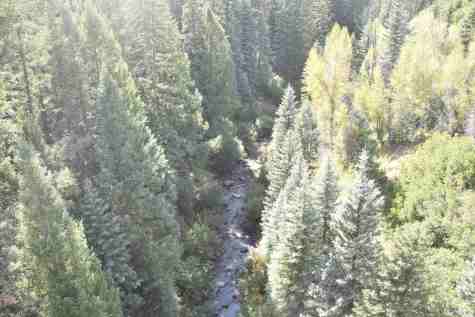
Wolf Creek.
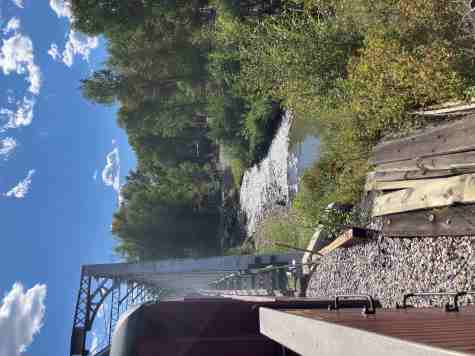
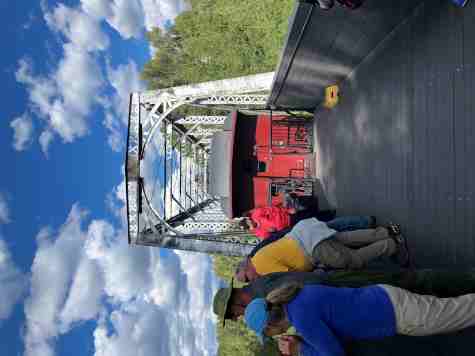
Crossing the Chama River at Milepost 343.6.
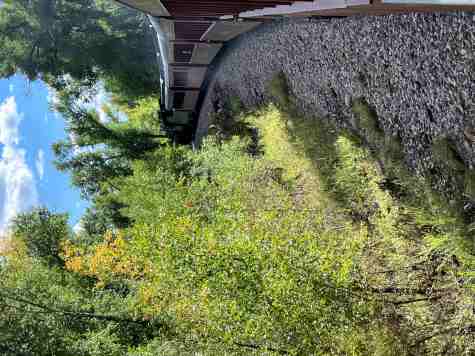
Getting closer to the yard.
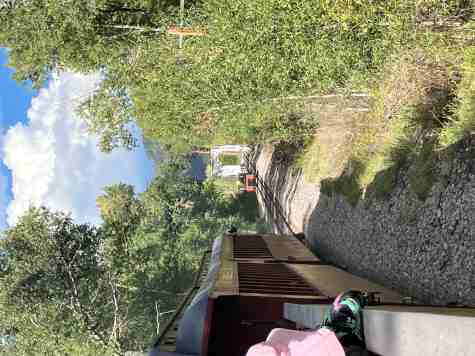
Fire speeder 101 following us.
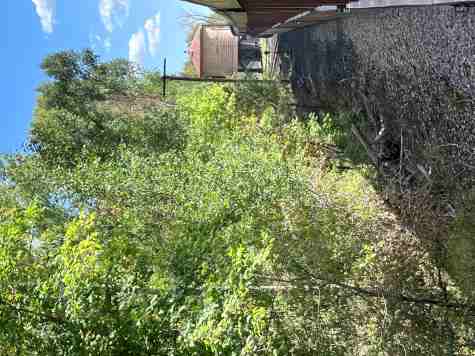
Approaching the water tower.
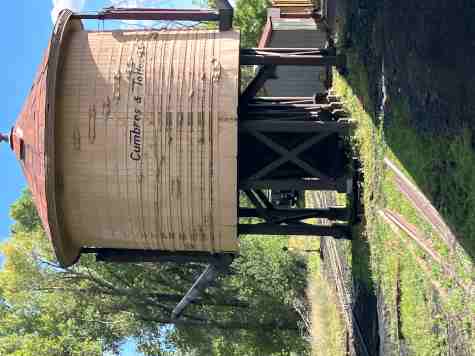
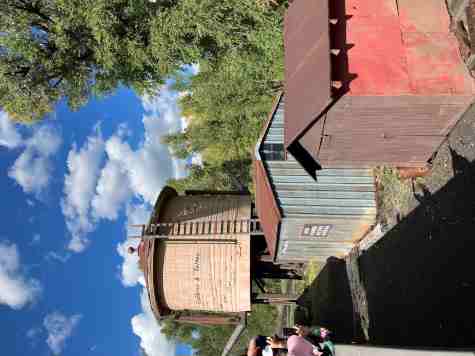
The Chama water tower built in 1887.
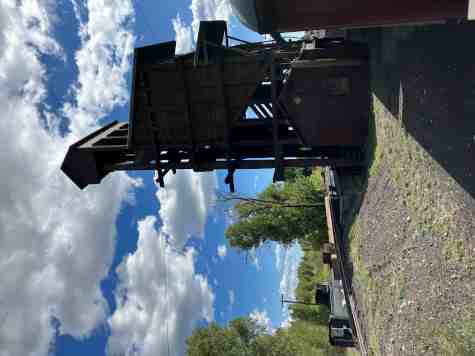
The coaling tower built in 1924 by Fairbanks Morse.
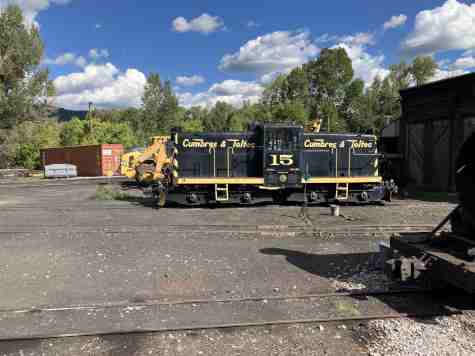
Cumbres and Toltec Scenic 47 ton switcher 15, built by General Electric in 1943 for the Railway & Land Company in Hawai'i. It was later sold to the Camino Cable & Northern, a tourist railroad based in Camino, California. It then went to the Georgetown Loop and finally was moved to the Colorado Railroad Museum.
That brought an end to this excursion and the 2025 Heritage Rail Alliance conference. The shuttle van picked up the conference attendees and returned us to Durango. Elizabeth and I were sitting next to Jeff Terry, who works for CPKC and is also a Railfan and Railroad Magazine columnist, and offered to drive him to his hotel, which we did. After dinner at Jimmy John's, I drove to Farmington and we checked into the Courtyard by Marriott Hotel for the night.
| RETURN TO THE MAIN PAGE |