




Elizabeth and I both checked our e-mail and the Internet, then and after a good breakfast at the Fairfield Inn, we drove over to the Durango and Silverton for today's excursion to Cascade Wye.
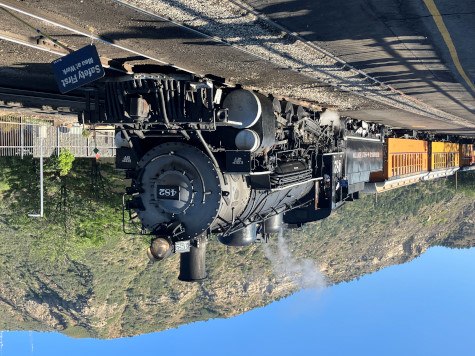
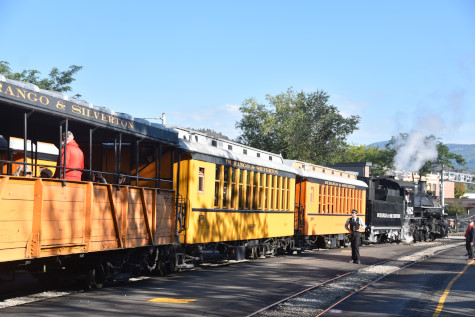
The second train of the day, led by Durango and Silverton 2-8-2 482, built by Baldwin in 1925.
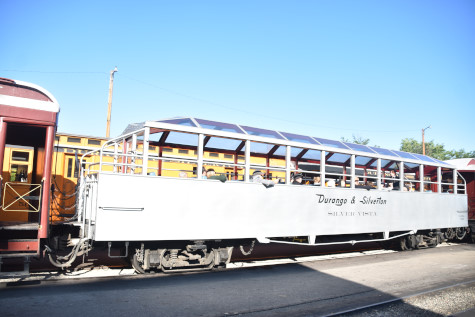
Durango and Silverton 313 "Silver Vista" built by the railroad in 2006 based on the original Denver and Rio Grande car of the same name.
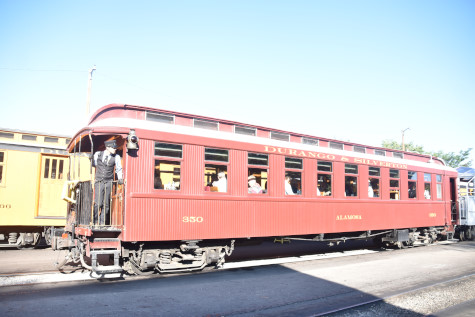
Durango and Silverton parlour car 350 "Alamosa", nee Denver and Rio Grande chair car 25 "Hidalgo", built by Jackson and Sharp in !880. It was rebuilt into a parlour car in 1957 and acquired by Durango and Silverton in 1981.
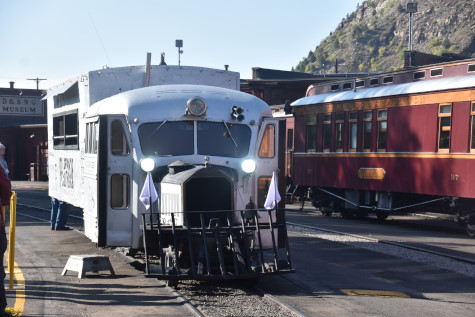
We were surprised to see Galloping Goose 5, from Dolores, Colorado, here, but then remembered that it often visits both Durango and Silverton and Cumbres and Toltec Scenic in the autumn.
If the Rio Grande Southern Railroad had ever been a profitable endeavor with the changing economy of its fledgling days, the "Galloping Goose" might never have been "hatched" to accommodate travel by rail in the remote and isolated regions of far southwestern Colorado. The railroad was conceived and built in 1890-91 by the unflappable "Pathfinder of the San Juans", Otto Mears. It was over 160 miles long and ran from the town of Ridgway, Colorado on the north to Durango, Colorado on the south going through the towns of Telluride, Rico, Dolores and Mancos.
The RGS's early revenues came mainly from the numerous silver and gold mines near Telluride, Ophir and Rico. Hauling hundreds of tons of precious metal ores and hundreds of passengers in and out of the area made the financial condition of the railroad extraordinarily strong for its first two and one-half years! However, the repeal of the Sherman Silver Purchase Act caused the Silver Panic of 1893, and silver prices plummeted. As a result, many silver mines were closed, people fled the area by the thousands, and the railroad slipped into its first receivership that same year.
Nevertheless, the railroad survived - just barely at times - for another 40 years hauling various kinds of freight and passengers until the stock market crash in 1929 spelled the almost certain financial failure of the railroad. However, there remained an obligation and responsibility for the railroad to provide reliable transportation for small amounts of freight, what few passengers there were, and the always-important U.S. Mail. It was time to economize! There had to be a way! There was. A new rail vehicle was born from an ingenious idea and developed into what later became widely known as the Galloping Geese.
In June 1931, the first "Motor" was built by master mechanic Jack Odenbaugh and his crew at the Southern's Ridgway shops. (Many locals referred to the RGS as simply "the Southern.") Eventually there was a fleet of seven in operation on the RGS. Motor No. 5 went into service on June 8, 1933. (The railroad officially called these vehicles Motors until 1950.)
The cost was $2,599 for No. 5, which was built with a 1928 Pierce-Arrow limousine body and running gear. It was rebuilt in 1946/47, using a World War II surplus GMC gasoline truck engine and a Wayne Corporation bus body. In 1950, the freight/mail compartment was converted to carry 20 additional passengers for sightseeing trips. With a one-man crew, and operating on gasoline rather than steam, our local Galloping Goose and its fellow goslings fit the bill for economic travel.
Even though originally built from Buicks and Pierce Arrows, the word "dignified" never seems to have been included in their description, but they were serviceable and definitely fit their purpose. Traveling through the countryside with a horn that could easily be mistaken for the call of a real goose, they were said to have "waddled" down the uneven, poorly maintained tracks of the cash-strapped Rio Grande Southern.
Throughout the Great Depression, World War II and all the way to abandonment in 1952, the RGS continued to operate steam engine powered trains on an irregular schedule as needed for hauling heavy freight and livestock shipments. However, by mid-1933, a Motor - a Galloping Goose - was used for hauling most passengers, small amounts of freight and the U.S. Mail.
From 1891 until 1933, the RGS carried passengers and mail in coaches and mail cars on regularly scheduled passenger trains. After 1933, the only choice for folks traveling through far southwestern Colorado by rail was the not-so- spacious accommodations of a waddling, honking Galloping Goose. "Sometimes the ride included such entertainment as going over the top of Lizard Head Pass in a blinding blizzard in an unheated Goose or waiting somewhere along the line for floodwaters to subside, but in most cases it was "the only way to fly."
After World War II, the old muddy wagon roads slowly became the more like highways, and trucks and passenger buses began to rob the railroad of business. In 1950, the federal government did not renew the U.S. Mail contract with the RGS and financially, that was the last straw. Tourist passenger traffic during the summers of 1950 and 1951 did not generate enough revenue to keep the failing railroad alive.
In April 1952, the Interstate Commerce Commission gave permission to the Receiver in Denver to abandon the entire railroad. The first rails were pulled up in early September of 1952 and by March of 1953 the scrappers had finished their job and it was all gone! That is to say, the railroad line was gone but some of the equipment survives to this day, including Galloping Goose No. 5 nesting here in Dolores.
In 1952, members of the Dolores Rotary Club purchased Galloping Goose No. 5 from the court-appointed receiver for $250. It was then put it on display in Flanders Park in Dolores as a reminder of the town’s railroad heritage.
The Galloping Goose Historical Society of Dolores, Inc. was founded in 1987. The Society's first big project (in 1991) was to build a replica of the original RGS Dolores depot. The new building is slightly northeast of the original location. It is a Victorian structure and painted in the RGS color scheme of buff yellow with brown trim and houses the Society's railroad museum and gift shop.
In 1997 and 1998, the Society completely restored Galloping Goose No. 5 to operating condition through the efforts of hundreds of hours of volunteer labor and thousands of dollars in donations. Goose No. 5 made its first run in almost 47 years on the Cumbres & Toltec Scenic Railroad in May 1998 and is now a very popular attraction operating on both the Cumbres & Toltec Scenic Railroad and Durango & Silverton Narrow Gauge Railroad.
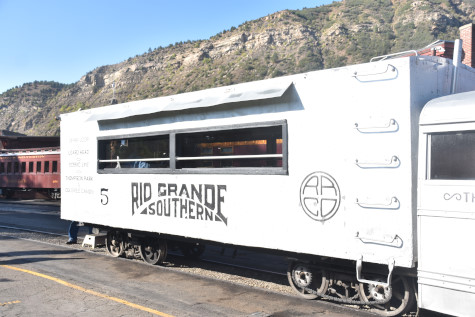
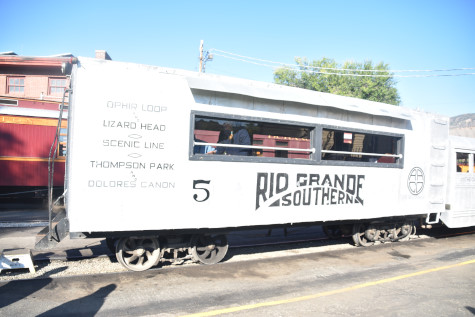
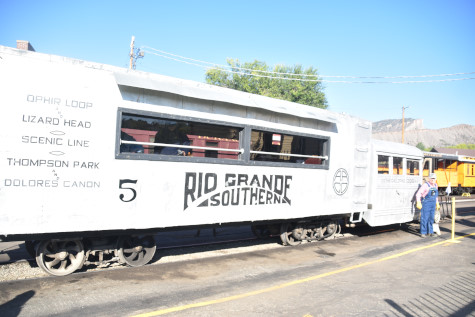
The side of Galloping Goose 5, one of seven built.
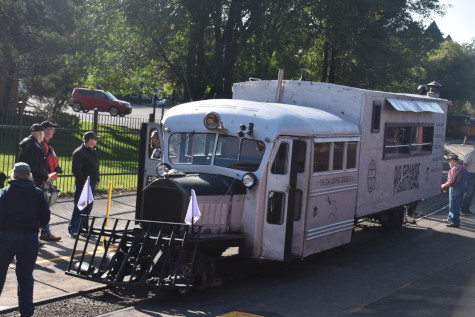
An on-board view of the Galloping Goose.
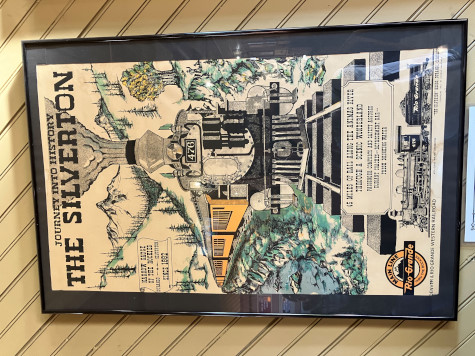
A poster from the past "Journey into History, the Silverton" in the depot.
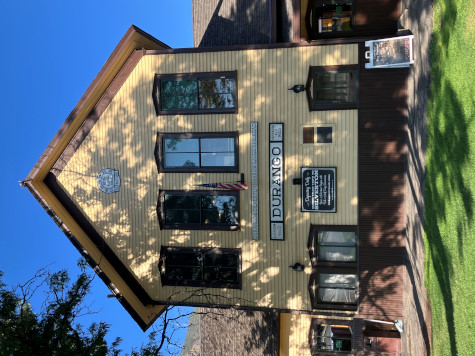
The Durango station built in 1881.
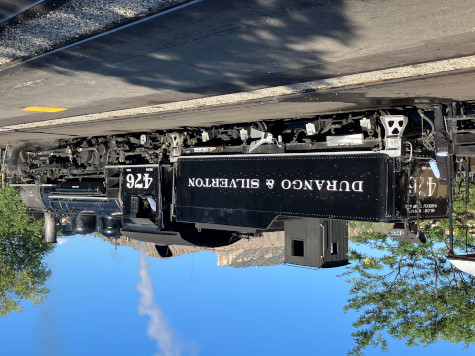
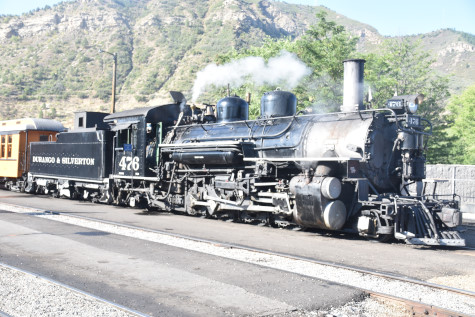
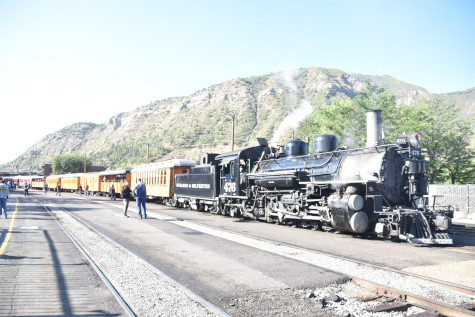
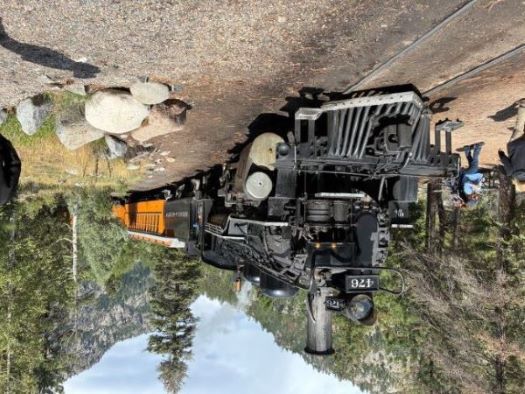
Ready to take us to Cascade was Durango and Silverton 2-8-2 476, Denver and Rio Grande Western 476, built by American Locomotive Company in 1923, which led the San Juan Express passenger train between Durango and Alamosa until 1951 when that service ceased.
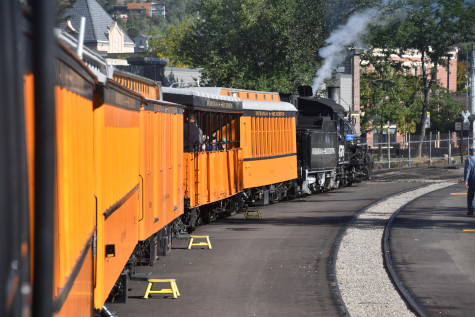
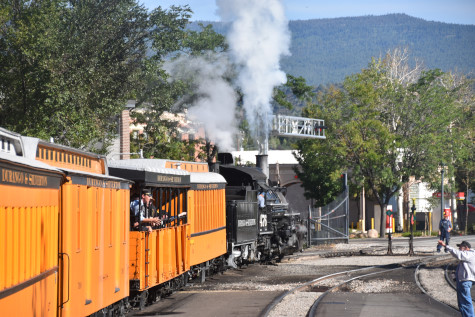
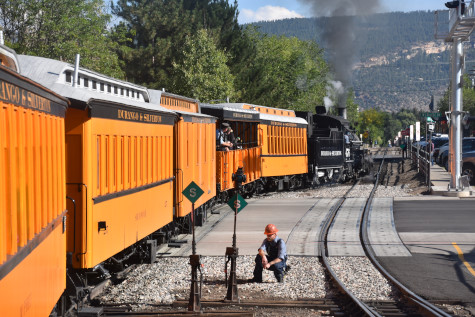
Crossing West College Drive as we leave the property.
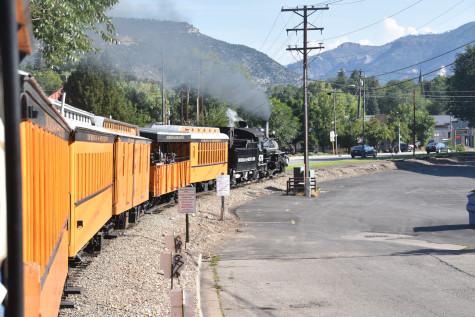
Departing Durango.
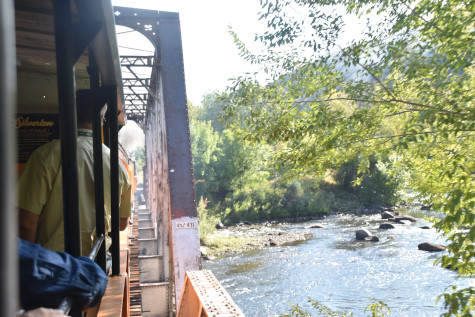
Crossing the Animas River at Milepost 452.431 on a through truss bridge, 246 feet long, built in 1881. The original bridge was washed away in a powerful flood in 1911 and it was replaced with the current metal-framed bridge.
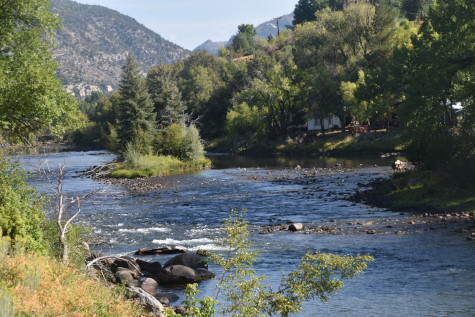
Animas River we would follow to Cascade Wye.
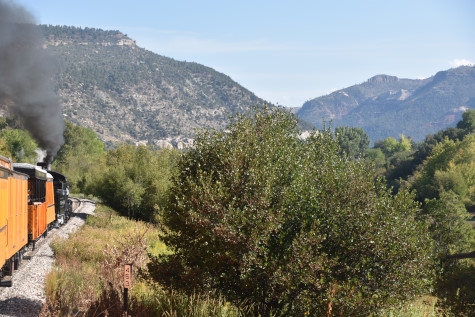
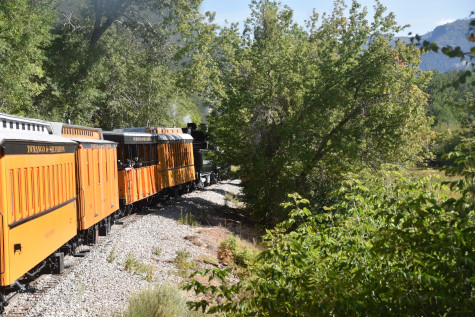
Durango and Silverton 2-8-2 476 leads the train.
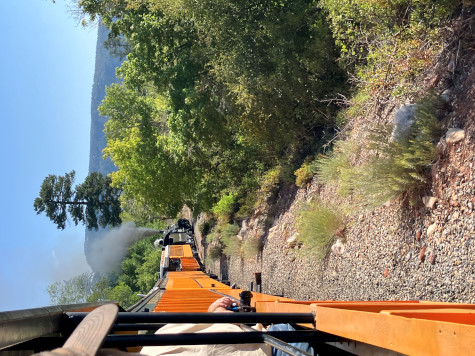
A Ponderosa Pine ahead of the train.
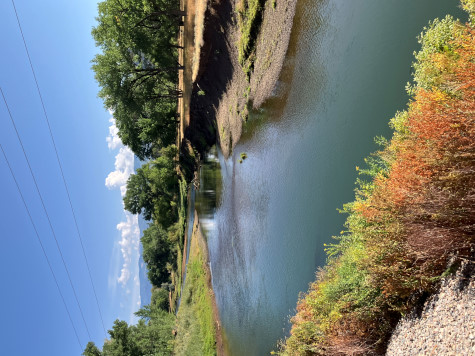
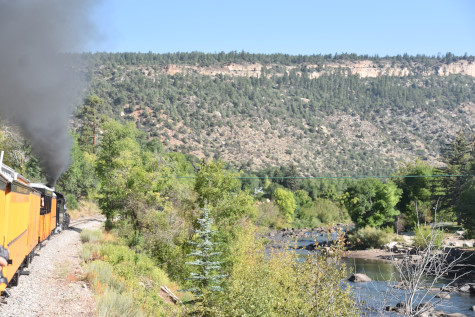
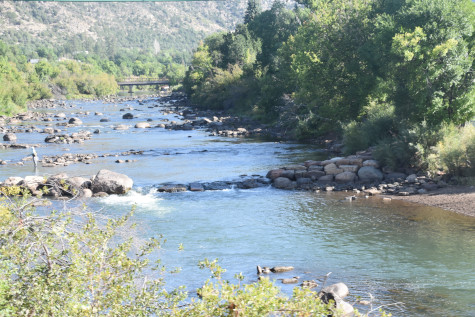
The river was very beautiful this morning.
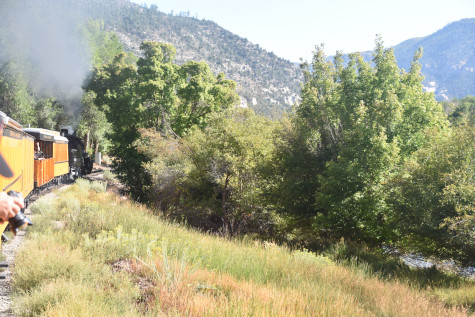
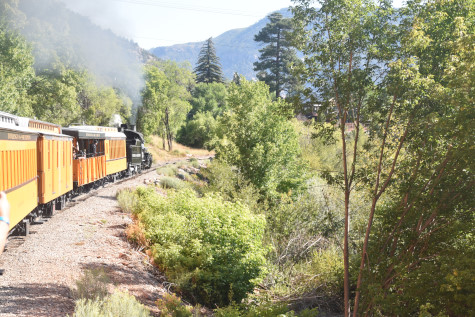
Rounding a curve en route to Cascade Wye.
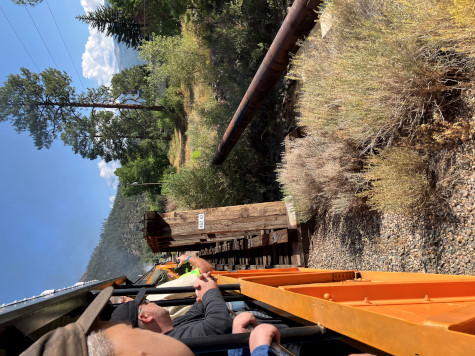
Trestle 462.42.
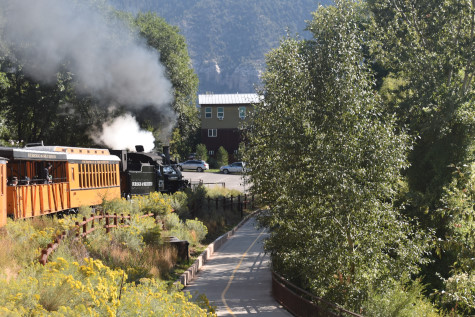
The Animas River Trail.
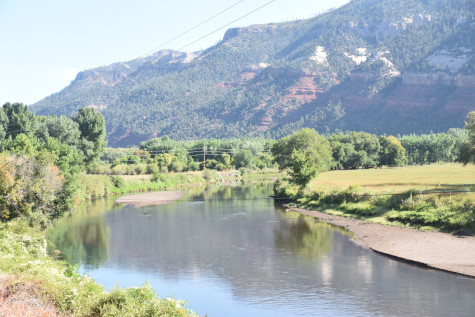
Animas River.
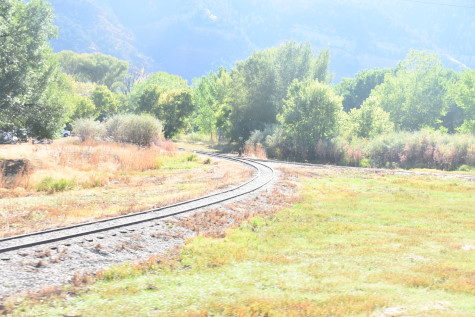
The wye to where the Polar Express train runs in December.
The view looking to the northeast.
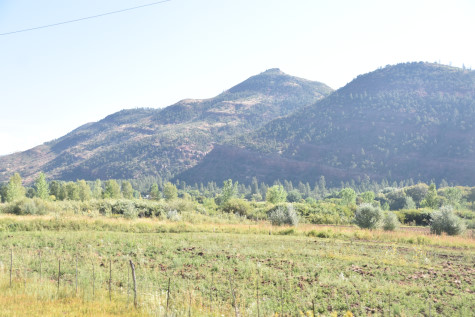
The hillside of the northeast.
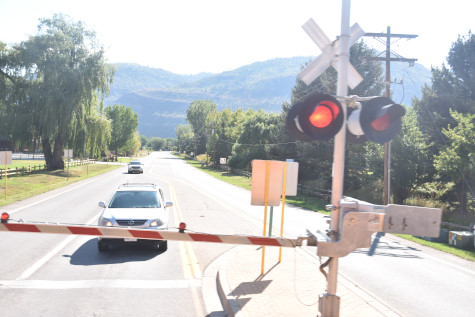
The road we took to the Bar D Ranch two days ago.
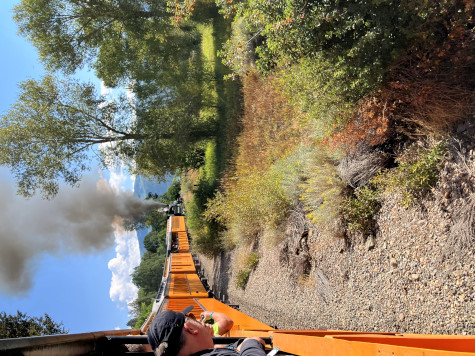
Rounding another curve.
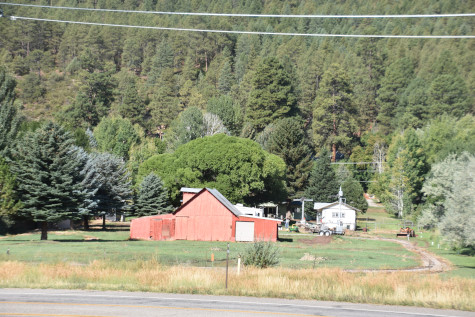
The Animas Valley Railroad, where my friend Robin Bowers and I rode the live steam operation in 2016.
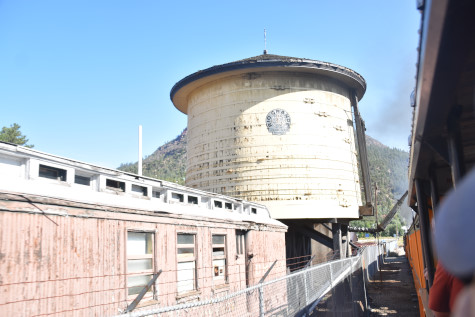
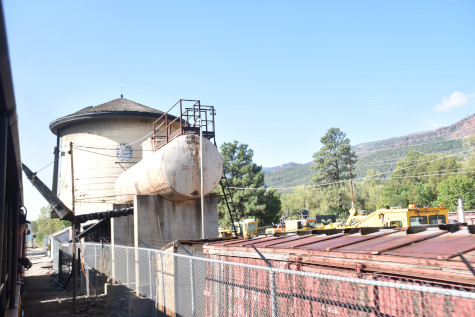
The Hermosa water tower at Milepost 462.5.
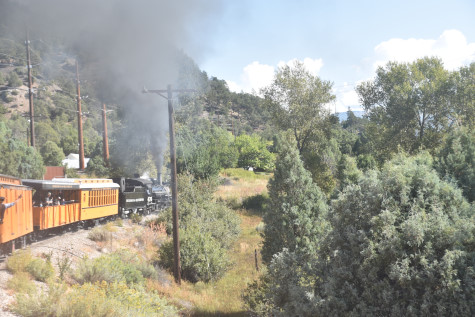
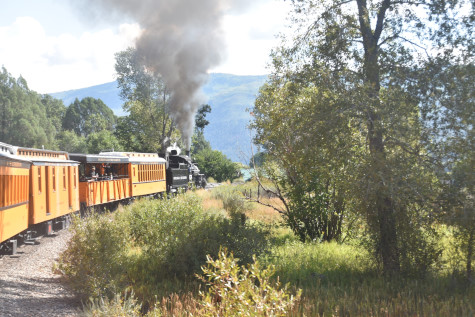
After crossing US 550.
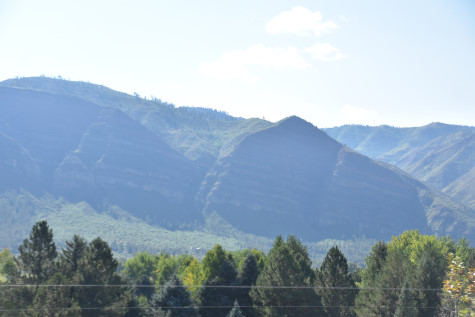
Looking east across the valley.
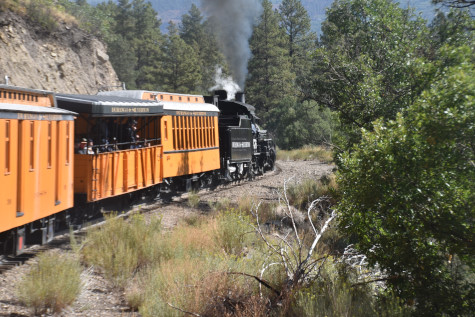
Durango and Silverton 2-8-2 476 leading the train.
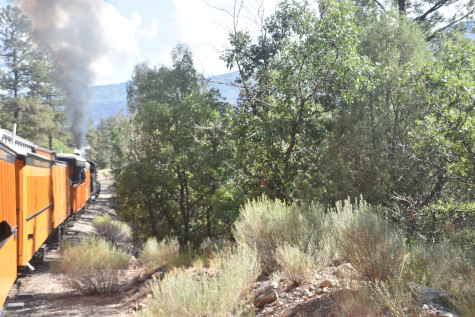
Pinkerton siding, Milepost 465.75.
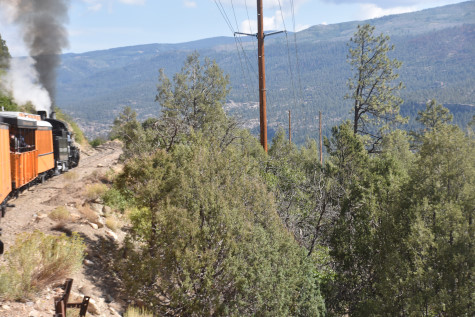
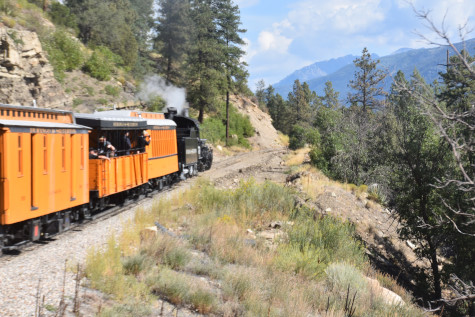
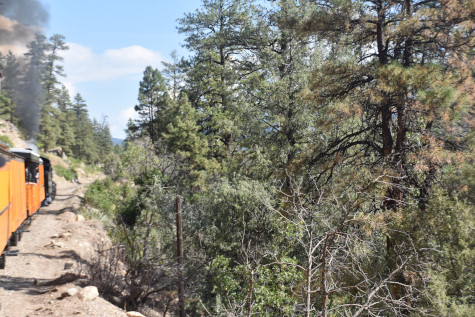
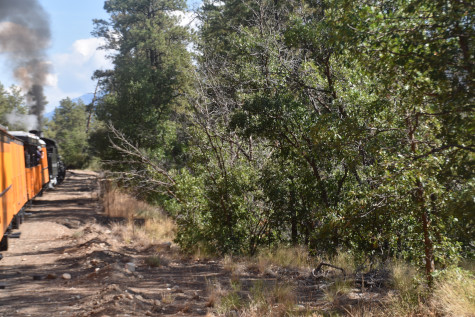
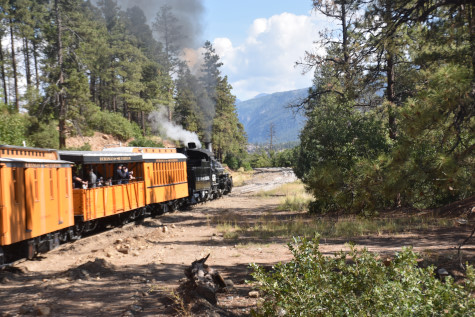
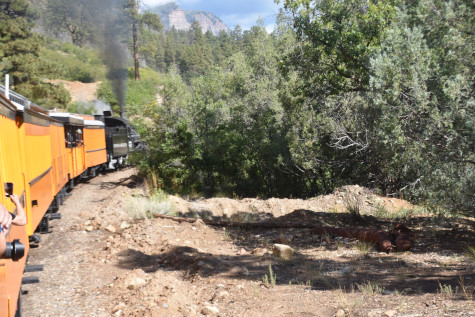
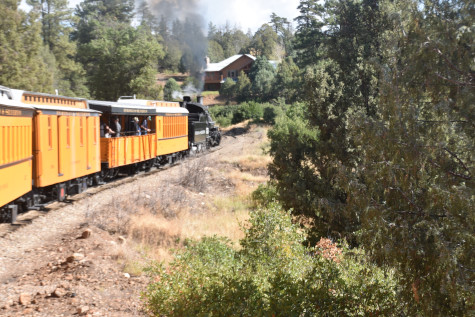
Rounding several curves along our route.
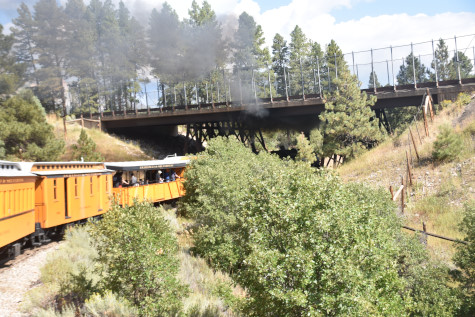
Curving under the US 550 bridge.
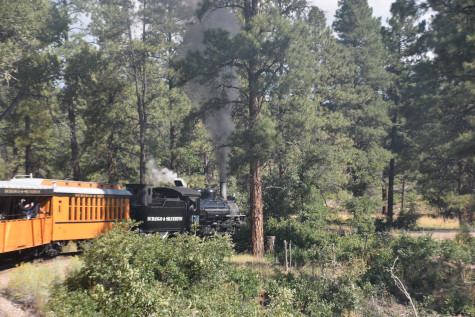
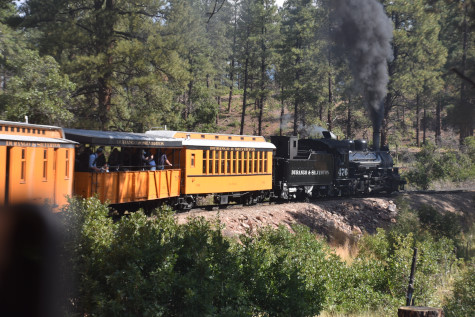
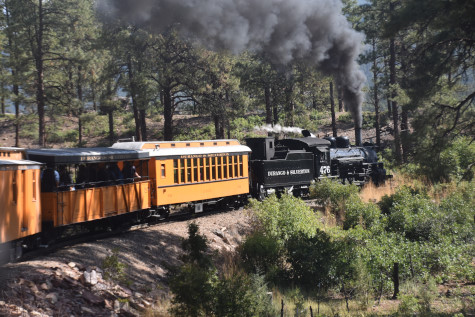
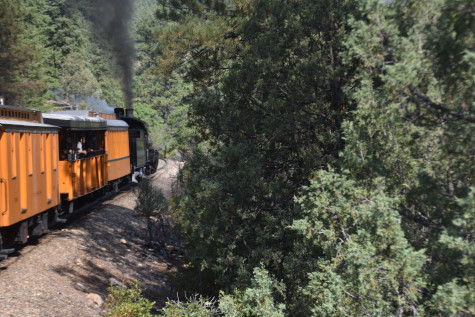
After the Glacier Club Drive highway crossing.
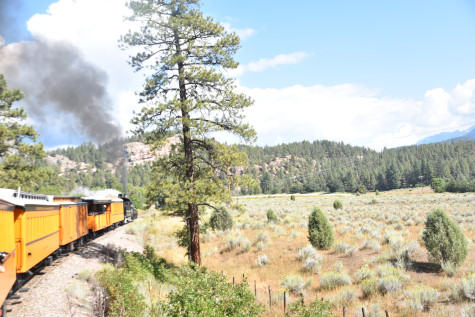
Ponderosa pines.
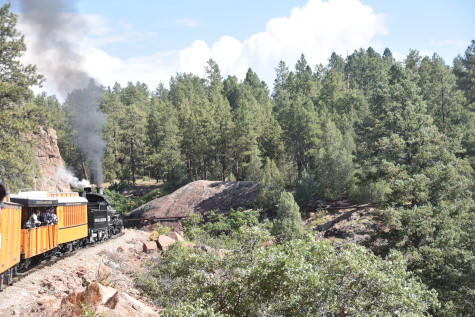
Rounding a curve to a photo location from a few years ago.
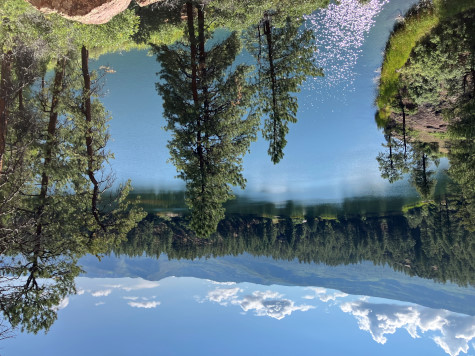
Shalona Lake.
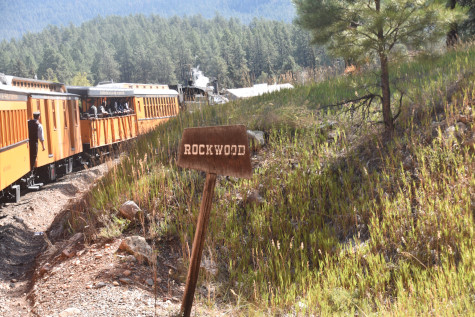
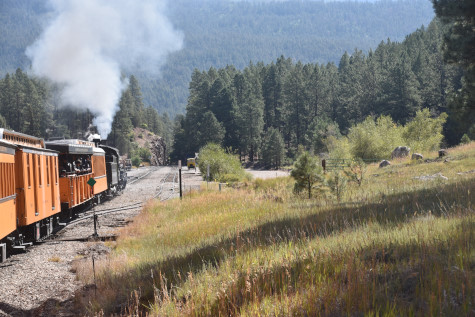
Rockwood.
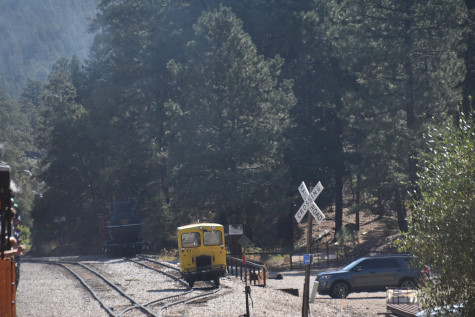
Fire speeder 472 was still there; we passed it two days ago on the pre-conference excursion to Silverton..
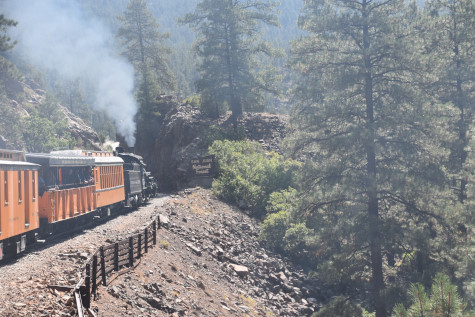
Entering the San Juan Forest.
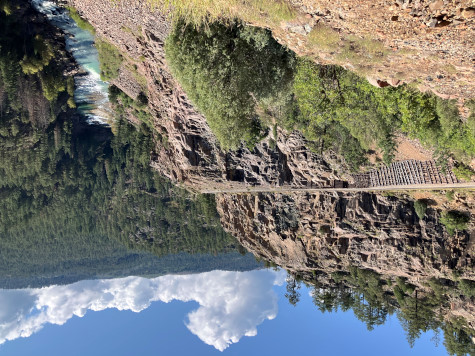
The High line of the Durango and Silverton Railroad.
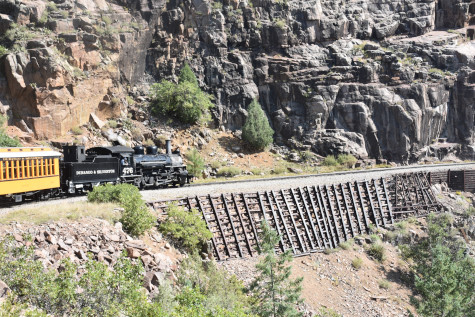
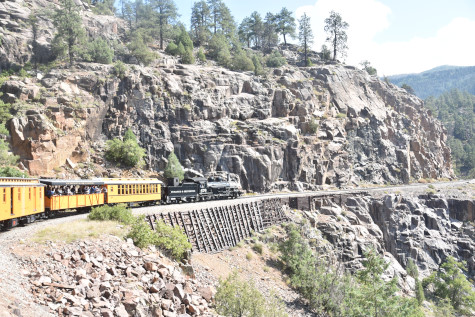
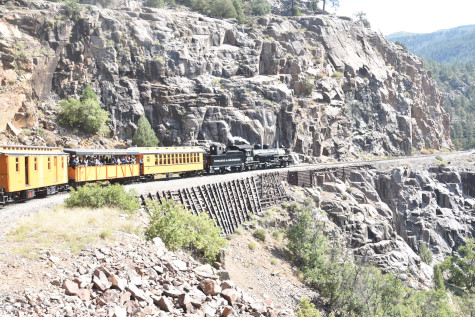
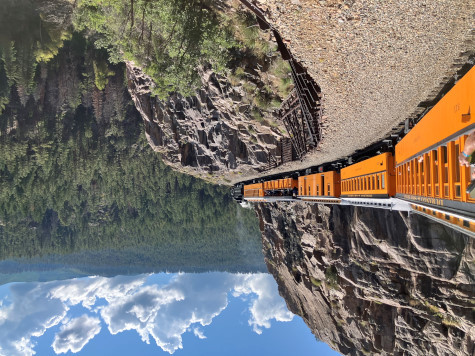
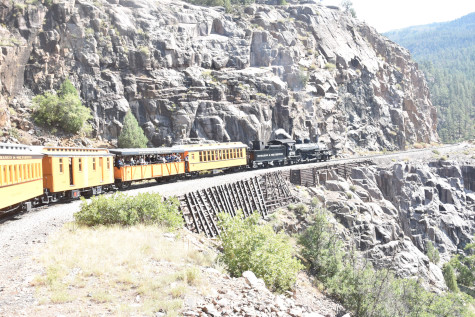
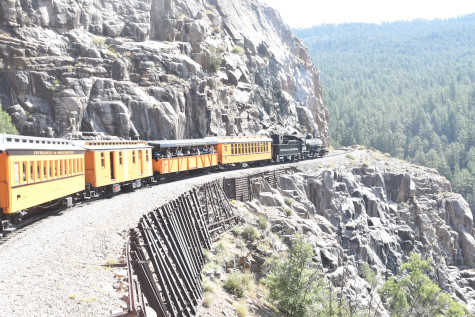
The journey over the High Line.
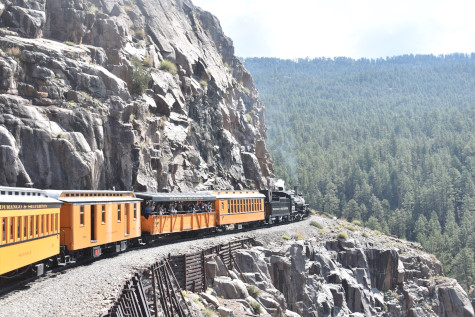
Stll on the High Line.
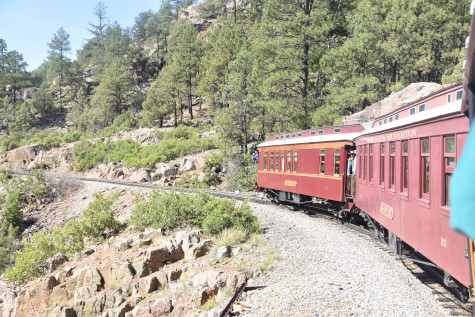
Looking back at the "General Palmer".
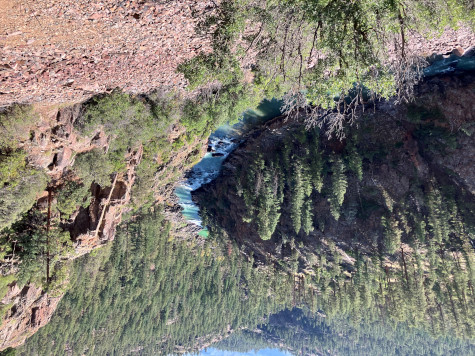
The Animas River that we would follow to Cascade Wye.
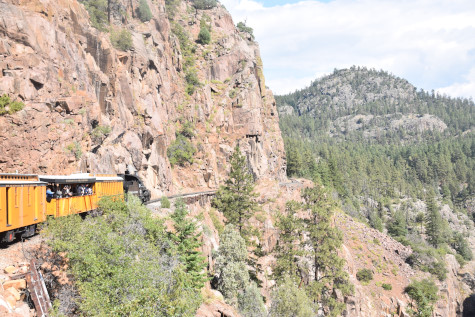
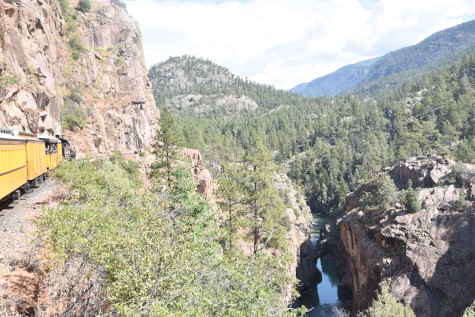
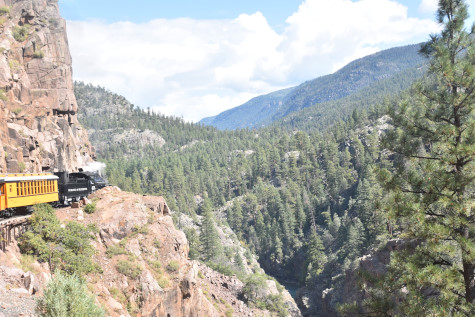
Continuing to travel though the highlight of this excursion.
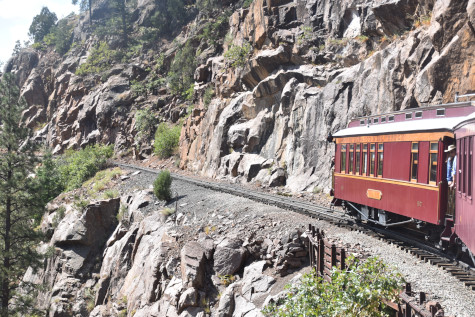
The "General Palmer" on our rear.
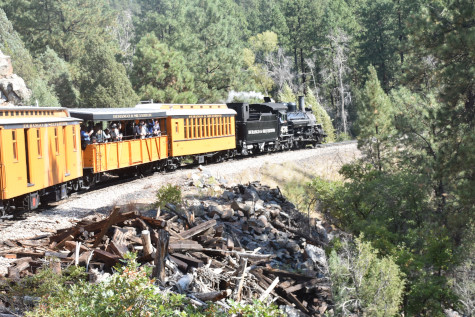
Track maintenance was evident by a pile of railroad ties.
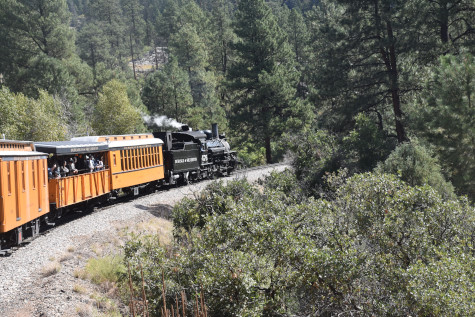
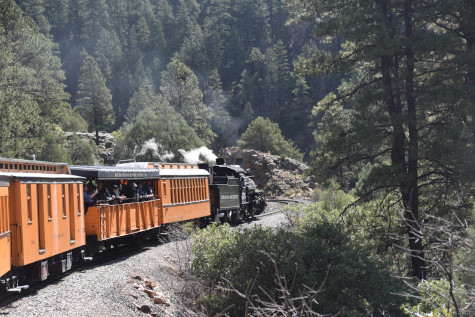
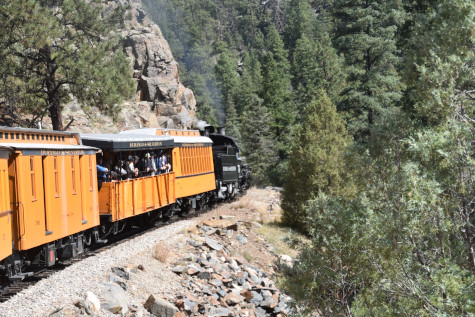
Rounding a curve.
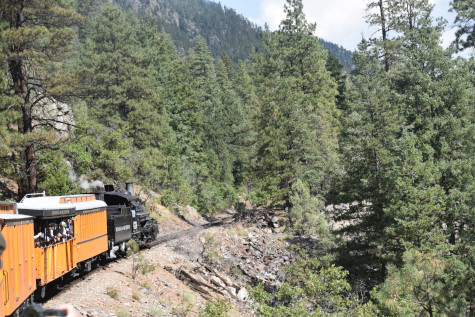
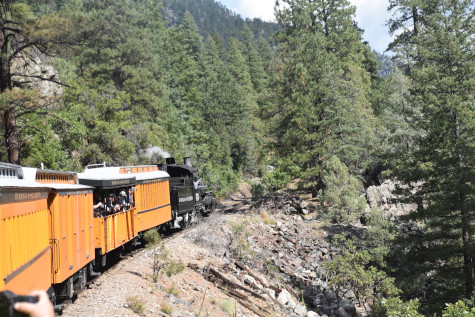
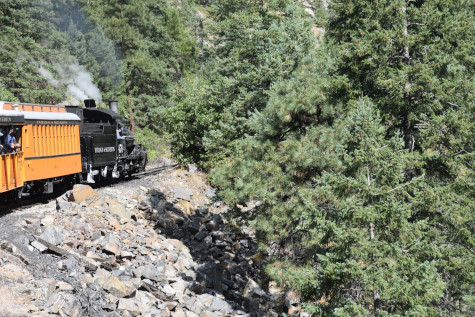
Another curve to gain elevation.
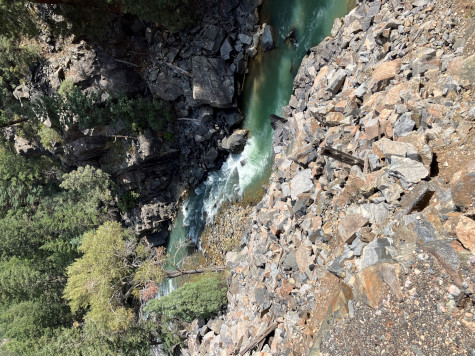
The Animas River was climbing up to meet us.
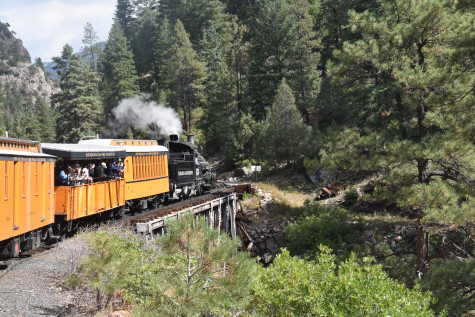
Crossing the High Bridge, 190 feet long, made of steel girders with a heavy deck.
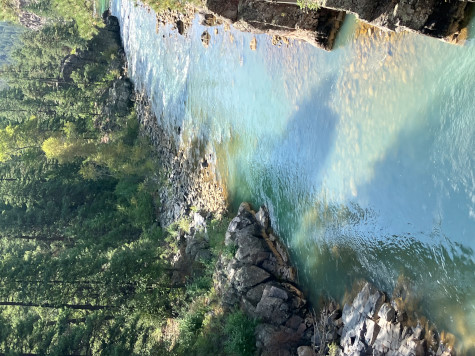
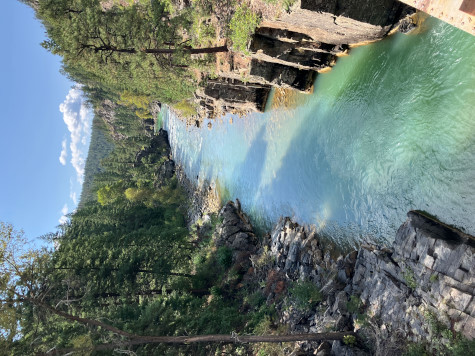
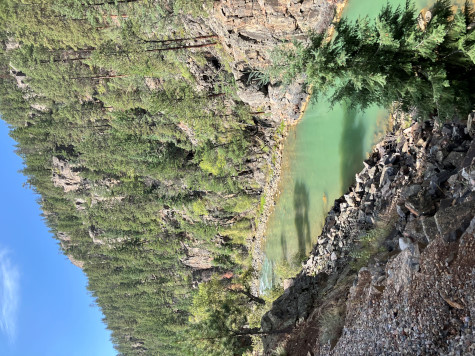
Beautiful vistas as we crossed.
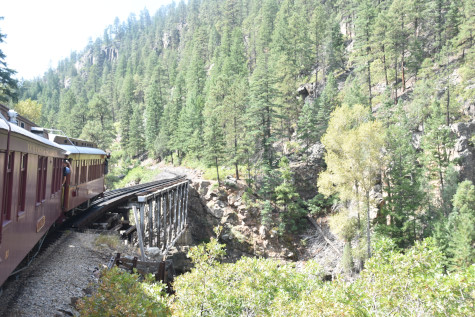
The "General Palmer" came off the bridge.
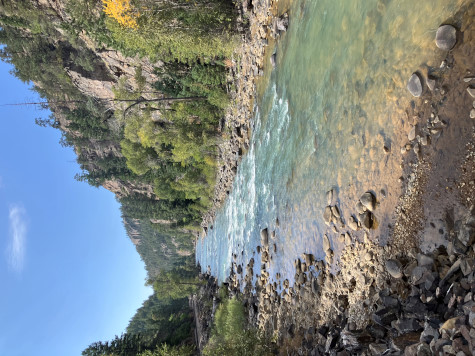
Looking back to where we had been.
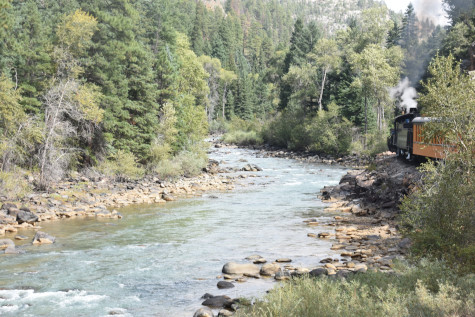
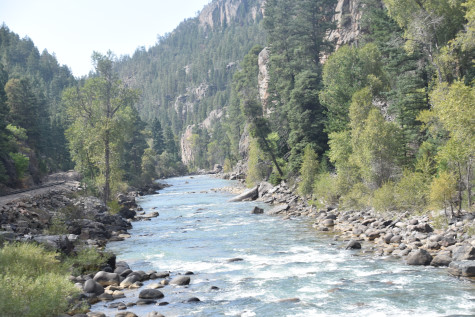
Continuing our journey.
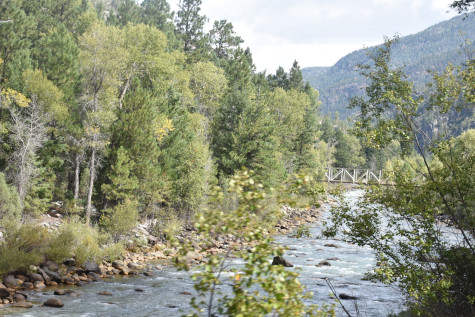
The bridge at Tacoma.
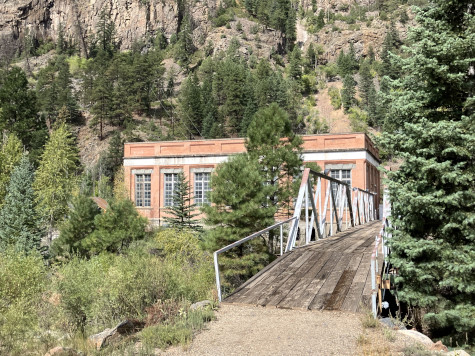
The hydroelectric Tacoma Power Plant at Milepost 472.28 was built in 1905 and began operations the following year. Two of the three generators at the plant are original. Transformers originally intended for Tacoma, Washington were sent here with Tacoma Hydro Power stamped on the crates. The local supervisor thought the label referred to his power plant and the name stuck. The first recipient of electricity from Tacoma was a mill in Silverton and the town still receives power from here.
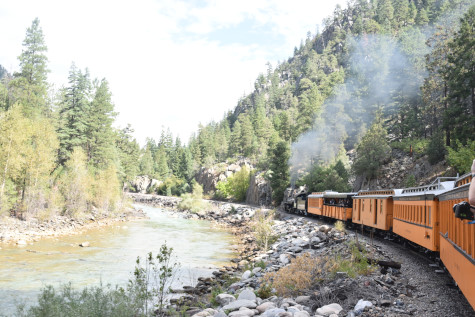
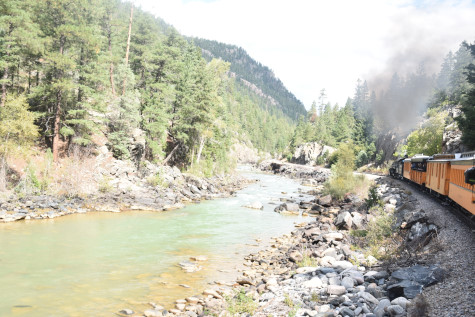
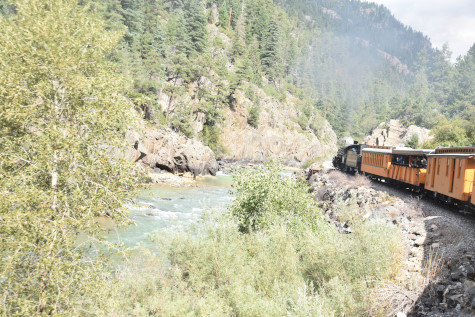
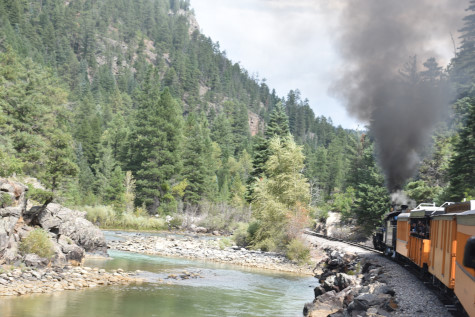
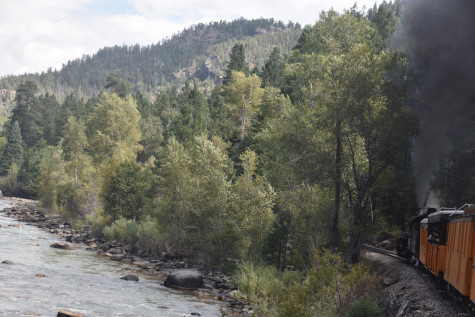
The train and the Animas River.
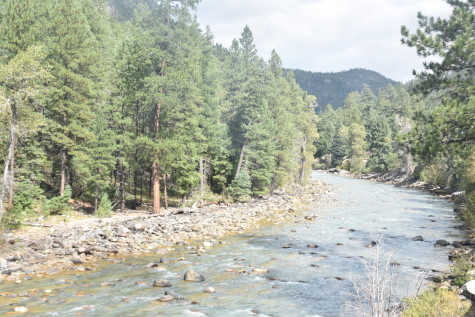
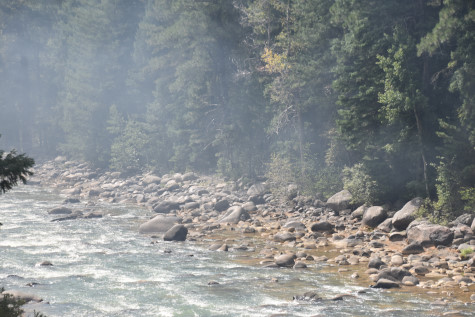
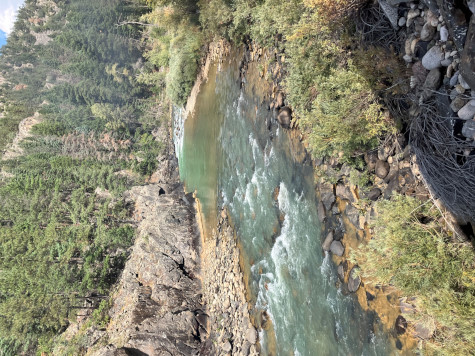
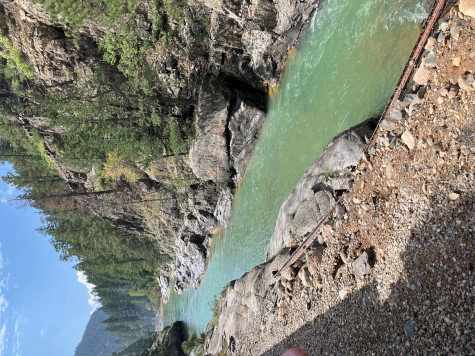
The beautiful colours of the river.
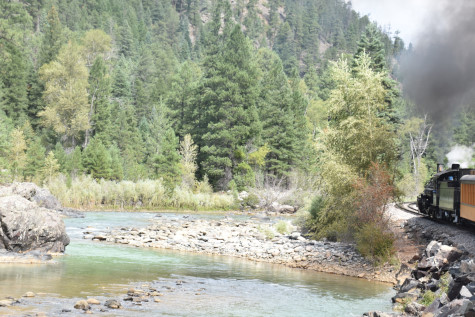
Bending with the curvature of the river.
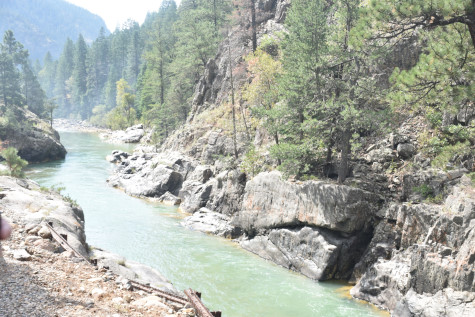
Erosion over time has created these uniquely-shaped boulders.
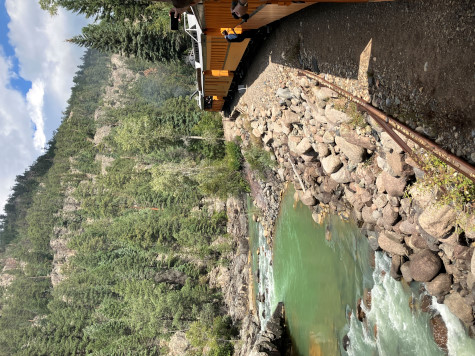
Beauty abounds on every mile on this trip.
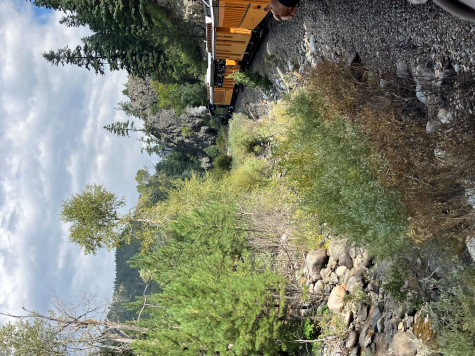
We rounded an inside curve.
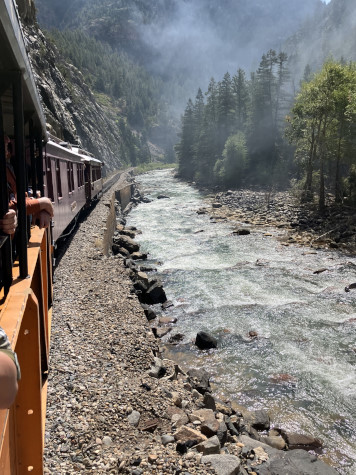
Looking back at the "General Palmer".
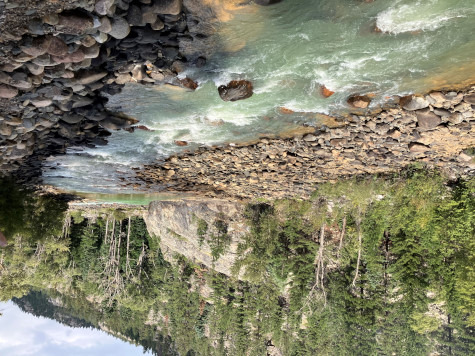
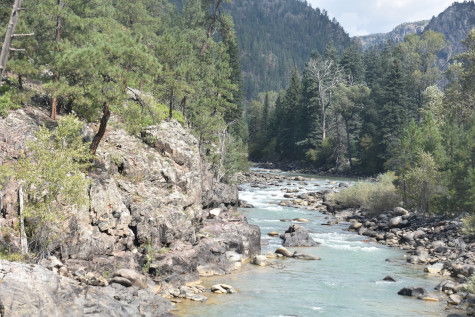
Beautiful colours in the river.
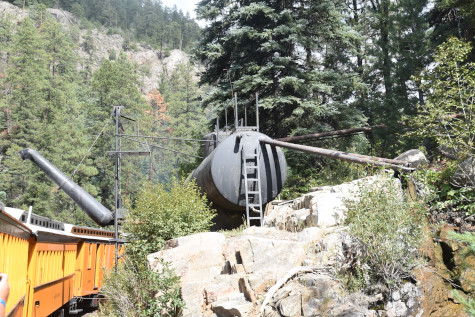
We took water at Tank Creek, Milepost 476.65. The original wooden water tank here was removed in 1966 and has been replaced by a recycled tank from a railroad tank car.
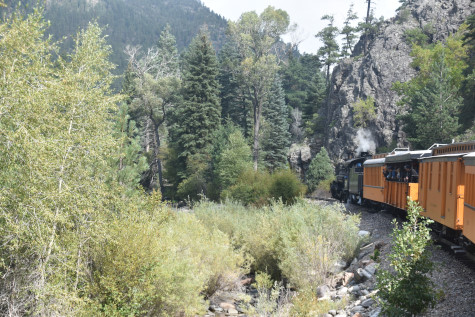
Another inside curve on the way to Cascade Wye.
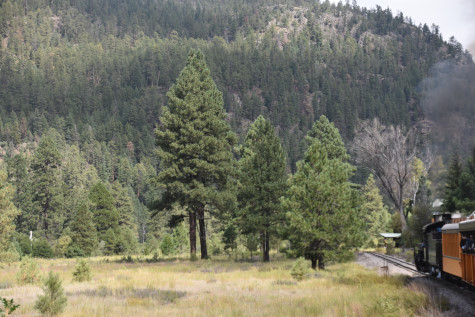
Tall Timbers is a luxury resort that has received the Mobil 5 star rating. The facility is only accessible only by rail or Tall Timber's own helicopter that also helps with local search and rescue operations. A small golf course is part of the meadow. A new system of tree-soaring platforms, to the east of the track, has been installed for thrill seekers.
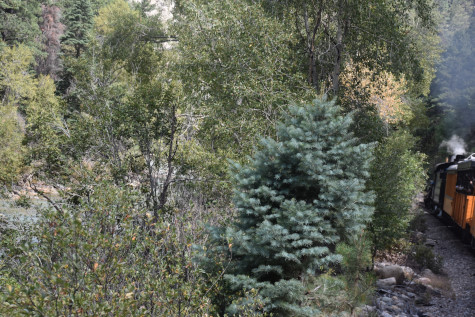
Rounding another inside curve.
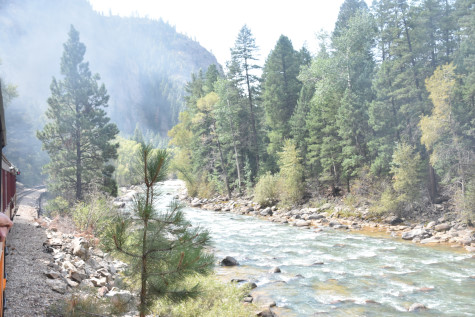
There is much to see and the view behind is equally as important as the forward view.
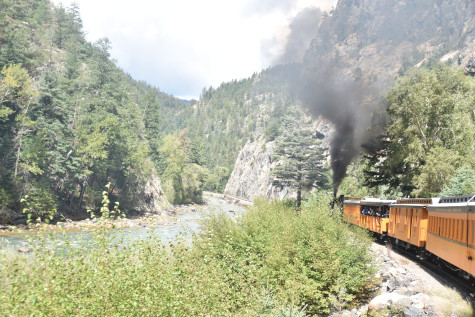
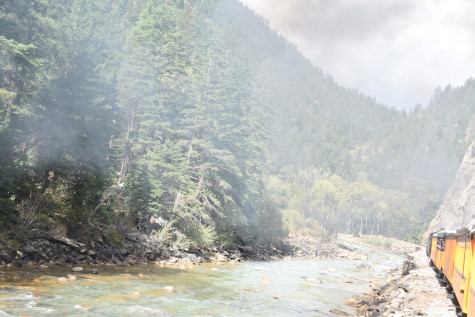
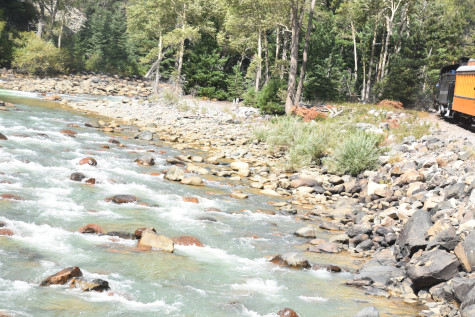
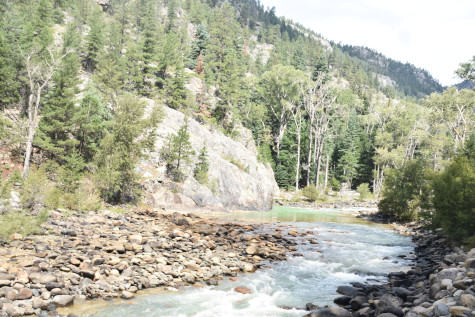
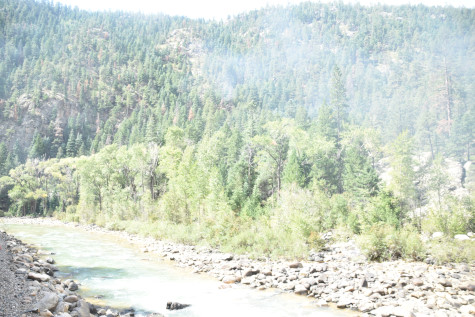
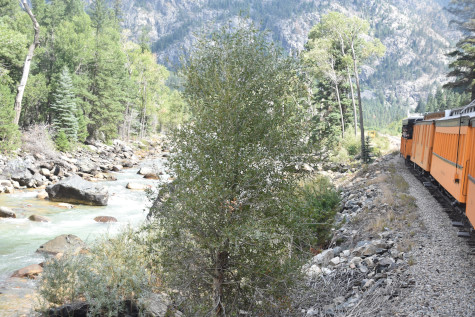
Paralleling the river as we near Cascade.
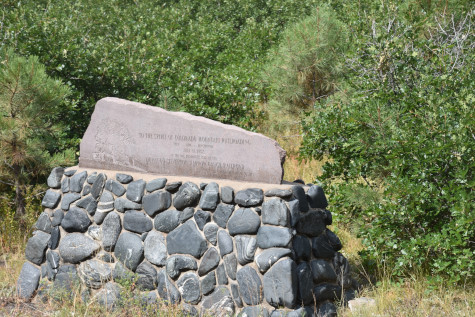
"To The Spirit of Colorado Mountain Railroading Then-Now-Henceforth in the 100th Year of the Durango-Silverton Narrow Gauge Railroad" plaque installed by the Intermountain Chapter of the National Railway Historical Society at milepost 477.55.
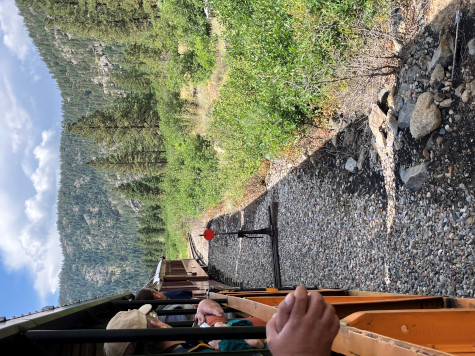
Cascade Wye where we passed the switch stand.
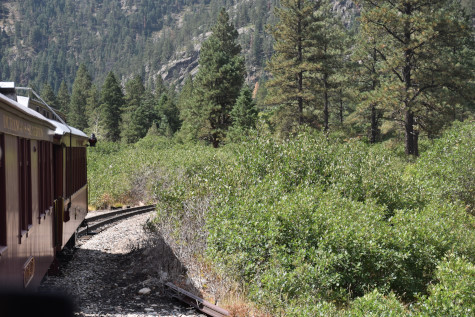
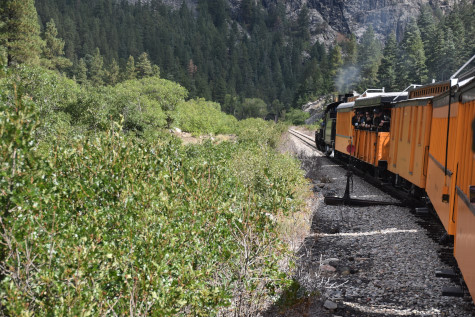
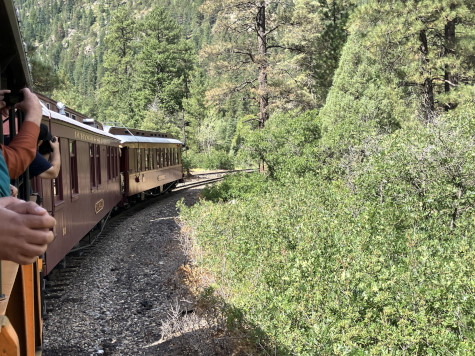
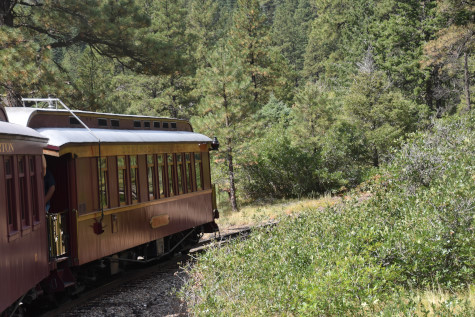
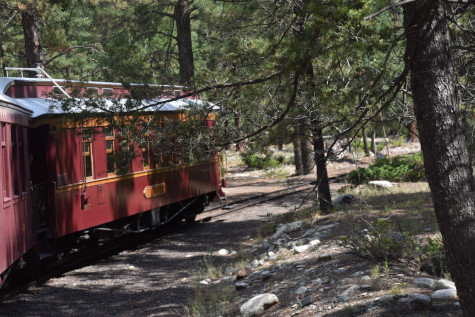
Reversing into Cascade.
Durango and Silverton 2-8-2 476, Denver and Rio Grande Western 476, built by American Locomotive Company in 1923, at rest at Cascade. Everyone detrained and walked to the covered picnic area to pick up their boxed lunches.