




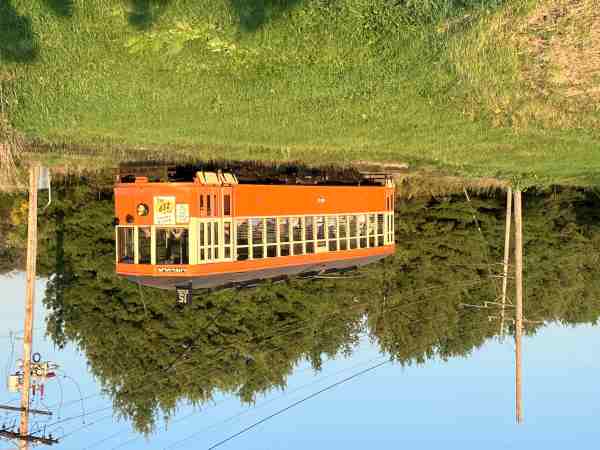
After lunch, the conference delegates were taken to East Troy.
The majority of photographs taken by Elizabeth Guenzler.
East Troy Electric Railroad History
This interurban heritage railroad is owned and operated by the East Troy Railroad Museum. Passenger excursions run on a seven-mile stretch of track from East Troy, Wisconsin to Mukwonago, Wisconsin which dates back to 1907, when it was a part of The Milwaukee Electric Railway and Light Company line from East Troy to Milwaukee.
The East Troy-Mukwonago segment was purchased by the Village of East Troy in 1939, when the remainder of the line to Hales Corners was abandoned. Under terms of the purchase, it was operated by TMER&L crews for ten years. In 1949, TMER&L declined to renew the agreement for another ten years and the village hired its own crew and operated the railroad from 1950 until 1985. This is when the railroad became the Municipality of East Troy Wisconsin Railroad and adopted the reporting symbol METW. In 1985 the village approached the Wisconsin Trolley Museum and asked them to take over the operation of the railroad. They agreed to do so, and moved their collection of trolleys to East Troy.
Museum operations began over the line as early as 1967 when The Wisconsin Electric Railway Historical Society relocated its collection of electric railway equipment from North Freedom, Wisconsin to East Troy. TWERHS operated over the line using a trackage rights agreement with the village until 1984, when the trackage rights agreement ended and the Wisconsin Trolley Museum began to operate the line as the East Troy Electric Railroad. The Friends of East Troy Railroad Museum, Inc. purchased the rail line from the village and also purchased the trolley collection of Paul Averdung between 1995 and 2000 in stages.
Current operationThe East Troy Railroad Museum operates a museum and just over 7 miles of track offering rides on a weekly basis during the spring through fall season. The original substation building in East Troy, Wisconsin is used as a ticket office and museum, and visitors can purchase rides to the Elegant Farmer store at Phantom Woods, and to Indianhead Park in Mukwonago. A collection of approximately 30 pieces of electric railway equipment is kept in storage barns in downtown East Troy and at Phantom Woods. The museum is a 501(c)(3) non-profit educational corporation run by volunteers. The substation, located at 2002 Church Street in East Troy, is on the National Register of Historic Places.
Route descriptionThe railway itself is a standard gauge common carrier railroad that operates in interchange with Canadian National Railway (formerly a connection to Wisconsin Central Ltd.). This gives the East Troy electric railroad the ability to pick up and deliver freight (including fertilizer for the Farmers Co-op, sand for the local Ready-Mix, and lumber and steel tubing) to the village of East Troy. However, the railroad has not been used to carry freight for at least ten years.
Much of the track is original and the rail bed was refurbished during the mid-1990s. The line is completely electric, utilizing a 600 V direct current system. Power is supplied to trolleys and interurban railroad cars through overhead wires. The original 500 kW rotary converter motor-generator is no longer used and is on display at the museum.
East Troy Electric Railroad sign.
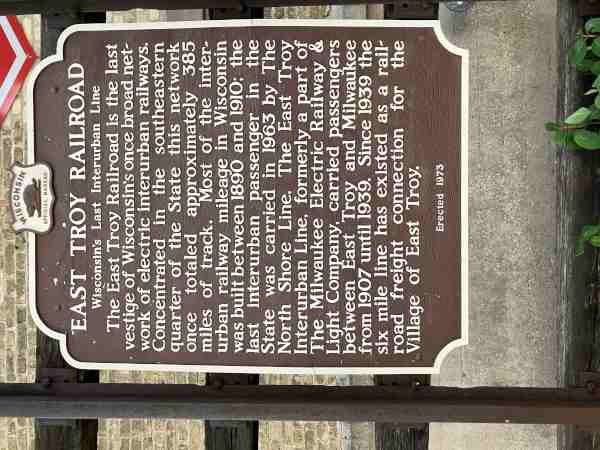
East Troy Railroad - Wisconsin's Last Interurban Line.
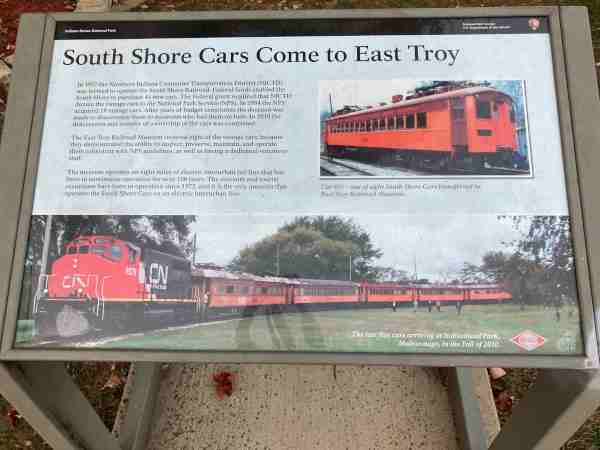
South Shore Cars Come To East Troy story board.
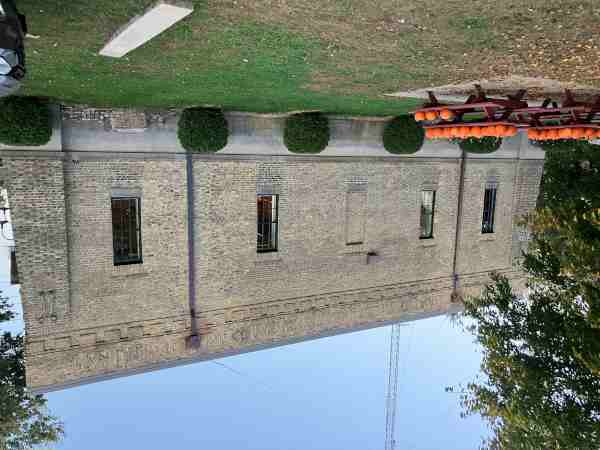
The side of the Milwaukee Electric Railway and Light Company substation which is the museum, ticket office and gift shop. It supplied power to the electric interurban railway and the Village of East Troy in the 20th Century, was completed in 1910 and based on neo-Egyptian designs.
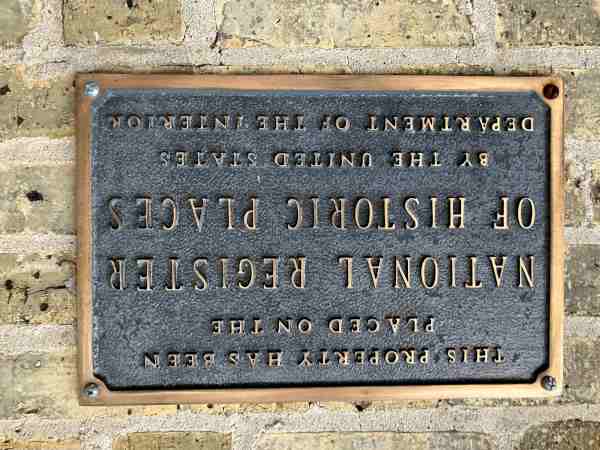
The National Register of Historic Places plaque.
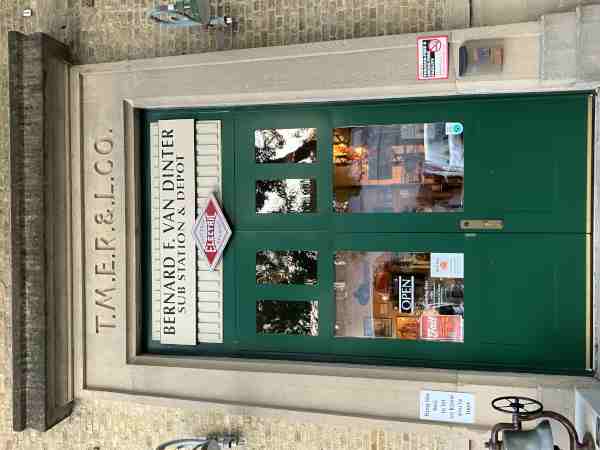
The entrance to the Milwaukee Electric Railway and Light Company Bernard F. Van Dinter substation and depot.
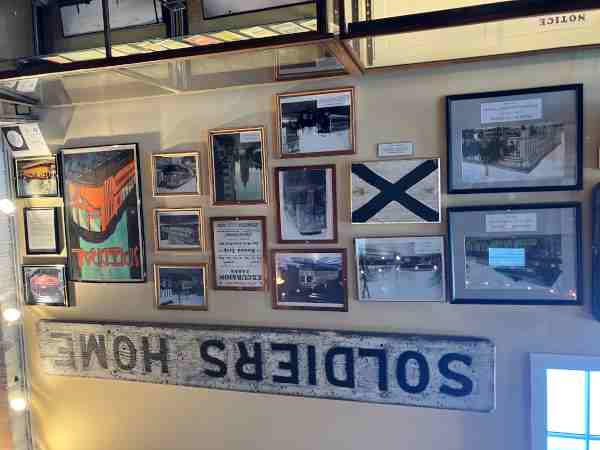
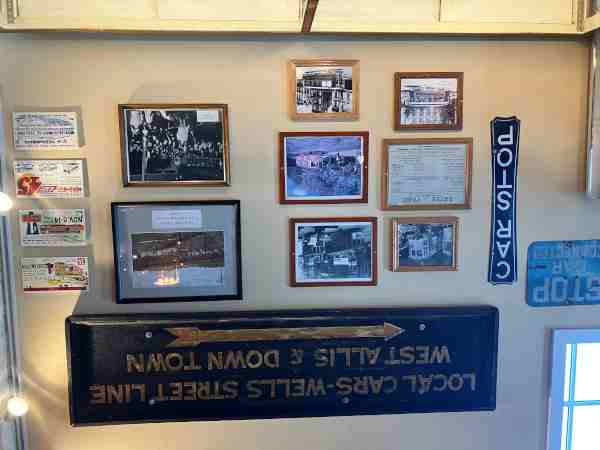
A pictoral display of TMER&L, including the station board from Soldiers Home.
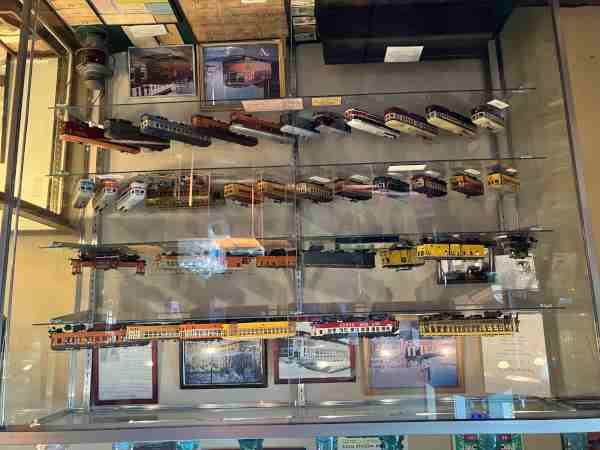
The trolley collection of the late Thomas Matola, a museum volunteer, preserved by generous contributors, Donnelly Trust, Hunt Foundation and individual donors.
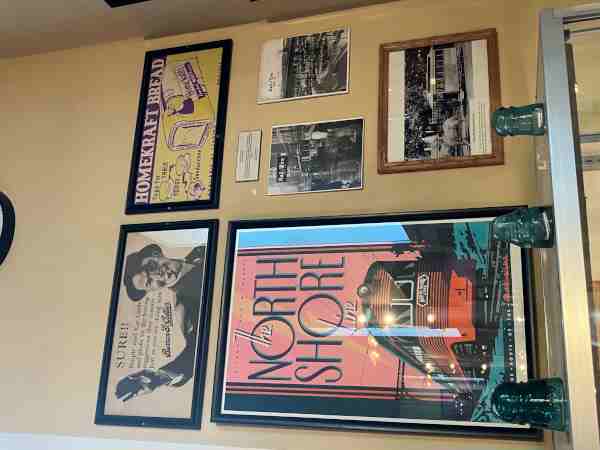
North Shore Line poster and advertising cards from the interior of the cars.
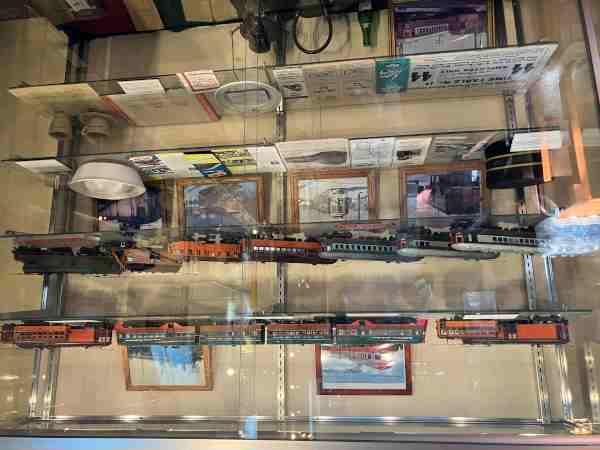
North Shore Line models, timetables and memorabilia.
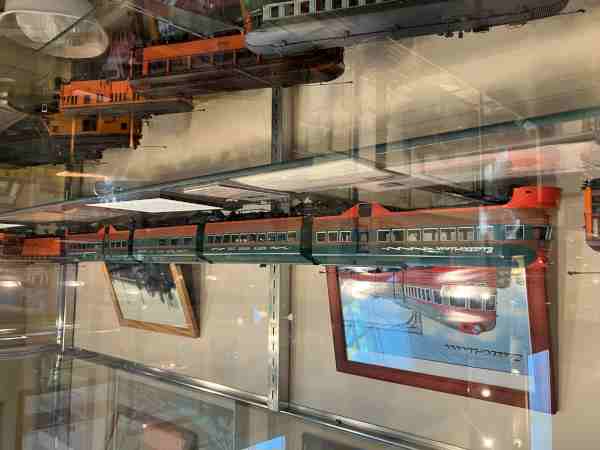
An O gauge model of the famous Electroliner, a streamlined interurban trainset built by the St. Louis Car Company in 1941. Initially numbered 801–802 and 803–804, they were operated by the Chicago North Shore and Milwaukee Railroad from 1941 to 1963, followed by the Philadelphia Suburban Transportation Company from 1964 to 1978. Since their retirement, both train sets have been preserved: one at Illinois Railway Museum in Union, Illinois, and the other at the Rockhill Trolley Museum in Rockhill Furnace, Pennsylvania.
Each set consists of two end coaches and two center coaches. The coaches are articulated using Jacobs bogies. Each end coach is divided at the side doors into a Luxury Coach, which seats 30 and a Smoking Coach, which seats 10 and also has a restroom. Each door has steps and a trapdoor to permit boarding from street-level, low-level and high-level platforms. One center coach seats 40 and the other is a tavern lounge that seats 26. All cars are air-conditioned, a first among new traction (interurban and trolley) equipment of the time.
The sets were designed to operate with the high platforms, sharp curves and narrow clearances of the Chicago Loop and the Chicago 'L', to run at speeds of 80 miles per hour or more on the North Shore's main line; and to use city streets to the downtown Milwaukee Terminal. The sets' styling resembled that of the Pioneer Zephyr and influenced the styling of other electric train sets, notably the Odakyū 3000 series SE Romance Cars. The articulated truck bogie design allowed very smooth running with none of the horizontal movement characteristic of non-articulated equipment.
Although they were streamlined, the sets were not permitted to run faster than conventional North Shore equipment. From the front passenger seat adjacent to the motorman's half-cab, if the door was propped open, a passenger could see the speedometer pegged at 90 mph on the long stretch between Dempster Street and North Chicago Junction. When the sets were received in 1941, during one test run the traction motors were allowed full field shunt to determine absolute maximum speed. It reached just over 110 mph but at that speed the train reached highway crossings before the crossing gates fully closed, a dangerous situation. Thereafter, the sets were limited to 90 mph.
The North Shore was struggling financially in 1940 and was on the edge of bankruptcy. The effects of the Great Depression were still being felt, plus it had almost side-by-side competition from the Chicago and North Western Railroad and the nearby Milwaukee Road. All of its operating equipment had been constructed in the 1920s and exhibited wear. But it offered convenient stops around the Loop on the Chicago 'L', to which it ran from the Chicago-Evanston city boundary. The North Shore's unionized workforce was concerned about job losses if the line closed, so when company management approached them with a proposal to purchase new streamliners to invigorate passenger service, employees agreed to a reduction in pay.
The sets were designed by the St. Louis Car Company and North Shore's engineering staff. When they arrived in 1941, they were well received by the public. The nation's economy was beginning to improve; earnings increased, older equipment was refurbished for appearance and comfort, and the North Shore changed from a typical Midwestern interurban to a high-speed regional commuter railroad, running at high speed between two major cities. In the 1960s, competition from freeways eroded ridership, income dropped, maintenance and operating costs climbed, and the line was abandoned on January 22nd, 1963.
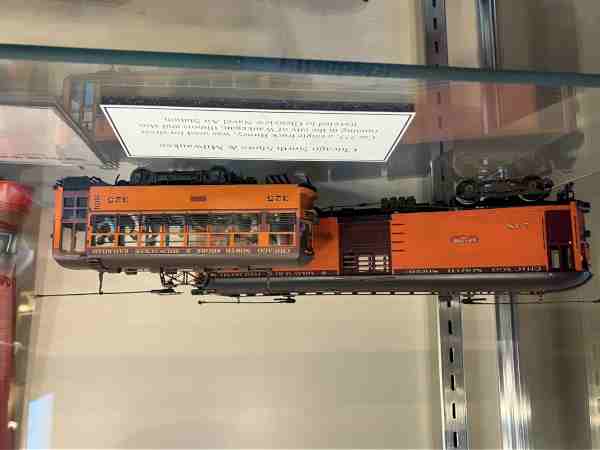
The model in the foreground is Chicago North Shore and Milwaukee car 325, a single truck Birney. It was used for street running in the city of Waukegan, Illinois and also travelled to Glenview Naval Air Station.
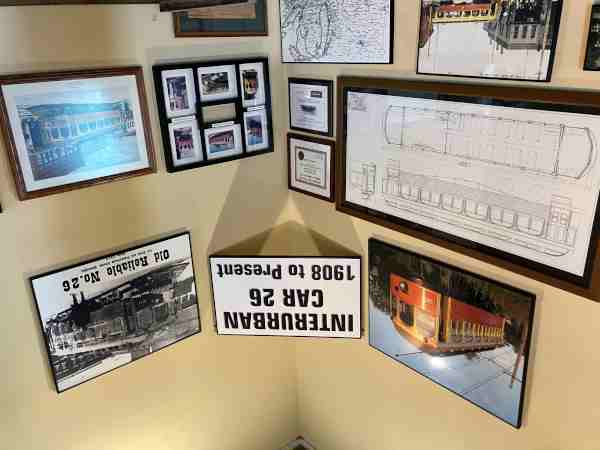
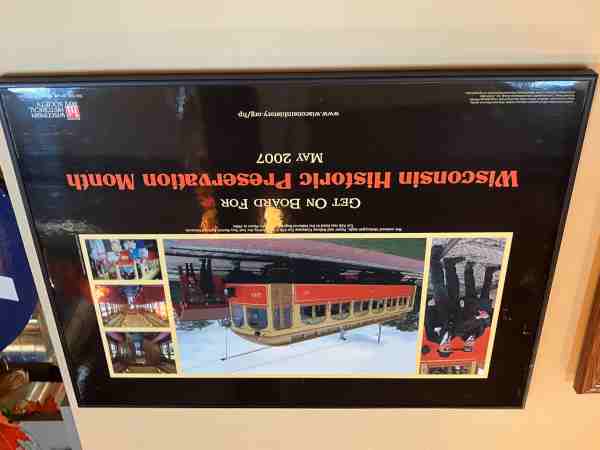
Sheboygan Light Power and Railway Company wooden interurban 26 1908 to Present display. A photograph and details about this car is further down this travelogue.
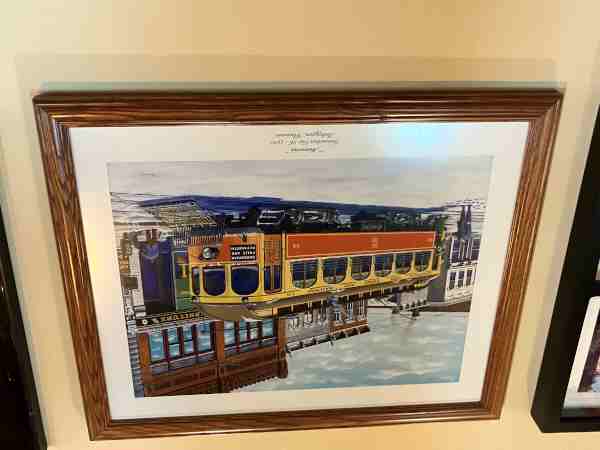
"Memories" Interurban Car 26 painting by Russ Porter.
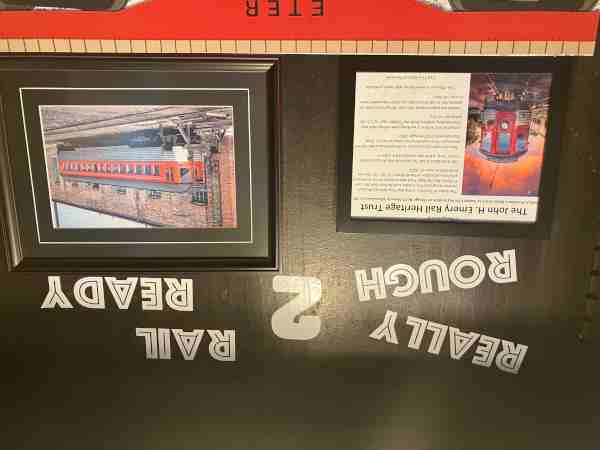
John H. Emery Rail Heritage Trust, which provided a major grant to support the restoration of Chicago, North Shore and Milwaukee 761. The Trust was created by John Emery, a native of Chicago, and a lover of the classic passenger trains of America and founded as a way to support Mr. Emery’s interests in the passenger trains of the 1920’s though the 1950's.
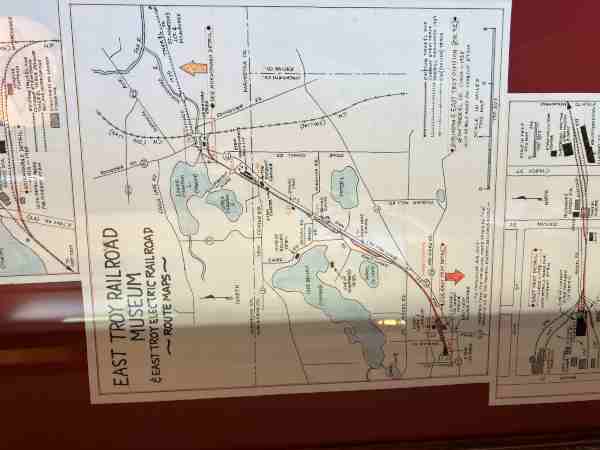
East Troy Railroad Museum and East Troy Electric Railroad route map.
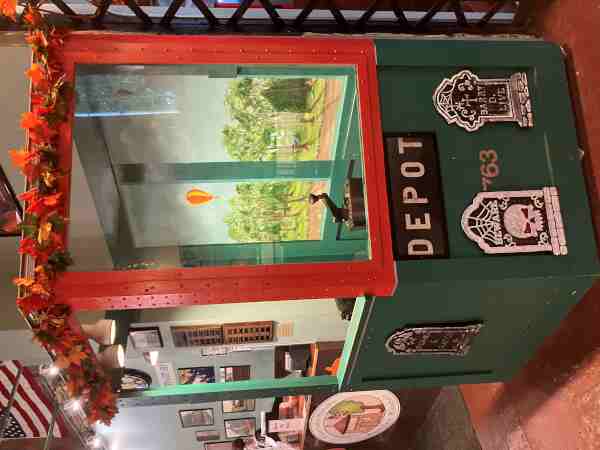
This is one of about three trolley museums I have visited which includes a simulator.
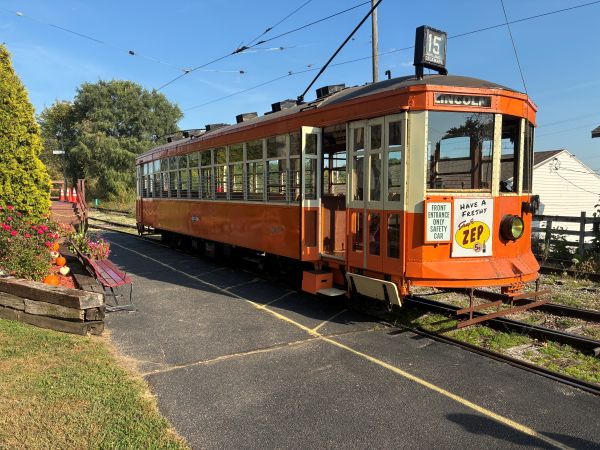
Our mode of transport for a ride and runbys was East Troy Electric Railway streetcar 846, ex. Appleton Trolley Museum and Railway 846 1983-2002, exx. Kentucky Railway Museum 846 1958-1983, exxx. Milwaukee and Suburban Transit 846 1953-1958, exxxx. The Milwaukee Electric Railway and Transport Company 846 1938-1953, nee The Milwaukee Electric Railway and Light Company 846, built by St. Louis Car Company in 1920.
Electric streetcar systems began appearing in America in the late 1800s, and by 1915, most cities with over 10,000 residents had a local trolley. These street and interurban electric railroads formed the backbone of the industrial revolution, quickly becoming very important to urban society.
Milwaukee was no different. By 1920, The Milwaukee Electric Railway and Light Company controlled almost all streetcar tracks in the city, as well as building interurban lines out into the country and developing the power grid in southeastern Wisconsin. TMER&L eventually became WEPCO in 1938, which evolved into the present-day We Energies.
During the 1920s, more modern, faster, and larger streetcars were built and added to the Milwaukee Electric Railway and Light Company's roster. The TMER&L built the 800-series in 1920 and the 900-series between 1924 and 1929 to replace the older heavy cars. Two of these unique cars are now preserved at ETRM, which operates on the last bit of TMER&L trackage left. One of these, car 846, is currently the only operable TMER&L streetcar.
846 was modernized for one man operation in 1925 and new light fixtures were added. Treadle doors came later. Milwaukee had their own designs for their streetcars and each class was similar in size and looks. This is an 800 class car which can be identified by the slimmer middle front window and a slight arch to the standee windows.
846 operated mainly over the Route 10/Wells line, which operated around the downtown area, before reaching out over the north side of the city. Part of this line ran over the massive Wells Street Viaduct; 90 feet tall and almost a half mile long. Streetcars were very important to Milwaukee, as they transported kids to and from school, and parents to shopping and workplaces.
Postwar car-centric lives put an end to almost all electric rail systems in North America. The 10 line which was the last line to not be abandoned or converted to buses. Due to the large expensive viaduct along the route, the railroad was reluctant to abandon, but eventually did on March 2, 1958.
846 is one of only a few surviving streetcars from the system. No. 978 is also here at ETRM awaiting restoration, with the other several at other museums across the country. In 2002, the East Troy Railroad Museum received the car and performed an amazing restoration. The car now regularly runs on the last TMER&L trackage: the six miles between East Troy and Mukwonago, Wisconsin.
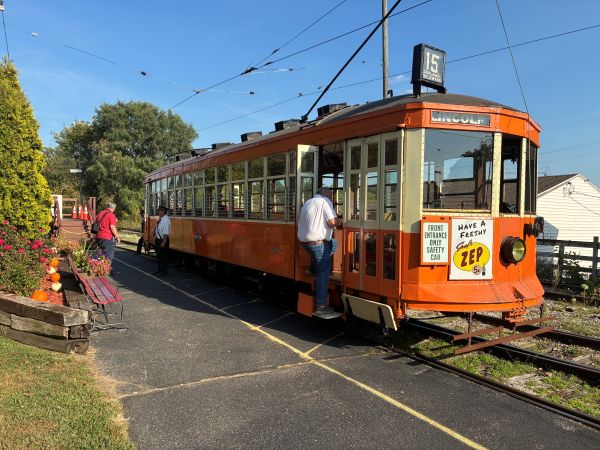
Conference delegates boarding car 846.
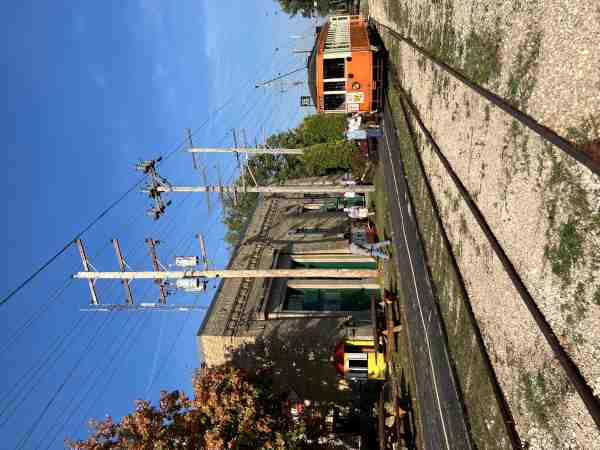
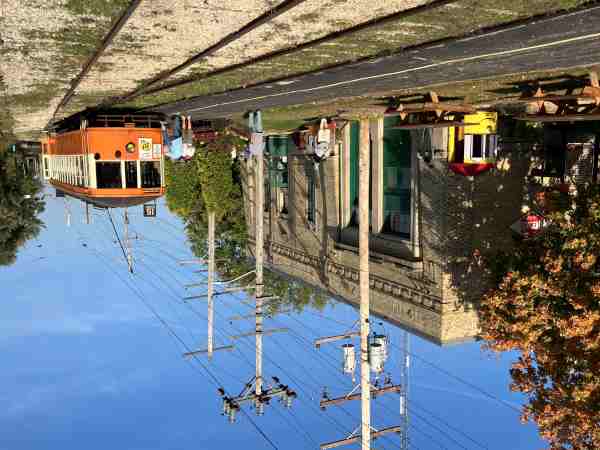
Boarding scenes from across the tracks on a beautiful autumn afternoon.
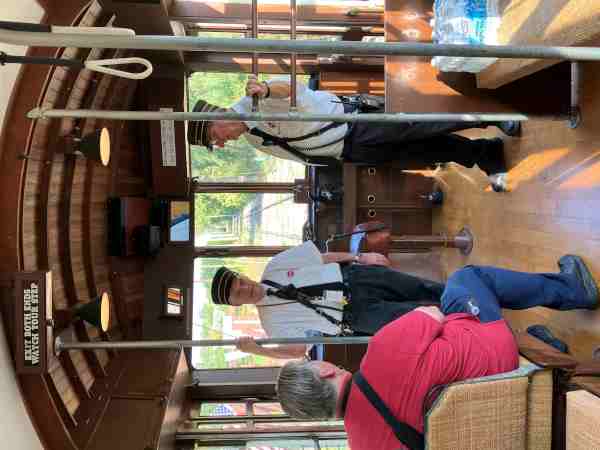
Volunteers Evan Richards as motorman and another volunteer as the conductor.
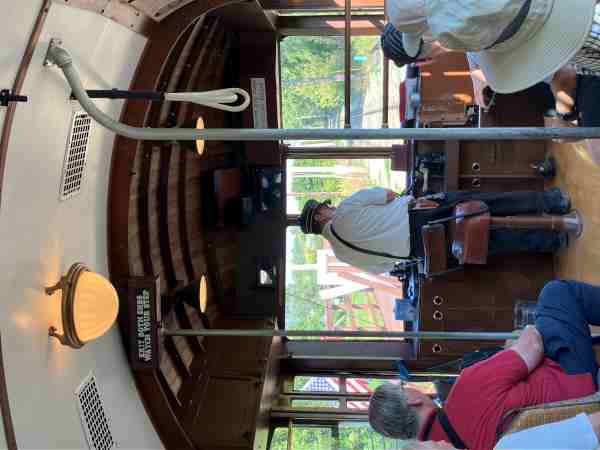 >
>
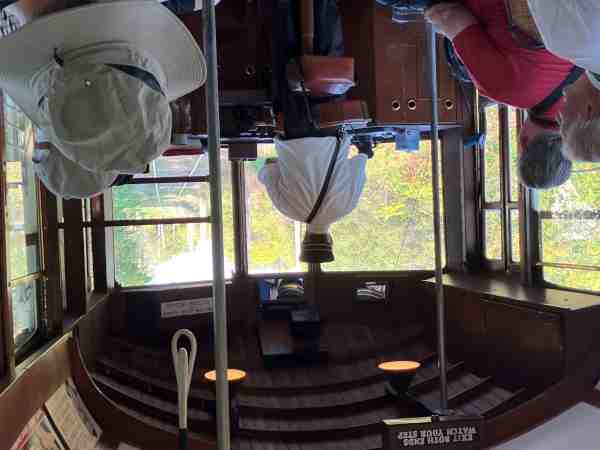
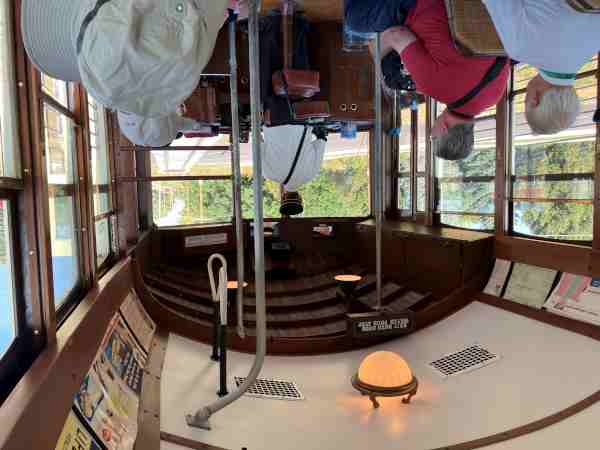
Leaving the boarding area and proceeding to the first runby location.
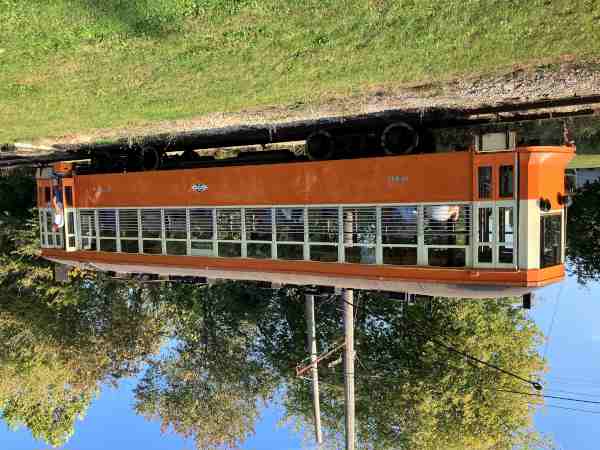
The beginning of the runby.
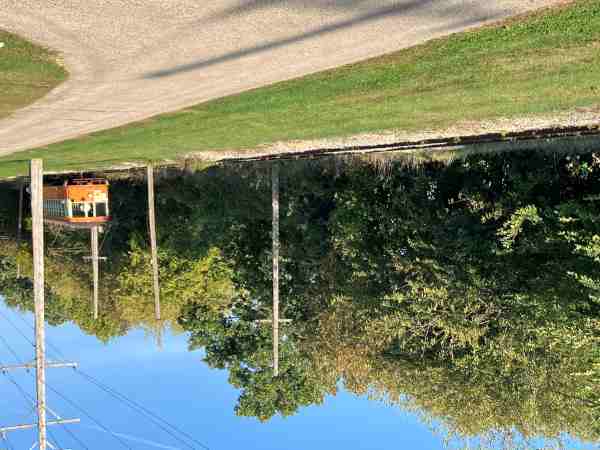
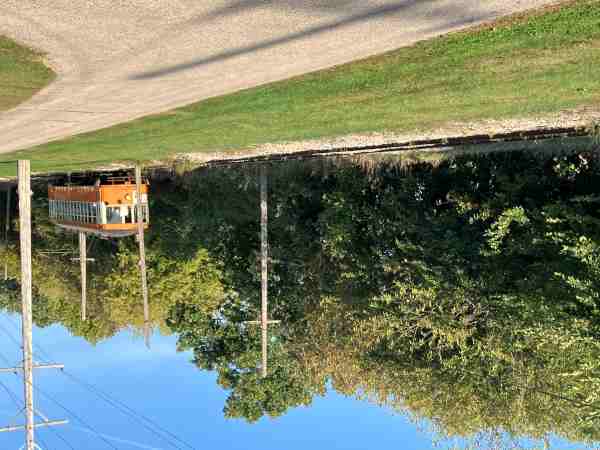
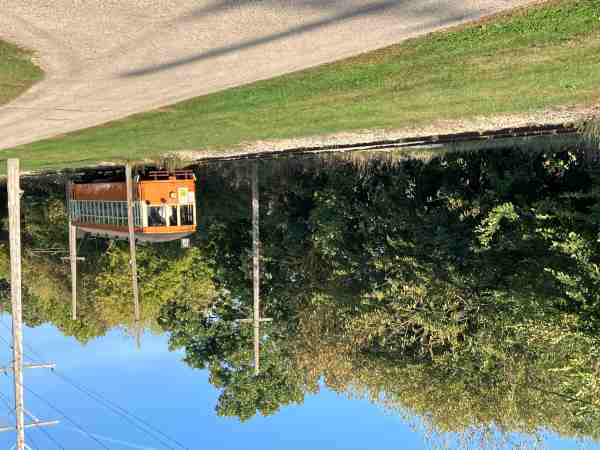
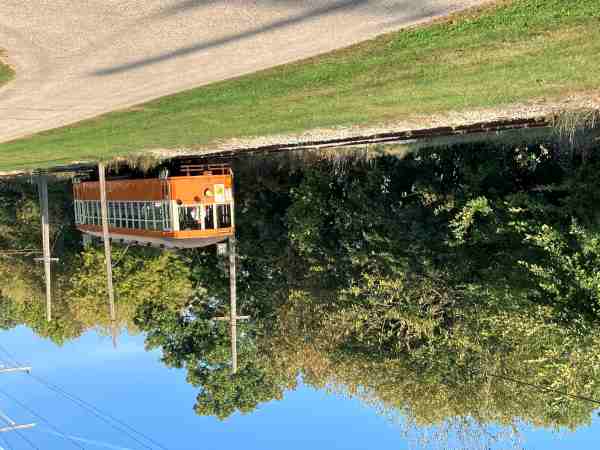
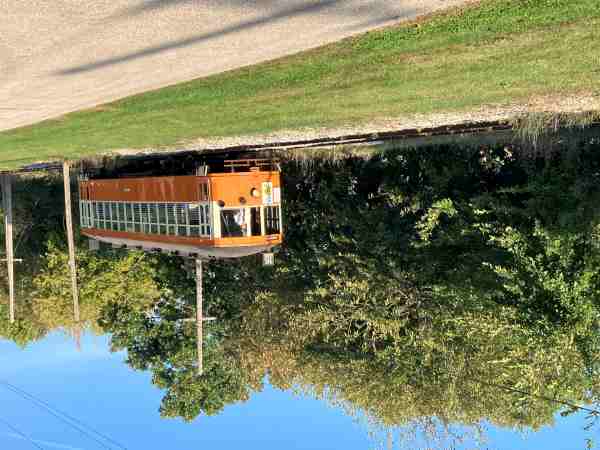
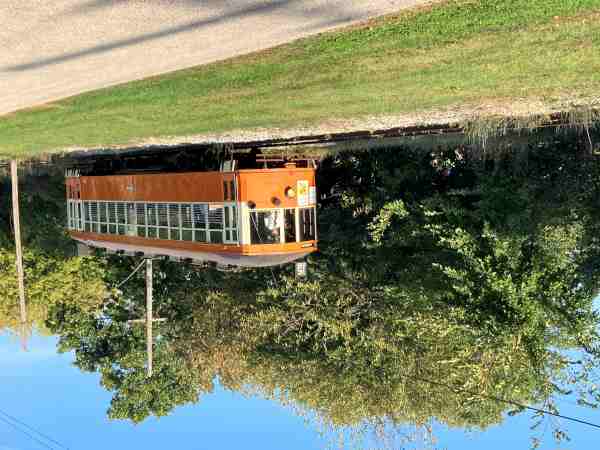
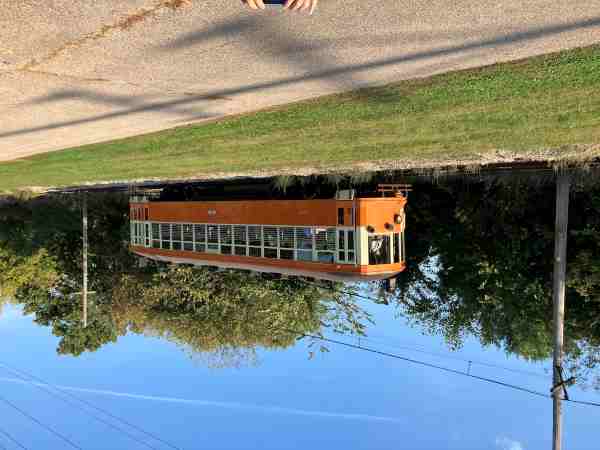
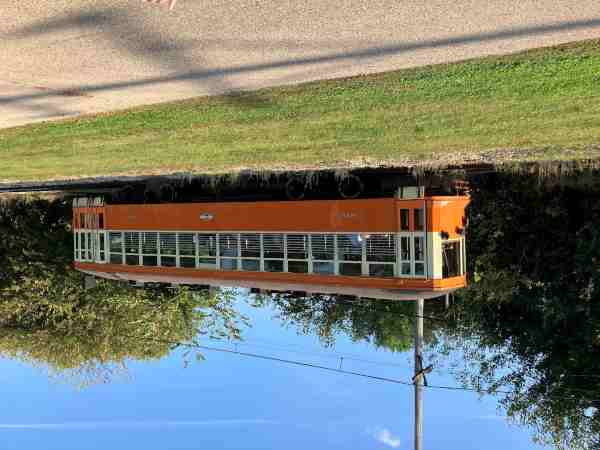
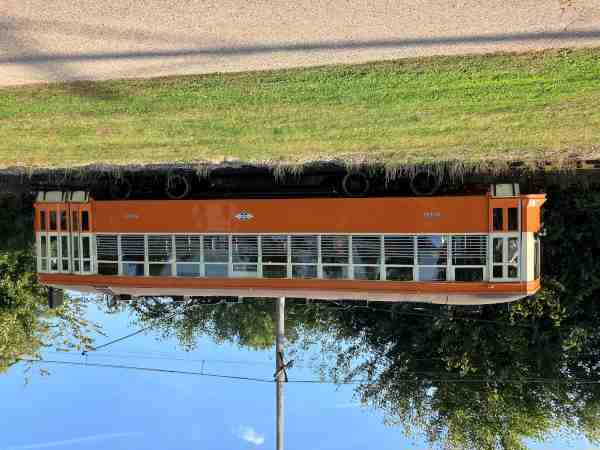
Photo runby one.
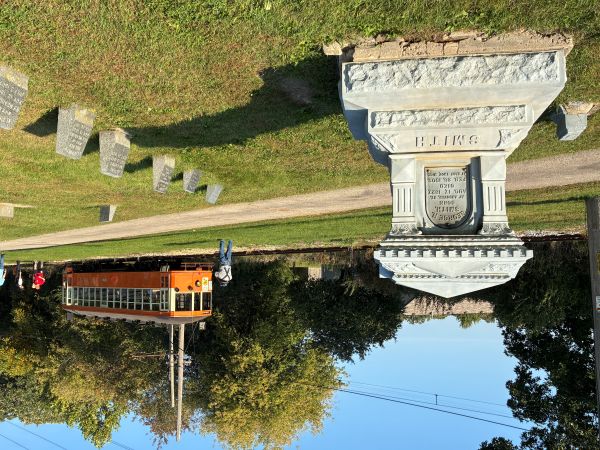
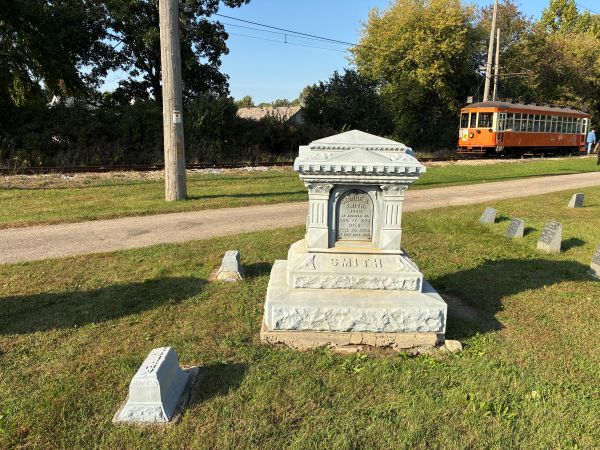
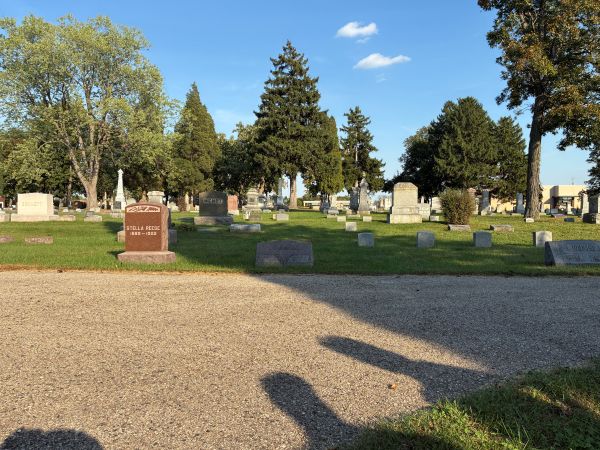
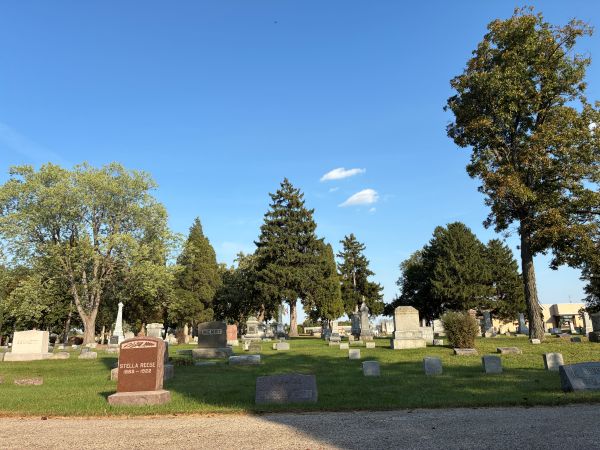
The Oak Ridge cemetery.
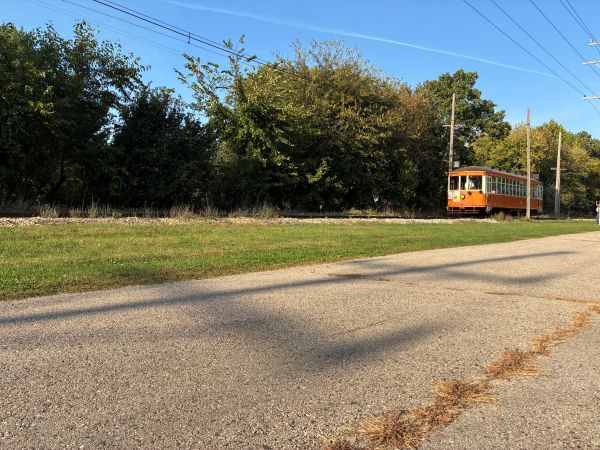
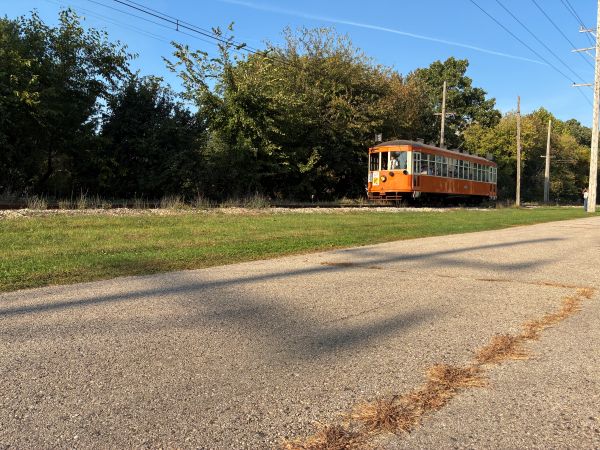
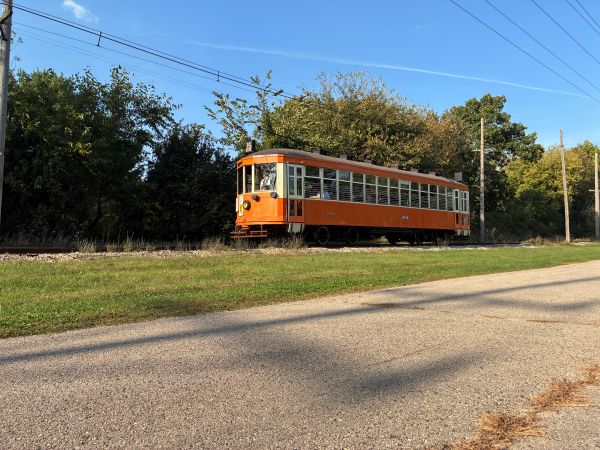
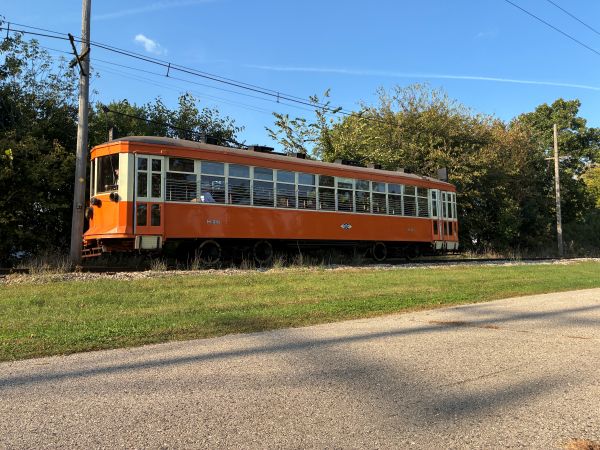
Photo runby two.
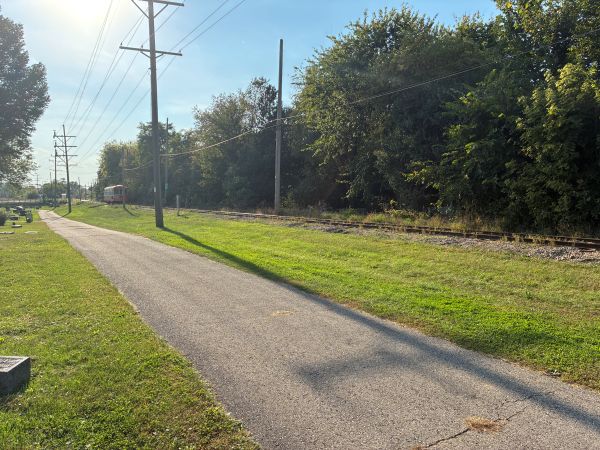
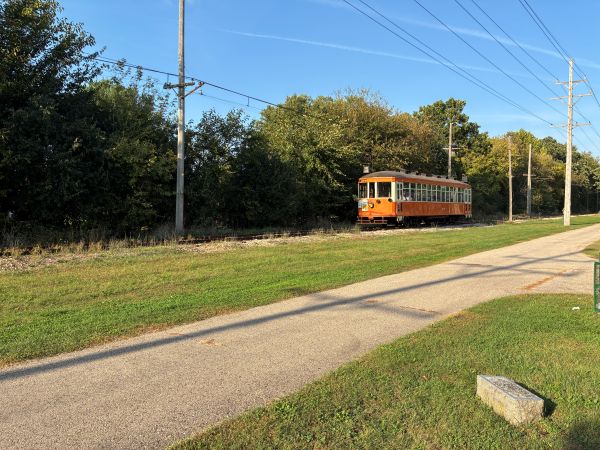
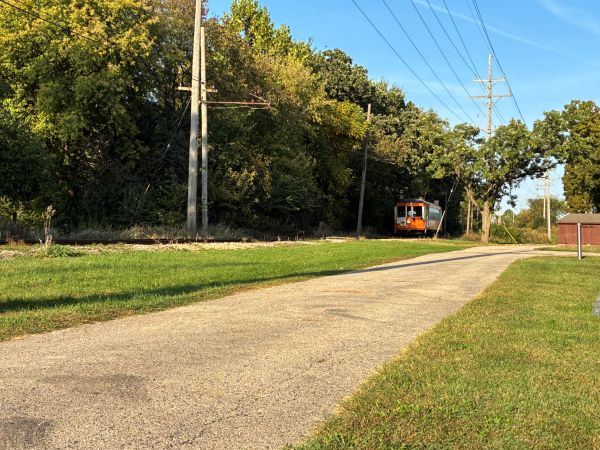
Start of a reverse move.
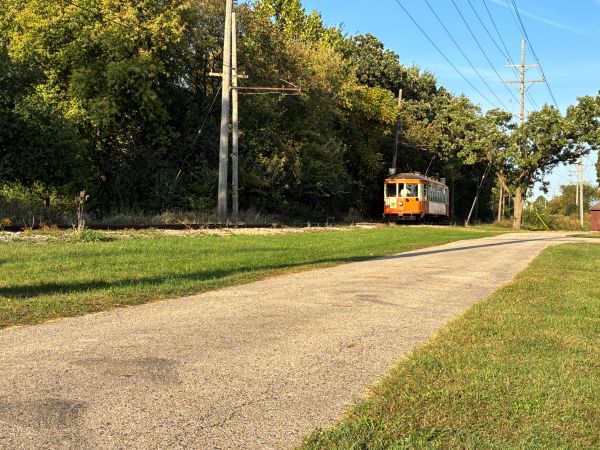
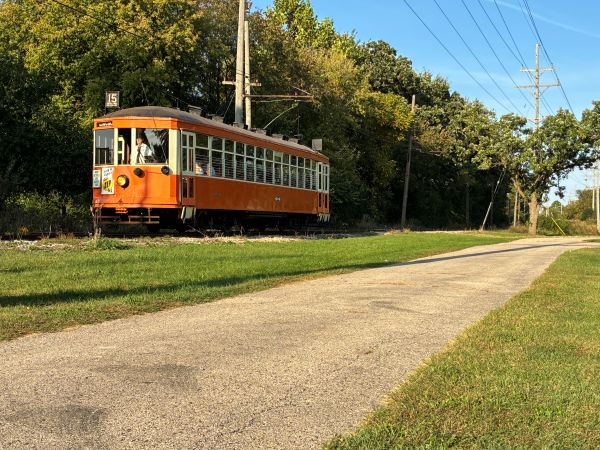
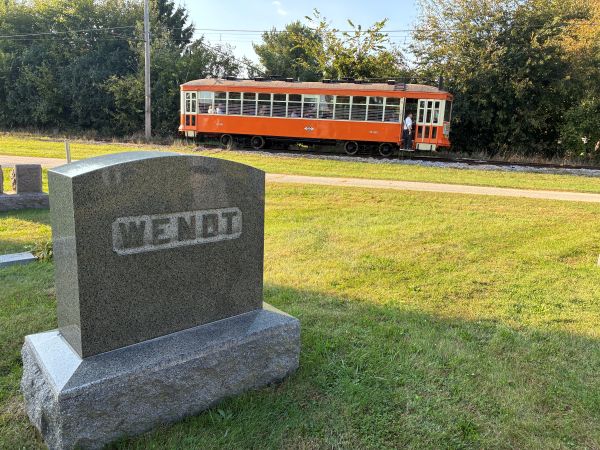
Photo runby three.
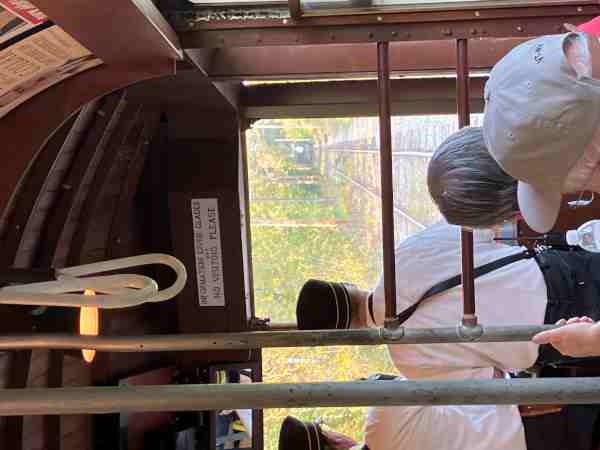
Back on board, we made our way to the next runby location.
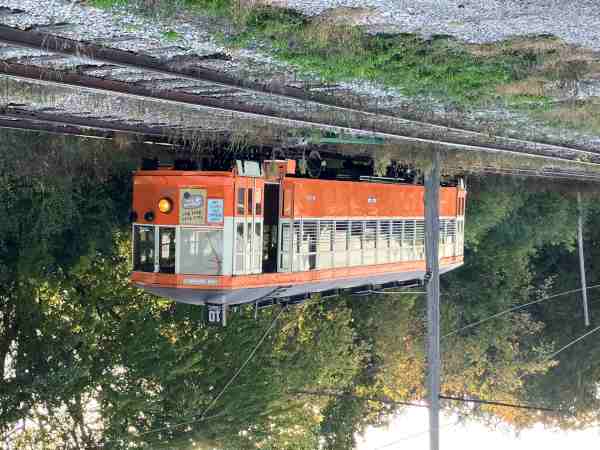
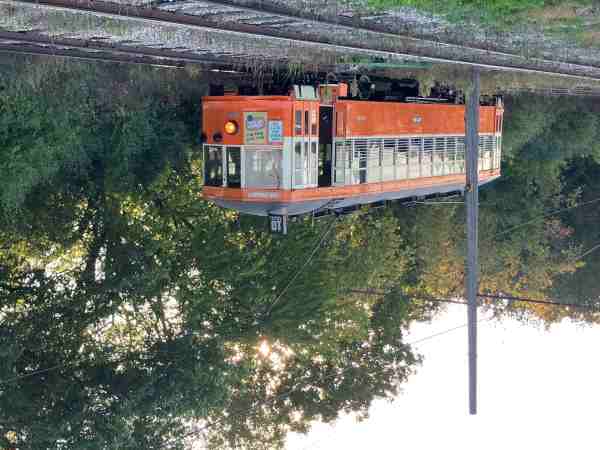
Reversing down the siding.
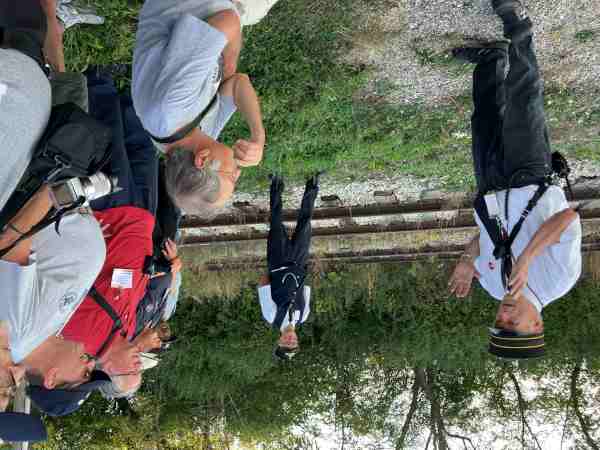
While we were waiting, Motorman Richards regaled us with a story about riding car 846 to a baseball game in his youth.
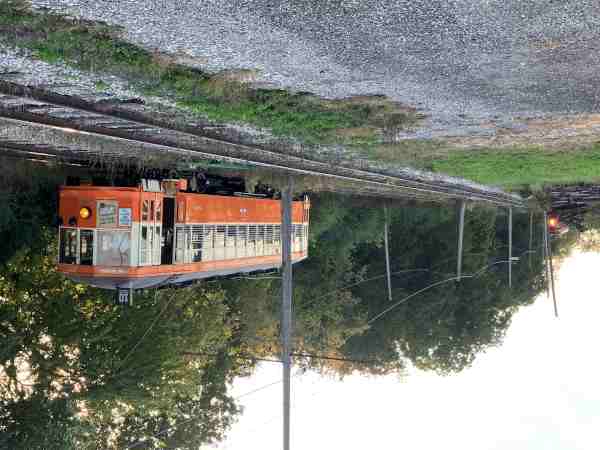
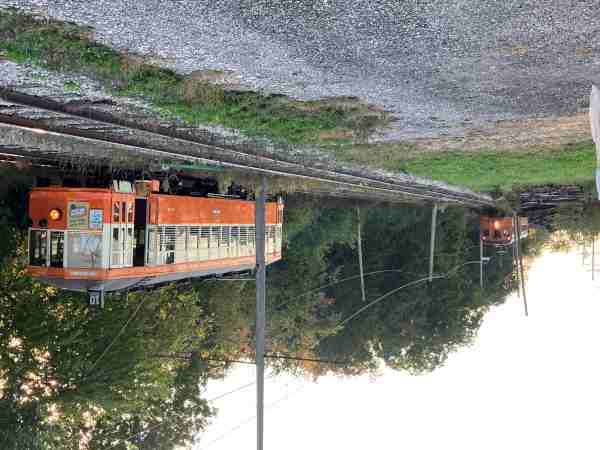
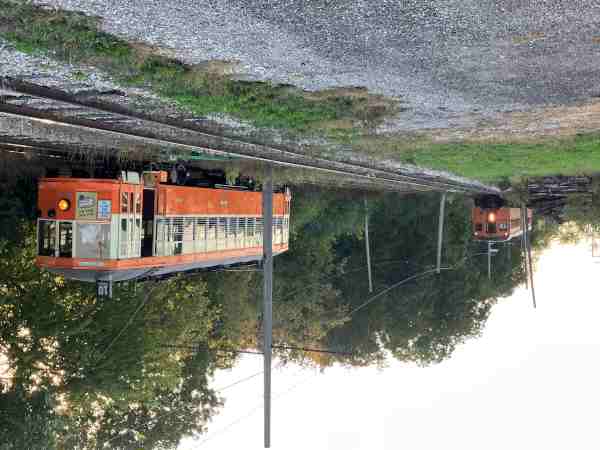
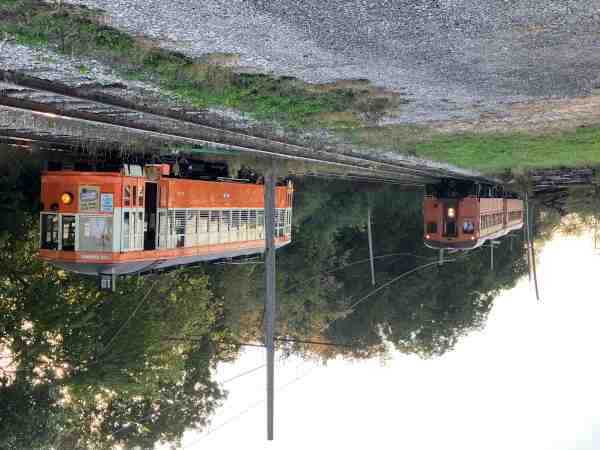
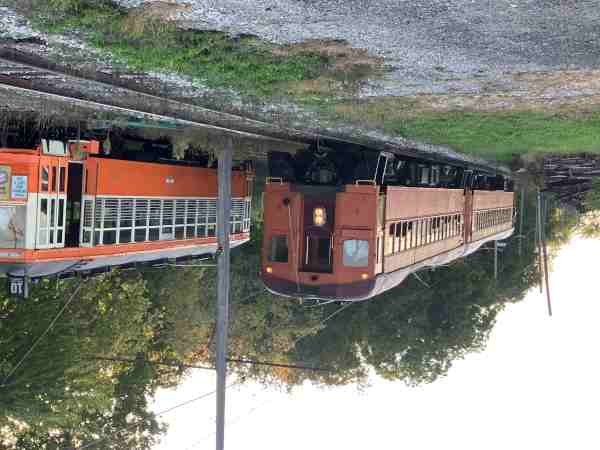
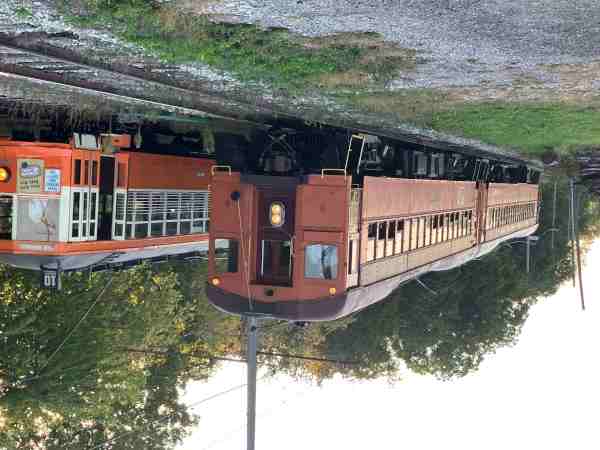
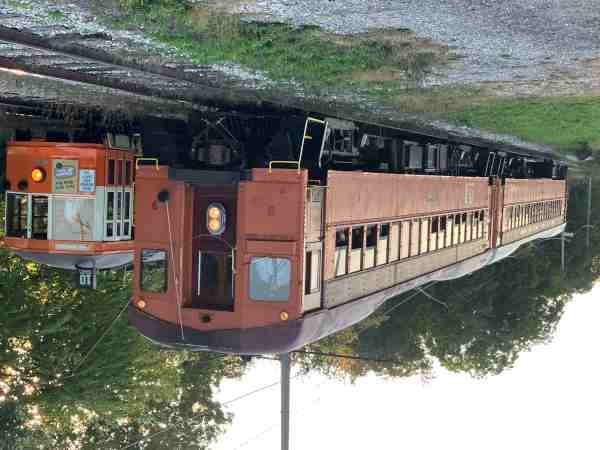
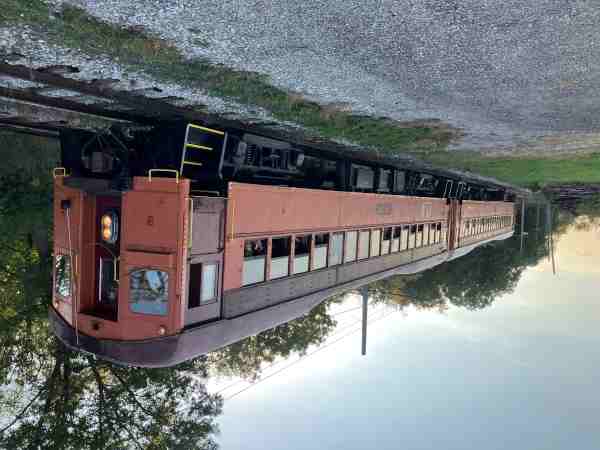
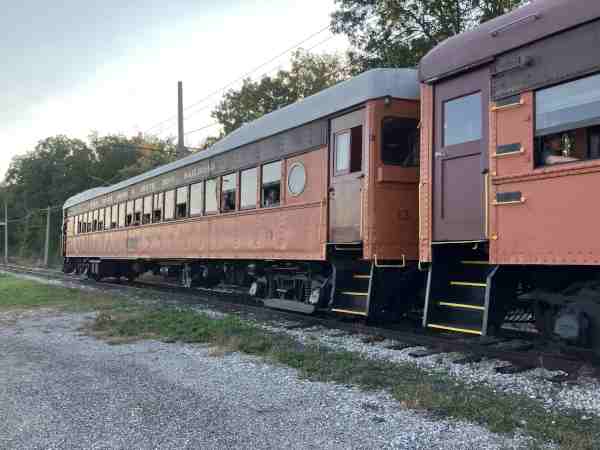
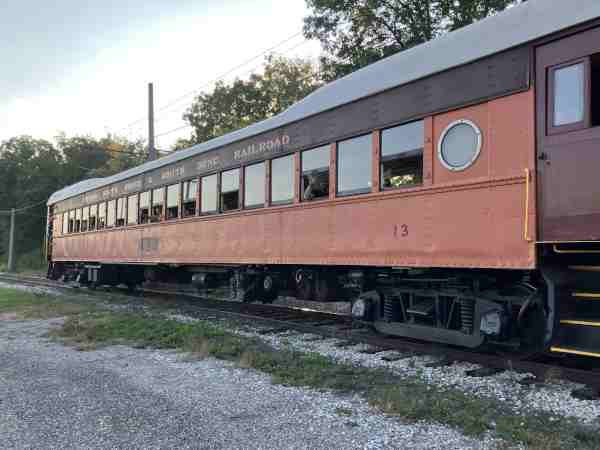
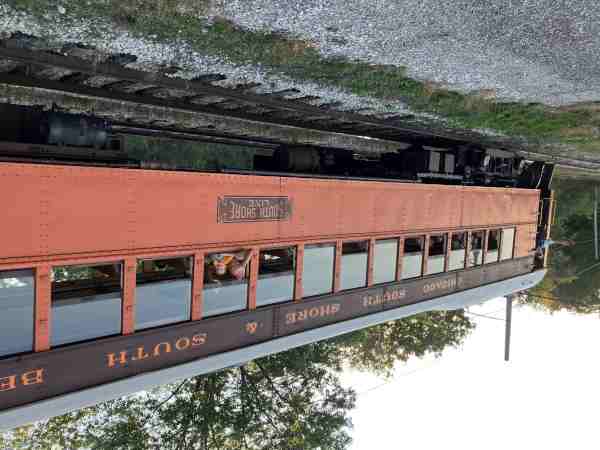
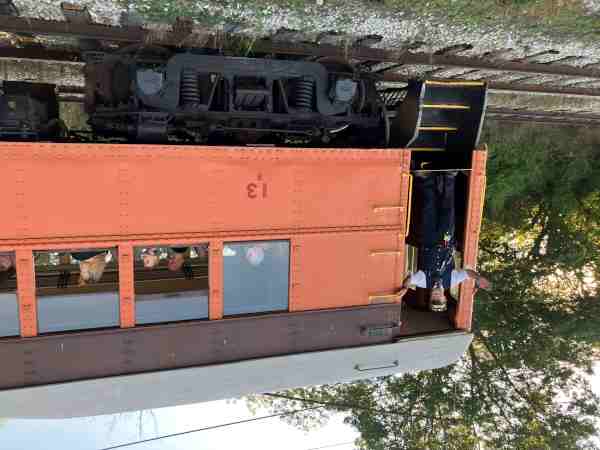
The planned meet and runby with South Shore Line cars 9 and 13 at Army Lake siding.
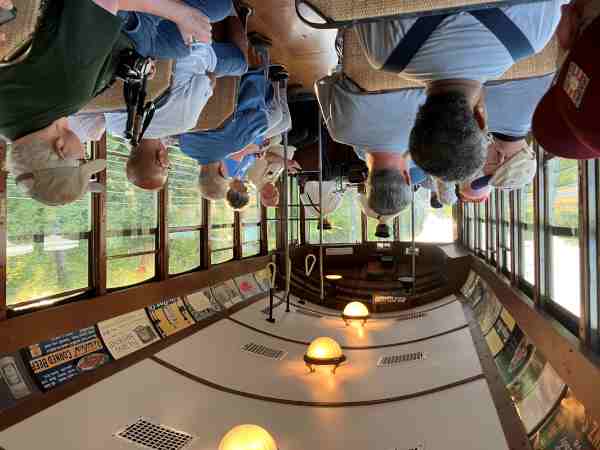
NRHS conference attendees enjoying their ride on this historic interurban.
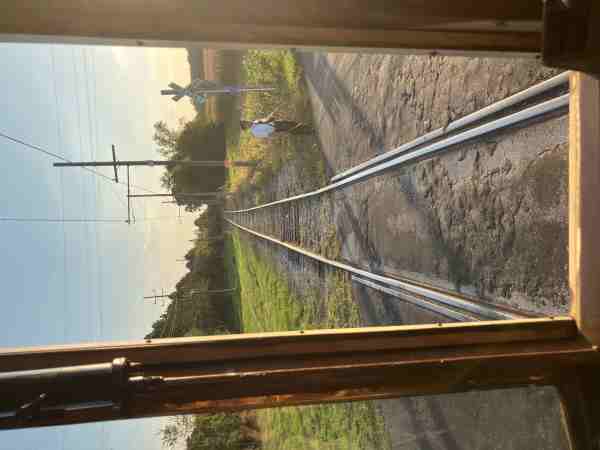
The view from the front of the interurban as we detrained, with motorman Richards ready to flag the crossing.
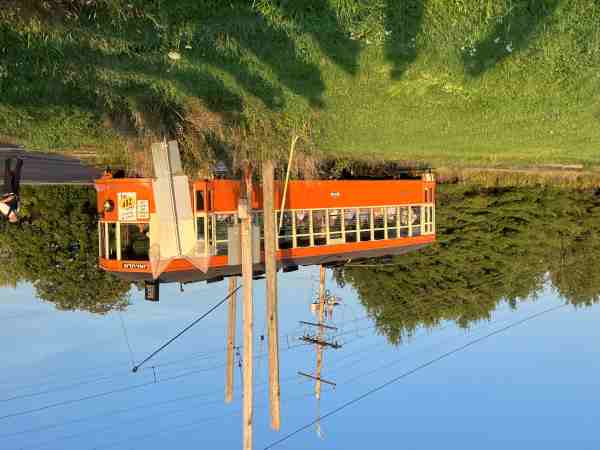
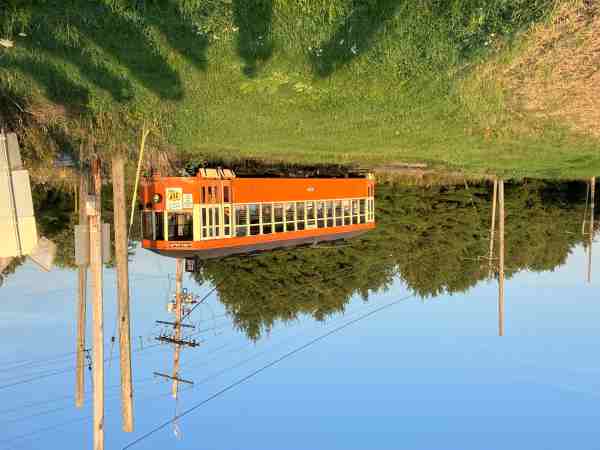
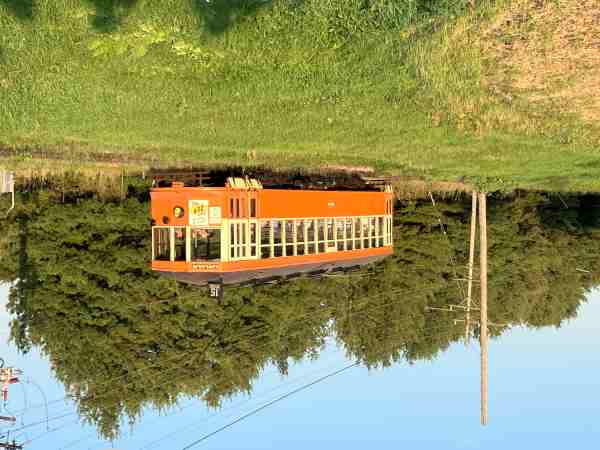
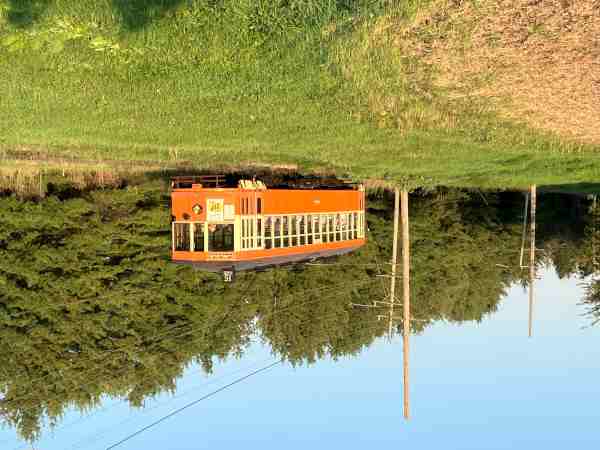
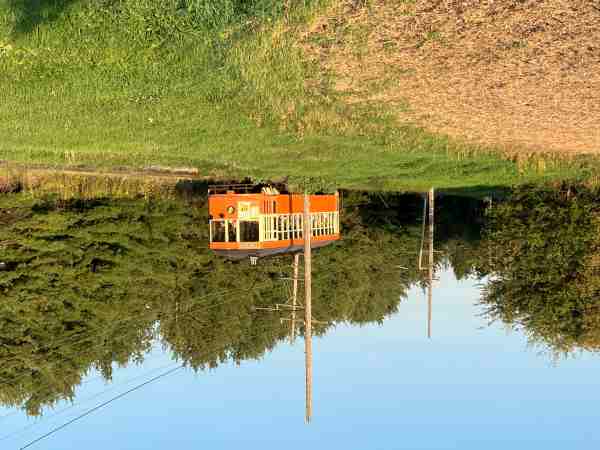
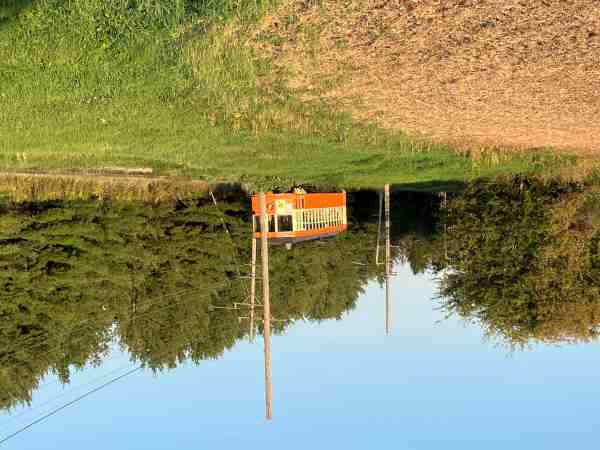
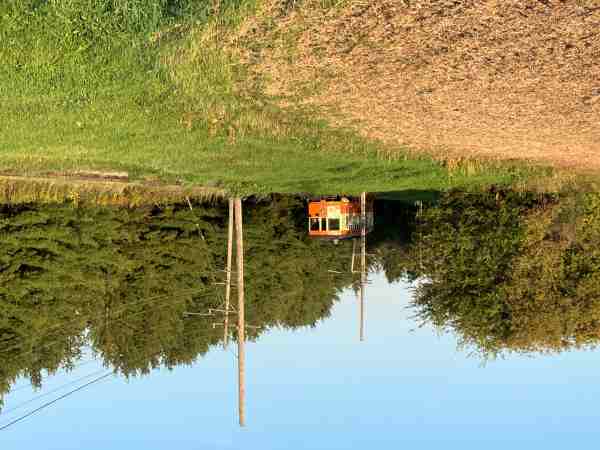
The reverse move.
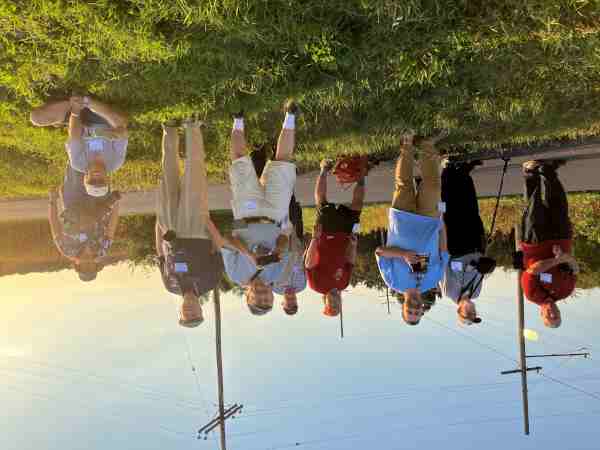
The photo line.
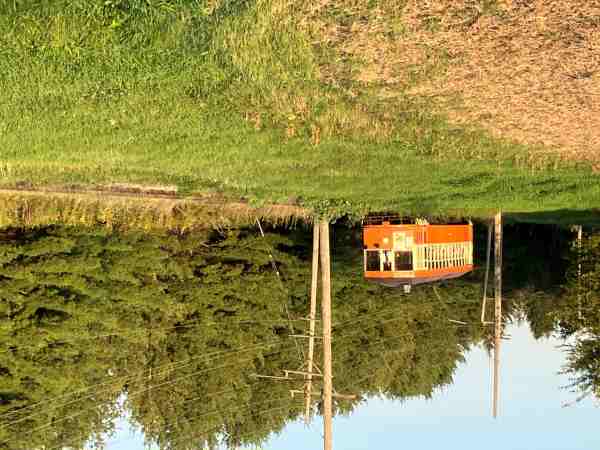
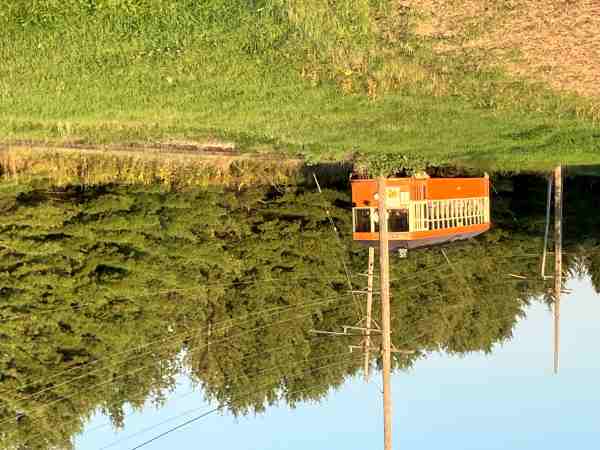
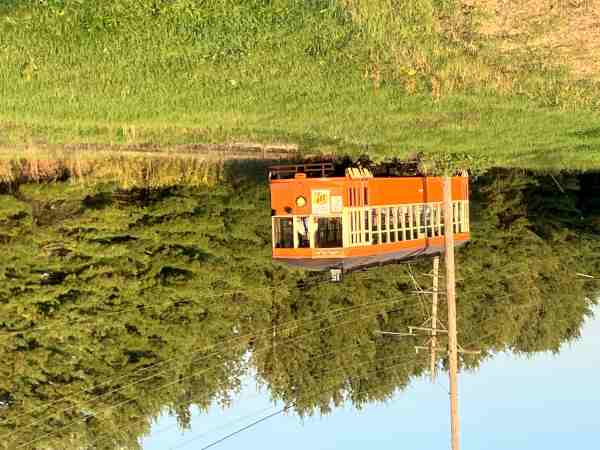
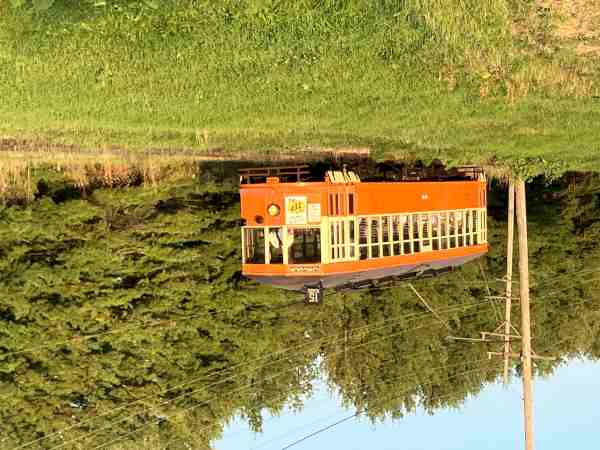
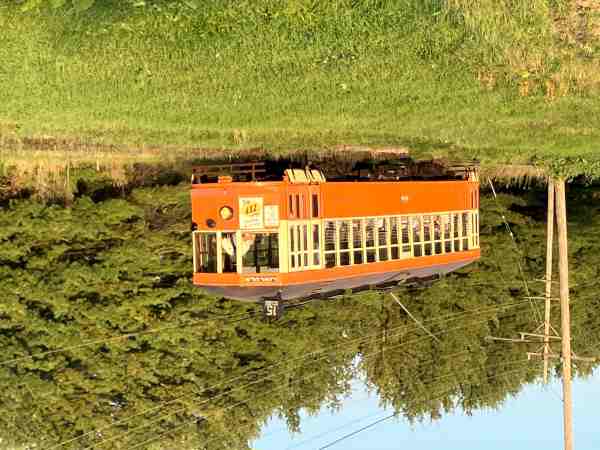
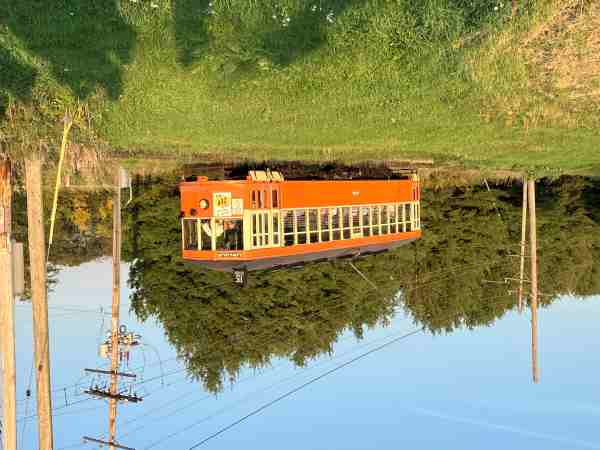
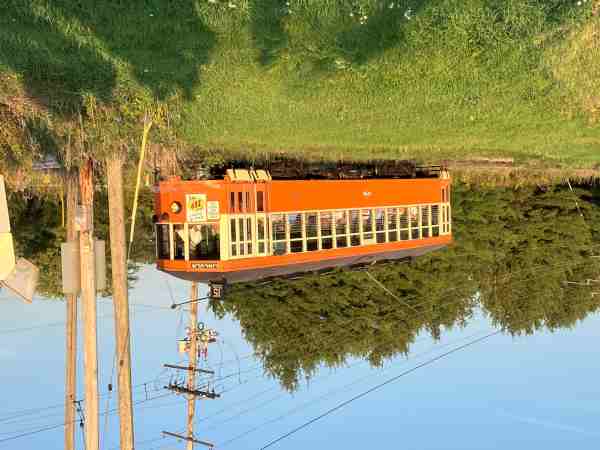
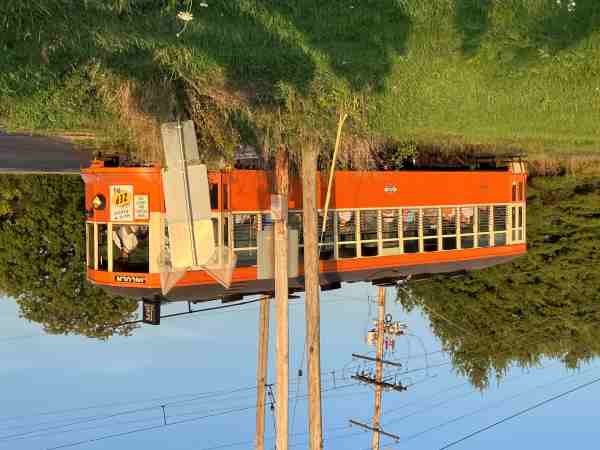
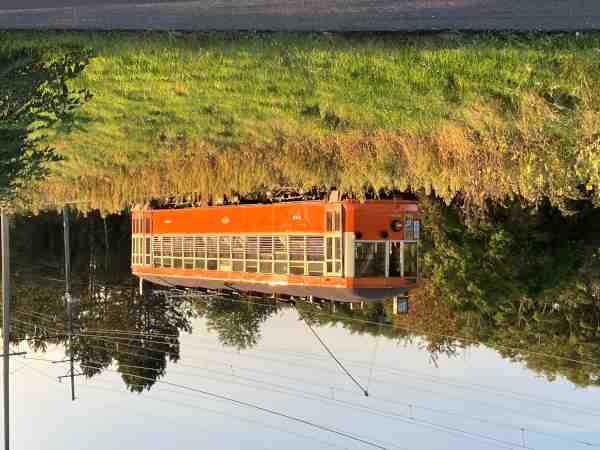
Photo runby four.
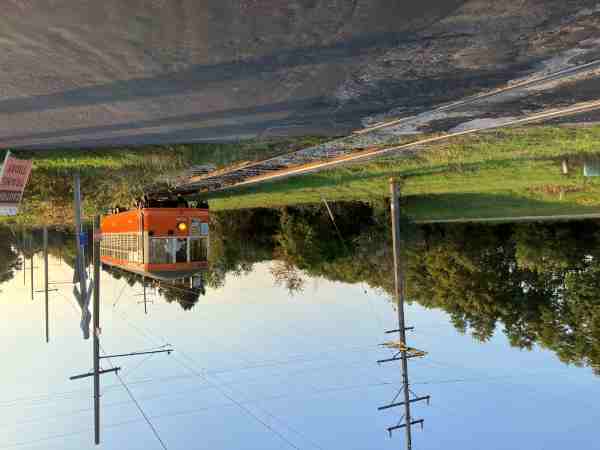
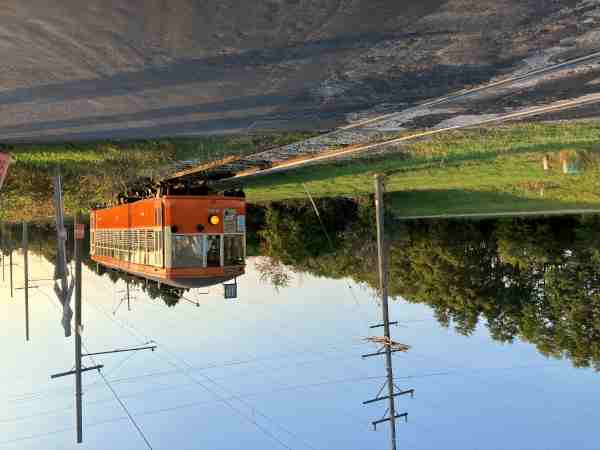
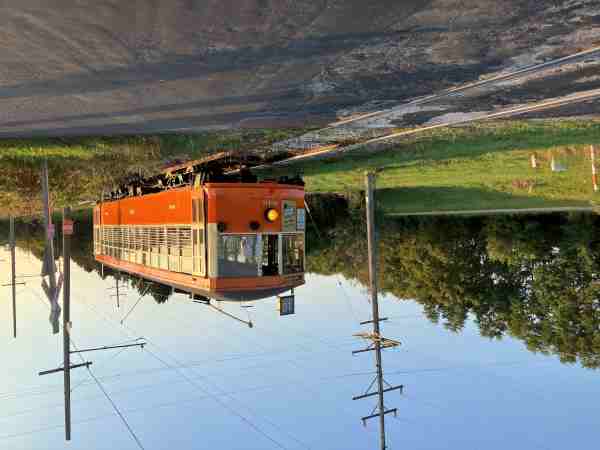
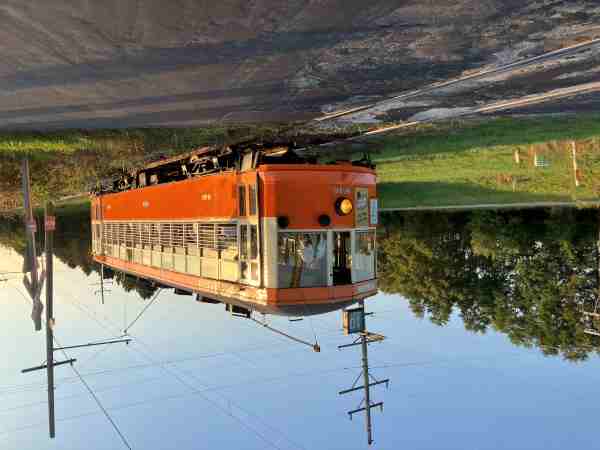
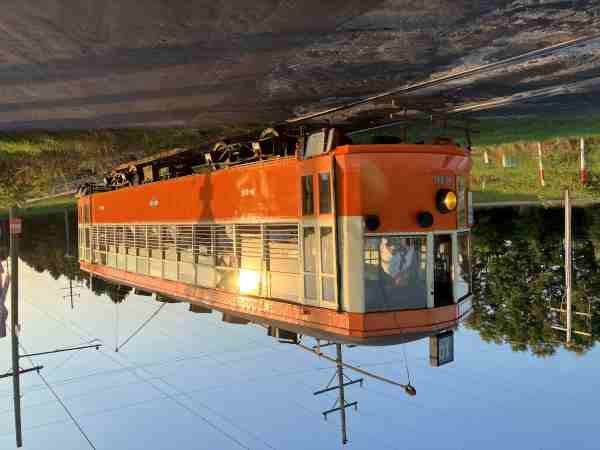
Photo runby five, after which everyone reboarded and we were taken to the car barn, where those who wished to explore detrained and photographed some of the museum's collection.
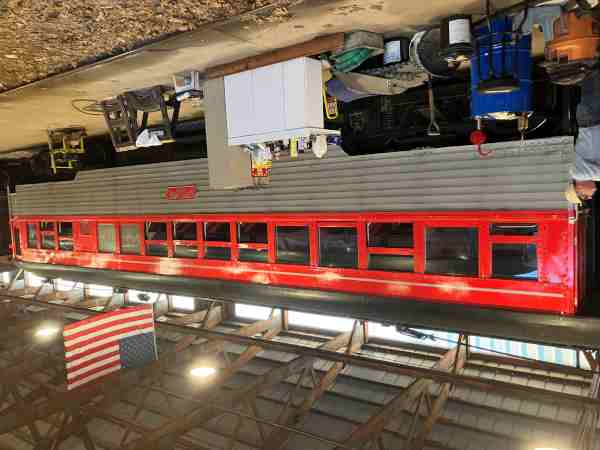
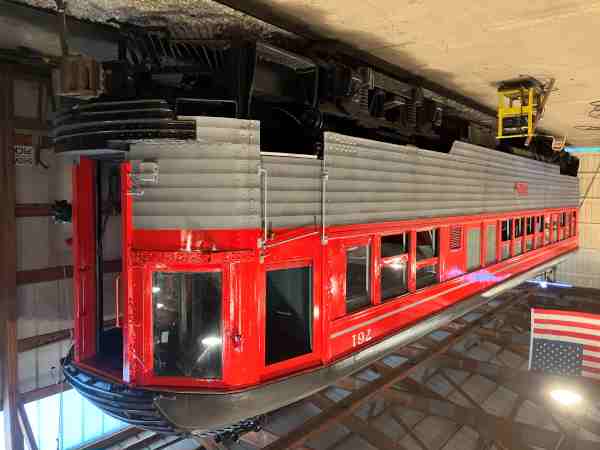
Chicago North Shore & Milwaukee Railroad steel interurban 761, ex. Michigan Transit Museum 1977-2001, exx. private owner 1970-1977, exxx. Cadillac and Lake City Railroad 1963-1970, nee Chicago North Shore and Milwaukee 761, built by the Standard Steel Car Company in 1930.
From 1890 to 1910, America was hit by a massive craving for fast, reliable electric trains, dubbed "interurbans" that ran between cities all over the country. In 1920, there were over 15,000 miles of interurban tracks, and one could ride all the way from Elkhart Lake, Wisconsin to the Catskill Mountains of New York on interurbans. One of these interurban railroads was the Chicago North Shore and Milwaukee Railroad. The "North Shore Line" ran fast interurban service between the Loop in Chicago and downtown Milwaukee. Trains would ride on the elevated rail system in downtown Chicago, squeezing between skyscrapers on tracks owned by the Chicago “L” until reaching the outskirts of the Windy City, where they joined their own tracks, speeding along at over 90 mph through North Chicago, Racine and Kenosha. Trains would then run on the streets of Milwaukee, stopping at traffic lights and dodging cars until reaching their final terminal.
Due to new interstate highways and a postwar car-centric society, the North Shore Line and almost all of the other interurbans were forced to shut down after losing revenue. The last North Shore train pulled into Milwaukee just before 3:00 am on January 21, 1963. Car 761 was one of the final cars to operate on that frigid last day.
In 1957, this car received the special "Silverliner” paint scheme it now adorns. The bottom half of the car is painted a silver-gray color with a darker gray paint applied in a way to mimic the fluted stainless steel on passenger cars appearing on steam railroads at the time.
The car was one of the few North Shore cars preserved and was acquired in 2001. A restoration effort began shortly thereafter and continued off and on for several years. A new roof, interior heat, new doors and rewiring had been completed in 2014. When volunteers discovered significant structural damage on the east end of the car, the project ground to a halt. After a qualified welder/ironworker joined the volunteer team in 2019, the Museum’s board agreed that the project could resume. That same year, several volunteers who had previously worked on the car returned to the museum. Following a more-than 18-month restoration effort by more than 20 volunteers, car 761 returned to operation in 2021, 58 years after it last ran under its own power. It took more than 1,000 volunteer hours and $42,700 to complete the project.
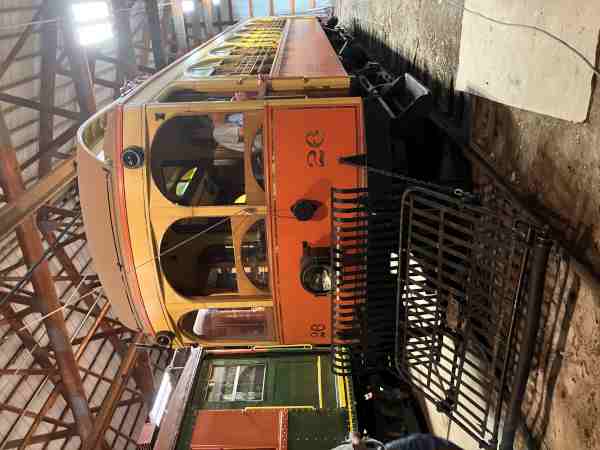
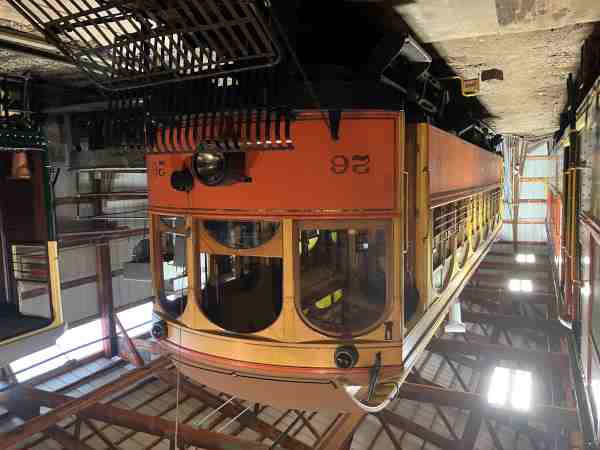
Sheboygan Light Power and Railway Company wooden interurban 26, ex. private owners 1938-1988, exx. Wisconsin Power and Light Company 26 1924-1938, exxx. Sheboygan Railway and Electric Company 26 1910-1924, nee Sheboygan Light Power and Railway Company 26 built by Cincinnati Car Company in 1908.
In the early 1900s, travel by electric rail was quick, stylish and very popular. Electric Interurban railroads connected the big cities with towns and farms across the country, and streetcar systems plied the streets and alleys of most cities with a population of more than 10,000.
Sheboygan, being a large city between urban Milwaukee and the port city of Green Bay, quickly got its own interurban line, which also ran downtown as the streetcar system, in the form of the Sheboygan Light, Power and Railway Company. The line extended west from downtown Sheboygan, serving the communities of Kohler, Sheboygan Falls, Plymouth and Elkhart Lake. In 1908, the Milwaukee Northern Railway reached Sheboygan from Port Washington, connecting the Sheboygan interurban line with Milwaukee. Because of this, one could travel from Elkhart Lake to the Catskill Mountains of New York by use of electric interurban railroads. The Sheboygan Light, Power and Railway Co. originally operated with several open-air trolleys and smaller interurban cars, but these soon proved inadequate due to the severe winter weather near Lake Michigan and their smaller size. In 1908, the company ordered three new, enclosed (and with a coal stove) wooden interurban cars. One of these new cars was numbered 26 and it and the rest of the enclosed cars operated to the end of the electric railway. The last segment of the line between Sheboygan and Elkhart Lake was closed in 1938.
To cancel off some last-minute debts, the railroad decided to sell off the cars as cabins and summer cottages along lakes in the area. Car 26 was a summer cottage until 1988, when the family in charge of the property donated the car body and surviving parts to the East Troy Railroad Museum. Together, they funded and completed a complete operational and cosmetic restoration.
In 2005, the restoration was completed. A few years later, a period fender, a large metal grate on the front of the car designed so that animals wouldn’t get run over, was reinstalled on the front of the car. Now it is possible to experience a ride on a wooden interurban car, which originally ran in Wisconsin, now operating on the sole surviving segment of an original electric interurban line in Wisconsin. Interestingly, the East Troy line of the Milwaukee Electric Railway was opened in 1907 and Car 26 was built and first ran in 1908.
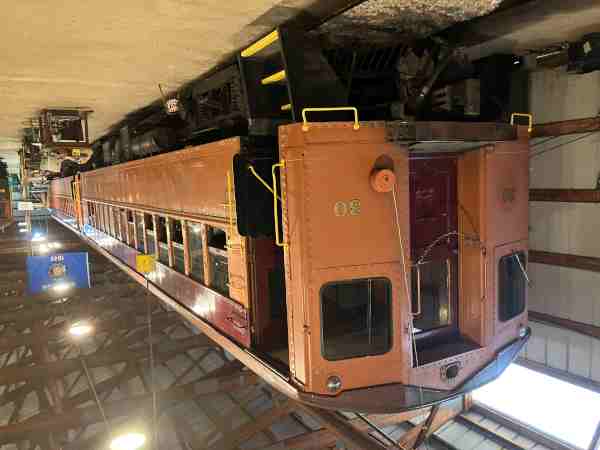
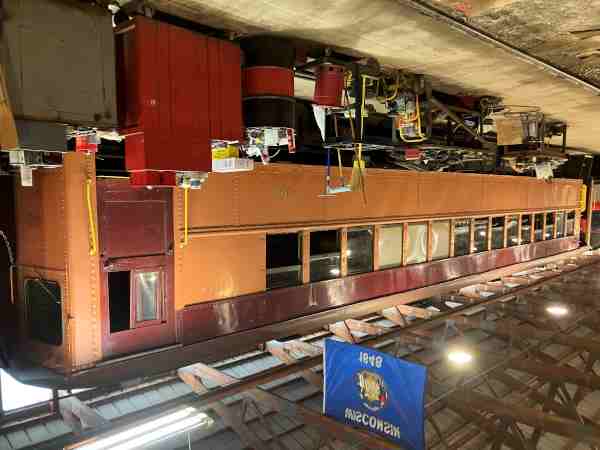
Chicago South Shore and South Bend steel interurban car 30, ex. Wisconsin Trolley Museum 30 1984-1985, nee Chicago, South Shore and South Bend 30, built by Standard Steel in 1929.
Between the 1890s and the mid-1920s, electric interurban railroads were built at a rapid pace, with the speedy interurban cars providing fast and reliable service between cities and across the countryside. At one point, there were over 15,000 miles of mainline interurban tracks across the United States, predominantly in the upper midwest, and one could travel between Elkhart Lake, Wisconsin and the Catskill Mountains of New York by the sole use of interurban railroads.
A vital connection in this multi-day journey was the Chicago South Shore and South Bend Railway. Beginning in 1901, what would become the "South Shore Line" began construction of the important interurban route between Chicago and northern Indiana. Construction was completed in 1908. In the early 1920s, an electrical entrepreneur by the name of Samuel Insull bought the company and renamed it the Chicago South Shore and South Bend. In addition, he also improved infrastructure and built new stations. New all-steel cars were ordered in 1926 and 1929 to replace the older wooden cars. Car 30 was part of the 1929 order of “orange cars”. This order of cars was more modern and had a smaller, but more comfortable, smoking room. The "South Shore Line" operated trains between Randolph Street Station in downtown Chicago and South Bend, Indiana. The railroad also served major towns such as Gary and Michigan City. In the southern suburbs of Chicago and Indiana, commuters used the cars every day to travel to work and tourists relied on the railroad to visit the lakeshore and football games at Notre Dame.
Car 30 was used in active service on the South Shore for over 50 years, eventually being phased out in the early 1980s by more modern stainless-steel cars. The car was saved by the Wisconsin Trolley Museum, which has since become the East Troy Railroad Museum. The car underwent a restoration and continues its life as a regular operator at ETRM as one of the final fully operational "orange cars".
This car can run as a single car or can be paired with multiple other former South Shore cars.
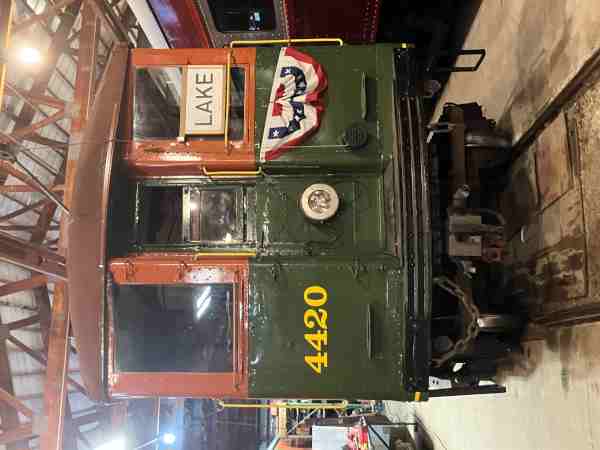
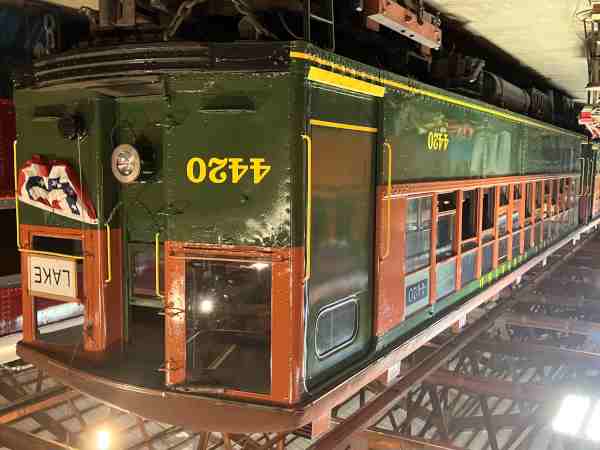
Chicago Rapid Transit Company rapid transit car 4420, ex. Wisconsin Trolley Museum 4420 1975-1985, exx. Chicago Transit Authority 4420 1947-1975, nee Chicago Rapid Transit Company 4420, built by Cincinnati Car Company in 1924.
The Chicago "L" (short for "elevated") rapid transit system has been extremely influential in the shaping and expansion of the Chicago area. Tracks were first laid down in late 1892 by the Chicago and South Side Elevated Railroad. In following years, the line was electrified and competing companies opened up across the city, interchanging passengers on a downtown elevated loop of track they all had rights to use. Wooden interurban and rapid transit cars would circle the loop before heading back on their own trackage. Today, the loop still exists, carrying thousands of passengers every day around the downtown, which is even known as "the Loop".
In the early 1920s, Samuel Insull, an electric utilities entrepreneur of the time, officially consolidated the four different "L" companies into one, forming his privately-owned Chicago Rapid Transit Company. Needing to improve service and operate faster trains, Insull ordered several hundred brand-new 4000-series cars from the Cincinnati Car Company.
The 4000-series cars have interesting interiors with old-time light fixtures, walkover leatherette seats and "bowling alley" seating at the ends. They help demonstrate both the interiors typical of the height of the interurban era, and the exterior of the coming state-of-the-art steel cars. Being high-level-loading cars, they have no steps and must load at either of the railroad’s two high-level platforms (at East Troy and the Elegant Farmer) or at a special movable stairset. They feature early automatic acceleration technology, with controller points for switching, series, parallel and field shunt, without the resistance points of the older cars, a precursor of the PCC control scheme to come in the Thirties.
The 4000s served the CRT (which became the government-operated Chicago Transit Authority in 1947) well, operating across the various elevated lines for almost 50 years in passenger service. During World War II, the first subway through the central city was completed. The 4000s, being the only steel rapid transit cars operating on the “L” at the time, were assigned to all runs through the two subway lines. Being equipped with trolley poles, the cars were also often used on outlying “L” lines and were even leased to connecting electric interurban rail lines. In the 1950s, more modern steel cars were bought, and air conditioning would first arrive on cars ordered in 1964. The wooden cars were all retired and the 4000s were quickly becoming outdated with the swift advances in technology.
In 1973, the last of the 4000s were retired from passenger service, with a few staying in maintenance service for a few years afterwards. Car 4420 was officially removed from the CTA fleet in 1975, soon after becoming part of the Wisconsin Trolley Museum collection. In 1985, the museum became part of the East Troy Railroad Museum and restored Car 4420 to its as-delivered condition. Today, the car regularly operates with two other restored 4000s (4439 and 4453) on the last interurban trackage in the state of Wisconsin: the six miles between East Troy and Mukwonago.
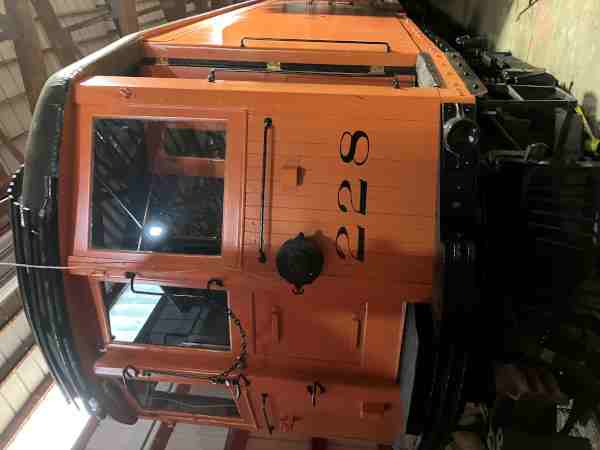
Chicago North Shore and Milwaukee interurban box motor 228, ex. Wisconsin Electric Railway Historical Society 228 1971-1988, exx. Indiana Railway Museum 228 1963-1971, nee Chicago North Shore and Milwaukee 228, built by Cincinnati Car Company in 1922.
During the early 20th century, fast electric interurban railroads provided cheap, reliable service between cities and towns across America, predominantly in the upper midwest. The Chicago North Shore and Milwaukee Railroad, also commonly known as the “North Shore Line,” was one of these interurban railroads, one which operated between the cities of Milwaukee and Chicago during this time. The North Shore Line ran frequent high-speed passenger trains between downtown Chicago and downtown Milwaukee from 1916 through early 1963. Railroad historian and photographer William Middleton described the North Shore Line as a "super interurban". There are still many people today who remember the North Shore Line fondly and remember riding on the line.
North Shore Line interurban trains would ride on the elevated rail system in downtown Chicago, squeezing between skyscrapers on tracks owned by the Chicago "L" until reaching the outskirts of the Windy City, where they joined their own tracks, speeding along at over 90 mph through North Chicago, Racine, and Kenosha until reaching Milwaukee.
Shore Line was famous for operating fast, shiny interurban passenger trains and their articulated "Electroliners" between Chicago and Milwaukee, but less well-known is that the North Shore Line also operated a thriving cargo business. The delivery of freight interchanged with nearby steam railroads and made up nearly 40% of sales in 1905.
Powerful electric locomotives were used to haul carload freight and Merchandise Despatch (North Shore Line's spelling) cars to haul less-than-carload freight to any station along the line or for transfer to other railroads or steamship lines. The MD cars were essentially self-propelled boxcars (called "box motors") that carried packages, newspapers, milk cans, furniture, beer and many other items. Small packages could be brought to any North Shore Line station for shipment and larger items were processed through freight houses, where transfers could be made from trucks. In Chicago alone, there were eight freight houses served by the North Shore Line, and the North Shore also had a contract with the Chicago Tunnel Company, which operated a vast narrow-gauge railway under downtown Chicago. The CTC would bring small packages and shipments to one of the North Shore freight houses, where MD cars would haul the freight north out of the Montrose Freight House in the early morning hours.
"Ferry Truck" service pulled by MD cars was profitable, with the trucks later being driven to their final destinations.
A total of 37 merchandise cars, and five similar refrigerated cars, were built by the Cincinnati Car Company for the North Shore Line between 1920 and 1926 and were numbered 203-244. The first 12 cars were built with cargo doors at the ends of each side, while the remaining cars, including car 228, featured wide center cargo doors on each side.
In 1917, Samuel Insull had acquired control and begun a freight service for packages, milk cans, and other less-than-a-car loads. Known as the popular "Merchandise Despatch" (British spelling) service, the railroad charged one-third higher prices but guaranteed overnight shipping. Other competing railroads often took 2-8 days to ship packages between Chicago and Milwaukee, and so the service quickly became highly profitable. With the steamship companies, third-morning service between Milwaukee and Chicago and Michigan was guaranteed when steam railroads took as long as two weeks to complete the same take. In 1926, the North Shore Line began the first "piggyback" service in the country. North Shore trucks were backed onto special flatcars in Chicago, Milwaukee, Racine or Kenosha, to be unloaded at one of the three other terminals, allowing the NSL to serve even more businesses than it could before. As there were not many good roads between the four cities, this also became highly profitable. The North Shore Line soon began shipping the whole truck to the customer's destination. The "Ferry Truck" (as the North Shore called it) service was the world's first, and many piggyback trains operate daily across the world today.
As the North Shore Line began handling truck trailers in piggyback service, the LCL business decreased and was finally eliminated in 1947, and the Ferry Truck service was also soon eliminated due to faster shipping and new competition brought on by inter-city highways. At that time, the MD cars, which were already being used as locomotives for the piggyback trains, were given a variety of new assignments. These included service as locomotives for shorter freight trains, cabooses, yard switchers, snowplows, tool cars, and sleet cutters. Car 228 became a sleet cutter, which scrapes ice from the overhead trolley line.
Due to new interstate highways and a postwar car-centric society, the North Shore Line and almost all of the other interurbans were forced to shut down after losing revenue. The last North Shore train pulled into Milwaukee just before 3:00 am on January 21, 1963.
When the Sore Line Shut down 1963, nine merchandise cars were initially saved. Sadly, only five survive today. Car 228 was sold to the Indiana Railway Museum. In connection with that museum’s move from Westport to Greensburg, Indiana in 1971, the car was sold to The Wisconsin Electric Railway Historical Society and the restoration of car 228 was completed in 2024. The car operated under its power for the first time since 1963 on Friday April 19, 2024 at 3:30 pm and final touches were put on the car the month following.
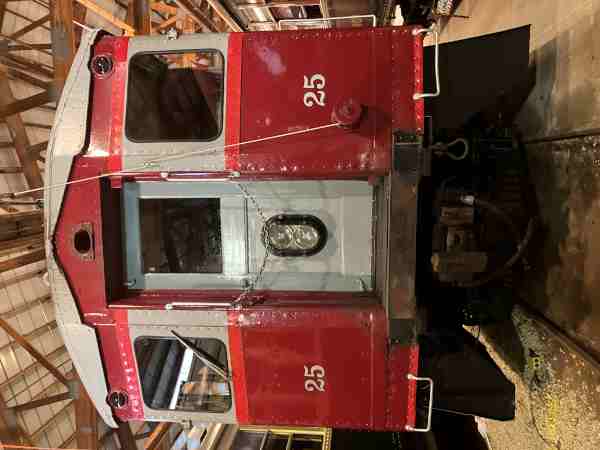
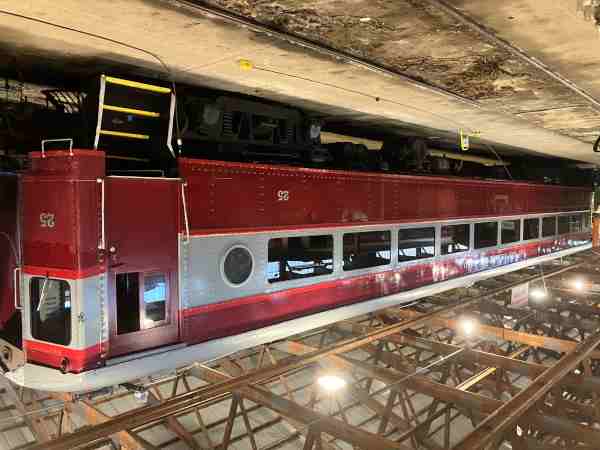
In the early 1900s, electric interurban railroads criss-crossed the midwest, ferrying people, mail and supplies between cities and towns. At this time, Samuel Insull, a powerful electric utility magnate, owned almost all of the Chicago-area interurban lines, including the Chicago South Shore and South Bend Railroad. The “South Shore Line” carried passengers between downtown Chicago and South Bend, Indiana, by means of South Chicago, Gary and Michigan City. The company operated with old wooden cars that had gotten worn down from years of service along the sand-strewn lakeshore. When Insull took control of the railroad in the early 1920s, he sought to swiftly modernize with modern steel cars.
Car 25 was built and delivered by the Pullman Car Company in early 1927 and then began serving the railroad for over 55 years as a coach car. During the second World War, some of the cars, including 25, were modernized by increasing the length and capacity of the car due to increased ridership. A new interior was also put in, along with large sealed windows and air conditioning.
By 1983, the old orange steel cars were becoming unreliable. With new stainless-steel cars taking over, the iconic, but run-down, orange cars were retired. Many of these historic cars were saved, with car 25 going to the Wisconsin Trolley Museum, now the East Troy Railroad Museum. The car went through a full restoration into a dining car in an ETRM paint scheme and renamed "Ravenswood", after one of the old stops along the South Shore. The car can seat 50 patrons and hosts a full cash bar. Car 24 has also been restored as a near-identical dining car, bringing the dinner train capacity up to 100.
The East Troy Railroad Museum is currently the only regular operator of operational historic South Shore equipment, currently having six operable cars from the railroad. Cars 24 and 25 continue the legacy of dining on electric railcars, as they serve the only electric dinner train service in the United States.
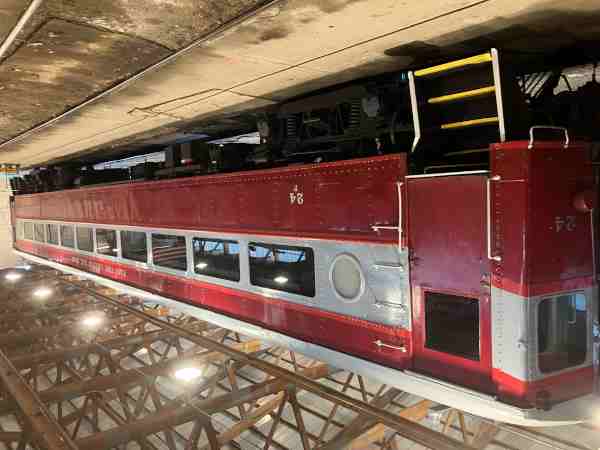
East Troy Electric Railroad steel interurban car 24 "Beverly Shores", ex. Fox River Trolley Museum 1985-1992, nee Chicago South Shore and South Bend 24, built by the Pullman Car Company in 1927.
From 1890 to 1910, America was hit by a massive craving for fast, reliable electric trains, dubbed “interurbans” that ran between cities all over the country. In 1920, there were over 15,000 miles of interurban tracks, and one could ride all the way from Elkhart Lake, Wisconsin to upstate New York only by the use of interurbans. During this time, an electric utility baron by the name of Samuel Insull controlled a monopoly over the Chicago electrical grid and its interurban routes. For years, Chicagoans used the frequent, reliable, and fast trains to commute to work, shopping centers, and even school!
In the mid-1920s, Insull bought the Chicago Lake Shore and South Bend Railroad, an electric interurban route that operated between downtown Chicago and South Bend, Indiana, by means of Gary and Michigan City. When Insull bought the railroad, he modernized the company by ordering new all-steel cars, building new stations and renaming the company the Chicago South Shore and South Bend.
Car 24 was built in 1927 by the Pullman Car Company and then began serving the railroad for over 55 years as a coach car. Between 1942 and 1947, some of the cars, including 24, were modernized by increasing the length and capacity of the car due to increased ridership. A new interior was also put in, along with large sealed windows and air conditioning.
The "orange cars" were so reliable that they ended up working almost 60 years for the South Shore Line. In 1983, the cars were finally phased out and retired. However, by that time, the South Shore Line was one of the last interurban lines in the country, with most others being abandoned due to the rising popularity of the automobile, and rail preservationists stepped in and saved around half of the iconic "orange cars". Car 24 eventually joined several other South Shore cars, including identical sister car 25, at the East Troy Railroad Museum and was restored to operation in only 13 months.
ETRM currently has six restored and operational South Shore cars and another is being restored by our volunteers. Car 24 was restored to operation and turned into a dining car. The South Shore and other interurbans once experimented with dining service, but it never truly picked up the popularity it did on the competing steam railroads. 24 now wears an ETRM paint scheme and is named the “Beverly Shores” (after one of the stations on the South Shore Line). After a successful few years with the railroad's first dining car 24, a second car was remodeled in the spring of 1995. This car incorporated many functional improvements learned from three years and dozens of operations with the Ravenswood (Car 25), including a larger bar and more efficient galley facilities. The car can seat 50 and includes a full bar on ETRM’s popular seasonal dinner trains and charters.
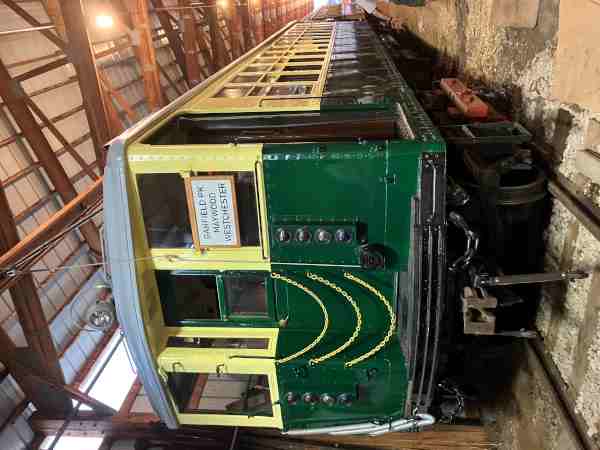
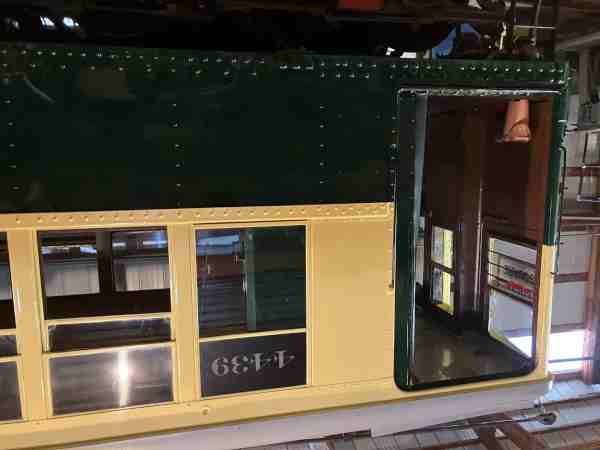
Chicago Transit Authority rapid transit car 4439, ex. Toledo, Lake Erie and Western 4439 2014-2020, exx. Grand Rapids Electric Railway 4439 1985-2014, exxx. Oakland County Parks and Recreation Committee 4439 1975-1985, exxxx. Chicago Transit Authority 4439 1924-1947, nee Chicago Rapid Transit Company 4439, built by Cincinnati Car Company in 1924.
Since late 1892, the Chicago "L" (short for “elevated”) metro system has shaped the Windy City. By the early 1900s, lines fanned out in all directions, transporting millions of people to and from work, shopping, and recreation. These lines were most influential, connecting the downtown and other transit hubs with neighborhoods and outlying areas.
At first, the lines were owned by several different companies, with a loop of track circling the downtown that all of the companies shared. The wooden interurban and rapid transit cars would circle the loop before heading back on their respective routes. Eventually, the decision was made to bring the systems together, forming the Chicago Rapid Transit Company, more commonly known as the CRT.
The company was formed in the early 1920s, and quickly sought to renew the look and feel of the city's transit system. As America sped through the second industrial revolution, the wooden cars were soon being seen as old and dilapidated. Over 400 of the new all-steel 4000 series were ordered in two batches of slightly different designs.
The first order of cars closely resembled the new subway cars in New York. Car 4439 was part of the more advanced second-generation model of cars. These cars were more like interurban cars, even being equipped with trolley poles so that they could operate on outlying “L” lines and nearby interurban lines.
When new, the 4000s were placed into service on the north-south side main line. In 1947, the Chicago Transit Authority took control of the "L" and other public transit systems in the city. They ordered more modern cars and the 4000s were upgraded, receiving new door controls and exteriors. However, they were eventually phased out and retired in 1973.
Car 4439 was one of several preserved and moved among several transit and railroad museums. The car found its way to the East Troy Railroad Museum in 2020 and a complete restoration was completed in 2022. ETRM currently has three fully operational 4000s, two in as-delivered condition (4420 and 4453) and 4439, which has been restored to its 1950s appearance.
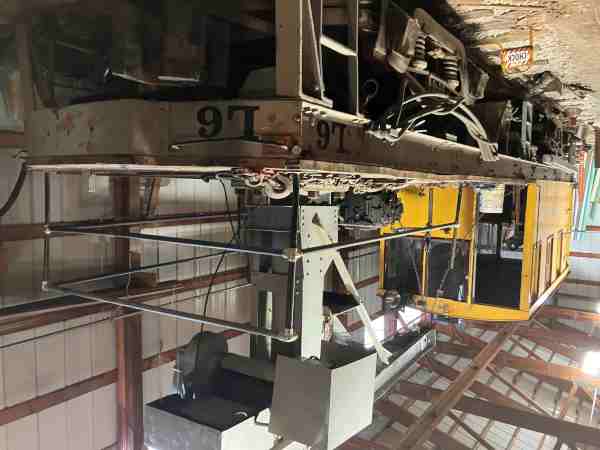
The Milwaukee Electric Railway and Light Company interurban crane car L6, ex. The Wisconsin Electric Railway Historical Society L6 1977-1985, exx. The Milwaukee Electric Railway and Transport Company L6 1938-1963, exxx. The Milwaukee Electric Railway and Light Company L6 1929-1938, nee The Milwaukee Electric Railway and Light Company J4, built by the St. Louis Car Company in 1911.
During the early 1900s, expansive trolley and electric interurban rail lines sprawled across America. The Milwaukee Electric Railway and Light Company (TMER&L) operated approximately 130 miles of interurban lines across southeastern Wisconsin and lines radiated out of Milwaukee to Kenosha, Watertown, Burlington and East Troy. As the TMER&L expanded its interurban services and bought the Milwaukee Northern interurban railroad between northern Milwaukee and Sheboygan, more work cars and track gangs were needed to keep the hundreds of miles of tracks, overhead wires and yards in service. During this time, utility and sprinkler cars were ordered from the St. Louis Car Company.
L6 originally was a sprinkler car, used to keep dust off city streets, but was rebuilt into a utility crane car in 1929 at Cold Springs. L6 operates as a trolley built on top of a flat car with a crane and air compressor on the back. The car was very useful to the TMER&L in trackwork, frequently being used to lay and relay the heavy pieces of rail and ties in the “Devil’s Teapot” swamp in Muskego, where the tracks to East Troy were laid, and on the many bridges along the line to Watertown where Interstate 94 currently sits.
In 1963, the TMER&L and its successors had shut down interurban and street railway service and L6 was received by the Wisconsin Electric Power Company, where many pieces of ex-TMER&L equipment were kept at both the Lakeside and Port Washington Power Plants. L6 went to Lakeside, like the majority of the equipment but was rarely, if ever, used there, where many other pieces of ex-TM work and freight equipment were used to switch hopper cars filled with coal from the Chicago and North Western Railway.
In 1972, the car was received by the Wisconsin Electric Railway Historical Society and moved to East Troy, where a museum operation had begun on the last segment of TMER&L track. L6 continues to work at East Troy, helping with trackwork, material movements and weed spraying.
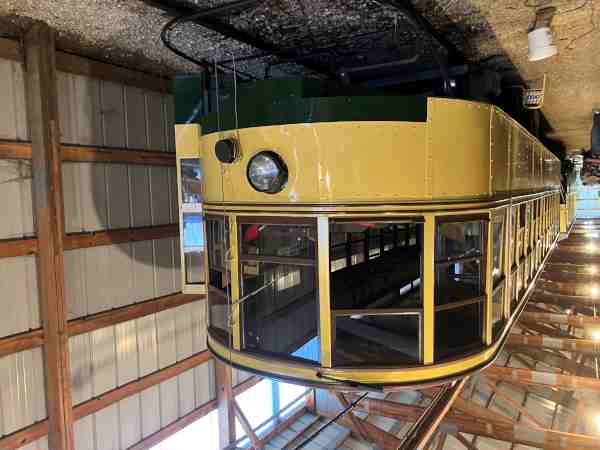
Twin City Rapid Transit steel streetcar 1583, ex. Wisconsin Trolley Museum 1583 1981-1985, exx. private owner 1958-1981, nee Twin City Rapid Transit 1583, built by the company in 1913.
In the early 1900s, most cities with over 10,000 residents had an electric streetcar system. The Twin Cities of Minnesota were no different. With over 500,000 residents in 1910, Minneapolis and St. Paul had an expansive streetcar system, which was in need of more modern cars. The construction of 1583 was completed on April 19, 1913 at the Snelling Shops in St. Paul. TCRT built approximately 1,000 similar streetcars.
1583 was re-constructed in 1928 as a "front-exit" car and then was assigned to the North Side Station; it was usually assigned to the Chicago-Penn-Fremont Line. In 1933, 1583 was rebuilt for one/two man operation. Fifteen years later, it received its final rehabilitation along with new steel plating and Twin City Lines emblems. In January 1954, 1583 developed electrical and mechanical problems and was removed from service.
In the 1950s, due to a rising use of automobiles and a conspiracy involving automakers, most streetcar systems in America were quickly abandoned. In 1958, the last streetcar ran in the Twin Cities. Scrapping and abandonment was extremely rapid with the TCRT, as the owners of the company wanted to rapidly abandon and destroy the cars and infrastructure so they could not be forced back into business.
On April 29, 1954, 1583's body was sold to Transportation Sales Company, a dealer in used streetcar bodies. The car was moved to central Wisconsin, where it became a shed. 1583's body was eventually rediscovered along Adams County Highway C between Monroe Center and Big Flatts and was apparently being used as a storage shed for a repair business. It had a false metal roof over it, which protected the body from some twenty-seven years of deterioration from weather and sun.
In 1981, after buying the car for $1,000, Rick Volkmann (of a local rail track replacement company) and his crew moved 1583 to North Prairie, where the car was restored. When volunteer Paul Averdung made arrangements with the Village of East Troy to operate the railroad, 1583 arrived on the property and the car was restored as Duluth 253.
Several years later, Minnesota Transportation Museum wrote a letter to the East Troy Museum stating that the car was really Twin City Rapid Transit 1583. Windows and underbody parts were discovered stamped "1583", and it became evident that the car was not Duluth car 253. The car was also double-ended; few cars on the TCRT system were ever double-ended, but there were no turning methods on the East Troy Railroad. The west-facing end is the original.
Today, the car continues to carry visitors on the last interurban trackage left in the state of Wisconsin: the six miles between East Troy and Mukwonago.
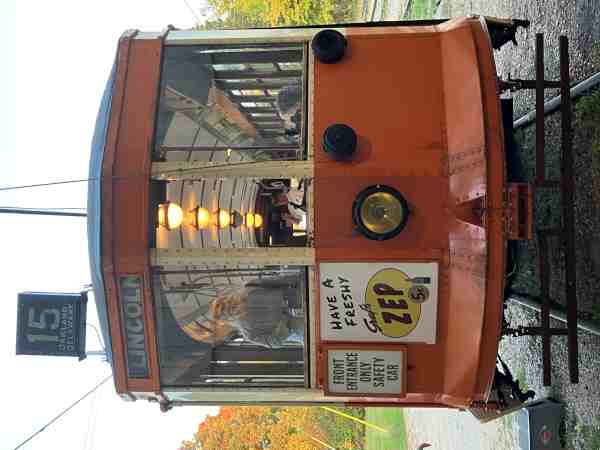
An end view of our streetcar as seen from the car barn.
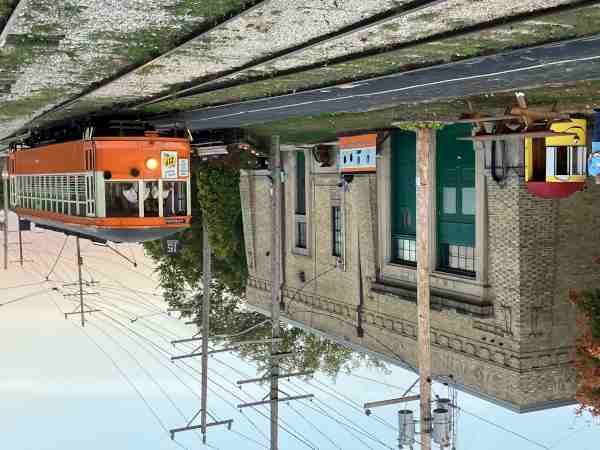
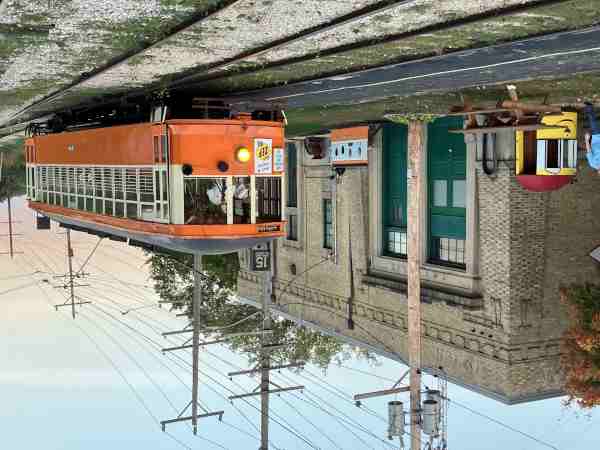
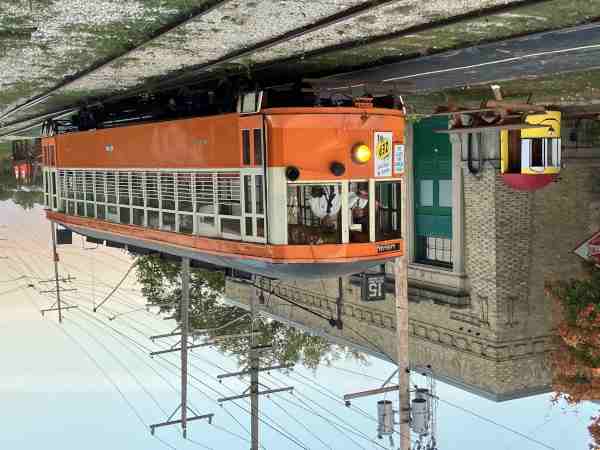
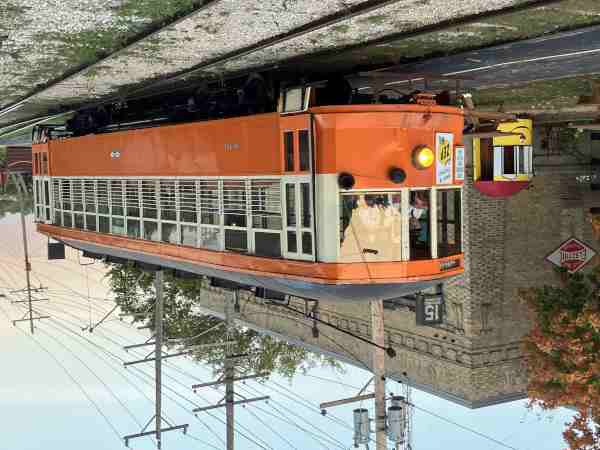
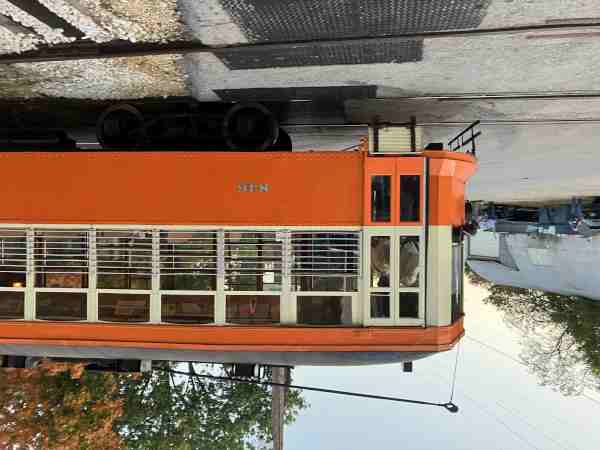
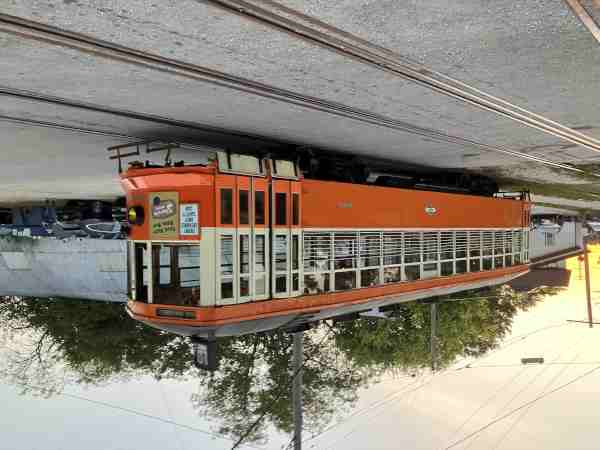
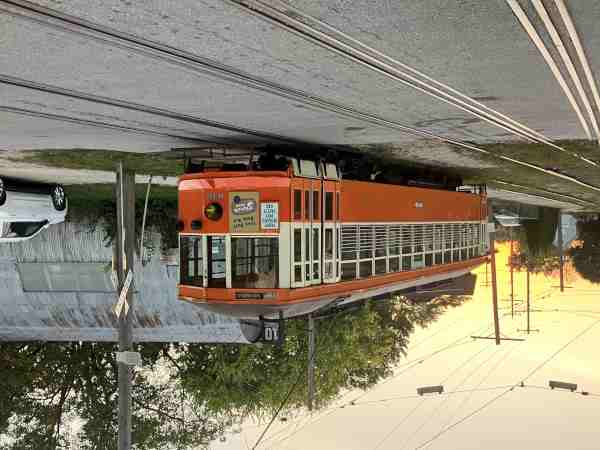
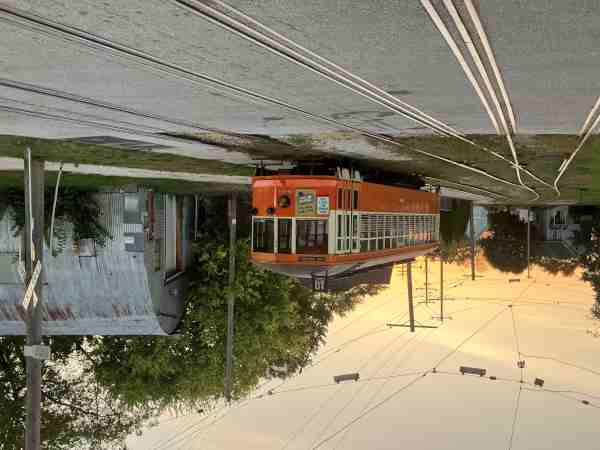
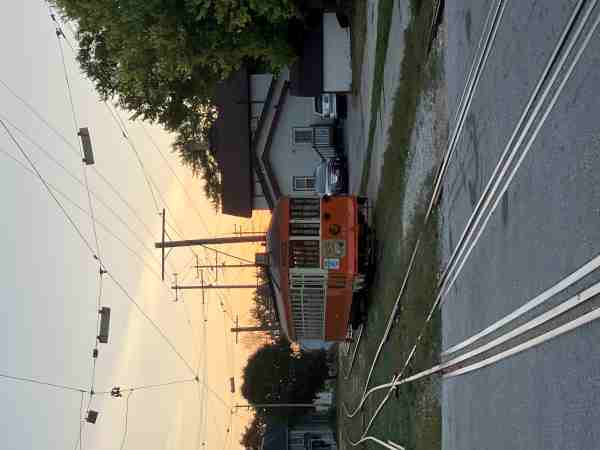
East Troy streetcar 846 returning to the car barn after a most enjoyable ride and series of runbys. Once gift shop purchases and final photographs had been taken, everyone re-boarded the buses and were taken back to the Hyatt Regency Hotel in Milwaukee for the evening.
| RETURN TO THE MAIN PAGE |