




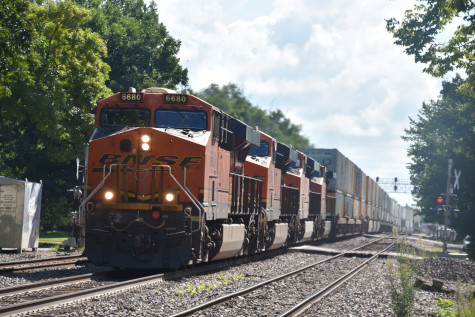
After three early starts, I slept in then prepared myself for the day. Before departing Antonito, New Mexico, I stopped off at the Cumbres and Toltec Scenic yard.
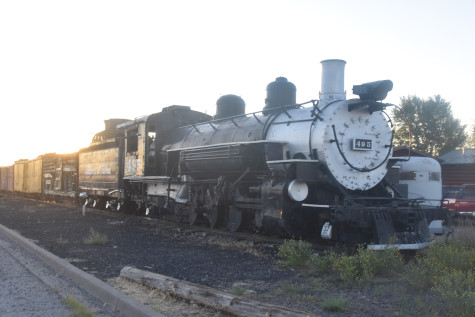
Cumbres and Toltec Scenic 2-8-2 495, ex. Denver and Rio Grande Western 1024, nee Denver and Rio Grande 1104, built by Baldwin in 1902. It was retired in 1962 and is currently on display.
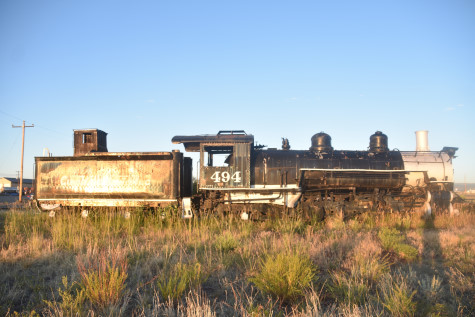
Cumbres and Toltec Scenic Railroad 2-8-2 494, ex. Denver and Rio Grande 1020, nee Denver and Rio Grande 1120, built by Baldwin in 1908. It was converted to narrow gauge in 1928 then retired in 1962 and is currently on display.
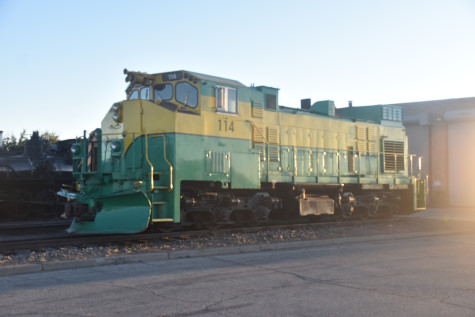
Cumbres and Toltec Scenic RSD35W 114, nee White Pass and Yukon 114, built by Bombardier in 1982. I started the drive on US 287 to Alamosa, then US 285 to Walsenburg, where I stopped at McDonald's for hot cakes and sausage.
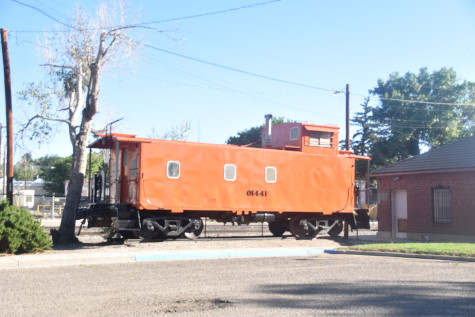
Beside the Colorado and Southern/ Denver and Rio Grande Western depot is Denver and Rio Grande Western caboose 01441, built by the railroad in 1945. Leaving Walsenburg, I drove north to Interstate 25, taking that to US 50 to Colorado 206 and Colorado 96, travelling east until I saw a train.
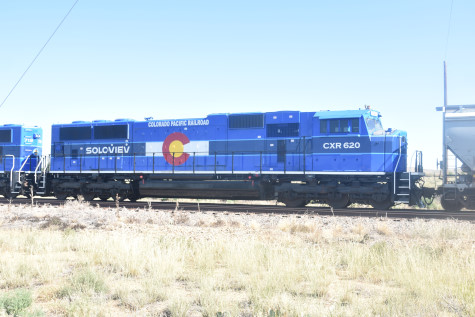
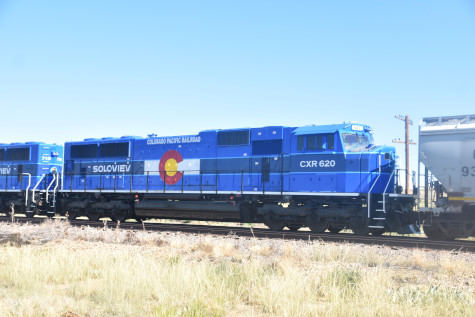
Colorado Pacific SD70MAC 620, ex. Colorado Pacific 575, exx. Dieselmotive Power 575, exxx. BNSF 9657, nee Burlington Northern 9657, built by Electro-Motive Division in 1995.
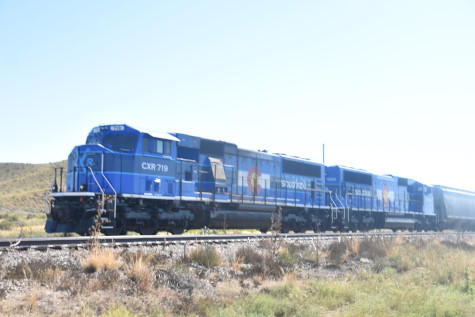
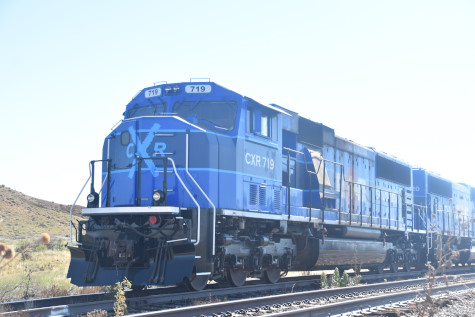
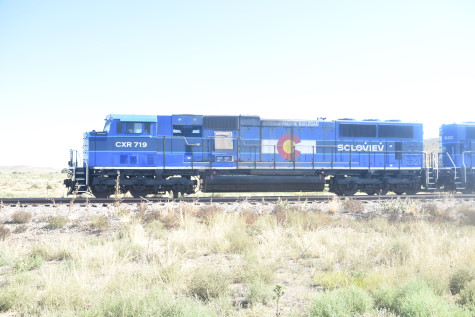
Colorado Pacific SD70MAC 719, ex. Colorado Pacific 707, exx. Dieselmotive Power 707, exxx. BNSF 9697, nee Burlington Northern 9697, built by Electro-Motive Division in 1995.
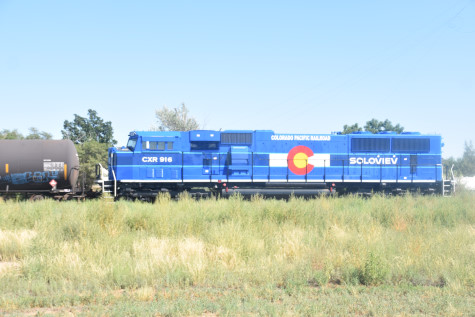
Colorado Pacific SD70MAC 916, ex. Colorado Pacific 303, exx. Dieselmotive Power 303, exxx. BNSF 9546, nee Burlington Northern 9546, built by Electro-Motive Division in 1994. I continued to Sugar City.
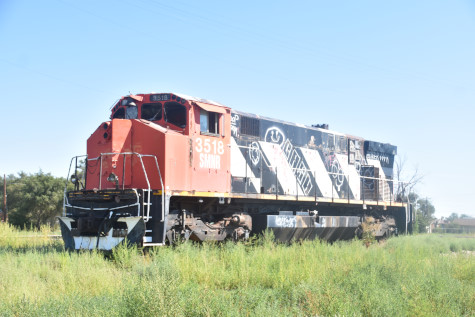
Southern Manitoba Railway M420W 3518, ex. San Manuel 3518, exx. Valley and Siletz Railroad 3518, nee Canadian National 2518, built by Montreal Locomotive Works in 1973. I then drove to Colorado 96 to US 71 to north Lamar and checked into the Days Inn. Later, I went across the highway to Arby's for dinner.
8/19/2025 This morning, I went to Becky's Family Restaurant for a breakfast of French Toast and sausage then continued the drive east to Newton, Kansas, arriving there early afternoon, where I checked into the Comfort Inn and Suites before going Arby's for dinner.
8/20/2025 After breakfast at the hotel and reviewing my e-mail, I checked out and drove to the Amtrak station.
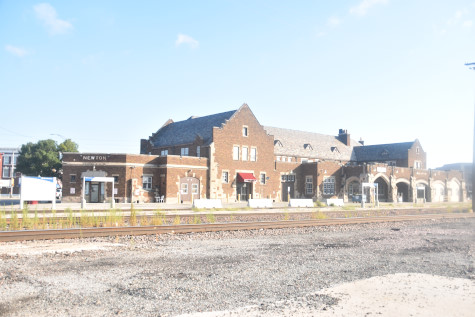
Santa Fe Newton depot built in 1929.
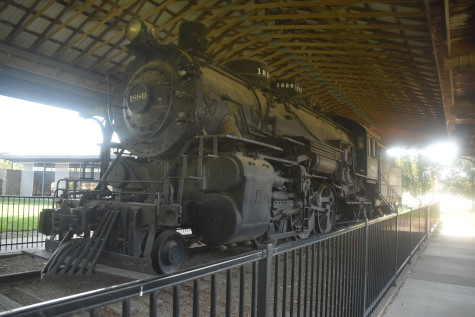
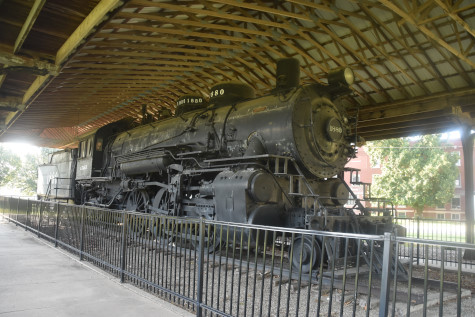
Santa Fe 2-8-2 1880 built by Baldwin in 1907. Originally a coal burner, 1880 was converted to burn oil in 1941 and hauled freight on Santa Fe's Missouri, Eastern, Kansas Southern and Middle Divisions, although it operated mainly in Kansas, clocking up 1,022,667 miles before being retired in 1953. It then sat for two years in the Emporia rail yard until Newton's Junior Jaycees mounted a campaign to secure the engine for the city. 1880 was donated to the City of Newton in 1955 and hauled by a Santa Fe crew on temporary rails from the railroad track on West Broadway to its current site in Military Park on East Broadway. The canopy is from the original AT&SF depot building in Newton.
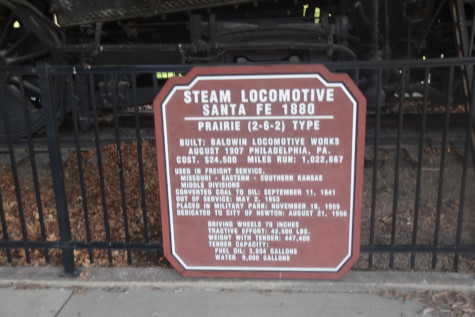
The plaque of steam engine 1880.
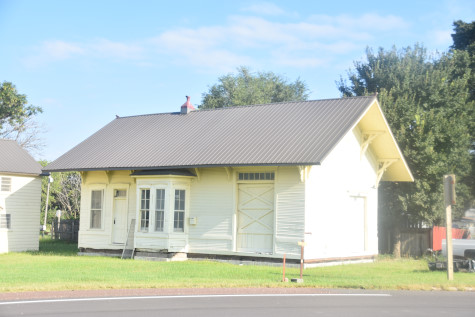
I stopped at Walton for the Santa Fe station, built in 1880 and moved 24.3 miles from its original location in Lehigh, Kansas in September 2017, then made my way to Florence.
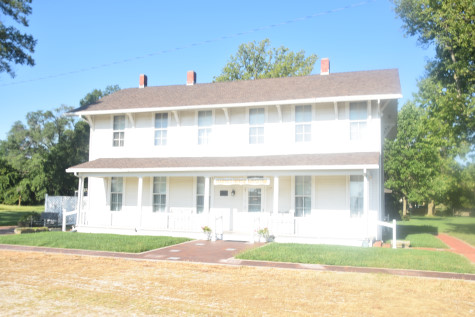
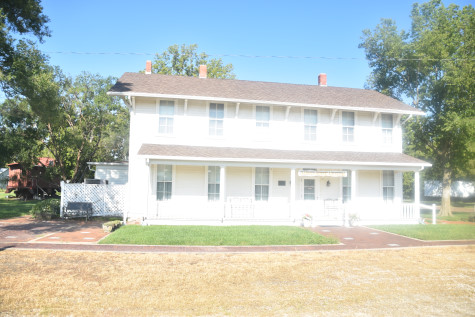
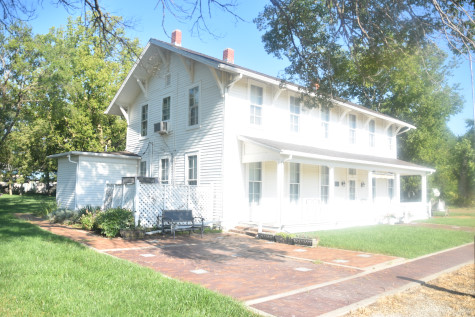
In Florence is part of the first Fred Harvey House, of the Fred Harvey Company, which stood south of the Santa Fe railroad tracks until the early 20th century. The existing structure was the original part of the Clifton Hotel that was erected to serve passengers of the Santa Fe Railway as a permanent eating station and hotel for passengers. This Harvey House is notable, since it was the first one to provide sleeping facilities. The Harvey House was built in 1876, closed in 1900, operations were transferred to Newton and is a Harvey House Museum.
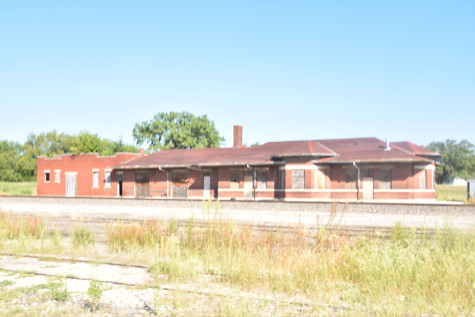
Santa Fe Florence station built circa 1906. Continuing on US Highway 50, I decided to re-visit the steam engine in Emporia.
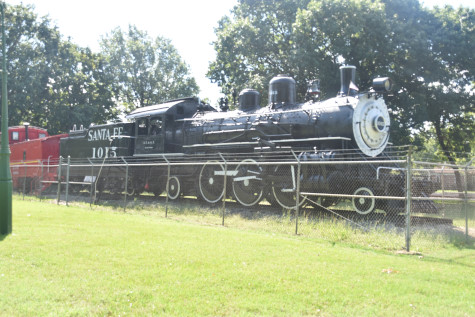
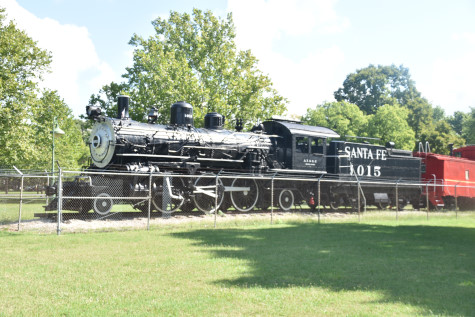
Santa Fe 2-6-2 1015 built by Baldwin in 1921.
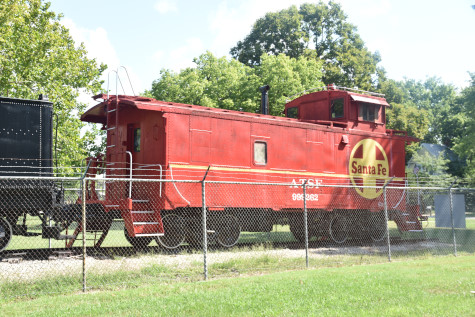
Santa Fe caboose 999262, nee Santa Fe 1983, built by American Car and Foundry in 1931.
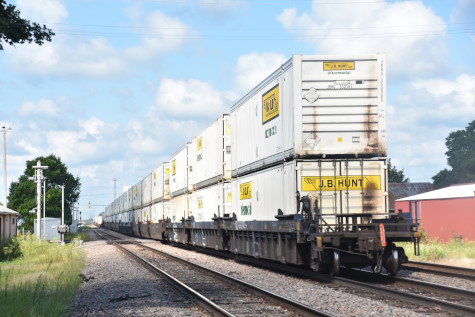
While I was here, BNSF 3889 West came through. Proceeding east on Interstate 35, I wanted to go back to Melvern so made my way there.
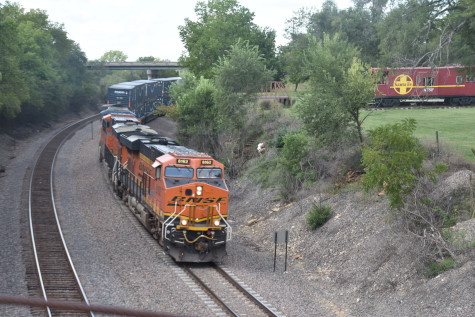
BNSF 8132 East at Melvern.
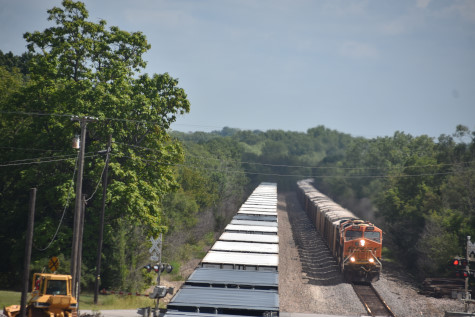
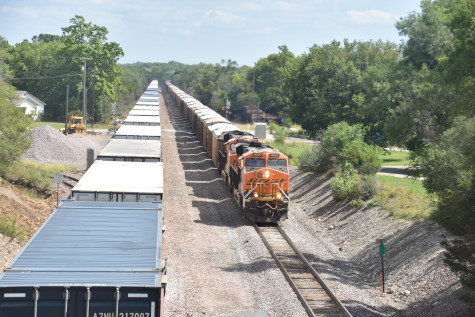
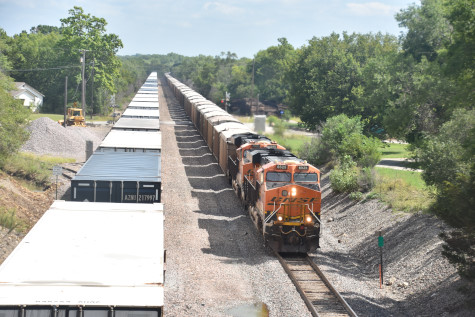
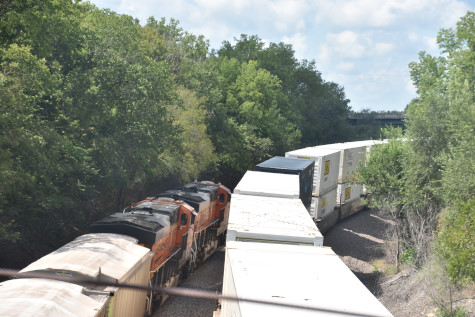
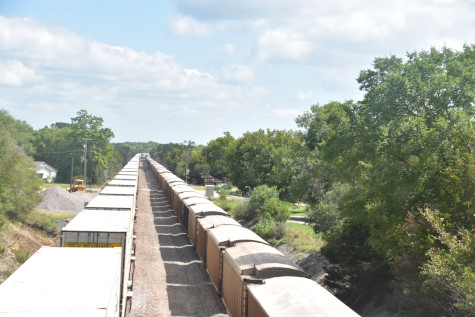
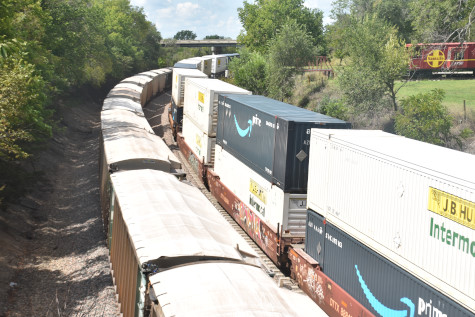
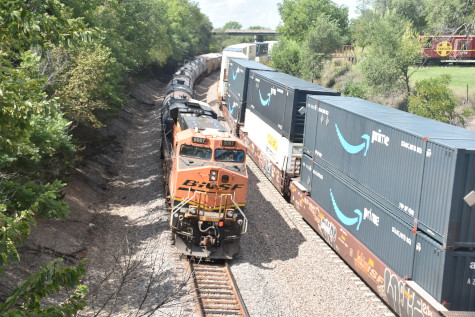
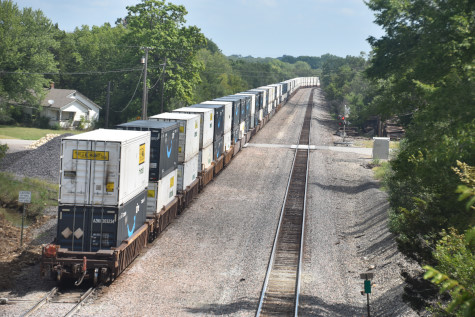
BNSF 6025 West and DPU 6087 on the rear. Continuing this rail-themed drive, I went to Garnett via Kansas Highway 31.
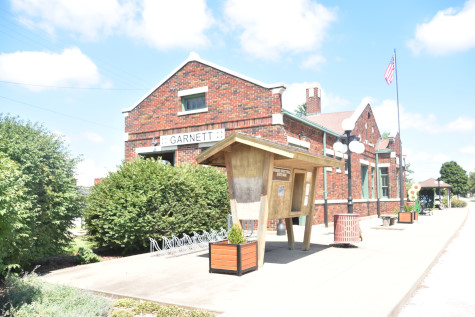
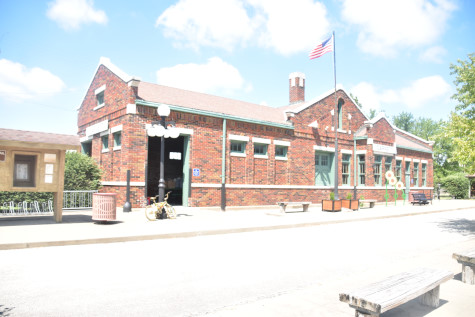
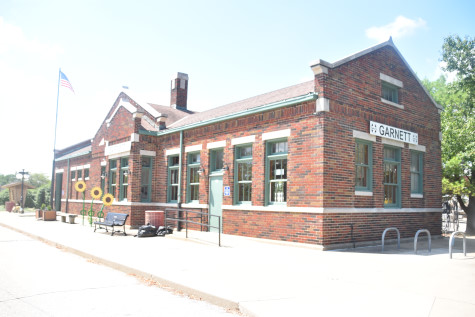
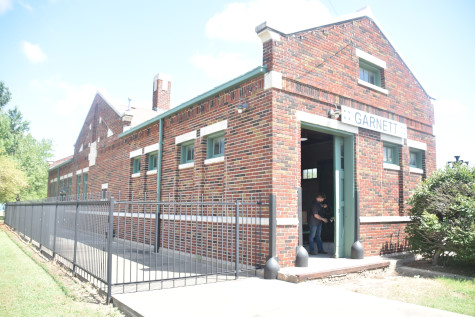
Santa Fe Garnett depot built in 1934, a rest stop on the Prairie Spirit Trail between Ottawa and Iola, which covers a distance of about 50 miles. The trail was developed in the early 1990s after the Santa Fe abandoned its tracks between Ottawa and Humboldt.
Over the years, Anderson County has had six railroads criss-crossing the county. The towns of Central City and Garnett were both wanting the first railroad. The route across the flat lands of Anderson County would have been a much easier route to take than across the bluffs of the Pottawatomie Creek. However, it is rumored an engineer gave someone in the company planning the railroad route $700 and the railroad went through Garnett. This action spelled the demise of Central City.
The first train arrived in Garnett March 9, 1870, on the Leavenworth, Lawrence and Galveston Railroad. The train was met with great expectations and excitement. On arrival it unloaded freight and about three hundred excursionists and the Lawrence Band. Several speeches were given at the train station and following at the Brunswick Hall, dinner was served to all attendees. To keep the day free of drunkenness and other problems all of the whiskey halls were closed. In the evening a grand ball was held with the Lawrence Band providing the music. It was quite the gala affair and was enjoyed by all.
Originally the railroad was to be routed through the town of Fairview on what is now Highway 59 just west of Scipio. The railroad company had a Chinese work crew working on digging a cut through a steep grade for the railroad bed. However, it was discovered the engines could not pull the grade and it was abandoned. Henry Roeckers, a local amateur archeologist, did metal detecting at the grade site and discovered a Chinese coin. The railroad bed was directed further to the valley to the east and went through the little town of Scipio and the town of Fairview died. Other towns south of Garnett the railroad went through are Welda and Divide, what is known today as Colony.
The second railroad ran through the county coming in just northeast of Greeley and running southwest through Garnett to the Anderson/Coffey County line just west of Westphalia. This railroad became known as the Missouri Pacific and still exists today. However, it is now owned by Union Pacific. The small town of Mont Ida was the first town built on the railroad west of Garnett. It is still in operation today.
The Kansas, Nebraska and Dakota Railroad started in Topeka and went to Ft. Scott. The original tracks were laid in 1886, entering the county in the northwest corner to the first town of Amiot, through Harris, Glenloch, Garnett, Bush City and Selma. It left the county east of Selma on to Ft. Scott. Politicians living along the railroad could go to Topeka in the morning and return home in the evening. The K N & D RR operated until 1934 when the tracks were pulled up. The old bridge abutments can still be seen on North Fork Pottawatomie Creek, Cedar Creek and South Fork Pottawatomie Creek. The railroad bed is visible near the ethanol plant in Garnett.
The Missouri, Kansas and Texas Railroad entered Kansas just northeast of Selma. It went through Selma and Kincaid and exited the county southwest of Kincaid. Locally it was known as the "Katie". This railroad still exists but is now owned by Union Pacific.
In 1886 anyone could obtain a charter to build a railroad by asking for it and paying one dollar. Many railroad charters were handed out during this time. One such railroad was the Colony, Neosho Falls and Western Railroad. It was a branch off of the Leavenworth, Lawrence and Galveston Railroad running diagonally toward Madison, Kansas. It did not last very long less than one year and the tracks were pulled up. Evidence of the railroad is very visible from Highway 59 on the south side of Colony where you can see the cut through the low hills and the railroad bed existing today.
The year 1887 brought another railroad to Anderson County, The St. Louis and Emporia Railroad laid tracks starting in the southern part of the county on the Missouri Border and on west. The tracks ran through Kincaid, Lone Elm, Colony and on west to the Coffey County border. The small town of Como expected the railroad to run through their town. Instead, it ran south of the town about one mile and the new town of Northcott was laid out. Northcott had a depot and the post office at Como was moved to Northcott so it would be on the railroad. Northcott was the youngest town built in Anderson County.
The railroad was the cause for the birth, death or prosperity of towns across not only Anderson County, but the state of Kansas.
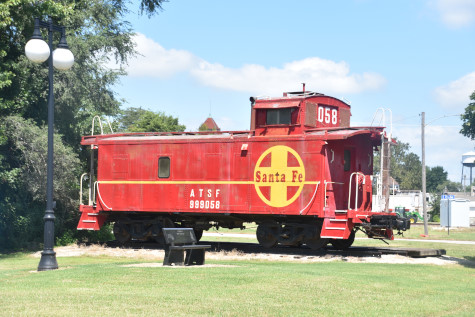
Santa Fe caboose 999058, nee Santa Fe 2139, built by the railroad in 1942.
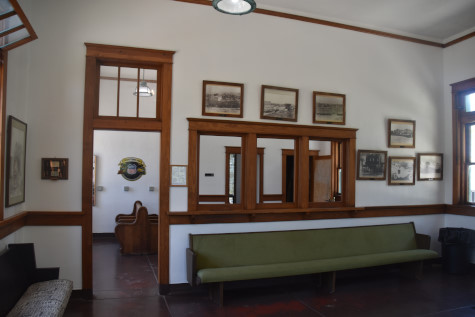
The original ticket window.
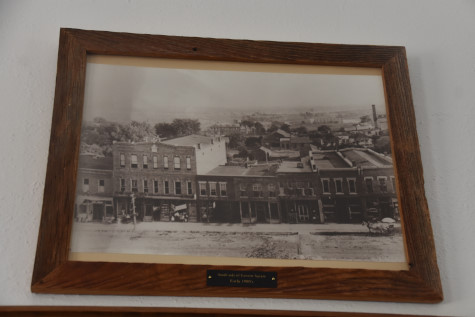
South side of Garnett Square early 1900's.
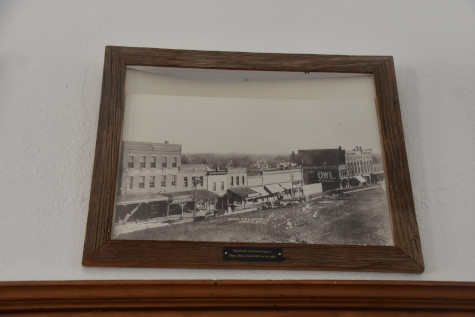
North side of Garnett Square early 1900's.
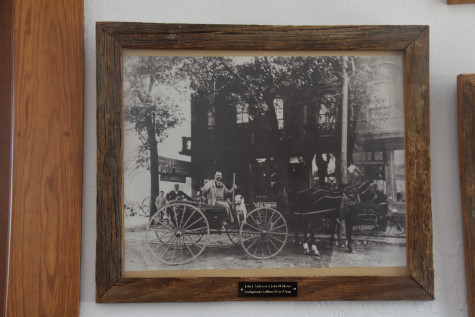
John J. Anderson and John M. Morris Farm Implements and Seed House 1893 on 5th Avenue.
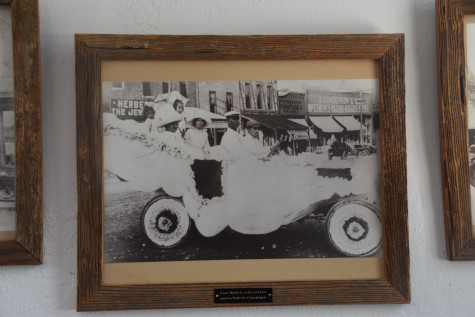
Foster Murdock car decorated for parade on north side of Garnett Square.
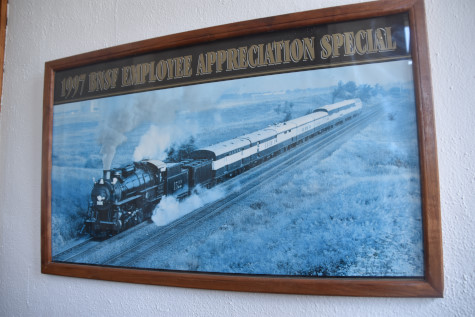
A commemorative photographic poster for the 1997 BNSF Employee Appreciation Special featuring St. Louis-San Francisco 1522.
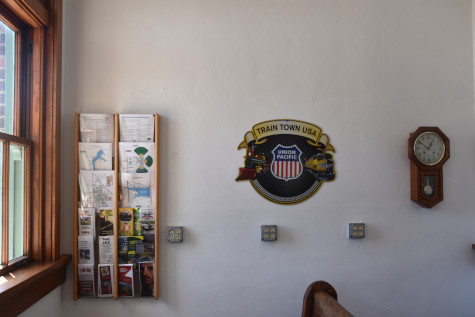
In 2012, Union Pacific named 144 communities of the nearly 7,300 through which the railroad travels, as Train Town USA. Garnett was one of nine in Kansas.
I continued east, stopping at Chester's Chicken in Warrensburg, Missouri then drove to Sedalia and checked into the Best Western States Fair Inn.
8/21/2025 The next morning I checked out, went to McDonald's and drove US 50 to Missouri 5 to Interstate 70 in Columbia and home.
| RETURN TO THE MAIN PAGE |