




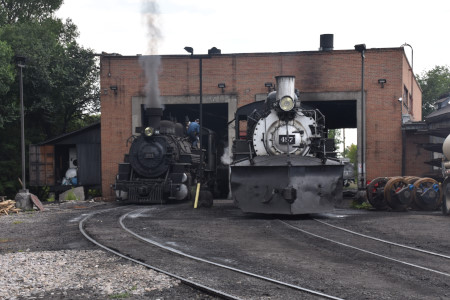
After arriving at the Cumbres and Toltec Railroad yard in Chama, I walked over to the tent where the yard tour participants were gathering. This tour was being offered today and tomorrow as part of the 100th Anniversary Celebration.
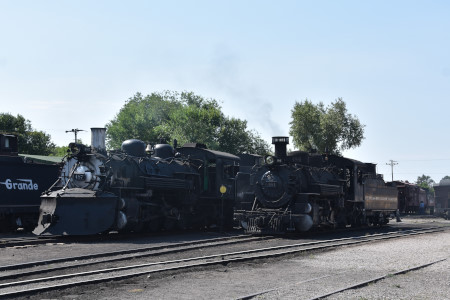
Cumbres and Toltec Scenic Railroad 2-8-2 K37 484, nee Denver and Rio Grande Western 484 built by Baldwin in 1925, and Cumbres and Toltec Scenic Railroad 2-6-2 K37 487, nee Denver and Rio Grande 487 built by Baldwin in 1925. The product of nearly fifty years experience of mountain operations, they were the last narrow gauge engines bought by the railroad and were part of a general upgrading of its narrow gauge lines in the 1920s. Originally assigned to the Marshall Pass line between Salida and Gunnison, Colorado, as well as to helper service from Chama to Cumbres, they were later assigned to the Third Division out of Alamosa.
Equipped with special valves to allow brake control between locomotives while double-heading, they became the workhorses of the narrow gauge railroad. The K-36s were designed to haul freight trains but were occasionally used on passenger trains and also worked on the Farmington Branch when traffic boomed in the 1950s with the development of the oil industry in the San Juan Basin. In 1955, the Farmington freight office handled more business than any other station on the D&RGW system.
487 was last operated by the D&RGW on 27th October, 1967. Soon after, the railroad abandoned most of its narrow gauge lines.
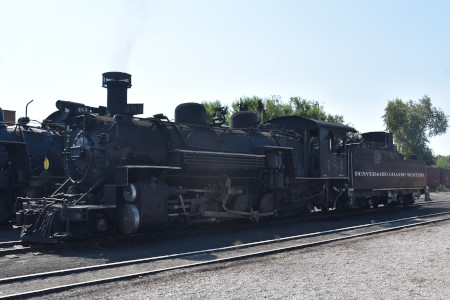
Cumbres and Toltec Scenic Railroad 2-8-2 K37 484. It hauled freight trains as well as the San Juan, and was the helper engine from Chama to Cumbres on the last eastbound San Juan service on 31st January 1951. It also hauled the last D&RGW chartered excursion from Alamosa to Cumbres and return on 9th October 1966.
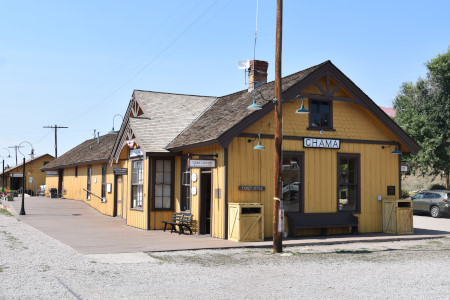
Denver and Rio Grande Chama station built in 1899 after the original, built in 1882, was destroyed by fire. The first train arrived from Antonito, on 31st December 1881, and the line to Denver officially opened on 18th January 1881. Chama was built as a railroad town to service locomotives and equipment. Located between Alamosa and Durango, for many years it was a busy place, with several trains passing through each day. Engines and crew were changed here, trains were "cut" and helpers were added to eastbound trains for the climb to Cumbres.
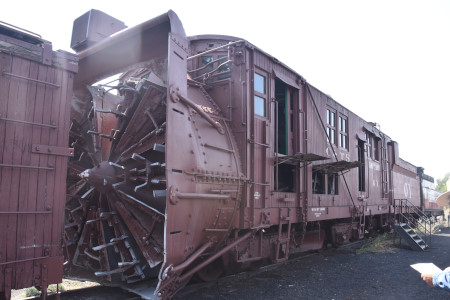
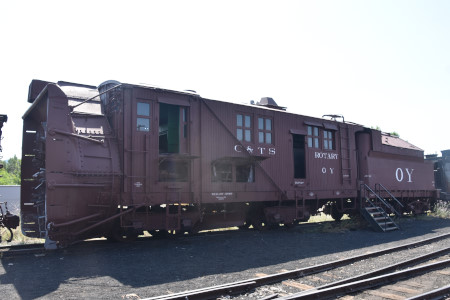
Denver and Rio Grande Western rotary snow plough OY built by American Locomotive Company in 1929.
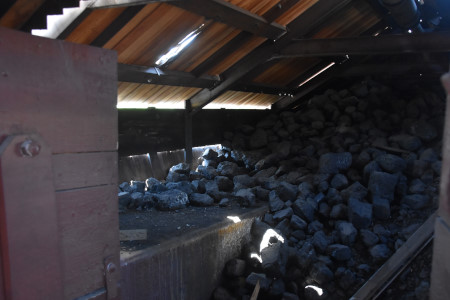
Coal bunker of the rotary snow plough.
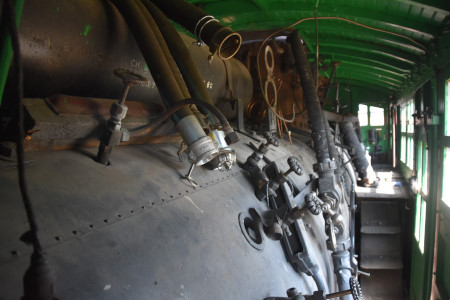
The plough's boiler.
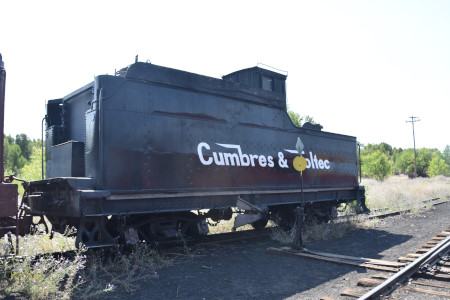
The tender of Cumbres and Toltec Scenic Railway 488.
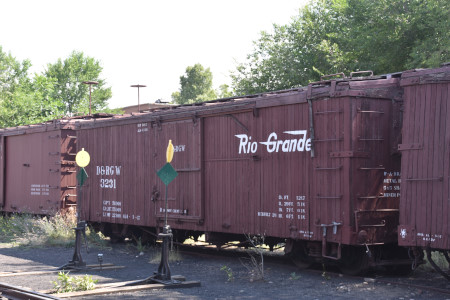
Denver and Rio Grande Western box car 3231, built by American Car and Foundry in 1904.
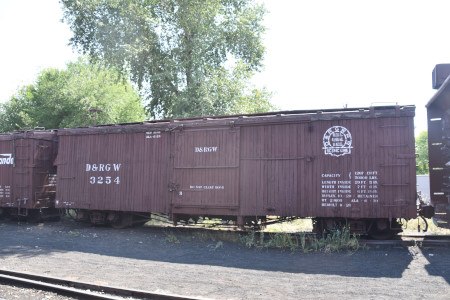
Denver and Rio Grande Western box car 3254, built by American Car and Foundry in 1904.
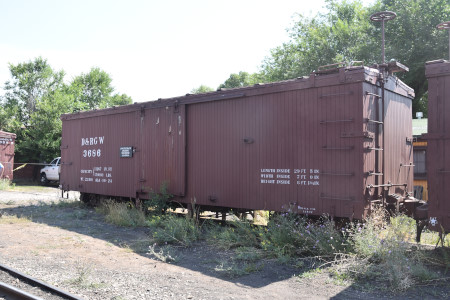
Denver and Rio Grande Western box car 3686, built by American Car and Foundry in 1904.
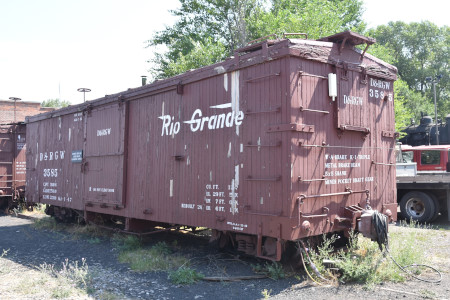
Denver and Rio Grande Western box car 3585, built by American Car and Foundry in 1904.
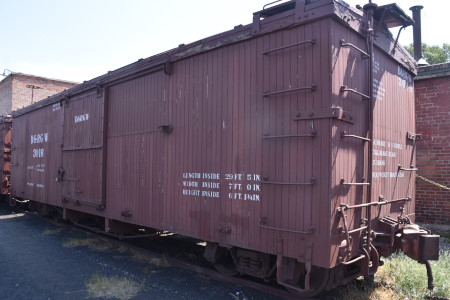
Denver and Rio Grande Western box car 3016, built by American Car and Foundry in 1904.
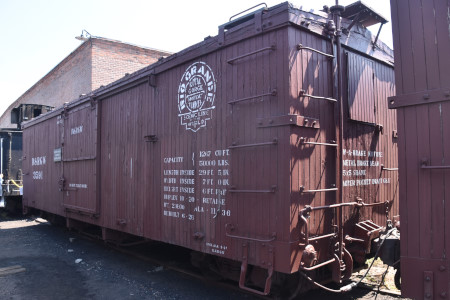
Denver and Rio Grande Western box car 3591, built by American Car and Foundry in 1904.
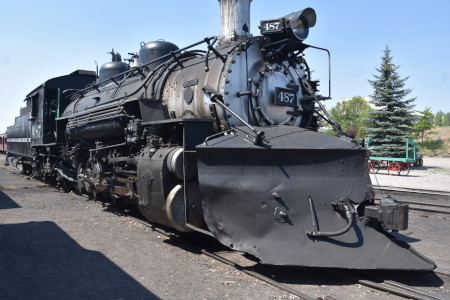
Denver and Rio Grande Western Railroad 2-8-2 487.
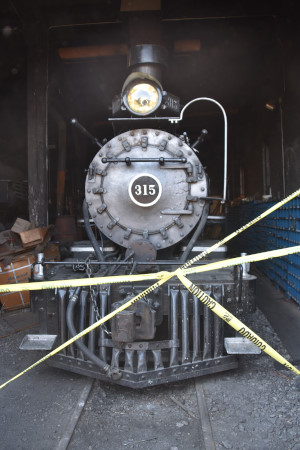
Durango Railroad Historical Society 2-8-0 315, ex. Denver and Rio Grande Western 315 1924, exx. Denver and Rio Grande Western 425, nee Florence and Cripple Creek 3 "Elkton", built by Baldwin Locomotive Works in 1895. It served the Florence & Cripple Creek for about 17 years then after the flood of 1912, the F&CC was financially unable to repair its roadway. 3 was isolated at Canyon City and put into storage at Colorado Springs, after the F&CC closed down in 1915. "Elkton" and her sister engines sat derelict until 1917 when five of them were purchased by the D&RG. D&RG bought a sixth sister in 1920. The engines were loaded aboard D&RG flat cars and moved to the D&RG Burnham Shops in Denver, where they were repaired and upgraded to help meet the increased transportation demands of World War I.
After the reorganization of D&RG and its merger with the Rio Grande Western in Utah in 1921, the railroad became the Denver & Rio Grande Western. 315 was first assigned to the Alamosa Division as a freight engine, where it was known to be in Chama around 1921-22 and in Durango around 1928. It was leased to the Rio Grande Southern for a period in 1926-1927, then on the Gunnison Branch in 1929 and idle in Salida for a few years after the stock market crashed and again in the late 1930s during a recession. It served the Ouray Branch out of Montrose 1933–1936 and again during 1939–1941. By the early 1940’s, as bigger locomotives came on the line, many of the smaller 2-8-0s were either being scrapped or used as yard engines.
In March 1941, 315 was sidelined for a few months then taken to Alamosa for repairs during September and October, and sent to Durango to become a yard or switch engine. At this time, it gained a rear light and had the road pilot replaced with a switchman platform. It was shopped again in 1945, receiving new flues and other major work. When converted to a switch engine, the cowcatcher was removed. Handrails and switchman platforms were added to the front and back of the locomotive, along with a backup light to the tender and a tool box on the cab roof.
In 1948, 315 was used in the Warner Brothers film "Colorado Territory" and when released in June 1949, it was the first of many films made by Hollywood in the Durango area, which saved the Silverton Branch line through tourism. 315 remained in service in Durango until October 1949. Jackson Clark and the Durango Rotary Club saved the steam engine from being scrapped by convincing the D&RG to lease it to the city for display and it was placed in Brookside Park on North Main Street in September 1950. Before being put on display, it was backdated by the D&RGW shops to resemble an engine of the 1870s era. This included the addition of the funnel stack, kerosene headlight and wooden cowcatcher used on the Emma Sweeney (Rio Grande Southern 20) in "Ticket to Tomahawk". In 1956, 315 became a Hollywood star again when Warner Brothers used it in "Around The World in 80 Days". During the making of this movie, the engine was pushed by a diesel locomotive disguised as a baggage car because 315 was no longer in operating condition. To make steam, the water legs were cut out of the tender to make room for a steam generator. Hoses and pipes routed the steam to appropriate points and oily rags in the firebox created plenty of black smoke.
When the D&RG was getting ready to abandon the Durango to Alamosa line, 315 was donated to the Chamber of Commerce in 1968. In 1986, it was moved to Gateway Park, now Santa Rita Park, to be near the new visitors center. Since being displayed in a park, 315 received numerous coats of paint and lost a number of parts. In October 2000, at the request of the DRHS, the locomotive was granted a historic landmark designation by the City of Durango. In December 2000, the Chamber of Commerce transferred ownership to the City of Durango.
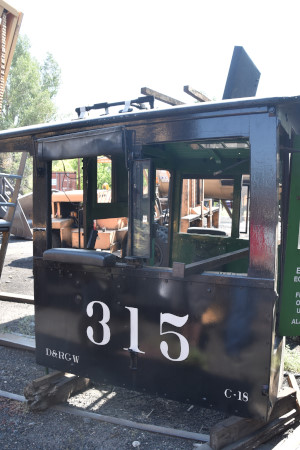
The cab of 315.
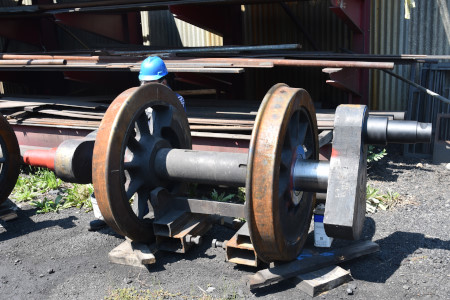
A wheelset from one of their steam engines.
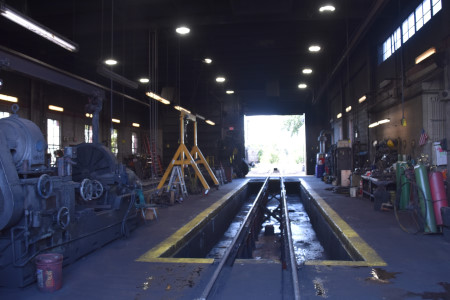
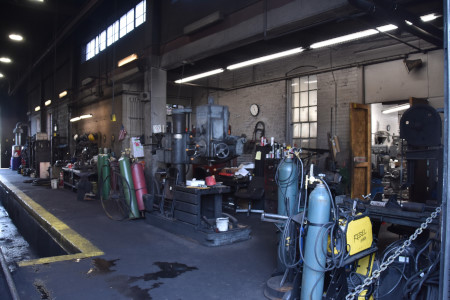
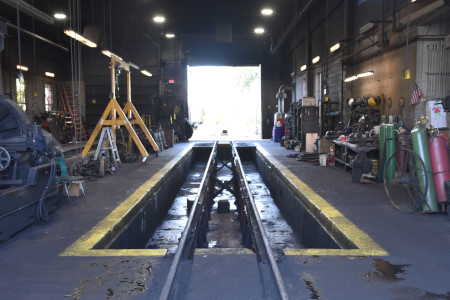
The interior of the Chama Shops.
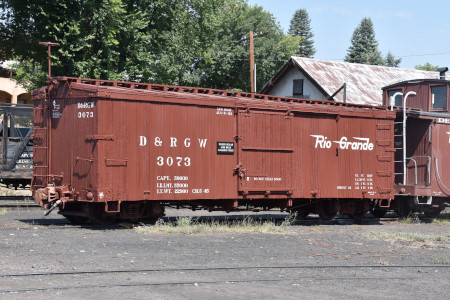
Denver and Rio Grande Western box car 3073, built by American Car and Foundry in 1904.
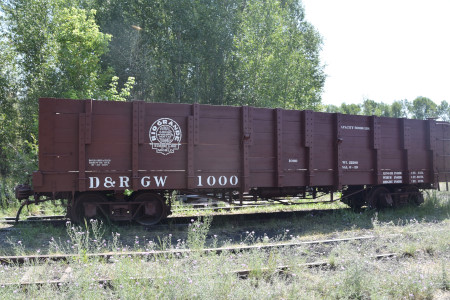
Denver and Rio Grande Western gondola 1000, built by American Car and Foundry in 1902.
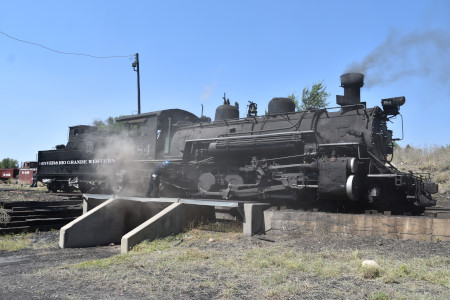
Denver and Rio Grande Western Railroad 2-8-2 484, dumping its ash.
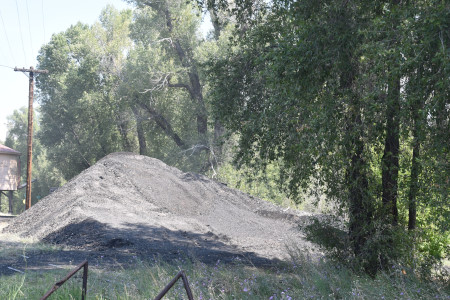
The ash pile.
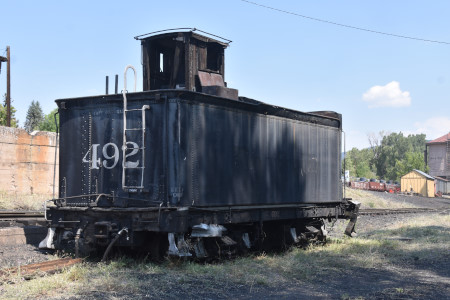
Tender of 492.
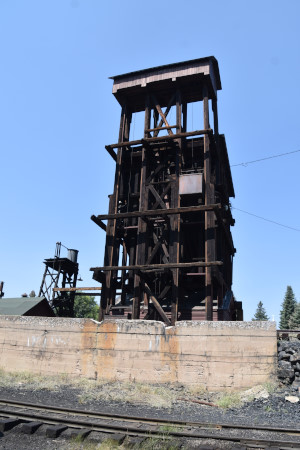
Denver and Rio Grande Western coal tipple built in 1924 to replace a 60 ton coal chute built in 1902. It is the only wooden coal tipple to have survived in the United States and is one of very few still functional. Cars carrying coal were pushed onto the coal loading track, dumped into bins and hoisted by bucket to the top of the tipple. Coal was loaded into locomotive tenders through the large central loading chute on the other side of the structure. The structure has been restored and maintained by the Friends of the Cumbres & Toltec Scenic Railroad.
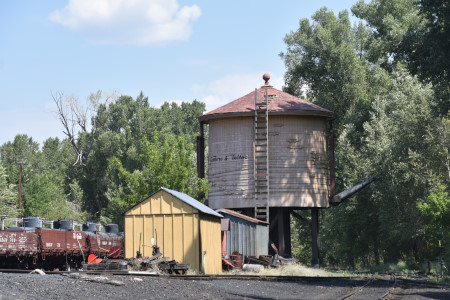
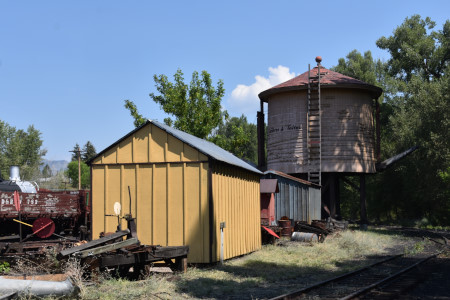
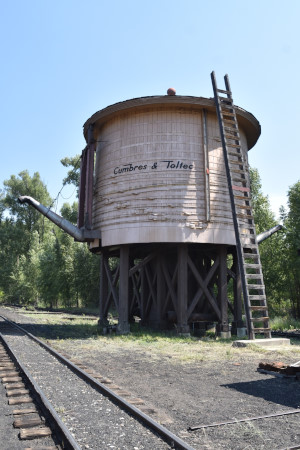
Denver and Rio Grande Western water tower built in 1897. It may be the only operable double spout tank left in the country.
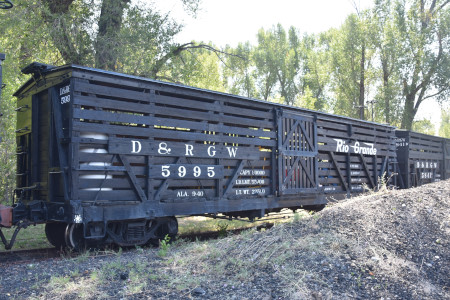
Denver and Rio Grande Western stock car 5995, built by America Car and Foundry in 1923.
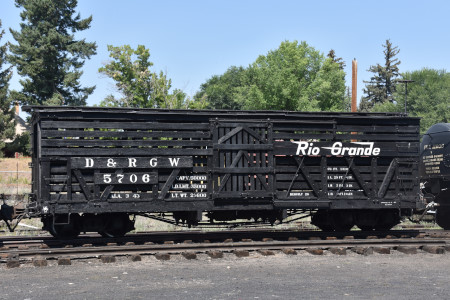
Denver and Rio Grande Western stock car 5706, built by American Car and Foundry in 1904.
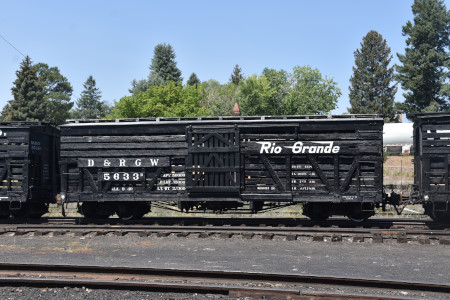
Denver and Rio Grande Western stock car 5633, built by American Car and Foundry in 1904.
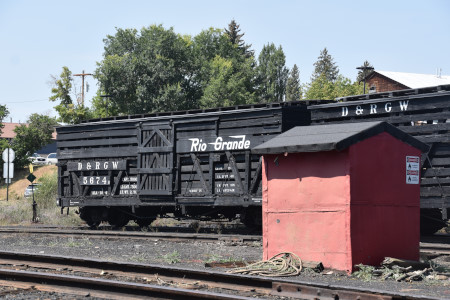
Denver and Rio Grande Western stock car 5674, built by American Car and Foundry in 1904.
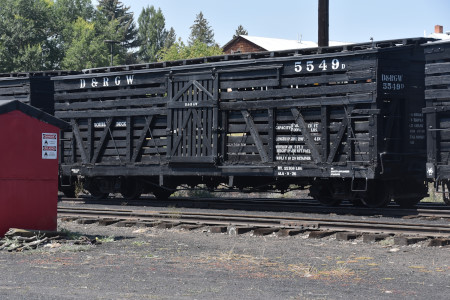
Denver and Rio Grande Western stock car 5549, built by American Car and Foundry in 1904.
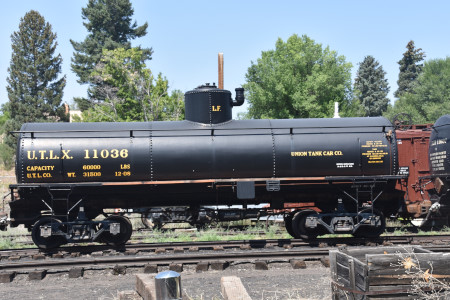
Union Tank Car tank car 11036, nee Union Tank Car 58424, built by the company in 1936.
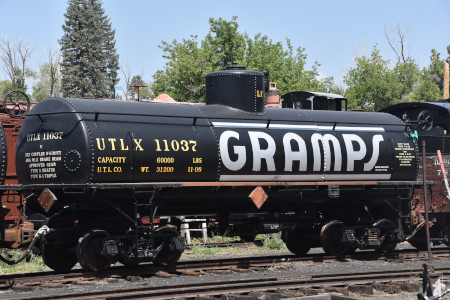
Union Tank Car tank car 11037, nee Union Tank Car 58432, built by the company in 1936. Around 1935, oil was discovered approximately 13 miles north-northwest of Chama, due east of Chromo, at what would become known as the "Gramps Oil Field". The field was owned by Lafayette "Gramps" Hughes. His company moved oil from these wells by pipeline across the Continental Divide to holding tanks and a narrow gauge loading dock at Chama. The system was largely a siphon, with no en-route pumping stations. There are reports that the pipe actually travelled in a wooden box for large sections, insulated with sawdust, to keep the oil warm and fluid enough to make the trip.
At Chama, the oil was loaded into narrow gauge UTLX tank cars for the trip to the Oriental Refinery (sometimes called the Gramps Refinery) in Alamosa. The cars were then sent back light to Chama. When the field was at peak production (1100-1300 bbl/day), this would amount to a fully-loaded 11-car oil train to Cumbres Pass daily. The operation continued until late 1964 and some point that year, the refinery apparently suffered a fire and repairs/ replacement on such a small facility was considered uneconomical. The refinery closed down during September 1964 and the oil traffic over Cumbres Pass ceased. The loss of traffic was a significant blow to all-season operations on the narrow gauge, as the winter of 1964 was the first time the line was shut down. Oil from the field from 1964 until production ended in the 1980s to 1990s was sent by truck to Farmington, New Mexico instead.
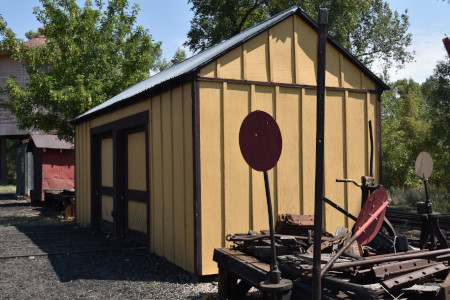
Handcar shed.
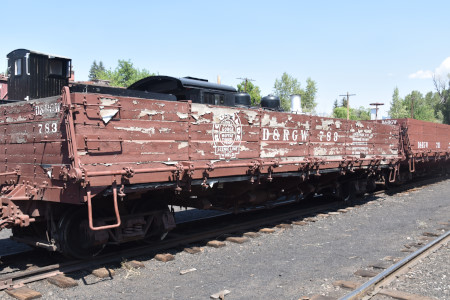
Denver and Rio Grande Western drop-bottom gondola 783, built by American Car and Foundry in 1904.
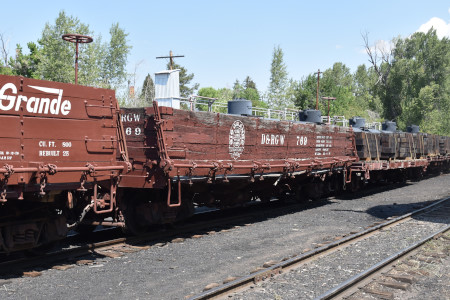
Denver and Rio Grande Western gondola 769, built by American Car and Foundry in 1904.
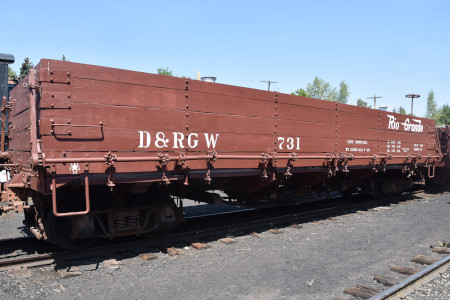
Denver and Rio Grande Western drop-bottom gondola 731, built by America Car and Foundry in 1904.
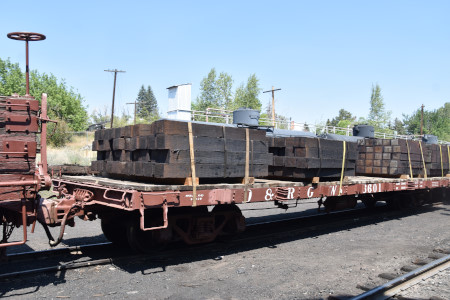
Denver and Rio Grande Western flat car 6601, built by the railroad in 1955 from a box car.
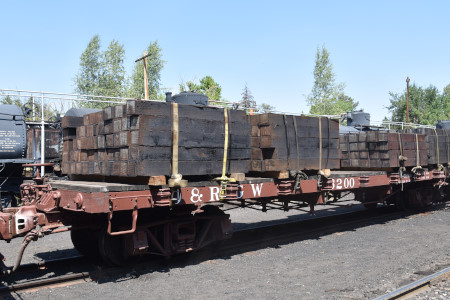
Denver and Rio Grande Western flat car 6200, built by the railroad in 1918.
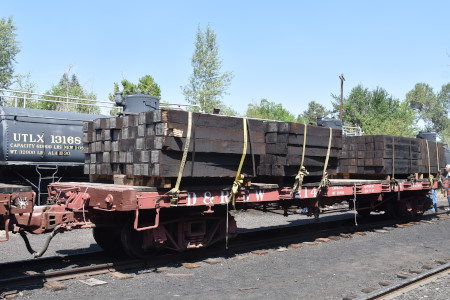
Denver and Rio Grande Western flat car 6214, built by the railroad in 1918.
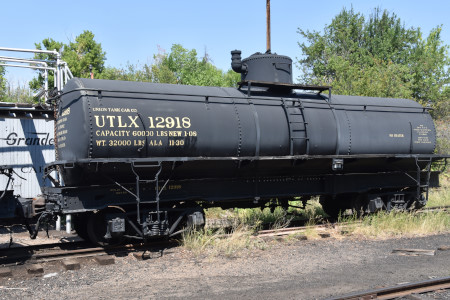
Union Tank Car 12918, built by the company in 1908.
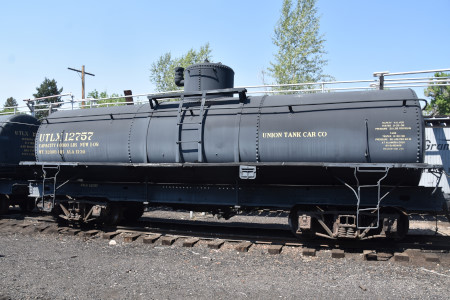
Union Tank Car 12757, built by the company in 1908.
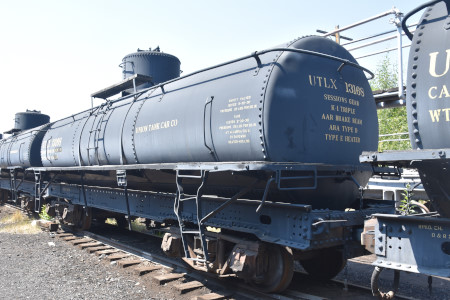
Union Tank Car 13168, built by the company in 1908.
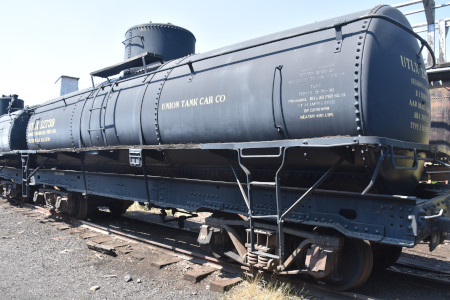
Union Tank Car 12739, built by the company in 1915.
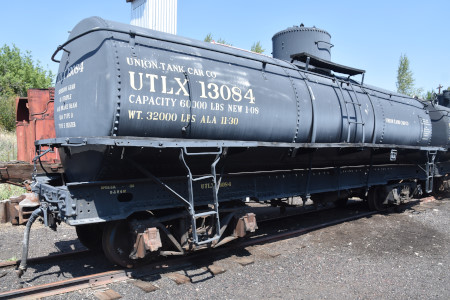
Union Tank Car 13084, built by the company in 1908.
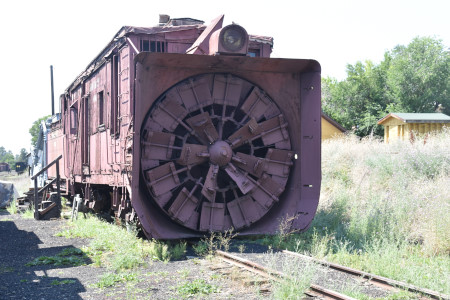
Denver and Rio Grande Western rotary snow plough OM, nee Denver and Rio Grande standard gauge 1, built by Cooke Locomotive Works in 1889. It was the twenty-fourth plough built by Cooke and was converted to narrow gauge by the railroad in 1907 and renumbered OM (known as "Old Maude" by railroad crews). The rotary mechanism at the front was operated by a self-contained steam engine inside the car, which is why OM is coupled to a tender, but the plough could not move under its own power.
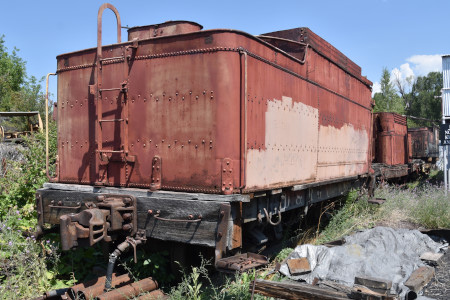
The tender from locomotive 462.
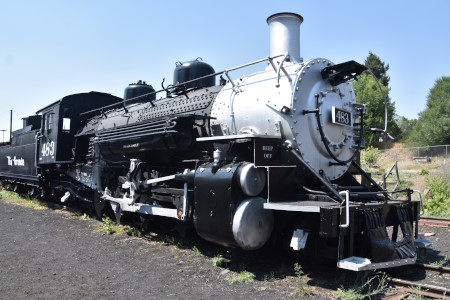
Cumbres and Toltec Scenic Railroad 2-6-2 K37 483 built by Baldwin in 1925. The locomotive hauled the last freight train operated by the D&RGW on its narrow gauge line on 31st August 1968, and the last eastbound passenger train from Durango over Cumbres Pass to Alamosa in November 1968. The two-day special trip was organised by a group interested in preserving the narrow gauge line for members of the National Park Service, the press and D&RGW officials. 483 was also the last K-36 used by the D&RGW when, on 6th December 1968, it performed a deadhead equipment move for the railroad. 483 was the only operable engine when the C&TS took over the line in 1970 and it was used to transport equipment to Chama. The locomotive was retired in 1977.
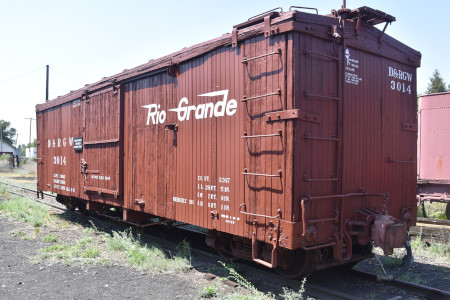
Denver and Rio Grande Western box car 3014, built by American Car and Foundry in 1904.
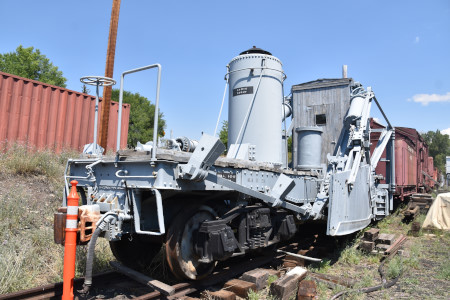
Cumbres and Toltec Scenic Railroad Jordan Spreader OU, built by O.F. Jordan in 1924.
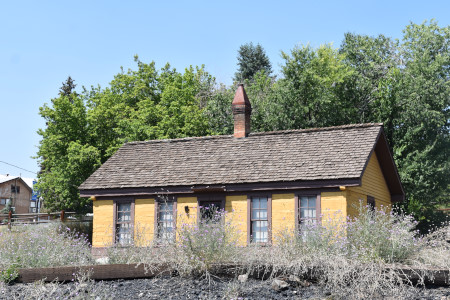
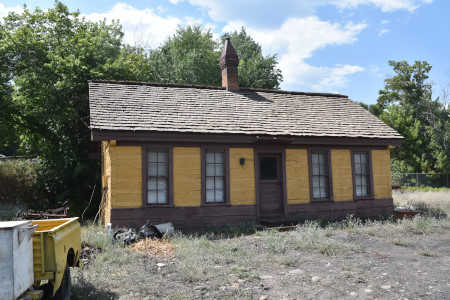
The oldest building in Chama.
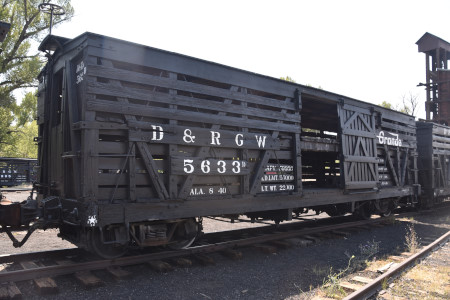
Denver and Rio Grande Western stock car 5633, built by American Car and Foundry in 1904.
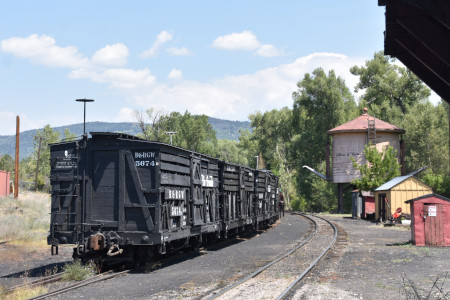
Denver and Rio Grande Western stock car 5674, built by American Car and Foundry in 1904.
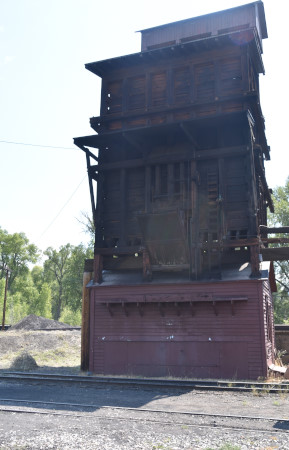
The coaling tower, which was part of the tour. Often called a Fairbanks Morse type coaling tower, it was equipped with a Fairbanks Morse "Y" diesel engine. It was built in 1924 by Fairbanks Morse and while there were powerful electric motors available, most of the locations where the Rio Grande needed coaling towers did not have access to the electrical grid. In 1937, when electricity came to Chama, the coaling tower was converted to electric motor operation. The Fairbanks Morse Y engine was left intact as the structure had been built around it and there was no way to remove this valuable engine. The air-powered starter is connected to the air line on one of the steam locomotives via a long hose with a "glad hand" connector to the locomotive's air brakes. As the diesel fuel tank, located outside in an underground bunker is no longer connected to the engine, fuel must be fed from a fuel can inside the building.
The 1937 electric motor makes operation "simple". The buckets run from a transition operated from handles located near the rear windows. The rear windows are set at ground level so the operator(s) can see the buckets as they descend to the bottom of the shafts. When one bucket hits the bottom, the other bucket is landing in the coal chute at the top. The operator cannot see the top and must assume when the south bucket is at the bottom, the north bucket is now dumping into the main coal bin.
Coal is loaded into the bucket at the bottom of the shaft. Huge wheels, which look like ship's wheels, are used to open heavy iron gates at the bottom of the shaft pulled up by a chain that runs over a pulley to a winder on the end of the shaft with the "ship's wheel" on the other end. The wheel is large so that the operator can get the torque needed to lift the heavy gate. The handle on the transition is then operated to cause the loaded bucket to climb the tower as the empty bucket lowers to the bottom of its shaft.
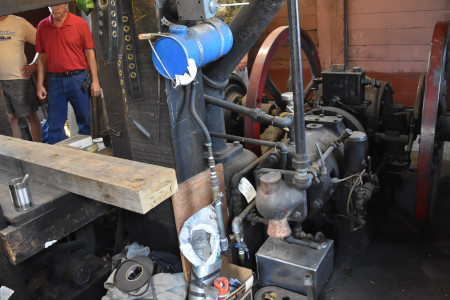
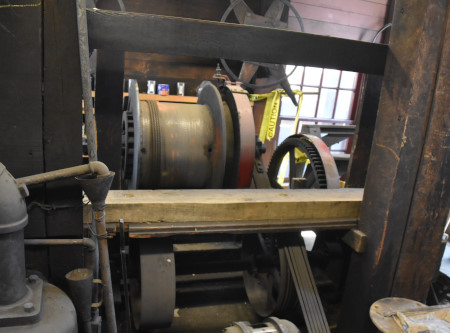
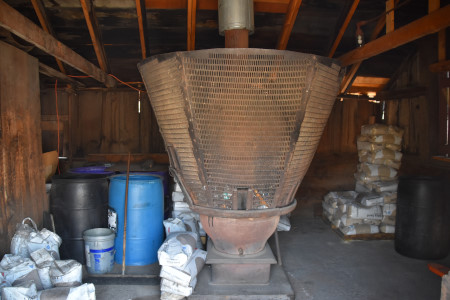
The interior of the coaling tower.
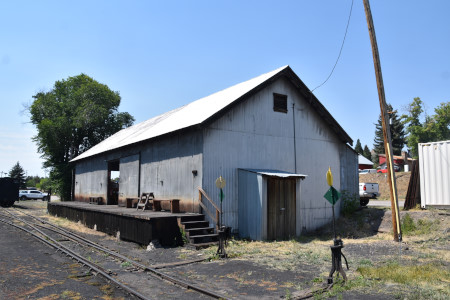
The stores building.
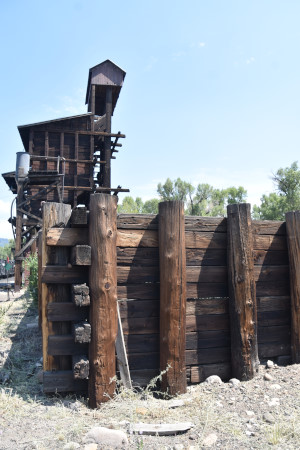
The ash pit.
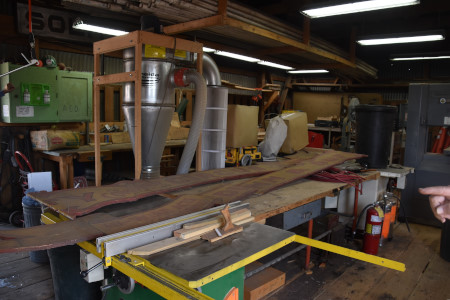
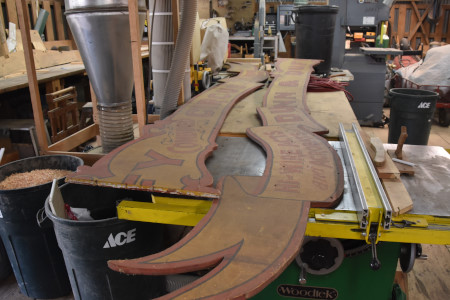
The Dunn & Duffy Combined Circus sign from the film "Indiana Jones and the Last Crusade" which was partially filmed on the Cumbres and Toltec Scenic.
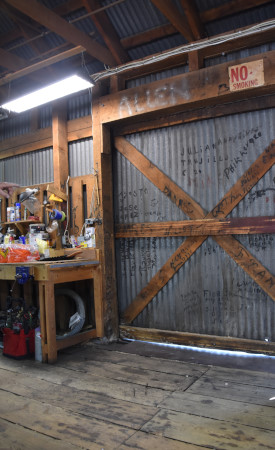
Old time graffiti on the doors.
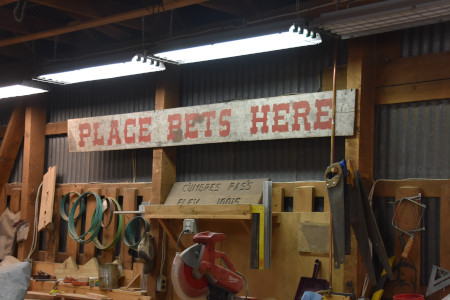
Place Bets Here.
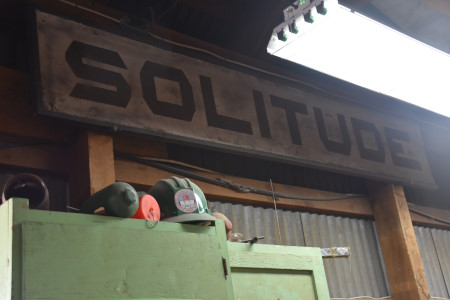
Station name sign Solitude.
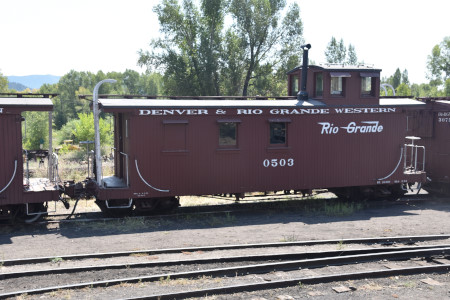
Denver and Rio Grande Western caboose 0503, built by the railroad in the 1920's.
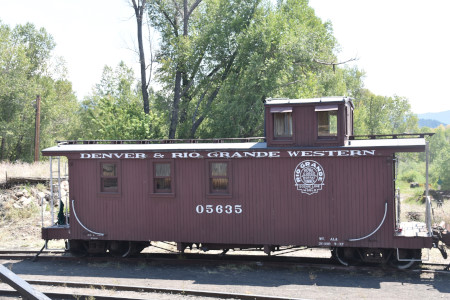
Denver and Rio Grande Western caboose 05635, built by the railroad, year unknown, but constructed from stock car 5635.
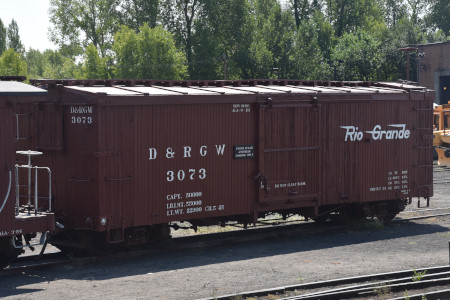
Denver and Rio Grande Western box car 3073, built by American Car and Foundry in 1904.
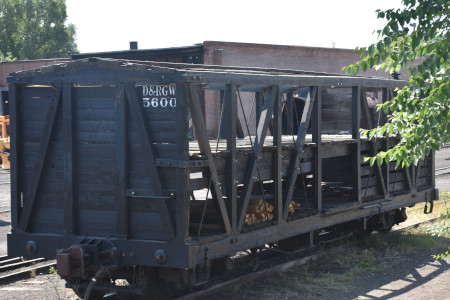
Denver and Rio Grande Western stock car 5600, built by American Car and Foundry in 1904.
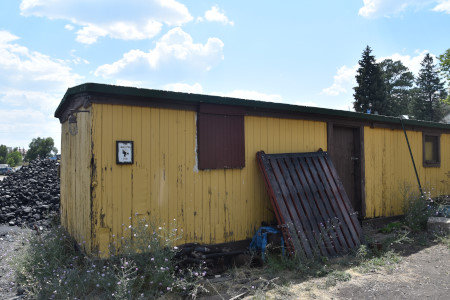
A work car.
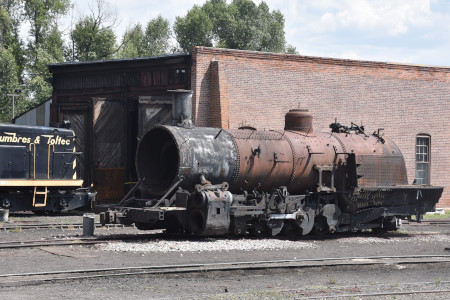
Cumbres and Toltec Scenic 2-8-2 K37 492, ex. Denver and Rio Grande Western narrow gauge 492, exx. Denver and Rio Grande Western 1021 1924, nee Denver and Rio Grande 1121, built by the railroad in 1928. After striking a rock near Navajo, New Mexico, on 6th August 1963, it was rebuilt with smokebox parts from 490, which had been retired the previous year. Although the narrow gauged K-37s are actually about two percent lighter than the K-36s, they were 3,600 lbs. heavier on the drivers and quite hard on the track. Crews considered them "stiff", they handled sharp curves badly and they were prone to derailing.
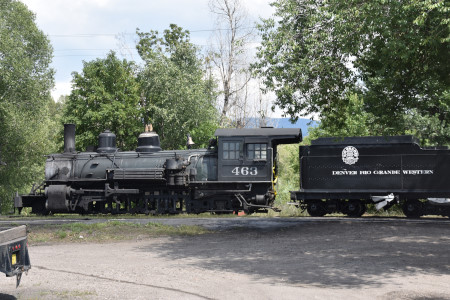
Cumbres and Toltec Scenic 2-8-2 463, ex. Gene Autry 1955, exx. Denver and Rio Grande Western 463 1921, nee Denver and Rio Grande Railroad 463, built by Baldwin in 1903.
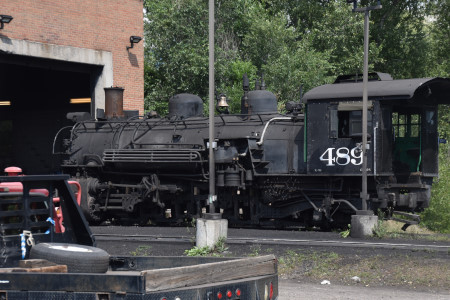
Cumbres and Toltec Scenic Railroad 2-6-2 K37 489, nee Denver and Rio Grande 489, built by Baldwin in 1925.
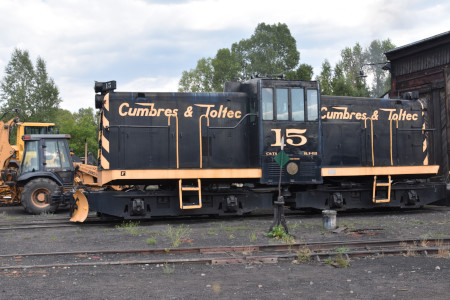
Cumbres and Toltec Scenic 47 ton switcher 15, built by General Electric in 1943 for the Railway & Land Company in Hawaii'. It was later sold to the Camino Cable & Northern, a tourist railroad based in Camino, California. It then went to the Georgetown Loop and, finally, was moved to the Colorado Railroad Museum.
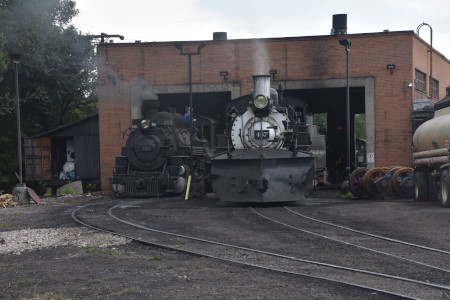
Cumbres and Toltec Scenic Railroad 484 and 487.
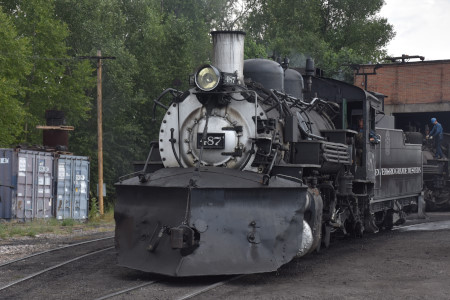
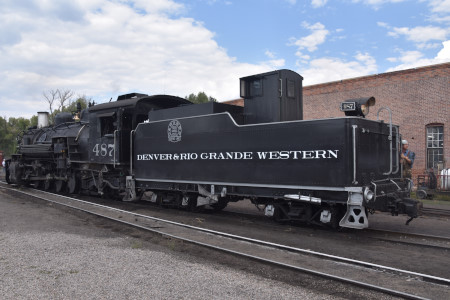
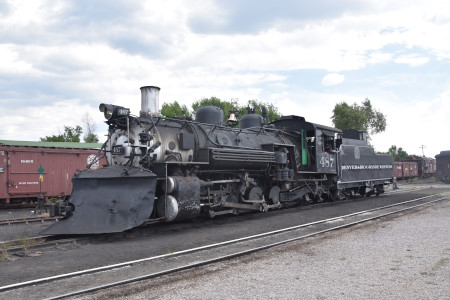
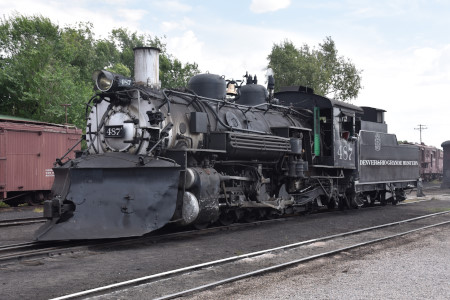
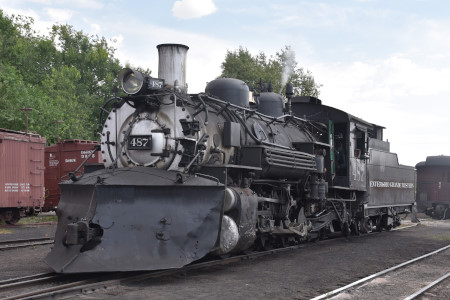
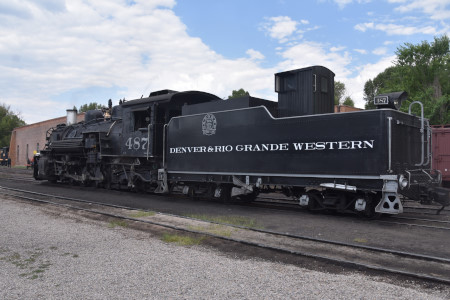
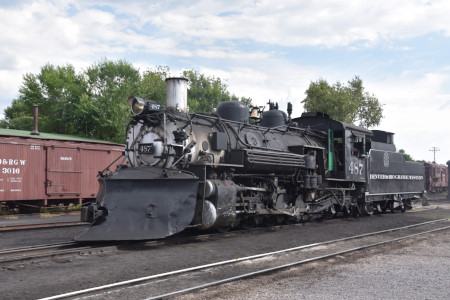
Cumbres and Toltec Scenic 2-8-2 487, being readied for the parade of steam.
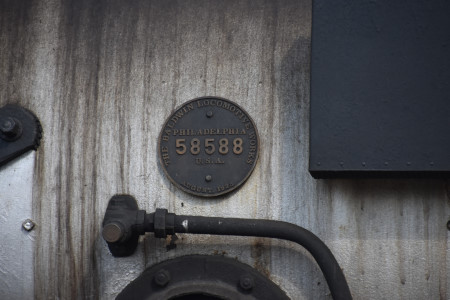
The builder's plate.
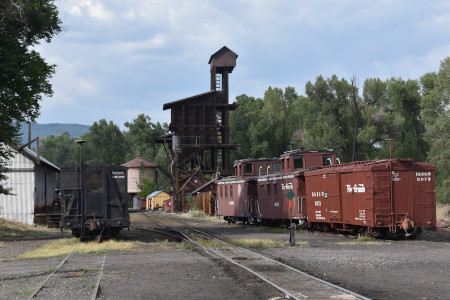
Chama scene.
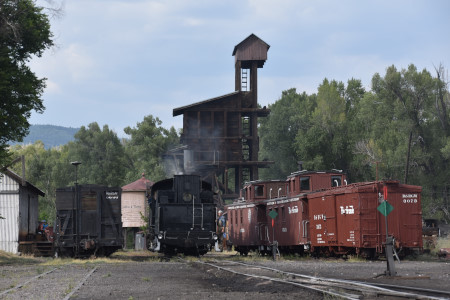
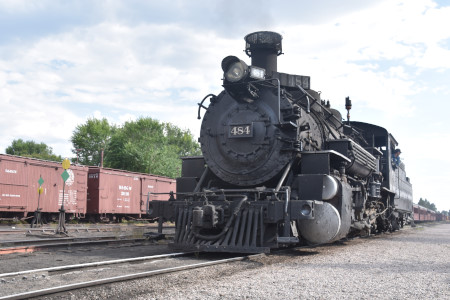
Cumbres and Toltec Scenic Railroad 2-8-2 484, built by Baldwin in 1925.
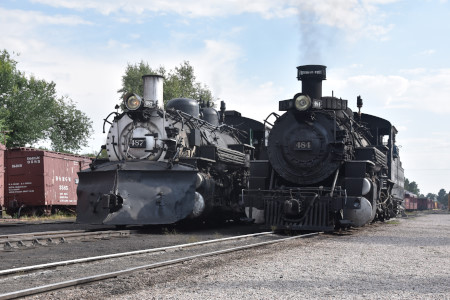
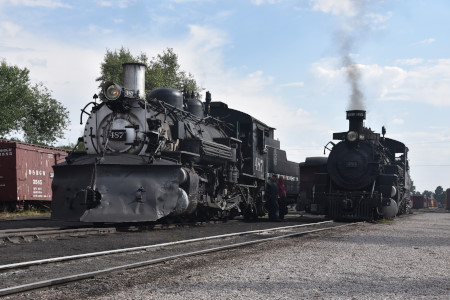
Cumbres and Toltec Scenic Railroad 2-8-2 484 and 487.
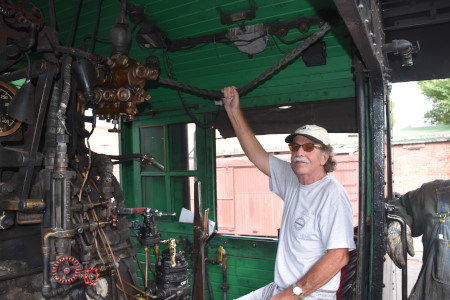
The tour participants were invited to blow the whistle of 487 and the author did just that.
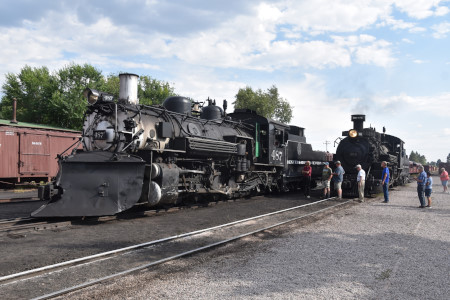
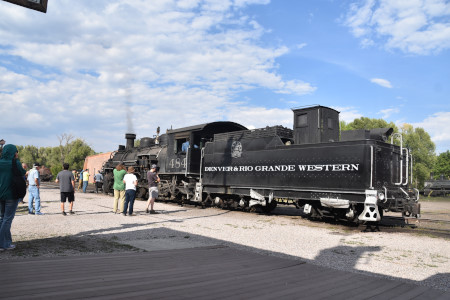
A queue formed to climb into the cabs of 487 and 484.
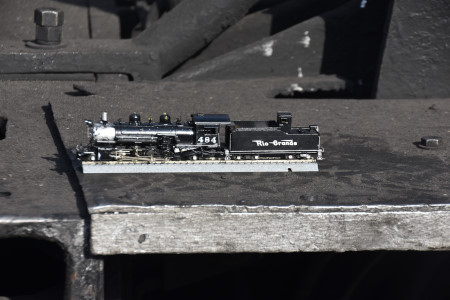
An HO model of 484 had been placed on the 1:1 scale locomotive.
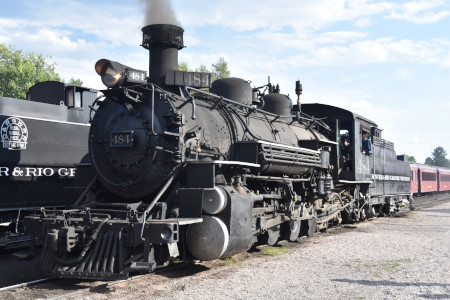
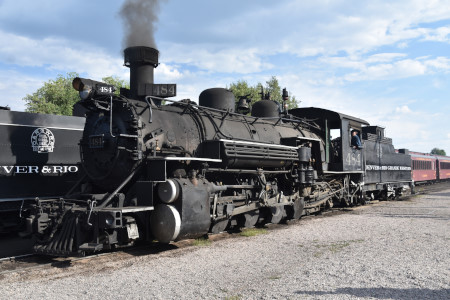
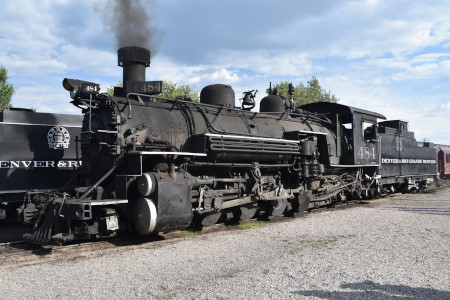
Cumbres and Toltec Scenic 2-8-4 484.
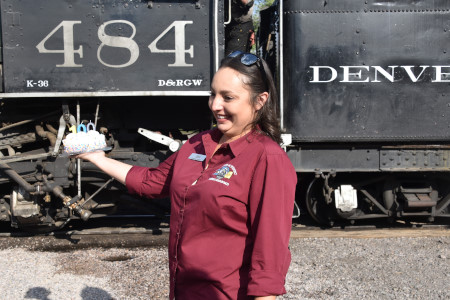
To commence the K36 100th Anniversary Celebration, the railroad's Marketing Manager, Abigail Martinez, posed with a cake.
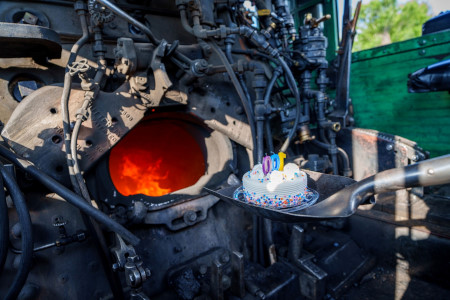
The cake being ceremoniously placed in the firebox of 484. Photograph courtesy Cumbres and Toltec Scenic Railroad.
| RETURN TO THE MAIN PAGE |