




After Elizabeth's and my regular morning routine, we met Greg and Marty at the car and drove to Hannock to the Potomac River Grill, where I had French Toast and bacon and Elizabeth had corned beef hash, something she had not had for many years. We then drove back to Harrisburg and parked about a block away for our Capitol Tour then as it was a weekend, one of the rear entrances was closed so we walked a long block and finally found the rotunda.
Security and an airport-style X-ray machine was encountered.
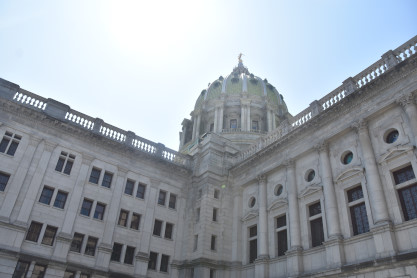
The Capitol A National Historic LandmarkPennsylvania's Capitol is, first and foremost, a public building belonging to the citizens of the Commonwealth. It is also a priceless architectural and artistic treasure, a majestic symbol of history and power, and an icon of democracy and freedom.
When President Theodore Roosevelt attended the dedication of the building on October 4, 1906, he said, "This is the handsomest building I ever saw." The Capitol was designed in the American Renaissance style by Philadelphia architect Joseph Huston (1866-1940), who envisioned the building as a "Palace of Art."
Built and furnished at a cost of $13 million, the Capitol features paintings, stained glass and furnishings by some of the best artisans of the day. The building incorporates various Renaissance designs in some of its largest rooms: Italian in the House Chamber, French in the Senate Chamber, and English in the Governor's Reception Room. It also reflects Greek, Roman and Victorian influences in its art and ornamentation. Throughout the building, Huston blended the various styles with motifs featuring Pennsylvania's achievements in labor, industry and history, making the Capitol uniquely American. Its five-story exterior is faced with handsome Vermont granite, and the roof is composed of green glazed terra cotta tile.
The Capitol's centerpiece is a spectacular 272-foot, 52 million-pound dome inspired by Michelangelo's design for St. Peter's Basilica in Rome. Following its completion, the building was the tallest structure between Philadelphia and Pittsburgh for 80 years. While the building has been modernized over time, efforts to blend form and function continue today, and a special Capitol Preservation Committee ensures that as the building evolves, the artistic elements are never lost. The seat of Pennsylvania's government continues to inspire visitors with its wealth of art, its outstanding architecture, and its strong connection to the vision of the Commonwealth's founder, William Penn, who sought to establish a land that would be governed by just laws and tolerant of all religious faiths.
Our Visit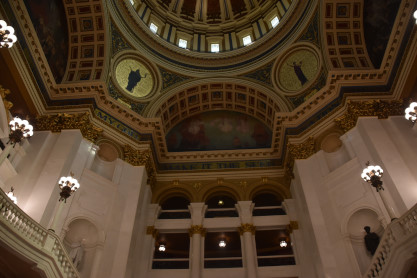
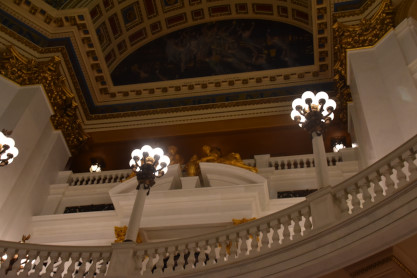
The very beautiful architecture of this Capitol Building.
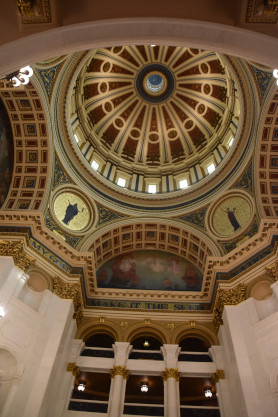
The top of the rotunda.
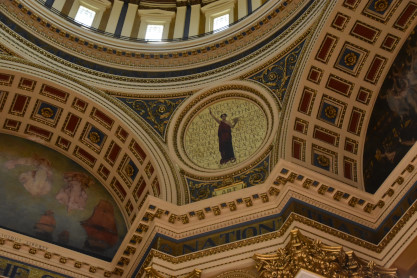
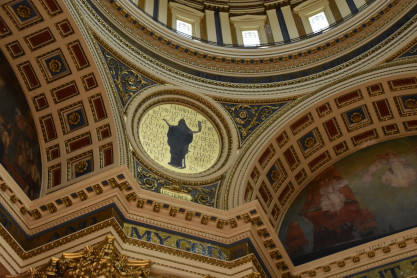
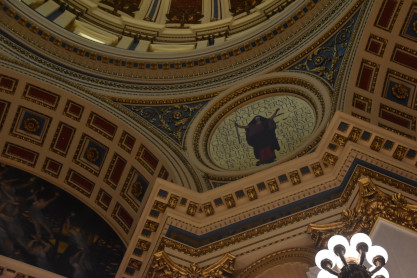
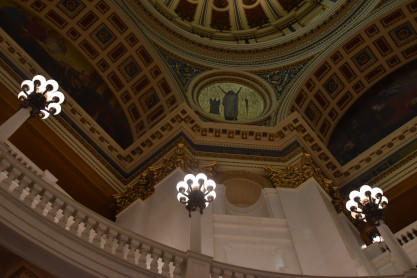
The maidens of the Pennylvania State Capitol Building.
.
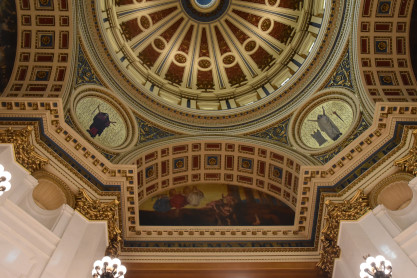
The ceiling.
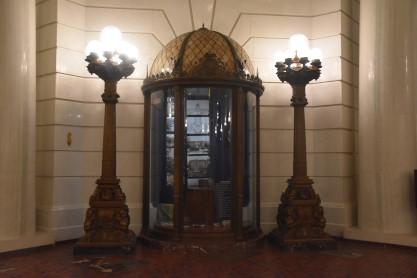
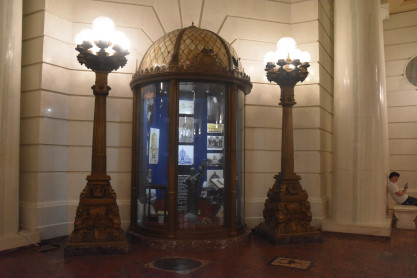
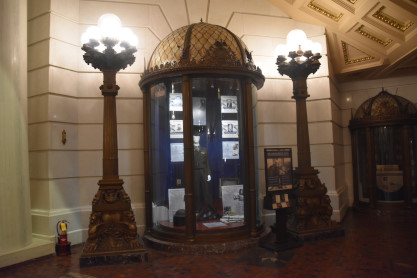
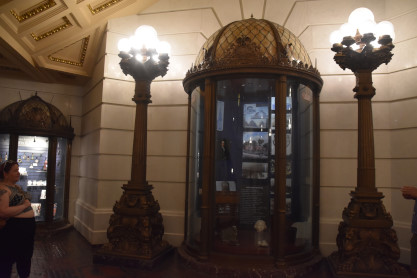
Four of the information clusters. Flanking each cluster are ornate standing bronze lamp stands manufactured by the Pennsylvania Bronze Company, which was founded in Philadelphia in 1902 by John Sanderson in an effort to win the bronze contract for the Capitol building. It furnished all the ornate bronze light fixtures within the building, including the chandeliers and sconces in the House, Senate, and Supreme Court Chambers, the large lanterns at all three of the Capitol’s west entrances, and the pumpkin ball fixtures throughout the building. Many of the company’s top craftsmen were former employees of the Sterling Bronze Company of New York City — a premier manufacturer of the finest cast and hand-chased fixtures. Several of the fixtures for the Capitol were gold plated, especially for ornate areas, such as the Governor’s Reception Room. Others were coated with a gold-tinted lacquer. The Capitol’s ornate bronze fixtures are all representative of the best bronze foundries of the day and do much to heighten the grandeur of the building.
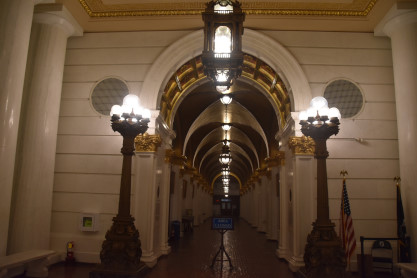
The south corridor.
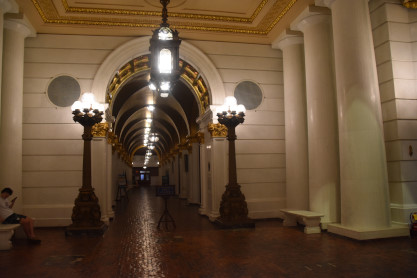
The north corridor.
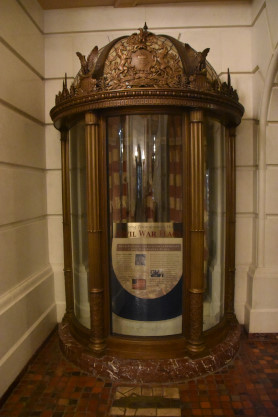
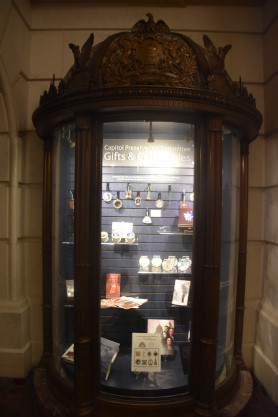
Two of the information clusters.
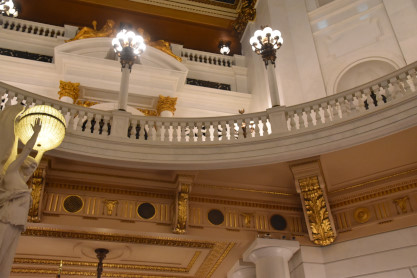
Lamps on the second level.
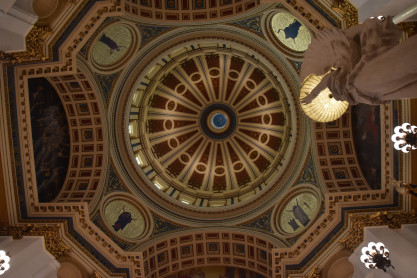
The rotunda.
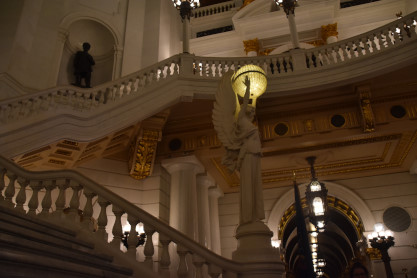
Justice.
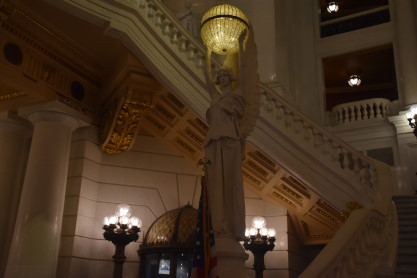
Torrel.
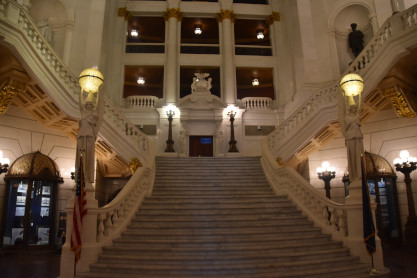
The stairway to the second level.
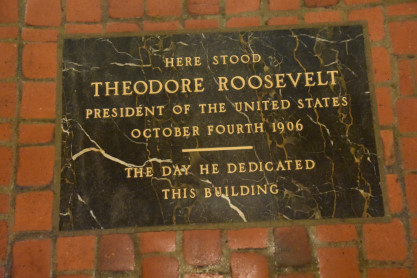
Here stood Theodore Roosevelt, President of the United States, October Fourth, 1906.
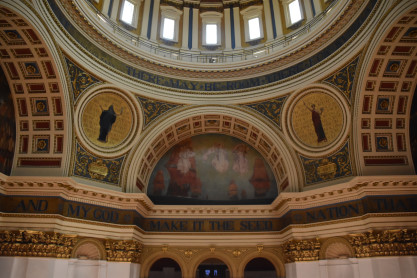
Interesting lettering that spans the ceiling.
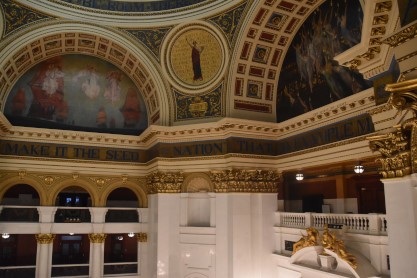
May God make its seed. We rode the elevator up to the fourth floor.
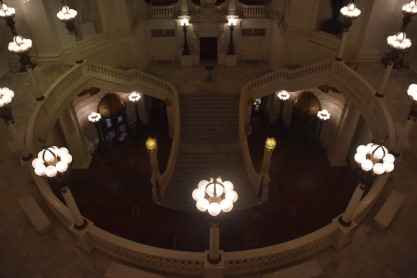
Looking down at the lamps on the second floor.
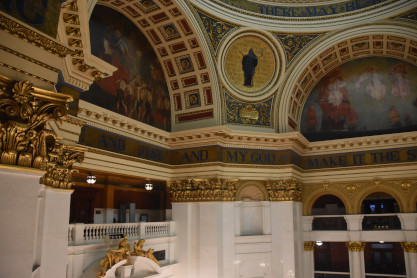
And just my and God make it seed.
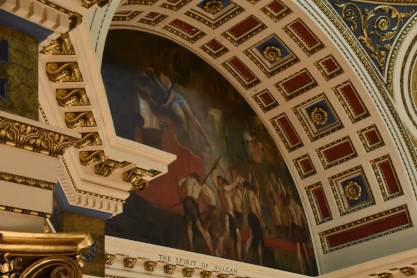
The Spirit of Vulcan.
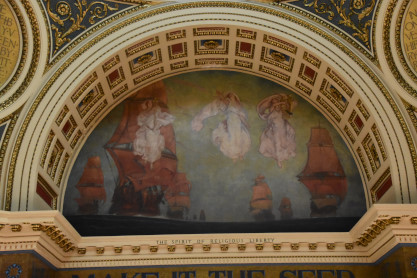
The Spirit of Religous Liberty.
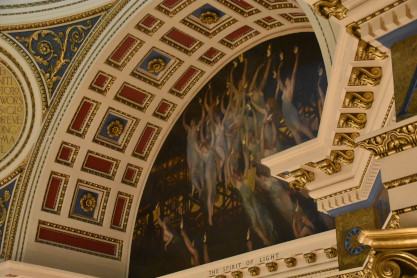
The Spirit of Light.
Gold is everywhere in the capitol.
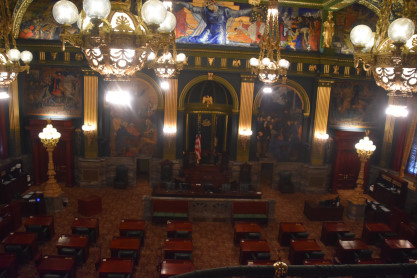
We next entered the Senate Chamber.
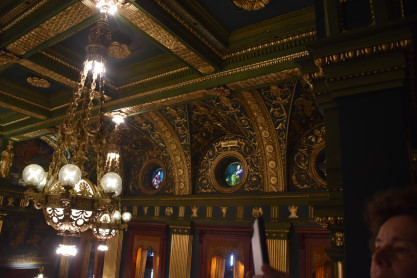
The chandelier above the senate floor.
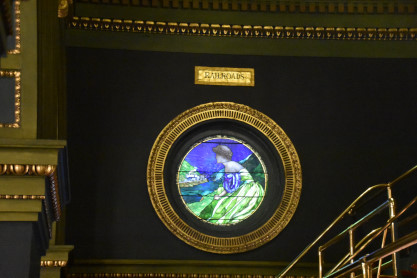
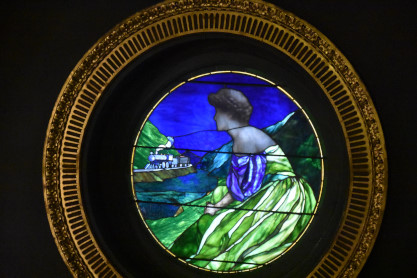
This one is about railroads.
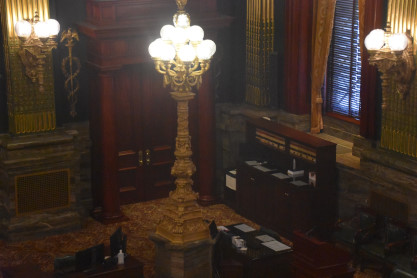
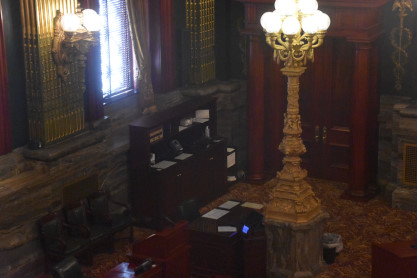
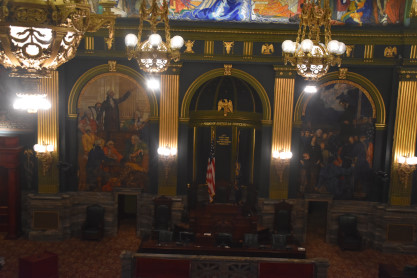
Where the Speaker of the Senate sits.
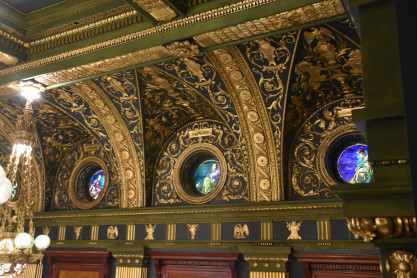
There are many portals about history.
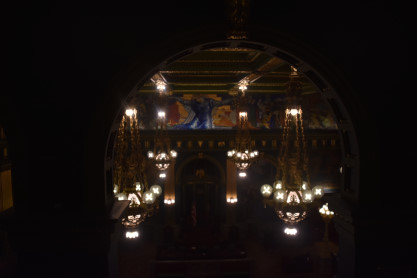
The lights above the Senate chamber.
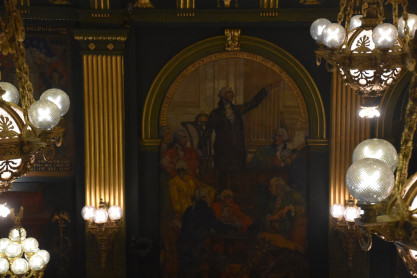
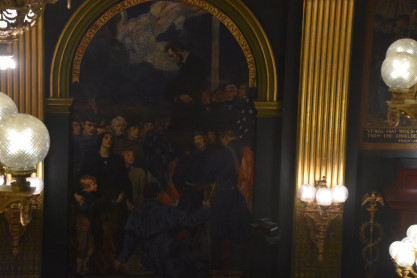
Two of William Penn quotes.
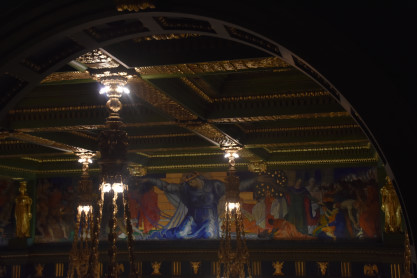
Above the Senate Chamber.
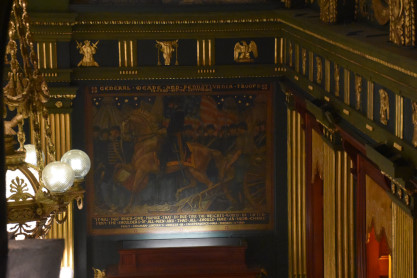
General Meade and Pennslyvanian troops painting.
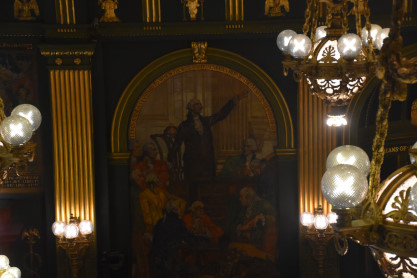
Another William Penn quote painting.
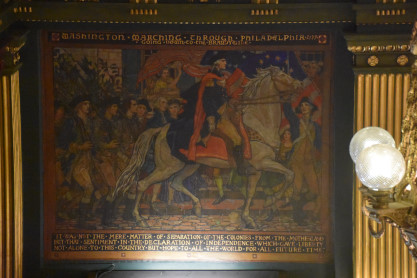
George Washington marching throgh Philadelphia painting.
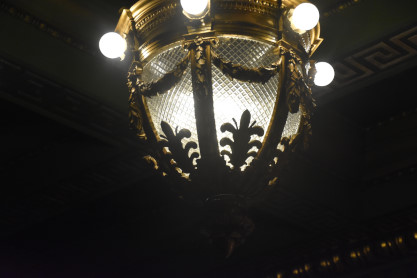
The Lamp in the Senate.
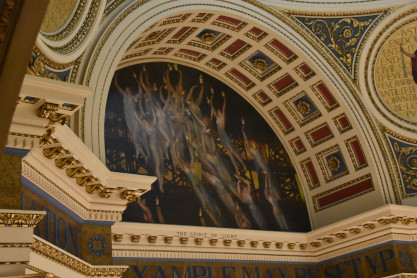
The Spirit of Light lunette.
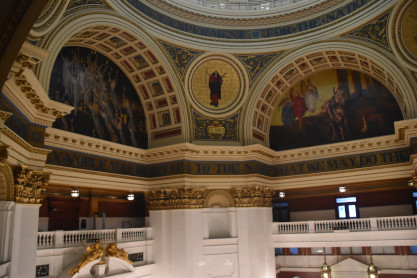
The Spirit of Light and Science Revealing Treasures of the Earth lunettes.
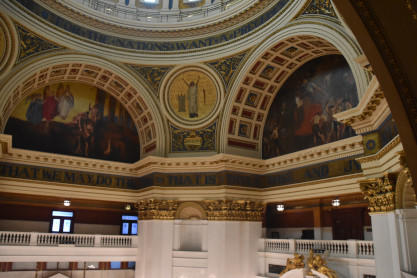
Science Revealing Treasures of the Earth and Spirit of Vulcan lunettes.
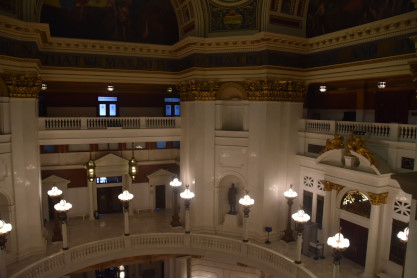
The third level.
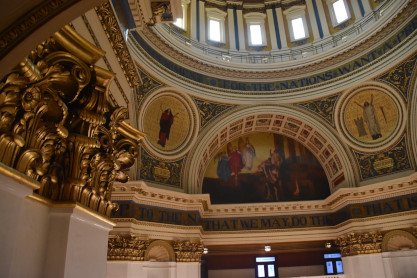
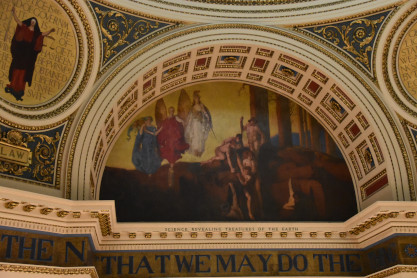
Science Revealing Treasures of the Earth lunettess.
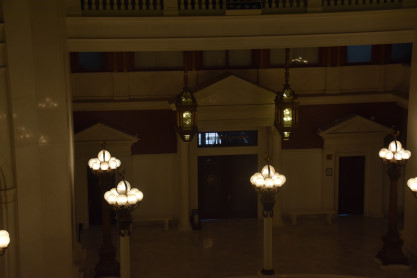
Lieutenant Governor office.
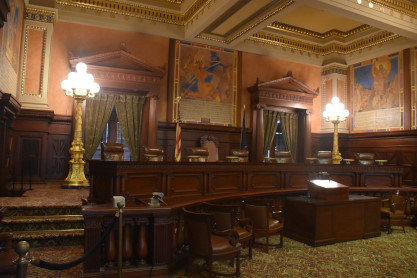
Next we went into the Supreme Court.
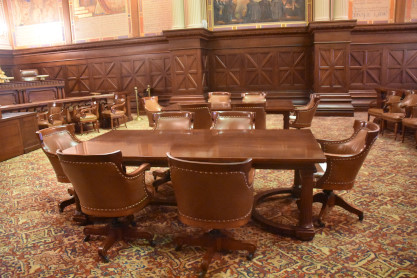
These desks are used by attoneys who argue againist the Supreme Court.
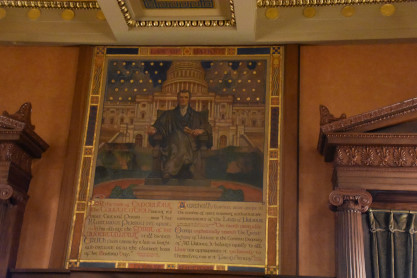
Violet Oakley painted the 16 murals in the "Supreme Courtroom" to depict the history of law. The cycle of 16 panels, painted between 1917 and 1927, begins and ends with Divine Law as its keystone, over the main entrance. Around the room clockwise, the murals represent the Law of Nation; Greek, Hebrew, and Christian Revealed Law; Roman Law of Reason; English Common Law; William Penn as Law-Giver; State, National, and International law, and finally, the Spirit of Divine Law. This is Law of Nations.
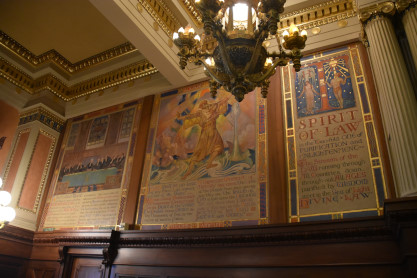
Spirit of Law.
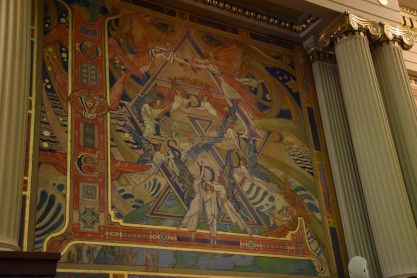
Divine Law.
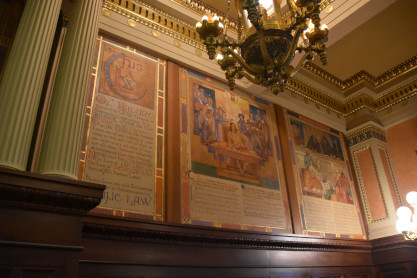
The Law.
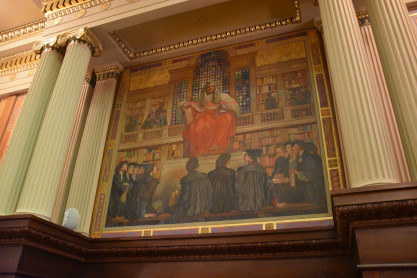
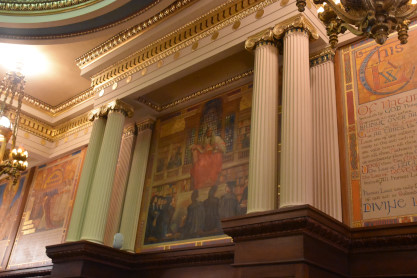
The Judge.
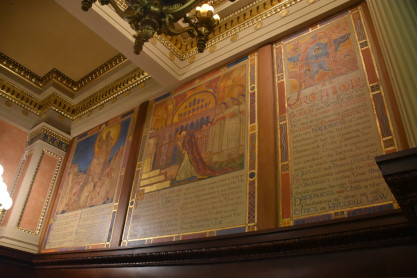
The Creator.
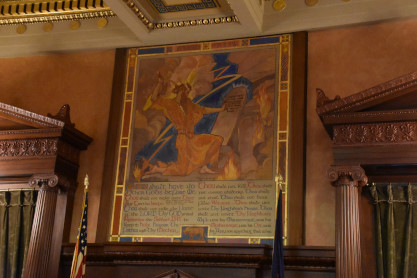
Reveal the Law.
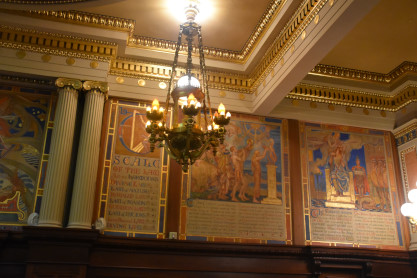
Scale of the Law.
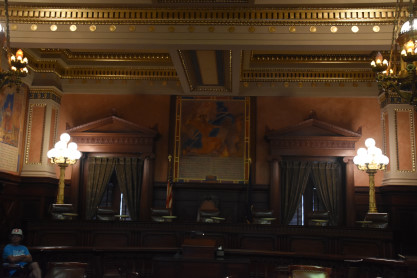
Where the Supreme Court Judge sit.
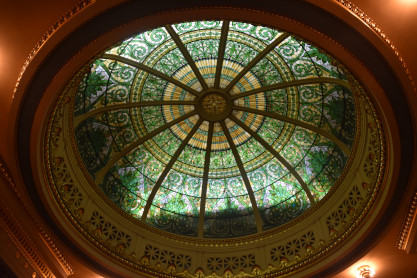
The Capitol's green and gold hemispheric opalescent glass dome in the Supreme Court Chamber was created by Alfred Godwin of Philadelphia. Godwin emigrated from England in 1874 where he had received his training in stained glass. In 1891 he ran an advertisement in the directory listing his shop address at 1325 Market Street, Philadelphia. He also produced windows for several churches including the former Presbyterian Church on Market Square in Philadelphia. It is surmised that Godwin also created the ochre stained glass windows in the rotunda’s upper dome, the light court skylights, the light court lunette openings on the Capitol's fifth floor, and the decorative ceiling glass in the House and Senate galleries.
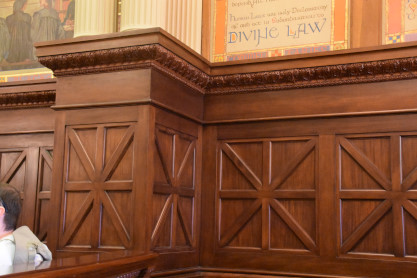
The walls of the Supreme Court.
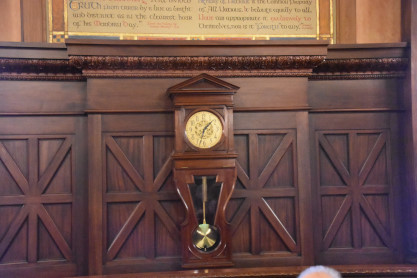
The clock in the Supreme Court.
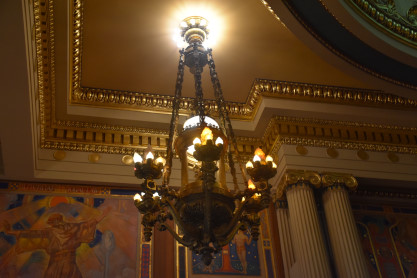
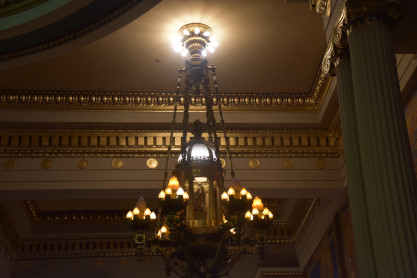
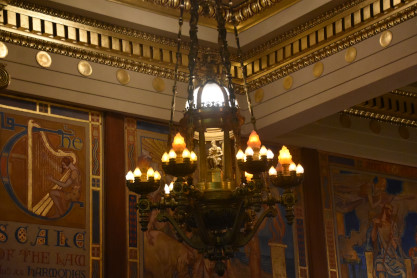
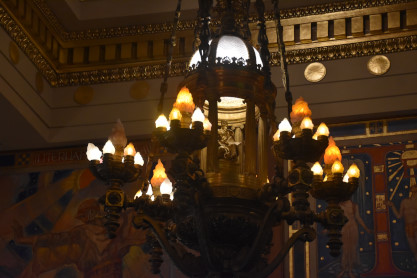
The lights with with a famous person in history.
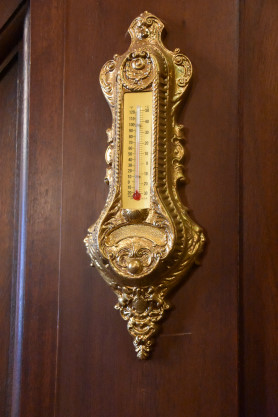
The Thermometer in the Supreme Court. We left the room and nest headed to the House of Representives.
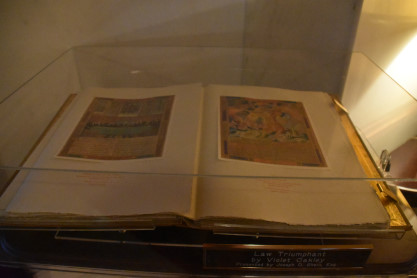
Law Triumphant by Violet Oakley.
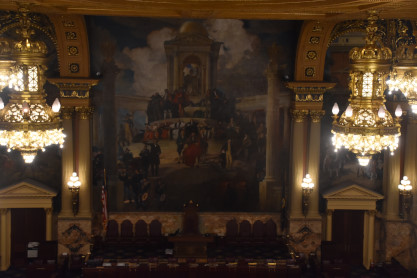
The chair in the middle is the Speaker of the House.
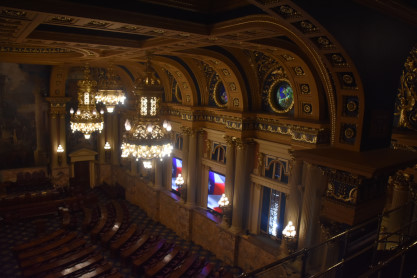
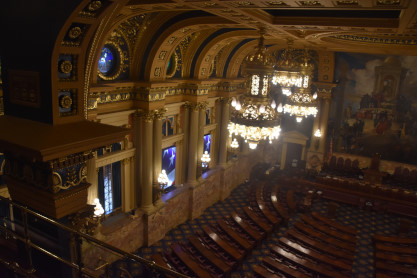
The House of Representives.
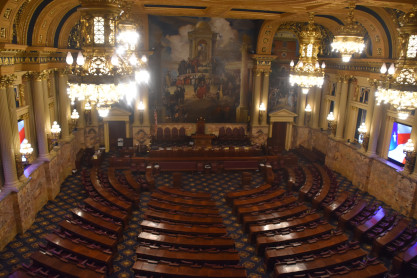
Repbulicans and Domocrates sit on opposite sides of the House.
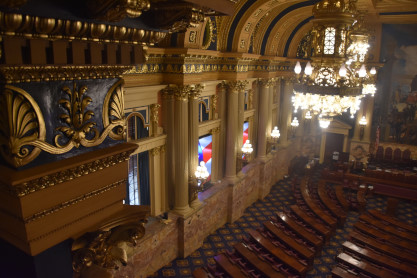
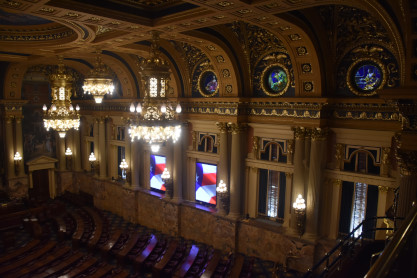
The American Flags can be seen in the windows.
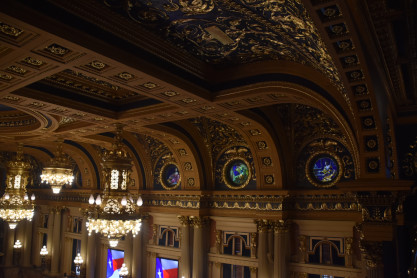
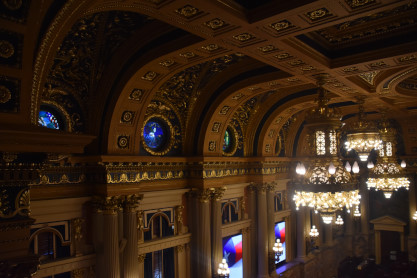
Like in the Senate the portholes have scenes in them.
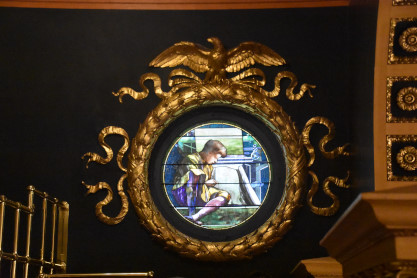
Education stained glass window by William Brantley Van Ingen.
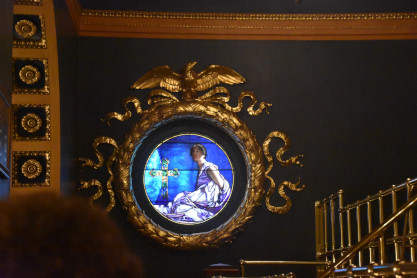
Religion stained glass window by William Brantley Van Ingen in 1906.
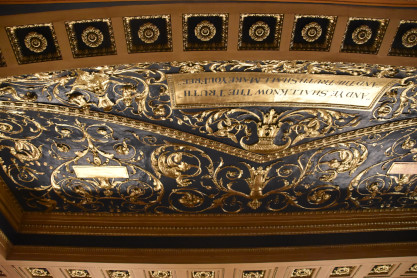
And ye shall know the truth and the truth shall make you free.
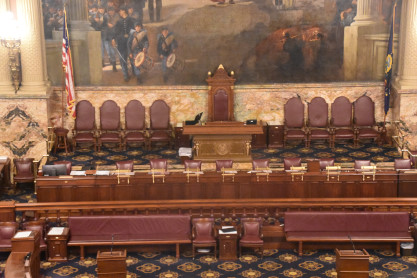
Where the speaker sits.
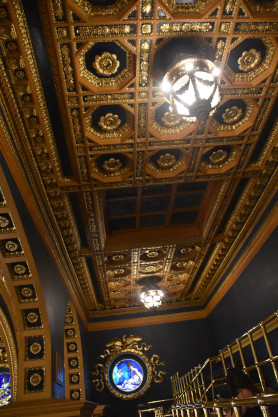
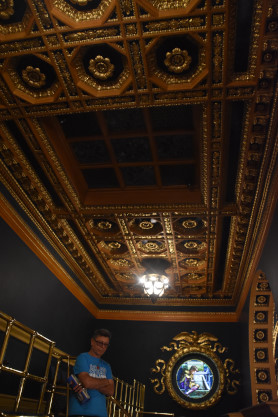
Those portholes once again.
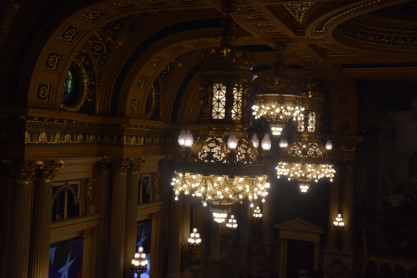
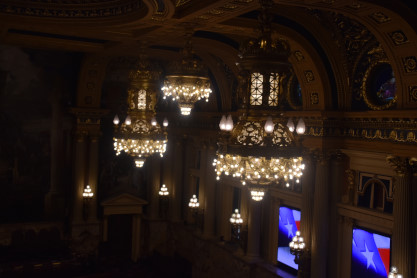
The ceiling lamps.
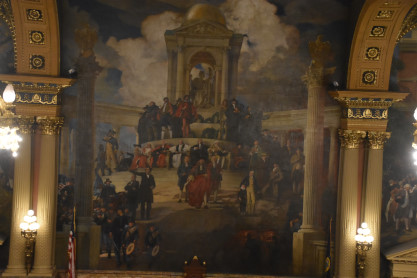
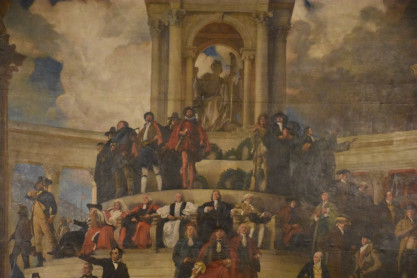
The painting above the Speaker of the House.
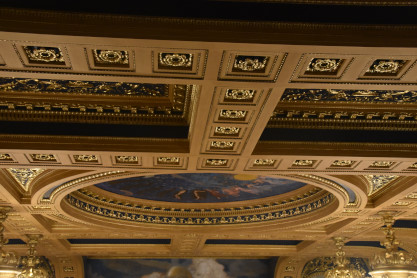
The painting above the House Members. We took the elevator down the the bottom floor and the tour was over.
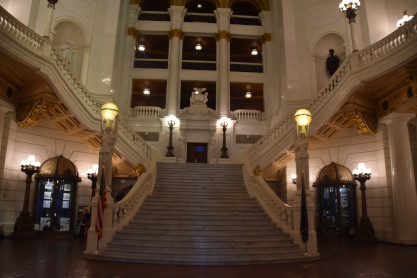
The stairways to the second floor of the capitol.
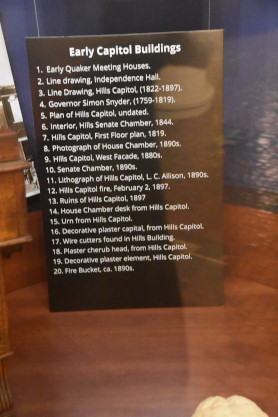
Early capitol buildings on Pennslyvian.
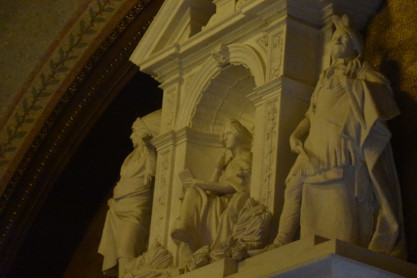
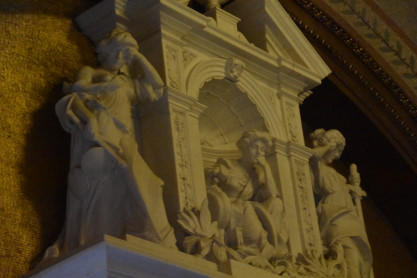
Famous early Citzens of Pennslyvain.
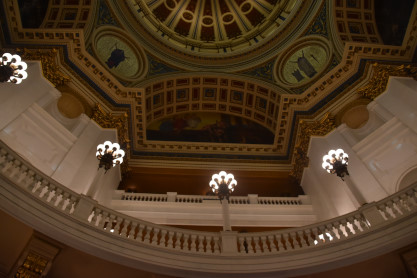
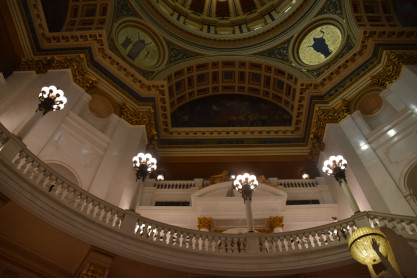
Lights on the second floor.
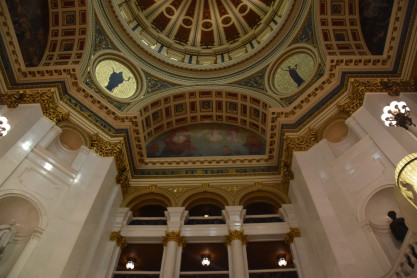
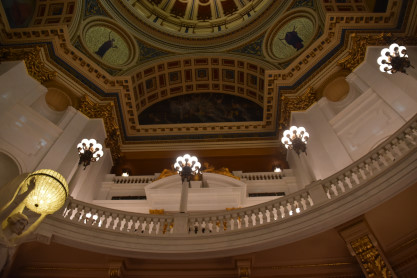
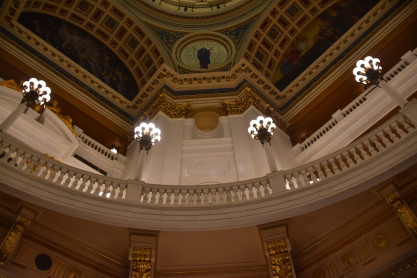
Looking up again.
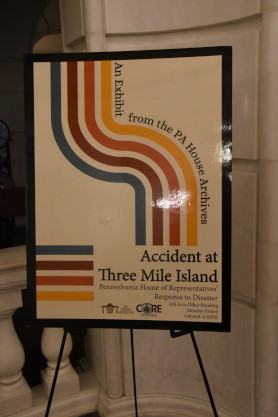
Accident at Three Mile Island.
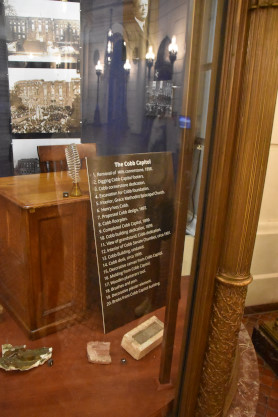
The Cobb Capitol display board.
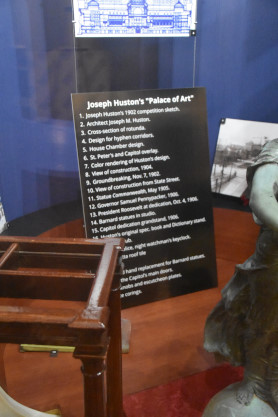
John Huston's Power of the Arts display board.
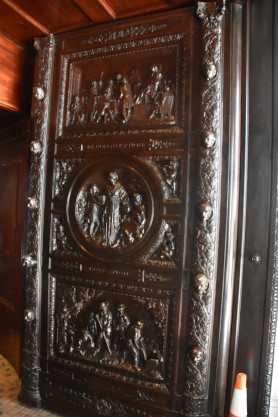
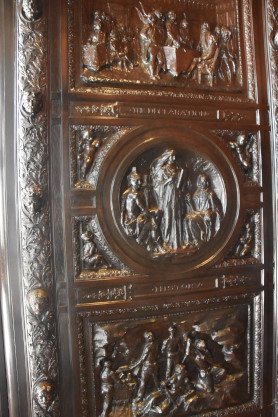
The front door of the Pennslyvanian Capitol Building.
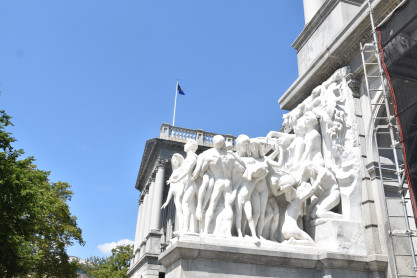
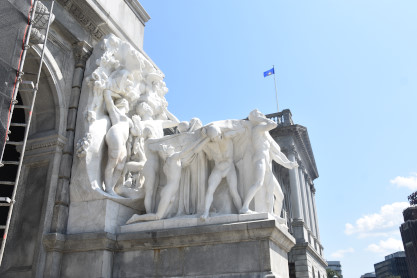
Artwork out in front of the building.
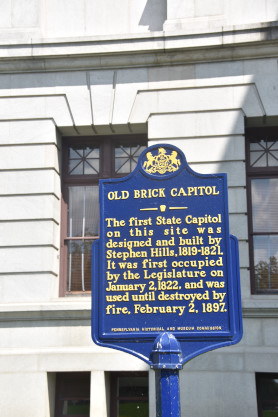
Old Brick Capitol Building Historical Plaque.
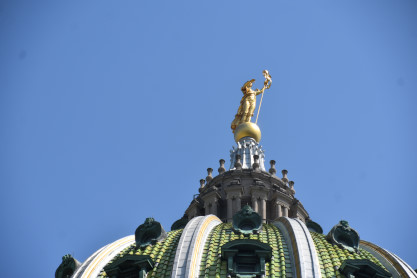
The statue on top of the Capitol Building.
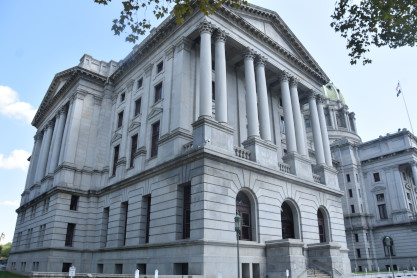
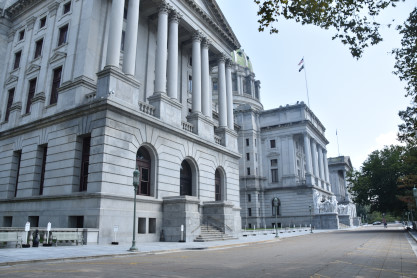
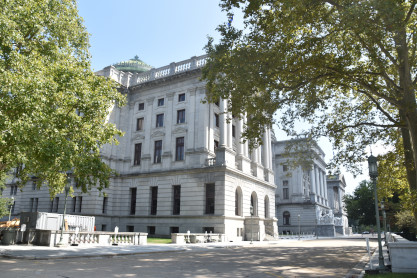
The State Capitol.
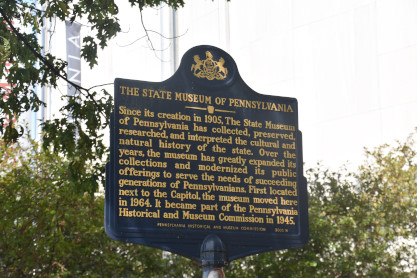
The State Museum of Pennsylvania. Elizabeth drove us to the Hilton Hotel for the NRHS convention and we unloaded everything, then gave the car to the valet. Once we checked in, we went to dinner and later, I drove to the aiport with Marty to pick up our friend and fellow member Robin Bowers, but his flight was three hours late, so we returned to the hotel.
| RETURN TO THE MAIN PAGE |