




Robin and I stayed at the Nevada Northern Railway bunkhouse last night and I slept very well. Here are a few pictures of the bunkhouse.
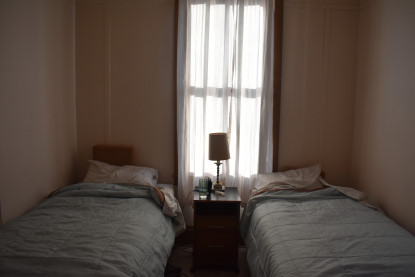
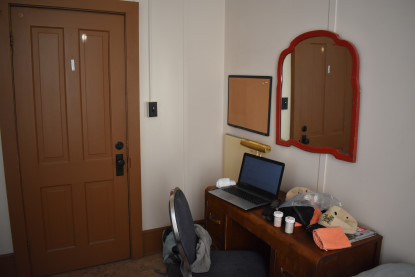
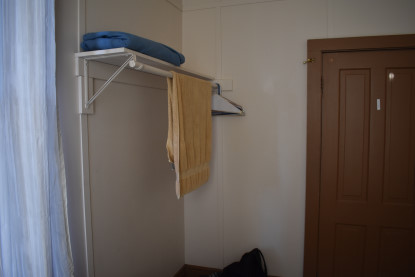
The inside of Room C.
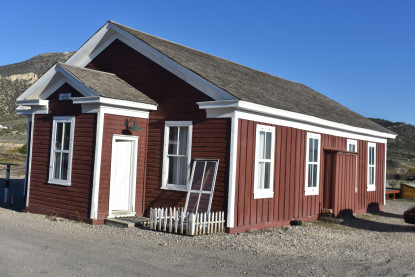
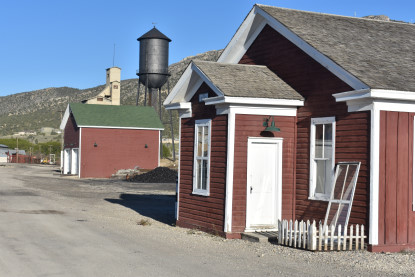
The outside views of the Nevada Northern bunkhouse.
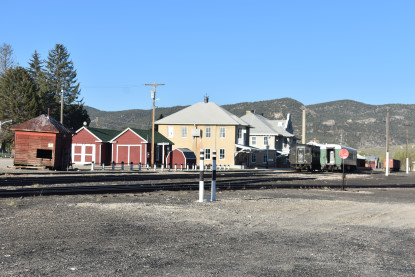
The view of the East Ely Depot. Robin and I arose and drove to McDonald's which was under construction so we took our food back to the bunkhouse and ate it in the kitchen area.
Nevada Northern Railway HistoryThe Nevada Northern owes its beginnings to the discovery and development of large porphyry copper deposits near Ely early in the 20th century. Two of the region's largest mines (including the Robinson Mine) were purchased in 1902 by Mark Requa, president of the Eureka & Palisade Railroad in central Nevada. Requa then organized the White Pine Copper Company to develop his new properties, and it soon became evident that rail access to the isolated region would be essential to fully exploit the potential of the mines. Originally plans called for extending the narrow-gauge Eureka and Palisade Railroad, which Requa was president of, effectively doubling the length of that line. Subsequent surveys indicated that a standard gauge railroad would be the most cost effective and that the most practical route for such a railroad was northward from Ely, connecting with the Southern Pacific somewhere in the vicinity of Wells.
The Ely-area copper properties were further merged in 1904, forming the Nevada Consolidated Copper Company, and the Nevada Northern Railway was incorporated on June 1, 1905, to build a line connecting the Nevada Consolidated mines and smelter to the national rail network. The task of building the new railroad was contracted to the Utah Construction Company, which began work on September 11, 1905. Construction began at Cobre, where the Nevada Northern connected with the Southern Pacific and proceeded southward. The line was finished a year later, its completion marked by a two-day celebration in Ely. The railroad's symbolic final spike—made of local copper—was driven by Requa in Ely on September 29, 1906, which was designated as Railroad Day. To celebrate the new railway, a ball was held inside the Northern building, which was still under construction at the time.
Additional Ely-area trackage was constructed in 1907–1908 to serve the local mining industry. This trackage, known as the "Ore Line", included a route bypassing Ely to the north and continuing west up Robinson Canyon to the copper mines at Ruth. East of Ely, the Ore Line project saw the construction of the "Hiline", a branch leading to Nevada Consolidated's new copper smelter and concentrator at McGill. The Ore Line immediately became the busiest segment of the Nevada Northern by far, hosting dozens of loaded and empty ore trains daily.
As a subsidiary of Nevada Consolidated, the primary purpose of the Nevada Northern throughout its history was the haulage of copper ores and products. Other freight traffic was also carried, and the railroad operated the daily Steptoe Flyer passenger train between East Ely and Cobre until July 31, 1941, when it was replaced by bus service. Local trains were also operated from Ely to Ruth and McGill for the benefit of mine employees and others until the 1930's, and special school trains carried students to White Pine High School in central Ely.
A series of corporate financial transactions in the 1920's and 1930's brought Nevada Consolidated under the control of the Kennecott Copper Corporation and Nevada Consolidated was merged into Kennecott in 1942. The Nevada Northern thus became a Kennecott subsidiary. Faced with declining ore reserves and low copper prices, Kennecott closed its Ruth-area mines in May 1978, thus ending the ore trains between Ruth and the McGill smelter. The smelter closed on June 20, 1983 and the Nevada Northern suspended all operations immediately thereafter.
Citizens of the town concerned with the economic impacts of the loss of mining and the railroad approached Kennecott with the intent to acquire the railroad and open it as a tourist operation. Though a series of donations, the Nevada Northern Railway Museum was formed and is situated at the East Ely Yards. The site is listed on the United States National Register of Historic Places as the Nevada Northern Railway East Ely Yards and Shops. The rail yards were designated a National Historic Landmark District on September 27, 2006 and was cited as one of the best-preserved early 20th-century railroad yards in the nation, and a key component in the growth of the region's copper mining industry. The property came complete with all of the company records of the Nevada Northern from its inception.
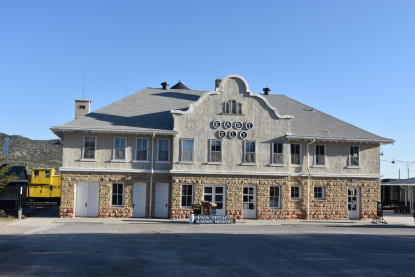
On the way back, the East Ely Nevada Northern station. After breakfast of hot cakes and sausage, I walked down to the engine house.
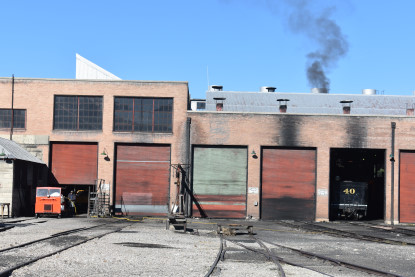
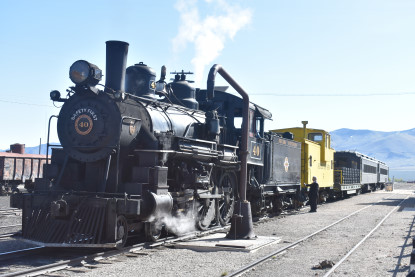
Nevada Northern 4-6-0 40 was all steamed up for our trip at 9:30 AM.
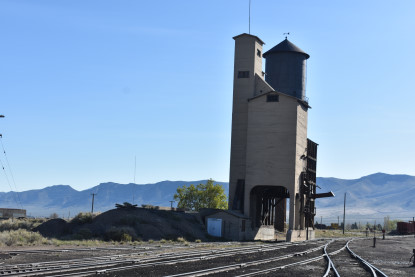
The Nevada Northern coaling tower.
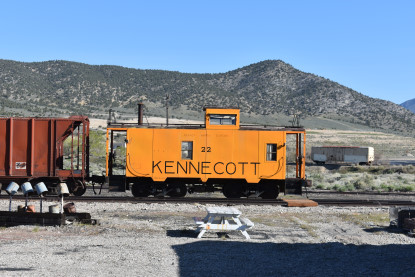
This is Nevada Northern caboose 22 which can be rented out to stay in, as Joe Berbec and his friends did last night.
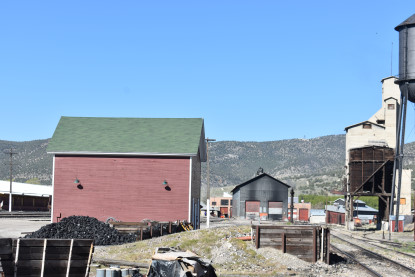
The view toward the Nevada Northern engine house. I drove to the station, parked then returned the bunkhouse keys and picked up our complimentary tickets for this morning's train trip.
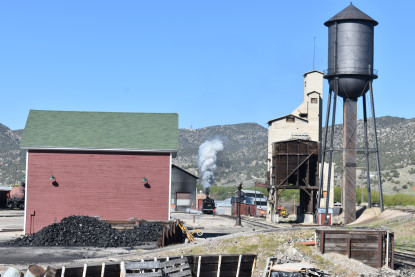
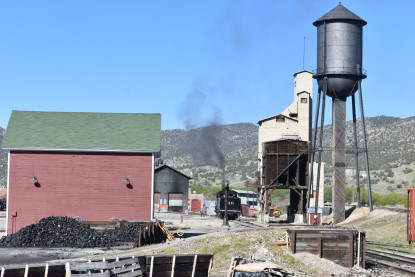
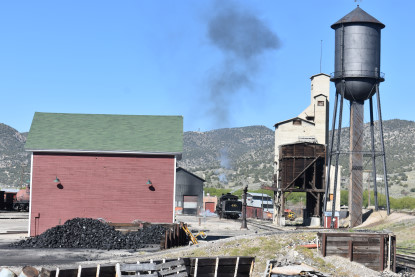
Nevada Northern 40 started reversing towards us then stopped to throw a switch and headed to the East Ely station another way. We walked back to the station area.
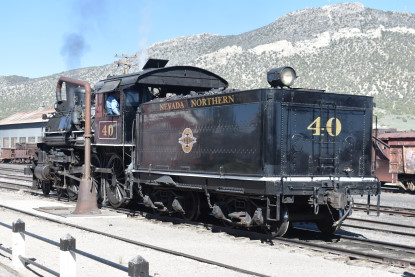
Nevada Northern 40 then backed onto our train.
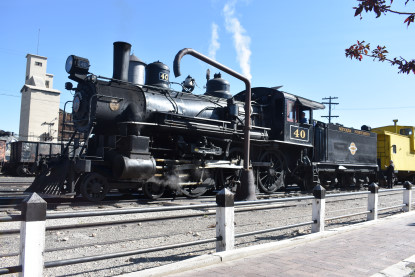
Looking good in the morning light.
Our train would be ready to go at 9:3O AM. Robin and I ran into Greg and Marty Smith, fellow Orange County Railway Historical Society and National Railway Historical Society members, and we caught up on things. Once they boarded the train, we went to the open car and were joined by four other NRHS members.
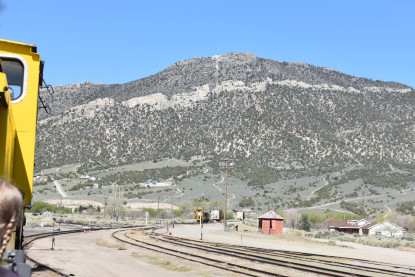
At 9:30 AM the train reversed out of the East Ely station to the switch and passed the wig-wag crossing signal. Once they threw the switch, we were on our way toward Keystone. This is my third trip on the Nevada Northern and Robin's first.
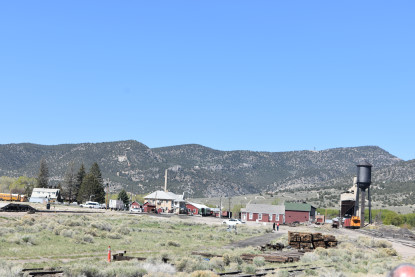
The view of the Nevada Northern yard in East Ely.
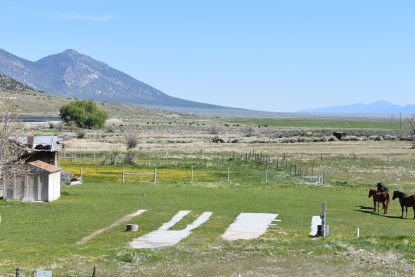
Looking down the Steptoe Valley.
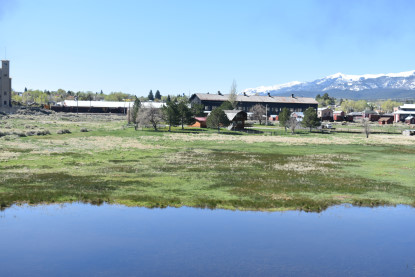
There is a small lake with a view of the shops.
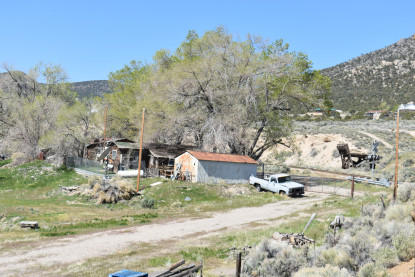
That loading ramp is still on the curve after all these years.
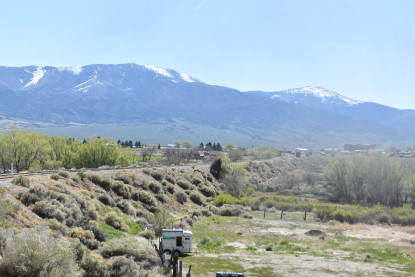
Looking back from where we had come.
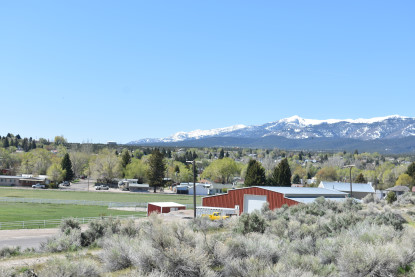
The south view up toward the White Mountains.
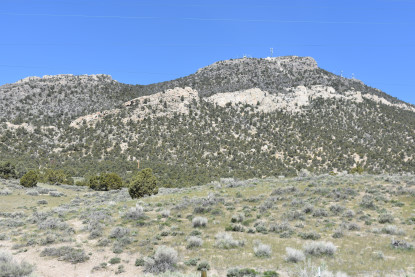
The peak to the northwest of the train.
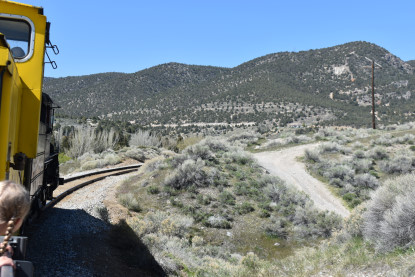
The train took another curve on our route out of Ely.
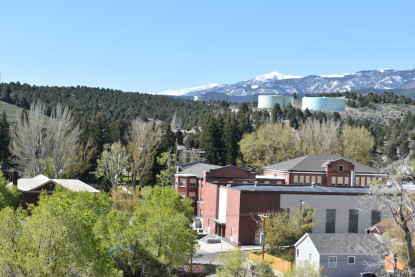
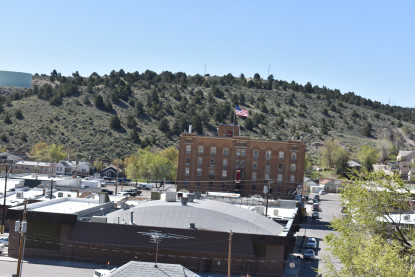
Two views of downtown Ely, Nevada.
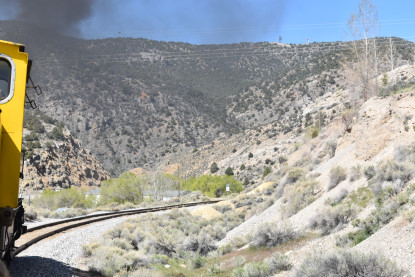
The train neared the tunnel in Robinson Canyon.
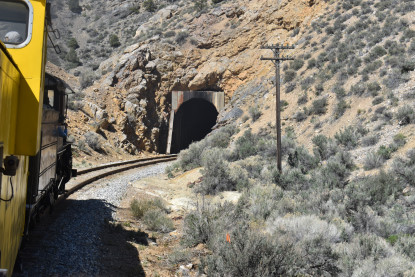
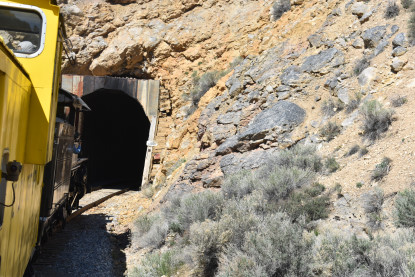
The train entered the tunnel in Robinson Canyon.
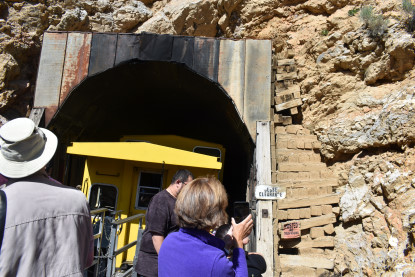
Going into the tunnel.
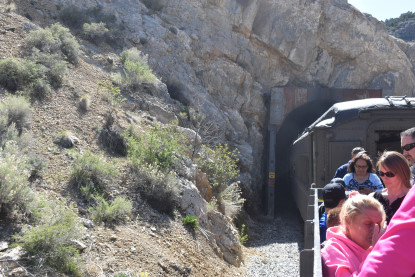
Exiting the tunnel.
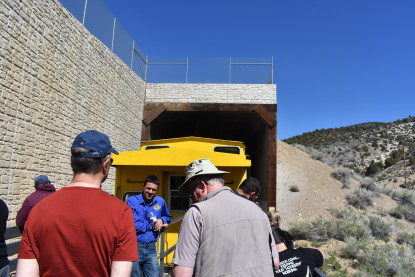
Going into the underpass under US 50.
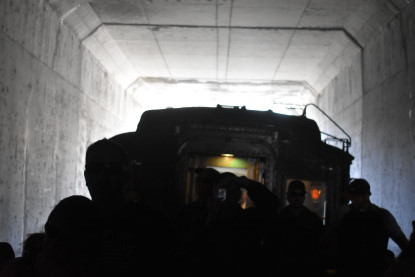
In the underpass under US 50.
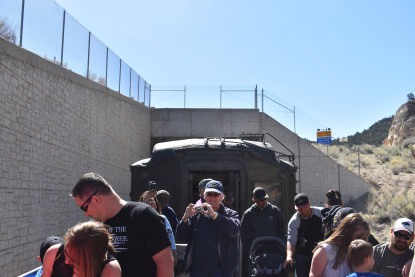
Exiting the underpass under US 50.
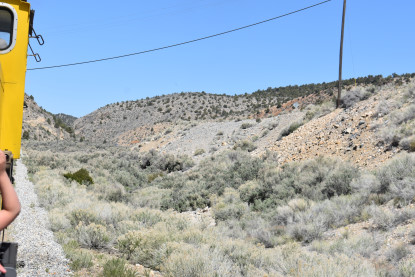
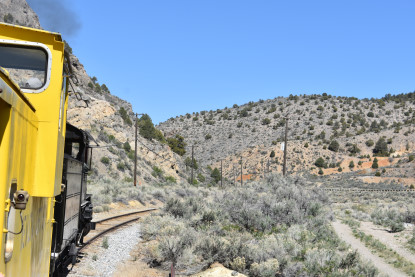
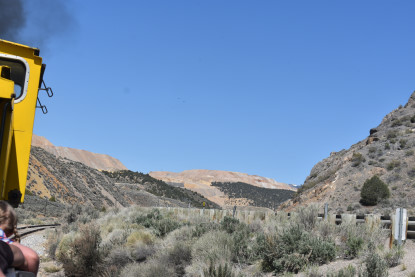
The train in Robinson Canyon.
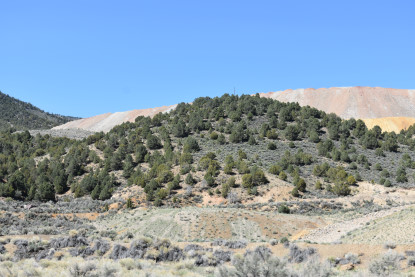
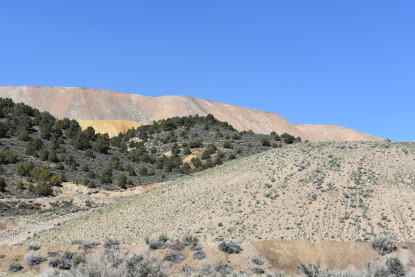
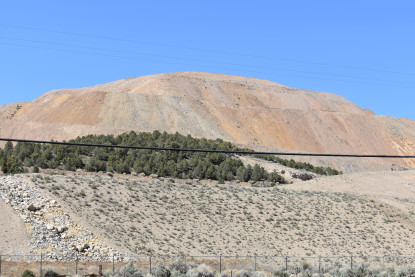
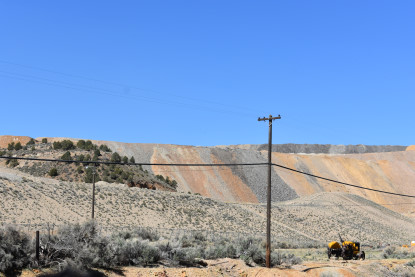
The tailings of the mine are far more expansive than they were on my last visit here.
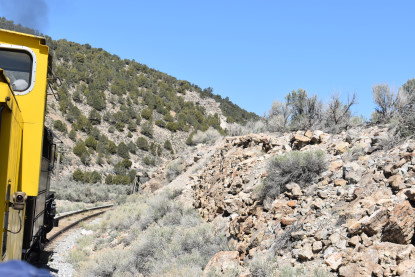
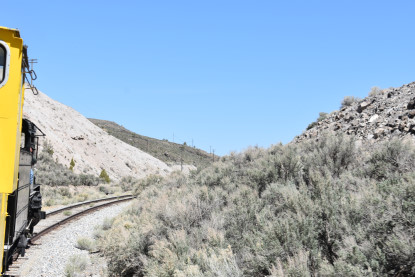
The train took a pair of curves.
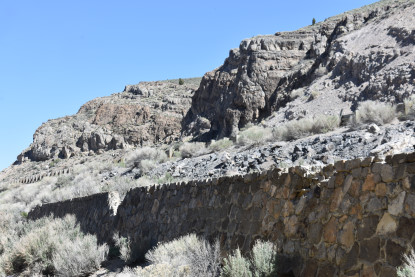
A unique stone wall.
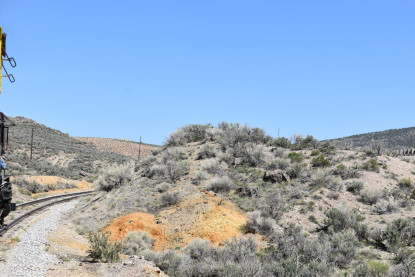
Interesting color in the ground.
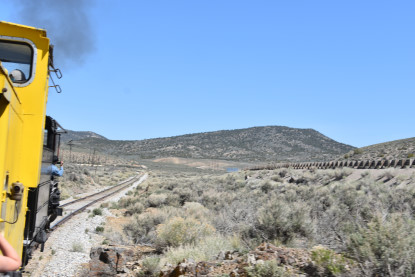
The train heads to the last curve into Keystone.
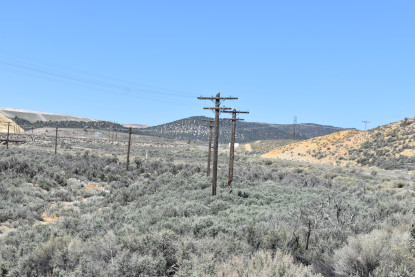
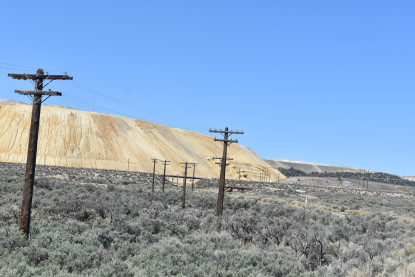
Taking that last curve into Keystone where we will turn the train on the wye.
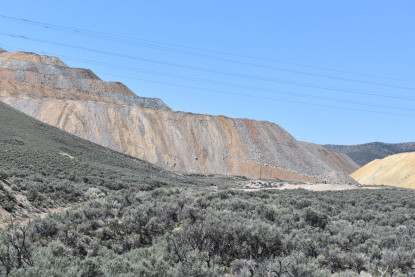
We headed down the tracks to the bridge where we will switch to the wye.
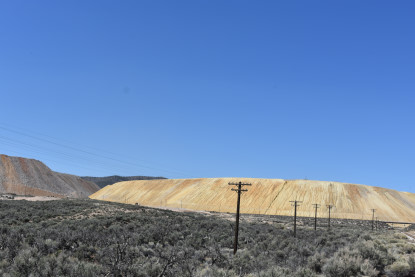
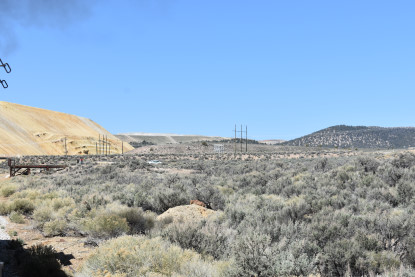
The mine tailings at Keystone.
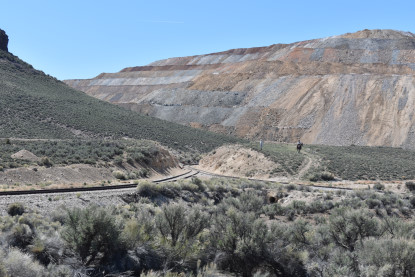
The wye.
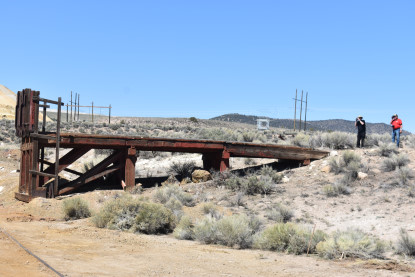
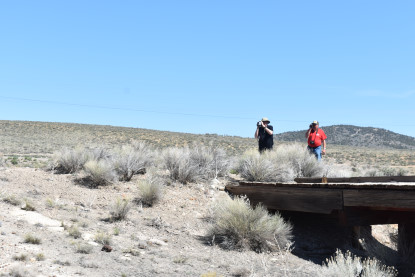
Joe Berbec and friend photographing our train at Keystone. We then stopped for a few minutes before our conductor threw the switch and we reversed on the wye all the way to the end where I saw something I did not expect.
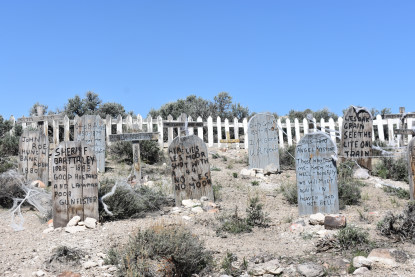
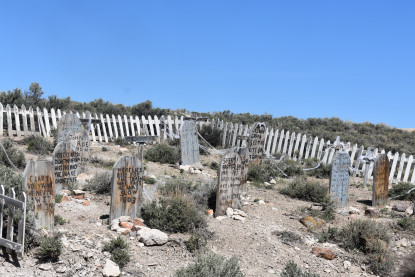
Gravestones in the fake cementry in Keystone.
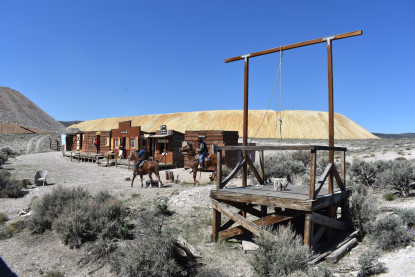
A hangman's noose and a fake western town.
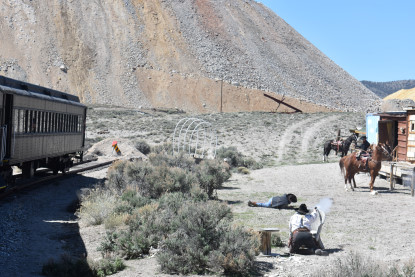
Looking at the now end of track.
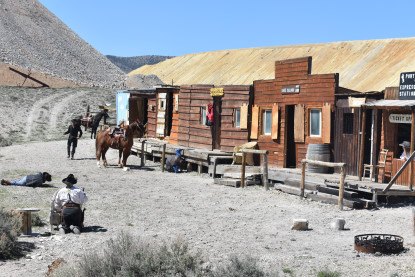
Gunfight after the train robbers gave out fake money to the passengers. After that we started back to East Ely.
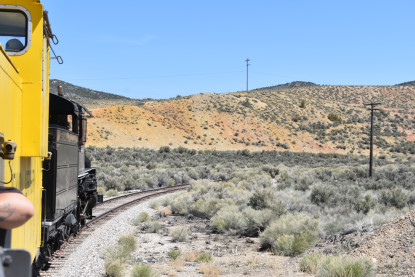
The train went around the east leg of the wye to the mainline.
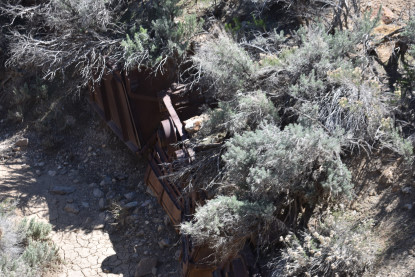
Mine cars were being used for river bank control. I had never seen mine cars used for this purpose before today.
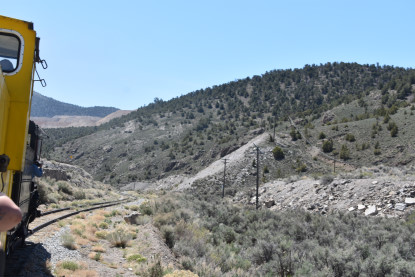
The train headed back down Robinson Canyon.
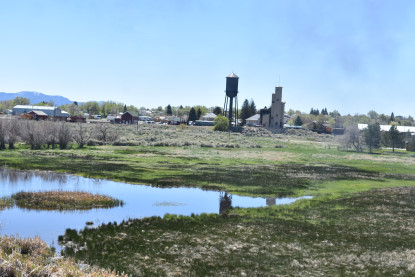
Looking over the water tower and the coaling tower.
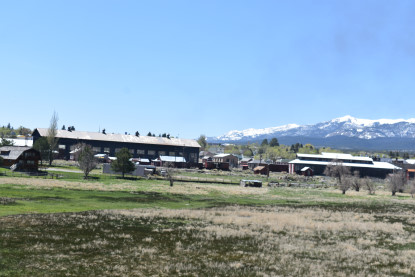
Looking over to the shop buildings.
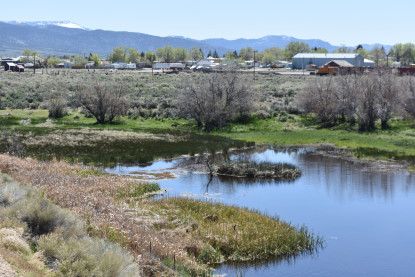
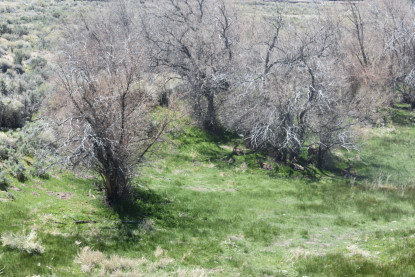
There are deer in both pictures. We went east to that same switch that the steam engine took this morning then went the same way he did to get back to the East Ely station.
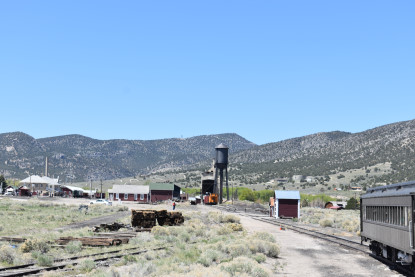
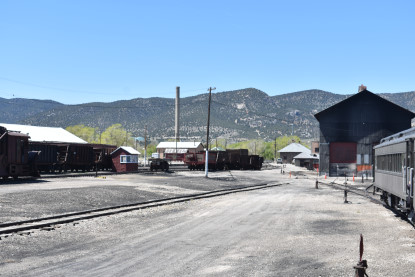
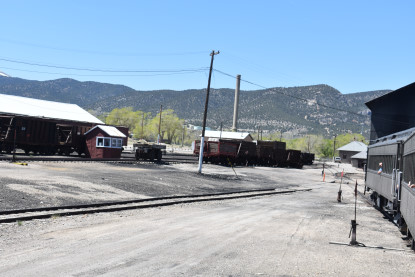

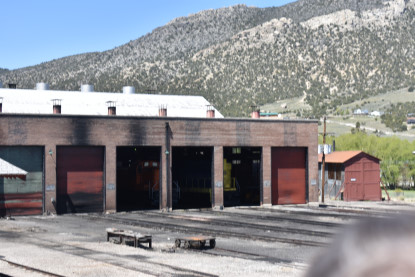
Views along my new rail mile by going this way, or rare mileage. They stopped on the grade crossing and unloaded anyone who wanted to take a shop tour this morning. With Robin still under the weather, we rode back to the East Ely station then returned to the car and drove down US 97 to our first stop on the way home at Caliente.
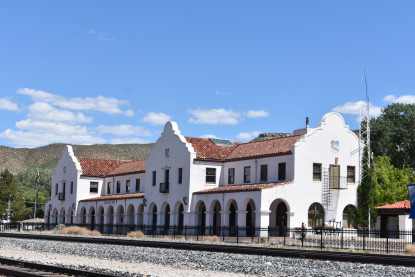
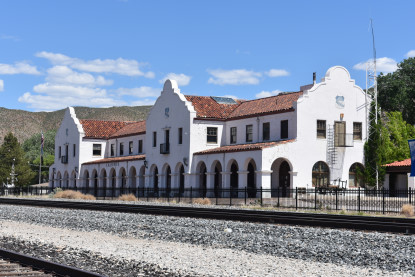
The Union Pacific Caliente station built in 1923.
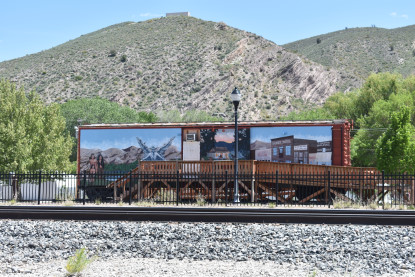
This box car shows the history of Caliente.
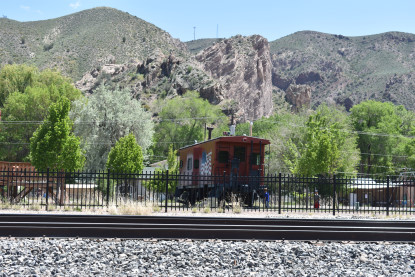
Union Pacific steel bay window caboose 24518 on display, originally Rock Island 17100, built in 1966. From here we took the paved highway down through Rainbow Canyon on the way to Elgin.
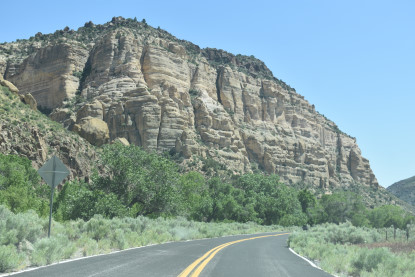
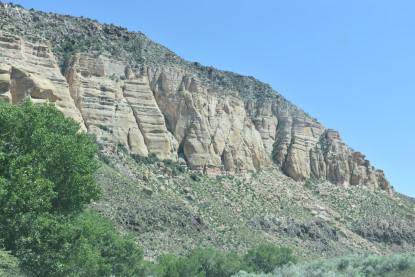
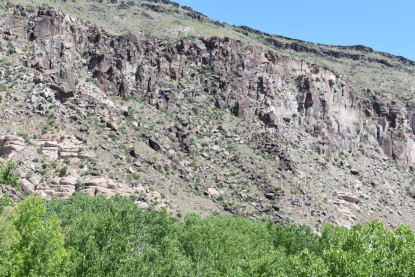
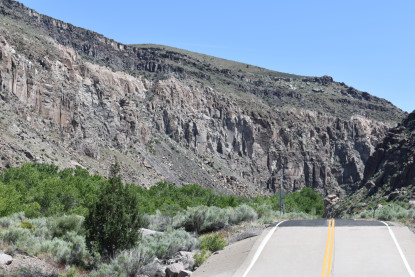
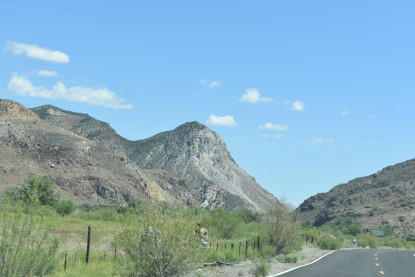
Views in Rainbow Canyon. We got to the end of the paved road and drove 38 miles down a dirt road to get back onto US 97. At the junction of Interstate 15, we filled the car with petrol and bought Subway to go. I drove the rest of the way home going, through heavy traffic once in Barstow and once on Cajon Pass. After that it was an drive west on CA 60 to CA 57 to CA 22 off at Grand Avenue where we filled the car one last time before we headed to my house in Santa Ana. We arrived at 8:05 PM and Robin pulled his car out of my driveway. We unloaded the car then I pulled mine in the driveway and entered my house, ending a great trip to and from the National Railway Historical Society convention.
| RETURN TO THE MAIN PAGE |