




Today Robin Bowers and I left the Elkhorn Inn in Eckman, West Virginia and drove US 52 to Interstate 77 to Hillsville where we filled the car. Robin called my friend David Pressley and we planned to meet at the Tweetsie Railroad. Continuing the journey, we drove US 221 to Boone, then it was a short trip on US 321 to our destination. David approached with gifts for Robin and I in the form of two Tweetsie cups. We went inside the ticketing area, picked up our guest ticket then walked out to board.
Tweetsie Railroad HistoryOpened in 1957, Tweetsie Railroad began as an excursion train ride pulled by steam locomotive 12, the only surviving narrow gauge engine of the East Tennessee and Western North Carolina Railroad (ET&WNC). Built in 1917 by the Baldwin Locomotive Works, 12 is a 3 foot narrow gauge 4-6-0 coal-fired locomotive that was used from 1918 to 1940 to haul passengers and freight over the ET&WNC's 66-mile line running through the Appalachian Mountains from Johnson City to Boone, North Carolina. The name "Tweetsie" was given to the original East Tennessee and Western North Carolina Railroad by area residents who became accustomed to the shrill "tweet, tweet" of the train whistles that echoed through the mountains. The nickname stuck with the railroad and its trains, and became more identifiable than the railroad's original name.
Two years after the 3 foot narrow gauge portion of the ET&WNC ceased operations in 1950, the locomotive was purchased by a group of railroad enthusiasts and taken to Penn Laird, Virginia to operate as the Shenandoah Central Railroad, opened in May 1953. Rains from Hurricane Hazel washed out the Shenandoah Central in October 1954, and Locomotive 12 was once again put up for sale. Cowboy actor and singer Gene Autry optioned the locomotive with the intent to move it to California for use in motion pictures. However, Autry ultimately determined that the transportation and restoration costs made his plan impractical.
Instead, Grover Robbins, an entrepreneur from Blowing Rock, North Carolina, purchased Autry's option and bought the locomotive in August 1955. Robbins moved the 12 locomotive back to its native Blue Ridge Mountains as the centerpiece of a new "Tweetsie Railroad" tourist attraction. One mile of track was constructed near Blowing Rock, North Carolina for the train to run on, and on July 4, 1957, the locomotive made its first public trip over the line. In 1958, the track was extended to a 3-mile loop around the mountain, and the trains at Tweetsie have travelled that loop ever since. Grover Robbins' brothers, Harry and Spencer, were also involved with the operation of Tweetsie Railroad, and the park is still operated by the Robbins family.
Tweetsie Railroad became a popular tourist attraction and quickly evolved into the first theme park in North Carolina -- and one of the first in the nation. A western town and saloon were built around the original depot area. A train robbery and cowboy-and-Indian show were added to the train ride, playing off the Wild West theme that was very popular at the time on television and in movies. The theme was enhanced by regular visits from Charlotte's WBTV television personality/singing cowboy Fred Kirby, who hosted a popular children's show. In 1961, a chairlift and amusement ride area was constructed on the central mountain inside the rail loop, and over the decades the park has been expanded with additional rides, attractions, shops, zoo and restaurants.
The Tweetsie Railroad theme park is open from early April through October of each year. In addition to the Wild West train adventure and the amusement rides, Tweetsie Railroad has a variety of live entertainment shows featuring talented performers selected from the immediate area and from the Southeast. The park hosts numerous special events each season, including Letterland-themed days in May for school groups, visits by Thomas the Tank Engine and a very popular nighttime "Ghost Train" Halloween event in October. Beginning in 2017, the park's 60th anniversary season, Tweetsie Railroad announced plans to start a Holiday themed event to be called "Tweetsie Christmas".
In 1960, Tweetsie acquired another coal-fired steam locomotive, USATC S118 Class 2-8-2 190, the "Yukon Queen" from Alaska's White Pass and Yukon Route. Also built by Baldwin Locomotive Works in 1943 for the US Army, the engine was part of an 11-locomotive fleet of "MacArthur" 2-8-2s originally purchased for use overseas. During World War II, the locomotives were sent to Alaska for use on the White Pass and Yukon.
In 1961, Grover and Harry Robbins built another train ride and tourist attraction called "Rebel Railroad" in the Smoky Mountains near Pigeon Forge, Tennessee. Originally featuring a Civil War theme, the park was renamed "Goldrush Junction" in 1966 and re-themed to a Wild West concept very similar to Tweetsie Railroad. The Robbins brothers sold Goldrush Junction in the late 1960s, and it subsequently went through various owners. In 1976, Jack and Pete Herschend of Branson, Missouri bought the Pigeon Forge facility and redeveloped it as "Silver Dollar City". In 1986, country music star Dolly Parton became a part owner with the Herschends, and the theme park became today's Dollywood.
On February 9, 2017, Locomotive 12 celebrated its 100th Birthday. An official ceremony was held for the locomotive during Tweetsie's Railroad Heritage Weekend.
Tweetsie Railroad's operating season is from the 1st Friday in April to the last weekend in October, then from Thanksgiving Weekend to the end of December for Tweetsie Christmas. The park is open weekends in the spring and autumn, and daily from the weekend after Memorial Day weekend until Mid August. In addition, the park is open on Friday and Saturday nights in from Late September through October for the very popular "Ghost Train" event. The park is also open for "Tweetsie Christmas" on Friday and Saturday Nights from Black Friday to late December. Other special events are held throughout the season, including Railroad Heritage Weekend in August, that focuses on the history of the narrow gauge locomotives, and a large fireworks display on Independence Day.
Our Visit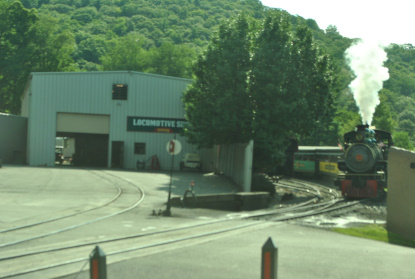
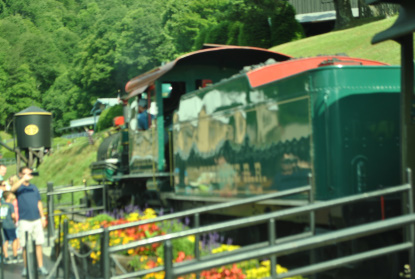
The train arrived and passengers exited at the rear, then Robin and I boarded the last car of the train and chose the last two seats on the left.
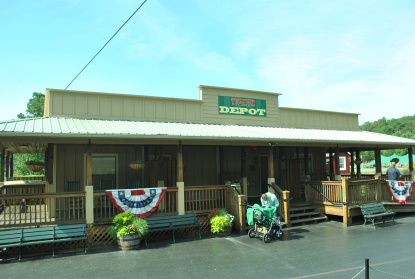
The station where you enter the park.
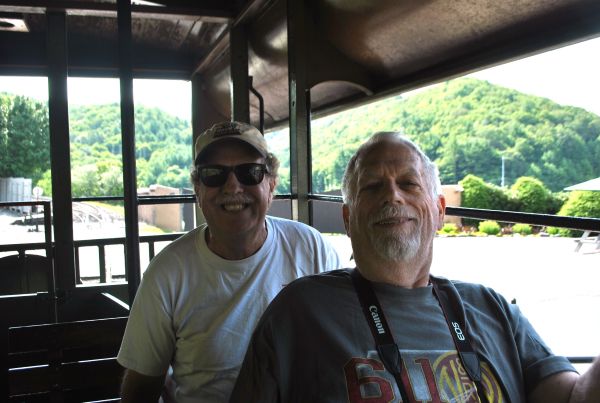
Robin and the author looking forward to their first trip aboard the Tweetsie Railroad.
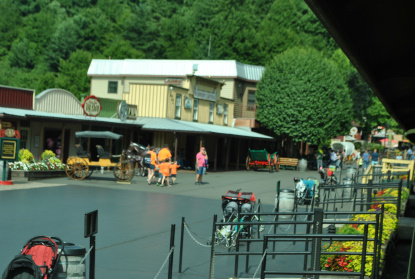
The station area.
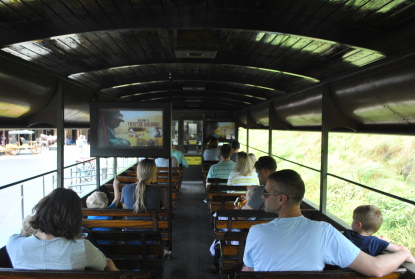
Interior of Car 16.
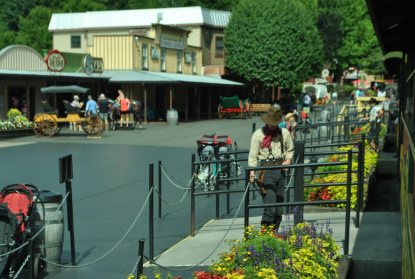
The cowboys are actors.
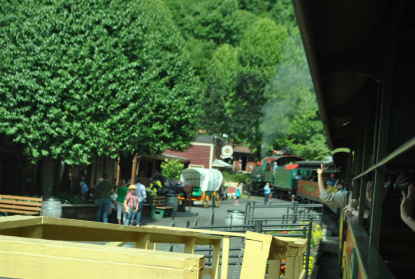
With a toot of the whistle and ringing of the bells, we started to roll down the tracks.
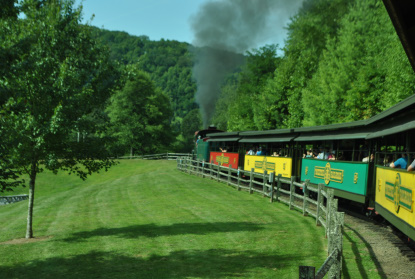
Rounding the first curve.
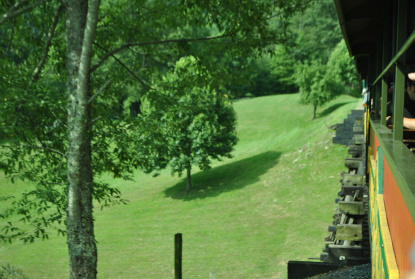
Crossing the large trestle bridge.
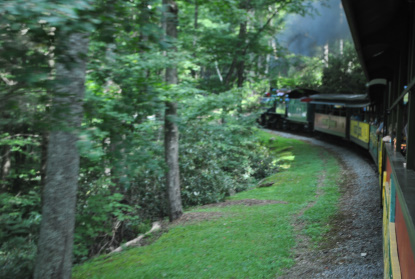
A left-hand curve.
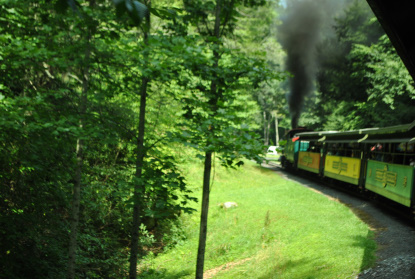
Photographing the steam engine was not too easy.
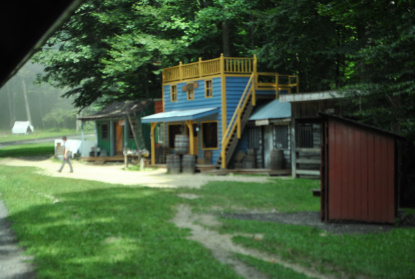
The first stop on the Wild West Show where the cowboys met the outlaw. We then arrived at an Army fort with cowboys, an Army soldier, the outlaw and Indians all performing.
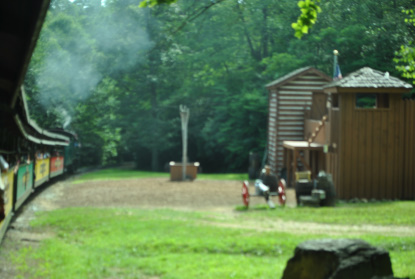
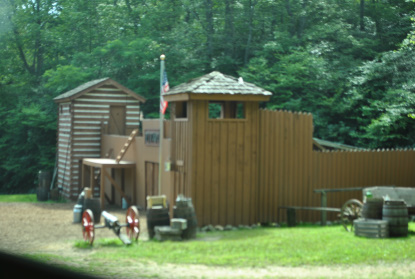
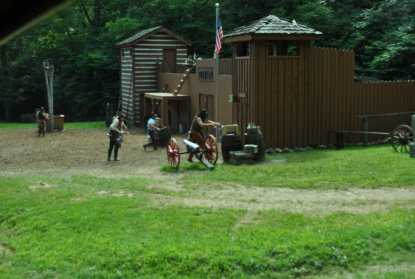
Scenes from the Fort Show. We then returned to the boarding area.
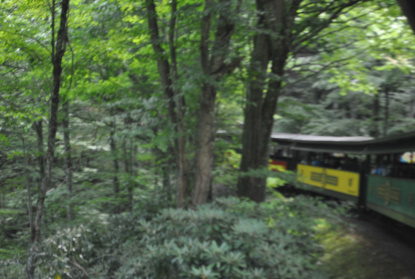
Rounding a curve with the steam engine hidden by the trees.
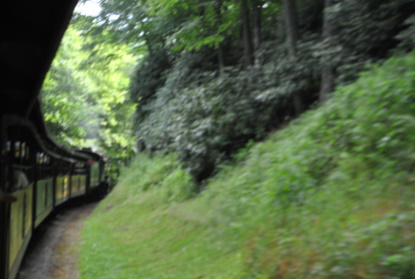
Entering a deep rock cut.
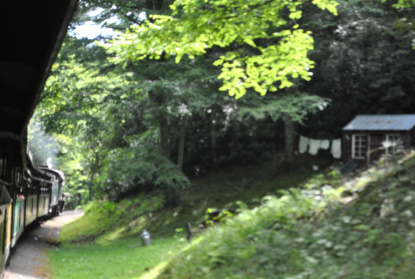
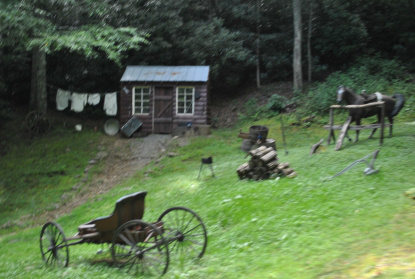
A miner's cabin.
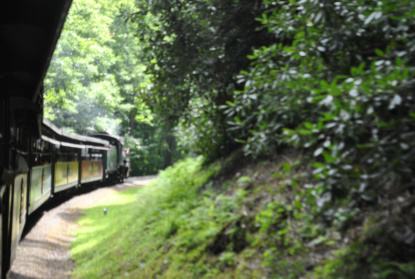
An open curve.
Rounding another curve to reach the mine.
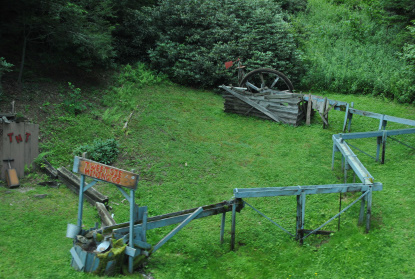
The water wheel and sluice.
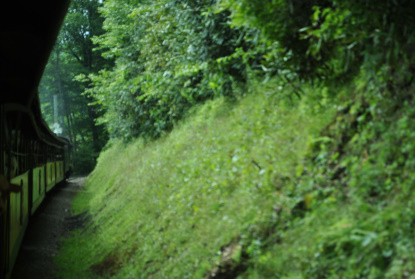
A final curve before we were back where we started and I thanked our conductor.
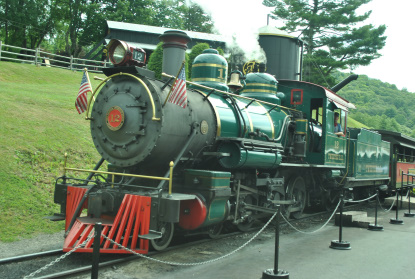
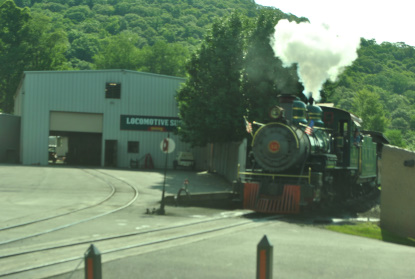
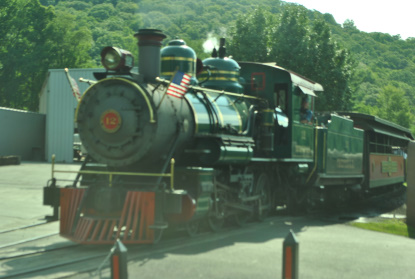
Tweetsie Railroad 4-6-0 12, ex. Robbins Lumber Company 12 1955, exx. Paul Hill, Gratton Price et al (Shenandoah Central 12) 1952, nee East Tennessee and Western North Carolina 12, built by Baldwin in 1917.
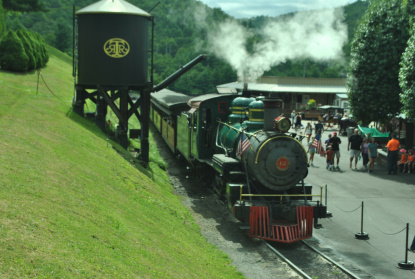
The view from the platform, a location that David suggested. We then we set up on a porch out of the sun to watch the train leave.
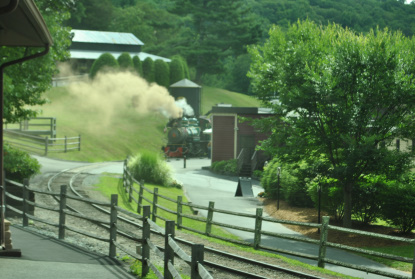
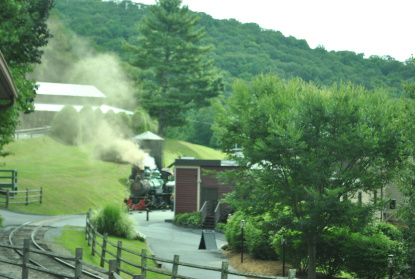
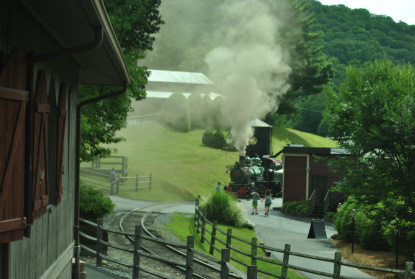
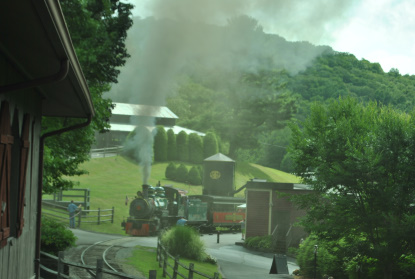
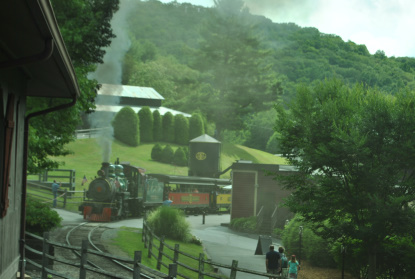
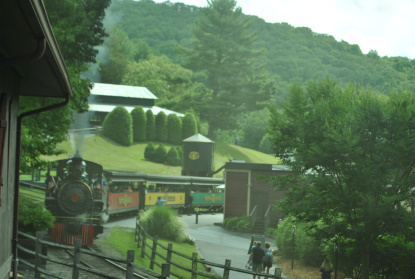
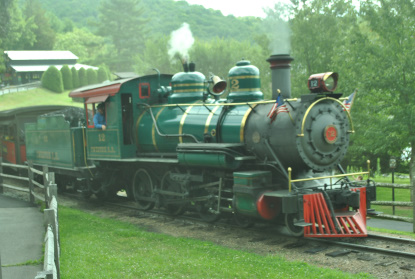
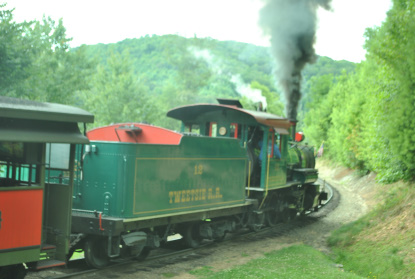
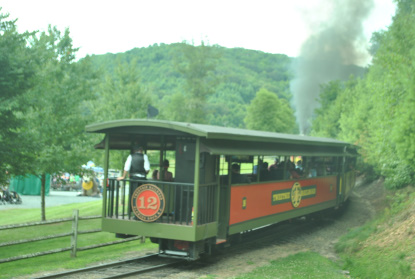
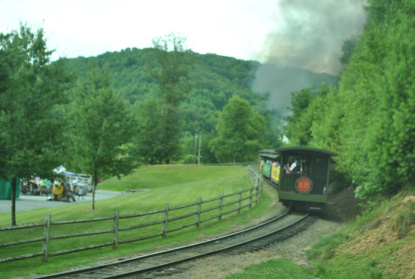
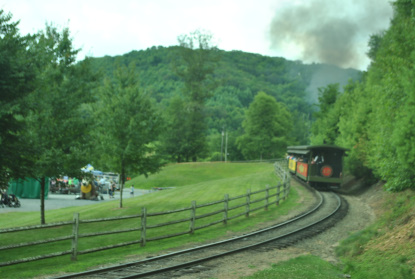
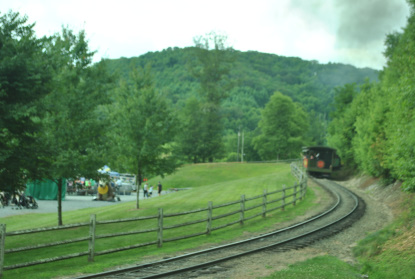
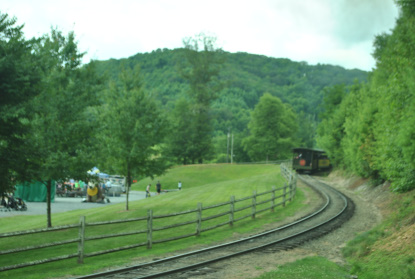
Tweetsie Railroad 12 departing the station area on its journey.
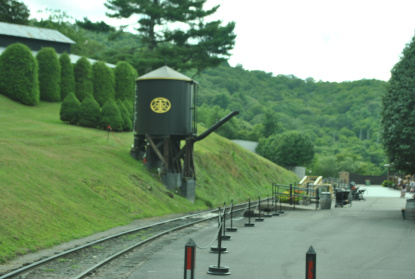
The water tower.
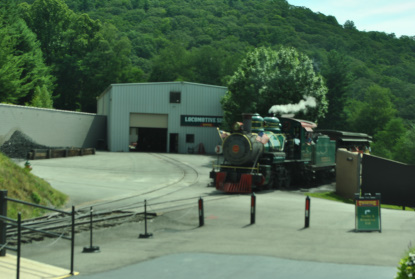
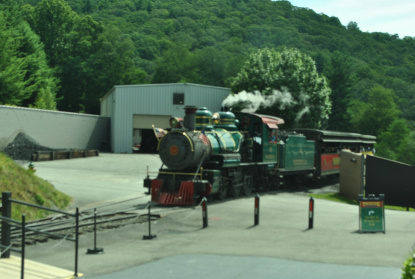
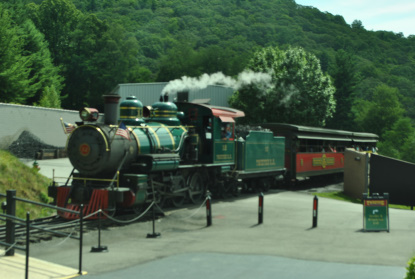
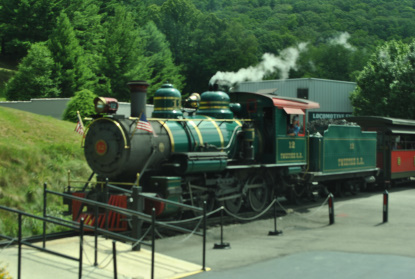
Returning to the boarding area. At this point we left the park but David drove Robin and I over to a vantage point to catch the train crossing the high trestle.
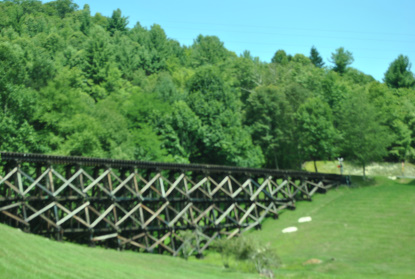
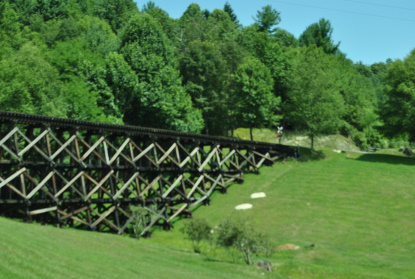
Our photo location.
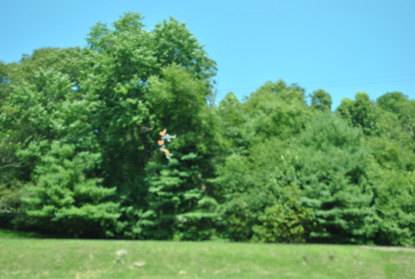
Zip line riders who are not part of the park.
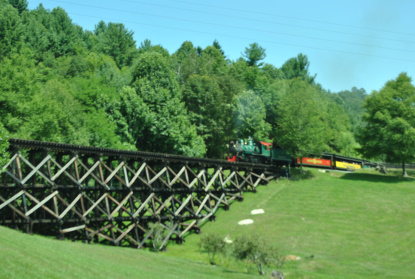
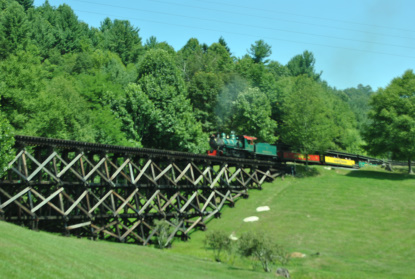
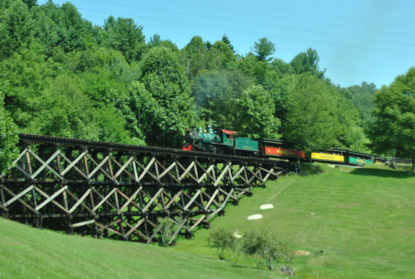
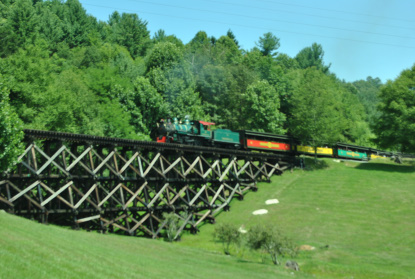
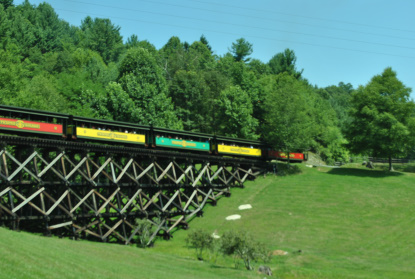
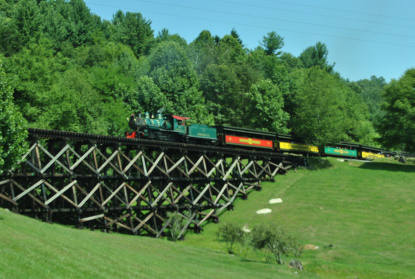
The Tweetsie Railroad train on the high trestle. Next David would follow us to Newton, North Carolina.
| RETURN TO THE MAIN PAGE |