




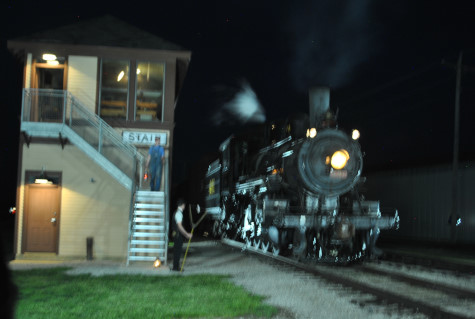
Southern Rail Production was scheduled to operate a photo charter with Southern Railway 2-8-0 401 at the Monticello Railway Museum. Since it was the same organization which had done the charter in Knoxville, Tennessee the year before, I jumped on the opportunity. I would have to first get to Monticello, then the following day go to Homewood and the Fox River Trolley Museum, which I arranged to be able to see all their equipment.
I arose at 4:00 AM and prepared for my trip then ate breakfast before checked the Internet and was then ready for Super Shuttle to arrive at 4:48 AM. They arrived two minutes early and I was their last stop then within ten minutes, I was on my way to security and being TSA Pre-Check, zipped through security and waited for the first of two flights to Chicago.
Southwest Airlines Flight 915 5/17/2018On this flight I just read my Jethro Tull "Heavy Horse New Shoes Edition" book which took me to Denver.
Southwest Airlines Flight 807 5/17/2018I finished reading the book and did my Sudoku puzzles then deplaned at Midway and took the shuttle to the Rental Car Center where I received a Nissan Sentra. I drove slowly through traffic down Illinois 50 to US 30 then made my way onto Interstate 57, stopping at a KFC in Manteno and ate as I drove south. At Champaign, I took Interstate 74 twenty miles to Monticello and checked into the Best Western there, receiving a very nice gift basket from them. After storing my luggage in the room, I drove the short distance to the Monticello Railway Museum.
Monticello Railway Museum HistoryThe Monticello Railway Museum is a not-for-profit educational organization founded in 1966 as "SPUR"; Society for the Perpetuation of Unretired Railfans. SPUR's goal at that time was to maintain and operate steam powered passenger train excursions. In 1969 the name was changed to the Monticello & Sangamon Valley Railroad Historical Society, Inc., and then, in 1982, the name was again changed to Monticello Railway Museum, which stands to this day.
The origins of the Monticello Railway Museum can be traced back February 1966, when the Chicago, Burlington and Quincy operated its last steam excursion out of St. Louis, Missouri. On board that trip were three steam-loving students from Illinois Western University in Bloomington, Illinois -- Ted Lemen, Bill Gillfillan and John Morris -- who were devastated to learn that the end of the steam program was coming. They decided that something needed to be done to save the program. During the trip, the three students walked up and down the train recruiting people to write to the CB&Q in hopes that they would change their mind and keep the program running.
By the end of the trip, 110 passengers had signed up promising to write the railroad. In addition, the three students had also collected 50 cents from each person, and used the $55 to charter the Society for the Perpetuation of Unretired Railfans (SPUR), with a mission of saving the CB&Q's steam program. Unfortunately, the efforts of SPUR to save the program ultimately failed, and the last CB&Q steam train ran in June 1966. Soon after, the group began to set their sights on a new project: owning their own steam locomotive and running their own excursions. SPUR began looking for a good place to run a steam train, and eventually chose a lightly-used branch line of the Illinois Central Railroad that ran between Le Roy and Sabina, Illinois in rural McLean County. However, upon discussing the plan with the Illinois Central, it was determined that the IC's requirements for running steam excursions on their property were too expensive and complicated.
After the plan to run on the IC was abandoned, the Illinois Pioneer Heritage Center in Monticello contacted SPUR and encouraged them to have their operation in Monticello. SPUR discovered that Monticello would be a great spot for their operation, as several miles of abandoned right-of-way from the Illinois Terminal interurban railway were available for purchase. Around this time, SPUR purchased their first steam locomotive, a tiny 0-4-0 switch engine, No. 1, that worked for many years at a quarry in Montezuma, Indiana. The engine was moved to Monticello in November 1966 and placed on a small section of track that SPUR members had constructed in the Illinois Pioneer Heritage Center's parking lot. Members quickly got to work restoring it to operating condition.
Over the next two years, more equipment was obtained by the museum including some former Wabash passenger cars. In 1967, SPUR purchased their second steam locomotive, former Southern Railway 2-8-0 No. 401, from a limestone quarry in Margerum, Alabama. In early 1969, efforts to acquire the Illinois Terminal right-of-way went into full swing, and in April of that year, SPUR renamed itself to the Monticello & Sangamon Valley Railway Historical Society. A few months later, a third steam locomotive, former Republic Steel 0-6-0 No. 191, was purchased. The acquisition of the abandoned Illinois Terminal right of way was completed in 1970, and efforts to rebuild the track began immediately. The little 0-4-0 that was kept in the Illinois Pioneer Heritage Center's lot was trucked to the new tracks, and ran for the first time on October 13, 1970.
Over the next couple of years, the M&SV continued to expand, acquiring more and more equipment for their collection and upgrading their tracks on the former IT right-of-way. A portion of a popcorn field adjacent to the museum's tracks was purchased for use as a yard to store the growing equipment collection. Today, this site is known as Camp Creek Yard and is home to the museum's main yard, restoration facilities and locomotive shed. While the museum's tracks were not connected to the national rail network, delivering equipment was relatively easy, as the Illinois Central operated a branch line that ran less than 100 feet west of the museum's track. New equipment arrivals to the museum would be brought in by the IC and "straight-railed" over to the museum's line, meaning that the IC's track would be dismantled, rebuilt to connect to the museum's, then disassembled again after the equipment had been delivered and returned to its original state.
Prior to 1972, the M&SV only operated trains for its members. This changed on Memorial Day of that year when steam locomotive 1 operated the first public excursion over the group's entire railroad. Locomotive 191 arrived in Monticello later that year and was operational by October 1972. Work continued on expanding the line north towards the village of White Heath. By 1980, two-and-a-half miles of track had been laid on the former Illinois Terminal right-of-way. Around the same time, the former Illinois Central depot from nearby DeLand was relocated to the M&SV's grounds and turned into a gift shop and place to purchase train tickets.
In 1982, the M&SV renamed themselves once again to the present-day Monticello Railway Museum. The museum continued to expand, and in 1987, MRM acquired 7.5 miles of the Illinois Central line that paralleled their original track. This acquisition allowed museum trains to reach downtown Monticello, which greatly increased the number of visitors and made accessing the museum easier as passengers could now board trains downtown and take them to the main museum site. A few months later, the former Wabash depot in downtown Monticello was relocated to the museum's Illinois Central tracks and today serves as MRM's Monticello depot. While the museum's original line on the Illinois Terminal right-of-way remains in place, trains normally traverse the former Illinois Central line to reach downtown Monticello.
Since then, the Monticello Railway Museum has grown to be one of the largest railroad museums in the area, and currently has over 100 pieces of historic railroad equipment in its collection. Steam locomotives No. 1 and 191 last operated in the 1980s before being placed on static display, but Southern No. 401 was returned to service in 2010 and is the pride and joy of the museum.
In recent years, the museum has been taking steps to make its operation even better. A historic locomotive turntable has been acquired along with several new locomotives, cars and cabooses. Other big plans are in the works to make the museum more exciting than ever. We hope that you will come join us to share our passion for all things trains.
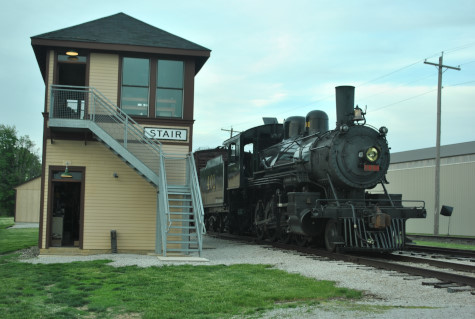
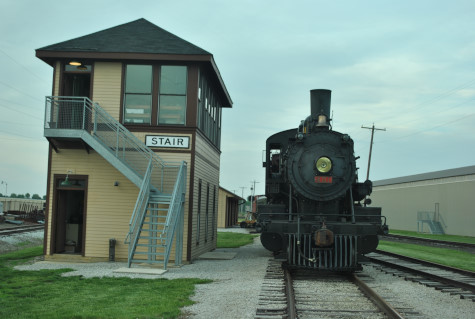
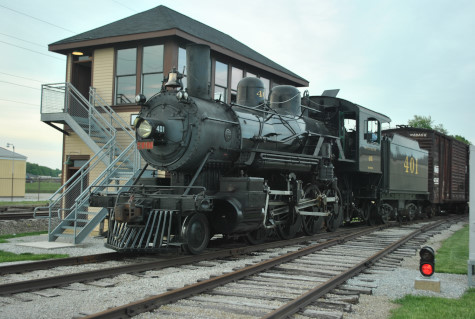
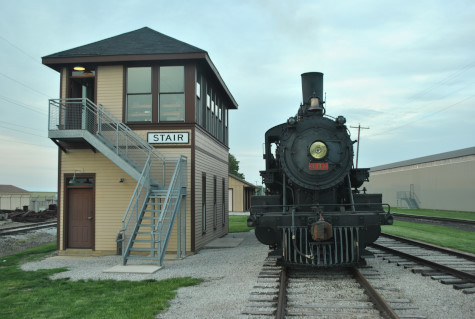
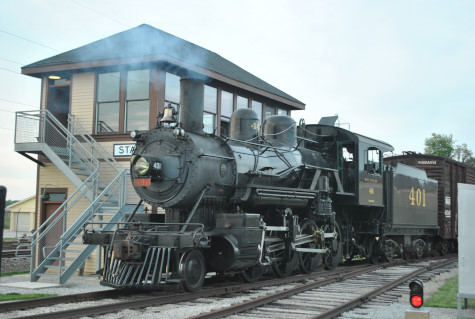
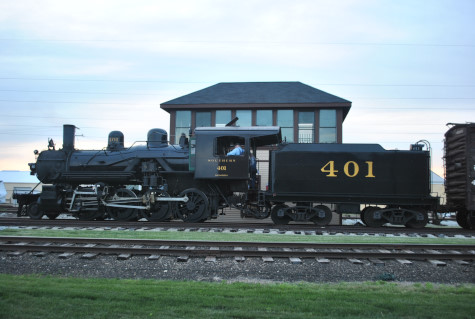
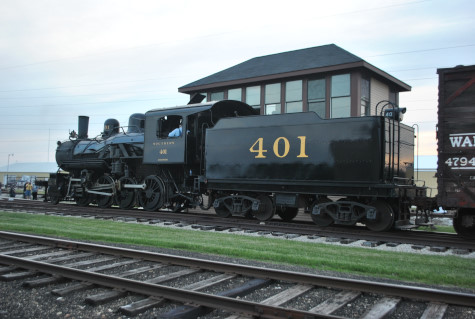
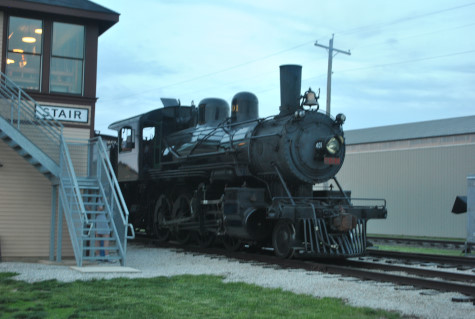
Southern Railway 2-8-0 401 built by Baldwin Locomotive Works in December 1907 and was at the time a larger locomotive, built with simplicity in mind. This locomotive was purchased by the museum in 1967 from Alabama Asphaltic Limestone, in Margerum, Alabama. It was then shipped on a flat car to Decatur, Illinois, arriving there in January 1968. It was unloaded and stored at Decatur until October 1971, when it and 12 other pieces of equipment were moved by rail to the museum site. It was towed on its own wheels from Decatur to Monticello in 1971. From 1971 to 1995, the locomotive was on display in our collection of equipment, with occasional work being done to stabilize and prevent further deterioration to the locomotive.
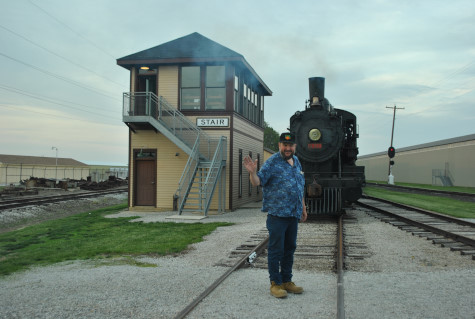
My good friend Steve Barry, editor of Railfan and Railroad Magazine, was also at this event. I then went inside the car barn.
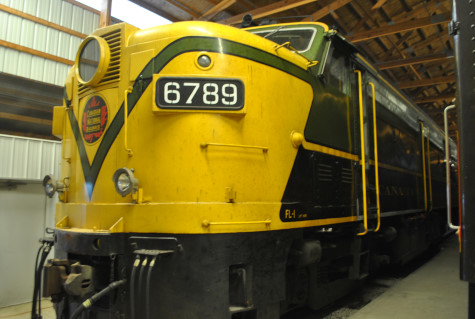
Canadian National FPA-4 6789 built by Montreal Locomotive Works in 1959. It spent its entire life pulling passenger trains through Canada first for Canadian National Railway, and then for VIA Rail. It was retired in 1989 and acquired in 1994 by a private owner. It is regularly used to haul the museum's passenger trains.
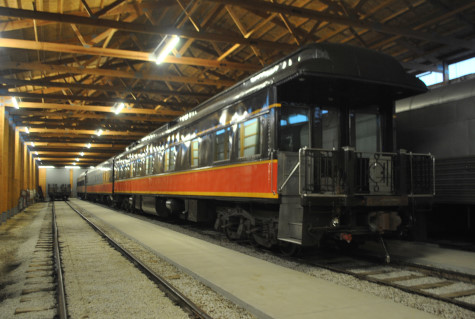
Illinois Central office car 7, built by Pullman in 1917 as Illinois Central office-observation car 17 and re-numbered in 1940. It was then sold to Chicago Madison & Northern 7 "Doonin". Later, it was sold as Thompson Farms Company 7. This car is privately owned.
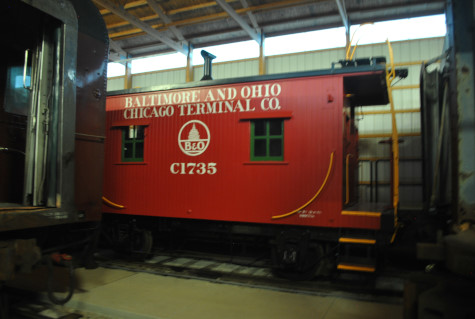
Baltimore & Ohio wooden bobber caboose 1735, built by the railroad in 1910. It is known as a bobber caboose for its light-weight two-axle design. These cars were also typically used in yard transfer service.
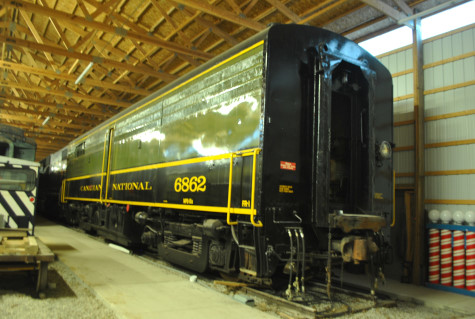
Canadian National FPB-4 6862 built by Montreal Locomotive Works in 1958. It is similar to the 6789, except that it does not have a cab, making it a "B" or Booster unit. The "B" units operate with a standard locomotive equipped with a cab that can control both locomotives. It spent its life pulling passenger trains both for the CN as well as VIA Rail Canada.
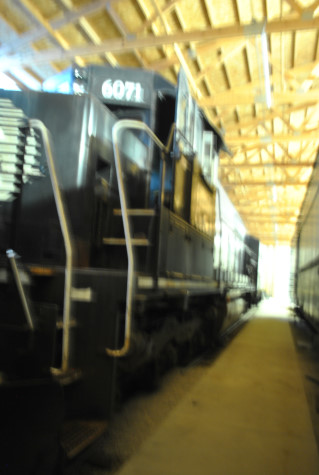
Illinois Central SD40 6071, built by General Motors Electro-Motive Diesel Division in 1964 and was the first SD40 built, constructed on the frame of an SD35. It operated as a test bed for EMD's then-new 645 power plant, before being purchased by the Gulf, Mobile and Ohio. It spent its career plying the rails of both the GM&O, then the Illinois Central Gulf, before being donated to the museum by Canadian National in July 2009.
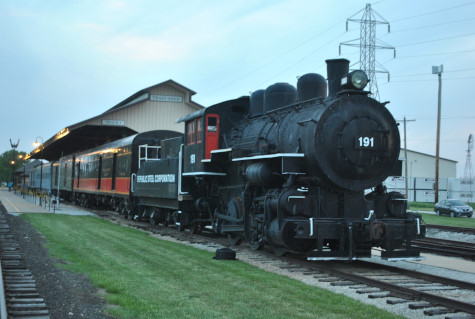
Republic Steel 0-6-0 191, built by American Locomotive Company in 1916 as Central Steel Company (later Republic Steel) 3 in Massilion, Ohio. During its fifty years, it was re-numbered 191 then was sold to the dealer Preston Duffy & Son in Columbus, Ohio, then to J. David Conrad in 1969 and finally, to the museum that same year. 191 arrived at Monticello in 1971 and, after receiving an overhaul, it operated at the museum from October 1972 until 1987.
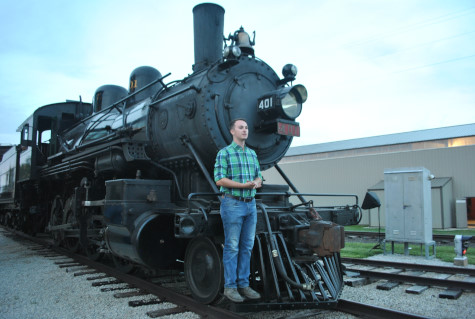
Our host, Joshua Scott, reviewed the safety rules including the time to meet in the morning. He runs very well-organized steam charters.
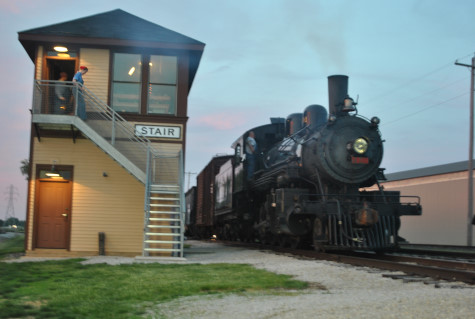
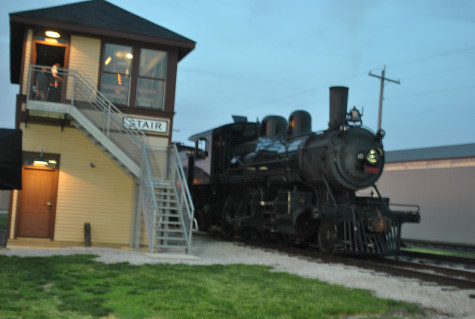
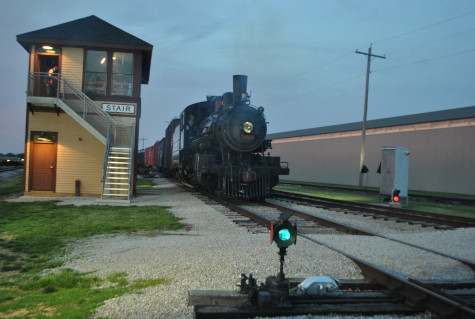
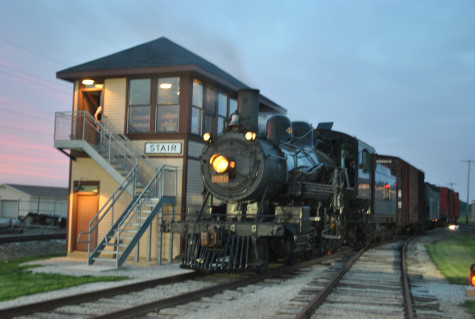
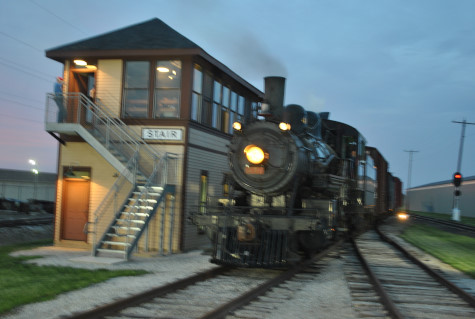
Waiting on the darkness with Southern Railway 401 and several friends here tonight.
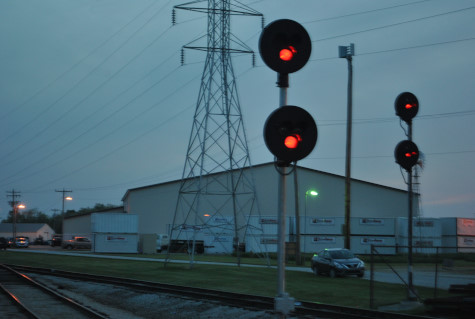
The signals added to the atmosphere.
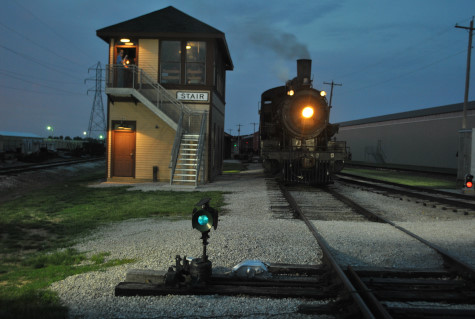
I used this dwarf switch light to my advantage.
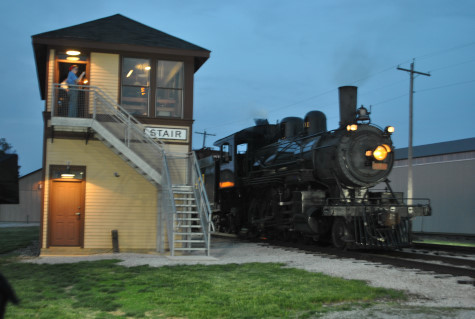
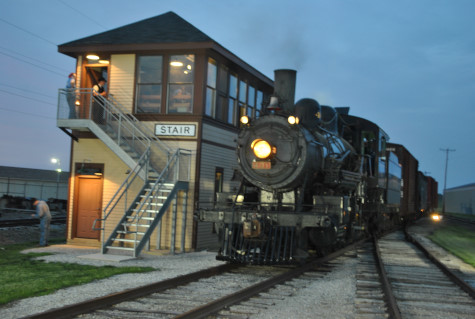
Still waiting on darkness.
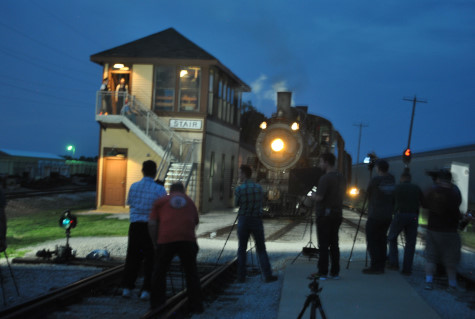
A photo line formed.
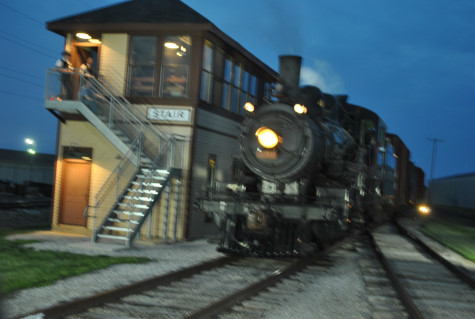
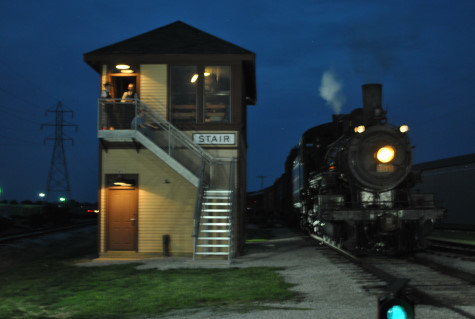
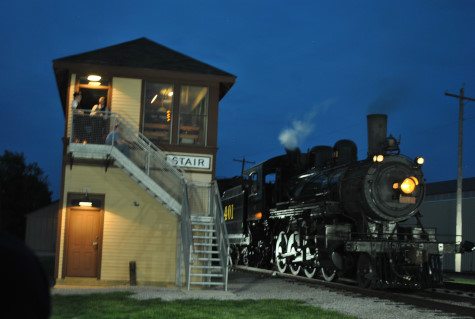
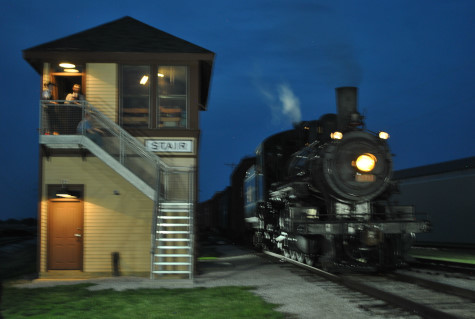
It was almost dark.
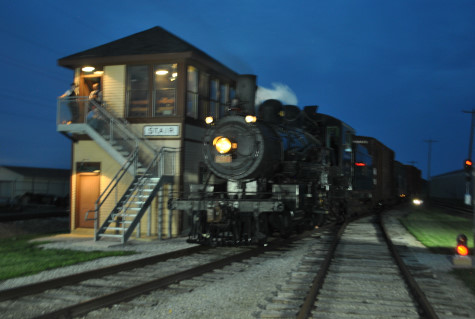
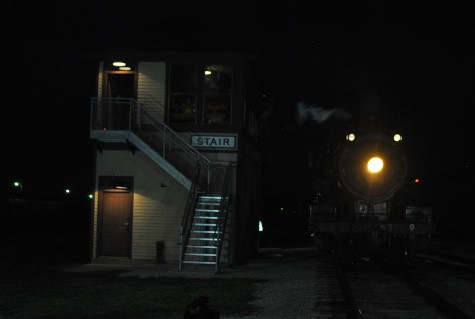
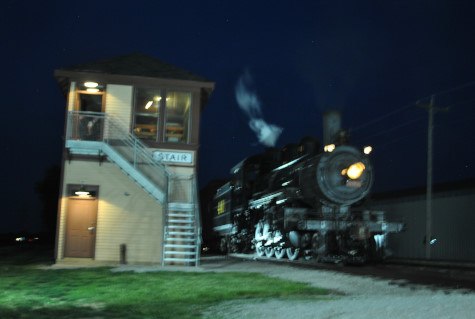
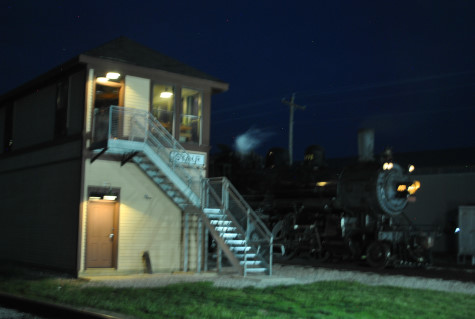
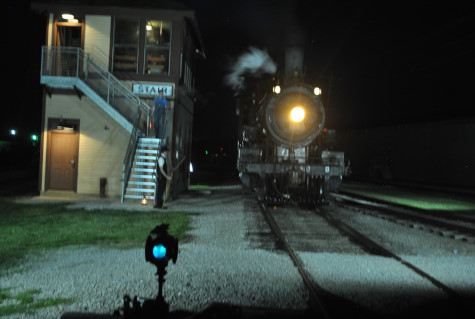
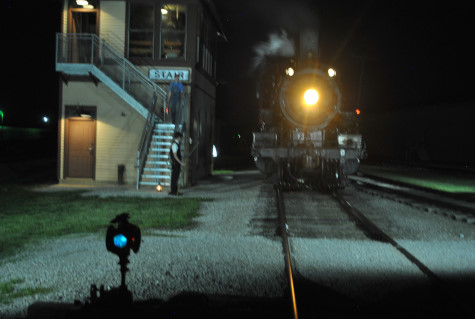
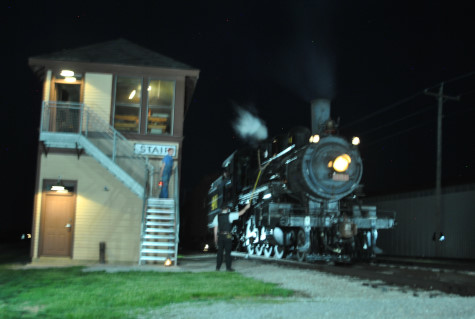
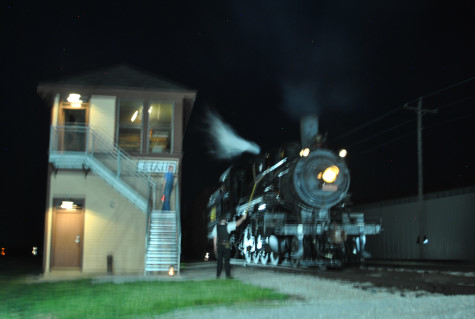
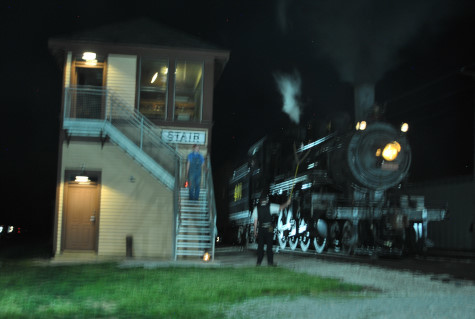
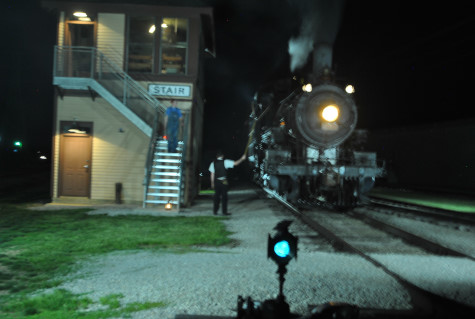
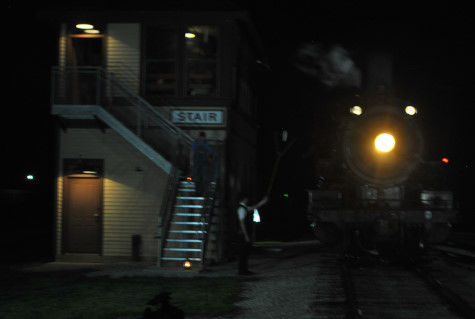
This is how a night photo session should be, with actors in period costumes using props; a fine job by all. That ended the evening session and I returned to the Best Western, watched the Tampa Bay Lightning beat the Washington Capitals then called it a night.
| RETURN TO THE MAIN PAGE |