




Robin Bowers and I left Durbin, West Virginia after a wonderful ride on the Durbin Rocket and drove to White Sulphur Springs, stopping at Hardee's for lunch. We then entered Interstate 64, taking that to US 219 South to Ronceverte, French for "Bramble Green", which is the Gallic equivalent for "Greenbrier".
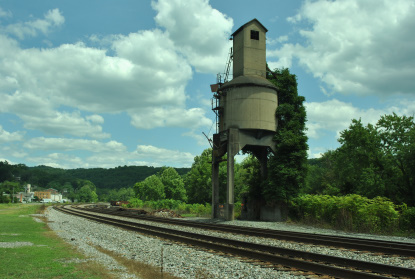
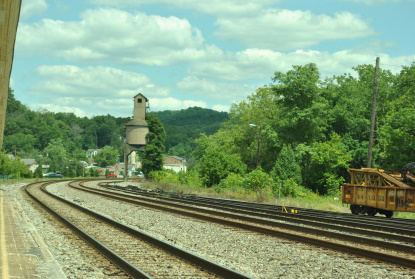
Chesapeake and Ohio coaling tower built in 1935.
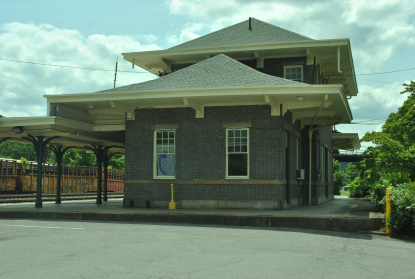
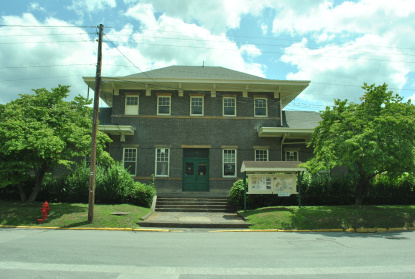
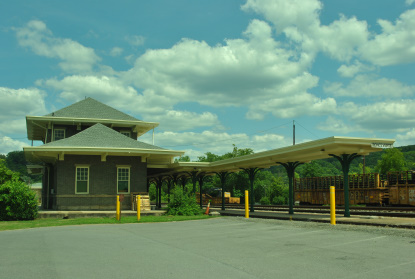
Chesapeake and Ohio Ronceverte station built in 1915 which is part of the Ronceverte Historic District. The depot stopped serving to passengers when Amtrak started operation on May 1, 1971, and discontinued services to the station, although the line still has the Cardinal using the route. Currently the depot serves as an office for CSX, the latter of which is restoring the station at the cost of $500,000.
Ronceverte was welcomed by railroad services on January 28, 1873, when the C&O Main Line between White Sulphur Springs and Huntington was completed. During the early 20th Century, Ronceverte became an important commercial center in the Greenbrier Valley. This led to a growth in population in the town along with businesses. The first depot was built in 1891, with 12,518 passengers being ticketed through the station along with 27,870 tons of freight being shipped through the station in the 1890's. In 1899, the C&O built a branch line from Ronceverte up to Cass and Durbin for use in the logging industry up in these towns. In 1906, the station had 42,780 passengers ticketing through the station and billed out 37,927 tons of freight.
Due to the growth of ridership at Ronceverte, the 1891 depot was running near capacity and a new depot was needed soon. Thus, the C&O presented blueprints to the town on May 2, 1910 for a new depot. The council appointed Ronceverte Mayor J.A. Jackson, S.L. Jackson and Powhatan Alexander "P.A." George as a committee to assist with this project. A new location was proposed for the use of 10 feet of Railroad Avenue north side between Pine and Chestnut Street for depot purposes and new passenger station. On June 10, 1913, the city council authorized the mayor and city clerk to execute contracts in conformity there with, when the C&O Railway Company should agree to act as agent for the city of Ronceverte in constructing the two railroad bridges, and should further state when and where the new passenger station should be erected. Original plans were for a wooden structure, but plans changed for the station to be built in brick craftsman style. With the plans finalized, the current American Craftsman style station opened in 1915, with more than 65,000 passengers passing through its doors in the first year it was built.
There was a total of 12 trains serving the station, that being six through and local trains on the main line and four trains on the Greenbrier Branch. In the 1930's, passenger trains on the Greenbrier Branch were replaced by gasoline-powered Doodlebugs which lasted until 1958. Although the George Washington did not stop at Ronceverte when it was inaugurated in 1932, it did stop at Ronceverte in its final years after the Fast Flying Virginian was discontinued in 1968.
By 1944, only ten trains were serving the station compared to 12 before 1930. This dropped to four trains by 1958 after passenger service on the Greenbrier Branch was discontinued. In 1962, two of the four trains were discontinued, leaving only the FFV serving Ronceverte until was discontinued in 1968 and the George Washington now stopping at Ronceverte. The final blow came on May 1, 1971 when Amtrak took over all passenger operations in the United States and chose not to serve Ronceverte, despite retaining the George Washington and merging it with the James Whitcomb Riley. The George Washington itself lost its name in 1974 after merging with the James Whitcomb Riley. The Riley itself would become the Cardinal in 1977 which still uses the route to this day, although not stopping at Ronceverte. The nearest passenger stations that are being served on the C&O Main by the Cardinal include Alderson, which is 13 miles away, and White Sulphur Springs which is 13.5 miles away.
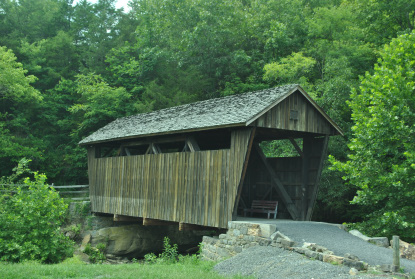
Along US 219 is the 50 foot long Indian Creek Covered Bridge spanning Indian Creek. Ray and Oscar Weikel were 16 and 18 when they built the bridge in 1898. In 1930, when US 219 was completed, the bridge was no longer needed and fell out of common use. Restoration began in 1965 when it was leased to the Monroe County Historical Society. The bridge was restored by Hoke Brothers Construction in 2000.
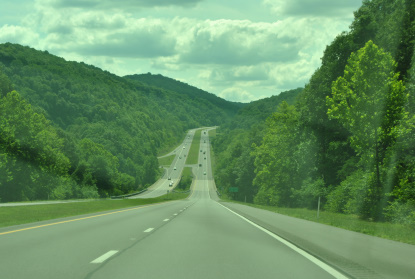
The scene ahead as we drove US 440 on our way to Princeton.
Princeton Railroad Museum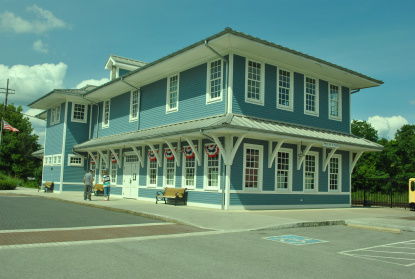
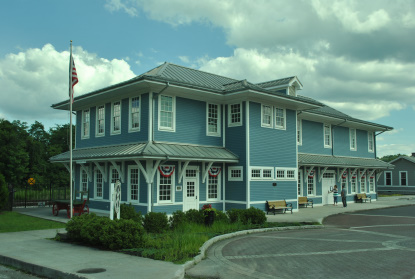
This is a replica station built in 2006. At the founding of Mercer County on March 17, 1837, a small settlement was named Princeton. Mercer County was named for General Hugh Mercer, a Scottish physician, who fought in the Revolutionary War. He was a confidante of General George Washington and unfortunately, was killed in the Battle of Princeton, NJ. When the county was founded, it was felt that he could be further honoured by naming the county seat, Princeton. Now jump forward to the Civil War, when Princeton, a Confederate-leaning town, was burned by Confederate forces to stop the approaching Union forces from gaining shelter and supplies from the town. There were only forty lots platted at the time and all the house were burned, except the doctor's and the house of a lawyer that had been used as a Confederate hospital. Even the Courthouse was burned, although some of the records were saved by a black slave.
Sadly, Princeton was slow to recover, yet it was still the county seat, when a Circuit Judge rode into town to hold court. He had been a Confederate, but had changed to the Union side, when he saw the war going the other way. The residents of Princeton spurned him. Angered by his treatment, he gathered all the records and moved to Athens, a settlement about seven miles away, where the residents welcomed him. After that, the Sheriff, a resident of Princeton, stole the records in a midnight raid. The disagreement was taken to the new West Virginia legislature, who voted for Princeton. Several years later, another problem arose. Ten miles away, the Town of Bluefield, who was older and had a larger population than Princeton, decided they had a better right to be the county seat. The dispute was once again taken to the legislature, who decided that the citizens of Mercer County should vote on the location of the county seat.
The new Virginian Railroad, which had run its new track on the eastern edge of Princeton, decided to build a railroad station and a foundry here to build and repair its locomotives and other railroad cars. This brought a large influx of employees to reside in Princeton. When the county seat election was held, Princeton officials encouraged these railroad employees to vote for Princeton; thus, Princeton prevailed and the county seat has remained here to this day.
That Virginian Railroad station, which stood in this location and the foundry brought growth and prosperity to Princeton. The Princeton Railroad Museum is a recreation of that station, which was closed when the Virginian was bought out by the Norfolk and Western Railroad and the passenger station moved to Bluefield.
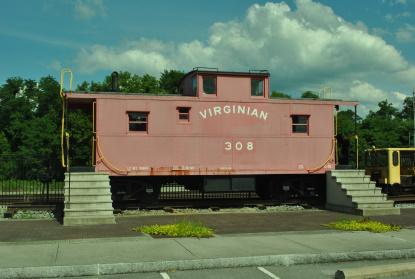
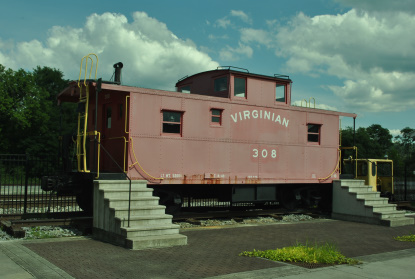
Virginian Railroad caboose 308, built by St. Louis Car Company in 1947. It was donated by Norfolk Southern in 1989 and dedicated in 1991 as a small railroad museum then in 2010, was brought to its home at the museum, renovated and opened to the public in 2011.
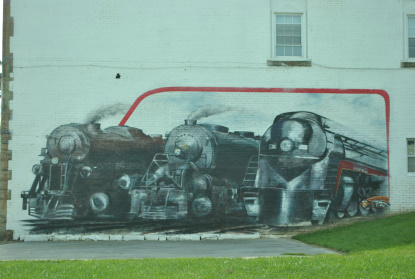
A mural of the Norfolk and Western's big three steam engines on a wall across from the station. Robin and I We went inside and introduced ourselves as being from Trainweb.com.
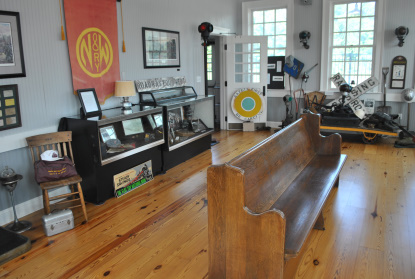
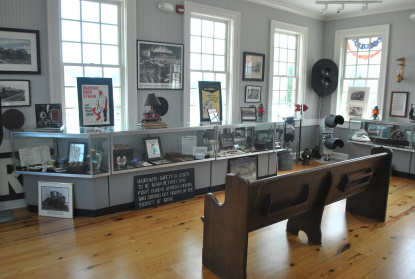
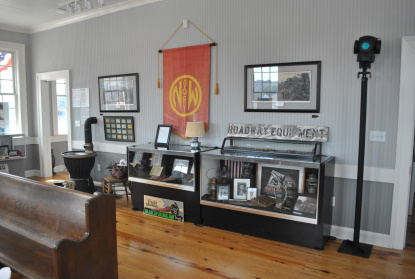
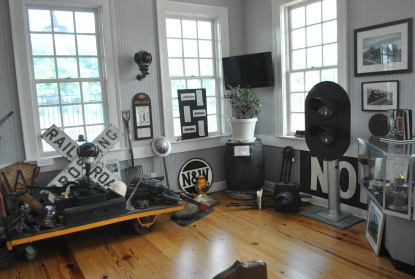
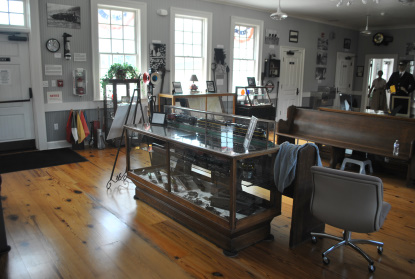
There are many displays of interest in the waiting room.
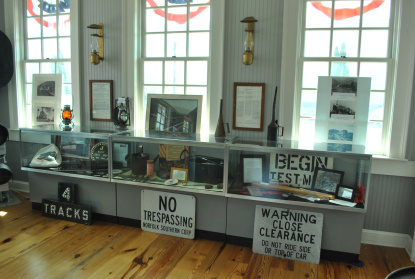
Norfolk and Western memorabilia and signs.
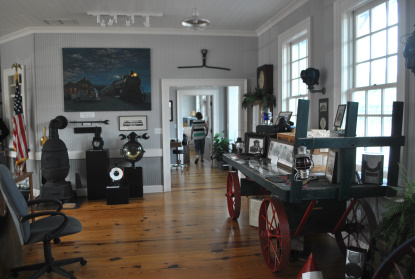
I entered the next room.
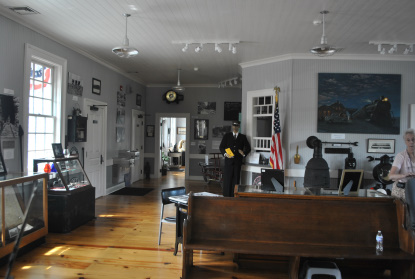
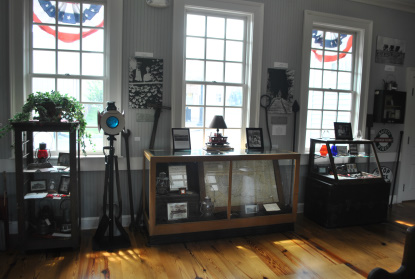
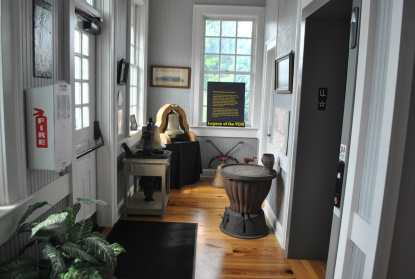
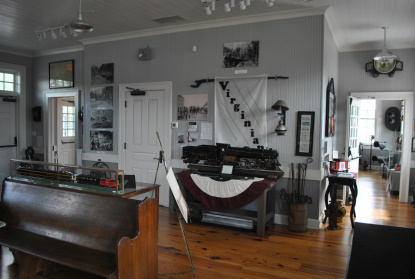
Norfolk and Western and Virginian Railway history abound here.
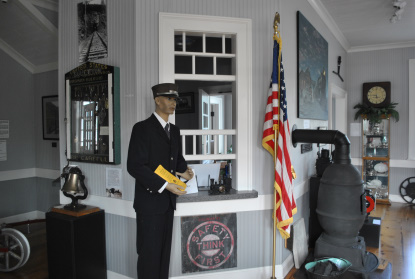
The ticket window.
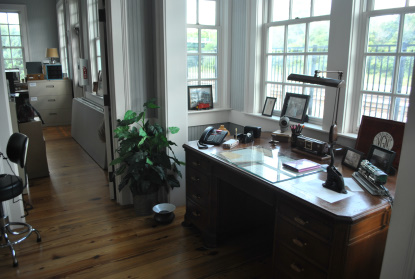
The station's bay window.
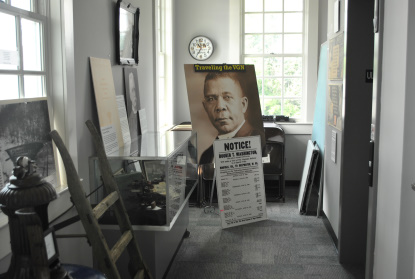
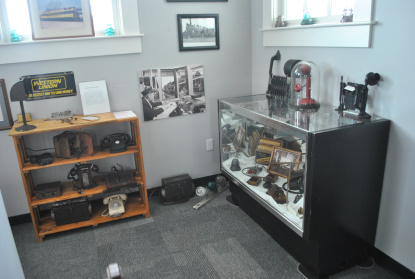
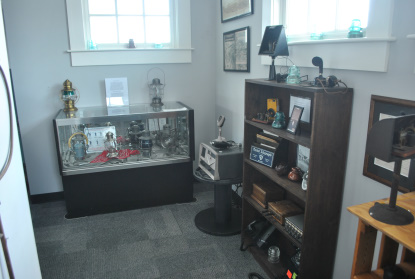
The remainder of the first floor displays.
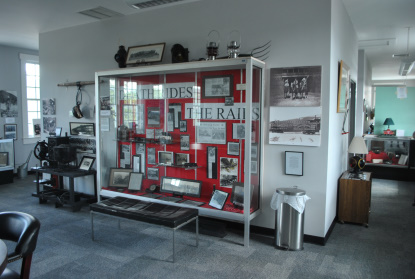
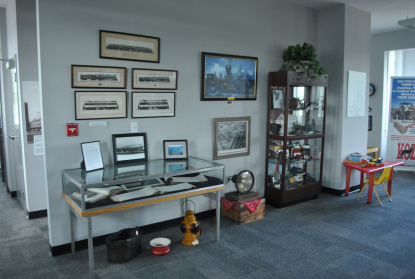
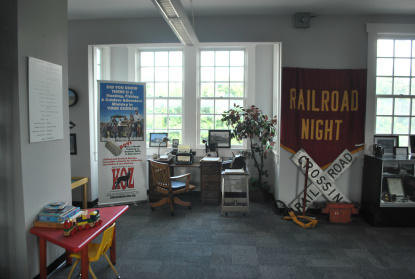
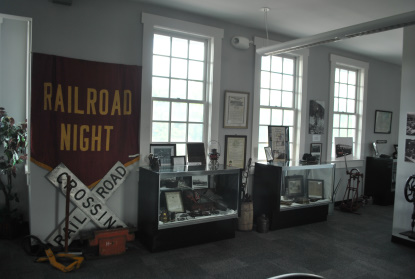
The first room on the second floor.
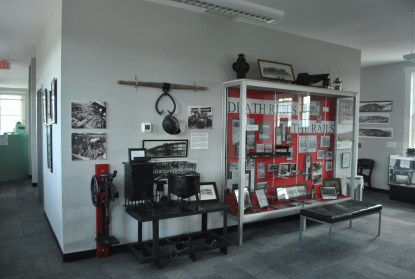
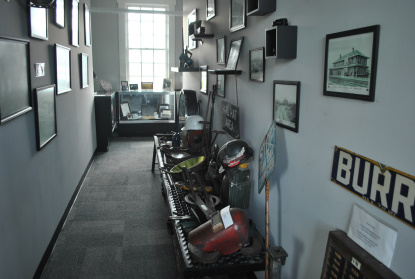
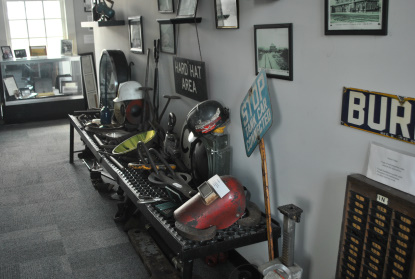
Railway artifacts and tools of the trade.
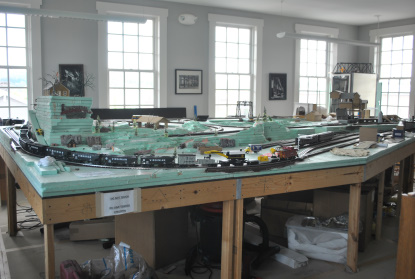
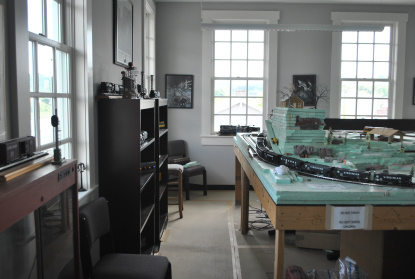
A model railroad under construction. Robin and I thanked our hosts then drove into Bluefield.
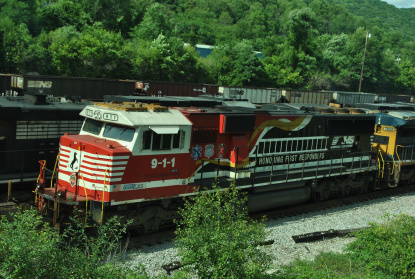
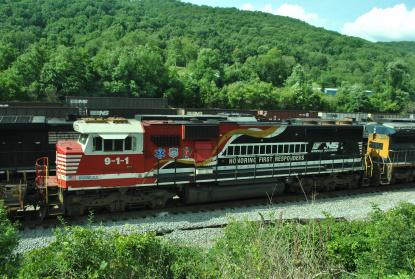
It was a great surprise to find Norfolk Southern SD60E 9-1-1, built by Electro-Motive Division in 1985, Honoring First Responders.
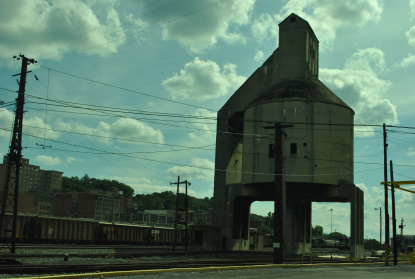
The Norfolk and Western coaling tower built in 1952. We stopped at Subway then decided to drive to Iager, so made our way west along US 54 and after passing the Elkhorn Inn, came upon a set of Norfolk Southern helpers returning west to help another train at Powhatan. We set up at a grade crossing at Kyla and it was here I somehow switched off the auto-focus, so my pictures did not turn out. As such, the ones following are Robin's photographs.
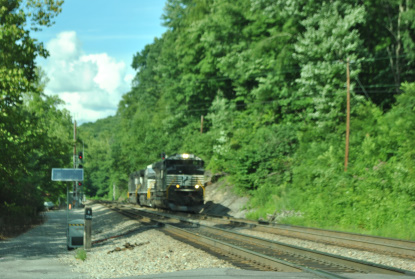
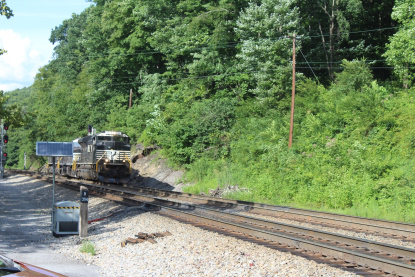
The Norfolk Southern helpers. We drove to Iager and when we turned around, saw smoke from an eastbound train and went to the Twin Tunnels at Kimball.
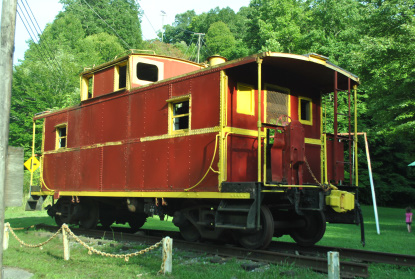
At the top of the hill between Iager and Welch was Norfolk and Western caboose 51841, built by St. Louis Car Company in 1948. We continued to Kimball and heard a train whistle from both ways down the tracks. The eastbound train started to rumble louder and then came into view.
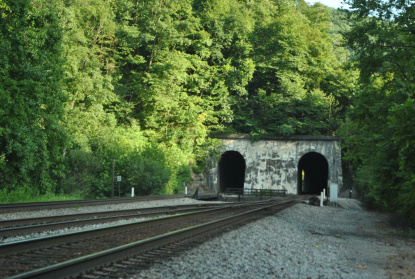
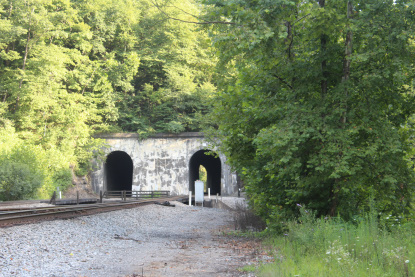
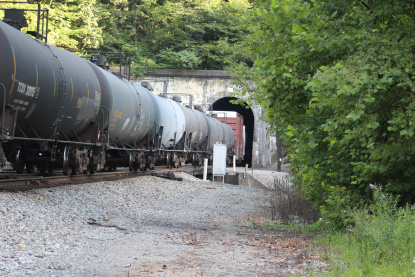
The Twin Tunnels near Kimball.
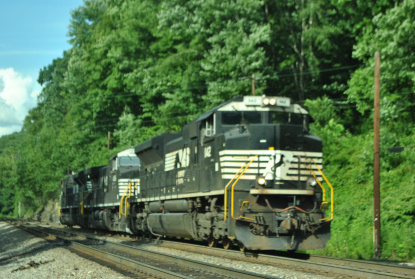
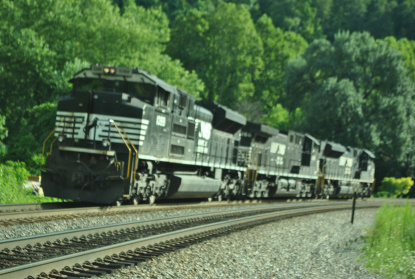
First, a light engine move.
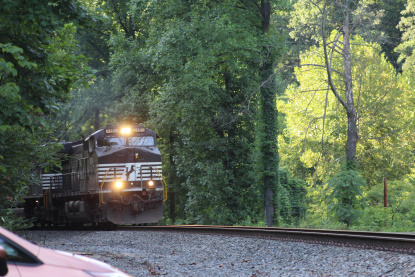
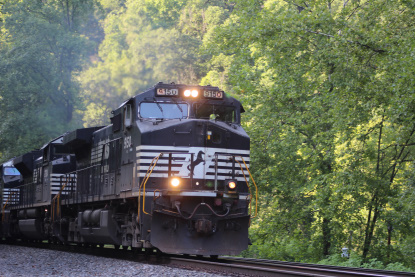
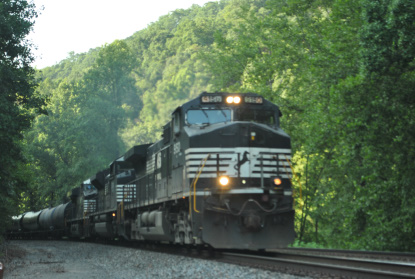
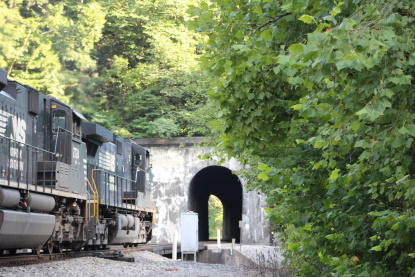
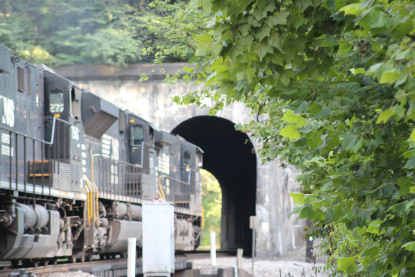
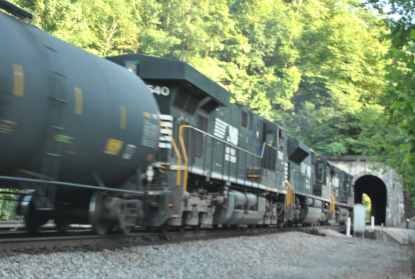
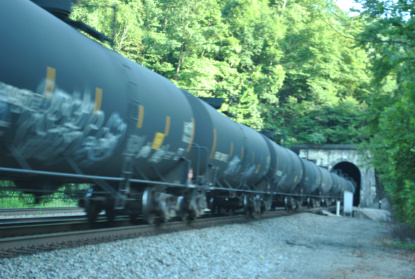
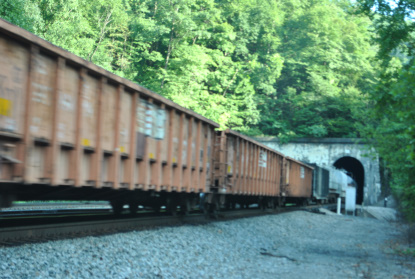
Norfolk Southern 9546 East.
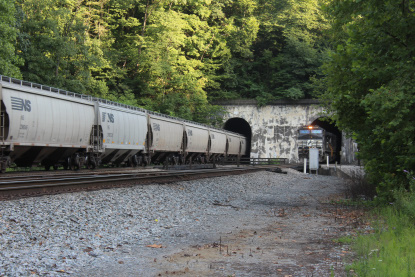
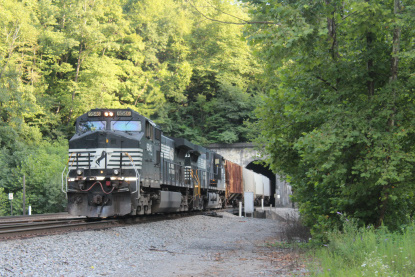
The westbound Norfolk Southern train came just as then eastbound had cleared.
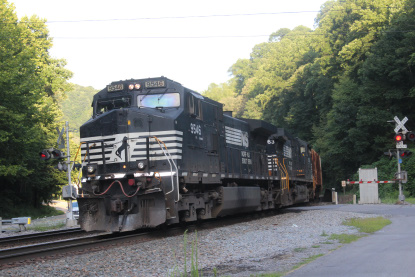
Norfolk Southern 9546 East at Eckman. We then headed to the Elkhorn Inn.
Elkhorn Inn History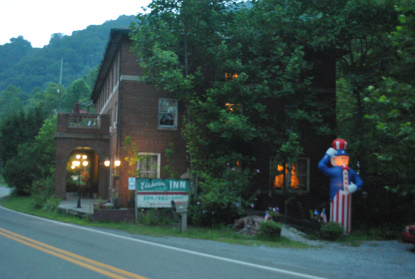
The historic "Coal Heritage Trail" building that is now the Elkhorn Inn was built by Empire Coal & Coke Company as their "Miner's Clubhouse" in 1922. It was designed by the renowned architect Alex B. Mahood. The brick and concrete building replaced two wooden buildings which had burned down and it survived the devastating floods of 2001 and 2002 which destroyed 30 houses next to the Inn and killed 8 people. Dan and Elisse bought and saved the building from demolition in 2002, Dan restored it and it opened as the Elkhorn Inn in May 2003.
Over the years, the building changed hands many times and was used for a variety of purposes; from many of our guests who lived or worked in this building throughout its history. In the 1940's, it was a rooming house for coal miners' families, it was privately owned in the 1950's, in 1957 it was the office and residence of mining company supervisor and his family and was later a State Police barracks. In the 1960's to 1970's, it was the offices of Hawley Coal, in 1988 it was Data Services, Inc., and in the 1990's, it was briefly owned by Billie Cherry.
Restoring, living in and maintaining this "Coal Heritage Trail" building is a wonderful, continuing adventure! HGTV's two programs which featured the hotel, "Building Character" and "ReZONED", highlighted some of the interesting architectural details Dan "uncovered" in the process of restoring this building, including the original tile floor in the two-tub bathroom, transom windows on guest room doors, the original hemlock banister and a pay-window where the miners went to get their pay. Built to withstand fire, the only wood in the building is the trim - all 66 original 1922 windows! In 2008, Dan Clark was awarded the Coal Heritage Trail Preservation Award for his restoration of the Elkhorn Inn, which is the only surviving historic building in the area.
The Inn's "Museum Room" has a growing collection of items from this building's past and our area's illustrious history in railroading and coal mining, including coal core samples, mine maps, scrip, photos, post cards, books, "Pocahontas" railroad china and menus, artwork and mining memorabilia.
Our StayWe arrived and upon checking in, I was greeted formally with "Mr. Guenzler" then we were shown to our Cats and Dogs Room with twin beds, the patio with deck chairs and a table. Robin had the great idea of a picnic on the deck, so we enjoyed our Subway meal with a pair of Norfolk Southern trains for dessert - dinner is no longer served at the hotel. It was a beautiful clear mountain evening. After dinner, I talked with the owner for a bit then worked on my travelogues.
The next morning, we reluctantly left and started the drive to the Tweetsie Railroad.
| RETURN TO THE MAIN PAGE |