




I drove Interstate 80 to Interstate 55 to US 30, then Illinois 31 to the Fox River Trolley Museum. I met the crews working at the locomotive, gave them my business card and was just told to be careful while walking around taking photographs.
Fox River Trolley MuseumThe Museum is located at 361 South LaFox Street in South Elgin, Illinois.
Early Passenger OperationsWhile a trolley ride is a new occurrence for many of the museum’s young riders, the Fox River Line itself is not new, dating back to 1896. At the turn of the century, this interurban line was part of the Elgin, Aurora and Southern Traction Company and ran about 40 miles along the Fox River from Carpentersville to Yorkville. It also included and was connected to the streetcar systems of Elgin and Aurora. In 1906. the EA&S itself became part of the high speed interurban, the Aurora, Elgin and Chicago Railroad. This line ran west from its connection with the Metropolitan West Side Elevated Railroad Company and had four branches with western terminals along the Fox River in the same towns that the Fox River Line served. Even though the two divisions were part of the same company from 1906 to 1919, they were always operated separately with different equipment, repair facilities and employees. In August of 1919, the AE&C went into receivership, both divisions emerging from bankruptcy in the early 1920’s. They were separated and renamed. The third rail division to Chicago (former AE&C) was renamed the Chicago, Aurora and Elgin Railroad (CA&E) and the Fox River Division was renamed the Aurora, Elgin and Fox River Electric Company (AE&FRE).
The AE&FRE on its own began again in 1924, acquired new one man cars, cut costs and modernized its track, signalling and operations. Business was good through most of the 1920’s but as more people purchased automobiles and the roads in Kane County were paved, ridership began to drop. First to go were some, then all of the streetcar routes in Elgin and Aurora with the last one being retired in 1934. All of these were torn up and replaced by company-owned bus routes with the interurban line between Aurora and Elgin (including our right-of-way) being the final one in March 1935.
The Freight-Only YearsAs you can see, not all of the track was torn up. A short 3.5 mile segment was retained from the interchange with the Illinois Central at Coleman north along present day Route 31 to the State Mental Hospital in Elgin. Two home- made flatcar motors were retained to handle the freight only business which was chiefly coal and other supplies for the hospital and a few other customers along the route. Carload freight tonnage was high, the overhead low and the AE&FRE even dieselized in 1946.
Things were going well for the freight operator until the Environmental Protection Agency (EPA) told the hospital in 1971 that they would have to stop using coal (from Southern Illinois) for its power plant because of pollution. This was the railroad’s last and only customer and the loss of it would force the AE&FRE out of the freight business.
Seeds of the Museum are PlantedThe Chicago, Aurora and Elgin Railway went out of business in 1961, but a small group of loyal railfans struggled to keep the memory of the line alive. Starting first as the Railway Investment Club in August 1959 and then incorporating as Railway Equipment Leasing and Investment Co. (RELIC) in September 1961 they began what would become the Fox River Trolley Museum. RELIC first acquired several CA&E cars saving them from scrapping. Next was finding a suitable place to store and someday run them. RELIC worked out an agreement with Bob DeYoung, the owner of the line to store their cars of his mainline and later operate them on weekends when there were no freight operations. Our present-day museum property was purchased from a family on the line and our substation was purchased from Commonwealth Edison and reassembled on our site.
The Museum OpensA new electric railroad literally had to be brought in and assembled. All this by a group many of whom had never worked a day in their life for an actual railroad. Finally, all was in place and the RELIC TROLLEY MUSEUM opened July 4, 1966! The first rides were 50¢ and only went about as far as the present day car barn which was as far as the trolley wire had been strung! Over the next few months the wire was extended to the present day southern end of the line, other cars acquired and ridership increased.
Since 2002, the museum has operated a heritage railroad over a four mile line along the banks of the scenic Fox River to the Jon J. Duerr (formerly Blackhawk) Forest Preserve. Visitors can board at the Castlemuir depot, on the museum grounds at the north end of the line in South Elgin, or at Blackhawk station, at the south end of the line, adjacent to the picnic grove of the Jon J. Duerr Forest Preserve. Blackhawk station is handicapped-accessible. The track leaves Castlemuir southbound and passes through Coleman, a former interchange with the Illinois Central Railroad. This is part of the last operating section of the interurban, closing in 1972. The track then continues south over a section closed in 1935 and then onto a new alignment that curves into the Forest Preserve.
My Visit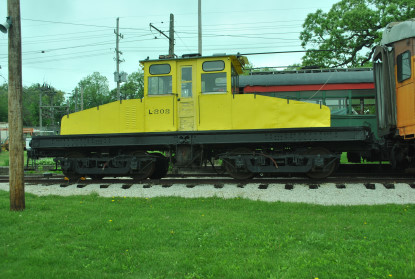
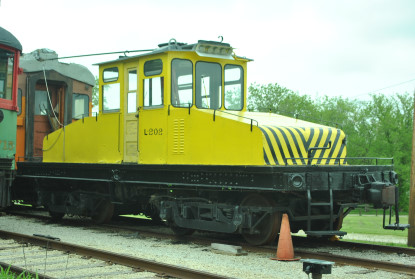
Chicago Transit Authority steel electric locomotive L-202 built by the Chicago City Railways in 1908 and rebuilt by the CTA in 1958. It was used in switching service at CTA shops and material handling yards.
During their lifetime the locomotives were re-assigned the numbers L-201 and L-202 by the Chicago Surface Lines, the company which grew out of the consolidation of the various individual streetcar operators in the city. In 1947, the CSL and the Chicago Rapid Transit were taken over by the newly-created Chicago Transit Authority. While modern PCC streetcars upgraded the streetcar lines, it became clear that trackless trolleys and propane-powered buses were the most economical way to operate surface transportation and line by line the carlines were converted.
The then relatively new PCC streetcars were taken out of service and shipped back to the St. Louis Car Company to be salvaged for parts to be applied to the new rapid transit cars they were constructing for CTA. L-202 shuttled the flat cars with these streetcars on them to the railroad for their journey to St. Louis for deconstruction. The last streetcar line was converted in April 1958, ending an era in Windy City urban transportation. At this point, it was decided to send L-202 to the CTA’s Skokie Shops for conversion to rapid transit standards for use at the rapid division’s material yard at 63rd Street where it obtained supplies like rails, ties and structural steel for the L by the railroad carload.
About the only things that remained original after the rebuilding was the frame and most likely the large old-fashioned K-14 controller. Power trucks were salvaged from recently scrapped wooden L cars 2863 and 2884. A totally new superstructure was fabricated upon which a single trolley pole was mounted to serve the interchange with the New York Central Railroad. It also had third rail shoes to access the yard trackage so equipped. There is a roster which states L-202 only weights 32 and half tons but this may be an error as the L car trucks are much heavier than the original the locomotive had in 1908 when it was reported to be 40 tons. Within a year L-202 was renumbered S-343 which fit into the L’s service car numbering system.
Our locomotive served a hard life at the 63rd Street yard, eventually having a ballast weight under one of it hoods knocked loose and sliding through the end of the hood. With final indignity of suffering some fire damage from a stack of burning bridge ties, it was declared out of service and the RELIC Trolley Museum was able to acquire it in 1979. Since it had standard MCB railroad couplers, it was shipped to the museum on its own wheels on the then still connected track the AE&FR had with the Illinois Central Railroad. Museum volunteers jacked the ballast weight back into position, straightened out the sheet metal hood, replaced the broken and heat damaged windows and repainted the little locomotive, deciding to return its fleet number to L-202. With the arrival of Illinois Central caboose 9648 in 1996, it was decided to pair it up with L-202 to provide “caboose trips” every Fall for museum visitors.
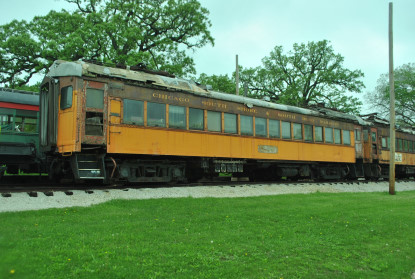
Chicago, South Shore and South Bend interurban coach 7, ex. private owner 7 2020-2022, exx. Fox River Trolley Museum 7 1988-2020, exxx. National Park Service 7 1984-1988, nee Chicago, South Shore and South Bend 7, built by Pullman in 1926. Since 2022, it is owned by the South Shore Line Museum Project in Michigan City, Indiana.
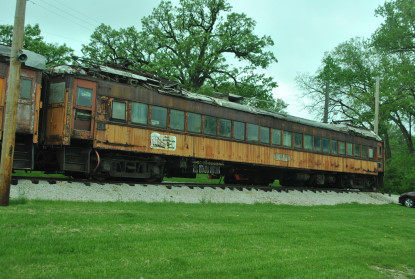
Chicago, South Shore and South Bend interurban car 14, built by Pullman in 1926. It was subsequently scrapped before 2020.
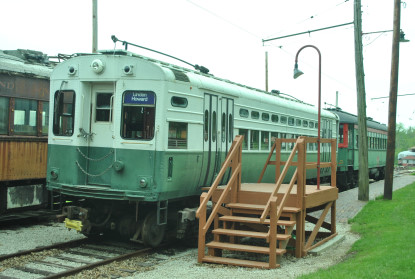
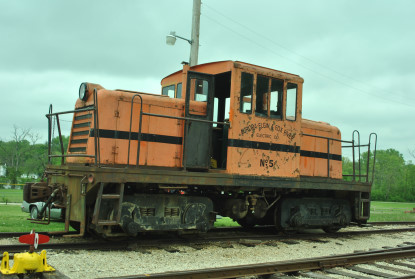
Chicago Transit Authority rapid transit car 45, built by the St. Louis Car Company in 1959. It was acquired in 2009 from the East Troy Electric Railroad which had acquired it from CTA in 1998.
This was a single car version of the post-World War 6000 series rapid transit cars which modernized the elevated and subway service of CTA by replacing the old wooden L cars. These cars use an all-electric power and brake system adapted from the streamlined PCC streetcars first developed in the late 1930’s. It seats 46 passengers and has four 55 hp 300-volt motors that operate in series pairs to handle the 600-volt DC traction power. These motors also become generators to provide electric braking.
Car 45 and her museum sisters 40 and 43 were part of the final fifty car order of rapid transit cars based on the 6000 series rapid transit cars which were operated in married pairs after four 5000 series 1947 experimental cars proved the all-electric control system could be used in a rapid transit environment. The articulated design of the 5000’s turned out to not be practical, so it was not repeated. The Evanston line (now the Purple Line), which was and is primarily a shuttle from the northside Howard Street terminal, needed a car that could be operated by one person who could also collect fares on the car and thus eliminate the need for station agents to staff the ticket windows as is done at all other L stations on the rest of the system. The Evanston line was also unique in that the City of Evanston did not allow third rail power collection, so trolley wire had to be used, thus a group of the cars (39-50) were trolley pole equipped to cover this service.
Eventually the CTA convinced the City of Evanston to change its ordinance in 1974. Those cars built not having trolley poles (5-38) were used primarily on the Ravenswood line (the Brown Line).
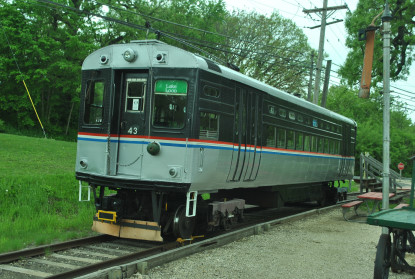
Chicago Transit Authority rapid transit car 43, built by the St. Louis Car Company in 1959. It is a sister car to 45 above and 40 below.
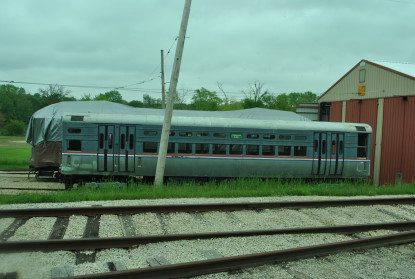
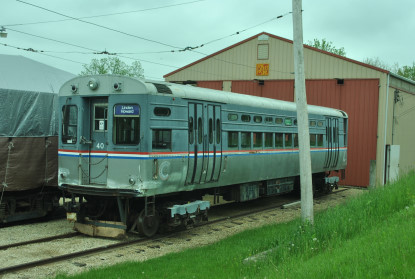
Chicago Transit Authority rapid transit car 40, built by St. Louis Car Company in 1959. It is a sister car to 43 and 45 above.
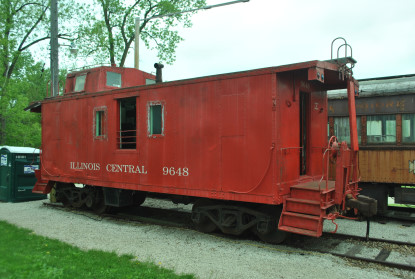
Illinois Central side door caboose 9648, built by the railroad in 1957.
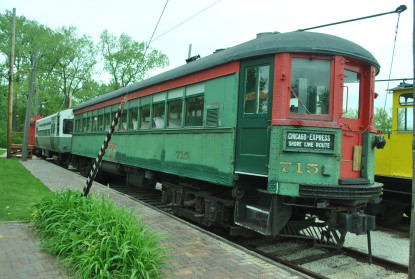
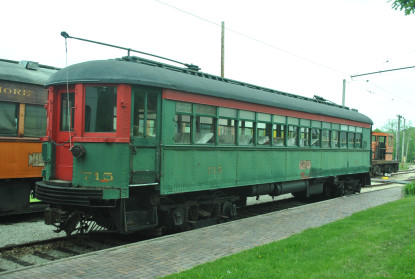
Fox River Trolley Museum interurban coach 715, ex. Wisconsin Electric Railway Historical Society 715 1967-1988, exx. Mid-Continent Railroad Museum 715 1963-1967,l nee Chicago North Shore and Milwaukee 715. built by Standard Car Company in 1926.
It was placed in service on May 10th, 1916, less than a month before the new “Skokie Valley Route” was opened on June 5th which speeded up long distance service between Chicago and Milwaukee. As newer rolling stock was purchased for Chicago-Milwaukee trains; as ridership declined due to the Depression of the 1930’s; and older wooden cars used for commuter service were retired, 715 and others of its class were reassigned to suburban service from Waukegan via the original “Shore Line” route and from Mundelein to Chicago. During this period, the fleet colours changed from the Pullman green 715 was delivered in, to orange and maroon to match the newest rolling stock.
Starting with car 714, 715 and its higher-numbered Cincinnati sisters were given the “Shore Line” modernization at the Highwood Shops in 1940. With new forced air ventilation, improved interior lighting, removal of its lavatory which increased the seating capacity from 52 to 56 with reupholstered seating, brought the cars up to the standards of recently rebuilt mainline cars and foreshadowed the arrival of the two Electroliner trains in 1941. The exterior paint scheme went from the old orange with maroon trim to one of dark green, a light green band through the windows and red trim while the now out-of-date varnished interior was painted over with a then popular pastel colour.
After heavy use during World War II, 715 was cycled through the Highwood paint shop and received the simple green and red scheme that is remembered by many today. After service was abandoned on the original Shore Line route in 1955, car 715 continued in rush hour service between the Loop and Mundelein or was uncoupled from thru Milwaukee trains at Edison Court station in Waukegan to serve the mainline commuters and added on to trains bound at the same station for the Windy City until the North Shore was totally abandoned. 715 and its non-lavatory sisters would make it to Milwaukee, usually on weekends, most likely on sailor specials from the Great Lakes Naval Training Center, and also for monthly inspections at the Harrison Avenue shops. 715 was also on the last southbound train to leave Milwaukee on January 21st, 1963.
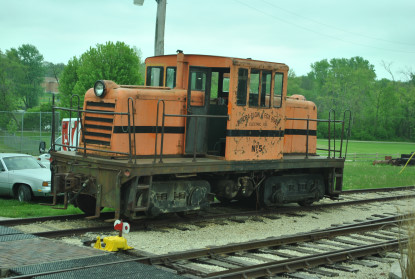
Aurora, Elgin & Fox River Electric 45 ton diesel-electric 5, by General Electric in 1946. It is one of two pieces of rolling stock in the Museum’s collection that are original to our museum’s railroad line.
Upon the conversion of Elgin-Aurora passenger trolley service on the Aurora Elgin and Fox River Electric (AE&FRE) to buses after March 31st, 1935, most of the trolley line was scrapped except for the 3.5 miles of track between the Illinois Central Railroad interchange at Coleman and the Illinois Mental Hospital on the southside of Elgin along Route 31. This branch was retained to provide coal from southern Illinois mines to the hospital’s power plant which supplied electricity and steam for heat to the multi-building hospital complex.
The railroad’s two electric freight motors (23 and 49) handled the freight service at first, however the source of 600 volts DC was going to be eliminated as the Chicago Aurora and Elgin’s substations were being revised and the electric units were worn out. Locomotive 5 was ordered as a replacement and it was delivered in June with a light blue paint scheme and was in service when Bob DeYoung purchased the railroad company in 1948. Since it was no longer needed, the overhead trolley wire was removed, although the right-of-way still hosted Commonwealth Edison utility power lines. By the mid 1950s, Mr. DeYoung repainted the locomotive into the orange scheme we see it in today.
With the advent of the Environmental Protection Agency in the early 1970s, the State of Illinois converted the hospital’s power plant to natural gas and the railroad lost its last freight customer (although the original RELIC museum operation was operating on the southern portion of the railroad with restored trolley wire and would eventually purchase the railroad). Mr. DeYoung first leased and then sold 5 to the Chicago Gravel Company in Spaulding, Illinois on the east side of the Fox River. It continued in this industrial service until 2000 when the gravel pit was closed and the developer that purchased the property donated the locomotive to the Fox River Trolley Museum in 2001 with it returning to home rails via lowboy highway trailer.
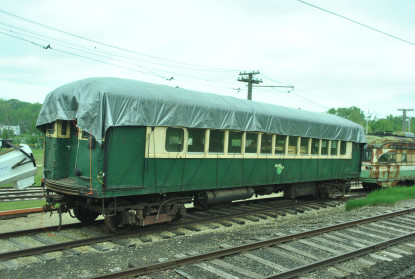
Fox River Trolley Museum rapid transit car 4451, ex. Railway Equipment Leasing and Investment Corporation 4451 1975-1984, exx. Chicago Transit Authority 4451 1947-1975, nee Chicago Rapid Transit 4451, built by Cincinnati Car Company in 1924.
4451 was one of 100 cars ordered in December 1924 by the newly-formed Chicago Rapid Transit Company which corporately combined the older elevated railway companies. This group has two WH-567 traction motors, and like the previous orders, seated 52 passengers. 4451 was among the group of cars initially assigned to the South Side lines and was among the last rapid transit cars purchased for the L until 1947 when four experimental trainsets were ordered.
Our car was among those that shouldered L train service from 1925 through World War II serving until 1974. It received the various updates its sisters received, finally being paired with 4452. The updates included a couple of paint scheme changes (from green and orange to brown with orange trim to finally the green and cream), replacement of the plush upholstery to leatherette coverings, multiple unit door control, the semi-permanent paring of cars, the addition of electric marker light boxes on the front ends, and the placement of a sealed beam headlight on roof of the front end. Its last assignment was in “Evanston Express” service which was (and is) AM and PM rush hour service between the Loop and Linden Avenue in Wilmette.
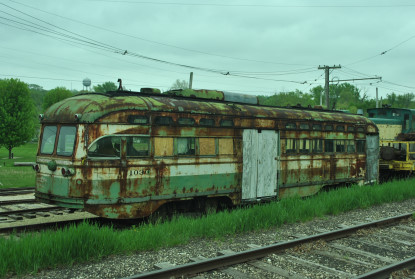
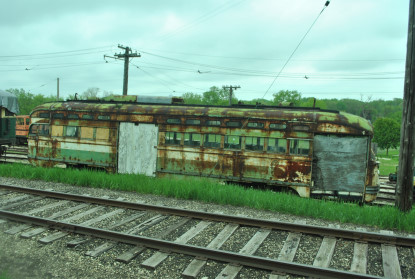
San Francisco Railway PCC car 1030, built by St. Louis Car Company in 1951 and was one of the last 25 PCC streetcars built by them; the order was known as “Baby Tens” on Muni. This PCC car served San Francisco’s MUNI streetcar system until the early 1980’s when Boeing-made LRV’s (Light Rail Vehicles) took over its duties on the then five streetcar lines which were funneled into the new Market Street Subway which was constructed above the Bay Area Rapid Transit (BART) subway also under Market Street. While this was seen as a transit improvement, San Franciscans clamored to have streetcars back on the surface of Market Street and thus was born the F Line which still functions today using restored PCC cars painted to resemble every city that had such units and are also supplemented with older style cars from Milan, Italy and a pair of “boat” trolleys from Blackpool, England. The city’s famous cable cars touch the Market Street transit corridor at two places as part of a unique and coordinated urban transit system.
The cars were completed and shipped between October 18th, 1951 and March 21st, 1952 and were originally were set up to be a two-man car with a conductor at the center doors but as labour agreements were negotiated, one operator was permitted to run the car just as MUNI’s trackless trolleys and motorbuses were. When a RELIC (our predecessor organization) member purchased the car, it was loaded on a Santa Fe flat car which in turn was loaded aboard a Santa Fe car float to cross the Bay for a connection with the Santa Fe’s transcontinental route to Chicago where it was handed over to the Illinois Central Railroad for delivery to our AE&FREC railroad at the Coleman yard. Our electric locomotive L-202 then pushed the flatcar up to Castlemuir onto our Track 2. The locomotive was uncoupled, and a rail ramp temporarily constructed to the rails on the flat car and it eventually 1030 powered itself off the flatcar on December 4th, 1982. The ramp was taken down and L-202 returned the flat car to the Coleman interchange.
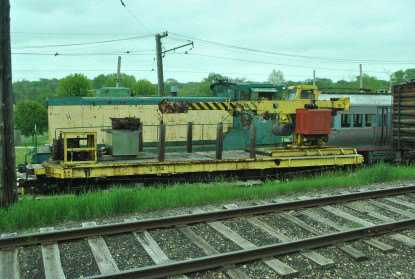
Fox River Trolley Museum crane S314, ex. Chicago Transit Authority S314 1953-1997, exx. Chicago Transit Authority W301 1947-1953, exxx. Chicago Surface Lines W301 1914-1947, exxxx. Calumet and South Chicago 41 1909-1914, nee Chicago City Railway C3, built by the company in 1907.
Basically a work train flat car with a crane mounted on it, S314 was used to move and transport rail and structural steel for repair projects on the CTA L system. The crane is a Baldwin-Lima-Hamilton 4000-pound capacity unit
manufactured by the Austin-Western Construction Equipment Division in Aurora, Illinois and is powered by a four-cylinder Perkins industrial diesel engine driving a hydraulic pump. When owned by the CTA, it was transferred to the Rapid
Transit division Skokie Shops and lost any resemblance of ever being a streetcar as its frame was mounted on rapid transit car trucks salvaged from wooden L cars that were being scrapped at the time and emerging as a service train
flat car in November 1953
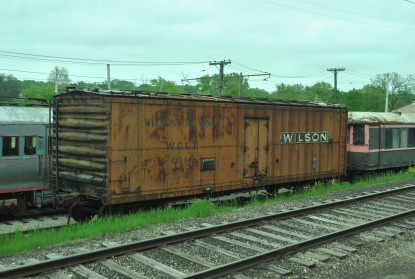
Wilson Car Lines steel ice bunker refrigerator car 2013, built by Pacific Car and Foundry in 1957. Wilson Car Lines was a meatpacker and this car was used to haul cattle carcasses from slaughterhouses in Iowa and Colorado to processing plants in Chicago and other locations. It is still equipped with ceiling-mounted meat rails from which meat hooks were hung, each holding an individual carcass. The car has thick walls and doors which are filled with insulation between the steel exterior and wood interior walls. Cooling was provided by ice which was loaded through roof hatches at all four corners of the car into bunkers at each end of the car.
The car was reported to be the last ice bunker reefer outshopped by the Wilson Car Lines shop in Cedar Rapids, Iowa on November 6th, 1972 and was subsequently donated to the Midwest Railway Historical Society in Downers Grove, Illinois, where it was displayed and used for storage by the museum group. In early 1982, the siding it was stored on was going to be removed by the Burlington Northern and the car was offered to the RELIC Trolley Museum (our predecessor organization) and was shipped by rail to our Coleman interchange yard. Fox River has used the car for storage ever since. Interestingly enough, while the car is clearly marked 2013 inside and out, a paint failure on the end of the car revealed that its actual number was WCLX 2356. It is unclear why there is this discrepancy.
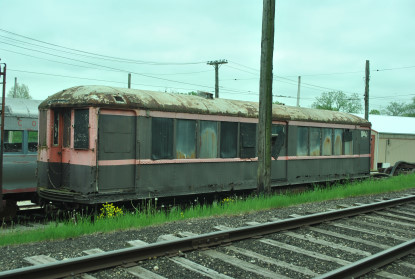
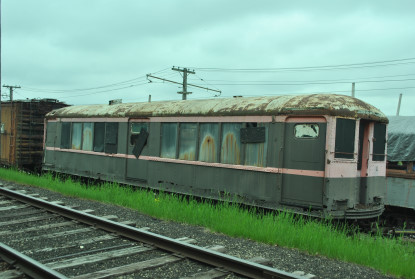
Fox River Trolley Museum rapid transit car 4103, ex. Chicago Transit Authority 4103 1947-1985, exx. Chicago Rapid Transit 4103 1924-1947, nee Chicago Elevated Railway 4103, built by Cincinnati Car Company in 1914. Chicago Elevated was a consortium of the Metropolitan West Side Elevated Railway Company, the Northwestern Elevated Railroad Company and the South Side Elevated Railroad Company.
4103 and its 61 motorized sisters were ordered at the same time as 66 non-motored trailer cars of the same general design. All these cars had two large sliding doors at each vestibule and a pair of center sliding doors, all of which were pneumatically operated. With the longitudinal bench seats, all these cars were referred to as “bowling allies”. The center doors, which had fold-up seating, were seldom used and in later years were sealed up. Since they had all steel roofs and no trolley poles, the cars were also referred to as “baldies” and served on lines that did not require overhead trolley operation for power collection. They cars could also operate in trains which had older wooden elevated cars. The reason for purchasing these all-steel cars was the City of Chicago’s desire to have underground subways, which precluded the use of wooden cars due to fire, a dream which was finally realized in 1943 with the opening of the State Street Subway.
After World War II, as more 6000 series all-electric cars came online, they too were also retired with a few units going into work train service. 4103 became a parts storage car at the upper Howard Street yard and was painted white, thus earning the moniker “the ghost”.
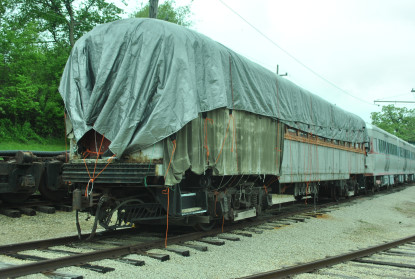
Fox River Trolley Museum interurban coach 756, ex. Railway Equipment Leasing and Investment Corporation 756 1963-1984, nee Chicago, North Shore and Milwaukee 756, built by Standard Car Company in 1930. It was among the last group ordered by the railway and purchased from Standard Car Company. As built, 756 seated only 50 passengers and contained two lavatories. While most of her class were modernized in the 1940’s, 756 escaped modernization until 1950. On April 25th, 1950, 756, along with 776, introduced the “Silverliner” paint scheme which imitated fluted stainless-steel siding through the use of clever paint shading to produce the illusion of the more modern railroad passenger car then in vogue. With all electric heat, forced air ventilation, a single restroom and 52 new seats similar to those in the flagship “Electroliners”, 756 continued in mainline service with its’ other 31 “Silverliner” sisters between Chicago’s Loop and Downtown Milwaukee until abandonment of all North Shore service on January 21st, 1963.
On August 22nd, 1963, the Railway Equipment Leasing & Investment Company purchased coach 756 and tavern-lounge car 415 (an unpowered trailer) for $10 and “other considerations”. Eventually after storage in railroad yards, the pair was shipped on their own wheels to Coleman, Illinois and the AE&FRE to join the CA&E cars on the single siding at what is now known as Castlemuir. 415 would sometimes be displayed on the mainline north of the driveway and 756 would be occasionally used in demonstration service. Its use was limited as the walk-around seats had to be rotated sequentially at the end of track for the return trip (there was no station or platform at the time), which meant the passengers would have to stand in the aisle while the conductor turned each seat in order. CA&E cars 20 and 316 with their walkover seats were much easier to use. In the early 1980’s, the roof was repaired and re-canvassed but with time and outdoor storage, even under a tarp, the roof again deteriorated. Attempts were started to replace the wood under the canvas but sputtered along.
In 2023, the car was moved into the carbarn to dry out, after CA&E car 458 was completed, to await its turn at an extensive restoration. The roof will be completely replaced and the seats totally re-upholstered to counter the water damage they have experienced due to the leaky roof. Of course, it will be restored in its “Silverliner” paint scheme and be able to train with North Shore 715.
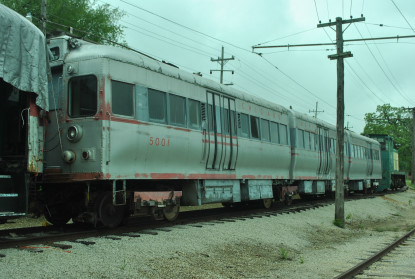
Fox River Trolley Museum three-car articulated set rapid transit car 5001, ex. Chicago Transit Authority 51 1964-1986, exx. Chicago Transit Authority 5001 1948-1964, nee Chicago Rapid Transit 5001, built by Pullman-Standard in 1947.
5001 and its Pullman-Standard sister 5002 and St. Louis Car Company-built cousins 5003 and 5004 were test beds used to try new technology and design ideas. The majority of the superstructure is aluminum mounted on steel underframes in an A body, B body, A1 body configuration, thus saving weight compared to the 4000 series steel cars then in use. Curved sides allowed for more elbow room for passengers. The propulsion and braking system was an adaptation of the all-electric PCC streetcar controls used by the newest streetcars then on Chicago and American streets with one exception. Instead of foot pedal controls like a bus (or lever controls unique to Chicago PCCs), these cars used a single handle dead-man Cineston control for both power and braking.
The four units were tested throughout the elevated system and a design flaw arose as there was no provision for the conductor to monitor for passengers entering or exiting when closing the doors. As the first 6000 series cars began to appear in service, the four experimental units could be trained with them as this design flaw was rectified on the newer cars. As odd-men-out, the cars were not popular with employees, especially maintenance personnel. With the success of the “Skokie Swift” (yellow line) demonstration and increased ridership, the 5000’s finally found a home in late 1964. They were renumbered 51 through 54, painted in the standard CTA livery of the day, and equipped with motorized pan trolley power collectors which could be raised and lowered remotely when the cars transitioned between overhead catenary and third rail on the Skokie line, which had been North Shore Line right-of-way between Dempster Street and Howard Street in Chicago.
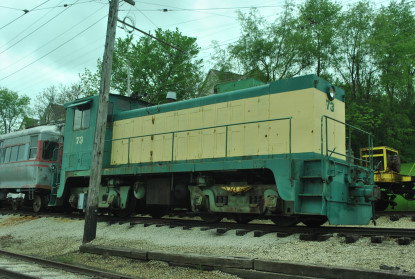
Fox River Trolley Museum 70 ton switcher 73, ex. Warren and Saline River Railroad 73 1963, nee Potlatch Forests Incorporated 73, built by Whitcomb in 1949. The first of three diesel-electric locomotives built for Potlatch Forests, 73 was used on the Camas Prairie Railroad Company in Idaho. The three locomotives were heavily rebuilt during their time at Camas Prairie as the Buffalo, New York-built Sterling diesels were primarily used in marine service where cooling was less of an issue with all the water the vessels floated in being available to cool the engine.
The museum was looking for a diesel locomotive as an emergency backup in case our substation failed. At the same time, 75’s prime mover broke down and the W&SR purchased some newer used locomotives to take over operations. Thus, the museum purchased 73 and some spare parts off of derelict 75. This switcher was scrapped in 2026.
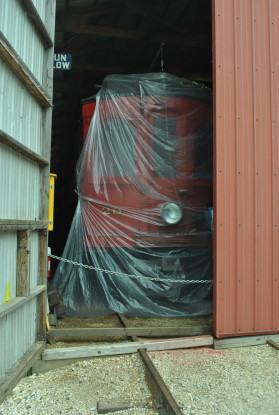
Fox River Trolley Museum interurban coach 20, ex. Railway Equipment Leasing and Investment Corporation 20 1962-1984, exx. Chicago, Aurora and Elgin 20 1922-1962, nee Aurora, Elgin and Chicago 20, built by Niles Car and Manufacturing in 1902.
This car and its nine sisters, along with 20 like cars built by the John Stephenson Car Company, inaugurated high-speed, third-rail powered interurban service from Laramie Avenue in Chicago to Wheaton and then on to Aurora in 1902 with the Elgin branch following in 1903. All this happened before the Wright Brothers made their first power airplane flight so a speed of sixty-five miles was not a speed the average person could experience on a regular basis.
Our car experienced many changes in its fifty-five years of service. While 20 has a body constructed of wood, it does rest on a steel frame. As built, the ride qualities of the Peckham trucks left something to be desired at these high speeds, so Baldwin trucks were substituted at an early date. Also, as 20 and her sisters aged the wooden bodies began to “rack”, making doors and windows hard to open and close, again because of the speeds, so every car had steel gussets installed at every bulkhead to stiffen the body, with this work done in the Wheaton Shops. When the name of the railroad was changed to the Chicago Aurora and Elgin in 1922, our car went through several different paint schemes, including the last version of red and gray. Also changed over time was the removal of the arched windows over pairs of the side windows on the car. Even the interior ceiling was removed and changed to a simpler design. These cars also retained their original rattan covered seating until the end.
As more modern steel constructed interurban cars were purchased, the wooden cars were relegated to rush hour service trains to and from Wheaton and Chicago. In the post-World War II era, wood cars would only appear on the Aurora and Elgin branches on railfan excursions.
Fox River Trolley Museum interurban coach 316, ex. Railway Equipment Leasing and Investment Corporation 316 1962-1984, exx. Chicago, Aurora and Elgin 316 1922-1962, nee Aurora, Elgin and Chicago 316, built by Jewett Car Company in 1913.
As passenger traffic expanded on the Aurora Elgin and Chicago Railroad, the company needed to expand its fleet of passenger cars. By 1913. money was getting tighter so only two cars were ordered that year, 316 and 317. Elegant as they were, they had one improvement over previous cars; three steps compared to just two. It was found that with the extra step passengers could board faster from low level platforms, which were typical on the two main branches to Aurora and Elgin, than those with only two steps of earlier cars and thus saved running time. In 1914 the AE&C returned to the Jewett Car Company for four more cars. But these cars had variations. 318 used external steel sides below the windows. Cars 319, 320 and 321 returned to full wooden sides but were each equipped with improved control systems and traction motors as test beds. The results led to this newer equipment being used on the first all-steel cars purchased in 1923 by the now-reorganized Chicago Aurora and Elgin Railroad.
316 served from 1913 until the cessation of passenger service on July 3rd, 1957. The car retained its toilet compartment and grand curved “Empire” ceiling design to the end. The exterior art glass “steamer” windows were eventually removed and replaced with car siding in an effort to make the car look more modern. Fortunately, the interior arch windows were retained but painted over as were the varnished interior walls with more “modern” colours. The “advance light” with the large metal flip signs which denoted “Limited”, “Express” and “Local” trains were removed to be replaced with smaller signs in the motorman’s front window. As the newer steel interurban cars arrived, they took over the longer runs from Chicago to Wheaton where cars were separated to go to either Aurora or Elgin, while the wood cars were coupled in sets of threes, fours and even fives to cover the heavier patronized trips between Chicago and Wheaton. With the rise of railfan excursions, starting the late 1930’s, this was about the only time wood cars would be seen in either Aurora or Elgin although they would be used on the Batavia shuttle line during the week.
While there were attempts to revive passenger service after the 1957 cessation, there were some special excursion trips as freight operation continued until 1959 when the CA&E finally got permission to completely abandon. As this was all unfolding, a small group of young rail enthusiasts formed the Railway Equipment Leasing and Investment Company (RELIC) with the intention of obtaining some cars for potential use on a proposed reincarnation of part of the CA&E Elgin branch as a freight short line from Elgin to Wayne.
They worked out an agreement to purchase three cars, 20, 316 and 317, with the railroad company and sold stock to raise funds, while one of their founding members, who was also the night watchman at the Wheaton shops during this time period, which gave him ample opportunity to see that these cars were stored inside and in fact even had time and access to repaint two of the cars, 20 and 316. After the short line freight proposal failed, and actual salvaging of the CA&E track started, the cars were towed by the scrap dealer’s rented EJ&E diesel locomotive to a temporary connection with the Chicago and North Western Railway in Wheaton, where they were transported to and stored inside at the 40th Street Shops (one of the RELIC stockholders was a C&NW employee).
As negotiations went on to find a site for the cars on the Aurora Elgin and Fox River Electric Company, the cars were moved to the Burnside Shops of the Illinois Central Railroad where once again, they were stored inside (another stockholder was an IC employee) prior to the move to the Coleman, Illinois interchange with the AE&FR and their final home on a hastily-constructed siding on some purchased farm property just outside of the Village of South Elgin. It took some time to move and reconstruct a power substation and re-erect the long-gone trolley wire with the first operation starting on July 4th, 1966, with car 20 as the star. As wire was extended south to the end of track, 316 was repainted into the “coffee and cream” paint scheme it wore after the AE&C became the CA&E in 1922 and shared duties with car 20 and was even coupled together to make a two-car train on occasion.
During the winter, the cars were covered with heavy tarps until the car barn was constructed in 1984 which finally allowed inside storage. Unfortunately, time and weather had taken its toll on 316 and efforts were started to restore the car while trying to keep it operable. After the successful restoration of CTA 4451 in 2022 and steel CA&E car 458 in 2023, full-time attention was turned to 316 by the Car Department for a down to the “bones” restoration which has included restoring the exterior art glass arch windows, completely overhauling the two motorman’s controllers and upgrading the electric heaters. A bit of original roof canvas was found, and the colour has been matched so that the all-new canvas roof is painted in that colour. These are just a few of the aspects of restoring the car to a specific historical period.
316 made its debut Saturday September 27th, 2025 and the general public will now be able to enjoy the fruits of the Car Department’s efforts, and step back in time to over one hundred years ago.
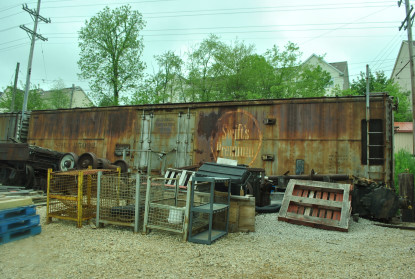
Swift's Premium refrigerator car 25032, built by General American in 1964.
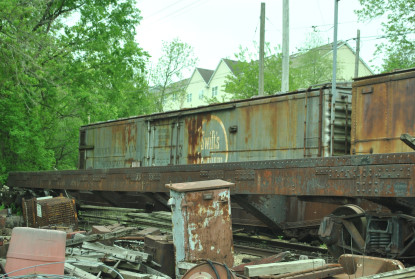
Swift's Premium refrigerator car 25010, built by General American in 1964.
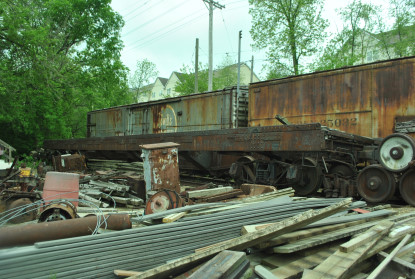
Flat car of unknown origin. It could be Aurora, Elgin and Fox River Electric 7, built by Standard Steel Car in 1927, which later became Chicago, North Shore and Milwaukee. That was targetted for deaccessioning in September 2024.
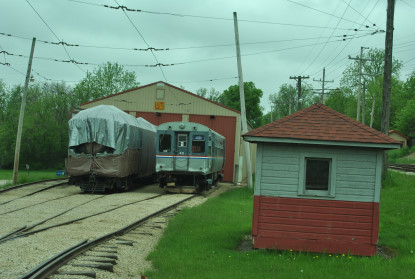
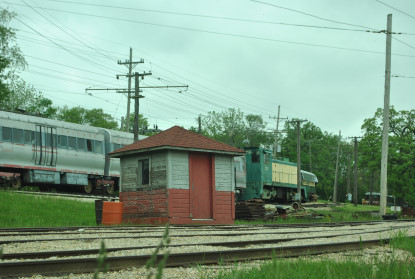
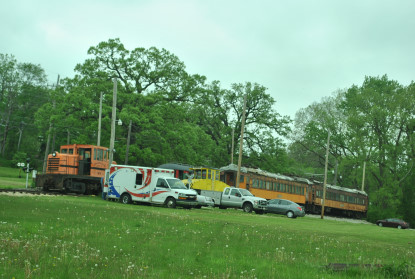
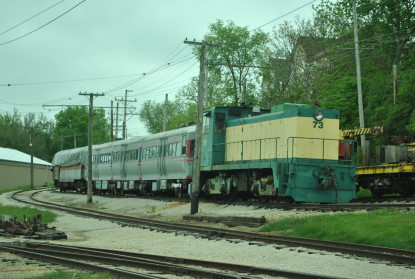
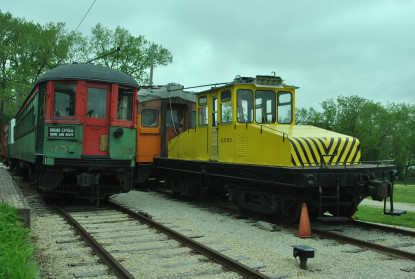
Museum scenes.
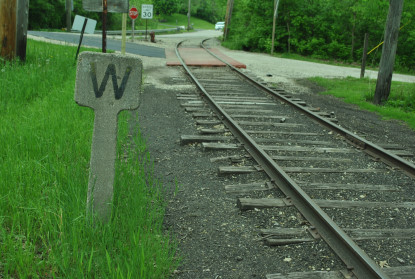
Concrete whistle post.
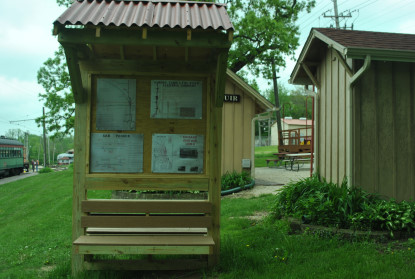
Museum information board.
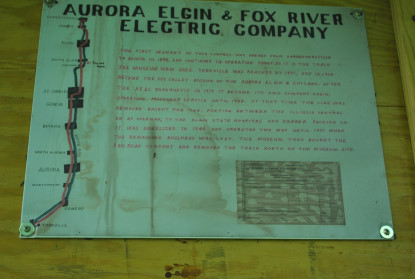
Map of the Aurora, Elgin & Fox River Electric Company and information.
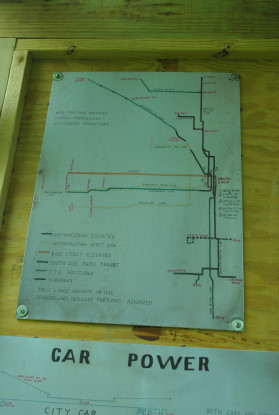
Map of Chicago transit service.
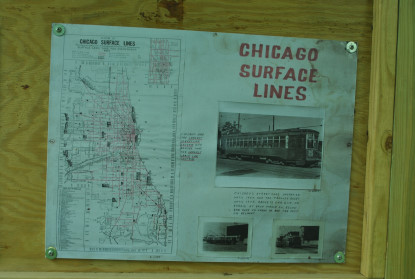
Chicago Surface Lines.
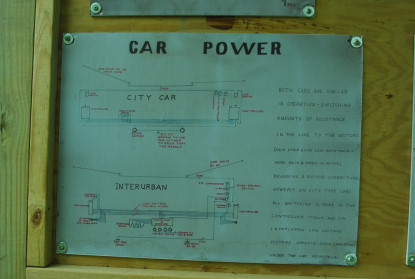
A diagram showing the differences between powering a city car and an interurban.
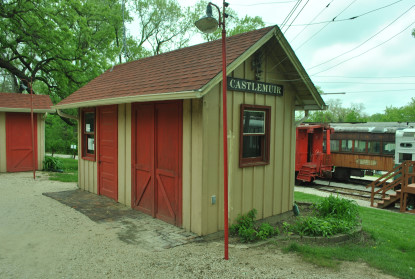
The Castlemuir Station. The track crew returned on the speeder and I asked if it would be possible to ride to the end of the line at Blackhawk. After consulting with others in the know, a few minutes they returned with the good news that I was indeed able to join them for a ride.