



I had wanted to attend the 24 Hours At Saginaw, Texas event for years and decided to do that in 2018. For over a decade, the North Texas Chapter of the National Railway Historical Society had the privilege of hosting a twenty-four hour rail watching event at the Saginaw Depot over Memorial Day weekend starting on Friday evening and ending Saturday evening, for a full twenty-four hours. In past years, there have had approximately 100 or more railfans attend to watch trains day and night. In addition to watching trains, programs were scheduled to entertain guests between trains including slide shows, speakers, clinics, videos and railroad trivia.
Skip Waters, the North Texas Chapter President at the time, who was in charge of the unique railfanning event, offered me the great opportunity to be the featured program on Friday night, where I would show my Friday night Winterail programs, plus a spot on Saturday to show more. I asked Chris Parker to accompany me and he thought that was a great idea so I bought my flights and booked hotels then started to plan the trip. Dallas had extended their passenger rail network so we would be riding these extensions as well.
5/24/2018 I arose and went to work at Heninger Elementary School and was up on the balcony during a light rain shower while our first through fifth graders gave a violin concert with 710 children playing. The fifth graders played every song during the concert and it was truly an impressive event. I returned home, finished packing then my good friend Carl Morrison drove me to John Wayne Airport, where security was a piece of cake and I waited at the gate for my flight to Love Field in Dallas.
Southwest Airlines Flight 63This flight departed late as I read my Classic Trains magazine and upon arrival, I found Chris Parker then we picked up a Nissan from Hertz then drove to the Ramada by Wyndham Dallas Love Field for the night.
5/25/2018 We put our luggage in the rental car then went in and had breakfast before driving to the Trinity Mills station in Carrollton to start our day riding the Denton A-train.
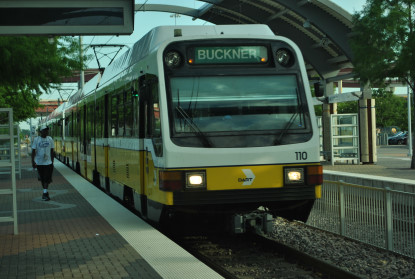
First came a southbound Dallas Area Rapid Transit (DART) Green Line train for Buckner.
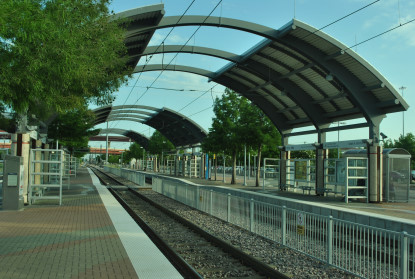
The Green Line portion of Trinity Mills station.
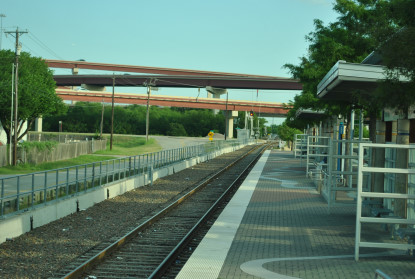
The Denton A-train portion.
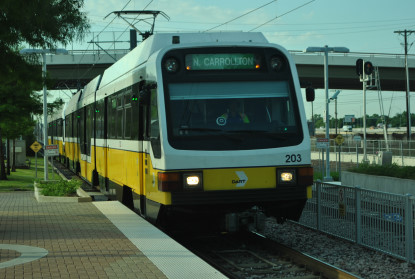
A northbound Green Line train for Carrollton-Frankford.
A-trainThe A-train is a hybrid rail service in Denton County operated by Rio Grande Pacific under contract to the Denton County Transportation Authority (DCTA) on a rail line leased from Dallas Area Rapid Transit. The right-of-way was established by the Missouri–Kansas–Texas Railroad and eight miles of the disused line was purchased by the city of Denton in 1993, with a rail trail opening in 2001. The A-train was opened on June 20, 2011 and the 21 mile line runs parallel to Interstate 35E between Denton and Carrollton. It acts as an extension of the DART rail system's Green Line, which connects Carrollton to Dallas Love Field, Downtown Dallas and Fair Park.
The five stations comprise two in Denton and three in Lewisville. At Carrollton, passengers can transfer to the Green Line, which provides access to Downtown Dallas, the Medical District, Pleasant Grove, Fair Park, DART's Red, Orange and Blue Lines and the Trinity Railway Express.
DCTS placed an order for 11 Stadler GTW 2/6 DMUs in 2010 and the first of the new trains were delivered in late 2011 for testing prior to their entry into service. The full order was fulfilled by August 2012 and in September 2012, the new units replaced the Budd DMUs leased from TRE. The line uses diesel-electric hybrid motive power.
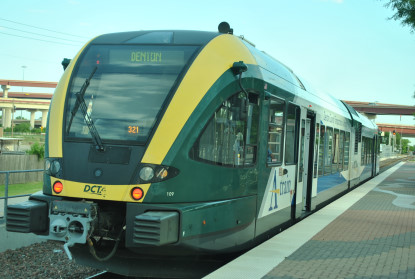
Our TripOur A-train arrived from Denton.
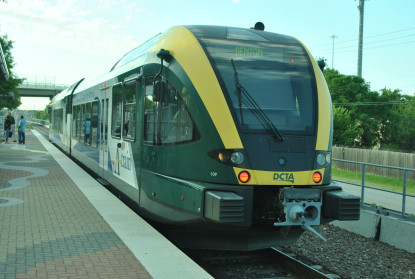
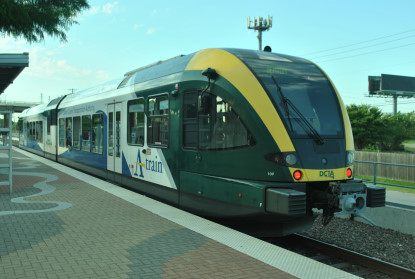
The A-train DMU (diesel multiple unit) 109.
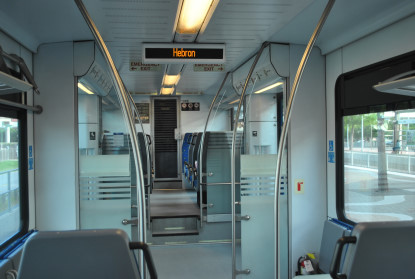
The interior of the car. We were soon underway on our first ride.
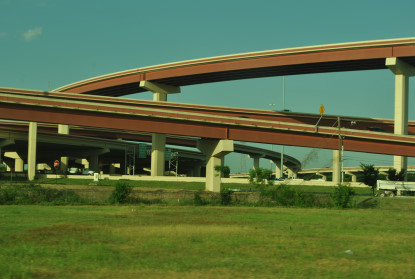
The Sam Rayburn Tollway interchange with Interstate 35E.
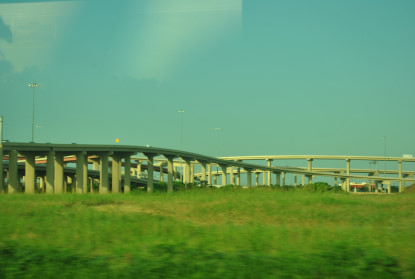
The George W. Bush Tollway interchange with Interstate 35E before we stopped at Hebron station.
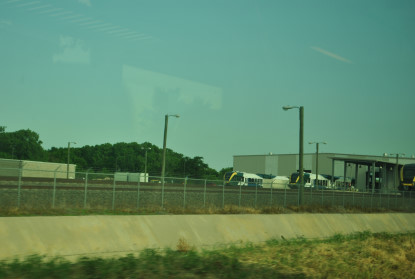
We next passed the A-train shop complex.
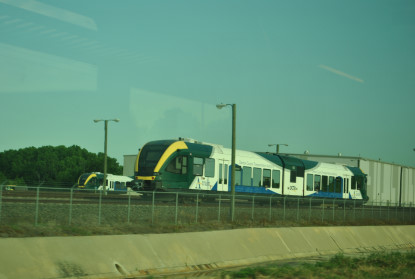
A-train DMU 105.
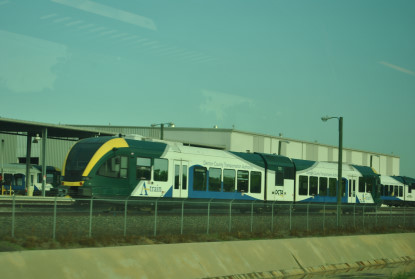
A-train DMU 103.
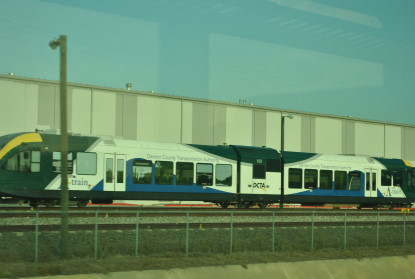
A-train DMU 102.
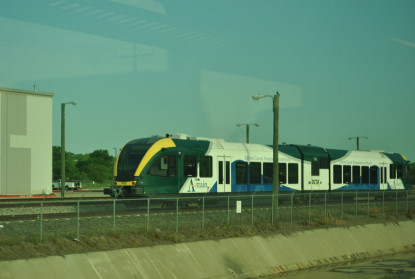
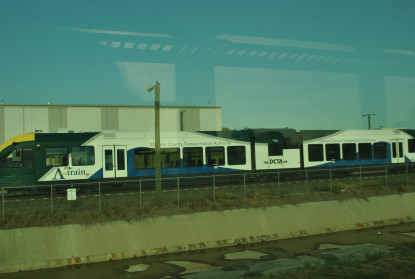
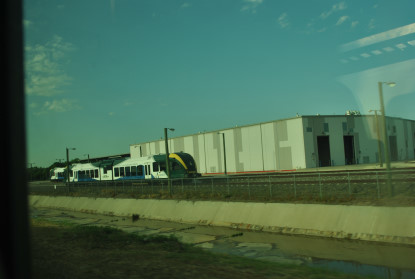
A-train DMU 106. We stopped at Old Town station before proceeding to Highland Village/Lewisville Lake.
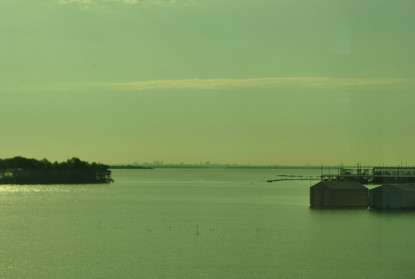
Crossing an arm of Lewisville Lake. The train stopped at MedPark then arrived at the Downtown Denton Transit Centre where we detrained for a few minutes during the layover.
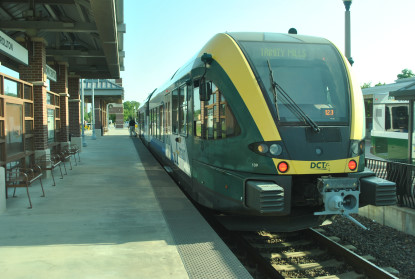
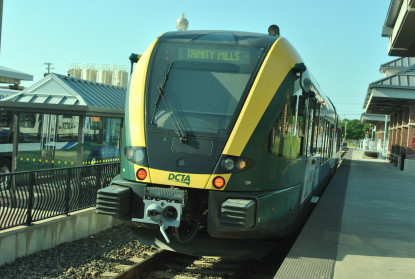
Our train at Denton.
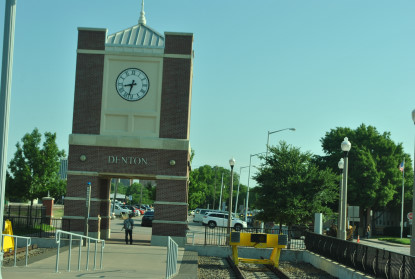
This Denton Entrance welcomes riders.
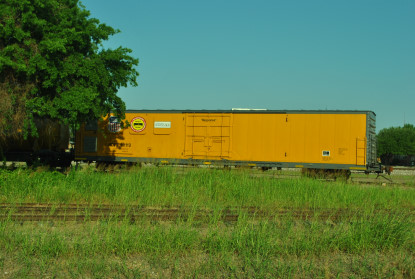
Union Pacific insulated boxcar MCVX 911119. Union Pacific, in collaboration with the Firefighters Education and Training Foundation, converted this boxcar into a mobile classroom, expanding its fleet of training equipment used to educate emergency responders.
Using the climate-controlled boxcar, Union Pacific pairs classroom education with first-hand rail operations observations to provide emergency responders an enhanced learning experience. Training covers a variety of topics including how hazardous materials are shipped, tank car types and construction, and the railroad’s protocol in the event of a derailment. The mobile classroom also can be used in conjunction with Union Pacific’s training tank cars to provide hands-on experience in assessing tank car damage, including making various on-site repairs, controlling releases from cars and teaching fire suppression techniques.
Painted in Union Pacific’s armour yellow, the classroom entrance was designed to resemble a Victorian depot and the interior was inspired by a passenger train coach car. Features of the converted insulated boxcar include seating with work space for 40 students, an advanced “plug and play” audio/visual system, an electrical generator and a redundant climate-control heating and cooling system.
We reboarded the A-train for the ride back to Trinity Mills.
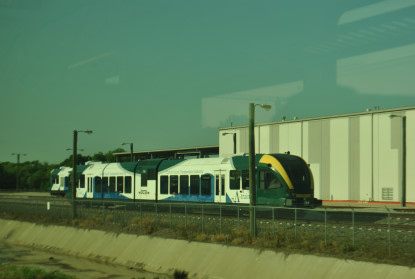
A-train DMU 106.
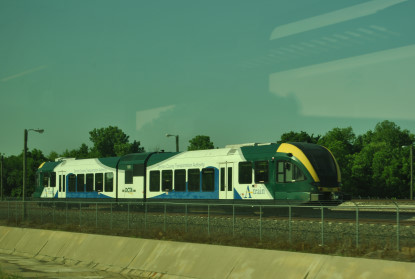
A-train DMU 105.
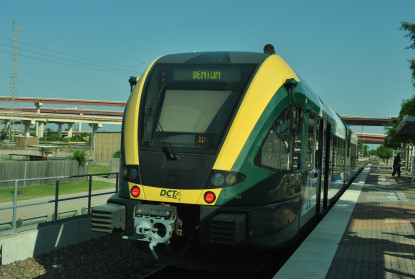
A-train DMU 109 returned our train and us to where we started and it had been a fine trip and experience. We were now ready to ride DART's Green and Orange Line extension.
DART Green and Orange Line ExpansionOn July 3, 2006, the Federal Transit Administration approved a US $700 million Full Funding Grant Agreement - the largest grant ever awarded to DART - to kick-start a $2.5 billion expansion of the light rail system. This phase included two new light rail lines that doubled DART's light rail mileage. Construction began in September 2006 and upon completion of the project in 2013, the size of DART's light rail system doubled to 90 miles. In maps before 2006, DART labelled the Pleasant Grove to Carrollton route the "Orange Line" and the Irving route was the "Purple Line". Green was generally used on DART maps to denote the route of the Trinity Railway Express.
By the time construction started, DART was using the new Green Line designation as part of its marketing efforts, saying "Like the color green, this line is a symbol of our city on the move". The Green Line began operation on September 14, 2009 with a route from downtown Dallas southeast to Fair Park; this short route was scheduled to open in time to service the 2009 State Fair of Texas. On December 6, 2010 the line extended further at both ends - to Pleasant Grove, as well as continuing northwest from Victory Station to Farmers Branch and Carrollton; both extensions, completing the Green Line.
The Green Line's northern end connects with the A-train line. The second line, the Orange Line, originates at LBJ/Central on the Red Line and runs concurrently with the Red Line to downtown, then with the Green Line to northwest of Love Field Airport at Bachman Lake, where it branches off toward Irving, then continuing to DFW International Airport. DART is cooperating with Love Field to link that airport to the Orange Line, but service is currently connected by a bus shuttle. The line runs through Las Colinas and connects to the Las Colinas APT System. The line ends at LBJ/Central Station with rush hour service to Parker Road Station.
The first Orange Line stations opened on July 30, 2012, while service to Belt Line Station in Irving began on December 3, 2012. An extension of the Orange Line from Belt Line Station to DFW Airport Station opened on August 18, 2014.
Our RideThe entire Green Line was new mileage except through downtown Dallas, since all DART light rail trains share the same tracks.
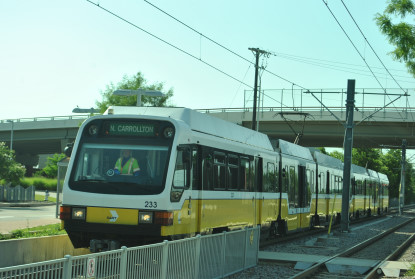
A train for Carrollton/Frankford arrived.
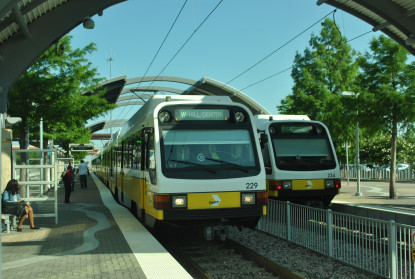
Then our train arrived and although it was only going to Walnut Hill/Denton, we rode to that station.
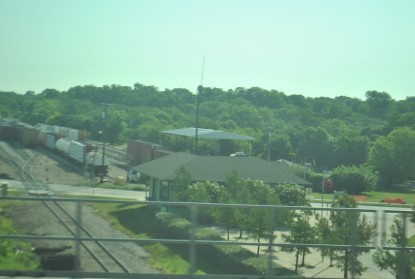
The Southern Pacific Carrollton station seen from our Green Line train.
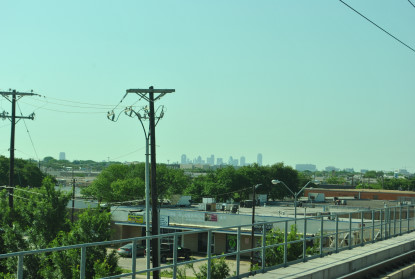
Downtown Dallas loomed ahead.
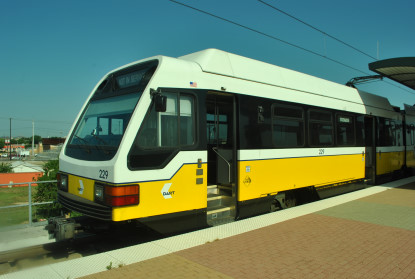
The train that had brought us to Walnut Hill/Denton station.
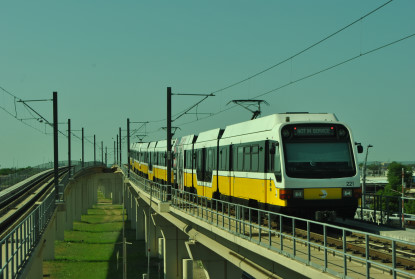
That train departed for their maintenance facility.
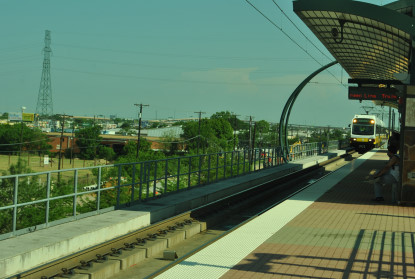
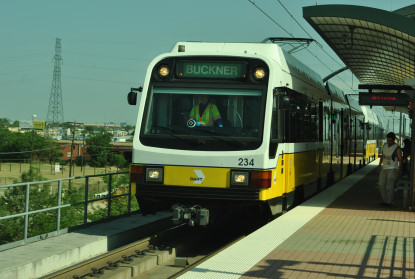
The next train to Buckner soon arrived and we boarded.
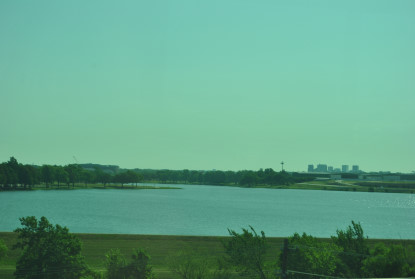
Bachman Lake.
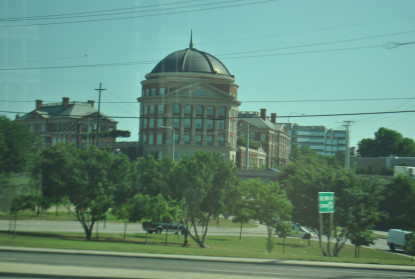
Old Parkland, a designated historical landmark, which began more than a century ago as a county hospital, serving the medical needs of a growing city. The buildings served other purposes in the decades that followed but fell into disrepair until Crow Holdings purchased the land in 2006, restored and renovated the 1913-built Old Main, and moved the company’s headquarters there in 2008. Since then, building by building, the campus has expanded to become a premier, internationally renowned address for businesses, foundations and civic leaders. We rode through downtown to the east end of the Green line.
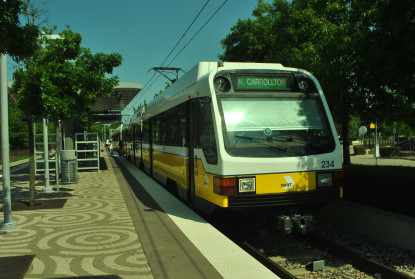
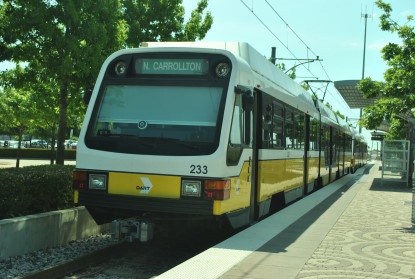
Our train at the terminus of Buckner station.
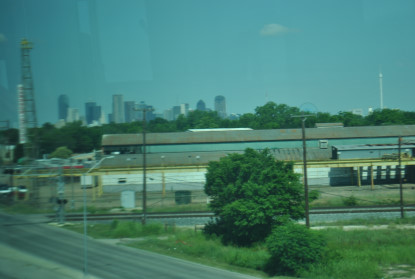
The Dallas skyline. We returned to downtown, exiting the train at St. Paul and walking around a building to our next ride.
McKinney Avenue Transit AuthorityThe McKinney Avenue Transit Authority (MATA), a non-profit organization, operates the M-line Trolley in Dallas, whose offices and car barn are located at 3153 Oak Grove. In operation since 1989, it is an example of a heritage streetcar running historic cars. The main stretch of the line runs down McKinney Avenue in Uptown. While the "M-Line" name was officially adopted for the service in 2002, the line continues to be commonly known as "the McKinney Avenue trolley" (or streetcar). Since 2002, the M-line Trolley is free to the public, thanks to a joint operating subsidy received from DART and the Uptown Improvement District. DART designates the streetcar as route 825 at transit stops. The M-line Trolley connects with the DART light rail system at Cityplace/Uptown on the northern end and St. Paul on the southern end.
The First Streetcar EraDallas’ first streetcar company opened in 1872, running along Main Street to connect Downtown to the newly opened Houston & Texas Central Rail depot. Mules pulled the cars, much like a horse and buggy, until electric streetcars were introduced in 1890. At the height of the era, streetcar service in Dallas covered almost 200 miles of tracks with a fleet of nearly 400 streetcars. Although Dallas enthusiastically adopted the automobile, streetcar service remained an important transportation mode for decades. Nevertheless as automobiles gained in popularity, motor coach (bus) routes became favored over expanding the streetcar network. Ridership declined until service finally ended in 1956 after serving Dallas for more than seven decades.
MATA’s FoundingMATA was founded in 1983 to return heritage streetcars to the urban fabric of Dallas. Two Dallas residents, Phil Cobb and Ed Landrum, began championing the idea after discovering tracks on McKinney Avenue that had been paved over and forgotten. In 1989, the McKinney Avenue Trolley celebrated the grand opening of its 2.8-mile route at an event that was attended by thousands of Dallas locals. The M-LINE has expanded several times to now serve a 4.6 mile route with seven vintage cars. The first expansion opened in 2002, extending the route north to connect to DART’s CityPlace/Uptown light rail station, followed by the construction of a turntable in 2011. The second expansion opened in 2015, creating the southern loop in Downtown that connects riders to DART’s St Paul light rail station.
Route Map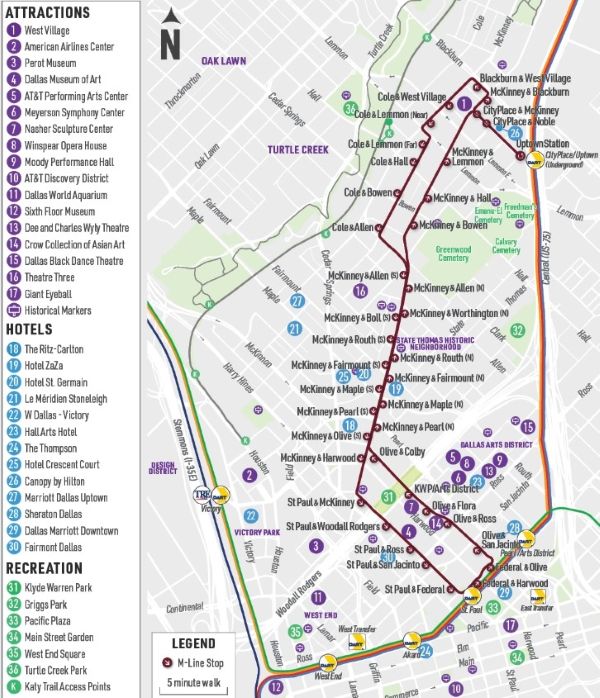
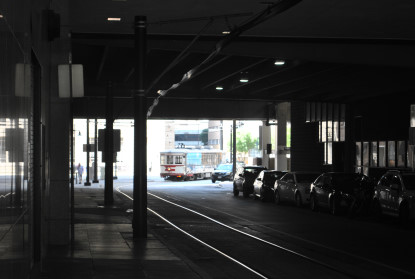
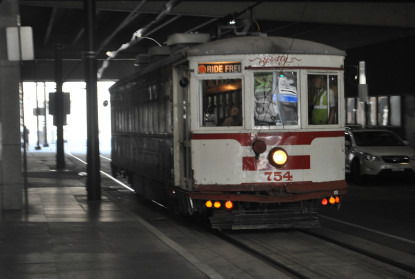
Arriving at St. Paul station was "Betty" (Car 754), built by American Car Company in 1926 for the Dallas Railway and Terminal Company. From 1929 through 196, Car 754 operated on nearly every route of the Dallas streetcar system. Originally a “Peter Witt” center entrance car, the car’s center two doors were removed during World War II to make space for additional seating. Car 754 served Dallas residents until the end operations when the streetcar system was abandoned. Shortly after, Ben Carpenter (son of John W. Carpenter, president of the DR&T from 1927-1935) moved her to his family’s ranch in Irving. Car 754 served as a playhouse for the Carpenter family, who even built a miniature Wild West-themed town around the car.
In 1994, Mr. Carpenter generously donated Car 754 to MATA. The car was in good condition structurally, but underwent renovations and restoration including new insulation, air conditioning and new wheels to give the car a
smoother, quieter and more comfortable ride. The car’s red and cream colours match its original post-war color scheme. Car 754 is named “Betty” in honor of Betty Carpenter, who is remembered for her generous contributions to charities
and philanthropic causes around Dallas.
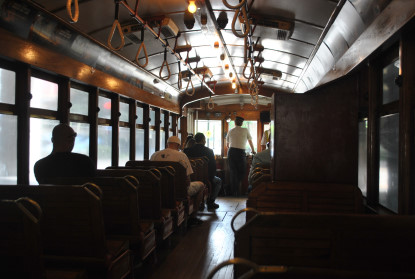
The interior.
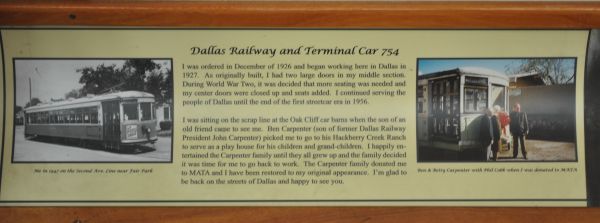
The history of this particular trolley.
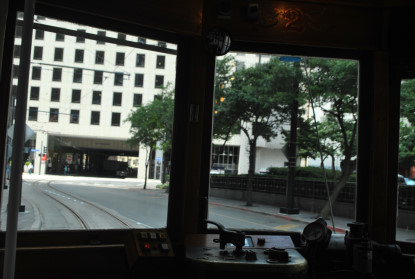
Leaving St. Paul station, we turned onto Olive Street.
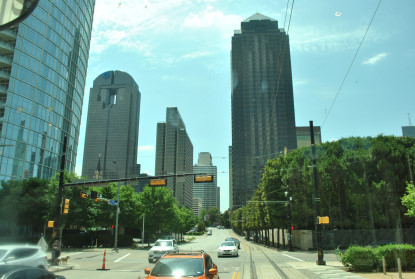
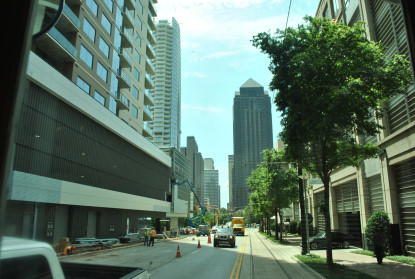
Rolling down Olive Street.
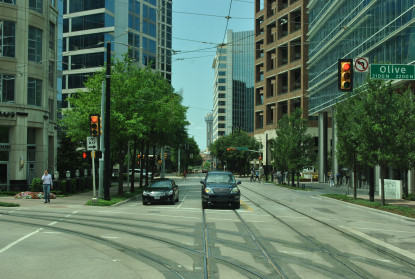
Turning right onto McKinney Street. The trolley only stops to let on people at stations where they are visible to the crew.
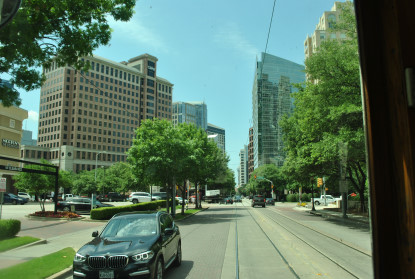
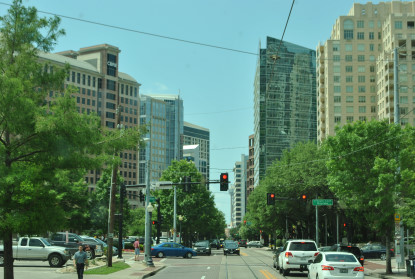
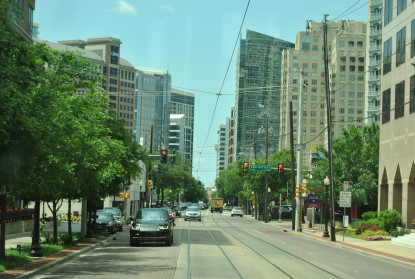
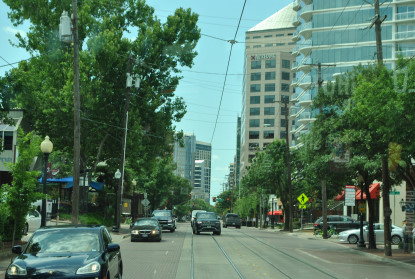
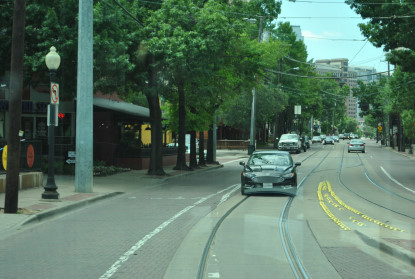
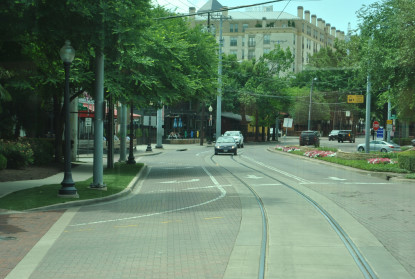
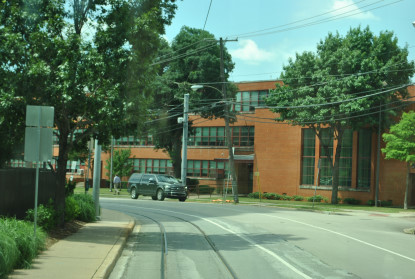
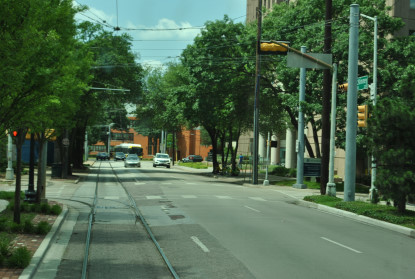
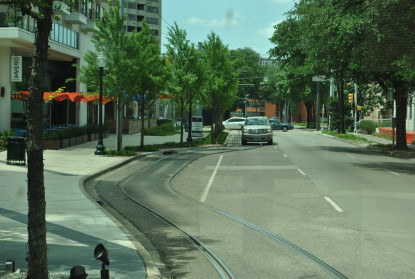
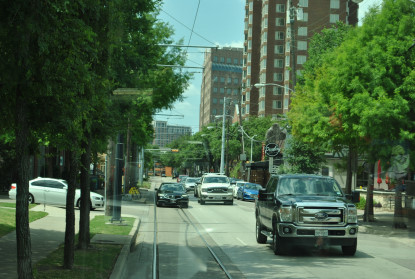
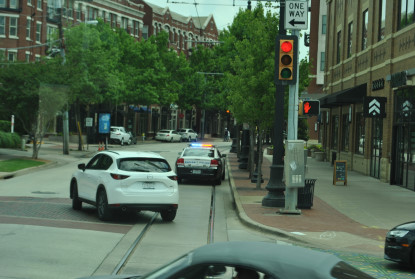
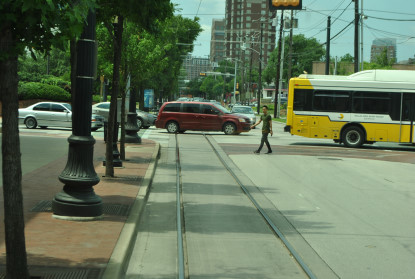
The journey along McKinney Street.
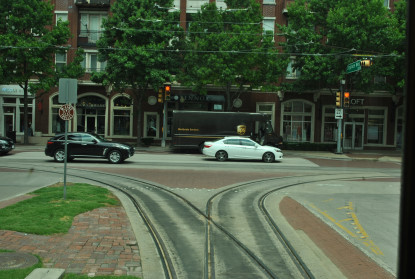
We turned right onto Cityplace West Boulevard.
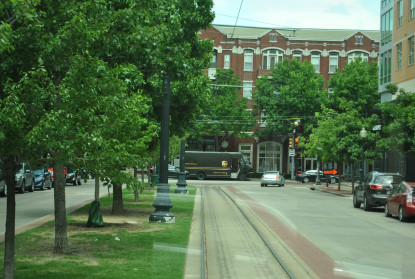
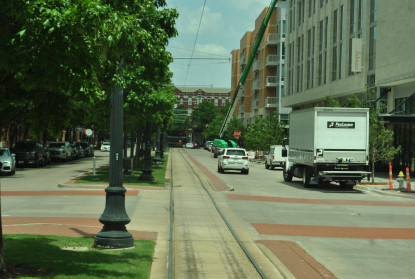
The trip to the Cityplace/Uptown station at the end of the spur, where we detrained.
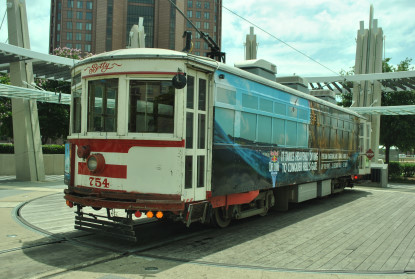
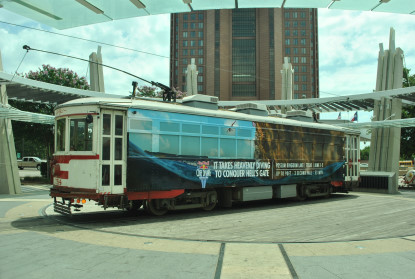
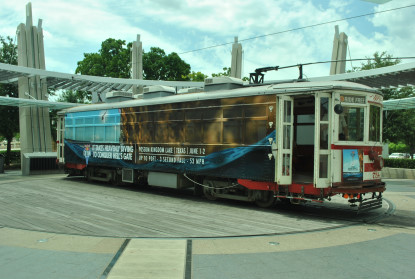
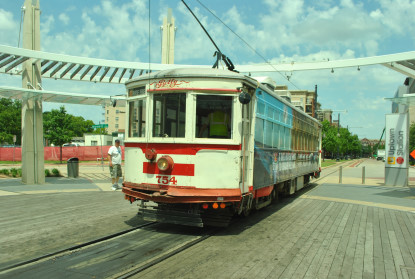
Trolley 754 being turned.
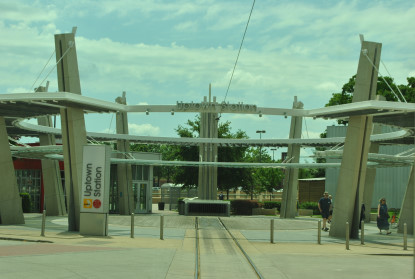
We then departed Cityplace/Uptown.
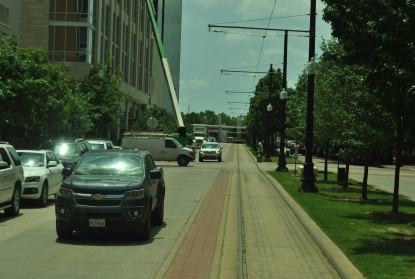
Returning down Cityplace West Boulevard to McKinney Avenue.
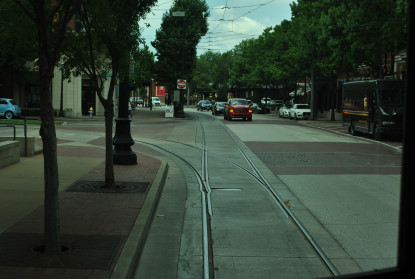
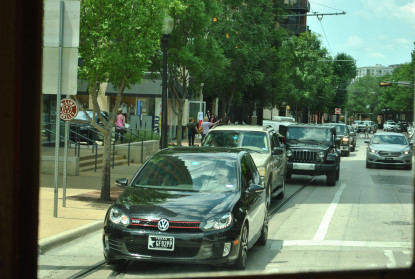
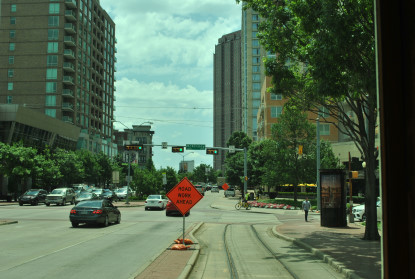
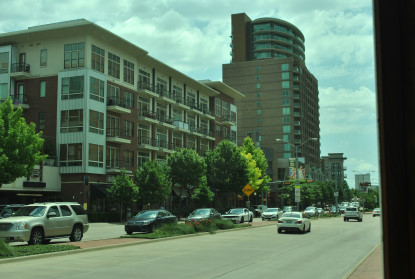
Turning right onto McKinney Avenue and the journey down it.
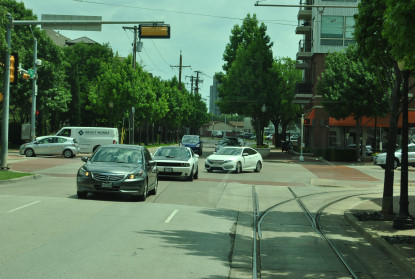
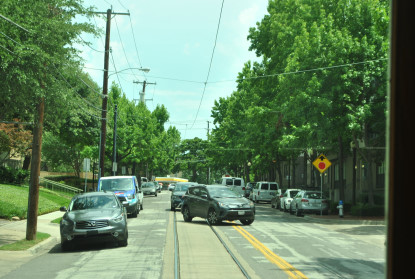
We turned onto Lemmon Avenue.
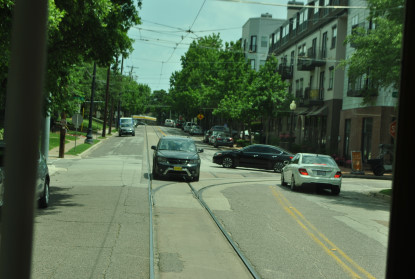
We turned onto Cole Street.
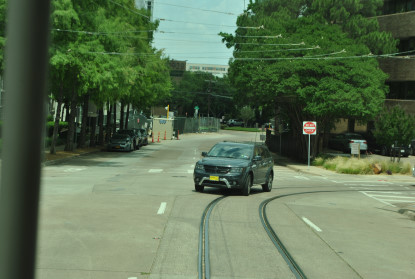
We then turned onto Allen Street.
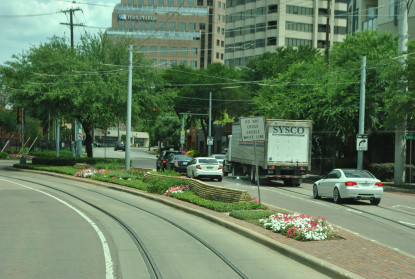
That road took us back to McKinney Avenue.
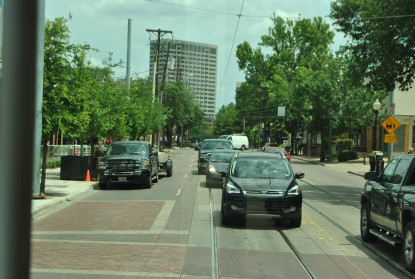
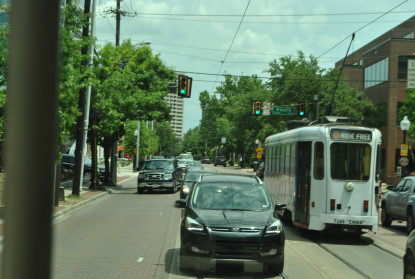
We passed Trolley 7169 "Emma", built in the United States in 1949 for the Johnstown Traction Company of Johnstown, Pennsylvania. After the Johnstown Traction Company ceased operations in 1960, she and several sister cars were sold to Brussels, Belgium. Her original body was found to be too wide for narrow European streets, leading her to receive a new, narrower body on the original U.S.-built trucks and electrical equipment. Car 7169 was put into ‘experimental’ service in 1970 and eventually operated on the streets of Brussels for over 40 years.
In 2012, John Landrum and Joel James were sent to Brussels to inspect 7169 to potentially join the MATA fleet. John operated her in revenue service over several Brussels lines and approved her mechanically. After being through a general service and inspection in the Brussels shops, the car was loaded aboard a freighter and repatriated to the United States, arriving in the late fall of 2012. A few years later, she entered service.
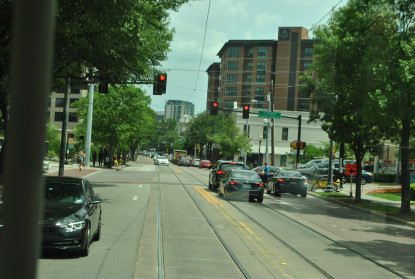
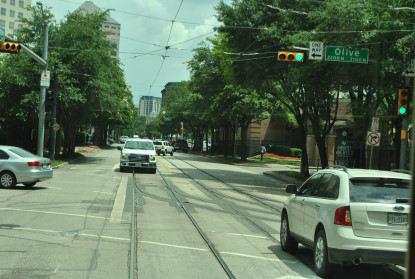
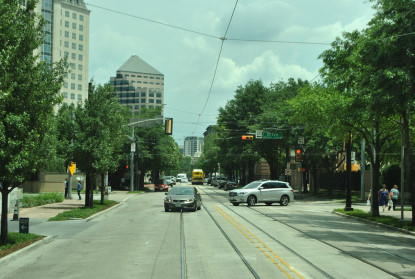
The journey on McKinney Avenue.
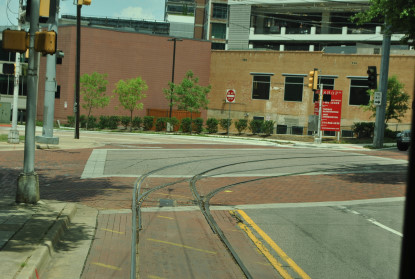
We turned right onto St. Paul Street.
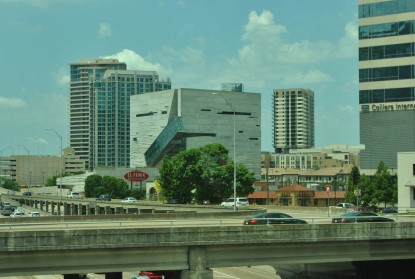
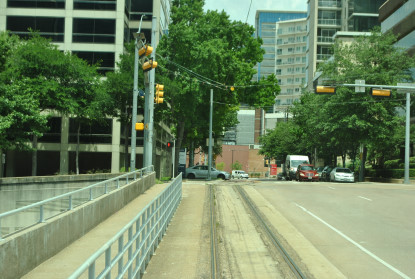
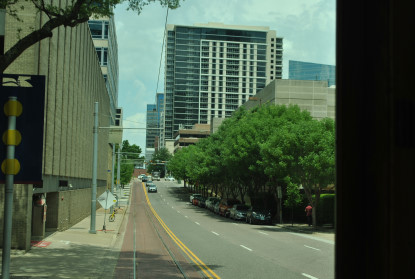
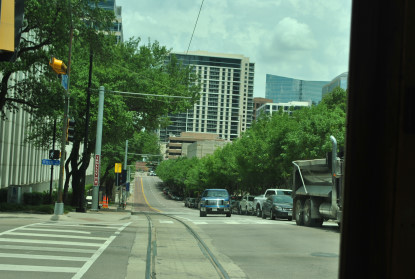
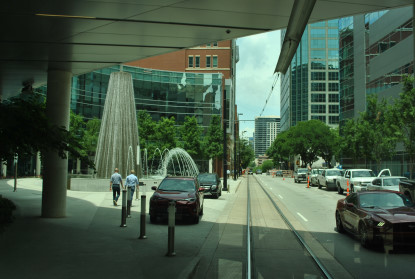
The journey down St. Paul Street.
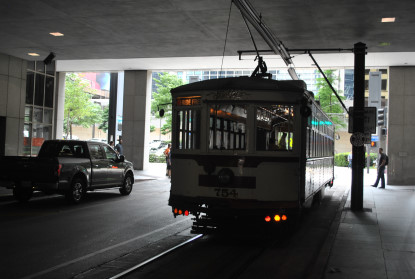
Back where we started, our trolley departing St. Paul station on another run. Chris Parker and I had thoroughly enjoyed our experience.
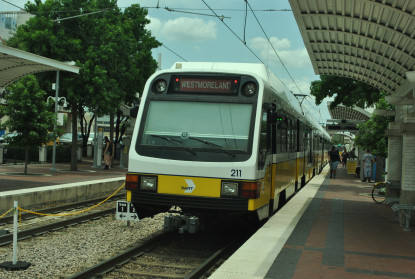
We boarded a DART Red Line train and rode it to Dallas Union Station.
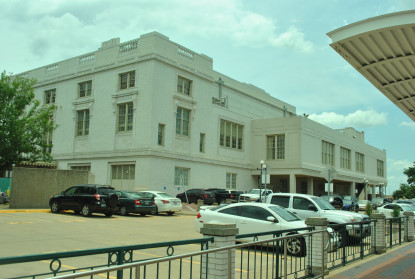
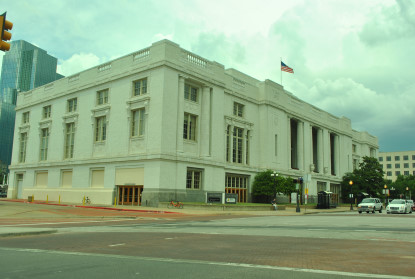
Dallas Union Station designed by Jarvis Hunt and built in 1916, as seen on the walk to the Dallas Streetcar, our next ride.
Dallas StreetcarThe Dallas Streetcar is a 2.45-mile modern streetcar line owned by the city of Dallas and operated by Dallas Area Rapid Transit, which also operates the light rail system. Construction on the line began in May 2013 and it opened for public service on April 13, 2015. The line operates between downtown Dallas and Oak Cliff by way of the Houston Street Viaduct, originally operating from Union Station to Methodist Dallas Medical Center, but an extension to the Bishop Arts District opened on August 29, 2016.
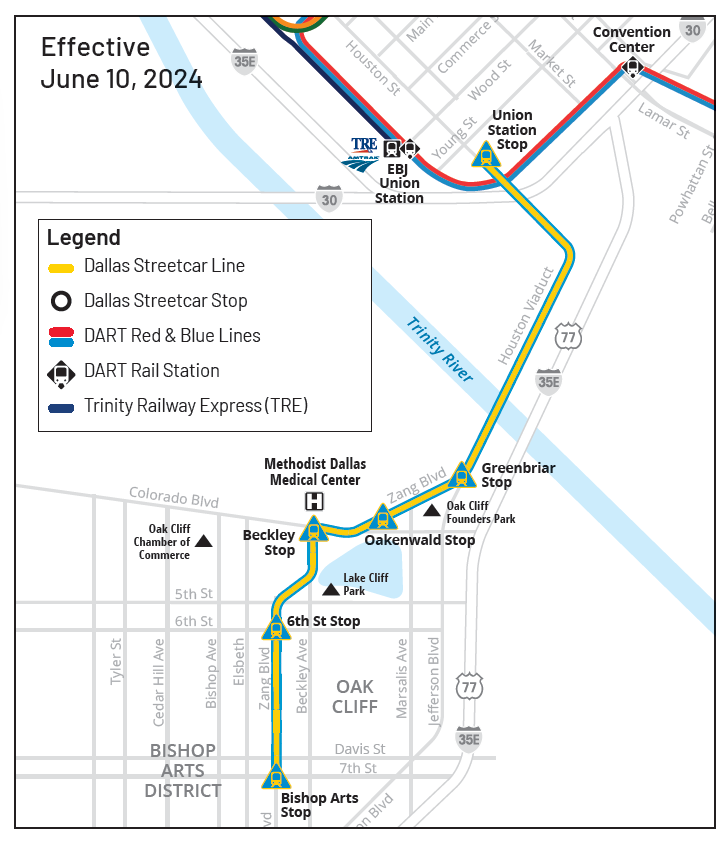
In February 2013, an order was placed with Brookville Equipment Corporation for two low-floor streetcars to provide the service on the line. The Brookville "Liberty" model articulated cars are 67 feet long and have limited capability to operate away from overhead trolley lines by operating on battery power. This battery-powered operation allows the streetcars to travel across the Houston Street viaduct, which does not have overhead lines installed. The first car (302) was delivered on March 20, 2015 and at the time of the line's opening, it was the only car in the fleet. The second car, 301, was delivered on May 15, 2015. Dallas ordered two more streetcars in July 2015 and the third and fourth cars (303 and 304) were delivered in summer 2016.
Our Ride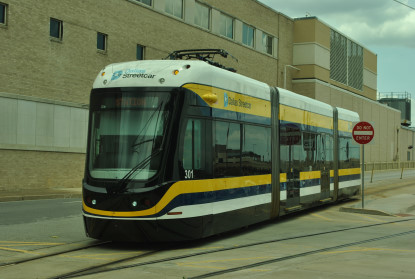
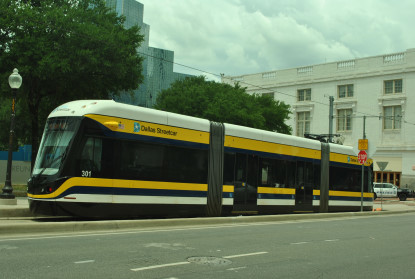
Dallas Streetcar 301.
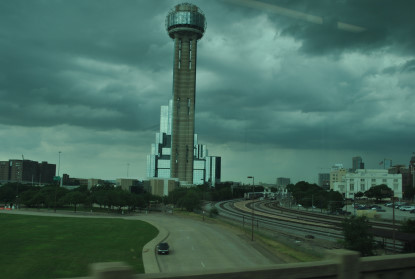
Reunion Tower looming over three trains at Dallas Union Station: Amtrak Train 21 Texas Eagle, a Trinity Rail Express and a DART train, as seen from the streetcar
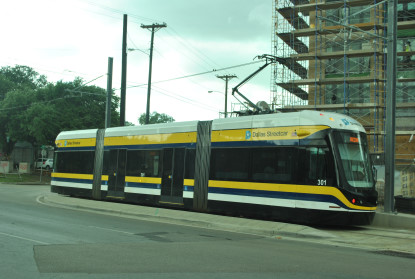
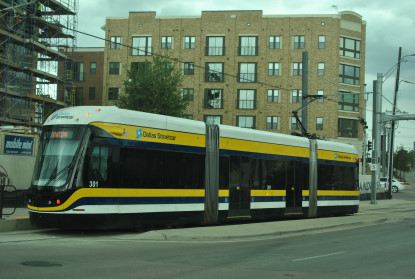
Dallas Streetcar 301 at Bishop Arts station, the southern terminus of the line.
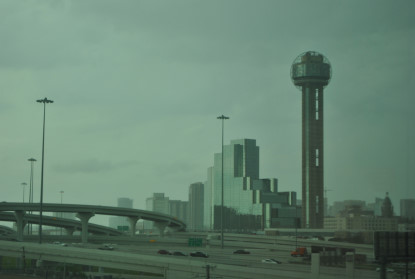
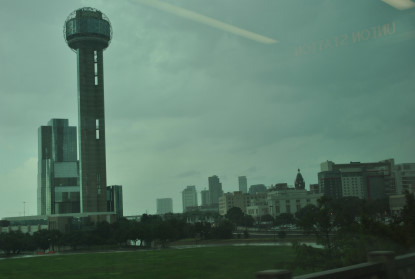
Views from the return journey.
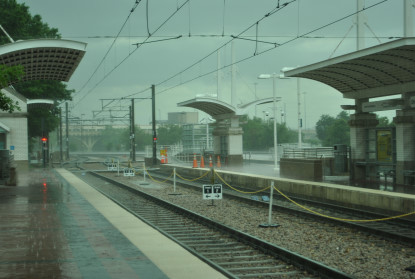
the weather turned really nasty and the two of us detrained into a torrential downpour, so we made a beeline into Dallas Union Station. We went back outside to the cover of the DART canopy to wait for any train to take us back to West End.
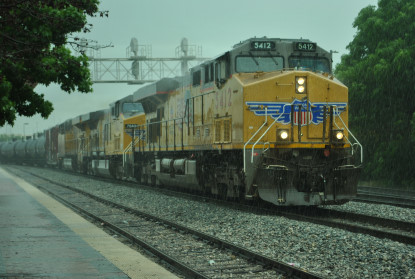
Union Pacific 5142 West came through during our wait.
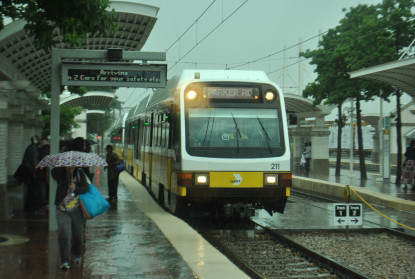
Our train for West End arrived and we boarding for the one-stop ride then ran to a canopy on the westbound track.
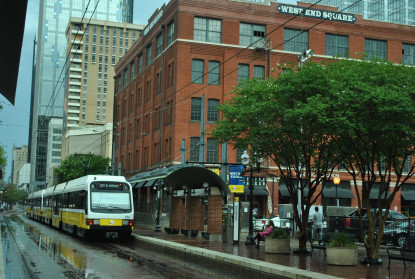
The train that took us to West End, the westernmost transfer station for the Green and Orange Lines.
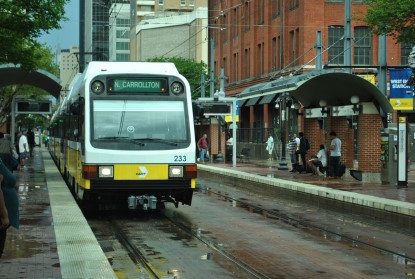
Our Green Line train arrived, we boarded and fares were inspected. The two of us enjoyed the ride then Chris Parker detrained at Trinity Mills to do some work on his tree-cutting business, while I rode to the north end of the line at Carrollton/Frankford, then joined him back at Trinity Mills.
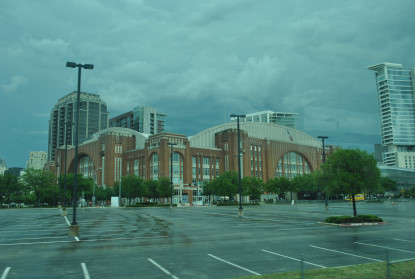
The American Airlines Arena where the Dallas Stars of the National Hockey League play.
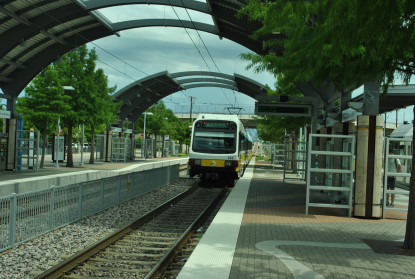
After I rode to Carrollton/Frankford with a one minute turn-around, here is my departing Trinity Mills train bound for Buckner.
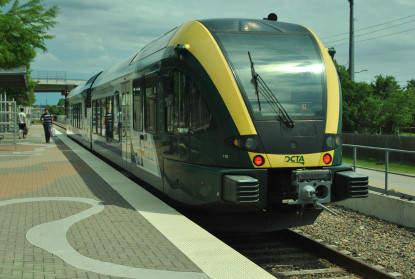
A final portrait of the A-train. We drove Interstate 35E north to Main Street and took that road through Blue Mound to Interstate 35W until traffic forced us onto surface streets to reach the Days Inn, where we checked in for our two-night stay. That evening was spent in Saginaw and we arrived there at 5:40 PM for the 7:00 PM start of 24 Hours at Saginaw.
| RETURN TO THE MAIN PAGE |