




Robin and I had an easy drive from Roanoke to Clifton Forge and we arrived at our destination on time for Robin's first visit and my second.
C&O Railway Heritage CenterThe Chesapeake and Ohio Historical Society is proud to offer The C&O Railway Heritage Center. This Center is a railway heritage museum, interpretive, educational and visitor’s center that tells the story of the C&O Railway: the people, the places and the technology. The story is the essential American tale of how our nation grew, how we lived and worked, and how we were all connected together by twin rails of steel. The purpose of this center is also to honour the memory and contribution of all the railroaders who built the railroads that allowed our nation to prosper, and all those railroaders who continue to keep America moving by rail.
The Goal of the Center is to be an inspiring, stimulating place that delights all who visit and leaves them with an understanding of the heritage of American Railroading. It is also designed to attract visitors and stimulate the economy of our community. Finally, it is to be a “center” of the Alleghany Highlands community, of the C&O Historical Society and of all the railroad centers within Virginia’s Rail Heritage Region.
Clifton Forge, though a small town, was an important place on the C&O. It was where locomotives were serviced and readied for the trip West over the Alleghany Mountains and East over the Blue Ridge Mountains and down the James River. There was a large shop facility for the overhaul and repair of locomotives. There was a large rail yard for classifying coal and other freight, a yard for less than car load freight, an icing facility, the main laundry facility for the railroad, a passenger coach yard and the division headquarters for the region. It was all the things that comprised a railroad, crowded into a small crescent of land next to the Jackson River, and an archetypal example of the American Railroad. The Center is also dedicated to preserving and telling the story of Clifton Forge.
Our Visit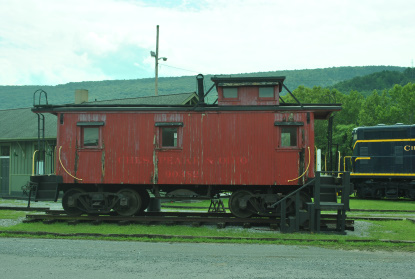
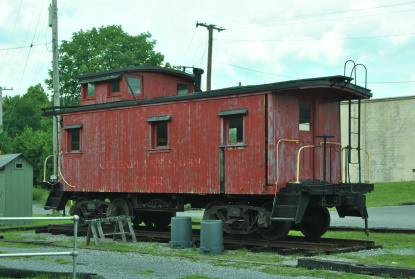
Chesapeake & Ohio wooden caboose 90382, nee Columbus, Hocking Valley and Toledo Railway 382, built in 1881. It was retired in 1953 and had been displayed at the Baltimore and Ohio Museum prior to coming to Clifton Forge.
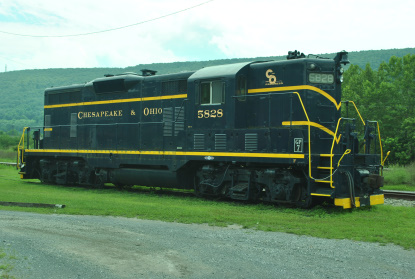
Chesapeake and Ohio GP7 5828, built by Electro-Motive Division in 1952.
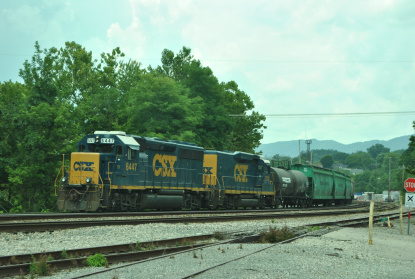
Clifton Forge'S CSX yard switcher 6447 pulled a cut of cars from the yard.
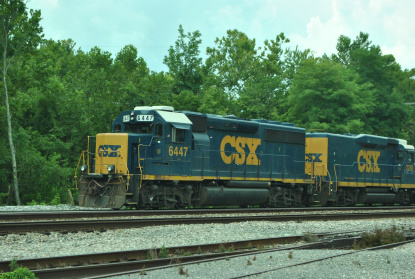
CSX GP40-2 6447, ex. CSX 6331, nee Baltimore and Ohio 4433, built by Electro-Motive Division in 1981.
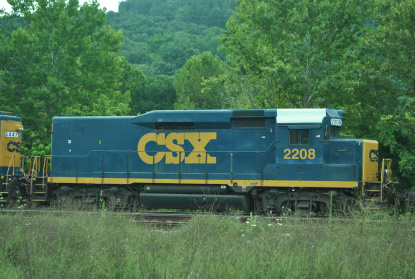
CSX Road Slug 2208, nee Baltimore and Ohio GP30 6959, built by Electro-Motive Division in 1962.
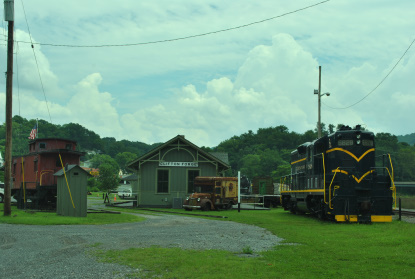
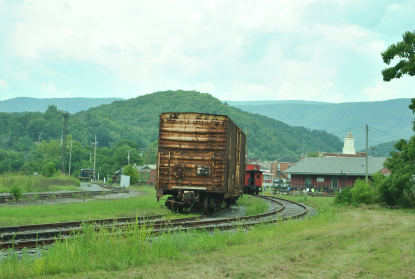
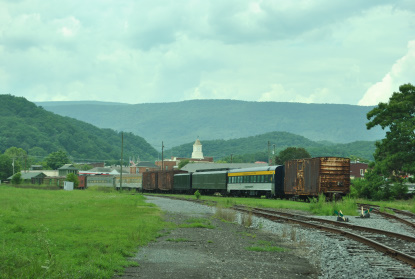
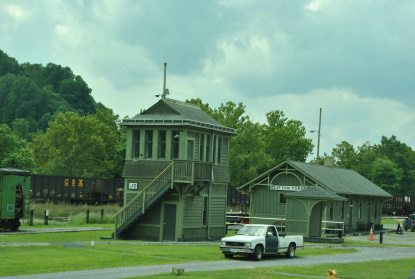
Museum scenes. We went into the replica Clifton Forge station and introduced ourselves to the lady who did not charge us, then returned outside to explore.
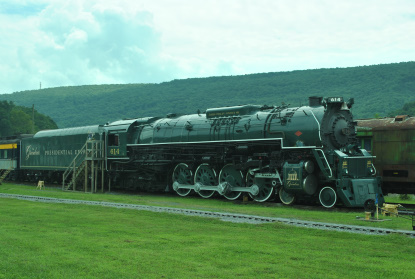
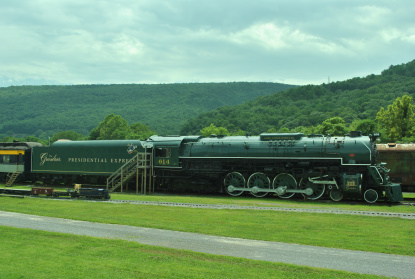
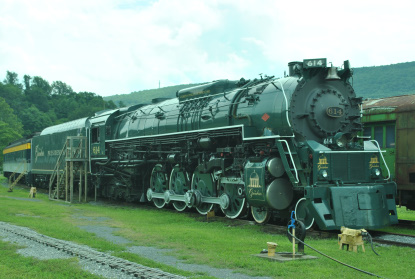
The pride and joy of this museum is Chesapeake & Ohio 4-8-4 614, built by Lima in 1948, now known as the Greenbrier Presidential Express. Although usually known as Northern type locomotives, the Chesapeake & Ohio decided to give its 4-8-4s a different name. The railroad's Greenbrier Hotel in White Sulphur Springs, which was then known for its luxury and prestige, thus formed the basis for the name "Greenbrier" that was applied to them. In all, the Chesapeake & Ohio would roster twelve 4-8-4s. They were designed to haul long, heavy high-speed express passenger trains such as the George Washington and the Fast Flying Virginian.
Like most steam locomotives built after World War II, the J-3s had a comparatively short life. All twelve were retired in 1955, although a number were briefly reactivated in 1956, including 614. Shortly after, all, except 614, were scrapped and the locomotive went into storage in Russell, Kentucky, until 1975, when it was donated to the Baltimore & Ohio Railroad Museum in Baltimore by the Chessie System, successor to the C&O. In 1979, the museum traded 614 with Ross Rowland for Reading 2101, which had been damaged in fire.
The following year, the restored locomotive hauled the Chessie Safety Express, working through 1981. The locomotive was then kept in Hagerstown, Maryland until 1985 when it began a short-lived experiment as an alternative to rising oil costs by burning a type of coal known as ACE 3000. It then returned to Baltimore. In 1998, 614 was moved into storage on the Reading & Northern Railroad in Port Clinton, Pennsylvania. In 1992, 614 steamed again to demonstrate Rowland's vision of his proposed 21st Century Express. One side of the locomotive was shrouded in blue streamlining and the headlight was centered.
Three years later, 614 was pulled to the New Hope & Ivyland Railroad in Pennsylvania for a complete overhaul. The overhaul was completed in 1996 and the locomotive was moved to Hoboken, New Jersey, from where it hauled a series of very successful excursions to Port Jervis, New York and return. In 1998, 614 went into storage on the Reading & Northern Railroad in Port Clinton. Two years later, Rowland put the locomotive up for auction but no buyers met the reserve price. In May 2011, 614 was again moved to the C&O Railway Heritage Center in Clifton Forge. From there, it was repainted in preparation for display for the Greenbrier Presidential Express. Unfortunately, the Greenbrier Express project was cancelled in May 2012 due to lack of funding and capacity problems on the CSX portion of the route, where a lack of passing sidings makes it difficult for eastbound trains to gain headway against the flow of westbound empty coal trains. The diesels and passenger cars were auctioned off and the 614 continues to sit on display at Clifton Forge.
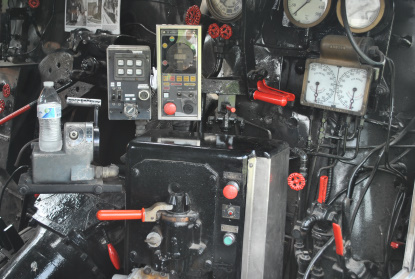
The cab of Chesapeake and Ohio 614.
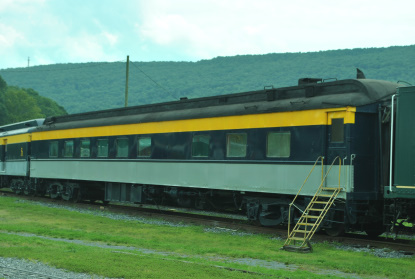
Chesapeake and Ohio dining car 965 "Gadsby's Tavern", built by Pullman in 1922 and used on C&O's George Washington passenger train starting in 1932 (the world’s first long-distance air-conditioned train).
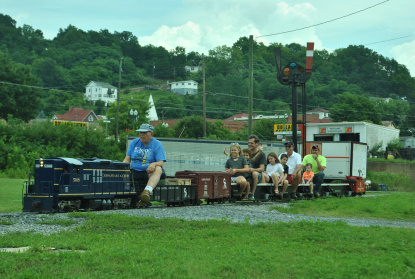
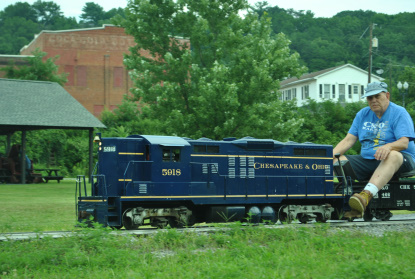
The small train came around the tracks, with Chesapeake & Ohio GP9 5918 pulling six cars. We would ride this train later.
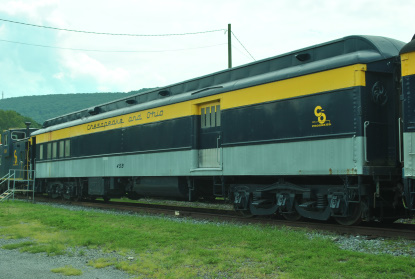
Chesapeake and Ohio combine 458, built by Bethlehem in 1926 and during its last 20 years of service, worked on the mixed train between Clifton Forge and Hot Springs, Virginia.
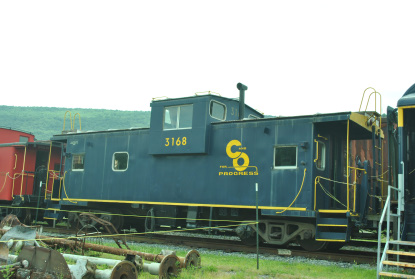
Chesapeake and Ohio wide vision caboose 3168, built by International Car in 1968..
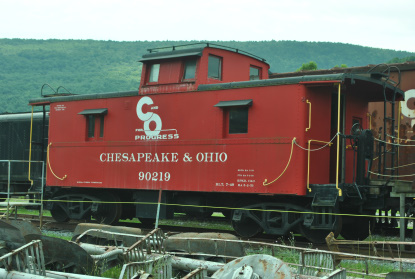
Chesapeake & Ohio caboose 90219, built by American Car and Foundry in 1949.
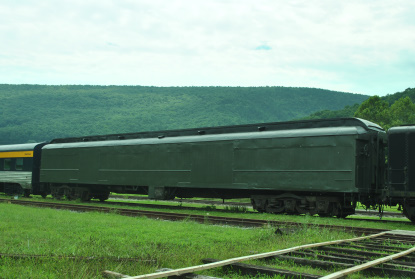
Chesapeake & Ohio baggage car 940159, builder and year unknown, last used in maintenance-of-way service.
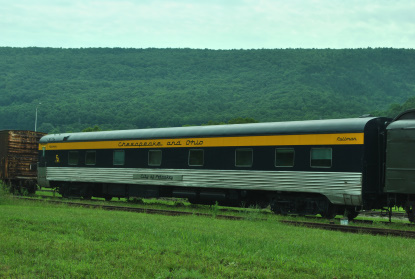
Chesapeake & Ohio 10-6 sleeper 2655 "City of Athens" built by Pullman in 1950, then sold to the Baltimore and Ohio and became "City of Petoskey". It was used on C&O then sold to B&O and used on its trains for many years. C&O operated 55 of this type sleeping car.
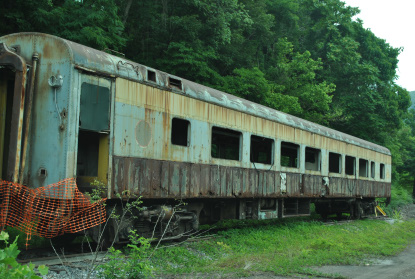
Central of New Jersey coach 333, ex. Missouri Pacific 492, exx. Chesapeake and Ohio 754, nee Chesapeake & Ohio parlor car 1803 "Elk Lake" built by Pullman Standard in 1950.
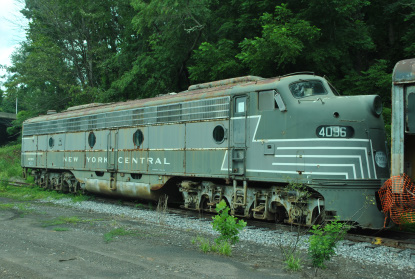
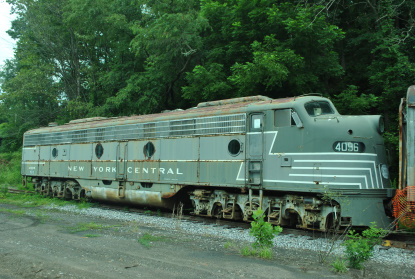
Vintage Locomotives Inc. E9A 4096, ex. New York Central E9A 4096, exx. Amtrak 417 1972, nee Union Pacific 912, built by Electro-Motive Division in 1963. It was sold to Connecticut Valley Railroad Museum in Essex, Connecticut in February 1985, changed to The Railroad Museum of New England in 1988 then painted and numbered as New York Central 4096 in July 1986. In 1996, it was sold to Ed Bowers of Vintage Locomotives, Incorporated, when the museum moved to nearby Waterbury, Connecticut. It was moved to Danbury Railway Museum in June 1997 and moved during early June 2017 from Connecticut to Waycross, Georgia.
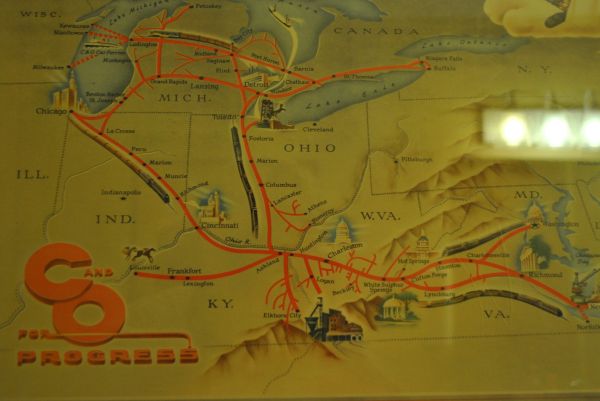
A Chesapeake and Ohio system map on the wall of the freight house. The reflection of the light was unavoidable.
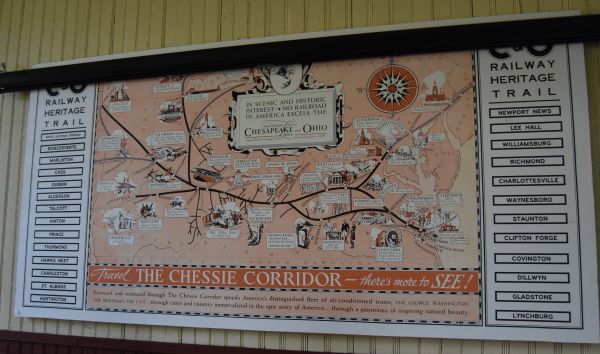
The C&O Heritage Trail map.
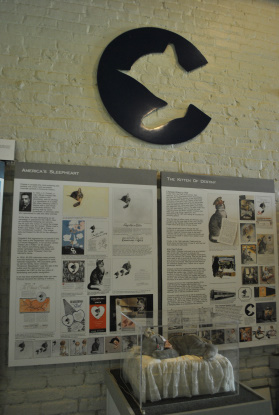
A display on Chessie, the famous C&O cat. I asked about riding the small train and received a positive response. One lap was a quarter of a mile and while the normal number of laps was three, the fellow said he would do four if there was no one waiting.
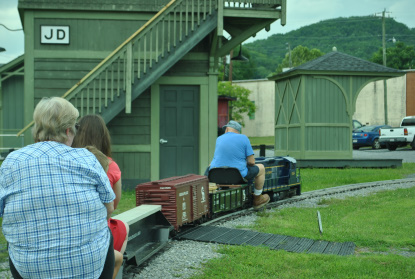
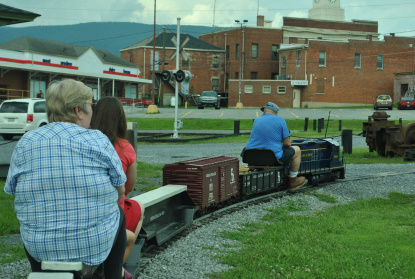
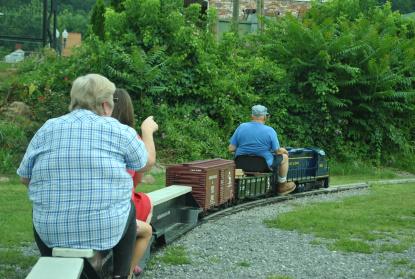
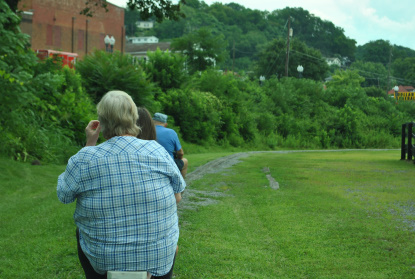
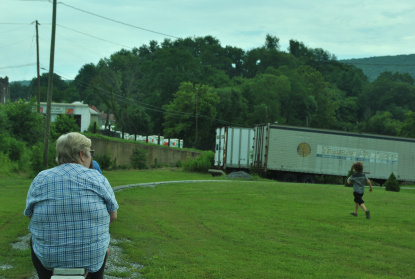
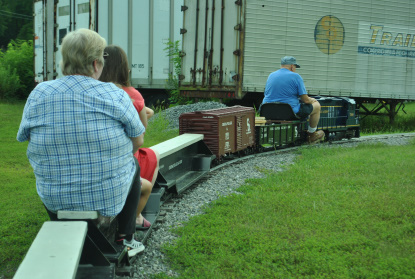
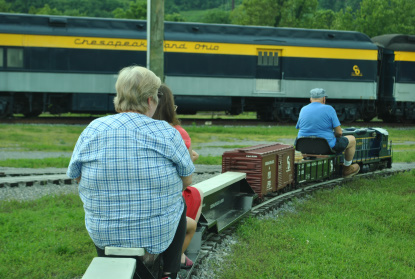
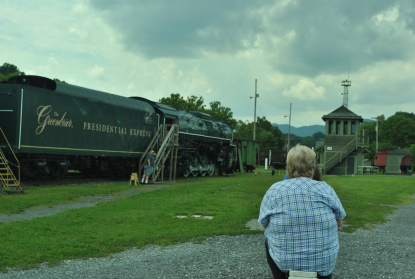
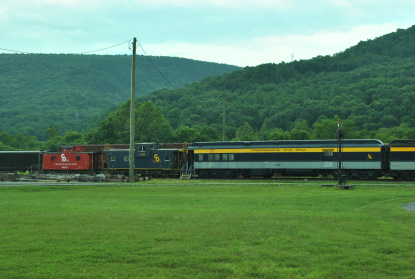
Scenes from the first lap, which Robin and I both enjoyed.
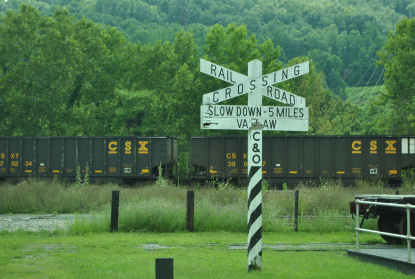
A Chesapeake and Ohio Railroad crossbuck. We drove to Hardees for lunch then to Covington.
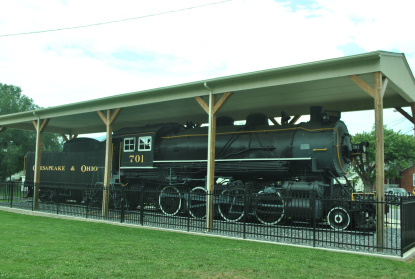
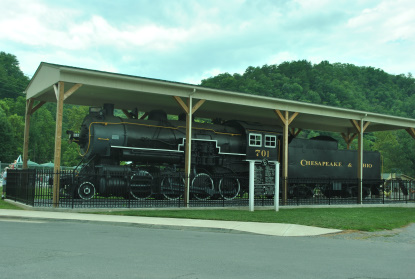
Chesapeake and Ohio 2-8-0 701, nee Hocking Valley 191 built by American Locomotive Company in 1911. The Hocking Valley was primarily a coal hauler, operating entirely in the state of Ohio, with a main line from Toledo to Athens and Pomeroy via Columbus, and several branches to coal mines in the Hocking Valley near Athens. Most of its life was spent under the control of outside railroads. In 1903, a syndicate comprising the Pennsylvania Railroad, Baltimore and Ohio, Chesapeake and Ohio, Erie and Lake Shore & Michigan Southern acquired majority ownership. From 1906, the C&O began to increase its ownership until it gained outright control in 1910, although the HV continued to operate as a separate entity until merged into the C&O in 1930. At that time, 171 was renumbered Chesapeake and Ohio 701 and reclassified as a G-5.
Most of the G-5s remained on the Hocking Valley's central and southeastern Ohio lines under the C&O, but 701 was transferred to Clifton Forge in 1940 to spend the next decade and more hauling passenger trains from Covington to Hot Springs. During its operating life, 701 garnered two nicknames: "Tojo" because it transported Japanese prisoners of war to internment camps in Hot Springs and "The Merry Widow", apparently because it gave the impression of happily steaming along alone on the Hot Springs branch line. It was retired by the C&O, donated to the City of Covington in 1954 and underwent a cosmetic restoration in 2015.
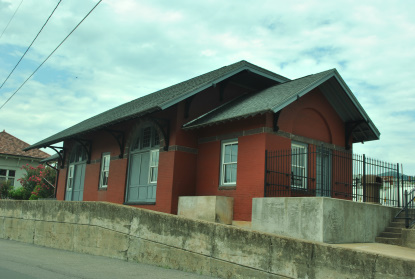
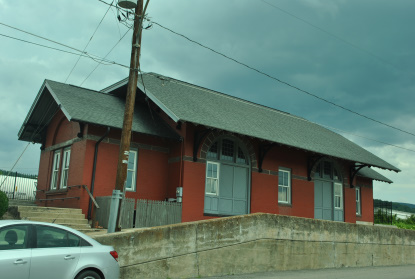
Chesapeake and Ohio freight house in Covington.
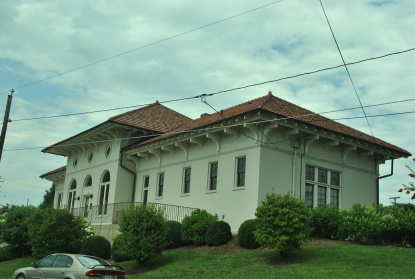
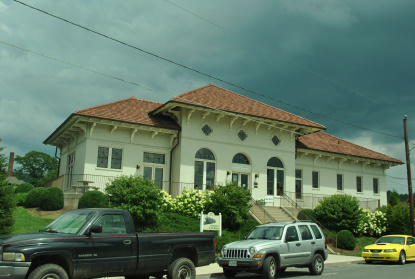
The Chesapeake and Ohio station, built in 1891. Established in 1958, the Allegheny Historical Society preserves the history of the Allegheny Highlands region, but the building itself plays a role in the historic story. The society is housed inside two adjacent buildings that began as the Chesapeake & Ohio Covington Passenger Depot, with the first originally completed in 1890 and the additional depot structure added in 1908.
The two of us drove US 220 north to Hot Springs, where we checked into the RoseLoe Motel then later went to Subway for dinner and called it an early night.
| RETURN TO THE MAIN PAGE |