




The busses were waiting, the three of us boarded the first one and they left together. When we arrived, I made a beeline to the tent where the self-serve lunch was laid out and partook of my meal then I could ride the 2:00 steam train. As I left the area, I found the queue wrapped around the corner of the tent and beyond. I walked over to the front of the steam train finding my dear friend, Carl Morrison, who just happened to be at Perris this afternoon.
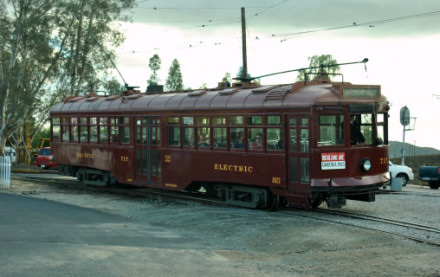
Orange Empire Railway Museum Hollywood car 717 1960-present, ex. Los Angeles Metropolitan Transit Authority 1815 1958-1960, exx. Metropolitan Coach Lines 5167 1954-1958, exxx. Pacific Electric 5167 1949-1954, nee Pacific Electric 717 1925-1949 built by J.G. Brill Company in 1924.
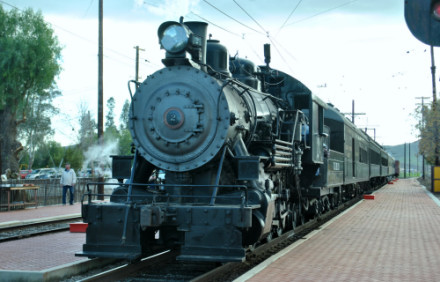
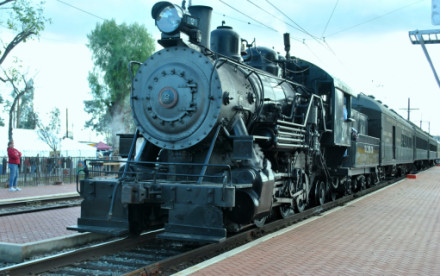
Orange Empire Railway Museum 2-6-2 2, ex. Terry Durkin 1970, exx. W.E. Standish at Port Hueneme 1964, exxx. Ventura County Railroad Company 2 1943, exxxx. Cascade Timber Companyy 107, nee Pacific States Lumber Company 107, built by Baldwin in 1922, on the point of our steam train. I boarded the third car for my round trip to 7th Street in Perris.
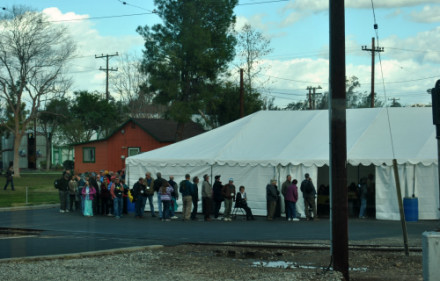
The line for the PRS lunch. At 2:00 PM, the steam train whistled off and we were on our way.
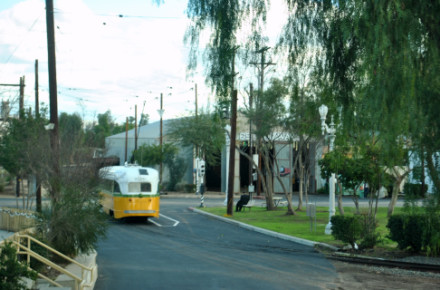
The PCC car travelling down Alpine Drive.
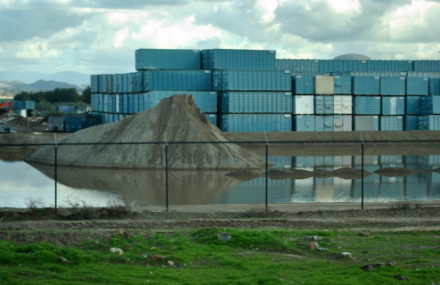
A child commented that this looked like the iceberg that sunk the Titanic.
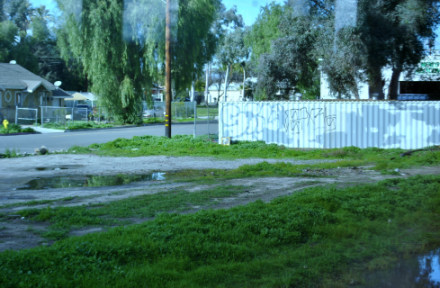
This was as far as we travelled.
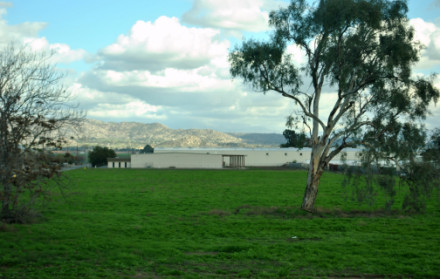
Since this line is almost completely straight, photographs of the steam train were difficult. I detrained and walked back to the normally off-limits Car Barn 7; this was my first inside.
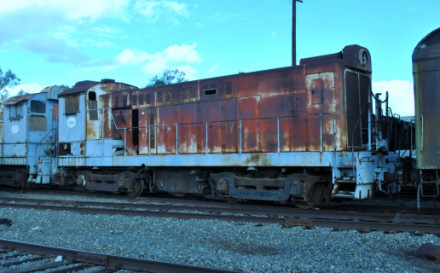
Kerr McGee S-12 844, nee Southern Pacific 1543, built by Baldwin in 1953.
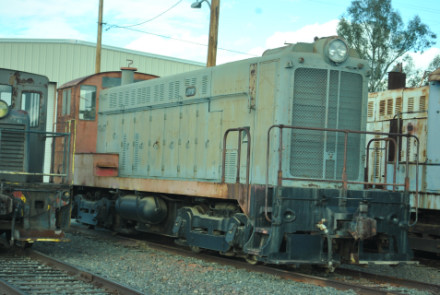
Port of Los Angeles VO-1000 8, nee United States Navy 2, built by Baldwin in 1945.
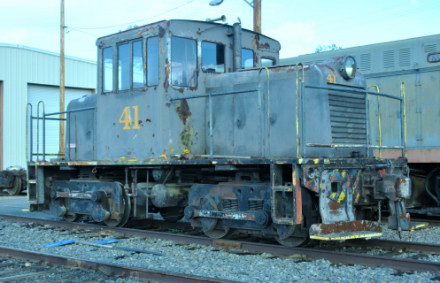
United States Air Force 45 ton switcher 7441 built by General Electric, originally at March Air Force Base.
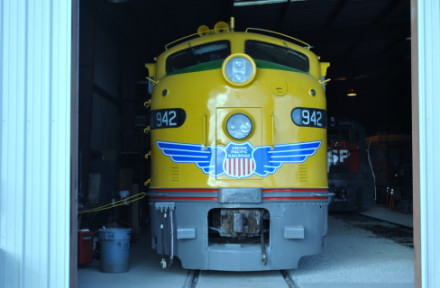
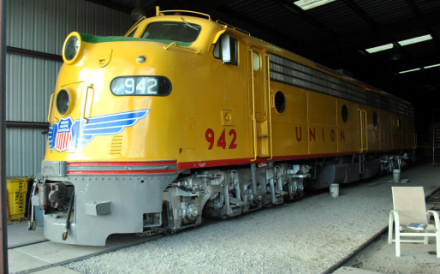
Union Pacific E8A 942, ex. Metra 510, nee Chicago and North Western 510, built by Electro-Motive Division in 1952.
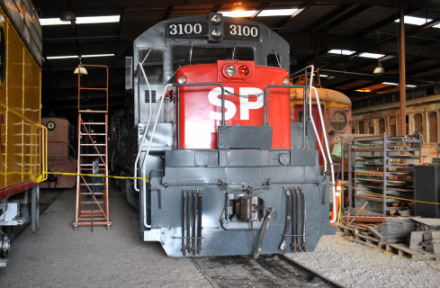
Southern Pacific U25BE 3100, ex. Southern Pacific 6800, exx. Southern Pacific 6708, nee Southern Pacific U25B 7508, built by General Electric in 1963.
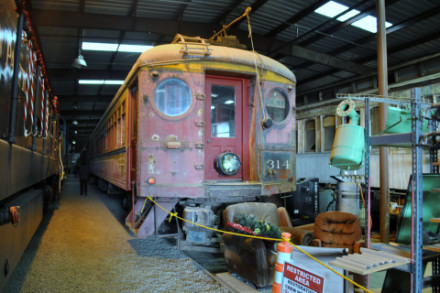
Orange Empire Railway Museum MU coach blimp 314 1959-present, ex. Metropolitan Coach Lines 314 1954-1959, exx. Pacific Electric 314 1947-1954, exxx. Pacific Electric 4509 1942-1947, nee Northwestern Pacific 384 1930-1942, built by St. Louis Car Company in 1930.
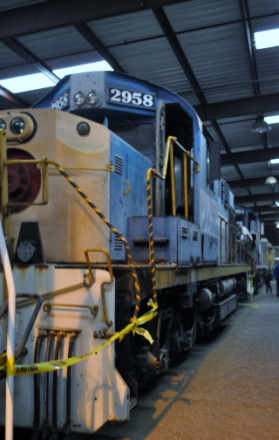
Southern Pacific RSD12 2958 built by American Locomotive Company in 1961.
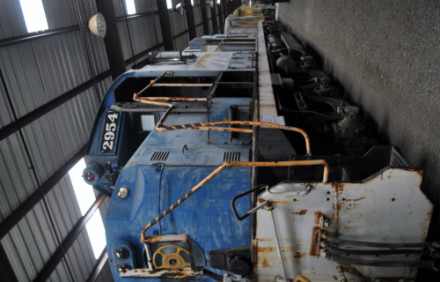
Orange Empire Railway Museum RSD-12 2954, ex. Metropolitan Stevedor 2, exx. Oregon, California and Eastern 2954, exxx. Southern Pacific 2954, nee Southern Pacific 7004, built by American Locomotive Company in 1961.
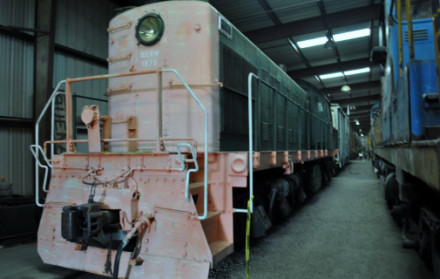
Orange Empire Railway Museum MRSD-1 1975, ex. Department of Transportation 015, nee United States Air Force 8018 built by American Locomotive Company in 1942.
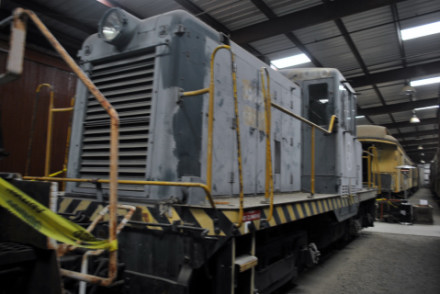
United States Air Force B-B-90/90 8580 built by General Electric in 1944.
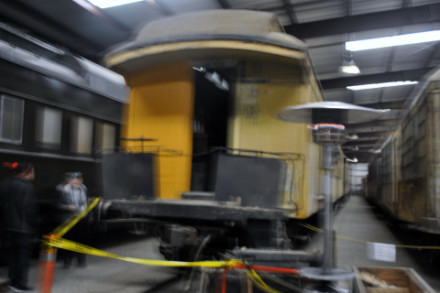
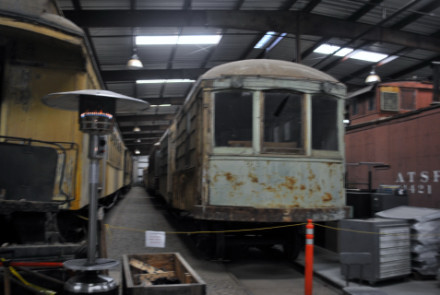
Rolling stock under restoration.
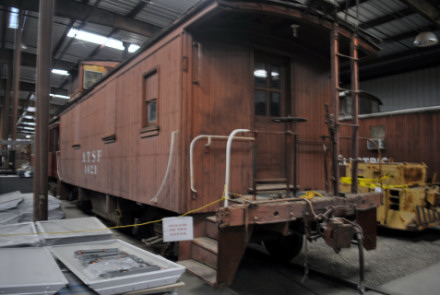
Santa Fe wooden caboose 1421 built by American Car and Foundry in 1923.
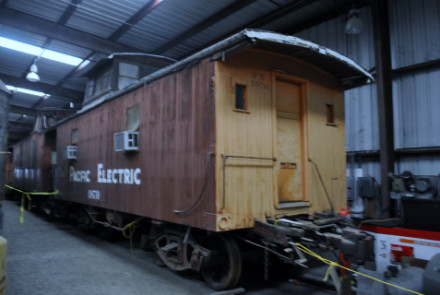
Pacific Electric caboose 1970 built by the Lake Shore and Michigan Southern shops in 1910. At some point, it was sold to the Pacific Electric Railway.
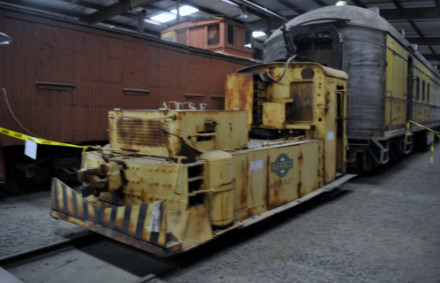
American Potash & Chemical Company E-513 built by Baldwin-Lima-Hamilton in 1955.
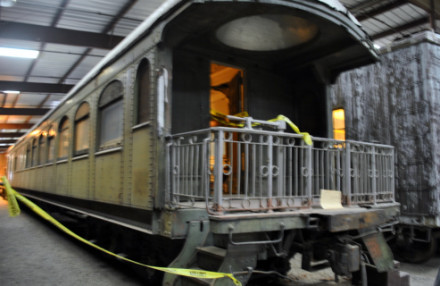
Santa Fe maintenance-of-way recreationg and sleeping car 198814 1953, ex. Santa Fe parlour-observation car 3209 1927, nee Santa Fe 1204, built by Pullman Company in 1910. It was delivered in a rather unusual colour scheme of off-white "mortar" sides with a red roof and a unique "Mission Style" interior. It gained standard green paint in 1917 and was steel-sheathed in the 1930's. It was stored at Slaton, Texas for potential restoration and use on Santa Fe 4-8-4 2925 excursions when that steam engine was being evaulated for possible restoration. When the project was cancelled, this car was donated to the museum.
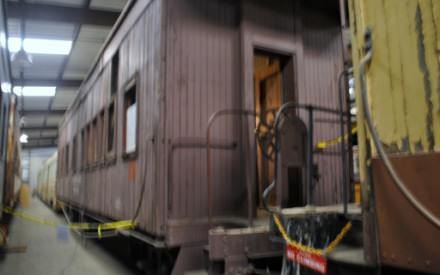
Santa Fe drover's caboose D918, built by the railroad in 1929, which I toured.
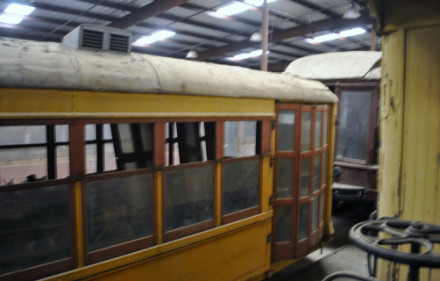
Southern California Railway Museum Birney streetcar 83 1960-present, ex. Pacific Electric 152 1933-1941, nee Fresno Traction 83 1925-1933 built by St. Louis Car Company in 1925.
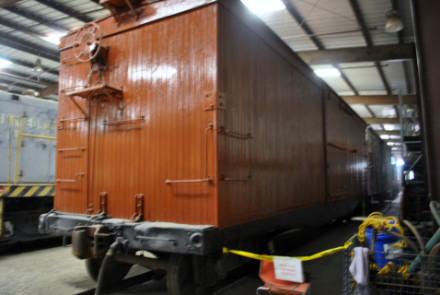
A wooden box car being repainted.
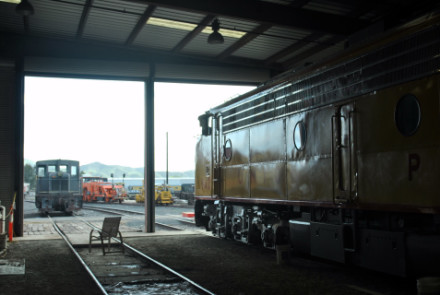
The view looking outside.
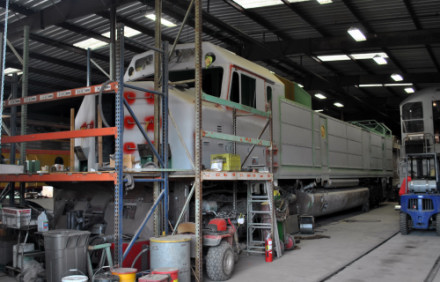
Undergoing restoration was Santa Fe FP45 98, ex. BNSF 98, exx. ATSF 5998, exxx. ATSF 102, exxxx. ATSF 5998, exxxxx. ATSF 5948, nee ATSF 108, built by Electro-Motive Division in 1967. This was the last FP45 bought by the railway and was the first of two to be re-painted in Superfleet red and silver livery in 1989.
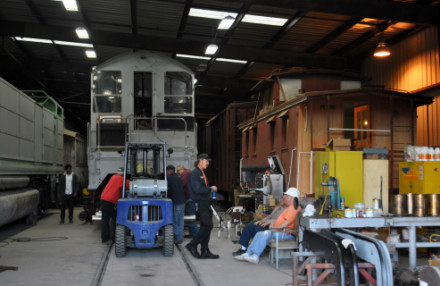
The restoration area of Car Barn 7.
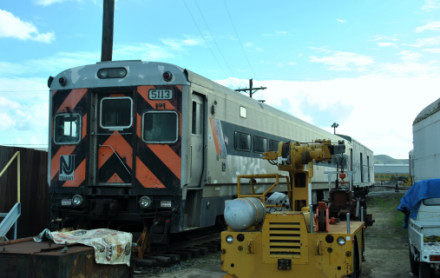
New Jersey Transit Comet 1 car 5113, nee Erie-Lackawanna 1513, built by Pullman-Standard in 1971. I took the shuttle train from Car Barn 7 to Car Barn 4.
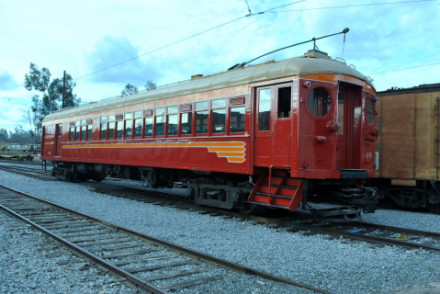
Orange Empire Railway Museum blimp combine 498 1959-present, ex. Los Angeles Metropoliltan Transit Authority 1546 1958-1959, exx. Metropolitan Coach Lines 498 1954-1958, exxx. Pacific Electric 498 1947-1954, exxxx. Pacific Electric 4702 1946-1947, exxxxx. United States Maritime Commission 302 1944-1946, exxxxxx. United States Maritime Commission 27 1943-1944, exxxxxxx. United States Maritime Commission 627 1942-1943, exxxxxxxx. Interurban Electric Railway 627 1934-1942, nee Southern Pacific 627 1913-1934, built by Pullman Company in 1913.
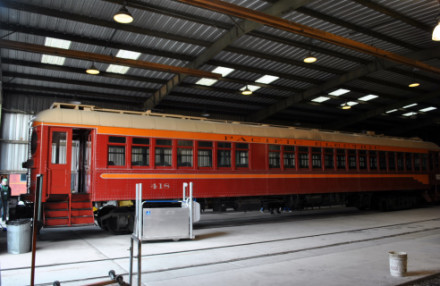
Orange Empire Railway Museum coach blimp 418 1961-to present, ex. Los Angeles Metropolitan Transit Authority 1528 1958-1961, exx. Metropolitan Coach Lines 418 1954-1958, exxx. Pacific Electric 418 1947-1954, exxx. Pacific Electric 4614 1944-1947, exxxx. United States Maritime Commission 344 1942-1944, exxxxx. Interurban Electric Railway 344 1934-1942, nee Southern Pacific 344 1913-1934 built by Pullman in 1913. It was retired in 1961 and went to Orange Empire Railway Museum where it was restored as Pacific Electric 418.
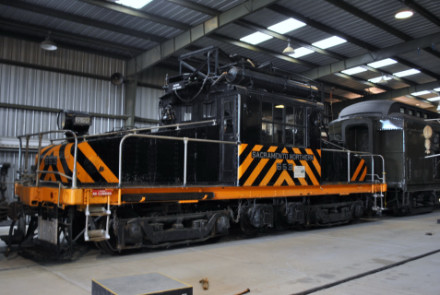
Orange Empire Railway Museum steeplecab 653 1965-present, ex. Sacramento Northern 653 1930-1965, nee Northern Electric 1053 1928-1930, built by General Electric in 1928.
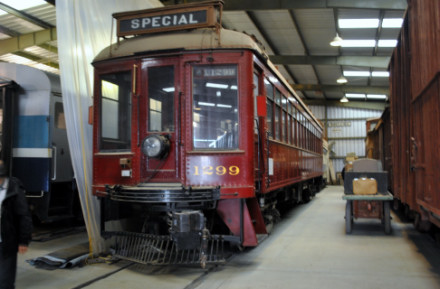
Orange Empire Railway Museum parlour car 1299 1998-present, ex. Los Angeles County Fairgrounds 1299 1958-1998, exx. Pacific Electric 1299 1929-1958, exxx. Southern Pacific 477 1915-1929, nee Portland, Eugene and Eastern 477 1914-1915, built by Pullman Company in 1912.
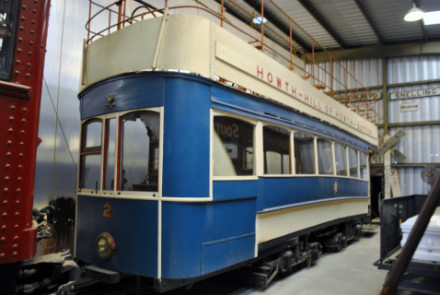
Hill of Howth Tramway 2 built by Brush Electrical Engineering Company in Dublin, Ireland in 1901. Up until the 19th century, Howth was a remote place with the small communities living there able to produce much of what they needed for themselves. As a result, no real roads or routeways in and out of the peninsula were developed. Journeys to the outside world were more likely to have been made on water than on land and the usual way of getting to Dublin city was by boat from Sutton harbor to the Liffey basin. Only wealthy people could afford to travel by land as hiring a stagecoach was expensive with fares priced at around 10 shillings. There was also the added cost of hiring armed guards to deter the highwaymen who plagued the routes to Howth in the hope of catching wealthy victims.
It was not until the 19th century, when the British Government selected Howth as the gateway for the mail boat service that operated between Holyhead and Dublin, that Howth Harbour was first developed. The harbour was constructed in 1807 using local rock from the nearby Kilrock quarry. The work finished in 1817 and Howth became the mail boat station for Dublin in 1818 leading to the development of the Harbour lighthouse, a stagecoach inn and the Lower Road linking the Howth and Balscadden communities. These developments attracted the attention of competing railway companies operating in Dublin at this time with several of them proposing plans to captialise on the recreational potential of Howth. It was Great Northern Railways who won out in the end laying a tramway around the hill to connect it with the preexisting Howth railway station which had been developed in 1847.
The tram line was officially opened on 1st June 1901 and was known as the Hill of Howth Tramway. The recreational nature of the line succeeded in bolstering local tourism with people using the line to go swimming in Balscadden beach in fine weather. Great Northern Railways incentivized their first-class passengers to participate by offering them private changing cubicles on the beach. The company also constructed the lower cliff path which now forms part of the famous Howth Cliff Walk for their passengers to enjoy. The line was five miles long running from Sutton Station along Carrickbrack road, past St. Fintan’s Cemetery up through the gorse-covered hill rising 365 feet above sea level at the summit. This was the most popular stop as it offered magnificent views across Dublin Bay. Passengers who alighted here could treat themselves to welcome refreshment in the pavilion which once stood on the summit. Of course, it was a different story in poor weather as the roofless tram cars would have offered little protection against the rain. It was even recorded that during storms the unfortunate driver used to get drenched by waves lashing against the tram. From the summit the tram ran down into Howth and terminated at the railway station.
Road improvements in the 1920's meant bicycles, motor cars and the bus became more popular methods of transport than the tram system. In 1958, CIE (Córas Iompair Éireann) took over the Great Northern Railways and despite promises to keep the line running, they allowed for the deterioration of the cars to the point that it was not economically viable to keep them, and the line closed one year later. Some of the trams were rescued when they were acquired by Britain's National Tramway Museum at Crich in Derbyshire while others were sent to Belfast and even as far afield as California.
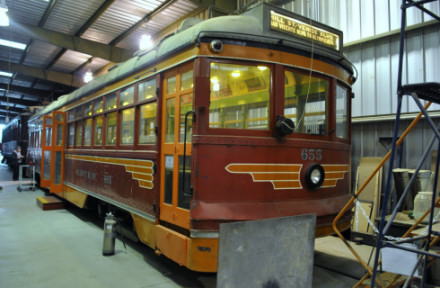
Orange Empire Railway Musuem center-entrance interurban "Hollywood" car 655 1996-present, ex. private owner 655 1965-1996, exx. Pacific Electric 5094 1949-1954, nee Pacific Electric 655 1924-1949, built by St. Louis Car Company in 1924.
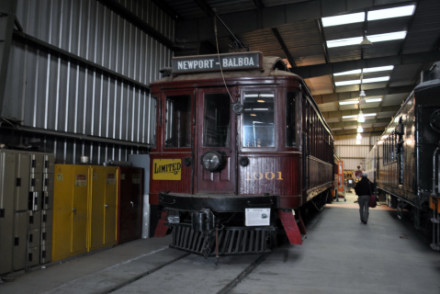
Orange Empire Railway Museum interurban 1001 1954-present, ex. Pacific Electric 00199 1948-1954, nee Pacific Electric 1001 1913-1948, built by Jewett Car Company in 1913.
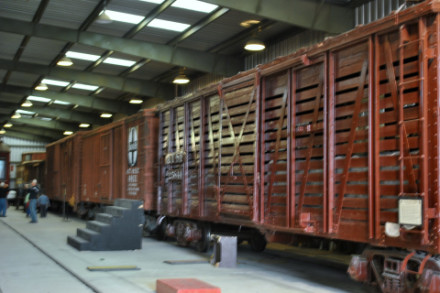
Santa Fe stock car 25840, built by the railroad in 1923, Santa Fe wooden refrigerator car 49131, built by Pullman in 1912, and Tonopah & Tidewater box car 111 built by the Delaware, Lackawanna and Eastern in 1885. I next went inside Car Barn 2.
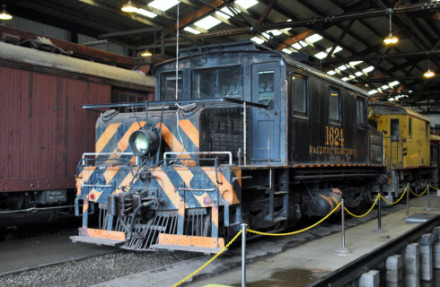
Orange Empire Railway Museum steeplecab 1624 1960-present, ex. Los Angeles Chapter National Railway Historical Society 1958-1960, nee Pacific Electric 1624 1925-1958, built by Baldwin-Westinghouse in 1925.
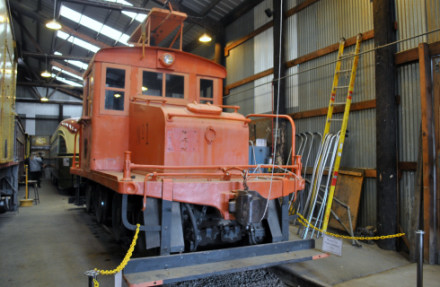
Orange Empire Railway Museum steeplecab 1 1970-present, ex. Hutchinson and Northern 1 1927-1970, nee Carey Salt Company 1921-1927, built by General Electric Company in 1921.
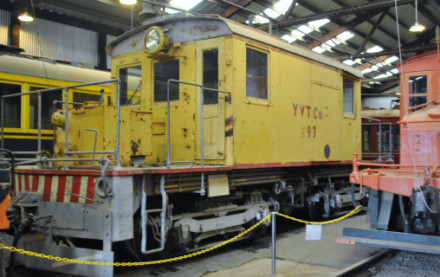
Orange Empire Railway Museum steeplecab 297 1985-present, ex. Yakima Valley Traction 297 1942-1985, exx. Los Angeles and Salt Lake E100 1930-1942, nee Glendale and Montrose 22 1923-1930, built by Baldwin-Westinghouse in 1923.
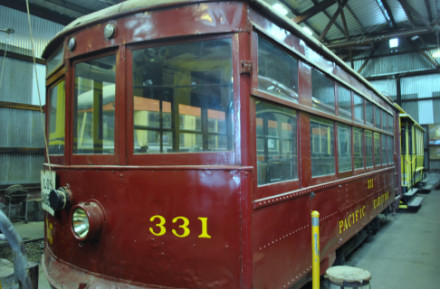
Orange Empire Railway Museum Birney safety car 331 1966-present, ex. Metro Goldwyn-Mayer 331 1940-1966, exx. Pacific Electric 331 1935-1940, nee Pacific Electric 361 1918-1935, built by J.G. Brill Car Company in 1918.
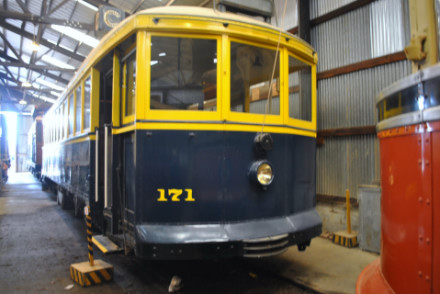
Key System Articulated Bridge rapid transit car 167 built by Bethlehem Steel in 1937.
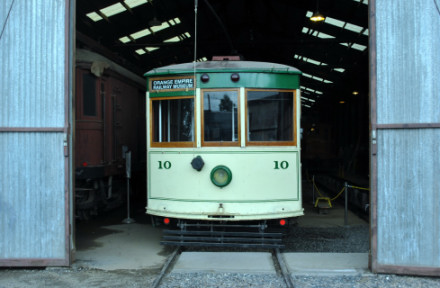
Pacific Electric Birney Safety car 332 built by J.G. Brill in 1918. It spent most of its career in Redlands, until rail operations were replaced by buses in 1936. The car was later assigned to the local lines in Pasadena and retired in 1941 when the local lines were replaced bus service. Fortunately, MGM Studios bought four of them where they starred in such movies as "Singin' in the Rain". A famous scene in the movie has Gene Kelly running across the roof of a Birney Car and jumping into convertible driven by Debbie Reynolds. Cars 331 and 332 were purchased by the Orange Empire Trolley Museum from MGM in the 1960's and brought to the museum in Perris.
Car 332 was leased to the Old Pueblo Trolley in Tucson, Arizona in 1985. 332 was restored to full operation by the OPT staff and operated for the first time in 1991. During the restoration, 332 was painted into the former Tucson Rapid Transit cream and green paint scheme and renumbered car 10 to reflect one of the Birneys that ran in the 1920's in Tucson. The OPT opened for service on April 17, 1993. PE 332/OPT 10 operated in Tucson until March 1995, when it was returned to the museum. Since the cars return, it still masquerades as Tucson Rapid Transit 10.
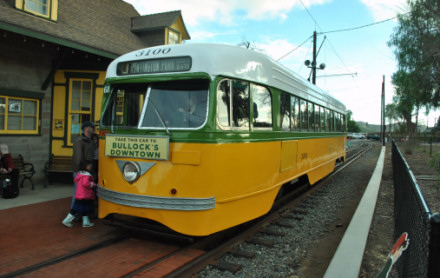
Orange Empire Railway Museum PCC car 3001 1963-present, ex. Los Angeles Metropolitan Transit Authority 3001 1958-1963, exx. Los Angeles Transit Lines 3001 1945-1958, nee Los Angeles Railway 3001 1937-1945, built by St. Louis Car Company in February 1937. I rode this around the streetcar loop.
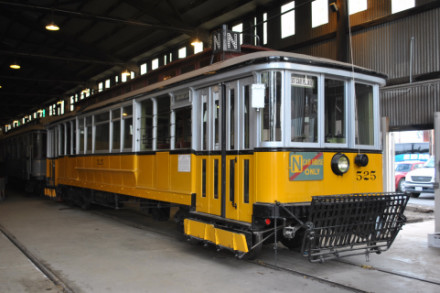
Orange Empire Railway Museum streetcar 525 1959-present, ex. Travel Town 525 1955-1959, exx. Los Angeles Transit Lines 525 1945-1955, nee Los Angeles Railway 525 1906-1945, built by St. Louis Car Company in 1906.
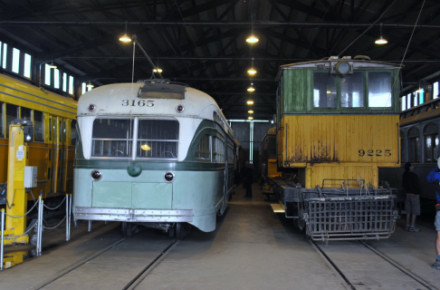
On the left is Orange Empire Railway Museum PCC car 3165 1965-present, ex. Los Angeles Metropolitan Transit Authority 3165 1958-1965, nee Los Angeles Transit Lines 3165 1948-1958, built by St Louis Car Company in October 1948. On the right is Orange Empire Railway Museum five ton derrick 9225 1963-present, ex. Los Angeles Metropolitan Transit Authority 9225 1958-1963, exx. Los Angeles Transit Lines 9225 1945-1958, nee Los Angeles Railway 9225 1912-1945, built by the railway in 1912.
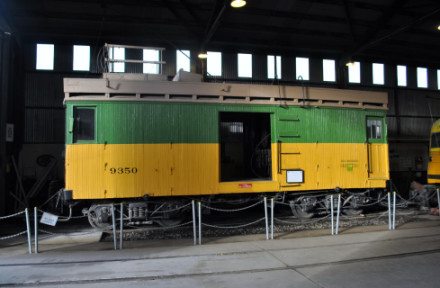
Orange Empire Railway Museum overhead maintenance (tower) car 9350 1963-present, ex. Los Angeles Metropolitan Transit Authority 9350 1958-1963, exx. Los Angeles Transit Lines 9350 1945-1958, nee Los Angeles Railway 9350 1907-1945, built by the railway in 1907.
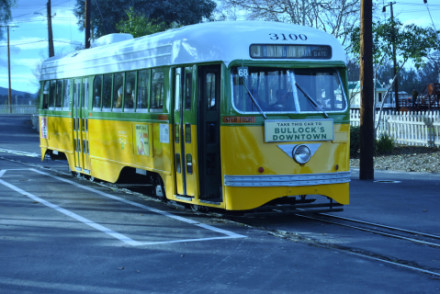
Los Angeles Railway PCC car 3001. I walked over to the Grizzy Flats Railroad barn, which began in Ward and Betty Kimball's San Gabriel, California back yard. Ward, who was then an animator for Walt Disney Studios and avid railroad enthusiast, decided to buy the last passenger coach from Southern Pacific's narrow gauge subsidiary, the Carson & Colorado Railroad. With a friend's prompting, he then bought 2-6-0 2, once named "Sidney Dillon", which had operated on the Nevada Central since 1881.
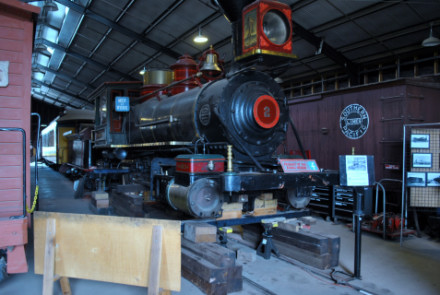
Grizzly Flats Railroad Nevada Central 2-6-0 2 "Emma Nevada", built by Baldwin in 1881.
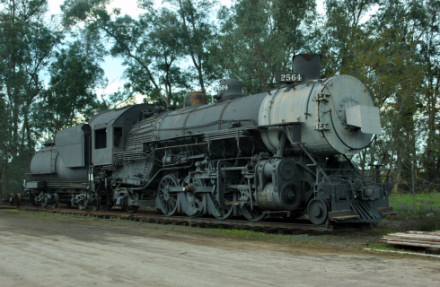
Orange Empire Railway Museum 2-8-2 2564, ex. donation to Mojave Foundation 1959, exx. Union Pacific 2564 1936, exxx. Oregon Short Line Railroad Company 2564 1922, exxxx. Los Angeles and Salt Lake Railroad 2725 1921, nee Los Angeles and Salt Lake Rrailroad 3725 built by American Locomotive Company in 1922.
I walked outside the property and set up to photograph the 4:00 steam train.
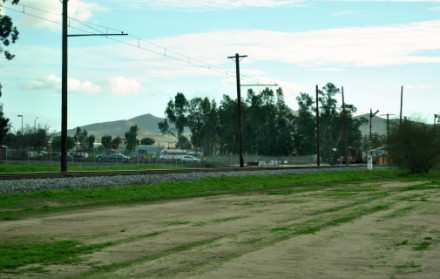
My photo location. I heard the steam whistle and saw the smoke coming my way.
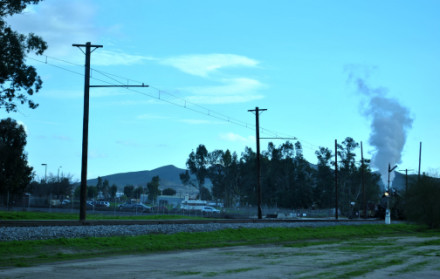
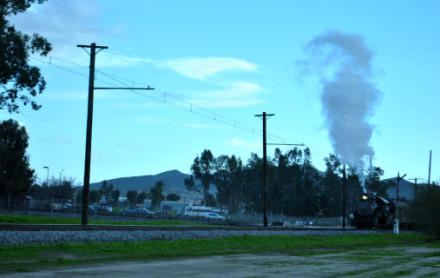
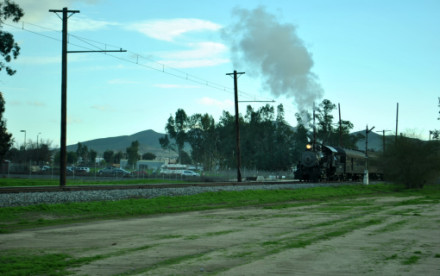
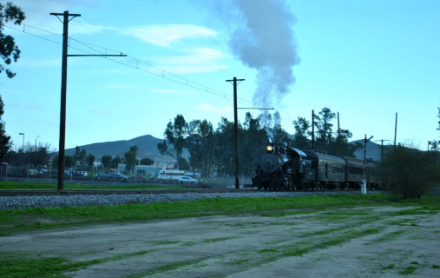
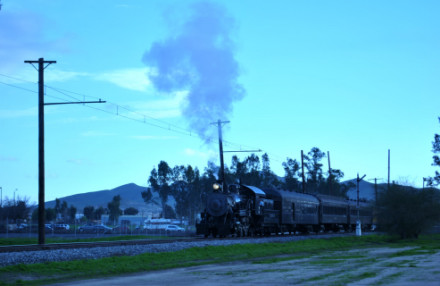
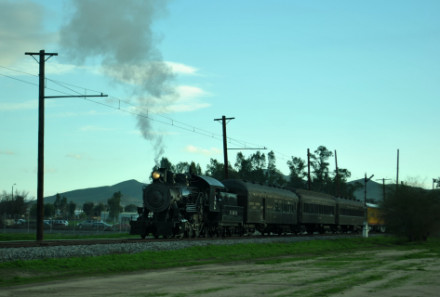
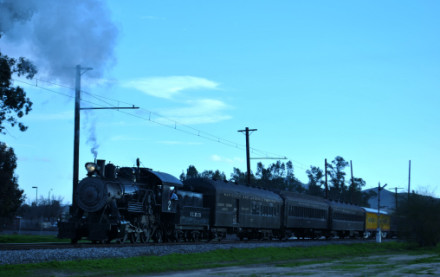
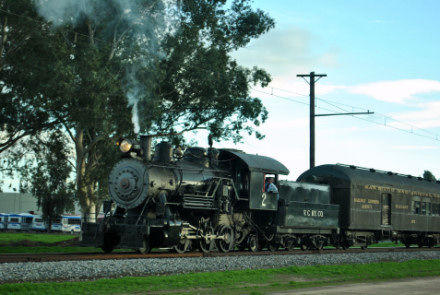
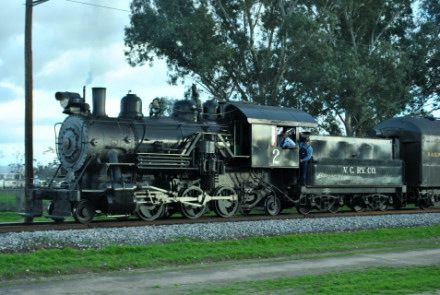
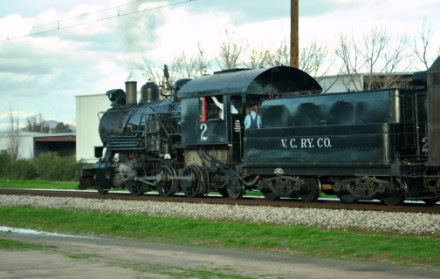
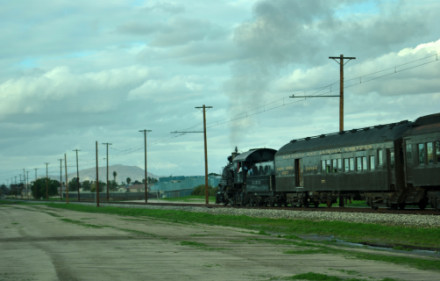
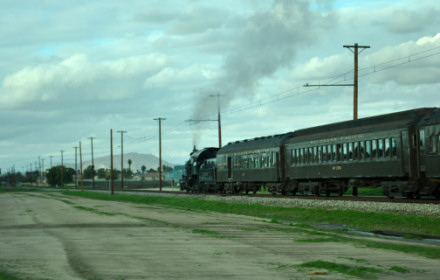
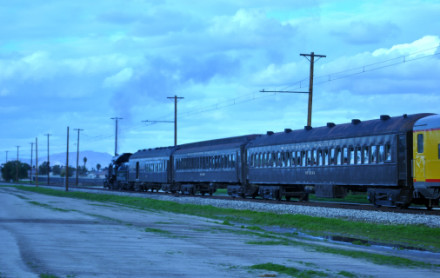
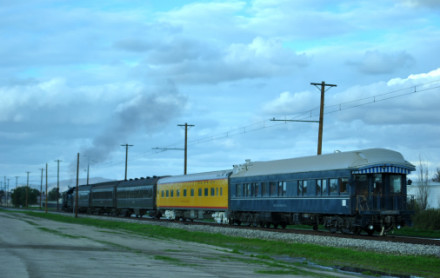
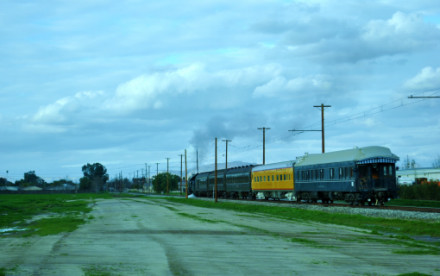
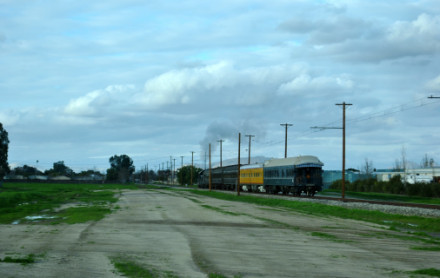
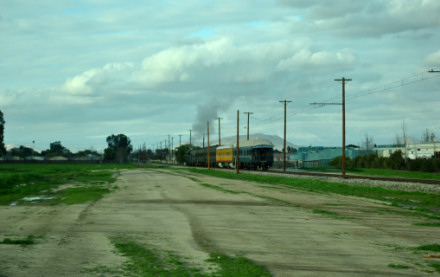
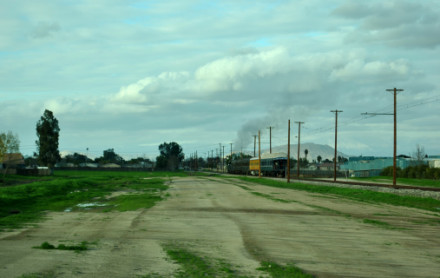
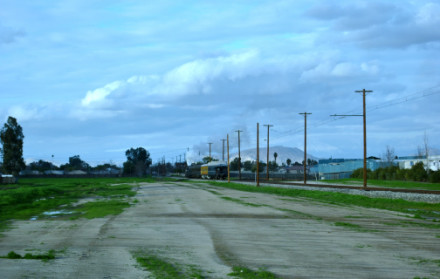
Ventura County 2-6-2 2 put on a excellent show of steam. I returned to the Pinacate station and bought "Shortlines of the Intermountain West" by Jim Shaw then returned to the bus but moved to bus three to get out of the cold breeze which was a precursor to the upcoming storm. Once the bus was full, we were driven back to the Metrolink station and I waited outside for the train.
The Perris Express back to Los AngelesAbout five minutes later, I heard a Metrolink horn then the crossing gates went down and the train was on final approach from South Perris.
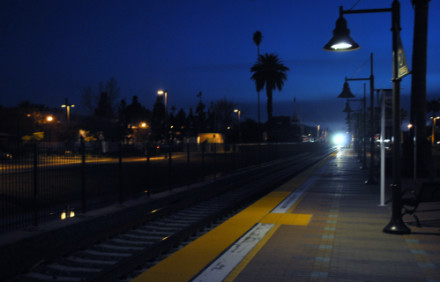
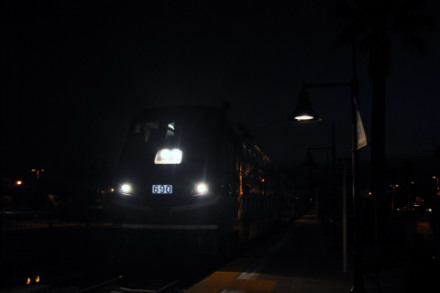
The Perris Express returned to the Perris station. I boarded the same bicycle car but sat at the table on the other side and Robin and Chris Parker joined me. When all the excursion participants were on the train, we departed at 6:00 PM, 15 minutes early and we ran non-stop to Highgrove, where we waited for Metrolink 860 to clear. We only slowed near Esperanza as we had passed Amtrak's Southwest Chief, Train 4, just east of the Horseshoe Bend in Santa Ana Canyon, and made no other stops, arriving at LAUPT at 7:50 PM, which had taken an hour and fifty minutes from Perris, versus two hours and twenty minutes for a regular Metrolink train. We had lived up to our name, the Metrolink Perris Express.
A special thank you to the Pacific Railroad Society, Orange Empire Railway Museum and our five great bus drivers, all of whom made this an excellent trip. The three of us walked over to Track 12 to wait for Pacific Surfliner 592 to open their doors then our tickets were scanned and we boarded. I sat with Kirkle Rama and we chatted before he detrained at Fullerton. I sat with a tired Robin the rest of the way to Santa Ana, where we ended this excellent Perris Express trip.
| RETURN TO THE MAIN PAGE |