




Elizabeth, Bob and I stopped at McDonald's for breakfast before we drove over to the National Railway Historical Society Convention hotel, the Nashville Airport Hotel. We went to the second floor for a brief safety meeting before we went back down and I was the host of Bus Three, onto which several members who were acquaintances and had ridden with me at previous conventions boarded, as well as a few new ones. We left for Chattanooga and travelled Interstate 24, stopping at the Georgia Rest Area before continuing to the Tennessee Valley Railroad Museum.
Railroad HistoryThe corporate history of this company dates hack to August 30, 1881, when the Rome and Carrollton Railroad Company was incorporated. Its name was changed on August 29, 1887, to the Chattanooga, Rome and Columbus Railroad Company. No trackage was built under the original name. The railroad was purchased by the Savannah and Western Railroad Company May 5, 1891, and after going into receivership for a year, the Chattanooga, Rome and Columbus was divorced from the Savannah and Western by Federal court decree and returned to its original owners Feb. 1, 1894. It was again sold in 1897 under foreclosure proceedings, and bought by Simon Borg and Company. They reorganized the railroad June 30, 1897, under the name of Chattanooga, Rome and Southern Railroad Company.
The Central of Georgia acquired the property May 16, 1901, and possession was given June 1, 1901. Savannah, Griffin & North Alabama Railroad chartered in 1854, the SG&NA opened from Griffin to Newnan in 1870 and to Carrollton in 1872. Many miles of the line were graded by convicts leased by the state to railroad contractor Grant, Alexander & Company. Poors 1881 Manual indicated that the SG&NA was operated in connection with the Central of Georgia. The railroad's president was William M. Wadley and the vice-president was W.G. Raoul, both of Savannah. The general offices were also in Savannah. In November, 1890 the SG&NA was sold under foreclosure and purchased by the Savannah & Western Railroad. The line from Chattanooga to Carrollton was constructed by the Chattanooga, Rome and Columbus in 1888, having a total mileage of 137.86 miles.
Chattanooga, Rome & Columbus RailroadDuring the Panic of 1893, it was sold in 1897 to Simon Borg and Company and reorganized as the Chattanooga, Rome & Southern Railroad. Its tracks ran from Chattanooga to Carrollton, where it met the Central of Georgia. Along the way it passed through Chickamauga, LaFayette, Summerville, Rome, Cedartown, Buchanan and Bremen.
Poors 1898 Manual reported that the CR&S had nine locomotives and 250 cars as follows: passenger 7; baggage, etc. 3; freight (box 57; coal 117; flat 44; stock 1), 219: caboose 6; other 15.
In 1900 the CR&S purchased the Chattanooga & Durham Railroad, a 17-mile line that ran west from Chickamauga to coal mines atop Lookout Mountain. On May 16, 1901, the CR&S was sold to the Central of Georgia.
Chattooga and Chickamauga RailwayThe Chattooga and Chickamauga Railway (reporting mark CCKY) is a short-line railroad which is headquartered in LaFayette, Georgia. The railroad operated 22 miles of the Tennessee, Alabama and Georgia Railway (also known as the TAG route) from Chattanooga, Tennessee to Kensington, Georgia, which reverted to the Norfolk Southern system and was partially removed after the Dow Reichhold Specialty Latex LLC plant in Kensington closed in August 2008. The "C&C" also operates 42 miles of the former Central of Georgia Railroad from Chattanooga to Lyerly, Georgia. That line is leased from the state of Georgia.
LocomotivesThe locomotives the C&C operates are 102 (former Chicago and North Western Transportation Company EMD GP7), 103 (former Santa Fe CF7, now retired), 2050 (EMD GP38) and Columbus & Greenville 1804 (former Illinois Central GP11). Also, they use a Tennessee Valley Railroad Museum GP7 if one of their three locomotives is in repair or out of service.
Our TripI debussed and walked straight towards the steam engine.
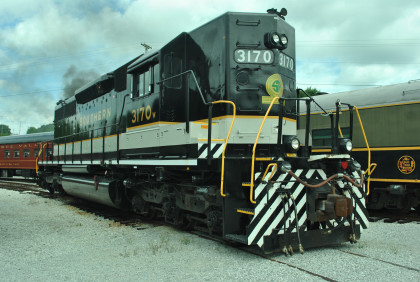
On the way, I was greeted by Southern Railway SD40 3170, built by Electro-Motive Division in 1971.
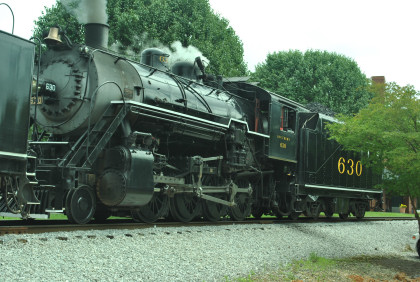
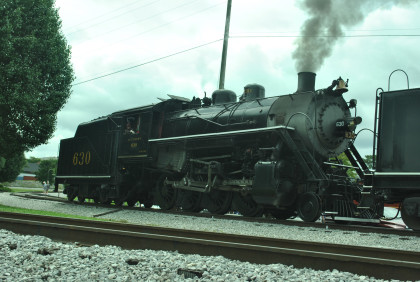
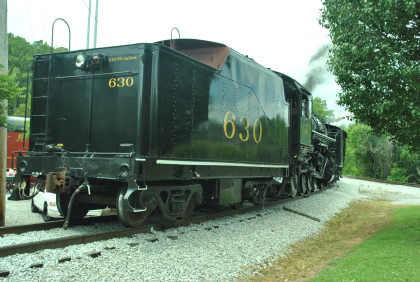
Southern Railway 2-8-0 630 built by Alco in 1904. It primarily served the Southern Railway on the Asheville Division, working mainly on the Murphy and Lake Toxaway Branches, until it was retired in June 1952 with 48 years of service. The locomotive was then sold to the East Tennessee & Western North Carolina Railroad in Johnson City, Tennessee, working the route between Johnson City and Elizabethton. While under ownership of the Tweetsie Railroad, 630 was renumbered to 207. In 1967, the Southern Railway traded a diesel locomotive to the ET&WNC to reacquire the 630 for use in the expanding Southern Railway Steam Excursion Program. The 630 continued working as a mainline excursion star until 1978, when train length really began to exceed the capacity of the small 630. It was at this time in 1978 that the 630 came to Tennessee Valley Railway Museum and today, Southern Railway 630 can be found as motive power for the Missionary Ridge Local, and occasionally on the Summerville Steam Special.
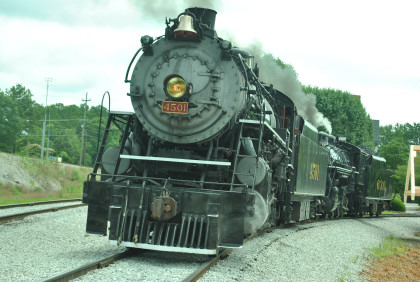
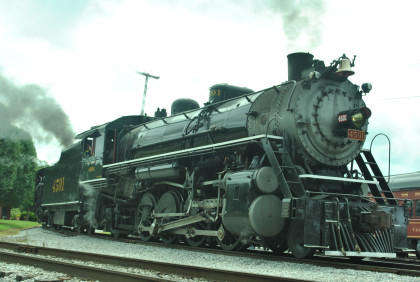
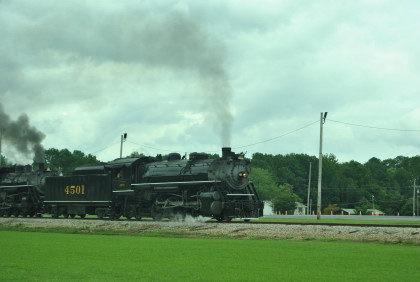
Southern Railway 2-8-2 4501 built by Baldwin in 1911. Leading a rather unremarkable career, this locomotive operated for the Southern in East Tennessee, Central Kentucky, and later in Southern Indiana.
In 1948, L.C. Bruce, general manager of the Kentucky & Tennessee Railway in Stearns, Kentucky, was in need of a third locomotive to supplement his numbers 10 & 11, which were built new for the K&T. Being a former Southern man himself, he naturally headed there to find what would become K&T 12. In Princeton, Indiana, Mr. Bruce found the eldest of the Southern's 2-8-2's, which he purchased and brought to Stearns, where it would live for the next 16 years.
During the following 16 years, this rather inauspicious locomotive remained in obscurity in the mountains of east/central Kentucky, until it was discovered by Robert Soule and Paul Merriman, two gentlemen on a mission to see and photograph the remaining holdouts for steam power in the east. The two men would later form the Tennessee Valley Railroad Museum in 1961. They immediately took a liking to the 12, which is different in appearance from stablemates 10 & 11. It was obviously of Southern Railway pedigree. When Soule and Merriman learned that the K&T was converting to diesel, they raised the $5,000 asking price that Mr. Bruce wanted for the 12 through TVRM, and off to Stearns they went to acquire ownership of the locomotive. After a meeting with Mr. Bruce, Merriman came back outside exclaiming "Fellas, I did it!," to which Soule replied with, "You did what Paul?" "I bought the 4501!," he exclaimed. Indeed, Paul Merriman had purchased with his own funds, this locomotive, instead of with TVRM funds as planned. Left standing with a $5,000 check, the members of TVRM later went back to Mr. Bruce to purchase stablemate K&T 10 for their museum.
After that eventful day in 1964, this rather unremarkable locomotive was thrust into the spotlight, where it quickly became one of the most travelled, photographed and inarguably one of the most famous steam locomotives in the world. Since the mid-1960s, Southern Railway 4501 has pulled countless mainline passenger excursions for the Southern (later Norfolk Southern) Railway Steam Excursion Program, and museum excursions for TVRM as well.
The 4501 ended its service in 1999 due to rising maintenance costs, but was later selected for service in the "21st Century Steam" program, being restored to service between 2011 and 2014. The "21st Century Steam" Program has since ended, but the 4501 can still be found operating over TVRM tracks today, to the delight of many happy passengers. Over the last 57 years in preservation, Southern Railway 4501 has carried hundreds of thousands of passengers on excursions all over the east and the midwestern United States, and it has been through those ticket sales, along with countless donations, that this locomotive is still operating today. The 4501 is listed on the National Register of Historic Places.
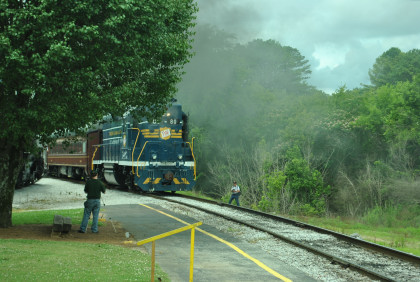
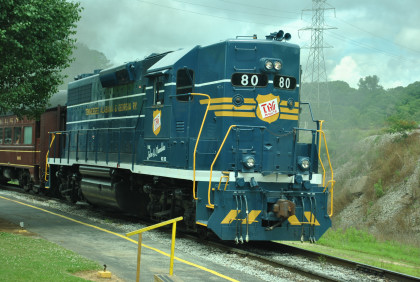
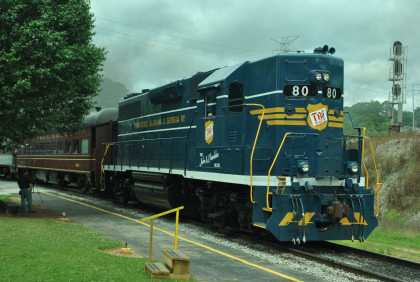
Tennessee Valley Railroad Museum's Missionary Ridge local, led by Tennessee Alabama and Georgia GP38 80, built by Electro-Motive Division in 1968, arrived at Grand Junction.
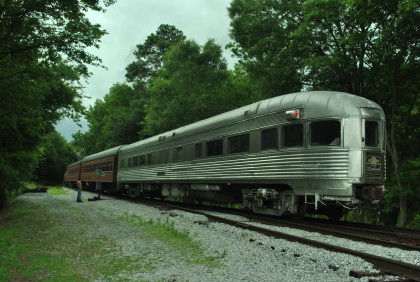
After it had unloaded and loaded its next passengers, the steam engines pushed back the rear of our trainset while they were switching our train together.
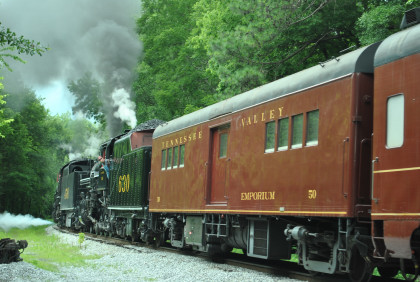
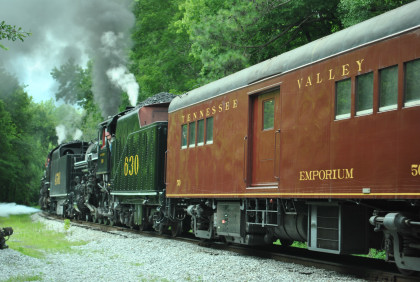
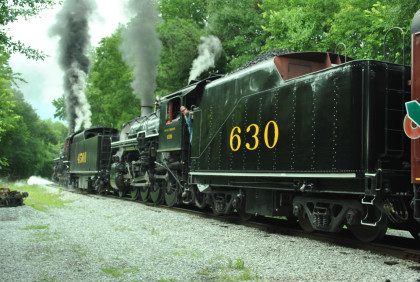
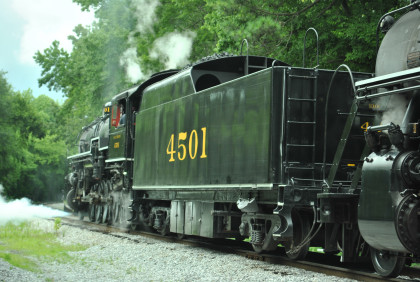
The reverse move as I walked to the front of the train.
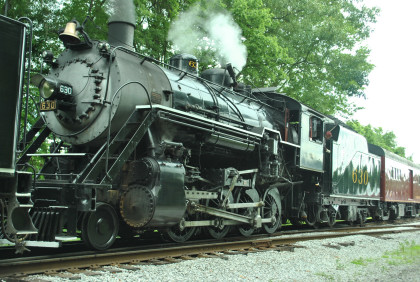
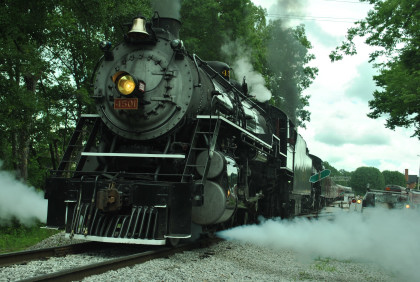
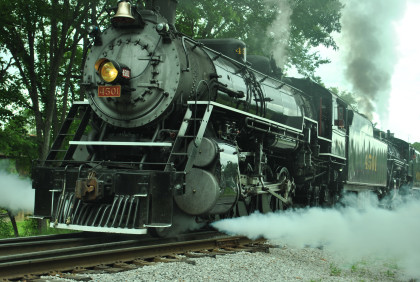
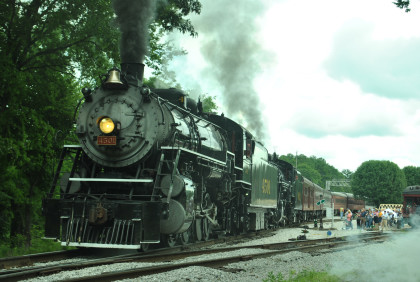
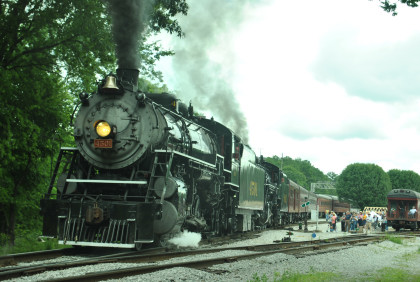
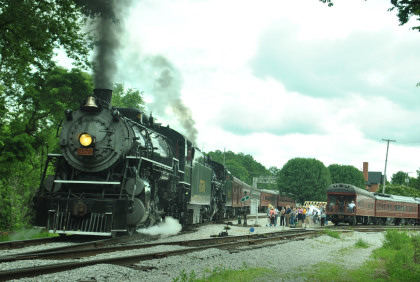
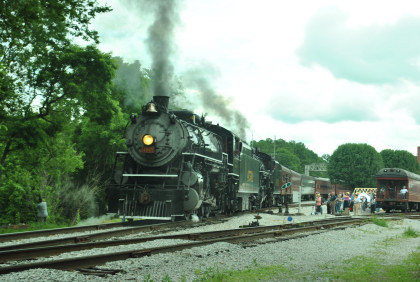
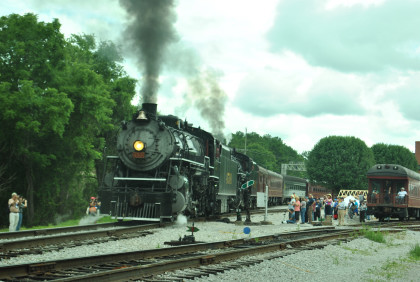
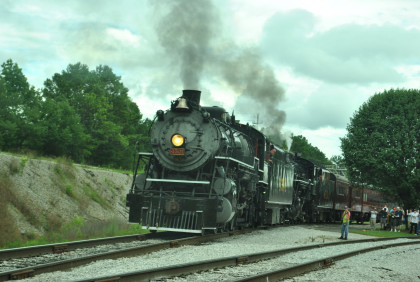
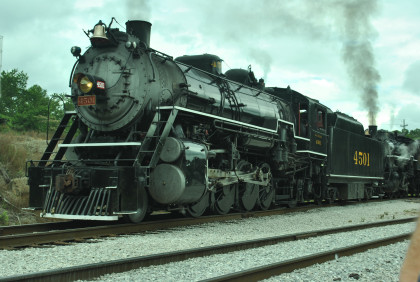
The steam engines were still putting together our convention consist.
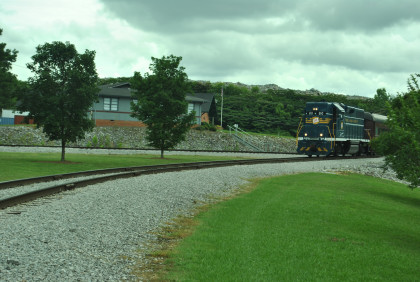
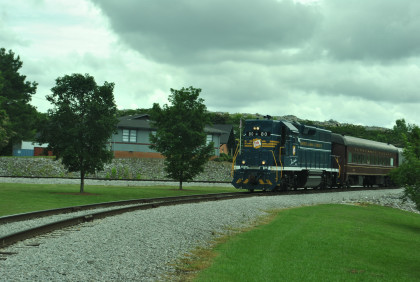
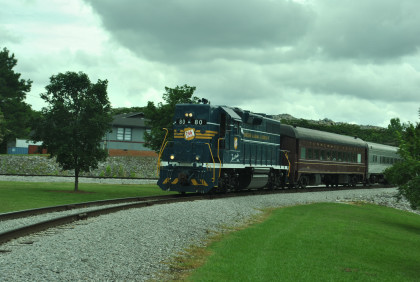
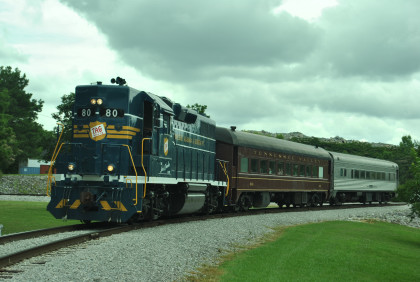
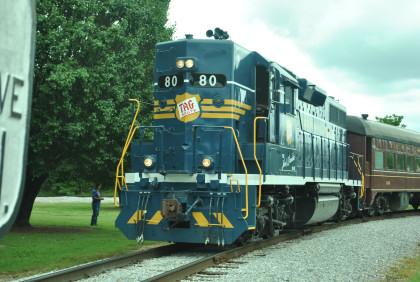
The TVRM Missionary Ridge local departed the station area and I waited with the coach passengers to board. Once the train was spotted, boarding commenced and I chose a seat in Southern coach 829 and saved the seats in front of me for Bob and Elizabeth. The train had a consist of Southern 2-8-2 4501, Southern 2-8-0 630, TVRM coach 98 (formerly Baltimore and Ohio), TVRM coach 97 (formerly Southern), Southern dining car 3158, Canadian National/Grand Trunk Western dining car 99 "Silver Lake", TVRM concession car 50 (formerly USAX 89658), TVRM coach 97 (formerly Central of Georgia), Southern coach 829, TVRM coach 661 (formerly Central of Georgia), TVRM open air coach 1000 (Southern) and Seaboard Air Line observation lounge 6604.
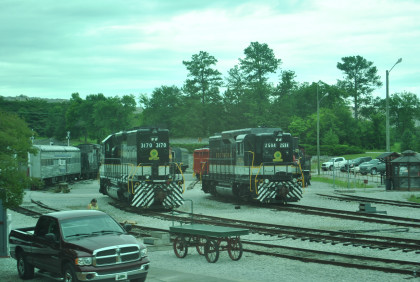
Leaving Grand Junction as the Southern Railway locomotive said goodbye to us.
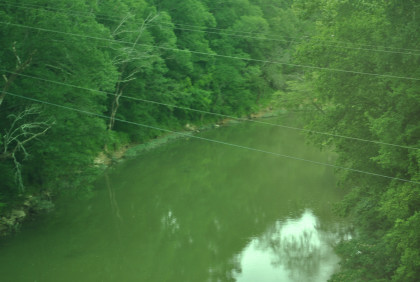
Crossing the South Chickamauga Creek to the west of the museum.
Crossing the CSX Chattanooga main line.
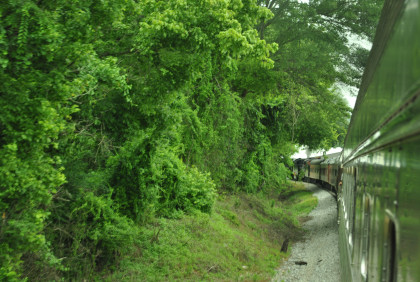
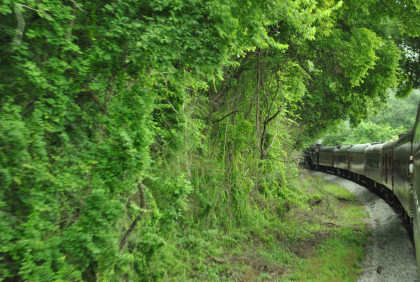
Curving down the line.
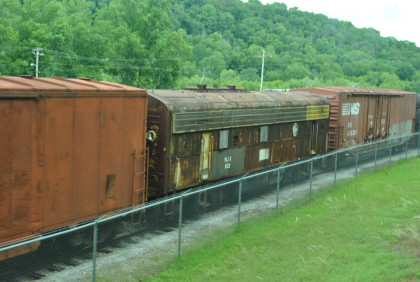
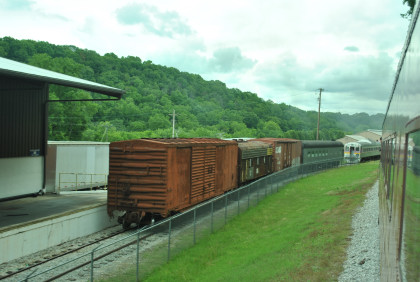
Stored equipment including TVRM F7B 919, ex. CSX 919, nee Nashville, Chattanooga and St. Louis 919, built by Electro-Motive Division in 1950.
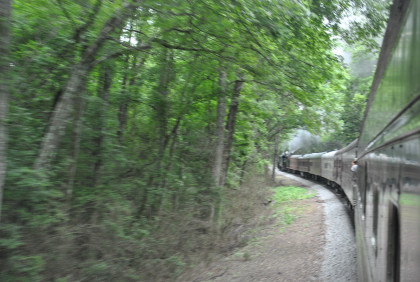
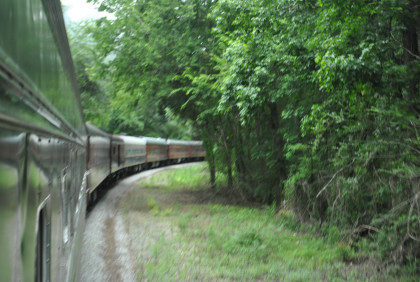
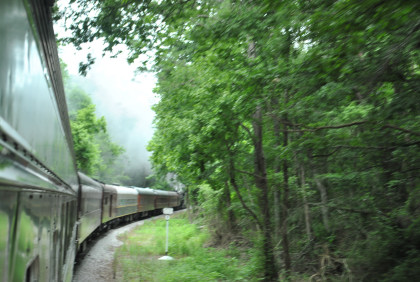
Rounding the curves toward the Missionary Ridge tunnel.
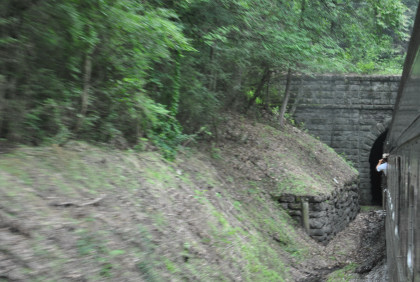
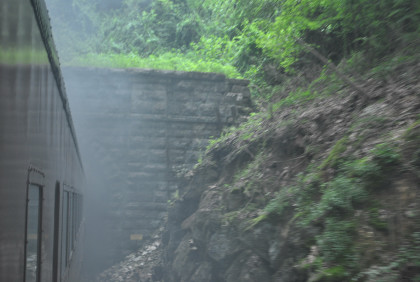
Passing through the 986 foot long Missionary Ridge tunnel built in 1858.
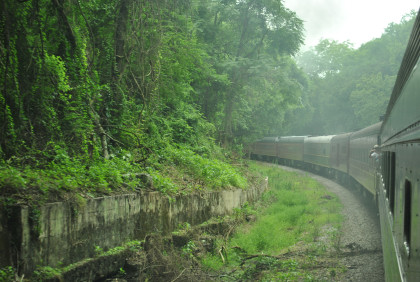
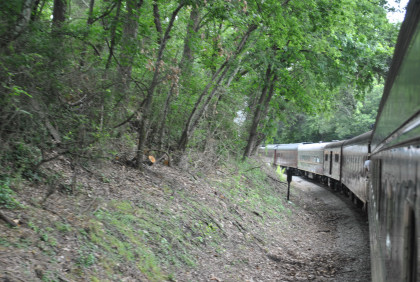
The curves allowed for capturing both ends of the train.
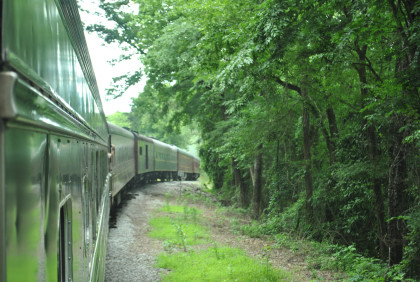
We stopped so the crew could throw the switch that would take us off the TVRM property and my only new mileage of this convention down to the switch to the Summerville Branch.
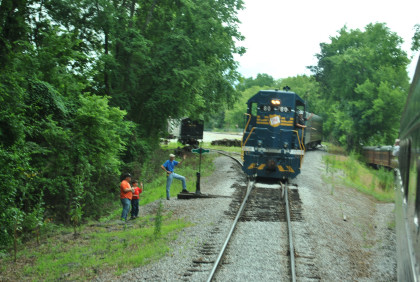
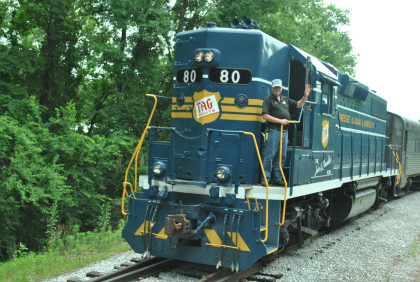
As we left the museum grounds, we received a send-off from the Missionary Ridge local returning to Grand Junction. Now for new rails!
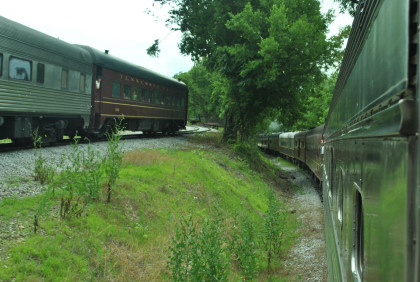
Passing the rear of the Missionary Ridge local.
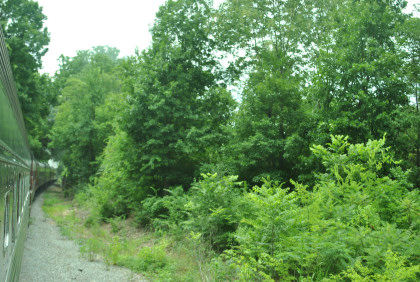
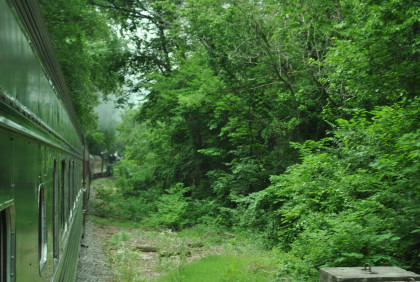
Trees with kudzu plants attached, which are lethal as they strangle them.
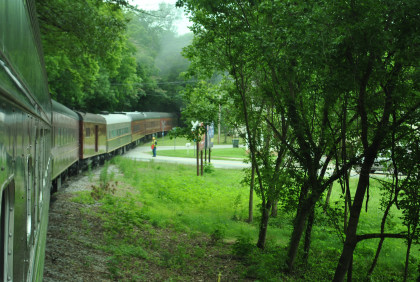
Going through a rural grade crossing.
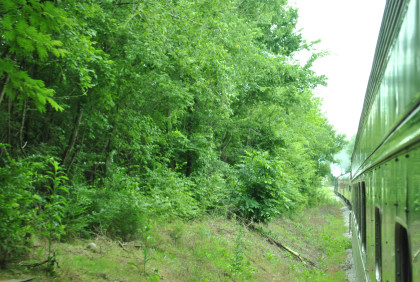
Looking down the side of the train.
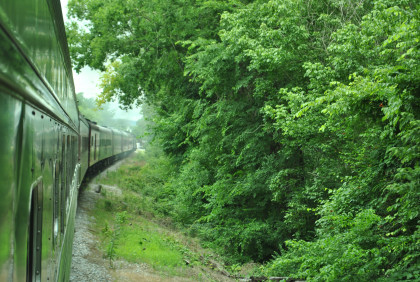
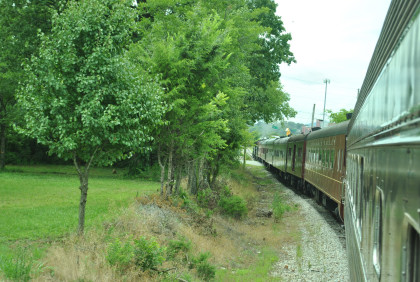
Our route took us through the back yards of East Chattanooga.
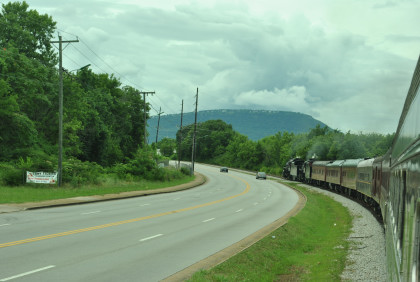
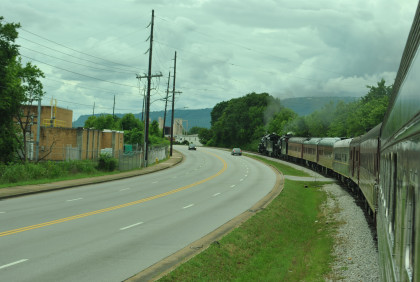
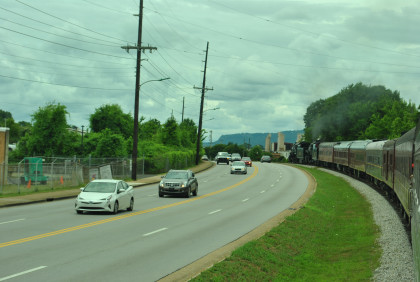
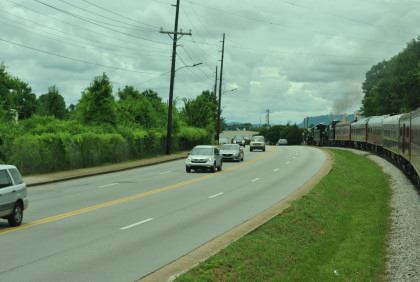
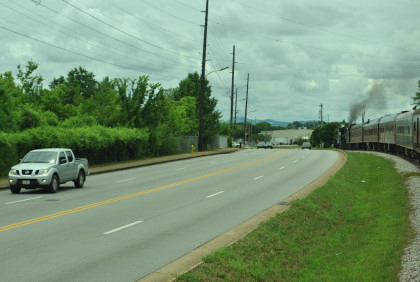
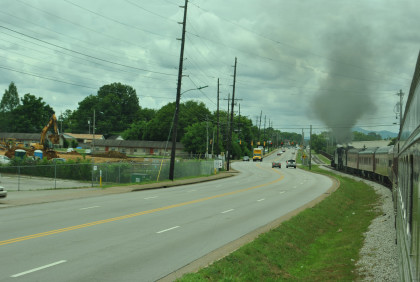
Curving around North Holtzclaw Avenue.
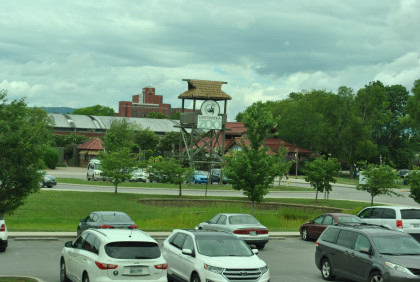
Passing the Chattanooga Zoo.
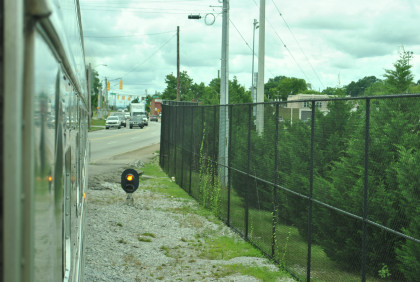
A yellow signal along our route.
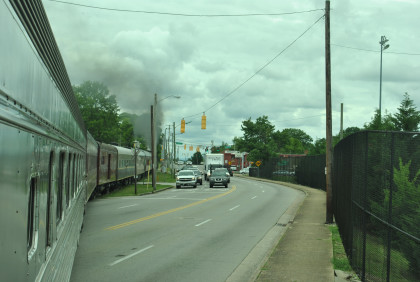
Crossing McCallie Avenue.
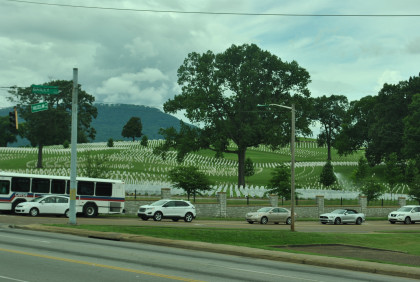
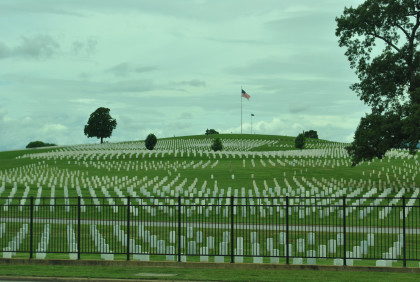
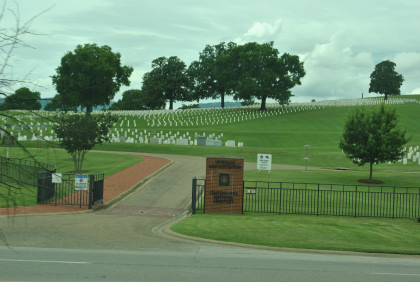
The Chattanooga National Cemetery where Andrew Jackson and his Raiders are buried.
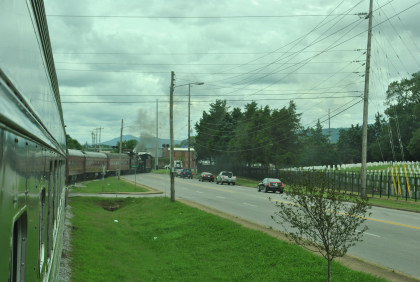
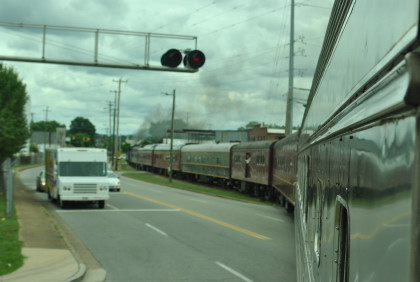
Crossing Bailey Avenue.
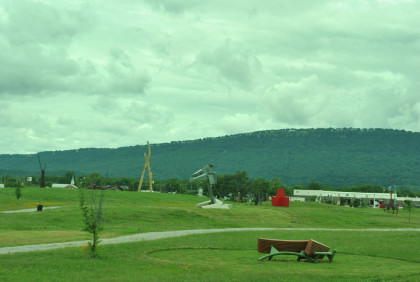
Sculpture Fields at Montague Park.
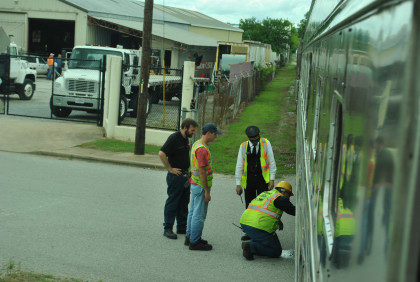
The train stopped so the crew could check the air conditioning on the Southern coach car in which we were riding. Everything was fine and we resumed the journey.
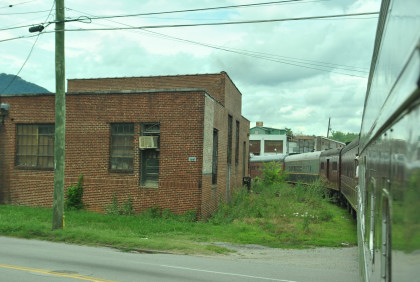
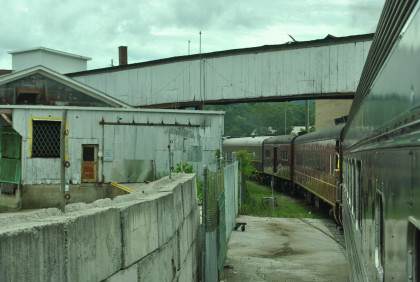
The turn to access Norfolk Southern's main line.
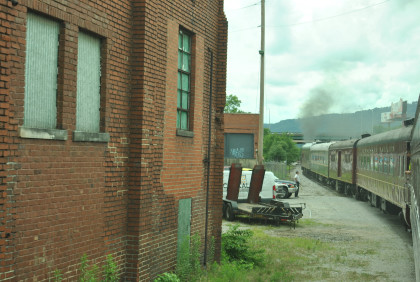
Running along the Norfolk Southern main line.
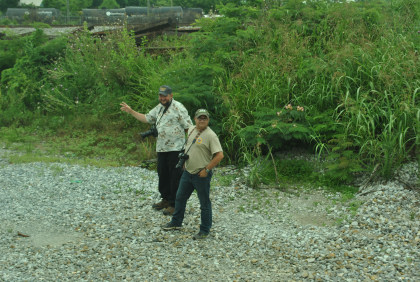
Here I spotted Steve Barry and Mike Burkhart, with whom I chased the Lhoist freight train. I would see Steve at Rock Springs to help him with the photo line during the runby.
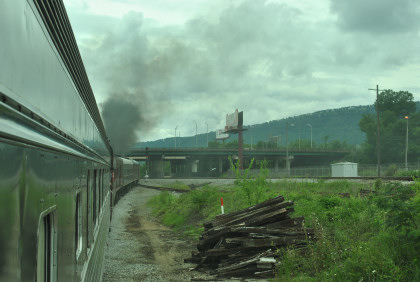
The Norfolk Southern line joined from the side as we were about to go under the Interstate 24 bridge. This location ended my new mileage because from the Chattanooga Choo Choo, from where the 2007 NRHS convention trips departed, we came out to the main and zig-zagged onto the Summerville line. So now it was back to old mileage the rest of the way there, which was fine.
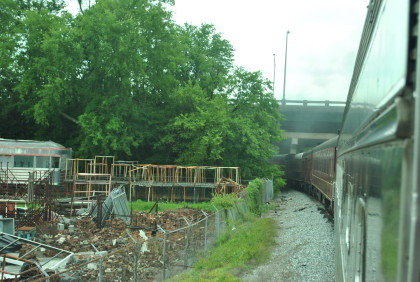
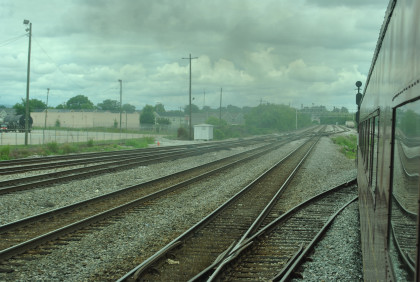
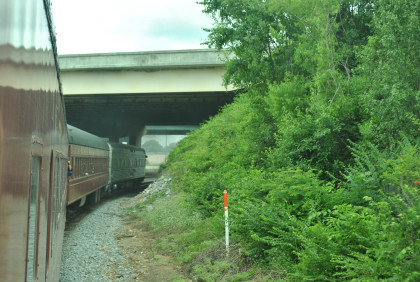
Curving on to the Summerville line.
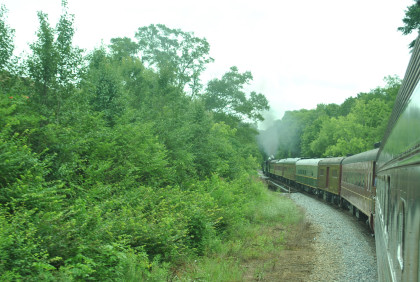
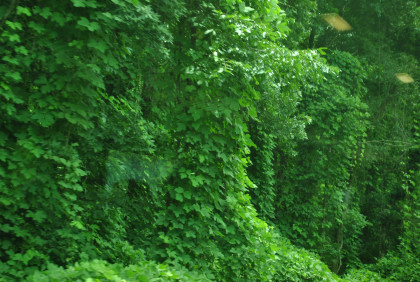
Something that stood out for me about this railroad was the large number of kudzu plants as we started our journey south toward Summerville. Our coach had been assigned Group 3 for lunch and we were then chimed into the dining room and made our way to the second dining car for lunch.
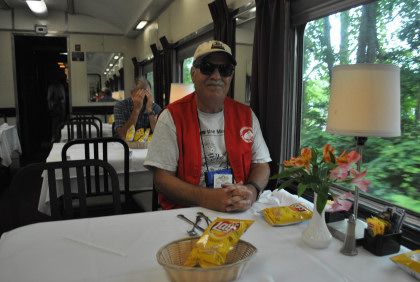
The author in the dining car.
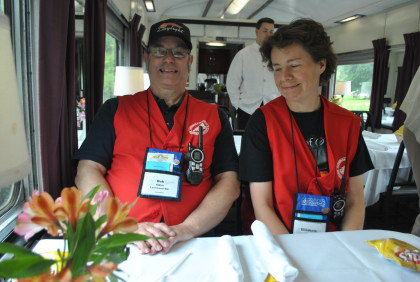
Bob and Elizabeth. The menu was Hero sandwiches with cheese, and since I am allergic to cheese, could not eat it. I therefore just had the dessert, a nice large piece of chocolate cake, along with lemonade, which really hit the spot.
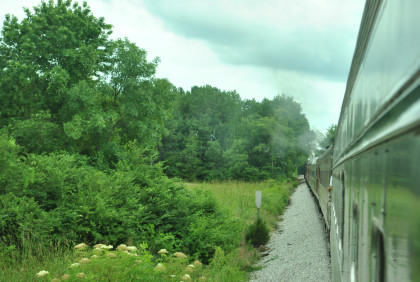
Approaching Rock Springs, the photo runby location. We stopped and I was the first person off the train and found Steve Barry who said to make the photo line at the bottom of the hill and at the end of it, angle it toward the train. So I walked down the parking lot of the college as far as I thought I needed to go then started one end of the photo line, which everybody followed.
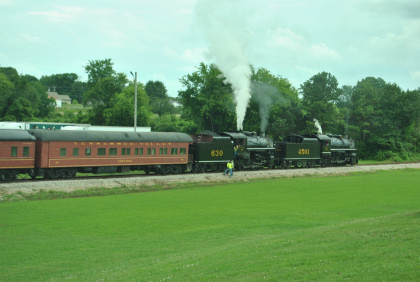
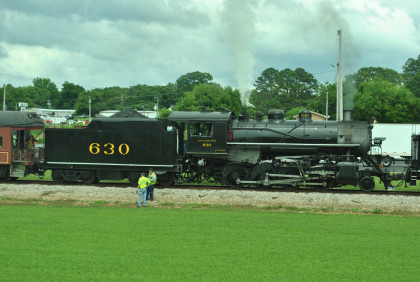
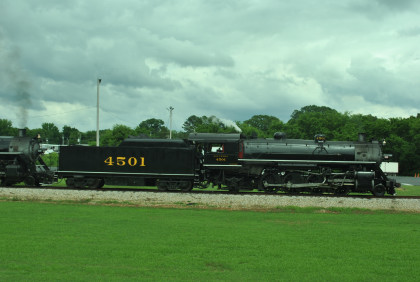
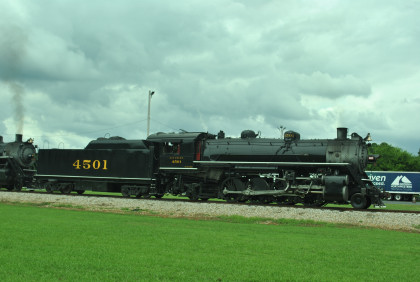
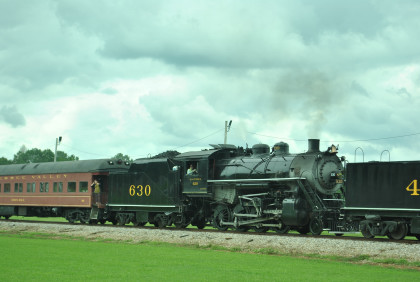
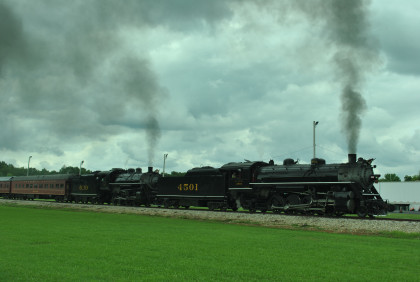
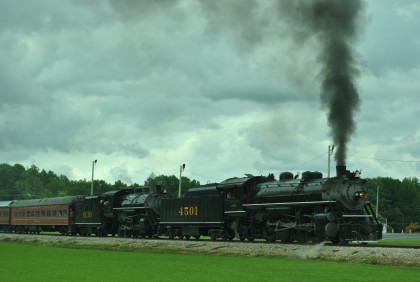
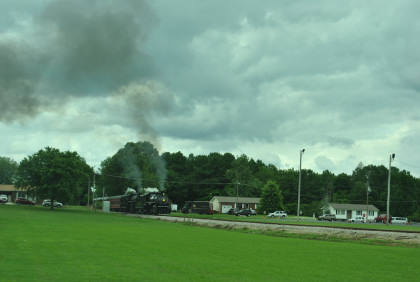
Reverse move one.
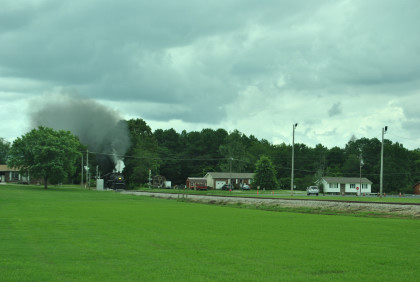
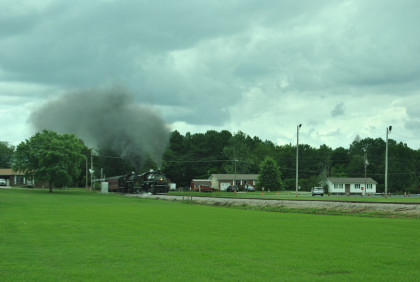
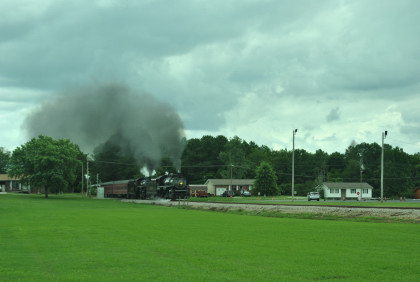
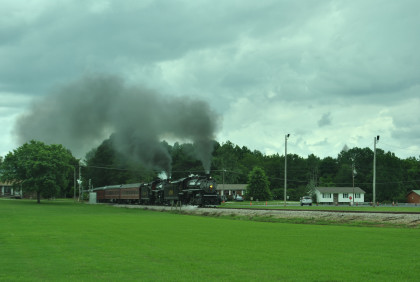
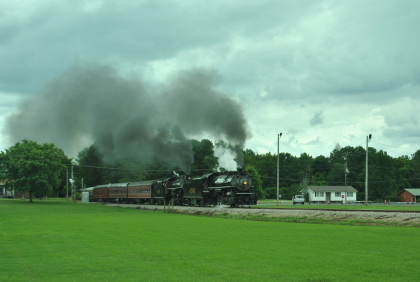
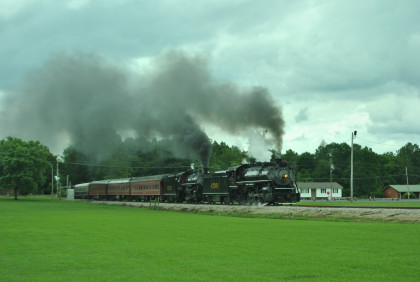
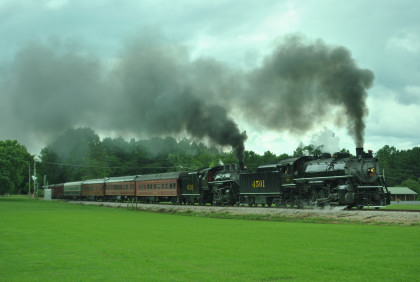
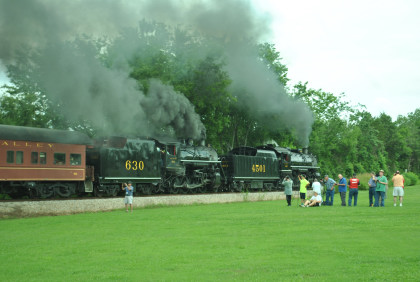
Photo runby one.
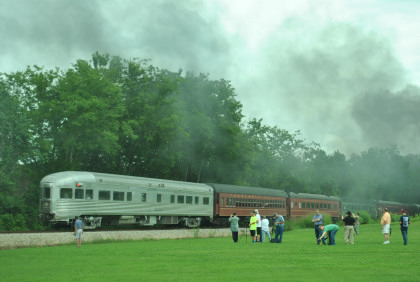
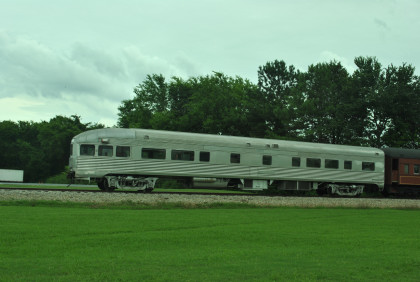
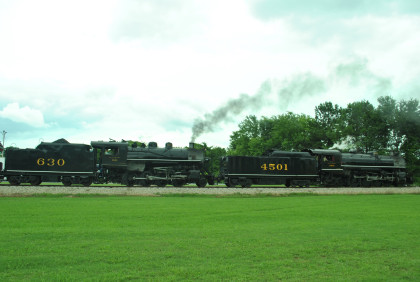
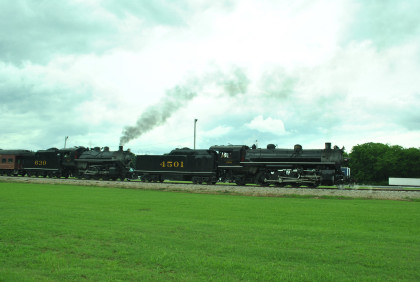
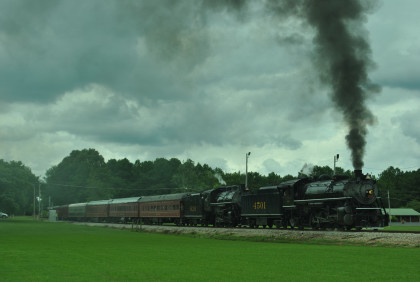
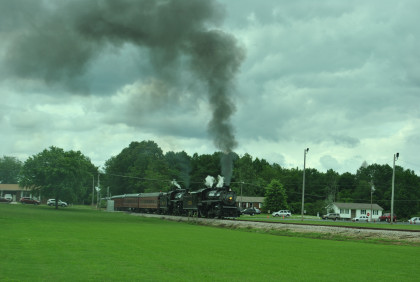
Reverse move two.
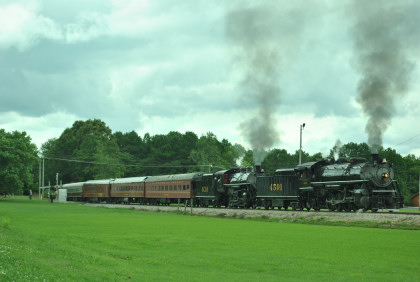
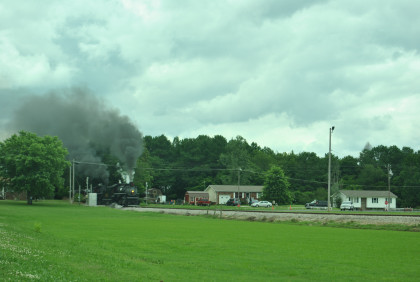
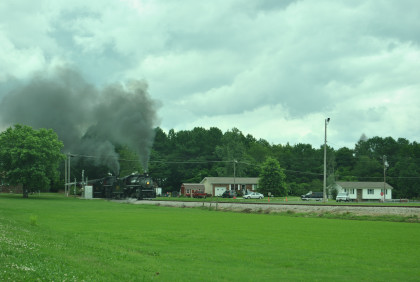
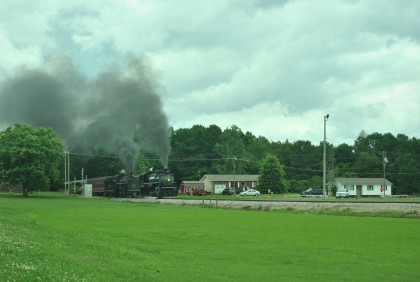
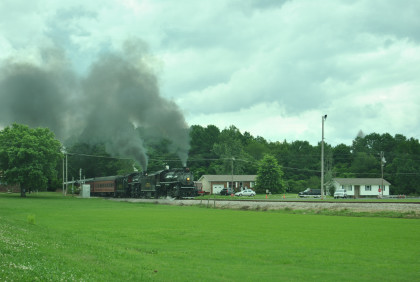
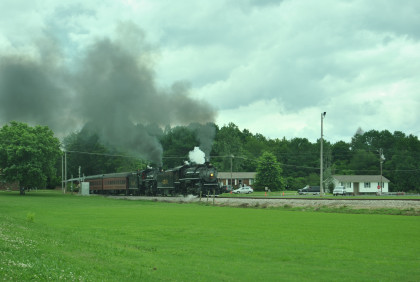
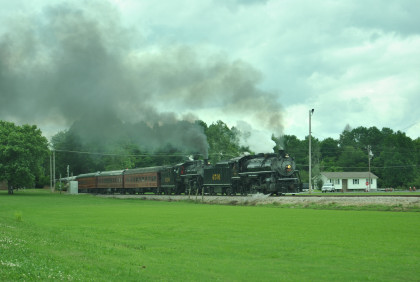
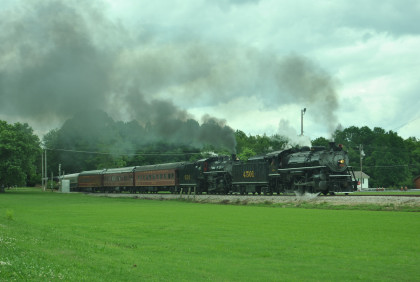
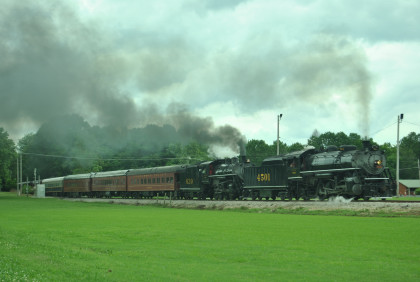
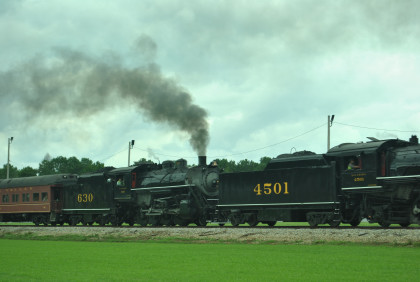
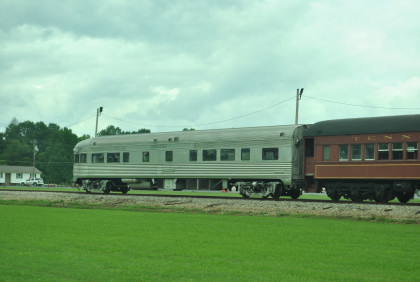
Photo runby two. Both runbys were both excellently performed, making all the NRHS passengers very happy to see and capture these wonderful steam engines with photographs or video. A special thank you to Steve Barry for planning and organizing this photo runby. Once everyone was back aboard the train, we continued south and came to Lafayette.
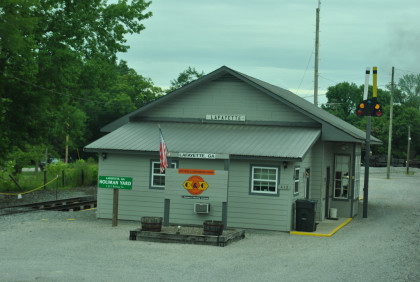
The Lafayette depot and offices of the Chattanooga and Chickamauga Railroad, built circa 2000.
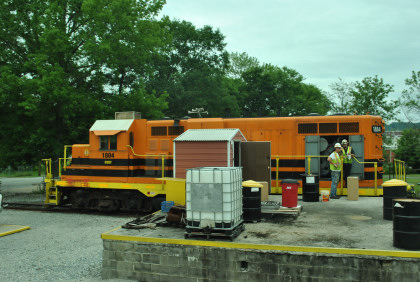
Chattanooga and Chickamauga Railroad GP11 1804, ex. Columbus & Greenville 1804, nee Illinois Central 9185, built by Electro-Motive Division in 1956.
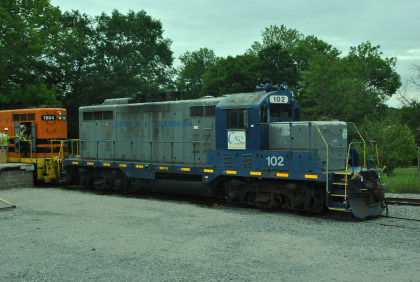
Chattanooga and Chickamauga Railroad CF7 102, ex. Columbus & Greenville 804, exx. Santa Fe 2464, nee Santa Fe F7A 345L, built by Electro-Motive Division in 1952.
I enjoyed a Coca-Cola as the train travelled the final miles to Summerville and we arrived at the depot, ending a fantastic excursion with Southern Railway 4501 and 630. A special thank you to all the volunteers of the Tennessee Valley Railroad Museum for providing us with this steam railroading experience. The three of us detrained first and resumed bus host duties by going to our buses and waiting for the passengers.
Once everyone was aboard, we drove west into Alabama where I informed those on my bus that we were now in Alabama and where they were going tomorrow, would be their fourth state in two days. I asked if we had ever had an NRHS convention that had been in four different states, which generated some good discussion. The rain then started as this was the first attack from Tropical Storm Cindy. Next I asked how many train songs we could name which began another interesting discussion. That was followed by how many states have we not had an NRHS convention in. This broke up the long journey back very nicely. We returned to the Nashville Airport Hotel and unloaded the bus, after which we went upstairs and bought our souvenirs from this convention then went to Popeye's Chicken for dinner and returned to our hotel.
| RETURN TO THE MAIN PAGE |