



Our next stop was at Glorieta.
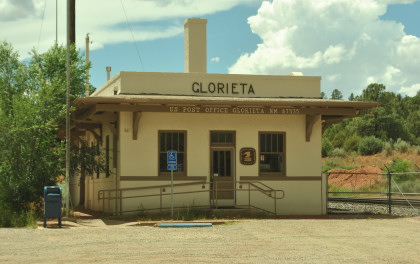
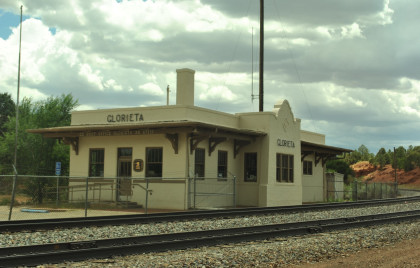
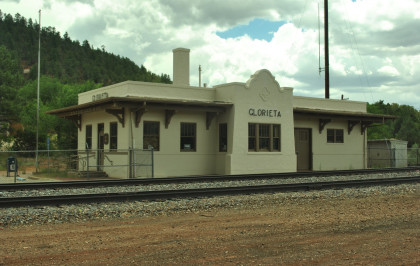
The Santa Fe Glorieta station is now a US Post Office. We returned to Interstate 25 and took it south to New Mexico Highway 14 and the town of Madrid.
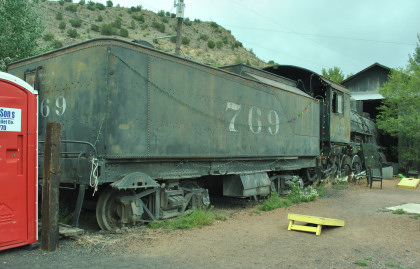
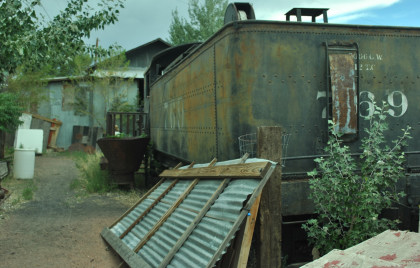
Santa Fe 2-8-0 769, ex. Albuquerque & Los Cerrillos Coal Company 769 1950, nee Santa Fe Pacific Railroad 266, built by Richmond Locomotive Works in 1900. This and two other engines worked at the coal mine in Madrid located at the end of a branch extending south from the Santa Fe main at Waldo, New Mexico. 769 was never re-numbered or re-lettered. The mine closed in 1959 as a result of declining coal markets, and Madrid became something of a ghost town. 769 and 870 were abandoned on site and left to rust. For some reason, 769 was parked just outside the old single stall enginehouse, which might otherwise have given it some protection from the elements during the years it has sat neglected in Madrid. During the 1970s, Madrid revived as an artist community and tourist attraction, and 769 was sold to Joe Huber, cosmetically restored and incorporated into the Old Coal Mine Museum and the Mine Shaft Theatre, still standing on the spot where it was abandoned.
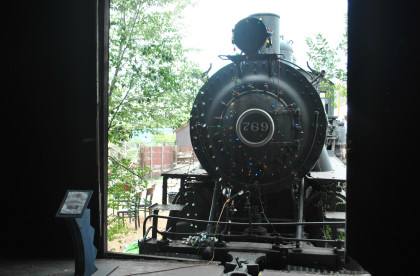
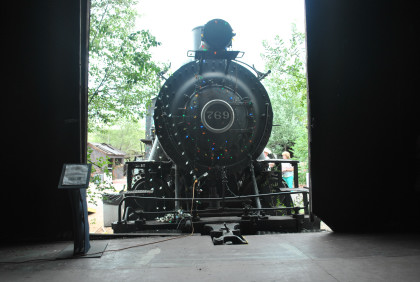
The front of the engine is inside the Mine Shaft Theater.
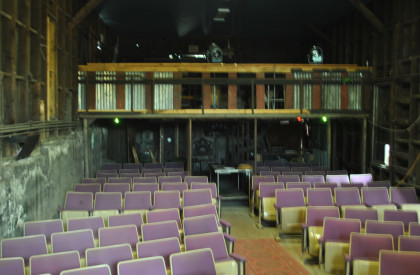
The Mine Shaft Theater.
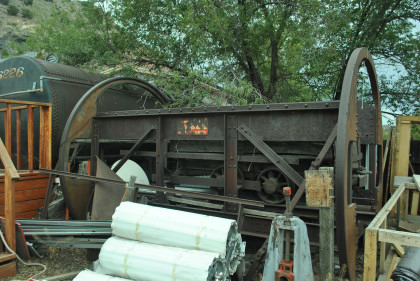
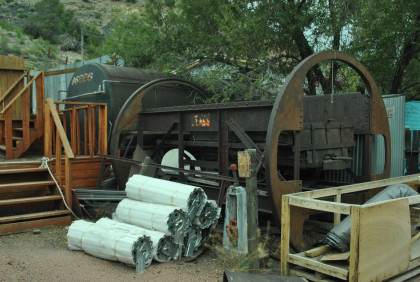
A rotary car dumper.
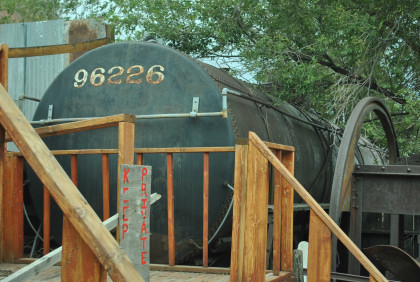
Albuquerque and Cerrillos Coal Company tank car 96226.
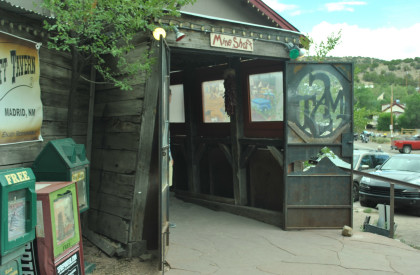
The entrance to the theater.
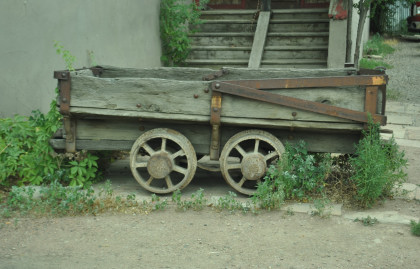
A mine car. We departed Madrid and took New Mexico 14 south to New Mexico 344.
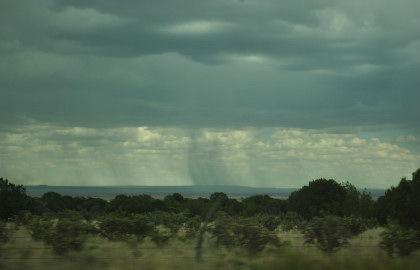
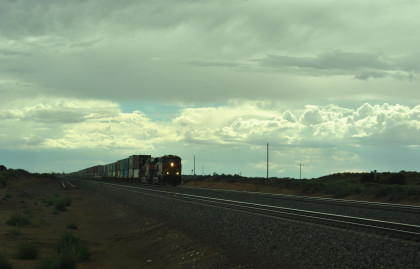
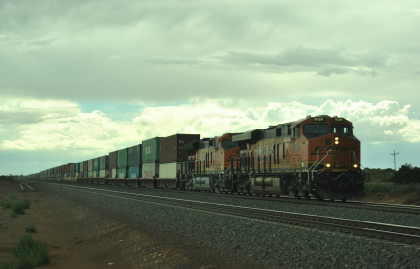
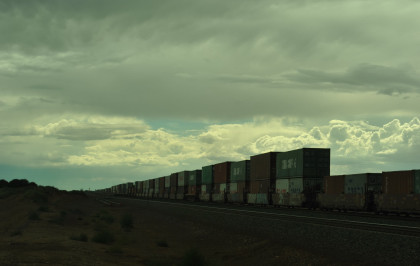
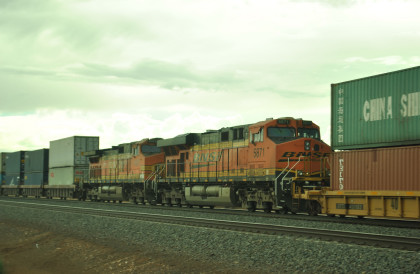
Bad weather was brewing. We reached Interstate 40 and went east to Moriarty, where we turned south into into the worst thunderstorm that we had encountered on this trip. We made it to just west of Willard where we turned onto US 60 and came out of it, then we were following a westbound BNSF train. We managed to get ahead of it and picked a grade crossing to the south.
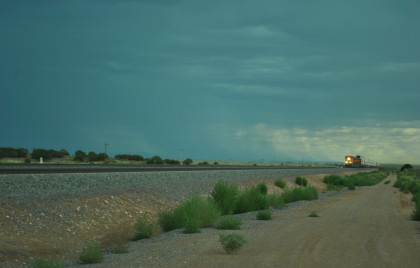
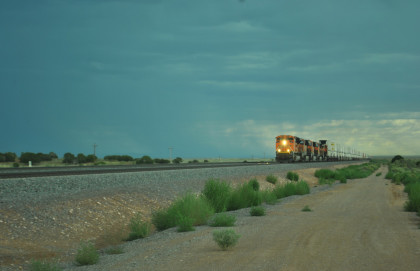
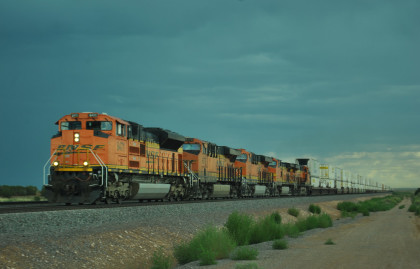
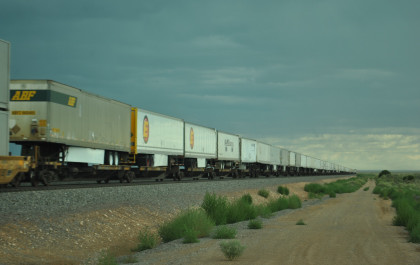
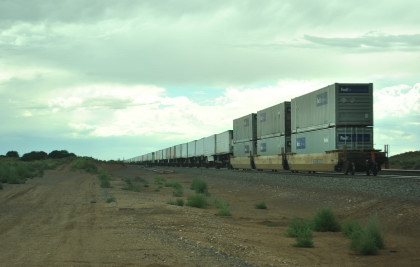
BNSF 8471 West at the County Road B028 grade crossing.
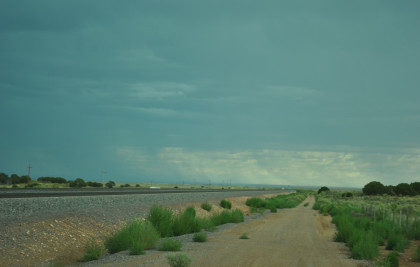
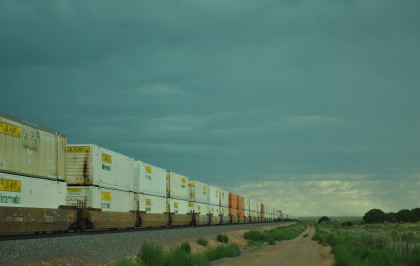
Looking towards the thunderstorm.
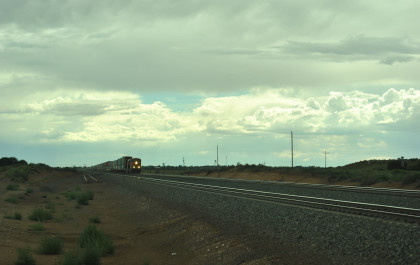
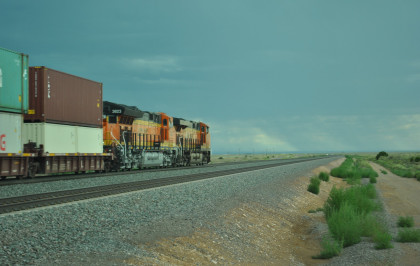
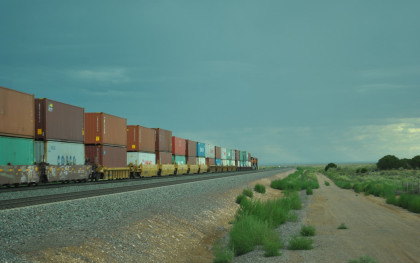
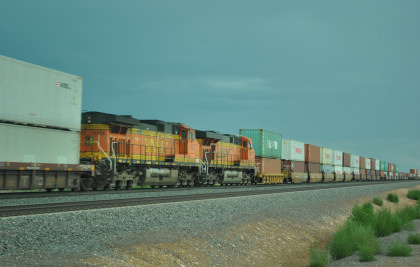
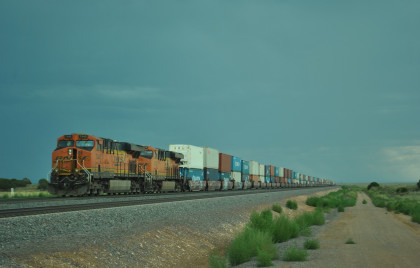
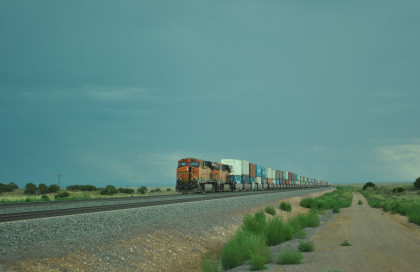
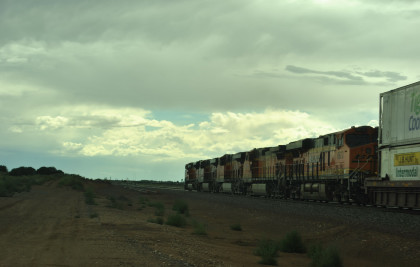
BNSF 8128 East at the County Road B028 grade crossing. From here we drove west on US 60 to Mountainair.
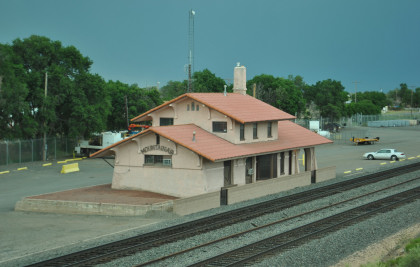
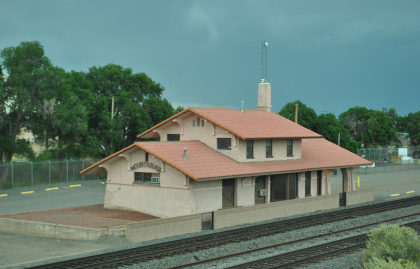
The Santa Fe Mountainair station built in 1908. We continued west on US 60 and came upon another train.
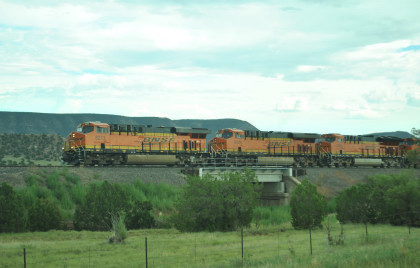
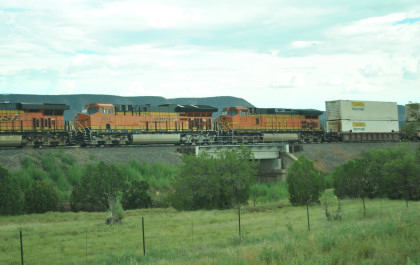
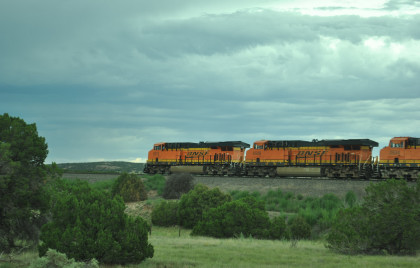
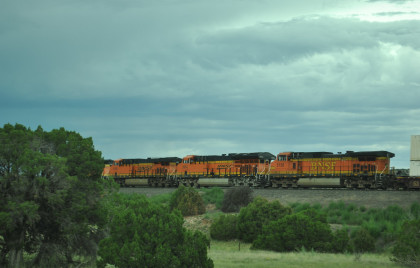
BNSF 8213 East along US 60 west of Mountainair. We then drove to the US 60 bridge over the BNSF mainline just east of Abo Canyon and set up, hoping for a train.
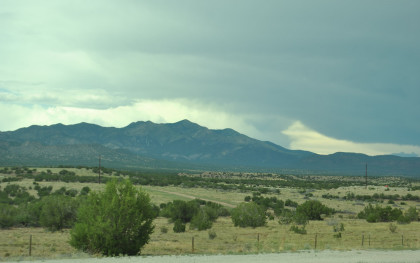
It did not take too long to start hearing an eastbound working up the grade through Abo Canyon.
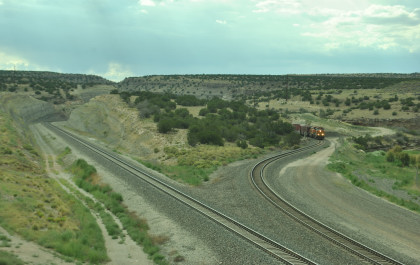
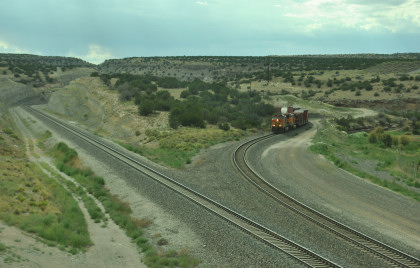
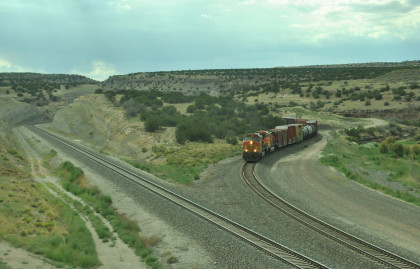
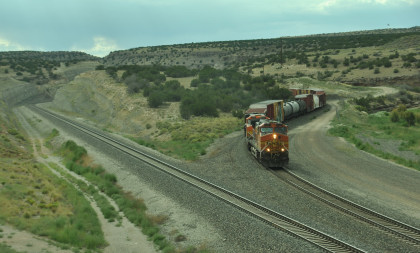
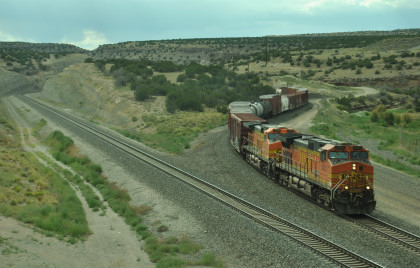
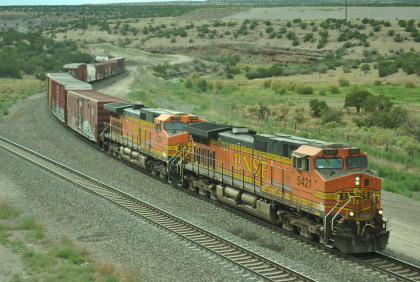
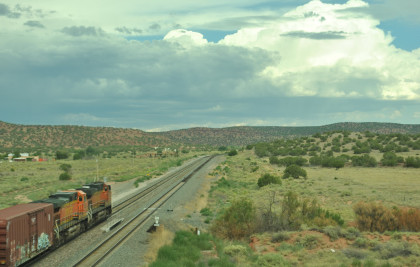
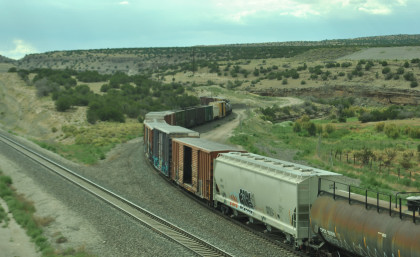
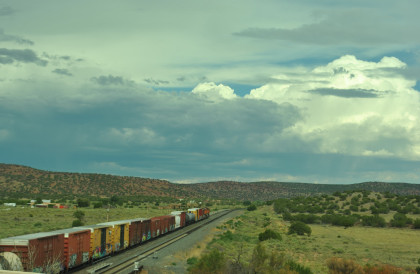
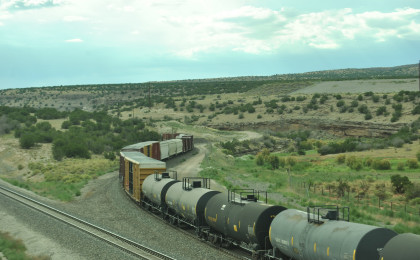
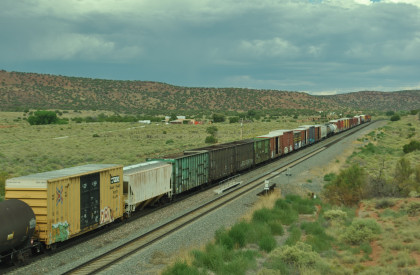
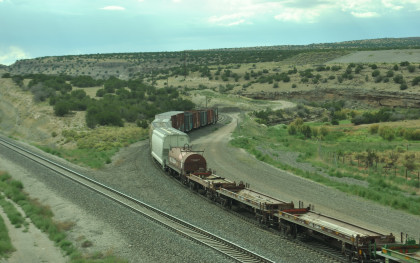
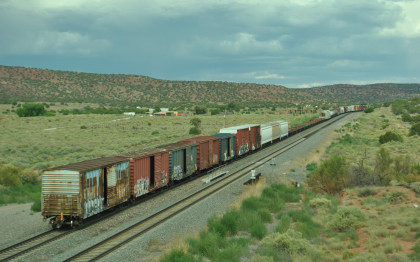
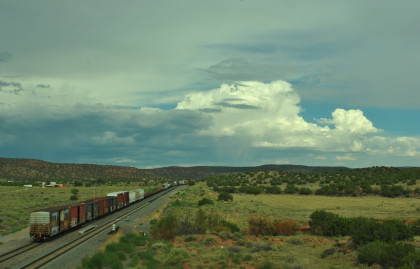
BNSF 5421 East came out of Abo Canyon. We drove west on US 60 to Belen and the next stop.
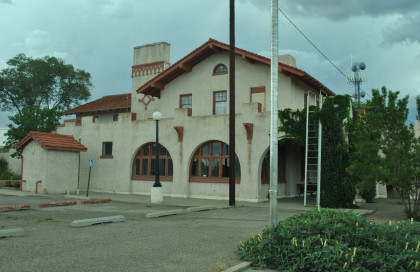
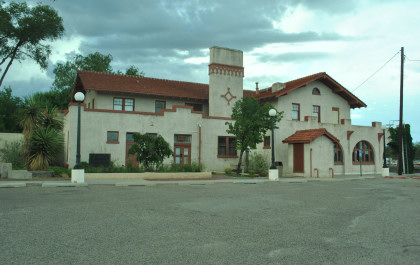
The Santa Fe Railroad Belen Harvey House built in 1909, now a museum.
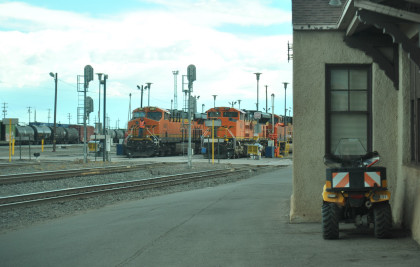
BNSF trains being refuelled for their journeys west.
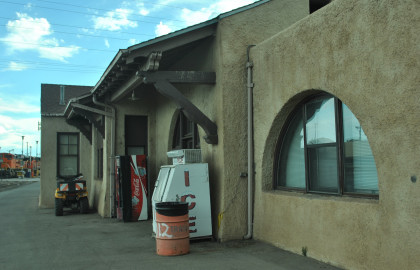
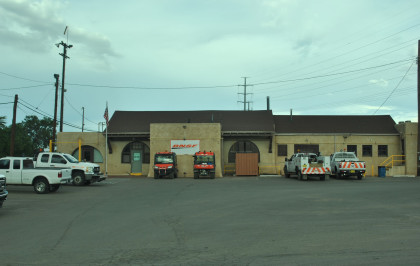
The Santa Fe Belen station, also built in 1909. We left here and one block over we found our last stop of today.
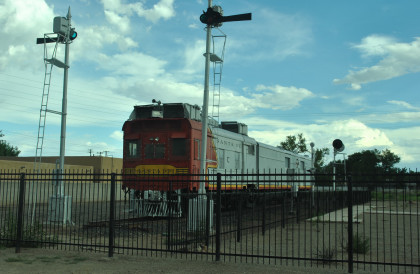
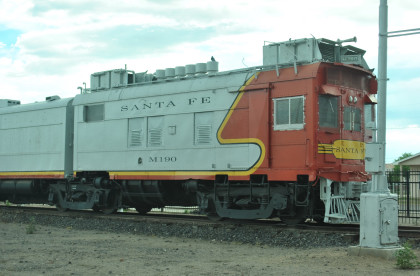
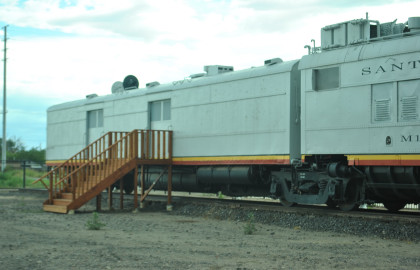
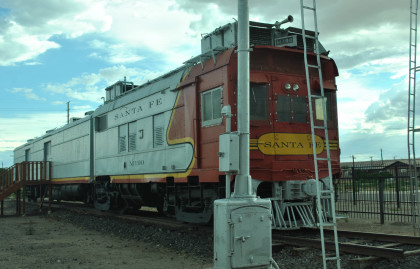
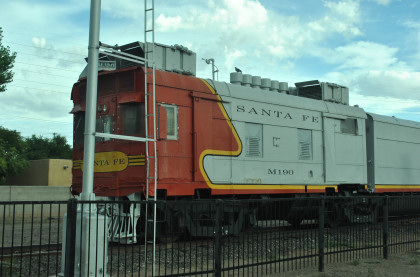
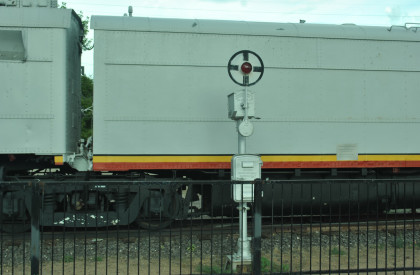
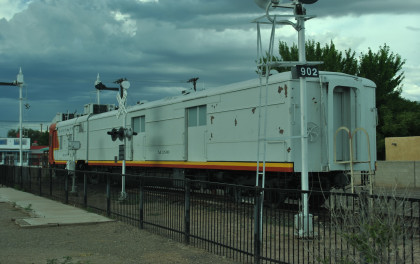
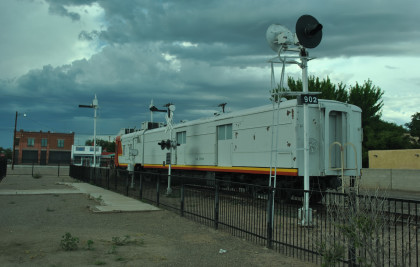
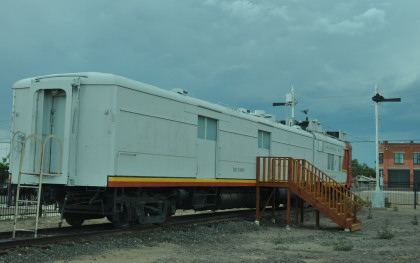
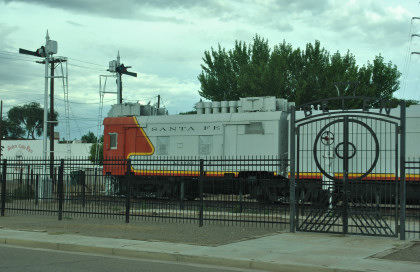
Santa Fe Gas-Electric motor car 190 built by American Car and Foundry in 1910. Santa Fe wanted a car that could pull a train of five standard (heavyweight) cars at main line speeds on the Kansas City to La Junta part of the railroad. M.190 was not intended to be a branchline puddlejumper, but more of an early version of a light duty, internal-combustion mainline passenger locomotive, an evolutionary step on the way to the Burlington's Pioneer Zephyr, Union Pacific's M.10000, and eventually the E-units.
To carry the weight of the engine, steam generator, water and fuel, EMC and Pullman settled on the 90 foot articulated carbody design, which put a second truck with an extra pair of traction motors up front where the weight was. Santa Fe reportedly didn't like idea of the articulated design nor one of its side effects - the need to truck-mount instead of body-mount the brake cylinders. Truck-mounted brake cylinders were unusual for the time, but are standard practice today.
The car remained an oddball on the roster and did not actually see much of the kind of service for which it was designed. M.190 tested with five cars on various parts of the system, including Los Angeles to San Diego, but in its first regular assignment (Kansas City-Topeka-Emporia) it was usually only called upon to pull three. By 1937, it had been taken off the "passenger main" and shuffled down to Texas for the run from Amarillo down the unsignaled Plainview District to Lubbock.
1937 was also the year that the Super Chief was streamlined. EMC's designs had made a quantum leap in just five years, from boxy, distillate-powered M.190 to the sleak red and silver diesel-powered E1's pulling the Super. From 1936 to 1955, M.190's usual assignment was the Amarillo-Plainview-Lubbock run. It did stray some after World War II and before it was dieselized in 1949 and the old Winton engine was replaced with a surplus marine 12-567 salvaged from a Navy Landing Ship-Tank. In 1956, the Albuquerque shops refurbished the car, painted it in red and silver warbonnet, and sent it to Clovis to power the train from there to Carlsbad and back. This service, the last Santa Fe "motor" run, lasted until 1967.
M.190 joined the Santa Fe historic collection stored in the roundhouse at Albuquerque then in 1986, the collection was sent to the California State Railroad Museum in Sacramento. Neglect and exposure to the elements took their toll over the next 20 years, and in 2007, CSRM deaccessioned the car and "gave" it back to the state of New Mexico.
We then returned to Interstate 25 north, taking it nine miles to Los Lunes, where we turned onto New Mexico 9 but stopped at KFC to pick up some dinner to go. We took that road to Interstate 40 to Grants and checked in to the Travelodge for the night.
| RETURN TO THE MAIN PAGE |