




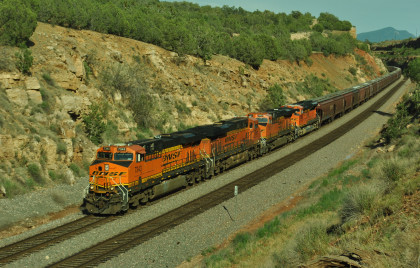
With a new National Railway Historical Society President, the organization's leadership decided to revert to the former methodologies for conventions and after four years convention rail operations being led by Bart Jennings, he felt it was time for others to take the helm. So after four excellent conventions in states that had not previously hosted conventions, namely Iowa, Alaska, Arkansas and Vermont, the convention committee and the Board selected Denver, Colorado.
The events were the Royal Gorge Scenic Railroad on July 19th, rides on Denver light rail and commuter rail on July 20th, the Georgetown Loop Railroad and Colorado Railroad Museum on the 21st, the Advisory Council, Board Meeting and Membership Meeting on the 22nd and an excursion on the Leadville, Colorado and Southern to close out the convention on July 23rd. Since Colorado is comparatively close to California, driving to Denver was an easy prospect and there were several rail-related attractions and tourist trains that I planned to ride on the way.
I signed up for all the events and Elizabeth Alkire joined the ranks of a bus host with me for the week. Since she could not be away from her job for two weeks, she organized to fly into Denver on July 16th. My friend Robin Bowers planned to accompany me for the whole trip and Chris Parker planned to fly to Denver on July 12th for a week, but unfortunately could not attend the convention itself due to the commitments of owning a business.
The Journey Starts 7/1/2016I packed the car and left my house at 8:10 AM and drove to Robin Bowers' apartment in Huntingdon Beach, where we loaded his luggage and were off, taking the car pool lane on Interstate 405 to California Highway 55, to Interstate 5, then California Highway 57 to US 60. We had to escape it to get onto Interstate 15 which we took to Interstate 40 East, then made a rest stop after Newberry Springs then our next stop was in Needles for petrol and lunch at Carl's Junior. We crossed into Arizona, spotted the first of three trains on the way to Kingman and drove US 66 through Kingman Canyon and caught up to the third train.
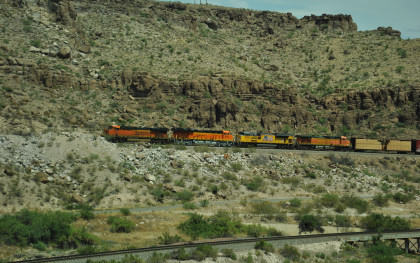
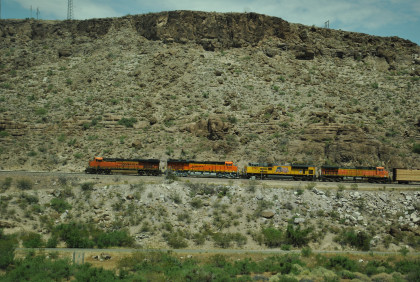
My first train of the day was BNSF 7021 East. We moved further east in Kingman Canyon.
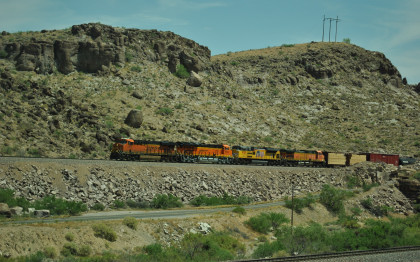
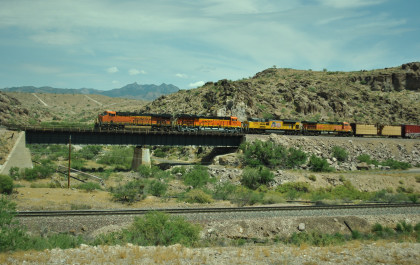
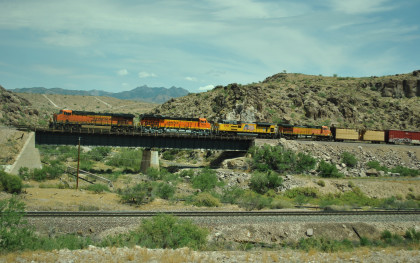
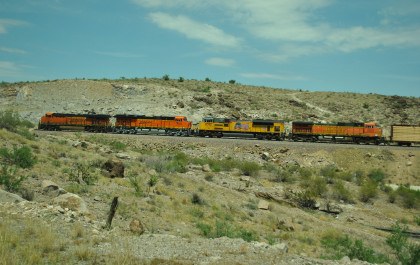
BNSF 7061 East in Kingman Canyon. From here we drove into Kingman.
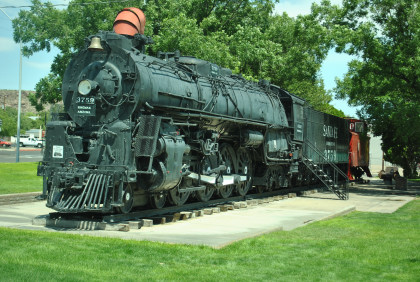
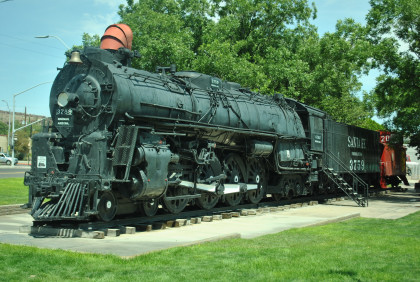
The first stop was Santa Fe 4-8-4 3759 built by Baldwin Locomotive Company in 1928.
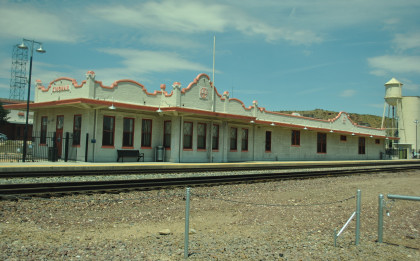
Our next stop was the Santa Fe Kingman station built in 1907. From here we took old US 66 out of town.
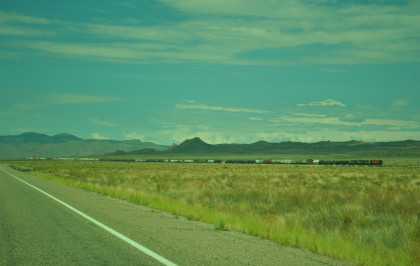
We passed two westbound BNSF freights as we caught up and passed BNSF 7061 East.
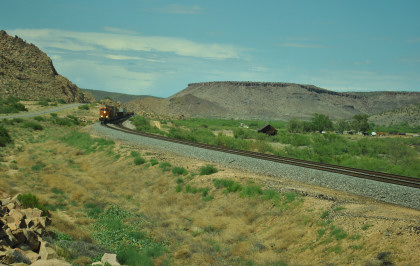
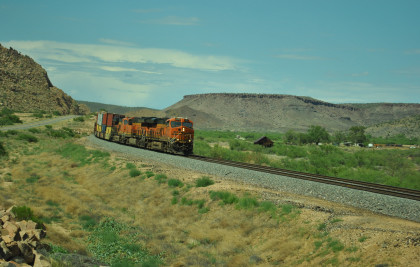
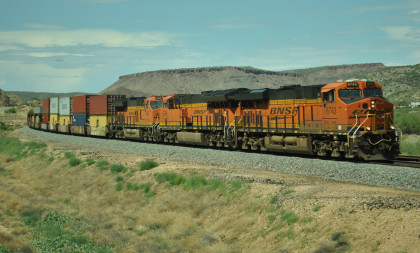
BNSF 6743 West near Hackberry.
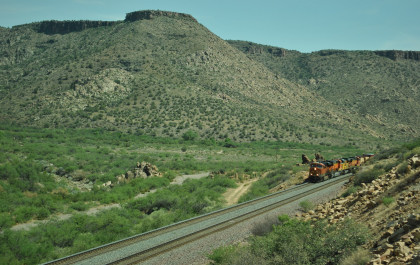
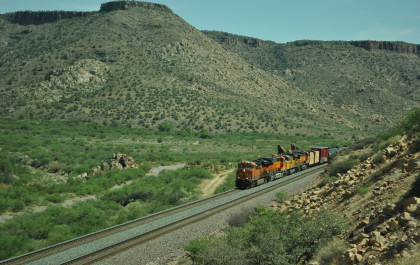
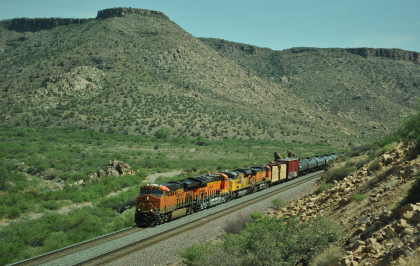
BNSF 7021 East near Hackberry.
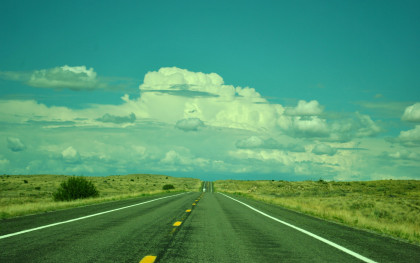
Life is one hard highway!
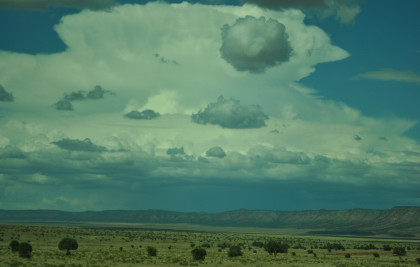
The clouds were fun to watch on our drive east. We took US 66 east to Seligman then US 40 east to Ash Fork, where we drove north to the Crookton Cutoff.
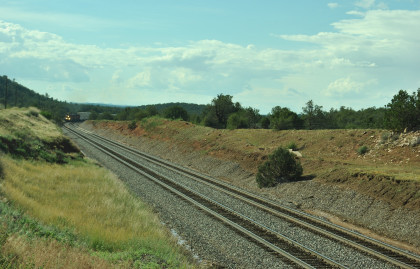
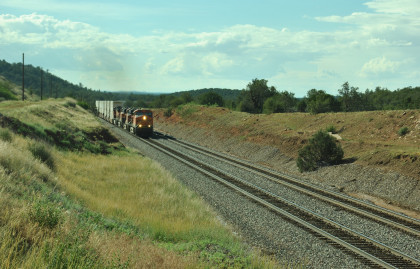
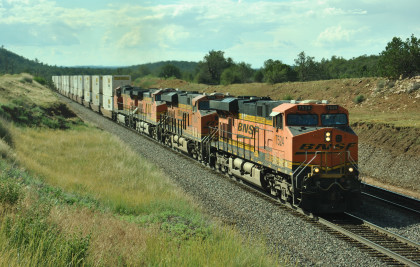
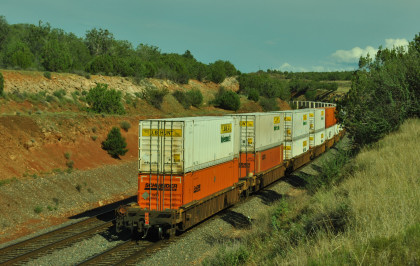
BNSF 7524 East at MP 396. A few minutes later we heard a horn from the east and rumbling from the west.
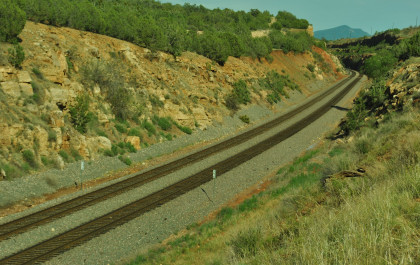
The westbound scene.
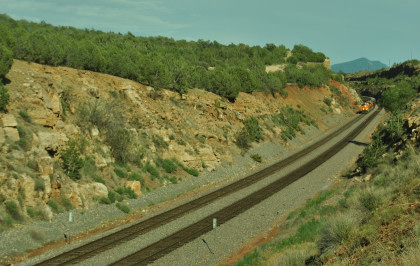
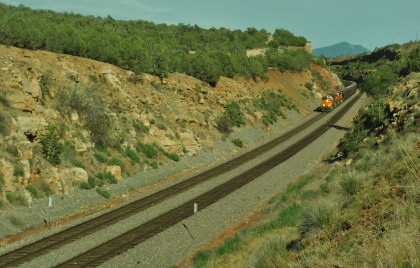
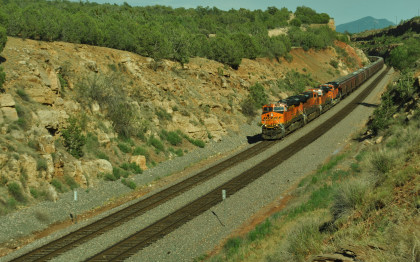
BNSF 7343 West at MP 386. Now the eastbound train came into view.
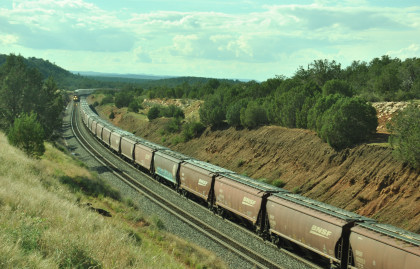
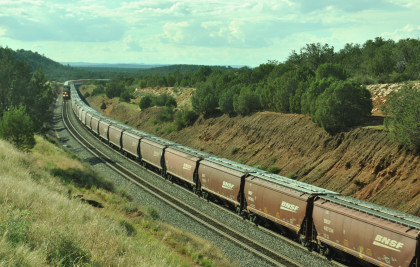
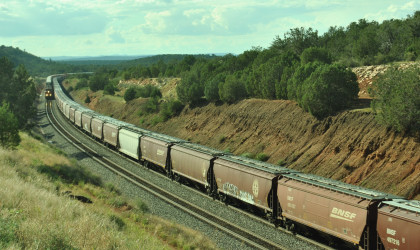
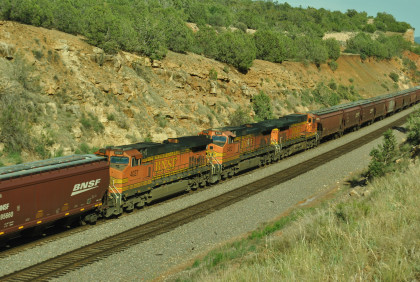
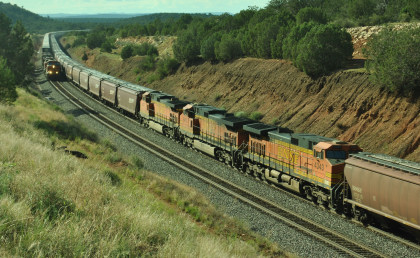
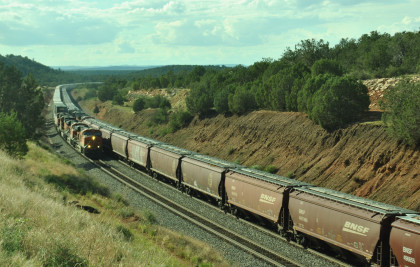
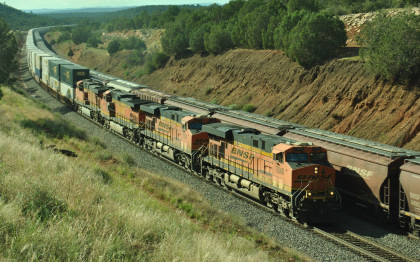
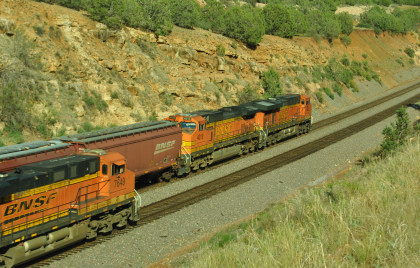
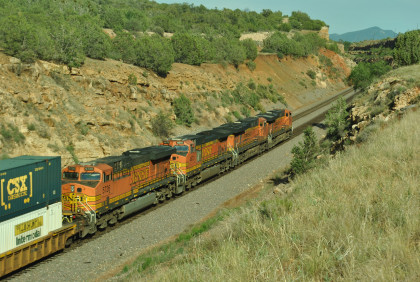
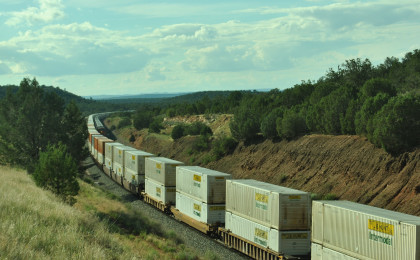
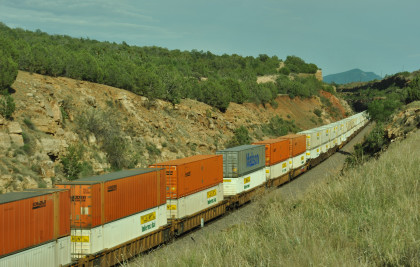
BNSF 7649 East met BNSF 7343 West. We then returned to Ash Fork.
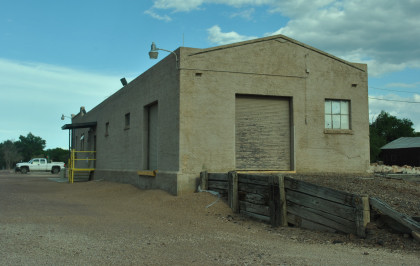
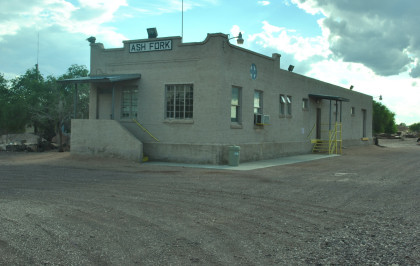
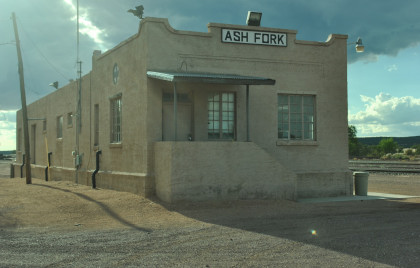
The Santa Fe Ash Fork station.
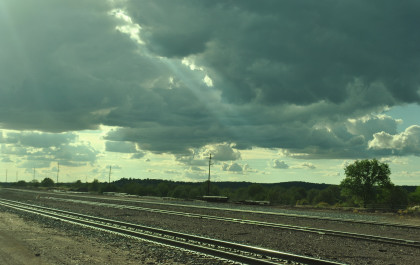
The interesting sky, after which we made our way to Williams.
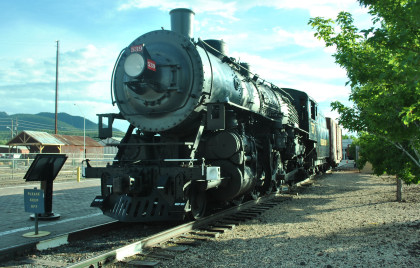
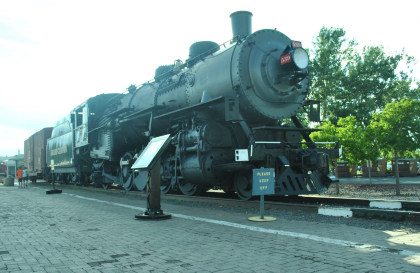
Grand Canyon Railway 2-8-2 539, ex. Spokane, Portland and Seattle 539 1944, nee Northern Pacific 1762, built by Alco-Brooks in 1917. It was displayed in Battle Ground, Washington then acquired by the Grand Canyon Railway in 2007 but was just on display and never operated here. In 2020, it was moved to the Port of Kalama, Washington for preservation.
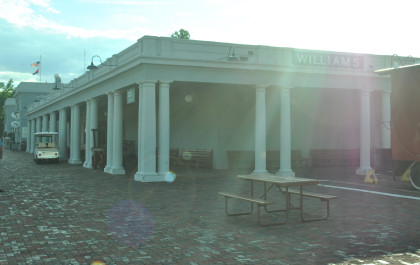
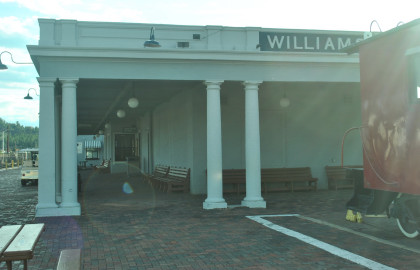
The Williams Santa Fe station built in 1908.
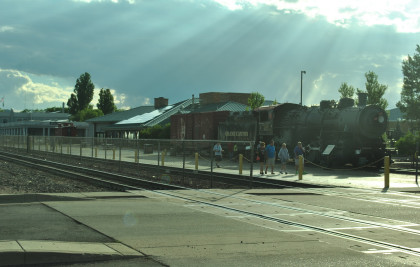
A Williams scene. We stopped at McDonald's for dinner then drove to Maine.
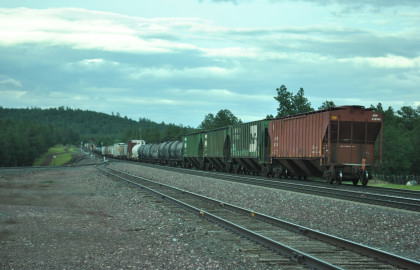
BNSF 7021 East just beat us there. From here we drove into Flagstaff and the Pioneer Museum.
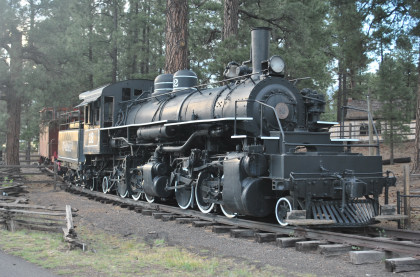
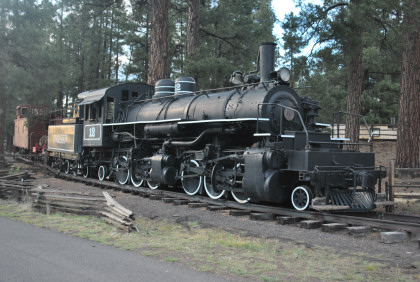
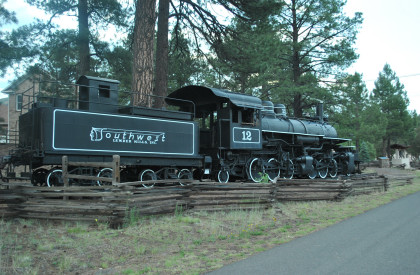
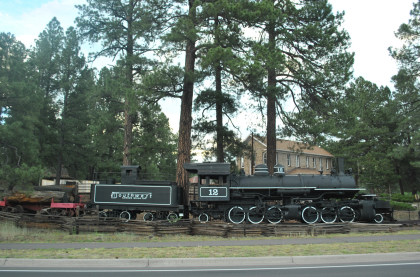
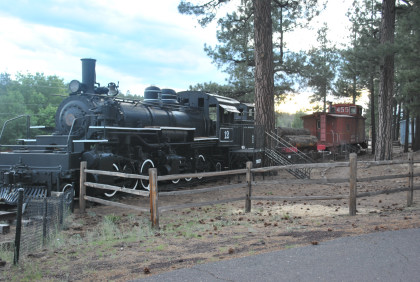
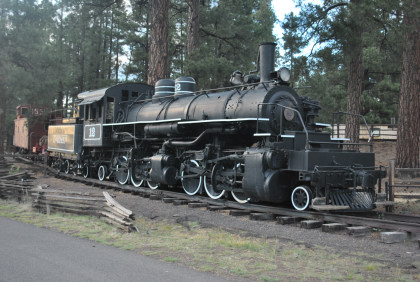
Southwest Lumber Mills Incorporated 2-6-6-2 12 1956, ex. Arcata and Mad River Lumber Company 12 1951, exx. Hammond Lumber Company 12 1931, nee Hammond Lumber Company 6, built by Baldwin in 1929. For a time, Southwest ran 12 with a arge tank car as an auxiliary tender then after adding a normal rectangular tender, the original fuel bunker was removed but the tanks retained. In 1959, when Southwest Lumber Mills became Southwest Forest Industries, 12's two saddle tanks were removed. Southwest Forest Industries donated the steam engine to Coconino County in 1960 and it initially went on display in Coconino County Park in Flagstaff. In 1994, it was moved to its current location at the Pioneer Museum.
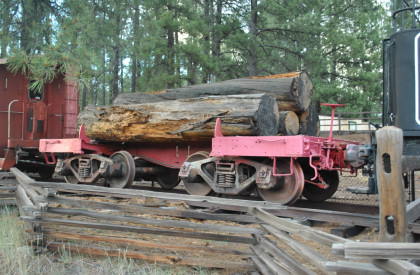
A lumber car.
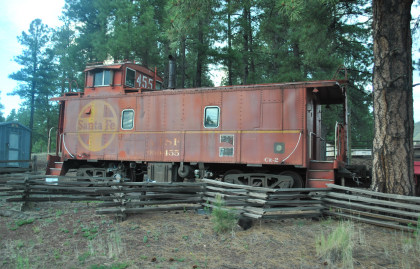
Santa Fe caboose 999455 built by the railroad in 1942. From here we went back into town.
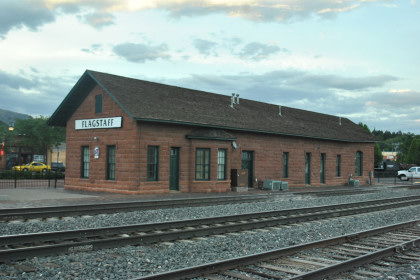
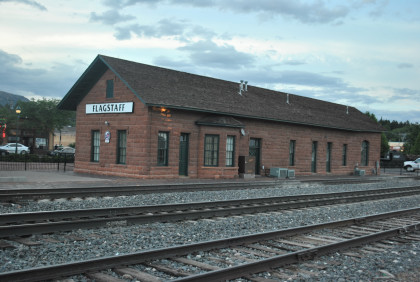
The Santa Fe freight house built in 1899.
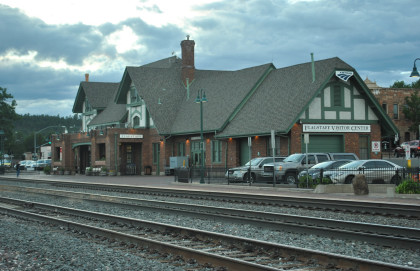
The Santa Fe Flagstaff station built in 1926 and used by Amtrak's Southwest Chief.
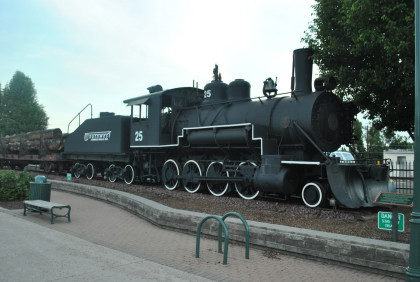
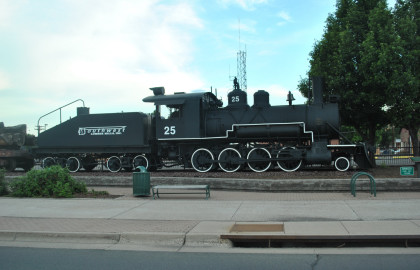
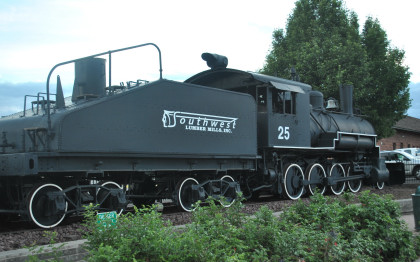
Southwest Forest Industries 2-8-0 25, ex. Southwest Lumber Mills Incorporated 2 1953, ex. Saginaw and Manistee Lumber Company 2 1961, exx. Saginaw and Manistee Lumber Company 25 1941, nee Arizona Lumber and Timber Company 25, built by Baldwin in 1911.
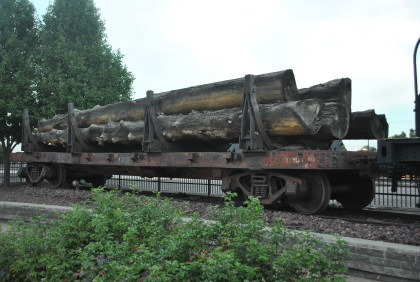
Southwest Forest Industries log car 139 built by Bettendorf. Robin and I then drove to the Snow Peak Inn for the night.
| RETURN TO THE MAIN PAGE |