




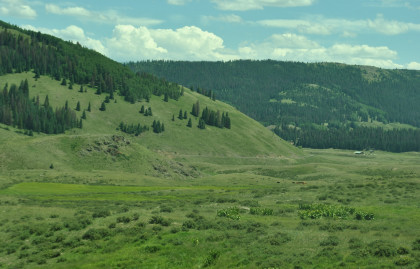
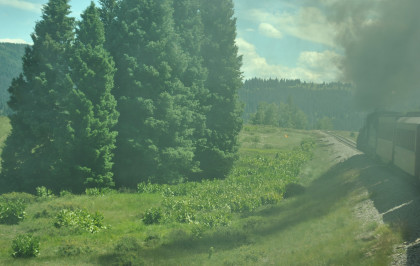
We were still climbing the grade to Cumbres Pass.
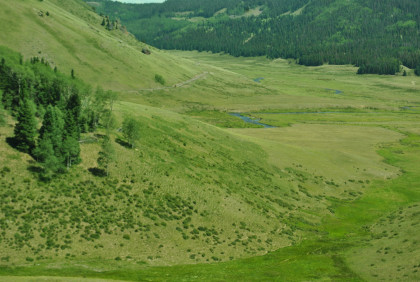
The valley floor.
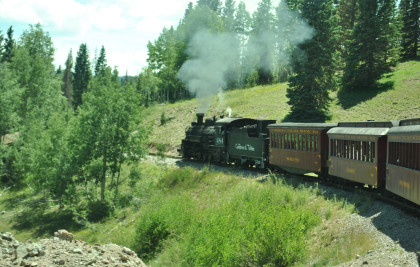
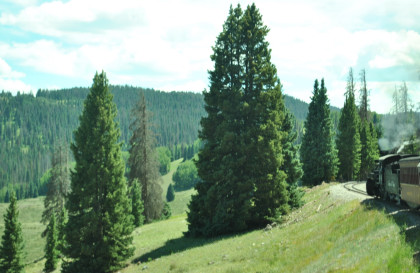
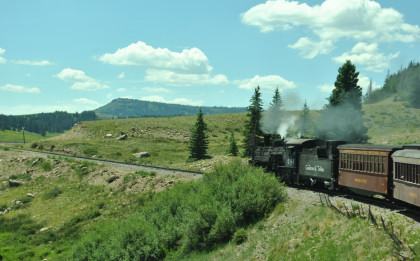
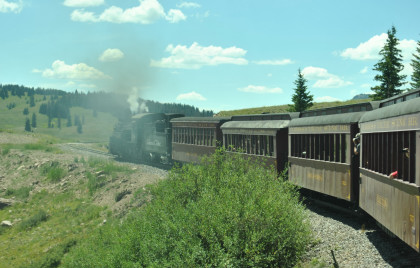
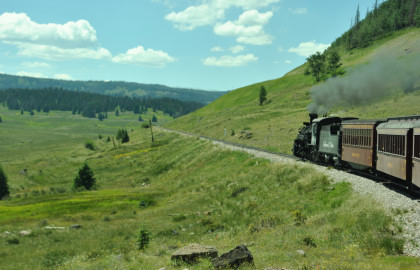
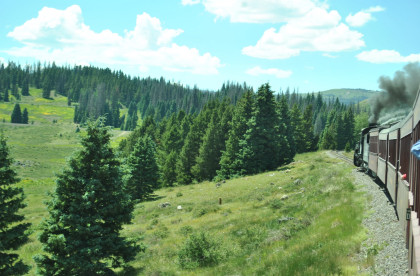
Ascending the grade toward Tanglefoot Curve.
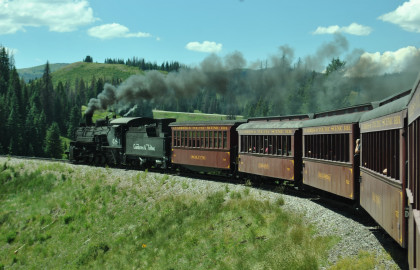
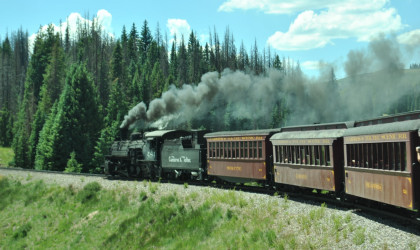
Rounding the curve before Tanglefoot Curve.
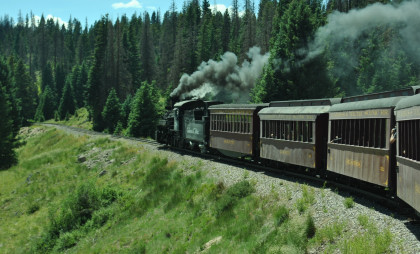
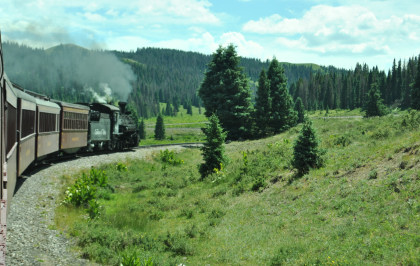
On the approach.
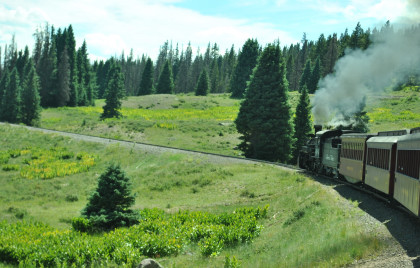
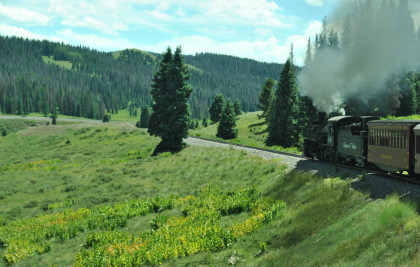
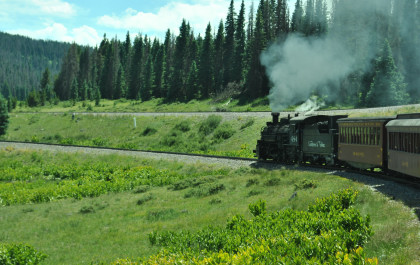
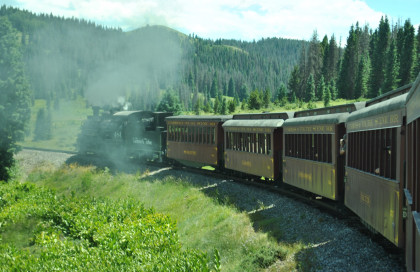
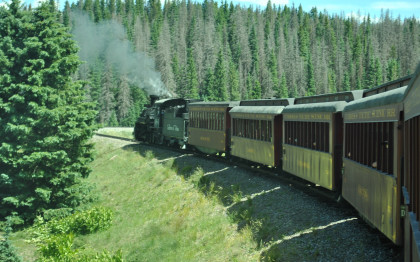
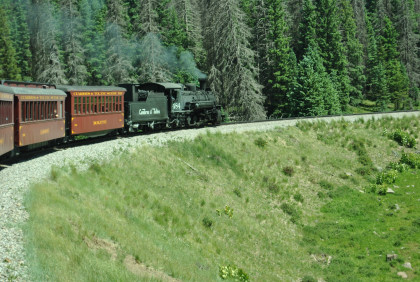
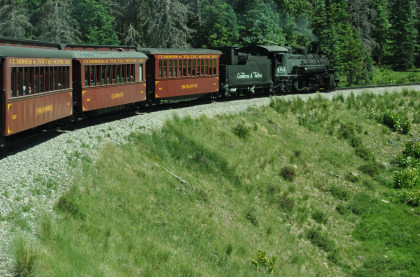
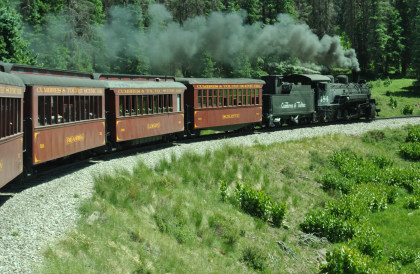
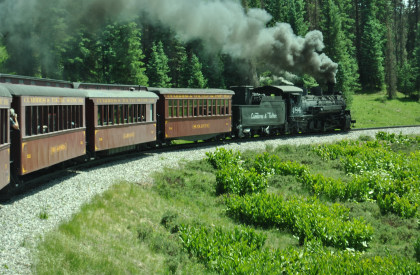
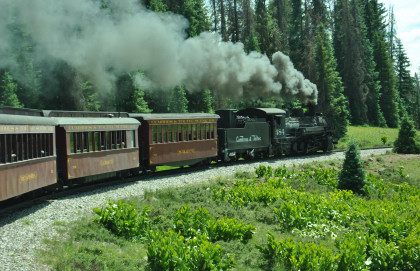
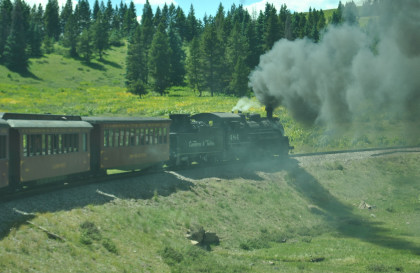
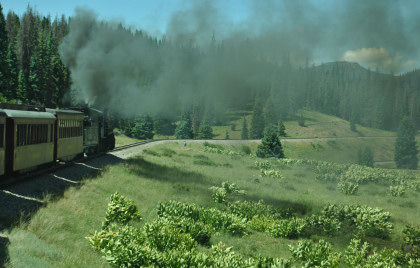
Rounding Tanglefoot Curve, which was also called the "balloon loop" by railroad crews until the 1970's. In the early years, there were three snowsheds and two wooden trestles around the tight curve.
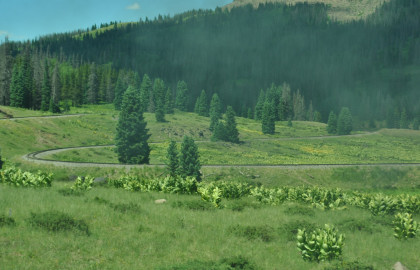
Looking back down from where we came.
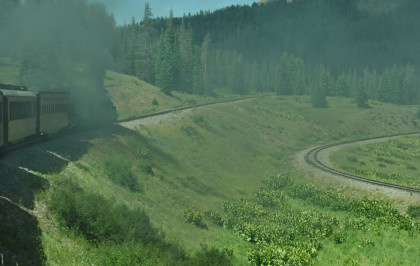
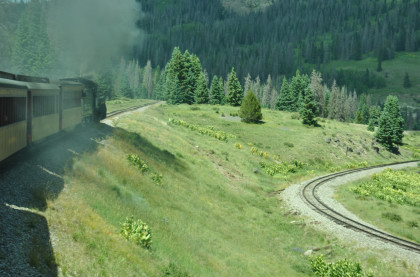
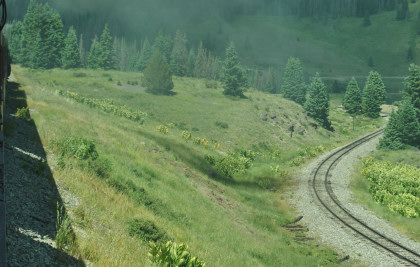
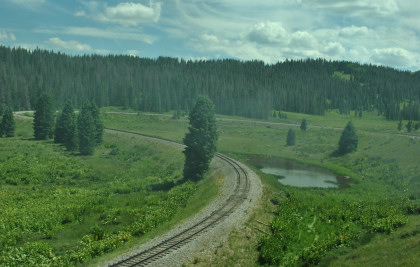
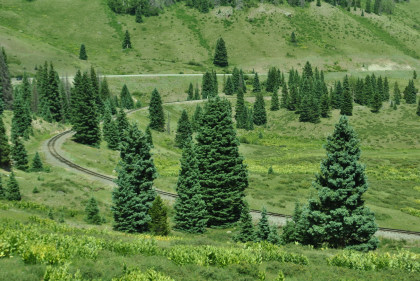
Riding above Tanglefoot Curve.
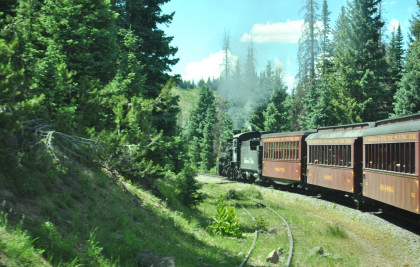
Curving toward Cumbres Pass.
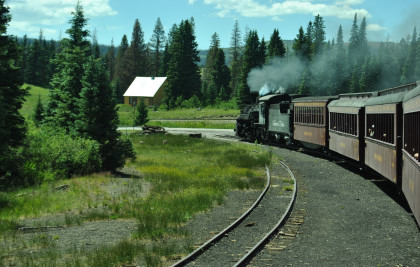
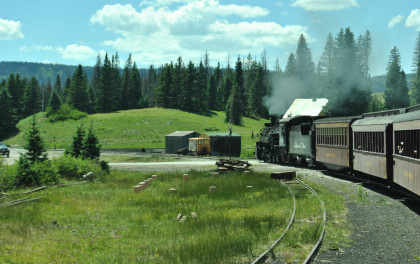
Crossing Highway 17 into Cumbres Pass.
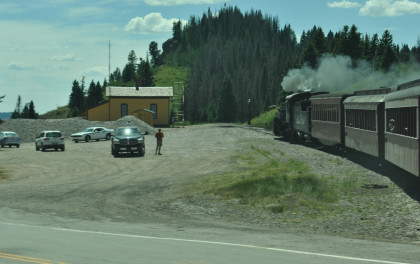
Pulling into Cumbres station.
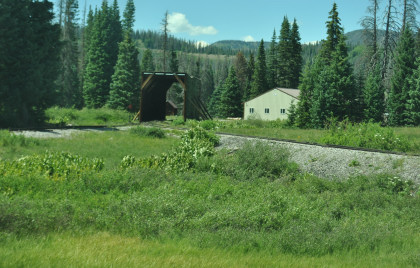
The remains of the snow shed.
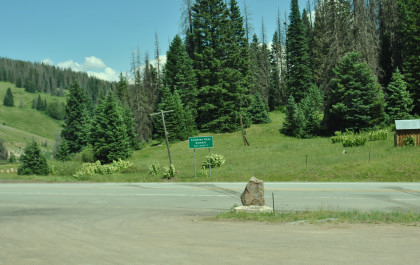
Cumbres Pass is the highest point on the railroad at 10,015 feet above sea level.
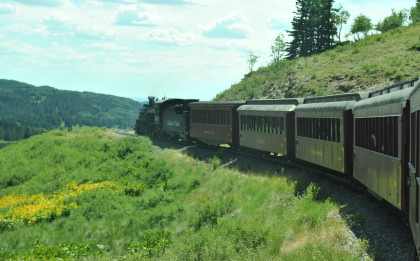
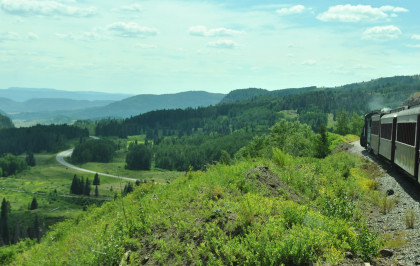
We were now en route to Windy Point.
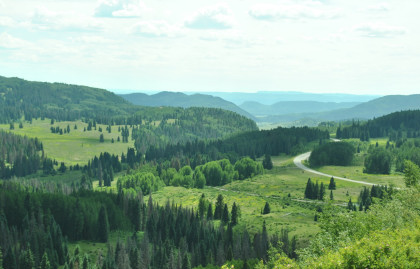
The view from Windy Point.
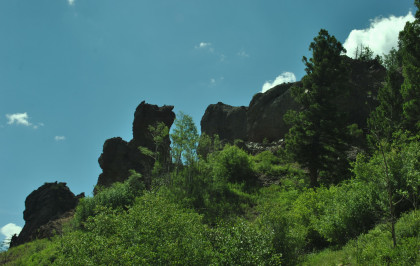
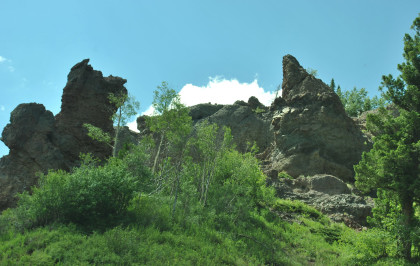
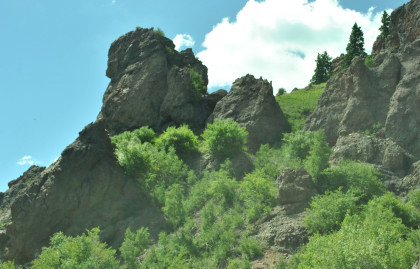
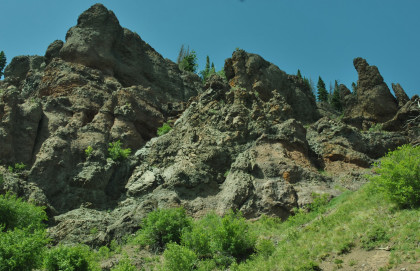
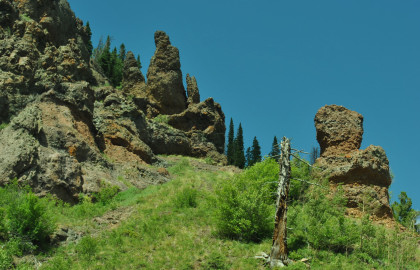
The hoodoos, tall pinnacles, spires and pedastel rocks formed from breccias of the Conejos Formation whose weird shapes are the result of the alteration by hot water, by weathering and by erosion of this volcanic rock. While very prevalent at Phantom Curve on the eastern part of the line, they are found on this portion.
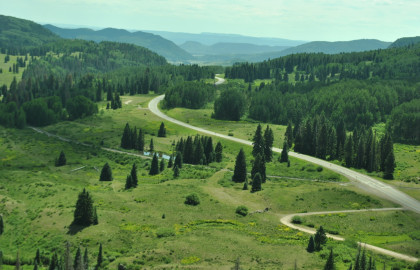
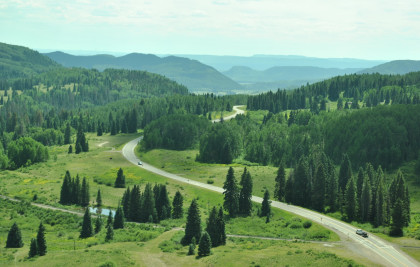
Looking down into New Mexico in the distance.
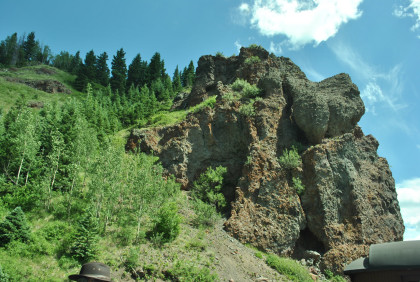
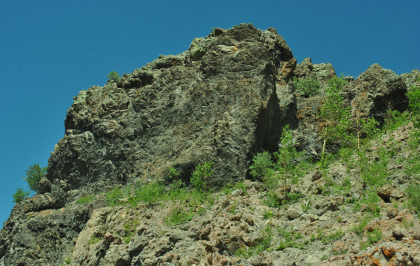
Hoodoos are part of the unique geology of this part of the Rocky Mountains.
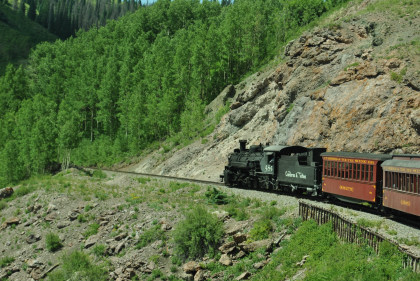
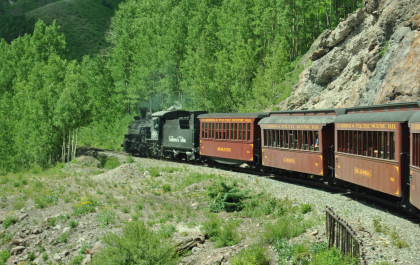
Descending the loop below Windy Point.
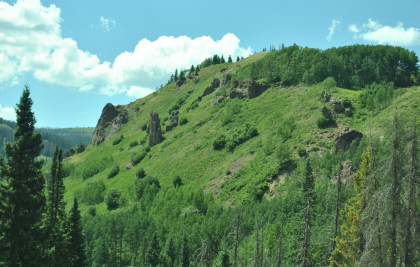
More unique geology.
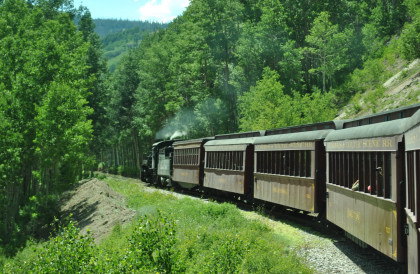
Coming out of the loop below Windy Point.
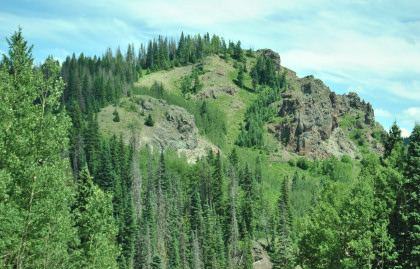
Looking back to where we had been.
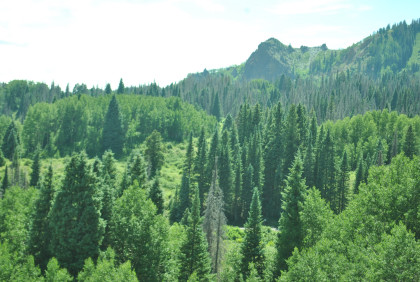
Looking down to the southwest.
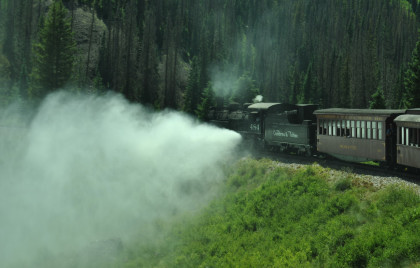
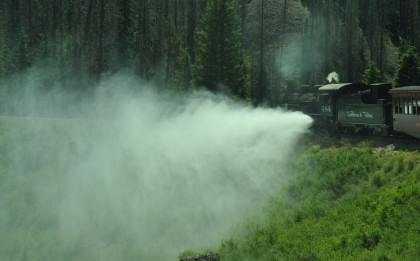
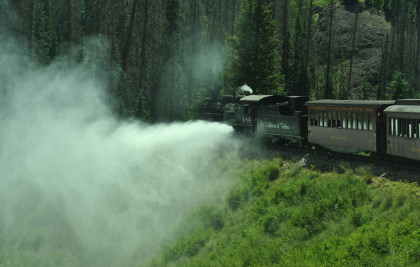
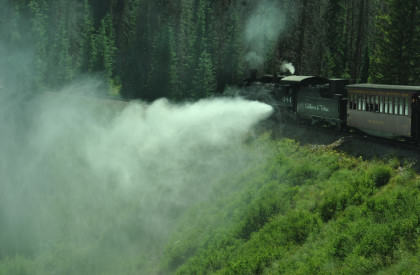
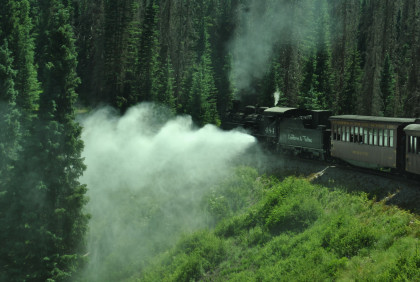
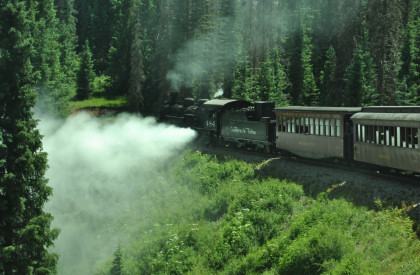
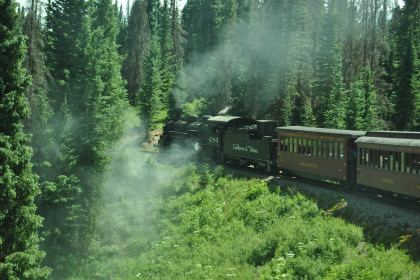
A major blowdown of the excess boiler pressure of the steam engine.
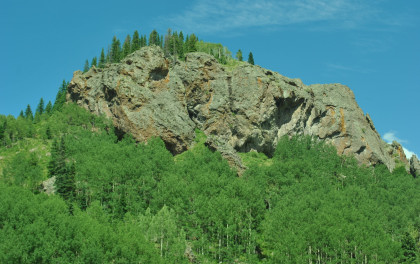
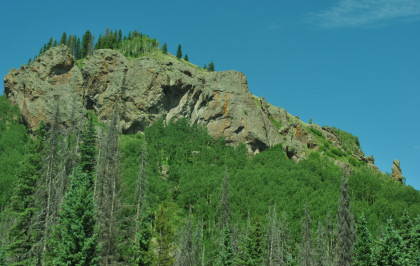
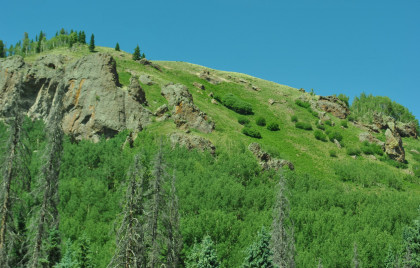
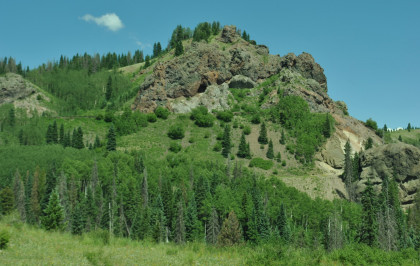
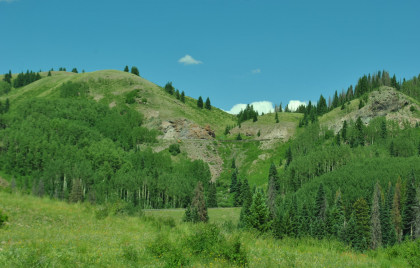
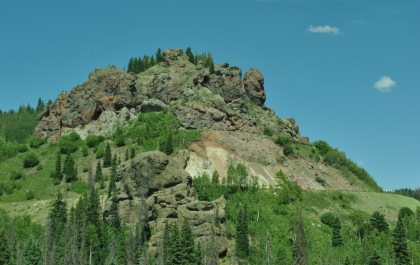
The unique geology of this area.
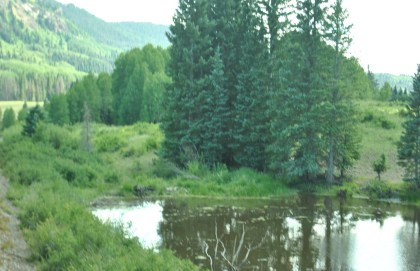
Running by a pond after crossing Colorado Highway 17.
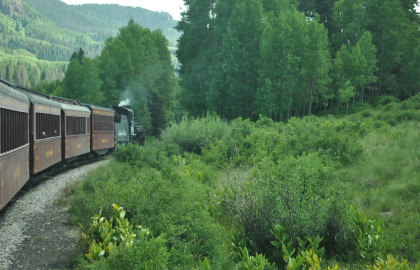
Roundin a curve down the four percent grade.
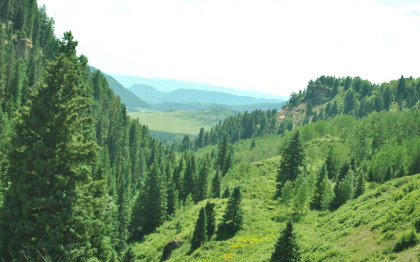
Looking down toward Chama.
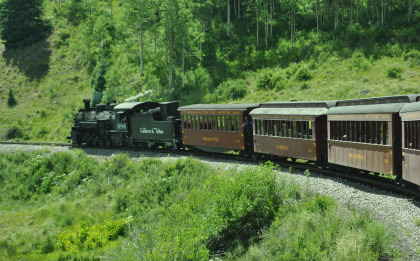
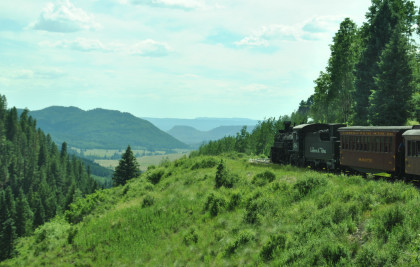
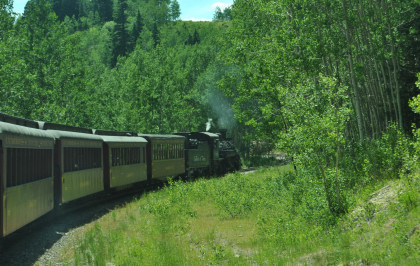
Curving downgrade toward Cresco.
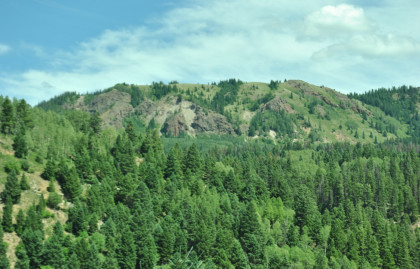
The mountains to the east.
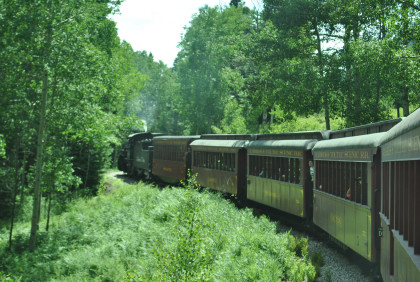
Nearing Cresco.
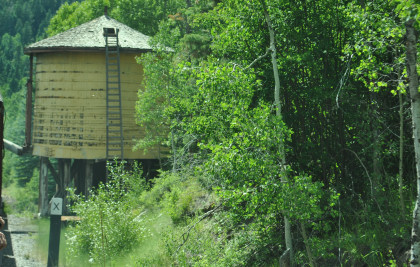
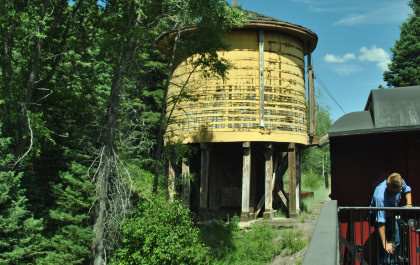
At Milepost 335.1 is Cresco at an elevation of 9,193 feet. Its water tower was built in 1893. I went into the coaches and talked with Elizabeth for a few minutes before returning to the open car for the rest of the trip.
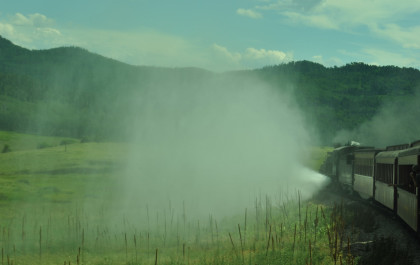
Another shorter blowdown.
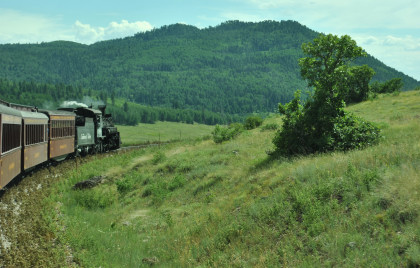
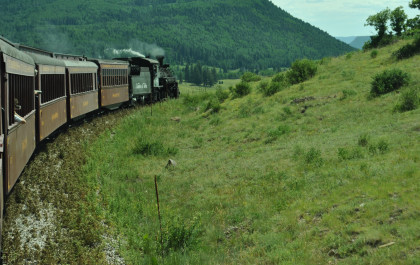
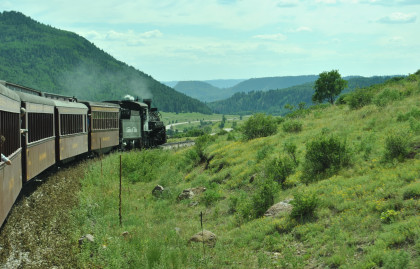
Rounding a curve near the Forest Service road.
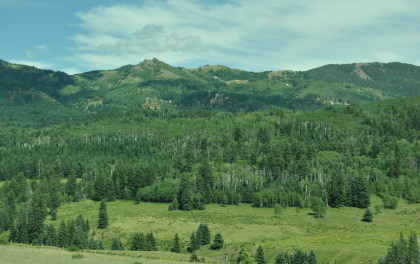
The mountains to the east.
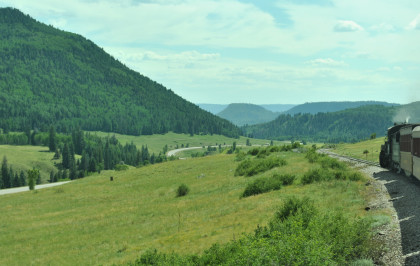
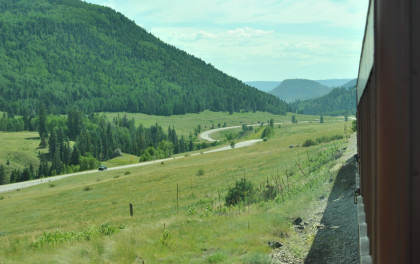
After crossing the Forest Service road.
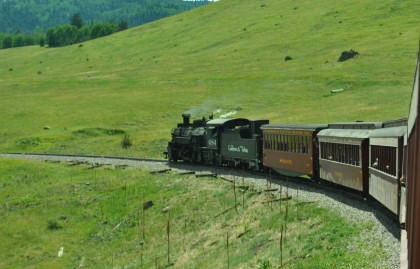
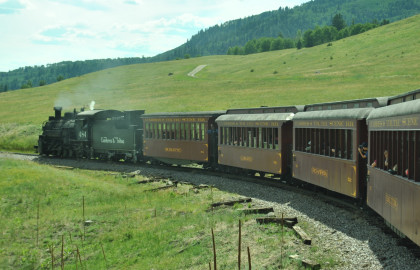
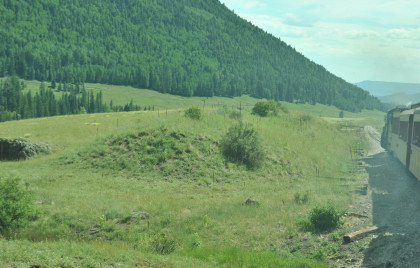
Still running down the four percent grade.
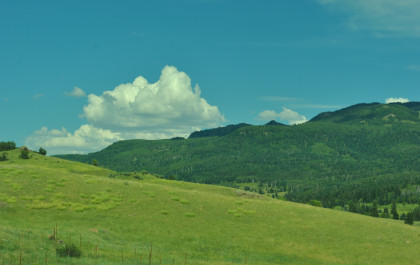
A friendly cloud to the northeast.
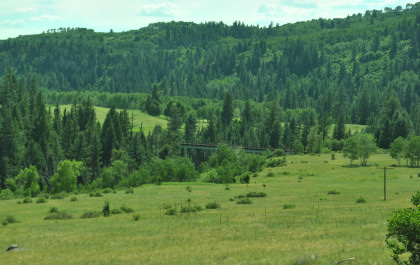
Looking east towards the mountains.
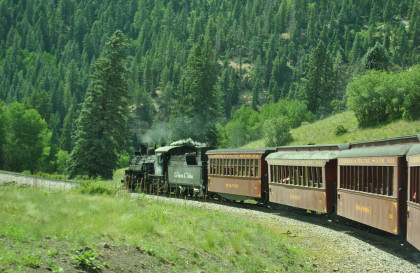
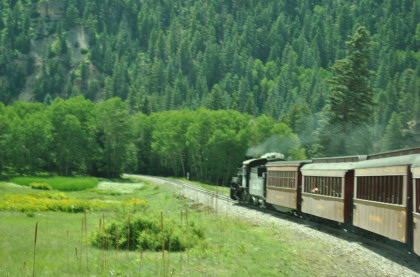
Proceeding to the Lobato Trestle.
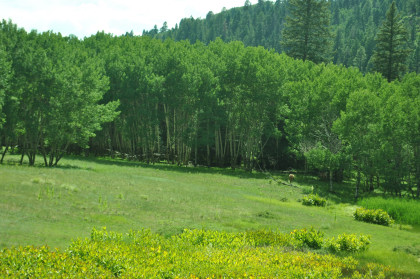
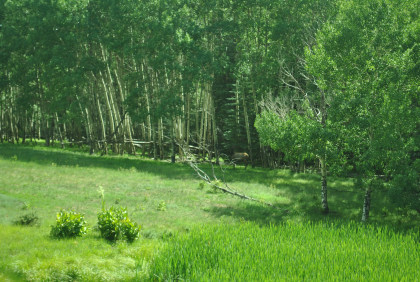
The elk were by the trees.
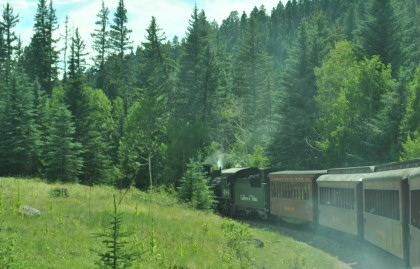
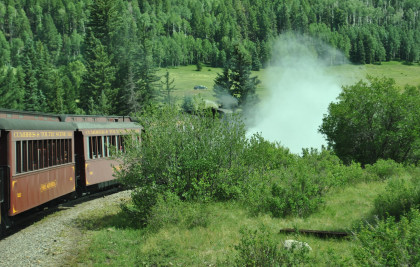
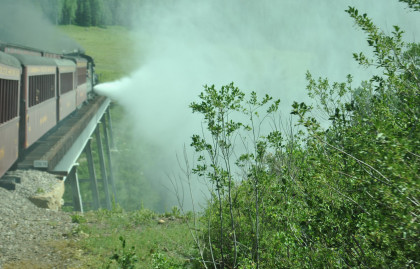
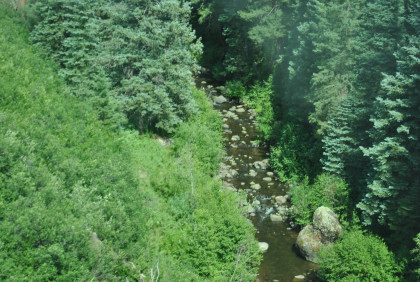
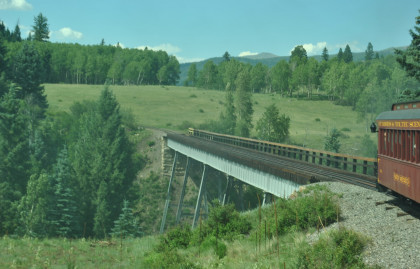
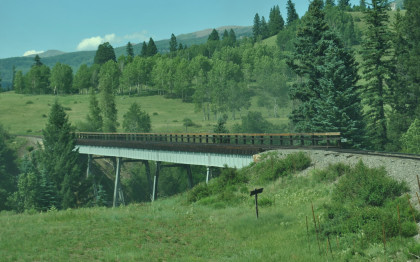
Crossing the 100 foot high and 340 foot long Lobato Trestle over Wolf Creek at Milepost 339.75 included a blowdown. Lobato was named for Bartholome Lobato, who settled in Santa Fe in 1695 and from there, members of the family migrated to the northern part of the province. The J.J. Lobato Land Grant in Rio Arriba County probably was given to one of Mr. Lobato's descendants.
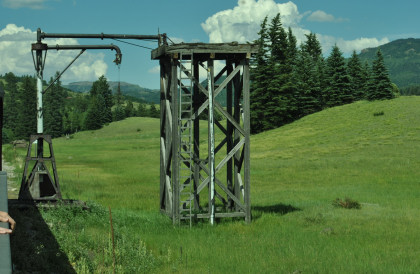
The stand for the water tower constructed in 1970 for use as a film prop in "Shootout", then more famously in "Indiana Jones and the Last Crusade".
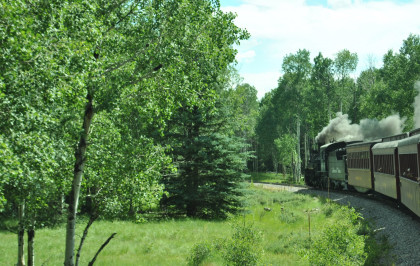
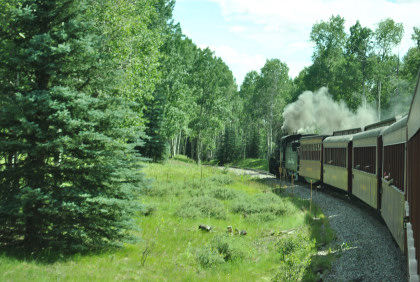
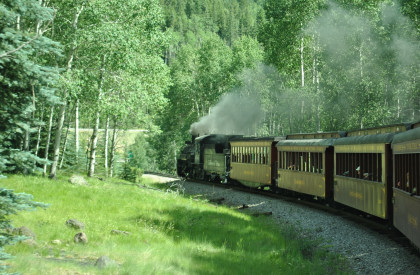
Rolling through the narrows on the way to Chama.
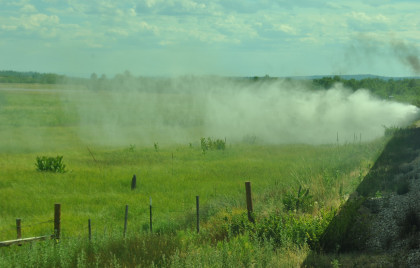
One final blowdown before Chama.
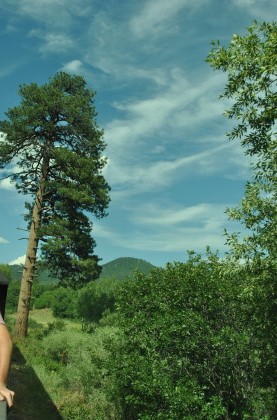
The Jukes Tree, an over-one-hundred-year-old Ponderosa pine named for photographer Fred Jukes, who who captured the line (and this spot) in the early 20th century.
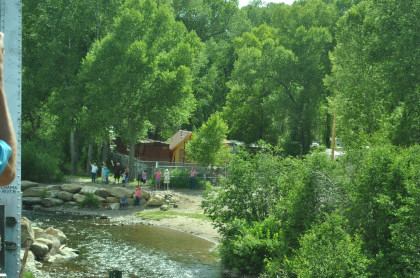
Crossing the Chama River.
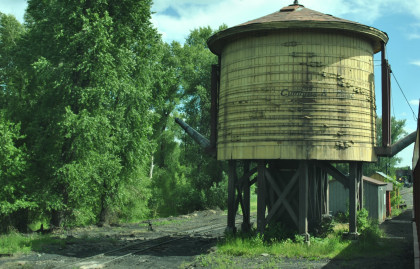
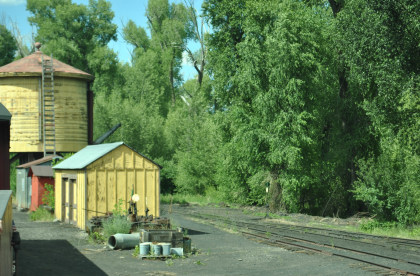
The unique Denver and Rio Grande Western water tower in Chama, built in 1897. It may be the only operable double spout tank left in the country.
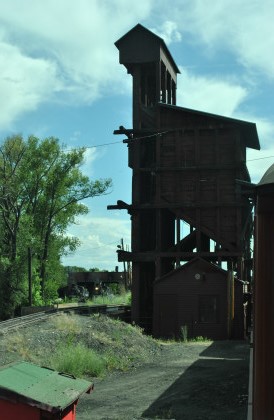
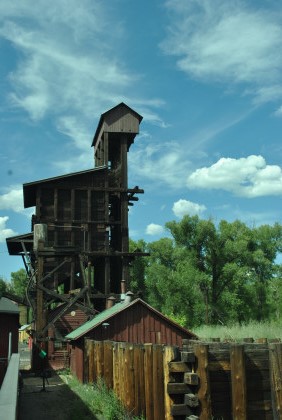
Denver and Rio Grande Western coal tipple built in 1924 to replace a 60 ton coal chute built in 1902. It is the only wooden coal tipple to have survived in the United States and is one of very few still functional. Cars carrying coal were pushed onto the coal loading track, dumped into bins and hoisted by bucket to the top of the tipple. Coal was loaded into locomotive tenders through the large central loading chute on the other side of the structure. The structure has been restored and maintained by the Friends of the Cumbres & Toltec Scenic Railroad.
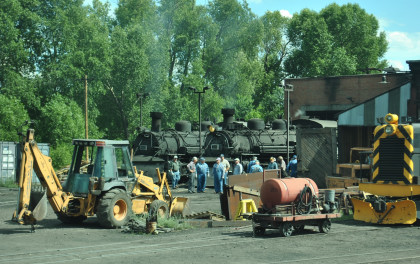
The Friends of the Cumbres and Toltec Scenic and two steam engines greeted us as we arrived. The four of us boarded the bus but before we left, Elizabeth went into the gift shop and bought an second pin for the unexpected engine change. We had a good trip back to Antonito, ending a fantastic trip on the Cumbres and Toltec Scenic Railroad. A special thank you to them for having us on the train today. We started our drive back to Alamosa but stopped at the Rio Grande Western station in Antonito and at La Jara. Back in Alamosa, we went to Arby's for dinner then later called it a night.
| RETURN TO THE MAIN PAGE |