




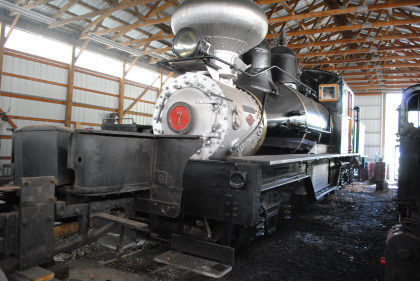
After we finished at Porter, Elizabeth and I drove out to the Hesston Steam Museum for our first visit.
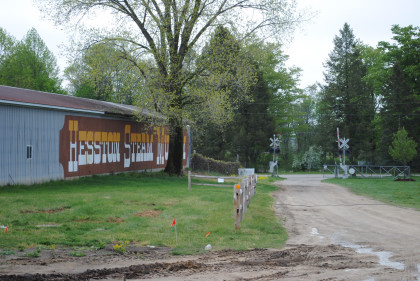
This entrance to the grounds.
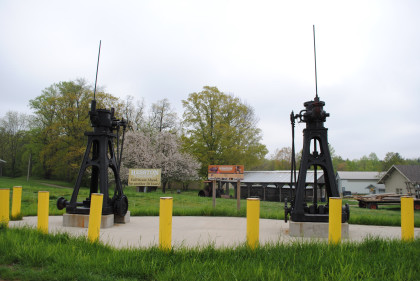
Two signal stands.
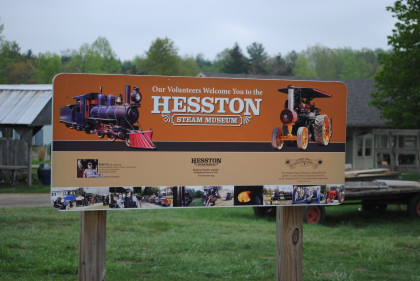
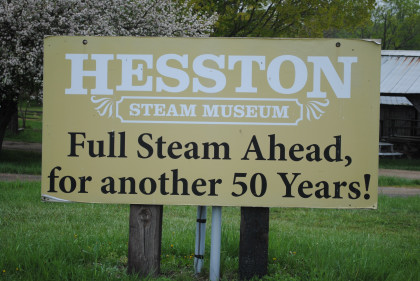
The signage at the museum.
Hesston Steam Museum HistoryThe desire of a few local steam buffs to perpetuate the use of steam power necessitated the purchase of suitable land for an annual reunion. Twenty-two acres (the present main show grounds) was purchased and hundreds of thorn apple trees cleared. A dam was built in Mud Creek to form Duck Lake as a source of water for the engines. The group, then called La Porte County Threshermen, held their first show and reunion in 1957. Traction engines were the main feature and provided most of the power. A sawmill was added in 1959, the electric plant in 1961 and the Browning crane in 1962. At the suggestion of Bruce Achor, a couple of members purchased a steam locomotive from Elliott Donnelley of Lake Forest, Illinois in 1964, who took an interest in the accomplishments at Hesston. With his generous financial assistance, during 1965-1968, the remainder of our 155 acre site was purchased and a unique dual gauge (24"/36") railroad was constructed. The La Porte County Historical Steam Society, Inc. was chartered as a not-for-profit organization on December 16, 1968 and the original La Porte County Threshermen club was absorbed and dissolved. In 1969, IRS granted recognition as a 501(c)-3 not-for-profit corporation.
Early OperationsWeekend (Memorial Day to Labour Day) operation of the railroad began in 1969. Additional buildings were erected and more equipment arrived for restoration and exhibit each year. The Shay locomotive restoration was completed and dedicated August 30, 1975. Unfortunately, Mr. Donnelley passed away in late December 1975. His family donated the 14" gauge railroad that had operated on his Lake Forest estate and it was removed by society members during 1976 and moved to the steam grounds. Construction on the new site started in 1977. Completion in July 1982 was marked with a Golden Spike ceremony.
A Tragic FireA $2.5 million fire on May 26, 1985 destroyed most of the large railroad equipment. Nine cars, the Henschel, and a diesel locomotive, along with many tools and small parts were lost. Also badly damaged were the Shay, Porter and India locomotives. Members purchased two Plymouth gasoline locomotives and with a Melodia coach purchased with a grant from the La Porte County Tourism and Convention Bureau, railroad operation (but not steam) resumed in time for the 1985 show. In early 1986, permission was received from the insurance company to begin salvage operations.
RebirthThe India locomotive was bulldozed out of the engine house rubble on March 13, 1986 and taken to the main shop for restoration. Just 89 days later, it was back on the rails and under steam. The next day, construction started on two 24" gauge passenger cars. Dr. George Mohun of Novato California contacted us, offering four locomotives and eight flat cars, the remains of the Mecklenburg Pommersche Schmall Spurbahn Railroad in East Germany, intended for a steam tourist railway near San Francisco. This railroad was never constructed and the equipment was stored on his ranch for 17 years. After an inspection trip, funds were borrowed and the equipment was purchased.
The equipment arrived on April 14, 1987. The brand-new, yet 47-year-old, CSK was immediately placed in the shop for cleaning and inspection. It was fired up for the first time in August 1987 and now serves as our regular locomotive for weekend operation. The India locomotive was retired in 1988 after a crack developed in the copper firebox, not quite making it to 100 years of operation. In 1990 the Orenstein & Koppel 0-8-0 was moved to the shop for a heavy restoration. In 1997 it was temporarily de-superheated, and in 1998 was reflued by the Hesston shop crew. Also in 1998, work started on construction of an enclosed passenger coach for the 24" line. In November 1998, two 36" gauge passenger coaches were purchased and transported from Cedar Point at Sandusky, Ohio.
Our VisitWe checked in for our visit and were told to look around the grounds and car houses all we wanted.
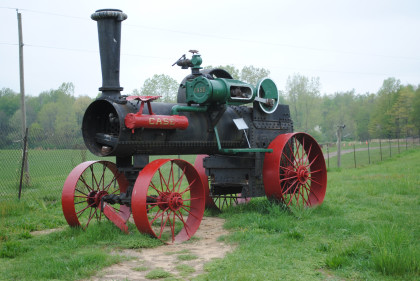
One of the steam tractors on display, this one built by Case. These were a versatile tool for the farmer, responsible for increased food production in the 1890s to 1925 as farmers could finally purchase a machine to pull ploughs and power devices such as threshing machines. Before the advent of such tractors, horses undertook those tasks. The museum's examples of the steam traction engine come from numerous manufacturers and were built between 1899 and 1922.
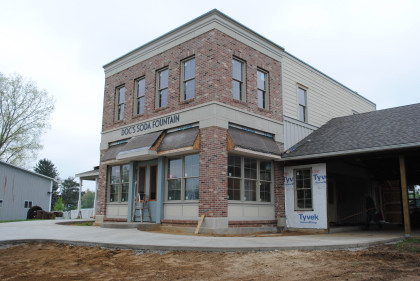
Doc's Soda Fountain would be finished by next week's opening.
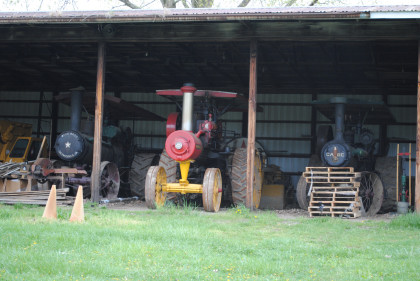
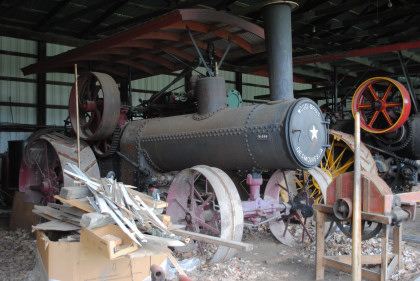
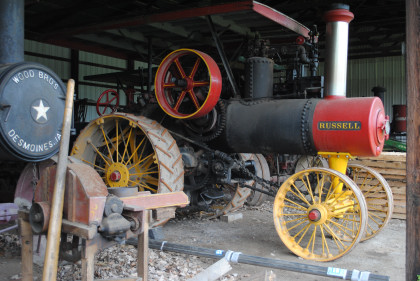
Three steam tractors at the rear of the sawmill.
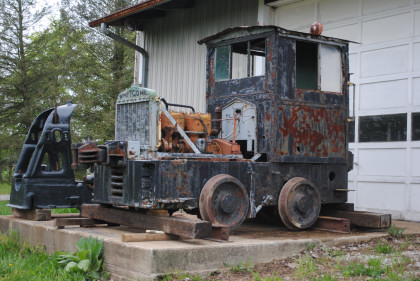
Ilinois Brick Company DGT 10 ton-switcher 4 built by Plymouth Locomotive Works in 1953.
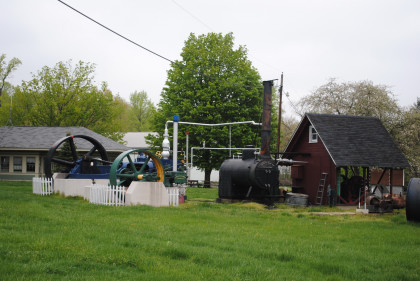
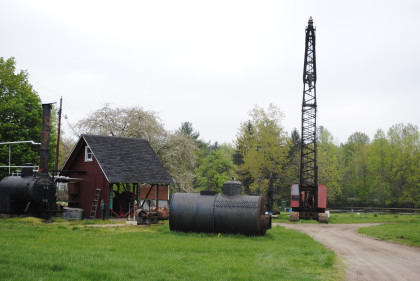
The grounds showing the electric power plant, stationary engine and the Browning locomotive steam crane.
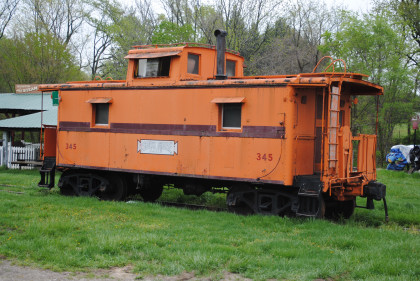
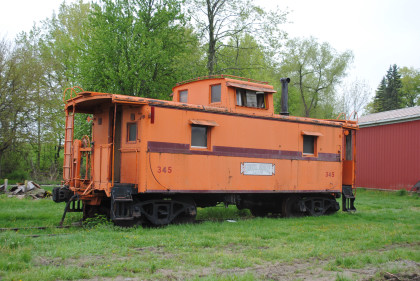
Chesapeake and Ohio caboose 90345 built by American Car and Foundry in 1949, painted as Chicago, South Shore and South Bend 345, is on display here.
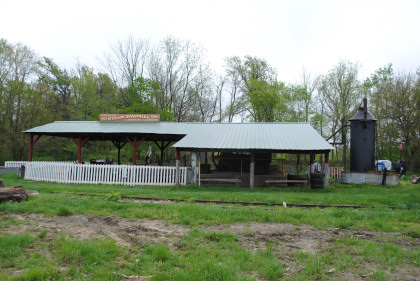
The Hesston sawmill built in 1900 by the Hill-Curtis Machinery Company of Kalamazoo, Michigan and is typical of the mills that dotted the countryside in the 1890s. The mill features a 60-inch insert tooth blade and is driven by a horizontal single-cylinder Uniflow steam engine manufactured by Skinner Engine Company of Erie, Pennsylvania.
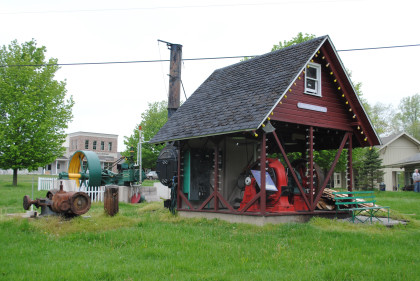
100 Years of power.
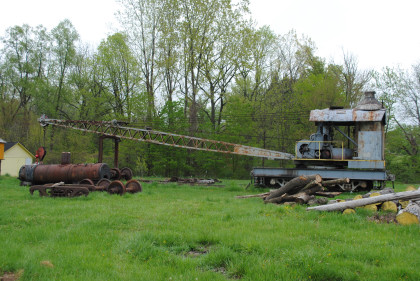
Browning locomotive steam crane used to lift logs on to the sawmill skidway when operation demands. It was built by the Browning Crane & Shovel Company for the United States Navy in 1941.
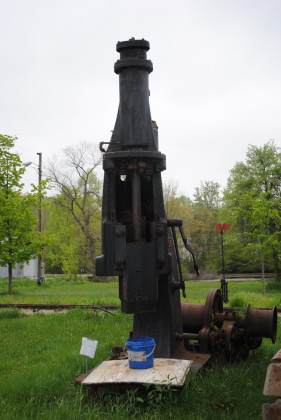
A vertical boiler.
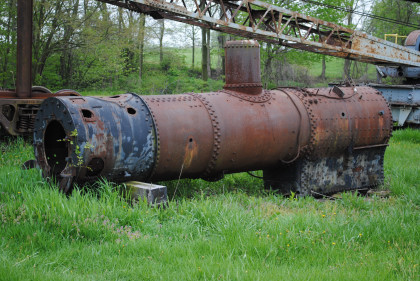
A locomotive boiler.
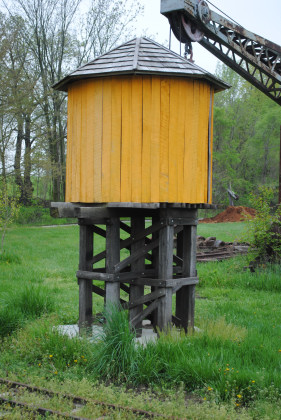
The water tower used by the 1/4 scale trains.
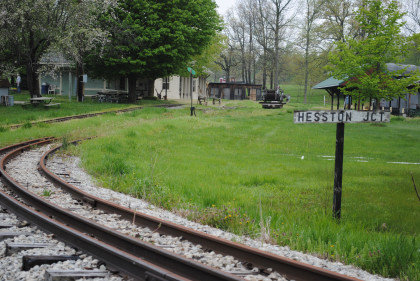
Hesston Junction.
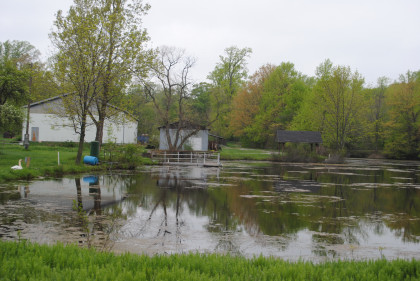
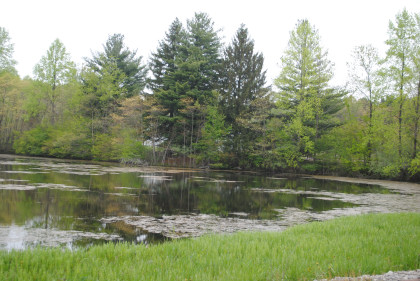
The duck pond.
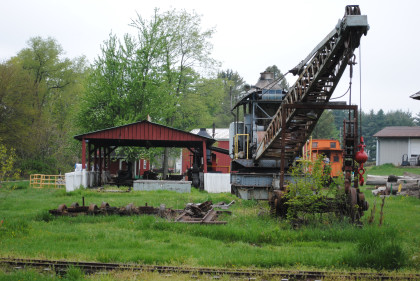
Hesston Steam Museum grounds.
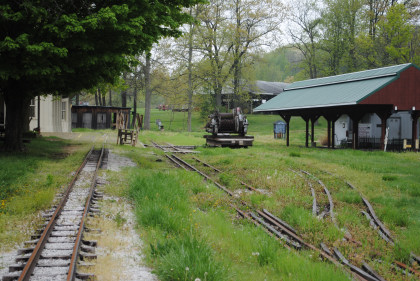
Three gauges of track - 1/4 scale, 1/8 scale and narrow gauge.
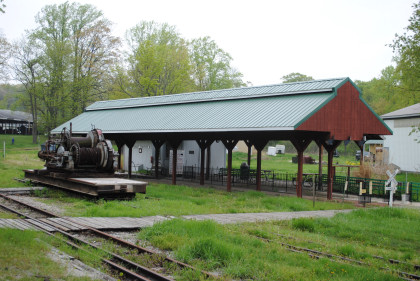
The 1/8 scales station.
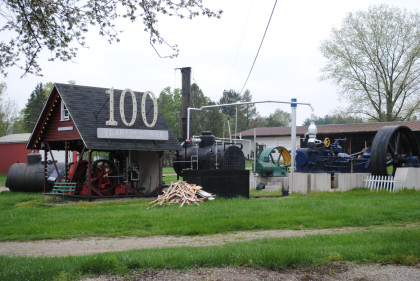
100 Years of Power.
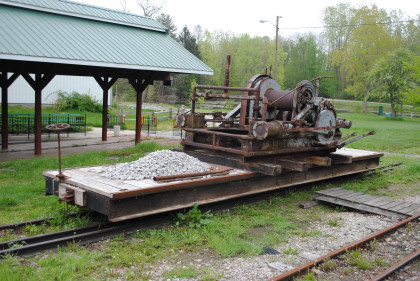
Flat car with a load.
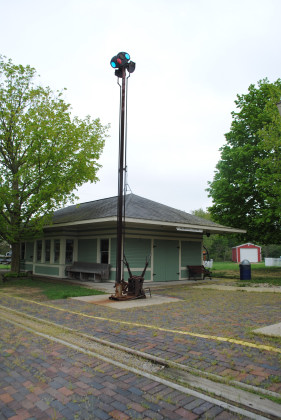
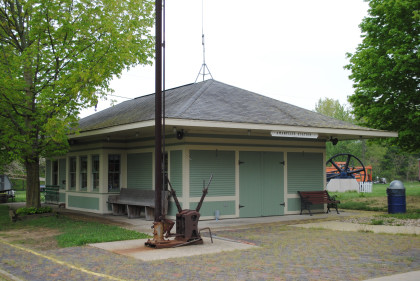
Amaryllis Station housing the gift shop and ticket office.
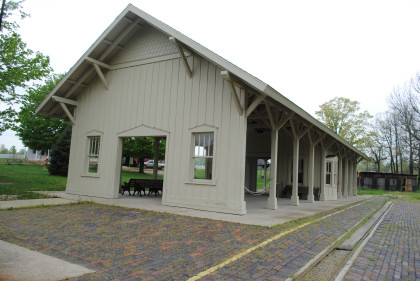
The museum built this depot, used for the narrow gauge and 1/4 scale trains.
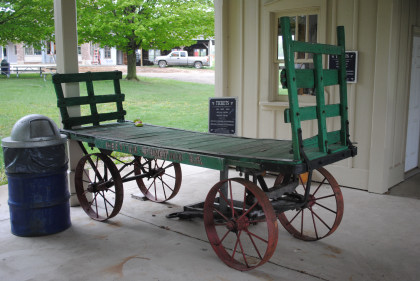
Chicago Rock Island and Pacific baggage cart.
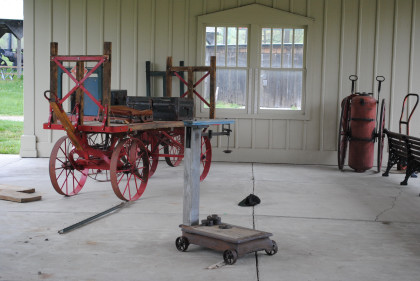
Another baggage cart and scales.
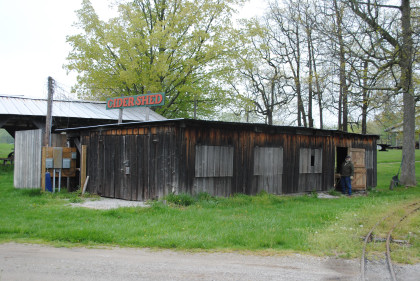
The Cider Shed.
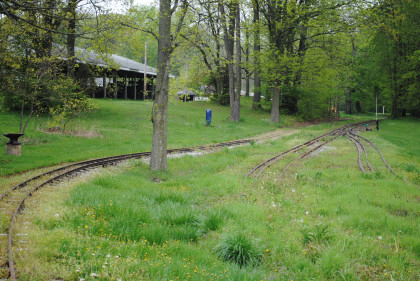
The three gauges of track.
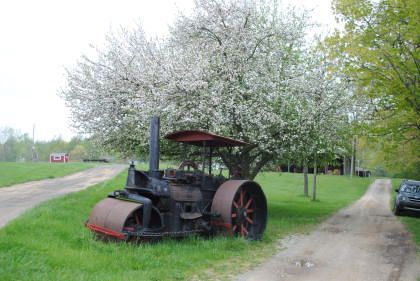
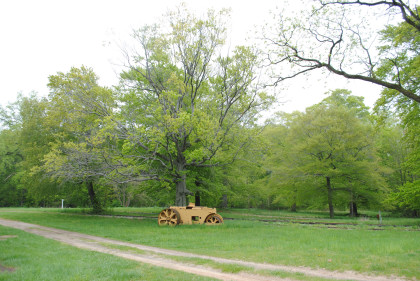
Steamroller and a tree in blossom.
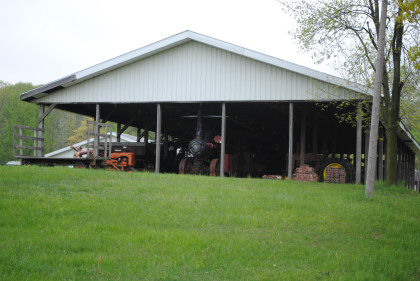
More steam tractors undercover.
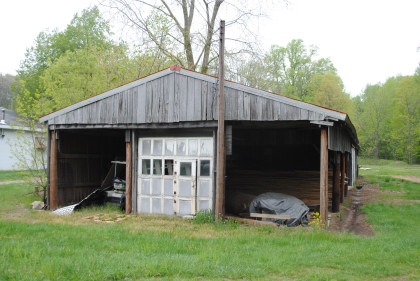
The lumber shed at Hesston.
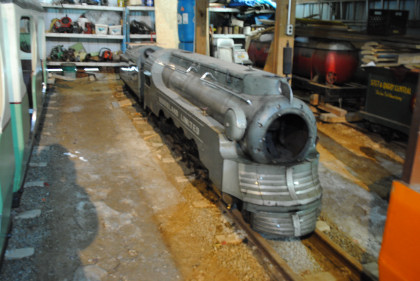
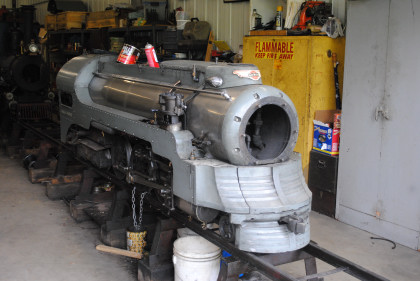
Two of the three Niagara steam engines from Kiddieland Amusement Park located at the corner of North Avenue and First Avenue in Melrose Park, Illinois. Kiddieland started out as a small venture of Arthur Fritz, a local builder and contractor. In 1929, he purchased six ponies and offered rides to local children. Miniature gasoline-powered cars were added a few years later after Fritz learned that they were being given away to children by a Chicago newspaper as a subscription promotion. By the 1930s, Fritz was calling his collection of amusements Kiddieland; the attractions were primarily sized and geared towards younger children.
In 1940, Fritz added the German Carousel, two miniature steam locomotives, the Little Auto Ride, the Roto Whip and a Ferris wheel. The Roto Whip and Ferris wheel would remain as rides until the park's closing. The park saw its first major expansion in the 1950s with the addition of the Little Dipper and the merry-go-round. Fritz's adult children also became more involved in the park at this time. The 1960s saw bumper cars replace the original pony ride, as well as the unexpected death of Fritz in 1967. The park transferred ownership in 1977, as three of Fritz's grandchildren took over the park and its operation. The park continued its expansion over the next several decades and installed several major attractions, including a Log flume, a swinging pirate ship, a 40-foot long water coaster, and numerous other attractions. The park closed on September 27, 2009 and demolished in 2010 to make way for a new Costco store.
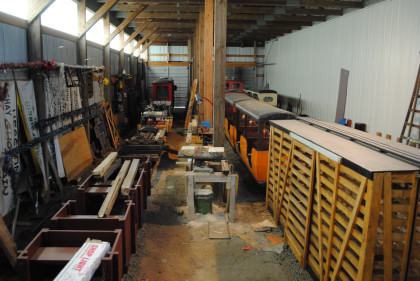
Looking down on the cars.
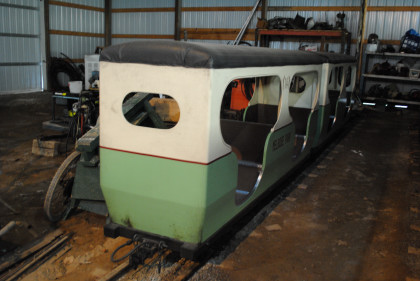
Car 14 "Melrose Park".
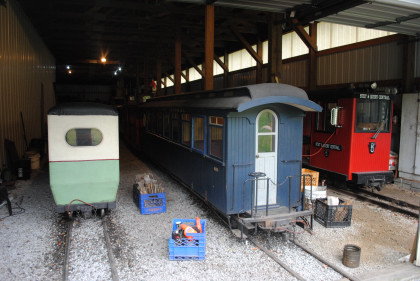
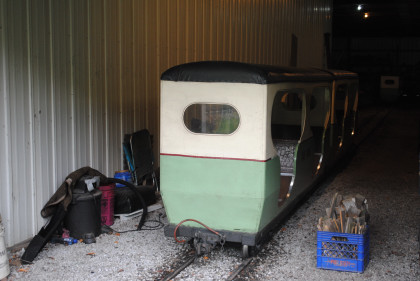
More passenger cars from Kiddieland.
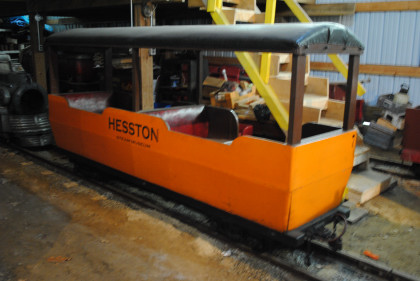
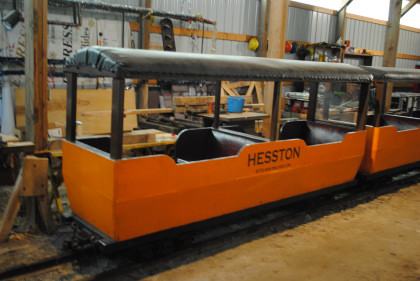
Some of the regular fleet of cars.
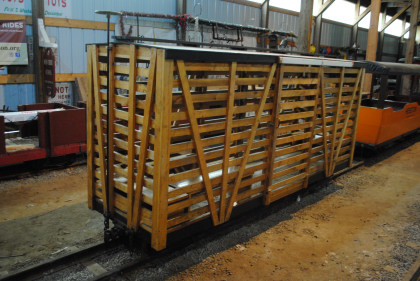
A stock car.
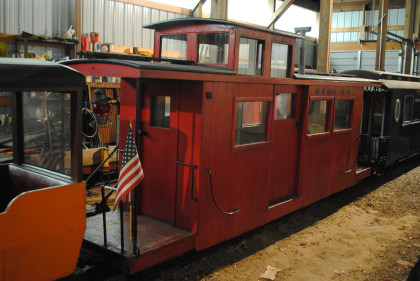
A caboose.
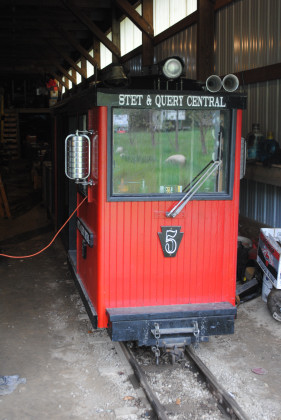
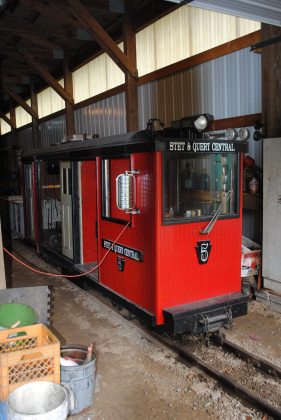
Stet & Query Central 14 inch boxcab 5, built by Sandley Locomotive Works, year unknown. It is used for switching and on lighter days.
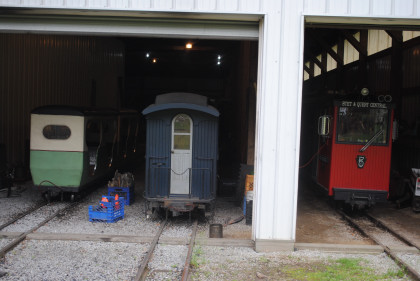
The storage shed, after which we walked over to another.
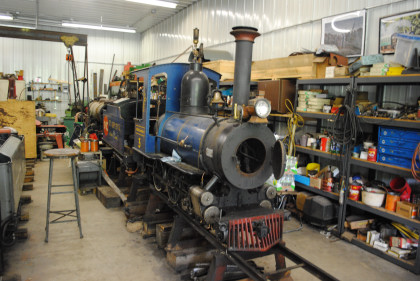
Stet and Query Central 14 inch 4-4-0 3 built by Wagner & Son in 1922. The cab was modified by Sandley Works when owned by Elliott Donnelley.
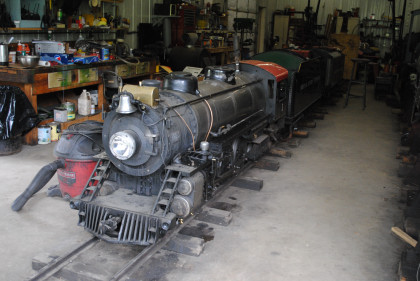
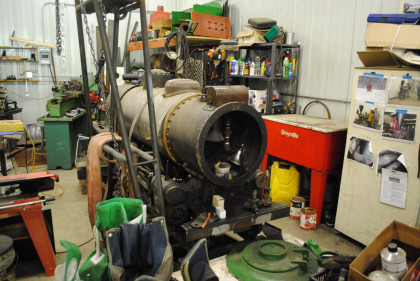
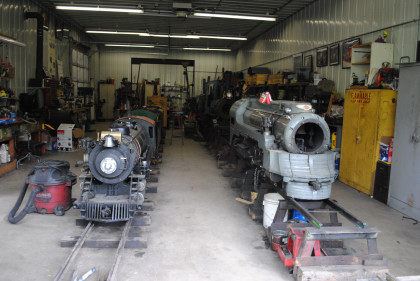
Three of the other steam engines in the collection.
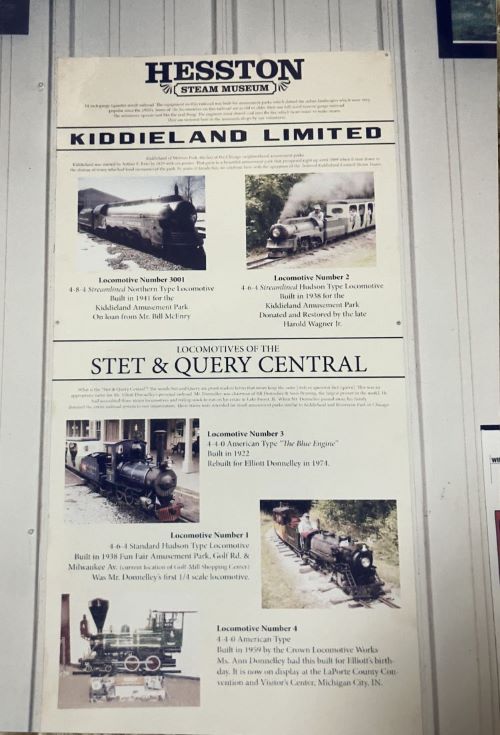
Hesston Steam Museum locomotives.
A Hesston scene.
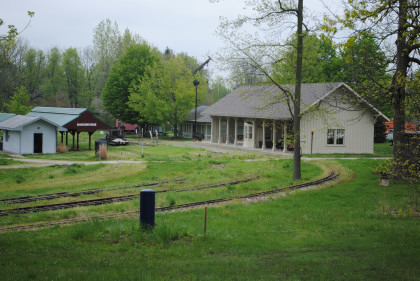
View looking down on the stations.
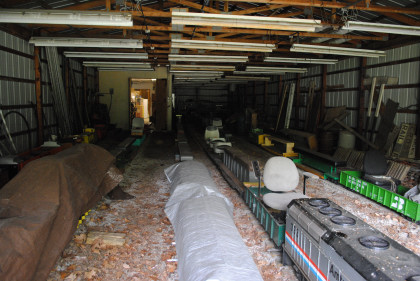
View of the smallest gauge train storage shed.
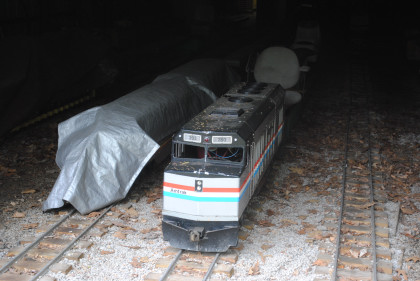
Amtrak 253.
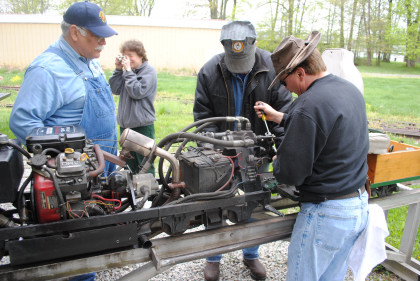
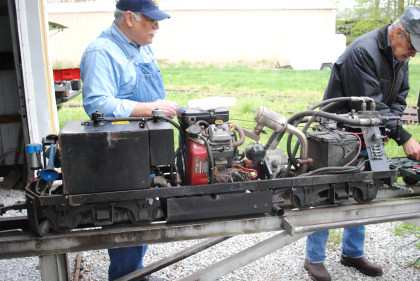
Men at work.
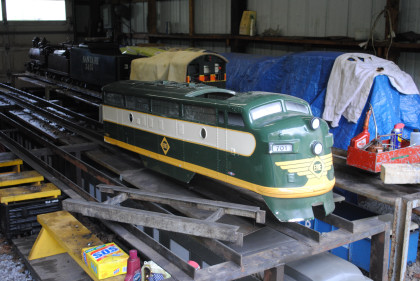
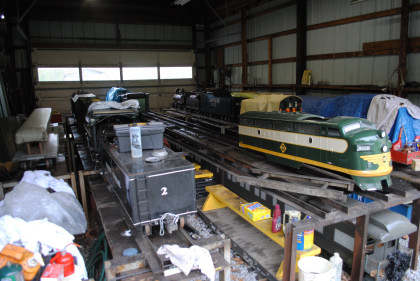
That engine belongs to this Erie car body.
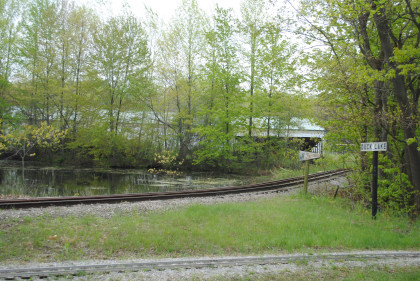
Duck Lake.
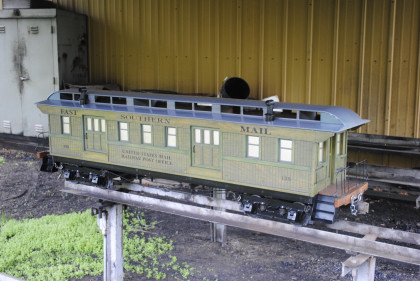
East Southern Mail.
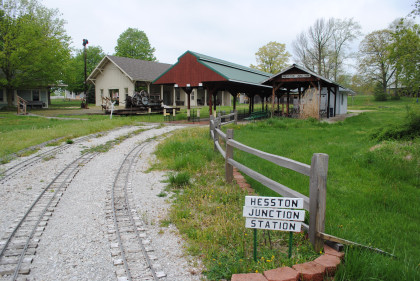
Hesston Junction Station.
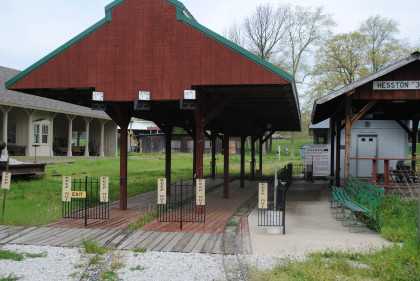
The smallest train station.
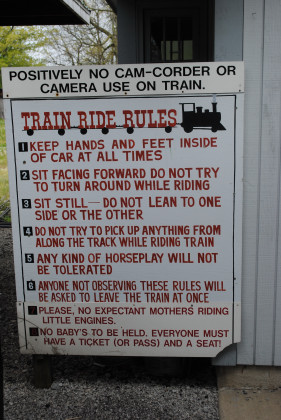
Rules for the train rides.
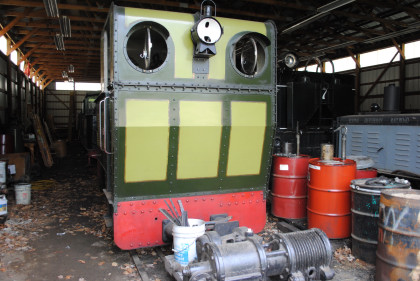
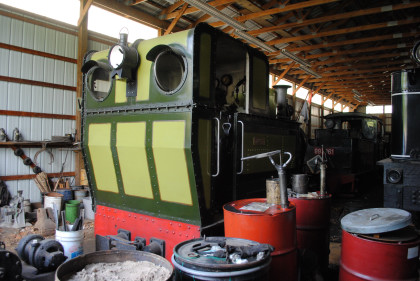
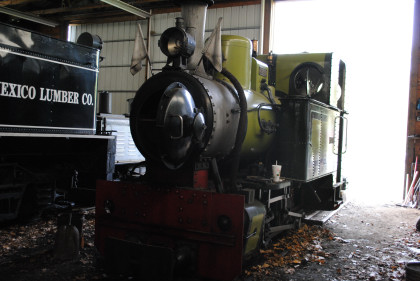
Adolf Myer 0-4-0T 4 built by Skoda in 1940. In 1971, it was sold to the George Mohun Steam Museum and later acquired by Hesston.
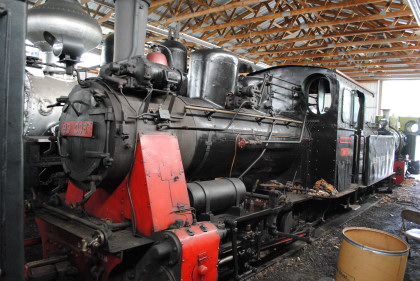
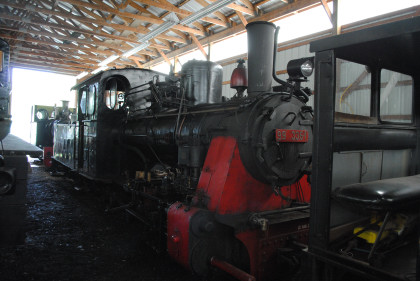
Mecklenburg Pommersche Schmalspurbahn 0-8-0 99-3361 built by MBA in 1938. It was acquired by Hesston in 1989 after being at Silver Dollar City in Branson, Missouri since 1972.
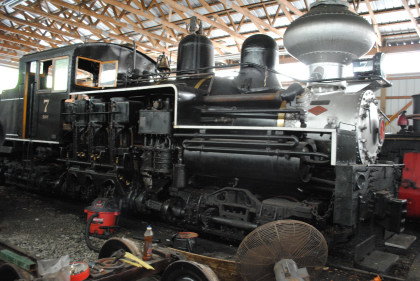
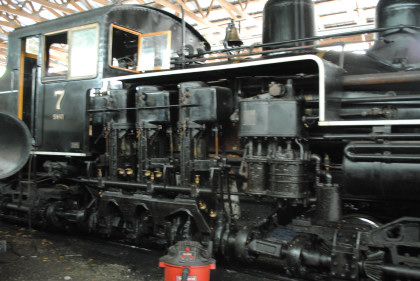
New Mexico Lumber 3-truck Shay 7 built by Lima in 1929. In 1931, it was sold to dealer Hofius Steel and Equipment Company in Seattle, Washington then 1937, it was sold as Oregon Lumber Company 7 in Baker, Oregon. In 1960, the company merged to be Edward Hines Lumber Company. The engine was sold in 1964 to Elliott Donnelley in Hill City, South Dakota. It was leased to the Black Hills Central as their 77 then in 1970, moved to Hesston and later donated to the LaPorte County Historical Steam Society.
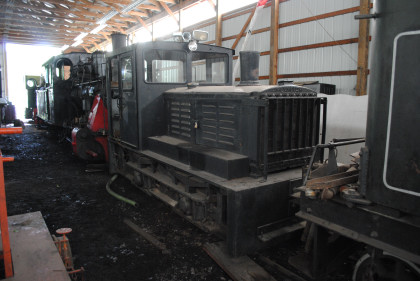
Sullivan Machinery 7 ton switcher 1, built by Whitcomb Locomotive Works in 1923.
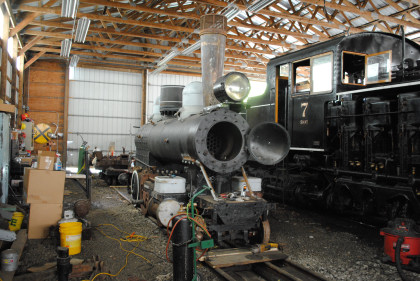
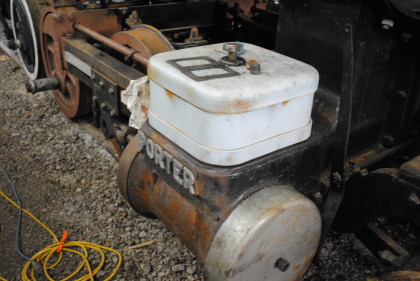
United Fruit 2-6-0 17 built by H.K. Porter in 1920 as Cia. Agricola del Panama 63 in Boca de Toro, Panama. In 1957, it was transferred to Cia. Agricola de Guatemala 17 in Bocar del Tjora, Guatemala. Then in 1965, it was sold to Donald Gilmore.
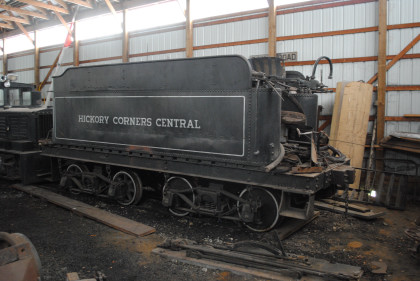
Hickory Corners Central tender.
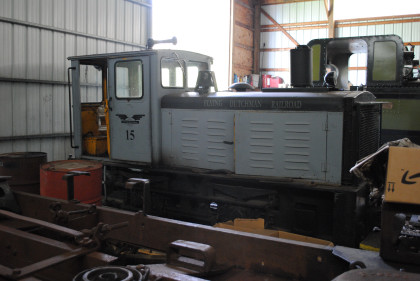
Flying Dutchman Railroad DDT 12 ton switcher 15, built by Plymouth in 1958 for Silcott/Carpenter Steel.
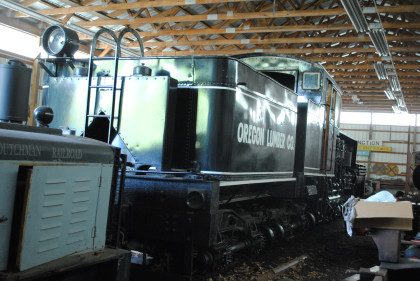
The Oregon Lumber Company on the tender on the other side of the New Mexico Lumber Three Truck Shay 7.
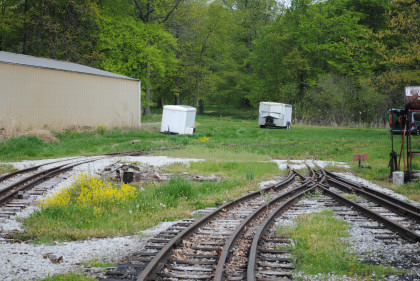
Dual gauge track. With that, it was time to leave the Hesston Steam Museum and we drove towards North Judson, stopping at Michigan City.
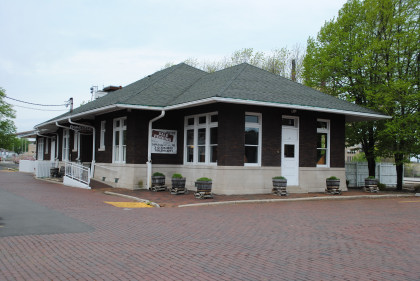
The Michigan Central station built in 1915. We stopped at Arby's to for lunch then drove to North Judson for our first of the Bart Jennings rare mileage trips. At the junction of the road into North Judson, we pulled over to call Let's Talk Trains, after which we drove the rest of the way to North Judson.
| RETURN TO THE MAIN PAGE |