



Through a posting on Trainorders.com, I learnt of the Central Coast Railroad Festival, which would feature events and activities at numerous railroad, historical and educational locations throughout San Luis Obispo and northern Santa Barbara Counties from October 8th to 12th. I told Chris Parker about it and we decided to go.
However, the first problem we encountered was being unable to find a rental car agency that we could return the car to on Sunday, since it was Columbus Day weekend. Carole Walker, my excellent travel agent, tried but did book us into the Motel 6 for the one night. No rental car meant that we could not take the train. Chris then suggested that he would rent a car and pick me up at Los Angeles Union Station and I would come up on the Thruway Bus so I planned several stops for us on the way to San Luis Obispo.
The night before the trip I vomited and did not sleep very well but arose at 4:15 AM and managed a waffle before I drove down to the Santa Ana station and parked in the northeast parking lot. I walked over to the bus stall to wait for the Thruway Bus that would take me to Los Angeles on its way to Bakersfield. There was one other person aboard when we departed. At Fullerton, Carl Morrison boarded and we talked all the way to Los Angeles Union Station, where he went to the "Overland Trail" private car and I walked over by the Mosaic Apartments to wait for Chris Parker. He picked me up at 6:38 AM and we drove north in the rental car, stopping at Starbucks so Chris could drop off something for a friend and I walked over to the 7-11 to get some ginger ale. From here we drove to Chatsworth and tried to get to the rocks, but when we could not find them, we decided to go to Tunnel 28, the last tunnel before one enters the San Fernando Valley, and set up for our first picture of the day.
While we waited, I vomited slightly and felt a little better. A few minutes later we heard a horn and knew Pacific Surfliner 768 was on the way.
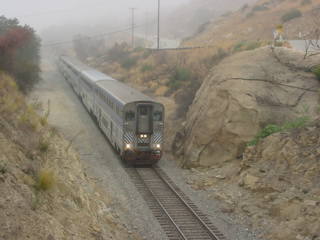
Pacific Surfliner 768 was the first train and Conductor Bob Riskie was riding in the fireman's seat as it made its way into Tunnel 28 beneath our feet. We relocated to a large rock outcropping.
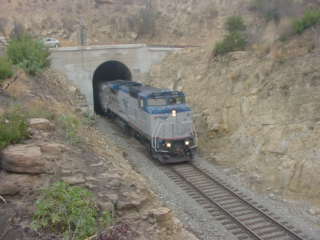
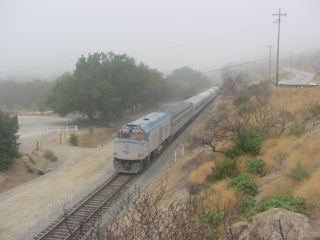
A few minutes later, Pacific Surfliner 799 popped out of Tunnel 28 with the "Overland Trail" and members of our Train Travel Meetup Group aboard on their way to Santa Barbara for a wine-tasting adventure today. We hoped to catch this train latter this morning. Back in the car, we drove the Old Santa Susana Road to our next stop, the Santa Susana Depot.
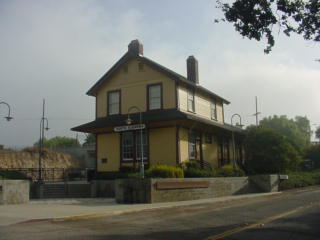
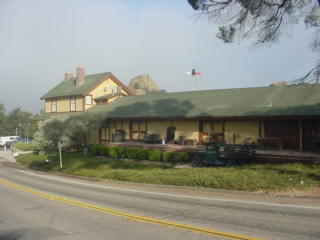
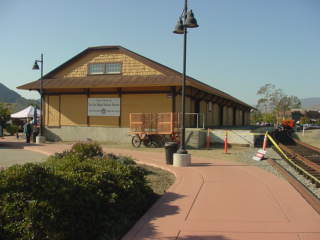
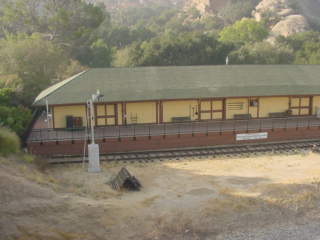
The south side of the Southern Pacific Santa Susana depot built in 1903, home to the Santa Susana Railroad Depot and Museum.
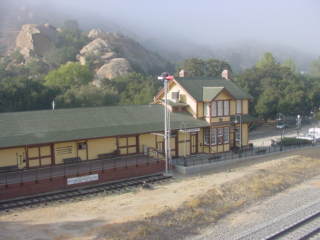
The north side of the station.

A semaphore signal before we returned to our rental car and proceeded to the Simi Valley Freeway, which we took into Moorpark and followed the Coast Line out to Oxnard to our next stop.
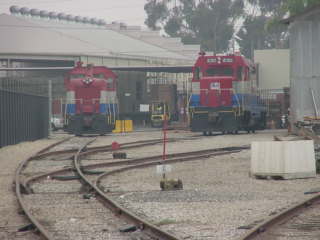
After asking a signal maintainer where the Ventura County Railroad shops were, we drove over to them then to the entrance to the shop.

The shops of the Ventura County Railroad, which began operations in 1998 under RailAmerica, leasing its lines from the Ventura County Railway, owner of lines first opened in about 1905 that have remained independent of larger carriers. The railroad serves industrial areas including the Port of Hueneme and Naval Facilities Expeditionary Logistics Center at Naval Base Ventura County.
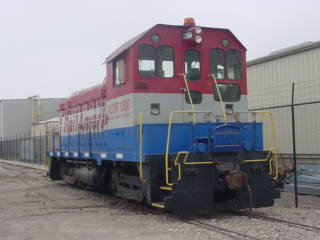
Ventura County Railroad SW14 1200, ex. Illinois Central 1412, nee Illinois Central SW9 9455, built by Electro-Motive Division in 1951.

Ventura County Railroad GP7u 1704, ex. Ventura County Railroad 100, exx. Santa Fe 2196 nee Santa Fe 2735 built by Electro-Motive Division in 1952.
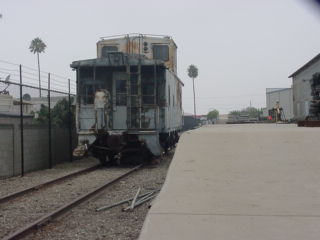
SCRX caboose 25428, nee Union Pacific 25428 built by the railroad in 1959. Retired in May 1989, it was donated to San Bernardino Railroad Historical Society in September 1989; sold to Tom Pyle then to Greg Ramsey (supervisor at Travel Town Museum in Los Angeles) in June 2007. It was stored at the Kaiser Steel site in Fontana for at least a year while being refurbished, loaned to Jim Clark for movie work and moved to Santa Clarita in February 1998 then moved to Port Hueneme Naval Base in June 2001 and stored on Ventura County Railway in Oxnard for many years.
From here we drove north on US Highway 101 and as we neared Santa Barbara, I called Julie, Amtrak's automated agent, to check on the progress of Pacific Surfliner 799 and learnt that we were about five minutes behind it. North of El Capitan, we caught up to it and knowing it had to slow for the curves at Refugio State Beach, knew we could beat it to the Gaviota Trestle, so set up for a picture and less than three minutes later, here it came.

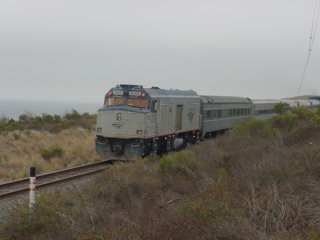
Pacific Surfliner 799 coming and going at the Gaviota Trestle. We drove to Buellton so that Chris Parker could get something to eat and I would rest in the car. After that, we drove north to Santa Maria and turned onto Betterevia Road and after a few minutes, crossed some train tracks but had to make a U-turn after I spotted something.


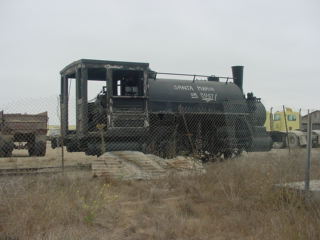
Chicago, Rock Island and Pacific 0-4-0ST 5, ex. Shortline Enterprises, exx. Pacific Southwest Railway Museum, exxx. Scrap Disposal Company National City, CA 1958, exxxx. A-1 Iron and Metal Los Angeles 1940, exxxxx. Shanahan Brothers Mayood, California 1937, exxxxxx. Pacific Gas and Electric Company 5 Bartle, California, exxxxxxx. Union Sugar Company 1 San Francisco 1904, nee Chicago, Rock Island and Pacific 82 built by the railroad in 1884. It is owned by the Santa Maria Valley Railway Historical Museum
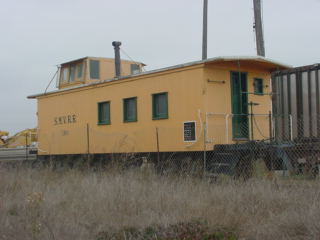
Santa Maria Valley caboose 180, nee St. Louis and San Francisco Railroad 180 built in 1936. It was purchased in the mid-1950's and was used as a mobile office and "day room" for its crews in its operations between Guadalupe and Santa Maria. Retired in the early 1980's, 180 was purchased by Mr. Milo Ferini, who kept it stored west of town at Rancho Harvest. The Santa Maria Valley Railway Historical Museum received Mr. Ferini's kind donation of this caboose in 2000 and undertook its restoration.
We drove out to Betteravia and found the Santa Maria Valley Railraod office but no one was there.
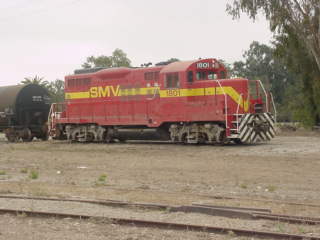
Santa Maria Valley Railroad GP9 1801, ex. Great Western Railway 319; ex. Iowa Railroad IRRC 319, nee Milwaukee Road 319 built by Electro-Motive Division in 1959.

Missouri Kansas Texas coach 644 built by American Car and Foundry in 1923 which operated previously on the White Mountain Scenic Railway in Arizona.
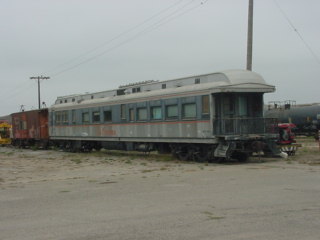
La Cuesta, formerly known as La Condesa, a 1926 Pullman observation open platform car was donated to the museum by member Gordon Crosthwait in June 2006. Formerly Santa Fe 1512, it was one of five cars built as cafe-observation cars. The car continued in this configuration for its entire service life. La Condesa was purchased around 1966 by Finley Fun Time Tours and sold to Gordon Crosthwait, a school teacher from Los Osos, in 1969. He renamed her La Condesa and for nearly 20 years, she was a private excursion car leased to charter groups. The car was first based in Fresno and then later moved to Fullerton near the Amtrak Station. She slipped into semi-retirement in the early 1990s when Amtrak issued its new private car standards. In June 2006, Mr. Crosthwait donated the car to the Railroad Museum. In February 2007 he passed away, knowing that he had found a loving home for his car. The car was then moved in 2007 to Santa Maria Valley Railroad until the museum could finish its display track as a long term home. In Santa Maria, the car was used by the SMVRR as a business car and museum members worked on rehabilitating the car.
We returned to the highway.

A line of former Amtrak Express cars on the way to Guadalupe.

Santa Maria Valley Railroad caboose 210, nee Rutland Railroad 51 built in 1952, on display at the Amtrak station in Guadalupe.
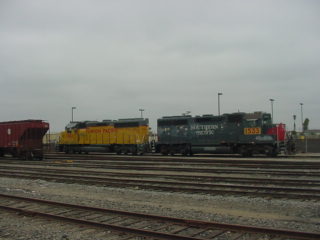
Local power with Union Pacific GP40 1533, ex. Southern Pacific 7298, nee Missouri-Kansas-Texas 175 built by Electro-Motive Division in 1966.
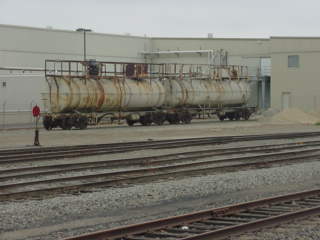
Union Pacific water cars. From here we drove north to our next stop in Oceano.
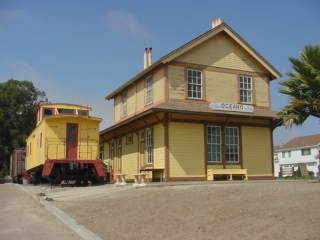
Southern Pacific Oceano station built in 1904 which replaced the original 1896 structure which burned in 1903. This combination passenger and freight depot is located 400 yards south of its former location. The building was closed in 1973 and moved to this site in 1978.

San Pedro, Los Angeles and Salt Lake Railway caboose 3317 built by Barney & Smith in 1905 which became Santa Maria Valley Railroad 170 in 1926.
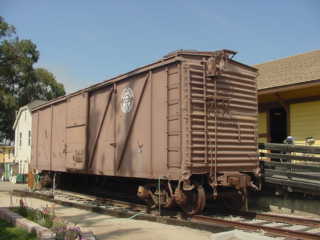
Southern Pacific outside-braced wooden boxcar, number, builder and year unknown.
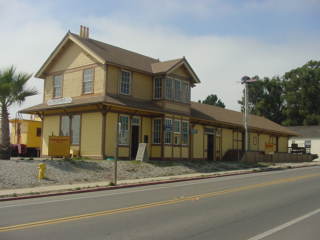
The highway side of the Oceano Depot which was moved 450 feet from its former location.
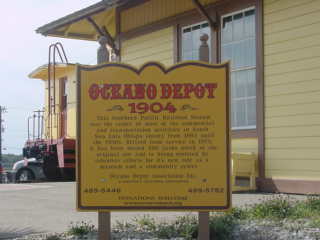
The Depot Sign.

The signs on the station.


A model railroad is housed in the Southern Pacific box car.
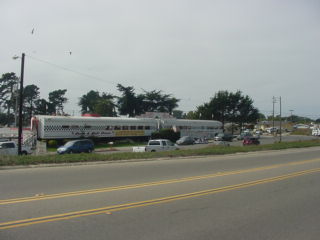
The Rock n' Roll Diner in Oceano.
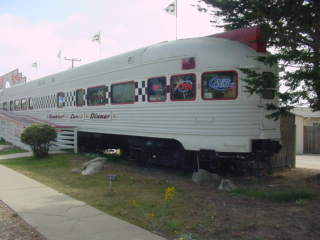
Former Seaboard Air Line lounge car 6605 built by Budd in 1947 and used on the Orange Blossom. It later became Seaboard Coast Lines 5845 then Amtrak 3345.
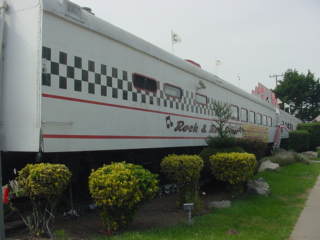
Great Northern ranch car 1153 "Lake Josephine" which became Burlington Northern 1153 then Amtrak 8067 and is now 1302. It was built by Pullman-Standard in 1946.
We started to look at our watches as we knew Pacific Surfliner 792 would be leaving San Luis Obispo at 2:00 PM so made our way to Price Canyon to catch him there.
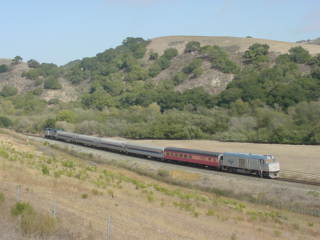
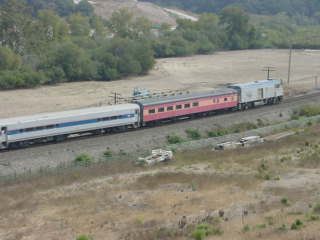


Pacific Surfliner 792 heading south through Price Canyon. We called Julie to learn that the southbound Coast Starlight would arrive at San Luis Obispo at 3:09 PM so drove straight through there to the Stenner Creek Trestle and climbed up the hillside for a short wait.

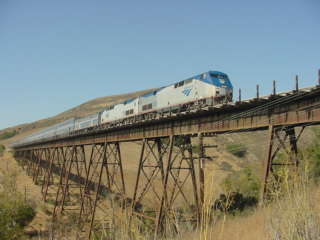
Coast Starlight 11 on the Stenner Creek Trestle.
Our rental car parked under the trestle. We made our way east to where we had crossed the tracks on the way into town to set up for another picture.
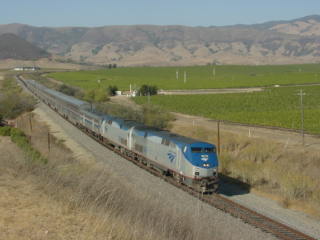
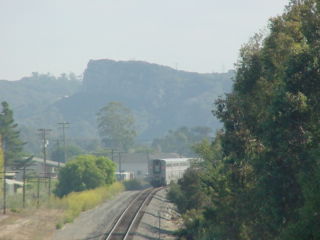
The on-time Coast Starlight bound for Los Angeles. From here we drove to the rebuilt Southern Pacific freight house and parked.
The Central Coast Railroad Festival at San Luis Obispo 10/10/2009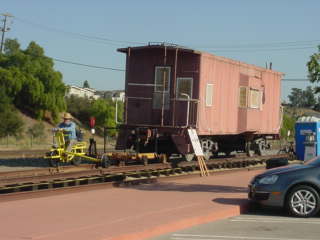
The only railroad display at freight house is Southern Pacific bay window caboose 1886 built by International Car in 1972 and was last used on the Lompoc local.
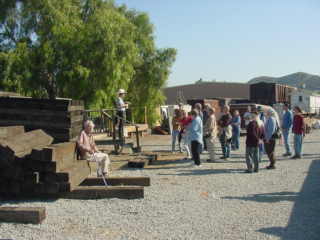
I saw a group down in the Emily Street Storage Yard and asked if I could take pictures for this story and was given the go-ahead.
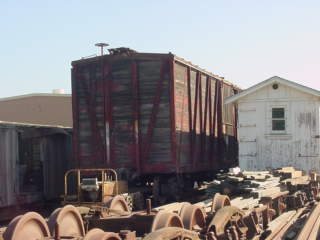
Southern Pacific outside-wooden braced box car 28148 built by Standard Steel in 1923.
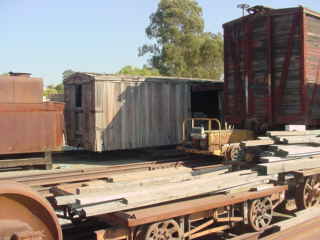
Pacific Coast Railroad narrow gauge box car 706 built by the railroad in 1906.

An unidentified narrow gauge steam engine tender.


A camp car with its trucks in the second picture.

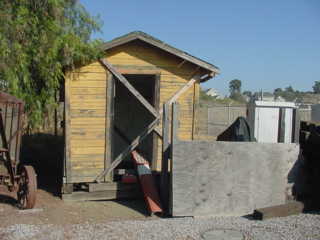

More views in this fenced-in area.
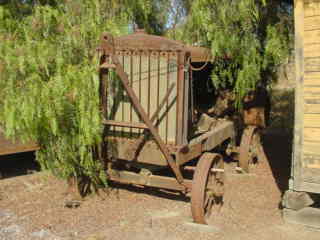
A tractor.
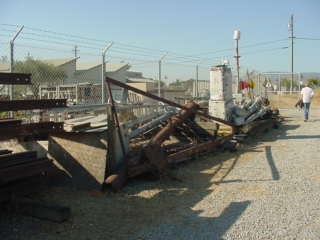
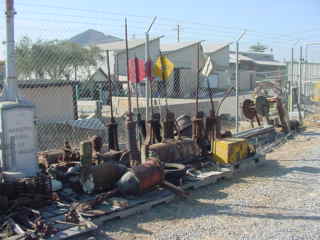


Switch stands and other equipment for future display.
The newly-rebuilt Southern Pacific freight house built in 1894.
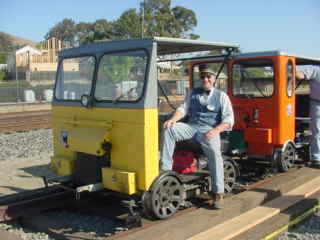
For one dollar you could ride a speeder and I chose this one.
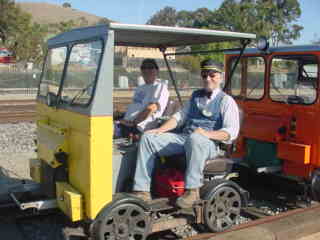
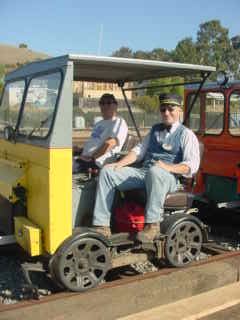
Me aboard this speeder.
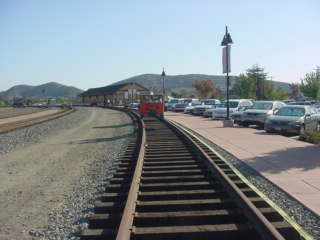
Chris Parker was on the speeder behind. We travelled the entire 900 feet of display track before reversing to our starting point. We then left the museum area and headed towards the Amtrak station.

Union Pacific helper power.

Union Pacific SD70Ace 8451 built by Electro-Motive Division in 2006.
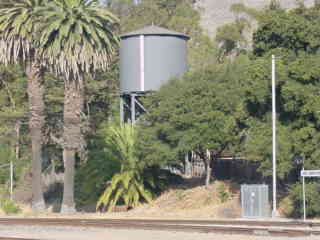
The San Luis Obispo water tower built in 1943.

Looking south towards the Southern Pacific freight house. Wee drove to the Motel 6 and checked in, put the luggage in our room, then I had an idea that since we still had plenty of daylight left and with no more trains until tonight, I suggested to Chris Parker we should go to Morro Bay to see Morro Rock and he agreed.